2026 Nuffield NZ Farming Scholarship. Apply by 17 August 2025. Read More...

Apply for 2026 Nuffield NZ Farming Scholarship by 17 August 2025. More details...

Mel Poulton: Insights from a Special Agricultural Trade Envoy.

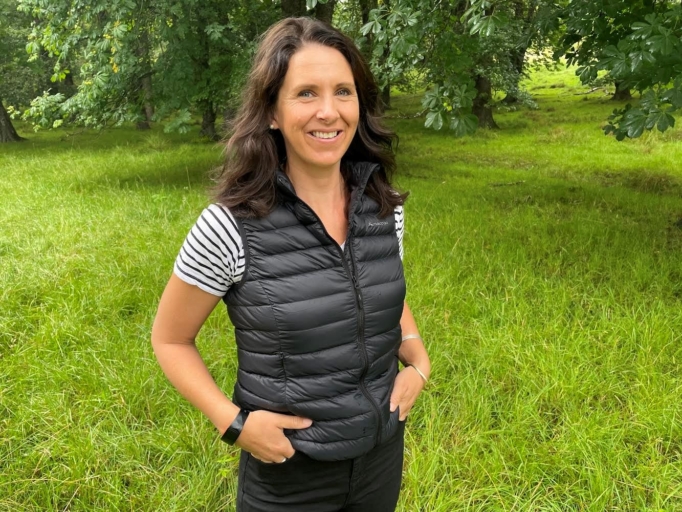
Mel Poulton

Mel Poulton: Insights from a Special Agricultural Trade Envoy.

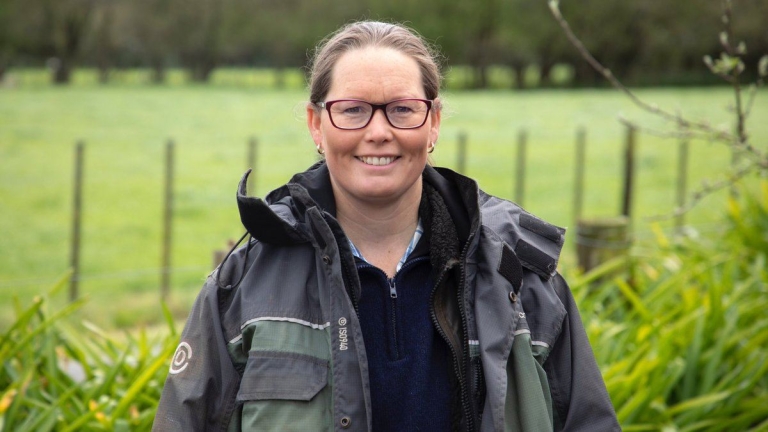
2014 Nuffield Scholar Mel Poulton is someone with a unique perspective. Well, two really. As both a food producing farmer and New Zealand’s Special Agricultural Trade Envoy, we asked Mel to share her perspectives on trade, Nuffield, Brexit, and an industry grappling with significant global challenges.

Question: What do you do in your various roles?

Mel Poulton: In and on my farm business, I’m on both sides of the farm gate. I do anything from stockwork to bulldozing, to making all the decisions required to run a business. 

In the Special Agricultural Trade Envoy (SATE) role, following my appointment, border closures and a vastly different global operating context, have meant changing how the role is delivered. It’s a two-pronged approach with an international and a domestic focus, mixed with face to face and virtual engagement.  

I’ve been more purposeful working with the world here in NZ, by way of direct engagement with the International Diplomatic Corps here (they are the eyes, ears, and influencers of their nations in NZ). This engagement includes taking Ambassadors on x-sector farm tours, hosting Diplomatic Corps meetings, and meeting with them one-to-one, or with industry groups. I am also working internationally on virtual platforms, speaking on panels, webinars, or virtual meetings with farmers, and private and public sector organisations.  

Covid has provided opportunity for me to invest more time and effort with NZ sectors (all food and fibre – except Forestry and Fisheries). My background is the sheep and beef sector, but I put a high priority on building a greater understanding of the other sectors I represent as well. I use these insights when engaging with each of the sectors, government, and the world.  

Helping NZ food and fibre producers broaden their understanding of the global and domestic context is a priority too. Both behind and beyond our farm gates.  

Q: What changes have you seen since being in your SATE role?

MP: Quite a few things.

Trade negotiations. 
Trade negotiations, particularly the New Zealand-UK Free Trade Agreement (FTA), have been the fastest progressed trade negotiations in New Zealand history to get to Agreement in Principle – so I’ve been told. Much of this negotiation has been done virtually, also a first. This will change the way trade negotiations occur in the future. A lot less travel overall.

Farm subsidies. 
Direct and indirect farm subsidies in large economies, such as the USA, have increased exponentially. People may argue they have already exceeded agreed WTO thresholds.

Growing distrust. 
There’s a growing distrust of governments in the democratic world. Governments need to work on their social licence to operate. Social licence is not just a thing for food producers.

Supply chain vulnerability. 
Just In Time (JIT) delivery has been exposed for its supply chain vulnerability in this global pandemic. Economies and businesses will now be building more capacity in their value chain system. This will mean a more conservative approach to exports and imports, to withstand the volatility, uncertainty, complexity, and ambiguity (VUCA) in the world of trade, market access and freight.

Nevertheless, nothing beats high trust and long-term government to government, business to business, and people to people relationships across the world. New Zealand has optimised these relationships throughout the pandemic to utilise market diversity for navigating trade, market, and supply chain disruption.

For example, Covid19 related trade agreements to secure medical imports and food exports. As well as digital certification for export products, through to relationships that our major exporters have with freight companies, importers, and international customers. The last 18 months haven’t been easy, but these strong relationships, and diversity of markets, have shown their worth to New Zealand.

Food security. 
Economies are moving from thinking about food security, to actively putting mechanisms in place to secure their food supply in a pandemic disrupted system, e.g., green lanes in Europe. There’s also a slow nuanced shift from food security to nutritional security taking place.

Regulatory pressure. 
Farmers and food producers in New Zealand and around the world are wrestling with the multi-layered challenges of regulatory pressure (particularly on the environmental and climate change fronts), as well as market volatility, and Covid 19 induced uncertainty. This is increasing farm input costs and diminishing the tools available for farmers to use to produce food.

As an example, farmers in Europe have real fears about their ability to produce the volume of food required to stay viable and maintain food security. The new farm to fork strategy in the EU is deliberately shifting organic food production up to 25%, with rules to reduce synthetic fertiliser by 50%. Glyphosate use is under threat too. In some places farmers can’t use it (I note in New Zealand, the EPA is currently undertaking a review of Glyphosate use). There’s major transformational change happening in Europe.

The rush of multi-layered change gives a sense of exponential pressure. Farmers all over the world are feeling exasperated, frustrated, misunderstood and under siege. All the same, if there is anywhere in the world I would rather be farming right now, it is here in New Zealand.

We’ve navigated major challenges in the past, and when farmers look at the change they’ve implemented on their farms over the course of their careers, or in the intergenerational businesses they are running, we can take confidence in the fact we are already change agents.

A uniquely positioned New Zealand. 
From a New Zealand food producer’s perspective, farmers here are uniquely positioned. Without subsidies, we aren’t dancing to someone else’s tune in quite the same ways as farmers receiving subsidies elsewhere. There are two sides to this. On one hand we’re not being bailed out at the next threat, but we also get to take full responsibility to master the destiny of our businesses. So, we have an ability to create workable solutions in a way that keeps our businesses competitive globally.

With an innovative, integrated systems approach, we can create solutions to challenges like reducing our global warming impact, improving native biodiversity and water quality, while producing high quality, safe, nutritious food – delivered with integrity.

In New Zealand we have an industry ecosystem focussed on helping farmers create and implement solutions. Our research centres and academic institutions, both provide science and knowledge, and help support farmers crack real challenges. There are the easily accessible service providers, and the folk in Government ministries – who are in the teams working hard on trade negotiation to ensure the best possible outcomes for access to markets, and on removal of tariffs and non-tariff barriers to create a level playing field for New Zealand. Let’s keep it that way.

This ecosystem enabling success is our major competitive advantage in the world. We’ve really got to leverage this and remember we’re all on the same team.

We must not be paralysed by fear, but instead celebrate what we’ve already achieved throughout our farming careers and take confidence that we can use our whole systems thinking to improve what we do for our natural resources, our people, businesses, and our nation.

Q: What links between International Trade and International Policy have you seen, with direct and indirect implications behind your farm gate?

MP: Let’s summarise how it works first. There are recognised global challenges. Then international forums are established to address these challenges, leading to international commitments made by member states (different nations).  

Examples of this include United Nations Sustainable Development Goals (SDG) and the Paris Accord on Climate Change. Some international commitments are legally non-binding. But where it applies to the WTO (World Trade Organisation) they are often legally binding.  

Once those international commitments are made, each economy, member state, or nation must determine its own policy and regulation to deliver on its commitments. That gets shaped up (with some consultation in the process) and is rolled out by the government of the day, and folks like us everyday people have to make it work on the ground. The Government then reports back to those international forums, or institutions, on what our progress has been against the commitments the Government made. COP26 is an example of this. 

Given New Zealand’s economy is so internationally exposed and dependent, we need to be at the international table to maintain influence.  

But to have influence we need to have integrity and demonstrate action. So, these international commitments have been drivers for shaping NZ Government policy on Sustainability and Climate Change. Examples here are the New Zealand freshwater regulations and climate change targets. Both resulted in changes on my farm, and on farms all over New Zealand, which is increasing costs and could reduce revenue for some.  

If we do it right, there could also be opportunity to reduce costs and increase profitability. It will be different for every business. The bottom line is that financially there’ll be change, so we need to reconfigure the financials for a new shape to our businesses. Easier for some than others, and not all will be the same. 

The environmental, social, and economic outcomes are significant across NZ, and underestimated. In some cases, we might secure a market premium for this work, though there is no guarantee what we’re doing delivers a premium to food producers in New Zealand for all products in all markets. I have more confidence this work will enable us to obtain and maintain market access to customers.  

This is where the work of our trade negotiators, ensuring a level playing field in market, is so critical for ensuring the changes we’re making here in NZ don’t make us uncompetitive on the international market. I’ve seen their tireless, relentless work, day, and night, to get the best possible outcomes for New Zealand. Many of these negotiators are the hidden superstars of our food and fibre ecosystem.  

What is going on in New Zealand around environment and climate change is often a focus of interest from others in my international engagements. I talk about what these regulations and targets mean for me, and what I am investing in to address the challenges in my farm business, alongside promoting what other farmers from the different sectors are doing in New Zealand. I also give a clear message that much of this cannot be done quickly when taking a whole systems approach. Effective change takes time. Farmers the world over get this.

Q: How do you think Brexit will play out for New Zealand trade? The obvious and not so obvious.

MP: The choice of the UK people and UK parliament to pursue Brexit is forging transformational change for the UK food and fibre sector. The transition period will take 15 to 20, even 30 years to find a new equilibrium. Like the 30 years it took New Zealand to find equilibrium when agriculture subsidies were removed here.  
 
This change requires a culture shift in thinking about UK farm business structures, their subsidy system, domestic policies, and rebalancing their trade and export portfolio beyond the common market, to a global market. Add major geostrategic inflection points in trade and security, affecting us all, and you have a UK trying to position itself as a global strategic leader.

Its focus in the Asia-Pacific region, particularly regarding the FTA’s it is currently negotiating with Australia and New Zealand, along with its formal request to join the Comprehensive and Progressive Trans-Pacific Partnership (CPTPP), all highlight the trade and security opportunities and challenges it perceives.  
 
So, building more structure into the relationships of allies like New Zealand and Australia by way of FTA’s is an important part of their process to find their new place in the world. This is providing new trade opportunities for New Zealand, subject to the NZ-UK FTA and their accession to the CPTPP. 
 
In the future it may create more competition in our export markets too. It will also create opportunities for more collaboration on the global stage, especially where we align with the values and perspectives that matter to both economies.

Q: What does New Zealand need to do more, and less of, now and in the future?

MP: Because our food and fibre sector is orientated to international markets, we need to continue to pursue being the best we can be. This means achieving optimal standards, positioning ourselves to have the best integrity, facts, processes, and story for all the concerns that governments, markets, customers, and consumers may direct at us.  

Whether these be from the position of protectionism or not, we still have to give ourselves the best chance of capturing opportunity. So, concerns about animal welfare, food safety, or environmental stewardship, e.g., water, soil, biodiversity, chemical and fertiliser usage, climate change, labour, the list goes on. These are the things we need to keep improving to position ourselves to open as many doors as possible, and to keep flexibility, adaptability, agility, and economic viability open to us.  

We have already demonstrated plasticity through this pandemic, and we need to fully embrace a plasticity approach in our lives, our businesses, and how we engage with the world.  

We need to be able to maintain our essence and values, while changing and reshaping the way we live, do business, trade, and collaborate with others, as we all grapple with significant global challenges.     

Q: How has doing a Nuffield Scholarship helped you?

MP:   The Nuffield Scholarship has been an important part of my personal and professional development. It’s been a stepping-stone for doing what I do now, on and off farm. The international networks, the doors of opportunity opened, the domestic and international insights as well as the ‘aha’ moments. These all contribute to my thinking, conversations, and ideas on the farm and in the world of trade.  

That said, and without taking away from Nuffield, the older I get and the more I learn, it seems the more questions I have and the more I need to learn. 
I’d like to encourage all readers to keep that hunger to learn, take some confidence from the change we’ve already made on our farms, in our businesses and our whole industry with our systems thinking.  

Let’s keep doing what we do best – producing top quality food and fibre to the best of our abilities.  

Optimising all we do with high standards, care and integrity for our environment and natural resources, our people, communities, and for the economic viability of our businesses and nation. 

Balanced with humility, we need to be able to hold our heads high and have pride in who we are and what we do. Keep being the best you can be. 

Download report
Read Mel Poulton 2014 Nuffield report “Capturing value.”

2022 Nuffield New Zealand Farming Scholarships awarded.

2022 Nuffield Farming Scholars

2022 Nuffield New Zealand Farming Scholarships awarded.

Three emerging food and fibre sector leaders have been awarded 2022 Nuffield New Zealand Farming Scholarships. Each has received a personal letter of congratulations from Hon. Damien O’Connor, Minister of Agriculture, Minister for Trade and Export Growth, Biosecurity, Land Information, and Rural Communities.

The New Zealand Rural Leadership Trust (NZRLT) is proud to announce the 2022 Nuffield New Zealand Farming Scholarship recipients. The Scholars are:

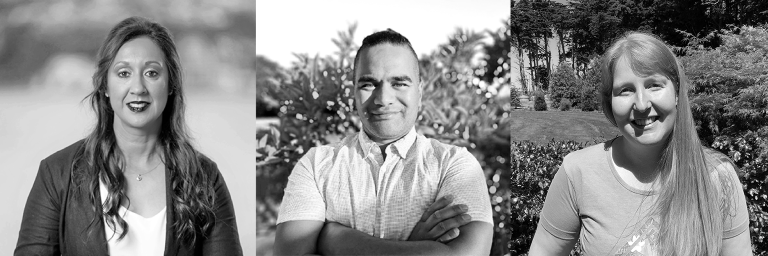
Parmindar Singh, a Waikato based Dairy Farm Manager, Company Director, and a recent master’s graduate. 

Anthony Taueki, a horticulturalist from the Hawke’s Bay, leads horticulture courses at Fruition, New Zealand Apples and Pears, Tatau Tatau o te Wairoa, and many more.

Lucie Douma, leads a new team at the Ministry for Primary Industries (MPI) looking at disruptions to domestic food and fibre supply chains, and primary sector COVID recovery.

Chris Parsons, NZRLT CEO said, “This group comes from the most diverse range of backgrounds we have seen in recent times. Each Scholar brings talent, passion, perspective, and a track record of performance. Their job now is to find insights and foresight to benefit our sector.

“We wish to acknowledge all those who applied. It is safe to say, there is some real talent in our regions. Selecting three Scholars this year has given our Trustees and the Industry National Advisory Committee the opportunity to fund the start-up of an exciting new programme, the Value Chain Innovation Programme. The intention will be to return to selecting five Scholars again next year”, said Parsons.

Covid 19 restrictions mean this year’s scholarship recipients’ formal awards ceremony at Parliament, will be delayed until February 2022, when Minister O’Connor will award the scholarships in person.

2022 Scholars will follow last year’s travel approach, contingent on the local and global pandemic travel situation. This lets scholars defer the international travel component of the programme until border restrictions permit.

Kate Scott, NZRLT Chair, said, “As part of their Nuffield journey, the three 2022 Scholars will also join the Value Chain Innovation Programme to gain a deeper understanding of the challenges and opportunities in front of our sector, before they venture abroad.

“The Scholarship will offer new opportunities and experiences through an immersive programme and will help to shape future world-class leaders for the New Zealand food and fibre sector” said Scott.

Their research topics are likely to cover a range of our biggest food and fibre challenges including, building resilience in our value chains, data interoperability, emerging market opportunities for trade in dairy, and finding sustainable pathways into the primary industries for rangatahi.

The three new Scholars will join more than 170 Nuffield Alumni awarded scholarships over the last 71 years.

Meet our 2022 Nuffield New Zealand Farming Scholars.

Lucie Douma, 2022 Nuffield New Zealand Scholar

Lucie Douma 

Agri-professional, Livestock
Wellington

Lucie is of Dutch descent and is based in Wellington. She currently leads a new team at the Ministry for Primary Industries (MPI) looking at disruptions to the domestic food and fibre supply chains, and primary sector COVID recovery.

Lucie has a Master of Science degree from Oxford University, where she studied human-wildlife conflict. Her initial research topics of interest are data interoperability or building resilience within the value chain.

Lisa Rogers, NZRLT Programme Manager, commented, “Lucie is a great example of the policy talent we have coming through in our sector. She is greatly invested in the future of agriculture in New Zealand.”

Parmindar Singh- 2022 Nuffield New Zealand Scholar

Parmindar Singh

Dairy farmer, Company Director
Waikato

Parmindar is a fourth generation New Zealand dairy farmer of Indian descent. A company director and independent consultant, she is near completion of her master’s degree at Waikato University.

Parmindar’s research topic of interest is emerging market opportunities for trade in dairy. On her proposed research Parmindar says, “As a proud, intergenerational dairy farmer, my goal is to identify the shift that is occurring globally and identify future trade and market opportunities for New Zealand farmers.”

On Parmindar’s selection Lisa Rogers noted, “Parmindar is bright and fearless, with a lifetime of community involvement and entrepreneurship in the Agri-sector. Nuffield is lucky to have her as a Scholar.”

Anthony Taueki, 2022 Nuffield New Zealand Scholar

Anthony Taueki

Horticulturalist, Kaiako,
Hawke’s Bay

A horticulturalist from the Hawke’s Bay, Anthony is of Ngati Kahungunu descent. He leads, organises, and conducts horticulture courses and training programmes with Fruition Horticulture, New Zealand Apples and Pears, Tatau Tatau o te Wairoa, Ministry of Social Development and Ngati Kahungunu Inc.

Passionate about helping rangatahi find sustainable pathways into primary industries, Anthony’s research topic of interest is growing opportunities from the roots up.

Of Anthony’s selection Lisa Rogers said, “Anthony is a natural leader who is highly collaborative. He has integrity, passion, and a strong desire to influence in New Zealand’s Agri-sector.”

“I look forward to working with all three of our Scholars over their scholarship journey”, Lisa Rogers said.

About Nuffield New Zealand Farming Scholarships.

Nuffield Farming Scholarships have been offered to farmers, growers, fishers, and foresters since 1950. The scholarships were established in the United Kingdom by Lord Nuffield for farmers to explore best agricultural practice and facilitate innovation through sharing knowledge and ideas in food and fibre globally.

The scholarships are among the most respected awards in the food and fibre sector. They offer a life-changing opportunity for travel, study of the latest developments and an introduction to leaders and decision-makers around the world, who would not normally be accessible.

With a network of more than 1,600 alumni internationally, the programme continues to build New Zealand’s rural leadership capability and the food and fibre sector’s profile internationally.

For more information about Nuffield go to https://ruralleaders.co.nz/nuffield

For more information, please contact:

Matt Hampton
Marketing and Communications Manager
Rural Leaders
Ph. 0274 171 065
E: matthampton@ruralleaders.co.nz

Craige Mackenzie: Right place, right time.

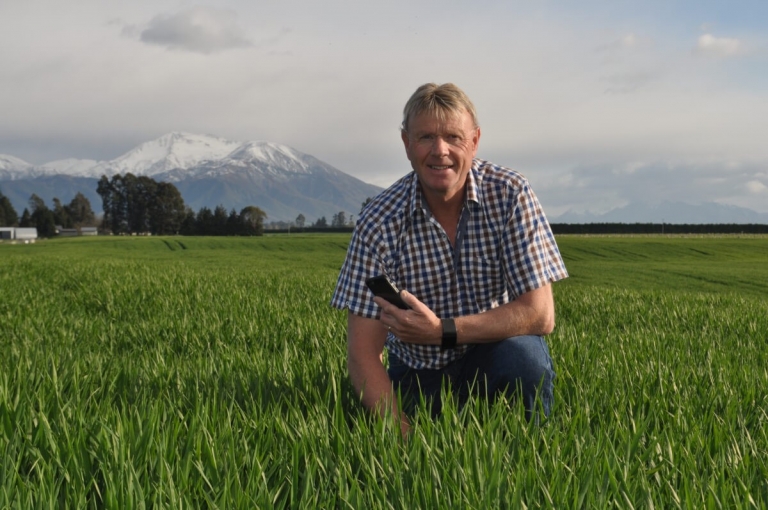
Rural Leaders talked to 2008 Nuffield Scholar Craige Mackenzie about change, technology and precision farming. His business, Vantage NZ, helps remove the complexity around technology-enabled change, while
the family farm demonstrates precision in practice.

But as Craige explains, what really matters is mindset.

The foundations of a mindset.

Growing up, we knew the value of a dollar. They were hard to come by. We did the best we could with what we had. I was keen to get out and earn, so I finished school and went farming with my family. I learned early on that I enjoy pushing myself.

At 18 I travelled to the United States, instead of going to university. I saw the world for the first time, and it felt like we were all only limited by our imaginations. Coming home was a jolt back to reality. It was the 80’s and a tough period for farmers. If you have a hard time at any point in your career, the start is the place to have it. You learn how to survive early.

We took over the farm in 1984, buying it from my parents. We put in irrigation, expanded, and eventually removed all the stock from the system. We went into intensive seed production.

In 2006 we ventured into the dairy industry too, building up to 1240 cows at the peak. Then along came M. bovis. But it’s interesting, from adversity came opportunity. By having to cut the stocking rate down, we found our milk production per cow went up. We were on the efficiency journey, simply by doing the best we could in a tough situation.

Production is vanity. Profit is sanity.

In 2008 I did a Nuffield Scholarship, something I felt fortunate to receive. It meant travelling around the world for six months. My study topic was very broad, ‘Understanding the Carbon Footprint in Farming Systems.’ At the heart of it, I thought, if we cut inputs by 30% and still maintain outputs, we’ve reduced our carbon footprint by 30%, which in turn increased profitability.

While travelling I saw some intensive operations in Europe, broad acre framing at scale in the USA and Canada, through to small holder farms in China. It’s interesting to see what drives different decision-making and farming practises. Often these are influenced by subsidies and support mechanisms rather than efficiency, although I also saw some good examples of Precision Ag too.

Sometime after, I recall talking with Raj Khosla, the head of the International Precision Agriculture Association. He asked me to present at a conference, and I said “Ah Raj, we don’t really do precision.” He said, “…well you know exactly how many kilograms of fertiliser it takes to grow a tonne of wheat don’t you? You know what your inputs are. My friend, you are doing precision agriculture.”

Technology is a decision support tool, not a decision tool.

From then on, I understood what we were doing. We started thinking, how do we go faster? How do we do better? All of a sudden, it became easy to decide to invest in more technology to enable these things. So, we looked at crop sensors, moisture probes, electromagnetic mapping of soils, all sorts of new technology. But again,

the biggest change wasn’t the technology, it was our mindset.

One of the most important things about investment in technology, is profitability. The more you can reduce inputs while maintaining outputs, the more you are free to invest in technology.

You circle back around to re-invest your profit into the technology that reduces inputs. Like machinery that places a bottlecap of fertiliser on every plant. Exactly the right amount at exactly the right time. That leads to better environmental outcomes as well.

After our daughter finished her degree at Lincoln, we asked her what she wanted to do. We saw there was an opportunity to help farmers work smarter, to make more informed decisions. That’s when Agri Optics NZ was born. We’re exclusive Trimble dealers for New Zealand now too, offering a range of products under the Vantage NZ brand.

At the heart of it all is GPS technology: GPS, flow control, steering, automation, and land levelling software. GPS is the enabler though. Without GPS you can’t really do any of the other clever things that result in precision outcomes.

Is it better to go rabbit shooting with a .22 or a shotgun?

I gave a presentation in Bonn at a climate change meeting. Somebody asked me, what’s the silver bullet that fixes things? And I said, it’s not a silver bullet, it’s a silver shotgun.

We need multiple tools in a biological food production system. We need lots of levers to pull. Yes, you’ve only got short range with your shotgun, but you’ve got a whole lot of cover.

There’s no one thing that does it all though. So you need to carefully integrate all your tools into the farming system, rather than the farmer into the tool system.

Is the regulatory environment moving more arable farmers into precision?

The higher the regulatory pressure, the more people will work to get ahead of the challenges those regulations create. We need to continue to have as many tools on the shelf as possible to meet them. As tough as it’s getting, we need to be out in front of it.

I’d rather be having conversations with government and regulators, trying to constructively slow things down to help make the best decision, and create the best outcome for everyone, including the environment. To build the time needed to think about a more considered approach. There’s no advantage in putting regulations in place that are unachievable. None.

We’ve had lots of regulators here over the years. It’s hard for them to push regulation when you’re already past where they think they want to go.

If we can show we’re not leaching anything through the profile in the growing season, like water from irrigation, then it’s very hard for them to say we’re putting nitrates into the groundwater. Especially when there’s nothing getting past the roots. Having the data to show this is powerful.

Unlike GMO, is CRISPR a tool you’ll get to use?

The first thing is, CRISPR is GMO. Rob Horsch was at the forefront of GMO technology. He worked for Monsanto for 20 years on Roundup Ready, which is where it all started.

I had an interesting conversation with Rob a couple of years ago at a crab restaurant somewhere on the East Coast of the US. He said what you’ve got to remember is CRISPR is only going to make small changes in GMO technology. For example, GMO changes a normal wheat plant into a glyphosate Roundup Ready plant. Or equally, it changes a plant to being insect resistant. These are large jumps. Whereas CRISPR only makes small tweaks.

CRISPR is a bit like a pair of molecular scissors. You make small edits by cutting strands of DNA. It has huge applications for treating and preventing disease, correcting genetic defects, and improving crops.

There are changes with CRISPR that will be useful to New Zealand agriculture. Like ryegrass that reduces methane emissions. CRISPR could be a way for GMO to come in to New Zealand, as incremental, more palatable changes for consumers.

Has precision has been a way to stay competitive without GMO?

There’s two things that drive that. One, we don’t live in a country complicated by subsidies. A lot of farming around the world is. We run a business. We’ve had to make sure we are profitable. Precision practices help make that happen.

Two, when you travel like I did with Nuffield, you see the challenges that face the farming system when you’re not careful. Herbicide-resistant weeds are one of the challenges countries with GMO have steaming down the track at them.

Precision agriculture still fits even if you do have GMO’s. Because it’s really about the right product, delivered the right way, at the right time. It doesn’t matter which area of the food production system you’re in either: horticultural, arable, sheep and beef, it can fit every sector.

Will the future of farming look like the start of Interstellar, with autonomous everything?

We used to be sheep, beef and cropping, now we’re 100% cropping. Some of the crops we grow today: spinach, pak-choy, carrots, radish, have mostly evolved in the last few years because food production systems have changed.

We’ve got dairy cows on the Canterbury Plains, driven by the fact that the Waikato was too expensive. With irrigation, Canterbury was seen to be the right place. We know that some of that will go back the other way. And yes, there’ll be more automation, because labour is likely to remain an issue for agriculture.

We’ve been developing bigger machines to maximise production. As autonomous technology advances, the machinery will get smaller, smarter, and run for longer. It will be about maximising profitability. A profitability mindset will be the only one worth having.

We’re all looking further ahead into the future now too. It’s like driving a car, you’ve got a large window to look out the front and a small rear vision mirror. Yes, we should know where we’ve been, but really, we’re more interested in seeing where we’re going and what challenges are coming at us.

Challenges like synthetic fertiliser and pesticide use. Like shifts in consumer food preferences. We’ve got climate change and some water challenges too. All those things are going to shape what we do. They will have a big impact on how we operate and what a farm of the future looks like.

That’s where technology and an understanding of how you use water for example, becomes increasingly important. Soil moisture probes helped cut our water use by over 35%. We wouldn’t have thought our current water footprint per kilogram produced was even possible ten years ago.

Learn from your successes and imagine the next ones.

In 2016 we were fortunate to receive the ‘International Precision Farmer of the Year’ award.

We worked hard for it, but some of our success came from the fact that we live in an environment where you can grow pretty much anything: high yield wheat, ryegrass, many crops.

We’ve got water. We’ve got access to fertiliser and technology. So compared to many places globally, we have a wealthy environment.

We have challenges, but we have many opportunities to be successful here too. I do believe we’re only limited by our imagination as to what we can do, and what we can achieve.

Follow the link to read Craige’s Nuffield report Understanding the carbon footprint in farming systems, released in 2008.

Connect with Craige on LinkedIn.

Nuffield five for five.

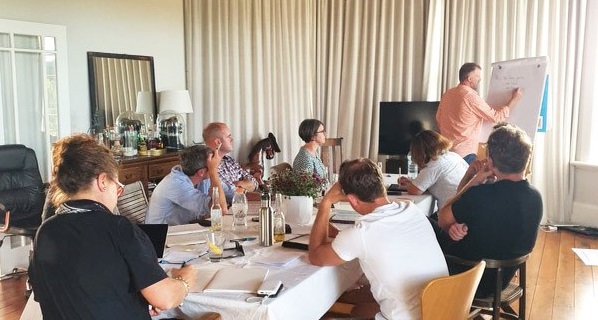
Image:Nuffield Scholars in study [supplied]

With five days to go until applications for the 2022 Nuffield Scholarship close, we thought we’d give five reasons as to why receiving a scholarship now, may represent a quantum gain in benefits over previous years. So calling all potential Nuffield Scholars, here’s some more food for thought.

  1. There have never been so many of New Zealand’s best business leaders and innovators in the country at the same time.
    There are a few silver linings to the global pandemic. One might be the number of influential people affiliated to innovation and the food and fibre sector, who have returned home. While their move may not be permanent, now is the time to meet and connect with them. Nuffield can help with that.

  2. With a programme that has adapted to the global pandemic, scholars currently have more flexibility, closer to home.
    We face many challenges right now. So, being away from family, farm and work could be tough on some. As a result of the global pandemic restrictions, the programme has adapted successfully by adding a deeper local layer, along with virtual and global input.

  3. No matter what happens with regard to global travel, Scholarship recipients still receive $40,000 to conduct research.
    Whether the borders open up or not in the short to medium term, the Scholarship funds are not adjusted. In a situation where the borders do open, your global travel component will continue, safely.

  4. Nuffield Scholars’ experiences and enhanced skillsets are increasingly in demand.
    As the rate of change in food and fibre and beyond increases exponentially, Nuffield Scholars’ exposure to research, innovation and leadership development, means their knowledge is always needed in governance and industry.

  5. Scholars will be part of the new Value Chain Innovation Programme (VIP).
    Two weeks’ immersion into more than ten of New Zealand’s established, novel and disruptive value chains.

    The Value Chain Innovation Programme introduces Scholars to value chains beyond their own. It represents an opportunity to meet, draw ideas from and connect with people across many industries.

    Thinking of launching a product, or adding another to a range? This is just one way the VIP can help.

Want to be part of this? Apply now.

Back to the August 2021 issue of The Rural Leader.

The nowhere-near complete guide to writing your Nuffield Scholarship application.

So, you’re looking to craft a cut-through Nuffield Scholarship application. If you’re like most people, the real struggle is getting started. There is something you can do while you stare blankly at the blinking cursor – ask yourself why?

Why are you applying for a Nuffield Scholarship? Your motivation is important. It will help you form a plan. A plan almost always leads to a better crafted anything really.  

Let a strong, singular motivation shine through, in not only the way your writing sounds, but how it feels too. For the reader, it’s the difference between wanting to read something compelling, and words on a page. 

Now, we can’t give you tips on what your motivation might be, but let’s just say anything along the lines of ‘I want to give back to the food and fibre sector’, is a good place to start. Remember you are submitting to a panel of smart, motivated people like yourself, who are determined to see New Zealand leading the future of food and fibre on the global stage.

Here are some tips from those who have read a few applications, to make the answering-questions-brilliantly-bit easier.  

1. Be clear and concise as to why you want a Nuffield Scholarship. 
Choose your words well and be economical. A good answer does not have to be a long-winded one. The more concise you are, the more the reader will gain a sense of your single-mindedness. That your motivation is clear.  
 
2. You’re likely to be clear about what a Nuffield Scholarship can do for you.
Make sure the reader is clear about what you will do for Nuffield. The reader, also known as ‘The Selection Panel ’, will want to know about your propensity for giving back. That’s a big part of Nuffield. Bringing back the thinking and ideas that might advance New Zealand’s food and fibre sector. 

A good application will show an understanding of how a Nuffield Scholarship will enable you to develop and implement strategic ideas and opportunities. Put simply, show you understand what a Nuffield Scholarship is.  

3. Sell yourself, but don’t overcook it. 
A critical piece of your sell is including examples of community leadership involvement, and ideally sector leadership experience as well. Recent is best. Play any ace cards up front, don’t bury them. 

Before you submit your application. 

Have you read it out loud? 
Does it sound the way you imagined it would when you wrote it? Try reading it out loud, it will help you find the things that aren’t quite working. 

Can you make it shorter? 
Less is more. There will always be a few words you don’t need. 

Have you asked someone else to read it? 
As great at writing as you may be, a second pair of eyes helps proof and sense check. When you’re the one writing, you’re often too close to see the obvious, like, glaring errors the spellcheck missed. 

Any big words you can replace with simpler ones? 
Enough said. 

Did you enjoy writing it? 
Are you pleased with what you’ve written? If so, chances are your reader will enjoy reading it too. 

2021 Food and Fibre Sector Insights Report

2021 Nuffiled New Zealand Farming Scholars Insights Report

Dead-ends or transformation - Redesigning NZ farming to thrive through change.

The environmental, social and economic contexts in which we farm and grow are changing rapidly. The pressure many primary sector New Zealanders feel is the collision of ‘business as usual’ with accelerating forces of change. Under these new conditions, protecting long-held structures and models becomes untenable. To thrive in a challenging new world, we must choose to self-disrupt and transform fundamental parts of our sector: however difficult that process may be.

This is the core insight of the Nuffield 2021 ‘World Tour of New Zealand’ – a redesigned Nuffield Farming Scholarship experience that saw 10 emerging primary sector leaders travel the length of the country to gather insights into the challenges and opportunities ahead.

This report is a culmination of those insights, as viewed through five pillars fundamental to a thriving NZ food and fibre sector:

Incentives – How the end of the ’farming for capital gain’ model is forcing us to redefine value, and restructure our organisations to capture it.

David Eade and Ben Anderson

Innovation – Mapping innovation potential across the sector to find what separates the status quo from the game-changers.

Shannon Harnett and Ben Mclauchlan

People – How leading organisations put people at the centre of what they do.

Lynsey Stratford and Edward Pinckney

Silos – How systemic silos across leadership, research and data management are restricting the potential of the sector.

Philip Weir and John Foley

Leadership – Why transformation must be led by values and purpose-driven leaders.

Tracy Brown and Daniel Eb

This report builds on the 2020 Nuffield Scholars Insights and represents the start of our individual study in chosen areas. We encourage those who wish to support our research to get in touch – our contact details are included throughout.

Finally, our sincere thanks to the many hundreds of primary sector New Zealanders who shared time and insights with us along the way. While there is a need for great transformation ahead, your pride, passion and talent are a reminder that we can and will get there.

Ngā mihi nui

The 2020 and 2021 New Zealand Nuffield Farming Scholars

Download your copy here


Time to celebrate the role our primary industries play

Nuffield Scholar Rebecca Hyde

Article is sourced from NZ Farmlife’s ‘CountryWide’ February 2021 magazine

Written by: Annabelle Latz
Photo by: Andrew Kyburz

Time to celebrate the role our primary industries play, New Zealand

Let’s sing the praises of the skills and value of our primary industries, as we do for our New Zealand sports teams.

This is the vision of farm environment consultant Rebecca Hyde, who operates under her own brand TFD Consulting Ltd, which is short for ‘The Farmer’s Daughter.’

Based in Oxford, North Canterbury, she launched her business in 2020. Much of her work week involves talking with farmers about the ever-evolving raft of regulations, a somewhat new and often complex business tier within our traditional ‘Number 8 Wire’ agricultural sector.

Over the past few years health and safety, employment and water regulations, to name a few, have become permanent features on a farmer’s business plan, directed from central government.

“A lot of farmers don’t understand all of it. It’s all come at once,” says Rebecca, the former nutrient management advisor at Ballance Agri-Nutrients and Ravensdown.

Rebecca is not shy to remind farmers that these changes are here to stay.

“The regulations will never stop, and collaboration to grapple these changes, while remembering the ‘people’ element of farming, is a must.”

Rebecca says while there is regulation involved with her business, there is also a large element of best practice.

While some farmers need more critical conversations than others, Rebecca says some don’t get why things have changed, or don’t want things to change.

“My advice is, either make the changes and I can help you, or the next person might not be so nice.”

Born and raised on a sheep and beef farm in Scargill, North Canterbury, farming has always run strong through Rebecca’s veins, and she has never imagined working in any other sector.

“One thing I will always be is a farmer’s daughter. And I really feel privileged to sit down at a farmer’s table and help them now.”

Within her advisory roles, Rebecca has appreciated how in tune she has always been with farmers.

“You just get that mum and dad are trying to get the shearing done, need to get to kids’ sport, will be drafting sheep in the dust, picking up calves in the rain… You just get stuff, and farmers appreciate this.”

What appealed to Rebecca about starting her own business was embracing the challenges, and having that natural instinct of what is happening on the land.

In 2017 Rebecca was awarded a Nuffield Scholarship, which she utilised to investigate globally how collaboration works well between groups in the agricultural sector, and how well New Zealand was doing comparatively.

Her travels took her to 13 different countries including Brazil, India, America, Canada, Denmark and China.

“One of the things that came across really clearly was that most groups saw the bigger picture of working together.”

Rebecca believes New Zealand at the time was not as strong on collaboration, as there was still plenty of segregation between farming industries: dairy, arable, non-irrigation, irrigation, sheep and beef, etc.

But this has changed, and collaborative groups such as the Primary Sector Council and the development of the Red Meat Sector story with Taste Pure Nature are great initiatives that encourage conversation, ideas, and solutions for the primary sector as a whole.

Rebecca cannot emphasise enough the importance of continued collaboration and communication, and the complexity of farming that must be acknowledged.

She talks about the three layers of farming: The ground layer is the physical farm, the middle layer is the farm management system, and the third layer is the people layer.

“And that is what makes a farm unique, the combination of all of them. And farmers must work out where that sweet spot is.”

Time and time again, Rebecca has sat in front of industry ‘experts’ with her fellow farming community.

“Farmers are expected to show up and contribute, but they’re not considered experts. I think that is something that’s really been missed – that people element.

‘One thing I will always be is a farmer’s daughter. And I really feel privileged to sit down at a farmer’s table and help them now.”

Farmers have the data and the systems – they are the people living that land and system. Farmers know their capabilities, their limitations.”

Rebecca admits there is no argument that the pressures on the environment are increasing, which is human-driven. Modern day regulations have put restrictions on farmers being able to make changes on their own farm, at their own discretion. Nowadays a farm environment plan, a nutrient budget, and in some instances, a land use consent, are required.

Rebecca certainly isn’t anti regulations, which she sees as tools for raising the floor, but agrees with farmers they can be confusing.

“Farmers know the practical, and they might not need the practical changes (such as fencing off waterways), but they might just need to know the new regulations.”

Should collaboration and the ‘people’ side of farming continue to flourish, the future of the New Zealand agricultural sector is a bright one.

“Agriculture is a big business in New Zealand, and it creates business minds.”

Rebecca believes good farmers are open to different types of experts; for example dry land farmers farming for moisture and using soil moisture monitors.

She says Covid-19 has really changed how people are looking at their own health, and sees farmers as being a big part of this as food producers.

“I would like to see a future where New Zealanders are proud of what farmers do. Where someone in central Auckland is singing the praises of their New Zealand- grown food, because they are proud of what we can produce, like we are proud of our sports people.”

Grazing Partnership a win: win – Phil Weir, 2020 Nuffield Scholar

Phil and Megan Weir have designed a system to increase dairy grazing income by adding value

Article is sourced from NZ Farmlife’s ‘CountryWide’ January 2021 magazine

Written by: Sandra Taylor
Photo by: Emma McCarthy

By adding value to the dairy support package they offer, Waikato farmers Phil and Megan Weir are generating returns on a par with a bull beef system.

For the past three years, the couple has been farming 250 hectares (the cattle platform is 180ha) in Te Pahu on the slopes of Mt Pirongia, in the heart of Waikato dairy country. They run breeding ewes, trading cattle and dairy heifers and have developed a grazing package that generates a premium and delivers a product that benefits the client’s dairy operation by ensuring they have well grown heifers entering the herd.

Phil, who is a  2020 Nuffield Scholar and sits on Beef + Lamb New Zealand’s Farmer Council, says they have been grazing heifers for dairy farmers Craig and Kylee Mora for three years. Their relationship has grown to one based on trust rather than formal contracts and an understanding that the couple will guarantee the heifers hit their pre-mating and calving target weights, irrespective of seasonal fluctuations in growth rates.

Read the full article  here: http://readnow.isentia.com/ReadNow.aspx?EcA1sSy2e6ut


Rural Leaders partners with Whanganui & Partners to build rural leadership in Wanganui region

Rural Leaders are delighted to announce our new partnership with Whanganui and Partners to help grow regional leaders and entrepreneurial capital in Whanganui’s food and fibre sector.

As part of the sponsorship, two scholarships will be granted to Whanganui residents, or those scholars who directly contribute to Whanganui’s agribusiness sector, who are undertaking a Kellogg Rural Leadership Programme or a Nuffield Farming Scholarship.

Find out more about the new partnership here.

Step up in 2021 – be part of the Kellogg Rural Leadership programme in Tai Tokerau!

Take the next step in your development and do the Kellogg Rural Leadership Programme in Tai Tokerau in 2021.

Course dates: 4 May – 21 October  

APPLY NOW
Applications close on 31 January 2021

Click here for more information on the Kellogg Tai Tokerau Course

2020 Review and look ahead to 2021 with Chris Parsons & Lindy Nelson : Sarah’s Country Interview

Chris Parsons, CEO of Rural Leaders and Lindy Nelson, Founder of Agri-Women’s Development Trust joined Sarah Perriam on Sarah’s Country to talk about the year ahead and what to expect for 2021.

Sarah’s Country Interview : 16th December 2020

Click here to watch the full Sarah’s Country show on demand.

Listen to the podcast here:

Step up in 2021 – be part of the Kellogg Rural Leadership programme in Tai Tokerau!

Take the next step in your development and do the Kellogg Rural Leadership Programme in Tai Tokerau in 2021.

Course dates: 4 May – 21 October  

APPLY NOW
Applications close on 31 January 2021

Click here for more information on the Kellogg Tai Tokerau Course

Chris Parsons Introduces 2021 Nuffield Scholars : Sarah’s Country Interview

In this interview on Sarah’s Country Chris Parsons, CEO of Rural Leaders introduces the 2021 Nuffield scholars and talks about how they will navigate their global research with covid-related travel restrictions.

Chris also touches on the 2020 Nuffield Scholar insights that were presented at the 2021 Nuffield Awards Ceremony, following the work the 2020 Scholars have been doing on the sector impacts of COVID-19.

Listen to the podcast here:

2020 Nuffield Scholars Insights

Stories from the year of living precariously

Presented at the Nuffield 2021 Scholarship Awards Ceremony
3rd November 2020, Wellington

The Nuffield NZ 2020 Scholars have had conversations with food and fibre producing leaders about the impact of COVID-19 on the primary sector.

From these conversations our 2020 Scholars (Tracy Brown, Ben McLauchlan, Phil Weir, Edward Pinckney and Shannon Harnett) have worked together to deliver four collective insights around supply chains, innovation, people and strategies.

Watch the 2020 Scholars deliver their insights in the video below.

Tracy Brown

Tracy Brown

“Conversations with food and fibre producing leaders about the impact of COVID 19 has helped us gain insights and become critically reflective thinkers”

Our year of living precariously

For the first time, the New Zealand Nuffield Scholars have worked together to deliver collective insights.

The collaborative learning model focused on ‘Critical Reflective Practice’ providing significant insight and a framework for more focused individual efforts in 2021.

Greater opportunity to connect locally has been valuable and should be incorporated into future program delivery.

Ben McLauchlan

Ben McLauchlan

“Resilience is the capacity of a system, enterprise, or person to maintain its core purpose and integrity in the face of dramatically changed circumstances.”

Insight one: Proven supply chain resilience

The World Trade Organisation forecast that world merchandise trade would be reduced by between 13% and 32% in 2020 (WTO, April 2020).

  • NZ has been able to continue to trade goods, despite local and international challenges.
  • We have outpaced other export focused countries.
  • Our supply chains have been tested and found to be resilient.
  • The demand for our food has ensured prioritisation and flow of key imports.
  • The primary sector has been a vital lifeline in keeping the NZ economy intact and lessening the economic impact.

Phil Weir

Phil Weir

“The threat of going hungry became real for many people for the first time in their lives”

Insight two: Growing disparity between the haves and have nots

We have all been affected by COVID-19. Some of us to greater or lesser extents. It has not just been the spread of the virus that has followed an exponential growth curve.
  • Technological innovation has quickened.
  • Increasing inequality between the haves and have nots.
  • The degree and obviousness of disparity raises significant risks to social license and export markets

Edward Pinckney

Edward Pinckney

“Chaos is exhausting, structure and certainty keeps us sane”

Insight three: Challenges around fit for purpose leadership

Risk related to COVID-19 escalated rapidly. Previously it was not high (or even present) on the risk matrix for many businesses. Some leaders were caught out, “frozen with indecision,” unable to make decisions and move forward. Others excelled!

The following are attributes of great leadership in a crisis:

  • Communication to create certainty
  • Culture of experimentation
  • Creativity and agility
  • Values based

Shannon Harnett

Shannon Harnett

“Lock down gave me time and space to evaluate my ideals around how I live. This was an opportunity I had not had in 30 years.”

Insight four: Adding value by moving from value to values

The rise of the ‘Conscious Consumer’ is a growing trend and COVID 19 has accelerated this.

We need to further understand the drivers behind consumers preparedness to buy and consume sustainably grown, values-based produce.

2021 Nuffield NZ Scholarships Awarded

2021 Nuffield Scholars

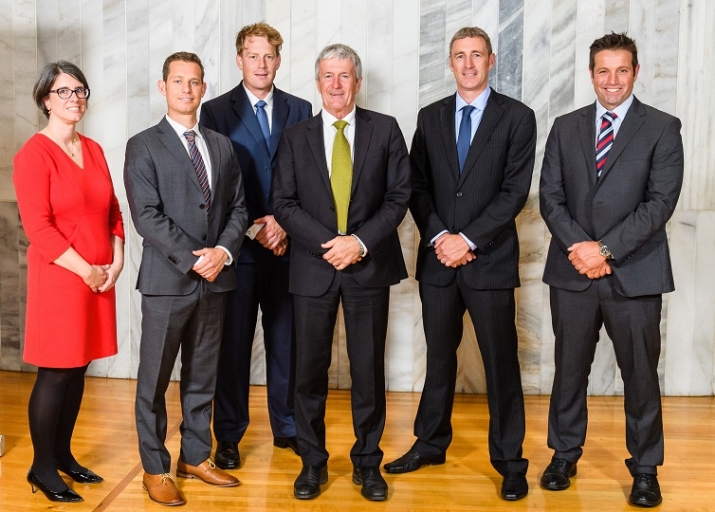
Photo from left to right: Lynsey Stratford, Daniel Eb, David Eade, Hon Minister Damien O’Connor, John Foley, Ben Anderson 


Media release, Tuesday, 3rd November 2020

The latest cohort of emerging leaders in New Zealand’s primary sector were awarded a 2021 Nuffield NZ Farming Scholarship at Parliament on 3rd November. The Scholarships were awarded by Hon Damien O’Connor, Minister of Agriculture, Biosecurity and Food Safety, Minister for Rural Communities and Minister of State for Trade and Export.

The 2021 Nuffield scholars are Ben Anderson, owner and manager of a dry stock farm in Hawkes Bay, David Eade, owner of a finishing block in Whanganui and GM of Apiary Solutions, Daniel Eb, Auckland based Communication Strategist, John Foley, Senior Seed Production Agronomist for PGG Wrightson Seeds in Christchurch and Lynsey Stratford, an equity partner in a 420 cow dairy farm in Curio Bay and Dairy Environment Leader with Dairy NZ.

Click here to read the 2021 Nuffield Scholar bios.

The travel programme for scholars next year will be different to previous years due to border closures resulting from COVID19.  Typically, the Nuffield Scholarship programme involves travel internationally for at least four months and participation in a Contemporary Scholars Conference with Nuffield Scholars from around the world. Followed by a six-week Global Focus Programme through several countries with other scholars. 

“Next year our scholars will start their programme with extensive national travel to gain greater insights and deeper understanding into New Zealand’s primary sector before embarking on any international travel” says Nuffield NZ Chairman, Andrew Watters.

“Although the programme will be delivered differently to previous years, it will offer scholars new opportunities and experiences, along with a global perspective whether or not scholars travel abroad” says Watters.

The five new Scholars will join more than 160 Nuffield alumni who have been awarded Nuffield Scholarships over the past 70 years. Their research topics are likely to cover a range of different agricultural issues such as climate change, fractional investing in agriculture, repositioning the role that farming plays in society, technology in agriculture around automation of roles and health, safety and wellbeing on farm.

Rebecca Hyde’s Nuffield Journey

Rebecca's video insights from her travels around the world

Before leaving...

Notes from India

Brazil

Denmark

Quatar

USA

USA continued

United Kingdom

Canada, Ireland, UK

China

Rebecca Hyde's Nuffield Report:

Rebecca's stories and articles

Hamish Murray : Lessons for farm teams in study

Nuffield Scholar Hamish Murray’s work on the changing nature of farm work highlights how even that bastion of stalwart farming types needs to change to remain a relevant, exciting and desirable place to work for a new generation.

Read the full article sourced from Farmers Weekly (18 June 2020) here.

Click here to listen to Hamish’s interview on Sarah’s Country. 

OPEN NOW!
2021 Nuffield NZ Farming Scholarship Applications

Applications close 23 August 2020

Are you an NZ Farmer/grower or Agribusiness Professional looking to broaden your horizons, grow your networks and gain some global experience in the agri sector?

Click here to find out how you can do that through the Nuffield Scholarship Programme.

Apply now for a 2021 Scholarship.

Corrigan Sowman : All Black thinking tackles stress

Nuffield Scholar Corrigan Sowman believes an All Black approach to thinking will build more resilience in farmers.

Farmers are under increasing pressure as changes in society, technology and climate leave them questioning their role as producers of food. The challenges are making the right decisions for their wellbeing and producing food modern consumers demand. 

Corrigan Sowman has found some of the best lessons for thriving in this new environment can be found with the All Blacks.

Read the full article sourced from Farmers Weekly (3 June 2020) here.

Tune in to Corrigan’s live interview on Sarah’s Country (4 June 2020).

OPEN NOW!
2021 Nuffield NZ Farming Scholarship Applications

Applications close 23 August 2020

Are you an NZ Farmer/grower or Agribusiness Professional looking to broaden your horizons, grow your networks and gain some global experience in the agri sector?

Click here to find out how you can do that through the Nuffield Scholarship Programme.

Apply now for a 2021 Scholarship.

Rebecca Hyde: REX Interview, what’s next for 2021 Nuffield Programme?

Rebecca Hyde, NZ Rural Leaders Trustee and 2017 Nuffield Scholar joined Hamish McKay and Richard Loe on Rural Exchange (Sunday 14 June) to talk about what’s next for the 2020 Nuffield Scholarship Programme post the COVID19 global travel restrictions.

OPEN NOW!
2021 Nuffield NZ Farming Scholarships Applications 

Are you an NZ Farmer/grower or Agribusiness Professional looking to broaden your horizons, grow your networks and gain some global experience in the agri sector?

Click here to find out how you can do that through the Nuffield Scholarship Programme. 

Apply now for a 2021 Scholarship.

Bio-ethics can help tough choices – Ben Hancock

Ben Hancock, 2019 Nuffield Scholar joined Sarah Perriam recently to talk about his scholar report ‘Rural Leadership taming the wicked problems‘ and how to grow the toolbox to foster society’s trust.

Click here to listen to the full podcast on Sarah’s Country – 20th May.

Ben also spoke with Richard Rennie from Farmers Weekly (28th May) and said ‘Bio-ethics can play a role beyond medical dilemmas in helping agriculture resolve its wicked problems.’

Read the full Farmers Weekly article here.

Nadine Porter in Wales

Nadine is a 2017 Nuffield NZ Scholar and in recent years has been living in Wales.

Earlier this year, she was appointed to the Welsh Red Meat Promotion Board (Hybu Cig Cymru) for a period of three years.

“This position allows me to advance my views on the need for global messaging around red meat with the main players, in the face of a complex and rapidly changing environment”

Nuffield Programme 2020 & 2021

Nuffield New Zealand Farming Scholarships

2020 Programme Update

2020 scholars were just starting Day 1 of their Contemporary Scholars Conference (CSC) and their 15-month programme with 70 other international scholars in Australia when the government announced new border and arrival measures. 

The scholars decided to return home the next day and the CSC programme was eventually cancelled three days later as all countries advised their citizens to return home immediately.

We are now looking at how we engage these scholars in one of the greatest learning experiences as we face disruption of the global economy and food production challenges.

At this point their programme will include some international webinars and preparation in New Zealand and potentially Australia. Hopefully international borders will be open again by early-mid 2021.

2021 Scholars Applications

We intend to select 2021 scholars

However, the scope and timing of the scholarships will depend on the ability to travel for the programme, the Contemporary Scholars Conference and the six-week Global Focus Programme going ahead as scheduled. Potentially we could have two groups of scholars travelling in 2021. 

Suffice to say, the team and Trustees are focused on finding safe ways for 2021 scholars to travel and learn. Assuming that is possible, it will be important for New Zealand to have scholars assessing the changes to the international agri-sector and bring those lessons home for the benefit of all. 

Energy & ag a lasting marriage – Cameron Henderson

Cameron Henderson (2019 Nuffield Scholar) used his Nuffield Scholarship to explore links between agriculture and energy and how technology can work to harness farmed energy sources including waste matter to supply national energy needs. 

Read the full Farmers Weekly article.

Listen to the interview on Sarah’s Country (12th May 2020).

Click here to read Cameron’s Report ‘Farming Energy: Opportunities to help NZ reach net zero carbon 2050’.


Is Roundup our friend or foe? : Hamish Marr – 2019 Nuffield Scholar

Is Roundup our friend or foe?

For more than 40 years glyphosate has been an invaluable chemical weapon in farmers’ arsenal as a low-residue, safe and simple weed control enabling greater flexibility and less soil disturbance.

Canterbury arable farmer Hamish Marr devoted his Nuffield Scholarship to examining how glyphosate fell from grace in the public eye and what farmers can to do to preserve it as an invaluable crop treatment. 

Read the full article in the Farmers Weekly.

Click here to listen to Hamish’s interview on Sarah’s Country (30th April).

Click here to read Hamish Marr’s research report ‘Can we farm without glyphosate?’