2026 Nuffield NZ Farming Scholarship. Apply by 17 August 2025. Read More...

Apply for 2026 Nuffield NZ Farming Scholarship by 17 August 2025. More details...

Nine tips to nailing your Nuffield application. 

1. Identify Nuffield’s goals.

As simple as it sounds, applicants often don’t fully understand what the broader goals and objectives of Nuffield are.  

If your application is written with consideration to ‘giving back’ for example, this will go some way to increasing your chances of gaining an interview. 

2. Get your Nuffield referees sorted soon.

There’s still time to get your three referees locked in. This is something that often needs a little time, so if you don’t have three lined up yet, make it a priority. 

3. Include what you’ve done for your rural community or assisting others.

Tell us about it. We’re often surprised to learn of the above and beyond participation some applicants have done without mention in their application.  

Have you served on any boards, committees, in any community organisations? Any rural groups, or in any voluntary capacity? Have you written any articles?

Dig, think, tell us. 

4. Keep an eye on the close date – 17 August.

For some reason time seems to be getting away on us all at the moment. This next few weeks will be no different. Take five minutes to plan your approach to applying.  

Start planning what needs to be done and by when. Aim to finish on Friday 15 August – or sooner. 

5. Get in touch with our Programmes Manager.

Our Programmes Manager can help you through any queries you may have. she’s within earshot of CEO Lisa Rogers, so you get Lisa’s 8+ years’ experience as well.

We just asked Lisa for a gem, and she said, 

“Be very explicit about what being awarded a Nuffield Scholarship will allow you to do for the sector, not necessarily what it will do for you.” 

Who knows, five minutes on the phone with the Rural Leaders Team, or a quick email, might be the difference.

6. Focus on your strengths.

Find ways to both answer the questions accurately and get your ace cards down. 

An average application isn’t necessarily a badly written one, however, it is definitely one that doesn’t get across how suited you are to being a Nuffield Scholar. That said, you might want to pay attention to this next tip for a well written application.

7. Check your application.

Spell check. Grammar check. Read check – how does your answer sound when read aloud?

Check the questions. Check your answers. You get the idea.  

8. Read a few back issues of the Rural Leader.

Not as strange as it sounds. The Rural Leader has much information entwined throughout  that may spark topical responses to application, and potentially, interview questions.  

Of note are the Ideas That Grow podcasts and Alumni in the Spotlight articles. School up – read the Rural Leader. 

9. If you know a Nuffielder, get in touch with them.

As Kate Scott, 2018 Nuffield Scholar, said of the Nuffield Alumni, (they are) ‘A network open to you picking up the phone or flicking them and email’.  

Kate may have been talking about being part of the Alumni, but if you know, or know of, a Nuffielder, reach out and ask their advice.  

Good luck with your application. 

Kellogg Rural Scholar Series: ‘Dairy Insights’.

Here’s an introduction from Rural Leaders CEO Chris Parsons, on the new Dairy Insights report.

New Zealand’s food and fibre sector is full of capable, and purpose driven people. Supported by DairyNZ, Livestock Improvement Corporation and an incredible group of partners, the New Zealand Rural Leadership Trust is privileged to be entrusted with growing many of these people in their leadership journey.

A key aspect of the rural leadership approach is research-based scholarship. The clarity of thought and confidence this approach promotes is transformative. 

The set of reports précised in this edition are penned by Scholars from the Kellogg Rural Leadership Programme. The Kellogg programme has been equipping rural leaders for strategic impact since 1970. The selection of reports is just a sample of reports by Scholars from the Dairy Industry.  

They grapple with the big issues facing New Zealand Dairy and are written by people living and working in the Sector. Many Kellogg and Nuffield Scholars go on to live their research. They build businesses. They advance community and social enterprises. They influence policy and advocate for animal and environmental outcomes, informed by an ability for critical analysis and their own research-fuelled passion. Rural Scholarship is about impact.  

In the following pages we are pleased to précis 14 dairy research reports by Kellogg Scholars. The full reports can be found at https://ruralleaders.co.nz/kellogg-our-insights

The reports traverse topics as wide and timely as innovation, markets, people, sustainability and social issues.  

Ngā mihi,  
Chris Parsons

and the NZ Rural Leaders Team 

Download and read the full report here:

Leading in uncertain times.

For New Zealand’s food and fibre leaders, championing change is rewarding and meaningful work. Though these are complex times, where driving a purpose across diverse stakeholders, motivations and attitudes can mean these rewards come at a price.

Increasingly leaders are feeling overwhelmed – with a lot coming at them. They run businesses, sometimes volunteering in their community as well. They wear multiple hats, face multiple responsibilities and all too often burnout lurks behind the next deadline.

To nurture New Zealand’s food and fibre leaders, the Agri-Women’s Development Trust (AWDT) is delivering a new programme with a leadership focus, offering the support they need for an uncertain and stressful environment.

‘Know your Mindset. Lead what Matters’ is a short, online programme aimed at grass-roots leaders of change, behind and straddling the farm gate. It’s for both women and men driving change – helping them to manage multiple pressures, calmly and clearly.

Adapted from AWDT’s successful ‘Know your Mindset. Do what Matters’, it aims to understand leaders’ struggles and give them proven, usable tools and techniques to do the same with their teams.

The antidote to tricky times.

Leading is often a lonely place. This new programme connects farmers, growers, rural professionals, and funders across the sector to face common leadership wellbeing issues together.

It’s in this same spirit that AWDT and the New Zealand Rural Leadership Trust (Rural Leaders) have come together as well. Along with the programme’s other partners MPI and Farmstrong, both Trusts are sharing ideas to help grow resilience in leaders today – and tomorrow.

Lisa Sims, AWDT, and Chris Parsons, Rural Leaders, talked recently about the programme and the context it lives in.

What to expect from ‘Know your Mindset. Lead what Matters’.

In a time of mounting pressure for rural New Zealanders, participants will learn how stress affects their ability to plan and act effectively as a leader. They gain practical tools to listen for signs of stress in teams or rural communities. They learn how to respond to them and lead them through change.

Running across two evenings, ‘Know your Mindset. Lead what Matters’ is presented by a registered Clinical Psychologist and Chartered Organisational Psychologist, alongside AWDT facilitators who work in breakout spaces where participants share stories and support each other. It’s a heavy-hitting line-up of presenters and one with a deep rural knowledge.

Creating a strong base from which to lead. 

The programme explores the impact that uncertainty, disruption, and change might have on thinking and behaviour. Participants build on this and develop a shared understanding of how to talk with and support others.

Time is also spent identifying traps for leaders along with learning to use tools to navigate working with people, stress, and emotions.

Participants round out the programme by gaining clarity about the positive changes they can make with their own leadership and building a realistic action plan to make those changes happen.

When, where, and how much does it cost?

The first ‘Know your Mindset. Lead what Matters’ programme is set for:

30 June, 7pm-8.30pm and 7 July, 7pm-9pm.

It is delivered online via Zoom and will cost $45 + GST per person.

To register for this timely programme head to https://www.awdt.org.nz/programmes/know-your-mindset-lead-what-matters/

Lucie Douma: Entering an unknown future – 2022 Nuffield CSC – Norfolk, United Kingdom

Lucie Douma, 2022 Nuffield New Zealand Scholar

I was lucky enough to be at the first Contemporary Scholars Conference (CSC) to take place as the world is starting to see out the other side of the Covid pandemic. It was quite surreal to be with two-years’ worth of scholars (roughly 140 people) from 15 countries, all in one place for eight days. Considering most of us have not travelled for more than two years it was a bit of re-learning how to travel and manage the new ‘Covid’ rules. But it felt normal again. This feeling couldn’t be bet.

The feeling of returning to normality comes with a number of new challenges. These global challenges affect all of our agriculture systems and our farmers. The challenges we are facing are:

  • Two weeks before the CSC took place, Russia invaded the Ukraine.
  • Dealing with the aftermath of the world being shutdown for two years from Covid, and the damage this has caused to our respective supply chains.
  • The implementation of Brexit and creation of new Free Trade Agreements with countries.

These large challenges were common themes to all of our discussions during the conference.

How do we navigate this new world from Norfolk?

We also spent a significant amount of time at the Norwich Research Park which is home to pioneering research and solutions to some of the world’s biggest challenges including; food shortages, an ageing population and climate change. The perfect place for us! Here we tackled some big questions from potential meat free days to water shortage.

Innovation in agriculture in Norfolk can be seen at the Food Enterprise Park where Fischer Farms has begun work on a £25m project to build the world’s largest vertical farm. The vertical farm will be 25,000sqm of stacked growing space for salad leaves, herbs and other fresh produce for supermarkets.

Fischer Farms claims they will be able to produce the same amount of food in its four-acre building as would be possible on 1,000 acres of conventional British farmland. What does this mean for conventional British farming? The question becomes, is there room for both and how do they co-exist? This is what Tristan Fischer (CEO of Fischer Farms) tasked us with designing a solution for.

Tristan Fischer, CEO of Fischer Farms

Learning from other scholars

I greatly valued learning from the other scholars on the challenges they face in their countries with agriculture. It was heartening to hear that we face similar challenges. However, having read through other Nuffield reports these challenges were already recognised 5-10 years ago.

One example is the vegan movement, which is getting worse and there is now a greater level of activism amongst vegan and environmental groups who appear to have coalesced in some areas (including the UK).

If this is a sign to come, then in New Zealand we really need to be thinking how we can reduce our rural-urban divide. How do we encourage more participation in our agriculture sector? Is there a role for data here? This will lead me through to the rest of my research on data interoperability and the value of data.

Thank you to Rural Leaders and all those who support Nuffield for enabling us to travel to Norfolk and come together as a global community to address some of our big challenges in the sector. The experience and what I have taken out of it is invaluable, including all the new friends I have made.

Ngā mihi nui.

Parmindar Singh: 2022 CSC Insights – Norfolk, UK

Parmindar Singh- 2022 Nuffield New Zealand Scholar

Background

The 2022 Nuffield Contemporary Scholars Conference (CSC) was held during March 2022.  Nuffield 2021 and 2022 Scholars travelled from 15 countries and were hosted in Norfolk, UK.  Prior to our departure in March the New Zealand Government announced their plan to relax border restrictions, welcoming New Zealand residents back to New Zealand.  With this announcement we had the opportunity to attend the CSC in the UK and represent Nuffield New Zealand. 

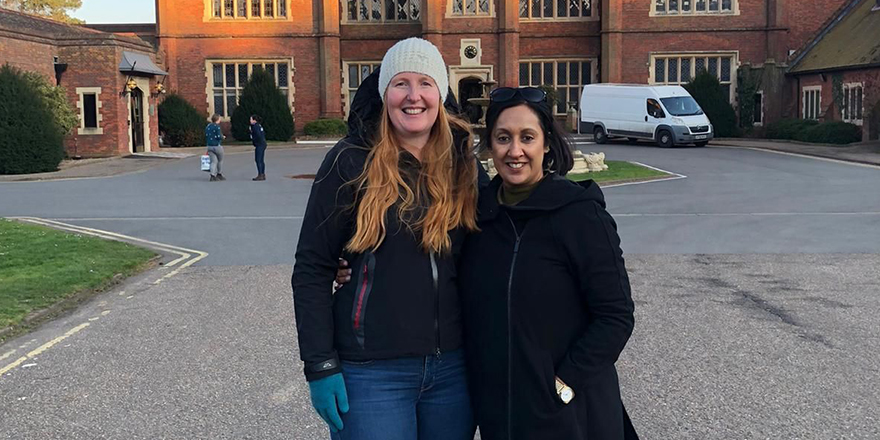
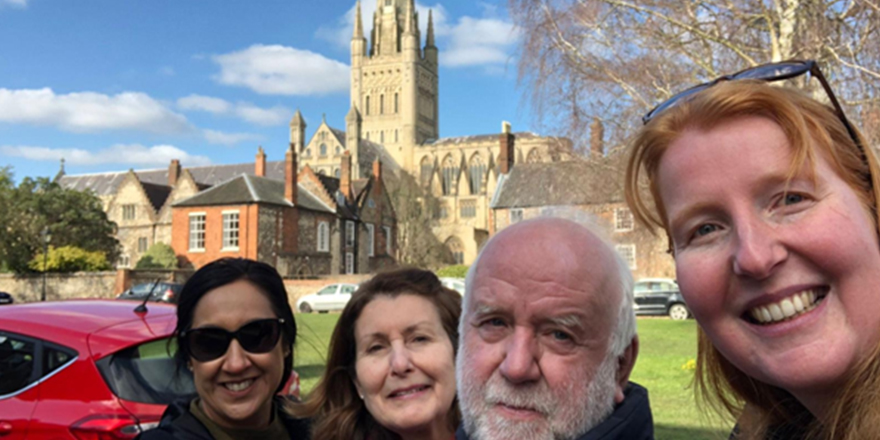
Pre-conference, Lucie Douma and I spent time with Nuffield Scholars David and Christine Hill in Norwich. David and Christine introduced us to agriculture to Norfolk, where we visited their arable farming business, visited friends of the Hills who were dairy farmers in the village and toured the local town and village getting an insight into farming in Norfolk.  David and Christine shared with us their farming and family history and the challenges the UK farming sector was facing.  

Farms in the Norwich area consisted of generational farming with long-time family connections to the land and estates. Larger estates like Holkham Hall consisted of variable farming and commercial enterprises and considerable land ownership. These estates are well recognised in the UK, along with their family ownership and heritage and in some circumstances their association to the House of Lords. 

The UK Farming Situation: March 2022

The Russian invasion on Ukraine, has created a global humanitarian crisis.  In the UK, it signified the immediate concern for food security and the additional pressure on farmers who had already been challenged over the past two years.  Spiralling input costs were front of mind, particularly with wheat, fuel, energy and fertiliser costs.

Russia’s significant control over the supply of gas though the UK and the EU, imposed not only an increasing input cost on farm, however also increasing household and living costs.    General conversation with the UK public, posed an anxious population with the on-going impact of covid-19 on businesses and the additional pressures from the Russian invasion on the Ukraine.  It was interesting to note, that although the general UK population was sighting increasing food costs in the supermarkets, when comparing UK super market food costs with New Zealand super market food costs, it appeared that the cost of food in the UK was significantly less that the cost of food in New Zealand.

Additional changes in agriculture in the UK also reflect the transition from the long-standing EU scheme of agricultural subsidies (Common Agricultural Policy [CAP]) to the phasing out of the subsidy scheme with the exit of the UK from the EU. Post Brexit, the UK is navigating the challenges of staff shortages and increasing costs of production (which are likely to see the cost of local produce continue to increase), creating additional pressure for UK farmers.

Regenerative Agriculture was a topic discussed often and referred to as an opportunity to restore soil health and the quality of waterways, whilst reducing greenhouse gas emissions and enabling a healthy ecosystem; expanding the conversation of the global environmental challenge.

UK dairy farmers also expressed the increasing pressure and scrutiny they were facing from the public on environmental and animal welfare issues.

The CSC Agenda

The CSC agenda included presentations from agricultural leaders, identifying agriculture and the food of the world, British agriculture in a global setting, the impact of agriculture on climate and the global environmental challenge.

The all-important health, safety and wellbeing also featured on the agenda, with some real-life take-home messages and scenarios.  A visit to the Norwich Research Park, highlighted the research and innovation undertaken in searching for solutions to worldwide challenges in food-related disease and research into plant sciences and species. 

We also visited the Norwich Food Enterprise Park.  This park has been created to encourage and support food production, processing and agriculture through co-location of commercial enterprises. Our visit to the park provided us with an opportunity to participate in a small group activity to come up with solutions to challenges four businesses in the park were facing.  It was a great way to learn about real case scenarios and learn about a group of diverse agricultural businesses. 

A visit to Houghton Estate and Dairy was enlightening, hearing from two enthusiastic farmers about their journey.  Holkham Hall & Estate, was the final destination in Norwich.  Holkham was somewhat surreal, with history dating back to the 1600’s and a family estate that was built for the 1st Earl of Leicester in the 1700’s.  The Estate consists of 25, 000 acres, with business ranging from agriculture, holiday park, retail to property development. 

The final few days of the conference were spent in London, with a visit to the Houses of Parliament and a celebration to mark the closing of the CSC Conference with a Gala Dinner. 

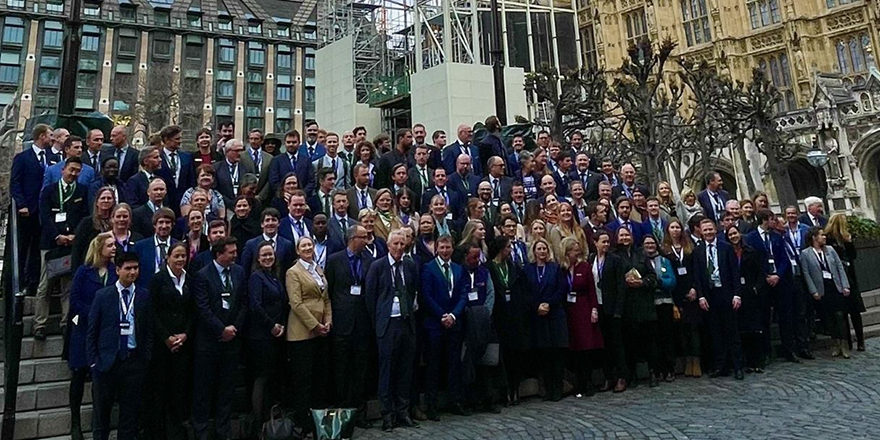
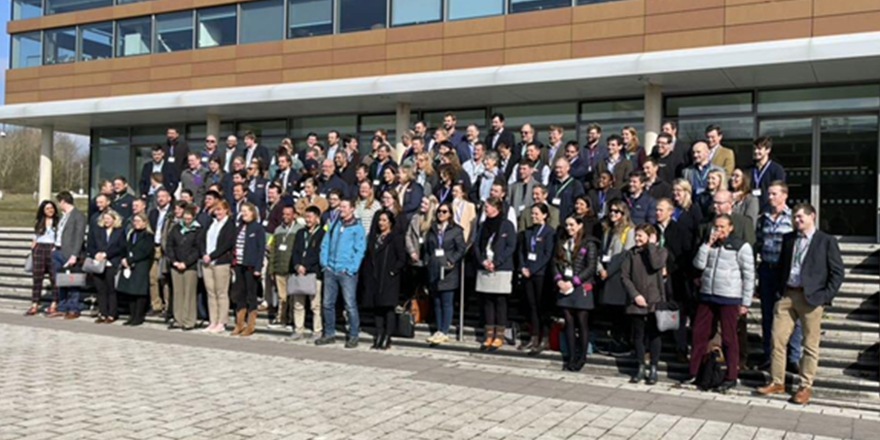
Group photo Nuffield CSC 2022

Learning from Global Scholars

The CSC offered the opportunity to engage with global agricultural leaders.  Learning from other scholars about their country and their agriculture was a highlight.

Such a diverse group of agricultural enthusiasts, ranging from: cows, camels, poultry, crocodile, pigs, vineyards, horticulture, bees, deer, sheep, flowers, arable, sheep and beef to agricultural service and technology providers and developers (no doubt there was more).  From the opening of the CSC on March 7th to the closing of the CSC March 14th, each day, a country group would present agriculture in their country.

Learning about how countries engage in agriculture and listening to the proud country men and women talk about their work and their countries work back home, was a great start to every day at the CSC.  

NZ Farming vs UK Farming

UK is farmed according to landscape, water availability and weather/climate conditions much like NZ.  Norwich for example consisted of predominantly arable farms, with variable crops (dominant crops included: wheat, oilseed rape and sugar beet) and forward negotiated contract agreements.  Arable farms consisted of large fields and it was interesting to note that some fields were planted with more than one crop simultaneously. 

Although the EU is recognised as a leading exporter of Dairy alongside New Zealand and the US, the UK was not seen as a leading exporter of dairy, conversely more of a domestic producer.  New Zealand exports more than 90% of domestically produced dairy products and revenue exports contribute significantly to the New Zealand economy.  The UK reports significantly less contribution to its national economy from its agricultural exports.

Across the UK, dairy farming appears to be more predominant in the South.  As with NZ, some dairy systems are more complex than others and weather dictates the type of dairy system applied.  The dairy farms we visited in Norfolk, housed their animals in barns, which appeared to be the dominant form of dairy farming system applied in this particular region in UK. 

New Zealand Brand Reputation

CSC participant and fellow scholar feedback consistently focussed on a global perception of New Zealand producing premium agricultural products, with a focus on grass fed and an organic style of farming where products can be traced back to origins of a country that cares about their environment and animal welfare.  “New Zealand punches above its weight”, was a consistent and humbling message from many fellow scholars. 

My insight from the conference and travel, was that New Zealand is profound at producing premium quality food.  Globally we are viewed as leading in all thing’s agriculture and we are seen as a country who cares about environment factors and animal welfare.  We have a great story to tell, and we are getting better at telling it! 

Lucie Douma and Parmindar Singh reporting from abroad.

After a two-year hiatus courtesy of the Covid-19 pandemic, the Contemporary Scholar Conference (CSC) finally took place this year, in Norfolk, UK. Lucie Douma and Parmindar Singh, 2022 Nuffield Scholars, attended and reported back on the event and their travels. The following article brings together these reports.  

As part of their scholarship programme key milestones, they also compiled a brief insight work report.

Follow the links to read Lucie and Parmindar’s Insights Reports.  

The 2022 Nuffield Contemporary Scholars Conference.

“Lucie Douma and I represented New Zealand this year. The Contemporary Scholars Conference was a great way to start the global aspect of our Nuffield Programme. The Conference provided an opportunity to meet global agricultural enthusiasts and build new network of connections,” says Parmindar Singh. 

“Our hosting region, Norwich, is predominantly arable farming with notable long time family estates. The landscape, climate and access to water very much determines land use and production. 

“Before the CSC, Lucie and I were very generously hosted by Christine and David Hill. David is a Nuffield Scholar who is still very active in the Nuffield community. David travelled the world to study biotech crops. His wife was a science teacher and very involved in agricultural education and research and is also actively involved in several Norfolk organisations working in this filed. They manage their 500+ha arable farm. 

“David and Christine showed us around their neighbourhood, we visited a local dairy farm and learned about the Hill’s arable business and family history,” shares Parmindar. 

Sharing New Zealand with the world.

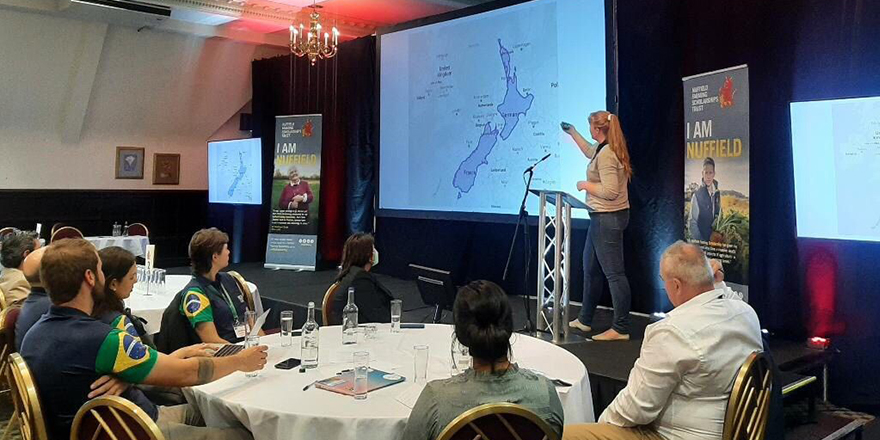
New Zealand, our farming systems, and the positioning we have on global markets was part of virtually every conversation Lucie and Parmindar had at the CSC. This was driven in some part by a presentation Lucie and Parmindar gave to those attending. This was a brief overview of the New Zealand food and fibre sector. 

“At the start of each day of the CSC, representatives of all participating nations were asked to share a short presentation of the agricultural sector in their respective countries. In all cases the ten-minute time limit was not enough, and we were no different,” shares Lucie. “For our presentation, Parmindar opened with our values and understanding towards agriculture and how we incorporate the principles of Whakapapa and Kaitiakitanga.  

“I did the second half of our presentation and covered the key statistics of farming in New Zealand and shared our vision of fit for a better world.” 

Parmindar adds, “ Learning from other scholars about their country and their agriculture, was always a highlight of the day. To be given the opportunity to explain more about what we do here at home was a time for reflection on how proud I am to be a New Zealand farmer.” 

The CSC business hackathon.

One of the initiatives included in the conference programme was the so called “business hackathon” where each group of scholars visited four different businesses over one day. 

“The visits started with a 20-minute induction about the business followed by a specific challenge. Then as a group, we had to come together with a result – a solution to the challenge. We then had to present this to our hosts at the end of each session,’ explains Lucie Douma. 

“It was an interesting way to get to know more about some of the notable businesses in the region. I really enjoyed the exchanges we had during the hackathon with the other scholars and the local business community,” adds Parmindar. 

Two years’ Nuffield Scholars get together.

This year’s conference was the first after a two-year hiatus caused by Covid restrictions around the world.  

“It was great to have two years combined – instead of having 60 or 70 people, we had 140. Also attending were the 2020 UK Scholars and we got to meet some of the alumni,” recounts Lucie. 

Parmindar agrees, “All in all, CSC was a full-on conference, where we had the opportunity to meet passionate and enthusiastic global agricultural leaders.   

“Many scholars commented on how New Zealand punches above its weight and has created a name for itself as a premium agricultural production powerhouse. It seems we are known as a small country with a notable place in the premium agri-products market. 

“We also touched on many global issues around climate, water, and soil management along with political tension particularly with Russia’s invasion of Ukraine and the associated concerns for global food security. 

“We’ve both been reflecting on the last few weeks and feeling very privileged to have had the opportunity to engage with whanau from across the globe! Thank you Nuffield New Zealand, the CSC in Norfolk was invaluable,” concludes Parmindar.

Lucie’s post-conference travels: North England, Scotland, Shetland Islands, Norway and the Netherlands.

After the CSC, Parmindar travelled back to New Zealand to organise further travel plans for later in the year, while Lucie had the opportunity to further explore the United Kingdom and Europe. 

She went to Wales, where unfortunately she tested positive for COVID and had to spend a week in isolation – giving her time to reschedule her itinerary.  

“I went up through Northern England to The Lakes District and spent some time with farmers in Cumbria, and North Cumberland.  

“What really struck me is that people were facing similar issues to what we do in New Zealand. Almost all farmers who have similar systems to us, are facing the same challenges with labour access and input costs. It’s a global problem, not a localised one. 

“In Scotland, I visited Angus Soft Fruits. These growers supply 15 to 20% of all the fresh berries to UK supermarkets. It was interesting to talk to them and hear about the challenges they face with Brexit, and what they are doing to secure the labour they need to harvest. They need roughly 400 seasonal workers over the main picking period.  

“They have contracts with growers in other countries like Morocco, Spain to ensure year-round berries are available for the UK supermarkets. It was informative to hear how they are dealing with the realities of modern farming,” says Lucie. 

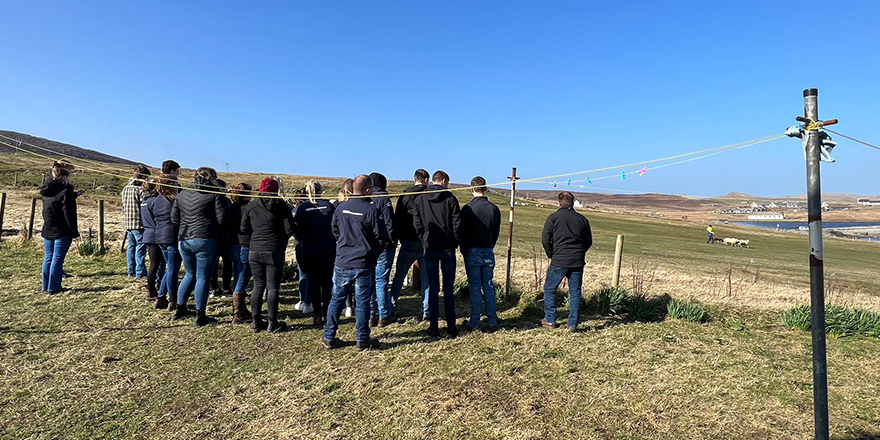
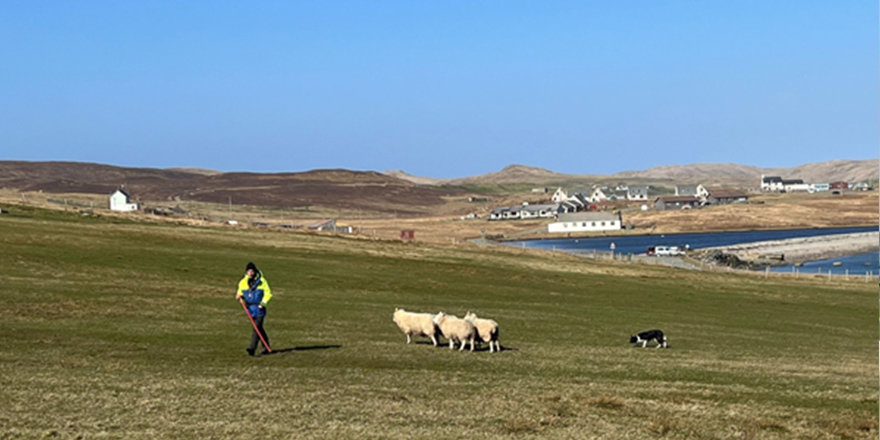
“The next stop was the Shetland Islands – probably the most eye-opening time I had. They farm so differently to us here in New Zealand, it’s a more community-based approach they have built there; where everybody supports each other,” explains Lucie.  

“They don’t have the same labour challenges as larger farming operations do, because they operate as one community, they operate on mutual support – helping each other in times of need. That really came across in my conversations with the people there. They have an active young farmers group  and I had the opportunity to spend a lot of time with them. I really enjoyed that,” concludes Lucie. 

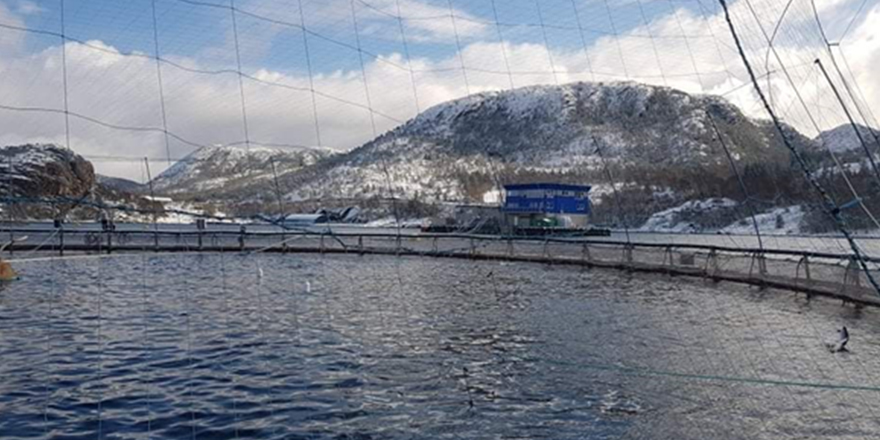
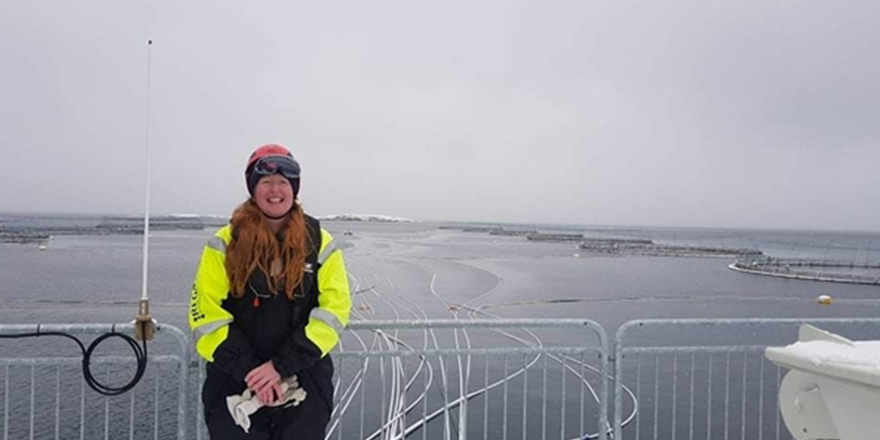
Next on the schedule was a visit to a Norwegian salmon farm. “This is an industry that has risen at pace and scale over the last few decades. The wild salmon population around the Norwegian coast numbers 500,000. This farm has 11 cages with the capacity to hold 1.8 million salmon and there are over 1000 farms in Norway such as this one. 

They are very advanced in some respects. When it comes to data management, similar issues exist around data interoperability of systems as with the agriculture sector. Biosecurity is an important issue for them as well,” adds Lucie. 

Lucie then headed to the Netherlands, but not before experiencing full Norwegian blizzard. 

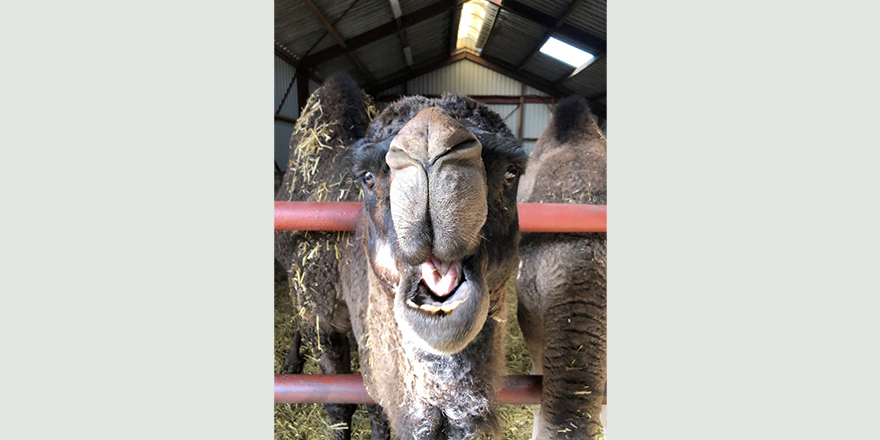
The Netherlands had a highly advanced agriculture sector. From traditional horticulture and animal farming through to developing new industries, including camel milking.

Land-use change in the Netherlands means incorporating energy production into the systems. Some arable farms where busy building large wind turbines and other farms had solar panel fields incorporated within them. Lucie visited advanced farming barns where the whole rood was covered in solar panels.

“With the Russia-Ukraine conflict, energy production and self-sufficiency has come to the forefront of farming. All farming systems I visited were diversified in some part, and they all had a farm shop in order to share the story of their produce and build strong connections with the local communities,” recounted Lucie.

You can read both Lucie and Parmindar’s Insights Reports here.  

Where it started – The Global Tour of New Zealand.

Value Chain Innovation Programme Logo

The ‘Global Tour of New Zealand’, as it was quickly named by 2020’s Nuffield Scholars, gave a unique view of the country’s food and fibre sector value chains. This year, the programme will be made richer still.

The Value Chain Innovation Programme will begin in September 2022 and is now open to a larger number of people in the primary sector. 

Building the value. 

A lot of work has gone into building a collection of exciting and varied case studies across dairy, arable, horticulture value chains. Participants learn straight from the source. They gain unique insights into food and fibre innovation, in both domestic and international markets.

The new programme gives a wide view of established and novel value chains. Participants compare and transpose thinking at a time when the primary industries are going through the biggest period of transformational change since the 1980’s.  

“If you’re in food and fibre, now is the time to be gaining a pan-sector view of as many successful business models as possible,” says Lincoln University Lecturer Prof. and Programme Co-facilitator Hamish Gow,

“Increasingly the most successful value chains are those with business models closely aligned to their customers, use protected IP, and provide innovative shared value structures.”

The programme runs over five weeks, two of these are spent on the road. The remaining time is spent on an individual research report. “It will be a busy few weeks, with the time commitment being 100 hours on field trips, guest lectures and networking, online lectures and discussions, tutorials, and another 50 hours self-directed learning,” said Prof. Gow.  


The programme delivery team. 

New Zealand Rural Leadership Trust CEO Chris Parsons remarked, “As a global leader and thinker in value chain design, innovation and entrepreneurship, Professor Gow is uniquely qualified to impart deeper strategic learning and insight into the September programme.”  

Leadership and Strategic Development Consultant, and Programme Co-facilitator Phil Morrison, ONZM, further strengthens the team. “We are also fortunate to have Phil onboard. He brings a different leadership perspective, drawing on a career in military command, and in the delivery of innovation, strategic and leadership training as a consultant. We couldn’t hope for a stronger team”, added Chris Parsons. 

Building leadership capability. 

Once completed, the programme will give participants the competencies, confidence, and networks to influence change and lead transformation at an enterprise level and throughout regional New Zealand.  

Chris Parsons says, “We hope this programme will lead to positive larger scale change as our graduates continue to grow and contribute to a fast-changing food and fibre sector.” 

Rural Leaders are taking applications until Sunday 10 July.

Applications can be made at ruralleaders.co.nz/value-chain/ 

Finding the next Nuffield Scholarship recipients. 

Nuffielders 2022

After recent Nuffield strategic work, the Rural Leaders Team and the NZRLT Board have identified five highly desirable core attributes of a Nuffield Scholar. These won’t come as any great surprise to Nuffield Alumni, but articulating these simply has been a valuable exercise, especially as our 2023 Scholarship search is set to begin. 

Here are the five attributes any scholar selection process will look for in terms of evidence that they exist or have the potential to emerge in an applicant.

Bold

The will to step forward, be willing to challenge conventional thinking, to act, to make decisions with confidence. 

Innovative

Someone who can develop and express original thinking and ideas.

Motivated 

Driven to go above and beyond to accomplish a goal. Someone who can find the energy and confidence needed to do so. 

Perceptive  

Possesses the cognitive, observational, and critical thinking abilities to assess challenges and generate usable insights.   

Community-minded 

Motivated to contribute to community by collaborating and sharing skills, knowledge, experience, and ideas, forging ever-stronger connections with people and place. 

Six Alumni to help with this years’ Scholar search. 

We’re fortunate to have so many inspiring alumni to help us drive this years’ scholar search. We’ll need to represent as many industries as possible as well as show the changing face of food and fibre.  

From the Catlins to Nelson – Scholars photographed doing their thing. 

We set off a on a road trip recently to capture a few Nuffield Alumni – in their natural habitat.  

From a time and budget perspective, travel was kept in the South Island. We hope to make it up to the North Island as well at some stage.

There are still many industries not yet represented – we’ve done our best for now covering: Aquaculture, dairy, sheep and beef, horticulture, agri-business, and more broadly, entrepreneurialism. 

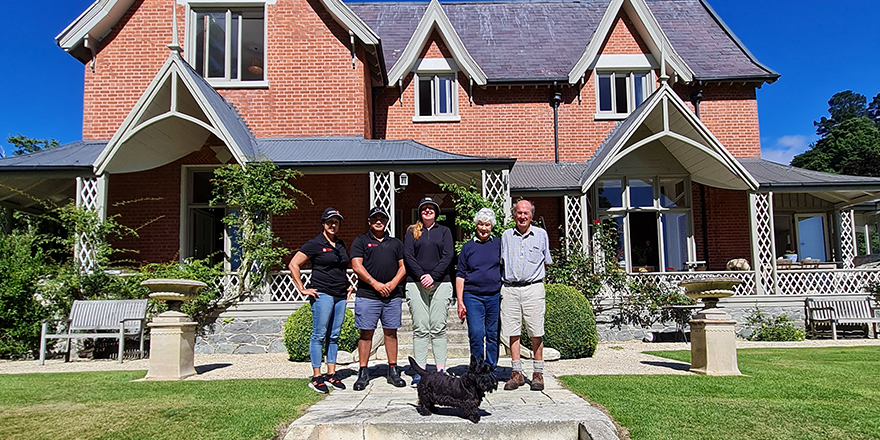
A big thank you to the Nuffield Alumni that agreed to help us with this shoot. Your generosity with your time and the effort you made was greatly appreciated. Those images shown, or some like them, will be used in advertising for the upcoming 2023 search. Here’s a preview.

Kate Scott, 2018 Nuffield Scholar

Kate Scott, 2018 Nuffield Scholar

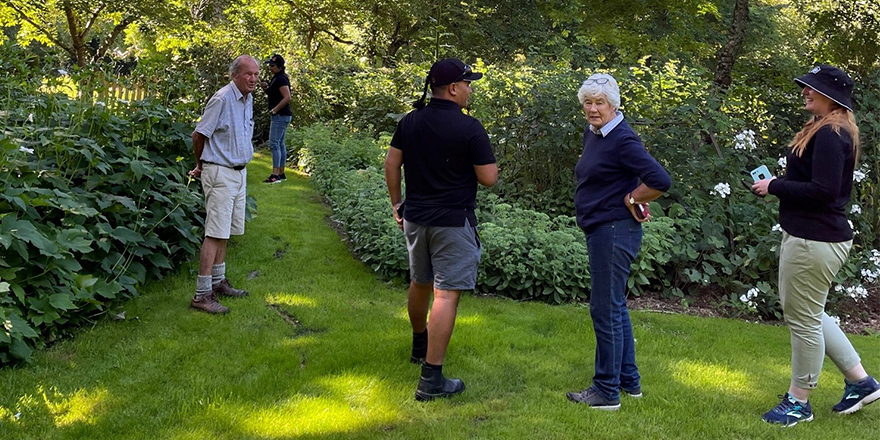
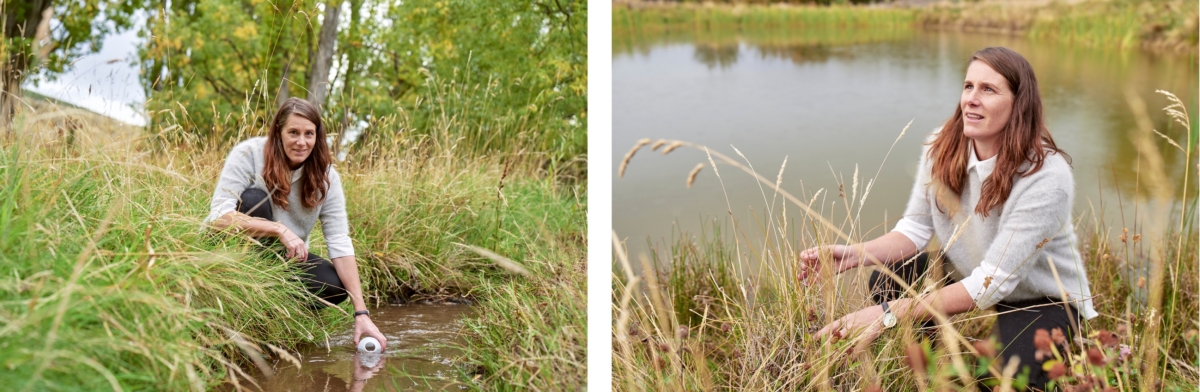
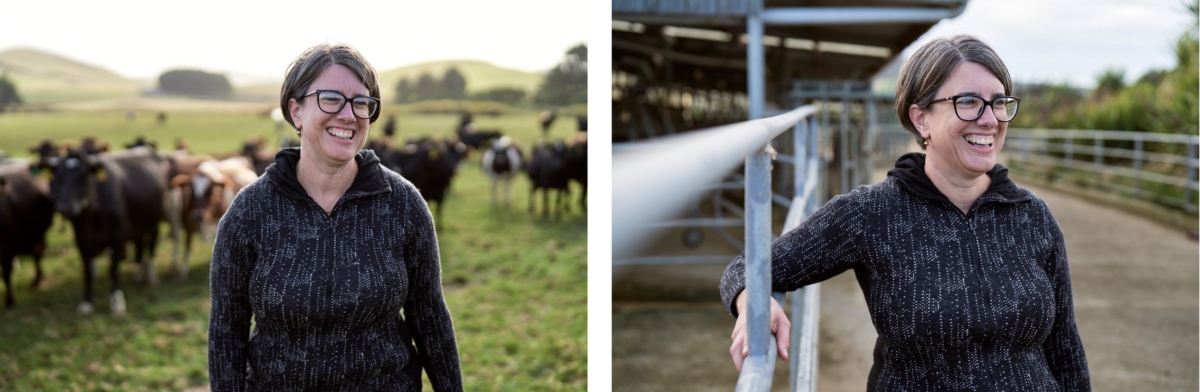
While much of Kate’s work is done indoors these days, running her business Landpro, she has a background in resource management planning, part of which involves testing water. We wanted to show Kate outside, on the land, doing the work she did when she started her business in 2007.  

Kate balances a young family with work and involvement with organisations outside of work too, such as being Chair of the New Zealand Rural Leadership Trust. 

Julian Raine, 1997 Nuffield Scholar

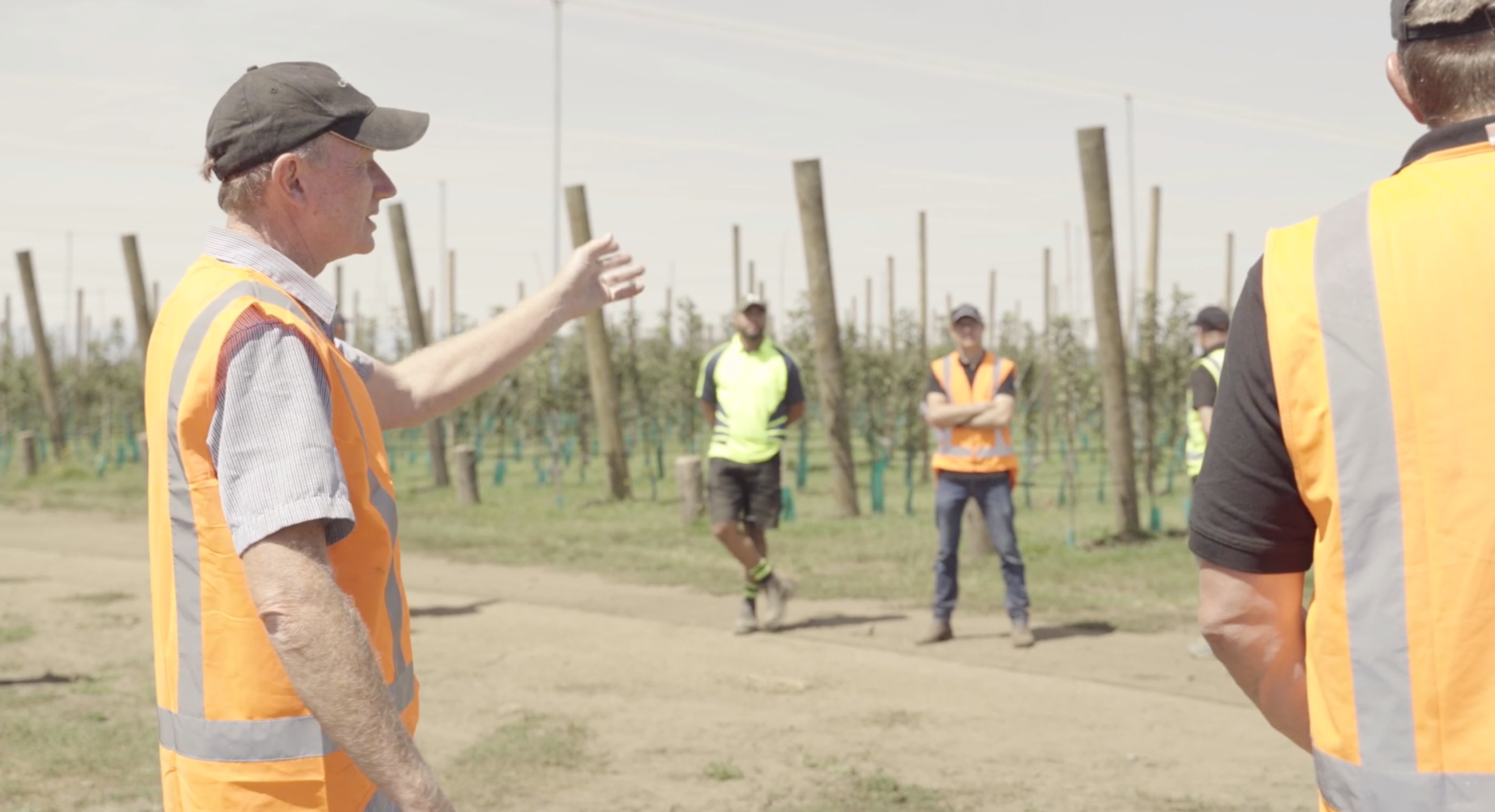
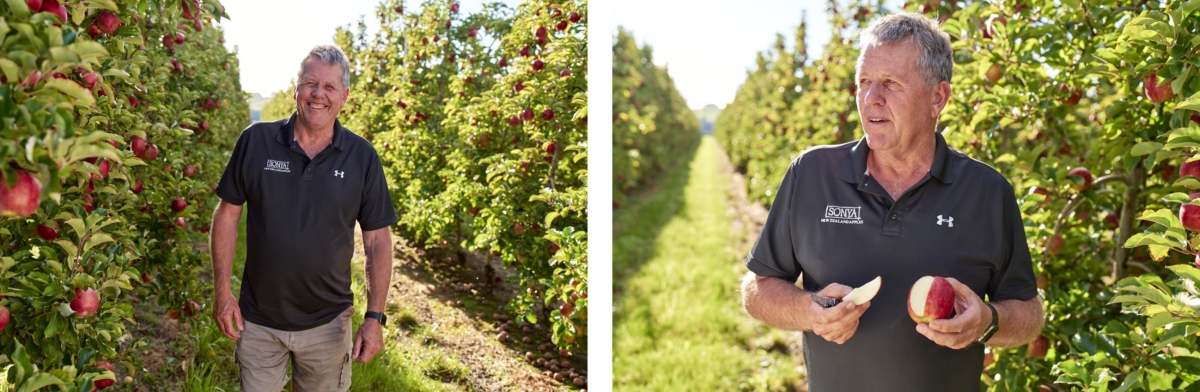
Julian is involved in both the horticulture and dairy industries. For the purposes of this campaign, we captured Julian in one of his apple orchards near Richmond, in Marlborough. Julian is also partners with fellow Nuffield Scholar Murray King in Appleby Ice-cream.  

One of Julian’s dairy farms was recently recognised by the SPCA for infrastructure aiding animal well-being. He has an eye on the future too, making at least a third of his orchards robot-ready. 

Lynsey Stratford, 2021 Nuffield Scholar

Lynsey is a non-practising lawyer involved in her local rural community. She is a consultant for her business Primary People, which provides people management and development services to the primary sector. 

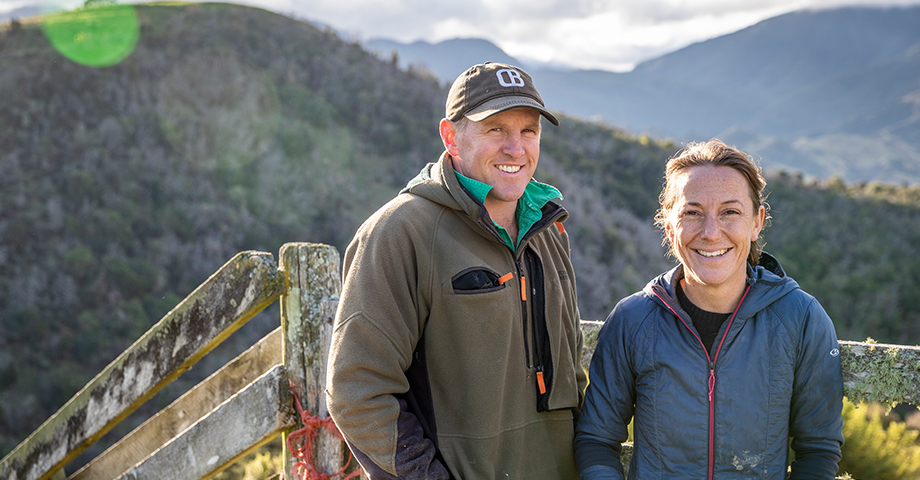
We wanted to shoot Lynsey out with husband Chris on their dairy farm, situated in a unique part of the country at Curio Bay in Southland. Here, they have also recently covenanted 30 hectares of incredible bushland.  
 

Andy Elliot, 2018 Nuffield Scholar

Andy Elliot, 2018 Nuffield Scholar

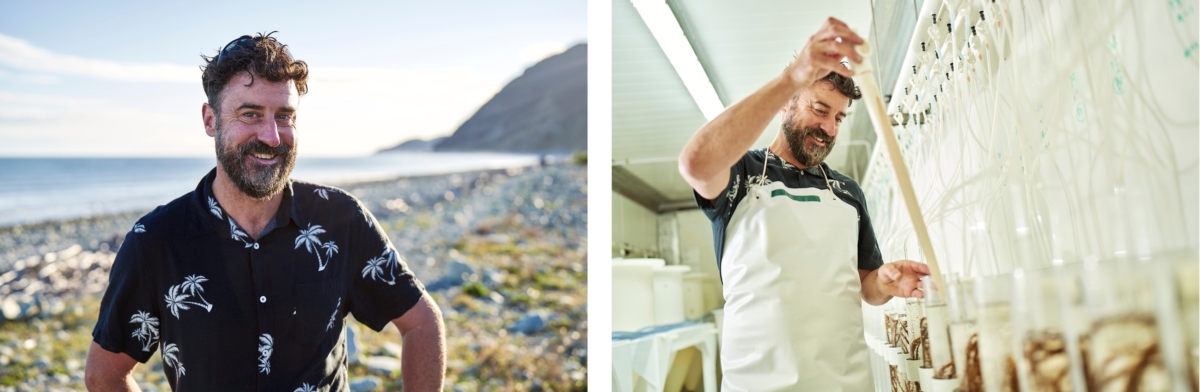
Andy is based in Nelson, Marlborough and is Research and Business Development Manager at Wakatū. He is at the cutting edge of aquaculture research and far from being daunted by the need for a lab, he created his own at the Cawthron Aquaculture Park. He is currently developing several projects.  
 
Andy was also recently appointed to the Investment Advisory Panel for Sustainable Food and Fibre Futures. 

Desiree Reid-Whitaker, 2019 Nuffield Scholar

Desiree Reid-Whitaker, 2010 Nuffield Scholar

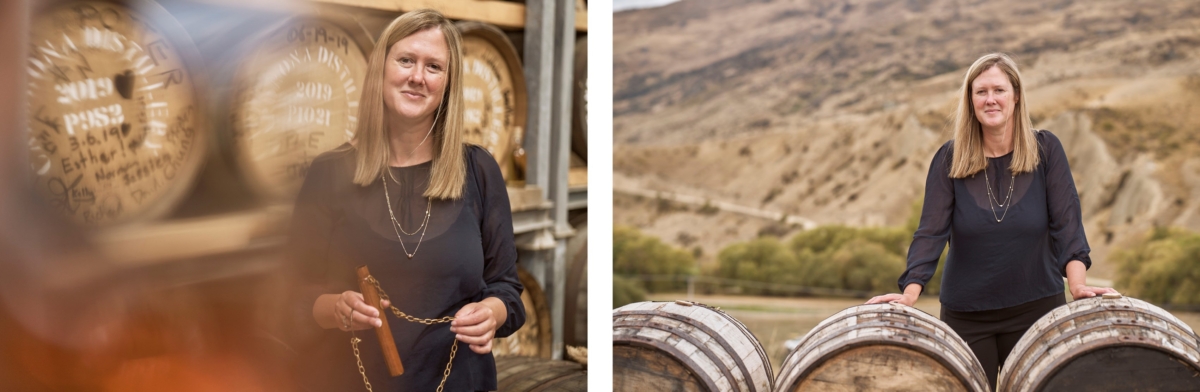
Desiree is a former dairy farmer who learned the craft of whiskey distillation from some of the world’s best. Returning home to New Zealand, she spent six months finding the right location to build the Cardrona Distillery.  

We wanted to capture Desiree in a beautiful environment loaded with visual clues that she has built everything in the most authentic way, not the easiest way. 

Hamish Murray, 2019 Nuffield Scholar

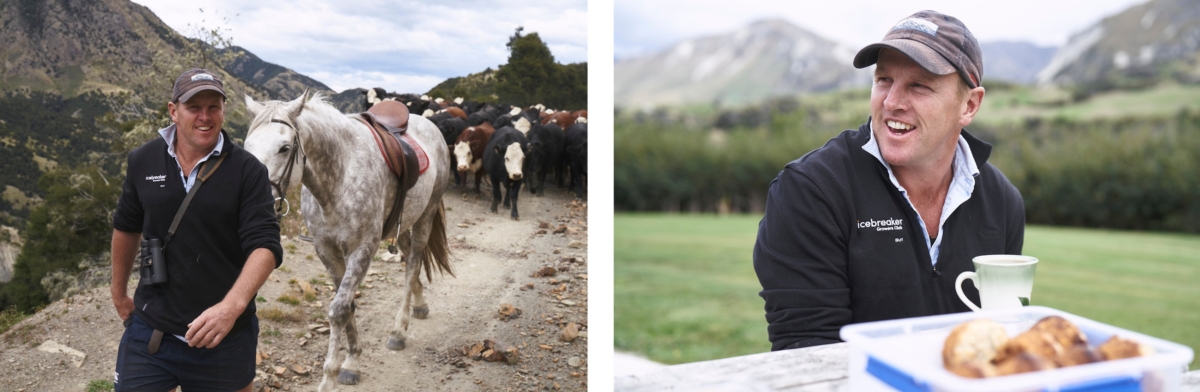
Hamish farms sheep, cattle, and runs a substantial honey operation at Bluff Station, near Kaikoura. The station is as visually beautiful as it is vast and is run by an exceptional team of people. No surprises there, as Hamish is just as passionate about his own growth as he is about his team’s.  

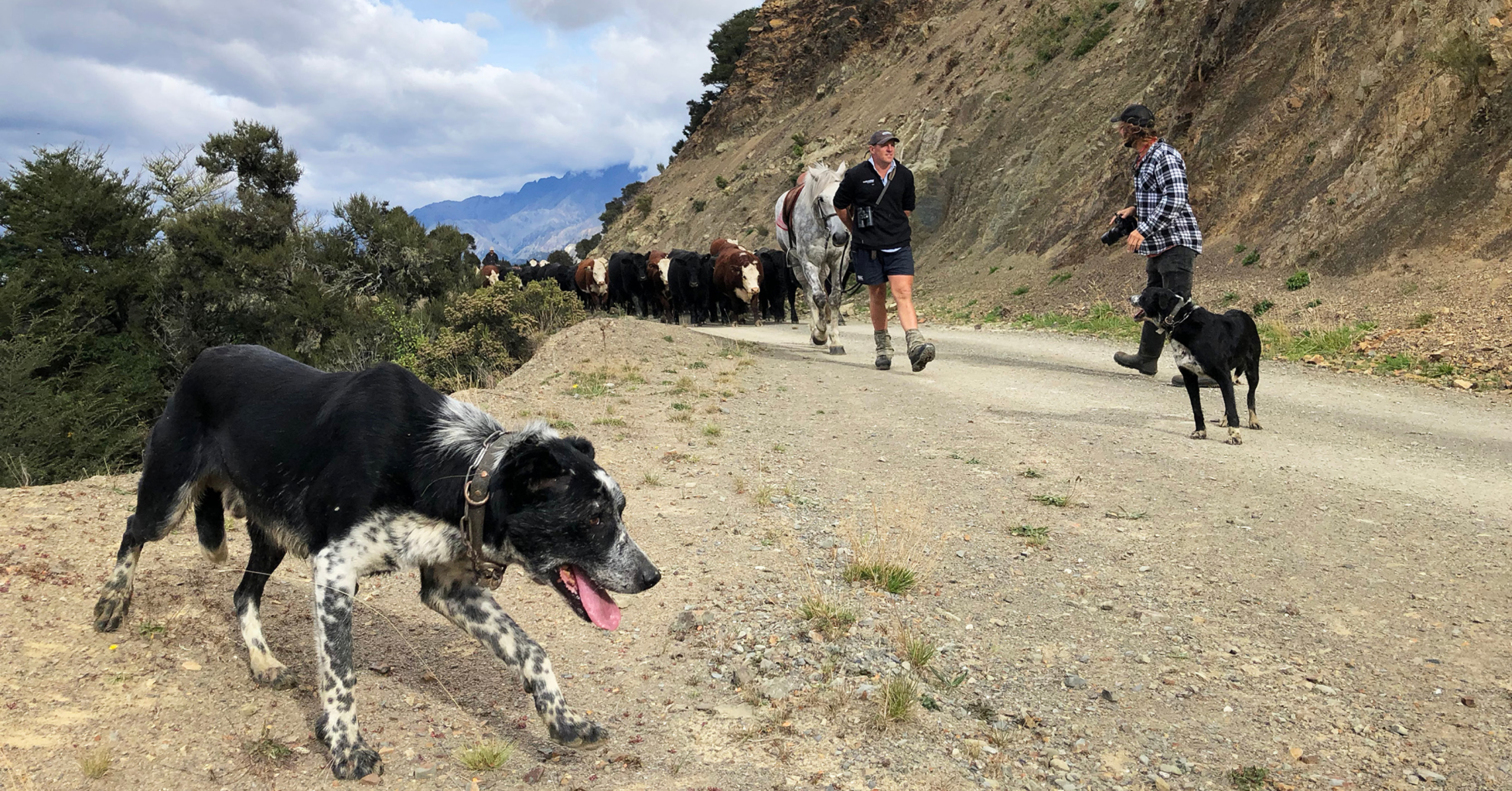
We were spoiled for choice at Bluff Station, the landscape is a photographer’s dream. The goal was to capture Hamish working – in this case moving cattle.

E Tipu 2022: The Boma Agri Summit.

E Tipu banner image

E Tipu 2022: The Boma Agri Summit will help catalyse the future of food and fibre in Aotearoa.

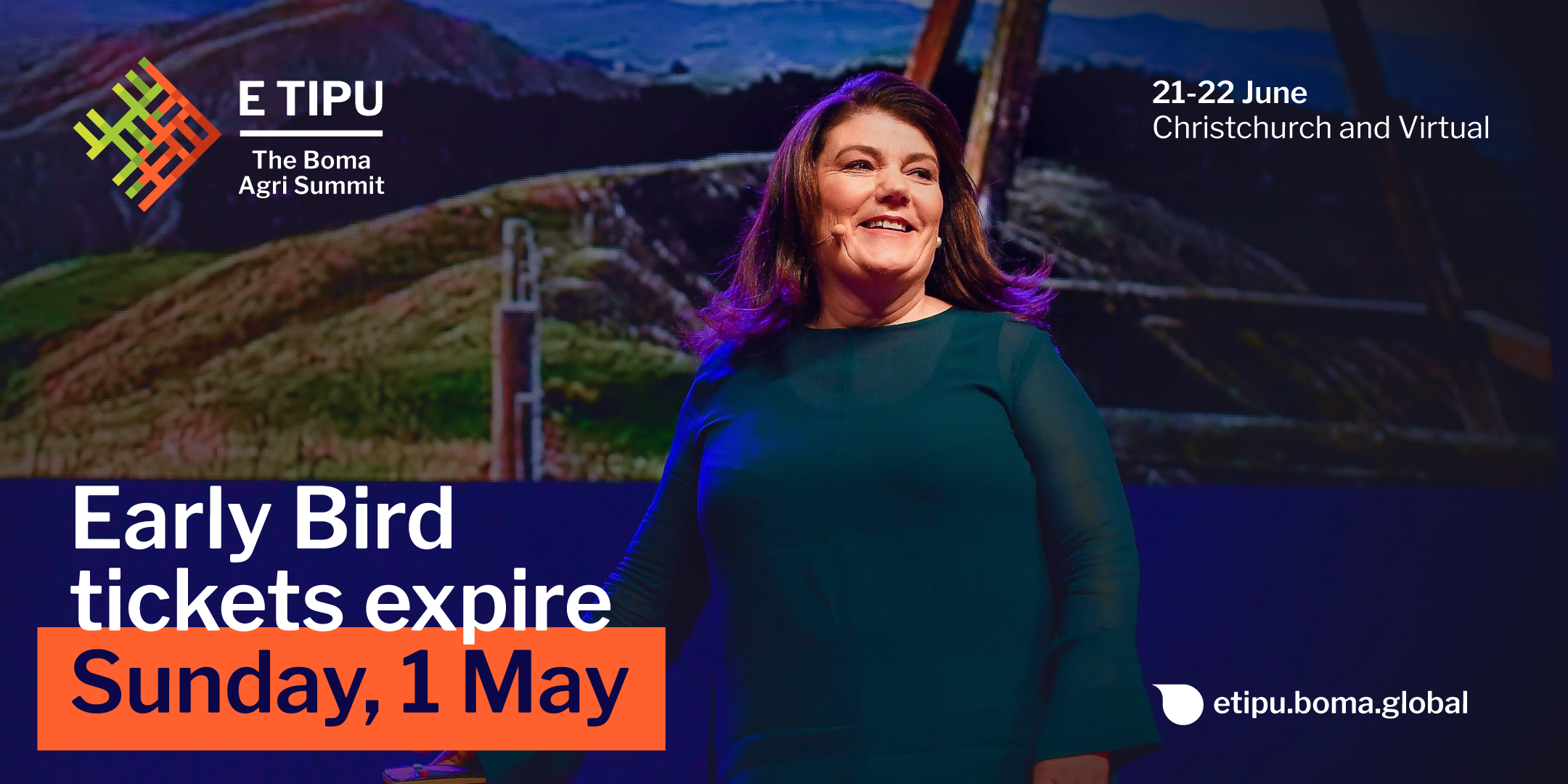
Set for 21-22 June in Ōtautahi Christchurch and virtually, E Tipu brings together remarkable speakers and changemakers to share mind-blowing insights, ignite vital conversations, and help shape the future of Aotearoa’s primary industries.
The summit features two days of talks from global and local leaders in agri, plus interactive workshops, expert panels and special Q&As, innovative exhibits, valuable cross-sector networking and more.

As a national event with global reach, E Tipu connects Aotearoa’s food and fibre sector with the world — tackling the critical questions around how we can be more innovative, collaborative, sustainable and profitable, now and into the future.

In-Person and Virtual tickets are on sale at etipu.boma.global, with special rates available for farmers, not-for-profits, startups, groups, youth and students.

As an E Tipu 2022 partner, Rural Leaders have been given a special offer for sharing with readers of The Rural Leader.

Use the code 100_RuralLeaders to save $100 on In-Person tickets and 20_RuralLeaders to save $20 on Virtual tickets. 

Value Chain Innovation Programme change of date. 

Value Chain Innovation Programme Logo

The start date for the Value Chain Innovation Programme is changing.  

Due to the acceleration of the current Covid outbreak, it will be challenging to deliver the Value Chain Innovation Programme to the high standard we require, and participants expect.  

The decision has therefore been made to shift the start date for this programme.  

To build in sufficient time to allow industry, stakeholders, and Rural Leaders, to establish more certainty regarding the current outbreak, a new date has been set for later this year.   

The new dates are: 
Value Chain Immersion Tour (2 weeks)  
Sunday, 18 September to Friday, 30 September 2022.  

Value Chain Innovation Report.  
Due mid to late October 2022.  

Virtual Zoom Masterclass (2 hours)  
Early September 2022.  

Applications close Sunday, 10 July 2022.  

Programme reserve date for early 2023. 
We also have a reserve date in place for early in 2023, should it be required. Let’s hope it’s not. 

The reserve dates are: 
Value Chain Immersion Tour (2 weeks)  
Sunday, 15 January to Friday, 27 January 2023.  

Value Chain Innovation Report.  
Due mid to late February 2023.  

Virtual Zoom Masterclass (2 hours)  
Early to mid-December 2022. (We will complete the Masterclass prior to Christmas to allow thinking time before the tour begins in January). 

Already applied for the Vale Chain Innovation Programme? 
We’ll be in touch soon to talk through this change with you personally.  

If you would like to discuss any matters arising from this announcement, please contact Lisa Rogers, Programme Director on 021 139 6881, or email lisarogers@ruralleaders.co.nz.

Whanganui and Partners and Rural Leaders serve Strategy for Lunch.

A collaboration between Whanganui and Partners and Rural Leaders, Strategy for Lunch, has been created to meet a need among business owners, to engage more confidently in business strategy discussions and design. 

The programme consists of five neatly wrapped, bite-size, online sessions that provide the tools and knowledge to help Whanganui business owners build their strategic capability.

Some of New Zealand’s leading strategic facilitators have come together to deliver the five 90-minute, online workshops, from midday every Friday, starting 11 March.

Strategy for Lunch is designed for business owners from across all sectors and industries who are looking to advance their strategic skills, knowledge, and their businesses. 

The programme will help business owners undertake their own strategic analysis, identify opportunities, and to evaluate their strategic choices.

From sharing frameworks and tools, to recommended reading, review and reflection sessions, and group discussions, this innovative programme gives business owners a strong knowledge foundation from which to tackle their own strategic challenges.

Here’s a brief week by week outline of what participants can expect to cover and learn in this smart and highly accessible programme.

Week 1: 11 March – Orientation.

An introduction to core strategy concepts. We’ll also outline the programme’s  
5-week journey. We’ll answer questions like, what is strategy? What isn’t strategy? What are the forces influencing our world today? And tomorrow? 

Week 2: 18 March – Strategic framing. 

Aims to understand a business’s value discipline and maps its business model. Questions we’ll answer in this session are, what is your ‘value discipline’? How do you create customer value? What is your business model for delivering customer value? 

Week 3: 25 March – Strategic definition. 

Defines a customer’s “job to be done”. This session also aims to understand customer drivers of value. It will unpack what the best options are to increase value for your customers?   

Week 4: 1 April – Strategic options. 

This session aims to explore a business’s strategic innovation options. We’ll answer questions like, how might you design or adapt your strategy for a competitive advantage? How do you develop a blue ocean strategy? 

Week 5: 8 April – Strategic action. 

This final session brings it all together. We evaluate strategic choices, including key implementation considerations. WE answer questions like, how do you move from strategy prototype to market offering? How do you test and validate an MVP? What are the key considerations for scaling-up innovation? 

Find out more about Strategy for Lunch, or to register, head to
https://discoverwhanganui.nz/news/strategy-for-lunch/ 

KPMG Food and Fibre Insights Course.

KPMG New Zealand and the University of Waikato have partnered to deliver a new and unique Food and Fibre Insights Course. 

The part-time, six-week course is targeted at working professionals who are seeking to expand their knowledge of topics at the forefront of agri-food systems. 

Facilitated by Ian Proudfoot, Jack Keeys, Professor Frank Srimgeour, and Dr Jack Dorner, it will deliver leading insight collated from experts across New Zealand and the world. It will cover one topic per week. 

Course structure will include a combination of independent learning, working through readings, videos, and questions on an online learning platform, in addition to a weekly virtual discussion session. Further information about the course can be found in the attached brochure.  

An exclusive discount code has been offered to Rural Leader readers and is available here: Partner’s link 

If you have any questions or would like any further information, please feel free to contact Jack Keeys via email at jkeeys@kpmg.co.nz, or by phone on 09 363 3502. 

Two Te Puni Kōkiri Scholarships available for Kellogg Whanganui.

Te Puni Kōkiri is generously sponsoring two places on Whanganui’s Kellogg Rural Leadership Programme, May start.

This is an extraordinary scholarship opportunity, covering programme fees and giving applicants the chance to develop leadership skills closer to home.  
These scholarships are open to passionate Māori as part of their leadership journey in the Food and Fibre Sector.

Those wishing to apply for a scholarship, should include a cover letter with their application indicating why they should be selected. 

In the cover letter, evidence should be shown of leadership in Māori Food and Fibre, along with discussing how the scholarship will contribute to personal leadership development.

How to apply.

To get an application underway, prospective applicants should register their interest through the link below. They’ll receive an application form to complete. When they return this form, include a cover letter indicating intention to apply for the scholarship, at the top. 

For any questions about the scholarship please don’t hesitate to get in touch with Lisa Rogers, Programme Manager, at lisarogers@ruralleaders.co.nz 

FMG Young Farmer of the Year – Tasman Regional Final. 

Meet you Saturday night at Springston Hall.

Did you know Mary Bumby introduced honeybees to New Zealand in 1839? No? Incredibly, her name has nothing to do with the naming of Bumble Bees, or any bees. Quite possibly history’s greatest example of a surname impacting the course of a life.  

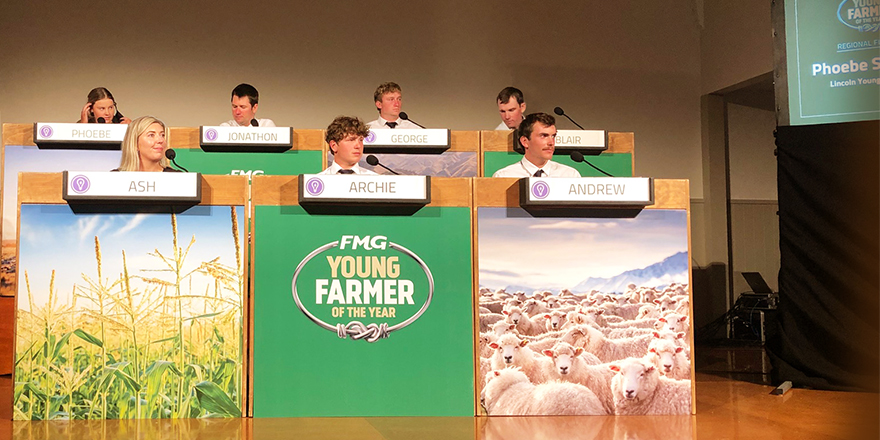
The seven Tasman Region finalists for the FMG Young farmer of the Year hadn’t heard of Mary’s exploits either. Though they had answers to other questions during the four quiz rounds at Springston Hall, Saturday evening, 19th February.  

Rural Leaders were fortunate to be invited by our strategic investing partner FMG to catch this thrilling conclusion to several days of competition, to find the Tasman Regional Winner. Competitors had given their all in three components of competition: Agri-business, Agri-skills, and Agri-Sports. They crafted a ‘chair’ from a wood palette, filleted (in some cases butchered) a salmon, they did the maths on the application of fertiliser, and competed in fencing too.  

And so, it all came down to the Springston Hall for the fourth Agri-Knowledge component, to determine the winner and finalists for the national competition later this year. 

Te Radar sounds the alarm.

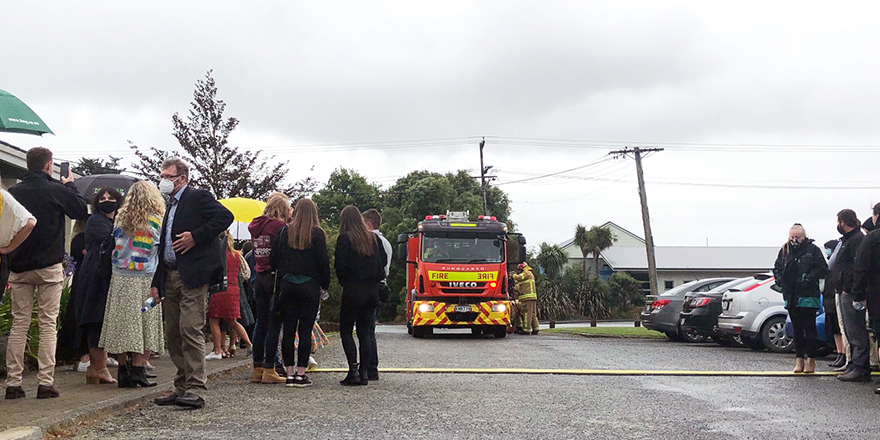
After a BBQ dinner and some masked, socially-distanced mixing, long-time host Te Radar kicked off the evening with the housekeeping, which included the obligatory fire evacuation notice – and at that exact moment an actual fire alarm sounded. We all evacuated. The rural fire brigade eventually gave the all-clear and the seven finalists took their places.

The finalists were: Archie Woodhouse and Phoebe Smailes of Lincoln University Young Farmers, Andrew Allan and George Dodson of Lincoln Young Farmers, Jonny Brown of Dunsandel Young Farmers, Ash Foley of Waimakariri Young Farmers, and Blair Anglesey of Renwick Young Farmers. 
 
Entering this final evening, Jonny Brown had the lead, with Andrew Allan in second.  

Fingers on buzzers please.

The first round ‘Photo ID’ asked contestants to identify everything from a specific arable crop to a breed of pig, through to filling in a missing element on a familiar sector logo. 

Round two ‘Rapid Fire’ gave each contestant 30 seconds of questions. Performances here were strong, with the highlight being an ability to anticipate the answer to a question cut-off by the timer. Contestants were allowed to answer despite not having the full question.  

Best anticipation efforts were Archie Woodhouse’s ‘Marlborough’ to the cut question “What region…?” (What region is the mainstay of New Zealand mussel farming?”) And Phoebe Smaile’s ‘Four,’ to the cut question “What is the minimum clearance…?” (“What is the minimum clearance for equipment from overhead powerlines?”)  

Round three was an observation round. Here a video was played with questions following. A hard round, though had this not been a dry event, it would have been harder still. 

And the winner of the FMG Young Farmer of the Year, Tasman is...

The final round was a ‘quick buzzer,’ here big movers were Phoebe Smailes and Ash Foley, but not enough to break into the top three. After a focussed period of calculation from the judges, the final places were awarded.  

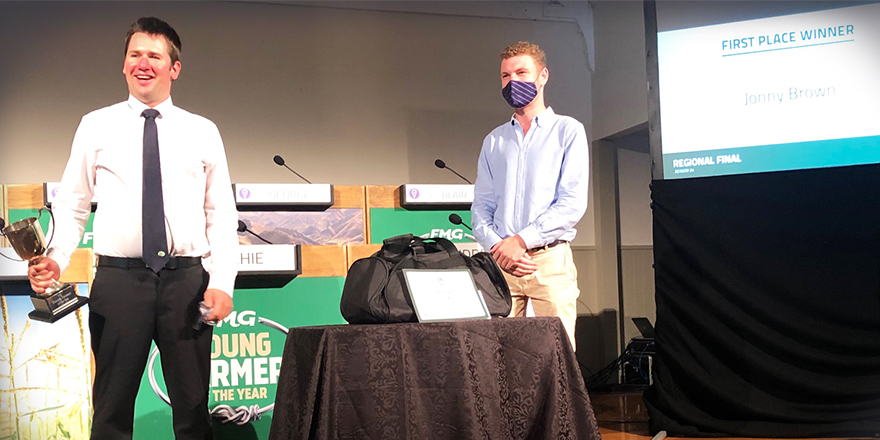
The top female competitor’s prize went to Ash Foley. Third place, by just one point, went to Archie Woodhouse, second was Andrew Allan, and seasoned competitor Jonny Brown took the overall win, after missing out last year. 

FMG Young Farmer of the Year Tasman Regional Winner

This was an expertly organised event and a thoroughly enjoyable evening. Thank you to FMG’s Michelle Stephenson for the invite. 
 
The Contest series Grand Final is scheduled for Whangarei in July. 
 
Keep an eye out for details here.

Changing the narrative – an online Kellogg session.

Kellogg has had to adapt during the Pandemic, to a hybrid model, working both online with tools like Zoom, and in-person when it is safe to do so.

One positive thing about video calls, and for some one might be a stretch, is being able to sit on the side-lines occasionally, with mute on and video off. You get all the benefits of the call, without needing to worry about asking clever questions.

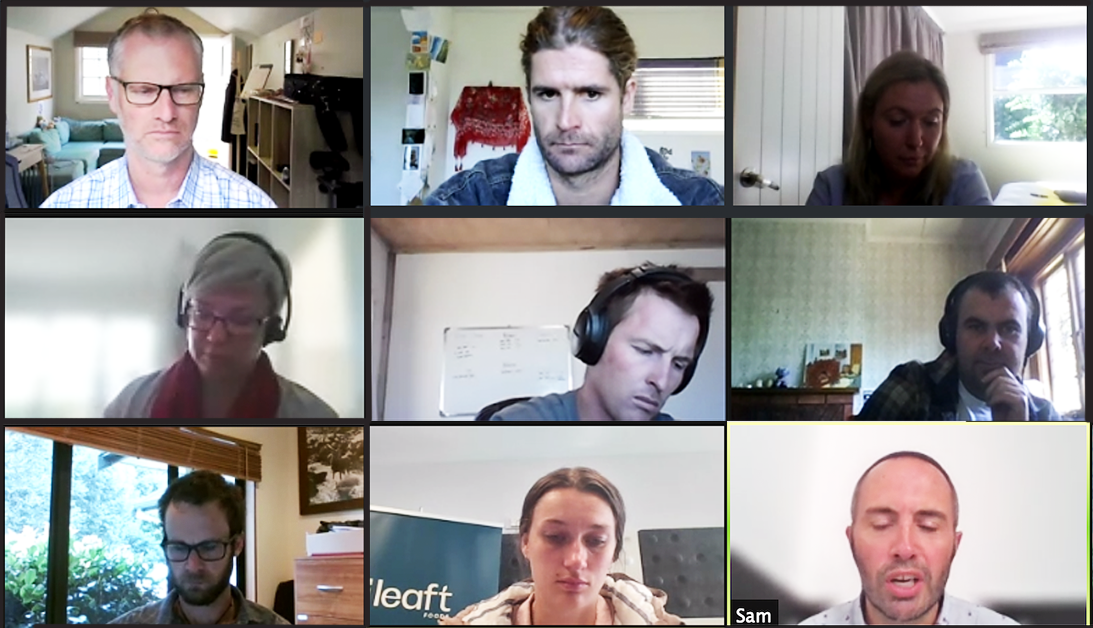
So, muted and invisible we joined Scholars on Phase Two of the Kellogg Rural Leadership Programme, to listen to Sam Halstead of Latitude Strategy and Communication. Sam works in Public Relations, focussing on the primary production sector.

Phase Two is important for Kellogg Scholars. It gives an economic, political, and environmental context. It zeroes in on how to engage and influence decision making at a local, regional, industry and central government level. And engaging means communicating effectively. Enter Sam.

The most scrutiny in a generation for the primary sector.

Sam began his presentation with a slide headed ‘The most scrutiny and pressure in a generation.’ Discussion moved easily from one example substantiating this, after another.

The next slide, ‘It’s not all bad,’ presented positive sector perception statistics, based on recent polls from UMR Market Research. The pendulum has been moving in the other direction through Covid – with a public realising New Zealand now has big bills to pay and that the primary sector might be the one to help. The numbers make interesting reading:

  • New Zealanders have a positive view of the primary sector.
  • New Zealanders remain strongly positive about horticulture (67% positive, 29% neutral, 4% negative).
  • Sheep and beef farming (58% positive, 29% neutral, 13% negative).
  • And dairy farming (55% positive, 29% neutral, 16% negative).

Changing primary sector narratives with human connection.

While sentiment is on the up, the big challenges remain. Challenges that continue to impact the way the public views the primary sector. Sam took scholars through how public relations is utilised to help address some of these.

‘Changing the narrative,’ Sam explained, is about human connection and building trust over time – to change the narrative over time. Briefly, that might mean:

  • Avoiding the echo chamber – telling our stories outside of the sector.
  • Enlisting champions, or advocates.
  • Collaborating – avoiding confrontation.
  • Better leverage of the sector’s points of difference.
  • Owning issues and improving performance – sharing those improvements.
  • Building high quality relationships.
  • Most importantly – strive for human connection.
These sessions, delivered both online and in-person, help scholars build a critical awareness mindset, build confidence, and empower scholars to create change – public relations is just one tool in the toolbox that can help.

2022 Nuffield Scholar Induction and tour of Canterbury Alumni.

From on the same Zoom to in the same room.

Selected as 2022 Nuffield New Zealand Farming Scholars in November 2021, Lucie Douma, Parmindar Singh and Anthony Taueki, finally got to meet face to face recently.

The two-week Lincoln induction got underway in late January and provided the scholars with their first real opportunity to spend time together and to prepare for the year ahead.

As Parmindar explains, “Our Nuffield journey really begins now. We had a few conversations since receiving our scholarships and had engaged through Zoom meetings, but finally meeting face to face was truly awesome.”

Lucie Douma, recently appointed Covid Recovery and Supply Chain Manager at the Ministry for Primary Industries, recalls a significant work-related event marking the beginning of her Nuffield induction at Lincoln.

“The 2022 Nuffield Programme kicked off with a bang, with the announcement of community transmission of Omicron the day before we were due to arrive at Lincoln. Nothing like a bit of excitement to get us started,” recounts Lucie.

Parmindar recalls her first day in Christchurch. “The media skills training got us working hard on our first day – after a 4am start to get down to Christchurch. It was a busy few hours on day one, with a valuable in-front-of-camera exercise designed to sharpen our ability to deliver key messages, clearly and succinctly – a lot harder than it sounds.”

After bravely volunteering to be the first to have a go at the practical interview exercise, Anthony agrees, “I’m really at ease talking to people in all kinds of settings. This is the nature of my work as a regional coordinator and Kaiako (teacher, instructor) at Tū Te Wana, Fruition Horticulture. But I was surprised at how difficult it could be to talk in front of the camera.”

“My first words as I sat for the practical exercise were, “Oh man, this is going to be hard. But we got there.”

Leadership at Lincoln.

Next on the schedule were a number of sessions on Lincoln campus.

For Parmindar, taking part in elements of the Kellogg Programme was an opportunity to get to know her fellow Scholars. “It was great to hear from Primary Sector leaders together and to learn from a range of highly skilled and engaging Kellogg facilitators and guest speakers.”

“We spent a fantastic first week learning about our core drivers on our leadership training and along the way getting to know the scholars on the Kellogg Programme running at the time (K46). The theories and practical sessions were the perfect prelude to the second week, out on the road”, adds Lucie.

In between Kellogg sessions, media training, and induction, the 2022 Scholars had an in-person meeting with James Parsons on strong wools. For Parmindar, it was also inspiring to hear about James’ leadership pathway after Nuffield. She also notes the video calls with Nuffield and Kellogg Scholars, including Kate Scott, Tom Lambie, and Andrew MacFarlane from Blinc Innovation. “All of these conversations made this induction a stimulating and thought-provoking time.”
The Nuffield Alumni road trip.

The induction also included a road trip, designed to help scholars build broader knowledge and give a current context of the primary sector – while also sharpening observation skills.

For Parmindar, the road trip was the highlight of the induction. Parmindar is a Waikato dairy farmer, also involved in a number of business and community organisations.
“Spending time together as a cohort off campus, meeting with incredible Primary Sector leaders, passionate about what they do, what their people did before them and growing and developing the people in their businesses now.”

“We met with Nuffield Scholars as business owners, who welcomed us, shared their knowledge and experience, and encouraged us to step up on our Nuffield Scholarship journeys. Special thanks here to Craige Mackenzie, Ben Todhunter, and to Rosemary and John Acland for sharing so much with us in the stunning setting of Mt Peel Station.”

Anthony echoes the sentiment, “We had an awesome time catching up with Hamish and fellow tohunga. Being immersed in the wealth of knowledge and history by all was awesome. It allowed us to have a better understanding of the land and history across multiple sectors, which helps us define and mold our research topics.”

What’s next for these Nuffielders?

Despite the uncertain times, the three scholars remain upbeat, and all feel the sky is the limit.

“Being a Nuffield Scholar comes with great privilege and responsibility. We are committed to learning, creating impact, and giving back to the sector that has done so much for us all,” says Parmindar.

Lucie is already planning the next trip. “We are now busy planning for the year ahead with the announcement of the border opening and being able to partake in the Contemporary Scholars Conference in Norfolk, in early March. Watch this space.”

Parmindar and Anthony acknowledged that none of this was possible without a strong and connected team and community to make a programme like this successful, particularly during these challenging Covid times.

“We want to thank everyone for their generosity of time and information. New Zealand is lucky to have such an incredible farming community. We also want to sincerely thank Rural Leaders for being so agile and committed in an ever-changing Covid world,” said Lucie.
For the team here at Rural Leaders it was pleasure meeting this new group of scholars and facilitating the first phase of their Nuffield journeys. We look forward to sharing more in the months to come.

A typical day on the Value Chain Innovation Study Tour.

Craigmore Farming Horticulture Study Trip

The Value Chain Innovation Programme is made up of three phases spanning six weeks from May 9 to June 19. You can find out more about the programme and its core elements here.

Probably the most involved point of the five-week experience is the industry immersion study tour (Phase Two).

What will a typical day on the tour look like?

A fair description would be “busy”. But here’s more about what to expect.

We should note first that this ‘typical day’ may be subject to pandemic or scheduling related changes. 

Day five. In summary, there will be horticulture, food science and much more on the day. Generally, no one day will be dedicated to a particular value chain, but rather each piece of a value chain will be spread across several days.

You’ll be waking up in Central Hawke’s Bay. It’s an early start with breakfast at 06:30, and on the bus by 08:00.

On this particular day, the first destination is scheduled to be Craigmore’s Springhill Horticulture operation. You’ll arrive by 09:00.

Craigmore Springhill.

Craigmore manages farm and forest investments and was established in 2009 by two New Zealand family farmers, Forbes Elworthy and Mark Cox. Craigmore has an experienced team managing 18,000 hectares of dairy, grazing, forestry, and horticultural properties, that includes Springhill. 

You can preview Craigmore’s Springhill operation in this video

At around 11:00 the bus will depart for Massey University campus in Palmerston North, where you’ll be visiting several units. You should get there by 13:00.

The Riddet Institute.

First stop on campus is the Riddet Institute.

The Riddet Institute aims to build the knowledge and skills to tackle the challenges facing our fast-changing food sector, through discovery-led research at the frontier of food materials science. 

To learn more about Riddet, watch this interview with the Institute’s Deputy Director, Professor Warren McNabb. Scroll to the section beginning 3:15sec and ending 7:40sec for some insight into their work. 

Next is Massey Food Experience and Sensory Testing Laboratory (Feast). 

Feast, Food Pilot, and MAF Digital Lab – Massey University.

To gain a clearer picture about the type of work Feast conduct, look at this short video covering research on the use of a holo-lens. This work was done to determine what impacts mixed-reality technology could have on a consumer’s enjoyment of food. 

Still on the Massey University campus, the next stop is Massey Food Pilot. 

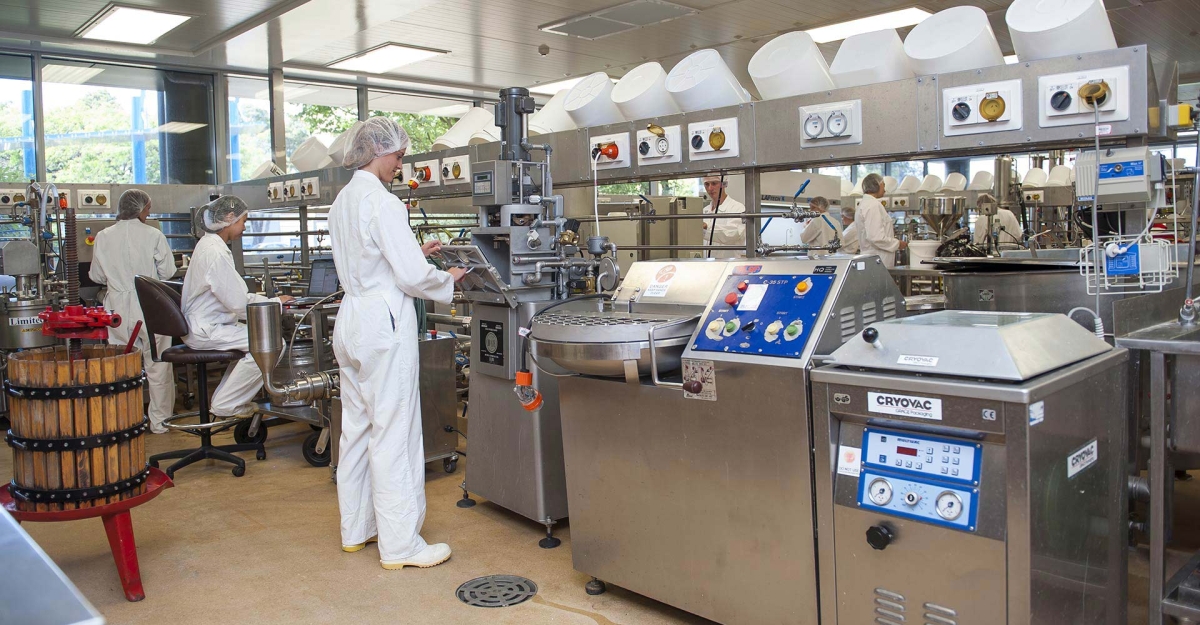
The Food Pilot at Massey includes the largest collection of food processing equipment in the southern hemisphere. They work with innovators and organisations to provide solutions to food-related challenges. 

Food Pilot is part of the New Zealand Food Innovation Network (NZFIN), it provides the facilities and the expertise to develop new products and processes, from idea to commercial success. Services can include evaporating and drying, chopping, mincing, cooking and process control, extrusion and puffing. 

While the this video isn’t on Food Pilot specifically, it does give some indication as to how Food Pilot fits into the FoodHQ ecosystem. There’s also plenty of footage from inside the Food Pilot testing areas. 

The next destination is the Fitzherbert Science Centre, where you will visit the Massey AgriFood Digital Lab

The MAF Digital Lab is a solution focussed research centre developing applications in advanced technology within the primary production, agricultural and food supply chain. MAF leverages Massey University’s wide capability in precision agriculture, primary production science and horticulture supply chains, sensor technology, robotics, AI, and data science.

Massey Univeristy Lab

Later in the afternoon, you are scheduled to visit Fonterra’s Research and Development Centre (FRDC). 

Home to 130 PhDs and 350 dairy patents, innovation is a key part of New Zealand Milk Products’ (NZMP), and ultimately Fonterra’s reason for being. Within NZMP, the FRDC is dedicated to dairy innovation and research. 

This video gives a good introduction to NZMP and the FRDC. 

Wharerata – BBQ dinner.

The next stop is your final destination for the day – Wharerata, where casual drinks and a BBQ dinner will be organised for the group. A quick week one tour review will take place before dinner at this historic homestead.  

By 20:00 you’ll be at your accommodation, where you can enjoy some free time or an early night as you are up at 06:00 the next morning to hit the road again.

The schedule is intense – but it will be worth it!

If you haven’t checked out yet the following podcasts, take the time to listen to Professor Hamish Gow’s Podcast ‘Value chain thinking’, and James Parson’s Podcast ‘When value-add doesn’t add up’. They’re both excellent for further context.  

Contact us with any questions, we’re ready to help. 
If you would like to find out more about the programme, contact Lisa Rogers today. Either call on 021 139 6881, or email at lisarogers@ruralleaders.co.nz.

Ready to register your interest in the Value Chain Innovation Programme?

From the Mackenzie Study: The Case for Kellogg.

Otago University

Work on the Mackenzie study continues with Professor Nathan Berg of the Otago Business School and the Department of Economics made possible with the support of the Mackenzie Charitable Foundation.

Since receiving the results on the gains attributable to participation in the Nuffield Scholarship, collation of results from the Kellogg Alumni survey has now begun.  

While more work needs to be done to present the data, we thought we would share a series of long-form responses from the Kellogg survey. These in themselves begin to paint a picture of the value of the programme to alumni, in terms of personal development, career advancement and industry influence.  

The responses have been left anonymous and any information that might reveal a respondent’s identity has been removed. 

Nearly one hundred Kellogg Alumni completed the survey. 

Searching for further motivation to complete your Kellogg Lincoln or Kellogg Whanganui application? You may find it here. 

What have been your most important accomplishments and did Kellogg play a role?

“Critical analysis of all situations. Kellogg helped solidify this process.” 

Kellogg taught me how to deal with problem situations and be able to answer questions from media reps. Kellogg also gave me confidence to address open meetings of farmers and Iwi reps.

Employment positions held. Community roles held (school board, parish, sport, and service clubs). Kellogg played a role – Yes. Improved skill base particularly around communication and leadership.

“The course helped with critical thinking and confidence.”

“My leadership career and influence. Helped me think strategically and made me match fit.” 

“Understanding myself better, how I affect others. The development of networks and doors opened by the programme. Personal brand building.” 

Contributing to strengthening capability and capacity in the agricultural sector.

“Start-up with two fellow Kelloggers – definitely a result of Kellogg.” 

“Leadership roles on boards of industry specific, or primary sector education boards plus NSO boards… Had creditability and capability having done a recognised course like Kellogg. Throughout the years the networks you form with either people who did it with you or had done it at other times was helpful to open doors and connections.” 

“Underway with a new company starting a new value chain. I completed my Kellogg project on this topic, so it very much helped.” 

“Since being a Kellogger I went onto become a Nuffield Scholar which I regard as a real accomplishment. Following that, I have started a new farm business and [have] become more involved with local industry. Kellogg… opened a lot of doors.” 

Forming a people and training team and ensuring the business had a successful part to play in sector upskilling. My Kellogg project and the learnings around it were the catalyst for this.

“Moving from hands-on farming to a corporate role. Kellogg gave me the networks and confidence to make the move.” 

“…Enjoyed widening my social and professional network and learning of other like-minded people. Having the mix across food production was great – everything from grapes to sheep to kiwifruit to Ag IT.

Kellogg helped with development of governance skills and gave me confidence to get involved in a large number of initiatives.

“Confidence and experiencing others’ opinions and ideas, and great fellowship with others on the course.” 

Kellogg helped me particularly in improving my leadership and social skillsets…”

“Networking and connecting. Having a sound understanding of the basics about how Wellington works was a highlight which I could not have done without the doors that Kellogg opened during that part of the course.” 

“I have played a significant role in building biosecurity preparedness for the primary sector and being a Kellogger has contributed to this, in part by exposing me to some inspirational people – and understanding the habits that lead to success.” 

“It helped me see that the people I viewed as leaders were not that different from me. It gave me confidence in who I am and whetted my appetite for more.” 

“I learned a great deal as a Kellogger, and that has contributed to all I have done…It made me a better person, better equipped with insights and with the ability to consider decisions. But I wasn’t completely hopeless before!” 

“Before the programme, I ran hard and fast at everything I did. This generally worked but came at a huge cost to my family life, my personal life, and my mental health. 

I still push myself every day to be better, but after hearing ways others in my cohort dealt with stress, I was able to learn to keep my mind on the rails. Mainly – I don’t need to do everything on my own. My cohort was the best – heaps of us are still in touch, helping each other along the way.”

“Respect from others for having completed Kellogg and respect between alumni.” 

Horticulture: When a road trip bears fruit.

Central Otago Horticulture - Engagement with industry to find ways to build capability

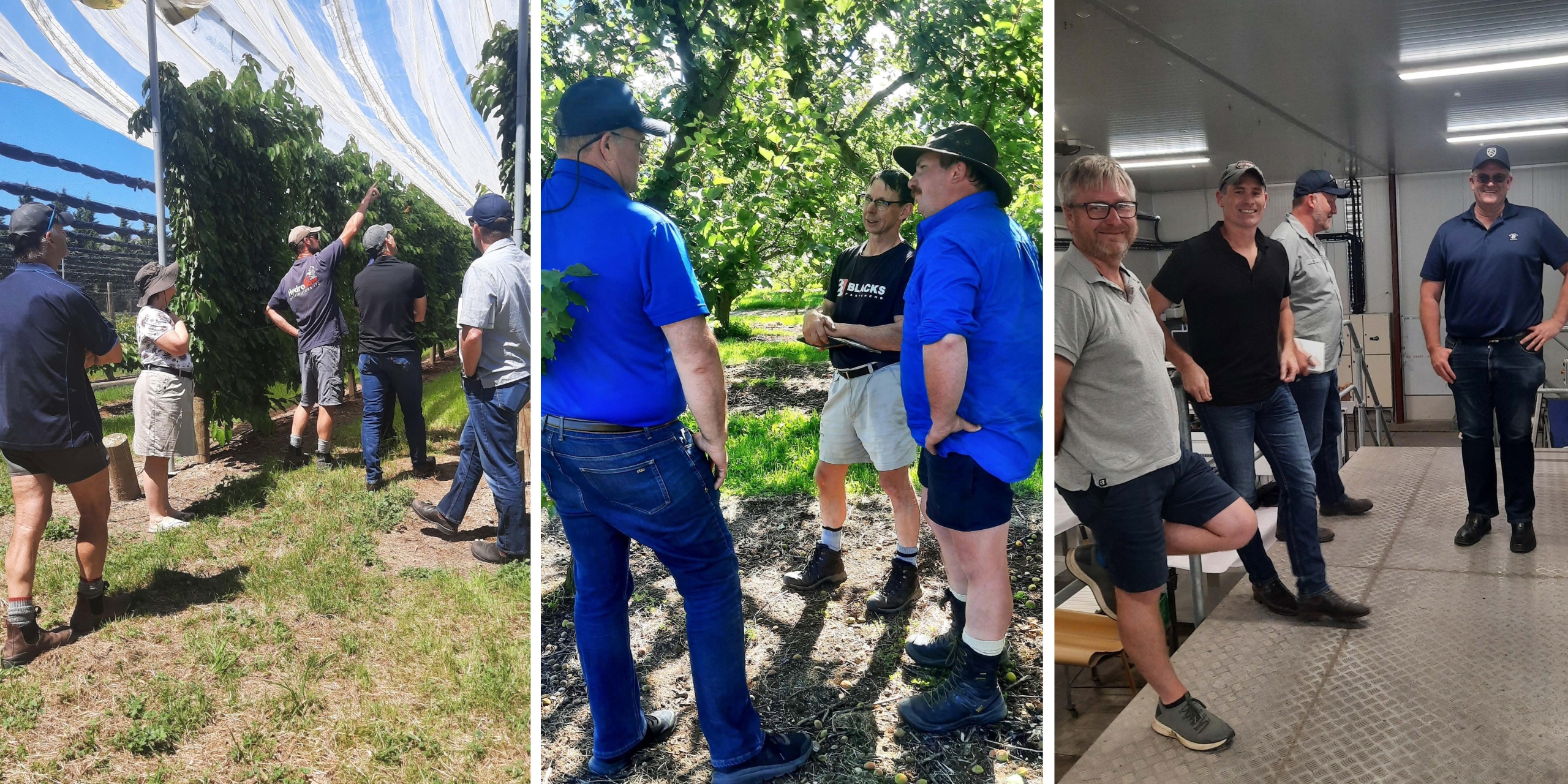
Lincoln University and the New Zealand Rural Leadership Trust (Rural Leaders), hit the road last week, travelling throughout South and Mid Canterbury and Central Otago.

Professor Hamish Gow of Lincoln University and Chris Parsons, Rural leaders’ CEO, have successfully established stronger links with the horticulture sector and in particular, growers from the pip and stone fruit industries.  

The series of visits were expertly organised, attended, and hosted by Chelsea Donnelly, GoHort Career Progression Manager for Central Otago. The road trip was designed to gain a better understanding of the opportunities for collaboration between Lincoln University, Rural Leaders, and the horticulture sector. 

Also joining the group was Dr. Clive Kaiser, Associate Professor at Lincoln University. Clive is a legend of the cherry fruit industry, and it seemed this status was clear when growers produced Clive’s co-authored book, Sweet Cherries, also known as ‘The International Bible of Cherry Fruit Production.’ “The book would appear from bookshelves, top drawers, and coffee tables, with Clive humbly signing more than a few on request,” said Hamish Gow. 

Professor Gow went on to say,

“This was a real bonus on the trip. To have Clive Kaiser and Chris Parsons there connecting with the sector in such an authentic way, created an atmosphere where the prospect of further collaboration just seemed inevitable.”

The visits included numerous growers, orchards and packhouses, with each discussing the technical production challenges, competency requirements, and opportunities for Rural Leaders and Lincoln University to collaborate in the co-design and development of capability building programmes. 

“Everyone we met was as excited as we were to see both Lincoln University and Rural Leaders engaging with industry. It was a highly productive research trip likely to have exponential benefits for all involved,” enthused Professor Gow. 

Growers and grower groups also expressed interest in exploring the idea of ‘field-labs’ on their farms, as way to further increase productivity and capability, “That’s something we’re extremely excited about exploring”, said Hamish Gow, “If anyone would like to talk more on that idea, please don’t hesitate to get in touch.” 

Professor Gow can be contacted at Hamish.Gow@lincoln.ac.nz 

December 2021: Southland Alumni Connect

The Invercargill Workingmen’s Club saw plenty of Rural Leaders action last week, as the venue for two Thriving Southland Workshops and a get together for Southland’s Nuffield and Kellogg alumni. 

The event was conveniently held next door to the workshops, allowing some to attend both. The get together was hosted by Rural Leaders’ CEO Chris Parsons and Operations and Events Manager Annie Chant and was attended by nearly twenty alumni who listened to Guest Speakers, Steve Wilkins, and Catherine Dickson share their programme stories. 

Stephen (Steve) Wilkins was a 2013 Nuffield Scholarship recipient, who researched the synergies between arable and dairy farming with a focus on effluent and nutrients. Steve spoke about his Nuffield journey, including how he received a call driving home from the Scholarship interview, and was told ‘you’re in’.  

Catherine Dickson completed her Kellogg in 2020. Her research report was National Treasure: Native biodiversity on-farm. Catherine spoke about how important her connection with her cohort is to her.  

We’d like to thank the speakers for their time and thank you to the alumni that managed to make the event.   

Doing better by our people.

There are figures on our primary sector’s labour transience that make for alarming reading. They’re remarkably high. In case you missed them, only 29% of those entering the primary sector remain after three years.  

While factors behind the statistics are complicated, one of the simpler, often cited reasons for leaving the sector is poor workplace culture. That falls strongly into the preventable turnover basket. And preventable turnover equates to 78% of total dairy transience, meaning four out of five people who have left the sector, might’ve stayed, had we done better by them.  

Bad news, old news, good news.

It’s not just farm workplaces buckling culturally under today’s stresses either, it’s large agri-businesses too, with allegations of poor management, and unaddressed toxic cultures more common than they should be. 

In both small farms and in larger business, failure to fix a problem culture can lead to performance issues and the destruction of the relationships with the people and teams helping those operations succeed. That’s the bad news. It’s also old news and too big to wrestle with here. So, we’ll offer a couple of pieces of good news about a few people trying to make a difference instead. 

Individual farms are now leading change, enthusiastically embracing management thinking from other industries. Farm owners, exposed to high performance ideas and practises bring their learning back home, to the farm. Couple this with a wider acceptance of wellbeing philosophies (previously known as ‘that touchy-feely-stuff’) and you have individual farming operations reporting much needed decreases in staff turnover. 

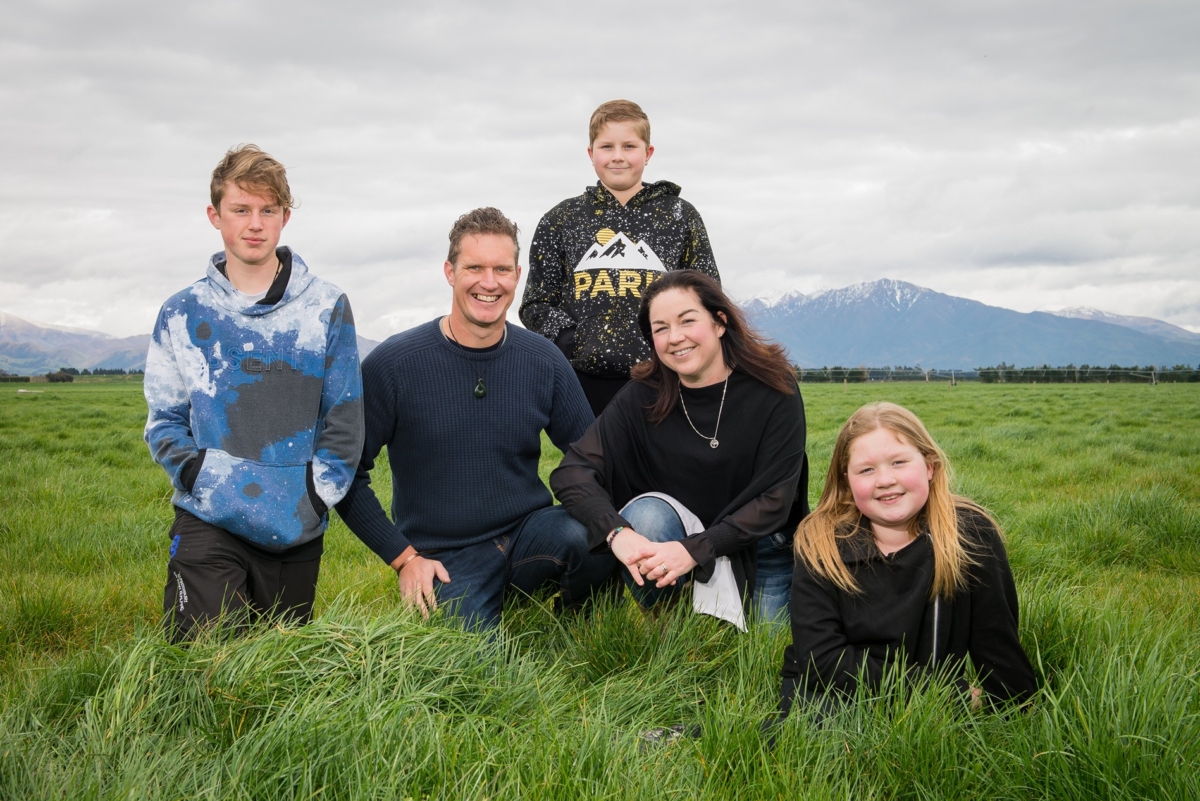
Rebecca and Brent Miller: Kellogg Scholars making changes. 

At the heart of what Rebecca and Brent Miller do lies a simple idea, if you work on yourself before you work on your team, good things will follow.  

Rebecca has just won ‘Emerging Leader’ at the 2021 Westpac Champion Business Awards. It’s an award that recognises performance across all industries, not just the primary. The award blurb states, ‘recognising a leader who is ambitious in outlook and vision, one who embraces innovation, shows resilience, and who inspires and invests in others.’ All good things, so it’s worth taking a closer look for ideas worth sharing. 

“What we stand for, our values, our negotiables, and non-negotiables, are all important for us, our team, and our farm. Everything comes down to knowing our strengths, weaknesses, and how we’re likely to contribute within a collaborative framework.” 

The school of hard knocks. 

Fifteen years ago, sharemilkers Rebecca, Brent, and their young children, were at a crossroads. It’s a familiar dairying family story, 2:30am to 7:30pm, 28 days on, two days off, moving between farming positions constantly and far too many tricky experiences with farm owners – their employers. They were on the brink of breakdown. All bets were on leaving farming forever.  

“We thought something had to give. But then you realise all your skills are in dairying. It was all we knew. So, we decided to stay and really reflect on what it was we needed from our next employer.”  

“We researched farm owners who supported, coached, and mentored their staff. We knew that if we were to stay in dairying and grow, we had to find the right environment for that to happen. Sadly, at the time, they weren’t easy to find – but eventually we did.” 

“We’d put business first at all costs in the past and that approach wasn’t working for us. We now knew it had to be family first.”  

Building the trust.

The Millers found an employer who opened their books, allowing them to benchmark against over a dozen farms in the owner’s network. The power of knowing ‘the numbers’ meant better decisions could be made, and efficiencies found by gently applying the right pressure at the right time. This sharing quickly built trust between themselves and the owners.  

“Passing that on and taking care of our team, seeing them grow and succeed, became a priority for us too. We have learned that as leaders of a team, the environment we provide on the farm, the behaviour, the way we share, interact, the words we use, the decisions made, and by who, are just a few of the factors in a high trust, high-performing and connected team.”  

The Millers strongly believe in the idea of sharing what they can to help others improve their on-farm methods and culture too.  

“MilkIQ is a platform for achieving that. It’s fuelled by a passion for people and driven by a desire to help them succeed.”  

With MilkIQ the Millers have just gone out and said ‘hey, this is who we are.’ “It’s a wellbeing tool, hopefully demonstrating trust in practise.” 

Hamish Murray Bluff Station Nuffield

Hamish Murray: A Nuffielder making changes. 

In a Farmstrong article from earlier this year, Nuffield Scholar and high-country sheep and beef farmer, Hamish Murray, also acknowledged the importance of his own journey. He spent a year on his Nuffield scholarship studying businesses with high-performing team cultures, including time in Silicon Valley, and in Christchurch with the Crusaders Rugby Team. He observed their continued focus on ‘soft skills,’ and shared values. 

“Soft skills are things like the way you communicate, make decisions, reflect and feedback. If you understand each other [other’s styles], you can combine to make good decisions.” 

“We’ve also done an exercise with our team to agree on what values will drive the decisions in our business. It’s empowering everyone to move forward, and it allows me to stand back and let the others lead.” 

The results speak for themselves.

Hamish is confident this approach is paying off. One good indicator has been a reduced staff turnover. Hamish acknowledges how important it is to create an environment that allows others to flourish and one that attracts and keeps great people. A big part of that he says, is letting your ego go, getting out of people’s way and asking the questions that help others do an excellent job. To do that he says, you have to work on yourself first. 

“Sometimes it’s not until you get to breaking point that your own learning and reflection kicks in. The journey for me started at a real low, but now I look back and think I’m incredibly lucky to have had that experience.”  

Hamish is referring to the stresses created by the Marlborough and Canterbury drought of 2014/15.  

“Trying to keep everyone going when you had no control over anything was so draining … we ended up with stock on fourteen different properties. The support I’ve had from my family and my team, the groundwork we’ve done together has really given me the confidence to keep learning and growing our business.” 

It starts in your own back paddock. 

Rebecca, Brent, and Hamish have shown that one small, first step toward keeping people in primary sector, in a ‘start in your own backyard kind of way’ has to be toward yourself, then to your own ‘FarmilyTM,’ your rural community, and beyond to industry. Rebecca adds, “What we can control first is our own behaviour. When our behaviours are good, we allow others to be the same and we start creating that change.” 

Rebecca Miller did the Kellogg Rural leadership Programme in 2018. Her study topic was: Is there a need for an information platform to collaborate primary sector events? 

Brent Miller, Rebecca’s husband, did the Kellogg Programme in 2020. His study topic was: What is the true cost of transience to the New Zealand dairy industry? 

Hamish Murray is a 2019 Nuffield Scholar. Hamish’s research was Future farm workplaces. It investigated the work environment needed to attract and retain people in the primary sector.


Rural Leaders and Thriving Southland collaborate.

Workshops in Southland, collaboration between NZ RUral Leaders, Thriving Soutland and Lincoln University

Thriving Southland, in collaboration with the New Zealand Rural Leadership Trust and Lincoln University, recently ran two successful workshops, held over four days. The workshops sought to strengthen rural leadership capability in the region and inspire catchment leaders and their teams to work on problems and deliver outcomes for a thriving Southland.

Think to Thrive: Strategy

The first Strategy Workshop, ‘Think to Thrive,’ was held in Winton on the 1st and 2nd of December. It was designed to form a pathway between today’s Southland and where it might be tomorrow. 

Trust to Thrive: Leadership

The second workshop ‘Trust to Thrive’ was held in Invercargill. With a focus on leadership, it was designed to build on the outcomes of workshop one. It drew on the facilitators’ skills in delivering world-leading military intent-based team building frameworks, and helping leaders learn to empower their teams to work and win together.

The facilitators

The workshops were co-facilitated by Chris Parsons, MNZM, DSD, Rural Leaders CEO, Professor Hamish Gow, Lincoln University, Phil Morrison ONZM, Freelance Consultant and Kellogg Programme Facilitator, and Rob Hoult DSD, a Leadership Development Specialist. 

The participants

Each workshop was attended by about twenty farmers, catchment co-ordinators, stakeholders, and local and regional government leaders. Introduced to a range of tools, models, and frameworks, attendees then took a deep dive into a session of insights work. 

The groups generated two hundred key insights, from which they produced three hundred ideas. These ideas were crafted into four game plans the attending leaders could share with their catchments, the Thriving Southland Team and Board. 

When asked how the workshops were for attendees, three strong feedback themes emerged: empowering, big picture, and thought provoking. Many also felt that they had a new platform for influencing change. 

Lynsey Stratford, 2021 Nuffield Scholar and attendee, posted on LinkedIn:

“This was a great opportunity to learn some new skills and identify opportunities for the region alongside other food and fibre producers and stakeholders.” 

Another attendee stated, “We left armed with the models, tools, and insights we need to build capability with our teams.”  

If you’d like to get hold of the workshop summaries, please email either Hamish Gow or Chris Parsons, Hamish.Gow@lincoln.ac.nz or Chrisparsons@ruralleaders.co.nz 

Inviting expressions of interest in a Board Trustee role.

Inviting expressions of interest in a Board Trustee role.

The NZRLT is currently seeking expressions of interest from Nuffield Alumni in a Board Trustee role, beginning January 2022.  

Former Chair and incumbent Trustee, Andrew Watters is due to step down creating a rare opportunity to be involved in primary sector, education, and leadership governance.   
 
As part of a forward-thinking group of industry leaders, you will be supporting the NZRLT and its vision to grow world-class leaders for our country.    
 
This is a voluntary position and encompasses a four-year term. The role requires a time commitment of five board meetings annually, and three full days for the Nuffield Scholarship interview, selection process and awards.  

If you would like to express your interest in this opportunity to give back to rural New Zealand and contribute to building our country’s leadership capability, please send your CV and cover letter to Chris Parsons, NZRLT CEO, at chrisparsons@ruralleaders.co.nz 

Or, if you would like a confidential discussion, please call either Chris Parsons on 021 779 272, or NZRLT Chair, Kate Scott on 027 495 7486.  

Expressions of interest close Friday 26th November 2021. 

The new Trustee will be appointed prior to Christmas, and in time for the first board meeting in late January 2022.  

2022 Nuffield New Zealand Farming Scholarships awarded.

2022 Nuffield Farming Scholars

2022 Nuffield New Zealand Farming Scholarships awarded.

Three emerging food and fibre sector leaders have been awarded 2022 Nuffield New Zealand Farming Scholarships. Each has received a personal letter of congratulations from Hon. Damien O’Connor, Minister of Agriculture, Minister for Trade and Export Growth, Biosecurity, Land Information, and Rural Communities.

The New Zealand Rural Leadership Trust (NZRLT) is proud to announce the 2022 Nuffield New Zealand Farming Scholarship recipients. The Scholars are:

Parmindar Singh, a Waikato based Dairy Farm Manager, Company Director, and a recent master’s graduate. 

Anthony Taueki, a horticulturalist from the Hawke’s Bay, leads horticulture courses at Fruition, New Zealand Apples and Pears, Tatau Tatau o te Wairoa, and many more.

Lucie Douma, leads a new team at the Ministry for Primary Industries (MPI) looking at disruptions to domestic food and fibre supply chains, and primary sector COVID recovery.

Chris Parsons, NZRLT CEO said, “This group comes from the most diverse range of backgrounds we have seen in recent times. Each Scholar brings talent, passion, perspective, and a track record of performance. Their job now is to find insights and foresight to benefit our sector.

“We wish to acknowledge all those who applied. It is safe to say, there is some real talent in our regions. Selecting three Scholars this year has given our Trustees and the Industry National Advisory Committee the opportunity to fund the start-up of an exciting new programme, the Value Chain Innovation Programme. The intention will be to return to selecting five Scholars again next year”, said Parsons.

Covid 19 restrictions mean this year’s scholarship recipients’ formal awards ceremony at Parliament, will be delayed until February 2022, when Minister O’Connor will award the scholarships in person.

2022 Scholars will follow last year’s travel approach, contingent on the local and global pandemic travel situation. This lets scholars defer the international travel component of the programme until border restrictions permit.

Kate Scott, NZRLT Chair, said, “As part of their Nuffield journey, the three 2022 Scholars will also join the Value Chain Innovation Programme to gain a deeper understanding of the challenges and opportunities in front of our sector, before they venture abroad.

“The Scholarship will offer new opportunities and experiences through an immersive programme and will help to shape future world-class leaders for the New Zealand food and fibre sector” said Scott.

Their research topics are likely to cover a range of our biggest food and fibre challenges including, building resilience in our value chains, data interoperability, emerging market opportunities for trade in dairy, and finding sustainable pathways into the primary industries for rangatahi.

The three new Scholars will join more than 170 Nuffield Alumni awarded scholarships over the last 71 years.

Meet our 2022 Nuffield New Zealand Farming Scholars.

Lucie Douma, 2022 Nuffield New Zealand Scholar

Lucie Douma 

Agri-professional, Livestock
Wellington

Lucie is of Dutch descent and is based in Wellington. She currently leads a new team at the Ministry for Primary Industries (MPI) looking at disruptions to the domestic food and fibre supply chains, and primary sector COVID recovery.

Lucie has a Master of Science degree from Oxford University, where she studied human-wildlife conflict. Her initial research topics of interest are data interoperability or building resilience within the value chain.

Lisa Rogers, NZRLT Programme Manager, commented, “Lucie is a great example of the policy talent we have coming through in our sector. She is greatly invested in the future of agriculture in New Zealand.”

Parmindar Singh- 2022 Nuffield New Zealand Scholar

Parmindar Singh

Dairy farmer, Company Director
Waikato

Parmindar is a fourth generation New Zealand dairy farmer of Indian descent. A company director and independent consultant, she is near completion of her master’s degree at Waikato University.

Parmindar’s research topic of interest is emerging market opportunities for trade in dairy. On her proposed research Parmindar says, “As a proud, intergenerational dairy farmer, my goal is to identify the shift that is occurring globally and identify future trade and market opportunities for New Zealand farmers.”

On Parmindar’s selection Lisa Rogers noted, “Parmindar is bright and fearless, with a lifetime of community involvement and entrepreneurship in the Agri-sector. Nuffield is lucky to have her as a Scholar.”

Anthony Taueki, 2022 Nuffield New Zealand Scholar

Anthony Taueki

Horticulturalist, Kaiako,
Hawke’s Bay

A horticulturalist from the Hawke’s Bay, Anthony is of Ngati Kahungunu descent. He leads, organises, and conducts horticulture courses and training programmes with Fruition Horticulture, New Zealand Apples and Pears, Tatau Tatau o te Wairoa, Ministry of Social Development and Ngati Kahungunu Inc.

Passionate about helping rangatahi find sustainable pathways into primary industries, Anthony’s research topic of interest is growing opportunities from the roots up.

Of Anthony’s selection Lisa Rogers said, “Anthony is a natural leader who is highly collaborative. He has integrity, passion, and a strong desire to influence in New Zealand’s Agri-sector.”

“I look forward to working with all three of our Scholars over their scholarship journey”, Lisa Rogers said.

About Nuffield New Zealand Farming Scholarships.

Nuffield Farming Scholarships have been offered to farmers, growers, fishers, and foresters since 1950. The scholarships were established in the United Kingdom by Lord Nuffield for farmers to explore best agricultural practice and facilitate innovation through sharing knowledge and ideas in food and fibre globally.

The scholarships are among the most respected awards in the food and fibre sector. They offer a life-changing opportunity for travel, study of the latest developments and an introduction to leaders and decision-makers around the world, who would not normally be accessible.

With a network of more than 1,600 alumni internationally, the programme continues to build New Zealand’s rural leadership capability and the food and fibre sector’s profile internationally.

For more information about Nuffield go to https://ruralleaders.co.nz/nuffield

For more information, please contact:

Matt Hampton
Marketing and Communications Manager
Rural Leaders
Ph. 0274 171 065
E: matthampton@ruralleaders.co.nz