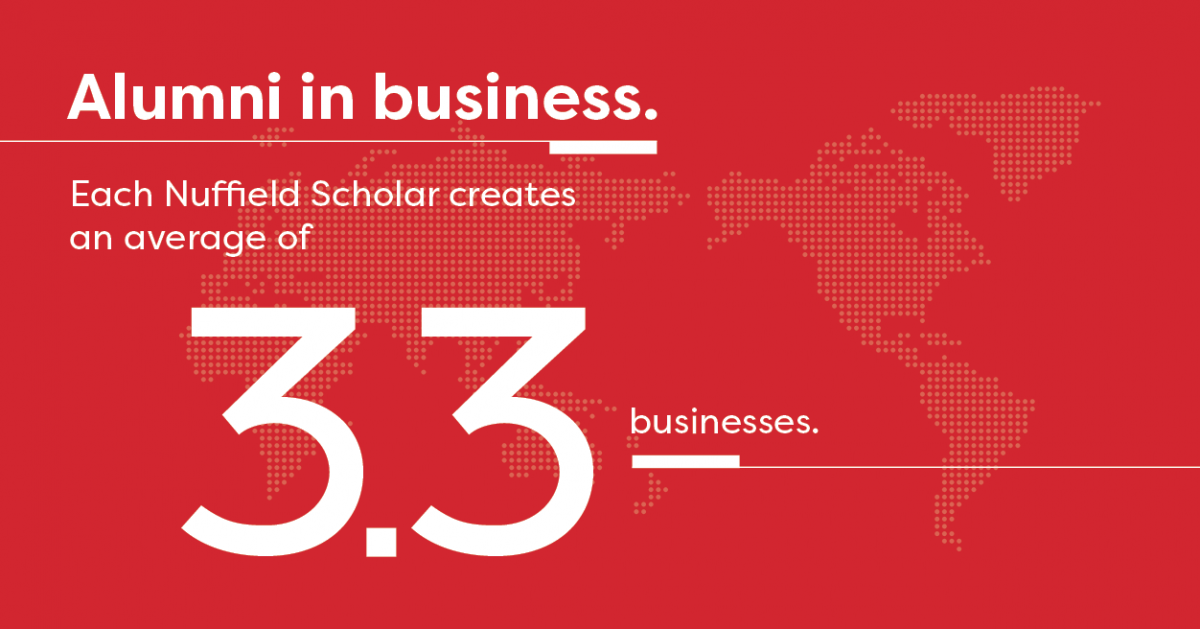
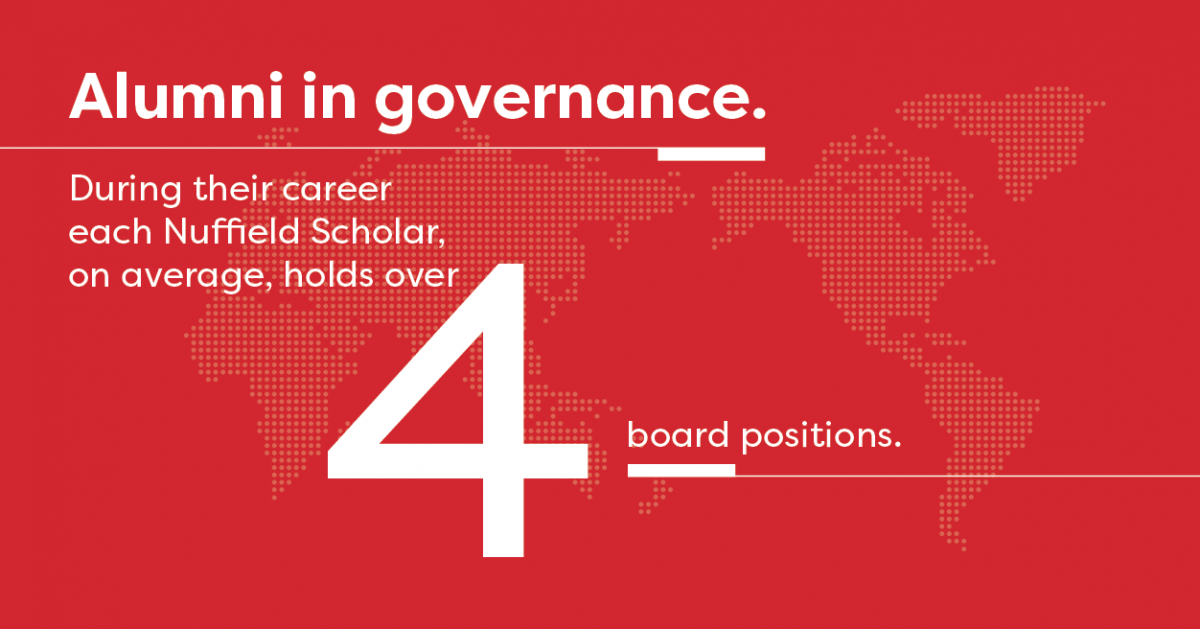
2026 Nuffield NZ Farming Scholarship. Apply by 17 August 2025. Read More...

Apply for 2026 Nuffield NZ Farming Scholarship by 17 August 2025. More details...

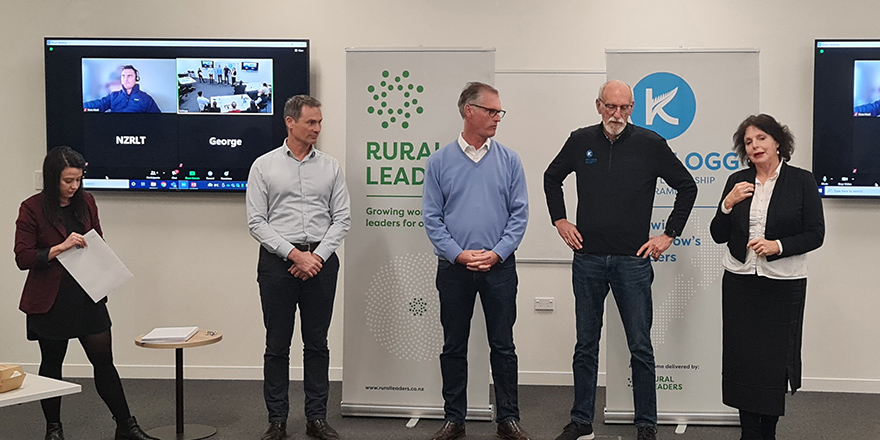
Kellogg Phase One, Lincoln.

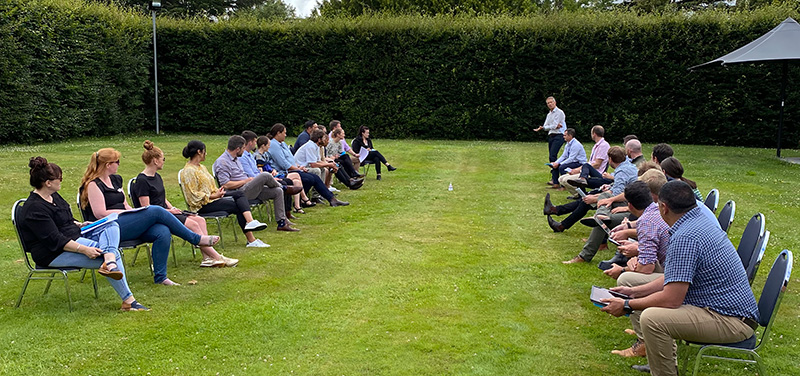
Today, 2023’s Programme One will complete their nine-day (eight-night) residential Phase One module, at Lincoln University.  

Phase One is referred to as ‘Leadership tools and industry contexts’. For those planning to participate in Programme Two (June start), the following summary breaks down what to expect:

  1.  Leadership skills and tools including personal and team styles and outcomes, design thinking and approaches, critical analysis tools. 
  2. Leadership applications of skills and tools in various situational contexts. 
  3. Leadership strategic contexts with specific focus on New Zealand Food and Fibre Sector strategies and leadership challenges. 

Some of the topics covered are:

  • The development of presentation skills, leadership skills, critical and design thinking and research skills. 
  • Break out meetings to discuss your project topic with the Academic Director. 
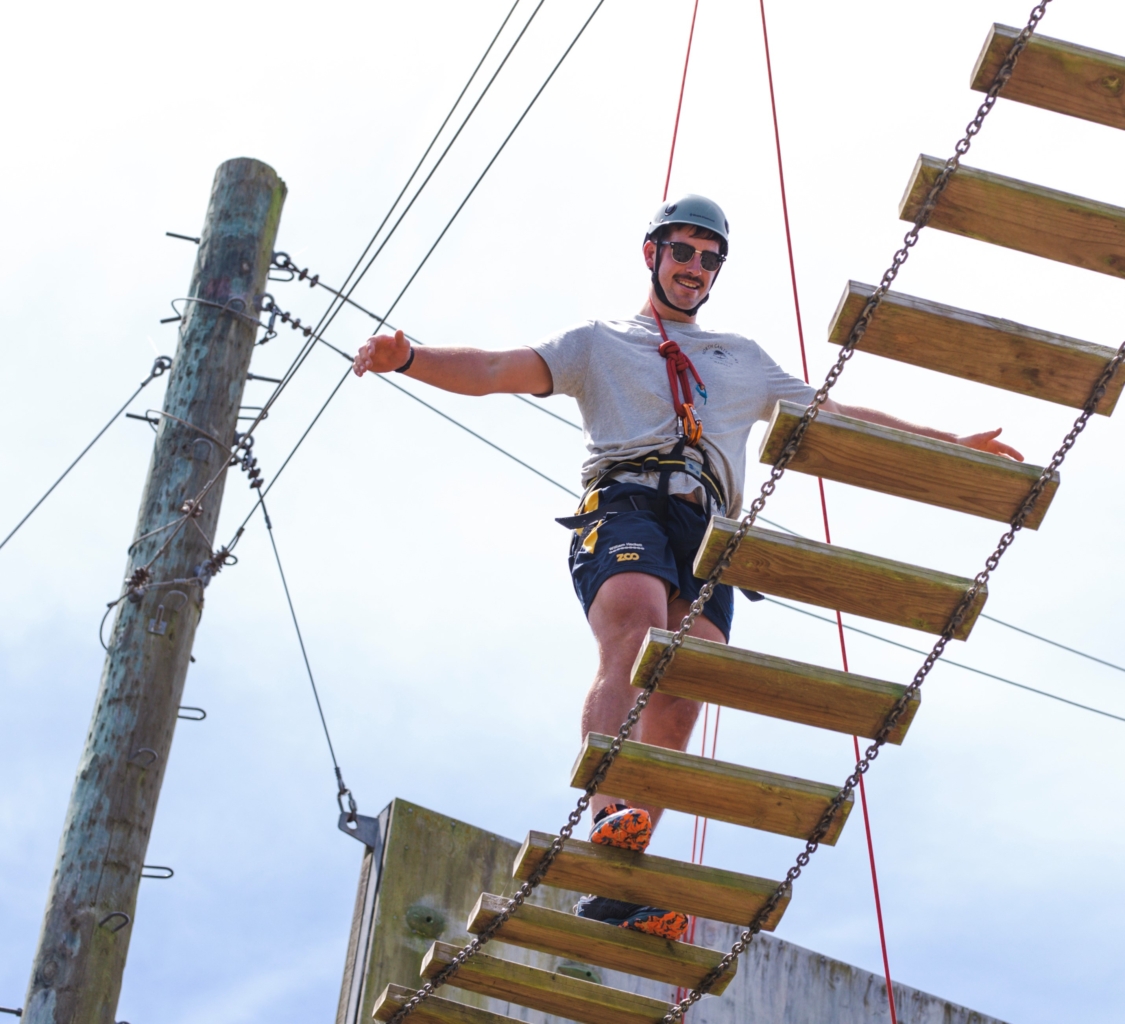
  • A team building day. 
  • A sector overview and strategic insights on governance, Maori agriculture, and rural communities. 
  • Panel discussions with Kellogg Alumni and a networking function. 

Key dates for the next intake – Kellogg Programme Two, Lincoln (13 June – 30 November).

Programme Two (K50), will mark fifty Kellogg cohorts since 1979. 

Applications for Programme Two, 2023 are currently open and will close on Sunday, 16 April 2023.

You can register your interest and access the Kellogg brochure below or apply at https://ruralleaders.co.nz/application-kellogg/. We encourage you to get your application in early. 

Phase One (Lincoln):  Tuesday 13 June – Wednesday 21 June 2023. 
Phase Two (Wellington): Monday 11 September – Friday 15 September 2023.
Phase Three (Lincoln): Monday 27 November – Thursday 30 November 2023. 

Feeling inspired? Download the brochure with more information:

"*" indicates required fields

This field is for validation purposes and should be left unchanged.
Your name

Receive the Rural Leader in your inbox every month.

Kellogg Rural Leadership Programme takes its 1,000th step forward.

Kellogg Rural Leadership Programme - Delivery Team

Can I have your attention please – the one thousandth graduate of the Kellogg Rural Leadership Programme has just left the building!

Like the graduates before, they return to their family, community, industry, and to contribute to a sector that just got a little smarter, a little stronger.   

We’ll know more about the scale of the Kellogg Alumni’s collective impact as we get closer to completing the Mackenzie Study with the Otago  School of Business.

The first stage of this Study revealed remarkable personal and sector gains attributable to participation in the Nuffield Scholarship. The second stage should show similar results for Kellogg. After all, it has evolved over decades to be one of the most respected rural leadership programmes in Australasia.  

“People know the programme. It’s respected. They’ve seen the contributions that the Kellogg graduates have made over time”, says Dr Scott Champion, Programme Director. 

“It’s enormously significant. Obviously, there are other programmes that contribute as well, but you can’t deny the programme’s longevity. It has impacted on large scale now – we’ve just had the 1000th Kellogg Graduate.  

“Depending on whether we do two or three programmes, that’s somewhere between 45 and 65 Scholars per year. You start to build quite a community”, adds Scott Champion. 

Kellogg, a leadership programme spanning six decades.

The programme was initially developed in collaboration with the Kellogg Company in the US, as a way to enhance global leadership capability. Since then Kellogg Rural Leadership programme was reinvented many times over, keeping up with the challenges and the times. It delivers New Zealand centred syllabus, accredited by Lincoln and Massey Universities and delivered by the Rural Leaders.

In 2013, Kellogg was transferred to the newly-formed New Zealand Rural Leadership Consortium. This merged with the Nuffield New Zealand Farming Scholarship to create a single organisation. Four years later, the consortium became a registered charitable trust and changed its name to the New Zealand Rural Leadership Trust (Rural Leaders). 

A partnership known as the Pāhautea Initiative was formed in 2020 between Lincoln University, Massey University, AGMARDT and Rural Leaders. The initiative focused on building leadership capability in the regions, with the aim of creating a sustainable future for Food and Fibre.  

More recently, Kellogg academic accreditation through both Lincoln and Massey Universities has become available to those who undertake the Programme.

Kellogg offers new networks, friends and industry connections.

Rural Leaders deliver up to three programmes a year, with two based at Lincoln University. The other, in alignment with the Pāhautea Initiative’s aim of growing flourishing regions, is the same Lincoln Programme, only regionally based.  

Numbers are kept low to ensure a transformative experience, as the Kellogg journey is as much about learning from fellow scholars and developing a pan-sector network of friends as it is being exposed to industry leaders and new ideas. 

“For many Kellogg scholars, the enduring relationships and access to a network of like-minded change agents offers the most decisive outcome from the Programme. There’s a strong sense of trust, reciprocity, and a ‘pay it forward’ attitude which emerges amongst participants, says Phil Morrison, Kellogg Facilitator. 
 

The Kellogg eco-system of support and delivery.

The Kellogg team is passionate, dedicated, and ably steered by Chris Parsons, Rural Leaders’ CEO. Lisa Rogers, Programmes Manager, Annie Chant, Operations and Events Manager further support Scholars and Kellogg facilitators Dr Scott Champion and Phil Morrison, Dr Patrick Aldwell and examiner Professor Hamish Gow.  

The team work hard to provide a varied and stimulating learning experience.  

The Programme is delivered over three phases and includes two papers, the first of which requires the completion of specific assignments. This is delivered by Dr Scott Champion and Phil Morrison. 

The second paper, delivered by Dr Patrick Aldwell, involves completing a research project and giving a presentation at the end of the programme.  

Kellogg pushes beyond Primary sector boundaries.

On the first day of Phase One, Scholars are asked an important question. 

“On the first day they come in to the programme, we ask them, what’s the one thing you want to hit by the end? And then on the last day, we ask them what was most valuable thing to you through the programme?”, It’s a before and after comparison of perceptions of value,” says Dr Scott Champion. 

The results of this survey reveal where the true value is. One Scholar coming into the programme states, my one thing would be ‘…to find where I fit.’ At the end, that same Scholar says their most valuable thing was ‘the connections made with fellow Scholars and the greater Kellogg network’. Fit found perhaps. 

“It’s something you see really elevating as Scholars go through. And I think that’s evident in what they talk about as being most valuable to them. They often come in with something quite narrow and specific, like ‘I want to learn how to do X’, but when they leave, it’s about networks, understanding systems, understanding stuff beyond the boundaries of the sector they work in”, adds Dr Champion. 

Develop a questioning mindset with Kellogg.

On Phase One, Scholars embark on a nine-day, eight-night residential module based at Lincoln University, or potentially closer to home for the regionally based programme.  

This phase sets the foundations. It explores leadership skills and tools, including personal and team styles, design thinking, and critical analysis. Leadership applications of skills are also covered in various situational contexts, along with leadership strategic contexts – with a focus on New Zealand Food and Fibre Sector strategies and leadership challenges. 

Most importantly, underpinning this is the active encouragement of Scholars by facilitators, to develop a questioning mindset. 

“We play a video on the first day of Phase One, where a guy is saying, managers are defined by the things they know, leaders are defined by the questions they ask. It’s a 30 second clip, and it just nails it for me”, says Dr Champion. 

“We’ll often see comments in Scholars’ reflection journals from Phase One like, Oh, man, I thought I needed to know everything. But perhaps I don’t need to know everything. I just need to be able to think and ask questions.” 

Kellogg builds the confidence to engage with food and fibre leaders.

What Kellogg does so well is to expose Scholars to industry leaders. All of these senior people are eager to engage in conversations, and look to Scholars as the next generation of leaders, hungry to learn about the things they need to be thinking about. Kellogg creates a new interface for that knowledge transfer.  

“There’s often a reticence when senior or experienced industry people get in front of Scholars, to engage in a conversation, to ask questions. I completely understand that. So, what we’ve deliberately tried to do is reduce the monologue from the front, and increase the opportunity for questions. And then give them a real nudge to speak up. Scholars soon discover these people are very approachable,” says Dr Champion. 

“So experientially, we shift beyond just the head learning, to the heart learning. They think, I can do this, it was alright. That industry leader seemed to think that was an interesting question.”  

Scholars also make contact with industry leaders themselves, particularly during the individual research projects. Engaged people from a range of industries often respond to Scholars’ questions within 24 hours, and are more than happy to do interviews to help with research. 

“I think it speaks to the brand and standing of the Programme. There’s an opportunity to use the Kellogg brand to be able to talk to industry people and have some conversations that you might not otherwise be able to do”, says Dr Champion. 

Kellogg Scholars - from lifelong friends to lifelong learning.

Throughout the Programme, Dr Patrick Aldwell, Academic Director, works closely with Scholars to help them complete an individual research project. This is undertaken between Phase One and Phase Three.  

Scholars choose a topic of interest that also contributes to developing leadership outcomes and aspirations. The project brings together problem definition, research tool application, critical analysis, report writing and presentation. 

Dr Aldwell fosters a philosophy of lifelong learning with Scholars, and for many this begins with the research and reading disciplines acquired doing the research project. 

“That’s something that you need to adopt to be a leader. And the key part of that is reading widely”, says Dr Aldwell. 

On the programme the facilitators demonstrate to Scholars the importance of the lifelong learning piece, particularly in the critical thinking and critical analysis area, gathering different perspectives, seeking information, and evaluating its value and authenticity as well. 

“If there’s one key thing that’s changed in the last two years, is that we’ve gone from just comparing and contrasting information, and the status of that information, to comparing, contrasting and evaluating it,” adds Dr Aldwell.  

Dr Aldwell explains that one huge benefit he has seen arise from individual research is that Scholars gain at least one specialist area of knowledge, to the extent that in some organisations, they’ve become the go-to person for that area. Whether it’s dealing with anything from waste in the dairy industry, to succession planning.  

“That’s not just the knowledge and capability side of things, but also the ability to access, evaluate and produce credible information and analysis in an era of rising misinformation, and disinformation, the politicisation of those, and of knowledge,” states Dr Aldwell. 

Kellogg is an executive leadership programme gearing Scholars for success.

On the Programme’s remaining two phases the foundations built in Phase One guide Scholars strongly.  

Phase Two’s five day, four night residential in Wellington, looks at how to engage and influence decision making at local, regional and central government and industry level.  

Phase Three’s five-day (four-night) residential at Lincoln University, is the culmination of the project work, where Scholars demonstrate the application of research, presentation and critical analysis skills.  

A final goal setting for the future piece includes personal brand identification and provides the platform for ongoing learning and leadership development. 

“I get a real kick out of watching the Scholars succeed in life, because I do follow them, watch them grow, and develop. Seeing them have confidence to take the next step, no matter what that is. I’m constantly astounded at the energy they have, the strength of character they have, to see things through,” says Dr Aldwell. 

Who is the Kellogg Rural Leadership Programme for?

Many Scholars who come into the programme, are in the transition from a technical management role to generalist management role.  

“The things that get you through that technical pathway, which is typically about knowledge and excellence, these are not the things that are necessarily going to equip you for the next generalist bit,” says Dr Champion.  

The programme helps leaders make that transition, whether they’re slightly beyond that, right on the cusp, or whether that might be something for them in the future.  

Arming Scholars with the ability to understand and make connections in ways that others can’t predict, or don’t. This is the alignment between what the programme does and equipping people to progress in their careers.  

“The best Scholars, leave able to join the dots, and make connections across areas that might seem quite disconnected when you first look at them. They’re able to lift above, like the specifics of the context of something, and think quite strategically about it”, notes Dr Champion. 

“They see connections across sectors or issues and that helps them think about opportunities, risks and challenges in quite different ways. The ability to do that as a leader is an enormously helpful thing”, adds Dr Champion. 

Rural Leaders’ bigger picture and Kellogg’s role in it.

The Kellogg Rural Leadership Programme, The Nuffield New Zealand Farming Scholarship, and the Value Chain Innovation Programme exist for one reason – to grow leaders with the ability to deliver the changes in food and fibre that ensure our communities, country and planet flourish. 

This isn’t just a version of a line on a website – 1000 Kellogg graduates, our rural leaders, are delivering that change. In the coming months we’ll share the Mackenzie study’s findings on their impact. There’s unlikely to be too many surprises. 

Dr Champion concludes,

“We have a collective intent in the Kellogg Programme, where we want to see Scholars contributing back to the sector and rural communities and ensuring the wellbeing of the regions and their people.” 

Lincoln University, Kellogg, and Rural Leaders – a collaboration spanning decades

Based on campus since 1979, the Kellogg Rural Leadership Programme has a long connection with Lincoln University, having been developed by the Kellogg Company as a way of enhancing global leadership capability.

In 2013, the programme was transferred to the newly-formed New Zealand Rural Leadership Consortium, which merged it with the prestigious Nuffield New Zealand Farming Scholarship to create a single organisation. Four years later, the consortium became a registered charitable trust and changed its name to the New Zealand Rural Leadership Trust (Rural Leaders).

A partnership known as the Pāhautea Initiative was announced in late 2020 between Lincoln University, Massey University, the Agricultural and Marketing Research and Development Trust (AGMARDT) and Rural Leaders.

The initiative focuses on lifting education levels across the sector and building deeper leadership benches in the regions, with the aim of creating a sustainable future for food and fibre. Accreditation of core programmes is key to delivering on the partnership’s purpose.

Kellogg accreditation strengthens the bond with Lincoln University.

Rural Leaders, Lincoln University and Massey University have further strengthened ties by offering academic accreditation for those who undertake the Kellogg Rural Leadership Programme.

After completing the programme, Kellogg scholars can opt into a Postgraduate Certificate in Commerce.

Alternatively, they can allocate the 60 credits they can earn towards the 180 required credits for a Lincoln University taught master’s degree.

Scholars can also elect to use their 60 credits towards a master’s degree at Massey University.

Additionally, accreditation may soon be available for the Nuffield New Zealand Farming Scholarship, although this is a work in progress, says Rural Leaders’ Programme Manager Lisa Rogers.

“Theoretically, it would be a diploma, or 120 points towards a 180-point taught masters.”

A dedicated Kellogg programme team. 

The Kellogg Rural Leadership Programme team – including Rural Leaders facilitators Dr Scott Champion and Phil Morrison, Dr Patrick Aldwell and examiner Professor Hamish Gow – work hard to provide a varied and stimulating learning experience.

The programme includes two papers, the first of which requires the completion of specific assignments and is delivered by Scott Champion and Phil Morrison.

The second paper, delivered by Dr Patrick Aldwell, involves completing a research project and giving a presentation at the end of the programme.

Rural Leaders deliver three Kellogg Programmes a year, with two based at Lincoln University. The other, in alignment with the Pāhautea Initiative’s aim of growing flourishing regions, is regionally based. The next location, in May 2022, will be Whanganui.

Each programme is delivered to 20 to 24 scholars. Numbers are kept low to ensure a transformative experience, as the Kellogg journey is as much about learning from fellow scholars and developing a pan-sector network of friends as being exposed to industry leaders and new ideas.

A shared history and a shared future.

Rural Leaders have a strong presence on campus and increasingly share alumni with the university now that Kellogg scholars can gain a Lincoln postgraduate certificate.

Lisa Rogers says she is keen to see the long association continue to grow.

“We often get graduates from the Lincoln Future Leaders Scholarship Programme coming through to do the Kellogg. While we may not see recent undergraduates apply, it’s something we see happening later in their careers.”

Fun fact: Up to 50% of participants in any one Kellogg Programme have previously graduated from Lincoln University.

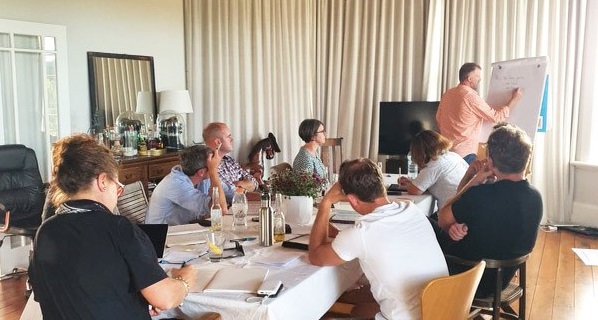
Kellogg team building rope bridge

Madison Pannett on GenZ in the primary sector.

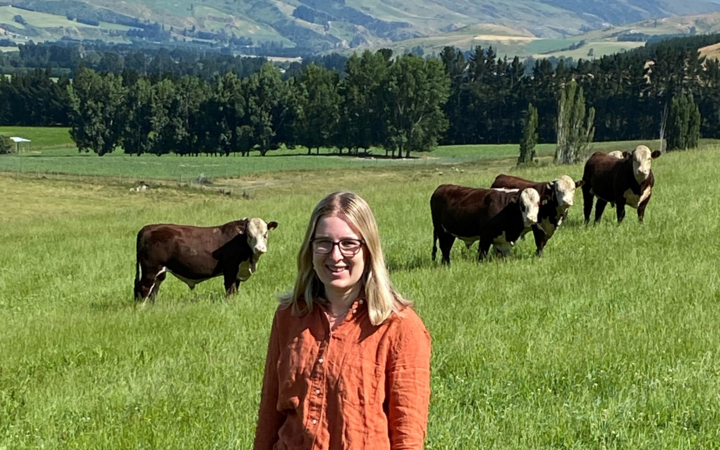
Madison Pannett is a 2021 Kellogg Scholar who recently made the news with her Kellogg research on attracting Generation Z into the primary industries.  

You can review her report here, Generation Z and the environment – how can we use their passion to attract them into food and fibre sector careers?

In a nutshell the report takes a close look at how and why the sector’s careers need to be more aligned with this influential generation’s values. 

The interview with Radio New Zealand’s Jesse Mulligan is short and to the point. For anyone looking to bring new talent into their operation, it’s well worth the five-minute investment.  

Madison speaks about the way the primary sector’s economic performance is the most common messaging theme in media, something GenZ are not generally interested in or motivated by.  

According to her research, GenZ are motivated by environmental issues and their ability to make a bigger difference to them. She concludes, a job should be spoken about in terms of how it fits into the bigger picture, particularly regarding global warming – rather than in financial or economic terms.  

Listen to Jesse Mulligan interview Madison below. 

You can also read an earlier article published in the Waikato Herald. In this article Madison also talks about how we might inspire young people into the primary sector. 

Follow the link to read the article on nzherald.co.nz website.

From the Mackenzie Study: The Case for Kellogg.

Otago University

Work on the Mackenzie study continues with Professor Nathan Berg of the Otago Business School and the Department of Economics made possible with the support of the Mackenzie Charitable Foundation.

Since receiving the results on the gains attributable to participation in the Nuffield Scholarship, collation of results from the Kellogg Alumni survey has now begun.  

While more work needs to be done to present the data, we thought we would share a series of long-form responses from the Kellogg survey. These in themselves begin to paint a picture of the value of the programme to alumni, in terms of personal development, career advancement and industry influence.  

The responses have been left anonymous and any information that might reveal a respondent’s identity has been removed. 

Nearly one hundred Kellogg Alumni completed the survey. 

Searching for further motivation to complete your Kellogg Lincoln or Kellogg Whanganui application? You may find it here. 

What have been your most important accomplishments and did Kellogg play a role?

“Critical analysis of all situations. Kellogg helped solidify this process.” 

Kellogg taught me how to deal with problem situations and be able to answer questions from media reps. Kellogg also gave me confidence to address open meetings of farmers and Iwi reps.

Employment positions held. Community roles held (school board, parish, sport, and service clubs). Kellogg played a role – Yes. Improved skill base particularly around communication and leadership.

“The course helped with critical thinking and confidence.”

“My leadership career and influence. Helped me think strategically and made me match fit.” 

“Understanding myself better, how I affect others. The development of networks and doors opened by the programme. Personal brand building.” 

Contributing to strengthening capability and capacity in the agricultural sector.

“Start-up with two fellow Kelloggers – definitely a result of Kellogg.” 

“Leadership roles on boards of industry specific, or primary sector education boards plus NSO boards… Had creditability and capability having done a recognised course like Kellogg. Throughout the years the networks you form with either people who did it with you or had done it at other times was helpful to open doors and connections.” 

“Underway with a new company starting a new value chain. I completed my Kellogg project on this topic, so it very much helped.” 

“Since being a Kellogger I went onto become a Nuffield Scholar which I regard as a real accomplishment. Following that, I have started a new farm business and [have] become more involved with local industry. Kellogg… opened a lot of doors.” 

Forming a people and training team and ensuring the business had a successful part to play in sector upskilling. My Kellogg project and the learnings around it were the catalyst for this.

“Moving from hands-on farming to a corporate role. Kellogg gave me the networks and confidence to make the move.” 

“…Enjoyed widening my social and professional network and learning of other like-minded people. Having the mix across food production was great – everything from grapes to sheep to kiwifruit to Ag IT.

Kellogg helped with development of governance skills and gave me confidence to get involved in a large number of initiatives.

“Confidence and experiencing others’ opinions and ideas, and great fellowship with others on the course.” 

Kellogg helped me particularly in improving my leadership and social skillsets…”

“Networking and connecting. Having a sound understanding of the basics about how Wellington works was a highlight which I could not have done without the doors that Kellogg opened during that part of the course.” 

“I have played a significant role in building biosecurity preparedness for the primary sector and being a Kellogger has contributed to this, in part by exposing me to some inspirational people – and understanding the habits that lead to success.” 

“It helped me see that the people I viewed as leaders were not that different from me. It gave me confidence in who I am and whetted my appetite for more.” 

“I learned a great deal as a Kellogger, and that has contributed to all I have done…It made me a better person, better equipped with insights and with the ability to consider decisions. But I wasn’t completely hopeless before!” 

“Before the programme, I ran hard and fast at everything I did. This generally worked but came at a huge cost to my family life, my personal life, and my mental health. 

I still push myself every day to be better, but after hearing ways others in my cohort dealt with stress, I was able to learn to keep my mind on the rails. Mainly – I don’t need to do everything on my own. My cohort was the best – heaps of us are still in touch, helping each other along the way.”

“Respect from others for having completed Kellogg and respect between alumni.” 

The Mackenzie Study – a view of leadership

The Mackenzie Study – a view of leadership

The Otago Business School and the Department of Economics recently conducted research on behalf of The Mackenzie Charitable Foundation and The New Zealand Rural Leadership Trust.

‘The Mackenzie Study’ revealed remarkable results on the personal gains in entrepreneurial skills attributable to participation in the Kellogg and Nuffield Programmes. It is Nuffield Scholars’ broad and consistent level of achievement over time, that resonates most.

Preliminary findings are a compelling case for anyone considering applying for a 2022 Nuffield Scholarship, or looking to develop their leadership ability through the Kellogg Rural Leadership Programme.

A comprehensive survey of Nuffield Scholarship Alumni was conducted in June this year, with invitations sent to all 135 living alumni.

The study had an unusually high participation rate of over 50%, especially given the flooding in Canterbury.

We’ll be presenting more results in due course, including comparisons between alumni and current cohorts. For now, here are just some of the findings demonstrating the professional accomplishments of Nuffield Scholarship Alumni.

Each result is a strong call to potential applicants for the 2022 Nuffield Scholarships, to apply before midnight this Sunday, August 15.

Nuffield five for five.

Image:Nuffield Scholars in study [supplied]

With five days to go until applications for the 2022 Nuffield Scholarship close, we thought we’d give five reasons as to why receiving a scholarship now, may represent a quantum gain in benefits over previous years. So calling all potential Nuffield Scholars, here’s some more food for thought.

  1. There have never been so many of New Zealand’s best business leaders and innovators in the country at the same time.
    There are a few silver linings to the global pandemic. One might be the number of influential people affiliated to innovation and the food and fibre sector, who have returned home. While their move may not be permanent, now is the time to meet and connect with them. Nuffield can help with that.

  2. With a programme that has adapted to the global pandemic, scholars currently have more flexibility, closer to home.
    We face many challenges right now. So, being away from family, farm and work could be tough on some. As a result of the global pandemic restrictions, the programme has adapted successfully by adding a deeper local layer, along with virtual and global input.

  3. No matter what happens with regard to global travel, Scholarship recipients still receive $40,000 to conduct research.
    Whether the borders open up or not in the short to medium term, the Scholarship funds are not adjusted. In a situation where the borders do open, your global travel component will continue, safely.

  4. Nuffield Scholars’ experiences and enhanced skillsets are increasingly in demand.
    As the rate of change in food and fibre and beyond increases exponentially, Nuffield Scholars’ exposure to research, innovation and leadership development, means their knowledge is always needed in governance and industry.

  5. Scholars will be part of the new Value Chain Innovation Programme (VIP).
    Two weeks’ immersion into more than ten of New Zealand’s established, novel and disruptive value chains.

    The Value Chain Innovation Programme introduces Scholars to value chains beyond their own. It represents an opportunity to meet, draw ideas from and connect with people across many industries.

    Thinking of launching a product, or adding another to a range? This is just one way the VIP can help.

Want to be part of this? Apply now.

Back to the August 2021 issue of The Rural Leader.

Siobhan O’Malley & Wayne Langford – Meat the Need

In our last newsletter we featured the work Siobhan O’Malley and Wayne Langford have been doing with their new charitable venture ‘Meat the Need’. 

Tune in to this podcast where Siobhan and Wayne talk about how and why they got started on the ‘Meat the Need’ charity concept.

To find out more about Meat the Need charity or to donate click here: https://meattheneed.org/

Anna Nelson’s work for King Country River Care Group

Anna Nelson, 2016 Kellogger, is currently working as the Co-ordinator for King Country River Care Group.

Anna recently featured on Sarah’s Country where she talked about the work she has been doing for the King Country River Care Group who have been awarded an $844K grant to support clean waterways in the King Country.

Click here to listen to Sarah’s Country podcast >>>

Programme partners update

logo

We were pleased to welcome LIC on board as a Programme Partner in June this year with the signing of a three-year agreement.

Our partnership with LIC helps support NZ Rural Leaders mission to grow world class leaders capable of local, national and international impact.

LIC is a herd improvement and agri-technology co-operative that empowers farmers through the delivery of superior genetics and technology.

Find out more about LIC here.

Rural Leaders are pleased to have re-signed a three year partnership agreement with GlobalHQ in July.

GlobalHQ is a data and information business supporting New Zealand Agripreneurs, including every farmer in the country. Their brands include Farmers Weekly, Dairy Farmer, Onfarm Story,  Agri HQ, Farmer’s Voice, Sarah’s Country.

We thank GlobalHQ for their continued support in helping us deliver the Kellogg and Nuffield programmes.

Find out more about Global HQ here.