2026 Nuffield NZ Farming Scholarship. Apply by 17 August 2025. Read More...

Apply for 2026 Nuffield NZ Farming Scholarship by 17 August 2025. More details...

Alumni in the Spotlight – Lisa Portas, Dani Darke, Caroline Batley, Nathan Guy, and more.

Here are just a few of the media pieces covering the impact of Rural Leaders’ Programme Alumni in industries and communities across the sector. 

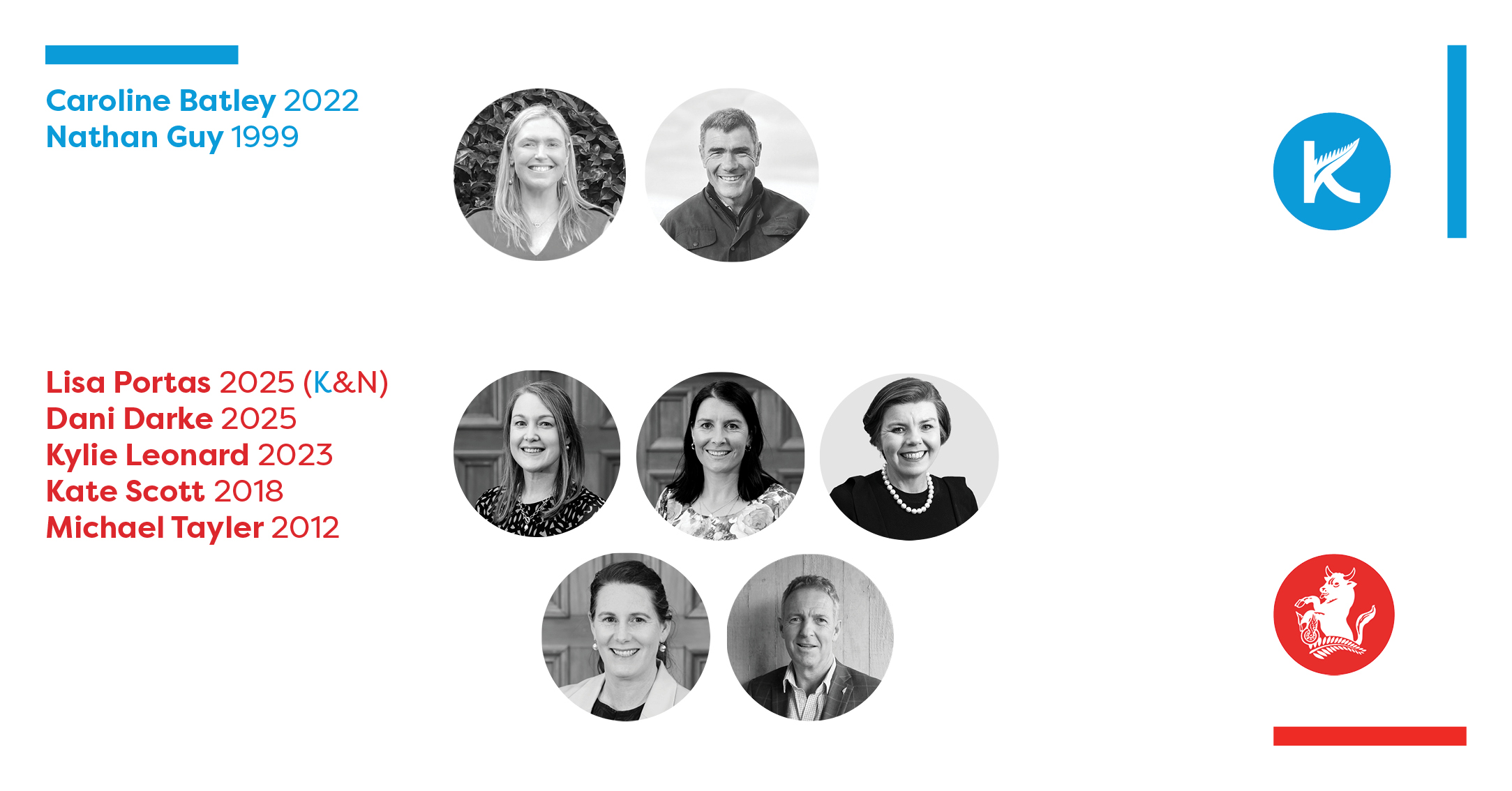
Caroline Batley

Caroline Batley (Kellogg 2022)

Caroline Batley recently completed two years as a Trustee of the Waikato Farmers Trust. In 2025 Caroline was also appointed the new Chairperson of the St Peter’s Owl Farm Governance Committee. 

You can read more about Caroline’s role with Waikato Farmers Trust here.

Nathan Guy

Nathan Guy (Kellogg 1999) was appointed Special Agricultural Trade Envoy (SATE) late last year. He replaces Hamish Marr (2019 Nuffield Scholar) in the role.

He featured in a recent Rural News article in his capacity as SATE, saying the Free Trade Agreement (FTA) with India is a good deal for the country. 

You can read the full article here.

Lisa Portas

Lisa Portas (Nuffield 2025, Kellogg 2019) has become Associate Trustee AGMARDT, replacing Phil Weir (2020 Nuffield Scholar).

Wairarapa-based, Lisa has over a decade of experience working in agriculture, rural businesses and supply chains in New Zealand and internationally. 

Take a read of this Farmers Weekly article on Lisa and the AGMARDT appointment.

Dani Darke

Dani Darke (2025 Nuffield Scholar) and her husband Anthony recently spoke at B+LNZ Tasman Farming for Profit Field Day. They are sheep and beef farmers from the King County, farming Coopworth ewes and Fresian bulls.

Dani is a director for Ballance Agri-Nutrients and is currently finishing off a Nuffield Scholarship with a focus on how we sell our beef to the world. Dani is passionate about rural communities and is interested in making our farms more profitable and our communities stronger.

Michael Tayler

Michael Tayler (2012 Nuffield Scholar) currently serves as chair of United Wheatgrowers New Zealand. Based in Christchurch, the organisation manages grower levies, insurance schemes, and industry representation.

Michael featured in a Farmers Weekly article in January (and on TVNZ) about hail-affected cropping farmers counting losses in the millions after a series of extreme hail events, the worst recorded by United Wheatgrowers. 

Three major hail events hit Canterbury farmers over the Christmas and New Year period, stripping crops. Michael said on average one hail event would affect 300 to 400 hectares. But from these events, 71 claims had been made accounting for almost 5,000ha of wheat.

Take a read of last month’s article here.

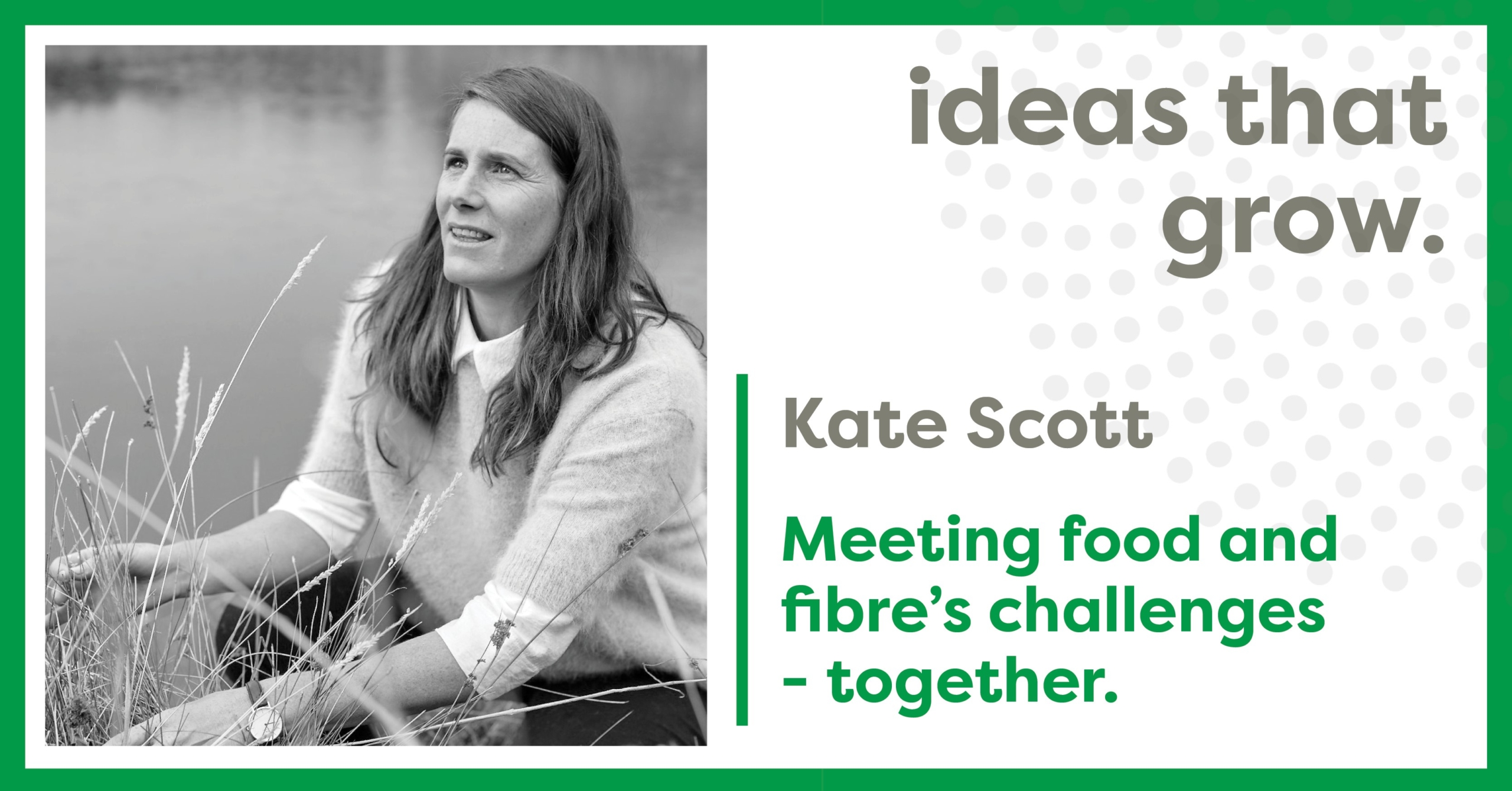
Kate Scott

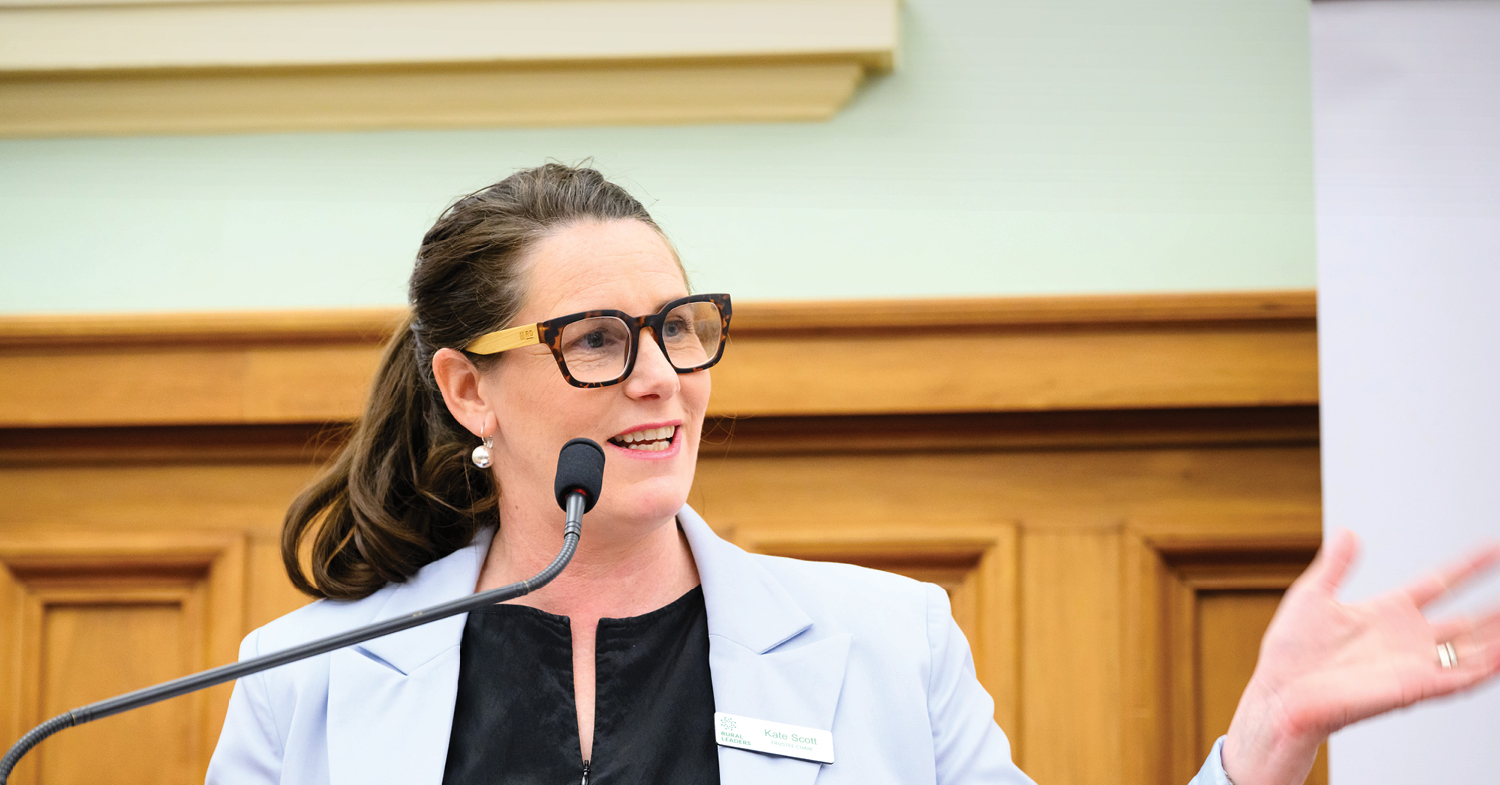
Kate Scott (2018 Nuffield Scholar), Rural Leaders’ Chair and HortNZ CEO, appeared in Hort News recently. Kate reflected on the achievements the sector has seen over the last year, especially apples and kiwifruit.

Regarding apple exports pushing past the billion dollar mark, Kate says, “I think that is testament to apple growers, particularly if they have been recovering from the effects of Cyclone Gabrielle,” she says.

Take a read of the full article here.

Kylie Leonard

Kylie Leonard (2023 Nuffield Scholar) appeared in Farmers weekly recently. Kylie’s Nuffield research explored the effects of ESG on farm finance and this was central to the article.

Kylie travelled widely on her Nuffield New Zealand Farming Scholarship, and gained new perspectives on farming systems, ESG and the role farmers play in strong, resilient communities.

Take a read of the full Farmers Weekly article here.


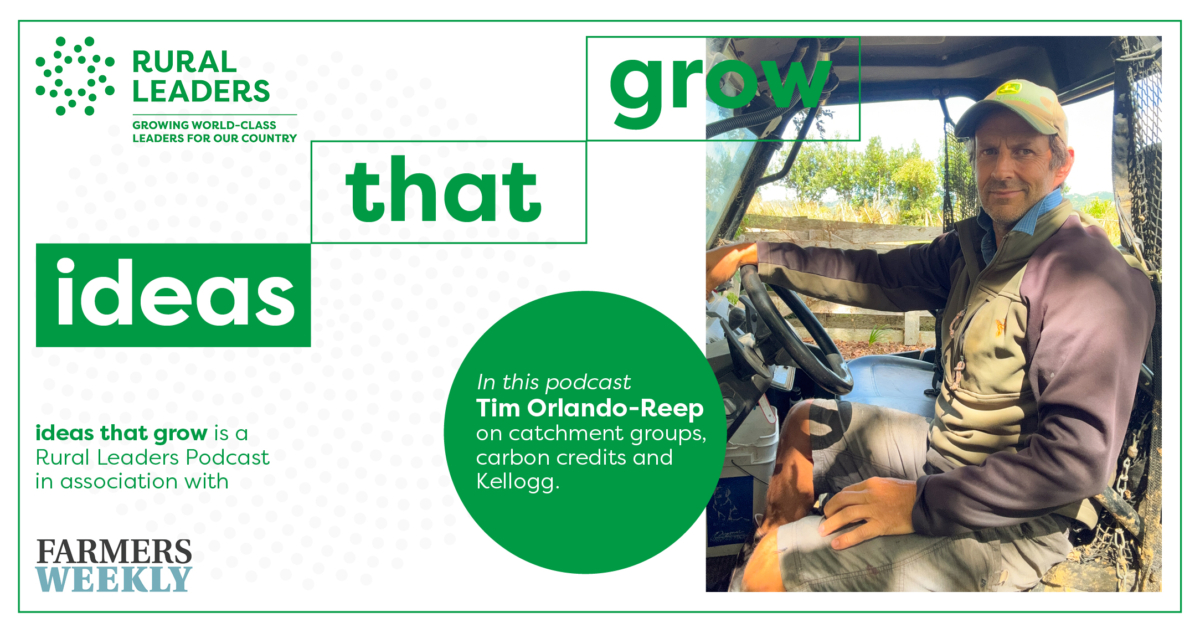
Tim Orlando-Reep – on catchment groups, carbon credits and Kellogg.

Listen to this episode of Ideas that Grow, or click on one of the platform icons below to listen on your favourite player:

In this Ideas That Grow Podcast, 2025 Kellogg Scholar Tim Orlando-Reep shares how his Waikato beef farm integrates carbon forestry, biodiversity ambitions and catchment collaboration.

While pine credits stack up financially, his research through the Kellogg Rural Leadership Programme explores how native plantings can balance profitability with environmental impacts.

Episode Transcript

You’ve joined the Ideas That Grow podcast, brought to you by Rural Leaders. In this series, we’ll be drawing on insights from innovative rural leaders to help plant ideas that grow so our regions can flourish. Ideas That Grow is presented in Association with Farmers Weekly.

BG: Bryan Gibson, Managing Editor of Farmers Weekly: You’ve joined the Ideas That Grow podcast, brought to you by Rural Leaders. In this series, we’ll be drawing on insights from innovative rural leaders to help plant Ideas That Grow so our regions can flourish. Ideas That Grow is presented in association with Farmers Weekly. 

Welcome back to Ideas That Grow, a Rural Leaders podcast. I’m Bryan Gibson, Managing Editor of the Farmers Weekly, and our first guest for 2026, is recent Kellogg Programme graduate, Tim Orlando-Reep. Tim, how’s it going?

TO-R: Tim Orlando-Reep, Beef Farmer, 2025 Kellogg Scholar:
Hi, Bryan. How are you going? Thanks for having me.

BG: Now, you’re farming up in coastal Waikato, aren’t you?

A diverse Waikato beef farm.

TO-R: Yeah, we’re based in the Northwest Waikato. About 10k’s as a crow flies, from the Coast. So, we get some nice westerlies here. Very nice area. Lived here pretty much my whole life. We fatten cattle up here, so buying in a lot of wieners and finishing them and sending to the works.

BG: Obviously, you’ve got a pretty diverse operation. You’ve got some carbon farming going on as well?

TO-R: We’ve got about 10 to 12 hectares of pine trees and second rotation carbon. My father was a bit of a pioneer when it came to grabbing onto the carbon market. He had a love of trees, and we’re taking that to the next level. We have been doing a lot of carbon farming through the pine trees, and we also do a lot of spaced willows and poplars throughout the farm. As well as the carbon advantage, I guess, we also have the advantage of shelter for stock, which is becoming more and more prevalent and much more important.

Also, if the worst does come to the worst, we can always do a bit of pruning in the summer there and feed some of the forage. It works really well. It’s a great way of beautifying at the farm as well and providing a bit of colour in the autumn.

BG: How does the carbon farming or the forestry side of things, how does that fit into your overall strategy of farming? Is it easily done? How did you go about it?

TO-R: We identified the steeper parts of the farm. We’re quite lucky up here. We have some really good soils, but there are some fragile steep parts. Probably the only thing we could have done with that really was put it into pine trees. I remember most of my school holidays planting pine trees, especially throughout the winter, through those steep areas where the cattle were making a bit of a mess.

Even now, we’re identifying places where it should have gone into trees, but we’re looking at now how we can diversify that a bit more. But look, it’s a project, it’s about 12 hectares, and we prune it all ourselves. We thin it all ourselves.

Tell you what, on a hot summer’s day, like it has been for the last week or something, there’s nothing better than escaping to the forestry and pruning some trees 12: 00 to 3: 00 for a bit of shade and check in on a podcast and get an idea of what’s going on in the world.

BG: You mentioned natives briefly. Of course, you recently went through the Kellogg Programme, and your scholar report was about developing a more robust biodiversity credit system.

Kellogg research into carbon credits.

TO-R: It was really interesting. We’re now identifying probably not the most fragile areas on the farm, but the next layer down, so the LUC 5 stuff. Instead of putting a pine tree on there, I’m just trying to work out, well, the idea was what we put on there that could compete with the pinus radiata. How could a native stack up, I guess, as far as income per hectare.

At the moment, it’s chalk and cheese as far as that comparison goes, compared to a fast-growing exotic like a pinus radiata. I really want to delve down and see what we can do as an industry or even as a nation as far as how can we encourage farmers and landowners to be planting native instead of pinus radiata.

It might not be one to one as far as income is concerned, but something that’s close to that has a little bit more longevity and a bit more permanence compared to every 25 years, basically destroying the hillside. At the moment, I’m pruning some trees at the back of the farm So it’s 10, 12 years old, and there’s some beautiful ferns and stuff coming through.

And I think, in 15 years’ time, this is all going to be decimated if we continue this whole cycle of harvesting pinus radiata. If I could back it up before they went in and I could put in a native tree and receive the same income than I can from carbon credit, then that’d be a win-win for everybody.

And that’s what I really wanted to delve into as far as (my Kellogg research) the project was concerned. Because what do we have to do to really excite people about putting in a native plant instead of an exotic. Where is the financial reward? Because at the end of the day, the feel good factor doesn’t pay the mortgage. We need to make sure it’s feasible from a financial viewpoint.

So, what’s holding farmers back from being excited about putting in a native tree? It was really exciting going through the process of the research and understanding through a survey, through quite a large number of people, through the Waikato. A lot of people are already putting native plants in place, and they’re doing it off their own, off their own back. They’re not doing it for a financial reward.

They’re doing it for ecological or freshwater reasons. But there’s no (financial) reward for that. I just feel as though if there’s some way of supporting farmers to even bring back some of financial input they put into that so they can establish a bit more, it’s got to be a lot better than what it is at the moment, where you’re just pouring money into something that looks great and is a great thing for the environment. There’s no financial incentive, I guess, to do that. It was exciting to see that farmers are just doing it anyway. I just feel as though there’s a real opportunity here for farmers to be able to monetise or financially receive something for that.

BG: It would seem to me it’s more of a holistic way of looking at things. I mean, carbon farming is a reward system for battling greenhouse gas emissions, and you get rewarded for that.

Planting natives also combats climate change, but as you say, in a slightly slower way. But the fresh water implications, the biodiversity implications from diverse native plantings, that’s also really beneficial to everyone. Why can’t we come up with a reward system for that?

TO-R: Exactly. Look, there’s been a lot of work done around this area, and internationally, there are some good established schemes. Domestically as well, we have Maungatautari Mountain with Ekos, and they’ve done some fantastic work over there.

The thing that I’ve realised is it’s a lot more complicated to measure than carbon credit. So, carbon credit is just the species of tree times the amount of hectares of that species of tree cover. And it’s a fairly standard equation. When we come into biodiversity, how do you measure that? And that’s one of the things I got from my semi-structured interviews, is that it is so complicated.

A lot of the costs of auditing that get sucked up by our subject matter experts, our auditors, and all that thing. And does that follow through effect go back to the people who are actually putting the plants on the ground?

So, it was an interesting process to understand that, and then also, how could we pick some of the low hanging fruit there and say, right, we understand what’s probably restricting our biodiversity support or advancement in these areas already.

How can we help steady the ship, I guess, for the lack of a better phrase, and move forward and increase some of that biodiversity in some of those areas already. It was interesting.

BG: Yeah. I mean, it’s really heartening to hear that a lot of the farmers up your way are already on board ideologically with this stuff and are just doing it because they feel like it’s a good thing to do for them.

I guess some of these plantings, as you say, you’re seeing more heat events up there, the volume of rainfall is rising. I guess that work will build a bit more resilience into the farming system.

TO-R: I think a lot of farmers have realised that already. Bill Garland is a classic example. We’ve had a few open days up there, and what he’s developed over the last 20, 30 years on that property, he still has the weather events, but he’s the person who now says, well, look, we can put in something here, and it’s not going to get destroyed because we put in some mitigation.

That’s just a byproduct of what they’ve done. They’ve decided that’s the best land use for that particular gully. The flow-on effects of what’s done downstream have just been fantastic.

You’re right, it’s just building up a bit of resilience. It’s going to save you money in the long term, isn’t it? I feel so sorry for the people who have had these weather events, especially on the East Coast. You’re putting in fences again that you’ve probably only put in a couple of years ago. That can be quite a soul-destroying, and it’s hard. Until you get to that stage where you can start thinking long term, it’s a hard road.

Catchment groups.

BG: You mentioned Bill there. I mean, you’re quite a fan, I understand, of catchment groups, the catchment, collective way of thinking of things, farmers working together for a common goal. Do you think that’s the model for the future of environmental progress in New Zealand farming?

TO-R: Yeah, Bryan, I think that’s a really good point. The catchment groups tend to be very farmer-orientated. I think farmers learn a lot more by going out and seeing something and learning from someone else who’s done something compared to a group that might come in and say, right, this is how it should be done.

The catchment group, that farmer-led initiative, has a lot more clout than we give it credit for. It’s easy to see what’s going on in our area, especially. We’ve got King Country River Care down the road. West Waikato catchment just to the west of us. Our catchment, Whangapē, leads into a freshwater lake that goes into the Waikato River.

We have our challenges here, and it’s great to see a key group of people getting together and bringing other people in and saying, hey, this is what we’ve done. What do you think? And we have some informal days where people just bring their own packed lunch in a thermos and we’re just going to have a look at what people have done. I think the value in that for other farmers is to say, oh, gee, it’s not actually that hard to go and maybe just identify an area.

Now I’ve met all these people who have done a bit of work like that. Maybe I can ask them instead of asking the council if they’re nervous about getting the council involved or whatever. It is farmer-orientated action approach. Some of the things that we’ve talked about in the last month or so, it’s like, how do we go around and help other people plant out or give them advice without any external influence at all?

I spent four days planting natives last winter, and it’d be great just to spend half a day doing that and having a group come over, and then I can go and spend half a day somewhere else. I think that collaborative approach is probably a lot more beneficial for a lot more than just putting plants in the ground. It’s having a yarn and having a chat and talking about all the challenges that everyone has had.

Reflecting on Kellogg.

BG: You’ve had a month or so or so to recover from the Kellogg experience. How are you feeling about the whole thing? What was the experience like?

TO-R: It’s funny. I almost put it out of my head before Christmas. Then last week I thought, it’s actually stimulated a whole lot more thinking about the process and the project, what I learned. I think that’s one thing that Kellogg does really well, by having these blocks, you get bombarded with information and all the cool stuff that goes on, then you get a chance to go away and think on it. And then also the project in the background as well.

It just really changed my way of thinking about things and really engaging in a different way of interpreting information, I guess, for lack of a better word. And even now, I’ve got my little blue book, and I sat back and read it just so I was doing a bit of prep for this over the last couple of days, and just picked up some little bits. I seem to be using it more often than not. Some leadership programmes, you go and you do it for a day, and then I think after the second or third day, you might retain 20 % of it.

The way the Kellogg Programme was designed was just so good at reinforcing some of those things you learned before. And the crew that you end up with in your cohort. We’ve got such a wide range of people from the top of the north to the bottom of the south, and not just beef farmers! Outside my comfort zone, we’ve got dairy, we’ve got horticulture, we’ve got the wine industry, we’ve got everything going on.

It’s just a great opportunity to be able to get someone else’s point of view. Really, over those four or five days you’re together (during phases), you can really drill down into what they’re thinking and what they see the world as and share some good ideas. Yeah, no, really fantastic. We haven’t even got into mentioning the people we get to meet as far as presenters. There’s some absolute gold that we pulled out of there.

BG: Just for our listeners, I must admit that I was part of Tim’s Kellogg cohort, but I promise that all of his thoughts are his own.

TO-R: I was going to mention gentleman as well, but I wasn’t too sure if we were sharing that information. That’s great. It was an absolute blast.

BG: Yeah, it was, wasn’t it? How’s the year ahead looking for you? You got any big plans, working on any projects or just focusing on the farm? A bit of both?

TO-R: As far as we’re really We’re trying to develop our catchment, so we’ve got a catchment coordinator on board. That’s been really interesting because it’s moved me away from the day-to-day running, and now I’m looking after that part. The farm is going fantastically.

We instigated Halter a couple of years ago, so we’re increasing our stocking rate. We’re trying to balance the environmental impact of that versus the economic impact. And just trying to bring the farm up to the next level. So it’s an exciting time, and I’m really enjoying it. Excellent.

BG: Thanks, Tim.

TO-R: Thanks, Bryan.

BG: Thanks for listening to Ideas That Grow, a Rural Leaders’ podcast presented in Association with Farmers Weekly. For more information on Rural Leaders, the Nuffield New Zealand Farming Scholarships, the Kellogg Rural Leadership Programme, the Horticulture NZ Leadership Programme, the Engage Programme and the Value Chain Innovation Programme, please visit ruralleaders.co.nz.

Future Food and Fibre Leaders Pulse Check – PwC and Rural Leaders.

What’s top of mind for Kellogg Rural Leadership Programme Scholars?

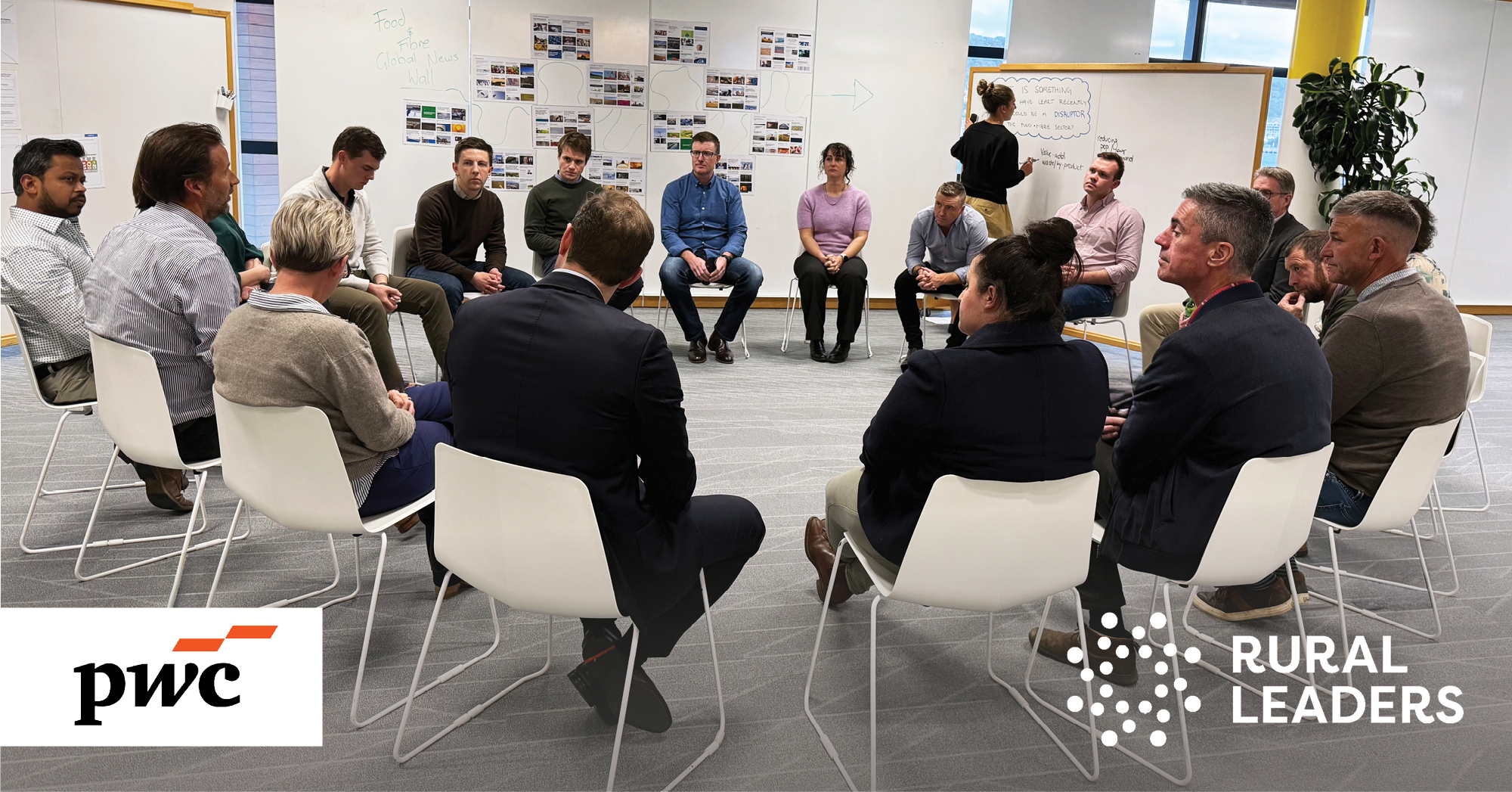
Rural Leaders, in partnership with PwC New Zealand, piloted Future Food and Fibre Leaders Pulse Check with Kellogg Programme One early in 2025.

Pulse Check is a snapshot of what’s top of mind for Kellogg Rural Leadership Programme Scholars, captured through workshops facilitated by PwC and Rural Leaders.

The second Pulse Check with Kellogg Programme Two 2025, captured five key messages.

Here are two:

  1. Adapt and lead through changing times
  2. Be empowered to redefine success

Click here to discover more in the short report.

Thank you to PwC, and to our Strategic and Programme Partners for their ongoing support of the Kellogg Programme and our shared mission to grow leadership in the food and fibre sector.

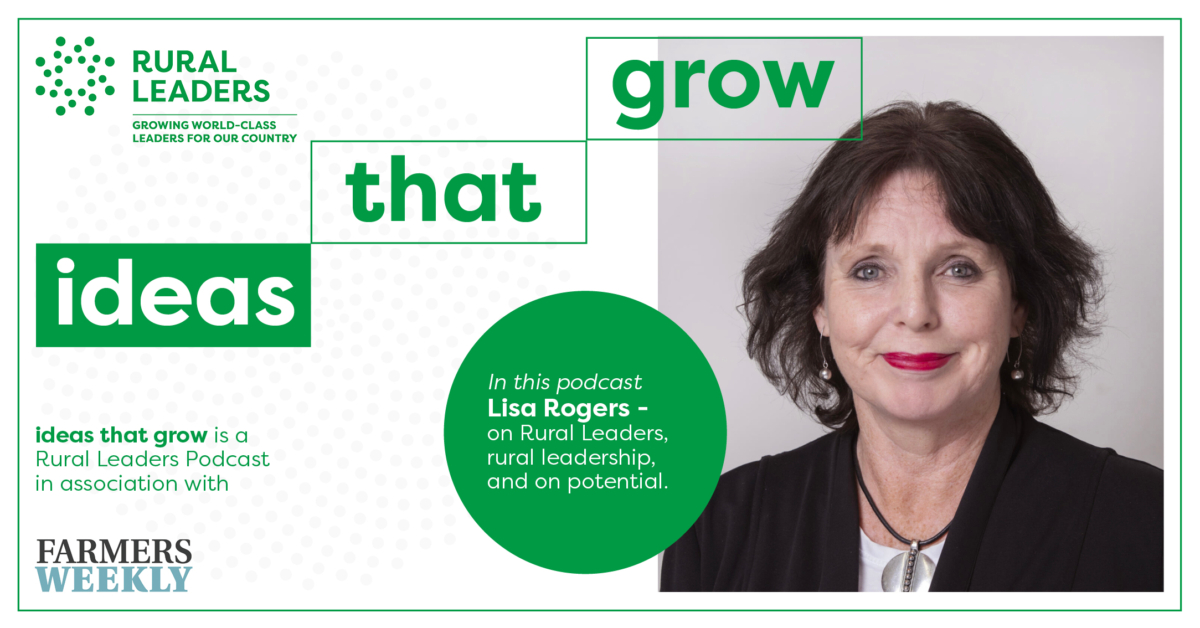
Lisa Rogers – on Rural Leaders, rural leadership, and on potential.

Listen to this episode of Ideas that Grow, or click on one of the platform icons below to listen on your favourite player:

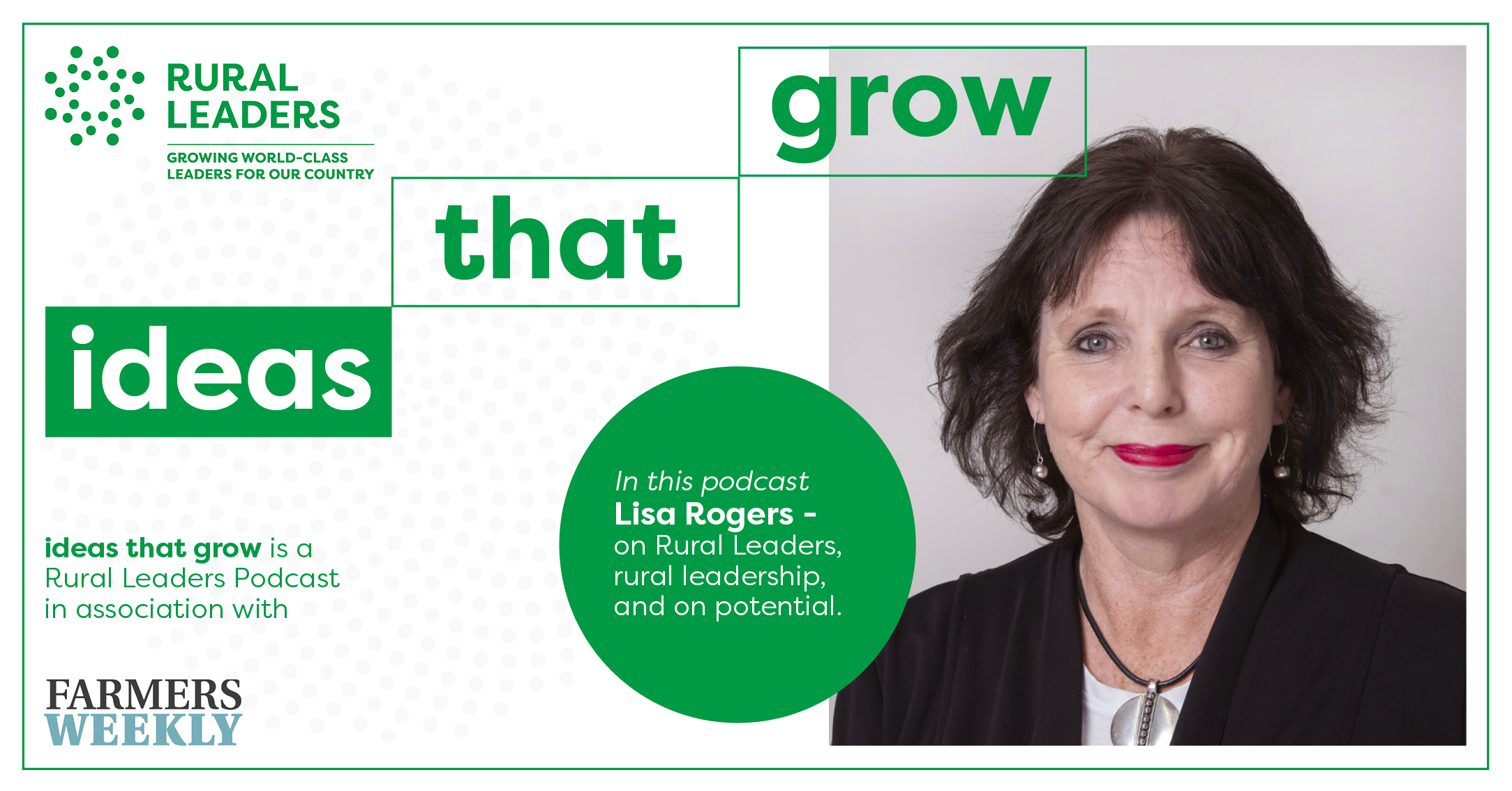
In this episode of Ideas That Grow, Bryan Gibson, Farmers Weekly Managing Editor, talks to Lisa Rogers, outgoing CEO of Rural Leaders.
 

Lisa reflects on her nine-year tenure, the growth of Rural Leaders, and the lasting impact of programmes such as Kellogg and Nuffield.

She highlights leadership development, collaboration, alumni influence, and the organisation’s vital role in building confident, capable leaders for New Zealand’s food and fibre sector.

Episode Transcript

You’ve joined the Ideas That Grow podcast, brought to you by Rural Leaders. In this series, we’ll be drawing on insights from innovative rural leaders to help plant ideas that grow so our regions can flourish. Ideas That Grow is presented in Association with Farmers Weekly.

Bryan Gibson, Managing Editor of Farmers Weekly:
Welcome to Ideas That Grow, the Rural Leaders podcast. I’m Bryan Gibson, Managing Editor of the Farmers Weekly, and we have a very special guest this time to see out 2025. It is the outgoing, as we now know, Chief Executive of Rural Leaders, Lisa Rogers. Kia ora Lisa, how’re you going?

LR: Lisa Rogers, CEO Rural Leaders:
Kia ora, Bryan. I’m going really well, thank you, as we head into the final phase of what has been another really productive year for Rural Leaders.

BG: Now, you’ve been with the organisation more than a decade, and about two and a half of as the Chief Executive, how does it feel to be stepping away?

On Rural Leaders and Kellogg.

LR: It’s bittersweet in some ways because I’ve got a fantastic team and I’ve met so many amazing people throughout our sector over the nearly nine years that I’ve been with the organisation, and it’s been very hands-on all through that time.

But at the same time, really excited for moving into a new chapter for myself, but also know that the team is just in such a great spot in the organisation as well. I think that’s one of the best legacies that any leader can leave, is knowing that the organisation can just keep hurtling along in a way that’s actually going to make everyone proud of what we’re doing.

BG: My apologies there. I added a couple of years to your age.

LR: Oh, yeah, that’s all right. Sometimes it feels like it’s been decades. In a good way.

BG: Now, I’m a member of the alumni. I can tell that we do age people prematurely.

LR: You had an awesome time as a Kellogger. How have you found that experience afterwards? How did it change you, Bryan?

BG: It changed me massively, to be honest. You have a narrow view of yourself and what you’re good at, and you don’t know whether that can translate into bigger things, I guess. The course, the specific things you learn, but also just the talking to people and meeting people and that thing, it makes you realise that, yes, you can do big things, and actually that skill set that you have is really valuable. Yeah, no, it’s really cool.

On potential.

LR: Yeah, the amount of personal growth that we see in people is extraordinary. And that’s the biggest satisfaction that I take out of all of my time is watching these people who, in my opinion, like buds of a flower where they’re just all potential. And they actually realise that going through. But a lot of them, it’s happening so slowly that they don’t always realise until they get to the end. And then they reflect and they go, wow. And it’s that sense of being able to have self-confidence in that being self-aware is what we absolutely love in our programmes, and actually for the sector as well.

I think a lot of our people in Food and Fibre are a fairly low key about their own ability, and they may not have always been in environments where that’s actually been celebrated or highlighted. To be able to bring that out in people is just extraordinary and show them that they’ve got all this value and knowledge to contribute as well, which is cool. As an aside, we often do a survey on who’s doing what around the sector.

Alum from our programmes are just hugely represented in leadership positions throughout food and fibre sector, which is really important because otherwise, we will have the same people being, dare I say, worked to death slowly.

It’s massively important for these people to be coming through and have the confidence to start stepping up into roles where it could be governance, it could be politics, it could be leadership in an organisation, all sorts of things that they can contribute towards. So it’s wonderful.

On productive discussion and debate.

BG: One of the other key things, I think maybe I think about it more because of my job as a journalist, but the programmes create an environment where you can, for want of a better phrase, argue with compassion, if you know what I mean. You can thrash out these big challenges. Everyone’s coming from a different place, but everyone respects everyone else.

LR: Yeah, I think setting the ground rules nice and early around that in our programmes, but also the people that are selected to attend these programmes as well. They have a little bit more of that social understanding of how to actually do that. Having what are really productive conversations and debates, but everyone can go out and have a beer at the end of the day, is such a mature and enlightened way of being able to thrash out these ideas, because if we can’t do that, then everyone just sits in their own little corners, don’t they? And we get nothing done as a sector. I suppose underlying that is collaboration, really, isn’t it? But it’s without actually using collaboration as the word. It’s just inherent in everything that we actually do, which is so good.

BG: I guess related to that, most people are pretty familiar with the Kellogg and the Nuffield programmes. But of course, that discovering new perspectives on our world and our food production sector, that really fits into some of the other programmes you have, like the Value Chain Programme.
On Rural Leaders’ recent history.

LR: So when I reflect, as I am at the moment. I started nine years ago, Anne Hindson, who set up New Zealand Rural Leadership Trust as the first CE, did an amazing job of bringing together two of our most iconic programmes in the sector, so Nuffield Farming Scholarships and the Kellogg Rural Leadership Programme. Both of them had been going for a long time.
We’ve just celebrated 75 years of Nuffield Farming Scholarships in New Zealand. They needed a bit of a refresh in being able to bring in both programmes together gave them a new lease of life, as it were. I started working with Anne, and that was an amazing opportunity to start from the ground up with an organisation. And then as we’ve gone along, we had Chris Parsons join us in 2020, and he pushed the accelerator, on that and said, there’s more that you can do, and gave us the vision to actually see how that could be possible. That was awesome as well to start accelerating at quite a swift rate of knots. But since then, and under my tenure, we now run five different programmes in the calendar year.

Kellogg gets run twice, and then we do quite a few bespoke programmes as well. Those bespoke ones are usually a spin-off of what our Engage programme is. It is a joint venture with us in Lincoln University, and that is all around capability for people coming into the sector, but it’s also about continuous learning and improvement for different organisations throughout the sector as well.

We’re doing some really neat stuff around that that’s short and sweet, so different to our longer, traditional programmes. There’s a real need for that in the sector. We’ve got all the fantastic contacts and people who give us their time because they value what Rural Leaders does. I think that’s one of our biggest legacies that we’ve got, is that people understand the value of what we do.

On collaboration.

So as a result, we’ve got this amazing stable of programmes, and we love working with other organisations as well. So every now and again, we get the opportunity to partner up with some of our other friends in the sector or offer opportunities to attend our programme as ways of increasing that applying for newer people into the sector, for example, working with Young Farmers, Federated Farmers, and Dairy Women’s Network.

Having this big ecosystem or a whanau is It’s amazing for us to get to know all these different people. There’s room for all of us in the sector. Nearly 380,000 people in the sector. I think if you can’t find a space in a niche for everything, then there’s something really fundamentally wrong. We fully get that. Times are tough at times for our producers. The first thing that can often have a line put through it is training and development. We get that because sometimes it really does come down to those last few dollars.

I think most people understand the value of what we’re doing. To our credit in the sectors as well, and our investing partners with whom we literally couldn’t do this without them. We’ve seen through COVID, we’ve seen through tough times out there for return on farm, and people are still valuing that development and that leadership training and experience people are getting through our programmes.

BG: One amazing thing I’ve just clarified in my head, you do these big projects as part of the Kellogg or Nuffield Programme. As someone who’s done post-grad tertiary qualifications before, that’s all well and good, but with the Kellogg Project, especially, it seems like it’s just not for you because you’re contributing to a pool. It has ramifications for your small wedge of the pie, the bit of food production you work in, and for the sector as a whole. It’s more you’re doing it for something bigger than your own.
On alumni and their research.

LR: Too right, Bryan. We see our alumni and our reports as our two biggest treasures of troves, as it were. Actually, one of the team, Matt Hampton, did a bit of digging the other day and realised that we’re in the top five (holders) of rural research reports that are sitting with any one organisation in New Zealand.

They’re free for everyone to access. They’re sitting there on our websites, and a lot of them are incredibly topical years after being written. The way for us to keep pushing those and making sure that they’re available and through different tools that we’ve got available on our system is extraordinary.

There’s about 1,500 alumni in total for the Rural Leaders programmes, which when you think that Nuffield has had about 194/195 in total in 75 years, It just goes to show it’s a pretty special group of people. We don’t like to think of ourselves as being in any way exclusive or anything, but we are special. The value that our alumni get over the years when they reflect on that is something that we’re seeing through people approaching us for legacy payments and gifting as well, which you get that at a university level.

You don’t always see that in our programme that you’ve done with an organisation. We are incredibly thrilled to be able to be part of that. But in my nine years, I reflect, I’ve had direct contact or seen over 400 Kelloggers go through. I’ve had at least 40 Nuffielders do their programmes as well, and countless others for Value Chain and Engage and the HortNZ Leadership Programme. The touch points with our alumni are incredibly important and very special to me. It’s been quite a, not bittersweet, but satisfying to think that we’ve had a really positive impact on so many people around the country.

BG: I guess looking big picture, given some recent struggles in terms of big challenges in our sector, there has been a lot of naval gazing about how we develop leaders, how do you go about it? Do we set our future leaders up well to succeed or do the people who give them the mandate, understand what they’re doing, all these big things. Obviously, Rural Leaders is one of the big pipelines of leadership skills and strategies, that sort of thing. What’s your take on where we’re sitting at the moment?

LR: I think it’s always going to be something that needs focus continually. You can’t take your foot off the accelerator. To bring people through into those leadership roles is vital. I also believe strongly, but in a really positive way, that our Māori scholars are also in demand.

We need a lot more of our fantastic Māori Kellogg and Nuffield Scholars to step up into these roles and encourage that, but they will do that in their own way in their own time. We’re here to support, of course.

BG: I guess I speak for every person who’s done a Kellogg or a Nuffield to say thank you for your leadership of the programmes over time and wish you best in whatever you choose to do next.

LR: I’m laughing with some of my friends and saying I’m having a gap year at last. But no, certainly we’ll be looking to be back into it again by April, May. That’s when I’ve got something organised. But in the meantime, going to be enjoying a fabulous summer off. And those who know me all know that that probably involves a bit of golf and lots of time with family and friends. So couldn’t be happier. But also my team here know that if they ever need to know where something is or something that they were thinking about a while back, they can always ring me.

But yeah, I’ll definitely leave with a lovely smile on my face because I know that the organisation is in great heart and thriving. Yeah, so awesome.

BG: Excellent. Thanks, Lisa.

Thanks for listening to Ideas That Grow, a Rural Leaders’ podcast presented in Association with Farmers Weekly. For more information on Rural Leaders, the Nuffield New Zealand Farming Scholarship, the Kellogg Rural Leadership Programme, the Engage Programme and the Value Chain Innovation Programme, please visit ruralleaders.co.nz.

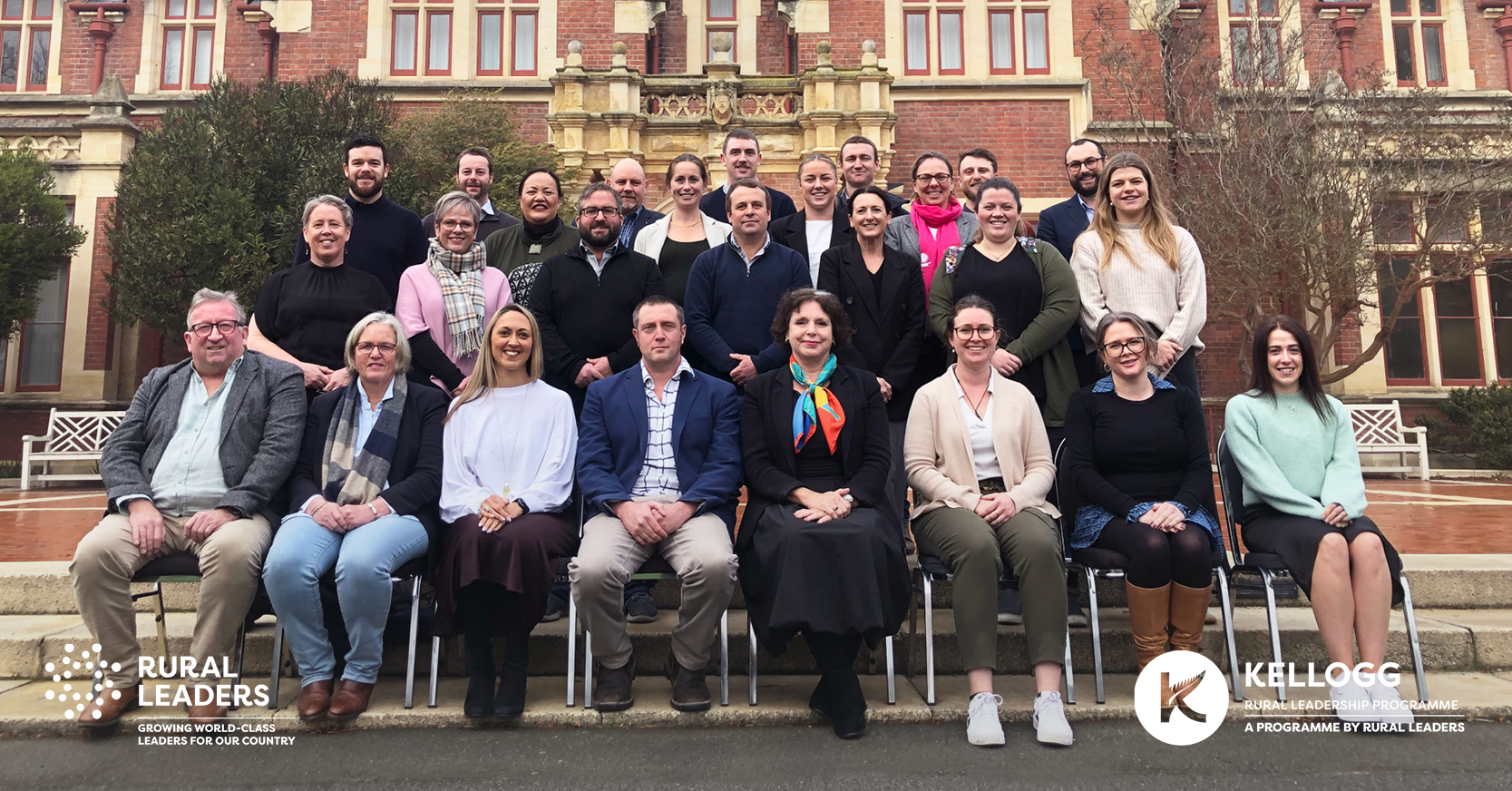
Kellogg Programme Two (K54) 2025 graduate.

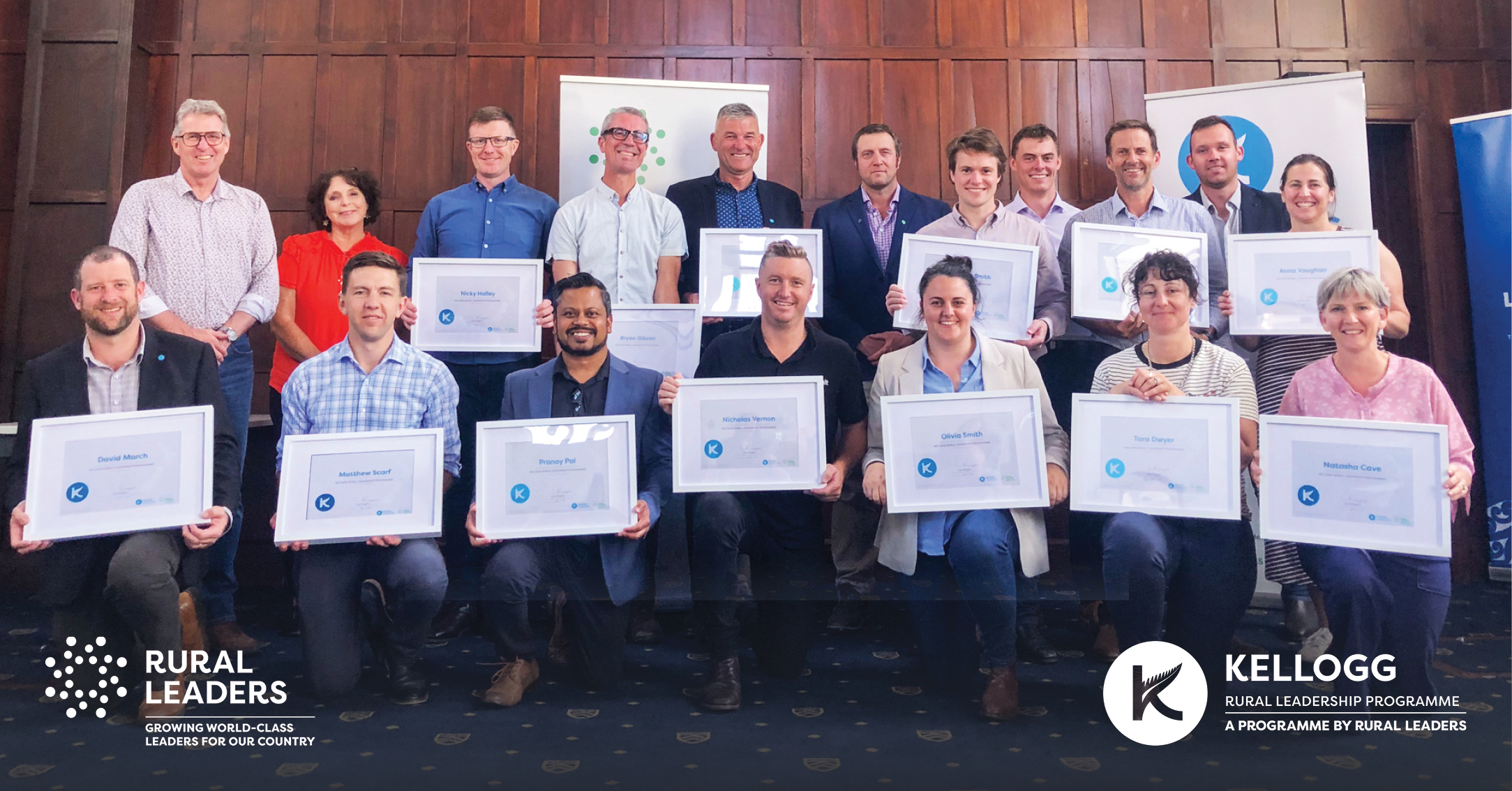
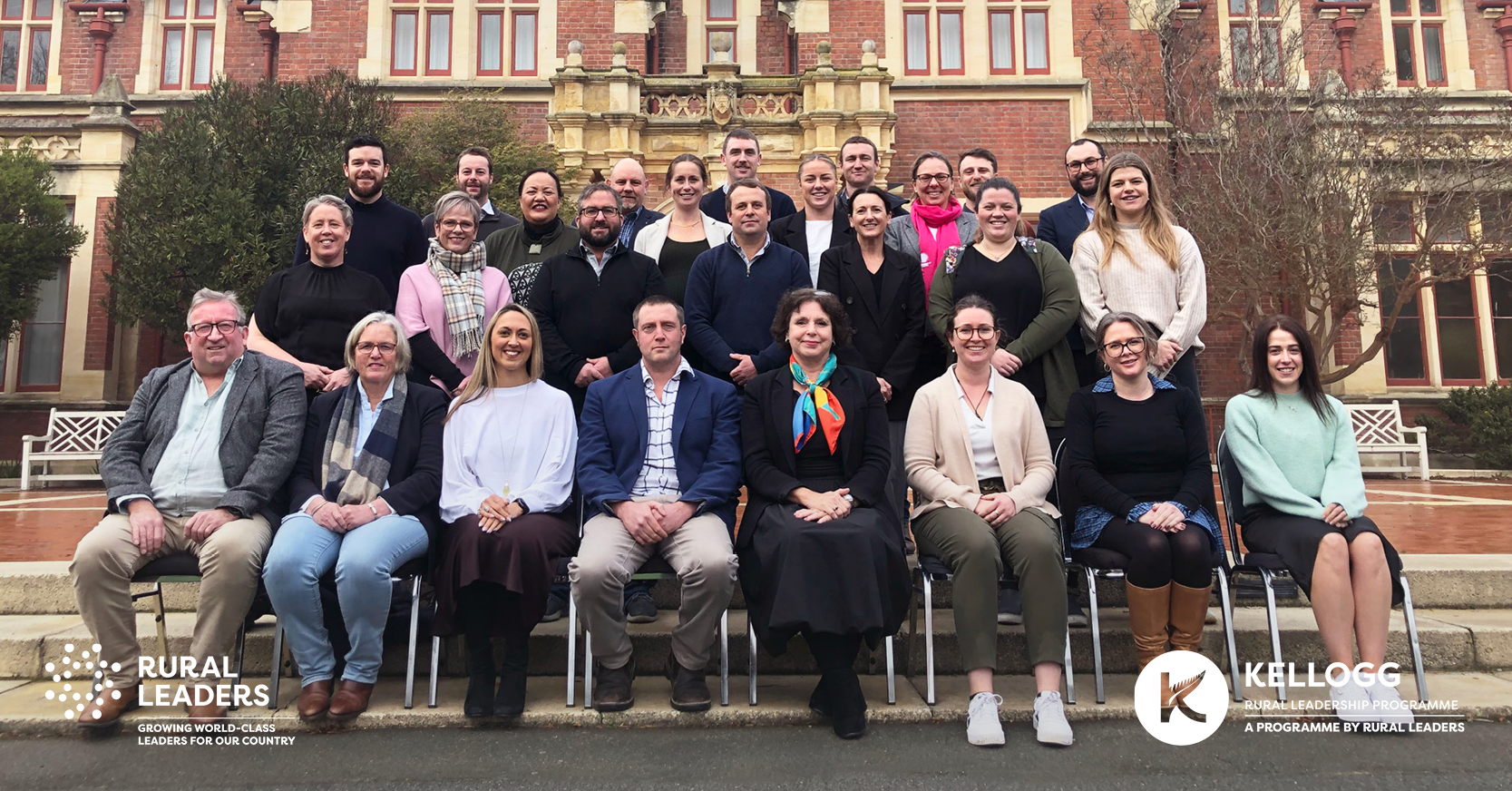
After six months, 19 in-person days, delivered across three phases, K54 Kellogg Programme Two 2025, have completed their individual research reports and have graduated. 

Congratulations Kellogg Programme Two 2025

Rural Leaders are pleased to share the latest reports from the graduates of Kellogg Rural Leadership Programme Two 2025 (K54).

Over the last six months the graduates have grown as people and as leaders. A large part of this growth has come from a deep dive into a research topic of interest to them and of value to the sector.

Congratulations to all of the Scholars. Anna Vaughan, Matt Scarf, Tara Dwyer, Tim Orlando-Reep, Natasha Cave, David March, Tim Waehling, Bryan Gibson, Nick Vernon, Nicky Halley, Zac Howell, Pranoy Pal, Geoff Crawford, Olivia Smith, Campbell Smith.

The reports covers such topics as: Biodiversity credit for sheep and beef farmers, news with value, genotyping the NZ sheep flock, wearables, dairy social license, data interoperability, and competition vs collaboration.

Professional Partners: PwC, Tavendales, Federated Farmers

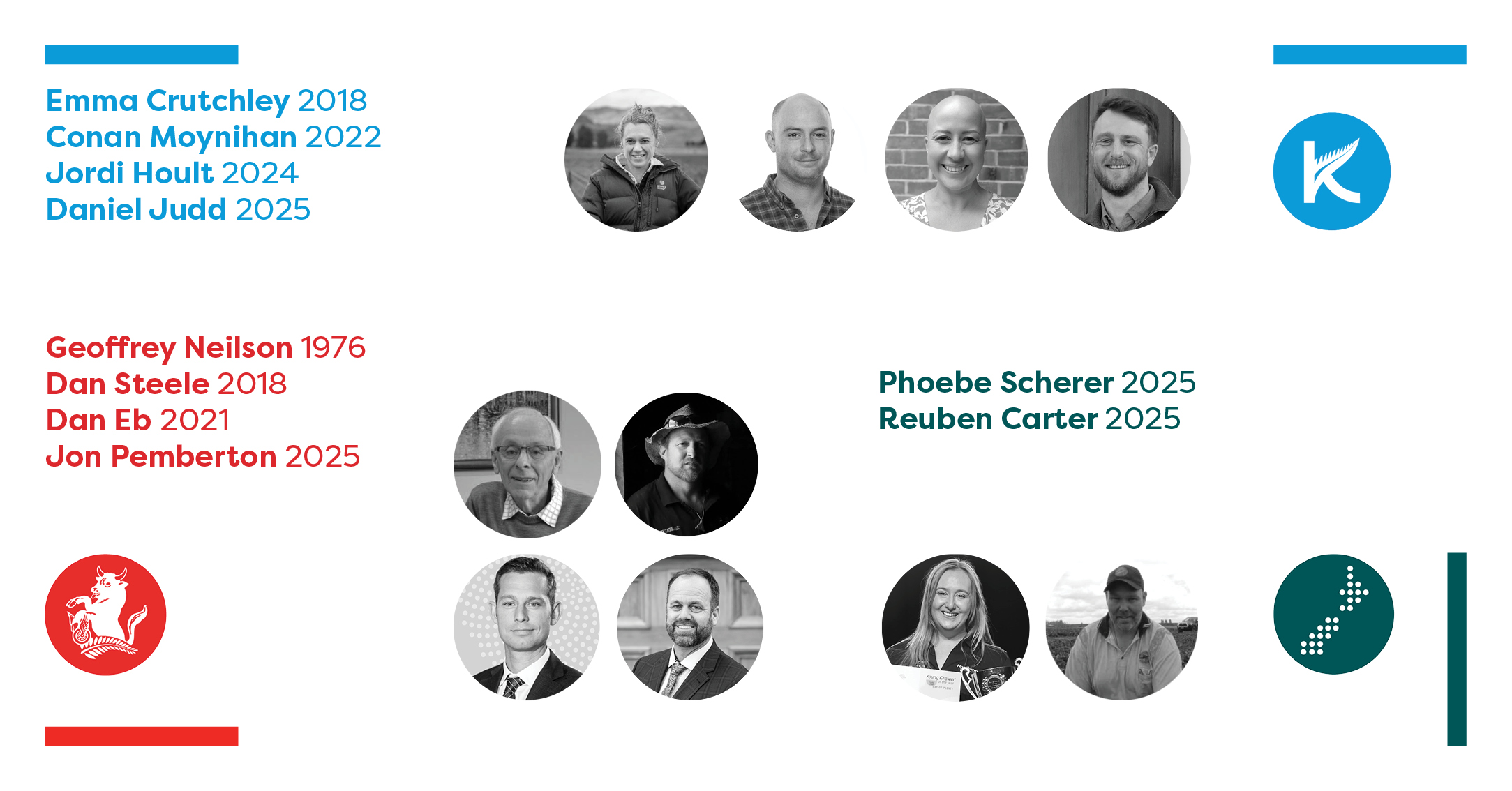
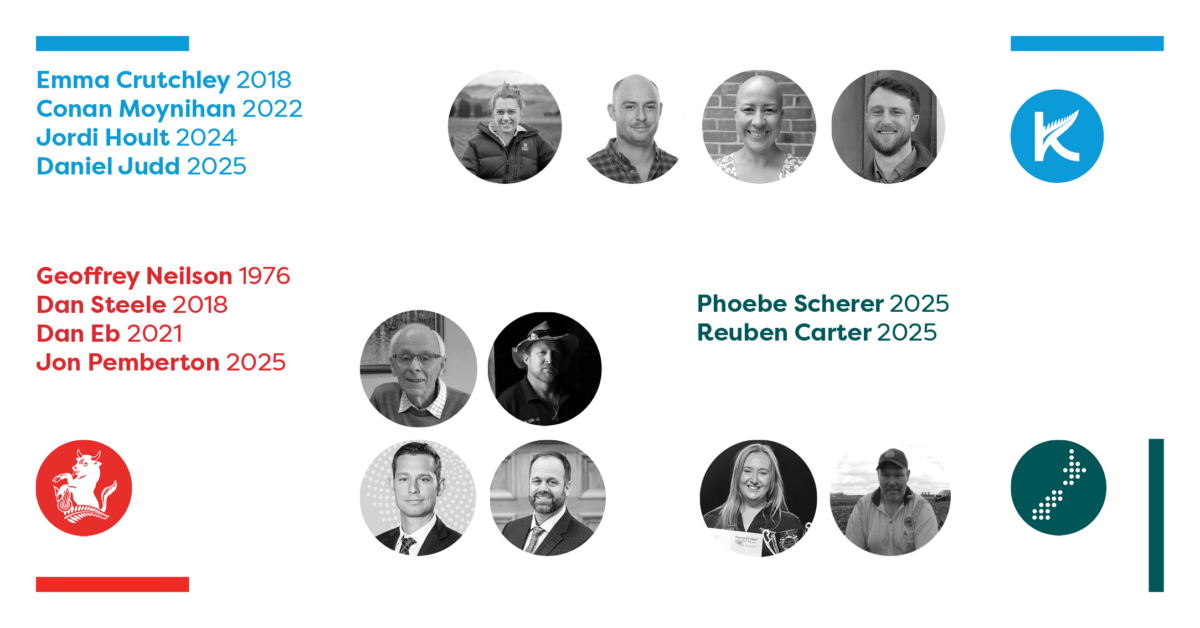
Alumni in the Spotlight – Geoffrey Neilson, Dan Steele, Emma Crutchley, Conan Moynihan, Dan Eb and more.

Here are just a few of the media pieces covering the impact of Rural Leaders’ Programme Alumni in industries and communities across the sector. 

Geoffrey Neilson

Geoffrey (Geoff) Neilson (Nuffield 1976)

Southern farmers Geoff and Ailsa Neilson are being celebrated for opening their home and the minds of scores of Welsh visitors. ODT’s Shawn McAvinue talks to Mr Neilson about his family hosting more than 100 Welsh students on their sheep and beef farm and his wife being his greatest mentor.

Take a read of this ODT article about an extraordinary couple, and a Nuffield alum who is the embodiment of the Nuffield spirit. 

Emma Crutchley, Jon Pemberton

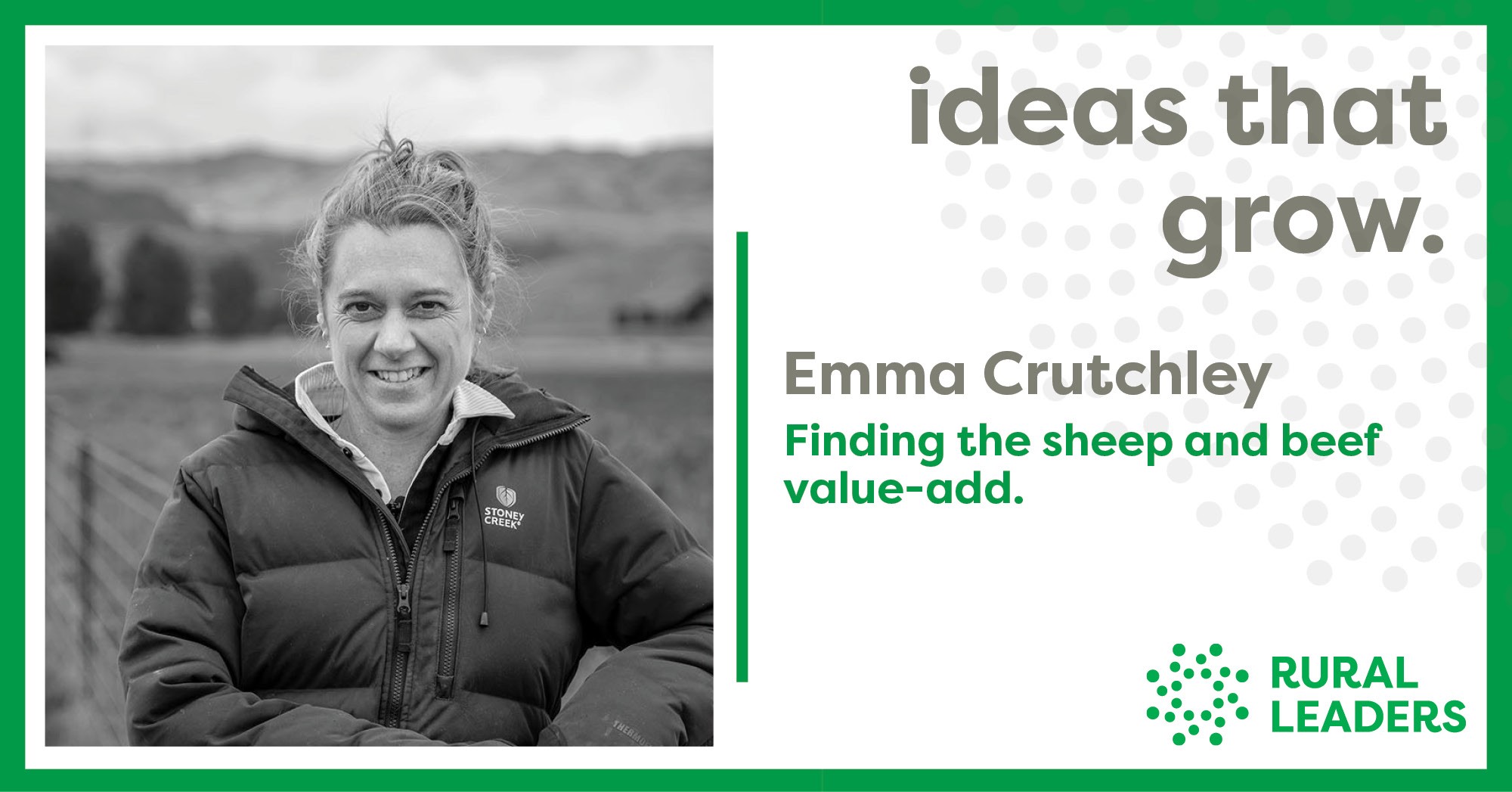
Emma Crutchley (Kellogg 2018, Value Chain 2023), Jon Pemberton (Nuffield 2025), ‘Farm without Harm’ video.

Otago sheep and beef farmer Emma Crutchley (2018 Kellogg Scholar, 2023 Value Chain) and Jon Pemberton (2025 Nuffield Scholar) feature in a ‘farm without harm’ campaign (Safer Farms/ACC).

The campaign leads with videos sharing practical tips designed to help farmers to make small changes to the way they might do things. Ultimately, the work aims to reduce on-farm injury by suggesting a pause before you act; ACC’s familiar ‘hmmm’ ad platform.

If you haven’t seen these clips already, check out one here.

Dan Steele

Dan Steele (Nuffield 2015, Value Chain 2023)

Blue Duck Station owner Dan Steele NZ and wife Sandy recently won the tourism environment category at the New Zealand Tourism Awards.

Blue Duck Station, is a working beef and sheep farm and eco-tourism destination in Whanganui National Park.

“We’re really hoping that this becomes more mainstream, for more businesses to do more conservation work and pay their rent to NZ for looking after our natural capital,” said Dan.

Congratulations to Dan, family, and the Blue Duck Station team. Take a read of a Whanganui Chronicle article here.

Dan Eb

Dan Eb (Nuffield 2021)

In his semi-regular crafting of articles for Farmers Weekly’s ‘Eating the Elephant column, Dan asserts that Pirates were actually the pioneers of modern Human Resources and workplace culture.

“Despite working in a context of high seas thievery and murder, they built flat, high-performing organisations based on trust, transparency and teamwork that outdo many modern teams and companies.”

Dan offers a few pirate myths this idea busts and lessons it offers for us modern folk. Take a read of the article here.

Conan Moynihan, Phoebe Scherer, Reuben Carter, Dr Jordi Hoult, Daniel Judd

The following alumni featured in the latest issue of CountryWide magazine. To access the Virtual Magazine, you need to be a subscriber and be logged in to the site. 

Log in here or choose your subscription here: 12-month CountryWide Digital Only Subscription. OR purchase a copy for delivery

Conan Moynihan (Kellogg 2022), CountryWide Magazine, Page 24.
Conan ‘Force of Nature Consulting’, is helping farmers find the sweet spot between environmental and economic sustainability. Conan believes that the future of farming must remain rooted in tradition and in transformation too. 

Phoebe Scherer, Reuben Carter (HortNZ Leadership Programme 2025 and 2024 respectively)
On Page 82 and 83 an article ‘Nurturing the next generation’ offers a timely dive into the future of leadership in the horticulture sector. Horticulture New Zealand celebrates 20 years this year. 

Bay of Plenty grower and 2025 Young Grower of the Year, Phoebe Scherer and Reuben Carter, along with Kate Scott, CEO HortNZ, offer comment on leadership in the sector.

Dr. Jordi Hoult (Kellogg 2024), CountryWide Magazine, Page 80.
Jordi graduated Kellogg after presenting her research ‘Empowering the missing middle in leadership’. The report asserts that 30-50 years old farmers and rural professionals are missing from the leadership conversation.

On her research Jordi says, “Despite the wealth of experience many in this group possess, traditional leadership development pathways tend to focus on younger individuals, leaving mid-career professionals without the resources they need to continue growing.”

Daniel Judd (Kellogg 2025), CountryWide Magazine, Page 58.
Daniel’s excellent Kellogg report, ‘The soils gap: interactions between science, commerce and culture, is explored on page 58 and 59 of the magazine. Daniel’s report and the article explore the drivers behind conventional and regenerative farming practices and seeks to reduce the barriers that seperate the two approaches.

NZRLT (Rural Leaders) Leadership update.

After nearly nine years with Rural Leaders, including the last two and a half years as Chief Executive Officer, Lisa Rogers has decided the time is right to move on from her role, effective 9 January 2026.

During her time with the Trust, Lisa has made a significant and lasting contribution. She has led Rural Leaders through several major projects and periods of change, and now feels the time is right for someone new to build on this work and continue to advance the Trust.

While the Board is saddened by Lisa’s decision to move on, it fully supports her choice and is confident that her influence on Rural Leaders and rural leadership will continue well beyond her tenure with the organisation.

The Board will begin a recruitment process in the new year. Over the coming weeks, we will also work with the Rural Leaders’ team to ensure the continued delivery of our programmes.

The Board is very confident in the teams’ ability to continue to deliver to the high standard they are known for during this period of change.

If you would like to discuss this announcement further, please feel free to get in touch at Kate@landpro.co.nz

Kind regards,
Kate Scott
Board Chair, NZ Rural Leadership Trust

Dr. Victoria Westbrooke – Connecting agribusiness and policy professionals with farming.

Listen to this episode of Ideas that Grow, or click on one of the platform icons below to listen on your favourite player:

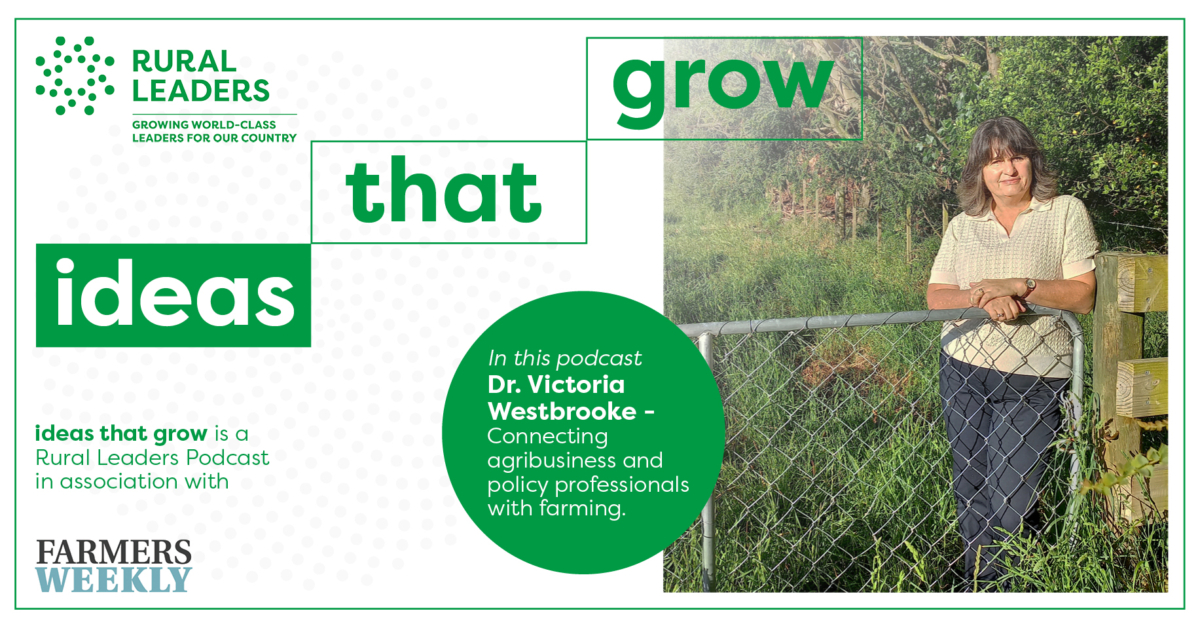
In this episode of Ideas That Grow, Bryan Gibson, Farmers Weekly Managing Editor, talks to Dr. Victoria Westbrooke, Senior Lecturer in the Department of Land Management and Systems at Lincoln University.

Victoria discusses the Engage Programme, a three-day professional development initiative run in partnership between Lincoln University and Rural Leaders, designed to bridge the gap between agribusiness professionals and on-farm realities.

Victoria offers keen insight into why providing contextual farm knowledge to technology specialists, researchers, environmental professionals, and policy-makers is crucial for helping them apply their expertise effectively.

Episode Transcript

You’ve joined the Ideas That Grow podcast, brought to you by Rural Leaders. In this series, we’ll be drawing on insights from innovative rural leaders to help plant ideas that grow so our regions can flourish. Ideas That Grow is presented in Association with Farmers Weekly.

Bryan Gibson, Managing Editor of Farmers Weekly:
I’m your host, Farmers Weekly editor, Bryan Gibson. This week, we’re talking about one of the specialist programmes Rural Leaders offers, the Engage programme run in conjunction with Lincoln University.

With me to discuss it is Dr. Victoria Westbrooke. Kia ora, how are you going?

Dr. Victoria Westbrooke, Senior Lecturer Department of Land Management and Systems, Lincoln University:
Great, thanks.

BG: Good. You’re a senior lecturer at Lincoln. What do you focus on there and what’s your work like?

VW: I’m only focused on farm management. I teach both undergraduate and postgraduate level. I also really enjoy teaching a class on consultancy and extension, again, at the undergrad and postgrad level. That class is really about students being able to use the information they’ve got at Lincoln and work with farmers and others to put their knowledge into practise when they leave Lincoln and to go out into the real world to work.

BG: What was your journey to Lincoln like? What’s your career background?

VW: Well, I actually did my degree at Lincoln a few years ago now. I then spent the first 10 years working as a farm consultant in the Waikato and then worked with AgResearch. So, helping translate science and research into practise. I enjoyed helping farmers reach objectives and just seeing that translation. I think New Zealand is really good at that, and it was great to be a part of it.

The next 10 years was cool. That was overseas. I spent a couple of years in UK, having a look at UK farming systems and indulging in my passion of travel. We then moved to Australia, where I did my PhD and had a look at some farm systems there, which were completely different, merging on tropical systems.

For the last 10 years or so, I’ve been lecturing at Lincoln, again in farm management and extension and doing some research on the side as well. I enjoy working with students and seeing their journeys as they grow.

BG: Did you always know that the food and fibre sector would be where you would work?

VW: I guess so. I really enjoy growing things. I’m a keen gardener and have this most wonderful garden at home, which I’m very lucky for. Love seeing people grow too, seeing ideas work on farms, love seeing farmers get where they want go. That sort of thing gives me a real kick.

A partnership to develop stronger connections with farmers.

BG: Rural Leaders has a pretty close relationship with Lincoln University. Tell me a little bit about how Lincoln contributes to the Rural Leaders programmes.

VW: I guess I can talk about the Engage one as a specific example. What I saw is we had a need for some really good professionals in the sector that may not necessarily have had a farm background. I’m talking about technology people, some researchers, environmental people. I thought, how can we welcome them into the sector and give them some background or context to New Zealand farming systems to turbocharge the knowledge and expertise that they already have. How can we help them to apply it.

When I was working on that, I thought Rural Leaders would be the ideal group to work with. They’ve got a good track record. I found them really excellent. We could sit down throw ideas around. That’s how it worked for me in my situation was just having their expertise, a very strong track record, strongly networked into the industry. For me, they were the ideal partner.

BG: Yeah, I guess one of the key challenges that our food and fibre sector has is that there’s often a feeling among farmers in the field that some of the bureaucrats or other people who are agribusiness professionals or at least having an input into how farming is done in New Zealand, some of them don’t have that knowledge of what it’s like to actually implement these things in the field every day.

Knowledge, confidence and connection in agriculture.

VW: The people that we’ve worked with through Engage, who have participated, are keen to work with farmers and help them work well in New Zealand Inc. That passion is really there. Part of this programme is, how can we help them with some of that context in a way that suits their professional lifestyle and their professional requirements and get them connecting directly with farmers, not through two or three other links.

Some form of experiencing the farmer’s challenges. Initially, I had thoughts of participants spending a day with a farmer in their ute. I’m not sure that was particularly practical for everybody. Again, working with rural leaders, we were able to mould that working with farmers and talking directly with farmers into a three-day, doable programme for everyone that got some of that close connection.

For example, one of the participants was actually staying with me. She came from Wellington, hadn’t spent a lot of time on farms, and simply getting her rugged up to go out for a day on farm in July – she experienced the environment the farmer worked in. Simply making sure she had gloves, hat, mittens, and that kind of thing. That was something that you can’t read about or doesn’t normally land if you read about it. But if you’re going out for a day, it does.

BG: You mentioned people being Wellington-based. A lot of people who are decision-makers or policymakers, that sort of thing, are in the cities. Having that first-hand experience of the farming life must make them a lot more confident or at least know that their day-to-day work will land better with those who are having to implement it.

VW: Yeah, it just provided a real background and that lived experience. We’ve got the Engage programme at three days. The key is the middle day, actually going on farm. They’ve spent a day working together in a discussion group format that Rural Leaders does very well. Then it’s onto a bus and going out to our wonderful host farmer. We’ve had Malcolm Cairns and Hamish Marr. The morning’s out on a mixed arable operation, family-based. Then the afternoon has been going out to Matt Iremonger’s which is more of a focus on dairy and technology.

On one of our first programmes, a lot of the participants were just quite keen to do a bit of calf feeding. We were going to talk about some really high-brow stuff. They saw the calves and they really enjoyed it. Seeing Matt operate Halter, we turned up when the cows were to go for milking. We stood in the paddock and Matt and his manager at the time were driving halter and we could see it. Seeing it then talking about the people who are actually working with it, seeing the cow’s reaction, just that really one-to-one or based experience is really important and really enjoyable.

What to expect from the Engage Programme.
BG: If someone signs up for the Engage programme, maybe just talk through what they can expect when they’re doing it.

VW: Firstly, it’s a really welcoming environment that Rural Leaders provides. It’s facilitated. There’s lots of discussions. It’s not a talk at or dare I say lecture type environment. We definitely didn’t want that. These people are professionals with really impressive skills and expertise. It’s more of a discussion, not a ‘talk to’.

Rural Leaders, through their networks, have got some excellent people for the first day, providing an overview of the global perspective of agriculture. We’ve got some people that wear both a farmer hat and professional hat talking about challenges farmers faced.

Then I talk about farming systems and farm finances. This is very much from the farmer perspective, and as much as possible, there’s people that are actually farmers and involved in there. We’re talking about the whole Ag sector. Often, we work in our own particular area that we’re passionate about. I like Ag extension and consultancy type things, but it’s important to look at the whole package because farmers are faced with a whole package, not just fertiliser, which we may work in, or environment that we may work in. Often, there’s a group dinner, and the discussions there are probably just as important as those held during the day.

Participants have actually met people from different parts of the sector as well. The highlight for me has always been the day on farm, which I’ve just briefly discussed. So out in the bus, take lunch, and talking directly with the farmers. We go and have morning tea with them. They take us around their farm. The farmers are experienced talking to groups, but they’re still at the coalface. Those visits tend to go a little bit into the areas that participants are interested in. The final day is two-thirds of a day. There’s a talk about reflection about what they found on farm, Māori land ownership and perspectives. That’s a really good session. Then we talk about rural communities. The reason for that is, again, looking at the whole picture that farmers are sitting within not just one particular aspect. Then there’s finishing up looking at environmental consulting, but that can vary depending on the group.

Looking at the whole farming system.

BG: You mentioned the rural communities. That’s really important because I think some people sitting off remotely would view a farm as a set of financial budgets or a catchment for nutrients and water cycling and that sort of thing. But in actual fact, it’s a place where a family lives. There are neighbours, there are schools, there are rugby clubs. Those things are what sustains farming communities.

VW: Yeah, it’s that whole system, that environment, looking at it, that’s really important. I think we get passionate about as a profession, our own particular area. This is a chance to look at the whole system from a farmer’s perspective. You may get an appreciation of where your particular passion area sits within the farmer’s world type thing. Why are they not as passionate as you about your area? Well, this is where it sits for a farmer and how it fits with their bigger thing.

We had one person who is looking at offering a technology service on farm, and he went away delighted because he could then see where his technology offering could fit for farmers, what from a farmer’s perspective might spin their wheels, save them time, whatever. He said, Okay, he will now develop his offering in that way to fit more with what a farmer may actually want. He understood why they may be reluctant to take his technology offering from his business.

BG: That’s amazing because you see it time and again, someone turns up with what they feel is like the latest game-changing bit of tech that’s going to change farming. But when it actually comes to implementing it on farm, they perhaps haven’t had that close contact to know if it’s working in with the other things that happen day to day on a farm.

VW: Yeah, it’s this massive load of cogs all in to react and big clockwork mechanism in an old analogue clock. They all interweave together.

Looking closer at the Engage Programme.
BG: One of the things that comes up-time and again in these chats I have with people who have been involved in Rural Leaders programmes is that the course itself is great, but one of the great pieces of value you get from it is the network and the connections you make while you’re on the course. That seems to be the case here, too.

VW: It’s not as long as Kellogg or some of the other courses. It is a three-day course. That was deliberate because when we did our initial research, we got strong feedback that because it’s a face-to-face course, we had to recognise the time limitations people have in professional life. That’s why we came up with the three-day programme because we did want to keep it face-to-face.

Rural leaders are passionate about that, which I agree with, because then you can actually talk directly to people. I think the group dinner and the way that it’s facilitated lets people meet from different aspects. We’ve had people that have reconnected or got a list of people that if they need somebody in this different area, they now have somebody that they can contact to do that. So, yeah, that’s another important part of sharing.

BG: When we pull back and look at the bigger picture of New Zealand’s food and fibre sector, we are having big conversations about how to develop people into leadership roles. Sometimes you can look at it as there’s farmers who come up through industry bodies, and there’s agribusiness professionals who maybe have a more academic path. The Engage system, to me, seems to be a way to bring that together.

VW: Yeah, it’s, again, the people that are passionate about the food and fibre sector have some wonderful skills and knowledge that we very much need. I’m really hoping we’ll provide them with the confidence to go on to some of those leadership roles with just that wee bit more contextual knowledge or the farmer’s view.

The other thing is some people coming on the programme work with one particular group of farmers, and this is, again, just broadening out for that background and context. So hopefully, it’s part of their leadership journey. They also know how Rural Leaders operate then through the programme, so they can have a taster of what our future work with Rural Leaders may look like. That’s useful as well, I think.

BG: Yeah, I guess it gives people a bit more empathy with the people who might be end users of either the product or the policy that they are working on, you get a better understanding of how that lands, what that means for someone’s day-to-day life, that thing.

If someone’s keen in finding out more about the Engage programme or perhaps signing up, what’s the next step for them?

VW: Rural Leaders They have an excellent website, and they have all of the details there. My understanding is the Engage programme will be running next year.

The other option is Rural Leaders have customised the programme and can do so for particular groups. For ASB, they work with their rural managers who really wanted to focus on environmental aspects. They took out the day on farm because those rural managers are constantly out on farm. That programme was adapted for them. They’ve also worked with the Ellett Trust and other groups there to develop a programme specifically for scientists and researchers to communicate with farmers. That customisation option is available as well.

BG: Thanks for listening to Ideas That Grow, a Rural Leaders’ podcast presented in Association with Farmers Weekly. For more information on Rural Leaders, the Nuffield New Zealand Farming Scholarship, the Kellogg Rural Leadership Programme, the Engage Programme and the Value Chain Innovation Programme, please visit ruralleaders.co.nz.

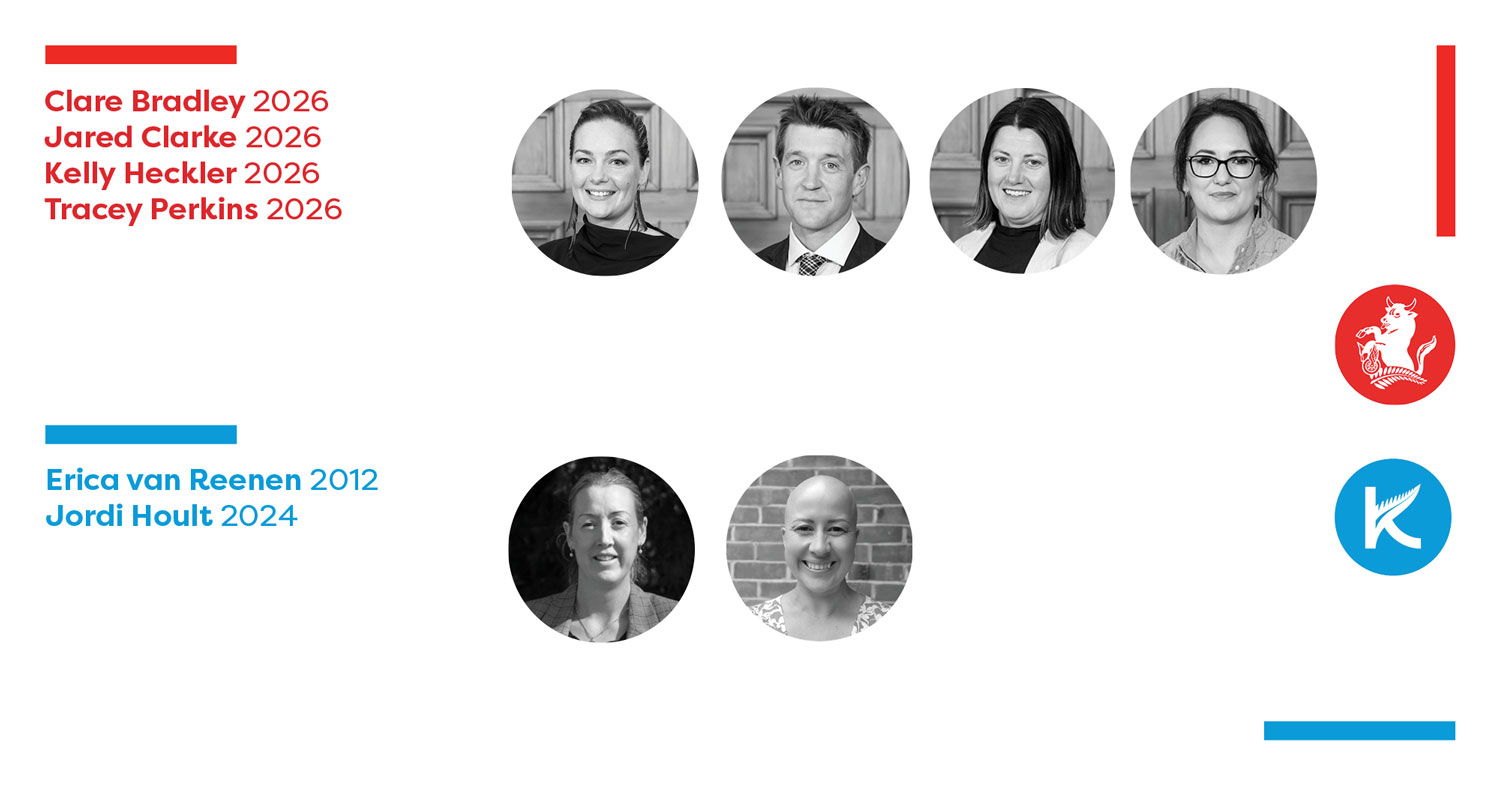
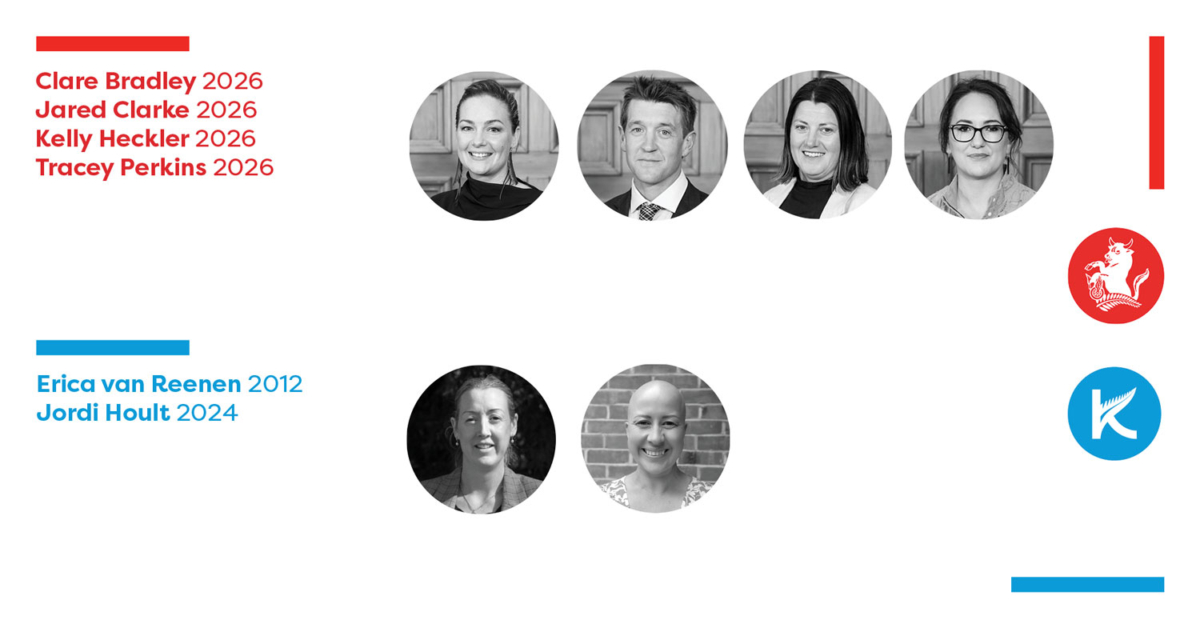
Alumni in the Spotlight – Clare Bradley, Jared Clarke, Kelly Heckler, Tracey Perkins, Erica van Reenen, Dr Jordi Hoult

Here are just a few of the media pieces covering the impact of Rural Leaders’ Programme Alumni in industries and communities across the sector. 

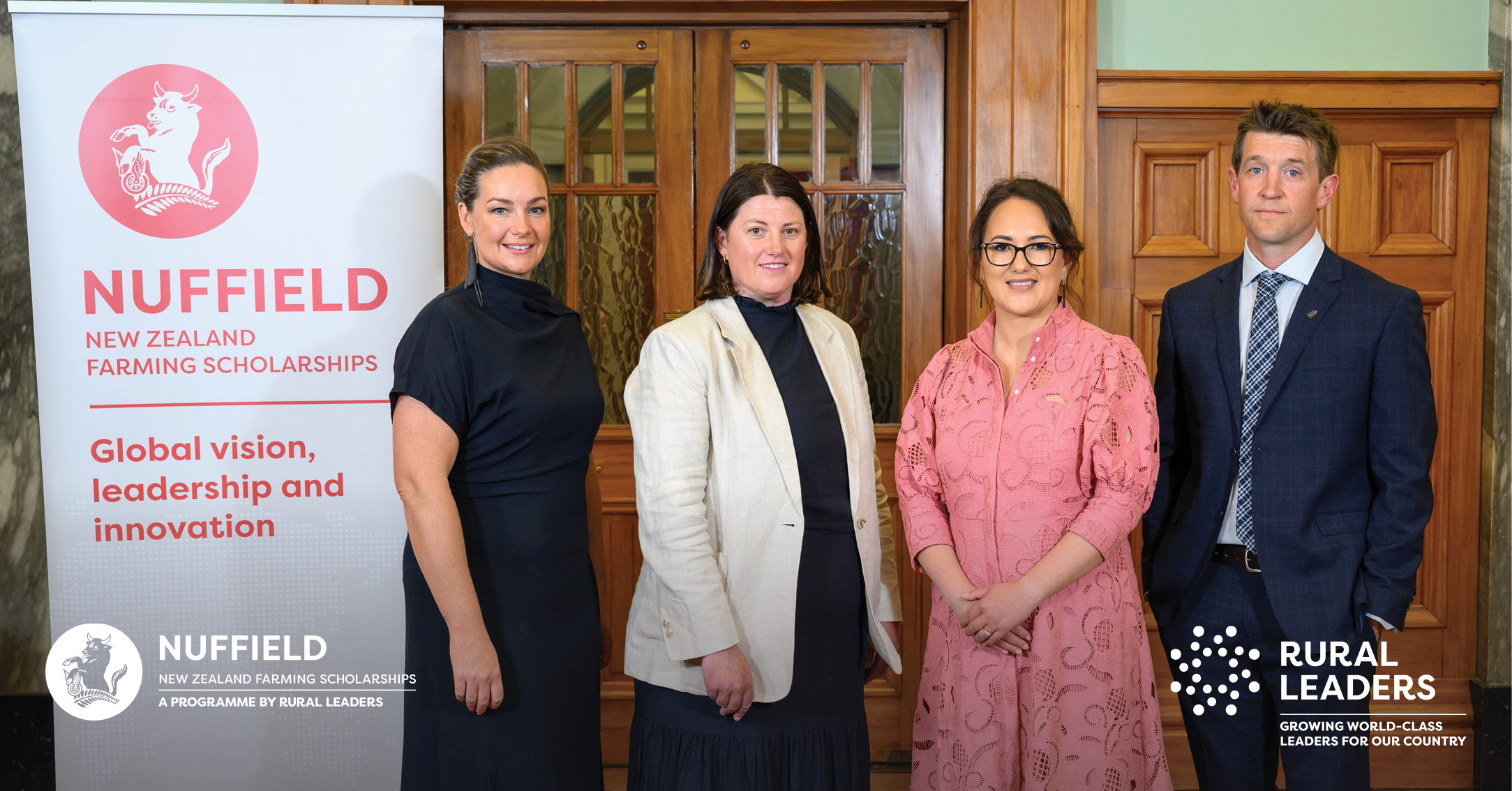
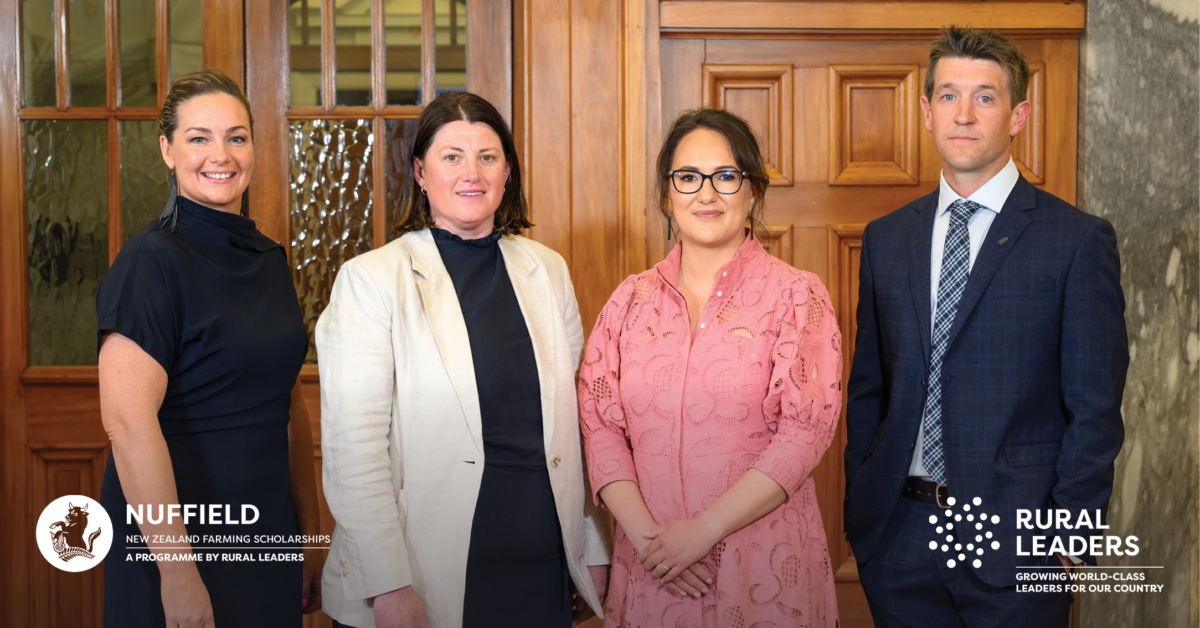
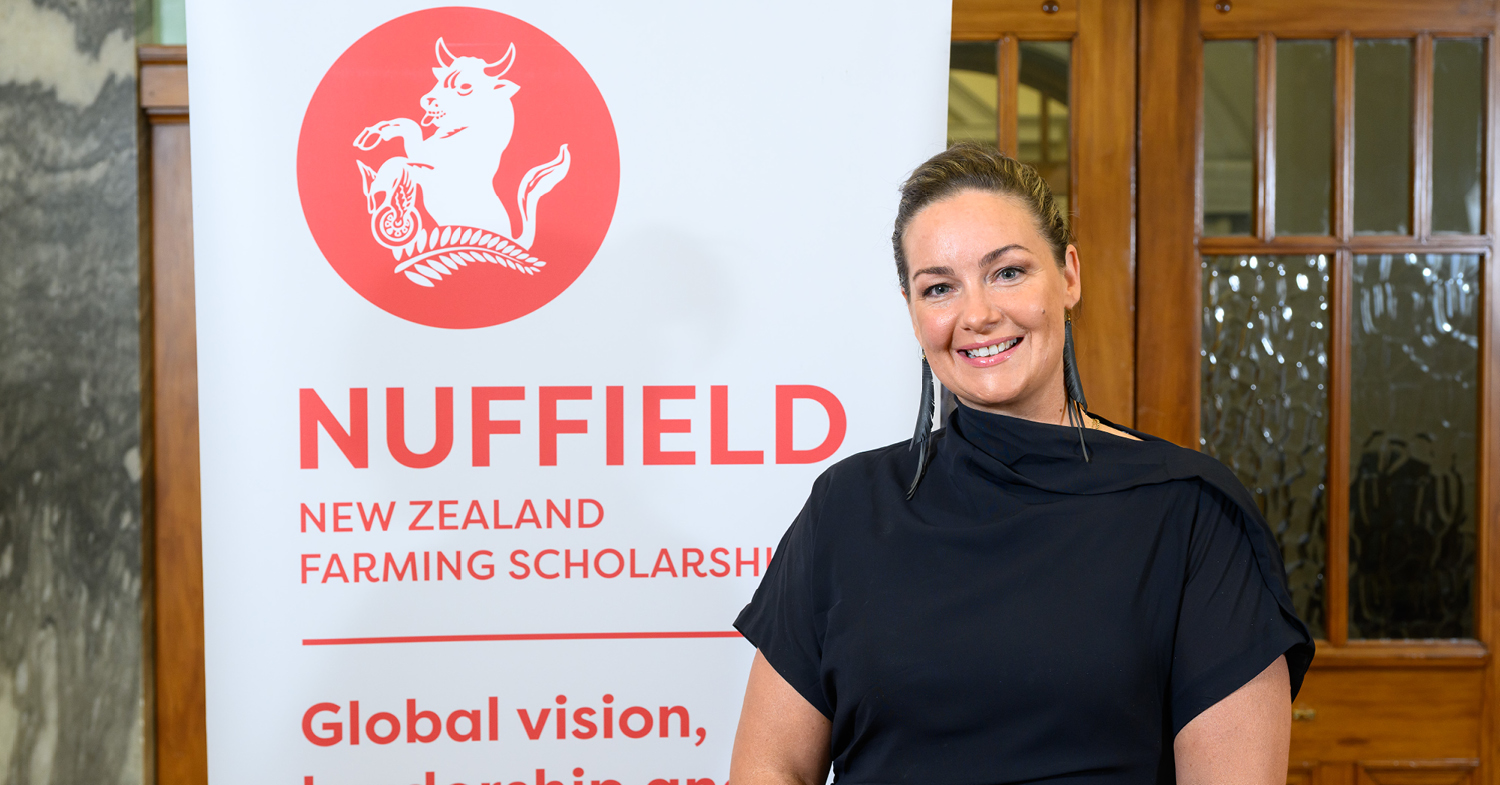
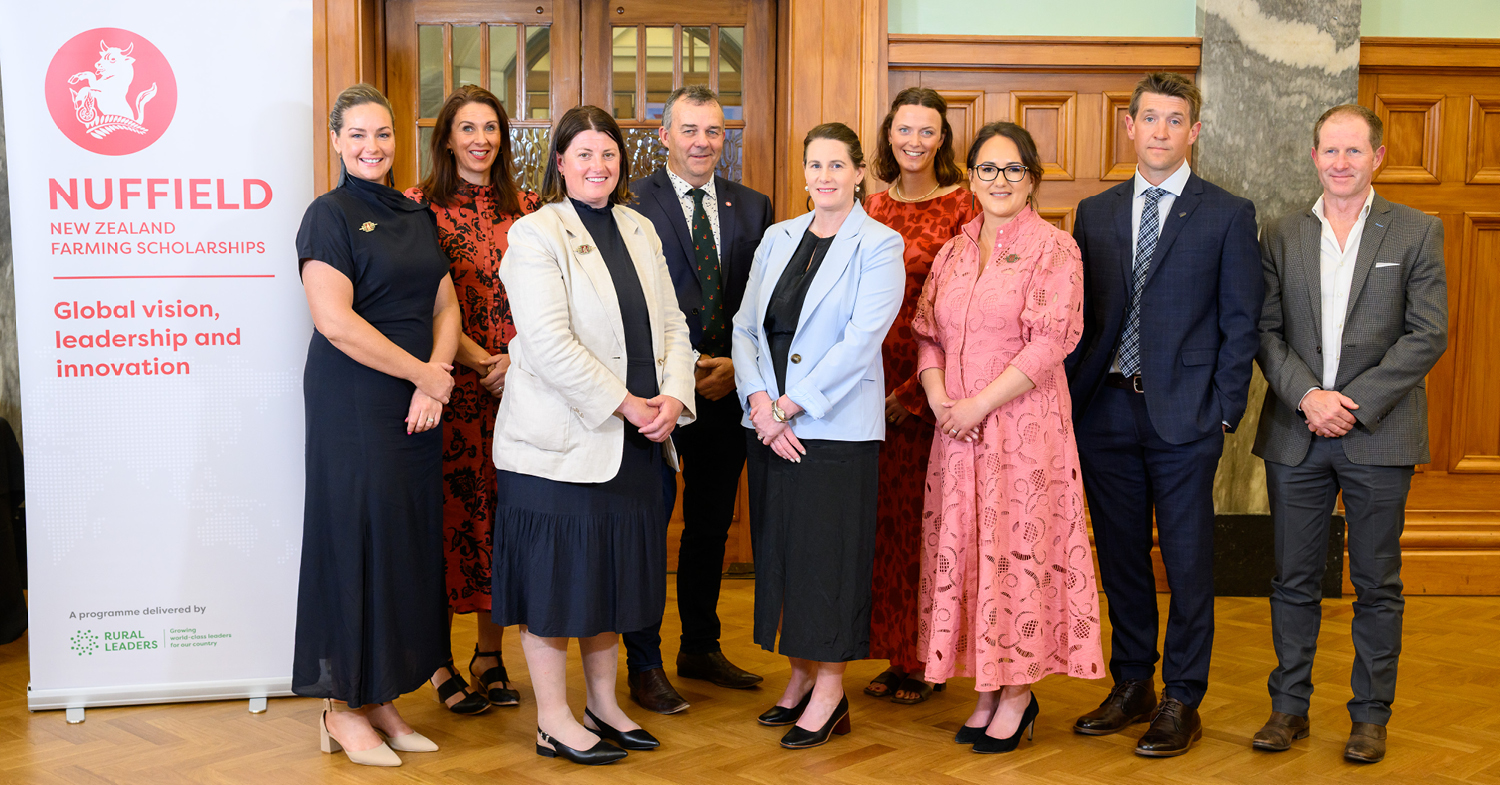
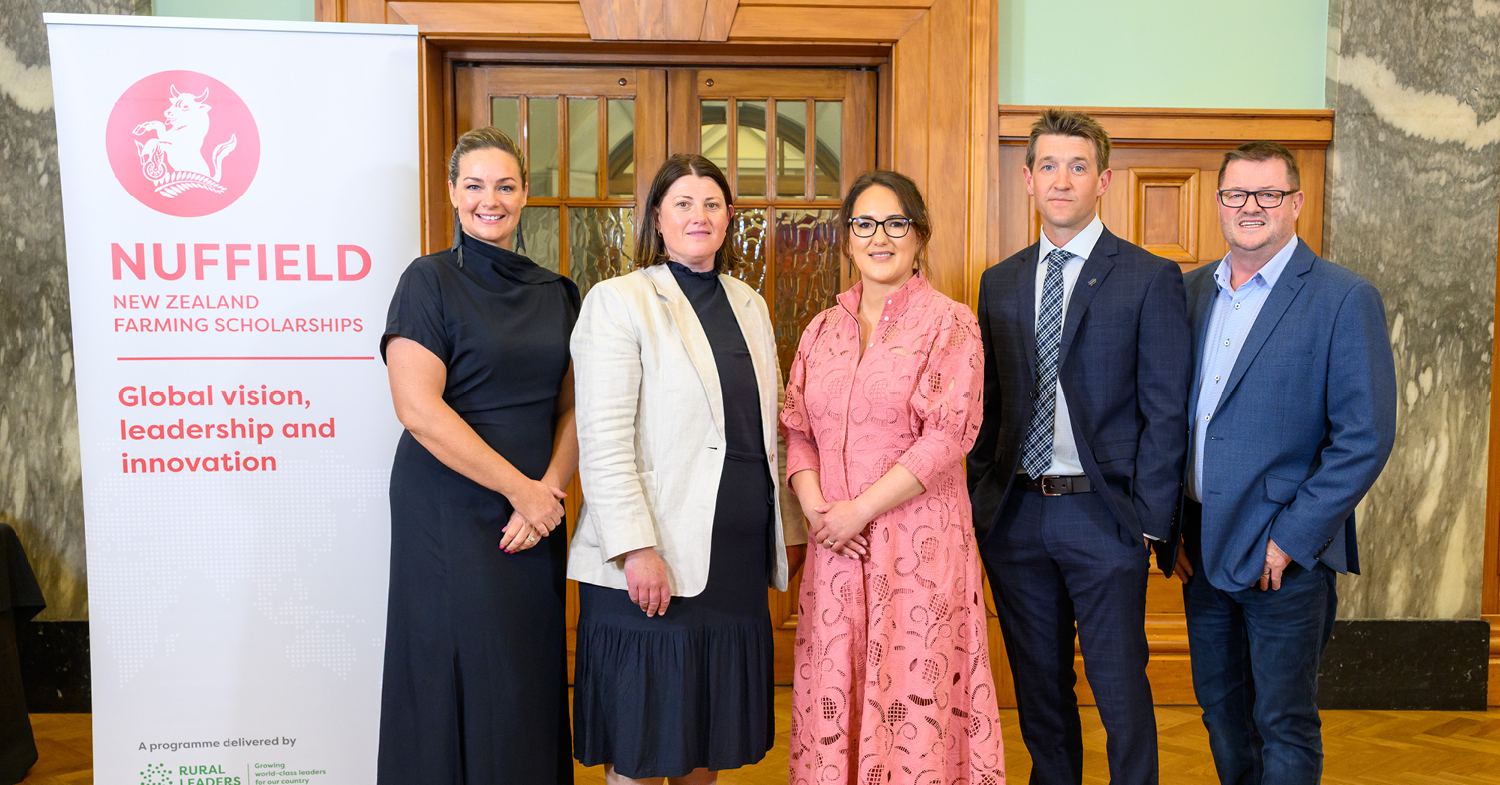
Clare Bradley, Jared Clarke, Kelly Heckler, Tracey Perkins, 2026 Nuffield Scholars

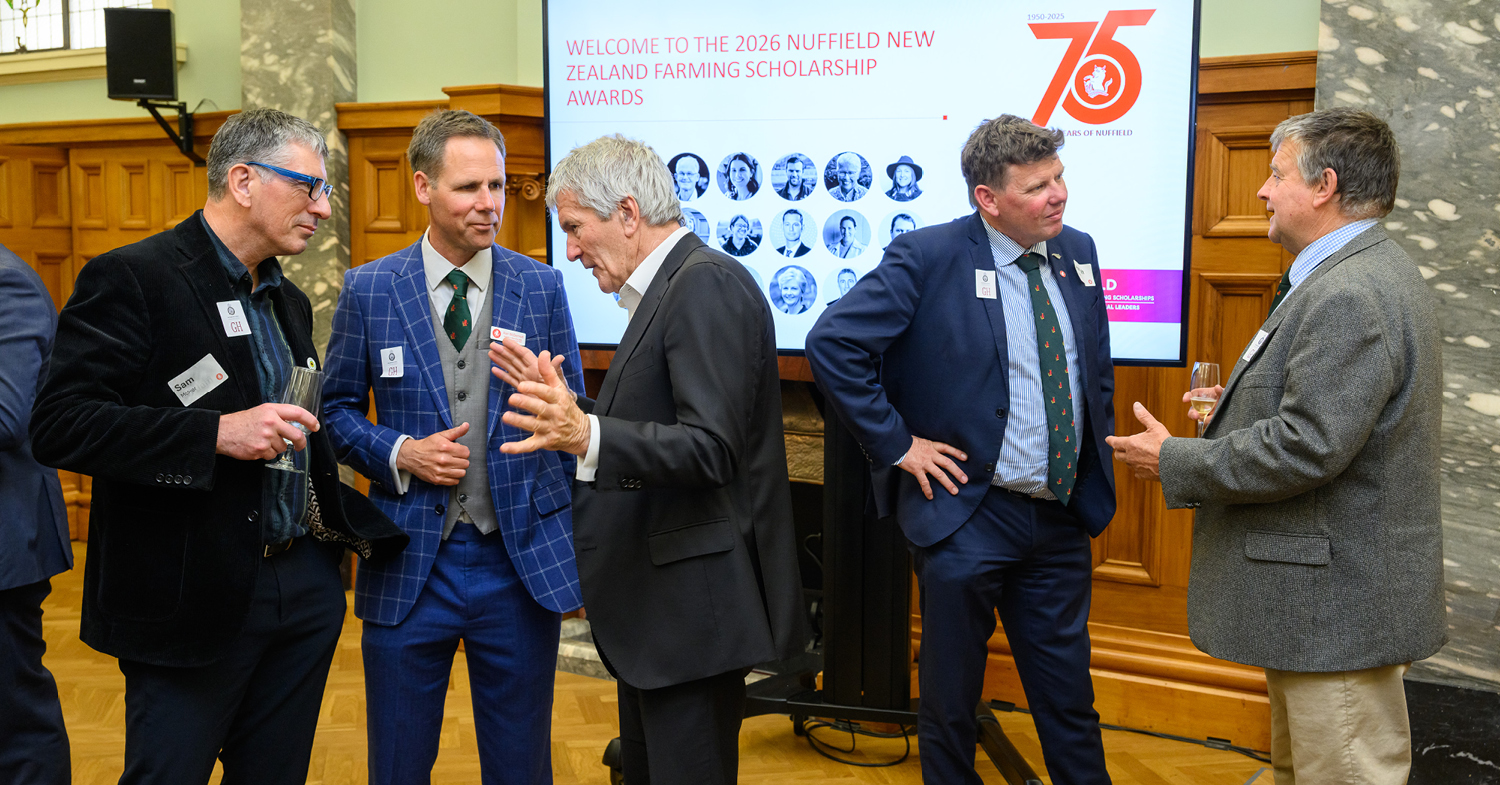
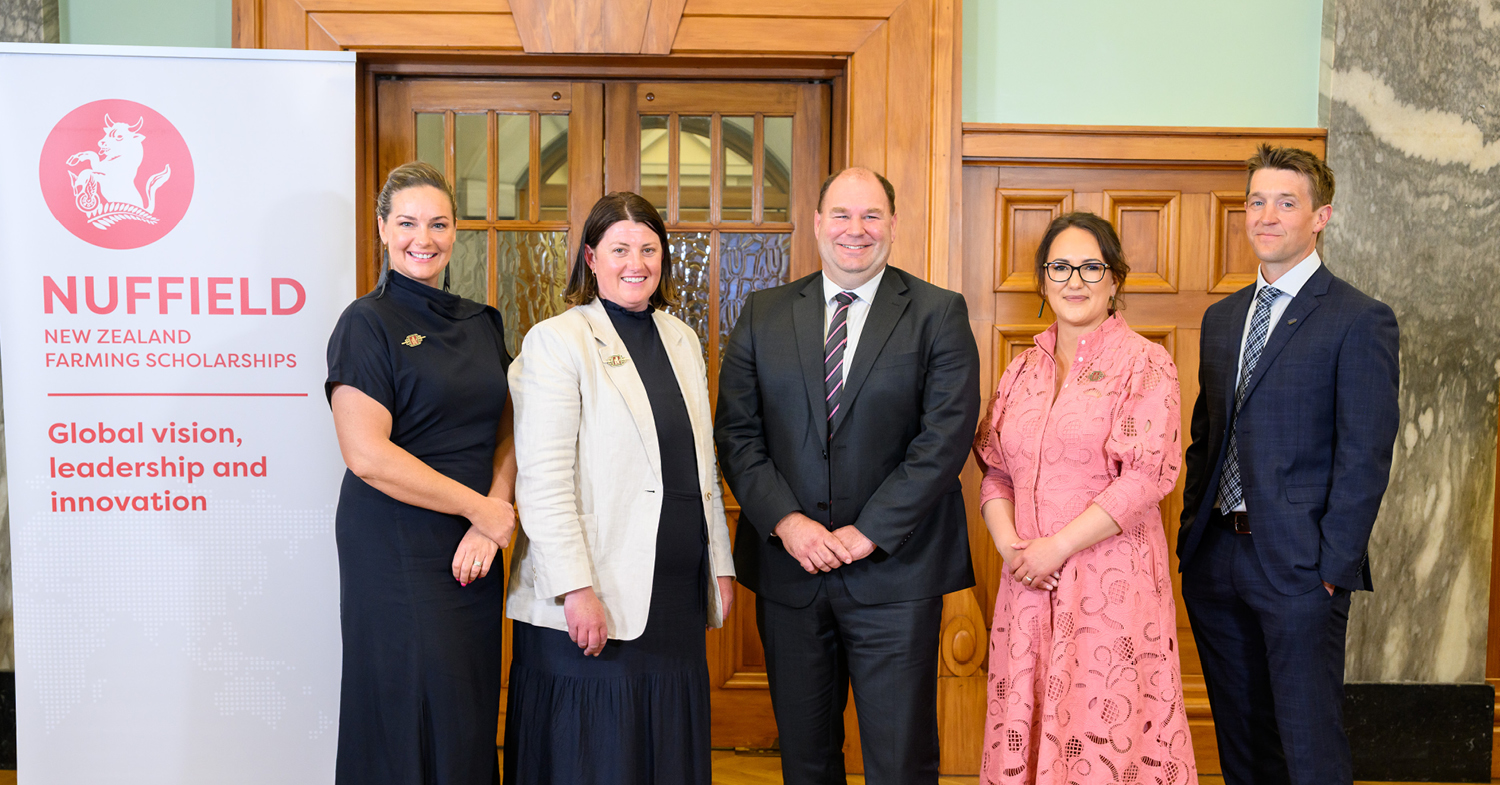
The four new Nuffield Scholars received their awards in Parliament on 4 November.
From Canterbury, Otago and the Bay of Plenty, and representing industries including dairy, sheep and beef and aquaculture, they join 193 Nuffield New Zealand alumni and over 2000 international alumni.

Coverage in the news includes:

Erica van Reenen, 2012 Kellogg Scholar

Erica van Reenen featured on REX (Rural Exchange) recently. Erica is the 2025 Rural Professional of the Year and AgFirst Chair. Erica spoke about her time working in government policy at the intersection of the Clarke and Key tenures. And she spoke about the lessons she learned and her time as a Kellogg Scholar. Listen to the podcast episode here.

Dr Jordi Hoult, 2024 Kellogg Scholar

Dr Jordi Hoult, discusses drawing on her Kellogg research and experience in New Zealand’s food and fibre sector with Sarah Perriam-Lampp on the CountryWide podcast. Jordi explores how to empower mid-career professionals often overlooked in leadership. She identifies her Kellogg research “the missing middle” and highlights mentorship and flexible development as key to helping people in their 30s–50s thrive and shape the sector’s future. 

Listen to the podcast episode here.

Renée Walker joins the Rural Leaders team.

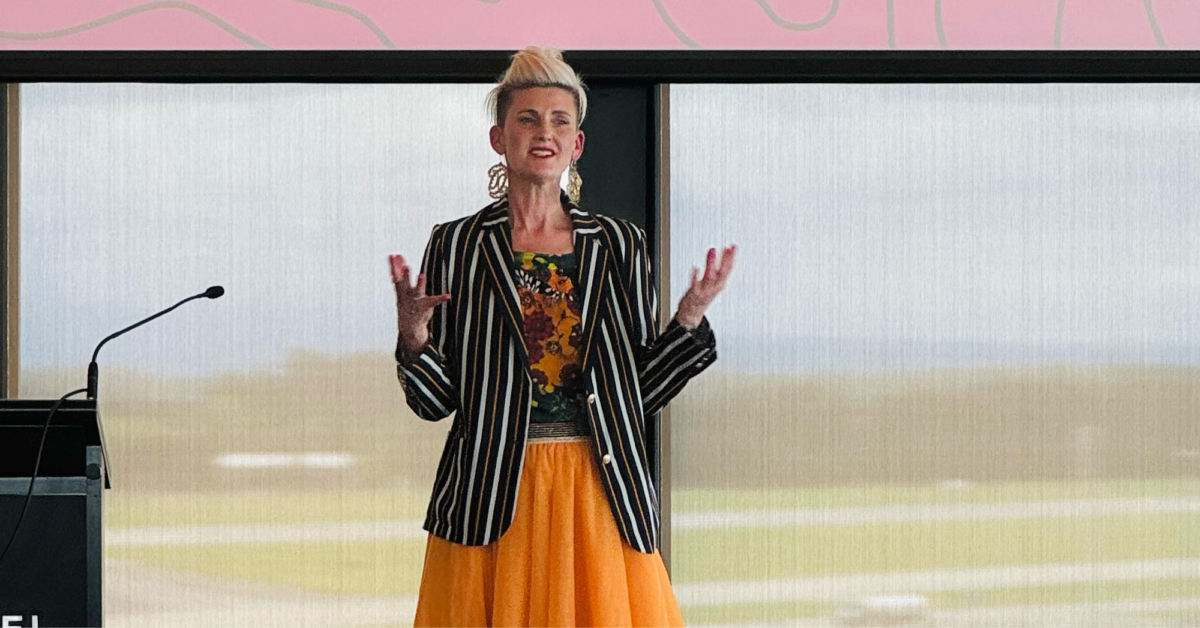
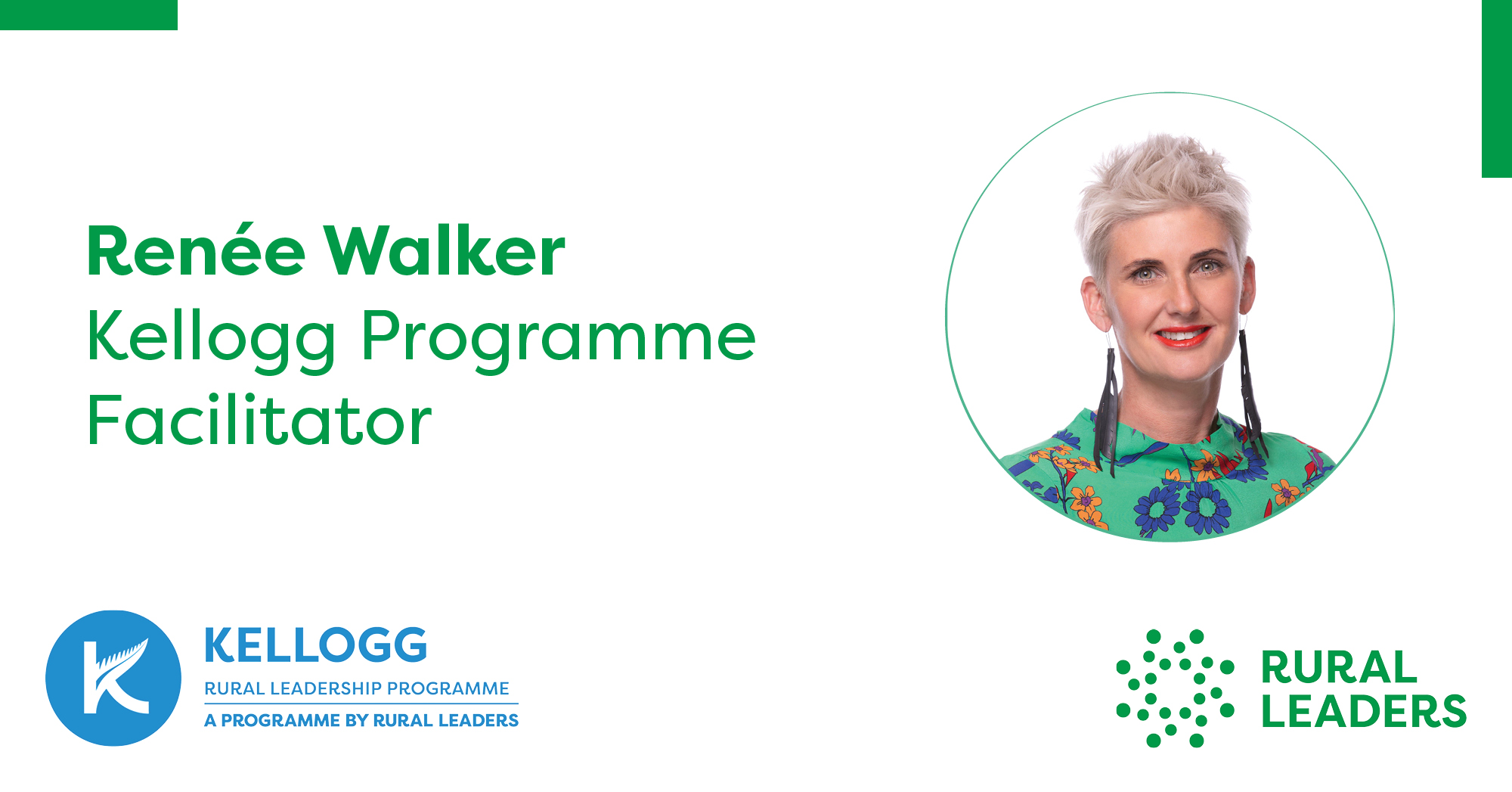
The New Zealand Rural Leadership Trust (Rural Leaders) is pleased to announce the appointment of Renée Walker as Kellogg Programme Facilitator. Renée will join Kellogg Programme One 2026.

For Renée Walker, Rural Leaders’ newly appointed Kellogg Programme facilitator, leadership has always been about people – seeing them, understanding them, and helping them unlock their own potential.

A former Chief Operating Officer and senior executive with more than 20 years’ experience leading teams through transformation and culture-building, Renée has built a career defined by involvement, visibility, and genuine connection. She has led through complexity – notably during Canterbury’s post-earthquake recovery -and brings deep experience in strategy, change leadership, and executive-level coaching.

Today, Renée is the director of The Leadership Revolutionist and Thrive For Life, working across New Zealand to equip leaders – from senior executives to Year 13 students – with the confidence, mindset, and capability to lead with heart and courage. She is known for her high-energy facilitation style, practical frameworks, and ability to create space for honest reflection and meaningful change. Her facilitation work spans boardrooms, classrooms, and conference stages, including leadership programmes, culture workshops, and Extended DISC and NLP-based development experiences.

From two large North Otago farming families, Renée’s connection to the rural sector runs deep. “It’s not just the backbone of New Zealand,” Renée reflects. “It is New Zealand. The rural sector is who we are.” With generations of family farming behind her, she understands the culture, values and pressures of rural life – and the pride that goes with it.

That rural pride led to working with Alliance Group – New Zealand’s only 100% farmer-owned red meat cooperative at the time – working in a role supporting and advocating for farmers. “My family have always been Alliance shareholders and suppliers,” Renée explains. “It felt important to be part of something that represents farmers so directly.”

Renée’s leadership journey began with a childhood dream of teaching, inspired by a grandmother who taught in small rural schools. “I thought you could only change lives by being a teacher,” Renée says. “But I realised leadership can do that too, being the person who sees others and helps them grow.”

Her career has spanned marketing, communications, insurance, and government relations, including her role as Deputy Chief Executive at EQC. “I’ve never been defined by a title,” Renée insists. “I don’t claim to be the smartest or the most technical person in the room, but I get people, and that’s been my greatest strength.”

Her work now focuses on culture, capability, and future-ready leadership – areas she believes are essential in a rural sector navigating generational change. “Young people don’t want hierarchy – they want autonomy, influence, and choice. That shift can be confronting… but also incredibly exciting for the sector.”

As the Kellogg Rural Leadership Programme Facilitator, Renée hopes to foster “…more diversity of voice…” in the sector. “We need different ways of thinking at the table,” Renée says. “Leadership is about helping people have an informed voice, especially as governments’ views of the rural sector can change.”

Outside work, Renée describes life as “integrated rather than balanced.” She balances time with her 13 year old son, and large extended family with community and board roles. Renée serves on the boards of the Christchurch Symphony Orchestra and the Riccarton Rotary Youth Trust, is a registered Marriage Celebrant, and an active supporter of several charities.

“I’m not known for relaxing…one of my key values is curiosity – I believe the more curious you are and the more you do, the more interesting and connected you become. That’s how you can really help others.”
Renée joins Kellogg Programme One 2026, which starts 27 January in Lincoln.