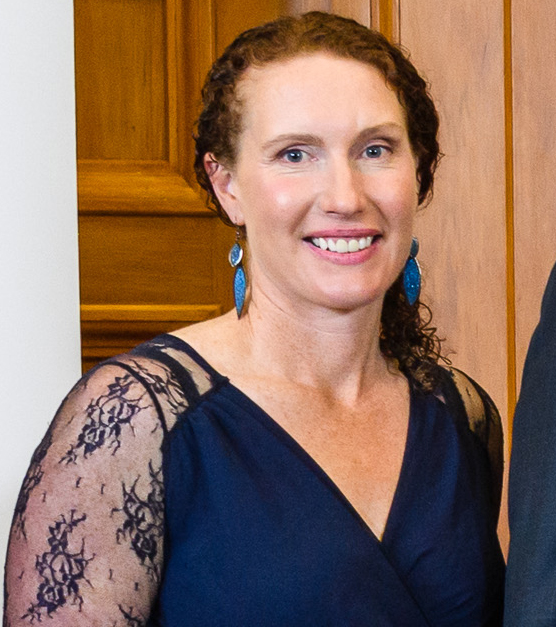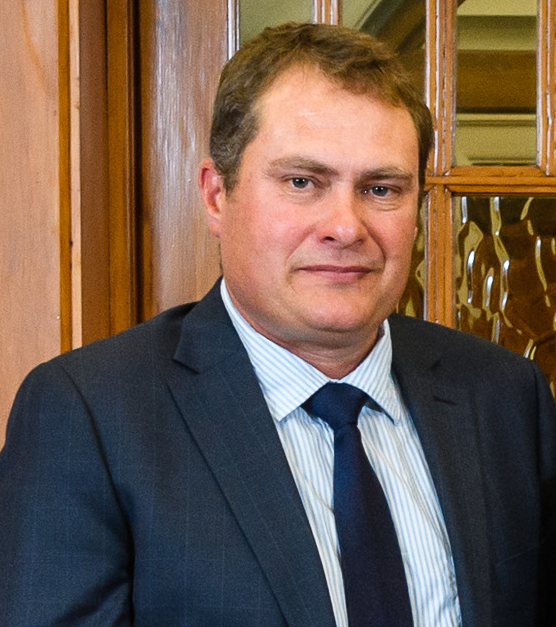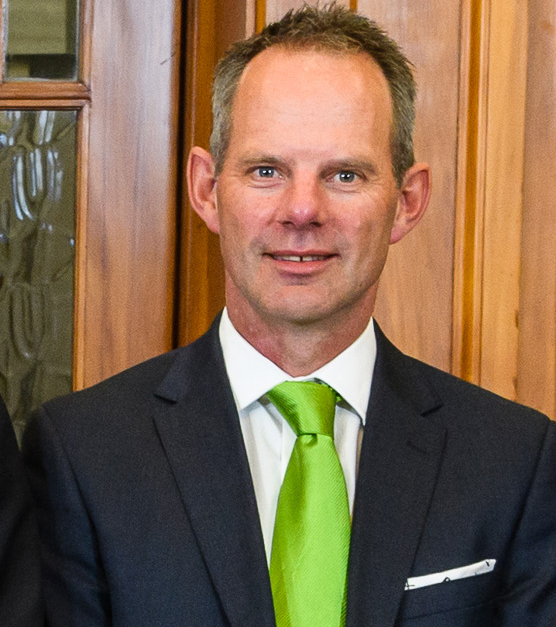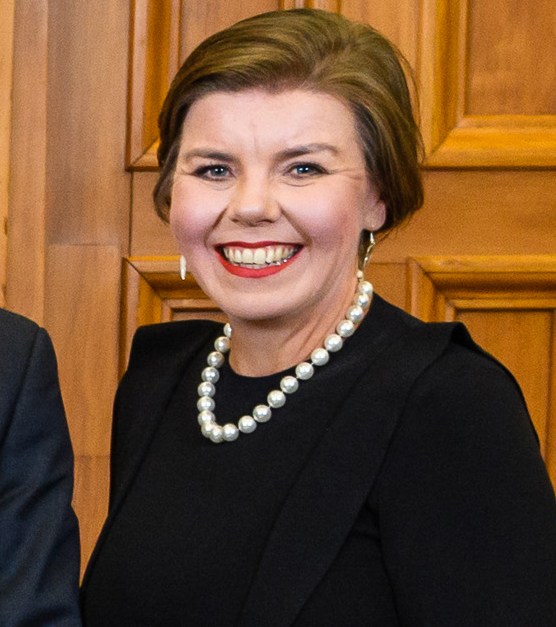
2026 Nuffield NZ Farming Scholarship. Apply by 17 August 2025. Read More...

Apply for 2026 Nuffield NZ Farming Scholarship by 17 August 2025. More details...

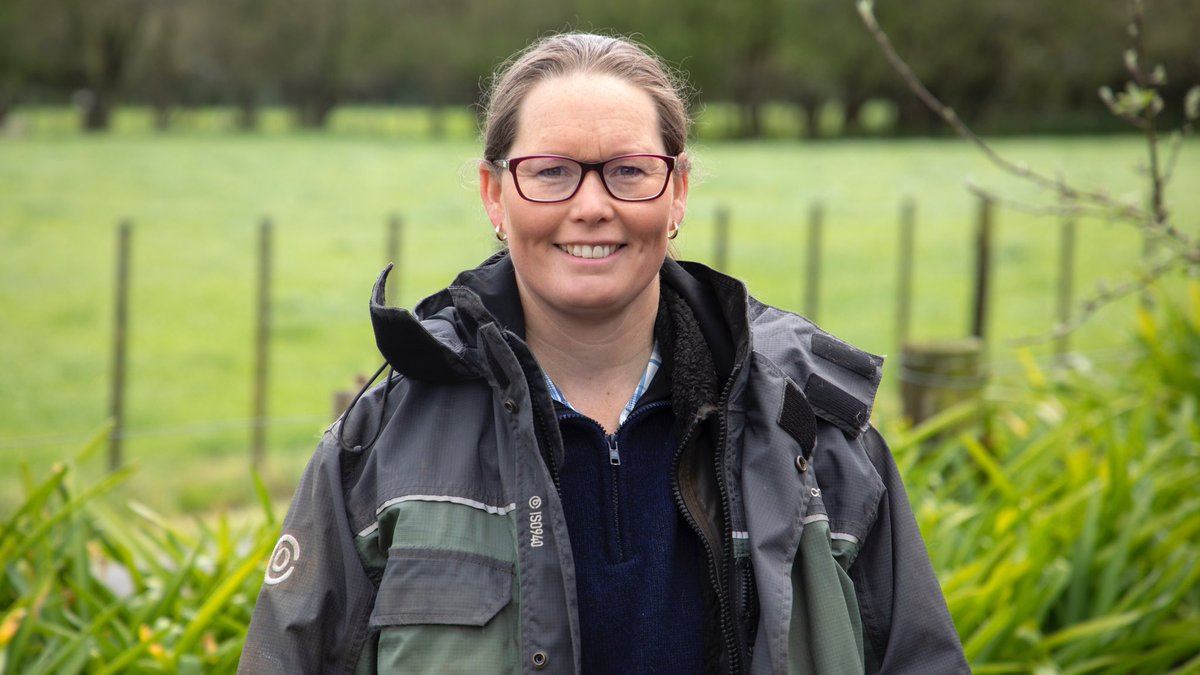
Alumni in the Spotlight. Lucie Douma, 2022 Nuffield Scholar

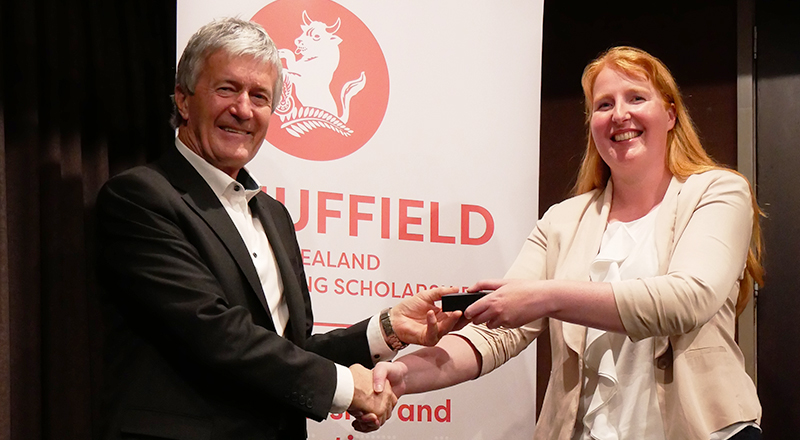
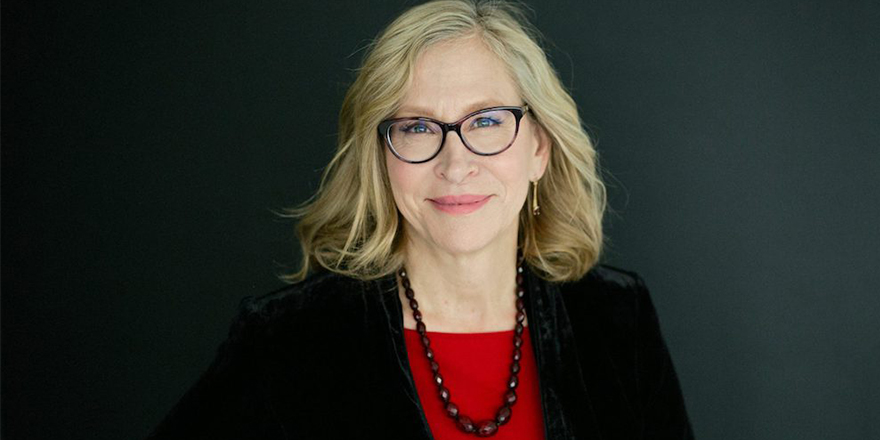
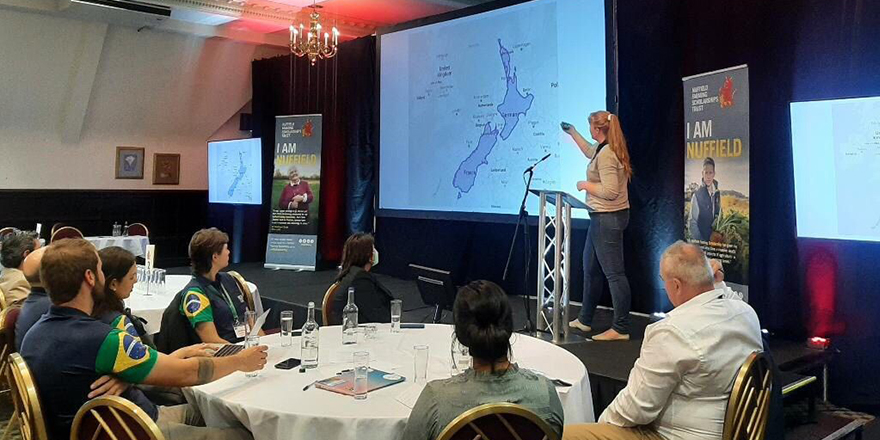
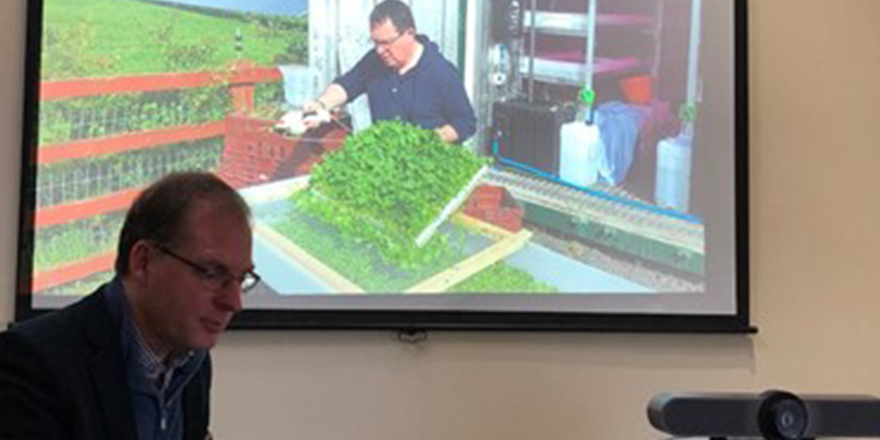
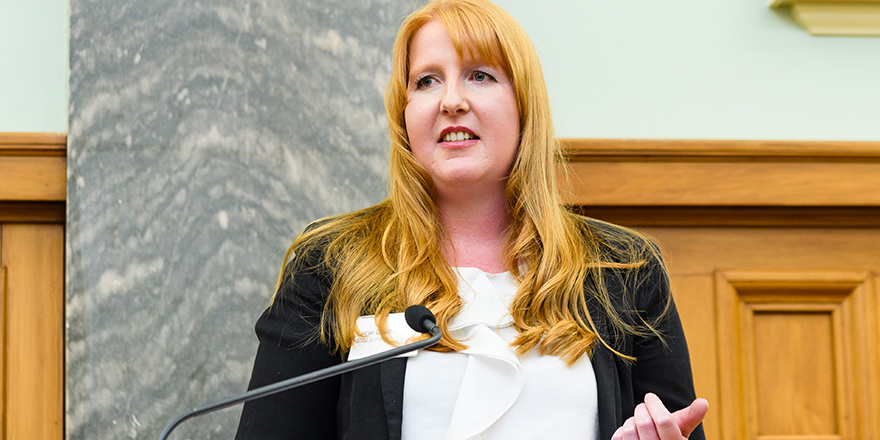
Lucy Douma speaking at Nuffield Awards

Lucie Douma and her fellow 2022 Scholars have, or are right now completing their final research reports. Between Nuffield travel and work commitments, Lucie found time to do a webinar for AgriTech New Zealand in early February.  

The webinar was called ‘Global AgriFutures Insights – How can NZ respond to overseas trends?’  

As well as a Nuffield Scholar Lucie Douma, is the Ministry for Primary Industry’s Covid Recovery and Supply Chain Manager. 

For the webinar, Lucie drew on her recent travel abroad as part of her Nuffield Scholarship – particularly in North America where food security issues are causing shifts away from food production. 

Here’s the full article by Elaine Fisher for Dairy Exporter. 

Cyber-attacks, theft of crops, access to water, climate change and labour are among the issues causing some North American farmers and growers to change their land use away from food production. 

That was among findings outlined in an AgriTech NZ webinar presented in February by Lucie Douma, 2022 Nuffield New Zealand Farming Scholar and Ministry for Primary Industry’s Covid recovery and supply chain manager. 

Hosted by Kylie Horomia, community engagement manager for AgriTech New Zealand, the webinar was called Global AgriFutures Insights – How can NZ respond to overseas trends? During the on-line session, attended by rural professionals, Lucie outlined the findings of her recent visits to North America, UK and Europe.  

Cyber-attacks had the potential to disrupt the sowing of crops by machinery using GPS navigation in North America’s ‘Corn Belt’. “All the planting is done over an intense three-week period, using GPS so a cyber-attack which disrupted that, would mean a reduction in corn and soy yields.  

“The US government is looking closely at how susceptible that industry is to cyber-attacks and how to protect it,” Lucie said. 

Some growers of high value crops were employing ex-navy Seals as security guards after cases of cartels moving in at night before harvest, to strip trees of crops like pistachio nuts or harvest cannabis, she said. 

By far the biggest threat was lack of water, especially in California, which is the USA’s largest producer of food, growing two thirds of North America’s nuts and one third of its fresh vegetables. 

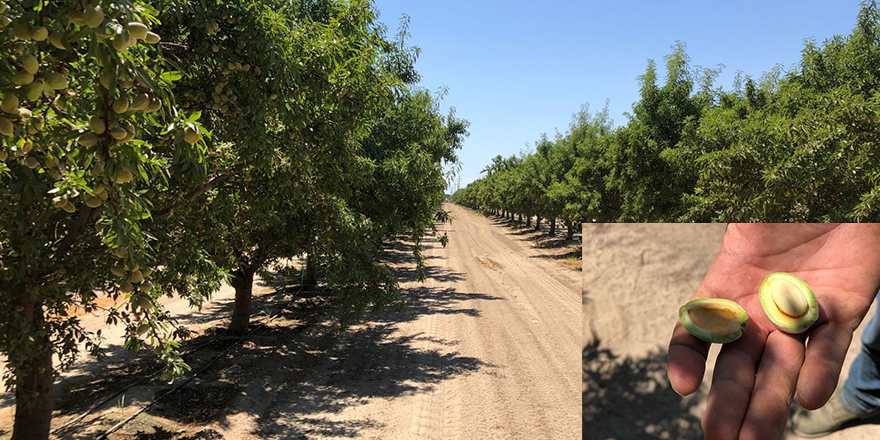
 However, its climate was changing, and Lucie said access to water is of increased concern. “I spent time in the San Joaquin Valley which is an important food and grape growing area.  

“The region, which is in a flood plain, does not get a lot of rain but does get a lot of fog close to the coast. Growers rely on water from snow melt in the Sierra Nevada Ranges. Snow forms giant reservoirs, providing water when it slowly melts but, partly because of the forest fires in the mountains and climate change, snow is not settling and is melting a lot quicker than usual. 

“The region has experienced three years of drought and how to manage water is a major issue. Each county within California manages its own water allocation in an individualistic approach which doesn’t account for growers further down the supply.   

“Up to 40% of the land is flood irrigated with river water. One of the reasons is to recharge the land but there’s an economic reason too as it could cost up to $US400 more per acre for mechanical irrigation. However, flood irrigation is not a good way to manage water, with much of it evaporating.”   

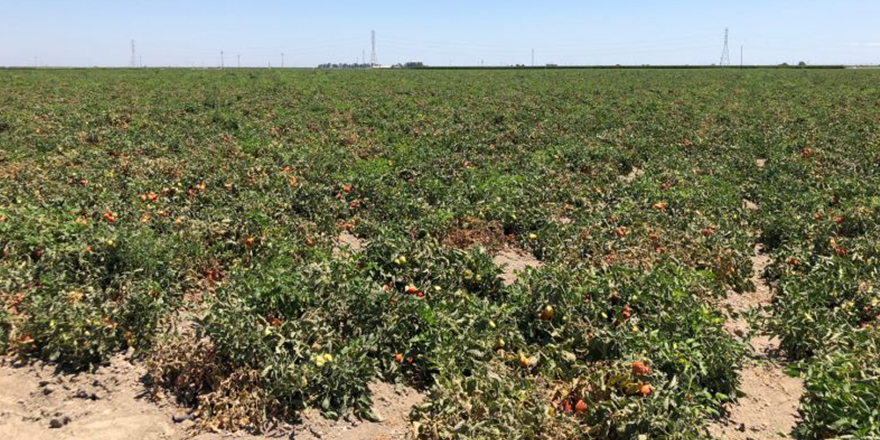
Lucie said water restrictions were among the reasons some growers, including Woolf Farms, were converting some of their land to other uses. “Woolf Farms, which has 25,000 acres of land and grows tomatoes and almonds, is moving to non-food crops, carbon sequestration and solar energy.”

Among the options are drought-tolerant crops such as agave, the feedstock for products like tequila and mezcal. Woolf Farms also has plans to convert former cropland to solar installation. Lucie says the company was not alone in seeking alternatives to high-cost food production.

“Stuart Woolf thinks that in the next few years, he will stop growing on 30 to 40% of his land. If this happens on scale in California, some figures show that in the next few years up to one tenth of the land or half a million acres will not be used for food production by 2040.” 

That posed a huge food security threat for North America and ways to address it included vertical farming under which crops grow in vertically stacked layers, often in controlled environments and soilless techniques such as hydroponics. 

Lucie saw similar trends in energy and food farming in the Netherlands where wind and solar generators are interspaced alongside crops. 

There were however, marked differences in public attitudes to farmers and farming between North America, UK and Europe. 

“In North America people are proud of farmers and farming and the quality of food produced. Some restaurants even showcase food from specific regions with the provenance stories of where it is produced and by who.”   

In Europe, including the Netherlands and UK, the impact of Covid isolation, social media and tv channels like Netflix showing a one-sided aspect of farming, had had a huge impact on public perception. 
“Many farmers are not proud to be farming any more. They don’t want their children going into farming and are planning exit strategies which is sad to see.  

“In the UK there has been a big rise in activism with environmental, vegan and animal welfare groups sharing resources to have a powerful impact on public perception. We saw something of that in New Zealand with activist group slashing tyres of people driving utes.   

“In New Zealand we need to support our farmers and growers who are under a lot of pressure including from water challenges and adverse weather events.” 

Labour costs and supply were issues common to New Zealand, California, Scotland and Europe Lucie said. The availability of cheap labour had been impacted by the Covid pandemic and in Scotland, also by Brexit, where farmers were now relying on a domestic labour force, which often proved unreliable. 

This had added impetus to the need for innovation, including robotic harvesting and this was an area New Zealand tech companies could benefit from, she said. 
However, New Zealand tech companies should not try to ‘go it alone’. Her recommendation was to work globally and build relationships with other countries and tech companies to meet the needs of a rapidly changing world.  

Lucie said New Zealand should focus on producing high quality, premium foods for the world, rather than compete in the commodity space. She also believed the dairy and meat industry had a strong future. 

“It’s my personal view that animal farming is not a sunset industry. Its future is as a niche industry in the premium space. People may not be able to afford to eat meat every day, but meat will not go away. Humans have eaten meat ever since we were on the planet.” 

California’s Top 10 Agricultural Commodities

California produces more than 400 commodities, accounting for a third of the country’s vegetables and three-quarters of the country’s fruits and nuts. California’s top 10 valued commodities for the 2021 crop year were: 

  • Dairy Products, Milk — $7.57 billion 
  • Grapes — $5.23 billion 
  • Almonds — $5.03 billion 
  • Cattle and Calves — $3.11 billion 
  • Strawberries — $3.02 billion 
  • Pistachios — $2.91 billion 
  • Lettuce — $2.03 billion 
  • Tomatoes — $1.18 billion 
  • Walnuts — $1.02 billion 
  • Rice — $1.00 billion 

(Source: California Department of Food and Agriculture)   
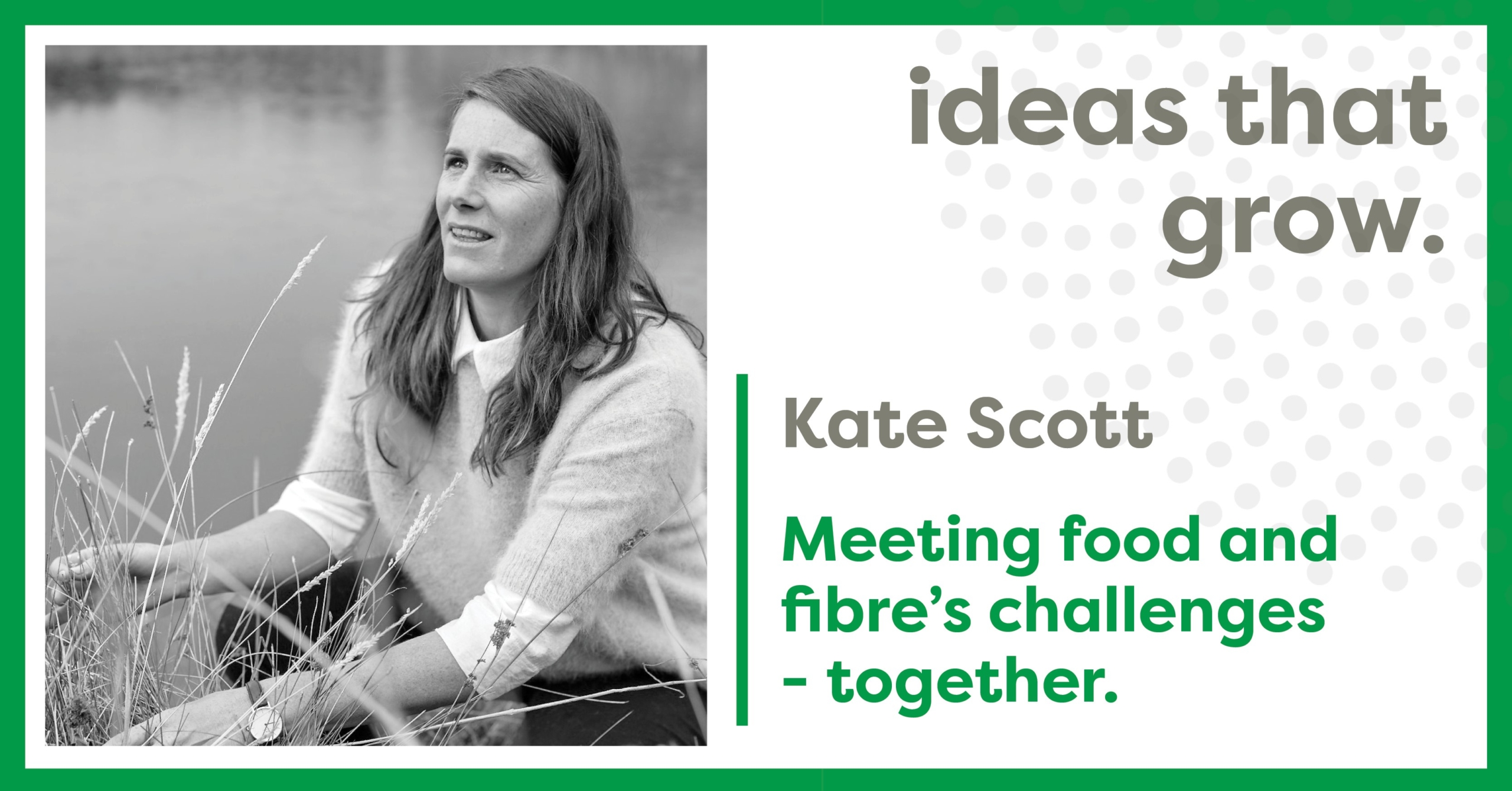
Kate Scott: Meeting food and fibre’s challenges, together.

Kate Scott is a 2018 Nuffield Scholar and Chair of the Board of the New Zealand Rural Leadership Trust and is part of the team behind Forefront: 2023 Rural Leaders Agribusiness Summit and its line up of speakers and panelists.

Pulling together a speaker ensemble of this calibre has been no easy task, but as Kate explains the chance to bring industry together for one day – makes the effort well worthwhile. 

Forefront, the Summit theme, will focus on those businesses making change now – those providing solutions to the sector’s and the world’s biggest agribusiness challenges and opportunities.

Forefront - Rural Leaders Agribusiness Summit

Bryan Gibson – Managing Editor of Farmer’s Weekly.

I’m Bryan Gibson, Managing Editor of Farmers Weekly. And with me I have my first repeat visitor to the podcast, Kate Scott. How’s it going?

Kate Scott – 2018 Nuffield Scholar and Chair of the Board of Rural Leaders.

I’m good. Thank you, Bryan. And yourself?

The 2023 Rural Leaders Agribusiness Summit - Together for a day.

Bryan: Yeah, really good. So, today we’re here to talk about the upcoming Rural Leaders Agribusiness Summit, which is at the Christchurch Town Hall on the 27 March. Kate, you’ve been involved in putting this together.

Kate: Yes, I have. There’s a great team of people have been working hard to bring not only the one-day, Rural Leaders Agribusiness Summit together, but also the Nuffield Triennial Conference together too.

We started planning this event back in 2020, but we were a casualty of Covid like many events. And so, we’re now looking forward to March when we can host our Summit. It’s going to be amazing to not only welcome some of our international guests who will be attending the as part of their involvement with the Nuffield Triennial, but also really looking forward to getting a broad and diverse range of New Zealand farmers, agribusiness and rural professionals along to hear our great line up speak at the Agribusiness Summit.

Bryan: Now, when we talked a while back, your [Nuffield] research was on the evolution of New Zealand farming into a more sustainable place and I guess that’s something that’s going to be a focus of the [Summit] day, isn’t it?

Challenges and opportunities in a fast-changing world.

Kate:  Yeah, it is. And it will probably be of interest to some of the listeners that we’ve chosen to theme our conference for the day ‘Forefront’.

The reason behind choosing Forefront was about not only getting in front of all the challenges that the primary sector are facing, but also looking at it through a lens of opportunity.

How can we be at the front of this change and find ways to innovate and take advantage of a changing world? I guess that’s then gone on to help us to create the speaker themes for the conference.

Summit day themes and speakers – Our World.

Kate:  We’ve split the day into three broad topic areas. The first is taking a more global picture. It’s called Our World. Here we’re talking about some of those big challenges in our natural environment.

We’ve got some speakers touching on climate change. Doctor Harry Clark will share his incredible breadth of knowledge [on climate change] with us.

We’ve got a speaker talking to us about the role of solar, particularly from a farming perspective – a woman by the name of Karin Stark. Karin and her husband farm in Australia. She’s done a lot of work using solar energy and developing solar panels within their farming business and how they integrate that more generally. So that’s going to be an interesting part of that first Our World theme.

Then we also have a speaker talking about the opportunity the sea brings and how we utilise our oceans as a resource and as an opportunity to grow our primary sector.

Summit day themes and speakers – Our People.

Kate:  Then we move into our second, which is Our People. That will look at consumer trends and trade. I guess we’ve seen a massive shift in international trends and how that’s changed over the last few years, particularly on the back of COVID and what other trends might emerge around the agrifood and the consumer side of things.

So, to help us to understand both the challenges and the opportunities there, we have Vengalis Vitalis who many of you will know as our Deputy Secretary of Trade here in New Zealand. He’ll be talking about a global view of trade from a New Zealand perspective.

We have Lain Jager joining us to talk about what the role of future food and genetic modification might mean for food production in New Zealand. Then we’ve also got Emma Parsons from Fonterra who’s going to be talking to us about what Fonterra see from that consumer trends and trade perspective. Already a great line-up of speakers.

Summit day themes and speakers – Our Future.

Kate:  Our last session for the day is called Our Future. We’re wanting to try to change that up a little bit. So, we’ve got four or five speakers who are going to talk for a shorter period of time – a little bit snappier – talking about all those opportunities around entrepreneurship, leadership, the future, social, economic and environmental wellbeing.

We have Traci Houpapa talking to us about future leadership and a Te Ao Maori perspective – and possible new business models. We have Angus Brown from Arepa, Mark McLeod Smith from Halter, and we also have Dr Ellen Nelson, who will be talking to us about the future of work.

I’ve just given you a big download of the programme! But it’s exciting to have a broad range of topics and people to be able to come together to look at our sector in a positive light. To take some motivation and opportunity to challenge what we’re doing, look for what’s new and the what next? for our sector.

Bryan:  It’s great that with the world opened up again, getting some of these global perspectives on the shared challenges that agriculture faces. Some of those people will be in the room. Sometimes these changing consumer perceptions, along with the ins-and-outs of trade deals and that sort of thing, sometimes is second hand knowledge to a lot of the agricultural community here – so it’s good to get a view from the ground, but a different ground.

Devry Boughner Vorwerk - Rural Leaders Agribusiness Summit Keynote Speaker.

Kate:  Exactly. I think it’s an integral part of what we do, but unless we’re actively doing it, it’s almost one of those back-end functions. We don’t always think about these things if we’re down on the farm driving our tractor or milking our cows.

To that point, our keynote speaker is a woman by the name of Devry Boughner Vorwerk. Devry is coming out to see us from the States and she has amazing background in terms of having been Chief Communications Officer and Global Head of Corporate Affairs at Cargill.

She has her own sustainability entrepreneurship business and is going to be talking big picture setting for us around international business and development. She’s going to be able to do an amazing job of setting the scene initially and then helping us to draw in all the pieces of the puzzle as we hear from our other speakers throughout the course of the day.

Bryan:  I did some reading on her earlier in the week and sounds like she’s going to bring some real amazing insight. I mean, Cargill is one of the biggest meat producers in the United States – and then she moved to, I think, Grubhub for a while, didn’t she?

Kate:  That’s my understanding as well. And then having done both that policy side of things and the international business, I’m really looking forward to hearing Devry speak. The fact that she’ll be able to join us in person is really a good outcome given only a few years ago we were having to cancel the Summit.

Bryan:  In that last session too, when we talk about challenges, quite rightly, I guess people often see that as cost and loss of opportunity. But in fact, there are people out there capitalising on meeting those challenges and there’s going to be some real-world examples of how you can do that.

Kate:  Listeners may have heard of Ellen Nelson through her role in helping to secure places for the Afghani refugees last year. Ellen has done a world of research into the way in which we work. She challenges us to think about can we look at the world with ‘can we work school hours’?

Ellen has some interesting insights on how we leverage a lot of our mums and dads who might want to actually be able to work different hours, and how do we do that within our farming business? So, a slightly different perspective, but one that is as applicable to agriculture as any other sector.

Open to farmers, growers, agribusiness professionals and anyone who cares about the future of food and fibre.

Bryan:   So, what sort of people are you hoping to attract?

Kate:  We’re open to all comers, but we’re keen to make sure that our on-the-ground farmers have the opportunity to attend. I guess one of the reasons we decided to make the Summit a one-day event was that we know how difficult it is for people to get off their farm for too long. We’re wanting our farmers to come. We’ve had a great number of registrations already, as you’d expect.

We’ve got a bunch of our agribusiness representatives from our food companies, from other consultancies, we’ve got bankers, we’ve got some of our more senior leaders from government organisations. A real cross section of our sector. I think that’s where we’re trying to go – that the more views and perspectives we can get in the room, the greater the conversation and the questions.

One of the key things that we wanted to be able to do through the Summit was to provide the platform for a safe and robust conversation, where when you break out from morning tea, you can pick up one of these interesting topics that we would have heard about, talk to some people about their views and get the conversation going.

So, trying to kickstart the conversations on some of these big topics.

Bryan:  And of course, everything will be kept on time, on track and on message from some pretty cool people running the show.

Bringing the Summit to life and the sector together.

Kate:  Yes, we have got Corin Dann, an experienced journalist most will probably have heard of through the National Program – on breakfast in the mornings. Corin has very kindly agreed to come and facilitate our sessions for the day. A big part of the sessions will be the panel discussions and the conversations.

At the end of the day, we’re going to have a wrap up session where we get Devry back on stage with our other guests and Corin, to have an in-depth conversation around what’s happening, what the future looks like and the opportunities.

[From] the back end, the chair of the Summit, Murray King, and a small committee of volunteers will all be working hard in the to make sure people are well fed and well-watered, and that everything is kept to time.

For those who haven’t been to an event at the Town Hall in Christchurch before, one of the highlights is always the food. They do a great job there of showcasing local produce – they try to support their local Canterbury growers. The food is also something that’s always good to look forward to in those events.

Bryan:  The building itself is something quite special. It’s such a wonderful piece of architecture.

Kate:  It is iconic, so it’s great.

Bryan:  And there’s a dinner.

The Rural Leaders Agribusiness Summit Dinner.

Kate:  Yes, we have a dinner that will be hosted after the Summit. So, there are still some tickets available for that, although they are selling out very fast. The dinner will allow people to come together and to take the conversation to that next step. We will also be joined at the dinner by Minister O’Connor, who is going to be speaking. And we have some evening entertainment from Te Radar.

Another exciting part of the Summit is that it will include our international Nuffield guests who are actually going to be here in New Zealand as part of a ten day conference – where we kick off on the Saturday or the Friday night actually, prior to the Summit. It’s a bit of a traveling trip from Canterbury all the way [down the South Island] and finishing in Queenstown the following weekend. So, it’ll be a great opportunity to connect with a wide audience from around the globe.

Bryan:  Excellent. Well, that sounds [like] something for everyone to think about attending. How do people go about getting tickets if they’re interested?

Kate:  Yeah, go and have a look on the Rural Leaders website. There’s a big headline that flashes up that says Forefront. Click on that to head to the registration page to attend the Summit and/or the Dinner.

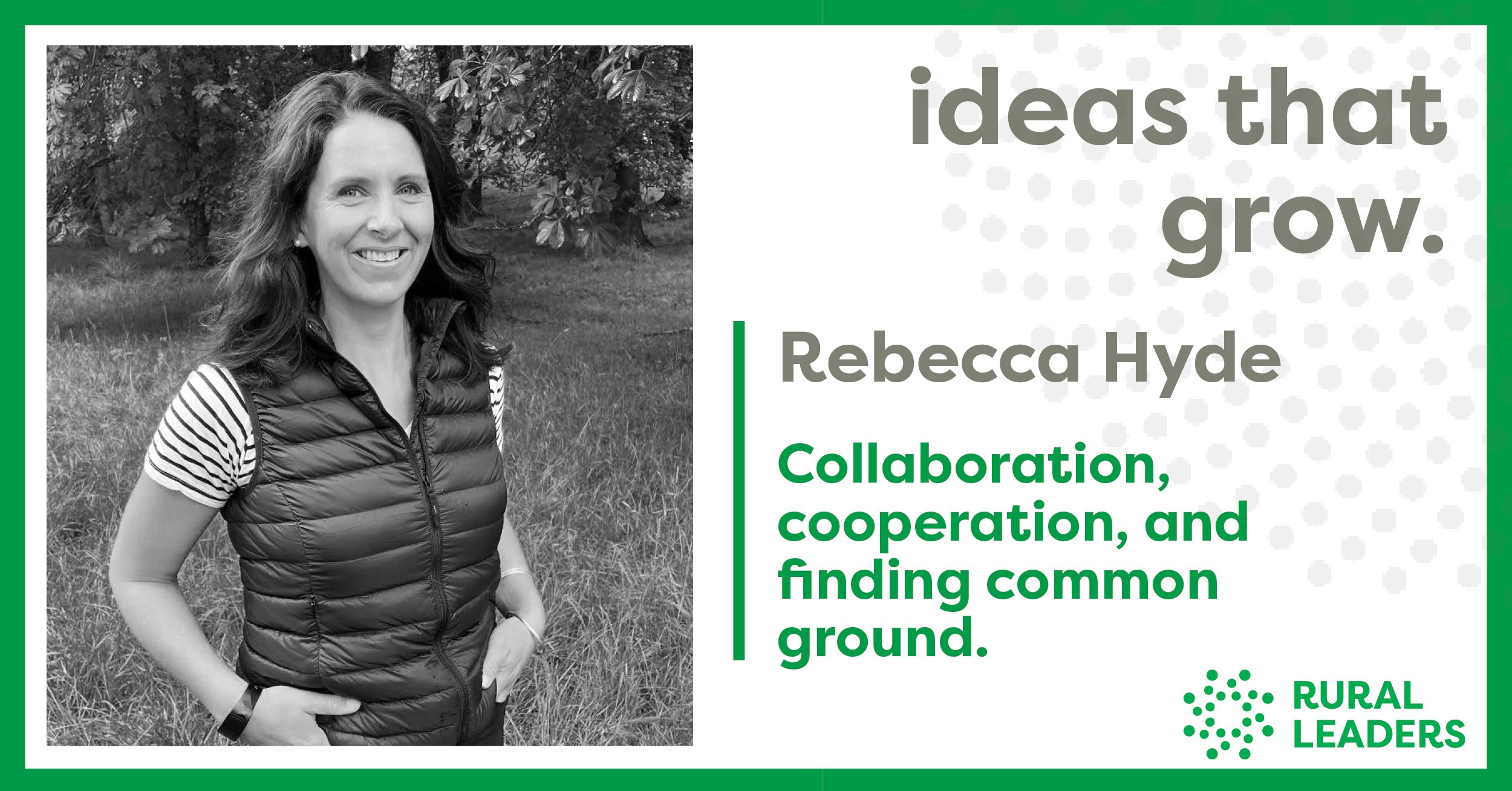
Rebecca Hyde – Collaboration, cooperation and finding the common ground. 

Rebecca Hyde - Ideas that grow podcast interview

Ideas That Grow: Rebecca Hyde, 2017 Nuffield Scholar and 2021 Kellogg Scholar

Lynsey Stratford has discovered farmers make a few assumptions that aren’t very helpful – like accepting the fact that work might be dangerous and there’s nothing anyone can do about it. As Lynsey explains, “There are changes we can make, but those assumptions and those mindsets have been deeply held for quite some time.” 

As a consultant, Lynsey helps the primary sector with people management and development services and training. And, when it comes to health and safety she says, “We shouldn’t expect people to just know this stuff, but rather teach them and support them as they develop skills.” 
 
Lynsey’s research report unpacks the paradox that while farmers care about their people, farms as workplaces are overrepresented in fatal accident and injury statistics. So, what can be done to improve this?

Bryan Gibson – Editor of Farmer’s Weekly.

I’m Bryan Gibson, Farmers Weekly Editor. And with me today I have Rebecca Hyde. 

Rebecca Hyde – 2017 Nuffield Scholar and 2021 Kellogg Scholar, Oxford, North Canterbury.

Thanks, Bryan.

Bryan:  So, where are you calling in from? 
 
Rebecca: I’m based at Oxford in North Canterbury. 

Bryan:  And what keeps you busy down there? 

Working with Catchment Groups. 

Rebecca: I’m a Farm Environment Consultant, so I spend a lot of my time dealing with farmers and actually at the moment I’m working predominantly with a catchment group. It’s great to be dealing with farmers in the same area and focusing on the catchment within that region. 
 
Bryan: And with catchment groups, it’s a system that really seems to be working quite well in a lot of places. 
 
Rebecca: Yes, it is. What I’m enjoying about it is you’re getting a good idea of what farmers are really facing, the challenges within the catchment or sub-catchments, and then you’re able to be quite tailored and specific to those areas. So, you see a lot of common themes coming through when you’re talking to farmers in the same area, which then allows you to be quite specific and help the catchment group or farmers in the best way possible, all working together. 
 
Bryan:  Yes, and all for positive outcomes, really, isn’t it? 
 
Rebecca:  Yes, absolutely. 

Nuffield research into collaboration. 

Bryan:  Now that kind of works in quite nicely with your Nuffield Scholarship, doesn’t it? Because you looked at collaboration for environmental gains. 
 
Rebecca:  Correct, yes. So actually, the catchment group I’m now working on, we’ve had an MPI funded project for the last two-and-a-half years, but that was established back in 2016. It came off the back of a plan change for the Hurunui District Landcare Group. It was a plan change for the Hurunui regional area. It was through that the collaboration or collaborative process was being worked through.  
 
At that time, I was working across other areas in Canterbury, but they had the zone groups set up and the word collaboration kept coming up a lot. It was often used in the frames of how do we collaborate better, or why aren’t we able to collaborate on this? So, this word continued to come up and at the time I was involved in a few other things with Beef+LambNZ as well, and I thought, well, what’s happening globally and how can we better understand this? So that was really a key trigger for me to look at Nuffield. 

Same, same but different. 

Bryan:  So what did you find when you went around the globe looking at this issue? 
 
Rebecca:  I looked at a lot of places within land use, but also outside of it. I met with some people in Silicon Valley, for example, because collaboration isn’t something that’s unique to agricultural land-based activities, it is something that is right across the board. What I found was there was often a common good or a common purpose, that people were trying to achieve.  
 
The other thing that was common was that often there was sort of a burning platform, so some decisions were needing to be made and that was where collaboration was being used. But the other thing that stood out quite a lot was the word collaboration gets used regularly or often, but it might be partnership or cooperation that might be needed.  
 
It’s understanding how you’re needing to work together and then working in the most appropriate way. There are some key differences between, say, a partnership, collaboration, and cooperation. So even though they’re just words, there is quite a difference there. 
 
Bryan:  Yeah, I guess in some ways people might need to work together to reach a singular goal and in other cases there are people doing the same thing who could get efficiencies if they work together. 
 
Rebecca:  Exactly. So, for example, cooperation might be working together for those efficiencies, but you’re working in isolation still. Whereas collaboration really is about coming together for a common good. So, let’s say you’re a catchment group with some dairy farmers and sheep and beef farmers and maybe some Iwi there as well – you might be all representing your certain areas, but once you start collaborating, it’s about that mutually beneficial area.  
 
Let’s say a water body, that becomes the key purpose as opposed to what you might have been representing. That’s often where we get it a bit wrong because we’re still strongly aligned to what we were representing. It’s a change of focus. 
 
Bryan:  I guess if you bring other stakeholders into a situation, then what success looks like changes, doesn’t it? Because you’re sort of ticking boxes that you wouldn’t have ticked on your own. 

The foundations of successful collaboration.

Rebecca:  The other thing too is that is quite time consuming – collaboration. One thing I noticed was where there were some good examples of it abroad, a lot of time put into building the relationships, the understanding, getting on that common ground.  
 
Often in New Zealand we were just rushing through that foundation piece and then with human nature, we’re very good at focusing on what you don’t agree on rather than what you do agree on. 
 
We tend to get into the stuff we don’t agree on a bit too soon because that sort of foundational trust and understanding is not there yet. That was one of the key things we saw when it was successfully happening – there was a good base understanding of what was all agreed on and then sort of reflecting back on it as well. Like, are we still on the same track? Are we still trying to achieve the same goal? Has the goal changed? Because things can change when you start a project. It’s that conscious effort of reflecting and reviewing on the process. 
 
Bryan:  Is it just a matter of taking the time and getting an understanding of all the players involved? Or are there frameworks or structures you can put in place to help you along the way? Or both? 

The importance of neutral facilitation. 

Rebecca:  Yeah, both. The other thing too was having someone that can facilitate it. A couple of examples that I saw where the facilitator worked effectively – they had government backgrounds, so they had been quite familiar about how the structure works within government. These were in areas like environmental regulation so that facilitator knew what needed to be bundled up to get it back to government.  
 
They were very neutral with the parties that they were all dealing with. Having that person as neutral as possible in that Facilitation process – that was something that I observed coming back home. I’m just talking about the Environment Canterbury (ECAN) examples that I was dealing with at the time. But the Facilitators were often ECAN staff members, so they weren’t neutral in the process. There again, that trust piece wasn’t quite there with the stakeholders. The person that’s trying to pull together everyone’s thoughts and help with the direction of the group is pretty key as well. 
 
Bryan:  Catchment groups seem to work because you have the common goal. You have support from people who are like you, and they face the same challenges. You also have that kind of almost friendly competition thing going on. You don’t want to be the one who’s not doing the work, I guess. Is that fair? 
 
Rebecca:  Are you meaning like peer pressure? 
 
Bryan:  Sort of, yeah. 

The strengths of Catchment Groups. 

Rebecca:  Yes but hopefully in a positive way. We’ve noticed that in the project that I’m working on now in the Hurunui, we’re doing a one-on-one approach. We’ve found that once we got to that critical mass, there were farmers that were just wanting to be involved because everyone else was and they didn’t want to be the odd ones out.  
 
There’s absolutely that effect that catchment groups can have. I suppose it’s a bit of FOMO – people do want to be involved and it’s a good thing to be involved with as well, because to me, it’s sort of about putting all the pieces to the puzzle together. It’s a real strength of catchment groups as well, because you are across a common area, say a sub catchment – you can then work with everyone within that and that’s a real strength. 
 
Bryan:  Yeah, I guess it’s also a way of switching things from having to live up to regulations or expectations and turning it into, here are some goals we want to reach, and it will help us in these ways and so it’s more of a positive mindset, I guess. 
 
Rebecca:  It is. I think the beauty of a catchment group and working with the community is that you’re working with the people that live there and they want the best for the environment that they’re living in. Often there’s generational farmers there as well, or people living within those catchments, they’re not necessarily doing things intentionally wrong, but there’s some tweaks or improvements that can be made to get a better outcome.  
 
That’s the beauty of a catchment group as well, because farmers are very good at dealing with what’s in their farm gate, but sometimes struggle beyond the farm gate. Where a catchment group also has a real strength, is around pulling together all those pieces of that puzzle to get an overview, to then help those farmers understand what occurs beyond the farm gate and how they can help to minimise those risks or improve the environment around them. 

On Nuffield and Kellogg. 

Bryan:  Now, I think you are one of the first two-time scholars we’ve had on the podcast because you did the big one first at Nuffield, then you went on and did a Kellogg sometime later. Can you tell me about why you wanted to do that? 
 
Rebecca:  Sure. When I did my Nuffield, I was at a bit of a crossroads. Do I want to look more high level on New Zealand and its place in the world? I certainly felt at the time a Nuffield was more appropriate for what I was wanting to do than a Kellogg and so I was fortunate to get my Nuffield. That was 2017.  
 
Fast forward about three years and I’d started my own business and we went into COVID, and I’d been an Associate Trustee on the New Zealand Rural Leadership Trust as well.  So, I got a bit more exposure to the Kellogg Programme and I was particularly interested in the second module, which is Wellington based, looking at how Wellington operates.  
 
I thought it was a great opportunity to have a go at a Kellogg because I had started my own business – I knew the value of a network. And the cohort you have on Kellogg is a very broad network within Food and Fibre in New Zealand. That was appealing to me. Understanding Wellington or getting a bit of a front row seat into Wellington for a week in a sort of post COVID environment. 

Professional and personal development.  

Things have changed quite a lot and I’ve always been quite big on personal development, so I saw Kellogg as a great opportunity for me to do that within my own business. That was one of the key reasons I looked at a Kellogg and I did have people go,” …is this not (a step) backwards?” A few people made comments like that – and it’s like, no, they’re just very different programmes. They absolutely complement each other – they are standalone programmes.  
 
I thoroughly enjoyed my Kellogg, and (as part of my research) I was able to collaborate between Iwi and Farmers in the Hurunui District where I’ve been working. So that was just an opportunity as well. I do quite like the research aspect as well in these programmes. I suppose, looking at a specific topic that I could do a bit of a deep dive into.  
 
Bryan:  As I was going to say, you came back for a second crack. So, you must really value the Rural Leaders ethos and programmes? 
 
Rebecca:  I absolutely do. I’m a big believer that if you ever put yourself into something, you will only get as much out of it as what you put into it. I think certainly the Kellogg is such a well put together programme, and that it was really appealing for me at the time. And having, as I said, started my own business and wanting to expand some networks into other areas as well – it was great. 

Is the food and fibre sector collaborating well? 

Bryan:  So do you think in the last five or six years, that word collaborate, is it being used as intended now? Are we doing a better job at it in the Food and Fibre Sector? 
 
Rebecca:  I think we are. I must admit, every time I hear a news story or something like that and the word collaboration comes up, my ears certainly prick up. I think we are getting a lot better regarding how it’s being used, when it should be used, and what we need to do to make it effective. I do see improvements. I think we’ve still got a wee way to go, though, in ag. I think the last 18 months, probably twelve months, we’ve got a bit fragmented again. 
 
That was another comment that came from people I was meeting abroad (on Nuffield). They’re like, “God, New Zealand is so small, how can you all not be on the same page together?” And you would think that, but we do seem to be quite good at that fragmentation within the sector. Hopefully 2023 might see us a little less fragmented. I think what’s good for the Food and Fibre Sector is good for New Zealand. We need to remember that. 
 
Bryan:  Thanks for listening to Ideas that Grow, a Rural Leaders podcast in partnership with Massey and Lincoln Universities, AGMARDT and Food HQ. 
 
This podcast was presented by Farmers Weekly.  

Meet the 2023 Nuffield New Zealand Farming Scholars.

Kerry Worsnop

Kerry Worsnop describes herself as a rural advocate, born and raised on a South Waikato dairy farm, she later ventured into the hills of the East Coast north of Gisborne.

The business was originally shaped by both her partner’s and her own desire to own a farm and their early years were devoted to this pursuit, operating a contracting business and leasing land before purchasing Taheke, 36 km west of Gisborne in 2013.

Inspired by extramural study, the next few years incorporated various roles in the community and employment, building a toolkit based on resource management skills and a passion for interface between policy and the ‘real world’.

This interest led to a three-year term as a Gisborne District Councillor, a role where the issues facing that interface became impossible to ignore. “I want to help solve some of these problems” Kerry says, “A lot of our policy outcomes aren’t great – we must be able to do this better!”

Matt Iremonger, alongside his wife Katy and daughters Alice and Abby, operate diverse pastoral farms on Banks Peninsula and in the Ellesmere district in Canterbury.

These properties include hill country sheep and beef breeding, intensive irrigated finishing and dairy support, along with dairy farms and native and exotic forestry.

Matt studied at Lincoln University graduating with a BCom (Hons) and completed the Rabobank Executive Development Program in 2017.

“I am planning to undertake research into the integration of beef production from the dairy industry to create a high value premium product”, Said Matt.

Matt Iremonger

James Allen

James Allen is CEO of AgFirst, New Zealand’s largest provider of primary sector consultancy services. A key focus of his consultancy work is business planning, farm systems design, environmental management, and agribusiness project work, both nationally and internationally.

James is also the president of the New Zealand Fieldays Society, a Fellow of the New Zealand Institute of Primary Industry Management, and a previous national president of New Zealand Young Farmers. He was a grand finalist in the Young Farmer of the Year Contest in 1999 and again in 2002.

Originally from a sheep and beef farm near Raetihi, James and his wife Kerry now live at Matangi, along with their three sons. Alongside the consultancy business James and Kerry are partners in a variety of farming and non-farming businesses. In his free time James enjoys diving, tramping, skiing and cycling.

“Participating in the Nuffield Programme has been a long-term goal and I’m looking forward to the challenge. My research topic will be focused on re-defining what excellence looks like for the agricultural consultancy sector in the midst of change,  to help keep New Zealand farmers at the leading edge of profitability and sustainability,” Said James.

Kylie Leonard was elected to the Fonterra Cooperative Council in 2020 and serves on the Cooperative culture committee.  She is also on the Taupo District Council, representing the East Rural Ward, a Director of Vetora and is a Trustee of Hillary Outdoors.

Kylie is Chair of the Lake Taupo Protection Joint Committee and the Taupo East Rural Community group. She is also on the Board of Trustees at the school her daughter attends. Kylie is proudly married to Rick and has 3 daughters, Kate, Isla and Eloise.

Previously Kylie received a local hero medal, awarded Dairy Woman Community Leader of the Year and finalist in Dairy Woman of the Year, finalist in the Woman of Influence awards and Emerging Governance leader.

Kylie developed an investment property portfolio which lead to an equity partnership in a mixed farming operation involving both Dairy and beef in the Central Plateau.

“I am passionate about quality food production, our farm, my community and especially my family. I am curious to look behind the farm gate into environmental health, social equity and economic performance to meet the challenges of the future. I don’t know what I don’t know and am very excited about this opportunity,” Said Kylie.

Kylie Leonard

2023 Nuffield New Zealand Scholars Announced

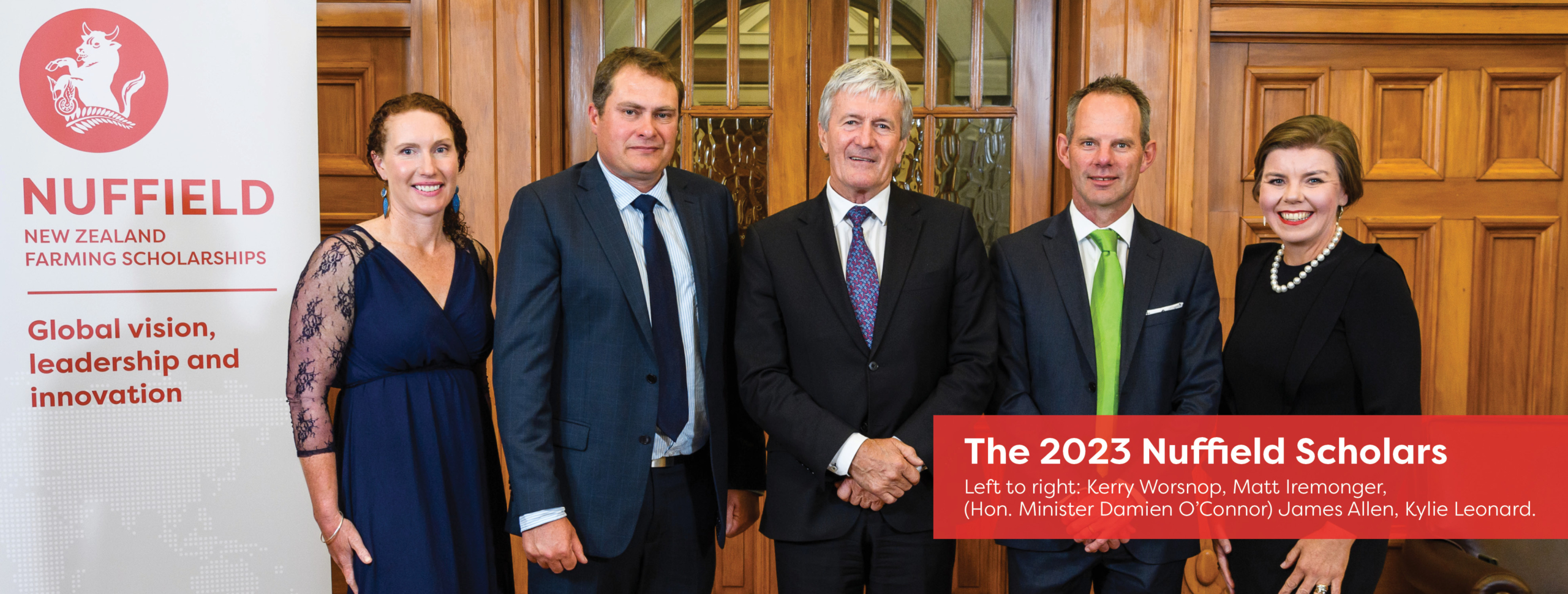
2023 Nuffield New Zealand Scholars Awarded.

Wellington, 8 November 2022

Congratulations to our 2023 Nuffield New Zealand Scholars!

Kerry Worsnop, a Gisborne based Sheep and Beef Farmer, Company Trustee, and Environmental Consultant.

Matt Iremonger, a Sheep and Beef and Dairy Farmer from Banks Peninsula, in Canterbury.

Kylie Leonard, a Taupo based Dairy Farmer, Governance Specialist, and dual Board Chair.

James Allen, a Waikato based Agribusiness Consultant and Managing Director.

Find out more about the 2023 recipients >>

Four emerging Food and Fibre Sector leaders have been awarded 2023 Nuffield New Zealand Farming Scholarships. Each has received their awards from Hon. Minister Damien O’Connor. The Awards Ceremony was held in the Grand Hall at Parliament in Wellington last night. The New Zealand Rural Leadership Trust (Rural Leaders), who administer the Nuffield New Zealand Farming Scholarship, hosted the event.

Strong interest in the Nuffield Farming Scholarship.

This year saw the most applicants for the prestigious Nuffield Farming Scholarship since 2018. To ensure that the new 2023 Scholars can travel and gain international insights to the same level as their predecessors, The Nuffield Trustees increased the value of the Scholarship, in recognition of the increased cost of travel.

Correspondingly this has meant that only four Scholars were selected, making the competition to gain a coveted Scholarship even tougher this year. Each Scholar brings talent, passion, perspective, and a track record of performance. Their job now is to find insights and build foresight to benefit our sector.

“We wish to acknowledge all those who applied. The field of applicants was particularly strong and representative of the regions and industries within our Sector. It is safe to say, there is some real talent in our regions,” Said Chris Parsons, CEO, Rural Leaders.

The collective impact of Nuffield Scholars.

Nuffield Alumni’s collective impact on the Food and Fibre Sector has recently been highlighted by the Mackenzie Study, a Rural Leaders’ collaboration with The Otago University School of Business. The study maps the in-person and sector gains from participation in the Nuffield Programme. Some of the study’s findings include:

  • Nuffield Scholars hold 14 senior leadership roles over their career.
  • Each Scholar has created an average of 3.3 businesses.
  • And each creates an average of 48 FTE roles.

“The contribution and impact New Zealand Nuffield Scholars have made on New Zealand Agriculture, regionally, nationally and globally is significant, and it is a real pleasure to be able to see the opportunity that lies ahead of the 2023 scholars to continue to create impact for the future benefit of New Zealand Agriculture”, Said Kate Scott, Rural Leaders Board Chair.

In addressing the Rural Leaders’ Strategic Partners: AGMARDT, DairyNZ, Beef+LambNZ, Mackenzie Charitable Trust, and FMG, Kate Scott said, “The positive impact on New Zealand Agriculture that is created by New Zealand Nuffield Scholars would not be possible without the generous and ongoing support of our partner organisations, who are an integral part of our mission to create world class leaders for New Zealand.”

Within this context of achievement by Nuffield Alumni, the new 2023 Nuffield Scholars were announced by Minister O’Connor as:

Kerry Worsnop, a Gisborne based Sheep and Beef Farmer, Company Trustee, and Environmental Consultant.

Matt Iremonger, a Sheep and Beef and Dairy Farmer from Banks Peninsula, in Canterbury.

Kylie Leonard, a Taupo based Dairy Farmer, Governance Specialist, and dual Board Chair.

James Allen,
a Waikato based Agribusiness Consultant and Managing Director.

The 2023 Nuffield Scholars’ research topics will cover a range of our biggest food and fibre challenges including: environmental health, social equity and economic performance, integration of beef production from the dairy industry, and fit for purpose rural professionals.

The Nuffield Scholars will bring a valuable global perspective to their research through an intensive travel itinerary of visits, meetings and experiences, designed to lead to a period of transformative personal insight and growth.

The four new Scholars will join the over 180 Nuffield Alumni, awarded scholarships over the last 71 years.

Find out more about the 2023 recipients >>

Ben Todhunter: Farming, conservation and Nuffield.

Ideas That Grow: Ben Todhunter, 2006 Nuffield Scholar.

Lynsey Stratford has discovered farmers make a few assumptions that aren’t very helpful – like accepting the fact that work might be dangerous and there’s nothing anyone can do about it. As Lynsey explains, “There are changes we can make, but those assumptions and those mindsets have been deeply held for quite some time.” 

As a consultant, Lynsey helps the primary sector with people management and development services and training. And, when it comes to health and safety she says, “We shouldn’t expect people to just know this stuff, but rather teach them and support them as they develop skills.” 
 
Lynsey’s research report unpacks the paradox that while farmers care about their people, farms as workplaces are overrepresented in fatal accident and injury statistics. So, what can be done to improve this?

Bryan Gibson – Editor of Farmer’s Weekly.

I am Bryan Gibson, the Farmer’s Weekly Editor, and this week I’m joined by Ben  
Todhunter. How’s it going? 

Ben Todhunter – 2006 Nuffield Scholar, Rakaia, Canterbury.

Yeah, good thanks Bryan. Yep. 

Farming, Conservation and Nuffield.

Bryan: And where are you calling in from? 

Ben: I’m at home on the farm, Cleardale on the Rakaia Gorge, about an hour west of Christchurch. 

Bryan: Your family’s been there a while, I understand. 

Ben: We’ve been here for close to a hundred years. The boundaries have moved around a little bit in that time, but yeah. I’m the fourth generation farming this location.  

Bryan: Can you tell us a little bit about the place, what your farm looks like and what you farm? 

Ben: So we’re on the north slopes of Mt Hutt. The farm runs down to the Rakaia River. It’s got a big chunk of boundary with the Rakaia River. It’s got loessal soils, thousand mill rainfall, lies to the northeast – so it’s got a good aspect. It’s well located, running about five and a half thousand ewes and 300 breeding cows, finishing all replacements. We do a little bit of cropping, milling wheat and feed barley and a significant genetic business in sheep and cattle. 

Bryan: So a pretty big operation. 

Ben:  A lot of farms are getting bigger nowadays, but yeah, there’s a lot going on and it takes a bit of keeping the moving parts ticking away and working properly. 

Bryan: Have you been involved in the family farm right through, or have you been away and done other stuff? 

Ben: Been back on the farm since about 1992. I’ve been overseas, did a Master’s in Dublin and I’ve worked for an Irish dairy cooperative. Done a bit of farm work in other parts of the world and worked on other farms. My father’s hips were buggered and I gave him a hand, then and I did a little bit of lecturing at university while I was trying to farm, but I’ve been at home ever since. 

Nuffield Scholarship - integration of conservation into farming.

Bryan: We were talking before we came on about your Nuffield Scholarship report. You did it a little while ago now, when was that? 

Ben: 2006.

Bryan: You took a look at integrating conservation into farm systems. Can you tell me a little bit about why you chose that? 

Ben: Yeah, absolutely. At that stage I was representing high country farmers/pastoral lease farmers in their battles with the Crown really. Helen Clark was very keen on a network of high-country parks. The model that was being explored at that stage was to separate conservation and farming.

I thought the model was wrong. It didn’t fit high-country landscapes at all. So I wanted to look at that model and how it was carried out in other parts of the world to see if there was anything I could bring back that we might be able to learn from to help those farmers. 

Bryan: From my reading, you mentioned some work that was going on in the United States that seemed like it was achieving the right results. 

Ben:  The bits that were interesting to me were if you look at how the conservation-farmer battles go in our country, if a conservationist like Fish and Game or Forest and Bird wants to get an outcome, they almost have to paint the existing owners of the land or of a property in a bad light so that they get some legislation change.

So it becomes a contentious battle. And that’s a bit how the system is. So the insight that I got in the states was more around where there’s clear property rights and those actors or participants are forced to talk to each other and then they will negotiate, inform outcomes that benefit both people rather than becoming polarised positions. So I think that principle was quite a useful one to carry forward. If you understand what I mean when I say that. 

Bryan: Totally. In some ways, a lot of people want the same things, but it’s better to sit down with the other affected party and map a positive path forward rather than tell on them and try and get someone else to hit them with a stick, I guess. 

Learning from the United States.

Ben: Yeah, very much so. You do have to remember the history of the settlement for each place in that respect. So when the west was settled in the States, it was settled around the rivers and those sort of places and that was where a lot of the biodiversity was, so their ownership vested with the farmers.

Whereas in New Zealand, a lot of the biodiversity has been retained in the wild areas, so slightly different settlement, but I think the principles are still reasonably applicable going forward.

So some of the really good outcomes you got through there were spawning habitat for fish, ensuring there was sufficient water in the creek at those times. So paying the irrigators not irrigate at that time, but the owner needed to pay them in the dry years. So it created quite fixable solutions and reasonably efficient solutions to some problems without the contention and those things we seem to get in our discussions.

Bryan: And in the time since you wrote this, how do you think things have been? Is there any change for better or worse? 

Conservation and finding the value add.

Ben: I’m optimistic there’s been a slight maturing of approaches between NGOs. I’m not sure that the farmers themselves have matured in their approach on how to deal with some of these things. 

One of the solutions that I looked at was market-based solutions to some of these issues where you’d pay a higher price for products. And that’s a bit of what we’re working with through the New Zealand Merino Company, to try and link positive climate action on the ground through to customers. That’s something that I’ve always been interested in, but it does seem really hard to get and maintain a premium for that over time. 

Bryan: That is something that a lot in the farming world debate whether the value add is actually there for doing some of the sustainability and traceability and all that sort of thing. 

Ben: So with a lot of the wool that we’re getting from Merino, we are getting significant premiums for the ethical wool that’s treated with good animal welfare standards in the current market. So there are some premiums with specific customers at certain times. 

Bryan: That’s good to hear. So what made you want to do a Nuffield Scholarship? What drew you to it? 

Why Nuffield?

Ben: I’ve always been interested in what happens outside of New Zealand in a wider sphere of the world. I probably didn’t have the capacity to do it at the time, but you probably never do. I always enjoy being around people that like to make change, that actually make things happen and think about the world and have got some energy to do that. The Nuffield people are certainly people who will question things and can make change. 

Bryan: The actual travel and that sort of thing, the process of doing it, what was that like?

Ben: Vaughan Templeton was the other scholar in that year, we had a conference in the Netherlands in the Rabobank headquarters and met all the other Nuffield scholars from around the world. That was an amazing experience. Then we traveled for six weeks through Europe, the States and Canada with a bunch of Australians in a minivan – an amazing experience as well. 

You get into a whole lot of agricultural businesses, spend a week in Washington, D.C. learning how that country operates – or doesn’t operate. Going to some of the bigger flower markets in the Netherlands like the Ellesmere Flower Market. The Dutch people are really good at logistics. 

Looking at the scale of the agricultural production that happens in America and the scale of the systems and the specialisation that goes on in some of those businesses compared to our generalisation over here. Understanding from the other farmers that the issues are common around the world. Labour, environmental impacts, markets, profitability, succession, all those issues are common in some respects. So learning about that and stuff. It’s an amazing experience. 

Bryan: Thanks for listening to Ideas That Grow. This podcast was presented by Farmers Weekly. For more information on Rural Leaders, the Nuffield New Zealand Farming Scholarships, or the Kellogg Rural Leadership Programme, please visit ruralleaders.co.nz. 

The 2023 Rural Leaders Agribusiness Summit.

Forefront - Rural Leaders Agribusiness Summit

The 2023 Rural Leaders Agribusiness Summit theme ‘Forefront’ reflects focus on the businesses making change and providing solutions to some of the sector’s biggest challenges and opportunities.  

The Summit seeks to promote global vision, leadership and innovation by demonstrating some of the practical solutions shown to mitigate the challenges facing agribusiness today.  

The Summit begins with a welcome and scene setting session snapshotting the imperative for change and the opportunities landscape. 

Guest speakers for this session include, Devry Boughner Vorwerk, CEO DevryBV.  

This opening session is designed to supercharge the discussion sessions to come, organised into three key streams:

Our World - Our Natural Environment

10-11:45am
 

This session explores leadership and innovation in the advancement and restoration of the natural resources critical to the future of agribusiness.

The session showcases those champions nurturing the environment while also remaining profitable. The session will also have a circular economy thread, exploring businesses redesigning food chains to remove waste and reuse product not consumed. 

Guest speakers will include:

Lain Jager, Chair, Te Puna Whakaaronui (NZ Primary Sector Think Tank)

Volker Kuntzsch, CEO, Cawthorn Institute

Followed by a panel discussion facilitated by Corin Dann.

Our People - Consumer Trends and Trade

12:45-2:30pm

The focus of this session will be on businesses responding to the unstoppable international trends of power shifting to the consumer, business models being challenged, and the eastern movement of the world’s economic centre of gravity. 

Delegates will be able to seize on the learnings of agri-food and consumer businesses meeting the challenges of fast-changing demographics, food trends and changes in consumer values.  

It also explores the opportunities that may arise for agribusiness as we experience a convergence of changing world population demographics and more transparent trade policy. 

Guest speakers will include:

Vangelis Vitalis, Deputy Secretary Trade and Economic, Ministry of Foreign Affairs and Trade.

Tom Sturgess, owner of Lone Star Farms

And a panel discussion facilitated by Corin Dann.

Our Future - Entrepreneurship & Leadership

3:00-4:30pm

The third session will concentrate on the future, social, economic and environmental wellbeing of agribusiness. The session will cover the areas where value will be derived in generations to come, showcasing world-leading business case studies and responsive new business models. 

Speakers from a range of industries will show how economic viability will be key to family business succession and intergenerational business value growth.  

Guest speakers so far include:

Traci Houpapa, MNZM

Angus Brown, ,

As with the previous two sessions, Corin Dann will facilitate a panel discussion.


To close out the day’s schedule, there will be a wrap-up focussing some of the key takeaways and action commitments.

This will run from 4:30 to 5:15pm and precede a networking drinks opportunity. 

Agribusiness Summit Dinner

7-10:30pm

Featuring Special Guest Speakers – Hon Minister Damien O’Connor and Te Radar.  

We’ll provide more information on the Summit, networking and dinner in the coming weeks across our networks as well as our Rural Leaders and Programmes social media pages.  

For Summit and Dinner prices and bookings visit https://au.eventscloud.com/agribusinesssummit


2022 Nuffield New Zealand Farming Scholarship Awards. 

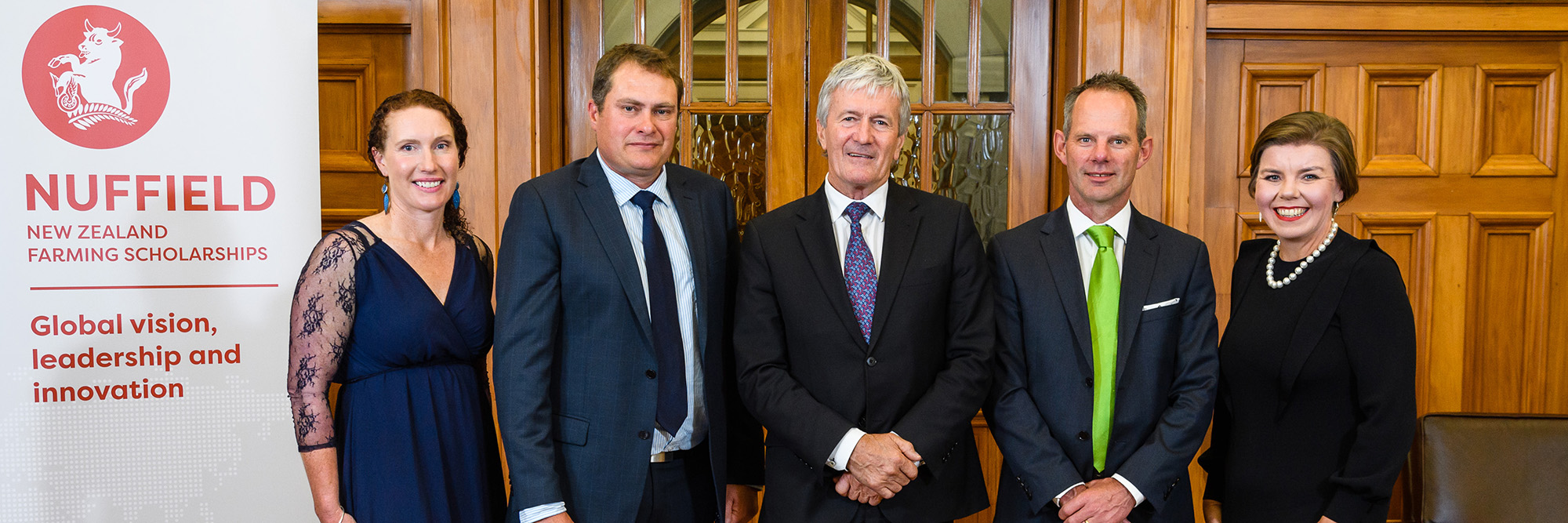
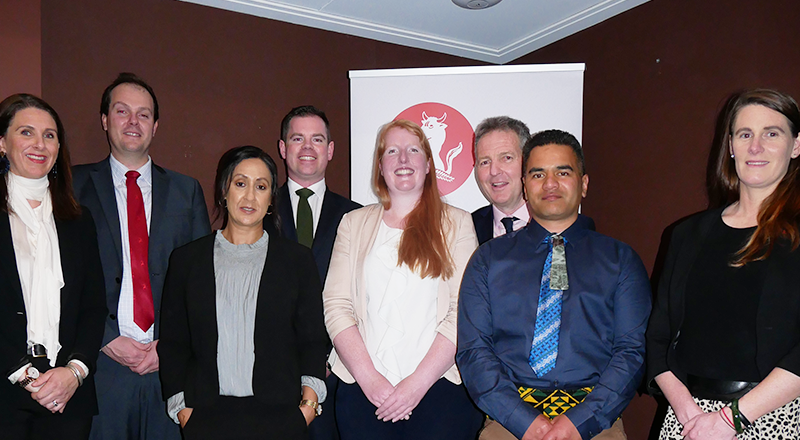
2022 Nuffield Scholars and Rural Leaders Board of Trustees

On Wednesday evening Rural Leaders hosted the 2022 Nuffield New Zealand Farming Scholarship Awards in Wellington. This was an opportunity to formally award scholarships to Parmindar Singh, Lucie Douma and Anthony Taueki – a year later than planned. 

While it was a smaller occasion than it might have been, it was no less important. Hon. Minister Damien O’Connor, was again generous with his time. A special thank you to our Strategic Partners, Agmardt, DairyNZ, Beef+LambNZ, Mackenzie Charitable Trust, and FMG too, for their ongoing support and their help in making the evening a success.

The conversation with Partners, Hon. Damien O’Connor, Rural Leaders’ Board members (some pictured with the Scholars above), and the 2022 Nuffield Scholars themselves, was immensely enriching and overwhelmingly positive.  

The evening also provided an opportunity to thank the NZ Rural Leadership Trust Board’s Ariana Estoras – Independent Trustee and Natalie Bowie – Associate Trustee, for their commitment, expertise, and service as they step down.

The positive impact of Nuffield on the Food and Fibre Sector.

Kate Scott, NZ Rural Leaders’ Trust Board Chair, spoke of Nuffield’s impact, with statistics from the Mackenzie Study, a Rural Leaders’ collaboration with The Otago University School of Business. Some key statistics mentioned include: 

  • Nuffield Scholars hold and average of 14 senior leadership roles over their career. 
  • Over 40% have served in government leadership roles. 
  • During their careers, on average, each Scholar will hold 4 or more board positions. 
  • Each Scholar has created an average of 3.3 businesses.
  • And each creates an average of 48 FTE roles. 

In addressing Rural Leaders’ Partners Kate said, “That is the measurable impact of your support for us and of the support we are trying to give back to our sector.” 

Acknowledging the disruptive times we are in, Kate Scott said that the need for exceptional leadership remains more critical than ever. Adding that New Zealand agriculture both here and globally, is again more important than it has ever been, “Especially as we look to embark on our journey of Taiao ora, Tangata ora – if the natural world is healthy, so too are the people”, added Kate Scott. 

Kate also spoke to the need for stronger collaboration, before introducing the Hon. Minister Damien O’Connor. The Minister acknowledged both Chris Parsons, Rural Leaders’ CEO and Kate Scott, for their hard work and energy before giving an informative talk about the value of Nuffield and the New Zealand Primary Sector’s place in the world.  

Nuffield Scholar’s research topics - fit for a fast-changing food system.

Each of the 2022 Scholars gave updates on the progress and direction of their research. It was a first chance for many to hear from the Scholars themselves. 

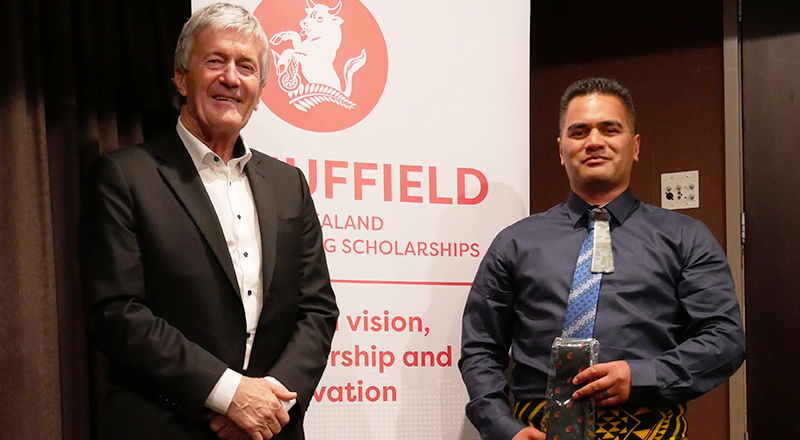
Anthony Taueki, 2022 Nuffield Scholar with Minister Damien O'Connor

Anthony Taueki, 2022 Nuffield Scholar.

Of his research Anthony Taueki, explained that his topic ‘Pathways for the Primary Industries from the grassroots up’, had gone through many different moulds. Anthony is focussing on the vocational transition from high school to career, with particular attention to those facing challenges within the current system. 

He explained that what was currently defining his research on career pathways, were the questions, “Can you provide me with positive pathways? Can you provide me with positive culture? Can you provide me with pastoral care? And perhaps most powerfully, “Can you see me?”  

Anthony discussed the need for decision makers to collaborate, to break down the silos that exist in order to create one consistent message, to create positive sector career opportunities for all New Zealanders, “We shouldn’t be above our people, we should be beside them”, Said Anthony. 

Lucie Douma, 2022 Nuffield Scholar with Hon. Damien O'Connor

Lucie Douma, 2022 Nuffield Scholar.

Lucie spoke about how her research topic ‘Data Interoperability’ will look closely at what data farmers need to be making the decisions they need to make to meet our regulatory and environmental requirements.  

However, as Lucie explained, after beginning her already extensive travel both with the Contemporary Scholars Conference and independently too, the focus of her research was evolving. Lucie explained that the UK and Europe, as a consequence of the pandemic and lockdown, have moved significantly, with rises in food activism and groups facing food challenges.  

Lucie elucidated, that a contributing factor here is that consumers are even more disconnected from their food system. Lucie believes data may provide some solutions here. 

Parmindar Singh, 2022 Nuffield Scholar with Hon. Damien O'Connor

Parmindar Singh, 2022 Nuffield Scholar.

Finally, Parmindar Singh spoke of her pride at being a fourth generation dairy farmer and of the responsibility she has to her family before her. Parmindar’s research will look at export markets for our dairy products. It will aim to unpack what our future export markets might look like, especially given our current reliance on just a few.  

“I’ll focus on three potential markets. The first is Japan. The second is Singapore. The third is the United Arab Emirates. All very different, though all gateway markets”, explained Parmindar.  

Parmindar went on to add that her research will focus on how people consume dairy in these countries, look into their culture, their economics and how the political context impacts social stability in these countries. 

The 2023 Nuffield Scholars announced in two months.

As the 2022 Scholars now progress with their travel and research, a new group of Food and Fibre Sector leaders have started their journey to selection to the 2023 cohort.

We’ll announce the selected 2023 Scholars in November, when the next Nuffield Awards are to be held.

Lynsey Stratford: Changing how we work for better outcomes.

Ideas That Grow: Lynsey Stratford, 2021 Nuffield Scholar.

Lynsey Stratford has discovered farmers make a few assumptions that aren’t very helpful – like accepting the fact that work might be dangerous and there’s nothing anyone can do about it. As Lynsey explains, “There are changes we can make, but those assumptions and those mindsets have been deeply held for quite some time.” 

As a consultant, Lynsey helps the primary sector with people management and development services and training. And, when it comes to health and safety she says, “We shouldn’t expect people to just know this stuff, but rather teach them and support them as they develop skills.” 
 
Lynsey’s research report unpacks the paradox that while farmers care about their people, farms as workplaces are overrepresented in fatal accident and injury statistics. So, what can be done to improve this?

Bryan Gibson – Editor of Farmer’s Weekly.

I’m Bryan Gibson, editor of Farmer’s Weekly. Today, I’m talking to former lawyer, consultant, and dairy farmer, Lynsey Stratford. How’s it going? 

Lynsey Stratford – 2021 Nuffield Scholar, Curio Bay, Southland.

Good thanks. Nice to talk to you.

Digging deeper with a Nuffield Scholarship.

BryanWhat have you been up to?

Lynsey: I’ve been up in Christchurch with Rural Leaders, to celebrate the end of the scholarship programme for the 2020s and the 2021s.

BryanFantastic. As you mentioned you are a recent scholar. What made you choose the Nuffield Scholarship?

Lynsey:  To be honest, I applied just after our first COVID lockdown. Like everybody, I’d been thinking about what I enjoy doing during that time – being stuck inside. I love to travel and learn new things. I’ve always looked at the Scholarship and thought that the stories from previous scholars sounded like a great experience and opportunity.  
 
I didn’t really think I’d get a scholarship, but I thought, what the heck, let’s give it a go, and if nothing else it’ll be an interesting experience. I was very surprised and honored to be selected as a scholar for 2021.

Bryan: And what sort of area did you want to study? 

 Lynsey: I love working with people in the primary sector. I went into the scholarship thinking I would look at health and safety and providing better workplaces for people that are more productive and engaging for better health and wellbeing outcomes. 

My project ended up being called ‘Super Humans, Not Superheroes’. It looked at how we do all this fabulous stuff in the sector, but we’re probably asking a bit too much of ourselves. We expect to be superhuman, and our teams too. 

With a slightly different approach to structuring work, we could support better outcomes that are more engaging, create better work, more productivity, and still improve the health and safety of our people.

Challenging and changing mindsets toward on-farm workplace safety.

Bryan:  Working in the farming world, it’s a relatively dangerous place and it can be somewhat isolating at times. What sort of strategies do people need to try to work into their businesses to make it better for people? 

Lynsey: I guess the good thing is most are low, or no-cost, so you can make quite big changes without spending a lot of money. The key to it all is mindset.  
 
What I found was that farmers have some assumptions that aren’t very helpful. We accept the fact that work might be dangerous. We assume there’s nothing we can do about it. And that’s not right. There are changes we can make, but those assumptions and those mindsets have been deeply held for quite some time. 

Farmers don’t think they’ll ever get hurt. They think other people might. Generally, we don’t think that we are prone to accidents. So, we don’t really take any steps to manage the risks that there are in our work. We tend to normalise the fact that it is a dangerous occupation and so we don’t try and challenge that by changing how we work.  

If you’ve got family or team members who think that way, that’s a good place to start. We need people to help us understand that there are things that we can do to organise work better. So, lots of the time, we’ll be told what to do, but not necessarily the why or the how. And that’s just good team communication.  

We shouldn’t expect people to just know this stuff, but rather teach them and support them as they develop skills. 

Bryan: I guess an engaged work team is probably going to not only be more productive, but also be happier and safer, would you expect? 

An engaged farm team means thriving workplaces and better outputs.

Lynsey: Absolutely. There’s some shocking statistics from Gallup, who looked at engagement across the world. For New Zealand, only 20% of our workforce, and this is across all sectors, is fully engaged. If you’ve got a team of five people, that’s only one giving everything they’ve got.  
 
So, yeah, if we can tap into engagement, it’s better for people. They feel like they’ve got some control and they’re growing – they like to be there. So, if you’re an employer, those people will go that extra mile for you because they want to be at work and they feel passionate about it. 

And engagement is, if they feel you care about them, that they’ve got some control over how they themselves can organise their work. That they’re growing and developing – those are all things that we can improve if we start to think differently about how we organise work. 

Bryan: I guess what you’ve just been talking about feeds into the ‘why’ you’re there. If there’s a bigger goal that everyone is working towards, then that can help, can’t it? 

Lynsey:  I guess that’s where we’ve gone a bit wrong. In the past we’ve focused on compliance, but we haven’t seen these wider benefits of good work. And there’s some interesting stuff that’s been done by the Business Leaders’ Health & Safety Forum by Hillary Bennett. It said that if you improve how you set up work, train people, you’ve got good processes, so they understand their role, and their responsibility, and how to change how work gets done – if you do all those things well, you improve mental health as well.  
 
So, that’s another component of this, that we’re looking at wellbeing as well as physical health and safety. 

Bryan: People who are engaged, feeling good about themselves are probably going to produce better work and be safer when they do it, aren’t they? 

Lynsey: Yeah. And be on the thriving end of the spectrum of mental health, instead of the just surviving space – or not surviving at all. So, that’s what we want. We want good work that sets us up for thriving people and great farming. 

Bryan: So, you’ve just finished then? 

A different kind of Nuffield Scholarship experience.

Lynsey: Yes. We had an experience that was interrupted somewhat by COVID. So, it’s been a very weird scholarship experience because it’s kind of backwards. Usually, you do your international travel, and then you produce your report. Ours will be the other way around. But I think our experience, although different, has been just as good.  

What we did was travel as a cohort. So, the 2021 scholars linking in with the 2020 scholars. We traveled through New Zealand, from Northland right down to where I farm in Curio Bay, Southland. We did the length and breadth of New Zealand together. 

Then we did our research independently, but with as much as we could face-to-face. A lot of it had to be remote via Zoom. So, now I get to go and do my international travel through August, September, and October. 

Bryan: You might want a rewrite afterwards! 

Lynsey: I think that’s the aim. We kind of validate what we’ve seen, and if there’s anything we need to change, we’ll revisit. 

 
Bryan: And that’s exciting. I mean, the travel component is a big part of the scholarship. Where are you off to? 

Lynsey: My group goes to Japan, Belgium, Ireland, and California. 

Bryan: Well, that’s an exciting thing to look forward to. 

Lynsey: Yeah, it is. It’ll be a Northern Hemisphere trip in the summer. So, that’s also quite exciting now, as we sit here in Invercargill. 

Bryan: When you’re not knocking out your report as part of your Nuffield Programme, what does life look like for you? 

Lynsey: I’ve been married to a Kiwi dairy farmer for nearly 20 years now. Being on farm with him was a big part of life until recently. We sold our farm effective 1st of June. Now, we’re kind of redefining where we go and what we do, but I’m also a mum, which is very important to me.  
 
I’ve got two children that I like to focus on. I like to try and support them with school things and support our local community too. And then I also have a small consulting business that helps primary sector businesses – but all sorts of businesses manage their people. 

From cows to consulting – a farmer advising farmers.

Bryan: What sort of consulting or advice do you offer businesses? 

Lynsey:  So it’s interesting because I started out as an employment lawyer in the UK. There I was focused on compliance and getting agreements, policies, procedures and following all the legal requirements.  
 
I still do all those things, but I’m much more focused on trying to improve work setup so that we’ve got engaged teams, great communication, good processes. We’re training people and developing them, making sure that the behavior we’ve in the workplace is setting up a great culture that engages people. So, I’ve moved away from just focusing on the compliance. 

Bryan: I think that’s a move the agricultural and horticultural industries in New Zealand need to complete still. A lot of the reaction I get at the newspaper to health and safety reform, or regulation is that it’s just a hassle, a box-ticking exercise, whereas if you do change that mindset into creating a space where everyone can thrive, then that’s when the goal is going to be reached. 

Lynsey:  That’s one of the things I concluded in my research. It has been sold to us as a compliance exercise – but it takes a lot of resource to change mindsets. It’s not that easy. And so, the easier thing to do is to set us up for compliance, make sure we’ve got the plans in place. But if we really want to make change, it’s that mindset that we need to focus on. We need resources to do that.  
 
We need great people connecting farmers with good information that helps them understand the opportunity and ‘the why’ for them, whatever it is. That then supports them to develop the skills they need. And it’s not something that we can nail in one workshop or one interaction. The resourcing really needs to be there, and it needs to be long term. We’re talking about generational change if we want to change mindsets. 

I guess I’ll just give a shout out to Ben McLachlan. He’s a 2020 scholar and his report is about mindsets that help us change. He’s looking at the growth mindset, which I found was critical to getting great workplaces.  
 
A workplace where we’ve got a growth mindset is one where we understand that people can develop new ways of thinking and new skills if we give them the opportunity and the right support. I was stoked when I saw his work, as it aligns nicely with mine as well. 

Bryan: That leads into my next question about the community that being part of the Rural Leaders team builds among those who are working through the same cohort? 

Lynsey:  We were lucky. Talking to previous scholars, they have often got their scholarship, briefly met the New Zealand cohort, then gone overseas and developed relationships internationally – but not quite as tight a relationship with the New Zealand scholars.  
 
I think we’ve been lucky that we got that chance to spend time together, because of COVID. It’s the silver lining. It’s been amazing to see the projects that the scholars came up with across those two cohorts. Some of the best opportunities were the discussions that we had in the van as we toured New Zealand visiting leading businesses. Thanks to all those scholars who talked to me and shared their views.  

Bryan:  Excellent. So, the programme is something that you’d recommend to other people? 
 
Lynsey: Absolutely. It’s not easy. To do anything like this where you are basically challenging things that you thought or your beliefs in how the world works, that has been a challenge. But it’s been a unique opportunity too. I just can’t think where you’d get the chances that we got to visit all these amazing businesses.  
 
We went to certain Rocket and Aerospace businesses. I didn’t even know we had these kinds of businesses in New Zealand. If you want to stretch your assumptions and learn some new things and meet some awesome people, I thoroughly recommend it. 

Bryan: Thanks for listening to Ideas That Grow, a Rural Leaders podcast. This podcast was presented by Farmers Weekly. For more information on Rural Leaders, the Nuffield New Zealand farming scholarships, or the Kellogg Rural Leadership Programme, please visit ruralleaders.co.nz. 

The future of food and fibre is in the hands of our bold and our grounded people – those who give back to their communities and industries.

Sound like you?

Kellogg Rural Leadership Programme takes its 1,000th step forward.

Kellogg Rural Leadership Programme - Delivery Team

Can I have your attention please – the one thousandth graduate of the Kellogg Rural Leadership Programme has just left the building!

Like the graduates before, they return to their family, community, industry, and to contribute to a sector that just got a little smarter, a little stronger.   

We’ll know more about the scale of the Kellogg Alumni’s collective impact as we get closer to completing the Mackenzie Study with the Otago  School of Business.

The first stage of this Study revealed remarkable personal and sector gains attributable to participation in the Nuffield Scholarship. The second stage should show similar results for Kellogg. After all, it has evolved over decades to be one of the most respected rural leadership programmes in Australasia.  

“People know the programme. It’s respected. They’ve seen the contributions that the Kellogg graduates have made over time”, says Dr Scott Champion, Programme Director. 

“It’s enormously significant. Obviously, there are other programmes that contribute as well, but you can’t deny the programme’s longevity. It has impacted on large scale now – we’ve just had the 1000th Kellogg Graduate.  

“Depending on whether we do two or three programmes, that’s somewhere between 45 and 65 Scholars per year. You start to build quite a community”, adds Scott Champion. 

Kellogg, a leadership programme spanning six decades.

The programme was initially developed in collaboration with the Kellogg Company in the US, as a way to enhance global leadership capability. Since then Kellogg Rural Leadership programme was reinvented many times over, keeping up with the challenges and the times. It delivers New Zealand centred syllabus, accredited by Lincoln and Massey Universities and delivered by the Rural Leaders.

In 2013, Kellogg was transferred to the newly-formed New Zealand Rural Leadership Consortium. This merged with the Nuffield New Zealand Farming Scholarship to create a single organisation. Four years later, the consortium became a registered charitable trust and changed its name to the New Zealand Rural Leadership Trust (Rural Leaders). 

A partnership known as the Pāhautea Initiative was formed in 2020 between Lincoln University, Massey University, AGMARDT and Rural Leaders. The initiative focused on building leadership capability in the regions, with the aim of creating a sustainable future for Food and Fibre.  

More recently, Kellogg academic accreditation through both Lincoln and Massey Universities has become available to those who undertake the Programme.

Kellogg offers new networks, friends and industry connections.

Rural Leaders deliver up to three programmes a year, with two based at Lincoln University. The other, in alignment with the Pāhautea Initiative’s aim of growing flourishing regions, is the same Lincoln Programme, only regionally based.  

Numbers are kept low to ensure a transformative experience, as the Kellogg journey is as much about learning from fellow scholars and developing a pan-sector network of friends as it is being exposed to industry leaders and new ideas. 

“For many Kellogg scholars, the enduring relationships and access to a network of like-minded change agents offers the most decisive outcome from the Programme. There’s a strong sense of trust, reciprocity, and a ‘pay it forward’ attitude which emerges amongst participants, says Phil Morrison, Kellogg Facilitator. 
 

The Kellogg eco-system of support and delivery.

The Kellogg team is passionate, dedicated, and ably steered by Chris Parsons, Rural Leaders’ CEO. Lisa Rogers, Programmes Manager, Annie Chant, Operations and Events Manager further support Scholars and Kellogg facilitators Dr Scott Champion and Phil Morrison, Dr Patrick Aldwell and examiner Professor Hamish Gow.  

The team work hard to provide a varied and stimulating learning experience.  

The Programme is delivered over three phases and includes two papers, the first of which requires the completion of specific assignments. This is delivered by Dr Scott Champion and Phil Morrison. 

The second paper, delivered by Dr Patrick Aldwell, involves completing a research project and giving a presentation at the end of the programme.  

Kellogg pushes beyond Primary sector boundaries.

On the first day of Phase One, Scholars are asked an important question. 

“On the first day they come in to the programme, we ask them, what’s the one thing you want to hit by the end? And then on the last day, we ask them what was most valuable thing to you through the programme?”, It’s a before and after comparison of perceptions of value,” says Dr Scott Champion. 

The results of this survey reveal where the true value is. One Scholar coming into the programme states, my one thing would be ‘…to find where I fit.’ At the end, that same Scholar says their most valuable thing was ‘the connections made with fellow Scholars and the greater Kellogg network’. Fit found perhaps. 

“It’s something you see really elevating as Scholars go through. And I think that’s evident in what they talk about as being most valuable to them. They often come in with something quite narrow and specific, like ‘I want to learn how to do X’, but when they leave, it’s about networks, understanding systems, understanding stuff beyond the boundaries of the sector they work in”, adds Dr Champion. 

Develop a questioning mindset with Kellogg.

On Phase One, Scholars embark on a nine-day, eight-night residential module based at Lincoln University, or potentially closer to home for the regionally based programme.  

This phase sets the foundations. It explores leadership skills and tools, including personal and team styles, design thinking, and critical analysis. Leadership applications of skills are also covered in various situational contexts, along with leadership strategic contexts – with a focus on New Zealand Food and Fibre Sector strategies and leadership challenges. 

Most importantly, underpinning this is the active encouragement of Scholars by facilitators, to develop a questioning mindset. 

“We play a video on the first day of Phase One, where a guy is saying, managers are defined by the things they know, leaders are defined by the questions they ask. It’s a 30 second clip, and it just nails it for me”, says Dr Champion. 

“We’ll often see comments in Scholars’ reflection journals from Phase One like, Oh, man, I thought I needed to know everything. But perhaps I don’t need to know everything. I just need to be able to think and ask questions.” 

Kellogg builds the confidence to engage with food and fibre leaders.

What Kellogg does so well is to expose Scholars to industry leaders. All of these senior people are eager to engage in conversations, and look to Scholars as the next generation of leaders, hungry to learn about the things they need to be thinking about. Kellogg creates a new interface for that knowledge transfer.  

“There’s often a reticence when senior or experienced industry people get in front of Scholars, to engage in a conversation, to ask questions. I completely understand that. So, what we’ve deliberately tried to do is reduce the monologue from the front, and increase the opportunity for questions. And then give them a real nudge to speak up. Scholars soon discover these people are very approachable,” says Dr Champion. 

“So experientially, we shift beyond just the head learning, to the heart learning. They think, I can do this, it was alright. That industry leader seemed to think that was an interesting question.”  

Scholars also make contact with industry leaders themselves, particularly during the individual research projects. Engaged people from a range of industries often respond to Scholars’ questions within 24 hours, and are more than happy to do interviews to help with research. 

“I think it speaks to the brand and standing of the Programme. There’s an opportunity to use the Kellogg brand to be able to talk to industry people and have some conversations that you might not otherwise be able to do”, says Dr Champion. 

Kellogg Scholars - from lifelong friends to lifelong learning.

Throughout the Programme, Dr Patrick Aldwell, Academic Director, works closely with Scholars to help them complete an individual research project. This is undertaken between Phase One and Phase Three.  

Scholars choose a topic of interest that also contributes to developing leadership outcomes and aspirations. The project brings together problem definition, research tool application, critical analysis, report writing and presentation. 

Dr Aldwell fosters a philosophy of lifelong learning with Scholars, and for many this begins with the research and reading disciplines acquired doing the research project. 

“That’s something that you need to adopt to be a leader. And the key part of that is reading widely”, says Dr Aldwell. 

On the programme the facilitators demonstrate to Scholars the importance of the lifelong learning piece, particularly in the critical thinking and critical analysis area, gathering different perspectives, seeking information, and evaluating its value and authenticity as well. 

“If there’s one key thing that’s changed in the last two years, is that we’ve gone from just comparing and contrasting information, and the status of that information, to comparing, contrasting and evaluating it,” adds Dr Aldwell.  

Dr Aldwell explains that one huge benefit he has seen arise from individual research is that Scholars gain at least one specialist area of knowledge, to the extent that in some organisations, they’ve become the go-to person for that area. Whether it’s dealing with anything from waste in the dairy industry, to succession planning.  

“That’s not just the knowledge and capability side of things, but also the ability to access, evaluate and produce credible information and analysis in an era of rising misinformation, and disinformation, the politicisation of those, and of knowledge,” states Dr Aldwell. 

Kellogg is an executive leadership programme gearing Scholars for success.

On the Programme’s remaining two phases the foundations built in Phase One guide Scholars strongly.  

Phase Two’s five day, four night residential in Wellington, looks at how to engage and influence decision making at local, regional and central government and industry level.  

Phase Three’s five-day (four-night) residential at Lincoln University, is the culmination of the project work, where Scholars demonstrate the application of research, presentation and critical analysis skills.  

A final goal setting for the future piece includes personal brand identification and provides the platform for ongoing learning and leadership development. 

“I get a real kick out of watching the Scholars succeed in life, because I do follow them, watch them grow, and develop. Seeing them have confidence to take the next step, no matter what that is. I’m constantly astounded at the energy they have, the strength of character they have, to see things through,” says Dr Aldwell. 

Who is the Kellogg Rural Leadership Programme for?

Many Scholars who come into the programme, are in the transition from a technical management role to generalist management role.  

“The things that get you through that technical pathway, which is typically about knowledge and excellence, these are not the things that are necessarily going to equip you for the next generalist bit,” says Dr Champion.  

The programme helps leaders make that transition, whether they’re slightly beyond that, right on the cusp, or whether that might be something for them in the future.  

Arming Scholars with the ability to understand and make connections in ways that others can’t predict, or don’t. This is the alignment between what the programme does and equipping people to progress in their careers.  

“The best Scholars, leave able to join the dots, and make connections across areas that might seem quite disconnected when you first look at them. They’re able to lift above, like the specifics of the context of something, and think quite strategically about it”, notes Dr Champion. 

“They see connections across sectors or issues and that helps them think about opportunities, risks and challenges in quite different ways. The ability to do that as a leader is an enormously helpful thing”, adds Dr Champion. 

Rural Leaders’ bigger picture and Kellogg’s role in it.

The Kellogg Rural Leadership Programme, The Nuffield New Zealand Farming Scholarship, and the Value Chain Innovation Programme exist for one reason – to grow leaders with the ability to deliver the changes in food and fibre that ensure our communities, country and planet flourish. 

This isn’t just a version of a line on a website – 1000 Kellogg graduates, our rural leaders, are delivering that change. In the coming months we’ll share the Mackenzie study’s findings on their impact. There’s unlikely to be too many surprises. 

Dr Champion concludes,

“We have a collective intent in the Kellogg Programme, where we want to see Scholars contributing back to the sector and rural communities and ensuring the wellbeing of the regions and their people.” 

Value Chain Innovation Programme.

Delivered by Rural Leaders and Lincoln University.

The Value Chain Innovation Programme will begin in November 2022 with applications closing in just over six weeks’ time on 18 September. 

Learn directly from New Zealand’s most successful value chain leaders. 

Delivery partners Rural Leaders and Lincoln University have together curated an exciting and varied series of value chain case studies across dairy, arable, horticulture, and more.  

By completing this programme you’ll learn directly from the source, gaining unique insights into food and fibre innovation, in both domestic and international markets. This is an opportunity to interact and learn from leaders who have a track record of successful entrepreneurship.

“Increasingly the most successful value chains are those with business models closely aligned to their customers, use protected IP, and provide innovative shared value structures”, says Lincoln University Professor, and Programme Co-facilitator Hamish Gow. 

As you advance through the programme you’ll compare and transpose thinking at a time when the primary industries are going through the biggest period of transformational change since the 1980’s.  

What do you gain from doing the Value Chain Innovation Programme? 

By participating you’ll grow your know-how in the following ways: 

  • learn about value chains and models 
  • learn how to generate and capture value 
  • meet key industry leaders and make connections 
  • learn from Co-facilitators Professor Hamish Gow and Phil Morrison ONZM, both with deep knowledge of NZ and international value chains 
  • form a high-trust cohort of lifelong friends. 

“If you’re in food and fibre, now is the time to be gaining a pan-sector view of as many successful business models as possible”, adds Prof. Gow. 

The programme runs over five weeks, two of which are spent on the road. The remaining time is spent on an (optional) individual research report.  

“The time commitment is 100 hours on field trips, guest lectures and networking, online lectures and discussions, tutorials, and another 50 hours of self-directed learning,” said Prof. Gow.   

The Value Chain Innovation Programme delivery team. 

“As a global leader and thinker in value chain design, innovation and entrepreneurship, Lincoln University’s Professor Hamish Gow is uniquely qualified to impart deeper strategic learning and insight into November’s programme”, says Rural Leaders’ CEO Chris Parsons. 

Co-facilitator Phil Morrison, ONZM, further strengthens the delivery team, “We are also fortunate to have Phil onboard. He brings a different leadership perspective, drawing on a career in military command, and in the delivery of innovation, strategic and leadership training as a consultant. With both Hamish and Phil, we couldn’t hope for a stronger team”, added Chris Parsons. 

Building the Food and Fibre Sector’s leadership capability.  

The programme will give you the competencies, confidence, and networks to influence change and lead transformation at an enterprise level and throughout regional New Zealand.   

“We hope this programme will lead to positive, larger scale change as our graduates continue to grow and contribute to a fast-changing Food and Fibre Sector’, said Chris Parsons.

Ready to grow your business, understanding of value chains, and how NZ’s Food and Fibre Sector works? 

For more information visit the site below or contact Lisa Rogers at lisarogers@ruralleaders.co.nz 

Applications are open until 18 September and can be made at ruralleaders.co.nz/value-chain/  

Lucie’s Nuffield US travel so far – in less than five minutes.

Lucie Douma. 
 
Soon after Lucie Douma and Parmindar Singh returned from their Nuffield CSC in the UK, Lucie was traveling again. This time in North America.  
 
Lucie is four weeks into her US trip that has so far covered: California, Illinois, Wisconsin, and more. Lucie is currently in Texas and will round out her travel visiting Washington DC, Saskatchewan, and the Yukon. 
 
Lucie is gathering information and insights on her Interoperability work. The working title of her research topic is On-farm data management and governance: Creating a system and understanding where farmers benefit from data. 

Here is Lucie’s Nuffield travel in the US so far – in less than five minutes.

Note – some posts have been edited for brevity. 

Start of July 2022

The start of my next Nuffield journey couldn’t be better. A group of international scholars were in a Fourth of July parade in the town of Clarksburg, just south of Sacramento. I felt welcomed by the local community and it is great to see such strong support for farming here. 

Clarksburg, California.

First half July 2022

We had a fantastic wine tasting at Tom Merwin’s vineyard. We heard how his farm maintains a competitive advantage. The most value for his business comes from his wine club subscription, where he has a direct link to customers rather than having to go through intermediaries. 

He explained more about his 1200-acre farming operation; 650 in vines and the remainder in arable (wheat and safflower). And we were also able to talk all things data. 

In the region of Clarksburg, California, they have a high-water table and two rivers nearby. Because of this they don’t have the water take restrictions the rest of California does. 

Tom takes a lot of time to make sure he is ahead of the game, always looking at how he can do things better or differently. For example, he’s experimenting with growing all-natural blackberries (no herbicides or pesticides), which will be sold at a local farmer’s market. 

Salinas, California.

First half July 2022

Spent a fantastic day in Salinas with Dennis Donohue and Walt Duflock at the Western Growers Technology and Innovation Centre. 

We met some inspiring people including Norm Groot who is working hard to ensure future water availability for County ranchers and growers. 

We also heard from Church Brothers’ Joshua Reed, who is empowering his people by sharing the data from their vegetable and leafy green growing so his staff can maximise yield production. He has managed to increase yields overall by 20% by using and analysing data. 

Dennis Donohue thank you for a fantastic visit and organising the day so well for us!  

Fresno, California.

Mid July 2022

What a time to be in California. Elisa Blanco and I had the pleasure of spending the morning with Wendy Larson and her father, Glen Anderson, on their 20-acre organic almond orchard, that sells direct to customers. They helped establish the organic almond industry. 

In the afternoon we had a tour of a much larger 8000-acre property, Terranova Ranch, Inc. They grow crops from organic tomatoes, peppers for Subway, red and white onions, to almonds and pistachios. This was an impressive operation, and they work hard to ensure water resource is managed well.  

Then for my final day in California it would’ve been remiss of me not to see the Muir Woods’ towering old growth redwoods. On to Chicago now.

Chicago, Illinois.

Mid July 2022

First day in Chicago. I took a trip to a Whole Foods store where I noticed the New Zealand wine on offer. This is a store where country of origin is really important and those that shop there want to see who they are supporting and what they are supporting. Like the bananas shown – supporting students through their scholarships.  

Whole Foods also have their own certified animal welfare standards where the meat is traceable to farm. It is also hormone and antibiotics free – like much of New Zealand’s meat. 

Champaign, Illinois.

Posted about one and a half weeks ago. 

The crops in Champaign, Illinois are predominately corn and soybeans. One farmer is looking at a third type of crop, miscanthus, which is a reedy type of grass and is used in biomass fuel and cut up into chips for turkey bedding.  

This is an interesting third crop that could be worked into the rotation of these fields, but there needs to be an increase in demand for it. Possibly the rise in fuel costs will do this? 

The innovation in machinery here is at the point where corn can be planted at 13-16kmph. This means 80 acres (or 32 hectares) of corn can be planted in one hour! The machinery is so impressive! 

Also you cannot be in the rural country of the US without going to a local community fair, with the tractor and truck pulling! Thanks to the local farmers for inviting me to go with them. 

Also posted about one and a half weeks ago. 

I spent a great day with the Champaign Farm Bureau and the corn and soybean growers in Illinois, this is part of the USA corn belt, and they rely on rainwater not irrigation for crop growth.  

The weekend before I arrived, they finally had some rain. Before this the crops were looking dry and the corn was starting to curl. 

The farms here have grown significantly in size over the last decade which has happened in line with increasing machinery size. They have much larger machinery here than New Zealand because the landscape is so flat. They can get 18m wide heads on their combines. 

The day ended with a BBQ put on by the Farm Bureau. Thirty local farmers took part at an unused grain elevator. The Farm Bureau then announced some funding they had received from the federal government to improve rural broadband and to encourage more use of cover crops. 

Thank you to everyone who made me feel so welcome here!  

Fair Oaks, Indiana.

Mid July 2022

Today filled me with lots of hope. I went to Fair Oaks Farms in Indiana where they are doing a fantastic job educating the public on where our food comes from.

They have three farming systems they teach the public, a dairy farm, a piggery, and crop farming.

The dairy operation was both conventional and robotic milking. They milk 2800 cows in one facility, split between a 72-bale rotary (that operates 24 hours a day) and robotics. With the milking robots they have 12 robots milking 800 cows.

Madison, Wisconsin.

Late July 2022

I met a great leader today; someone I truly look up to. Dr Molly Jahn is a Programme Manager in the Defence Sciences Office at DARPA. Previously she was Under Secretary of Research, Education and Economics at the USDA. 

Her work at DARPA looks at the wider risks and opportunities in the global food system. I got to spend three hours with Molly and her husband discussing the food system. They also took me on a tour around the Wisconsin area and explained the diversity of the food system there. 

This was a real honour for me and shows the doors that the Nuffield New Zealand Farming Scholarship can open. 

St. Louis, Missouri

Second half July 2022

The last few days have been full of fantastic conversations around the food system. From the potential of GMO crops to continue to feed our world, to speaking with Dr Jacqueline Applegate, President of Bayer Crop Science North America, about the climate change weather patterns we are currently experiencing. And finally, on to conversations around building more resilience in our food system with senior professors from the University of Illinois.

The University of Illinois is a leading agriculture university and is heavily involved in supporting the agriculture community with new research. Their Farmdoc website is used to share information, resources and tools with farmers.

Next stop – Texas.

Thank you Rural Leaders, their partners, and the Ministry for Primary Industries (MPI) for making this all possible!

Lucie discusses her Nuffield study with 2021 UK Scholar, Chris Manley.

Posted about five days ago by Chris Manley, 2021 UK Scholar. 

Data Interoperability – struggling to get systems to work together? Not sure how to analyse and make the most of your data? What is the value of your data? 

Thank goodness my fellow Nuffield Farming Scholarships Trust Scholar Lucie Douma from Nuffield New Zealand is travelling the world to bring some clarity to some of these questions. 

I was delighted to catch up with Lucie to hear how the research is going and to hear her views on leadership.

Nine tips to nailing your Nuffield application. 

1. Identify Nuffield’s goals.

As simple as it sounds, applicants often don’t fully understand what the broader goals and objectives of Nuffield are.  

If your application is written with consideration to ‘giving back’ for example, this will go some way to increasing your chances of gaining an interview. 

2. Get your Nuffield referees sorted soon.

There’s still time to get your three referees locked in. This is something that often needs a little time, so if you don’t have three lined up yet, make it a priority. 

3. Include what you’ve done for your rural community or assisting others.

Tell us about it. We’re often surprised to learn of the above and beyond participation some applicants have done without mention in their application.  

Have you served on any boards, committees, in any community organisations? Any rural groups, or in any voluntary capacity? Have you written any articles?

Dig, think, tell us. 

4. Keep an eye on the close date – 17 August.

For some reason time seems to be getting away on us all at the moment. This next few weeks will be no different. Take five minutes to plan your approach to applying.  

Start planning what needs to be done and by when. Aim to finish on Friday 15 August – or sooner. 

5. Get in touch with our Programmes Manager.

Our Programmes Manager can help you through any queries you may have. she’s within earshot of CEO Lisa Rogers, so you get Lisa’s 8+ years’ experience as well.

We just asked Lisa for a gem, and she said, 

“Be very explicit about what being awarded a Nuffield Scholarship will allow you to do for the sector, not necessarily what it will do for you.” 

Who knows, five minutes on the phone with the Rural Leaders Team, or a quick email, might be the difference.

6. Focus on your strengths.

Find ways to both answer the questions accurately and get your ace cards down. 

An average application isn’t necessarily a badly written one, however, it is definitely one that doesn’t get across how suited you are to being a Nuffield Scholar. That said, you might want to pay attention to this next tip for a well written application.

7. Check your application.

Spell check. Grammar check. Read check – how does your answer sound when read aloud?

Check the questions. Check your answers. You get the idea.  

8. Read a few back issues of the Rural Leader.

Not as strange as it sounds. The Rural Leader has much information entwined throughout  that may spark topical responses to application, and potentially, interview questions.  

Of note are the Ideas That Grow podcasts and Alumni in the Spotlight articles. School up – read the Rural Leader. 

9. If you know a Nuffielder, get in touch with them.

As Kate Scott, 2018 Nuffield Scholar, said of the Nuffield Alumni, (they are) ‘A network open to you picking up the phone or flicking them and email’.  
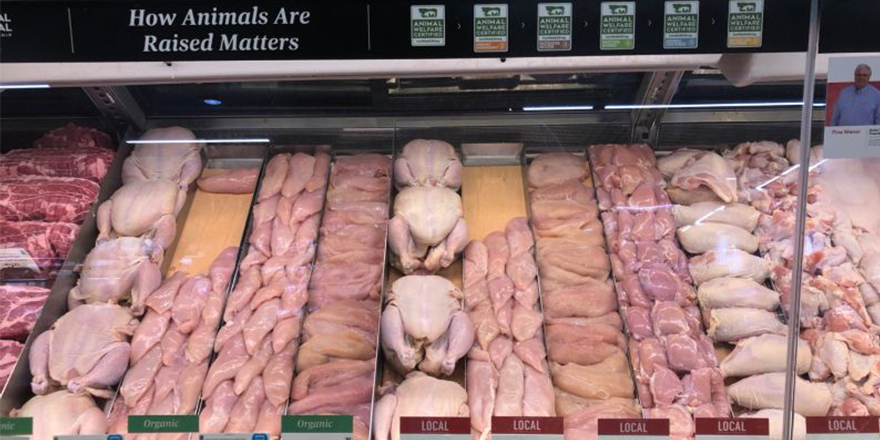
Kate may have been talking about being part of the Alumni, but if you know, or know of, a Nuffielder, reach out and ask their advice.  

Good luck with your application. 

Hamish Murray: Building stronger on-farm teams by getting out of the way.

Hamish Murray podcast - Building stronger on-farm teams

From Bluff Station to Cambridge University and back.​

This transcript of the podcast was edited for clarity.

Bryan Gibson – Editor of Farmer’s Weekly. 
I’m Bryan Gibson, editor of the Farmer’s Weekly. And this morning I’m talking to Hamish Murray. How’s it going? 

Hamish Murray – 2019 Nuffield Scholar, Bluff Station, Marlborough. 
Good. Thanks, Bryan. And you?

BG: You’re in Marlborough, is that right? 

HM: We are an hour south of Blenheim, 45 minutes north of Kaikoura on the east coast, inland at Kekerengu. 

We’re a high-country sheep and beef farm that stretches into the Clarence Valley. The Homestead is about five minutes from the coast and goes all the way into the base of Tapuae-o-Uenuku. It’s about 35 km’s to the back boundary. We run Merino sheep, Hereford Angus cattle, and we have about 800 beehives. 

BG: How have things been going this year for you? 

HM: We’ve had a great season with 300mm of rain through late January, early February. It’s meant our autumn has been incredible, and stock are in good condition. We’re through the bulk of our work now. It’s starting to quiet down for the next five weeks before we look at shearing ewes at the start of August. 

BG: I noticed from your bio you went to Cambridge University? 

HM:  Yeah. I suppose like many farmers at one point, you were told to get out and go and do something other than agriculture. And so, I spent a lot of my former years trying to give myself an opportunity to do anything other than be a farmer.  

I was sitting on a train on the way to a job interview in London, after graduating from Cambridge. It was then that I realised I really wanted to be back in New Zealand chasing stock around and being part of the farming community. I wanted to give our children the opportunity to grow up with the same experiences as we had. 

BG: How was that time in the UK at university for you? Must have been quite eye opening. 

HM: I was fortunate to get the opportunity to study there. I played a good level of sport playing in the varsity match on a couple of occasions while studying economics.

It was an incredible experience. It pushed me mentally as far as I could have been pushed. The expectation to perform and to be part of that was a great challenge. I thoroughly enjoyed it and look back on it fondly. 

Hamish Murray at Bluff high country station

Pushing your limits and personal growth.

BG: And in 2019 you went through the Nuffield Scholarship Programme. 

HM: Again, fortunate to be given the opportunity to do some travel. I felt that when I was in the UK, I was on a student budget. So, I didn’t really get the opportunity to do the travel that I would’ve liked while I was there.

The Nuffield Farming Scholarship gave me the opportunity to look at agriculture in different parts of the world with a whole lot of like-minded people.  

My topic was to look at teams and what made certain businesses successful or workplaces more enjoyable and engaging for staff. 

I had a real challenge about five years after coming home from overseas. We had a significant drought here in Marlborough and North Canterbury, and it pushed me to an emotional breaking point. I’d played top level sport so I knew, physically, how far I could push myself.  

Studying at Cambridge I’d reached that mental breaking point also. My limits had been challenged there. But I’d never had an emotional breaking point like this drought caused. I’m not unique in that. Everybody has these challenges. At that time, I exhausted myself trying to keep our team, our staff, and our family going. 

That was a significant point for me. I became focused on how to better lead myself first. That grew over the next couple of years as we recovered and then grew into how to better lead our teams.   

Hamish Murray at Bluff station

Nuffield study and building better teams.

My focus at the time of the Nuffield was around productive, efficient, and effective teams. What makes some places more engaging and motivating for staff to work in.

Then with Nuffield I was lucky enough to look at businesses all around the world that were held up on those pillars. What made them different, what made them tick, and what might that mean for the future of work in New Zealand – in the ag space, especially. 
 
BG: So can you talk a little bit about who you looked at and what some of the keys to building a successful team might be? 
 
HM: With my Nuffield travel I got to see businesses in the Netherlands healthcare industry that had developed these self-managing teams called Buurtzorg. I spent time in Silicon Valley too, looking at a lot of tech companies.  

Everywhere I went, I was looking at teams and what made them successful. And then coming home, I spent time with the Crusaders looking at what made them different. How have they been able to win multiple championships, seemingly pulling from the same talent pool as the rest of New Zealand.  

BG: And were there some takeaways from that can be applied to the agriculture situation? What sort of changes did you end up making, say, in your own business to overcome the sort of challenges you had with the drought?  

Building self-awareness and self-aware teams.

HM: A lot of what I learned was building on those challenges we had been working through. Self-awareness was a huge one. Building self-awareness together as a team was significant for all these businesses. They found their own individual ways to work together on the soft skills that make teams work well together.  

People don’t leave a job necessarily because they don’t like it. They leave the job because they don’t like the boss or their workmates.  

 “So much of what we focus on is the technical stuff in doing the job, rather than working on working together.” 

How do we best understand the individual attributes that people bring to a team? Little things as simple as how do people like to learn? How do they like to communicate? For example, what do I look like on a good day? What do I look like on a bad day? And how to come up with strategies as a team to overcome those things. 
 
BG: You mentioned the Crusaders and Scott Robertson’s approach to coaching and team culture. He seems to find out, as you say, the best way to do knowledge transfer, depending on that person’s mental makeup. And that’s part of the success, isn’t it? 

HM:  Absolutely. One example for me was the way every business or every super rugby franchise has their values in big print somewhere in their changing room so that everyone sees them. It’s kind of the way that people do it.

The real gold comes from when you spend time to work out with people what those values look, sound, and feel like.  

Until you dig deeper with your individuals. As the people in your team change, how does that look, sound, and feel for those particular people at that time? That makes these things come alive and become more of an ingrained part of your culture. 

BG: It seems that the world we live in now seems to be more challenging for both individuals and workplaces. So, this kind of approach and strategy, if you are running a team, is only going to become more important.

The Nuffield Scholarship and creating the space to grow.

HM: Wellbeing is important but being able to bring your whole self to work is even more so. As you get away from the hierarchy of things, people want to be able to turn up. They don’t want to be a different person at work than at home.  

To truly understand people, we’ve got to listen and ask better questions, and get to the bottom of truly understanding them. Then we can build a safety network of people around them, allowing them to flourish in our workplaces. 

BG: So you obviously enjoyed the experience of going through the Nuffield Programme? 

HM: I couldn’t recommend it enough. One of the greatest challenges for me, and one of the biggest learnings, was being able to set our business up with our team to create the opportunity for staff to step into that space. Then I could be away for nearly five months.

They really grew into that opportunity, by me getting out of their way, yet still giving them enough support.  

I think that’s been one of the greatest growth opportunities for me – is create the space for our team to step into. They’ve thrived in that opportunity. 

We haven’t gone back to where we were before. That has been significant and enjoyable for me. And when I look back on the opportunity, the travel, the study, and the chance to look around and gain many ideas from many businesses around the world – it was fantastic.  

“When I think back on what the greatest significance has been, it would be the growth in our team and in our business, simply because of being able to get my own ego out of the way.” 

BG:  Among all of what we’ve been speaking about, there was the earthquake down your way, too. That must have been a massive challenge. 

HM: It was, yes. We had four of six houses rebuilt. I was away, so my wife and three kids were living in a cottage while our house was being rebuilt. Jess managed the rebuild, looked after three kids who were just five, three, and one – while I was traveling around the world with Nuffield.

Yes, there were lots of challenges in that – but lots of growth for all of us too. 

BG: Teamwork with a capital ‘T’ there. Good grief. 

HM: Yeah. Very lucky, very grateful. And it’s nice to be able to repay some of the faith that people have put in me. 

BG: Thanks for listening to Ideas That Grow, a Rural Leaders podcast. This podcast was presented by Farmers Weekly.

For more information on Rural Leaders, the Nuffield New Zealand Farming Scholarships, please visit ruralleaders.co.nz/nuffield.

Connect with Hamish on LinkedIn.

Lucie Douma: Entering an unknown future – 2022 Nuffield CSC – Norfolk, United Kingdom

Lucie Douma, 2022 Nuffield New Zealand Scholar

I was lucky enough to be at the first Contemporary Scholars Conference (CSC) to take place as the world is starting to see out the other side of the Covid pandemic. It was quite surreal to be with two-years’ worth of scholars (roughly 140 people) from 15 countries, all in one place for eight days. Considering most of us have not travelled for more than two years it was a bit of re-learning how to travel and manage the new ‘Covid’ rules. But it felt normal again. This feeling couldn’t be bet.
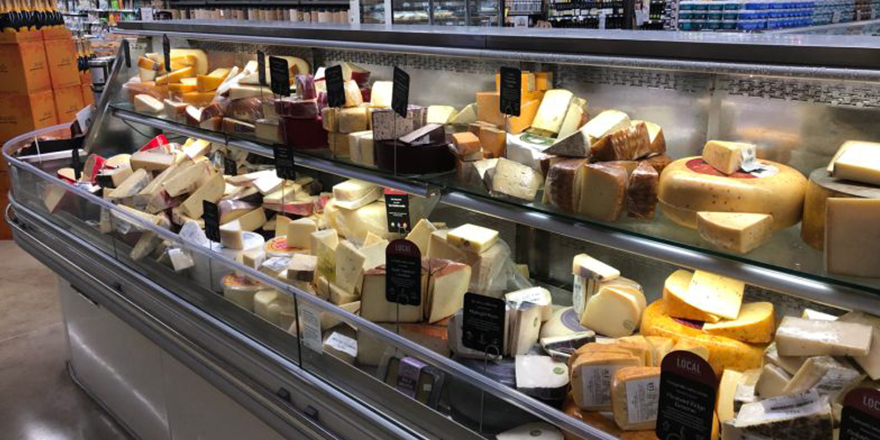
The feeling of returning to normality comes with a number of new challenges. These global challenges affect all of our agriculture systems and our farmers. The challenges we are facing are:

  • Two weeks before the CSC took place, Russia invaded the Ukraine.
  • Dealing with the aftermath of the world being shutdown for two years from Covid, and the damage this has caused to our respective supply chains.
  • The implementation of Brexit and creation of new Free Trade Agreements with countries.

These large challenges were common themes to all of our discussions during the conference.

How do we navigate this new world from Norfolk?

We also spent a significant amount of time at the Norwich Research Park which is home to pioneering research and solutions to some of the world’s biggest challenges including; food shortages, an ageing population and climate change. The perfect place for us! Here we tackled some big questions from potential meat free days to water shortage.

Innovation in agriculture in Norfolk can be seen at the Food Enterprise Park where Fischer Farms has begun work on a £25m project to build the world’s largest vertical farm. The vertical farm will be 25,000sqm of stacked growing space for salad leaves, herbs and other fresh produce for supermarkets.

Fischer Farms claims they will be able to produce the same amount of food in its four-acre building as would be possible on 1,000 acres of conventional British farmland. What does this mean for conventional British farming? The question becomes, is there room for both and how do they co-exist? This is what Tristan Fischer (CEO of Fischer Farms) tasked us with designing a solution for.
Tristan Fischer, CEO of Fischer Farms

Learning from other scholars

I greatly valued learning from the other scholars on the challenges they face in their countries with agriculture. It was heartening to hear that we face similar challenges. However, having read through other Nuffield reports these challenges were already recognised 5-10 years ago.

One example is the vegan movement, which is getting worse and there is now a greater level of activism amongst vegan and environmental groups who appear to have coalesced in some areas (including the UK).

If this is a sign to come, then in New Zealand we really need to be thinking how we can reduce our rural-urban divide. How do we encourage more participation in our agriculture sector? Is there a role for data here? This will lead me through to the rest of my research on data interoperability and the value of data.

Thank you to Rural Leaders and all those who support Nuffield for enabling us to travel to Norfolk and come together as a global community to address some of our big challenges in the sector. The experience and what I have taken out of it is invaluable, including all the new friends I have made.

Ngā mihi nui.

Parmindar Singh: 2022 CSC Insights – Norfolk, UK

Parmindar Singh- 2022 Nuffield New Zealand Scholar

Background

The 2022 Nuffield Contemporary Scholars Conference (CSC) was held during March 2022.  Nuffield 2021 and 2022 Scholars travelled from 15 countries and were hosted in Norfolk, UK.  Prior to our departure in March the New Zealand Government announced their plan to relax border restrictions, welcoming New Zealand residents back to New Zealand.  With this announcement we had the opportunity to attend the CSC in the UK and represent Nuffield New Zealand. 
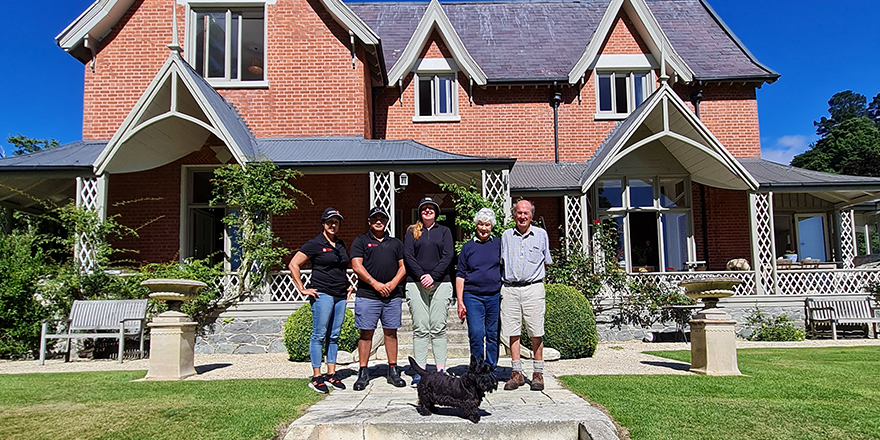
Pre-conference, Lucie Douma and I spent time with Nuffield Scholars David and Christine Hill in Norwich. David and Christine introduced us to agriculture to Norfolk, where we visited their arable farming business, visited friends of the Hills who were dairy farmers in the village and toured the local town and village getting an insight into farming in Norfolk.  David and Christine shared with us their farming and family history and the challenges the UK farming sector was facing.  

Farms in the Norwich area consisted of generational farming with long-time family connections to the land and estates. Larger estates like Holkham Hall consisted of variable farming and commercial enterprises and considerable land ownership. These estates are well recognised in the UK, along with their family ownership and heritage and in some circumstances their association to the House of Lords. 

The UK Farming Situation: March 2022

The Russian invasion on Ukraine, has created a global humanitarian crisis.  In the UK, it signified the immediate concern for food security and the additional pressure on farmers who had already been challenged over the past two years.  Spiralling input costs were front of mind, particularly with wheat, fuel, energy and fertiliser costs.

Russia’s significant control over the supply of gas though the UK and the EU, imposed not only an increasing input cost on farm, however also increasing household and living costs.    General conversation with the UK public, posed an anxious population with the on-going impact of covid-19 on businesses and the additional pressures from the Russian invasion on the Ukraine.  It was interesting to note, that although the general UK population was sighting increasing food costs in the supermarkets, when comparing UK super market food costs with New Zealand super market food costs, it appeared that the cost of food in the UK was significantly less that the cost of food in New Zealand.

Additional changes in agriculture in the UK also reflect the transition from the long-standing EU scheme of agricultural subsidies (Common Agricultural Policy [CAP]) to the phasing out of the subsidy scheme with the exit of the UK from the EU. Post Brexit, the UK is navigating the challenges of staff shortages and increasing costs of production (which are likely to see the cost of local produce continue to increase), creating additional pressure for UK farmers.

Regenerative Agriculture was a topic discussed often and referred to as an opportunity to restore soil health and the quality of waterways, whilst reducing greenhouse gas emissions and enabling a healthy ecosystem; expanding the conversation of the global environmental challenge.

UK dairy farmers also expressed the increasing pressure and scrutiny they were facing from the public on environmental and animal welfare issues.

The CSC Agenda

The CSC agenda included presentations from agricultural leaders, identifying agriculture and the food of the world, British agriculture in a global setting, the impact of agriculture on climate and the global environmental challenge.

The all-important health, safety and wellbeing also featured on the agenda, with some real-life take-home messages and scenarios.  A visit to the Norwich Research Park, highlighted the research and innovation undertaken in searching for solutions to worldwide challenges in food-related disease and research into plant sciences and species. 

We also visited the Norwich Food Enterprise Park.  This park has been created to encourage and support food production, processing and agriculture through co-location of commercial enterprises. Our visit to the park provided us with an opportunity to participate in a small group activity to come up with solutions to challenges four businesses in the park were facing.  It was a great way to learn about real case scenarios and learn about a group of diverse agricultural businesses. 

A visit to Houghton Estate and Dairy was enlightening, hearing from two enthusiastic farmers about their journey.  Holkham Hall & Estate, was the final destination in Norwich.  Holkham was somewhat surreal, with history dating back to the 1600’s and a family estate that was built for the 1st Earl of Leicester in the 1700’s.  The Estate consists of 25, 000 acres, with business ranging from agriculture, holiday park, retail to property development. 

The final few days of the conference were spent in London, with a visit to the Houses of Parliament and a celebration to mark the closing of the CSC Conference with a Gala Dinner. 

Group photo Nuffield CSC 2022

Learning from Global Scholars

The CSC offered the opportunity to engage with global agricultural leaders.  Learning from other scholars about their country and their agriculture was a highlight.

Such a diverse group of agricultural enthusiasts, ranging from: cows, camels, poultry, crocodile, pigs, vineyards, horticulture, bees, deer, sheep, flowers, arable, sheep and beef to agricultural service and technology providers and developers (no doubt there was more).  From the opening of the CSC on March 7th to the closing of the CSC March 14th, each day, a country group would present agriculture in their country.

Learning about how countries engage in agriculture and listening to the proud country men and women talk about their work and their countries work back home, was a great start to every day at the CSC.  

NZ Farming vs UK Farming

UK is farmed according to landscape, water availability and weather/climate conditions much like NZ.  Norwich for example consisted of predominantly arable farms, with variable crops (dominant crops included: wheat, oilseed rape and sugar beet) and forward negotiated contract agreements.  Arable farms consisted of large fields and it was interesting to note that some fields were planted with more than one crop simultaneously. 

Although the EU is recognised as a leading exporter of Dairy alongside New Zealand and the US, the UK was not seen as a leading exporter of dairy, conversely more of a domestic producer.  New Zealand exports more than 90% of domestically produced dairy products and revenue exports contribute significantly to the New Zealand economy.  The UK reports significantly less contribution to its national economy from its agricultural exports.

Across the UK, dairy farming appears to be more predominant in the South.  As with NZ, some dairy systems are more complex than others and weather dictates the type of dairy system applied.  The dairy farms we visited in Norfolk, housed their animals in barns, which appeared to be the dominant form of dairy farming system applied in this particular region in UK. 

New Zealand Brand Reputation

CSC participant and fellow scholar feedback consistently focussed on a global perception of New Zealand producing premium agricultural products, with a focus on grass fed and an organic style of farming where products can be traced back to origins of a country that cares about their environment and animal welfare.  “New Zealand punches above its weight”, was a consistent and humbling message from many fellow scholars. 

My insight from the conference and travel, was that New Zealand is profound at producing premium quality food.  Globally we are viewed as leading in all thing’s agriculture and we are seen as a country who cares about environment factors and animal welfare.  We have a great story to tell, and we are getting better at telling it! 

Lucie Douma and Parmindar Singh reporting from abroad.

After a two-year hiatus courtesy of the Covid-19 pandemic, the Contemporary Scholar Conference (CSC) finally took place this year, in Norfolk, UK. Lucie Douma and Parmindar Singh, 2022 Nuffield Scholars, attended and reported back on the event and their travels. The following article brings together these reports.  

As part of their scholarship programme key milestones, they also compiled a brief insight work report.

Follow the links to read Lucie and Parmindar’s Insights Reports.  

The 2022 Nuffield Contemporary Scholars Conference.

“Lucie Douma and I represented New Zealand this year. The Contemporary Scholars Conference was a great way to start the global aspect of our Nuffield Programme. The Conference provided an opportunity to meet global agricultural enthusiasts and build new network of connections,” says Parmindar Singh. 

“Our hosting region, Norwich, is predominantly arable farming with notable long time family estates. The landscape, climate and access to water very much determines land use and production. 

“Before the CSC, Lucie and I were very generously hosted by Christine and David Hill. David is a Nuffield Scholar who is still very active in the Nuffield community. David travelled the world to study biotech crops. His wife was a science teacher and very involved in agricultural education and research and is also actively involved in several Norfolk organisations working in this filed. They manage their 500+ha arable farm. 

“David and Christine showed us around their neighbourhood, we visited a local dairy farm and learned about the Hill’s arable business and family history,” shares Parmindar. 

Sharing New Zealand with the world.

New Zealand, our farming systems, and the positioning we have on global markets was part of virtually every conversation Lucie and Parmindar had at the CSC. This was driven in some part by a presentation Lucie and Parmindar gave to those attending. This was a brief overview of the New Zealand food and fibre sector. 

“At the start of each day of the CSC, representatives of all participating nations were asked to share a short presentation of the agricultural sector in their respective countries. In all cases the ten-minute time limit was not enough, and we were no different,” shares Lucie. “For our presentation, Parmindar opened with our values and understanding towards agriculture and how we incorporate the principles of Whakapapa and Kaitiakitanga.  

“I did the second half of our presentation and covered the key statistics of farming in New Zealand and shared our vision of fit for a better world.” 

Parmindar adds, “ Learning from other scholars about their country and their agriculture, was always a highlight of the day. To be given the opportunity to explain more about what we do here at home was a time for reflection on how proud I am to be a New Zealand farmer.” 

The CSC business hackathon.

One of the initiatives included in the conference programme was the so called “business hackathon” where each group of scholars visited four different businesses over one day. 

“The visits started with a 20-minute induction about the business followed by a specific challenge. Then as a group, we had to come together with a result – a solution to the challenge. We then had to present this to our hosts at the end of each session,’ explains Lucie Douma. 

“It was an interesting way to get to know more about some of the notable businesses in the region. I really enjoyed the exchanges we had during the hackathon with the other scholars and the local business community,” adds Parmindar. 

Two years’ Nuffield Scholars get together.

This year’s conference was the first after a two-year hiatus caused by Covid restrictions around the world.  

“It was great to have two years combined – instead of having 60 or 70 people, we had 140. Also attending were the 2020 UK Scholars and we got to meet some of the alumni,” recounts Lucie. 

Parmindar agrees, “All in all, CSC was a full-on conference, where we had the opportunity to meet passionate and enthusiastic global agricultural leaders.   

“Many scholars commented on how New Zealand punches above its weight and has created a name for itself as a premium agricultural production powerhouse. It seems we are known as a small country with a notable place in the premium agri-products market. 

“We also touched on many global issues around climate, water, and soil management along with political tension particularly with Russia’s invasion of Ukraine and the associated concerns for global food security. 

“We’ve both been reflecting on the last few weeks and feeling very privileged to have had the opportunity to engage with whanau from across the globe! Thank you Nuffield New Zealand, the CSC in Norfolk was invaluable,” concludes Parmindar.

Lucie’s post-conference travels: North England, Scotland, Shetland Islands, Norway and the Netherlands.

After the CSC, Parmindar travelled back to New Zealand to organise further travel plans for later in the year, while Lucie had the opportunity to further explore the United Kingdom and Europe. 

She went to Wales, where unfortunately she tested positive for COVID and had to spend a week in isolation – giving her time to reschedule her itinerary.  

“I went up through Northern England to The Lakes District and spent some time with farmers in Cumbria, and North Cumberland.  

“What really struck me is that people were facing similar issues to what we do in New Zealand. Almost all farmers who have similar systems to us, are facing the same challenges with labour access and input costs. It’s a global problem, not a localised one. 

“In Scotland, I visited Angus Soft Fruits. These growers supply 15 to 20% of all the fresh berries to UK supermarkets. It was interesting to talk to them and hear about the challenges they face with Brexit, and what they are doing to secure the labour they need to harvest. They need roughly 400 seasonal workers over the main picking period.  

“They have contracts with growers in other countries like Morocco, Spain to ensure year-round berries are available for the UK supermarkets. It was informative to hear how they are dealing with the realities of modern farming,” says Lucie. 

“The next stop was the Shetland Islands – probably the most eye-opening time I had. They farm so differently to us here in New Zealand, it’s a more community-based approach they have built there; where everybody supports each other,” explains Lucie.  

“They don’t have the same labour challenges as larger farming operations do, because they operate as one community, they operate on mutual support – helping each other in times of need. That really came across in my conversations with the people there. They have an active young farmers group  and I had the opportunity to spend a lot of time with them. I really enjoyed that,” concludes Lucie. 

Next on the schedule was a visit to a Norwegian salmon farm. “This is an industry that has risen at pace and scale over the last few decades. The wild salmon population around the Norwegian coast numbers 500,000. This farm has 11 cages with the capacity to hold 1.8 million salmon and there are over 1000 farms in Norway such as this one. 

They are very advanced in some respects. When it comes to data management, similar issues exist around data interoperability of systems as with the agriculture sector. Biosecurity is an important issue for them as well,” adds Lucie. 

Lucie then headed to the Netherlands, but not before experiencing full Norwegian blizzard. 

The Netherlands had a highly advanced agriculture sector. From traditional horticulture and animal farming through to developing new industries, including camel milking.

Land-use change in the Netherlands means incorporating energy production into the systems. Some arable farms where busy building large wind turbines and other farms had solar panel fields incorporated within them. Lucie visited advanced farming barns where the whole rood was covered in solar panels.

“With the Russia-Ukraine conflict, energy production and self-sufficiency has come to the forefront of farming. All farming systems I visited were diversified in some part, and they all had a farm shop in order to share the story of their produce and build strong connections with the local communities,” recounted Lucie.

You can read both Lucie and Parmindar’s Insights Reports here.  

Finding the next Nuffield Scholarship recipients. 

Nuffielders 2022

After recent Nuffield strategic work, the Rural Leaders Team and the NZRLT Board have identified five highly desirable core attributes of a Nuffield Scholar. These won’t come as any great surprise to Nuffield Alumni, but articulating these simply has been a valuable exercise, especially as our 2023 Scholarship search is set to begin. 

Here are the five attributes any scholar selection process will look for in terms of evidence that they exist or have the potential to emerge in an applicant.

Bold

The will to step forward, be willing to challenge conventional thinking, to act, to make decisions with confidence. 

Innovative

Someone who can develop and express original thinking and ideas.

Motivated 

Driven to go above and beyond to accomplish a goal. Someone who can find the energy and confidence needed to do so. 

Perceptive  

Possesses the cognitive, observational, and critical thinking abilities to assess challenges and generate usable insights.   

Community-minded 

Motivated to contribute to community by collaborating and sharing skills, knowledge, experience, and ideas, forging ever-stronger connections with people and place. 

Six Alumni to help with this years’ Scholar search. 

We’re fortunate to have so many inspiring alumni to help us drive this years’ scholar search. We’ll need to represent as many industries as possible as well as show the changing face of food and fibre.  

From the Catlins to Nelson – Scholars photographed doing their thing. 

We set off a on a road trip recently to capture a few Nuffield Alumni – in their natural habitat.  

From a time and budget perspective, travel was kept in the South Island. We hope to make it up to the North Island as well at some stage.

There are still many industries not yet represented – we’ve done our best for now covering: Aquaculture, dairy, sheep and beef, horticulture, agri-business, and more broadly, entrepreneurialism. 

A big thank you to the Nuffield Alumni that agreed to help us with this shoot. Your generosity with your time and the effort you made was greatly appreciated. Those images shown, or some like them, will be used in advertising for the upcoming 2023 search. Here’s a preview.

Kate Scott, 2018 Nuffield Scholar

Kate Scott, 2018 Nuffield Scholar

While much of Kate’s work is done indoors these days, running her business Landpro, she has a background in resource management planning, part of which involves testing water. We wanted to show Kate outside, on the land, doing the work she did when she started her business in 2007.  

Kate balances a young family with work and involvement with organisations outside of work too, such as being Chair of the New Zealand Rural Leadership Trust. 

Julian Raine, 1997 Nuffield Scholar

Julian is involved in both the horticulture and dairy industries. For the purposes of this campaign, we captured Julian in one of his apple orchards near Richmond, in Marlborough. Julian is also partners with fellow Nuffield Scholar Murray King in Appleby Ice-cream.  

One of Julian’s dairy farms was recently recognised by the SPCA for infrastructure aiding animal well-being. He has an eye on the future too, making at least a third of his orchards robot-ready. 

Lynsey Stratford, 2021 Nuffield Scholar

Lynsey is a non-practising lawyer involved in her local rural community. She is a consultant for her business Primary People, which provides people management and development services to the primary sector. 

We wanted to shoot Lynsey out with husband Chris on their dairy farm, situated in a unique part of the country at Curio Bay in Southland. Here, they have also recently covenanted 30 hectares of incredible bushland.  
 

Andy Elliot, 2018 Nuffield Scholar

Andy Elliot, 2018 Nuffield Scholar

Andy is based in Nelson, Marlborough and is Research and Business Development Manager at Wakatū. He is at the cutting edge of aquaculture research and far from being daunted by the need for a lab, he created his own at the Cawthron Aquaculture Park. He is currently developing several projects.  
 
Andy was also recently appointed to the Investment Advisory Panel for Sustainable Food and Fibre Futures. 

Desiree Reid-Whitaker, 2019 Nuffield Scholar

Desiree Reid-Whitaker, 2010 Nuffield Scholar

Desiree is a former dairy farmer who learned the craft of whiskey distillation from some of the world’s best. Returning home to New Zealand, she spent six months finding the right location to build the Cardrona Distillery.  

We wanted to capture Desiree in a beautiful environment loaded with visual clues that she has built everything in the most authentic way, not the easiest way. 

Hamish Murray, 2019 Nuffield Scholar

Hamish farms sheep, cattle, and runs a substantial honey operation at Bluff Station, near Kaikoura. The station is as visually beautiful as it is vast and is run by an exceptional team of people. No surprises there, as Hamish is just as passionate about his own growth as he is about his team’s.  

We were spoiled for choice at Bluff Station, the landscape is a photographer’s dream. The goal was to capture Hamish working – in this case moving cattle.

2022 Nuffield Scholar Induction and tour of Canterbury Alumni.

From on the same Zoom to in the same room.

Selected as 2022 Nuffield New Zealand Farming Scholars in November 2021, Lucie Douma, Parmindar Singh and Anthony Taueki, finally got to meet face to face recently.

The two-week Lincoln induction got underway in late January and provided the scholars with their first real opportunity to spend time together and to prepare for the year ahead.

As Parmindar explains, “Our Nuffield journey really begins now. We had a few conversations since receiving our scholarships and had engaged through Zoom meetings, but finally meeting face to face was truly awesome.”

Lucie Douma, recently appointed Covid Recovery and Supply Chain Manager at the Ministry for Primary Industries, recalls a significant work-related event marking the beginning of her Nuffield induction at Lincoln.

“The 2022 Nuffield Programme kicked off with a bang, with the announcement of community transmission of Omicron the day before we were due to arrive at Lincoln. Nothing like a bit of excitement to get us started,” recounts Lucie.

Parmindar recalls her first day in Christchurch. “The media skills training got us working hard on our first day – after a 4am start to get down to Christchurch. It was a busy few hours on day one, with a valuable in-front-of-camera exercise designed to sharpen our ability to deliver key messages, clearly and succinctly – a lot harder than it sounds.”

After bravely volunteering to be the first to have a go at the practical interview exercise, Anthony agrees, “I’m really at ease talking to people in all kinds of settings. This is the nature of my work as a regional coordinator and Kaiako (teacher, instructor) at Tū Te Wana, Fruition Horticulture. But I was surprised at how difficult it could be to talk in front of the camera.”

“My first words as I sat for the practical exercise were, “Oh man, this is going to be hard. But we got there.”

Leadership at Lincoln.

Next on the schedule were a number of sessions on Lincoln campus.

For Parmindar, taking part in elements of the Kellogg Programme was an opportunity to get to know her fellow Scholars. “It was great to hear from Primary Sector leaders together and to learn from a range of highly skilled and engaging Kellogg facilitators and guest speakers.”

“We spent a fantastic first week learning about our core drivers on our leadership training and along the way getting to know the scholars on the Kellogg Programme running at the time (K46). The theories and practical sessions were the perfect prelude to the second week, out on the road”, adds Lucie.

In between Kellogg sessions, media training, and induction, the 2022 Scholars had an in-person meeting with James Parsons on strong wools. For Parmindar, it was also inspiring to hear about James’ leadership pathway after Nuffield. She also notes the video calls with Nuffield and Kellogg Scholars, including Kate Scott, Tom Lambie, and Andrew MacFarlane from Blinc Innovation. “All of these conversations made this induction a stimulating and thought-provoking time.”

The Nuffield Alumni road trip.

The induction also included a road trip, designed to help scholars build broader knowledge and give a current context of the primary sector – while also sharpening observation skills.

For Parmindar, the road trip was the highlight of the induction. Parmindar is a Waikato dairy farmer, also involved in a number of business and community organisations.

“Spending time together as a cohort off campus, meeting with incredible Primary Sector leaders, passionate about what they do, what their people did before them and growing and developing the people in their businesses now.”

“We met with Nuffield Scholars as business owners, who welcomed us, shared their knowledge and experience, and encouraged us to step up on our Nuffield Scholarship journeys. Special thanks here to Craige Mackenzie, Ben Todhunter, and to Rosemary and John Acland for sharing so much with us in the stunning setting of Mt Peel Station.”

Anthony echoes the sentiment, “We had an awesome time catching up with Hamish and fellow tohunga. Being immersed in the wealth of knowledge and history by all was awesome. It allowed us to have a better understanding of the land and history across multiple sectors, which helps us define and mold our research topics.”

What’s next for these Nuffielders?

Despite the uncertain times, the three scholars remain upbeat, and all feel the sky is the limit.

“Being a Nuffield Scholar comes with great privilege and responsibility. We are committed to learning, creating impact, and giving back to the sector that has done so much for us all,” says Parmindar.

Lucie is already planning the next trip. “We are now busy planning for the year ahead with the announcement of the border opening and being able to partake in the Contemporary Scholars Conference in Norfolk, in early March. Watch this space.”

Parmindar and Anthony acknowledged that none of this was possible without a strong and connected team and community to make a programme like this successful, particularly during these challenging Covid times.

“We want to thank everyone for their generosity of time and information. New Zealand is lucky to have such an incredible farming community. We also want to sincerely thank Rural Leaders for being so agile and committed in an ever-changing Covid world,” said Lucie.

For the team here at Rural Leaders it was pleasure meeting this new group of scholars and facilitating the first phase of their Nuffield journeys. We look forward to sharing more in the months to come.

Doing better by our people.

There are figures on our primary sector’s labour transience that make for alarming reading. They’re remarkably high. In case you missed them, only 29% of those entering the primary sector remain after three years.  

While factors behind the statistics are complicated, one of the simpler, often cited reasons for leaving the sector is poor workplace culture. That falls strongly into the preventable turnover basket. And preventable turnover equates to 78% of total dairy transience, meaning four out of five people who have left the sector, might’ve stayed, had we done better by them.  

Bad news, old news, good news.

It’s not just farm workplaces buckling culturally under today’s stresses either, it’s large agri-businesses too, with allegations of poor management, and unaddressed toxic cultures more common than they should be. 

In both small farms and in larger business, failure to fix a problem culture can lead to performance issues and the destruction of the relationships with the people and teams helping those operations succeed. That’s the bad news. It’s also old news and too big to wrestle with here. So, we’ll offer a couple of pieces of good news about a few people trying to make a difference instead. 

Individual farms are now leading change, enthusiastically embracing management thinking from other industries. Farm owners, exposed to high performance ideas and practises bring their learning back home, to the farm. Couple this with a wider acceptance of wellbeing philosophies (previously known as ‘that touchy-feely-stuff’) and you have individual farming operations reporting much needed decreases in staff turnover. 

Rebecca and Brent Miller: Kellogg Scholars making changes. 

At the heart of what Rebecca and Brent Miller do lies a simple idea, if you work on yourself before you work on your team, good things will follow.  

Rebecca has just won ‘Emerging Leader’ at the 2021 Westpac Champion Business Awards. It’s an award that recognises performance across all industries, not just the primary. The award blurb states, ‘recognising a leader who is ambitious in outlook and vision, one who embraces innovation, shows resilience, and who inspires and invests in others.’ All good things, so it’s worth taking a closer look for ideas worth sharing. 

“What we stand for, our values, our negotiables, and non-negotiables, are all important for us, our team, and our farm. Everything comes down to knowing our strengths, weaknesses, and how we’re likely to contribute within a collaborative framework.” 

The school of hard knocks. 

Fifteen years ago, sharemilkers Rebecca, Brent, and their young children, were at a crossroads. It’s a familiar dairying family story, 2:30am to 7:30pm, 28 days on, two days off, moving between farming positions constantly and far too many tricky experiences with farm owners – their employers. They were on the brink of breakdown. All bets were on leaving farming forever.  

“We thought something had to give. But then you realise all your skills are in dairying. It was all we knew. So, we decided to stay and really reflect on what it was we needed from our next employer.”  

“We researched farm owners who supported, coached, and mentored their staff. We knew that if we were to stay in dairying and grow, we had to find the right environment for that to happen. Sadly, at the time, they weren’t easy to find – but eventually we did.” 

“We’d put business first at all costs in the past and that approach wasn’t working for us. We now knew it had to be family first.”  

Building the trust.

The Millers found an employer who opened their books, allowing them to benchmark against over a dozen farms in the owner’s network. The power of knowing ‘the numbers’ meant better decisions could be made, and efficiencies found by gently applying the right pressure at the right time. This sharing quickly built trust between themselves and the owners.  

“Passing that on and taking care of our team, seeing them grow and succeed, became a priority for us too. We have learned that as leaders of a team, the environment we provide on the farm, the behaviour, the way we share, interact, the words we use, the decisions made, and by who, are just a few of the factors in a high trust, high-performing and connected team.”  

The Millers strongly believe in the idea of sharing what they can to help others improve their on-farm methods and culture too.  

“MilkIQ is a platform for achieving that. It’s fuelled by a passion for people and driven by a desire to help them succeed.”  

With MilkIQ the Millers have just gone out and said ‘hey, this is who we are.’ “It’s a wellbeing tool, hopefully demonstrating trust in practise.” 

Hamish Murray Bluff Station Nuffield

Hamish Murray: A Nuffielder making changes. 

In a Farmstrong article from earlier this year, Nuffield Scholar and high-country sheep and beef farmer, Hamish Murray, also acknowledged the importance of his own journey. He spent a year on his Nuffield scholarship studying businesses with high-performing team cultures, including time in Silicon Valley, and in Christchurch with the Crusaders Rugby Team. He observed their continued focus on ‘soft skills,’ and shared values. 

“Soft skills are things like the way you communicate, make decisions, reflect and feedback. If you understand each other [other’s styles], you can combine to make good decisions.” 

“We’ve also done an exercise with our team to agree on what values will drive the decisions in our business. It’s empowering everyone to move forward, and it allows me to stand back and let the others lead.” 

The results speak for themselves.

Hamish is confident this approach is paying off. One good indicator has been a reduced staff turnover. Hamish acknowledges how important it is to create an environment that allows others to flourish and one that attracts and keeps great people. A big part of that he says, is letting your ego go, getting out of people’s way and asking the questions that help others do an excellent job. To do that he says, you have to work on yourself first. 

“Sometimes it’s not until you get to breaking point that your own learning and reflection kicks in. The journey for me started at a real low, but now I look back and think I’m incredibly lucky to have had that experience.”  

Hamish is referring to the stresses created by the Marlborough and Canterbury drought of 2014/15.  

“Trying to keep everyone going when you had no control over anything was so draining … we ended up with stock on fourteen different properties. The support I’ve had from my family and my team, the groundwork we’ve done together has really given me the confidence to keep learning and growing our business.” 

It starts in your own back paddock. 

Rebecca, Brent, and Hamish have shown that one small, first step toward keeping people in primary sector, in a ‘start in your own backyard kind of way’ has to be toward yourself, then to your own ‘FarmilyTM,’ your rural community, and beyond to industry. Rebecca adds, “What we can control first is our own behaviour. When our behaviours are good, we allow others to be the same and we start creating that change.” 

Rebecca Miller did the Kellogg Rural leadership Programme in 2018. Her study topic was: Is there a need for an information platform to collaborate primary sector events? 

Brent Miller, Rebecca’s husband, did the Kellogg Programme in 2020. His study topic was: What is the true cost of transience to the New Zealand dairy industry? 

Hamish Murray is a 2019 Nuffield Scholar. Hamish’s research was Future farm workplaces. It investigated the work environment needed to attract and retain people in the primary sector.


Inviting expressions of interest in a Board Trustee role.

Inviting expressions of interest in a Board Trustee role.

The NZRLT is currently seeking expressions of interest from Nuffield Alumni in a Board Trustee role, beginning January 2022.  

Former Chair and incumbent Trustee, Andrew Watters is due to step down creating a rare opportunity to be involved in primary sector, education, and leadership governance.   
 
As part of a forward-thinking group of industry leaders, you will be supporting the NZRLT and its vision to grow world-class leaders for our country.    
 
This is a voluntary position and encompasses a four-year term. The role requires a time commitment of five board meetings annually, and three full days for the Nuffield Scholarship interview, selection process and awards.  

If you would like to express your interest in this opportunity to give back to rural New Zealand and contribute to building our country’s leadership capability, please send your CV and cover letter to Chris Parsons, NZRLT CEO, at chrisparsons@ruralleaders.co.nz 

Or, if you would like a confidential discussion, please call either Chris Parsons on 021 779 272, or NZRLT Chair, Kate Scott on 027 495 7486.  

Expressions of interest close Friday 26th November 2021. 

The new Trustee will be appointed prior to Christmas, and in time for the first board meeting in late January 2022.  

Mel Poulton: Insights from a Special Agricultural Trade Envoy.

Mel Poulton

Mel Poulton: Insights from a Special Agricultural Trade Envoy.

2014 Nuffield Scholar Mel Poulton is someone with a unique perspective. Well, two really. As both a food producing farmer and New Zealand’s Special Agricultural Trade Envoy, we asked Mel to share her perspectives on trade, Nuffield, Brexit, and an industry grappling with significant global challenges.

Question: What do you do in your various roles?

Mel Poulton: In and on my farm business, I’m on both sides of the farm gate. I do anything from stockwork to bulldozing, to making all the decisions required to run a business. 

In the Special Agricultural Trade Envoy (SATE) role, following my appointment, border closures and a vastly different global operating context, have meant changing how the role is delivered. It’s a two-pronged approach with an international and a domestic focus, mixed with face to face and virtual engagement.  

I’ve been more purposeful working with the world here in NZ, by way of direct engagement with the International Diplomatic Corps here (they are the eyes, ears, and influencers of their nations in NZ). This engagement includes taking Ambassadors on x-sector farm tours, hosting Diplomatic Corps meetings, and meeting with them one-to-one, or with industry groups. I am also working internationally on virtual platforms, speaking on panels, webinars, or virtual meetings with farmers, and private and public sector organisations.  

Covid has provided opportunity for me to invest more time and effort with NZ sectors (all food and fibre – except Forestry and Fisheries). My background is the sheep and beef sector, but I put a high priority on building a greater understanding of the other sectors I represent as well. I use these insights when engaging with each of the sectors, government, and the world.  

Helping NZ food and fibre producers broaden their understanding of the global and domestic context is a priority too. Both behind and beyond our farm gates.  

Q: What changes have you seen since being in your SATE role?

MP: Quite a few things.

Trade negotiations. 
Trade negotiations, particularly the New Zealand-UK Free Trade Agreement (FTA), have been the fastest progressed trade negotiations in New Zealand history to get to Agreement in Principle – so I’ve been told. Much of this negotiation has been done virtually, also a first. This will change the way trade negotiations occur in the future. A lot less travel overall.

Farm subsidies. 
Direct and indirect farm subsidies in large economies, such as the USA, have increased exponentially. People may argue they have already exceeded agreed WTO thresholds.

Growing distrust. 
There’s a growing distrust of governments in the democratic world. Governments need to work on their social licence to operate. Social licence is not just a thing for food producers.

Supply chain vulnerability. 
Just In Time (JIT) delivery has been exposed for its supply chain vulnerability in this global pandemic. Economies and businesses will now be building more capacity in their value chain system. This will mean a more conservative approach to exports and imports, to withstand the volatility, uncertainty, complexity, and ambiguity (VUCA) in the world of trade, market access and freight.

Nevertheless, nothing beats high trust and long-term government to government, business to business, and people to people relationships across the world. New Zealand has optimised these relationships throughout the pandemic to utilise market diversity for navigating trade, market, and supply chain disruption.

For example, Covid19 related trade agreements to secure medical imports and food exports. As well as digital certification for export products, through to relationships that our major exporters have with freight companies, importers, and international customers. The last 18 months haven’t been easy, but these strong relationships, and diversity of markets, have shown their worth to New Zealand.

Food security. 
Economies are moving from thinking about food security, to actively putting mechanisms in place to secure their food supply in a pandemic disrupted system, e.g., green lanes in Europe. There’s also a slow nuanced shift from food security to nutritional security taking place.

Regulatory pressure. 
Farmers and food producers in New Zealand and around the world are wrestling with the multi-layered challenges of regulatory pressure (particularly on the environmental and climate change fronts), as well as market volatility, and Covid 19 induced uncertainty. This is increasing farm input costs and diminishing the tools available for farmers to use to produce food.

As an example, farmers in Europe have real fears about their ability to produce the volume of food required to stay viable and maintain food security. The new farm to fork strategy in the EU is deliberately shifting organic food production up to 25%, with rules to reduce synthetic fertiliser by 50%. Glyphosate use is under threat too. In some places farmers can’t use it (I note in New Zealand, the EPA is currently undertaking a review of Glyphosate use). There’s major transformational change happening in Europe.

The rush of multi-layered change gives a sense of exponential pressure. Farmers all over the world are feeling exasperated, frustrated, misunderstood and under siege. All the same, if there is anywhere in the world I would rather be farming right now, it is here in New Zealand.

We’ve navigated major challenges in the past, and when farmers look at the change they’ve implemented on their farms over the course of their careers, or in the intergenerational businesses they are running, we can take confidence in the fact we are already change agents.

A uniquely positioned New Zealand. 
From a New Zealand food producer’s perspective, farmers here are uniquely positioned. Without subsidies, we aren’t dancing to someone else’s tune in quite the same ways as farmers receiving subsidies elsewhere. There are two sides to this. On one hand we’re not being bailed out at the next threat, but we also get to take full responsibility to master the destiny of our businesses. So, we have an ability to create workable solutions in a way that keeps our businesses competitive globally.

With an innovative, integrated systems approach, we can create solutions to challenges like reducing our global warming impact, improving native biodiversity and water quality, while producing high quality, safe, nutritious food – delivered with integrity.

In New Zealand we have an industry ecosystem focussed on helping farmers create and implement solutions. Our research centres and academic institutions, both provide science and knowledge, and help support farmers crack real challenges. There are the easily accessible service providers, and the folk in Government ministries – who are in the teams working hard on trade negotiation to ensure the best possible outcomes for access to markets, and on removal of tariffs and non-tariff barriers to create a level playing field for New Zealand. Let’s keep it that way.

This ecosystem enabling success is our major competitive advantage in the world. We’ve really got to leverage this and remember we’re all on the same team.

We must not be paralysed by fear, but instead celebrate what we’ve already achieved throughout our farming careers and take confidence that we can use our whole systems thinking to improve what we do for our natural resources, our people, businesses, and our nation.

Q: What links between International Trade and International Policy have you seen, with direct and indirect implications behind your farm gate?

MP: Let’s summarise how it works first. There are recognised global challenges. Then international forums are established to address these challenges, leading to international commitments made by member states (different nations).  

Examples of this include United Nations Sustainable Development Goals (SDG) and the Paris Accord on Climate Change. Some international commitments are legally non-binding. But where it applies to the WTO (World Trade Organisation) they are often legally binding.  

Once those international commitments are made, each economy, member state, or nation must determine its own policy and regulation to deliver on its commitments. That gets shaped up (with some consultation in the process) and is rolled out by the government of the day, and folks like us everyday people have to make it work on the ground. The Government then reports back to those international forums, or institutions, on what our progress has been against the commitments the Government made. COP26 is an example of this. 

Given New Zealand’s economy is so internationally exposed and dependent, we need to be at the international table to maintain influence.  

But to have influence we need to have integrity and demonstrate action. So, these international commitments have been drivers for shaping NZ Government policy on Sustainability and Climate Change. Examples here are the New Zealand freshwater regulations and climate change targets. Both resulted in changes on my farm, and on farms all over New Zealand, which is increasing costs and could reduce revenue for some.  

If we do it right, there could also be opportunity to reduce costs and increase profitability. It will be different for every business. The bottom line is that financially there’ll be change, so we need to reconfigure the financials for a new shape to our businesses. Easier for some than others, and not all will be the same. 

The environmental, social, and economic outcomes are significant across NZ, and underestimated. In some cases, we might secure a market premium for this work, though there is no guarantee what we’re doing delivers a premium to food producers in New Zealand for all products in all markets. I have more confidence this work will enable us to obtain and maintain market access to customers.  

This is where the work of our trade negotiators, ensuring a level playing field in market, is so critical for ensuring the changes we’re making here in NZ don’t make us uncompetitive on the international market. I’ve seen their tireless, relentless work, day, and night, to get the best possible outcomes for New Zealand. Many of these negotiators are the hidden superstars of our food and fibre ecosystem.  

What is going on in New Zealand around environment and climate change is often a focus of interest from others in my international engagements. I talk about what these regulations and targets mean for me, and what I am investing in to address the challenges in my farm business, alongside promoting what other farmers from the different sectors are doing in New Zealand. I also give a clear message that much of this cannot be done quickly when taking a whole systems approach. Effective change takes time. Farmers the world over get this.

Q: How do you think Brexit will play out for New Zealand trade? The obvious and not so obvious.

MP: The choice of the UK people and UK parliament to pursue Brexit is forging transformational change for the UK food and fibre sector. The transition period will take 15 to 20, even 30 years to find a new equilibrium. Like the 30 years it took New Zealand to find equilibrium when agriculture subsidies were removed here.  
 
This change requires a culture shift in thinking about UK farm business structures, their subsidy system, domestic policies, and rebalancing their trade and export portfolio beyond the common market, to a global market. Add major geostrategic inflection points in trade and security, affecting us all, and you have a UK trying to position itself as a global strategic leader.

Its focus in the Asia-Pacific region, particularly regarding the FTA’s it is currently negotiating with Australia and New Zealand, along with its formal request to join the Comprehensive and Progressive Trans-Pacific Partnership (CPTPP), all highlight the trade and security opportunities and challenges it perceives.  
 
So, building more structure into the relationships of allies like New Zealand and Australia by way of FTA’s is an important part of their process to find their new place in the world. This is providing new trade opportunities for New Zealand, subject to the NZ-UK FTA and their accession to the CPTPP. 
 
In the future it may create more competition in our export markets too. It will also create opportunities for more collaboration on the global stage, especially where we align with the values and perspectives that matter to both economies.

Q: What does New Zealand need to do more, and less of, now and in the future?

MP: Because our food and fibre sector is orientated to international markets, we need to continue to pursue being the best we can be. This means achieving optimal standards, positioning ourselves to have the best integrity, facts, processes, and story for all the concerns that governments, markets, customers, and consumers may direct at us.  

Whether these be from the position of protectionism or not, we still have to give ourselves the best chance of capturing opportunity. So, concerns about animal welfare, food safety, or environmental stewardship, e.g., water, soil, biodiversity, chemical and fertiliser usage, climate change, labour, the list goes on. These are the things we need to keep improving to position ourselves to open as many doors as possible, and to keep flexibility, adaptability, agility, and economic viability open to us.  

We have already demonstrated plasticity through this pandemic, and we need to fully embrace a plasticity approach in our lives, our businesses, and how we engage with the world.  

We need to be able to maintain our essence and values, while changing and reshaping the way we live, do business, trade, and collaborate with others, as we all grapple with significant global challenges.     

Q: How has doing a Nuffield Scholarship helped you?

MP:   The Nuffield Scholarship has been an important part of my personal and professional development. It’s been a stepping-stone for doing what I do now, on and off farm. The international networks, the doors of opportunity opened, the domestic and international insights as well as the ‘aha’ moments. These all contribute to my thinking, conversations, and ideas on the farm and in the world of trade.  

That said, and without taking away from Nuffield, the older I get and the more I learn, it seems the more questions I have and the more I need to learn. 
I’d like to encourage all readers to keep that hunger to learn, take some confidence from the change we’ve already made on our farms, in our businesses and our whole industry with our systems thinking.  

Let’s keep doing what we do best – producing top quality food and fibre to the best of our abilities.  

Optimising all we do with high standards, care and integrity for our environment and natural resources, our people, communities, and for the economic viability of our businesses and nation. 

Balanced with humility, we need to be able to hold our heads high and have pride in who we are and what we do. Keep being the best you can be. 

Download report
Read Mel Poulton 2014 Nuffield report “Capturing value.”

2022 Nuffield New Zealand Farming Scholarships awarded.

2022 Nuffield Farming Scholars

2022 Nuffield New Zealand Farming Scholarships awarded.

Three emerging food and fibre sector leaders have been awarded 2022 Nuffield New Zealand Farming Scholarships. Each has received a personal letter of congratulations from Hon. Damien O’Connor, Minister of Agriculture, Minister for Trade and Export Growth, Biosecurity, Land Information, and Rural Communities.

The New Zealand Rural Leadership Trust (NZRLT) is proud to announce the 2022 Nuffield New Zealand Farming Scholarship recipients. The Scholars are:

Parmindar Singh, a Waikato based Dairy Farm Manager, Company Director, and a recent master’s graduate. 

Anthony Taueki, a horticulturalist from the Hawke’s Bay, leads horticulture courses at Fruition, New Zealand Apples and Pears, Tatau Tatau o te Wairoa, and many more.

Lucie Douma, leads a new team at the Ministry for Primary Industries (MPI) looking at disruptions to domestic food and fibre supply chains, and primary sector COVID recovery.

Chris Parsons, NZRLT CEO said, “This group comes from the most diverse range of backgrounds we have seen in recent times. Each Scholar brings talent, passion, perspective, and a track record of performance. Their job now is to find insights and foresight to benefit our sector.

“We wish to acknowledge all those who applied. It is safe to say, there is some real talent in our regions. Selecting three Scholars this year has given our Trustees and the Industry National Advisory Committee the opportunity to fund the start-up of an exciting new programme, the Value Chain Innovation Programme. The intention will be to return to selecting five Scholars again next year”, said Parsons.

Covid 19 restrictions mean this year’s scholarship recipients’ formal awards ceremony at Parliament, will be delayed until February 2022, when Minister O’Connor will award the scholarships in person.

2022 Scholars will follow last year’s travel approach, contingent on the local and global pandemic travel situation. This lets scholars defer the international travel component of the programme until border restrictions permit.

Kate Scott, NZRLT Chair, said, “As part of their Nuffield journey, the three 2022 Scholars will also join the Value Chain Innovation Programme to gain a deeper understanding of the challenges and opportunities in front of our sector, before they venture abroad.

“The Scholarship will offer new opportunities and experiences through an immersive programme and will help to shape future world-class leaders for the New Zealand food and fibre sector” said Scott.

Their research topics are likely to cover a range of our biggest food and fibre challenges including, building resilience in our value chains, data interoperability, emerging market opportunities for trade in dairy, and finding sustainable pathways into the primary industries for rangatahi.

The three new Scholars will join more than 170 Nuffield Alumni awarded scholarships over the last 71 years.

Meet our 2022 Nuffield New Zealand Farming Scholars.

Lucie Douma, 2022 Nuffield New Zealand Scholar

Lucie Douma 

Agri-professional, Livestock
Wellington

Lucie is of Dutch descent and is based in Wellington. She currently leads a new team at the Ministry for Primary Industries (MPI) looking at disruptions to the domestic food and fibre supply chains, and primary sector COVID recovery.

Lucie has a Master of Science degree from Oxford University, where she studied human-wildlife conflict. Her initial research topics of interest are data interoperability or building resilience within the value chain.

Lisa Rogers, NZRLT Programme Manager, commented, “Lucie is a great example of the policy talent we have coming through in our sector. She is greatly invested in the future of agriculture in New Zealand.”

Parmindar Singh- 2022 Nuffield New Zealand Scholar

Parmindar Singh

Dairy farmer, Company Director
Waikato

Parmindar is a fourth generation New Zealand dairy farmer of Indian descent. A company director and independent consultant, she is near completion of her master’s degree at Waikato University.

Parmindar’s research topic of interest is emerging market opportunities for trade in dairy. On her proposed research Parmindar says, “As a proud, intergenerational dairy farmer, my goal is to identify the shift that is occurring globally and identify future trade and market opportunities for New Zealand farmers.”

On Parmindar’s selection Lisa Rogers noted, “Parmindar is bright and fearless, with a lifetime of community involvement and entrepreneurship in the Agri-sector. Nuffield is lucky to have her as a Scholar.”

Anthony Taueki, 2022 Nuffield New Zealand Scholar

Anthony Taueki

Horticulturalist, Kaiako,
Hawke’s Bay

A horticulturalist from the Hawke’s Bay, Anthony is of Ngati Kahungunu descent. He leads, organises, and conducts horticulture courses and training programmes with Fruition Horticulture, New Zealand Apples and Pears, Tatau Tatau o te Wairoa, Ministry of Social Development and Ngati Kahungunu Inc.

Passionate about helping rangatahi find sustainable pathways into primary industries, Anthony’s research topic of interest is growing opportunities from the roots up.

Of Anthony’s selection Lisa Rogers said, “Anthony is a natural leader who is highly collaborative. He has integrity, passion, and a strong desire to influence in New Zealand’s Agri-sector.”

“I look forward to working with all three of our Scholars over their scholarship journey”, Lisa Rogers said.

About Nuffield New Zealand Farming Scholarships.

Nuffield Farming Scholarships have been offered to farmers, growers, fishers, and foresters since 1950. The scholarships were established in the United Kingdom by Lord Nuffield for farmers to explore best agricultural practice and facilitate innovation through sharing knowledge and ideas in food and fibre globally.

The scholarships are among the most respected awards in the food and fibre sector. They offer a life-changing opportunity for travel, study of the latest developments and an introduction to leaders and decision-makers around the world, who would not normally be accessible.

With a network of more than 1,600 alumni internationally, the programme continues to build New Zealand’s rural leadership capability and the food and fibre sector’s profile internationally.

For more information about Nuffield go to https://ruralleaders.co.nz/nuffield

For more information, please contact:

Matt Hampton
Marketing and Communications Manager
Rural Leaders
Ph. 0274 171 065
E: matthampton@ruralleaders.co.nz

Craige Mackenzie: Right place, right time.

Rural Leaders talked to 2008 Nuffield Scholar Craige Mackenzie about change, technology and precision farming. His business, Vantage NZ, helps remove the complexity around technology-enabled change, while
the family farm demonstrates precision in practice.

But as Craige explains, what really matters is mindset.

The foundations of a mindset.

Growing up, we knew the value of a dollar. They were hard to come by. We did the best we could with what we had. I was keen to get out and earn, so I finished school and went farming with my family. I learned early on that I enjoy pushing myself.

At 18 I travelled to the United States, instead of going to university. I saw the world for the first time, and it felt like we were all only limited by our imaginations. Coming home was a jolt back to reality. It was the 80’s and a tough period for farmers. If you have a hard time at any point in your career, the start is the place to have it. You learn how to survive early.

We took over the farm in 1984, buying it from my parents. We put in irrigation, expanded, and eventually removed all the stock from the system. We went into intensive seed production.

In 2006 we ventured into the dairy industry too, building up to 1240 cows at the peak. Then along came M. bovis. But it’s interesting, from adversity came opportunity. By having to cut the stocking rate down, we found our milk production per cow went up. We were on the efficiency journey, simply by doing the best we could in a tough situation.

Production is vanity. Profit is sanity.

In 2008 I did a Nuffield Scholarship, something I felt fortunate to receive. It meant travelling around the world for six months. My study topic was very broad, ‘Understanding the Carbon Footprint in Farming Systems.’ At the heart of it, I thought, if we cut inputs by 30% and still maintain outputs, we’ve reduced our carbon footprint by 30%, which in turn increased profitability.

While travelling I saw some intensive operations in Europe, broad acre framing at scale in the USA and Canada, through to small holder farms in China. It’s interesting to see what drives different decision-making and farming practises. Often these are influenced by subsidies and support mechanisms rather than efficiency, although I also saw some good examples of Precision Ag too.

Sometime after, I recall talking with Raj Khosla, the head of the International Precision Agriculture Association. He asked me to present at a conference, and I said “Ah Raj, we don’t really do precision.” He said, “…well you know exactly how many kilograms of fertiliser it takes to grow a tonne of wheat don’t you? You know what your inputs are. My friend, you are doing precision agriculture.”

Technology is a decision support tool, not a decision tool.

From then on, I understood what we were doing. We started thinking, how do we go faster? How do we do better? All of a sudden, it became easy to decide to invest in more technology to enable these things. So, we looked at crop sensors, moisture probes, electromagnetic mapping of soils, all sorts of new technology. But again,

the biggest change wasn’t the technology, it was our mindset.

One of the most important things about investment in technology, is profitability. The more you can reduce inputs while maintaining outputs, the more you are free to invest in technology.

You circle back around to re-invest your profit into the technology that reduces inputs. Like machinery that places a bottlecap of fertiliser on every plant. Exactly the right amount at exactly the right time. That leads to better environmental outcomes as well.

After our daughter finished her degree at Lincoln, we asked her what she wanted to do. We saw there was an opportunity to help farmers work smarter, to make more informed decisions. That’s when Agri Optics NZ was born. We’re exclusive Trimble dealers for New Zealand now too, offering a range of products under the Vantage NZ brand.

At the heart of it all is GPS technology: GPS, flow control, steering, automation, and land levelling software. GPS is the enabler though. Without GPS you can’t really do any of the other clever things that result in precision outcomes.

Is it better to go rabbit shooting with a .22 or a shotgun?

I gave a presentation in Bonn at a climate change meeting. Somebody asked me, what’s the silver bullet that fixes things? And I said, it’s not a silver bullet, it’s a silver shotgun.

We need multiple tools in a biological food production system. We need lots of levers to pull. Yes, you’ve only got short range with your shotgun, but you’ve got a whole lot of cover.

There’s no one thing that does it all though. So you need to carefully integrate all your tools into the farming system, rather than the farmer into the tool system.

Is the regulatory environment moving more arable farmers into precision?

The higher the regulatory pressure, the more people will work to get ahead of the challenges those regulations create. We need to continue to have as many tools on the shelf as possible to meet them. As tough as it’s getting, we need to be out in front of it.

I’d rather be having conversations with government and regulators, trying to constructively slow things down to help make the best decision, and create the best outcome for everyone, including the environment. To build the time needed to think about a more considered approach. There’s no advantage in putting regulations in place that are unachievable. None.

We’ve had lots of regulators here over the years. It’s hard for them to push regulation when you’re already past where they think they want to go.

If we can show we’re not leaching anything through the profile in the growing season, like water from irrigation, then it’s very hard for them to say we’re putting nitrates into the groundwater. Especially when there’s nothing getting past the roots. Having the data to show this is powerful.

Unlike GMO, is CRISPR a tool you’ll get to use?

The first thing is, CRISPR is GMO. Rob Horsch was at the forefront of GMO technology. He worked for Monsanto for 20 years on Roundup Ready, which is where it all started.

I had an interesting conversation with Rob a couple of years ago at a crab restaurant somewhere on the East Coast of the US. He said what you’ve got to remember is CRISPR is only going to make small changes in GMO technology. For example, GMO changes a normal wheat plant into a glyphosate Roundup Ready plant. Or equally, it changes a plant to being insect resistant. These are large jumps. Whereas CRISPR only makes small tweaks.

CRISPR is a bit like a pair of molecular scissors. You make small edits by cutting strands of DNA. It has huge applications for treating and preventing disease, correcting genetic defects, and improving crops.

There are changes with CRISPR that will be useful to New Zealand agriculture. Like ryegrass that reduces methane emissions. CRISPR could be a way for GMO to come in to New Zealand, as incremental, more palatable changes for consumers.

Has precision has been a way to stay competitive without GMO?

There’s two things that drive that. One, we don’t live in a country complicated by subsidies. A lot of farming around the world is. We run a business. We’ve had to make sure we are profitable. Precision practices help make that happen.

Two, when you travel like I did with Nuffield, you see the challenges that face the farming system when you’re not careful. Herbicide-resistant weeds are one of the challenges countries with GMO have steaming down the track at them.

Precision agriculture still fits even if you do have GMO’s. Because it’s really about the right product, delivered the right way, at the right time. It doesn’t matter which area of the food production system you’re in either: horticultural, arable, sheep and beef, it can fit every sector.

Will the future of farming look like the start of Interstellar, with autonomous everything?

We used to be sheep, beef and cropping, now we’re 100% cropping. Some of the crops we grow today: spinach, pak-choy, carrots, radish, have mostly evolved in the last few years because food production systems have changed.

We’ve got dairy cows on the Canterbury Plains, driven by the fact that the Waikato was too expensive. With irrigation, Canterbury was seen to be the right place. We know that some of that will go back the other way. And yes, there’ll be more automation, because labour is likely to remain an issue for agriculture.

We’ve been developing bigger machines to maximise production. As autonomous technology advances, the machinery will get smaller, smarter, and run for longer. It will be about maximising profitability. A profitability mindset will be the only one worth having.

We’re all looking further ahead into the future now too. It’s like driving a car, you’ve got a large window to look out the front and a small rear vision mirror. Yes, we should know where we’ve been, but really, we’re more interested in seeing where we’re going and what challenges are coming at us.

Challenges like synthetic fertiliser and pesticide use. Like shifts in consumer food preferences. We’ve got climate change and some water challenges too. All those things are going to shape what we do. They will have a big impact on how we operate and what a farm of the future looks like.

That’s where technology and an understanding of how you use water for example, becomes increasingly important. Soil moisture probes helped cut our water use by over 35%. We wouldn’t have thought our current water footprint per kilogram produced was even possible ten years ago.

Learn from your successes and imagine the next ones.

In 2016 we were fortunate to receive the ‘International Precision Farmer of the Year’ award.

We worked hard for it, but some of our success came from the fact that we live in an environment where you can grow pretty much anything: high yield wheat, ryegrass, many crops.

We’ve got water. We’ve got access to fertiliser and technology. So compared to many places globally, we have a wealthy environment.

We have challenges, but we have many opportunities to be successful here too. I do believe we’re only limited by our imagination as to what we can do, and what we can achieve.

Follow the link to read Craige’s Nuffield report Understanding the carbon footprint in farming systems, released in 2008.

Connect with Craige on LinkedIn.