2026 Nuffield NZ Farming Scholarship. Apply by 17 August 2025. Read More...

Apply for 2026 Nuffield NZ Farming Scholarship by 17 August 2025. More details...

A Royal Connection: The Commonwealth Study Conference Global Leaders Series.

The Commonwealth Study Conference Global Leaders Series (CSC) took place online recently. This was the first occasion Rural Leaders had been invited to attend. CSC Leader and Patron, HRH The Princess Royal also attended the event for the formal launch of this quarterly programme.

The series is designed to take on the big subjects, overlaying leadership, and hearing from key leaders around the Commonwealth.

Hosted by Coutts & Co. CEO, and Deputy Chair CSC UK, Peter Flavel, and Sir Alan Parker, Chair CSC UK, 28 countries were represented, over 200 people were online. Many insightful questions were asked, including: mental health, COVID-19, loss, EV’s, sustainability and that it’s ‘OK not to be OK’.

A range of topics were covered by speakers including Bernard Looney CEO, BP, who was very open about the challenges and opportunities for BP and the environment. As CEO, he has set BP on an extremely ambitious course of transformation as an energy company.

The meeting was held in tandem with other like-minded organisations such as RASC, NZ Rural Leaders, Nuffield Scholars, and the CSC UK delivery partners ‘The Association of Commonwealth Universities.’

HRH The Princess Royal made several helpful observations on societal expectations and then on blue and green hydrogen.

The event put Nuffield and NZ Rural Leaders in the minds of some significantly senior international leaders.

Of the event, Peter Flavel said that this was a “Significant point in CSC history – delighted to be partnering with CSC Global Alumni.”

A special thanks to those who were able to attend. And for those who missed it, we will endeavour to share the recording once the Palace approves it.

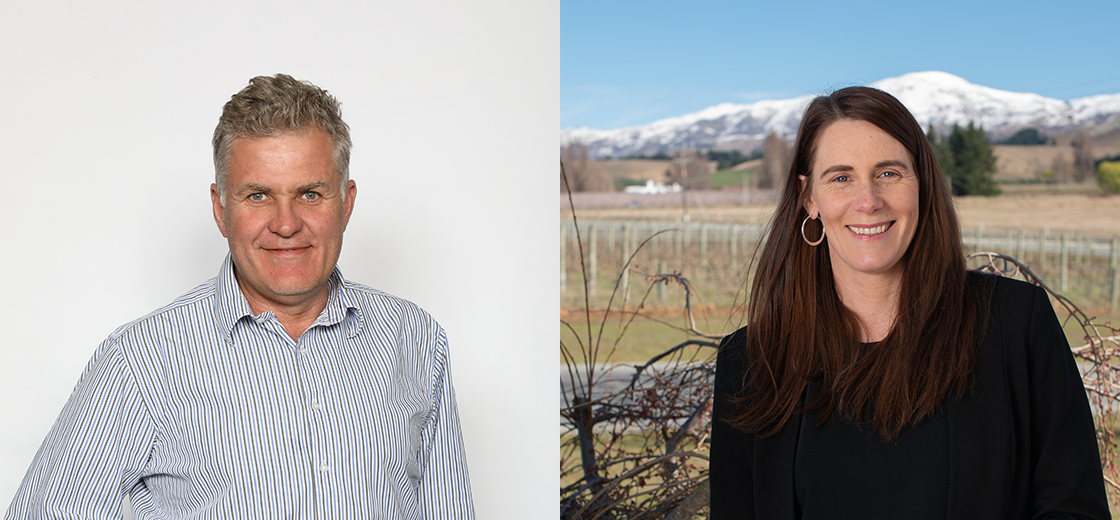
Kate Scott elected Board Chair for the New Zealand Rural Leadership Trust.

Kate Scott has been elected as the new Board Chair for the New Zealand Rural Leadership Trust, at the fourth Regular Meeting for 2021, held on the 8th of September. Outgoing Chair, Andrew Watters, has brought a wealth of experience, and passion to his time as Chair, and through a critical period in the Trust’s growth. Andrew will remain as trustee until an election takes place for his replacement in autumn, 2022.

In vacating the Chair, Andrew has expressed, “Thanks go to my fellow Trustees and the NZRLT team, led very ably by Chris Parsons, who have made the Chair’s role a joy to occupy. It’s a pleasure to hand over the reins to Kate Scott, 2018 Nuffield Scholar. NZRLT is a leadership organisation, and succession planning is a key outcome of successful leadership. In Kate we can see the next generation of Governors leading the organisation as we seek to attract and transform talent through our world class Kellogg, Value Chain Innovation and Nuffield programmes.”

On being elected Kate said, “I am honoured by the opportunity to step into the role of Chair, and am looking forward to continuing to work alongside the other trustees, the chief executive and the team to continue to deliver on our aspiration of growing world-class leaders for our country.”

 “It is a real privilege to be able to continue the exceptional work of previous chairs, including Andrew, who has led the organisation through some significant growth over the past few years.”

 “Stepping into this role at a time when New Zealand’s food and fibre sector is at the crossroads of significant change and opportunity, is both exciting and important. Leadership by farmers and growers will be fundamental to how we navigate what lies ahead. I am excited by the opportunity to strengthen our collective position through collaboration and teamwork, so that we can continue to deliver people who are capable of leading the food and fibre sector in the future.”

 “It is also a pleasure to be able to give back to the organisation that supported my own Nuffield journey and in doing so I strive to make those that have gone before proud of what we do for those that will come after us.”

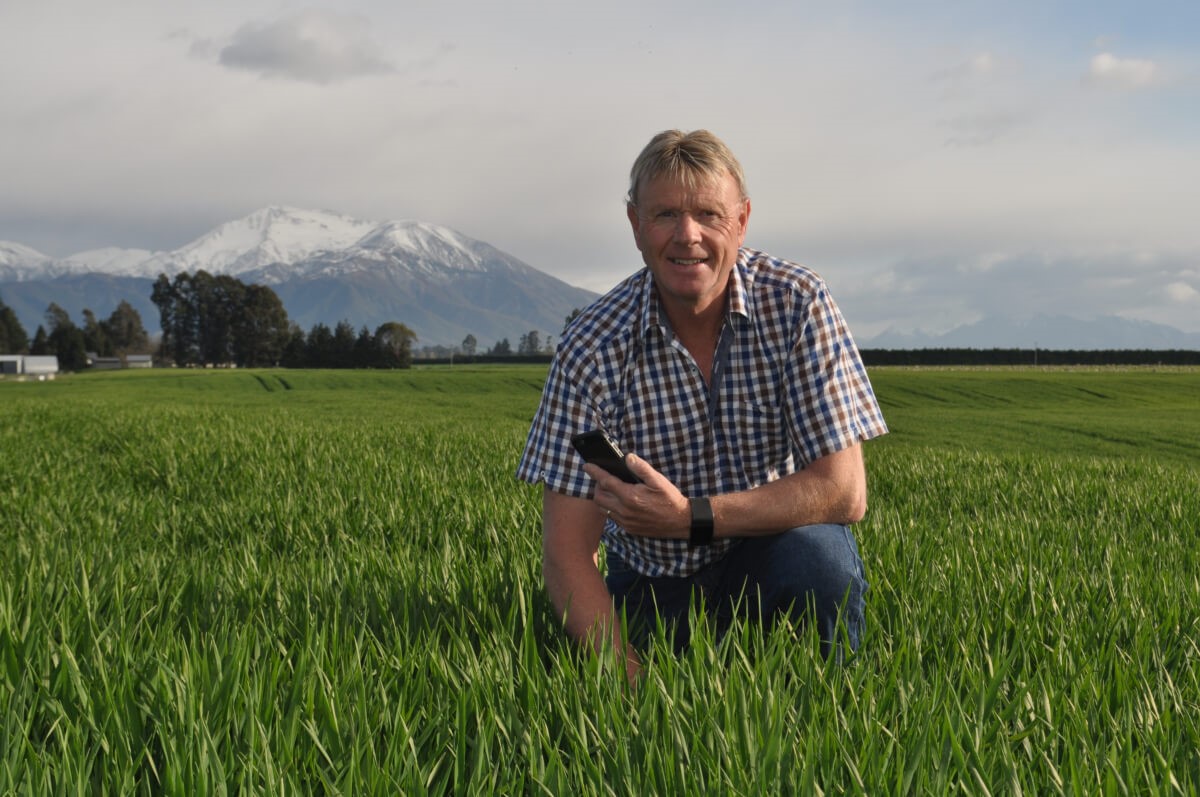
Craige Mackenzie: Right place, right time.

Rural Leaders talked to 2008 Nuffield Scholar Craige Mackenzie about change, technology and precision farming. His business, Vantage NZ, helps remove the complexity around technology-enabled change, while
the family farm demonstrates precision in practice.

But as Craige explains, what really matters is mindset.

The foundations of a mindset.

Growing up, we knew the value of a dollar. They were hard to come by. We did the best we could with what we had. I was keen to get out and earn, so I finished school and went farming with my family. I learned early on that I enjoy pushing myself.

At 18 I travelled to the United States, instead of going to university. I saw the world for the first time, and it felt like we were all only limited by our imaginations. Coming home was a jolt back to reality. It was the 80’s and a tough period for farmers. If you have a hard time at any point in your career, the start is the place to have it. You learn how to survive early.

We took over the farm in 1984, buying it from my parents. We put in irrigation, expanded, and eventually removed all the stock from the system. We went into intensive seed production.

In 2006 we ventured into the dairy industry too, building up to 1240 cows at the peak. Then along came M. bovis. But it’s interesting, from adversity came opportunity. By having to cut the stocking rate down, we found our milk production per cow went up. We were on the efficiency journey, simply by doing the best we could in a tough situation.

Production is vanity. Profit is sanity.

In 2008 I did a Nuffield Scholarship, something I felt fortunate to receive. It meant travelling around the world for six months. My study topic was very broad, ‘Understanding the Carbon Footprint in Farming Systems.’ At the heart of it, I thought, if we cut inputs by 30% and still maintain outputs, we’ve reduced our carbon footprint by 30%, which in turn increased profitability.

While travelling I saw some intensive operations in Europe, broad acre framing at scale in the USA and Canada, through to small holder farms in China. It’s interesting to see what drives different decision-making and farming practises. Often these are influenced by subsidies and support mechanisms rather than efficiency, although I also saw some good examples of Precision Ag too.

Sometime after, I recall talking with Raj Khosla, the head of the International Precision Agriculture Association. He asked me to present at a conference, and I said “Ah Raj, we don’t really do precision.” He said, “…well you know exactly how many kilograms of fertiliser it takes to grow a tonne of wheat don’t you? You know what your inputs are. My friend, you are doing precision agriculture.”

Technology is a decision support tool, not a decision tool.

From then on, I understood what we were doing. We started thinking, how do we go faster? How do we do better? All of a sudden, it became easy to decide to invest in more technology to enable these things. So, we looked at crop sensors, moisture probes, electromagnetic mapping of soils, all sorts of new technology. But again,

the biggest change wasn’t the technology, it was our mindset.

One of the most important things about investment in technology, is profitability. The more you can reduce inputs while maintaining outputs, the more you are free to invest in technology.

You circle back around to re-invest your profit into the technology that reduces inputs. Like machinery that places a bottlecap of fertiliser on every plant. Exactly the right amount at exactly the right time. That leads to better environmental outcomes as well.

After our daughter finished her degree at Lincoln, we asked her what she wanted to do. We saw there was an opportunity to help farmers work smarter, to make more informed decisions. That’s when Agri Optics NZ was born. We’re exclusive Trimble dealers for New Zealand now too, offering a range of products under the Vantage NZ brand.

At the heart of it all is GPS technology: GPS, flow control, steering, automation, and land levelling software. GPS is the enabler though. Without GPS you can’t really do any of the other clever things that result in precision outcomes.

Is it better to go rabbit shooting with a .22 or a shotgun?

I gave a presentation in Bonn at a climate change meeting. Somebody asked me, what’s the silver bullet that fixes things? And I said, it’s not a silver bullet, it’s a silver shotgun.

We need multiple tools in a biological food production system. We need lots of levers to pull. Yes, you’ve only got short range with your shotgun, but you’ve got a whole lot of cover.

There’s no one thing that does it all though. So you need to carefully integrate all your tools into the farming system, rather than the farmer into the tool system.

Is the regulatory environment moving more arable farmers into precision?

The higher the regulatory pressure, the more people will work to get ahead of the challenges those regulations create. We need to continue to have as many tools on the shelf as possible to meet them. As tough as it’s getting, we need to be out in front of it.

I’d rather be having conversations with government and regulators, trying to constructively slow things down to help make the best decision, and create the best outcome for everyone, including the environment. To build the time needed to think about a more considered approach. There’s no advantage in putting regulations in place that are unachievable. None.

We’ve had lots of regulators here over the years. It’s hard for them to push regulation when you’re already past where they think they want to go.

If we can show we’re not leaching anything through the profile in the growing season, like water from irrigation, then it’s very hard for them to say we’re putting nitrates into the groundwater. Especially when there’s nothing getting past the roots. Having the data to show this is powerful.

Unlike GMO, is CRISPR a tool you’ll get to use?

The first thing is, CRISPR is GMO. Rob Horsch was at the forefront of GMO technology. He worked for Monsanto for 20 years on Roundup Ready, which is where it all started.

I had an interesting conversation with Rob a couple of years ago at a crab restaurant somewhere on the East Coast of the US. He said what you’ve got to remember is CRISPR is only going to make small changes in GMO technology. For example, GMO changes a normal wheat plant into a glyphosate Roundup Ready plant. Or equally, it changes a plant to being insect resistant. These are large jumps. Whereas CRISPR only makes small tweaks.

CRISPR is a bit like a pair of molecular scissors. You make small edits by cutting strands of DNA. It has huge applications for treating and preventing disease, correcting genetic defects, and improving crops.

There are changes with CRISPR that will be useful to New Zealand agriculture. Like ryegrass that reduces methane emissions. CRISPR could be a way for GMO to come in to New Zealand, as incremental, more palatable changes for consumers.

Has precision has been a way to stay competitive without GMO?

There’s two things that drive that. One, we don’t live in a country complicated by subsidies. A lot of farming around the world is. We run a business. We’ve had to make sure we are profitable. Precision practices help make that happen.

Two, when you travel like I did with Nuffield, you see the challenges that face the farming system when you’re not careful. Herbicide-resistant weeds are one of the challenges countries with GMO have steaming down the track at them.

Precision agriculture still fits even if you do have GMO’s. Because it’s really about the right product, delivered the right way, at the right time. It doesn’t matter which area of the food production system you’re in either: horticultural, arable, sheep and beef, it can fit every sector.

Will the future of farming look like the start of Interstellar, with autonomous everything?

We used to be sheep, beef and cropping, now we’re 100% cropping. Some of the crops we grow today: spinach, pak-choy, carrots, radish, have mostly evolved in the last few years because food production systems have changed.

We’ve got dairy cows on the Canterbury Plains, driven by the fact that the Waikato was too expensive. With irrigation, Canterbury was seen to be the right place. We know that some of that will go back the other way. And yes, there’ll be more automation, because labour is likely to remain an issue for agriculture.

We’ve been developing bigger machines to maximise production. As autonomous technology advances, the machinery will get smaller, smarter, and run for longer. It will be about maximising profitability. A profitability mindset will be the only one worth having.

We’re all looking further ahead into the future now too. It’s like driving a car, you’ve got a large window to look out the front and a small rear vision mirror. Yes, we should know where we’ve been, but really, we’re more interested in seeing where we’re going and what challenges are coming at us.

Challenges like synthetic fertiliser and pesticide use. Like shifts in consumer food preferences. We’ve got climate change and some water challenges too. All those things are going to shape what we do. They will have a big impact on how we operate and what a farm of the future looks like.

That’s where technology and an understanding of how you use water for example, becomes increasingly important. Soil moisture probes helped cut our water use by over 35%. We wouldn’t have thought our current water footprint per kilogram produced was even possible ten years ago.

Learn from your successes and imagine the next ones.

In 2016 we were fortunate to receive the ‘International Precision Farmer of the Year’ award.

We worked hard for it, but some of our success came from the fact that we live in an environment where you can grow pretty much anything: high yield wheat, ryegrass, many crops.

We’ve got water. We’ve got access to fertiliser and technology. So compared to many places globally, we have a wealthy environment.

We have challenges, but we have many opportunities to be successful here too. I do believe we’re only limited by our imagination as to what we can do, and what we can achieve.

Follow the link to read Craige’s Nuffield report Understanding the carbon footprint in farming systems, released in 2008.

Connect with Craige on LinkedIn.

The Mackenzie Study – a view of leadership

The Mackenzie Study – a view of leadership

The Otago Business School and the Department of Economics recently conducted research on behalf of The Mackenzie Charitable Foundation and The New Zealand Rural Leadership Trust.

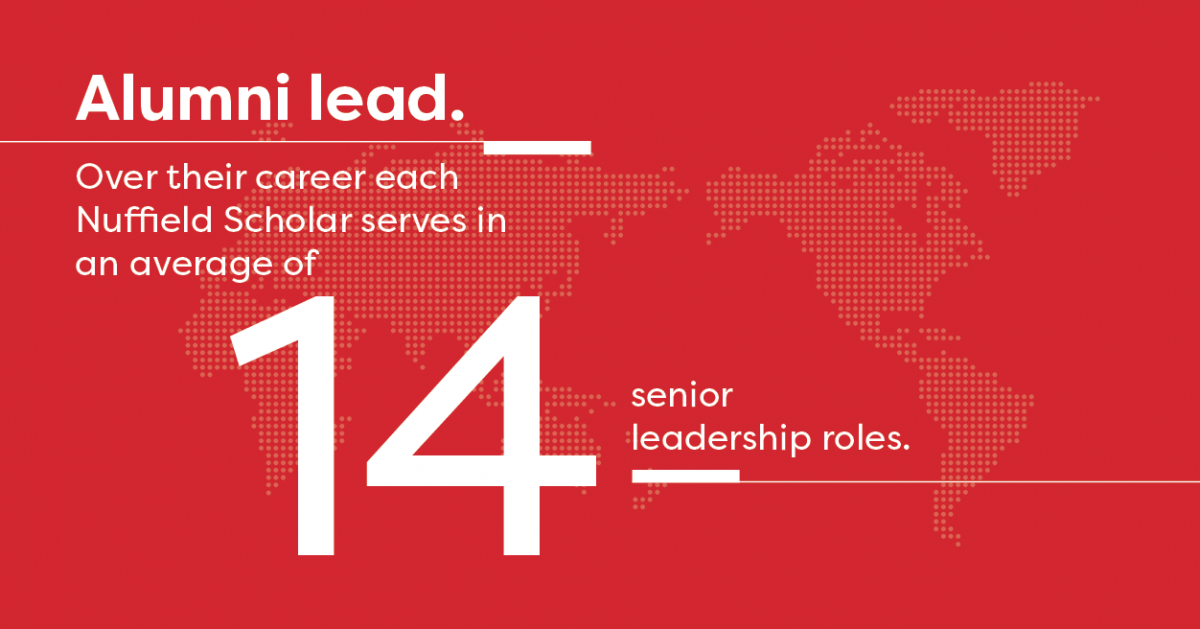
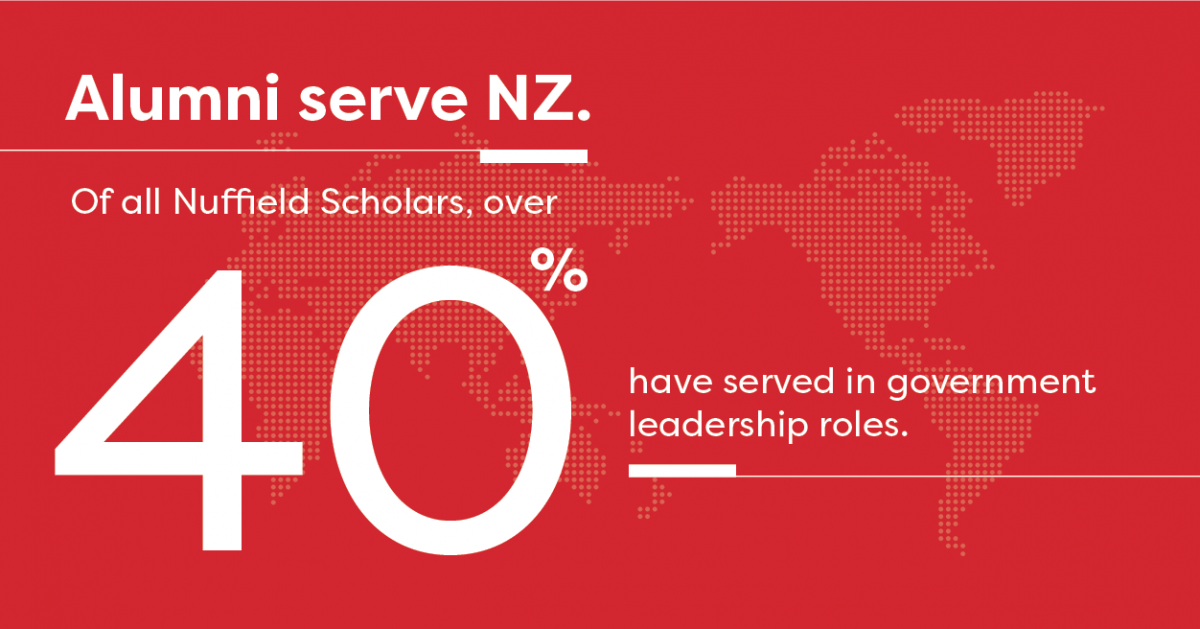
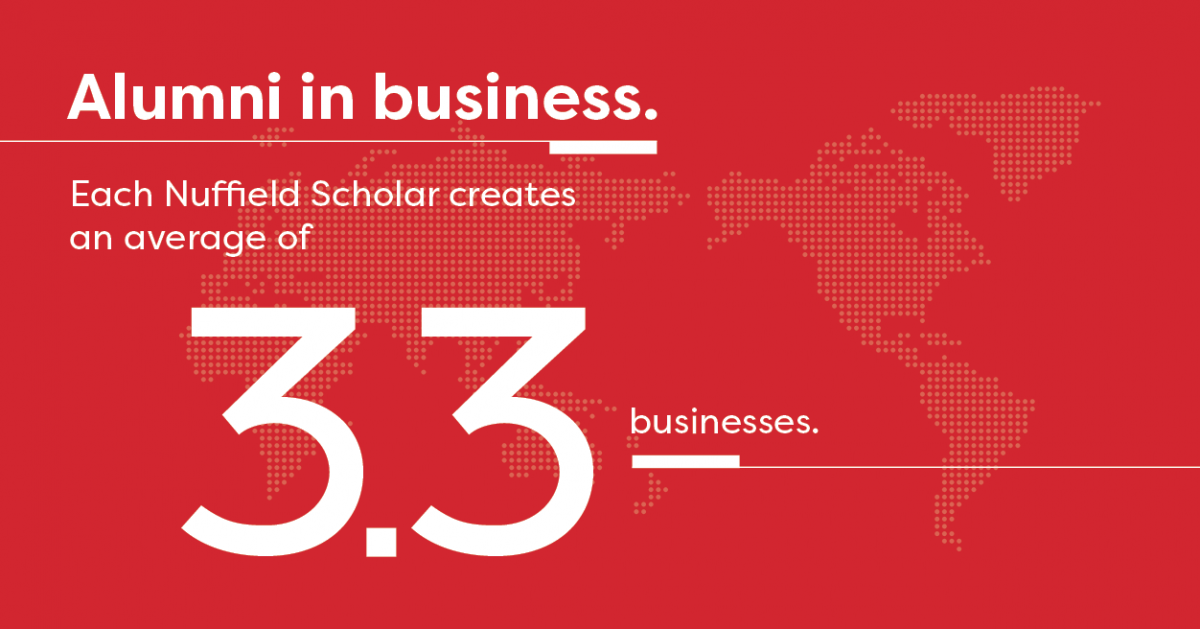
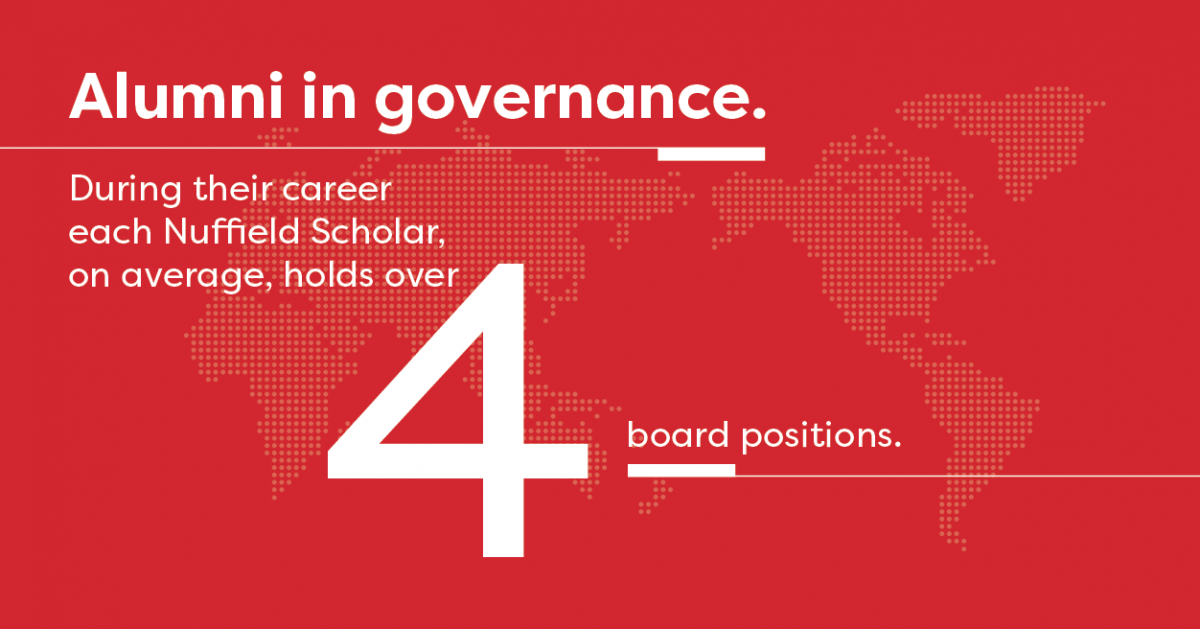
‘The Mackenzie Study’ revealed remarkable results on the personal gains in entrepreneurial skills attributable to participation in the Kellogg and Nuffield Programmes. It is Nuffield Scholars’ broad and consistent level of achievement over time, that resonates most.

Preliminary findings are a compelling case for anyone considering applying for a 2022 Nuffield Scholarship, or looking to develop their leadership ability through the Kellogg Rural Leadership Programme.

A comprehensive survey of Nuffield Scholarship Alumni was conducted in June this year, with invitations sent to all 135 living alumni.

The study had an unusually high participation rate of over 50%, especially given the flooding in Canterbury.

We’ll be presenting more results in due course, including comparisons between alumni and current cohorts. For now, here are just some of the findings demonstrating the professional accomplishments of Nuffield Scholarship Alumni.

Each result is a strong call to potential applicants for the 2022 Nuffield Scholarships, to apply before midnight this Sunday, August 15.

The new Value Chain Innovation Programme

Innovating for our fast-changing
value chains.

A recent addition to The New Zealand Rural Leadership Trust’s cache of programmes is the VIP. The Value Chain Innovation Programme delivers a truly immersive experience, created to meet a growing need for strategically capable leaders in our food and fibre systems.

It is for those who are passionate about developing their leadership style, growing their networks, and contributing to their business and community.

Driving innovation in food and fibre.

The Value Chain Innovation Programme delivers two weeks of immersive learning, focused on strategic value chain analysis and design. The programme is a facilitated journey along ten or more established, disruptive, and novel value chains, delivering a sector and pan-sector view.

It connects participants to New Zealand’s key value chain influencers and accelerates their ability to adapt to a fast-changing environment.

  • It expands their entrepreneurial capability.

  • It builds advanced competencies.

  • And it develops a new mindset on food and fibre innovation in domestic and international markets.

Applications are open until 28 November 2021.

The programme spans two weeks for the industries immersion. Participants then return home and have three weeks to produce a value chain innovation report.
The course structure is as follows:

Phase 1: Virtual masterclass.

As a build-up to the journey, participants attend a virtual masterclass via zoom, of 1 -2 hours. This covers the current landscape within New Zealand’s value chains and what is likely to emerge in the future.

Participants then submit a short PowerPoint overview on their own value chain, or one they wish to explore.

Phase 2: Value chain immersion 16-28 January 2022.

Participants assemble in Auckland on the 16th. They then undertake two weeks of facilitated field trips through the North and South Islands.

The tour culminates in Christchurch on the 28th.

Phase 3: Extramural value chain innovation report.

Work on an individual value chain innovation report. This may be submitted as a PowerPoint.

Ready to take the next step?

For any queries contact Lisa Rogers +64 21 139 6881 or email lisarogers@ruralleaders.co.nz

Nuffield five for five.

Image:Nuffield Scholars in study [supplied]

With five days to go until applications for the 2022 Nuffield Scholarship close, we thought we’d give five reasons as to why receiving a scholarship now, may represent a quantum gain in benefits over previous years. So calling all potential Nuffield Scholars, here’s some more food for thought.

  1. There have never been so many of New Zealand’s best business leaders and innovators in the country at the same time.
    There are a few silver linings to the global pandemic. One might be the number of influential people affiliated to innovation and the food and fibre sector, who have returned home. While their move may not be permanent, now is the time to meet and connect with them. Nuffield can help with that.

  2. With a programme that has adapted to the global pandemic, scholars currently have more flexibility, closer to home.
    We face many challenges right now. So, being away from family, farm and work could be tough on some. As a result of the global pandemic restrictions, the programme has adapted successfully by adding a deeper local layer, along with virtual and global input.

  3. No matter what happens with regard to global travel, Scholarship recipients still receive $40,000 to conduct research.
    Whether the borders open up or not in the short to medium term, the Scholarship funds are not adjusted. In a situation where the borders do open, your global travel component will continue, safely.

  4. Nuffield Scholars’ experiences and enhanced skillsets are increasingly in demand.
    As the rate of change in food and fibre and beyond increases exponentially, Nuffield Scholars’ exposure to research, innovation and leadership development, means their knowledge is always needed in governance and industry.

  5. Scholars will be part of the new Value Chain Innovation Programme (VIP).
    Two weeks’ immersion into more than ten of New Zealand’s established, novel and disruptive value chains.

    The Value Chain Innovation Programme introduces Scholars to value chains beyond their own. It represents an opportunity to meet, draw ideas from and connect with people across many industries.

    Thinking of launching a product, or adding another to a range? This is just one way the VIP can help.

Want to be part of this? Apply now.

Back to the August 2021 issue of The Rural Leader.

What is the future of grocery? Millennials, branding and big data.

Executive Summary

This paper presents some significant empirical findings about generational cohorts, their grocery shopping behaviors and the implications of this for retailers. Marketing has long relied on the use of market segmentation. While birth age has been a useful way to create groups, it does not help to understand cohort motivations. Environmental events experienced during one’s coming of age create values that remain relatively unchanged throughout the life of the citizen.

This study investigates what the future of grocery is for Generation Z (Gen Z) and Generation Y (Gen Y / Millennials). We will also explore what impact Branding and Big Data have on the way Gen Y and Gen Z citizens consume.

Every generation needs to eat – the act of buying food will never go away – but how we buy food will certainly evolve with future generations. The future of shopping will focus more on experience and creative more seamless experiences. The future of grocery is all about citizen-choice – giving citizens the options they want at every stage of their lives. The future of grocery will be impacted by innovation in technology, and other ways to make shopping more of an experience, whether that’s in-person or digital.

The aim of this paper is to explore how supermarkets will evolve and consume in a post-Covid environment. We will look at Shopping Malls to understand how the environment has been transformed and what the population expects from these spaces. We will study how millennials consume and what attributes they are looking for in products.

This is important and these questions need to be answered as the economic environment for grocery stores is tough. Retailers are navigating the shift in citizen behaviour and there is a fundamental shift in the environment they operate in. The year ahead is characterised by unusually high uncertainty for the grocery industry. The development and trajectory of the industry will heavily depend on the evolution of the COVID-19 pandemic and how consumers will behave in response. Which consumer behaviors observed during the pandemic will stick? 

What new trends might emerge post-pandemic? Will online grocery sales continue to accelerate? How can retailers make it profitable? Will food nationalism continue, or will focus shift to trading down and price? Will safety and health be important factors? How about the broader topics of sustainability and climate change? This report aims to address these questions.

The methodology used for this report involved a literature review and thematic analysis which looks into the recurring themes of Big Data, Retailers and Citizens.

The literature review was the major component of the research including resources from domestic and international publications, opinion pieces and industry reports into the topic of groceries/supermarkets, the current environment and the future. 

Themes related to consumption patterns were discussed. Key findings were that Generational cohorts are not the same as generations 1 (Markert, 2004).

Each generation is defined by its years of birth; while a generation typically is 20–25 years in length, or roughly the time it takes a person to grow up and have children, a cohort can be as long or short as the external events which define it. Generational cohorts are set apart by cataclysmic events that produce a change in the values, attitudes, and predispositions in a society. These events create a discontinuous historical timeline; such secular change events can be characterised as a ‘sense of rupture with the past’2 Millennials and Gen Zs have grown up with technology and they are using this in their quest to purchase the perfect product in the perfect way.

We have compared Gen Z and Gen Y with Baby Boomers and Gen X who value the retail experience and in-store service. For Baby Boomers, the purchase process starts with a retailer the consumer trusts, who gives advice for choosing the right product, while for GenZ and Y, the purchase process starts with choosing a product. This study investigates retail strategies that will appeal to younger generational cohorts and considers how retailers should be building citizen relationships. The key insight for brands is that Gen Y & Z all about authenticity. They want to present themselves as they truly are. They expect a brand to take a position. To be respected for its values and demands, a brand must demonstrate them in a concrete manner, and shift from words to actions.

Other key findings:

a) Getting online will continue to be an imperative for New Zealand producers. It is hard to imagine or even remember, but as little as 18 months ago, some of the biggest food and beverage makers still had no direct-to-consumer (DTC) ecommerce channels.

b) This pandemic is driving citizens to focus on “preventative eating” or “proactive eating.” New and innovative superfoods marketed to boost immunity will be one of the top food and beverage industry trends in 2021, whether it comes in the form of mushroom coffee, algae capsules, no- or low-alcohol beverages, or bone broth.

c) The climate crisis is driving demand for plant-based products. Demand for the latest generation of plant-based products isn’t just due to health goals

d) Citizens will be more cost-conscious. Even before the recession, customers were looking for ways to cut everyday costs, with more than half looking for ways to reduce their grocery bills.

e) Citizens will continue to look for greater transparency and connection to brands. Citizens may have tighter budgets, but that doesn’t mean they’re willing to cut corners when it comes to their health or personal values systems. Instead, they’re carefully reading the labels to find out not just what goes into their food, but where and how it’s made.

f) New recipes for engagement and sales may prove more popular than familiar favorites. Citizens anticipate they’ll continue to recreate big nights out in the comfort of their homes—even post-pandemic.

g) Citizens don’t think in terms of channels—they expect an outstanding shopping experience from clicks to bricks. To meet growing customer expectations, retail store owners within malls need to focus on an omnichannel approach with a unified online-offline experience.

h) Would we be better off moving to deliveries of food from local producers and suppliers directly to the citizens? It’s not that straightforward. Many farmers choose to sell their produce to supermarkets, despite retaining under a third of the retail price on average, as it is more efficient and reliable.

My recommendations are:

Supermarkets get closer to the customer – A real opportunity exists for retailers to secure new customer data. Gleaning insights successfully can increase the lifetime value of each customer.

Retailers ‘woo’ citizens with Experiences and Speed – Coupling experience with speedy fulfillment will go a long way toward meeting this generation’s expectations.

Don’t abandon stores – Reimagine them to create a digitally connected, interactive and hyper-personalized physical shopping experience.

Introduce concepts and focus on “cool” social media – Many products are the same and have become commodities. Citizens differentiate between products by their experience with them.

Overload on feedback – Gen Zs value feedback from their family and friends, suggesting that retailers no longer own the review process. Brands should also look at collecting shopper product testimonial videos – an authentic approach that adds tremendous credibility.

Focus on Ethical and Environmentally Friendly Products – There is accumulating evidence that consumers are impacted by the perceived sustainability of [a] brand, and that consumers are willing to pay a premium for products from a sustainable brand over a non-sustainable competitor brand.


Partial land use diversification to strengthen income and business resilience.

Executive Summary

Pressures on what is deemed the appropriate use of land to create food and fibre in New Zealand are countless and seemingly coming from multiple directions. Such pressures can have the ability to inspire change, be it willing or not.

Reactive land use diversification is not new. Land holders have changed their agricultural systems to increase financial gains or access stronger markets as the result of many external influences. Often, the notion of land use change has been referenced as a complete transition of the entire land holding. However partial diversification is already prevalent amongst New Zealand agricultural enterprises, and many rely upon multiple income sources for financial viability.

When thinking of investment, an investment reliant upon a sole markets return is described as high risk, hence the often-sage advice to diversify a share portfolio. The investment of agriculture is surely deemed high risk when the return is commonly solely reliant on the sale of a single commodity.

The purpose of this report is to explore the reasons behind land use decision makers reasons for exploring land use diversification and to determine if there is a place to partially diversify agricultural enterprises in a way that both brings income and business resilience as well as reduced environmental impacts and greater compliance of regulatory frameworks. Can agricultural businesses be the same as a diverse share portfolio, with varying risk, seasonality, liquidity and return all on one land holding?

Financial, Environmental, Social, Knowledge and Regulatory opportunities or barriers appear to drive land use change, but none more so than financial. However, with the exploration of the other factors, it could be said that financial performance is heavily pursued in the land use that is desired by the land holder and that has created a narrow view of the business or lands capabilities.

There appears to be an opportunity within New Zealands’ Food and Fibre sectors to create multiple enterprise farming operations that bring increased financial resilience, lower environmental impacts whilst maintaining the “social licence to farm” and creating job satisfaction for those that own the land.

Therefore, the recommendations from the research undertaken are:

Collaboration from a variety of sectors to allow knowledge share. This could include discussion groups that are possibly hosted by the likes of Dairy NZ, Beef & Lamb, Horticulture NZ and other non-government organisations.

Research and publications in to successful and failed enterprises that have undertaken partial land use changes to establish the complications, complexities, drivers and barriers that exist in partially diversified operations.

Greater accessibility to ministry funding to enable partial diversifications where outcomes are likely to improve environmental impacts. Funding or resource to enable the collaboration of farming businesses to achieve greater market access when sole scale is not sufficient should also be explored.

Our Rural professionals – Are we supporting the people who support our farmers?

Executive Summary

Our Rural professionals (RP) are passionate people that are out having day to day interactions with our Food and Fibre Producers. Our rural community is isolated and mental health can be an issue for our industry. Are we ensuring that we are supporting the mental health of the people that are there to support our farmers?

That is what this report aims to find out, to understand the current mental health state of the RP workforce, the specific factors driving poor mental health and the access and use of MH services for our RP’s.

This report undertook a survey of 184 Rural professionals across the RP landscape, asking a range of questions to gain a quantitative analysis into their mental health and that of their workplace. They were then categorised into some key finding and recommendations below:

Key Findings:

  • 67% of respondents Mental Health were currently or sometimes impacted by the requirements of their role.
  • The main drivers of this were High workload, Tough conversations with Clients and Uncertainty.
  • Banking roles had the highest impact on mental health.
  • Respondents in Banking roles found a stressful work environment as a top factor for impact on their Mental Health.
  • 92% of respondents have access to Mental Health service.
  • Only 48% of respondents with negative MH impacts on their role had open workplaces that welcomed mental health discussions.
  • 19% of respondents that MH is negatively impacted by the requirements of their role have not used any MH services. 59% of respondents whose MH is sometimes impacted by their role have not used any MH services.
  • 85% of respondents were comfortable with using MH services.

Key Recommendations:

1. Open your Eyes:

a. To take personal responsibility for your own personal wellbeing in front of the requirements for your role.
b. To take responsibility for supporting and looking after those around you.
c. To promote positive mental health discussions and 5 ways of wellbeing.

2. Organisational Ownership:

a. Create meaningful initiatives to promote positive mental health discussions in workplaces.
b. Ensure all their people have access to some form of MH service for their employees.
c. Promote training for your people – such as Mental First Aid or Resilience Training.

3. Leaders leading change:

a. Leaders must learn to understand their team:

i. What is the mental health of their team?
ii. What affects their mental health – S.C.A.R.F model
Leaders need to constantly to check in with team members, ask questions and put initiatives in place to respond.

b. Leaning into the tough conversations.

i. Noticing when someone’s mental health is being affected.
ii. Asking your team what requirement of the role are affecting their mental health.
iii. What initiatives to drive profits and sales are driving poor mental health environments?

How do agri-processors engage entry level labour?

Executive Summary

The issue of worker engagement is not a new one and as New Zealand strives to create more value from agriculture without increasing land footprint or environmental harm, value will be created from advancements in taking our world class raw ingredients through the supply chain. Therefore, the engagement of people throughout the supply chain is more important than ever. Worker engagement in this context is defined as the ability for an employer to connect with an employee so that a relationship is not purely a transactional time versus financial reward.

The current state of the New Zealand’s employment records show an increasing unemployed population increasing from 88,833 on the Jobseeker Support to 122,871 in the 12 months to April 2021 (Development, 2021).

There were three common themes between the literature reviewed and the people interviewed. The strong correlation demonstrates the need for Accountability, Clarity and Care across all levels of the business and how this is imperative for gaining better labour engagement. Interestingly this fits into a model presented by Simon Sinek “circle of safety” which concludes that the more clarity, accountability and care that can be given to a team they will then focus their resources solving productive issues.

Recommendation

New Zealand’s unemployment rates continue to increase and so does the minimum wage, yet New Zealand businesses continue to struggle to get new entrants into their teams.

To change this outcome businesses need to focus on:

1. Upskilling the leaders of their business (team Leader level) that share the most time with the entry level employees
2. Create clear values and business objectives for all levels of business can hold themselves to.
3. Implement the clearly articulated objectives and values with clarity, care and accountability.