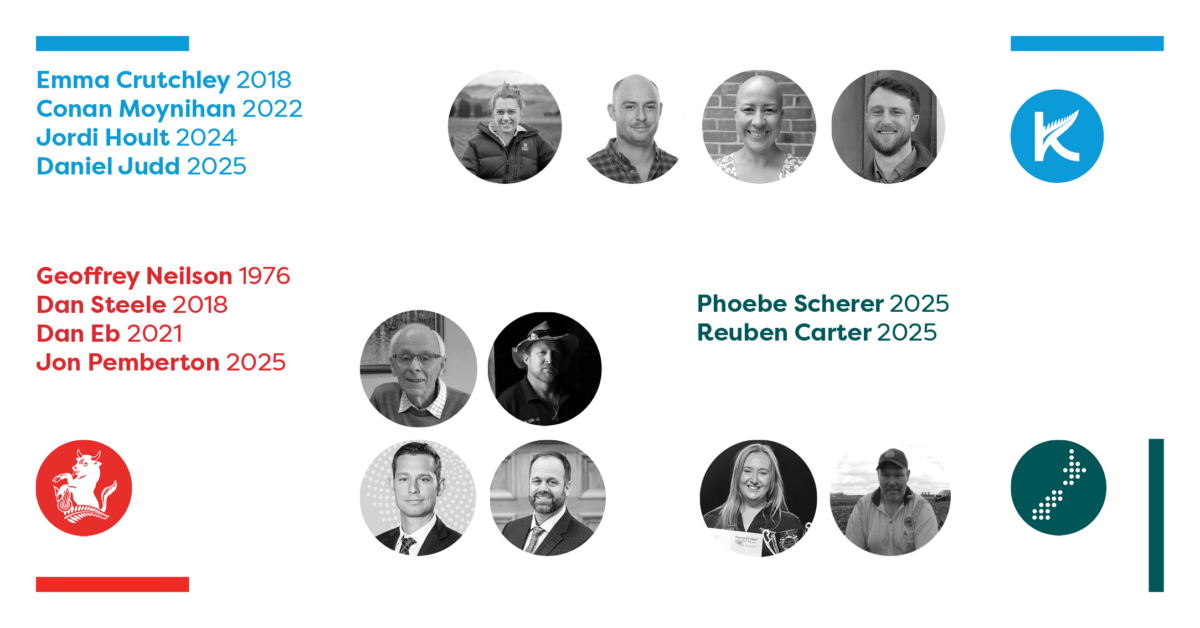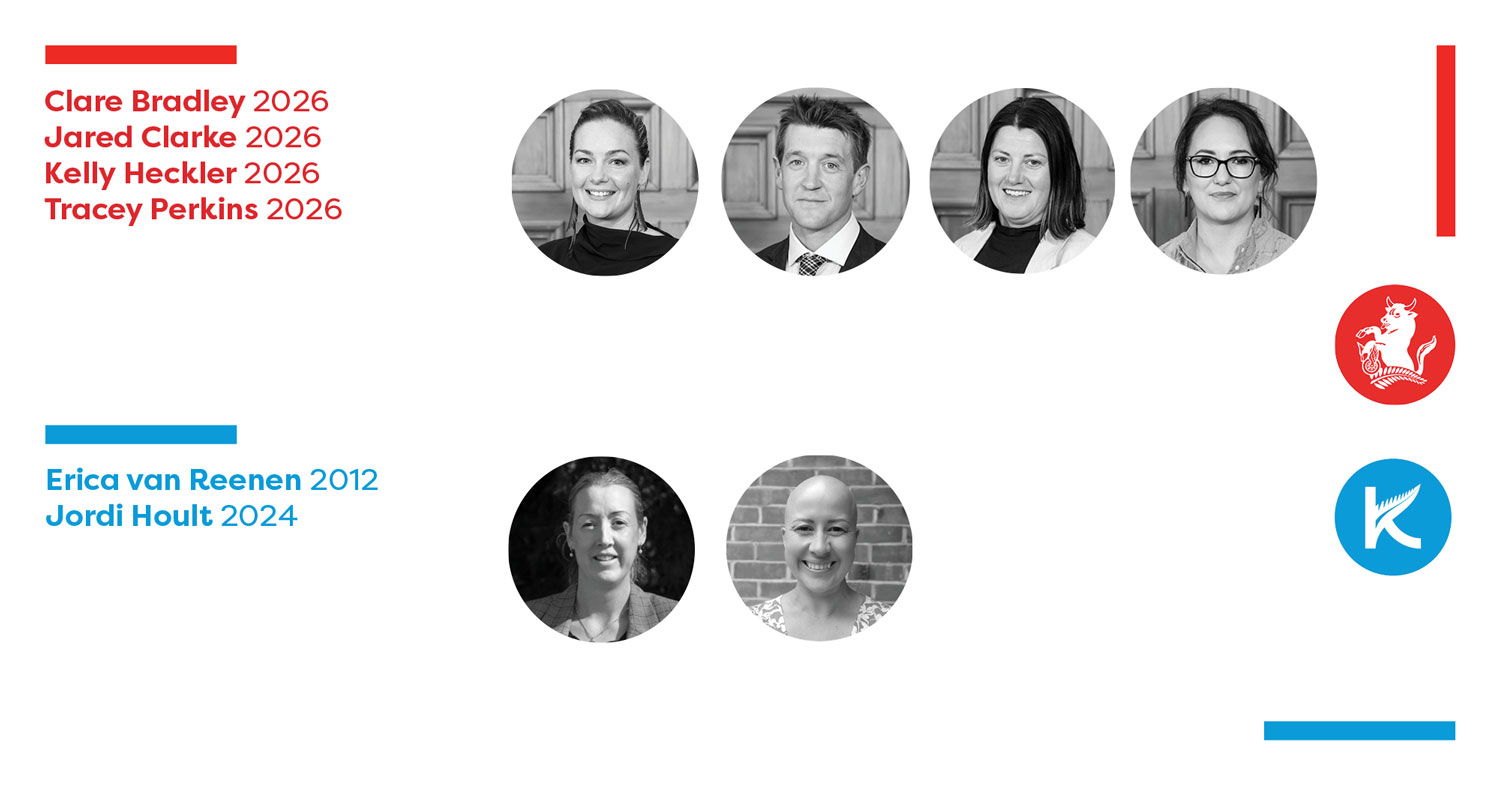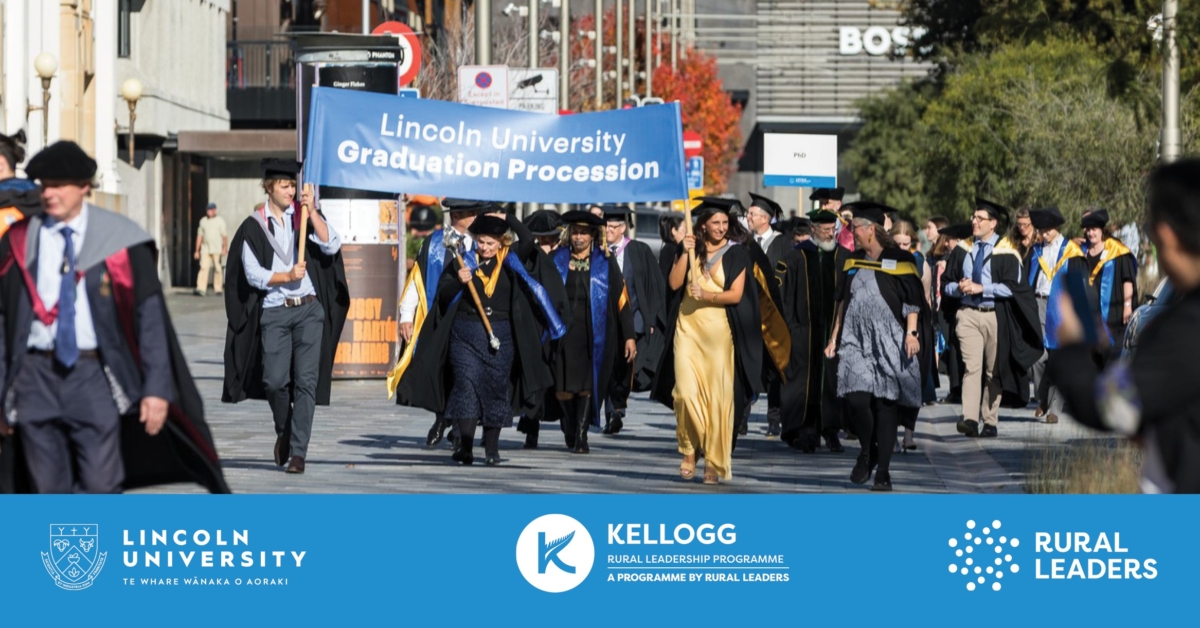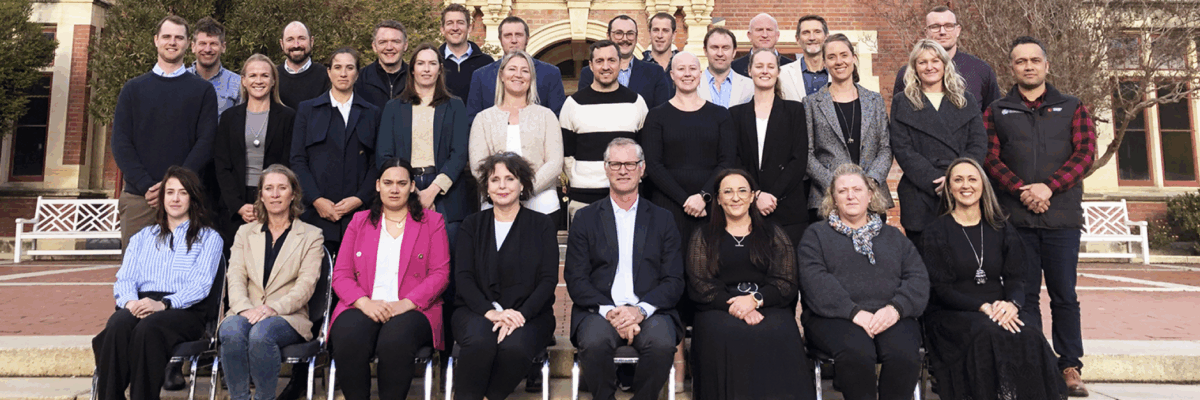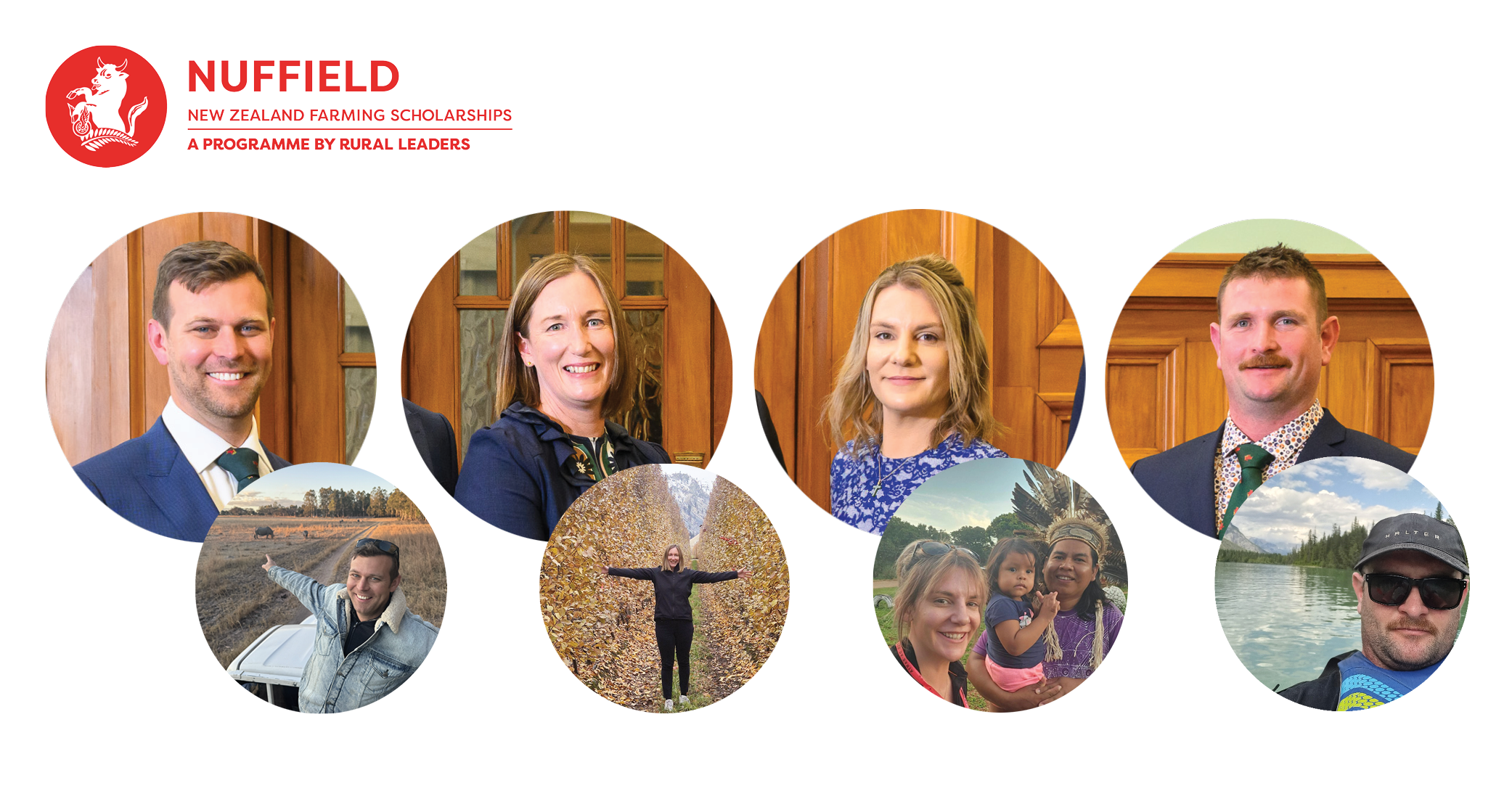
2026 Nuffield NZ Farming Scholarship. Apply by 17 August 2025. Read More...

Apply for 2026 Nuffield NZ Farming Scholarship by 17 August 2025. More details...

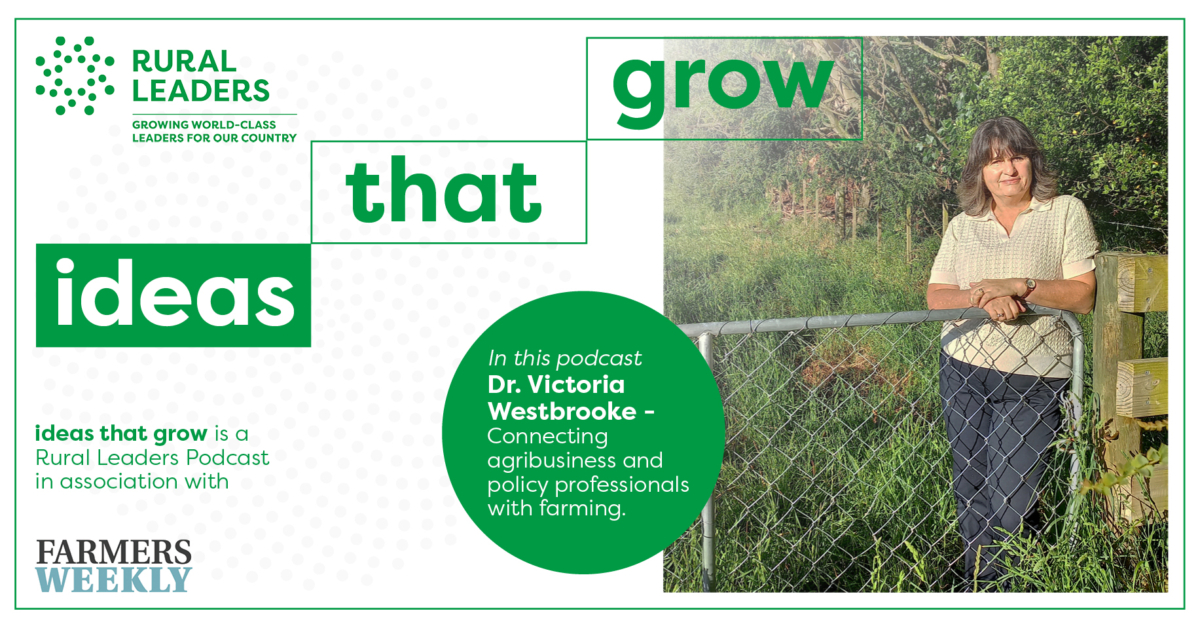
Dr. Victoria Westbrooke – Connecting agribusiness and policy professionals with farming.

Listen to this episode of Ideas that Grow, or click on one of the platform icons below to listen on your favourite player:

In this episode of Ideas That Grow, Bryan Gibson, Farmers Weekly Managing Editor, talks to Dr. Victoria Westbrooke, Senior Lecturer in the Department of Land Management and Systems at Lincoln University.

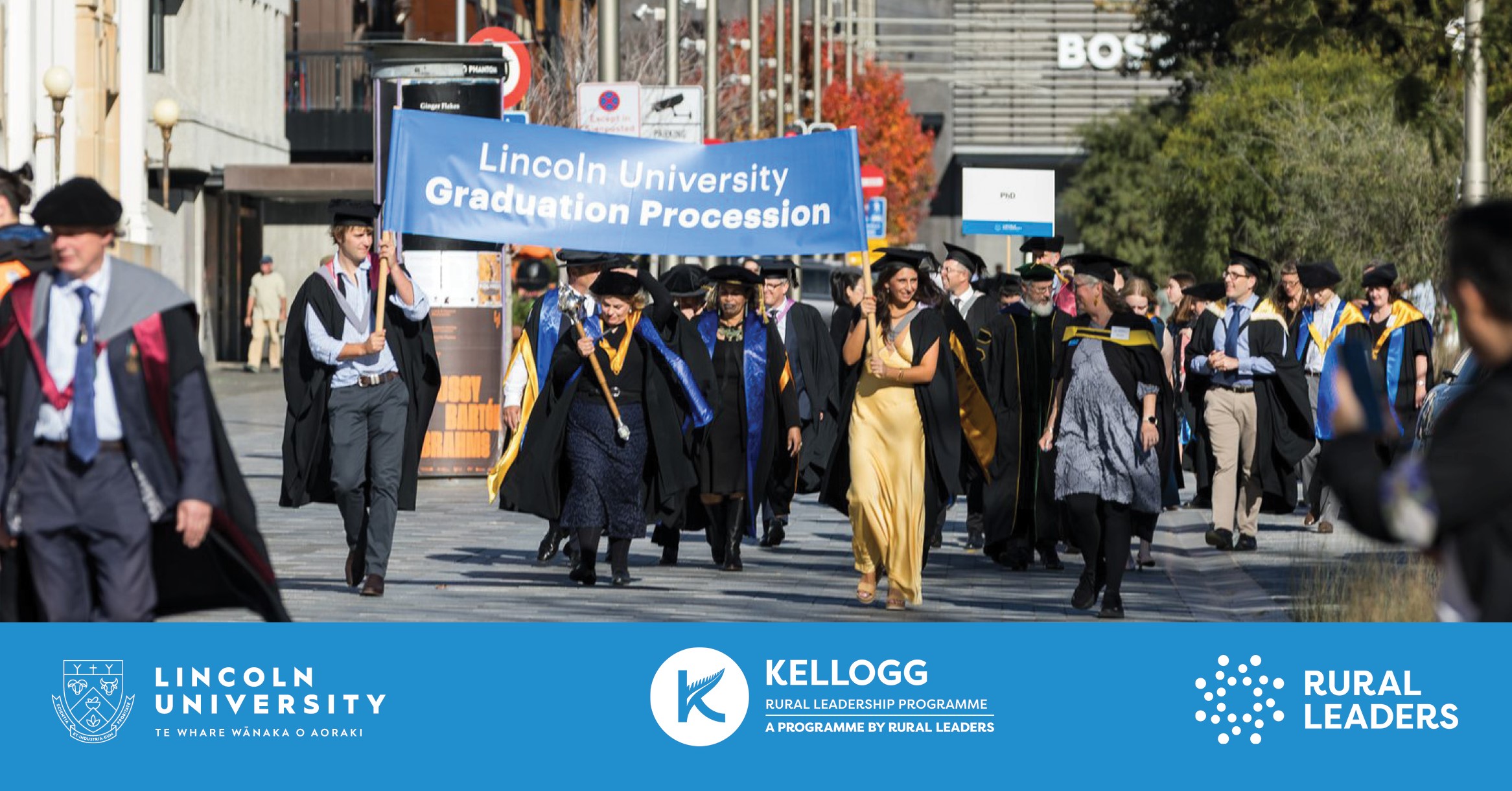
Victoria discusses the Engage Programme, a three-day professional development initiative run in partnership between Lincoln University and Rural Leaders, designed to bridge the gap between agribusiness professionals and on-farm realities.

Victoria offers keen insight into why providing contextual farm knowledge to technology specialists, researchers, environmental professionals, and policy-makers is crucial for helping them apply their expertise effectively.

Episode Transcript

You’ve joined the Ideas That Grow podcast, brought to you by Rural Leaders. In this series, we’ll be drawing on insights from innovative rural leaders to help plant ideas that grow so our regions can flourish. Ideas That Grow is presented in Association with Farmers Weekly.

Bryan Gibson, Managing Editor of Farmers Weekly:
I’m your host, Farmers Weekly editor, Bryan Gibson. This week, we’re talking about one of the specialist programmes Rural Leaders offers, the Engage programme run in conjunction with Lincoln University.

With me to discuss it is Dr. Victoria Westbrooke. Kia ora, how are you going?

Dr. Victoria Westbrooke, Senior Lecturer Department of Land Management and Systems, Lincoln University:
Great, thanks.

BG: Good. You’re a senior lecturer at Lincoln. What do you focus on there and what’s your work like?

VW: I’m only focused on farm management. I teach both undergraduate and postgraduate level. I also really enjoy teaching a class on consultancy and extension, again, at the undergrad and postgrad level. That class is really about students being able to use the information they’ve got at Lincoln and work with farmers and others to put their knowledge into practise when they leave Lincoln and to go out into the real world to work.

BG: What was your journey to Lincoln like? What’s your career background?

VW: Well, I actually did my degree at Lincoln a few years ago now. I then spent the first 10 years working as a farm consultant in the Waikato and then worked with AgResearch. So, helping translate science and research into practise. I enjoyed helping farmers reach objectives and just seeing that translation. I think New Zealand is really good at that, and it was great to be a part of it.

The next 10 years was cool. That was overseas. I spent a couple of years in UK, having a look at UK farming systems and indulging in my passion of travel. We then moved to Australia, where I did my PhD and had a look at some farm systems there, which were completely different, merging on tropical systems.

For the last 10 years or so, I’ve been lecturing at Lincoln, again in farm management and extension and doing some research on the side as well. I enjoy working with students and seeing their journeys as they grow.

BG: Did you always know that the food and fibre sector would be where you would work?

VW: I guess so. I really enjoy growing things. I’m a keen gardener and have this most wonderful garden at home, which I’m very lucky for. Love seeing people grow too, seeing ideas work on farms, love seeing farmers get where they want go. That sort of thing gives me a real kick.

A partnership to develop stronger connections with farmers.

BG: Rural Leaders has a pretty close relationship with Lincoln University. Tell me a little bit about how Lincoln contributes to the Rural Leaders programmes.

VW: I guess I can talk about the Engage one as a specific example. What I saw is we had a need for some really good professionals in the sector that may not necessarily have had a farm background. I’m talking about technology people, some researchers, environmental people. I thought, how can we welcome them into the sector and give them some background or context to New Zealand farming systems to turbocharge the knowledge and expertise that they already have. How can we help them to apply it.

When I was working on that, I thought Rural Leaders would be the ideal group to work with. They’ve got a good track record. I found them really excellent. We could sit down throw ideas around. That’s how it worked for me in my situation was just having their expertise, a very strong track record, strongly networked into the industry. For me, they were the ideal partner.

BG: Yeah, I guess one of the key challenges that our food and fibre sector has is that there’s often a feeling among farmers in the field that some of the bureaucrats or other people who are agribusiness professionals or at least having an input into how farming is done in New Zealand, some of them don’t have that knowledge of what it’s like to actually implement these things in the field every day.

Knowledge, confidence and connection in agriculture.

VW: The people that we’ve worked with through Engage, who have participated, are keen to work with farmers and help them work well in New Zealand Inc. That passion is really there. Part of this programme is, how can we help them with some of that context in a way that suits their professional lifestyle and their professional requirements and get them connecting directly with farmers, not through two or three other links.

Some form of experiencing the farmer’s challenges. Initially, I had thoughts of participants spending a day with a farmer in their ute. I’m not sure that was particularly practical for everybody. Again, working with rural leaders, we were able to mould that working with farmers and talking directly with farmers into a three-day, doable programme for everyone that got some of that close connection.

For example, one of the participants was actually staying with me. She came from Wellington, hadn’t spent a lot of time on farms, and simply getting her rugged up to go out for a day on farm in July – she experienced the environment the farmer worked in. Simply making sure she had gloves, hat, mittens, and that kind of thing. That was something that you can’t read about or doesn’t normally land if you read about it. But if you’re going out for a day, it does.

BG: You mentioned people being Wellington-based. A lot of people who are decision-makers or policymakers, that sort of thing, are in the cities. Having that first-hand experience of the farming life must make them a lot more confident or at least know that their day-to-day work will land better with those who are having to implement it.

VW: Yeah, it just provided a real background and that lived experience. We’ve got the Engage programme at three days. The key is the middle day, actually going on farm. They’ve spent a day working together in a discussion group format that Rural Leaders does very well. Then it’s onto a bus and going out to our wonderful host farmer. We’ve had Malcolm Cairns and Hamish Marr. The morning’s out on a mixed arable operation, family-based. Then the afternoon has been going out to Matt Iremonger’s which is more of a focus on dairy and technology.

On one of our first programmes, a lot of the participants were just quite keen to do a bit of calf feeding. We were going to talk about some really high-brow stuff. They saw the calves and they really enjoyed it. Seeing Matt operate Halter, we turned up when the cows were to go for milking. We stood in the paddock and Matt and his manager at the time were driving halter and we could see it. Seeing it then talking about the people who are actually working with it, seeing the cow’s reaction, just that really one-to-one or based experience is really important and really enjoyable.

What to expect from the Engage Programme.

BG: If someone signs up for the Engage programme, maybe just talk through what they can expect when they’re doing it.

VW: Firstly, it’s a really welcoming environment that Rural Leaders provides. It’s facilitated. There’s lots of discussions. It’s not a talk at or dare I say lecture type environment. We definitely didn’t want that. These people are professionals with really impressive skills and expertise. It’s more of a discussion, not a ‘talk to’.

Rural Leaders, through their networks, have got some excellent people for the first day, providing an overview of the global perspective of agriculture. We’ve got some people that wear both a farmer hat and professional hat talking about challenges farmers faced.

Then I talk about farming systems and farm finances. This is very much from the farmer perspective, and as much as possible, there’s people that are actually farmers and involved in there. We’re talking about the whole Ag sector. Often, we work in our own particular area that we’re passionate about. I like Ag extension and consultancy type things, but it’s important to look at the whole package because farmers are faced with a whole package, not just fertiliser, which we may work in, or environment that we may work in. Often, there’s a group dinner, and the discussions there are probably just as important as those held during the day.

Participants have actually met people from different parts of the sector as well. The highlight for me has always been the day on farm, which I’ve just briefly discussed. So out in the bus, take lunch, and talking directly with the farmers. We go and have morning tea with them. They take us around their farm. The farmers are experienced talking to groups, but they’re still at the coalface. Those visits tend to go a little bit into the areas that participants are interested in. The final day is two-thirds of a day. There’s a talk about reflection about what they found on farm, Māori land ownership and perspectives. That’s a really good session. Then we talk about rural communities. The reason for that is, again, looking at the whole picture that farmers are sitting within not just one particular aspect. Then there’s finishing up looking at environmental consulting, but that can vary depending on the group.

Looking at the whole farming system.

BG: You mentioned the rural communities. That’s really important because I think some people sitting off remotely would view a farm as a set of financial budgets or a catchment for nutrients and water cycling and that sort of thing. But in actual fact, it’s a place where a family lives. There are neighbours, there are schools, there are rugby clubs. Those things are what sustains farming communities.

VW: Yeah, it’s that whole system, that environment, looking at it, that’s really important. I think we get passionate about as a profession, our own particular area. This is a chance to look at the whole system from a farmer’s perspective. You may get an appreciation of where your particular passion area sits within the farmer’s world type thing. Why are they not as passionate as you about your area? Well, this is where it sits for a farmer and how it fits with their bigger thing.

We had one person who is looking at offering a technology service on farm, and he went away delighted because he could then see where his technology offering could fit for farmers, what from a farmer’s perspective might spin their wheels, save them time, whatever. He said, Okay, he will now develop his offering in that way to fit more with what a farmer may actually want. He understood why they may be reluctant to take his technology offering from his business.

BG: That’s amazing because you see it time and again, someone turns up with what they feel is like the latest game-changing bit of tech that’s going to change farming. But when it actually comes to implementing it on farm, they perhaps haven’t had that close contact to know if it’s working in with the other things that happen day to day on a farm.

VW: Yeah, it’s this massive load of cogs all in to react and big clockwork mechanism in an old analogue clock. They all interweave together.

Looking closer at the Engage Programme.

BG: One of the things that comes up-time and again in these chats I have with people who have been involved in Rural Leaders programmes is that the course itself is great, but one of the great pieces of value you get from it is the network and the connections you make while you’re on the course. That seems to be the case here, too.

VW: It’s not as long as Kellogg or some of the other courses. It is a three-day course. That was deliberate because when we did our initial research, we got strong feedback that because it’s a face-to-face course, we had to recognise the time limitations people have in professional life. That’s why we came up with the three-day programme because we did want to keep it face-to-face.

Rural leaders are passionate about that, which I agree with, because then you can actually talk directly to people. I think the group dinner and the way that it’s facilitated lets people meet from different aspects. We’ve had people that have reconnected or got a list of people that if they need somebody in this different area, they now have somebody that they can contact to do that. So, yeah, that’s another important part of sharing.

BG: When we pull back and look at the bigger picture of New Zealand’s food and fibre sector, we are having big conversations about how to develop people into leadership roles. Sometimes you can look at it as there’s farmers who come up through industry bodies, and there’s agribusiness professionals who maybe have a more academic path. The Engage system, to me, seems to be a way to bring that together.

VW: Yeah, it’s, again, the people that are passionate about the food and fibre sector have some wonderful skills and knowledge that we very much need. I’m really hoping we’ll provide them with the confidence to go on to some of those leadership roles with just that wee bit more contextual knowledge or the farmer’s view.

The other thing is some people coming on the programme work with one particular group of farmers, and this is, again, just broadening out for that background and context. So hopefully, it’s part of their leadership journey. They also know how Rural Leaders operate then through the programme, so they can have a taster of what our future work with Rural Leaders may look like. That’s useful as well, I think.

BG: Yeah, I guess it gives people a bit more empathy with the people who might be end users of either the product or the policy that they are working on, you get a better understanding of how that lands, what that means for someone’s day-to-day life, that thing.

If someone’s keen in finding out more about the Engage programme or perhaps signing up, what’s the next step for them?

VW: Rural Leaders They have an excellent website, and they have all of the details there. My understanding is the Engage programme will be running next year.

The other option is Rural Leaders have customised the programme and can do so for particular groups. For ASB, they work with their rural managers who really wanted to focus on environmental aspects. They took out the day on farm because those rural managers are constantly out on farm. That programme was adapted for them. They’ve also worked with the Ellett Trust and other groups there to develop a programme specifically for scientists and researchers to communicate with farmers. That customisation option is available as well.

BG: Thanks for listening to Ideas That Grow, a Rural Leaders’ podcast presented in Association with Farmers Weekly. For more information on Rural Leaders, the Nuffield New Zealand Farming Scholarship, the Kellogg Rural Leadership Programme, the Engage Programme and the Value Chain Innovation Programme, please visit ruralleaders.co.nz.
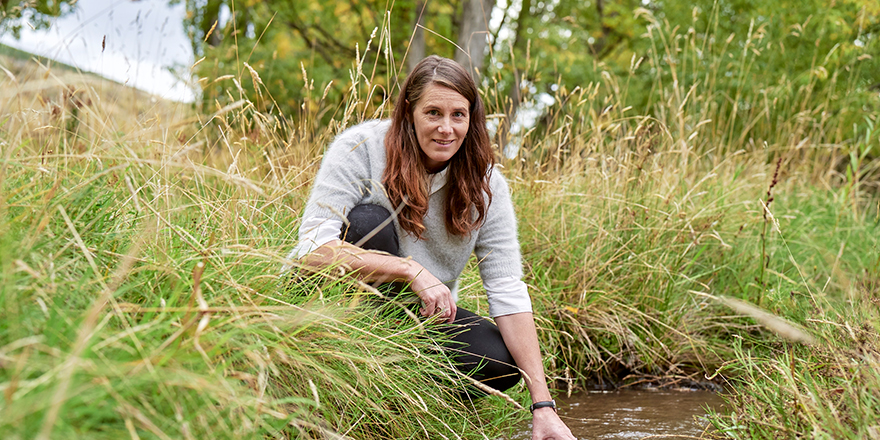
Alumni in the Spotlight – Clare Bradley, Jared Clarke, Kelly Heckler, Tracey Perkins, Erica van Reenen, Dr Jordi Hoult

Here are just a few of the media pieces covering the impact of Rural Leaders’ Programme Alumni in industries and communities across the sector. 
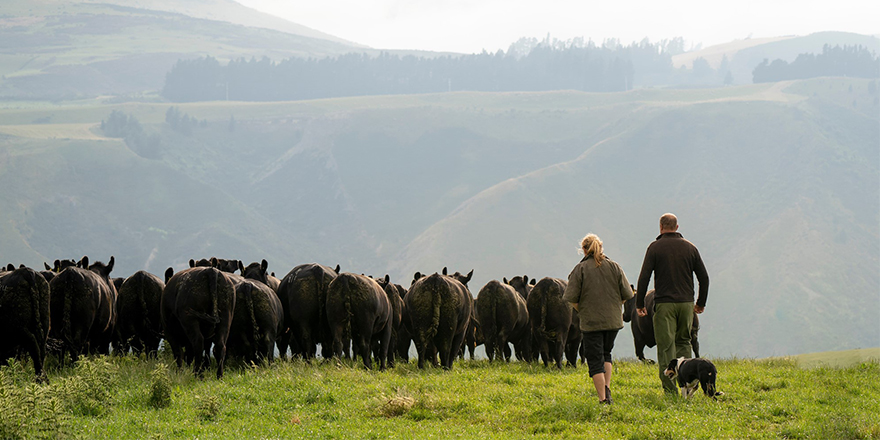
Clare Bradley, Jared Clarke, Kelly Heckler, Tracey Perkins, 2026 Nuffield Scholars

The four new Nuffield Scholars received their awards in Parliament on 4 November.
From Canterbury, Otago and the Bay of Plenty, and representing industries including dairy, sheep and beef and aquaculture, they join 193 Nuffield New Zealand alumni and over 2000 international alumni.

Coverage in the news includes:

Erica van Reenen, 2012 Kellogg Scholar

Erica van Reenen featured on REX (Rural Exchange) recently. Erica is the 2025 Rural Professional of the Year and AgFirst Chair. Erica spoke about her time working in government policy at the intersection of the Clarke and Key tenures. And she spoke about the lessons she learned and her time as a Kellogg Scholar. Listen to the podcast episode here.

Dr Jordi Hoult, 2024 Kellogg Scholar

Dr Jordi Hoult, discusses drawing on her Kellogg research and experience in New Zealand’s food and fibre sector with Sarah Perriam-Lampp on the CountryWide podcast. Jordi explores how to empower mid-career professionals often overlooked in leadership. She identifies her Kellogg research “the missing middle” and highlights mentorship and flexible development as key to helping people in their 30s–50s thrive and shape the sector’s future. 

Listen to the podcast episode here.

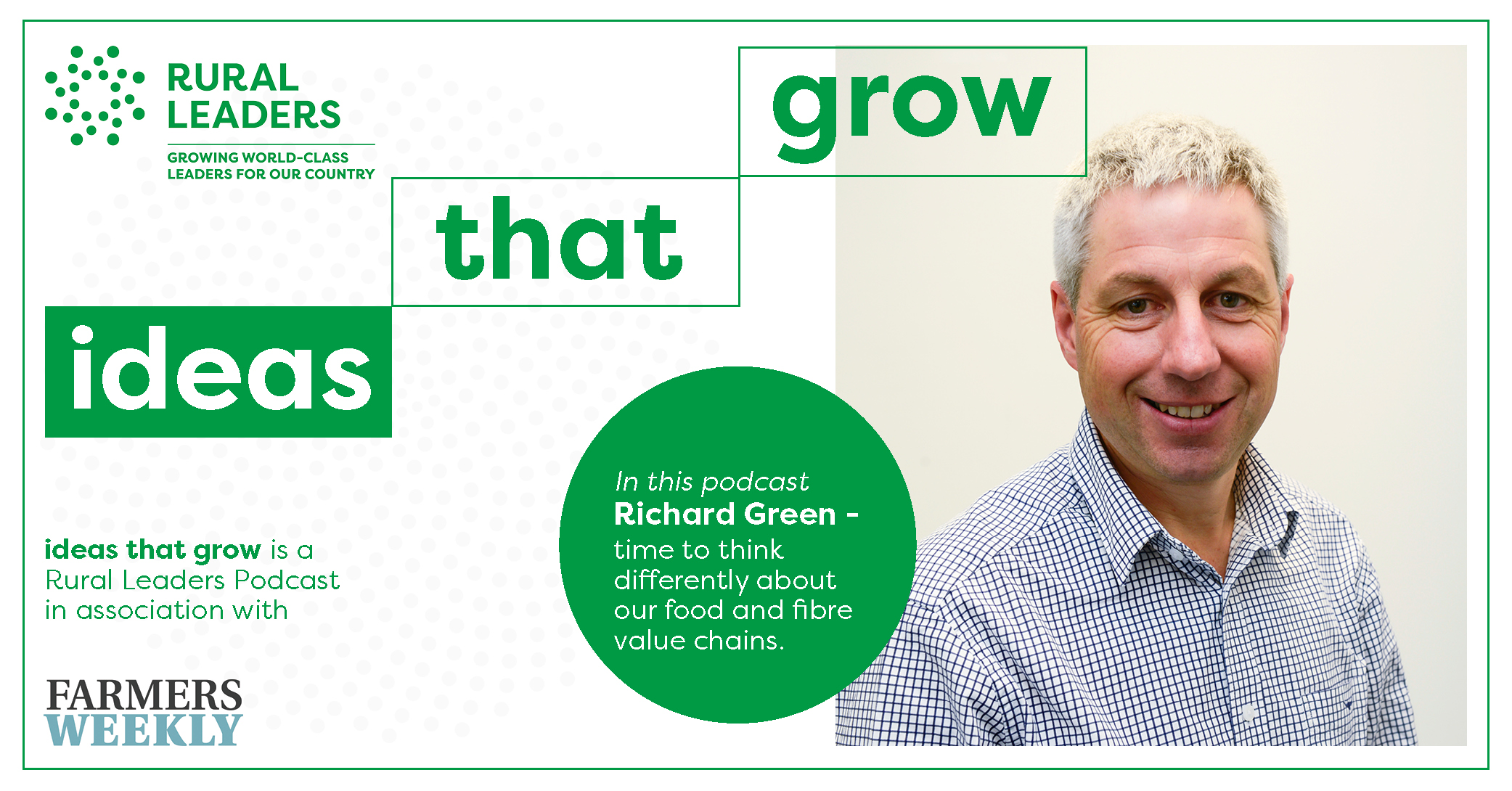
Richard Green – time to think differently about our food and fibre value chains.

In this episode ofIdeas That Grow, Bryan Gibson, Farmers Weekly Managing Editor, talks to Richard Green, farmer, director and 2025 Value Chain Innovation Programme alum. 

Richard discusses his background and his Value Chain Innovation Programme experience.

Richard offers keen insight into why understanding value chains and value chain models is so important for anyone wanting to take advantage of the opportunities New Zealand Inc. and farming have to integrate our value chains and think globally.

Listen to this episode of Ideas that Grow, or click on one of the platform icons below to listen on your favourite player:

Episode Transcript

You’ve joined the Ideas That Grow podcast, brought to you by Rural Leaders. In this series, we’ll be drawing on insights from innovative rural leaders to help plant ideas that grow so our regions can flourish. Ideas That Grow is presented in Association with Farmers Weekly.

Bryan Gibson, Managing Editor of Farmers Weekly:
You’ve probably heard of the Nuffield and the Kellogg Programmes, but Rural Leaders has some other programmes it administers as well. One of those is the Value Chain Innovation Programme, which is open for applications until 23 November. The programme runs in early February (2026).

With me to talk about the programme today is Richard Green, who did it earlier this year. Richard, how’s it going?

Richard Green, 2025 Value Chain Innovation Programme.
Cool, thanks, Bryan.

BG: Tell me a little bit about yourself. What do you do for a crust? Where do you live? 

A diverse background in and out of food and fibre.

RG: I live just out of Christchurch, actually, in a little place called Ladbrooks, which is just on the edge of the town boundary on a few acres. But I’ve had a really interesting career to date Bryan. I’ve done lots of things, but I spent the first 10 years of my career as a farm consultant, working in the farm gate, helping businesses achieve their objectives and family farming businesses, generally.

Then the next 10 years of my career was pretty much involved beyond the farm gate, and I was involved quite deeply in the seed industry. We owned a company called Agricom, a couple of us, and we ended up selling that into PGG Wrightson Seeds. Then I ran the international business for PGG Wrightson Seeds for about five years.

Then the next The next 10 years, a bit longer actually, if I’m honest, perhaps the next 15 years, I’ve stepped out of day to day, been involved in businesses, and ended up doing a lot of governance and working across a large number of businesses. Those mainly in the agri and food sector, but a few not-for-profits and a few outside agriculture.

We’ve been deeply involved in retirement villages and commercial property and honey businesses as well, my wife and I.

BG: Yeah, so quite a diverse background. One of those governance roles you had was with Rural Leaders.

RG: Yeah, correct. When I left PGG Wrightson Seeds to stay connected with a lot of networks, I actually applied for a role. Nuffield at the time were advertising for a CE, and I applied for that role for a day a week. I did that for three years and then was involved with the trustees and pulling Kellogg into the Rural Leaders’ framework and setting up Rural Leaders. And then I was on the board for a few years after that with Rural Leaders.

I was also involved in AGMARDT and in FAR, as trustee in AGMARDT and then director on FAR, Foundation Arable Research. And both those are quite involved in Kellogg, particularly. And to speak with a lot of Kelloggers doing their projects, I think it’s absolutely fascinating, they have such good insights they get as to how the industry operates and where the opportunities are for them to add value to.

BG: The Value Chain Programme, a lot of people might not know a lot about it. That obviously offers in-depth insights into how our food and fibre sector operates, doesn’t it?

Why do the Value Chain Innovation Programme?

RG: Yes, and probably, Bryan, the more time I spend in the industry, the more I realise that we can do so much within the farmgate, and I still believe there’s lots of opportunities to improve there with technology. But a lot of the growth and the value that we can create will actually be beyond the farm gate.

The way we set an industry up to succeed, and then the way we get market signals back and align behind behaviour through the whole industry. For me, that’s why the Value Chain course, I decided this time last year, I guess, that it was something I wanted it to do.

I chair the joint venture between Headwaters and Alliance Meats, which forms the Lumina Land Programme. I’m deeply involved in that value chain. I was really looking for insights as to how do other industries operate, what’s best in class look like, even those industries that we are going really well, what would they like to change if they could wave a magic wand? I wanted to learn from everyone else that was going on the same journey as me, and so that’s why I applied.

BG: What’s actually involved when you signed up to the course? What actually happens?

What happens on the Value Chain Innovation Programme?

RG: Well, it was actually even signing up was quite an interesting process, and I assume it’s still the same, but you had to explain yourself, talk about yourself, and what you wanted to achieve out of doing the course. I probably should go back and read that again.

The process started, for us it was slightly earlier, I think this programme’s in February ’26, whereas ours was late January ’25. It involved a week of immersion in businesses and visiting businesses. I think the programme’s basically the same. We met in Hawke’s Bay on a Sunday morning, and we spent the Sunday with Professor Hamish Gow, facilitating a process talking about almost the academic view on value chains and also grounding that with his experience globally.

Those frameworks, and particularly one called the value discipline framework, that has been so helpful for me in the 10 months since then. I’ve used it so frequently as a way of thinking about value chains. Then during the week, we referred back to those models we talked about on that Sunday all the way through.

I think there’s circa 12 or 14 people on the course, all from different parts of New Zealand, all from different industries, all different ages and stages. So, actually learning their story is always a big key part of that.

And then we spent a full-on day looking in Hawke’s Bay at three different Apple businesses operating within the Apple industry, all operating slightly differently. One being TNG Global, one being Rockit, and one being Mr. Apple.

Then we drove all the way through to Rotorua that night on the bus, plus had a diversion or had an accident on the Napier Taupo Road, so we had to sit there for a couple of hours, so, we had plenty of time to talk on the bus. That’s where you really unpick the day and get everyone’s different views.

Then we spent a day and a half looking at the whole kiwifruit industry, right from R&D and new varieties, right on farm, right through the industry issues, biosecurity issues, and then deep into Zespri, or sorry, pack houses before Zespri, and then Zespri as to where their growth opportunities are, where their challenges are, and actually looking at this hugely successful industry, looking at understanding where it came from. It was a deregulated industry in the ’80s, and it was failing.

And then we went over the hill to Waikato, looked at the dairy industry, a deep-dive, the same way we did with kiwifruit, right from R&D, the milk testing station, on-farm, factories, and then where Fonterra is going. It was the Fonterra value chain we studied.

Then we also looked at the meat industry with Greenlea (Premier) Meats, and that was fascinating insight. Then we also talked about technology and how technology could disrupt value chains going forward. Then we had some case study learnings at the end of it. By the time we left on the Saturday, we were inspired, had new ways of thinking, but we were also pretty buggered!

Understanding value chains.

BG: You mentioned it earlier, as you say, lots of farmers or people in food and fibre know a lot about how to produce food on farm, how to grow grass or how to grow kiwifruit or apples, that sort of thing. But once someone comes and picks it up, a lot happens. And understanding how that works and the challenges that those who are processing and marketing our produce face, that’s really good to have a good understanding of that across the It’s a small sector, isn’t it?

RG: Yeah, and I actually now understand better also, Bryan, as a farmer sitting within the farmgate, you also need to understand who you partner with. Because how your partner is setting themselves up to win, and I use this word sitting in yourself up to win quite often because you’ve actually got to work out where your niche is right through the value chain and how you can leverage that niche to be successful. Because the profits can’t flow back to the farm unless your partner in the value chain is successful. There’s different ways of being successful. There’s no one way.

The thing we learned is some are successful because they innovate around products, and Zespri is one of them, and they have unique products, controlled by IP and they’re champions at bringing on new products to solve customer problems.

Some innovate around customers and work back from customers to solve their problems. It might be through consistency of a product or timing of delivery or something. They work back the whole value chain to solve customers’ challenges. Some, which is historically what we’ve been really good at in New Zealand, has been the lowest cost producers and providing value with a certain quality standard for the customer.

And so they are the only three areas you can win in. And the insight was you can be successful in two, but never in three. And so as a farmer, you have to know what’s your partner in the value chain, how they’re aligned themselves to win, and whether that meets what you see as you want to do, because you have to be aligned to a similar value discipline as them. So we don’t do a lot of discussion about that and talking about that because we only look at our part of the value chain.

So I think that’s what I found invaluable, and everyone on the course found invaluable, just that ability to look up and down the whole value chain and actually think about how does everyone win and how could we win far greater together if we actually work together different or better.

BG: It is so important to have that alignment of ideology, I guess. Everyone needs to know where you’re going and what your goals are. Otherwise, if you don’t get that aligned, then the chain breaks.

RG: We find that very much within our Lumina Land Programme. We’re a customer-intimacy type value chain – I worked out. I didn’t actually know that beforehand, but I probably did, but then you have a model to wrap it around. So transparency and alignment around everyone’s goals and financial incentives to align everyone around, that’s pretty important, too.

So I got considerable value and as a side note, Bryan, I always believe, and I absolutely believe, I’ve done a lot of personal development over my career, and I always tell people that there’s a 10 times return on investment. So whatever I invest, I can get 10X on that, I believe, within the next two or three years. I absolutely believe they are this Value Chain (Innovation) Programme.

I got so inspired by it I’ve committed to doing one this next January at Harvard, actually, which is a lot more expensive than the Value Chain programme, but it just has made me realise that the opportunities we’ve got as New Zealand Inc. and farming to actually integrate our value chains better and think a lot more globally.

BG: I actually never thought myself about those three ways to win, but you know it subconsciously. Giving it names and putting models and theory around it is something else again.

Think differently. Get inspired.

RG: The interesting thing is, Bryan, that all our training, my training through Lincoln, and I assume still now, and all our teachings, actually, we’re taught how to perform and operate in the operational excellence space. But it’s actually jumping that chasm and actually working back from customers and thinking of it quite differently, about marketing, about branding and around IP. We lack skills in those areas, and we lack ways to finance some of that, too. So that’s been a limitation to growing some of those business models.

I think we actually need to think a lot more like that and actually work out how we build skills in each of these. To me, there’s no right or wrong value discipline. It’s just whatever you do, you’ve got to do exceptionally well, and you’ve got to be able to carve out a niche and a point of difference from all your competitors by doing it well.

BG: In terms In terms of value chains, we quite often, in our thinking, focus on the food producer and the marketer or last seller at the end of the chain. But those things like processing the packhouses, the packaging, the transport, all that stuff, it’s not very sexy, I guess, but it’s so important.

RG: It’s absolutely critical. I can talk from experience around our Lumina Lamb, which is a partnership between the farmers with their genetics and their farming system, which is a codified farming system and the unique feed we put. Then the processor, which is Alliance Meats, and they’re processing and timely processing, where it’s all forecasted.

Also their ability to process the cuts that were required, to collect the offal when we’re trying to add value on offal and pelts, and then the transportation issues, which are huge on a global basis to get, whether it’s a container or a carton in the market. Then right through to how you partner with, in our case, chefs in food service, and how you get access to that. And yet in a big long chain, one breakdown can absolutely kill the whole chain. And so everyone’s just as important as each other, or it doesn’t work.

BG: It sounds like this programme would suit anyone in food and fibre. Everyone works in their own little space in the chain. But if you want to know about the rest of the links, then this is the course for you, I guess.

RG: What would make it really excellent, cost a lot more. But if you could get offshore and follow right back from the customer, that’s the only missing bit in that. But that’s just another level in terms of cost and time. But I think for everyone producing food, it ends up in a value chain.

Anyone who’s considering how their value chain could be optimised and having the ability to think and talk at those levels with directors, whether it’s co-ops or the companies they supply.

But even comparing and contrasting across industries. I mean, why do we see the kiwifruit industry as being successful and potentially the dairy industry versus sheep and beef? Versus the apples industry? What could we learn out of that?

Why is Rockit? What’s their target market in their niche versus Mr. Apple? How are they carving out different business models? If Anyone interested in business is really valuable. Anyone interested in sitting there saying, How do I develop skills to work out who I partner with in the future from my farm business? I think it’s very valuable.

BG: Yeah, and it has that in the field, practical, Here’s what we’re doing as a business aspect to it, but also, Hamish gives you the theory to look at it critically.

RG: Yeah, and the majority of the people in the course, when I did it last year, were practical farmers. All of us came from within the farm gate way of thinking, and we were trying to stretch ourselves beyond. That was the beauty. We’re actually all very similar from our backgrounds, although we’re from all different industries.

BG: Excellent. As I said earlier, the next value chain programme, applications are open until the 23rd of November, and the programme runs from the 8th to the 14th of February next year.

Thanks for listening to Ideas That Grow, a Rural Leaders podcast presented in Association with Farmers Weekly. For more information on Rural Leaders, the Nuffield New Zealand Farming Scholarship, the Kellogg Rural Leadership Programme, and the Value Chain Innovation Programme, please visit Ruralleaders.co.nz

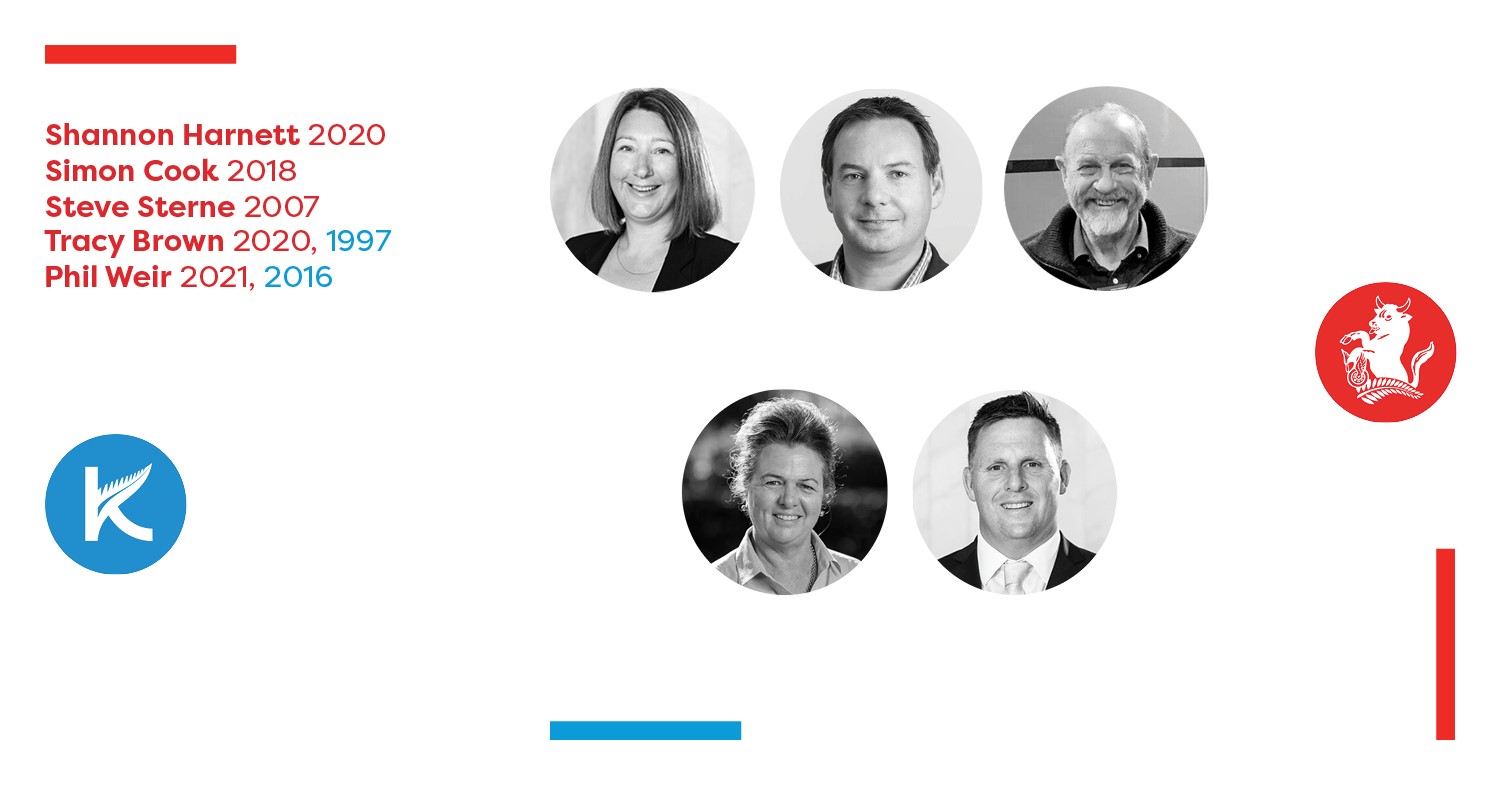
Alumni in the Spotlight – Tracy Brown, Shannon Harnett, Steve Sterne, Simon Cook, Phil Weir

Here are just a few of the media pieces covering the impact of Rural Leaders’ Programme Alumni in industries and communities across the sector. 

Shannon Harnett, 2020 Nuffield Scholar

Shannon Harnett shares her recent AI learning experience exclusively with Rural Leaders.

Read Shannon’s article here.

Tracy Brown, 2020 Nuffield Scholar, 1997 Kellogg Scholar

Tracy Brown has been re-appointed unopposed as a director to the DairyNZ Board.

Read the article here.

Phil Weir, 2020 Nuffield Scholar, 2016 Kellogg Scholar

Phil Weir has an opinion piece published on Farmers Weekly about whether it’s time to consider feedlots as ‘batteries’ for the meat supply chain.

Read the article here.

Steve Sterne, 2007 Nuffield Scholar

Steve Sterne was recently honoured with NZPork’s Outstanding Contribution Award.

Read the article here.

Simon Cook, 2018 Nuffield Scholar

Simon Cook has been elected to the Horticulture New Zealand board.

Read the article here.

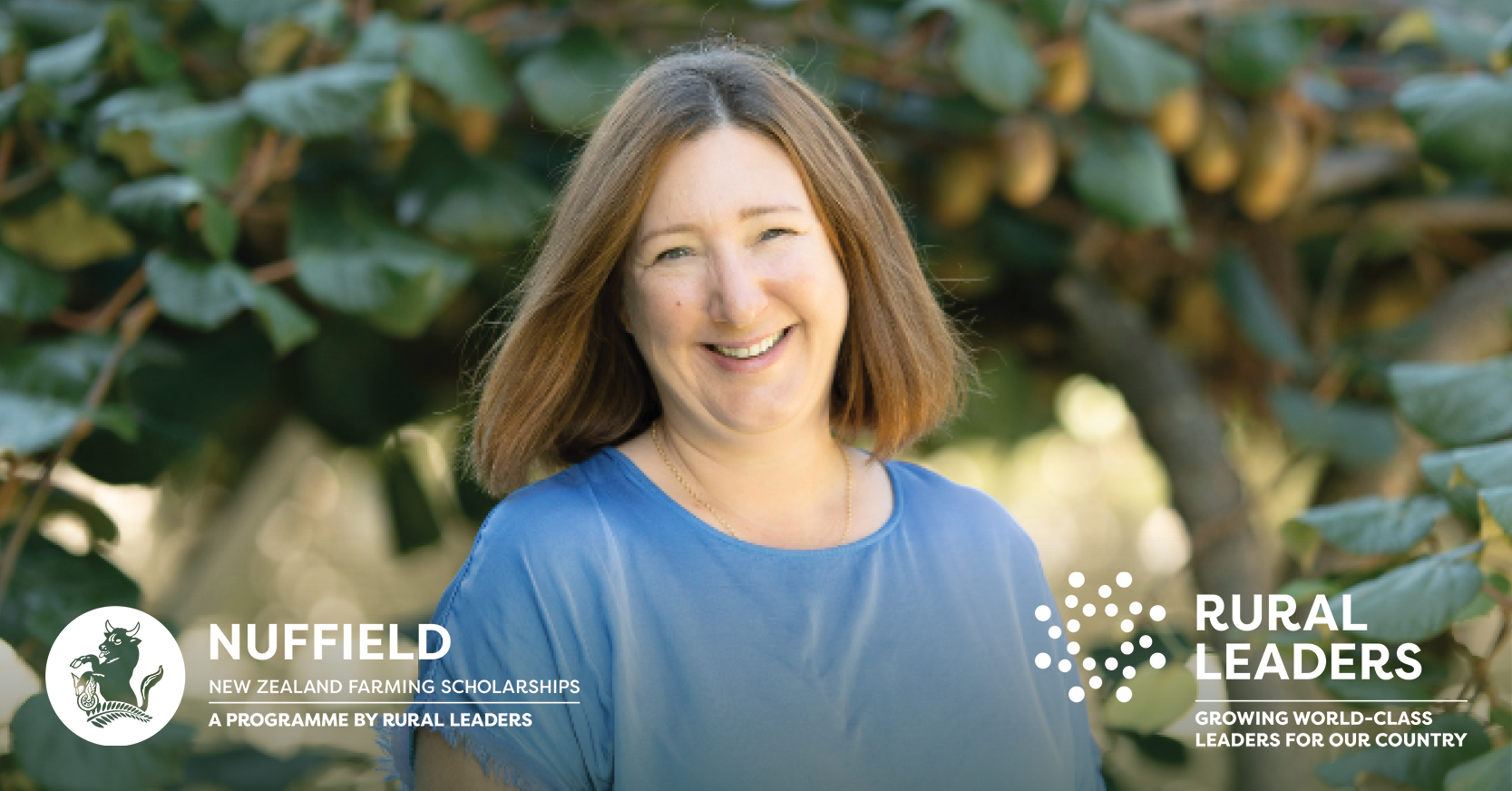
Shannon Harnett – Making AI work for you

Shannon is a 2020 Nuffield Scholar, Director and Co-Owner of Rural Accountants and has investments in agriculture, horticulture and aquaculture businesses. In this article Shannon shares her insights into how to make AI work well for you.

Making AI Work for You
The first time I saw ChatGPT in action was in the summer of 2023, at a friend’s house. We asked it to write a poem about accountants. It was hilarious — but underneath the humour, I realised the potential.

Very quickly, AI became my assistant. At first, it fixed grammar and spelling in emails and reports. My writing became sharper, more concise, and easier to read with far less grammar and spelling mistakes! Mark Twain once said, “If I had more time, I would have written less.”  With AI, that constraint no longer applies.

The real turning point, though, was when I used AI to turn something messy into something structured and useful. Not “robots taking over the world.” Just getting the AI to ask me questions, one by one, about a project I was working on, then pulling my answers into a clean, usable format.

That’s when it clicked: AI isn’t just a word-smithing assistant. It’s a strategic tool. Used well, it takes work off your plate, sharpens your thinking, and creates scale without the hours of refining.

It Starts with the Question
The biggest lesson? It’s not about having the right answer. It’s about asking the right question.

I now frame prompts like I’m briefing a new hire: clear role, clear context, clear task. For example, as a CEO, I don’t just type, “Help me with strategy.” That’s far too broad. Instead, I say:

“You are my Scaling Up Strategy Assistant. Ask me one question at a time. Start with People, then Strategy, then Execution, then Cash, then Risks & Opportunities. Only show me the full summary once we’ve covered all five areas.”

The result is an interactive interview where AI does the admin while I do the thinking. That’s the power of a good prompt: it forces clarity, and the output is miles better than a vague question ever delivers. And, in truth, learning to prompt AI has made me a better leader — clearer, more structured, and more intentional in what I ask of others.

Small Steps, Big Wins
You don’t need to overhaul your whole business to start. Try it on something small, try it on something creative.

Don’t know what to have for dinner? Take a photo of what’s in the fridge, upload it to AI, and it’ll generate recipes with step-by-step instructions.

It sounds trivial, but it proves the point: AI can sift through messy inputs, structure them, and give you something useful in seconds. In business, the same applies — pulling data from multiple reports, tidying client communications, or drafting meeting notes. These aren’t tasks we can’t do. They’re tasks that chew through time — and AI gives that time back.

The Power of Projects
The real magic happens when you start treating AI as a project partner. I’ve been experimenting with GPT-powered projects that run like structured workflows — guiding me step by step, capturing the right inputs, and producing a clear, consistent output.

Here’s what that looks like:

  • A marketing project where AI builds a content calendar in my brand voice.
  • A reporting project where AI pulls numbers from my files and formats them into a tidy monthly pack.
  • A strategy project where AI interviews me (or my team) and distils the answers into a one-page plan.

You define the outcome, give AI the right resources (files, data, context), set simple rules, and let it guide the process. The result is structure, quality, and momentum — without false starts or bottlenecks.

And once a project is set up, anyone in the team can run it. That means clarity and consistency, whether I’m leading it or handing it over.

AI in the Tools You Already Use
AI isn’t just in chat windows. It’s already creeping into the software you use every day.

Take Microsoft Copilot. It can scan emails and Teams chats, spot an approval request (“Can I go ahead with this?”), and track it. If three days go by without a reply, it nudges the approver and updates the requester.

That alone kills the “lost in the inbox” problem that slows teams down. But it also shines at surfacing related documents inside Microsoft 365 — I’ve saved hours finding what I need.

A New Way of Leading
Here’s the mindset shift: AI isn’t just tactical. It’s strategic.

The sticky note on my desk simply says:
“How can AI help me do this?”

Whether I’m writing a report, mapping a process, or planning strategy, I pause and ask where AI could take the load. Most of the time, it’s not about replacing me. It’s about clearing space so I can show up where it really matters — with clients, with strategy, with people.

How to Start Today
If you’re ready to dip your toe in, here’s a simple path:

  • Pick one task you repeat often (emails, stakeholder lists, client notes).
  • Write a clear prompt that sets role, context, and task.
  • Let AI break it into questions and interview you.
  • Use the output, tweak it, and save the prompt for next time.

Once you’ve got one win, build a small “AI toolkit” for yourself and your team — a set of prompts or projects that anyone can use.

Final Thought
AI won’t magically run your business or your life. But it will tidy the messy bits, speed up the slow bits, and track the bits you’d usually forget.

And when you start treating AI less like a novelty and more like a colleague — one that never gets tired of chasing approvals or formatting tables — you’ll see what I’ve seen: the power to do more, without burning yourself or your team out.

I completed the Spark-funded AI Mini MBA course, and it was one of the best investments of time I’ve made. If you get the opportunity, take it.

Shannon’s 2020 Nuffield report on Kiwifruit PVR’s ‘Getting Plant Varieties Right’ can be viewed here.


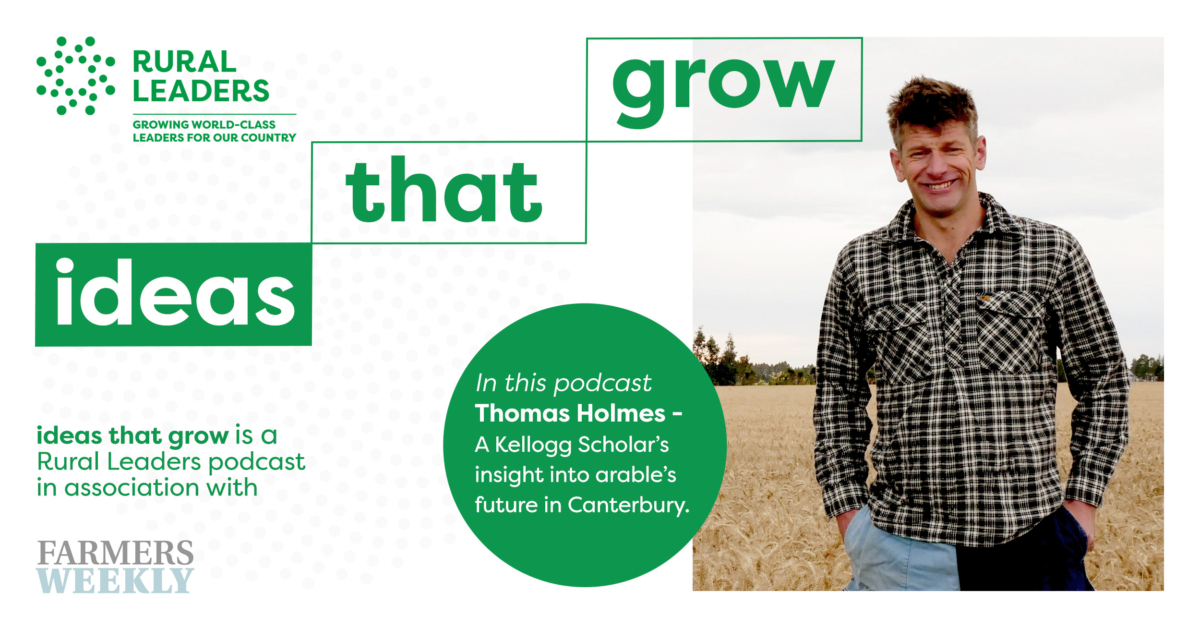
A Kellogg Scholar’s insight into arable’s future in Canterbury

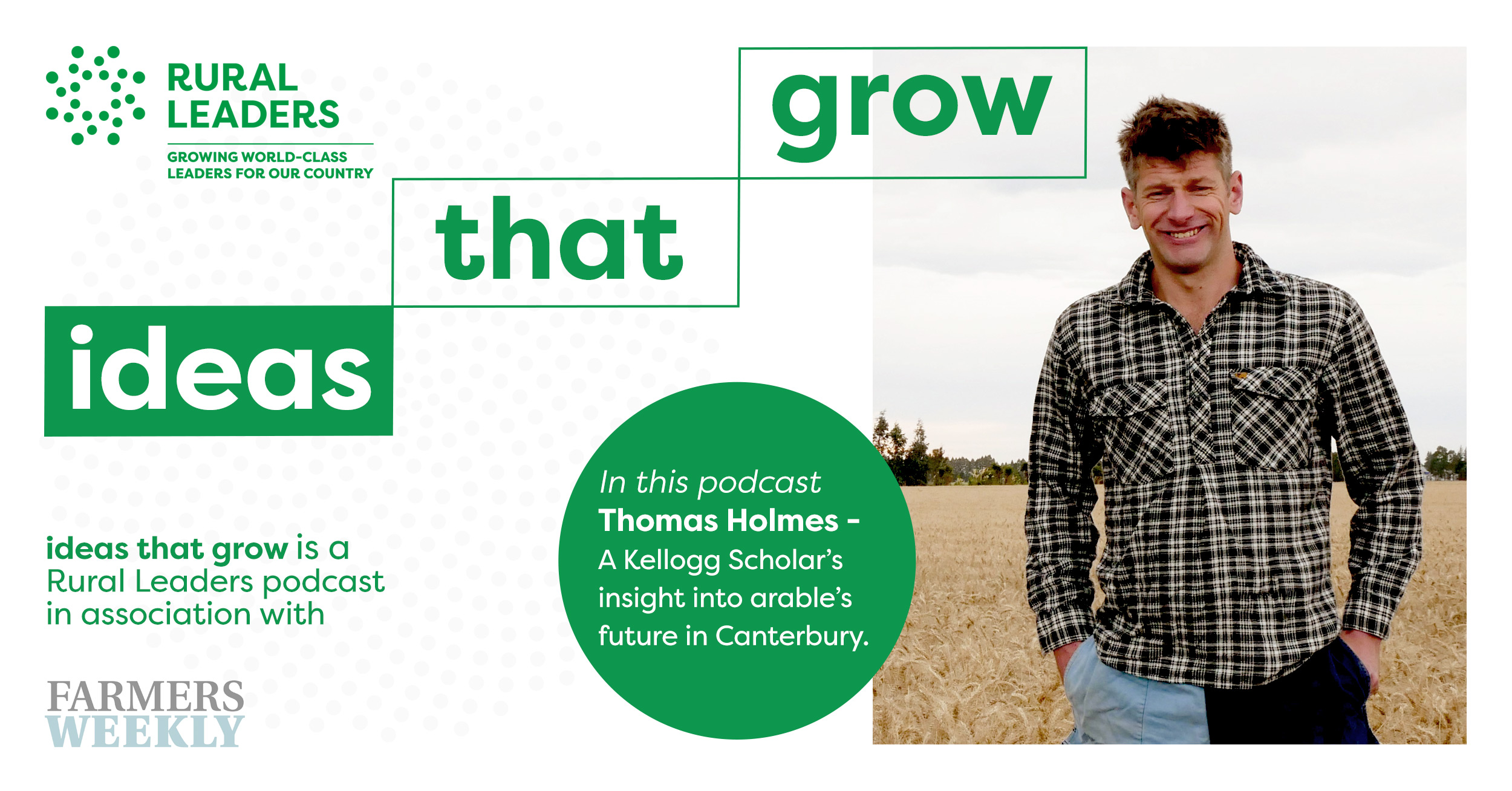
In this episode of Ideas That Grow, Bryan Gibson, Farmers Weekly Managing Editor, talks to Thomas Holmes, arable farmer and a 2024 Kellogg Scholar.

Thomas discusses his family farm’s evolution, overseas experience, his Kellogg research report and his Kellogg experience.

Thomas unpacks his report’s ‘what next’ view of arable farming in Canterbury.

He discusses profitability challenges, diversification, and integration with other sectors. Thomas advocates collaboration, mindset change, and leadership from younger farmers to adapt to climate, market, and technological shifts.

Listen to this episode of Ideas that Grow, or click on one of the platform icons below to listen on your favourite player:

Episode Transcript

You’ve joined the Ideas That Grow podcast, brought to you by Rural Leaders. In this series, we’ll be drawing on insights from innovative rural leaders to help plant ideas that grow so our regions can flourish. Ideas That Grow is presented in Association with Farmers Weekly.

Bryan Gibson, Managing Editor of Farmers Weekly:
You’re with Ideas That Grow, the Rural Leaders podcast. I’m Bryan Gibson, the Managing Editor of Farmers Weekly, your host, as always. With me on the show this week, we’ve got a very recent Kellogg scholar, Thomas Holmes, arable farmer from Canterbury. G’day, Thomas. How’s it going?

Thomas Holmes, Arable Farmer, 2024 Kellogg Scholar:
Good, thank you. How are you doing?

BG: Pretty good. You did the Kellogg programme just last year?

TH: Yes, I was in cohort one in 2024, #52 was our cohort. It’s still fairly fresh in the mind.

BG: Have you recovered?

TH: I think the brain has. It’s a lot. It’s a full-on programme. You can’t really mentally prepare for it. It’s one thing going in there with all these perceived ideas, but it’s another just sitting there and listening. It’s very eye-opening. It takes a lot of time.

Family Farm Background and Evolution

BG: You’re obviously an arable farmer. Tell me a little bit about your journey there. Did you grow up on a farm?

TH: Yes. I’m a fifth-generation mixed-growing farmer in Methven. My family has been there for coming up 150 years, one of the founding families of the local township. The farm has decreased over the generations. It started off at around 6000 acres. We’re now down to about 550. It’s the journey of succession and having a farm for a long time. It gets smaller and has changed a lot.

I guess when I was on the farm full-time, we were doing mixed arable, so just doing many crops, about 300 hectares of crops, 650 bull beef. So, finishing to 600kg plus and 2000 lambs. But recently, in the last year, we’ve downscaled. Just the family farm’s left, so it’s about 220 hectares. It’s a never-ending change, really. What’s next? There’s a lot going on in the industry, and it’s working out what, individually, you can do.

Career Path and International Experience

BG: Did you always know or want to carry on the family farm?

TH: I did the typical Lincoln Uni, Ag-Sci. I went farming straight out of uni. I did various jobs overseas and here, everything from large-scale arable farming in the UK, in Canada, and a big beef finishing farm in Scotland. I’ve dabbled in robotic milking, did a little bit of organic cropping, and then worked on a large-scale farm in Dore, which gets all the processed vegetables, and then the family farm.

I’ve always wanted to be a farmer, and I think it’s a fantastic career. Obviously, at the moment, the arable industry is at a lull. I think it’s still a fantastic industry. Growing crops, growing animals, I think it’s probably the best job in the world, but it just doesn’t pay that well at the moment, so you have to do everything that you can to make it work.

Kellogg Research Focus: The Future of Arable Farming

BG: Touching on your Kellogg report, you look to see some ways for the success of arable farming in Canterbury in the future. Obviously, as you mentioned, times are pretty tough for arable farmers right now. But what brought you to that topic?

TH: I wanted to really dive into the sector. It wasn’t necessarily the dynamics. It was more about ‘what next for the sector’ because the profitability side of things has not improved for a long time. It’s been hidden with growers increasing yield to basically beat inflation, and inflation has caught up. We’re in a situation where we can’t really out-compete inflation. There needs to be more options available to growers, whether it’s different crops or different opportunities that aren’t necessarily arable.

I guess it got me thinking, ‘where do growers see themselves in the next 25-50 years?’ I was looking at my career, lifetime and beyond. It’s really easy to look a year ahead or two years ahead. But I thought, well, why don’t we just push it to 25-50, because people don’t think like that, necessarily. And this industry is very much on the point where they are at a crossroads. They need to make some real dramatic changes to actually improve the profitability for the growers to enable them to still do what they love to do, and that’s grow crops. They’re mixed, so they have animals, but predominantly, their passions are machinery and growing crops for the end users.

I think that’s what really drove me to look at ‘what next for the industry’, where are we going and where are the opportunities as a sector as growers. To work together was my thing, being involved in a few discussion groups. With FAR Growers Leading Change groups, it’s really important to have those connections and talk to growers of similar ages and stages, and some of them are of similar sizes and bigger, but they’re all in that same boat of ‘what does the arable sector look like’, because you can’t just keep on doing what we’re doing.

Farmer Perspectives: Looking 25-50 Years Ahead

BG: You mentioned that we’re not very good at thinking further out, and you were looking 25 to 50 years. What was the range of views you got when you talked to arable farmers?

TH: For a lot of them, they were taken back by that view, because at that current time, last year, we had one of the wettest harvests in history, and people were pretty, dare I say, depressed and a little bit in a slump. It wasn’t the best timing to do a Kellogg, but I knew it was going to be a challenge to talk to them. Because from my opinion, when you’re in the lowest point, you usually make some very strategic decisions because you need to. You can’t carry on doing what you’re doing, so you’ve got to get out of the hole and change. A lot of them were like, ‘we’re looking at diversification. We’re looking at off-farm income in some way, shape, or form’.

And then there was guys that were looking at doing berry fruits or apples. They looked at the analysis. At the moment, it doesn’t work for them, but they’re looking beyond arable, a lot of them. And some of the guys that I interviewed are already at that stage, they’re doing processed vegetables, they’re doing onions, potatoes, carrots, and their specialty seeds as well. But they’re looking beyond arable because the margins just don’t stack up. But they’re important to be part of any rotation. You need your cereals, you need your grass, you need clover in your crop rotation to keep the system going, but it wasn’t necessarily their money maker. It’s a harsh reality of things and I think growers understand that. There’s a lot that do deer grazing or beef animals, a lot do lamb finishing when it stacks up financially.

So they’re always doing something different to enable them to do what they love. And I think that’s the key point. And maybe that takes away the value of ‘I’m an arable farmer’, but the reality is, you’re still an arable farmer, you’re just going to be a very diverse arable farmer – more integrated with multi-different revenues coming off farm. And Arable might not bring a lot to the table. But at the core, I think that’s where people get a bit frustrated, because it’s what they love, and it’s a hard thing to watch. But you’ve got to make the right choices.

Key Recommendations: Integration and Collaboration

BG: Obviously, there was diversity of opinion amongst the people you talked to. You wrapped it all up in your report and came up with a set of recommendations?

Integration with Other Agricultural Sectors

TH: My recommendations for the industry was looking at when you become more integrated as a sector, and we’re already well-integrated into dairy with providing your specialty seeds, so your grass, your clovers, your straw. A lot do grazing. So you’re already there. There’s opportunities to be more integrated into your chicken and pig operations. I think there’s a real opportunity for the likes of your trading of straw for nutrients. The one thing that crop farmers need is nutrients to grow crops, and it might not be the usual thing, but it’s a common practise overseas to spread cattle muck and pig muck and chicken muck. And it’s not really a common practise here in the arable sense. I think it’s that trading of nutrients. It’s looking at how we can integrate into their supply chains and be part of that because, individually, Arables is not going to do it, and we need to be smart about that.

Breaking Down Competitive Barriers

TH: Another one was probably looking at collaboration. I think the big thing with the industry being so small, we’re very competitive, we’re very individualistic. We compete for contracts. It gets pretty cutthroat at points, especially when there’s not a lot of contracts around. Some clover markets, especially, are very tightly held, very contestable, and at the moment, still in a slump overseas with oversupply from Europe and America. We’re looking at another year or so of actual tough times.

I think that’s where, in the industry, groups need to actually form to collaborate, whether that’s through sharing machinery, going together to buy input costs, to go bulk, to get a little bit cheaper deals, share chemistry. That mindset, I think, really needs to change because we’re so focused on doing our own stuff, growing our own crops. When the reality is, I’m in a group of ten people, different farms within ten kilometres of Methven, and we’re all pretty similar sizes, similar operations. There’s a little bit of difference, obviously, but there’s no reason why we can’t actually work together.

You could buy a bigger machine, cultivator, and go cultivate all these guys’ crops. We’ll do the ground prep and all that stuff. You could just do that. Builders don’t just do our own thing. It’s just very set. It comes down to control, but also it’s your farm, you do what you want to do. But that’s the mindset that I think needs to change of where we can actually work in together, help each other out, actually spread the costs over a large area. And contractors do that. That’s why they’re so successful in terms of their scale, because they’ve got so much land they’re actually covering, doing various jobs with people that don’t have time.

Overcoming Traditional Barriers

TH: Farmers just don’t do that. They don’t seem to do it. I think it becomes too hard because if you own a piece of machinery with somebody and someone breaks it, then it gets into a bit of a fight on who’s paying for what. Maybe there needs to be systems in place that you can just split the costs. That’s why a number of growers are involved in it. It’s just this simple mindset change that I just don’t think is there, but it needs to be.

The Challenge of Farm Independence Culture

BG: It comes up a lot, and it’s often a hurdle that’s hard to clear in the food and fibre sector. It goes back to that traditional feeling of whatever’s inside the boundary of these fences is mine, and I am the sovereign of what happens here. People have trouble taking advice from people that maybe they don’t trust or having the government tell them how to do things. That’s a pretty hard barrier to break through.

TH: Yes, I think so. But if you go back 100 years or so, you had 50 men and women on your farm doing your work for you. Why is that any different? It’s just in a modern context. But I feel it’s just the community has changed. Over time, obviously, you’ve got different people coming in and out. Farm communities are very tight, but they’re not tight in the respect that they’re actually working together. There’s obviously aspects of it across the country, and there’s communities that are doing really well, and they do work together, but I don’t see it enough, especially in the arable sector.

I question a lot, and it’s more what can you do about it to make some of these things actually improve the bottom line? Because ultimately, it is about the bottom line for arable. I think that was the main challenge: profitability. A lot of these opportunities are about helping to solve profitability, not necessarily entirely solve the profitability issue. It’s not going to be one thing. It’s going to have to be a magnitude of things to actually make any real change.

Personal Leadership Development Through Kellogg

BG: Now, as well as the scholar report, obviously, the Kellogg programme is focused on leadership development. How has that changed you? How do you approach life and work now you’ve got these tools in the toolkit?

TH: For me, I just take any opportunity I can to do projects. For work, to use the knowledge that I’ve got, but also to just put my hand up for things. Locally, I’m involved with my local catchment group. It’s in the farm, it goes through the farm. We’ve got a bit of a potential flooding issue with the creek. It’s just actively getting involved in the community a bit more. Also just keeping involved in those Grower Leading Change groups is really important to keep a bit more stabilisation on what’s going on on the ground. For me, long term, it’s looking at opportunities in leadership. I think there needs to be more people, dare I say, my age on those boards because we are the future.

The reality is people my age and younger than me are the ones that are going to be farming in the next 35 to 40 years, 50 years. It’s actually getting their opinions across, and I think that’s probably something that I’m very passionate about, actually getting our seat at the table and getting our opinions heard because we haven’t got 30 or 40 years life experience or business experience. You’ve got to start somewhere and I think that’s really about putting your hand up and not being afraid to actually just try things. Well, this podcast. I think it’s good to be able to get your opinion across. It’s a different way of messaging, really.

The Need for Disruption and Adaptation

BG: Like you say, your studies discovered that there needed to be some change or some new thinking in the arable sector. It takes people to usher that in or help get that message across and get the wheels turning for that to happen.

Adapting to Climate and Market Changes

TH: I think so. You’ve got to disrupt the system. It’s not necessarily about criticising what the system is. It’s about actually looking at, well, ‘are we fit for purpose? Do we actually need to change?’ And the reality is we do. And I think that’s been pretty apparent in the last decade with the likes of trade, the likes of volatility we’ve had with the weather, the way harvests have been. We need to change how we do things because we’re not getting the same climatic conditions that we had in the early 1980s and 1990s. The Nor’westers aren’t as prominent. We’re not actually getting the great harvest of those days. It’s certainly not as hot where I am in summer as it used to be.

We need to change how we farm with all that technology and what’s coming for us. I think there’s plenty of other opportunities for arable to be part of that story, whether it’s plant proteins or these new food trends that are coming forward. We need to be part of that story instead of just the guys that grow grain and seed, because we are more from that. I think that’s where we need to actually put a hand up and try. I think that’s probably really taking us off the farm a bit more than we’re comfortable with, because the reality is we need to go beyond what we’re doing. It is changing your mindset and it’s not an easy thing to do.

The Value of Being Challenged

TH: For me, Kellogg has definitely changed my mindset because you become so siloed and rigid in your own thoughts because you just get so set in what you do and how you think, and you think you’re right, and you get challenged. I think it’s fantastic to get challenged because there’s so many people with different opinions from various backgrounds, it just really gives you an open mind. Because no one’s right. It’s just actually just listening to someone else’s opinion. Regardless whether you disagree with it or not, I think it’s actually just it gives you that understanding of where they’re coming from and why they think like that.

I don’t think it’s a bad thing to be challenged. I think that in the Ag sector in New Zealand, they need to be challenged because I don’t think they’re necessarily adapting to what is happening out there. I think it is pretty hard to change at the speed that things are going, especially with the tech and the way supply chains are working and the market’s always changing. It is hard, but we need to be a bit more nimble instead of reactive, I think.

Recommendation for the Kellogg Programme

BG: Having more colleagues with that mindset, AKA, going through the Kellogg programme, would be good, so, something you’d recommend to others?

TH: Yes, 100%. I think the Kellogg programme is a fantastic programme. It not only challenges you on your thoughts and your views, but it just gives you an eye into what the food and fibre sector is beyond your sector. You’re in it with like-minded people. It’s a really enjoyable process. I think the big part of it is actually just the networking, the talking to industry leaders in the Chatham House rules sense, where you can get some real open discussions, where you don’t get that in the real world. I think that’s one of the beauties of Kellogg. It opens a lot of doors. I got a lot of interviews just based on that I was doing Kellogg, obviously, being an average farmer helped.

But I think people just love the programme. They think it’s a really great programme. It’s a good thing to do if you want to push yourself to try something different and find a project. If you got a project that you really want to find something about, just do it. I think it’s a great thing to do. Don’t be afraid to change your mind on it either because I think you get challenged, you get on it, and it’s a good learning process.

BG: Thanks for listening to Ideas That Grow, a Rural Leaders podcast presented in Association with Farmers Weekly.

Find out more about Ideas That Grow.

Hamish Gow – Inside the Value Chain Innovation Programme

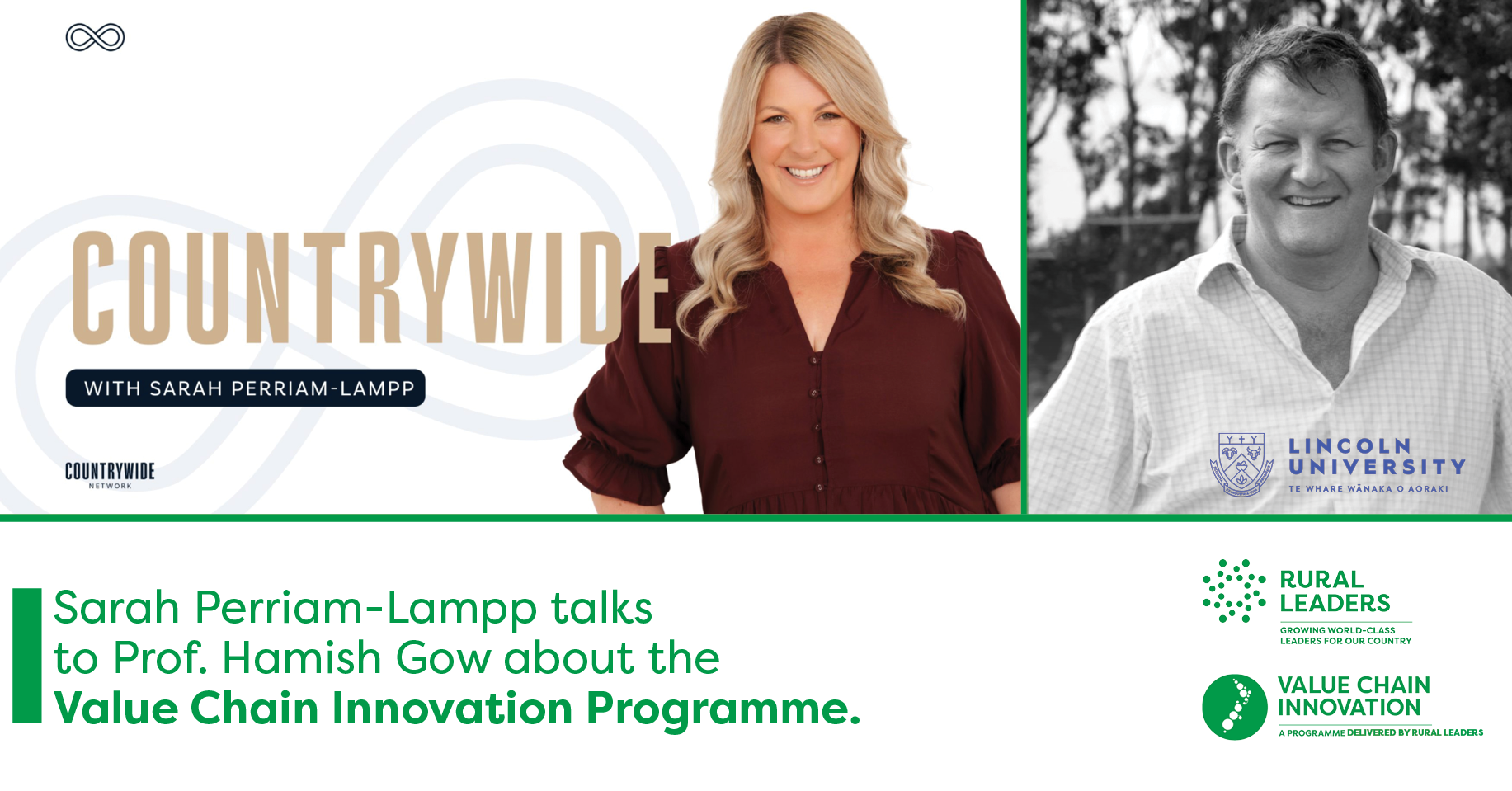
In this episode of The CountryWide Podcast, Sarah Perriam-Lampp talks with Lincoln University’s Professor Hamish Gow about the Value Chain Innovation Programme, delivered by Rural Leaders.

Hamish explains how the programme takes participants inside New Zealand’s dairy, kiwifruit, apple and red meat sectors to understand how value is created, captured and shared, and why the real learning happens on the bus as farmers, entrepreneurs and industry leaders connect and challenge their thinking.

Listen to the episode below, or click on one of the platform icons below to listen on your favourite player:

CountryWide Podcast Transcript

Sarah Perriam-Lampp, CEO and Editor-in-Chief, CountryWide:
Welcome to another episode of the CountryWide podcast, and catching up with one of my favourite people, Hamish Gow from Lincoln University. Today we’re going to talk about the Value Chain Innovation Programme, something that I absolutely loved doing a few years ago. I’m sure it’s evolved a little bit from the first one?

But I’m really keen to hear about what everyone gets up to on the programme because the deadline to submit your application for 2026 is coming up soon. So, Hamish, can you tell us a little bit about the programme and how it’s evolved?

Hamish Gow, Professor, Lincoln University:
Well, it hasn’t really evolved a lot, right? Because it’s designed to give the participants a model or framework to be able to understand and evaluate value chains and how we create value in those value chains. Then we walk through the four major value chains in New Zealand, two in the livestock sector and two in horticulture.

The Four Value Chains

HG: We walk through the dairy value chain and analyse and evaluate how Fonterra creates economic value for farmers and how that comes back to them. We then walk through the Zespri value chain and look at how that brings value back to both the orchard owners as well as into the other members of it, which are the packhouses, and understand that model. We then look at the apple industry and how that creates value for the growers.

Then finally, we look at the red meat sector and understand how value comes back to farmers and producers in the red meat sector. And around the edges of that, we look at government support, regulation, and legislation, and how that’s enabled some of them and caused constraints on them, and then technology, and how that’s supporting it as well.

It hasn’t changed a lot from when you went on, the only difference is, we’ve gone in reverse. We used to start in Hamilton with the dairy sector and work to the Hawke’s Bay and end with apples. Now we’re starting in the Hawke’s Bay with apples and working our way through to Hamilton and ending with the dairy sector.

Target Participants

SPL: For those who are unfamiliar with it, this is a programme run as part of the Rural Leaders organisation (they look after Kellogg and Nuffield). It is really for quite a wide range of people, getting farmers and growers to look beyond the farm gate, isn’t it? As well as those who work in the sector to fully understand the vertical integration of a value chain.

HG: Yes, it’s aimed at both people who are directors and senior leaders within the industry. So it could be farmers, it could be people inside the processing facilities, it could be marketers who are trying to understand it, it could be entrepreneurs, as well as the government players who are supporting as well as the input providers, bankers, insurance providers, fertilisers, etc.

Core Learning Framework

HG: It really gives you this end-to-end understanding all the way from the basic inputs all the way through to understanding the market and how we really create economic value for our customer in the market. It’s also, what’s the mechanisms that we use to be able to capture that value and then share that across everyone in the value chain? And that’s the key piece is really understanding not just that this is how it all operates, but then this is the mechanisms that are used to be able to create value, capture that value, and then share that value and how that gets shared back to everyone.

And what makes some channels work in one way versus other channels work in a different manner or form. We look at three basic models of value chains.

Intellectual Property Insights

SPL: It really does open your eyes, particularly if you are quite industry-centric in your day-to-day – If you’re really in the dairy industry or sheep and beef and don’t really understand as much about horticulture. I took away so much, and there’s lots of little gems, Hamish, but one of them was I’d never appreciated plant licencing and breeding and how that IP is controlled and how that flows through the value chain.

HG: Absolutely. In the horticulture industry, that’s the key way that they capture value, because it stops people trying to copy them. We’ve got two different models. We’ve got a model that operates within the kiwifruit industry, which is everyone combined within Zespri. And then Zespri owns the IP. Zespri doesn’t own a lot of things, but it owns all the IP around the plant variety rights for the gold kiwifruit, for the Sungold. And then it also operates in a slightly different model in the apple industry. And that’s the real two key pieces. It’s those plant variety rights which give them protection for an extended period of time and allow them to build a value chain that creates economic value, allows them to capture it and then return it back to the owners of their IP. But also they have a sharing mechanism which allows them to share it across the growers and the other players along that channel.

Rethinking Value Creation

SPL: The other major thing I realised, which is really interesting timing with the sale of Fonterra’s consumer brands, is how a lot of these supply chains are built to not actually have value, because it’s more around operational efficiency and that is the value.

HG: Yes, lots of people are only now coming to the grips with this. In New Zealand government, we’ve had this whole idea about value add, but we don’t actually understand it. Our naïve perspective of value add, is just put a brand on things and sell it to a customer. But there’s a whole lot of value to be created by being the provider of the highest quality ingredients. Therefore, that allows your customers, the processor/food manufacturer, to be able to run their systems a lot more efficiently and deliver a lot more consistent product to their customer.

It’s very expensive to go and work with a final consumer, but stepping back from that and delivering the best quality inputs to them, which are really, really consistent, allows them to operate way more efficiently. There’s huge value opportunities there, which is what Fonterra does. Fonterra is this amazing producer of high-quality specialty ingredients that the top food companies absolutely require from us. And that’s always one of the ‘a-ha moments’ that comes out of it. People realise we don’t actually need all of these brands. We actually spend a lot of money on them.

Global Market Reality

HG: It’s easy to do branding when you’re selling to your own domestic consumers. But New Zealand is the only developed country in the world for which their primary market is not a domestic consumer. Therefore, there’s 180 countries in the world that we sell to. And there’s thousands, well, actually tens of thousands, hundreds of thousands of different markets across all those countries that we sell to. It’s very difficult from a branding standpoint to really understand who that customer is and what we need to do with them.

They’re in a different country, different culture, different language, different institutional structures. Often, it’s an ingredient space that actually creates us the greatest value. That’s where we’re creating most of our economic wealth in New Zealand, without us knowing that.

Preparation for International Engagement

SPL: For those who have been fortunate to go in market overseas, what I’ve taken away from it, is how you’ve structured it so that the Nuffielders do the Value Chain tour before they do go overseas, which means that you actually understand your own backyard. So, you’re informed on a value chain before you go in market overseas. Many of us don’t actually understand that piece, do we?

HG: Yes, we often know our little wee piece of the value chain, but we don’t actually understand how a whole value chain operates or works. We know how to make money in our piece, but we don’t actually understand how all the pieces of the puzzle all connect together and collectively how they create value. Then, because we don’t understand that, we don’t actually understand our adjacent value chains, how they operate and how they make money.

Mental Models for Analysis

HG: And so we make assertions about them, which are really assumptions, and they’re actually incorrect. And so it’s only when you walk and understand those different models that they have, that you’ve got this ability to be able to engage and learn and understand how you make money in your value chain. But then you can start looking at other value chains that are operating out there in the world, both in New Zealand, but also overseas. Because effectively, we simplify it down to basically three different models that run.

And that’s the key thing.  Once you get it down to that level, you can look at almost any value chain and go, ‘that’s this type of value chain. How’s that different from the ones we’ve looked at? It’s different in this way.’ Suddenly, you’ve got this mental model that you can use and make sense of.

Programme Success Stories

SPL: What have been some of the highlights for you on the programme? It’s been three times you’ve run it? If you think about the people that have been through the programme, that you’ve seen real ‘a-ha moments’ or anything that’s come from it that’s been impressive?

HG: We’ve had a couple of key players who came through, were both chairmen of the boards of a startup on this last programme with a range of farmer suppliers coming into it. They had a massive answer to a-has, and you watched them as their mind changed with the way that they could articulate what they were doing and how they could share that to all of their constituent farmer suppliers.

But also how they could communicate what they were doing to their key industry partners who were processing for them to help them understand how they were doing stuff and the way they were running their business model and value chain and how that differentiated from their market partners, so they weren’t actually in competition with each other.

Organisational Alignment

HG: So that was a really important a-ha, and they suddenly had the power to be able to have a conversation with all those different stakeholders and help them understand how they were different and what that meant for them strategically. And what that meant for them as far as investment goes, how they could communicate with everyone. I’ve watched that happen since the last programme.

They came through… it was this a-ha moment. Now you just watch how their communication and the alignment and getting everyone to… it’s like a rowing eight. They’ve got everyone rowing together in the same direction at the same stroke rate, and they’re just pulling ahead as a result of that. It’s fantastic. It’s got everyone throughout the organisation, all the way from the board through management, to all of their strategic partners, all the way back to the farmers.

They are now all lifting together as they row that eight forward all in the same direction. Before, they were actually going against each other and they were crabbing at times. Now, it’s a smooth drive forward.

Learning Environment

SPL: Lovely analogy. The power is in the visits, but the magic happens on the bus, isn’t it?

HG: Yes, the experience where you look at things is on the visits, but the power and the real engagement and magic is on the bus and the group of people on the bus. The bus becomes our learning environment, it’s our safe haven. What I act as is the ‘honest broker’ to be able to facilitate the discussion and the debate as we go on the bus and we unpack what we’ve seen. But we also help set up what we’re expecting to see. Then people go in there and they look at it and they go, ‘actually, that’s not what I expected’.

Then we unpack where that conflict occurs. That’s really powerful. It’s those discussions and debates as you go along on the bus, that’s where all the power is. That’s where everyone has that real aha moment as they make sense of that. And not only make sense of what they’ve seen, but it’s this application of ‘how does that apply to my business that I run and my value chain that I’m operating in’ and asking hard questions about how you do things and how they need to operate.

Programme Details and Networking

SPL: And you make some fantastic friends. I ended up going to one of their weddings because he married my friend. So that was really nice. But really great networking as well of different people across the city that you probably wouldn’t meet otherwise. For those who are interested, it will run between the 8-14 of February, 2026. Applications will close on the 23rd of November 2025. We’ll put a link in the description below so that you can get all of the information.

It is a five-day tour, and as Hamish said, starting in the Hawke’s Bay and ending in Hamilton. You’re with your group the entire time, staying at various places, and then on the bus, as he was saying there. Thank you very much for your time, Hamish. I look forward to following who ends up on the programme next year. There’s lots of familiar faces, and just Hearing from them firsthand afterwards is pretty inspiring, and just around how much their mind has been blown.

To apply for the 2026 Value Chain Innovation Programme (runs 8-14 February) head to the Rural Leaders site.

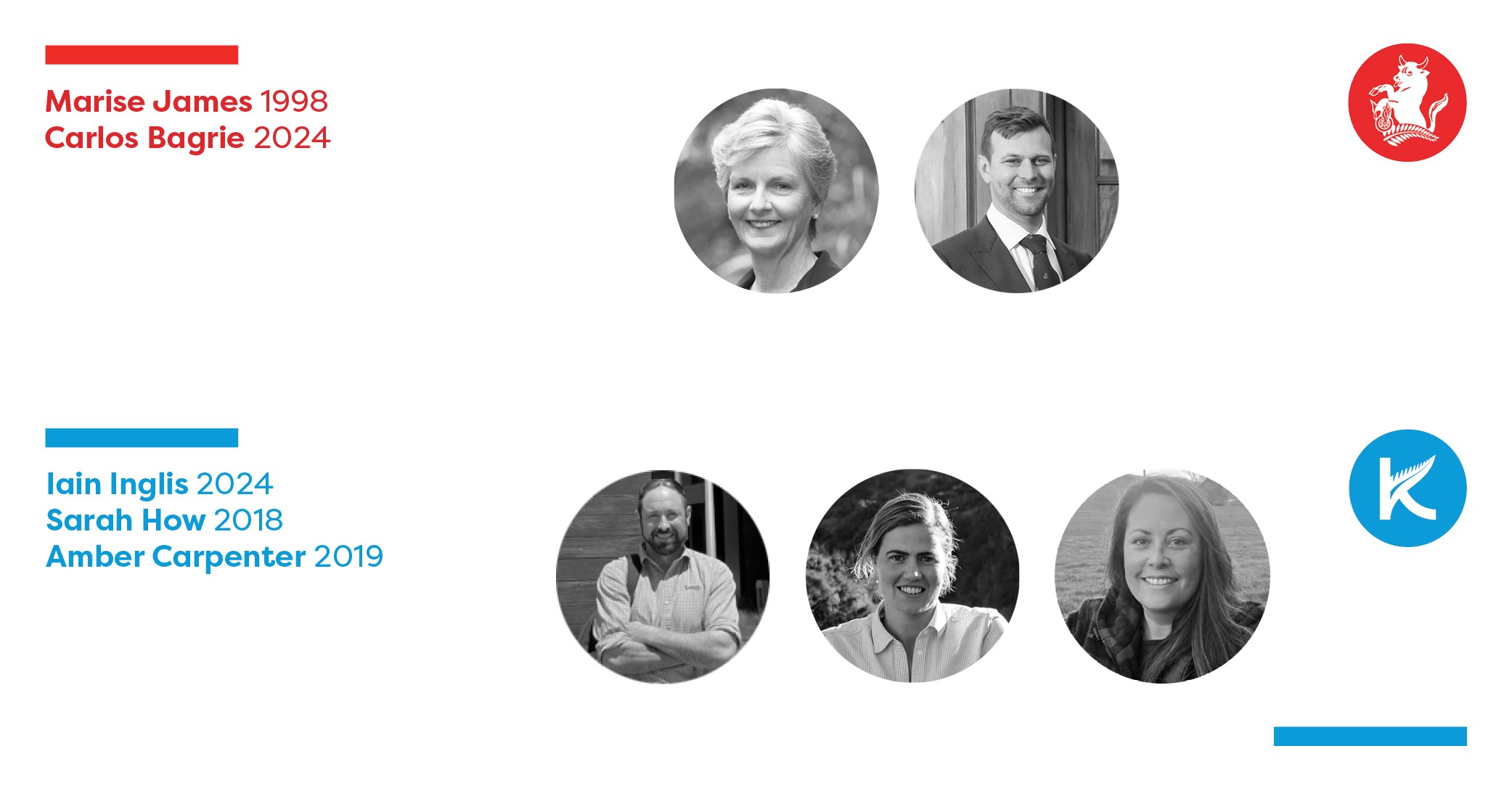
Alumni in the Spotlight – Marise James, Amber Carpenter, Iain Inglis, and more.

Here are just a few of the media pieces covering the impact of Rural Leaders’ Programme Alumni in industries and communities across the sector. 

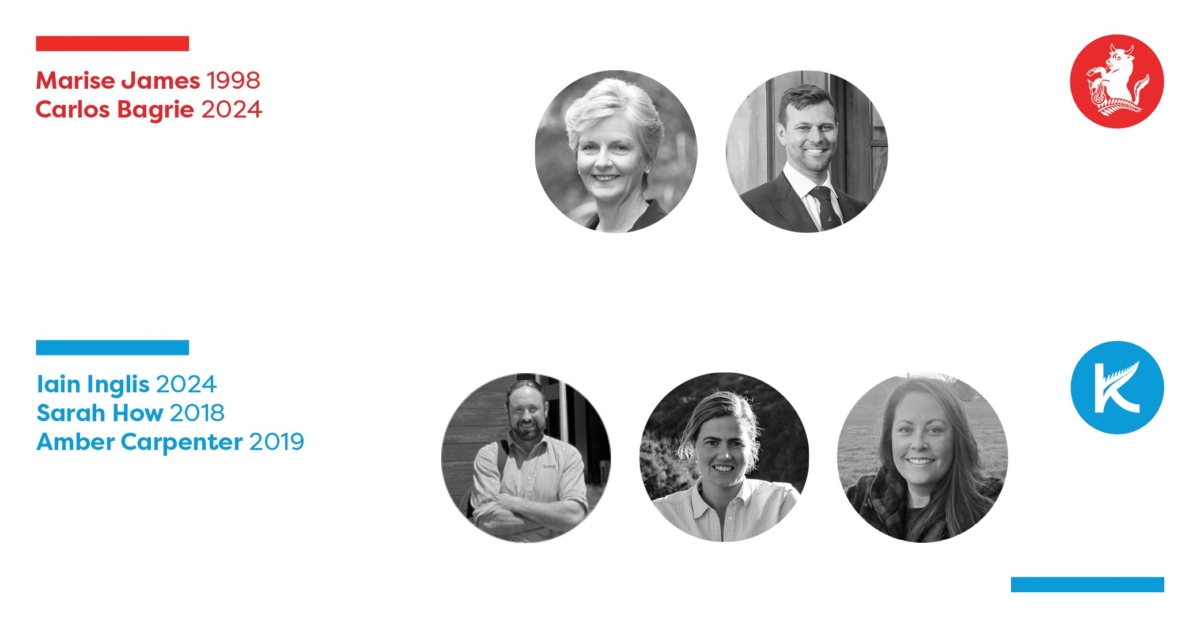
Marise James, 1998 Nuffield Scholar

This is one we missed. Former Fonterra director Marise James told Dairy News that the future of the dairy industry depends upon the direction of travel with respect to climate change.

Marise says, “Farming has always been the backbone of the New Zealand economy, seeing us through really tough times and creating a place in the world that recognises the value of high-quality food, fibre and health production.”

Read the article here.

Carlos Bagrie, 2024 Nuffield Scholar

Carlos was in Farmers Weekly a couple of weeks ago encouraging a national conversation on what other options NZ’s economy may have to enjoy stronger economic growth.

Talking to Farmers Weekly, Carlos said, “Our growth in agriculture is pretty much looking to be more linear than exponential heading into the future. It is not that there are not gains still to be made, it’s just those gains are more seconds than minutes in terms of performance lift.”

Read the article here.

Iain Inglis, 2024 Kellogg Scholar

CountryWide spoke to Iain Inglis, about his Kellogg research report ‘Better cattle handling: For people, product and perception’.

Iain covers off three opportunities that come from Low stress handling – improved operational efficiency, enhanced meat quality, and a safer working environment for handlers.

Read the article here.

Sarah How, 2019 Kellogg Scholar

Sarah How was featured recently in Alumni in the Spotlight, but we missed this article in Sheperdess. Sarah is the co-founder of Landify, a platform which connects farmers with potential partners and investors to explore collaborative opportunities in farming.

The April article talks about her background, the Landify story, and on being a finalist for the 2025 Zanda McDonald Award.

Read the article here.

Amber Carpenter, 2018 Kellogg Scholar

Amber featured on page 92 of the latest NZ dairy magazine. Amber and her husband Fraser, have recently purchased a digital marketing business to sit alongside Grass Roots Media, also owned by the couple.

Take a read of Amber’s story here.

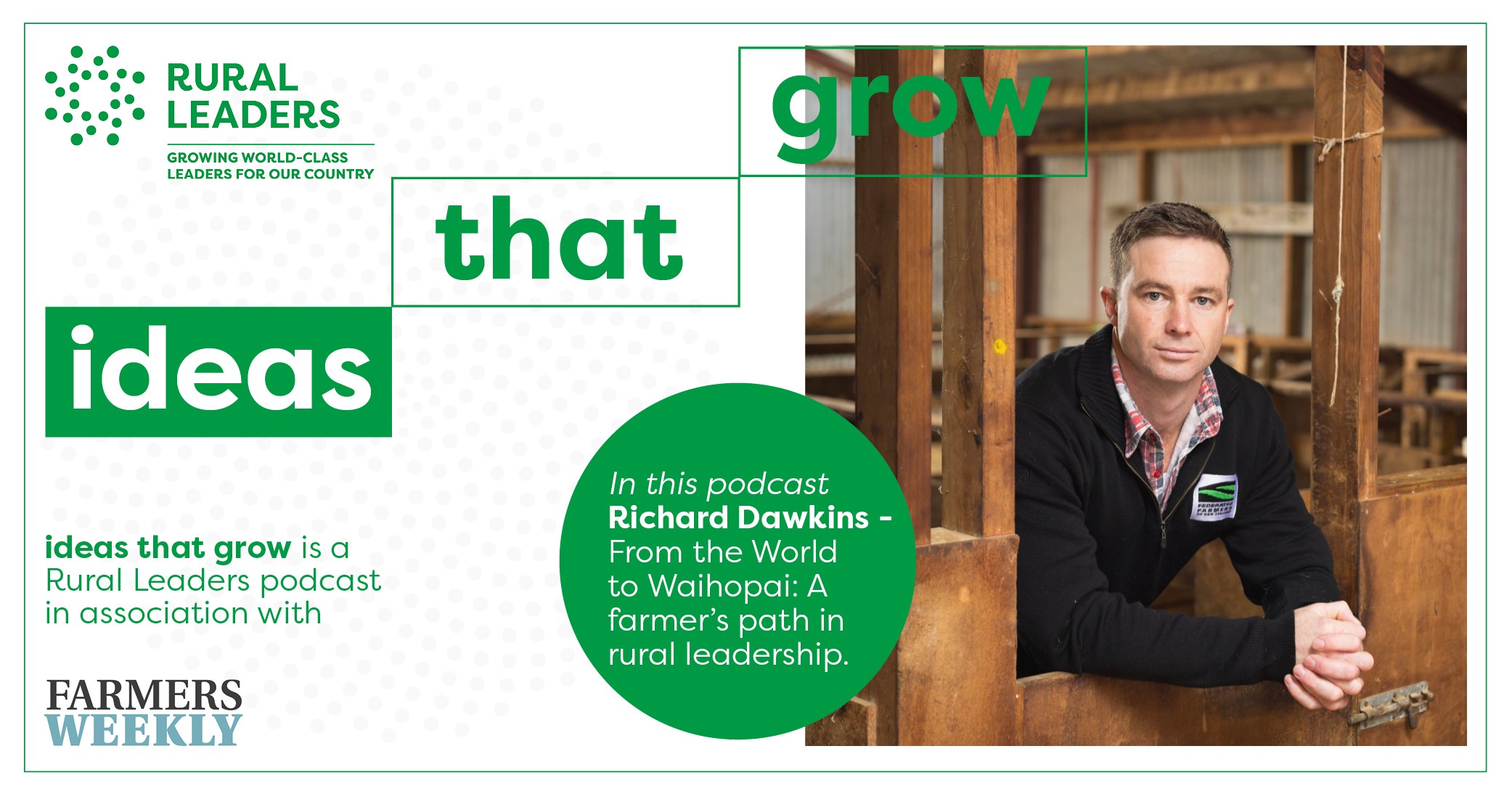
Richard Dawkins – from the World to Waihopai. A farmer’s path in rural leadership.

In this episode of Ideas That Grow, Bryan Gibson, Farmers Weekly Managing Editor, talks to Richard Dawkins, 2023 Kellogg Scholar and Marlborough sheep and beef farmer. Richard is also the new Meat and Wool Chair for Federated Farmers.

Richard discusses his family’s diverse 602-hectare farm operation, which includes sheep, cattle, forestry, and viticulture. He shares his experiences abroad and how returning home reignited his passion for farming.

Richard speaks about his Kellogg Rural Leadership Programme journey and research on lamb and ewe mortality, emphasising the need for better data and body condition scoring.

The discussion also covers leadership, collaboration, and the importance of timing when engaging in personal development.

Listen to this episode of Ideas that Grow, or click on one of the platform icons below to listen on your favourite player:

Episode Transcript

You’ve joined the Ideas That Grow podcast, brought to you by Rural Leaders. In this series, we’ll be drawing on insights from innovative rural leaders to help plant ideas that grow so our regions can flourish. Ideas That Grow is presented in Association with Farmers Weekly.

Bryan Gibson, Managing Editor of Farmers Weekly.
You’re with Ideas That Grow, the Rural Leaders podcast. I’m Bryan Gibson, the Managing Editor of Farmers Weekly. This week on the show, we have the new Meat and Wool Chair for Federated Farmers and Marlborough Sheep and Beef Farmer, Richard Dawkins. Richard, how are you?

Richard Dawkins, Farmer, 2023 Kellogg Scholar:
Yeah, good. Thanks, Bryan. The sun’s threatening to shine here, so we’ll take that as a win.

BG: Yeah, being pretty wet down your way, hasn’t it?

RD: Yeah, absolutely. We recorded 138mls in 24 hours, which was a record for us since 1954, but certainly, none of the damage compared to over the hill.

Farming to suit your environment.

BG: You farm up behind Blenheim, and you’re the latest in a long line of people in your family who have farmed there.

RD: Yeah. We’re 30 kilometres southwest of Blenheim, up the Waihopai Valley, or the Avon Valley, just off the Waihopai. I’m the third generation on the land, and my children will be the fourth. My wife, Jess, and I came home a decade ago and since have taken over and have three children.

BG: Excellent. Can you just Can you tell us a little bit about your farming business?

RD: We’re 602 hectares. The livestock side of the business is a composite ewe flock. We’re about 60% sheep and 40% cattle. We also do Jersey bulls, service bulls for the dairy industry, and some Friesians, which are just a straight fattening proposition for the works.

Our motto here has always been, you farm to suit your environment. You don’t modify the environment, you modify your farm systems to suit. We start lambing next week, late July, and main weaning is in November, and we sell all the lambs at weaning.

Last year was a record for us, actually. We sold 96% of the lambs straight off mum at 43. 5kg’s. Composite ewe flock, Jersey Bulls, a few Friesians, but we also have 20% of the property in farm forestry and 135 hectares of viticulture.

BG: Quite a diverse operation you’ve got going.

RD: Yeah, you have to be these days, don’t you? My father said in the late ’80s, 65% of his income was from wool. We’re now down under 1%, so yeah, just need to diversify those income streams a bit.

BG: Now, you mentioned you came back to the farm about a decade ago. You grew up there, I guess. What did you do after school?

Seeing the world before farming.

RD: Jess and I spent significant time in Western Australia. Funnily enough, we were in a different industry. We spent a fair amount of time working in the mines in WA near Kalgoorlie, and Jess was further north in Karata. But then we spent time in the United Kingdom as well, and it was really interesting to see their farm systems. I did a bit of labouring on farms. I worked on a dairy farm, more of an indoor system over there, and did a harvest up in Norwich, drove a lot of tractors.

So, yeah, that was a good experience. Good experience in Australia as well, but really glad to be home now and setting the foundation for the future, I suppose. We’re certainly not planning on going anywhere.

BG: Many, many, New Zealanders in their 20s head off to see the world. In a farming sense, do you think it’s good for people to go off and see, say, the likes of how you did a harvest a Norwich or a dairy farm in the UK?

RD: I think it is, Bryan, but there’s opportunity costs to everything isn’t there. Coming home in my mid-20s and seeing fellows in their teens who were a bit more advanced than me and had left school and gone straight into farming. It took a fair bit of catching up, which was a bit of a wake-up call.

You spend your childhood on the farm, but boy, there’s a big difference between helping dad shift some sheep and doing the tailing and things and helping in the sharing shed versus actually running a farm business. It took some catching up.

That’s what’s been fantastic about Federated Farmers is getting those farmer networks and rapidly expanding your knowledge. But at the same time, look, learning other industries, living in other countries, that was really valuable too.

Building knowledge and leadership skills.

I’ll tell you one positive was when we did come home, we were so full of enthusiasm. We hit the ground running and haven’t stopped, to be honest. Whereas some of my friends who did leave school and go straight into Ag, some of them are just thinking it’s a big wide world out there. Maybe I could go and try something else. I mean, it’s up to the individual, isn’t it? But there’s pros and cons with everything.

BG: Yeah, I often think that we see a lot of exporters and processors take farmer shareholders into export markets to give them an idea of actually what it’s like there and how people buy their food and how chefs cook it, or various other things. I think that global view and getting a first-hand understanding about how the fruit of their labour here in New Zealand is used, it can be really helpful in understanding why certain things have to happen.

RD: Yeah, for sure. I was fortunate enough to go on the Silver Fern Farms and Market Tour last year. We went through China and Korea, South Korea of course. Like you say, fantastic perspectives and quite mind-blowing, to be honest.

BG: Now, you’re a relatively recent Kellogg scholar. You went through the programme just a couple of years ago?

The Kellogg Rural Leadership Programme experience.

RD: So 2023, Phase One, part of K49. The timing for me was perfect, to be honest, in that I’d done a lot of industry stuff by that point. I had a few connections and a reasonable understanding of the bigger picture. But look, to go into Kellogg, it just really supercharged that foundation I had.

Getting those cross-sector connections, people from all walks of life, and hearing those different perspectives as well was hugely valuable and empowering. I guess since I’ve just carried on that journey, I would find very well-invested, I must say.

BG: That network that you build and the people you meet is really important. Of course, another thing they do is you find out quite a lot about yourself, which is good to what you’re good at, what you perhaps need to invest time into improving.

RD: Yeah, look, self-awareness is just absolutely essential. That was a big thing that I took out of it. It can be very confronting, but I think you go in as a bit of an unpolished diamond, and you have those courageous conversations and have that self-awareness.

You may be smooth off some of those rough edges. But some of those things you need to embrace, too. I’ve recognised that. Hey, I’m pretty extreme in this area, and maybe I need to tone it down sometimes. But look, maybe that makes me the man for the job with certain tasks. So, embrace those things as well.

Lamb and ewe mortality, leadership, and learning.

BG: Totally. Now, of course, a big part of the Kellogg Programme is the report you write. You looked at mortality in lambs and ewes?

RD: Yeah. I called it ‘Addressing Mortality in New Zealand Lambing Systems’ because I didn’t want to just purely focus on the lambs. Mortality in ewes is a huge issue as well. The findings were quite interesting. I guess the major takeaways were there’s not actually strong data sets out there.

The actual extent and understanding of the issue is not particularly good as an industry. Probably the lowest hanging fruit for progress is simply body condition scoring and feeding.

On the farm here, we take it to the enth degree, and we lamb our triplets indoors to give them extra care and attention. But look, as an industry, I think getting those body condition scores up and getting those pasture covers up prior and post-lambing is where we’d see the biggest gains.

BG: Now, you talk about data. I guess in a lot of cases, what happens on the farm stays on the farm in some ways in terms of the snow rolls in or whatever down in the high country and losses that no one quantifies in some ways.

RD: Yeah. It’s a real catch-22, isn’t it? In that our strategic advantage, our point of difference is those outdoor lambing systems. It’s free range for sure. How do you balance the welfare aspect versus that strategic advantage? I think the absolute majority of New Zealand farmers and farm systems are geared towards that low input, medium fecundity type breeding.

We do the indoor lambing here because we’re a highly fecund composite ewe flock, and it’s pretty simple at the end of the day, isn’t it? A ewe’s got two teats, and when she’s spitting out three or four lambs, I don’t think it’s controversial to say she needs a bit more TLC.

BG: Yeah, totally. In the drive for efficiency, which has been excellent over the years in the sheep and beef sector, that’s something everyone keeps in mind, I think.

RD: Look, and these composite ewes are amazing. Those ewes that leave the shed with three lambs, their average weaning weights, the combined weight of their three lambs was 110 kilos. That was at 105 days of age. So three lambs, straight off mum to the works, that’s about the most efficient ewe in the country. They’re big ewes, they’re 80 kilos at mating. But when you’re weaning 110 kilos of lambs, it’s worth putting the effort in. I mean, that’s just 1% of the flock, Bryan. Certainly not every ewe, but it is very rewarding when you get to weaning and all your effort pays off.

BG: Your project obviously completed, submitted, but it seems to have been read by some of the organisations that matter in our sector.

RD: I won’t take credit for that, I suppose. But it’s great, really cool to see Beef + Lamb  New Zealand pick up a lamb survival module now. I was involved behind the scenes, just having those discussions and organising a few things, bit of a working group. I’ve had a few podcasts and also going to have workshops around the country just focusing on lamb survival. That was one of my key recommendations. So full credit to them. It’s great to see.

Federated Farmers Meat and Wool Chair and further study.

BG: Now, obviously, the Kellogg Programme is based around growing rural leaders in our sector. You’ve come up through Federated Farmers, and you’re the new Meat and  Wool Chair. So it looks like you’re taking the ball by the horns in terms of leadership roles.

RD: Like I said earlier, it really did turbocharge things. I did learn a lot, learnt a lot through the process, but I think the biggest thing it gave me was confidence. Like, look, I can go through 500 hours or whatever I invested in. I was part of those deep conversations. I understood everything, had a really good cohort, and it just gave me that confidence to push to the next level.

It made me realise, hey, you are ready for those leadership positions. But it really was a foundation. One of the biggest takeaways for me was it’s fantastic work by the Rural Leaders team. I’ve actually connected the Kellogg Programme through Lincoln and Massey, and actually you can achieve a Postgraduate Certificate in Commerce.

That actually gains you entry to a master’s-level programme. After the Kellogg Programme, I went on to studying a Master of Business, and that’s taken all of that stuff I learned through Kellogg to a whole other level. That’s a fantastic opportunity for anyone. If they’re considering it, I’d be happy to talk people through that process.

BG: That’s excellent. I didn’t know about that. How are things going with Feds? How are you enjoying being on the National Exec?

RD: Look, it has been an absolutely flat out first fortnight. I probably look a bit tired at the moment. AGM and conference, followed by a lot of conversations. Obviously, a lot of media. We’ve had our oral submission to the select committee, and then on to the Silver Fern Farms Conference and all of the governance work that goes on in the background, the advocacy, the exciting stuff, the fun stuff.

But hey, this is a fantastic organisation. You have to govern as well. So, yeah, it’s been absolutely completely flat out. I think that may slow down a little bit, but with advocacy, the work never ends, and then we’ll be full steam ahead, trying to achieve what we want to achieve for not only the meat and wool council, but obviously every member too.

BG: It’s a big job and a big responsibility being the voice of our farming sector to not only the Beehive, but also the wider population of New Zealand, I guess, that you really are the window into that world.

Putting leadership development into practice.

RD: Yeah, you absolutely are. Look, it is a real privilege. When you come under a bit of pressure and you’re finally in this position, I guess your natural style comes out, shines. I’ve just realised that I’m more of a collaborator and a facilitator of these discussions. I don’t have a monopoly on good ideas. I have a fantastic council behind me, 24 men and women who volunteer their time and seven on the executive.

I think you need a bit of courage. Courage takes many forms. It’s putting a line in the sand and saying, this is not good enough, it needs to change. You probably saw that with the oral submission, the bill as it stands, isn’t fit for purpose. But courage is also saying, hey, I don’t know everything. Can I facilitate this discussion? Let’s get four or five people in a room and work out the pathway forward.

I mean, you’re never always going to agree, but at least have that talking to a friend or someone close to you and saying, This needs to change, that needs to change. We need to tidy up this area or that area. Actually, one thing I’m struggling with, which takes a bit of courage, is just learning to delegate. As a farmer, you see a problem, you want to go and fix it. But takes a bit of courage to say, Hey, I’ve got a bit much going on, or, You’re actually better at this than me, so could you please take care of it?

Again, we’ve got this council full of enthusiasm. So, yeah, quite often they’re willing to take up that mantle. And look, it’s just hugely appreciated these people volunteering their time, not for me, but for the whole sector.

BG: If someone’s out there thinking about developing their leadership skills to maybe looking at governance or just their own personal growth, the Kellogg Programme, something you’d recommend?

Get involved, be part of the bigger conversations.

RD: Look, it is, but I think it’s all about timing. I would really I encourage people to do a bit of that local provincial, maybe it’s volunteering any leadership position, and just do a bit of that.

Be part of those bigger conversations, those sector-wide conversations. Join your Federated Farmers and get involved. Join your Beef + Lamb New Zealand, various councils or working groups they have, or your rural advisory groups, things like that. Just get a bit of experience on that side of things, then go for Kellogg.

I think if you were just starting your leadership journey, you might not get as much out of Kellogg as you potentially could. But once you’ve done that foundation work, it’s absolutely fantastic.

BG: Thanks for listening to Ideas That Grow, a Rural Leaders podcast presented in Association with Farmers Weekly.

For more information on Rural Leaders, visit the pages for Nuffield New Zealand Farming Scholarships, the Kellogg Rural Leadership Programme, the HortNZ Leadership Programme, the Engage Programme, or the Value Chain Innovation Programme.

Jack Cocks signs off on a year as the NZRLT Associate Trustee.

Jack Cocks has just finished a one year term as Associate Trustee for the New Zealand Rural Leadership Trust (Rural Leaders).

Jack is a high country farmer who holds a bachelor’s degree in farm management from Lincoln University and a masters in agricultural economics from the University of Illinois. He is as much at home in the city as he is in the Otago high country running Mt. Nicholas Station with his wife and children.

Jack suffered a life-threatening brain aneurysm twelve years ago which saw him spend eight months in hospital over six years and undergo fifteen major surgeries.

Following this experience he researched how ‘Resilient Farmers Thrive in the Face of Adversity’ through the Kellogg Rural Leadership Programme. He is now a well-respected speaker on farmer resilience.

Early in 2024 Jack joined the New Zealand Rural Leadership Trust (Rural Leaders) as an Associate Trustee to learn more about governance from the Trust’s experienced board.

“I enjoyed learning from the other trustees. They all had different skill areas and very smart perspectives too. Being part of a team was also an appealing thing to me. The frequent events, such as the Kellogg networking event in Wellington, were great too.”

Mt. Nicholas is remote, so Jack cites the board interactions, both online and in-person, as being another important draw. “You’re not in an immediate community here at Mt. Nicholas. You’re not going to the local field days, meetings or functions that often. So, keeping involved with board matters was enjoyable,” says Jack.

Jack’s plan is to now shift his focus closer to home, on family and the business.

“Our kids are going through high school, they’re both week-day boarding in Invercargill, two and a half hours away. It’s a reasonable commitment to head up and down the road every week.

I’m still doing one or two speaker engagements a month. I’m able to give back a bit to the sector and the community, and a lot of that has spun out of my Kellogg,” adds Jack.

Jack plans to continue his governance journey once his children leave school. He acknowledges the strong foundation the year as an Associate Trustee has given him and he mentions some advice he was given before he went into the role.

“Some advice I got from a wise director before joining Rural Leaders as Associate Trustee, was to look at the one year term in three parts. The first part is asking plenty of questions. The second part is establishing credentials. The final part is adding some value.

I didn’t throw any ideas around for a start, but tried to understand the business. Then I established myself in that second part and looked for ways to add value in that last part. Some of the work that Lisa Rogers and I were doing towards the end with the Value Chain Innovation Programme; like looking at an offshore component for it, fits into that.

That’s how I approached the one year, and I found that advice really useful. It reassured me that I didn’t need to go in guns blazing,” says Jack.

Kate Scott, Rural Leaders Board Chair, spoke of Jack’s measured and intelligent approach to his time as Associate Trustee, “The knowledge Jack has passed on, especially around farmer resilience, has been invaluable. Jack’s calm, clear and curious nature make him a standout as he continues his governance journey.”

Katie Rodwell recently joined as the new Associate Trustee, marking the end of Jack’s year.

“It was a tremendous opportunity. I thank the board and the Rural Leaders’ team for their openness and inclusiveness. I really felt comfortable and that I could contribute to make a difference,” concludes Jack.