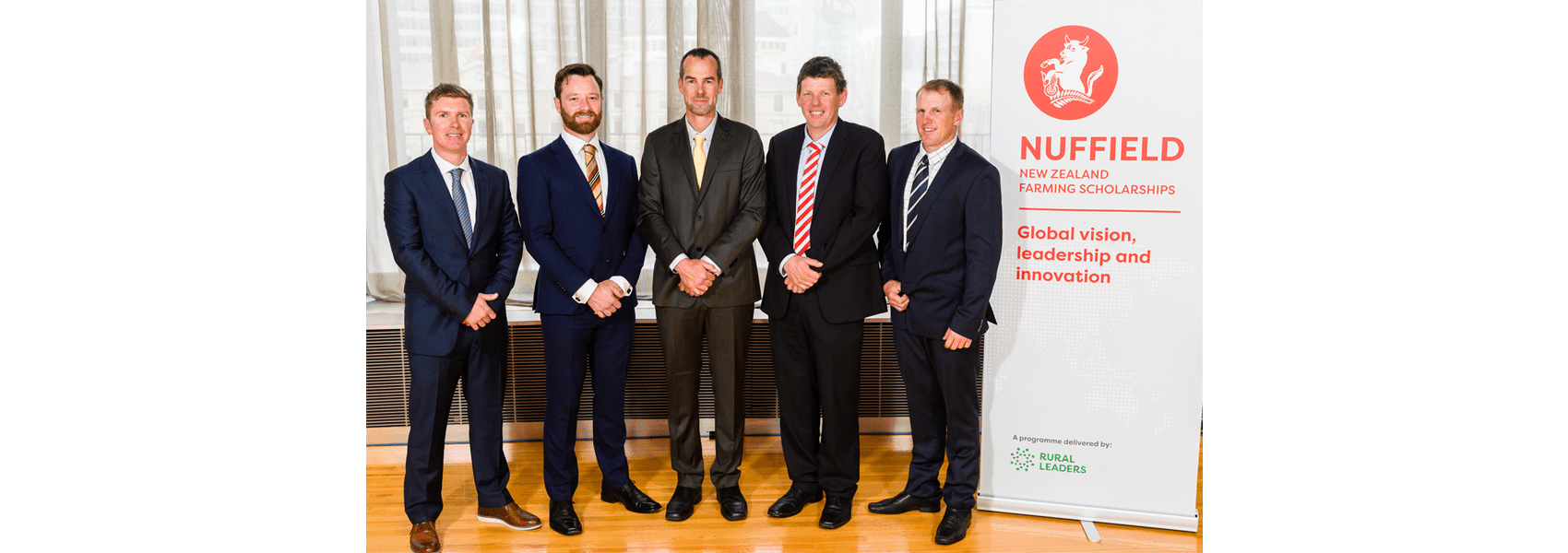
2026 Nuffield NZ Farming Scholarship. Apply by 17 August 2025. Read More...

Apply for 2026 Nuffield NZ Farming Scholarship by 17 August 2025. More details...

Lisa Rogers appointed CEO Rural Leaders.

Press Release: Lincoln, 28 July 2023.

The Board of the New Zealand Rural Leadership Trust (Rural Leaders) has announced the appointment of Lisa Rogers, current General Manager, to the role of Chief Executive Officer.

Rogers brings nearly six years’ expertise and knowledge gained as Programmes Manager and more recently, as General Manager of the Trust.

Rogers replaces former Chief Executive Officer, Chris Parsons, who resigned in April to take up the Chief Commercial Officer role at MyFarm Investments.

Since joining Rural Leaders in 2017, Rogers has led its highly respected programmes. These include the Kellogg Rural Leadership and the Value Chain Innovation Programmes. She has also helped steer the Nuffield New Zealand Farming Scholarship, which sees up to five sector leaders embark on a period of research and international travel each year.

Bringing professionalism and insight to the Trust’s long-established leadership development platforms, Trust Chair, Kate Scott, also welcomed the stability and expertise Rogers offers.

“We are excited about Lisa’s appointment and what it will mean for the Trust. Lisa will ensure continuity of our projects, such as the Food and Fibre Leadership Development Project while also delivering a steady operational and strategic momentum, both for our investing partners and for our team.”

Rogers brings a deep understanding of Rural Leaders’ operational and strategic ambitions, along with a wealth of pan-sector influences and knowledge gained from senior management roles in food and fibre, extraction and banking and finance.

“Lisa not only brings her valuable experience to the role, she is, at her core, genuinely passionate about the people in food and fibre and the growth of its leaders,” adds Scott.

As General Manager, Rogers has been acting in the capacity of interim CEO of Rural Leaders since May. 

Mel Poulton – Transformation before transaction: The potential of NZ’s Food and Fibre IP.

Mel Poulton is a farmer first and foremost, running a sheep and beef farm based in the Tararua District. She is also finishing her tenure as New Zealand’s Agriculture Trade Envoy.

Awarded a Nuffield Scholarship in 2014, Mel completed her research on
Capturing Value: Building a sweet spot between trade negotiations, market access and the exports of expertise.

Listen to Mel’s podcast above or read the transcript below.

Bryan GibsonManaging Editor of Farmer’s Weekly.

Welcome to the ‘Ideas that Grow’ podcast. I’m Bryan Gibson, Managing Editor of Farmers Weekly. This week I’m talking to agricultural trade specialist and farmer Mel Poulton. Now, you were a Nuffield scholar in 2014, is that correct?

Mel Poulton 
– 2014 Nuffield Scholar, farmer, Special Agricultural Trade Envoy.
Correct.

BG: I understand you did your Nuffield Scholar Report on agricultural IP and how to best send it out into the world and also get the best value for it. Can you tell us a little bit about what you found out?

The untapped potential of New Zealand’s agricultural IP.

MP: At the time, as a food producer and somebody who, through our levies was investing in New Zealand science, research, and development for New Zealand farming to give us a competitive edge in the world, it was a concern to me to hear that our IP was being effectively given away in the hope of an FTA for market access. That was how I was certainly interpreting it at the time.

I spent a bit of time traveling to different nations around the world looking at IP trade, market access, and looking at what went well and what didn’t, what could we learn from that, and is this even a good idea for New Zealand? I came back with the conclusion that actually, given who we are and what we do and our constraints, leveraging our IP is a really good strategy for New Zealand.

But I wasn’t convinced that we were doing it well, and I felt like we needed to better value or recognise our IP, value our IP, package our IP, and then be able to leverage value from it, not just by way of the hope of market access through an FTA, because we’ve seen in recent years what can happen with economic coercion and suddenly markets being closed to us. 

Food and Fibre’s intellectual property opportunity.

So, if you end up giving away your IP and then those markets close, what have you got left? Some people might disagree, but I think that’s a relevant concern that New Zealand needs to be really mindful of with regard to its strategy and how it navigates its way in the world and how it leverages its IP.

How do we do it in such a way that those that have invested in that IP can extract value from it, short, medium, and long term, for the good of New Zealand and for the good of our Food and Fibre Sector and our people who have invested.

BG: A better strategy needed on the intellectual property front. Very good. Now, of course, you’re just finishing up a term as the Special Agricultural Trade Envoy (SATE), which means in terms of market access and trade deals and the world food system, you’d have widened your scope on things to more than just intellectual property, to food itself. But are there similar themes at play there as we try and extract value from our agricultural sector.

MP: There’s an enormous amount of opportunity for us to extract value from our IP in ways that we haven’t really considered before, or broadening it a whole lot more than what we do. Thinking about that in the context of a growing global population with a real concern around food security and even more importantly, nutrition security.

Then given the challenges of climate change and the environment and the constraints that’s putting on food production in different parts of the world, I feel confident given what I’ve seen in recent years and the travels that I’ve done both on my Nuffield Scholarship and since then as SATE for New Zealand. I think there’s an enormous opportunity for food production to increase in many parts of the world and especially those countries with developing agriculture. I think there could be small changes made that generate big gains.

Working together with developing agricultural nations for mutual benefit.

Some of these countries with developing agriculture have potential to really lift production. Whereas New Zealand and parts of Europe, for example, feeling more and more constrained as to how much more food production they can actually lift.

The talk is that New Zealand feeds 40 million people. Well, that’s barely feeding one city. Mexico City itself is 40 million people. When you think about the scheme of things in our place in the world, how do we strategically position ourselves to be good in the world and good for the world and continue with a transaction strategy that grows really awesome food and beverages that are highly nutritious and safe?

And also has the integrity behind it with regard to environment and climate and all the other factors around labour and all of the environmental, social, and economic factors that make up the back story to our product.

So we’ve got to be able to have that integrity, but also recognise what our potential for lifting things further for New Zealand. How do we leverage off the strengths that we have as a nation? I think there’s huge potential to be able to work with, learn together with, and build together with, other countries with developing agriculture and leveraging our IP, but not selling it as it is, but leveraging it and adapting it to create something new.

BG: So, it’s far more than just selling a product or an idea and leaving it at that. It is working with the people on the other end of the transaction long term.

A shift to transformation before transaction.

MP: Well, it’s effectively transformation before transaction. If you were to put value on or weighting on it, historically, we’ve had a transaction approach to things. I think there’s still a future for us in that because we grow and sell food to the market – that earns us revenue. I think it’s going to be for the growing needs of New Zealand and the economic growing needs of New Zealand, that we need to figure out how we grow further.

If we’ve got constraints here, then how do we grow together with others being good for the world and good in the world? It’s actually going in there with humility and saying, well, we’ve learned some stuff in our context, we recognise that you’re operating in a different context, we understand you’ve got goals and vision for growth for yourselves, so how can we work together, learning from our IP and a principles approach, to develop something entirely new that could actually help you achieve your goals and help us achieve our goals.

BG: That makes sense. In a finite environment, if one sector has reached their limit, then the only logical place to go is to help others up their production to a level where they can sustain themselves better. 

Further trade ties with India and the role of humility.

MP: I was just in India a short while ago, and they really want us to be investing there. The challenge for New Zealand is that we’ve got stories, we’ve got examples, we’ve got experience investing in other countries. Some of the challenge around that is sometimes we’ve gone in a little bit proud and arrogant, taking a copy and paste approach that hasn’t necessarily worked because you’re operating in a completely different system, a completely different environment, and operating context.

Copy and paste won’t work. It won’t work in many countries because New Zealand is unique in that it is an island nation, small, tight-knit ecosystem, driven by a temperate maritime climate. Just copying and pasting that, there’s very few places in the world you can do that in. That’s why we’ve got to shift our thinking to learning, growing and working together with others to create something entirely new that works in the operating context for them and also works for us.

BG: When you read about the possibilities of doing more trade with India, quite often the first thing you hear is, ‘yeah, but they won’t take our dairy products’. And so deal’s off the table. But I think what you’re saying might be that it’s a bit more nuanced than that, and there are things we can do and we should be doing?

MP: It’s most certainly more nuanced than that. I suppose my take home message from my time in India is – there’s a bunch – the first one is, we really do have to conduct ourselves with humility. I think from those that I engage with in India, they have an allergic reaction to anything remotely arrogant, remotely hinting of a colonialism approach. So, if we even begin to think that we can conduct our way without humility and without deep, deep respect and without a hunger to learn and understand and focus on building relationships, I think we’re going to go nowhere fast.

At the same time, they really do want to grow. They’re grappling with some big challenges, and they’ve got enormous potential to lift by doing small things really well. Talking to the Indian High Commissioner to New Zealand, they really do want us to be investing there.

But again, this is where we’ve got to be thinking about a broader picture than just a single process investment. We’ve actually got to be thinking about how do we grow the whole ecosystem. It’s government to government, industry to industry, farmer to farmer, company to company, people to people.

It’s building all of the ecosystem that is an Indian centric one, or whatever country it might be in the world, something that really works so that whatever investment we do there, it’s going to be successful. But we can be guaranteed it’s not going to be a copy and paste of what we see here in New Zealand. We have to completely shift our thinking altogether.

BG: Now, I mean, our food production ecosystem here in New Zealand is pretty well developed and pretty really well thought of, do you think it’s well placed to meet some of these global challenges?

The value of New Zealand’s Food and Fibre ecosystem and its people.

MP: I have no doubt in my mind that one of our greatest strengths and most undervalued strengths is our ecosystem. By that, I mean all of the folks that are working for New Zealand and in New Zealand companies and the Food and Fibre Sector offshore, including our diplomatic teams. I think we’ve got amazing people in the MFAT and MPI and different government ministries who are working hard for the success of our sector offshore when they’re engaging on the certification and standards and all sorts of things.

We’ve got great people across our sector, good organisations who are absolute experts in doing things that food producers wouldn’t even dream of doing. These people are technically competent, highly skilled, and very effective at their job. Then we have all the folks working in our industry good organisations. You’ve got all the processors, exporters, packers, all exceptionally good at what they do for our sector. Then we’ve got all of our service sector too. No farmer would be able to operate without our service sector.

Then underpinning the whole lot is the science, academia, and research that goes on, that’s delivered the knowledge over the years. We’ve got to keep investing in that science, research, and development because they underpin our success. Then without the food producers themselves who are innovative, creative, solutions focused, businesspeople who are juggling so many variables and navigating their businesses without subsidies, to generate revenue for New Zealand. It’s just an exceptional ecosystem that works together.

The ecosystem is tight, it’s well linked, and relative to similar ecosystems in other countries, New Zealand has something special where we can turn on a dime, we can make decisions, and we can react and can also pre-empt and get ourselves on the front foot to capture opportunities globally as well. I think that was most recently best demonstrated through COVID – just watching how the whole ecosystem came together to navigate it. I’m not saying it was easy. But relative to other countries, New Zealand navigated that well. Our sector navigated it well. There’s a lot we can be proud of about that.

Staying nimble, flexible, and adaptable in a fast-changing world.

BG: And as we know, there are a lot of other shocks around the world now that need to be navigated. So it looks like it’s all shoulders to the wheel again, isn’t it?

MP: It’s all on. What we’ve got to work hard to do is make sure the top two inches of our thinking and our head space is in the right place, make sure we’re positive, we’re constructive, we’re focused on the priorities, we’re rational and logical in the decision making that we’re doing. That we’re taking an integrated systems approach to it, and that we stay nimble, flexible, and adaptable.

Sometimes life happens where a shock is something you can bounce back from. Sometimes it’s a shock where things are forever changed and it’s never going to be the same again. That’s where we’ve got to have plasticity, where we’ve got to be able to be sure of our core values, who we are, what’s important, and be able to reshape ourselves to be optimally placed to navigate what’s in front of us.

A Food and Fibre Sector under the pump.

BG: So, Mel, we’ve been talking about big picture issues for global farming, how does that square with what New Zealand farmers are facing at the moment? How will that work for them?

MP: I suppose when we’re talking about a big picture strategy for New Zealand, we really need to be thinking about how we strategically position ourselves on the global stage in the long term in such a way that we try to deliver short-, medium-, and long-term return back to New Zealand. We’ve also got to acknowledge the fact that right now, there are many farmers, food producers, packers, exporters that are really under the pump big time right now, especially those that have been hit by the weather.

There are folks down in Ashburton and West Coast that are still recovering from the damage that they sustained in recent severe weather events. We’ve got to be mindful that people are under enormous environmental, social, and economic pressure right now.

We need to keep in mind that when we discuss these big picture strategies, we’ve got to be able to look after our people, look after our businesses, look after our environment with the here and now. And how we build the recovery to be able to be best positioned from a market facing point of view, but also just how do we find our place here in New Zealand in this new operating context we’re in at a domestic level, but also at an international level too.

There’s a lot of balls that we’re juggling and it’s complex. I suppose my point really is it’s all fine and well talking about big picture strategy, but we’ve got to look after the people and be acutely aware that we need to be able to get the support, the enabling infrastructure, the enabling business environment, and context to be able to help people recover and stand back up.

Remoulding and reshaping to fit a changed environment.

In some cases, that whole plasticity piece, we do have to remould and reshape, and that might look entirely different to what it was in the past. Because in some cases, with some life events it’s never going to be the same again.

So we need to be giving people scope and space to be able to remould, reshape and create something that is still true to its core values, but looking quite different because it’s in a different operating context – it can’t go back to what it was before.

BG: Thanks for listening to Ideas That Grow, a Rural Leaders Podcast in partnership with Massey and Lincoln Universities, AGAMRDT and Food HQ, this podcast was presented by Farmers Weekly.

For more information on Rural Leaders, the Nuffield New Zealand Farming Scholarships, the Kellogg Rural Leadership Programme, or the Value Chain Innovation Programme, please visit ruralleaders.co.nz

Eights years, three chairs and almost two triennials.

Nuffield and NZRLT Trustees Craige Mackenzie and Michael Tayler have stepped down after eight years of service. NZRLT Chair, Kate Scott provided the numbers on their tenure (above). We asked both about the highlights and challenges during their eight years.

What was the biggest challenge you encountered in your 8 years on the board?

Craige:
Being part of Nuffield International board but being able to turn it around to being in a positive growth organisation and in a sound financial position.

Michael:
Pulling together another Nuffield Triennial conference after our first one was cancelled at the eleventh hour. I was just one of a hardworking committee who rolled their sleeves up and just made it happen.

As a board and leadership organisation, one of our biggest challenges is to make sure we continue to stay relevant. To ensure the different programmes we offer are always “fit for purpose”.  

What was a highlight for you during your time on the board?

Michael:
The way everybody involved in the Triennial conference worked as a team towards a common goal. Everyone working long hours without complaint.

Meeting and getting to know the programme applicants was always a highlight. I was always impressed by the high calibre of the people involved in our Food and Fibre Sector. It gives me confidence that the future of NZ’s biggest export earner is in good hands.

Another highlight was getting to know and work alongside all the other trustees and NZRLT staff. Being a small part in a great team.

Craige:
The transition of a startup NZRLT to where we are today. The growth has been significant and to be part of this journey has been a real pleasure.

People, the role, and why you got involved?

Craige:
We have an awesome team which drives the organisation and each time we have new people come in they just add a new perspective and help with the growth.

I got involved because I wanted to give back to Nuffield and the NZRLT. I had the benefit of a Nuffield Scholarship which opened a lot of doors for me both nationally and internationally.

Michael:
I got involved as Trustee because I personally got so much out of my Nuffield Scholarship and felt it would be a small way to give something back.

What’s next for you?

Craige:
I have started a role with the UN so will see where that takes me but it is always nice to support agriculture and other production systems. I am interested in continuing to look for mitigation options to reduce our Climate Change footprint within farming systems and help shape sensible direction in policy.

Michael:
I would like to continue to be involved in different governance roles alongside our farming business. I have just started a new role as board chair of United Wheat Growers (NZ). UWG run a levy-based Crop Insurance scheme as well as an audited Quality Assurance Programme. 

We wish you well and thanks.

The Team at Rural Leaders.

Kellogg Programme One 2023 graduates.

A preview of next month's Kellogg Reports.

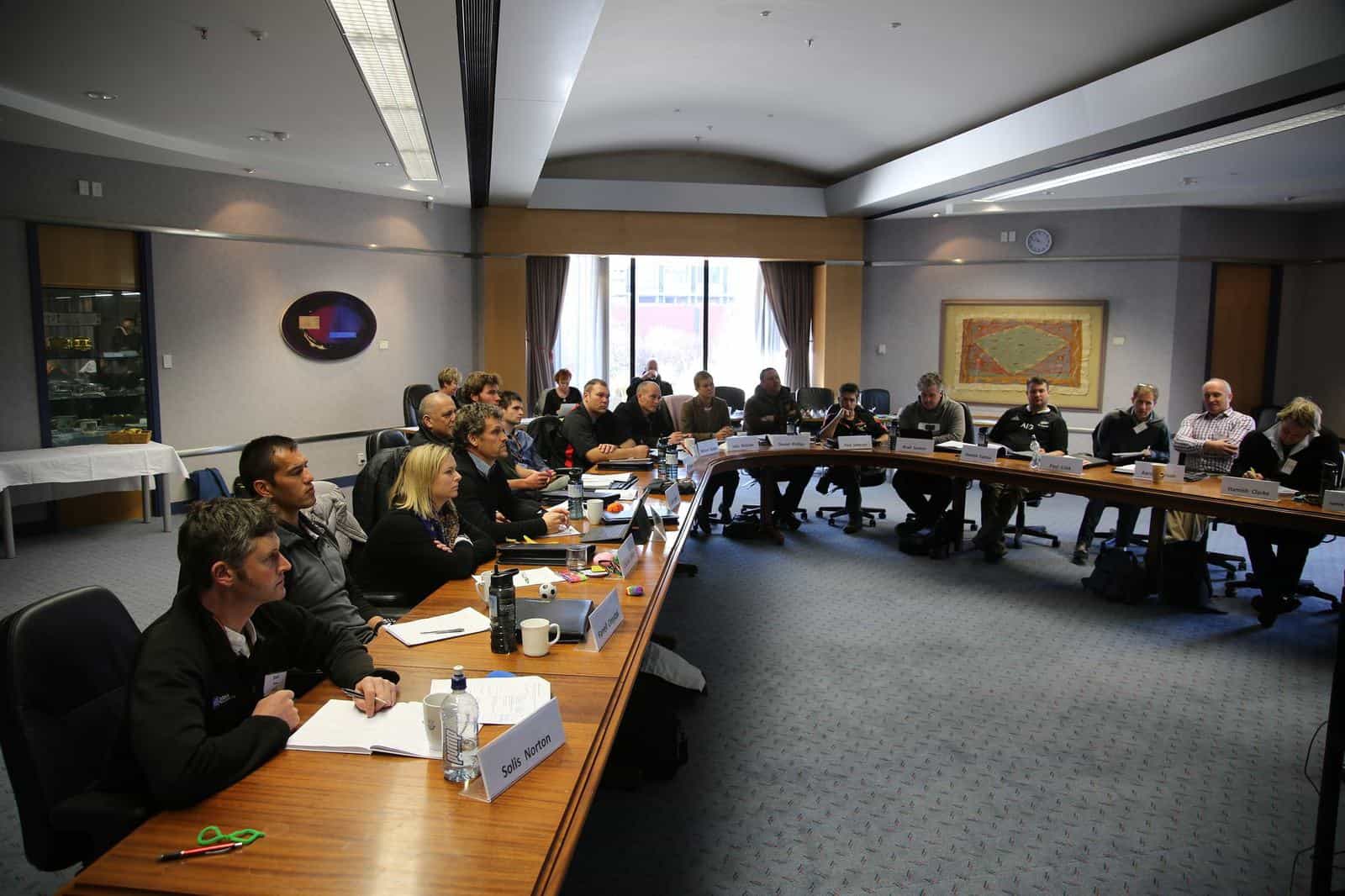
Kellogg Programme One 2023 graduated on July 7 after completing their Phase Three at Lincoln. Though in the aftermath of recent weather events, several North Island Scholars have chosen to defer their Phase Three until 2024.

Reports fell into three broad themes, with a total 16 reports. We’ll share those in the next Rural Leader. For now, you could make a note of any reports that may be of interest to you. 

Pictured: First post-presentation panel discussion with Duane Redward, Vanessa Thomson, and Brian Henderson.

Theme 1 – People in Food and Fibre.

Duane Redward – The consequences of the competition for farmer sentiment.

Brian Henderson – What leadership is required to achieve change in New Zealand agriculture?

Vanessa Thomson – How effective are existing psychosocial services in supporting New Zealand Farmers after adverse events.

Steve Hydes – How do early stage Agritech founders use professional
assistance?

Sol Tejada – Women in beekeeping: how to champion the ladies in the
apiculture industry.

Laura Hancock – Bridging the gap: Exploring the impact of musculoskeletal health on performance and injury risk in the food and fibre sector.

Theme 2 – Future production and processing systems, and market opportunity.

Birch Jenkinson – Current lean production tool use in arable crop production.

Kate Gower-James – How can the opportunity in the expanding global pet food industry be achieved? Pet food growth and opportunities.

Grace McLeay – How might central North Island sheep and beef farmers future proof for the effects of climate change?

Richard Dawkins – Addressing mortality in New Zealand lambing systems.

Theme 3 – Farming, growing and the environment.

Anna Sing – How might freshwater regulations provide certainty for farmers,
while enhancing ecosystem health of Aotearoa’s waterways?

Emily Clark – Aquaculture shellfish processes and 3rd party certification.

Jemima Snook – ESG reporting: measuring and reporting on sustainability for mid to large size farms.

Kristopher Bailey – Regenerative agriculture: how might it fit into New Zealand
farming systems?

Kathryn Broomfield – Utilising technology to achieve sustainable agriculture in New Zealand.

Tracey Reynolds – How do we motivate New Zealand dairy farmers to uptake practises which reduce greenhouse gas emissions on farm?

Make a note of any titles for closer review in next month’s Rural Leader.

The Mackenzie Study – Nuffield and Kellogg latest results.

The Mackenzie Charitable Foundation have initiated research alongside the New Zealand Rural Leadership Trust, in collaboration with Otago Business School and the Department of Economics, to investigate the contribution of Kellogg and Nuffield Alumni to Food and Fibre.

Research covering 72 years of Nuffield and 43 years of Kellogg Rural Scholarship.

The objective of the research has been to collect data measuring within-person gains in entrepreneurial leadership and capability-building that occurs because of the Kellogg and Nuffield programmes.

The first survey was conducted with the New Zealand Nuffield Alums (178 at the time of the survey – with 68 survey participants). Through this process, the Team learned several ways to refine the survey and then ran a similar survey with Kellogg Alums (960 at the time of the survey – with 234 survey participants).

Entrepreneurship is frequently measured as the proportion of people in self-employment. By that broad measure, the Study has found that rural entrepreneurship is very much alive and well among alums.

This latest Mackenzie Study report builds on the progress report from February 2022 and as such, offers a recalibration of some earlier published headline results.

The methods used to measure entrepreneurial leadership skills (ELS) draw on international peer-reviewed academic literature in experimental economics, psychology, and management science.

The Study measured real-world entrepreneurial achievements by counting new business starts, FTE jobs created, export revenues, and leadership roles. This contributes to the participant’s ELS profile.

Characteristics of the Nuffield and the Kellogg Scholar.

Nuffield Scholars are, on average, in their 40s. They are rigorously selected and undertake a self-guided international exploration of Food and Fibre challenges and opportunities.

The Nuffield Scholarship is runs over 15 months and includes at least 16 weeks of international travel.

Nuffield aims to develop the insight and foresight to keep New Zealand at the global forefront of Food and Fibre-producing nations. Leadership development is an outcome of each Scholar’s experiential journey rather than an output of the Programme.

By contrast, Kellogg Scholars are, on average, in their 30s. The Kellogg

The Programme is facilitated and runs over six months. Each programme can take up to 24 Scholars, meaning more Kellogg Scholars graduate than Nuffield Scholars. Leadership capabilities are a defined learning output of the Programme.

This is likely a first-of-its-kind cross-sectional study, designed to compare each participant at multiple time points and will give New Zealand’s Food and Fibre sector a world-leading insight into the art and science of building entrepreneurial capability.

Here are the headline results from the Study.

Nuffield.

The average Nuffield alum has started 3.6 businesses, played a direct role in creating 47.0 FTE jobs, and served in 14.0 senior leadership roles.

Over 40% of Nuffield alums have served in government-appointed or elected leadership roles. At the time of survey, 178 Nuffield alums had collectively served in an estimated 2,488 leadership roles (other than government roles), played a direct role in creating an estimated 641 businesses, and 8,295 FTE roles. 

Kellogg.

The average Kellogg alum has started 1.7 businesses, created 35.0 FTE jobs, and served in 14.0 senior leadership roles.

Approximately 26.9% of Kellogg alums have served in government-appointed or elected leadership roles. Since the inception of the New Zealand Kellogg Rural Leadership Programme, 960 Kellogg alums have collectively served in over 26,858 leadership roles (other than government roles), played a direct role in creating an estimated 1,632 businesses, and 33,600 FTE roles.

The collective Nuffield and Kellogg Alum’s results.

These collective results include the creation of an estimated 2,273 businesses, 41,895
jobs,
 and service in 29,347 leadership roles.

Just as importantly, both alum groups reported better personal outcomes after attending the programmes, including better well-being, expanded social networks, and higher earnings. This is an impressive contribution.

Both alum groups demonstrated economic, social, and environmental contributions to New Zealand’s Food and Fibre sector. One of the notable findings is the very high rate of self-employment compared to New Zealand as a whole (over 60% for Nuffield and Kellogg, compared to 7.5% nationally, 28% in the dairy industry, and 30% in the red meat and wool industry).

The Team have seen very few data sets in New Zealand with self-employed proportions this large.

Where to next for the Mackenzie Study?

The Mackenzie Study also includes foundational data for longitudinal research. The analysis of this is currently underway. The longitudinal study is focused on collection of before-after survey data for just the Kellogg Programme.

The intention is for this data collection to continue as future cohorts’ baseline and exit surveys are added. This, in order to achieve greater statistical precision and an ever-strengthening evidence base documenting gains in entrepreneurial leadership associated with participation in the Kellogg Programme.

Download the full Mackenzie Study Report here.

Hamish Marr – Glyphosate, Nuffield, and cropping today.

Hamish Marr is a fifth generation mixed arable farmer from Methven, Canterbury. He received a Nuffield Scholarship in 2019, completing his research on the topic
Can we farm without glyphosate?

Hamish is Vice Chairman of the New Zealand Seed Authority and is involved in two groups at the foundation for Arable Research, the Research and Development Advisory Committee, and ARG – the Arable Research Group here in Mid-Canterbury. 

Listen to Hamish’s podcast above or read the transcript below.

Bryan GibsonManaging Editor of Farmer’s Weekly.

Welcome to the ‘Ideas that Grow’ podcast. I’m Bryan Gibson, Managing Editor of Farmers Weekly. With me today is Hamish Marr. G’day, Hamish, how’s it going? 

Hamish Marr – 2019 Nuffield Scholar and mixed arable farmer.
Good thanks, Bryan.

BG: And where are you calling from today?

HM: I’m calling from Methven, about an hour, southwest of Christchurch. Lovely winter’s day here.

BG: And you run a farming operation there?

One farm, five generations of farmers.


HM: Yes, we’ve got a 500-hectare mixed arable farm, 400 hectares of different cereal crops and small seed crops, and we have pasture enterprise on the side of that. So, we run dairy heifers twelve months of the year, and we have finishing lambs in the autumn and dairy cows in the winter.

BG: How’s the year been for you so far?

HM: Well, it’s been mixed. I mean, we had a tremendous harvest with great weather at harvest time and good yields across the board, and a pretty good autumn. So Canterbury is flush with feed this year as opposed to other seasons just gone.

BG: That’s good to hear. And have you been doing that for a while?

HM: Yes, our family has been on our place since 1873. I’m the fifth generation. If any of my children decide to carry on, they’ll be 6th generation. So, you were here for a wee while.

BG: It’s great to see a farm that’s handed down through the generations and is still thriving.

HM: Yeah. I mean, me personally, I did a BCom Ag in the late the late nineties. And then was a Field Officer for Ravensdown Fertiliser for four years and then came home to the farm in about 2005. So, I’ve been farming not quite 20 years now.

The Nuffield experience.

BG: You were a Nuffield Scholar a couple of years ago. How did you find that experience?

HM: Look, there’s probably not words that can describe it.

A once in a lifetime, life changing, very humbling, eye-opening, eye-watering year of my life. Looking at everything in food production, how we live, farming and politics and everything in one year, it was amazing. Fascinating. I think you ask every Nuffield Scholar; they would say the same thing – beyond their wildest dreams.

Glyphosate use in New Zealand.

BG: Now, your studies focused on the use of glyphosate, which is often a contentious issue in agriculture these days, isn’t it?

HM: Well, it’s very contentious, and that’s the reason why I chose it. I chose it because it was in the news a lot at the time, and there were rumours in New Zealand and certainly around the world, that it was going to be deregistered.

Our farming systems, certainly the farming systems in Canterbury here, and most of New Zealand, where the use of Roundup underpins how we do things and how we move between pastures and crops. If we took that away, it would completely change the way we do things. I wanted to understand how our production systems would look if we were to do away with it.

BG: Obviously, as part of your studies, you do a bit of travel abroad. What did you find out about how different nations use glyphosate around the world?

Glyphosate use overseas.

HM: I spent a year looking at farming systems all around the world, and I hate the term conventional farming, but I looked at conventional farming: organics, regen Ag and inverted commerce, rice farming, horticulture orchards, vegetable production, indoor animal agriculture, extensive and intensive farming all around the world.

There’s a whole lot of conclusions, and the first one is that everywhere you go around the world is different. New Zealand is unique in the way we do things. Unique in the fact that we’re dominated by animal agriculture.

Our animal agriculture is predominantly outside, so the animals go to the food, as opposed to many countries where the food goes to the animals. Because those countries are cutting and carrying feed to animals, their systems are predominantly arable based. By very nature of that, the usage of Roundup compared to what we do here in New Zealand is significantly higher.

We have a real point of difference in this country. If you think about the Roundup story in isolation, we don’t use a lot of it just because of the way our farming system is. And also, the fact that our farming systems are pasture based is, again, another point of difference compared to a lot of other places.

BG: Do you think it’s one of those situations which quite often comes up when global conversations around food production make their way to New Zealand, that we’re not really part of the mix because we have our own way of doing things?

Glyphosate application rates in NZ compared to abroad.

HM: Yes. Look, I visited a place in the UK, a large place, and this was a lightbulb visit for me. They reduced their glyphosate usage on this farm. Big place. When I say big, about 30,000 ha. They reduced their glyphosate usage by 90% simply by adding sheep into their farming mix. And I suddenly thought, well we’re already doing that in New Zealand. That’s standard practice.

So, when you look down into the numbers and the application rates on a total per hectare basis in this country, we’re so far down compared to a lot of other developed countries for that fact.

I also saw the impacts of the other extreme Roundup ready crops in the Northern Hemisphere, United States and Canada, where applications of four or five times a year are not uncommon. When you multiply that up by the millions of hectares involved, it’s easy to understand how Roundup is now in the food chain in a lot of those countries.

BG: Now, despite finding out about the issues with some of those Roundup ready crops and those problems that they can have in some parts of the world here in New Zealand, while we don’t have those, Roundup is still pretty important to some of our farming systems, isn’t it?

Glyphosate as a strategic farming tool.

HM: I think in that sense we are a real outlier. That starts from the simplest of things. We’re a small island nation in the middle of the Pacific Ocean, so we’ve got this lovely temperate maritime climate. A lot of our competitors are continental countries. So in its simplest form, their weather patterns are completely different. And the weather patterns dictate what you do.

The way people farm, say, in Europe, it’s evolved over 2000 years. Well, agriculture in this country, we’ve only been really at it for a couple of hundred years. We’re a very young country compared to a lot of other places. With that, when some of the things aren’t ingrained in us as a population of people.

BG: And then you have the flow on effects of tilling the soil, which has been found to be bad for soil loss and releases carbon.

HM: Yeah, all that stuff. The nuts and the bolts of it is that we can’t on a global scale or even a national scale, do away with that as a strategic tool. Because what it does in sort of broad-acre farming, and I term pastoral farming in this as well, is that it reduces the amount of time in between crops because it takes away the work that cultivation used to do prior to its use.

Prior to Roundup’s use the way to control weeds and to establish a new pasture or a new crop, it involved about six-months-worth of cultivation because it was the cultivation that killed the remnants of the pre pasture, as it were, or crop. Roundup does that in one application, and you can sow your next pasture or crop or whatever it is that day. 

To go backwards, away from that, you think about take six months of production out and that has huge impacts.  I’m not saying that’s true in every situation because it 100% isn’t true in every situation, but it is a reality in a lot of cases.

BG: How did the report received? Once it came out?

Taking the Nuffield research to the people.

HM: Well, I have done probably between 50 and 60 little talks around the country and town halls and to Lions clubs and to farm groups. I’ve been to two garden clubs. All sorts of different groups have been interested in what I have to say.

I think I just tell the story of exactly how farming systems work and how all these things that we do on farm work and why we do them. I found myself, in a lot of cases, having to compare farming to your vegetable garden and to think about a cropping farm as a vegetable garden, and your dairy farm or your sheep farm as your lawn. Your lawn stays down for infinitum, as does a lot of pasture. So, we don’t actually do anything to them.

Your vegetable garden, on the other hand, is being turned over all the time into something new. There’s a very clear rotation involved and all of those things I had to think about things a wee bit, but hopefully I got the story across.

BG: Now you’ve completed your report. What’s life been like for you since then? You back on the farm?

Nuffield, Kellogg and giving back to the Sector.

HM: I have been on the farm, and that keeps me very busy. But also, I am the Vice Chairman of the New Zealand Seed Authority. That’s an industry good group involved in setting policy within the certified seed industry. I sit on that board as a representative from the herbage seed subsection of Federated Farmers. We, as the name suggests, represent the farmers that grow herbage seeds: ryegrasses, clovers, cocksfoots, fescues, etc.

I’m involved in two groups at the foundation for Arable Research, the Research and Development Advisory Committee, and ARG – the Arable Research Group here in Mid-Canterbury. I’m on a couple of other things in our local town, so, no, I keep pretty busy, to be honest.

BG: They don’t call it rural leaders for nothing, I guess. Certainly sets you up to be one.

HM: Yeah, it’s a privilege. It’s a privilege to represent farmers on those things, and I do enjoy it.

Anyone involved in food production should consider a Kellogg or a Nuffield. It opens your eyes to so many other things and it challenges your perspective. I went away with these preconceived ideas about what we do and why we do it, and then went and looked at all these other things and came home with a completely different understanding and perspective of how things are done. Also, how things fit together and what we’re doing right and what we’re doing wrong.

BG: Just before we wrap up Hamish, what are some of the issues you’re facing right now as an Arable farmer?

The main issues facing arable farmers.

HM: Well, that’s a great question, Bryan. I think the first one, and I think every arable farmer would agree with me on, is one of viability. I mentioned at the start we had a great harvest, and we did. But we face, like a lot of other farmers, increasing costs, and very static prices for our produce at the other end.

So, yes, our prices have increased a wee bit, but nowhere to the extent that our input costs have. And a lot of crops we grow now, we are barely breaking even when you consider our fixed costs of production.

We grow a lot of high value small seeds in this country for our own export, but also for domestic use. Our domestic production takes up about 20% of the total produced of the 80% that’s left.

Prices have really fallen away, and demand has fallen away over the last twelve months. To the extent that there is seed sheds full of seed that would have been exported, that is not going to be exported in the next twelve months.

Those supply chain issues will have effects on the ground for farmers, and there will be challenges with what arable farmers do produce on their farms in the next twelve months, two years, three years, because these things take a little while to unwind.

“It’s not all beer and skittles out there.”

Options for cropping farmers in the next two years are going to be challenged by not only profitability, but actually by options as well. It’s not all beer and skittles out there.

It’s interesting, we had a wonderful harvest, as I said, but that wonderful harvest has filled up the stores in this country, and we’ve seen prices drop domestically for grain because of the surplus. So what’s good on one hand is not so good on the other. The industry has got its own challenges.

I would finish that by saying now, of course, that the world wants plant-based food, so the future variable farming I see is rosy. We just have to get there.

BG: Hopefully just a matter of waiting out this next couple of years and you can thrive after that.

HM: Yeah, that’s it.

BG: Thanks for listening to Ideas That Grow, a Rural Leaders Podcast in partnership with Massey and Lincoln Universities, AGAMRDT and Food HQ, this podcast was presented by Farmers Weekly.

For more information on Rural Leaders, the Nuffield New Zealand Farming Scholarships or the Kellogg Rural Leadership Programme, please visit ruralleaders.co.nz

Ideas That Grow. Podcast: Lucie Douma – Data sharing to achieve data interoperability.

Kia Ora, you’ve joined the Ideas That Grow podcast, brought to you by Rural Leaders. In this series, we’ll be drawing on insights from innovative rural leaders to help plant ideas that grow so our regions can flourish. Ideas that Grow is presented in association with Farmers Weekly.

Bryan Gibson
Welcome to the Ideas that Grow podcast. I’m Bryan Gibson, Managing Editor of Farmers Weekly. This week we are talking to Lucie Douma. G’day, how’s it going?

Lucie Douma
Hi, Bryan. I’m good, thank you. How are you?

BG: Good. Now, we’re together today to talk about your Nuffield Scholarship and your report. You’ve covered something that is a real big issue in New Zealand agriculture, I think, and that’s how we best utilise farm data. What got you into this topic?

Data Interoperability and why it’s useful.

LD: That’s a very good question. So there’s a lot of people actually working on data interoperability challenges at the moment. I mean, they don’t call it a wicked problem for nothing. I had also been involved in that in my time at the Ministry of Primary Industries, where I was looking after the data interoperability and governance work stream as part of the Agritech Industry Transformation Plan.

That was about four years ago and we’re still at the point that we’re having conversations about how to tackle this problem, because it’s a really difficult one.

So that’s what made me want to apply for a Nuffield Scholarship, that I could unpack the problem a bit more and see what was happening internationally and if we could learn anything from that and move from the talking to the action.

BG: Now, just to explain, data interoperability is lots of farm data is collected by lots of different people, but at the moment, lots of those data sets don’t talk to one another, so you’re not necessarily getting the best out of them. Is that kind of how it works?

LD: Yes, that’s correct. That’s how I’ve been looking at it. So you’re correct that there is a lot of different data points and data collected from different organisations. Farmers can access that data, but it’s all siloed. It is independent systems and then farmers and growers are required to actually do their own calculations and then find out what some of those relationships are between the different data points.

So what we want to achieve from data interoperability is to have data sets, and platforms, and systems that speak across each other so that you can see your farm or operation as one holistic approach. One holistic organisation.

The challenges to achieving shared data.

BG: What are the main stumbling blocks? Is it sovereignty? People like to think that the data is worth something and so they won’t share? Or are there other, more structural or technological issues?

LD: Yes, it’s actually not a technological issue. So technically, we’re at the point that we can do it. A lot of it comes down to the relationships. There’s also commercial challenges that we have to deal with because it’s commercially sensitive data, some of it. The sovereignty side is also a really big aspect.

It really comes to the relationships between companies, relationships between people and who has access to it, because data is seen as an asset and something that people own, and I think we need to get away from that. Like, data is something we can use. But it’s the information that you get out of it that’s the benefit of it, not the data itself.

BG: Yeah, I mean, it’s all very well thinking that data is worth something, but it’s only worth something to a farmer if it turns itself into lower costs or greater value or something like that.

LD: Yeah, exactly. You can make better decisions on farm, so it’s the information that you want.

Nuffield global travel, the engine for good research.

BG: Now, Nuffield Scholars do a bit of touring around the world and you did the same. What did you find out there in terms of other nations and their relationship to data sharing in the farming sector?

LD: I spent about four months overseas last year. I predominantly spent the time with farmers and growers and farming organisations, as well as support organisations overseas. I found out some really interesting aspects around how people were managing data. Then what we can learn for us here in New Zealand.

I also found what doesn’t work. I’ll tell you a story. I was over in Norway and I was looking at some of the aquaculture there for salmon. That’s quite a new industry. It’s very advanced and you need a lot of capital to start. So, I went over there thinking, oh well, they’ll have data interoperability sorted, so I’m sure we can learn a lot from them.

While I was talking to the people there, they actually had the same problem as almost everyone else, only at a company level. So every department had invested in their own system to look at fish housing and then there was like, fish production and things like that, but again, you had none of those systems talking to each other.

So that was really interesting that it actually didn’t matter what size the companies were, it was also that they still had the challenge of data interoperability, because, again, it comes back to the relationships and the way that that business is structured.

How the Australians are doing it.

So where I learned the most, and where my plan and way forward of looking at this differently came from, was in Australia. So I learned a lot from the Australians because they have spent a lot of time with data in the mining sector. The mining sector gets it and has done a good job of finding out that everything has to be very precise.

There’s a lot of investment when you’re looking for new mine and new minerals. They have worked out what data they want and how to collect that. Then the best way to present that so it’s consolidated. What they have done is they’ve got a data manager. The data manager actually works with the mine to find out what it is that they need. They have big data teams. Now, that’s not something you can apply directly to farming, but it is something we can learn from.

Data Managers may be an answer.

BG: You mentioned in your report, perhaps having a data manager as part of a wider farming business. How would that work do you think?

LD: Yes. That’s the way that I’ve looked at it. How could we do it differently, in that we aren’t asking farmers to be finance experts. They have an accountant for that. So why are we going around asking them to be the experts in their data with the technical expertise to work out what to do with these systems? They should have a data manager.

I went to Brisbane and spoke to Smithfield Cattle with cattle feedlots. They have their head office in Brisbane, then they have two feed blocks that are about 4 hours apart in two different directions. Those two feed lots are about 20,000 cattle per feedlot, 40,000 total.

The feedlots are managed and formed very differently. One of them is very organic, so they have quite a different structure to the one that’s very symmetrical. And so you can’t apply the same sorts of applications and way that you manage those feed lots.

They hired a data manager, and that data manager was responsible for working with the feedlot managers to find out what was actually going on in the feedlot. What their strategy was and then what information they need to make the best decisions on the feedlot to maximise production.

So, with the data manager, it was working really well. He knew exactly how the feedlots operated. He was spending a lot of time with the managers, and from a head office perspective, they were getting all of the information they needed from the two feedlots.

On the ground asking the people that know.

I also went out to the feedlot and asked the feedlot managers, hey, is this working for you? Because from the Brisbane perspective, head office is great. But does it work for you? The feedlot manager said that it was brilliant because they could get real time information and make decisions on the spot.

If something wasn’t working, they could call up Rowan, who’s the data manager, and actually say, this isn’t working, and they’ll get a response immediately rather than going through call centres and raising tickets and all those sorts of things. From that perspective, it worked really well.

A solution for smaller operations.

Now, that’s a large business. Not every farm here in New Zealand could do that – hire their own data manager. So that’s why I was looking at the accounting model in that we haven’t asked farmers to be finance experts. They have an accountant. That accountant looks after five or six different farms.

So why couldn’t we have that with the data space? That enables someone who can help with collecting information to then provide something useful back to farmers and growers for better decisions making.

They can also work with farmers to find out, well, this is your farm strategy, which the farmer or grower may have worked with their rural advisor on, then match that to a data strategy. Then do a data audit to find out what information and data is being collected now and what they may also need.

That information and that advice is independent because at the moment there are a lot of apps and tools that farmers and growers can use, but people are just selling it to them. There’s no reviewed independent advice on that.

I think the data manager role is a skill set that can be applied and I think would be really good for farmers and growers in the current time we are in – the information age. That’s how I see that working.

Getting the data farmers and growers need for the future.

BG: I mean, that sounds great. Apart from the fact you’re removing a large chunk of work that many farmers or many people in general are not wired to do, you get the benefits of having that data well utilised, don’t you?

LD: Yes, and someone independent that can really help you work out what you’re trying to achieve on the farm. Someone who can provide you with that advice, and the strategy, and the data tools you may need to actually enable that.

BG: And this would also feed into reporting in terms of, say, emission schemes and freshwater plans into your council, that sort of thing?

LD: Absolutely. Because what I envision is that with the data manager, they would be holding that data digitally in a data lake. I mean, this gets more into the technical space, but with that large data lake, you can then get permission and share to different people that may want that, whether it’s government, local government, central government, or your customers.

A food system hungry for data – as a requirement.

Also part of the reason I did this, is that with our customers and consumers, they’re hungry for data and information. They want more of this. They want to know how our farms operate. So we need to be in a position that we can share those stories and we can explain that to them. For that you need data.

BG: I think that is a message that is beginning to spread more widely amongst the primary industries here. Just how important it is to be transparent about the supply chain of New Zealand food products. That’s really something that’s only going to get more important, isn’t it?

LD: Absolutely. Last month, Nestle, which is one of Fonterra’s largest customers, released their roadmap for how they want to get to net zero. They want to achieve net zero by 2050 and they want to halve their emissions by 2030. Now, that’s only seven years away. That’s not far. And of their emissions profile, about 30% of their total emissions comes from the sourcing of dairy and livestock.

They’re really pushing for this, which means we need to then have the data to back up those claims that we’re making on farm and the emissions that we have so that Nestle can report it to their customers.

There’s going to be more demands for this across all of our customers because we have premium products. For us to maintain that premium market access, we have got to be one of these first movers in reporting our emissions and actually giving it to these companies that are wanting that.

BG: So having access to all this data can not only prove where we are now, but it can make sure we have the best strategy going forward to get to where we want to go in the future.

Data and trade.

LD: That would be right. It’s also around our free trade agreements because with us having that market access, because we’re an export country, right – most of our products and food is sent offshore.

In March, I was at the Rural Leaders Agribusiness Summit and we had Vangelis Vitalis speaking to us. He is with the Ministry of Foreign Affairs and Trade and he’s the chief negotiator on the EU Free Trade Agreement. Now, he was saying that when he was negotiating that agreement, they asked questions back of that agreement, and of the 20 questions, around 15 of them were around climate change and environmental aspects, and GHG emissions.

So if that’s the requirement, to even get into these markets, we need to be able to meet them and we need to have the data to back that up. I think just going back to where the data sits and where it belongs, I think farmers are best positioned to actually collect that and pull that together. So that’s why I was looking at this from a farmer-grower perspective – having them in the centre.

BG: So what are the next steps for you? Have you got plans to move on from what you’ve written in your report?

Turning interoperability talk into action.

LD: Yes. The next step, like I said in the beginning, I want to move to action. The report is still in writing, so we need to action some of this. I’m in the process of working through what some of the pilot projects could be, because we need to now prove if this can work or not, because it is looking at it differently. And, look, don’t get me wrong, once we go out there and we try some of this, there will definitely be challenges and things that we can work on. 

I don’t think we should be afraid to fail. At least not fail, but the fast fails that you can learn from. So the next step will be piloting some of this out on farm with a group of farmers. Yeah, you’ll hear about that in the future. There’s a few things in the making at the moment.

BG: That sounds amazing. Have you always been a data geek or is it something you’ve embraced recently?

LD: This is more of a recent thing. I actually have no data background. I’m more in that system strategic base, so I don’t have any technical background. But it was a bit of a learning curve with this project where I had to work out exactly how this can happen, at least to a basic level, and then just work through the strategy and the structure of making this work at a relationship and system space. So no, I’m not a data expert! It’s been very interesting though.

BG: Well, we wish you all the best with it and no doubt we’ll check in in a while and see how you’re going.

LD: Thanks, Bryan. I look forward to reporting back on this in the future.

Help us grow Nuffield – 2024 and beyond.

Nuffield Scholars belong to a unique, vibrant, and strong community that continues to create positive change in our Food and Fibre Sector and country.

Increasingly there will be a need for leaders here in New Zealand who have an ability to think critically, who can generate insight and who have a global perspective.

So, tell us about the talented people you know in your industry or region you think have the potential to grow further as a leader. Or suggest they apply.

If you do have someone in mind, they don’t have to be ready to apply for a Scholarship in 2024, but they should be the people you think have the potential to be a Nuffield Scholar at some point in the future.

Tell us about them, so we can tell them about Nuffield. You can email us at nuffield@ruralleaders.co.nz or quickly fill out a form here.

If the talented person you have in mind is you, even better.
Nuffield and a healthy dose of self-confidence are a good fit. Register your interest today to receive an application form and to keep up to date on the programme.

Register your interest now.

The state of leadership development in New Zealand’s Food and Fibre Sector. 

In August 2022, The Food and Fibre Centre of Vocational Excellence (FFCoVE) requested the New Zealand Rural Leadership Trust conduct research into the current state of leader development in the Food and Fibre sector. 

Click on the image to access the report.

The Food and Fibre sector includes the primary production industries (other than mining) and the related processing industries. It also includes service industries along the value chain from producer to final consumer, including providers of transport, storage, distribution, marketing, and sales.  

Working with sector stakeholders, the project will collaboratively define, design and develop an integrated approach tailored to Food and Fibre to help establish leadership development pathways for our people to grow and succeed. 

Interviews have and continue to be conducted, along with focus groups. The research rigour ensures perspectives are fully understood from across the span, strata, and demography of the sector.  

Interviews have also been conducted with United Kingdom and Australian counterparts, and conversations with selected individuals outside of the sector. Most of the interviews were with people in senior roles.  

The first report is now complete. It delivers findings on the state of leadership development in our Food and Fibre sector. The report suggests six principles of leadership that are relevant to the sector. 

You can read the full report at the link at the top of this article.

The second phase of the research will seek wider perspectives. To achieve this the research team will run several focus groups during March and April.  

We’ll keep you posted on the research as it progresses.

Olivia Weatherburn joins NZRLT Board as Associate Trustee. 

Olivia Weatherburn
Olivia Weatherburn

The NZRLT Board and Leadership Team are pleased to announce Olivia Weatherburn’s (Nee Ross) appointment as Associate Trustee. Olivia replaces Albert ‘Alby’ Hanson. We’ll share more on Alby’s positive and valuable contribution to the board in next month’s Rural Leader. 

Olivia joins Kate Scott, Chair, Michael Tayler, Rebecca Hyde and Craig Mckenzie, Trustees, and Hamish Fraser, Independent Trustee.  

In the appointment Kate Scott said, “We’re pleased to welcome Olivia to the NZRLT board. Olivia will bring a deep connection to the sector and a passion for the development of people.” 

Olivia is based in Southland living on a 700ha sheep and beef operation supporting her husband. 

“I am a farmer, rural professional and all-round advocate for the rural sector and its people. I see the opportunities as endless and am honoured and excited to be part of the red meat and wider food and fibre sector.” 

“Throughout my community roles with both New Zealand Young Farmers, Lions International, and day-to-day role at Beef + Lamb New Zealand (B+LNZ), I meet many people who have been positively impacted by the New Zealand Rural Leadership Trust and the programmes they deliver.”  

“I see the confidence and drive it gives our future leaders. In 2017 I was also privileged to complete the Kellogg Rural Leadership Programme and the outcomes from the experience and learnings have and continue to open doors for me”, says Olivia. 

An Associate Trustee role is for one year. It offers valuable governance in practice experience to those appointed, while providing the opportunity to contribute to the Board’s objectives and to the wider sector in a meaningful way. 

Olivia’s first official board meeting will be 19 April.