2026 Nuffield NZ Farming Scholarship. Apply by 17 August 2025. Read More...

Apply for 2026 Nuffield NZ Farming Scholarship by 17 August 2025. More details...

Is Roundup our friend or foe? : Hamish Marr – 2019 Nuffield Scholar

Is Roundup our friend or foe?

For more than 40 years glyphosate has been an invaluable chemical weapon in farmers’ arsenal as a low-residue, safe and simple weed control enabling greater flexibility and less soil disturbance.

Canterbury arable farmer Hamish Marr devoted his Nuffield Scholarship to examining how glyphosate fell from grace in the public eye and what farmers can to do to preserve it as an invaluable crop treatment. 

Read the full article in the Farmers Weekly.

Click here to listen to Hamish’s interview on Sarah’s Country (30th April).

Click here to read Hamish Marr’s research report ‘Can we farm without glyphosate?’

Meat The Need NZ

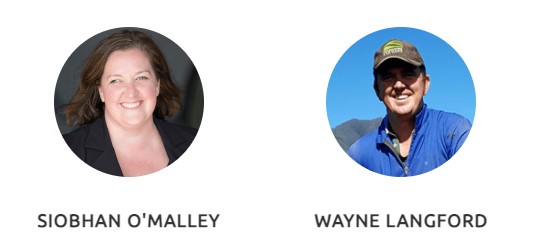
New Charity launched by Wane Langford & Siobhan O’Malley

Wayne Langford and Siobhan O’Malley have just launched their new charity that allows farmers to donate fresh meat to help feed New Zealand’s most vulnerable.

Wayne joined Sarah Perriam on Sarah’s Country recently to talk about their latest venture ‘Meat The Need NZ.’

Wayne and Siobhan are both Kelloggers, Wayne completing the Kellogg Programme in 2014 and Siobhan in 2018. 

https://meattheneed.org/

Our New Programme Partner – Rabobank, and more…

Meet our new Programme Partner - Rabobank

Rabobank NZ

We welcomed Rabobank on board as a Programme Partner in January this year and look forward to working with them and tapping into their extensive international and national networks and expertise. As the only Co-op bank focused on the Rural Sector, we could not have signed up a better partner. Relationships are two-way so we urge you to consider Rabobank for your banking requirements and to tap into their extensive resources below.

Rabobank Research Podcasts

Rabobank’s global team of 90 food and agribusiness analysts regularly record podcasts where they discuss the latest developments in food & agri sectors & provide insights on what these developments mean for kiwi farmers.

The podcasts are a fast and easy way to gain a better understanding of how Covid-19 and other key industry developments are likely to impact your business. 

To check out the podcasts, search for ‘Rabobank’ on your favourite podcast app & subscribe or you can access the podcasts on their website or follow this link to the Rabobank website.

Strategic Partner Agmardt – re-signs partner agreement

We are delighted that our our relationship with Agmardt will continue for the next  three years, following the re-signing of their Strategic Partner agreement with Rural Leaders.

We cannot acknowledge enough the incredible support provided by Agmardt to our programmes and events.

Vote Now! DairyNZ Levy Vote

The DairyNZ levy vote is open. 

Please make sure you vote and  get others to vote also. Now more than ever we need a dairy organisation representing the industry at government policy level, doing scientific research, and supporting many programmes including leadership and people capability for the sector. 

Click here to VOTE NOW!  

New appointments at Rural Leaders

Rural Leaders welcomes new CEO – Chris Parsons


We are pleased to announce that Chris Parsons joined us on Monday, 4th May as our new CEO. Chris was recently interviewed by Rural News and would like to convey the following message:

“To all of you on the journey to develop your leadership, well done! It is a transformative journey. The learnings you absorb over the Kellogg course will have life long impact, not only improving the quality of your connections with others but also in multiplying your ability for positive impact. Leadership is a life-long journey and I look forward to journeying with you. “

Read the full interview at Rural news here

At the end of April we farewelled Anne Hindson who has led Rural Leaders from its inception. Her early pioneering work with Patrick Aldwell and Richard Green and Tony Zwart has been critical to the coordination of the iconic Nuffield and Kellogg Leaders programmes and their continual modernisation to ensure that modern scholars get world class leadership development.

We were sad to see Anne go, but grateful for her vision and commitment to the primary sector and Rural Leaders over the last six years. 

Click here to go back to the newsletter.

Rural Leader’s Board appoints new Trustee – Kate Scott


At our recent AGM the Rural Leaders Board welcomed Kate Scott (2018 Nuffield Scholar) as a new Trustee, who replaced James Parsons. The Board will also be seeking to elect a new Independent appointed Trustee, following the recent resignation of Louise Webster.

Corrigan Sowman: Podcast interview – 23 March 2020

Are farmers equipped to deal with social judgement?

In this podcast interview on ‘Unpopular Farmer’, 2019 Nuffield Scholar, Corrigan Sowman talks about his Nuffield experience and how ‘Social License’ prompted his research topic – ‘Farming in a Pressure Cooker: How pressure impacts farmer decision making.’ 

Corrigan’s research started off as a technical problem and ended as a social one that farmers have perhaps been predisposed to over generations of high stakes, small margins, uncertainty and fast change, all leading to what he sees as ‘social judgement’.

Listen to the full podcast here.

Ryan O’Sullivan: Nuffield Farming Scholarship recipient (2017)

New Zealand well placed to produce food to meet demands

Ryan O'Sullivan: Nuffield Farming Scholarship recipient (2017) - Major shareholder with wife Tina in a farm equity partnership, Fairlie, South Canterbury

Nuffield farming scholarships focus on the international perspective – where New Zealand fits in the global agri-food sector and what’s driving things. Through my scholarship travels and research, I’ve learned New Zealand is very well placed to produce food to meet consumer awareness and demands. Our milk is a fantastic product with great nutritional value and many diverse applications.

However, ensuring an ongoing demand for our milk means getting things right both inside and beyond the farm gate – and that takes quality leadership. Our sector needs to foster leaders and give them the tools to succeed, and grassroots farmers are the best people to navigate through the issues ahead.

That’s why money invested by sector organisations like DairyNZ to build that capability is well spent. Through Rural Leaders, the Nuffield and Kellogg programmes are providing a pipeline of potential leaders armed with knowledge and skills in the rural community. DairyNZ’s support is a big part of that.

On a more personal note, my Nuffield scholarship also gave me the confidence to get in front of audiences and share what I saw, and who I talked to helped me with my critical thinking and prompted me to go for some governance roles.

This article appeared in the April 2020 edition of Inside Dairy magazine 

Nicky Barton – Old Dogs, New Tricks

Nicky Barton’s research that she carried out on the Kellogg Rural Leadership Programme revealed ‘some interesting interactions between age and health and safety behaviours on-farm.’ Read more in this ODT article : https://www.odt.co.nz/…/rural-l…/farmer-deaths-correlate-age

Nicky is the marketing and communications media manager for Worksafe and graduated from the Kellogg Rural Leadership Programme in 2019.

Click here to read Nicky’s Kellogg research report ‘Old dogs, new tricks : An exploration of age and its influence on health and safety in New Zealand’s primary sector.’ 

Lisa Portas – Showing people what we’re about

Lisa Portas who is an Expansion Manager at Palliser Ridge, a Sheep & Beef Farm in South Wairarapa graduated from the Kellogg Rural Leadership Programme in 2019.

Her research report  ‘Farmer Storytelling : Navigating our Narrative‘ focuses on helping farmers to tell their stories to help explain to urban New Zealanders the realities of life on the land and the contribution the primary sector makes to the country. 

Lisa featured on Global HQ’s OnFarm Story this week in her video  “Showing People What We’re About.”  Click here to watch the video.

IFAMA CONFERENCE – ROTTERDAM, JUNE 2020

FoodHQ is delighted to be able to offer a limited number of scholarships for young professionals and postgraduate students with food/agriculture related interests to attend the International Food and Agribusiness Management Association (IFAMA) conference in Rotterdam in June 2020  (https://ifama2020.org/) and participate in the IFAMA Student Case Study competition. 

Click here to see if your are eligible to apply.

The case study competition is held on the Sunday, June 23rd and involves teams from all over the world working on a given case study with very relevant global food and agribusiness issues, devising various solutions to its problems and then presenting the results of their analysis, the options and their chosen strategy to a panel of judges. It is a unique experience and one that previous participants from NZ have thoroughly enjoyed being part of. The opportunity to get to know the competition and see how different geographies unbundle the same case differently is a special global experience.

We are seeking high-calibre applicants who are future leaders in agrifood from a diverse range of backgrounds.  Prof Nicola Shadbolt from Massey University and several Mentors with experience within the agrifood sector will coach the case study competition entrants as well as accompanying the group throughout their visit, providing insights and further learning as appropriate.

We will also be arranging an in-market experience consisting of visits to interesting agrifood businesses in Europe as part of the programme.  It is likely that this will consist of 3-4 days prior to the conference.  Scholarship winners will also have the option of extending their visit to Europe to pursue their own itinerary or joining some or all of the International Horticulture Immersion Programme that will be running a course in Europe and Asia starting shortly after IFAMA concludes.

The scholarship includes return flights to Europe, transport related to the in-market experience, accommodation and conference fees.  Scholarship recipients will need to be able to cover other costs (including those related to visas/passports, meals, spending money) themselves.

Attached is a guide to the scholarships and an application form.  If you or someone you know is interested then please check your eligibility using the flowchart within this document, and if you do qualify then please complete and return the application form and your CV by the 27th Jan 2020.  Please note the requirement for Young Professionals to have completed their most recent university-level studies no earlier than June 2017 and for Postgraduates to have been still enrolled in a course in Dec 2019.

Please feel free to pass this information through your networks across NZ who you think may be interested – there is no restriction on where the applicants are or have studied.

If you have any questions please contact:  Abby Thompson, 021 774 864, abby@foodhq.com.

New Zealand Rural Leadership Trust Names Next CEO

Media Release, 8 January 2020

NZ Rural Leaders new Ceo

The New Zealand Rural Leadership Trust is pleased to announce the appointment of Chris Parsons, MNZM, DSD as their new Chief Executive Officer. Chris Parsons will replace Anne Hindson on 04 May 2020, following her stepping down as General Manager at end of April.

“We were thrilled by the quality field of candidates and consider ourselves fortunate to have someone of Chris Parsons calibre and experience step up to lead New Zealand Rural Leaders through its next stage of growth,” said Andrew Watters, Chair of the Board of Trustees.

Hailing from the Far North, Chris Parsons has a sheep and beef background and co-owns Ashgrove Genetics Ltd. He is also a decorated Army Officer, Certified Member of the Institute of Directors and holds master’s degrees in management and in strategy.

As part of the Board’s transition plan, Chris Parsons will attend the Nuffield Triennial Conference programme in March 2020.

Andrew Watters went on to say that “the New Zealand farming and growing sectors are at a pivotal moment; more than ever we need rural leaders who can perceive the challenges and seize the opportunities presented by rapid technological, environment, consumer and policy changes.” Chris Parsons expertise in strategy design, delivery, international relations and leader development will be important as Rural Leaders expands its offering and impact to keep New Zealand at the forefront of global agribusiness.

Parsons said, “I am honoured and excited to lead to New Zealand Rural Leadership Trust. I believe finding, developing and mentoring future rural leaders matters to the prosperity of New Zealand and New Zealanders, the protection of our environment and to thriving rural communities.”

Speaking on behalf of the Trust, Andrew Watters said, “We very much appreciate Anne Hindson’s efforts and her service to New Zealand Rural Leadership Trust since her appointment in 2014. Anne has been crucial to the establishment and development of New Zealand Rural Leaders which runs the iconic Nuffield Scholarship and the Kellogg Rural Leadership Programmes.  These programmes select, develop and help accelerate the leadership potential of New Zealand’s exceptional rural talent and the alumni of which contribute significantly to the food and fibre sector across New Zealand.”

General Manager Update: Anne Hindson

Our final E newsletter for the year is slightly later than planned and will hit you as you are winding down for the Xmas break. We hope that this later timing might mean you have some holiday reading!!

With the year now completed for the Nuffield Scholarships and the Kellogg Rural Leadership Programmes, focus is now on 2020 with the Kellogg programmes starting on 21 January, closely followed by the largest event we have ever hosted, the Nuffield2020 Triennial in March.

We have reviewed our intention to combine our two e-newsletters and decided to remain with separate communications due to targeted interests and potential level of content. So you can expect to continue to receive the dedicated programme updates as well as this generic operational update.

Quarterly Update (Sept – Dec 2019)

Management

We are thrilled to introduce a new addition to the team with the appointment of Tamney Hoyle, our new full time Marketing Manager, responsible for driving all our internal and external marketing and communications.  Tamney’s most recent role was with PGG Wrightson where she led the marketing efforts for PGG Wrightson’s Livestock, Wool and Standardbred business units.  Since starting in October she was immediately seconded into the marketing of the International Agribusiness Summit on 23 March, to our Kellogg alumni and the wider NZ agri food sector.

Our future strategy and work plan has been a key focus in the latter part of this year with Scott Champion from Provenanz, (and Kellogg Programme Leader), working with myself, and Louise Webster (Independent Trustee) on refining our strategy and action plan for the organisation for the next 24 months. To be presented to the Board in January, the focus has been on further developing current programmes, new initiatives, alumni, sponsor and stakeholder engagement and delivery.

The search for a replacement for my role of CEO, has started. As already communicated, I will finish up at the end of April 2020 after the Nuffield2020 event with a replacement coming on board earlier for a handover.  I look forward to farewelling Nuffielders at our conference in March.

Scholars

Alumni received an early preview of the new 2020 scholars as they were announced in Parliament on 5 November to 78 guests comprising of investing partners and industry leaders. The 2020 cohort (scholar names and bios here) have already started their 15 month programme with a full two days on 4 & 5 December in Wellington receiving their NZ and Industry briefing, in preparation of their role as NZ Ambassadors.

Meanwhile the 2019 Scholars (featured in this newsletter) delivered a fantastic forum to sponsors and Board on their global insights followed by a teaser of their research topic outcomes in a short presentation at Parliament as part of the Awards function. Recent scholars will remember the pressure of ‘that’ summer writing the Nuffield report, but this group are under a little more pressure having to deliver to the Nuffield NZ Conference on 20th & 21 March.  (See the list of topics to be presented by 2018 & 2019 Scholars here).

Nuffield Alumni Recognised

Our recent scholars have been doing us proud with some impressive appointments and acknowledgements. Firstly Mel Poulton (Nuffield 2014 alumni) was announced as the replacement for Mike Peterson (Kellogg alumni) to the role of NZ’s Special Agricultural Trade Envoy, Minister for Trade & Export. Lucy Griffiths was appointed to the Sustainable Food and Fibre Futures (SFF Futures), Independent Investment Advisory Panel who have a big job distributing $40m of government funding.

2017 Scholar, Mat Hocken became the first kiwi to receive the Rabobank Emerging Leader Award at a formal function in Auckland on 28 November.  Watch Mats video here. Mats recognition came after that of Jim Geltch who was awarded the 2018 Rabobank Leadership Award so again putting Nuffield ‘in lights’.

New Investing Partner Announced

In conjunction with the recent Rabobank Awards, Rabobank NZ announced a new partnership with Rural Leaders as a Programme Partner. This finally secures a banking partner for the organisation. Rabobank was the logical and best fit as a banking partner as a truly agricultural focused bank and a cooperative with a strong history of association. Both parties are looking forward to growing the relationship and alumni support.

Meanwhile MPI have also recently re-signed as a Programme Partner of Rural Leaders and a partner with the Triennial and we thank them for their support and that of the Minister, Damien O’Connor.

Alumni Regional Event Plans

After the six successful Regional Alumni events held this year we have plans to extend this next year into 6 different regions in May and June. The seminars connect together our alumni across both programmes, our investing partners and potential new scholars as well as provide an opportunity to hear some recent research from a local Kellogg or Nuffield scholar.

Alongside the 6 new regions we will be trialling locally coordinated seminars in 1 – 2 regions from last year, expanding the focus.

For more information about the Seminars contact us at programmes@ruralleaders.co.nz.

Triennial

Update on the Triennial is included in this newsletter. We are thrilled with the level of support of NZ alumni and industry as we host this large event. A key focus for Chairman Michael Tayler and myself has been in securing sponsor partners for the Triennial. An event of this size requires significant industry support and it has been fantastic to see this coming from our existing and some new partners.

2019 Year Highlights

As we finish 2019, it is great to reflect on the highlights of the last 12 months.

‘Behind the Scenes’

  • Continued support and contribution of our investing Strategic and Programme Partners to our programmes and their promotion which has meant a financially sustainable organisation.
  • Exciting new appointments to the Board and Management team

‘Delivering on our Purpose’

  • Graduated 54 industry leaders with 54 new pieces of rural research for industry
  • Delivered 6 regional alumni events as a first up initiative to engage ongoing thought leadership and connection at regional level
  • Hosted a Nuffield International GFP New Zealand leg in Nelson & Marlborough in April and scholars rated it the best part of their 6 week programme – thanks to our alumni hosts John Palmer, Julian Raine, Murray King, Andy Elliot, John Murphy and Hamish Murray and family.
  • A year’s activity putting together an incredible 11 day Nuffield2020 programme that includes 27 separate field trip options, access to iconic stations and an international Summit by Michael Tayler and his Organising team

‘In the Public view’ 

  • Current and recent scholars active in Industry presentations and industry advisory groups including a Global Insights Forum with investing partners from 2019 Scholars
  • Increased significantly the media coverage and exposure of Kellogg & Nuffield projects supported by our media partnerships with $145,000 value
  • Ongoing features of Kellogg and Nuffield alumni in On Farm Stories
  • Kellogger Lisa Portas, scheduled for Country Calendar programme early in 2020.

Recognition of the Team

Our vision of “Confident Rural Leaders Fit for the Future” and the achievement of the steps toward this could not be achieved without the ongoing contribution and dedication of the following:

Rural Leaders Team:  CEO, Anne Hindson, Programme Coordinator Lisa Rogers, Marketing & Comms Manager Tamney Hoyle, Kellogg Programme Leader Scott Champion, Kellogg Project Advisor Patrick Aldwell & Nuffield Advisor, Hamish Gow.

The Trustees:  Andrew Watters (Chair), Hamish Fraser, Michael Tayler, James Parsons, Craige Mackenzie, Louise Webster, Associate Rebecca Hyde

Strategic partner representatives: (National Advisory Group) Dairy NZ Jenny Jago; Agmardt – Malcolm Nitsche; Beef + Lamb NZ – Doug Macredie; FMG – Andrea Brunner; Mackenzie Charitable Foundation –  Mary Ross.

Programme Partners: Farmlands, FAR, Horticulture NZ, Zespri, MPI, TIAA

From us all, at Rural Leaders, we wish all alumni and their partners  a great Xmas and happy holidays.


Corrigan Sowman 2019 Nuffield Scholar – Global Insights: Food producers in pressure cooker

WE ARE not alone as New Zealand farmers, feeling the weight of change bearing down on us.

It is a global trend.

It has many different, complex drivers but two stand out – consumers’ willingness to pay for sustainability and farmers ability to capture it.

The resulting pressure is evident in a recent survey of Canadian farmers that found 45% have high levels of perceived stress, 58% met the criteria for anxiety classification and 35% met the criteria for depression.

A United States survey found 30% of farmers say mental health is a major problem for them, 48% of rural residents have more mental health challenges than a year ago, younger people are the most vulnerable and 91% of farmers/farm staff say financial issues and fear of losing their farms affect their mental health.

Recently in New Zealand a Ministry of Health Report presented to MPs showed suicide is up 20% in rural areas.

Across the world this year while doing my Nuffield Scholarship, I have seen incredible technical mastery in agriculture with yield increases, novel genetics, automation and precision and regenerative soil practices on a massive scale.

But the stats don’t lie. Farmers are under increasing pressure like never before.

To understand pressure I think there is no better place to start than with excellent Kiwi author and psychologist Dr Ceri Evans.  In Evans’ book, ‘Perform Under Pressure’, he talks about pressure as high stakes, uncertainty, small margins, fast changes and judgment.

And after my travels I’ve added a sixth, ‘losing one’s identity’.

I would like to highlight the last three because I think that is what is different right now and not just in New Zealand. Farmers are feeling overwhelmed by the pace of expected change and we are feeling judged like never before. It all contributes to questioning our identity as farmers.

Evans talks about the red and blue parts of our mind in his book. He describes our red mind as the emotions side that helps us make quick decisions in the blink of an eye, the fight, flight or freeze skills we are conditioned with from birth. Our blue mind is the logical, systematic slower-thinking part. It helps us solve complex problems and communicate them to others.

The problem with pressure, like the situations we now face with freshwater and climate regulations is we feel the weight of expectations, scrutiny and consequences building up and it triggers our red brain. 

We want to fight, we want to get out or just stop because we can’t see a future any more.

However, the focus needs on what we can control, not what we can’t. 

As farmers we are well versed in managing around aspects we can’t control like the weather, trade distortions and currency and we have built robust systems to help influence the outcomes of this uncertainty the best we can.

How we think, however, is something psychologists agree we can control.

Twelve years ago New Zealand rugby realised it didn’t understand pressure either.

Today, I suggest our primary sector could take a lead from our ABs. We might have lost in the semi but even South African coach Rassie Erasmus recognises the All Blacks’ consistency makes them the team to benchmark off. Why? They have learned how they think is as important as their technical efficiency.

Our challenge individually and as a sector is to build on the great work started by FarmStrong and endorsed by the examples in Evans’ book. Can we build our ability to be more comfortable with the uncomfortable?

We have trained our All Blacks to become masters of better decision-making under pressure. Can we train ourselves?

The regulation coming at agriculture is the gap we must overcome. Considering the information that I have heard presented during my travels it’s not unrealistic given the demands of our customers and certainly tomorrow’s customers. 

A good place to start and something every one of us can control is how we think under pressure.  If you haven’t visited FarmStrong or seen Evans’ book, I recommend them.

Cam Henderson 2019 Nuffield Scholar – Global Insights: Energy – the next ag evolution?

PRICES are good and interest rates are low but farmers’ moods are down because the regulatory pressure gives them little hope for the future.

Researchers are furiously searching for more sustainable ways of farming food and fibre but what if there was a whole new sector that could provide a light at the end of the tunnel?

As Kiwis we are all rightly proud of having over 80% of electricity come from renewable energy.

But it’s a statistic that has made us complacent.

If you consider all energy sources in New Zealand – natural gas, oil, coal and other fuels used for industry and transport – we are only 40% renewable.

All that fossil fuel energy is responsible for about 40% of our total greenhouse gas emissions and that’s a discussion that gets lost in the shadow of the agricultural methane debate.

So, what if there are solutions that not only bring down agricultural GHG emissions but in doing so bring down our energy emissions too.

It turns out some of New Zealand’s largest ag-producing competitors have already figured this out.

In California every electricity user pays a levy that goes into a fund to support large, on-farm solar installations. Farms with 1MW of solar installed on about a hectare of panels are not uncommon, providing the farmer and the state with renewable power at a fraction of the capital cost to the farmer.

In Ireland, dairy farmers are incentivised to put solar on their roofs as are farmers across the European Union.

In Germany, Northern Ireland and California bio-digestors are being subsidised to take in slurry and excess food and crop waste to produce biogas that can be further refined into biomethane. It can then be injected into the existing natural gas network.

The opportunity that really shows promise is energy crops for biofuel.

New Zealand has a short, rocky history with biofuel but we are now lagging the world in biofuel development and are one of the few Organisation for Economic Co-operation and Development countries without a minimum biofuel level in our fuel.

The International Energy Agency outlook sees biofuels as the major renewable transport fuel at least until 2050.

And yes, that beats electric vehicles.

Biofuel is already a big user of corn in the United States and of sugar beets in the EU. In New Zealand we have huge potential for energy crops – sugar beet and corn to get us started then tree crops of willow, pine, miscanthus and other high-volume cellulosic crops as technology develops.

So, as a dairy farmer I can picture having an acre of solar panels in an unused corner of the farm. Perhaps complemented with a wind turbine and a pipe or a tanker to take my slurry to the local bio-digester. The nutrients being returned in dry form to spread on my land and 10-20% of my dairy farm in an energy crop rotation that provides animal feed and allows me to economically drop my cow numbers, methane emissions and urine nitrates by the same amount.

And all using technology that is already available.

But the underlying success factor internationally might be hard to swallow here.

It will take more policy and regulation. But this time it would be to the benefit of farming.

The simple truth is fossil fuels will always be the cheaper option.

If we want change then we need the Government to intervene to create the right environment.

Policy makers in the EU and US are still trying to perfect that policy and it requires discussion from many sides but the US Department of Agriculture and Department of Energy are now working together to explore further renewable energy generation opportunities.

And that would be the first step here in New Zealand, a conversation that unites our national energy and agriculture strategies.

Wouldn’t it be great for New Zealanders to see agriculture not as the climate change problem but the climate change solution.

Hamish Murray 2019 Nuffield Scholar – Global Insights: Bridging the communication gap

THERE is an increasing breakdown in the communications between young and older farmers and both are struggling to get what they want and need out of conversations.

We have a generation of farmers raised by parents who lived through World War II, which shaped their childhoods and where no one spoke about the emotional stuff of fear or weakness. No positive feedback was given or received for fear of getting a big head.

Contrast that with the generations entering the workforce today who are growing up with a constant stream of feedback via social media and online lives that is so constant they’ve never considered life could be any different.

It is no wonder our farming businesses are struggling to engage and motivate younger farm staff and those employed don’t feel valued or that they are contributing.

As someone who sits firmly in the middle of these two groups, taking over from my baby boomer father and now employing ever-increasing numbers of younger generations and school leavers. The contrast between young and old feels like the opposite ends of the paddock.

My recent Nuffield travels looking at the tech start-up world of the Silicon Valley and insights gained from those designing mobile and computer games highlighted just how constant the stream feedback is. Consciously part of the design to engage and keep players focused, gamers receive real-time feedback on their progress. They get constant updates on their travel towards the end goal including location, time remaining, amount of life or energy left, how much stuff they might have in inventory, even how other players are doing. Then, in some games, the screen or players might flash if in imminent danger.

Combine this thought with immediate likes or recognition for pictures and comments on social media and even the way our schooling system has changed from final exams for school cert, bursary or university study when I took them 15 years ago compared with NCEA and the achievement of credits throughout the year.

How does the type, volume and timing feedback we give on-farm compare? How has it evolved in the same time frame?

More than ever before those entering the workforce today crave continuous feedback.

They demand and respect those who can create a more responsive managerial style and those supervisors they can create a relationship with.  The internet has created a culture of ongoing communication and intense connectedness so it is no surprise we are beginning to expect the same standards in the rest of our lives.

Those starting out in our rural industries are equally as ambitious and hardworking as all of those before them and all want to feel valued and part of our businesses.

To contribute they want to share opinions and bounce ideas in a constructive environment and regular feedback allows that to happen while irregular and unstructured feedback keeps the conversation one-sided and in the power of the boss.

Don’t mistake the need or call for continuous feedback as a self-indulgent need for praise.

More than ever the world of employment is highly competitive for those entering the workforce.

Entry level jobs require some level of on-farm experience and this uncertain, changing environment is a challenge different from the structured one of schools and universities.

The quest is not to tell me how good I am but more what can I do better to understand where they stand and how they are performing, all part of a desire to progress and develop.

The desire for training and development through learning experiences is reported as being higher in priority for those entering the workforce than all other on-the-job benefits. Alongside formal training, continuous feedback is training in itself, because it helps to establish clear and pragmatic next steps towards objectives, so is critical in keeping our staff challenged and inspired.

From where I sit I see business owners who underestimate the incredible demand for feedback from their staff, then struggle with the tools to give it, having never had it modelled in their own lives. Versus the increasing need from those employed, who are so used to getting it continuously, without asking, they don’t know how to ask for it.

How might we bridge this gap? What capacity do we need to build?

Ben Hancock 2019 Nuffield Scholar – Global Insights: Farm societies have common issues

Ben Hancock 2019 Nuffield Scholard

FARMING the world over as much as the context, production and scale vary, shows, as the saying goes, the more things change, the more they stay the same.

After nearly six months on the road of my Nuffield journey I was struck by the similarities across continents and farming systems.

So many of the issues we face in New Zealand can be translated to our counterparts around the world.

This highlights that we have allies in dealing with the challenges we face and that we’re not in this alone.

In many developed countries there are the same concerns of the widening gap between urban and rural communities and the challenge of attracting people into their agricultural sectors.

At an agri-tech symposium in the American mid-west, plenty of cutting-edge ideas, gadgets and technologies were proposed and introduced to solve a myriad of issues. After two days of the symposium a panel of mostly young and engaged farmers was asked what their main concerns were. They repeated a familiar concern: finding staff, especially good staff.

The dairy farmers in Kenya I visited were concerned about connecting with their consumers though the connection is a more literal one – the actual logistics of getting their product to consumers elsewhere in Kenya, regardless of whether they are small subsistence farmers or larger more commercial operations.

A reliable supply chain is of more concern than perceptions of production.

Even so, their perception in the community still helps when the almost inevitable threat of land theft approaches.

Frustration in having a political voice is a common theme in many countries and agricultural sectors.

Within a few minutes of meeting the owner of a packing house in California he asked what I thought of President Donald Trump but he didn’t want to hear what I thought. He wanted to tell me what he thought. So much of what he vented was born out of frustration of not being represented in state or federal politics or in the general public.

So how does New Zealand differ?

New Zealand does have a great reputation and it has been enabled by our government and regulators.

The trust in our production systems and goodwill in terms of how New Zealand is perceived and behaves on the international scene is an asset for our industry.

The five Nuffield scholars benefitted in our travels from New Zealand’s international reputation.

The Christchurch massacre occurred while we were in the United States. Often the perceptions of New Zealand’s reaction from locals was one of sympathy for what had happened but also an appreciation of the community’s response and Government decisiveness.

Our nation’s reputation is more important to New Zealand’s agriculture than elsewhere. Take the red meat sector. More than 90% of what we produce is exported. Our reputation matters.

After a long day riding in the back of a van across nearly the length of Romania our group of scholars reached Bulgaria. Rather worn out and hungry we found a nice enough place to eat. Lo and behold, there was New Zealand lamb on the menu.

Nothing else on the menu hinted as to where it came from. Somewhere on the border between Romania and Bulgaria our reputation still carried weight. Perhaps it was the only thing any locals would know of New Zealand.

It really hit home that our community is here, our customer is there. The appreciation for New Zealand’s image and all that it entails is valued by our customers. Yet a lot of the headwinds that are buffeting New Zealand’s agriculture sector and rural communities are generated locally.

I saw some perverse outcomes of government involvement in industries and, though I’m reluctant to admit, there might be some benefits.

For example, in Ireland, if society decides an action such as conservation or environmentalism is a priority that benefits wider society at a cost to the producer, wider society contributes in some form – whether through taxpayer-funded support or at the local checkout.

On returning to New Zealand it feels as though the support and validity gained through regulation has changed. The inundation of regulatory and societal pressure is wearing on rural communities. However, we’re not alone in this. There are seismic shifts happening globally.

The detachment between the community and consumer means the cost of demands on production are difficult to meet. Ultimately, though, the Garden of Eden can’t be demanded without someone needing to pay the full price for having that shiny apple.

Hamish Marr 2019 Nuffield Scholar – Global Insights: Attacking the noblest profession

AFTER almost half of this year travelling the world there are a lot of thoughts in my head regarding agriculture and farming.

The biggest take-home for me is the universal problem of people wanting what they haven’t got simply through believing the grass is always greener over the fence and genuinely not understanding agriculture and what is involved in food production.

This fact was spelled out very clearly to me when two environmentally minded vegans in Germany told me the problem with German agriculture was that the cows were inside a lot of the time and farmers should put their cows outside all year like New Zealand farmers do.

Of course, that bought a smile from me because in NZ the green movement wants us to put our cows inside to be more like Europe.

So, who do we believe and who is right?

It is the same argument with synthetic meat, this seemingly new food on the block is going to save the planet and the people.

My question is how can a multi-ingredient, heavily processed, made-in-a-factory product even be compared to ruminant protein?

Nutritionists and health professionals all talk of whole, nutrient-dense foods consumed in moderation as part of a balanced diet.

Animal meat is the ultimate whole food, laden with nutrients and, best of all, it can be eaten without any process intervention.

In the 1980s and 1990s everyone was going to die prematurely from heart disease from eating too much butter and the alternative and golden ticket to eternal life was margarine. Now, in 2019, there is very little margarine sold as the apparent health benefits actually never came to be.

Genetically modified plants are almost enemy number one world over through misinformation about pesticide use and apparent food safety concerns.

The marketers and lobbyists will have you believe GM has led to huge increases in chemical use and it has been a campaign to sell agrichemicals by large, multi-national companies.

In truth GM was designed so farmers would apply less chemicals, both insecticides and herbicides, and the companies would make their money selling the patented seeds.

GM corn, for example, contains a naturally occurring fungus (Bacillus thuringiensis). BT, as it’s known, is registered as the safest organic insecticide in organic and biological farming when used on its own and yet because it has been bred to occur in corn it is labelled as hazardous by the very people calling for safe food.

At some point all western countries are going to face a wall of loud, anti-farming noise and governments will respond to the voters.

In the Netherlands, France and Germany we are seeing populations calling for more regulation to limit productivity.

Farmers, personally, will be the collateral damage in what will result and this will happen in NZ at some point.

What the people making the noise fail to grasp is the effect they have on people.

Recently, I was asked by a panel about my thoughts on morale in agriculture considering how good prices are.

My response was simple. Morale is extremely low and will remain so as farmers feel targeted.

They are made to feel responsible for a multi-generational production model that successive governments and regulators have promoted.

They feel targeted by a media seemingly interested in a story and they feel targeted by groups that understand only small parts of what are very complex systems.

I can tell you first hand when you criticise what a farmer does you criticise them, their home and their very reason for being.

It is not like criticising a company that can hide behind a name. The effects are real and they are very personal. Farming is a very emotional-laden occupation and farmers feel genuinely responsible for producing a good product for those who choose not to do it themselves.

The regulations facing agriculture will not go away and they they will almost certainly change in form and the way they are administered but regulation is probably here to stay if what is happening in other countries happens here.

It seems the life of any regulation begins as noise that gets louder regardless of the facts.

We have to remember our farms are outdoor factories and what we do can be openly seen by anyone who drives down the road.

By default that makes us targets unlike any indoor factory where trucks go in one side and out the other and something mysterious happens inside.

In general, people talk only about small components of our farming systems but talk as if they are experts and you have to think that just because I have teeth, it doesn’t make me a dentist.

The challenge for agriculture is to find a way through by understanding what the people want and in doing so try to explain why farming is so complex, diverse and at the same time the noblest occupation.

Hamish Marr Nuffield 2019 Scholar
Nuffield Scholars for 2019 announcement at Parliament. Photo by Mark Coote/markcoote.com

Lucy Griffiths – Appointed to IAP for Sustainable Food & Fibre Futures

2 December 2019

Well done to Lucy Griffiths who was recently appointed by Minister Damien O’Connor to the independent Investment Advisory Panel (IAP) for Sustainable Food and Fibre Futures (SFF Futures).

The advisory panel provides independent expert advice on both funding proposals and active programmes in NZ’s food and fibre industries. There is a $40 million fund available each year to support innovation in this sector, and the panel only advises on applications $5 million and over.  Find out more.

Find out more about Nuffield NZ Farming Scholarships


Mat Hocken – receives 2019 Rabobank Emerging Leader Award.

29th November 2019

Mat Hocken was announced as the 2019 Rabobank Emerging Leader at the Rabobank Leadership Awards on Thursday night (28th November). Our congratulations go out to Mat who is the first kiwi to receive this award!

The Rabobank Leadership Awards are held annually recognising the contribution of leaders from across New Zealand and Australia’s food and agribusiness sector. The 2019 event marked the 20th anniversary of the awards and the first occasion the awards dinner had been held in New Zealand. Find out more.

Mat Hocken – 2019 Rabobank Emerging Leader Award Recipient

Find out more about Nuffield NZ Farming Scholarships

Alice Rule: Sustainability at heart

Alice Rule, Kellogger and emerging young leader in sustainability, is researching the circular economy of glass in the New Zealand wine industry as part of her Kellogg research project. Through her work, she hopes to drive awareness about using glass made in New Zealand in the wine industry. Click here to find out more about Rule’s research project.

Learn more about the Kellogg Rural Leadership programme

Nuffield Scholarship awarded to Dairy Environment Leader

Nuffield Scholars 2020

Media Release, Tuesday, 5th November 2019

Waikato based, Dairy Environment Leader, Dairy Farmer and recently appointed Dairy NZ board member, Tracy Brown is one of five scholars from across industry sectors awarded a Nuffield NZ Scholarship.  The scholarships were announced on Tuesday, 5th November at parliament by Hon Stuart Nash, Minister of Police, Fisheries, Revenue, and Small Business.

Alongside Tracy Brown,
the recipients of Nuffield NZ Farming Scholarships for 2020 are Shannon
Harnett, Whakatane based Agriculture and Horticulture Director; Waikato based
Phil Weir, Dry Stock Farmer and Agri business Consultant; Southland based
Edward Pinckney, director/owner of a dairy farm and sheep, beef and grazing
farm, Marlborough based Ben McLauchlan, owner of a 102 H vineyard and 30 H beef
finishing unit in Rapaura. 

The Nuffield Scholarships
with the three core components provide new Scholars with an opportunity to
travel abroad in groups and individually and study the latest developments in a
number of leading agricultural countries. 

“The reputation and
prestige of a Nuffield Scholarship opens the doors for new Scholars to access international businesses like Amazon, John Deere and Blue
Apron – businesses that are behind and beyond the farm gate.  No other programme can offer this type of
access to these globally recognised companies” says Nuffield NZ Chairman Andrew
Watters.

Ms Brown who is a champion for
sustainability, and has been leading environmental change in the dairy industry for
nearly a decade sees the Scholarship as an opportunity to gain insight into the
policies and processes other countries are using to create positive
environmental change.

 “While I have been active in the NZ
environmental space, this experience will enable me to gain the international
networks and experience that will add to my effectiveness in the roles I have
or will have in the future” says Ms Brown.

The
five new scholars will join more than 160 Nuffield alumni who have been awarded
Nuffield Scholarships over the past 70 years. The 2020 research topics are
likely to cover issues such as – Understanding the international policies and
processes that have created positive environmental change; How Plant Variety Rights provide growers the opportunity to successfully
develop new business internationally; Exploration of the NZ primary sector
to determine if there are fundamental barriers restricting collaboration;
developing and growing our young people entering the agricultural sector; Enhancing
the sustainability of Viticulture by lessening its reliance on scarce
resources.