2026 Nuffield NZ Farming Scholarship. Apply by 17 August 2025. Read More...

Apply for 2026 Nuffield NZ Farming Scholarship by 17 August 2025. More details...

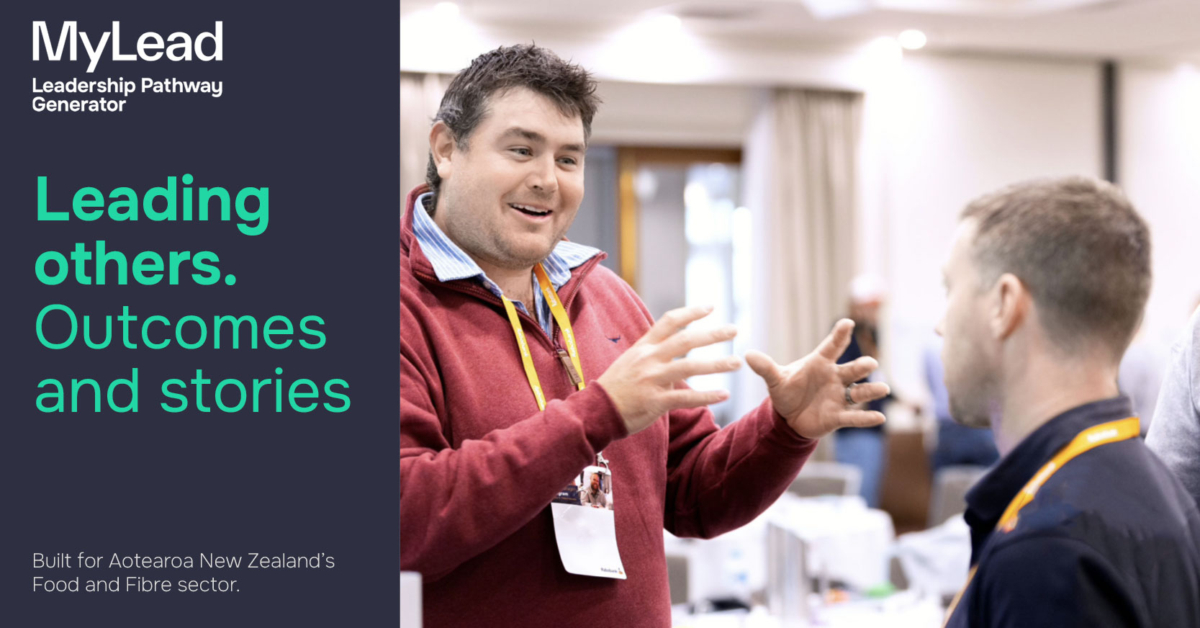
MyLead – Supporting stronger leadership in Food and Fibre.

MyLead: Supporting stronger Leadership in Food and Fibre.

A closer look at MyLead’s leadership stage outcomes and the industry stories that bring these to life.

MyLead.co.nz helps individuals at all stages of their leadership journey identify tailored development pathways to support their personal and professional growth.

MyLead marks a step toward a more coordinated and impactful approach to developing our sector’s most important asset – our people.

Research commissioned by Food and Fibre Centre of Vocational Excellence and led by Rural Leaders provides a leadership framework. The site brings this framework to life with an ecosystem of leadership programmes along with leadership outcomes by stage, supported by real industry stories.

The outcomes and stories vary depending on both the stage and industry selections users make on the site, making it a personalised experience.

What follows is an opportunity to review all of the leadership outcomes from the framework and their supporting stories.

These have been categorised, as they would be on MyLead, under the three leadership stages: leading self, leading others, leading strategy.
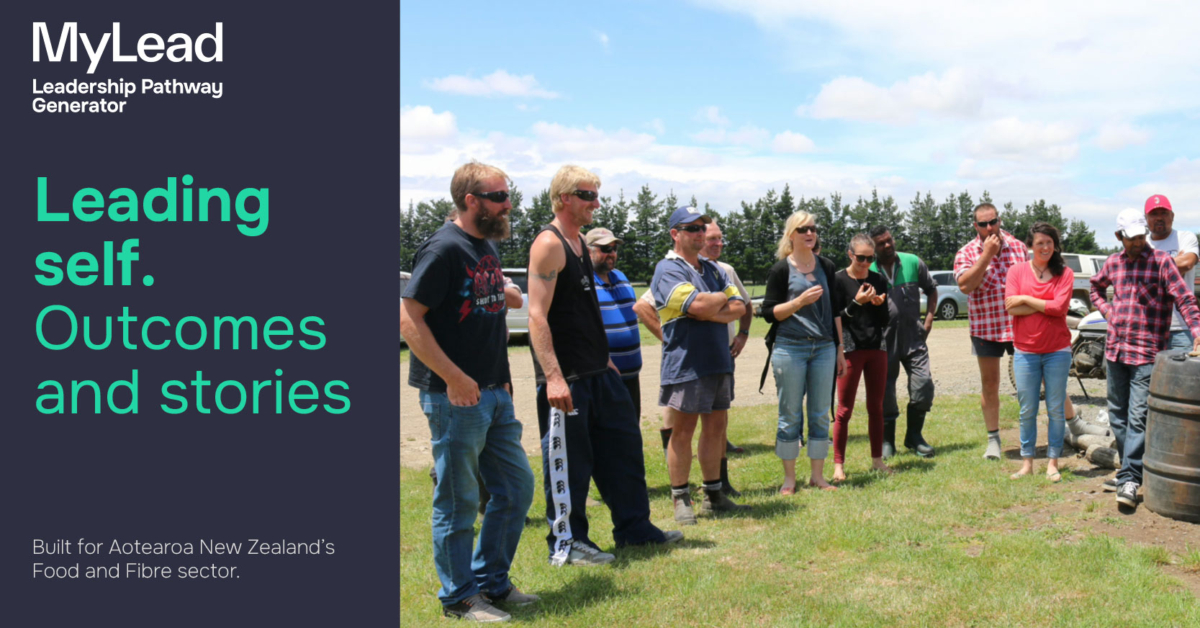
Leading self (team member/team leader)

Those at the Leading Self stage are focused on planning and executing tasks to achieve organisational or team objectives.

Leaders build trust

Relationships are founded on trust. It is also the oxygen that leadership breathes. How leaders behave builds or destroys trust. Without trust, suspicion, misunderstandings, failing relationships, and toxic workplaces quickly follow.

Story from the Sector

Leaders have empathy

To learn and understand others, we must demonstrate empathy. This is the ability to see and understand someone else’s perspective without judging it, or them… Demonstrating a genuine care and empathy for the team was frequently cited as a core attribute of what kaimahi (workers) in the sector wanted from their leaders.

Story from the Sector

Leaders are resilient

As a concept, resilience refers to the ability to endure and absorb the shocks of the world and recover from adversity… The good news is it is a learnable skill. For example, leaders can practice focusing on what they can control, taking charge of their thoughts, and adopting helpful habits.

Story from the Sector

Leaders are curious

Curiosity is a hunger to learn and grow further… The best leaders are not just curious about those things that directly relate to them, but they are also curious about what is happening beyond their immediate environment and how they might be able to adapt ideas from elsewhere.

Story from the Sector

Leaders understand their reputation

As leaders, we need to understand our reputation. Asking for 360-degree feedback can be very useful here (and potentially very confronting). How do other people see us? And does this reflect who we believe we are?

Story from the Sector

Leaders are in tune with their feelings

We lead people when we move them emotionally. So as leaders, we need to understand how emotions work, how they impact our thinking, affect our physical bodies, and how they spread between people.

Story from the Sector

Leaders understand their own drivers and values

As the leader, we are our first team member. So, leading ourselves is our first leadership responsibility. Knowing ourselves is a big ask, because it means exploring what it is that makes us tick—to differentiate between things that give us strength and those that cause grief.

Story from the Sector

Leading others (manager/general manager)

Those at the Leading Others stage bridge strategy and action by organising and systemising for success.

Leaders hold people to account

Leadership involves taking accountability for the behaviours and performance of the team while having the courage to share responsibility and authority with them.

Story from the Sector

Leaders delegate authority

As the leader, we are accountable for the results and wellness of our team. A leader’s accountability cannot be divided or delegated, but our authority and responsibilities can and should be… It takes courage to let go and let others act for us, knowing they may do it differently to us.

Story from the Sector

Leaders make effective decisions

Effective leadership is not a popularity contest. Leadership comes with scars. This is because a leader’s calling is to change-up (or adapt) the game rather than optimise the current game. To change with the times, the sector needs leaders with the courage of their convictions.

Story from the Sector

Leaders invest in people’s growth

As leaders we grow people, and our people grow the Food and Fibre our nation relies on. When we invest in our people, we invest in our business, not least because our people make decisions every day that have a material impact on the purpose or profit of our organisation.

Story from the Sector

Leaders deal with status and power

Leadership roles typically come with status and power which, to the unprepared, can be intoxicating. Leaders who put their own interests first, or who start thinking their elevated position equates to importance, set a rot in action that will ultimately undermine themselves and the results they seek to create.

Story from the Sector

Leaders serve something greater than themselves

Truly leading well is an act of service. Our role as the leader, is to serve the collective, not ourselves… An ethos of service works by unlocking one of leadership’s paradoxes (to lead we must serve). Leaders who serve, harness the reciprocal energy of the collective group or team.

Story from the Sector

Leaders make one-to-one connections

Leaders build a bridge between themselves and other people. To do this, leaders build trust, get alongside their people, and do more than just communicate— they connect. At its best, connecting is akin to creating a sense of family, this is the Māori value of whakawhanaungatanga.

Story from the Sector

Leaders know and understand others

As leaders, in addition to knowing ourselves we need to know others. To know others, we must seek to understand them. The things we seek to learn about ourselves (personality, thinking style, emotions, and resilience) are the same things we need to be curious about in seeking to know others.

Story from the Sector

Leading strategy (executive/director)

Those at the Leading Strategy stage focus on articulating the vision, generating value and creating competitive advantage.

Leaders energise the team

Energy is the wellspring of true leadership. When we are truly leading, the alignment of our whole self with meaningful purpose energises us and others are drawn to it. Finding what energises us and what feels true, is leadership’s X-factor. This is when the magic happens.

Story from the Sector

Leaders connect the team to an organisational purpose

People need to know that what they do matters. Leaders ensure their people understand how their task is important to the bigger picture. People simply want to know why they’re doing a task; this is what makes it meaningful.

Story from the Sector

Leaders create an environment where team members have autonomy over their timing and place of work

Flexible working practices should, as the name says, be flexible. It is unrealistic to think we can apply flexible working practices universally across an organisation. The goal is to apply them where possible. Organisations that embrace flexibility will maximise the pool of talent they can recruit from.

Story from the Sector

Leaders create an environment where team members have the autonomy to determine how best to conduct their tasks

People don’t want to be micromanaged. To give our people more autonomy, we need to focus more on the outputs we want them to achieve, and less on their inputs (methods, hours, and location required to deliver those outputs). In the end, it is as simple as giving people choice.

Story from the Sector

Leaders role model belonging

As leaders, we must create an environment where all our people feel they truly belong. This includes us. If we are brave enough to be authentic, we show our team members that it is safe for them to be authentic too.

Story from the Sector

Leaders create an environment where all team members feel safe to be their full and authentic selves

Leaders create an environment where everyone in their team can bring their whole, authentic, unique self to work and feel truly valued and included.

Story from the Sector

Generate your own leadership development pathway
Visit MyLead.co.nz

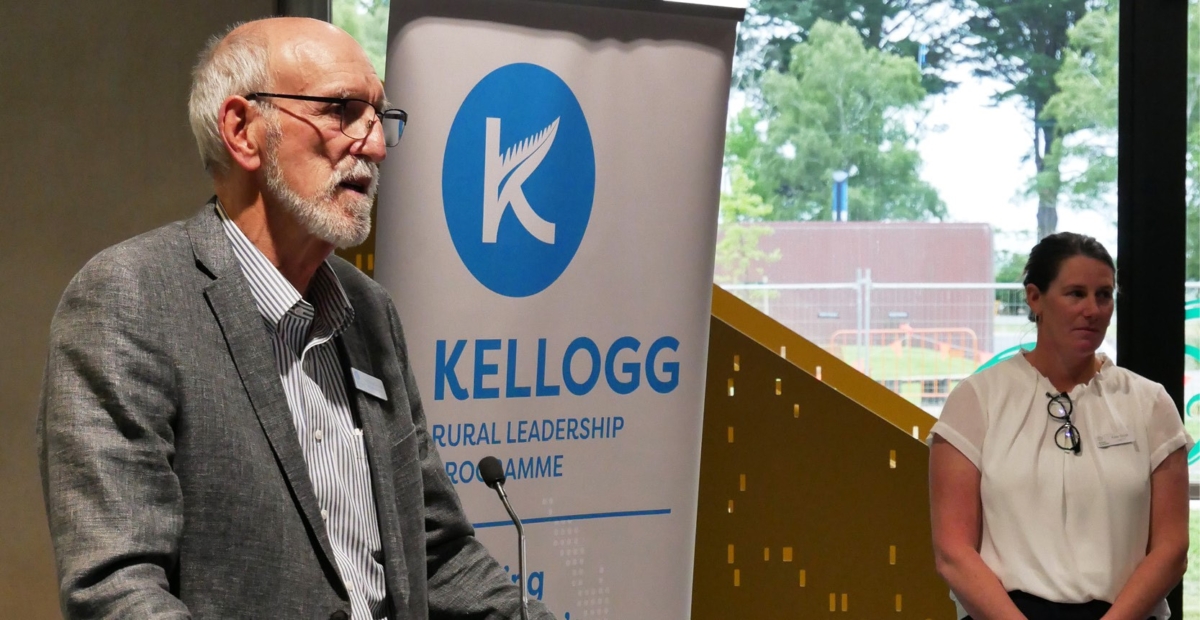
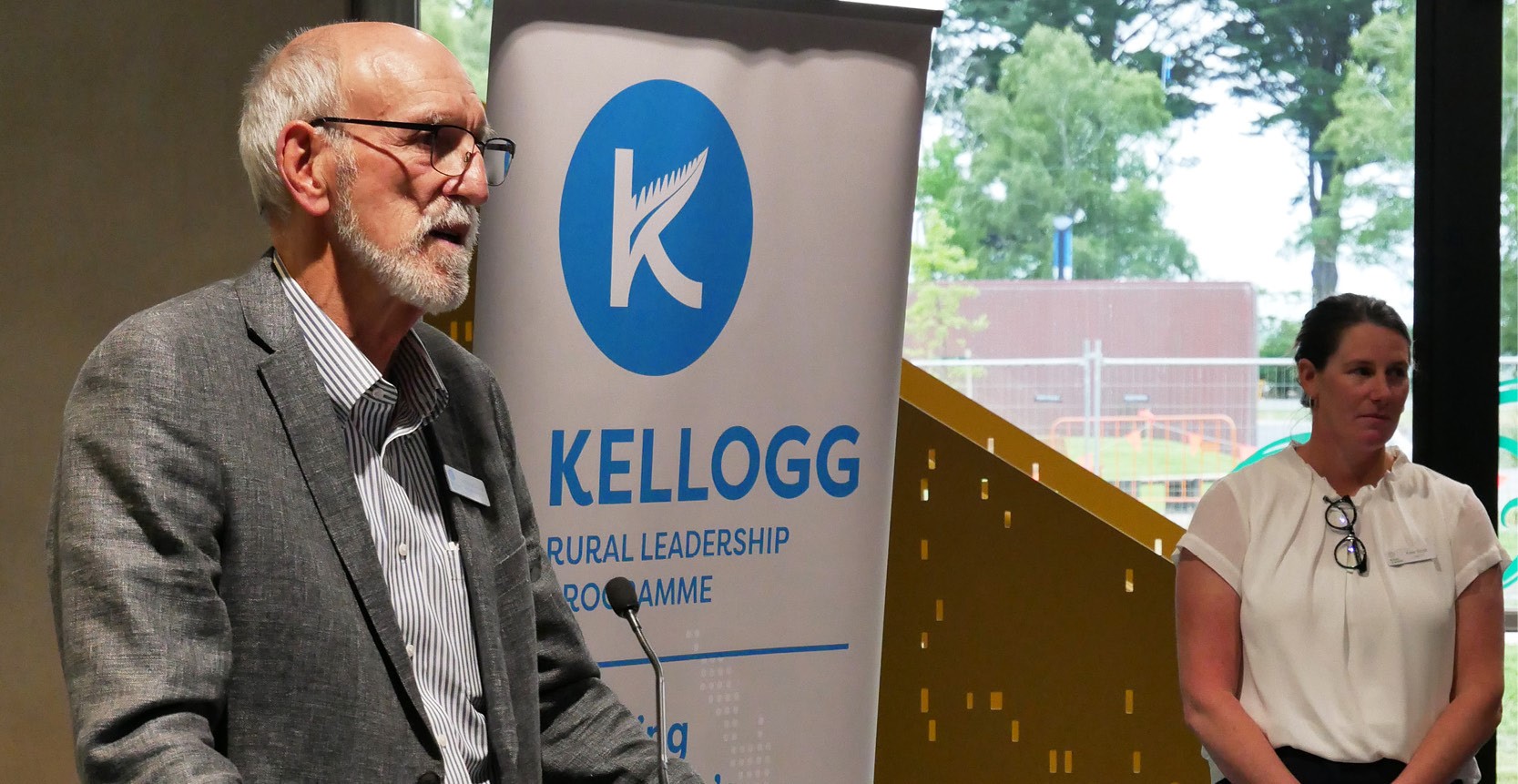
Dr Patrick Aldwell retires after 25 years of service to Kellogg.

Dr Patrick Aldwell has made a hugely positive impact on thousands of people from across the Food and Fibre sector. Passionate about life-long learning, he has also made the academic and strategic support of anyone who needed it, his life-long mission. On the Kellogg Programme alone, he did this for twenty five years. 

Now he has officially retired from Kellogg (well probably, mostly).

Since retiring from Lincoln University as Dean of the Faculty of Commerce in 2012, 
Dr Patrick Aldwell continued to focus on agribusiness programmes that build leadership capability in Food and Fibre.

These included the Kellogg Rural Leadership Programme, the Horticultural Leadership Programme, the Nuffield Scholarship and Future Food Network programmes.  

Prior to returning to Lincoln University in 1998, Patrick was a scientist for 20 years at the then Forest Research Institute in the Trade, Marketing and Economics group. During this time he worked on New Zealand land use issues and internationally for the UN and World Bank on capacity-building for science infrastructure projects. 

Patrick’s disciplines are in the fields of regional and industrial economics and strategic management. He has degrees from Massey University, Monash University, the University of Washington and a Dip. Agri from Lincoln University. 

Patrick never tires of sharing his knowledge with students and sector leaders. He is sought out for academic support and strategic guidance, particularly when it comes to tackling the big challenges facing the primary industries and its rural communities.

Today Patrick’s academic interests lie in fields of technological change, rural issues, the interface between agricultural intensification and other ecosystems, and on building our sector’s leadership capability. 

To this end, Patrick’s 25 years with the Kellogg Rural Leadership Programme, were marked by his support and encouragement of the rural leaders he taught.

One recent Māori Agri-business graduate of the Kellogg Programme said of Patrick, “He was instrumental in assisting me to basically learn how to write, how to write well, and to get my writing out there in the public space so that I could share what was on my heart and mind.” Comments such as this are typical and frequent.

He provided academic guidance and knowledge-rich support to rural leaders not just on the Kellogg Programme, but also the Horticulture Leadership Programme and many more. It is not just his dedicated academic support for students and scholars, but it is also to people in their ‘day jobs’ as well.

As Dean, Patrick’s long-time colleague, Associate Professor Charles Lamb, now Divisional Director at Lincoln University, said, “Dr Aldwell’s stand out quality was his genuine empathy for his staff”.

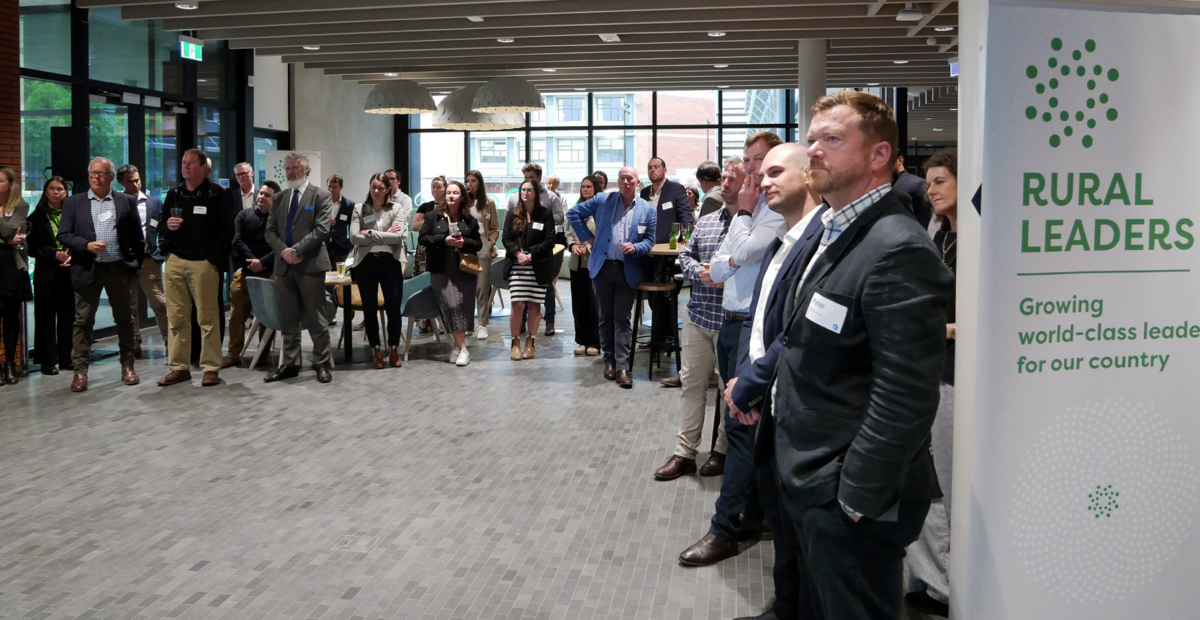
Images top and bottom – the graduation of the 50th Kellogg cohort. November 2023.

Shaping the critical and strategic thinking ability of hundreds on Kellogg.

Patrick’s involvement in the Sector runs so deep it can be hard to find a place he hasn’t had a significant positive impact on the primary industries’ people and their communities.

In late November last year, the Kellogg Rural Leadership Programme celebrated the graduation of its 50th cohort. Patrick was asked to speak to a large crowd of Scholars and industry leaders, not just as the Academic Director of the Programme, but as someone who had influenced the trajectory of over 800 of the Programme’s 1100+ alumni.  

Patrick has often said that one of the biggest thrills he gets is hearing of the successes of those in rural New Zealand he has taught, encouraged or perhaps provided quiet counsel to when times were tough on-farm. 

The length of time served, the passion, commitment, and the individuals influenced by Patrick’s involvement in key sector programmes, particularly around leader capability lift, means his impact on the primary industries has been exponential.

His fifty years of service to the Sector, positively influencing trade, science, academia and people, stands as tacit evidence of his dedication and passion for the primary industries.

In the last two decades Patrick has focused more specifically on addressing leader capability lift in the primary industries. Patrick understands the exponential impact stronger and ever-better leader ability can have in creating better outcomes for rural communities and their people.

As a simple and frequently occurring example, it is common to hear Patrick has spent hours working into the night, consulting with a farmer or grower who has been working all day on their operation. He takes a genuine interest in them as business owners, as team members, as students and as human beings. Whether on Zoom, over the phone, or in-person, Patrick never shies from helping the rural people and communities he is so passionate about.

From everyone at Rural Leaders, and the rural leaders you have supported and encouraged, enjoy your retirement Patrick.

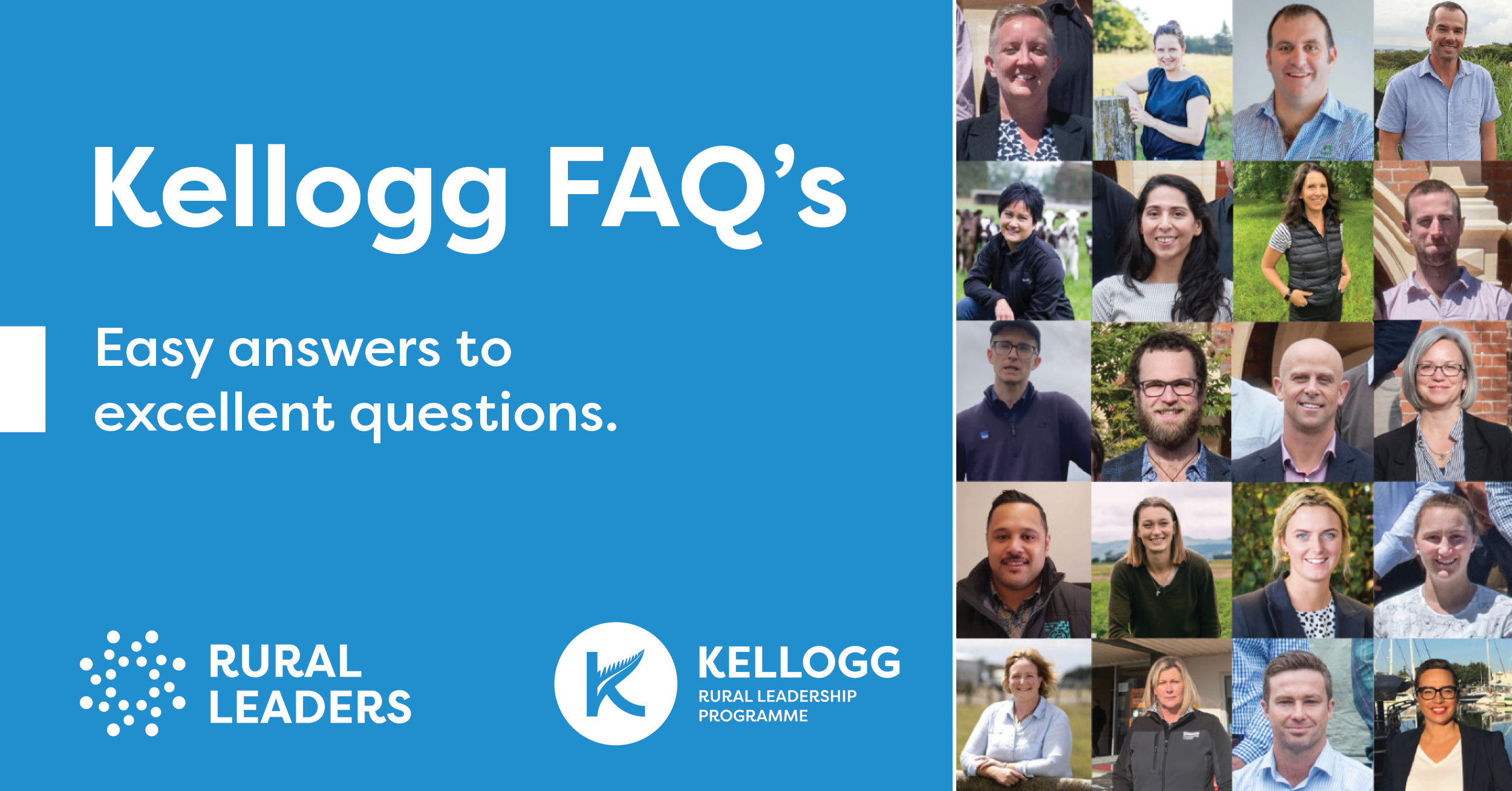
Saves you asking – Kellogg FAQ’s.

The following questions and answers relate to 2024’s Programme Two, however they are likely to be accurate and relevant for some time into the future. 

What is the total time commitment for the Programme?

18 days face to face, 50 days on individual research, all within a six-month span. The recommended time commitment is about 300 hours to complete your individual research report.

Do you have any tricks or tips for completing my application?

Get started sooner. Don’t bury the good stuff. Read it out loud. More tips and tricks are available on our website.

Is there a specific area that I have to study?

Scholars have the freedom to pursue a topic of personal and professional interest. Whatever the topic, you should aim to stretch you knowledge and understanding of it.

Should I have a research topic in mind before I start the Programme?

Yes, that is ideal. Often your topic is in plain sight and is something you’re genuinely interested in. If you do not have an exact topic in mind, arrive with some ideas you might like to discuss further.

What speakers, or industry leaders can I expect to hear from, or meet during the Programme?

We bring a cross-section of industry leaders and experts to the Programme. They’ll present to you, coach you, share stories and network with you. Some of the people you may hear from, or meet, include global leaders in agribusiness, CEO’s, politicians, owners of well-known private businesses in food and fibre, media operators e.g., PR consultants.

You may also hear from Rural Leaders’ Partners, including: Beef + Lamb New Zealand, Zespri, DairyNZ, Rabobank, Farmlands Cooperative, and more.

Can I get University credits for my Kellogg?

Yes, both Lincoln and Massey Universities have accredited Kellogg and are offering credits towards post-graduate degrees. You can opt into a Postgraduate Certificate in Commerce, giving you 60 credits towards the 180 required credits for a Lincoln University taught master’s degree.

You can also elect to use your 60 credits towards a master’s degree at Massey University. Another option is the Recognised Prior Learning (RPL), which can be credited towards a postgraduate qualification.

How long does the report have to be? How many pages?

We get asked this a lot. It’s 10,000 words. That’s roughly 20 pages (at ten point font).

How do I know if I am eligible to do a Kellogg?

The Kellogg Rural Leadership Programme is for mid-career professionals either behind or in front of the farm gate. It is for those who are emerging strategic leaders, perhaps transitioning from operational or technical roles to a more generalist leadership role – or intend to at some point in the future.

Do I need to have been to University? Do I need to work on a farm?

No you don’t. To both questions.

How many people are on each programme?

We have an upper limit of approximately 24 Scholars for each programme.

What are the selection criteria?

In any application we like to see a capacity to contribute to the learning process. We select Scholars from a mix of backgrounds and regions, as well as pan-sector representation. This enriches discussions, expands knowledge sharing and the cross-pollination of ideas.

What is the full cost of the Programme?

The fee is $6,995 +GST. The actual delivery of the Programme costs approximately $21,000 per person, but the shortfall is covered by our strategic and programme partners: AGMARDT, FMG, Beef + Lamb New Zealand, DairyNZ, Mackenzie Charitable Foundation, Horticulture NZ, FAR, Farmlands Cooperative, MPI, Rabobank, Zespri, and LIC.

Do I need to organise my own travel?

Yes, you travel the way that’s most convenient. We provide assistance by booking accommodation for the whole group.

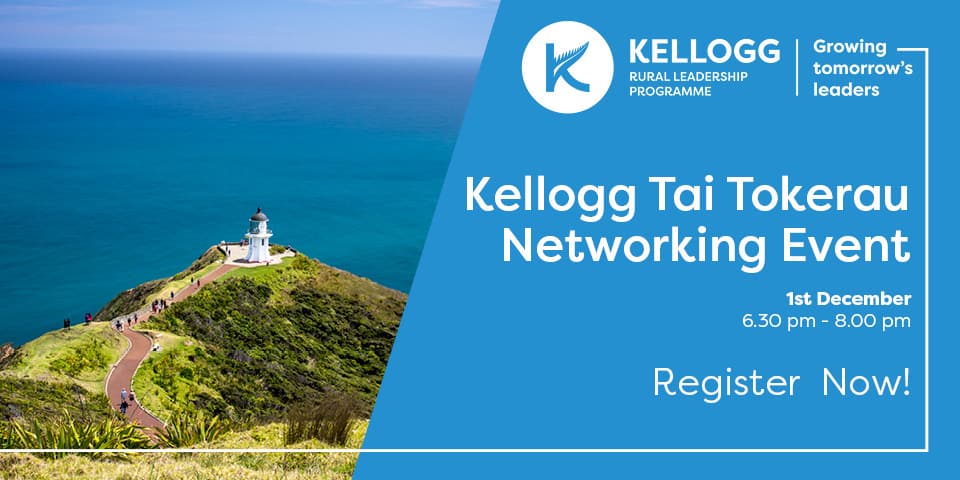
Kellogg Tai Tokerau Networking Event – 1st December 2020

Join us at the Kellogg Tai Tokerau Networking Event!

Tuesday, 1st December at 6.30pm

At the Orchard, 35 Walton St, Whangarei

Hear from our Northland Kelloggers – Paul Martin and Graeme Peter about their Kellogg experience. Network with other Kelloggers!

Explore how doing the Kellogg Rural Leadership Programme in Tai Tokerau in 2021 can help you accelerate your career in the Food and Fibre Sector.

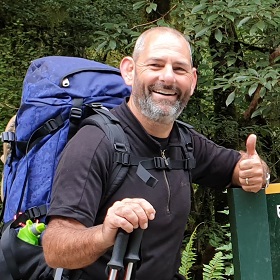
Paul Martin, 2016 Kellogger

“The Kellogg programme has been a key part in my governance journey. I’ve developed a number of networks through the course. Those networks have supported me and inspired me to continue my growth both professionally and personally.”

Paul Martin

Paul is a self-employed Agribusiness Consultant working under the Headlands banner, with clients throughout the Northland region. In addition to his consultancy work Paul is involved in a number of governance roles within the Dairy Industry and Bee Industry. Locally, Paul is the President of the Whangarei Bee Club, and a Trustee of Reconnecting Northland.

Paul’s 2016 Kellogg research topic focused on ‘How New Zealand dairy farmers can thrive in the face of milk price volatility.’

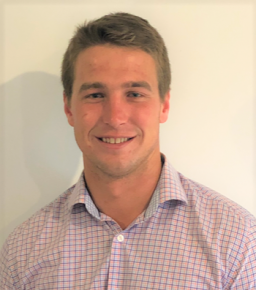
Graeme Peter, 2020 Kellogger

“The connections and learnings I have gained from doing a Kellogg are incredible. I feel very privileged to be part of the course and in particular the calibre of my cohort.”

Graeme Peter

Graeme is the Regional Food Safety and Assurance Manager for Fonterra in Northland. He works with farmers in Northland on animal welfare, food safety and assurance claims on farm.

Graeme will graduate from the 2020 Kellogg Rural Leadership Programme at the end of November. His Kellogg research topic is ‘Corporate Social Responsibility of Aotearoa Dairy Farmers – the Current Situation and How We Win.’ This body of research focuses on the four pillars of corporate social responsibilities (economic, legal, ethical and philanthropic).

Graeme’s drive is to keep Aotearoa dairy farmers and their families as leaders on the world stage, in our farm systems and animal welfare. Graeme says “The Northland Dairy sector faces many challenges and my Kellogg project has helped me bring a wider New Zealand and international view to these issues and has also provided access to incredibly talented and informative people.”

NUFFIELD AGRIBUSINESS SUMMIT – MARCH 23, 2020

Nuffield International Agribusiness Summit

After our fantastically successful one day Summit alumni event in 2017 we promised you another one in three years (based on your preferred frequency). We are pleased to announce that our next Kellogg alumni event has been confirmed for 23 March 2020.

What is even more exciting is that we are combining this event with the Nuffield2020 International Event, as part of a one day International Summit being held in Christchurch and hosted by Nuffield NZ.  With a theme of Fast Forward – this is a day focused on future solutions showcasing new business models. There will be lots of discussion and debate with International and New Zealand speakers who are leaders in change and business solutions, that will inspire, provoke and challenge your thinking.

We know as Kelloggers you also love to reKonnect – so we are organising some alumni networking events around the Summit with the help of Canterbury Kellogg alumni including a cocktail function on Sunday evening. The details of other events will be announced shortly.

All we need you to do now is:

  • Diary this date – 23 March 2020
  • View the Summit Programme 
  • Get your Kellogg cohort together for a reunion
  • Register now for the Summit and get in fast to secure your accommodation
  • Follow the Social Shares below and keep up to date with what’s happening at the Summit

If you have questions about the Summit and associated Kellogg events feel free to contact us at programmes@ruralleaders.co.nz.
 
EXPERIENCE AN EVENT TO GROW | CONNECT | INSPIRE

INTERNATIONAL AGRIBUSINESS SUMMIT & KELLOGG ALUMNI GET TOGETHER

23rd of March, 2020 in Christchurch

Details will be out soon but HOLD THIS DATE and START ROUNDING UP YOUR COHORT

We hope to keep your leadership juices going with an exciting and different one day event with some topical and new international and NZ speakers and panels. Part of the Nuffield2020 series of events & open to the wider industry- this will be a bigger and different one day event to our inaugural 2017 Kellogg Summit! There will be events scheduled around the one day Summit for Kelloggers to reconnect and explore!

Check out the website here for initial information.

Get your cohort together and organise a reunion in Christchurch!.

2019 Regional Forums – August

Come along and bring a potential Nuffielder or Kellogger as a guest!

A new initiative to connect all our alumni in each region with a chance to;

  • meet and connect with other Kelloggers & Nuffielders in your region
  • bring and introduce someone who may be interested in doing a Kellogg or Nuffield programme in 2020 or in future
  • hear some insights from recent Nuffield & Kellogg scholar reports
  • connect with possible mentors/mentees
  • give feedback and interest in ongoing professional development or local initiatives

We have to start somewhere and have identified 6 regions for this year and will then will do different regions next year. Invitations will be sent to all alumni in those regions in next week.

  • Hawkes Bay – 13th August, Hawkes Bay
  • Bay of Plenty – 14th of August, Mt Maunganui
  • Nelson/Marlborough – 15th August, Blenheim
  • Northland – 20th August, Whangarei
  • Southland/Otago – 22nd August, Gore
  • Waikato – 27th August, Hamilton

Not in these regions?
If you know some potential Kelloggers or YOU can attend one of the below, we would love to see you or them!! Just contact usprogrammes@ruralleaders.co.nz as the invitation to the forums will only go to those in each region.

To register your interest in an event, email programmes@ruralleaders.co.nz