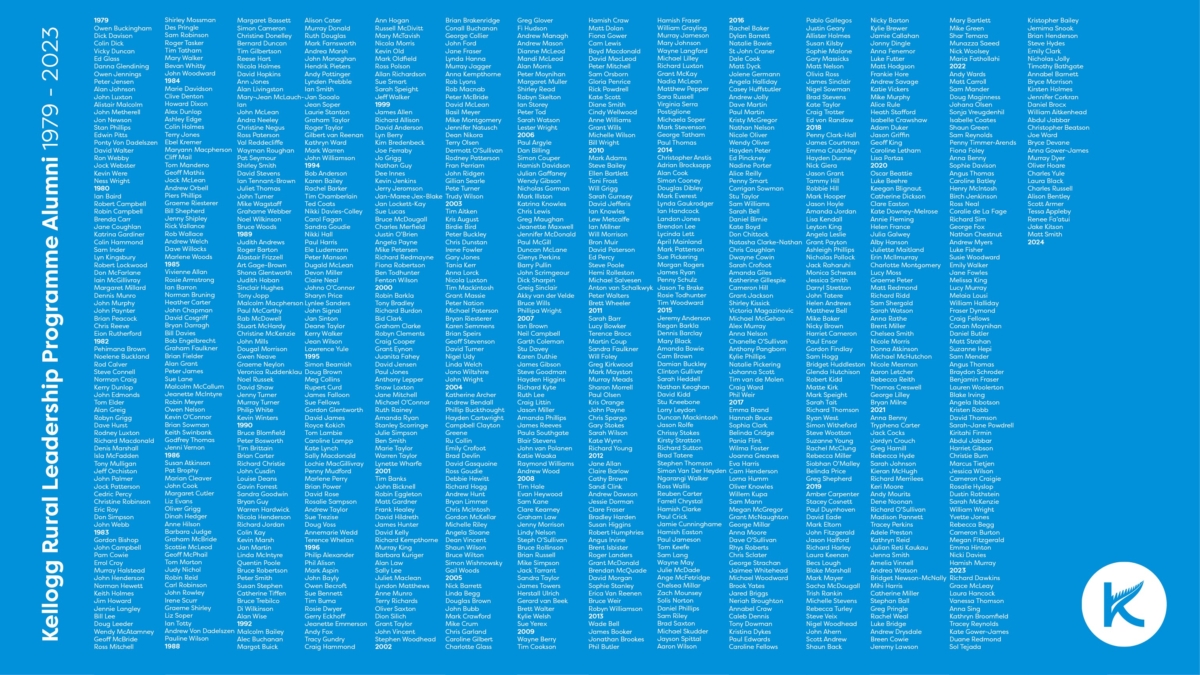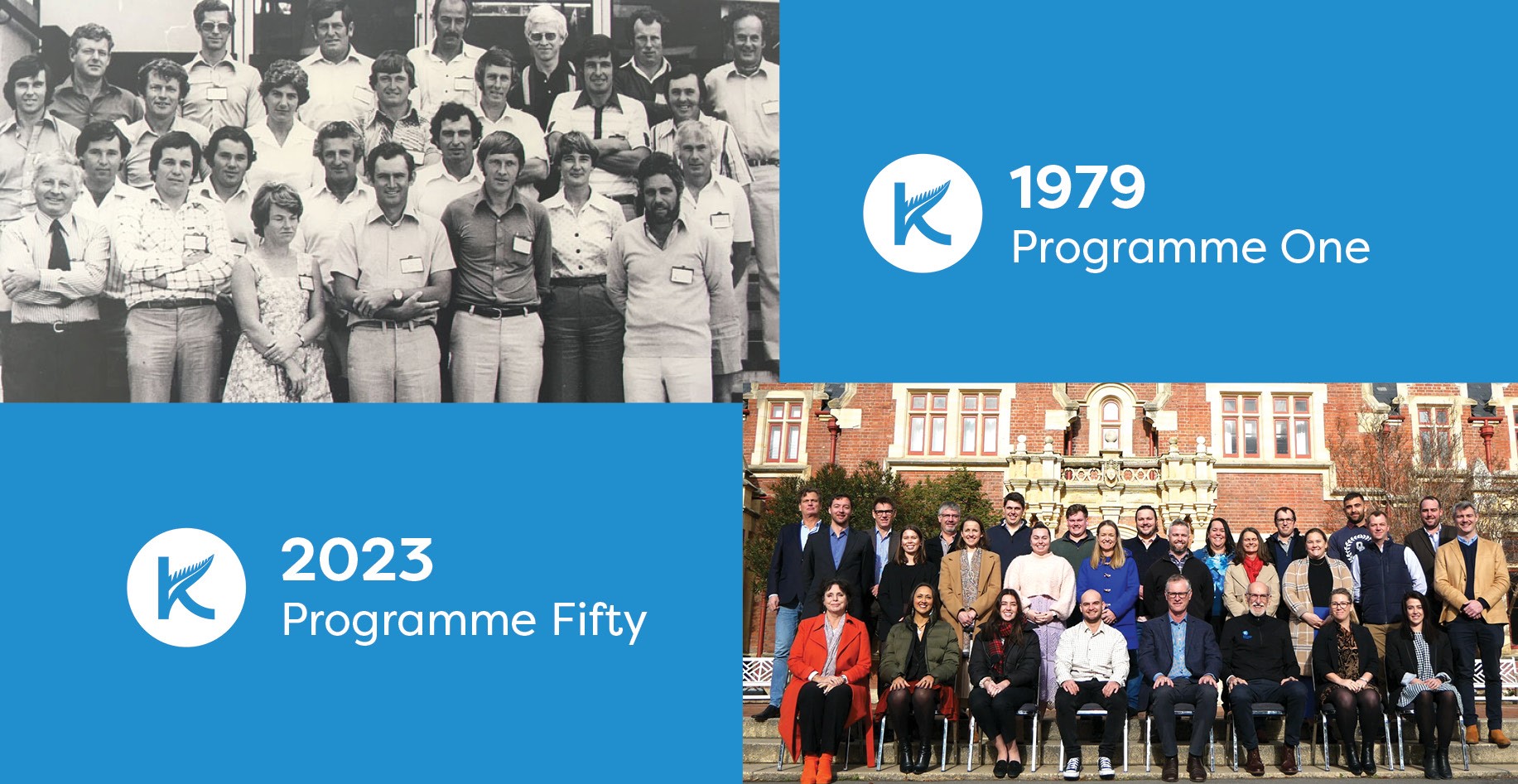
With Alumni now numbering 1075, the Kellogg Rural Leadership Programme has had a long and rich history of leadership capability lift across the food and fibre sector.
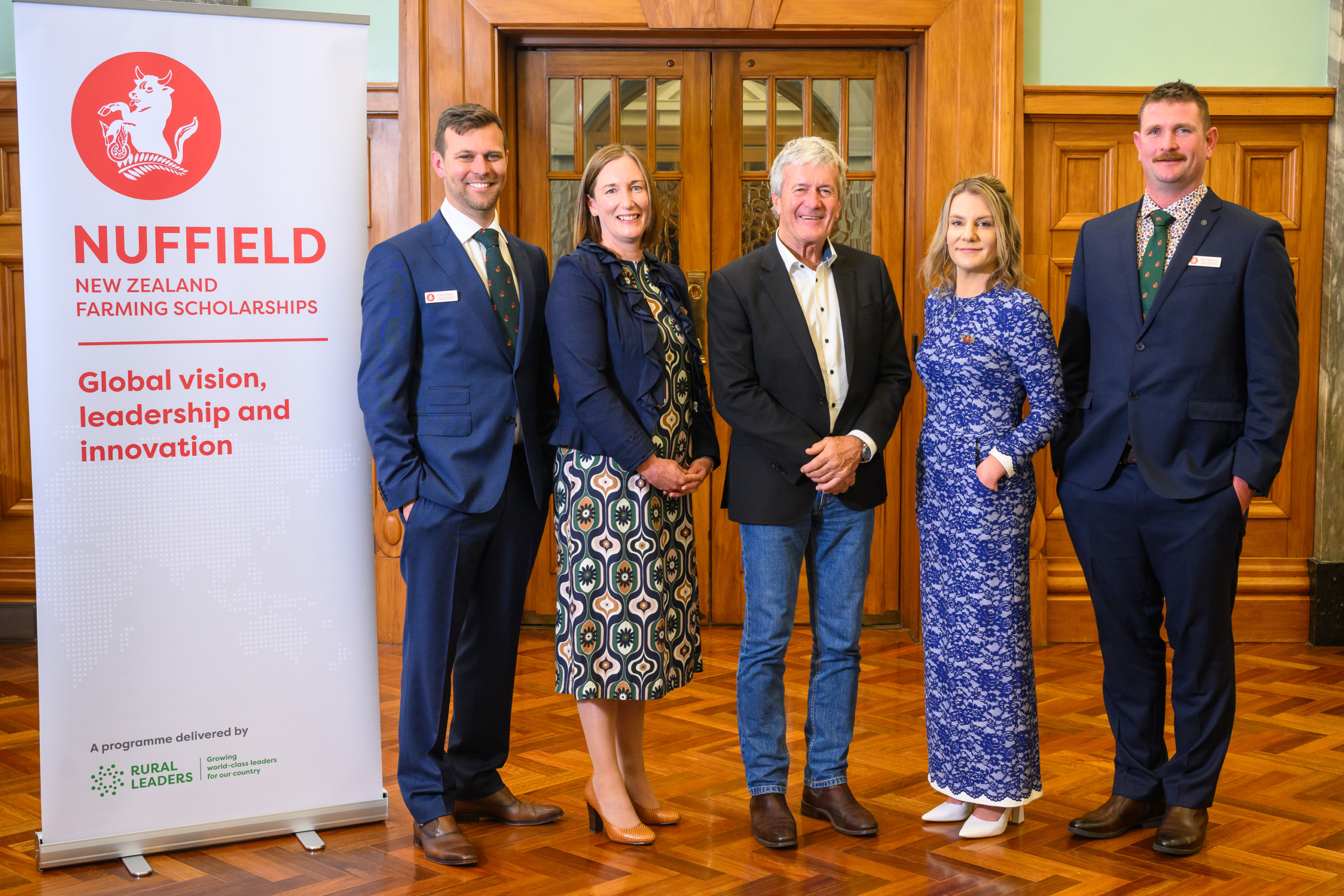
To celebrate the 50th cohort’s graduation, the collective impact of alumni, and the Programme’s history, the NZ Rural Leadership Trust (Rural Leaders) hosted an event at Lincoln University’s Waimarie Building.
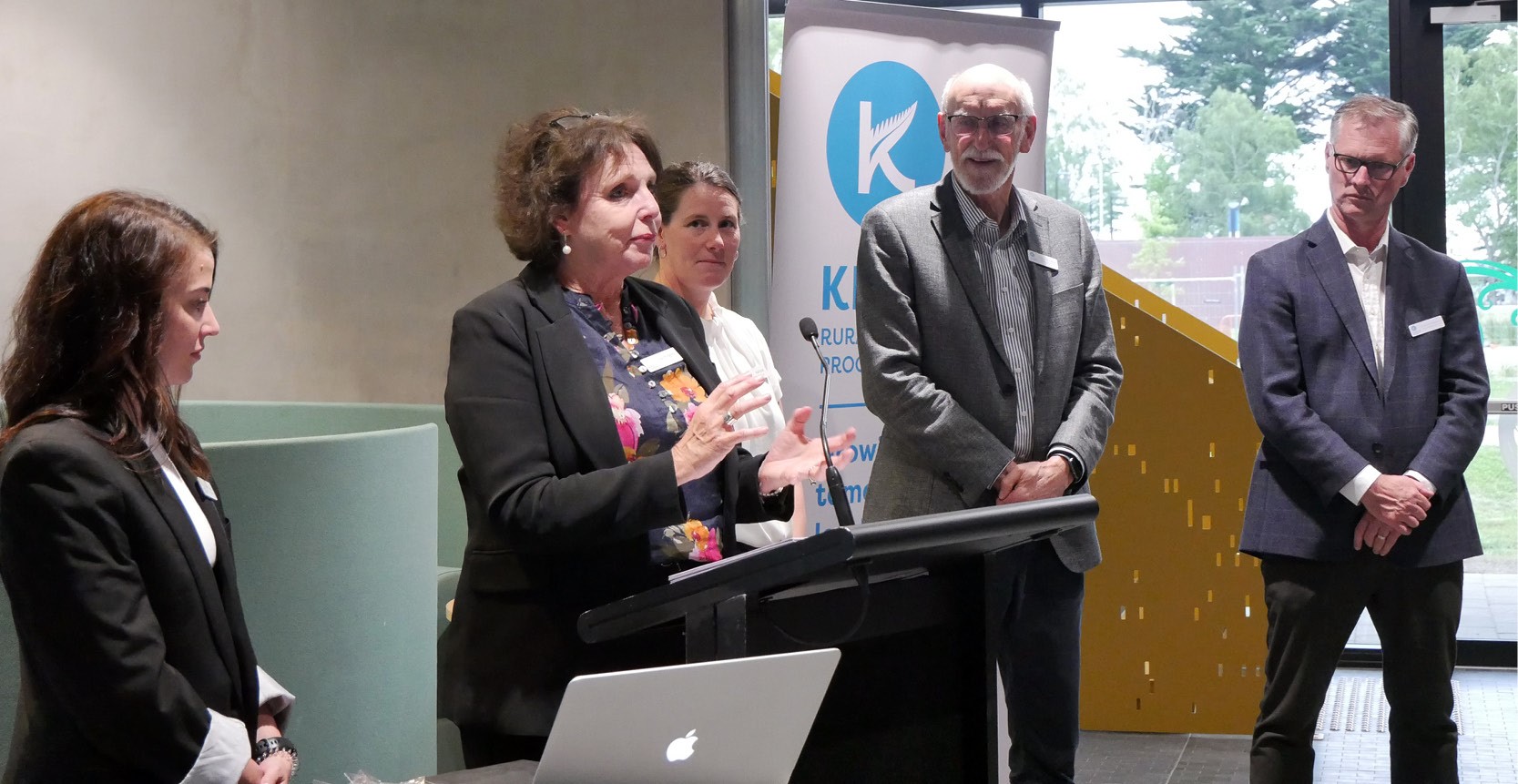
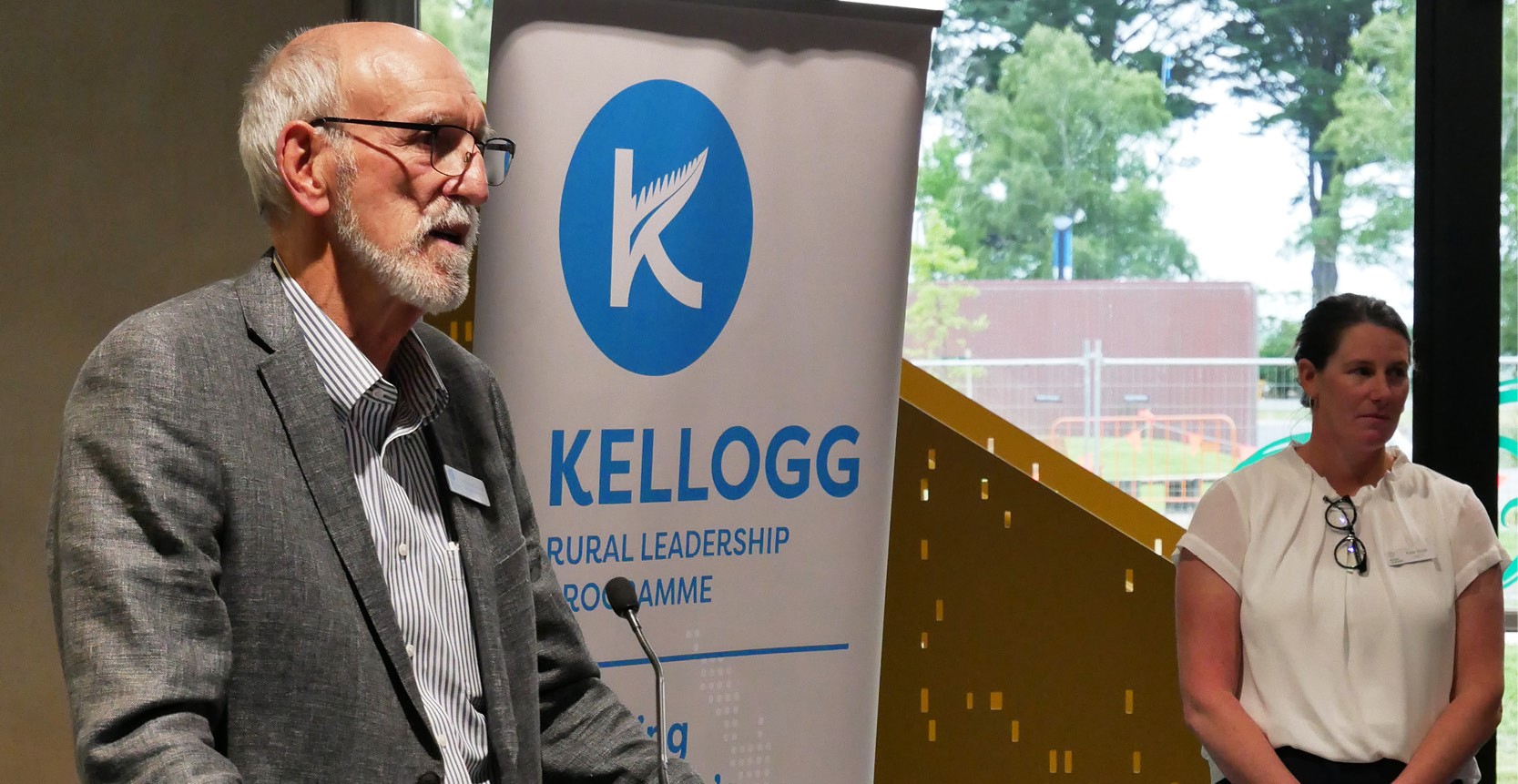
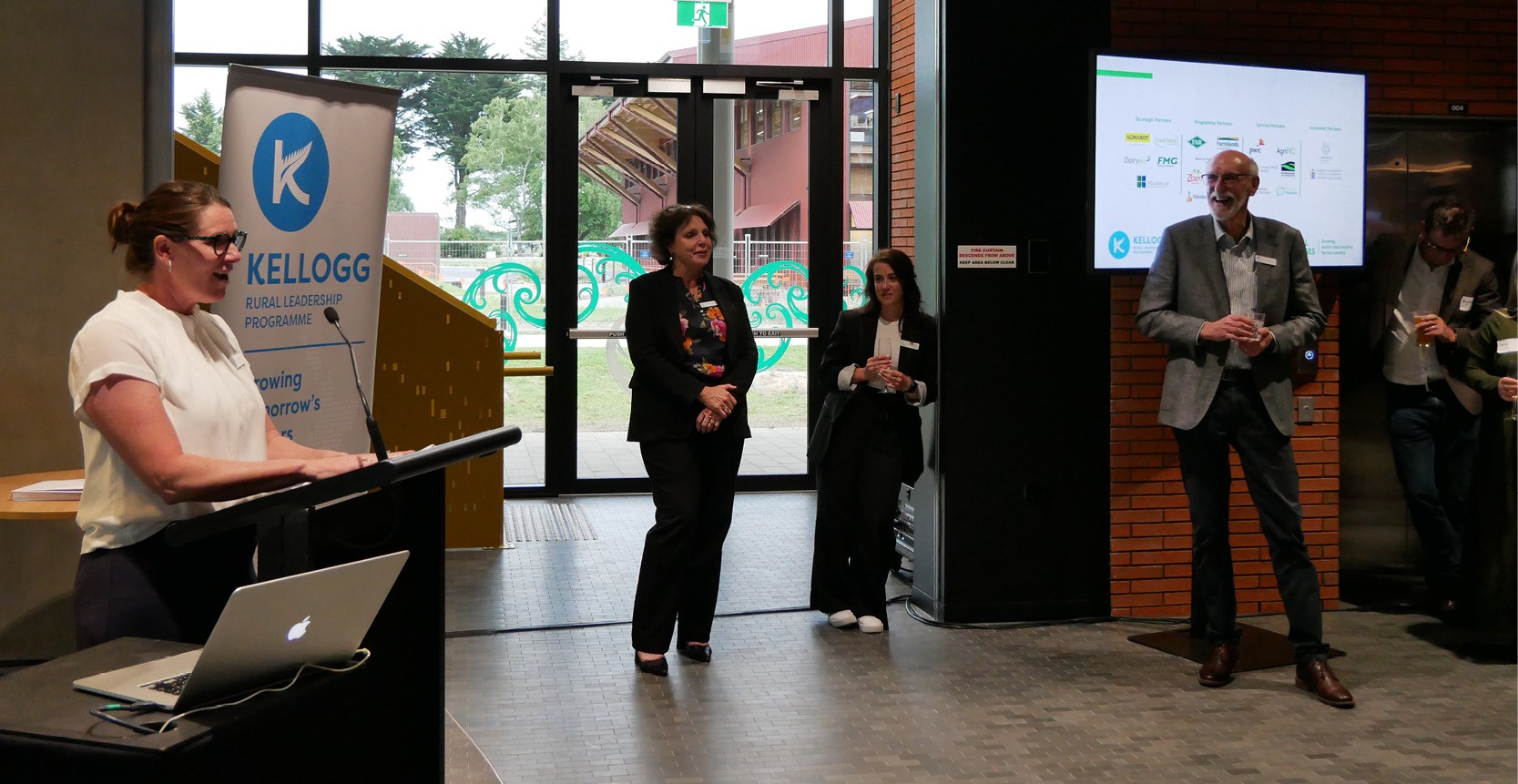
Kate Scott, Lisa Rogers and Dr Patrick Aldwell, spoke at the event, with Dr Aldwell sharing more the Programme’s genesis.
Serial impact.
The William Keith Kellogg Foundation (WKKF) was established in 1930 as a philanthropic organisation, running alongside the Kellogg’s Breakfast Cereal Company (Kellogg’s).
William Keith Kellogg initially set up Kellogg’s to support his brother’s business – a sanitarium.
Over his lifetime (1860-1951), William donated nearly $70m in stock to the WKKF, as he put it “to help people help themselves.” He wanted to equip people with the knowledge and solutions for better health and wellbeing outcomes.
He left simple instructions to future trustees and staff, “…use the WKKF’s money to promote the health, wellbeing and happiness of children.”
Incidentally, Kellogg’s has recently been rebranded ‘Kellanova’ in New Zealand and Australia, while in North America the brand will appear as WK Kellogg and Co. on supermarket shelves.
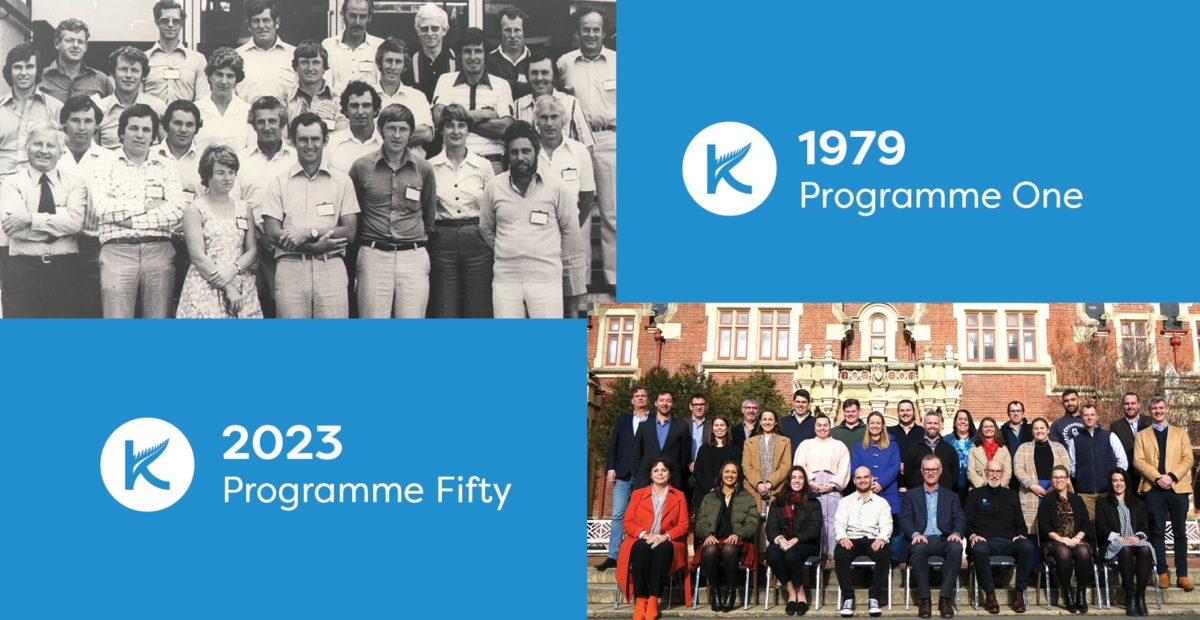
1075 Kellogg Scholars since 1979.
Eventually, part of the WKKF’s grants were used to establish rural leadership programmes in the US, Australia, and NZ.
One bold individual, John Pryde, CE of Federated Farmers 1964-1975 and Lincoln University Senior Fellow 1975-1991, persistently tried to set up a Rural Leadership Programme, finally succeeding in 1979 with funding from the WKKF for the first five years for a programme.
Since 1979 the Kellogg Rural Leadership Programme has helped deepen leadership capability in industries across our sector – and since 2017 it has been delivered by the New Zealand Rural Leadership Trust (Rural Leaders).
Thanks to the additional support of Rural Leaders’ investing partners, New Zealand Food and Fibre has more capable, and purpose driven people. 1075 of these individuals are Kellogg alumni.
Celebrating the Kellogg Programme’s impact.
As the Mackenzie Study has shown, the impact Kellogg alumni have made, and continue to make, cannot be underestimated. In fact, we thought it was something well worth celebrating. And so we did.
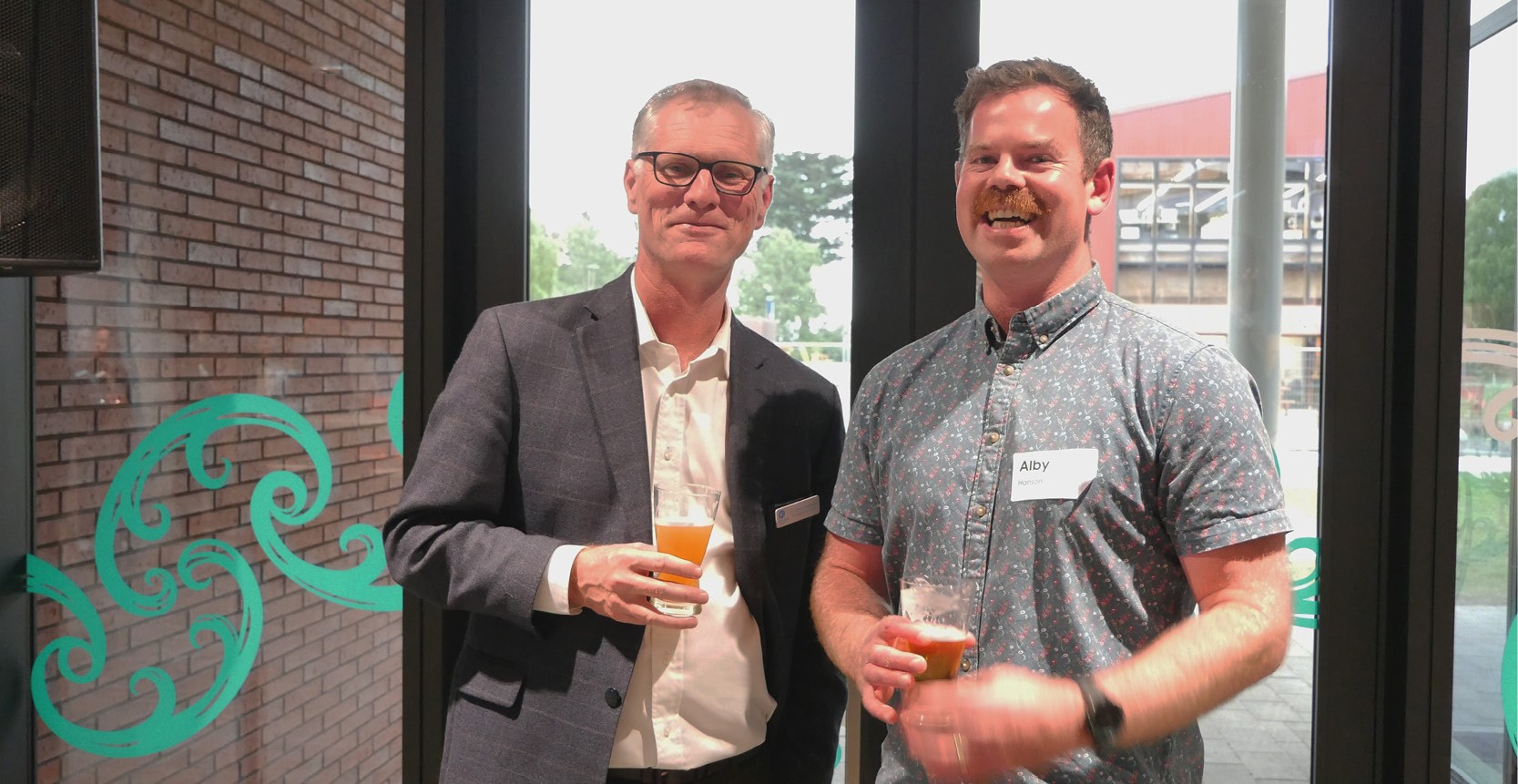
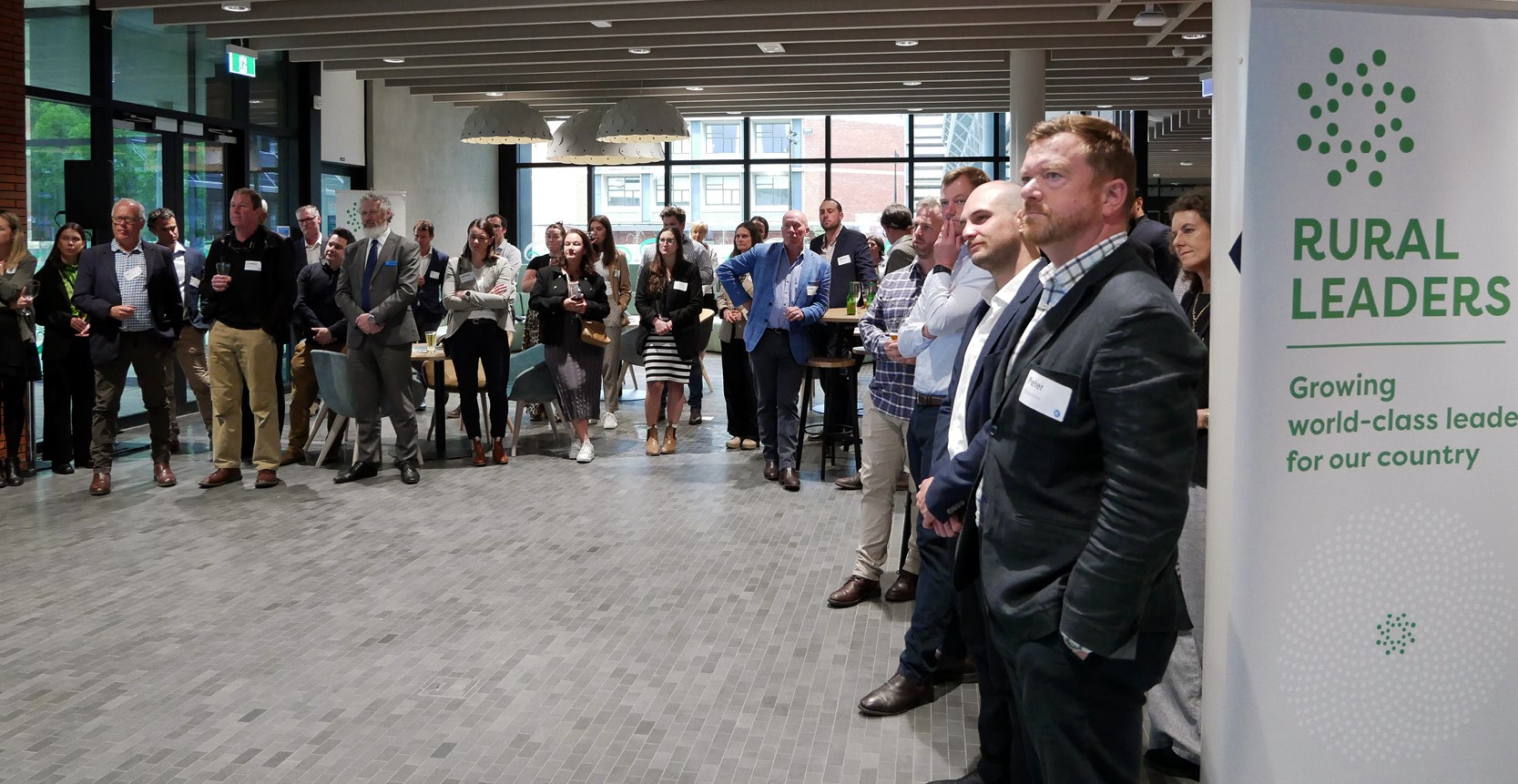
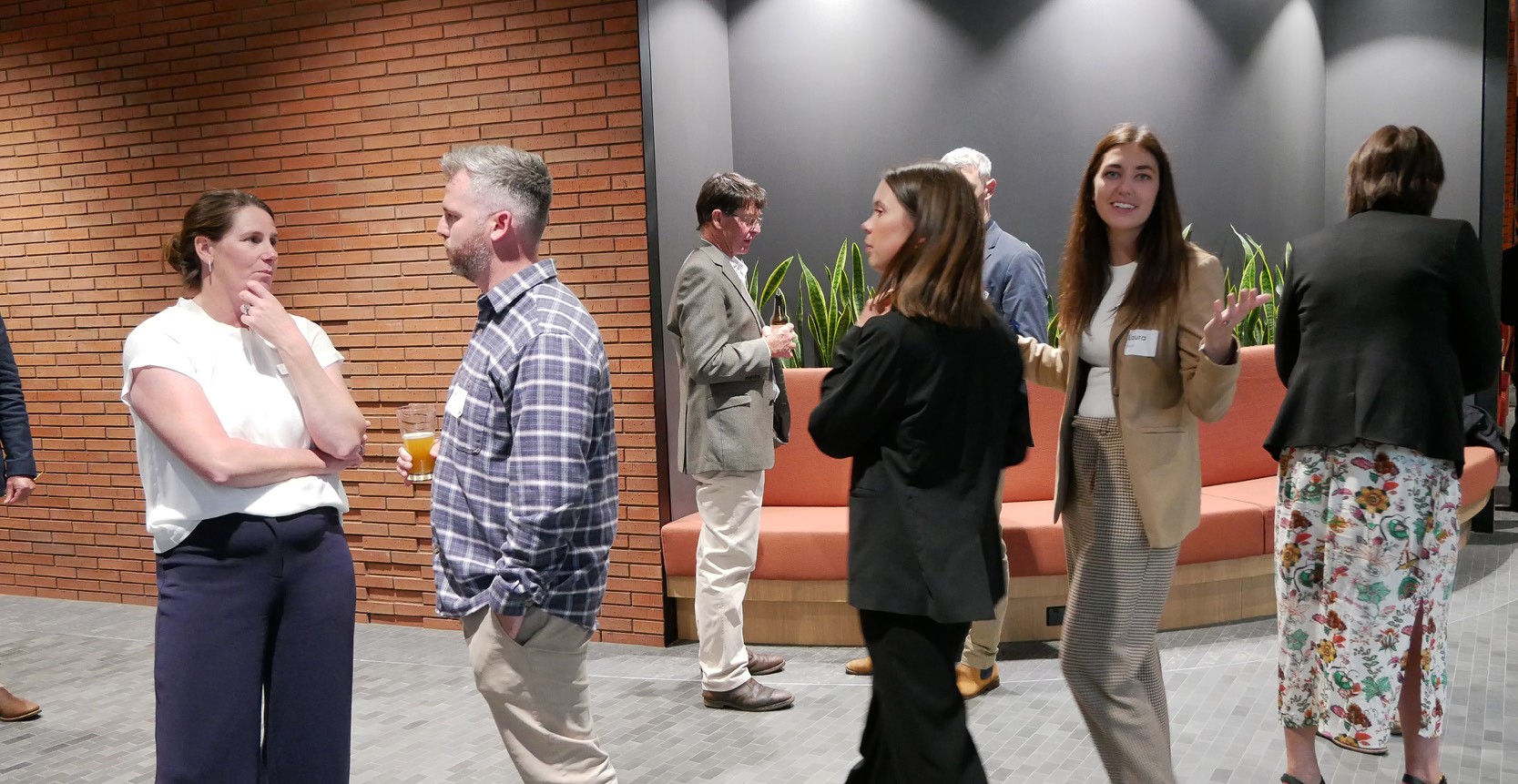
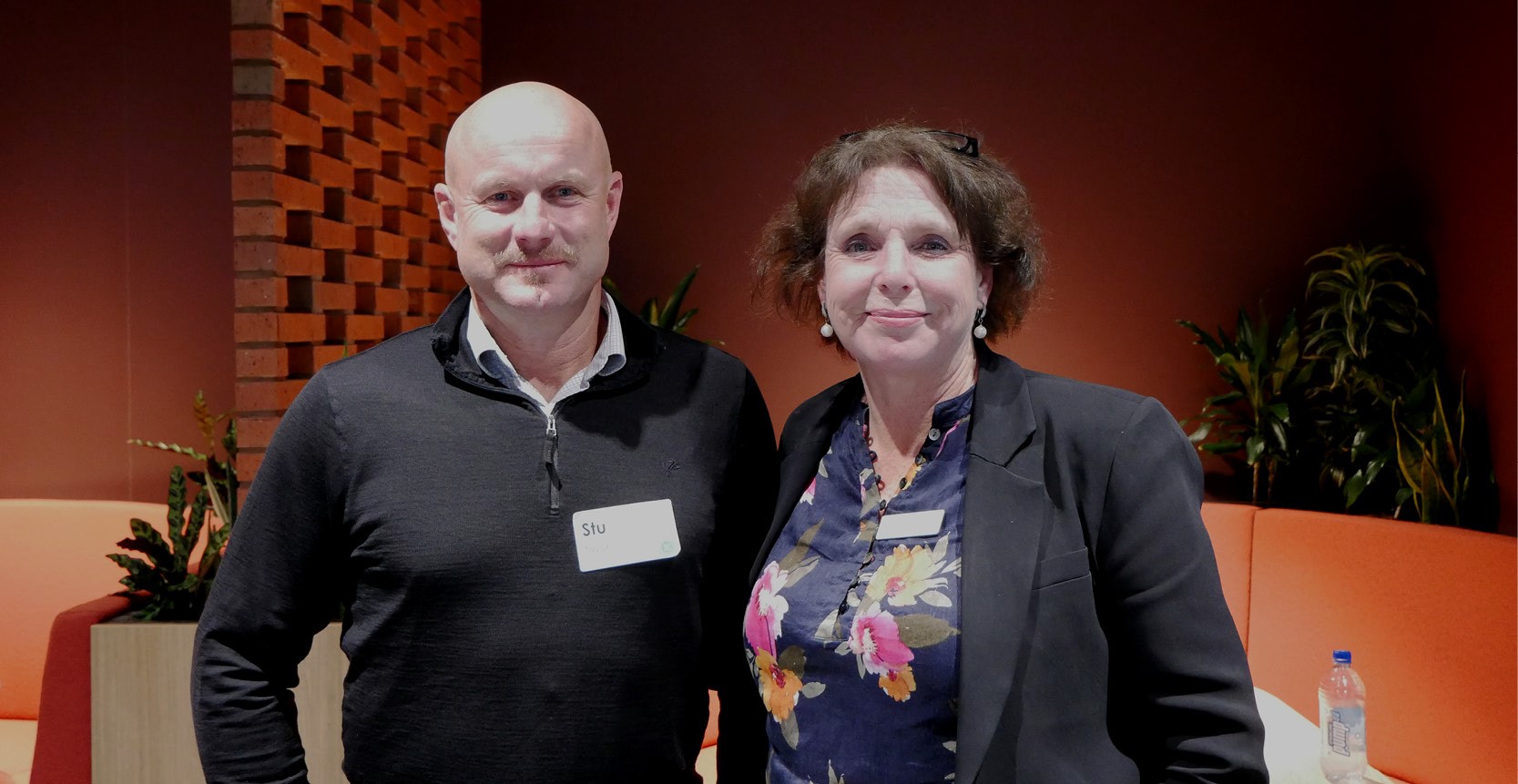
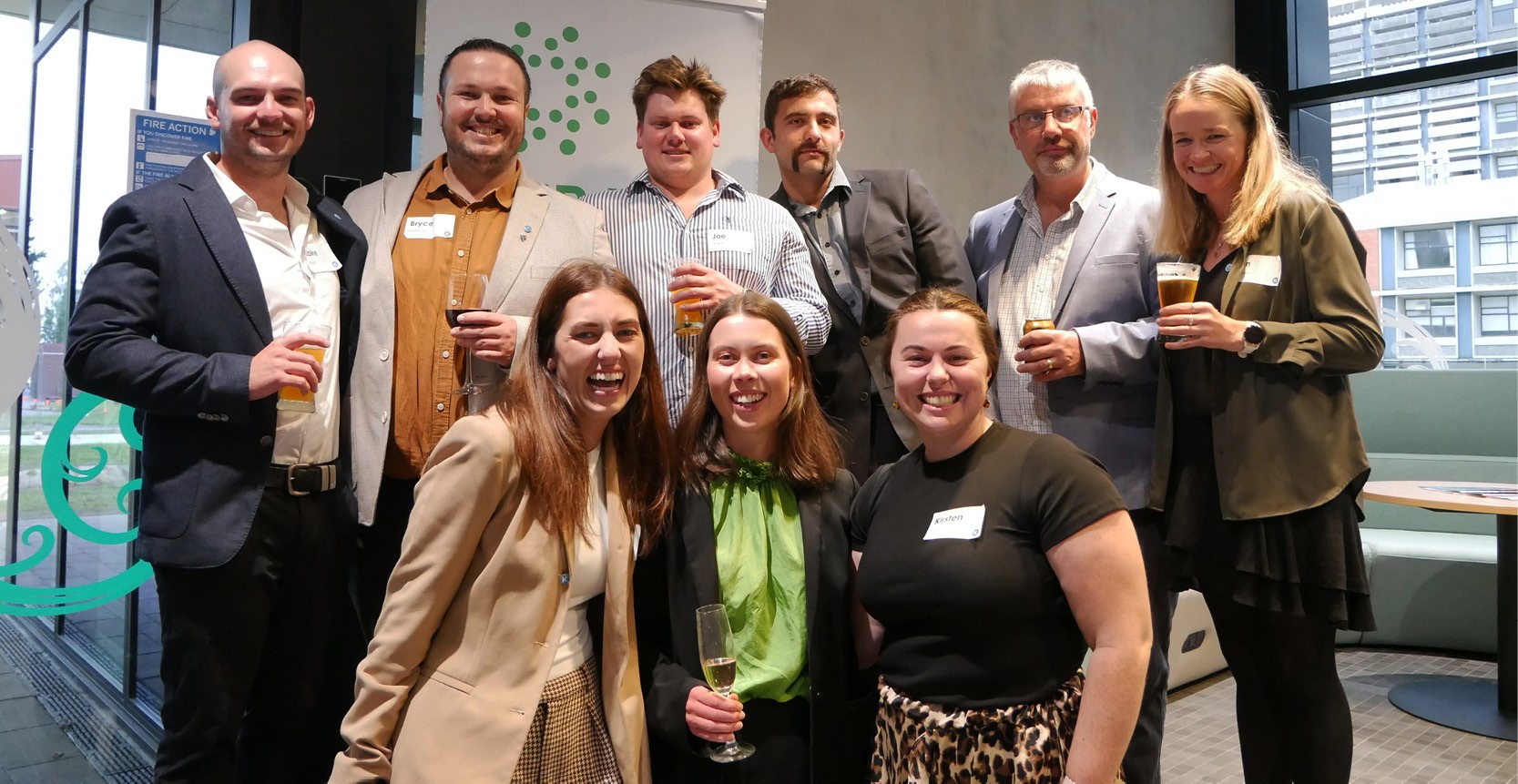
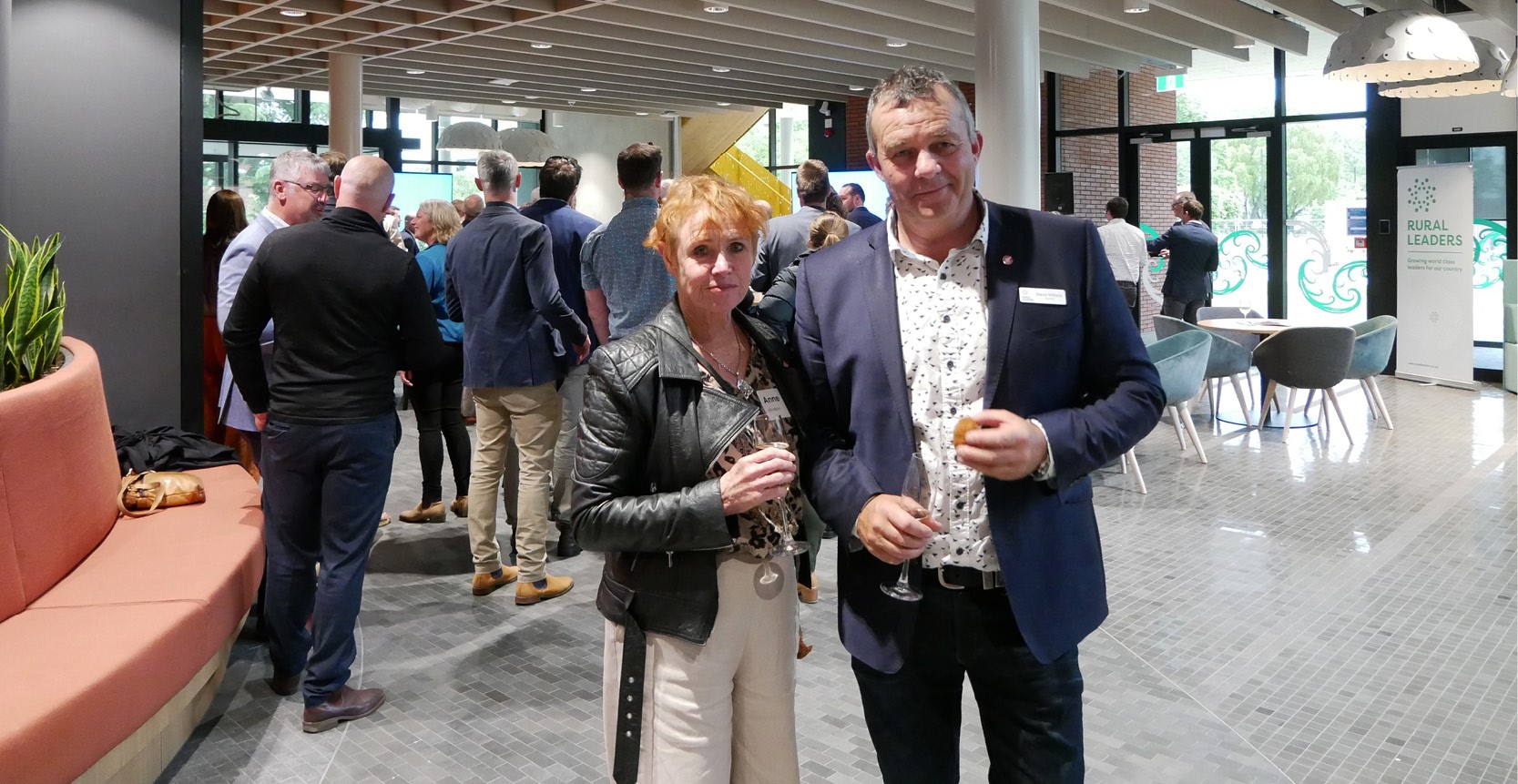
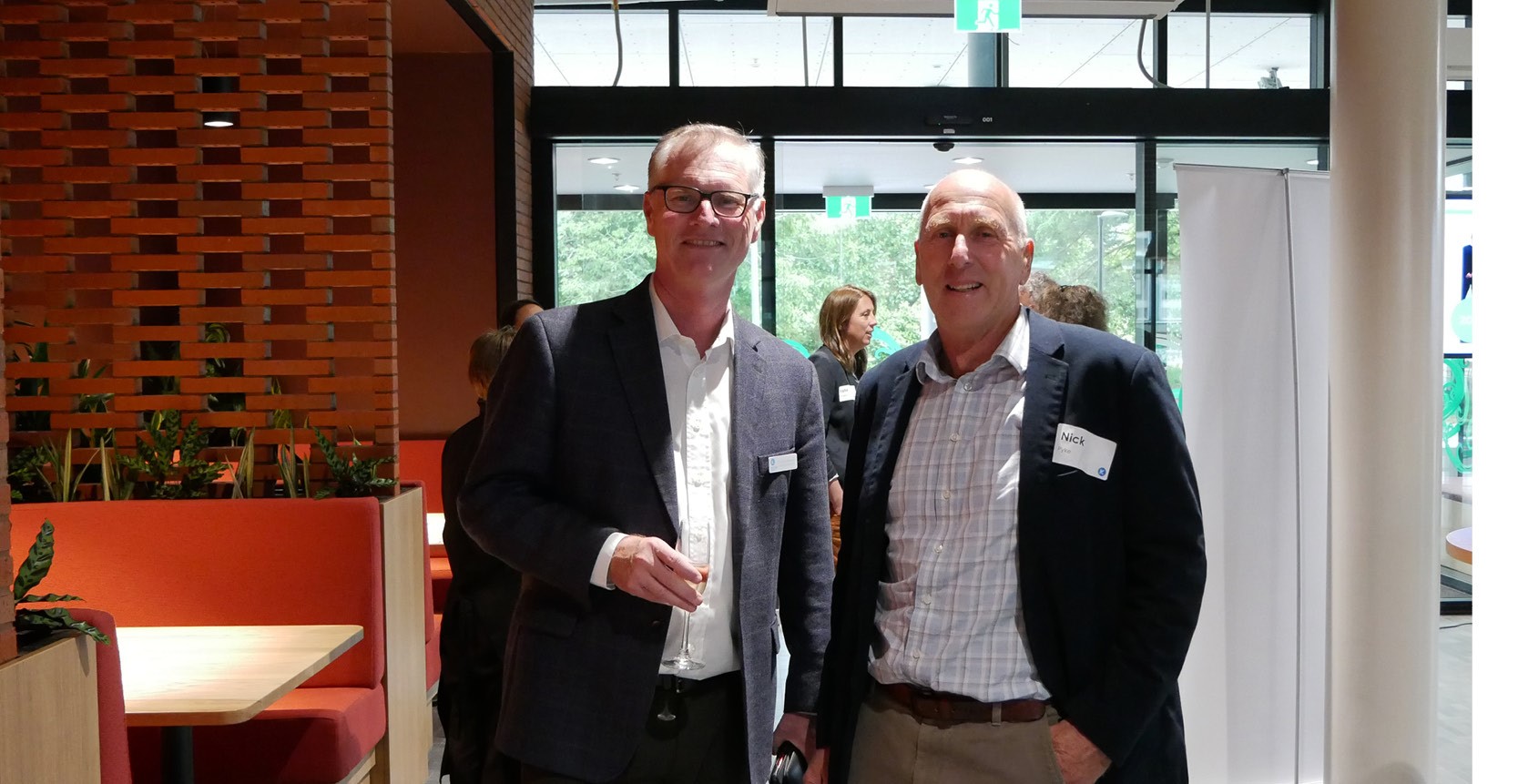
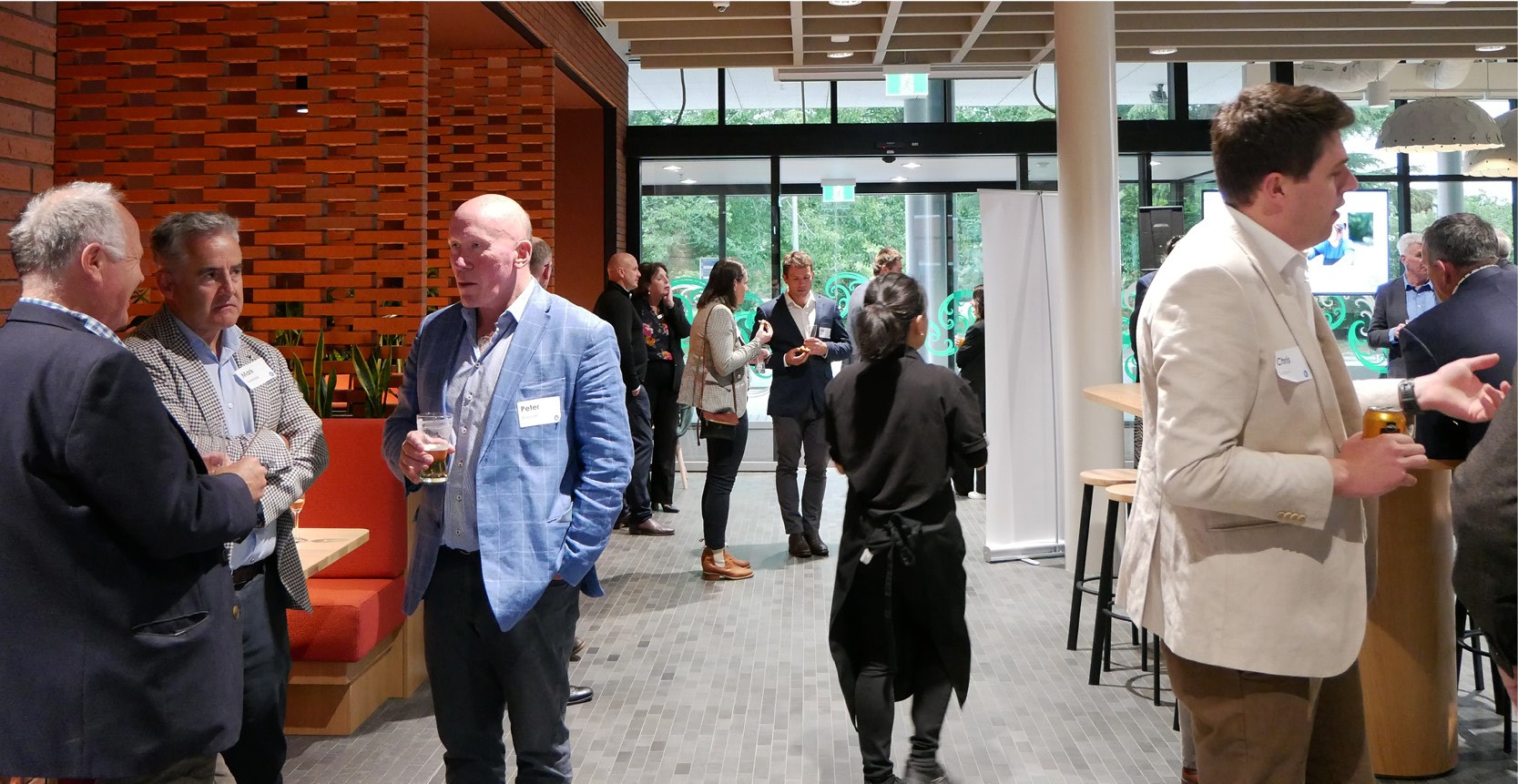
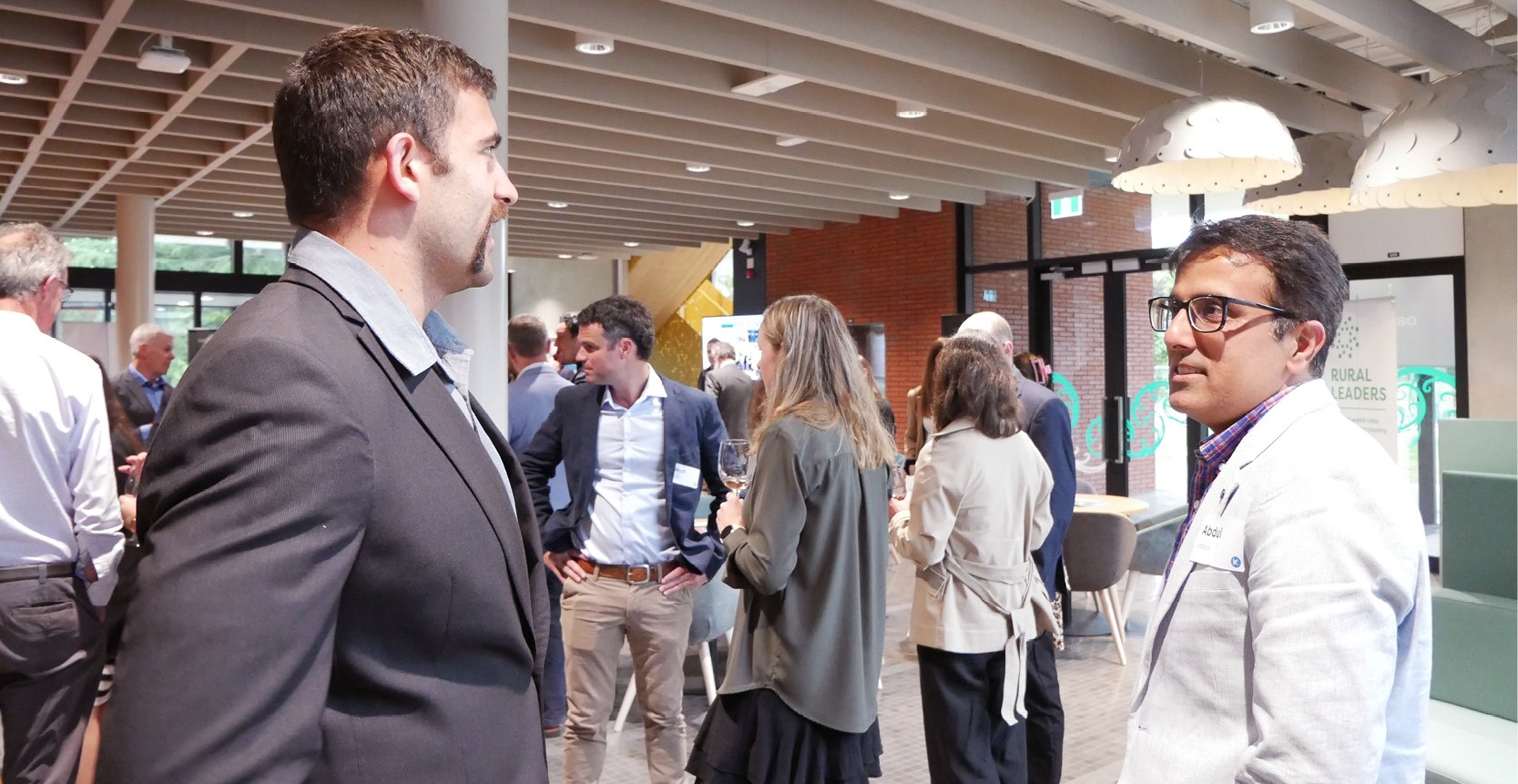
About 80 alumni, investing partners and industry leaders came together on Thursday 30 November to celebrate not only the 50th Kellogg cohort’s graduation, but also the rich history of the Programme and the collective impact of Kellogg alumni.
Kate Scott, NZ Rural Leadership Trust Chair, opened by defining the the two types of future leaders Ta Tipene O’Regan believed we would see, “…
“Future takers who accept the future for what it is, feeling powerless to change what will be, and allowing today’s realities to obscure tomorrow’s potential, ready to respond to change; and future makers who shape the future by reading the signs, determined to create future spaces for people to excel, undaunted by today’s problems, and ready to lead change.”
Kate Scott drew on the powerful demonstration of achievement and impact catalogued by the Mackenzie Study and closed her speech by challenging the graduates gathered to become future leaders, “…ask yourself; how will I unleash the potential in others so that we can grow rural leaders together?”
Dr Patrick Aldwell, who has a long history of involvement with Kellogg spoke passionately of the Programme’s history, especially of William K Kellogg’s desire to ‘help people help themselves’. “May you have the skills, confidence, awareness and networks to take the next step, no matter what that may be. I congratulate you on your Kellogg achievements…”, Dr Aldwell said in closing.
Lisa Rogers, Rural Leaders CEO, gave a note of thanks to partners, the board and industry before leading the awarding of the certificates for the 50th Kellogg cohort.
Pictured below – the alumni list.