2026 Nuffield NZ Farming Scholarship. Apply by 17 August 2025. Read More...

Apply for 2026 Nuffield NZ Farming Scholarship by 17 August 2025. More details...

Rural Leaders and Thriving Southland collaborate.

Workshops in Southland, collaboration between NZ RUral Leaders, Thriving Soutland and Lincoln University

Thriving Southland, in collaboration with the New Zealand Rural Leadership Trust and Lincoln University, recently ran two successful workshops, held over four days. The workshops sought to strengthen rural leadership capability in the region and inspire catchment leaders and their teams to work on problems and deliver outcomes for a thriving Southland.

Think to Thrive: Strategy

The first Strategy Workshop, ‘Think to Thrive,’ was held in Winton on the 1st and 2nd of December. It was designed to form a pathway between today’s Southland and where it might be tomorrow. 

Trust to Thrive: Leadership

The second workshop ‘Trust to Thrive’ was held in Invercargill. With a focus on leadership, it was designed to build on the outcomes of workshop one. It drew on the facilitators’ skills in delivering world-leading military intent-based team building frameworks, and helping leaders learn to empower their teams to work and win together.

The facilitators

The workshops were co-facilitated by Chris Parsons, MNZM, DSD, Rural Leaders CEO, Professor Hamish Gow, Lincoln University, Phil Morrison ONZM, Freelance Consultant and Kellogg Programme Facilitator, and Rob Hoult DSD, a Leadership Development Specialist. 

The participants

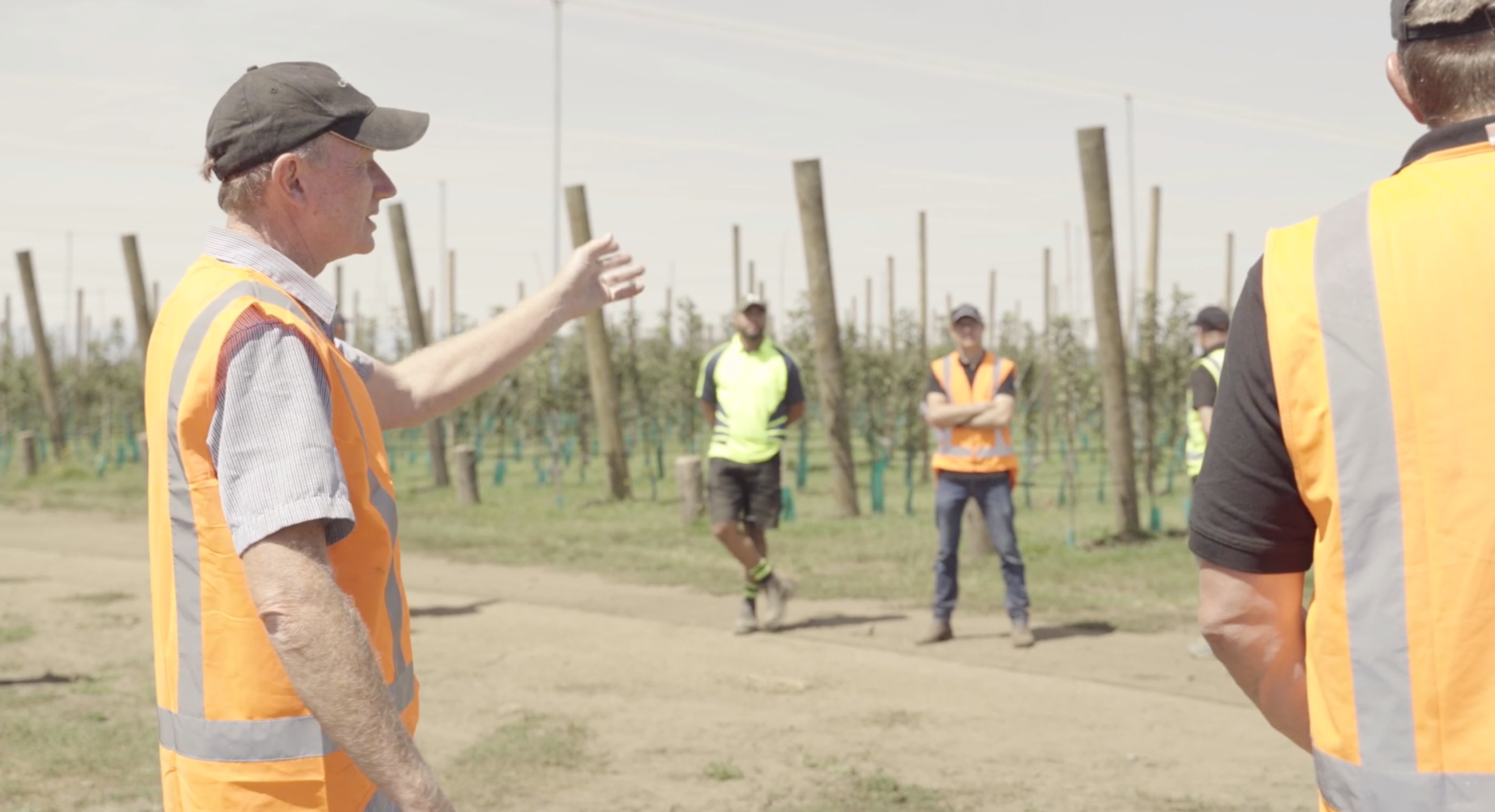
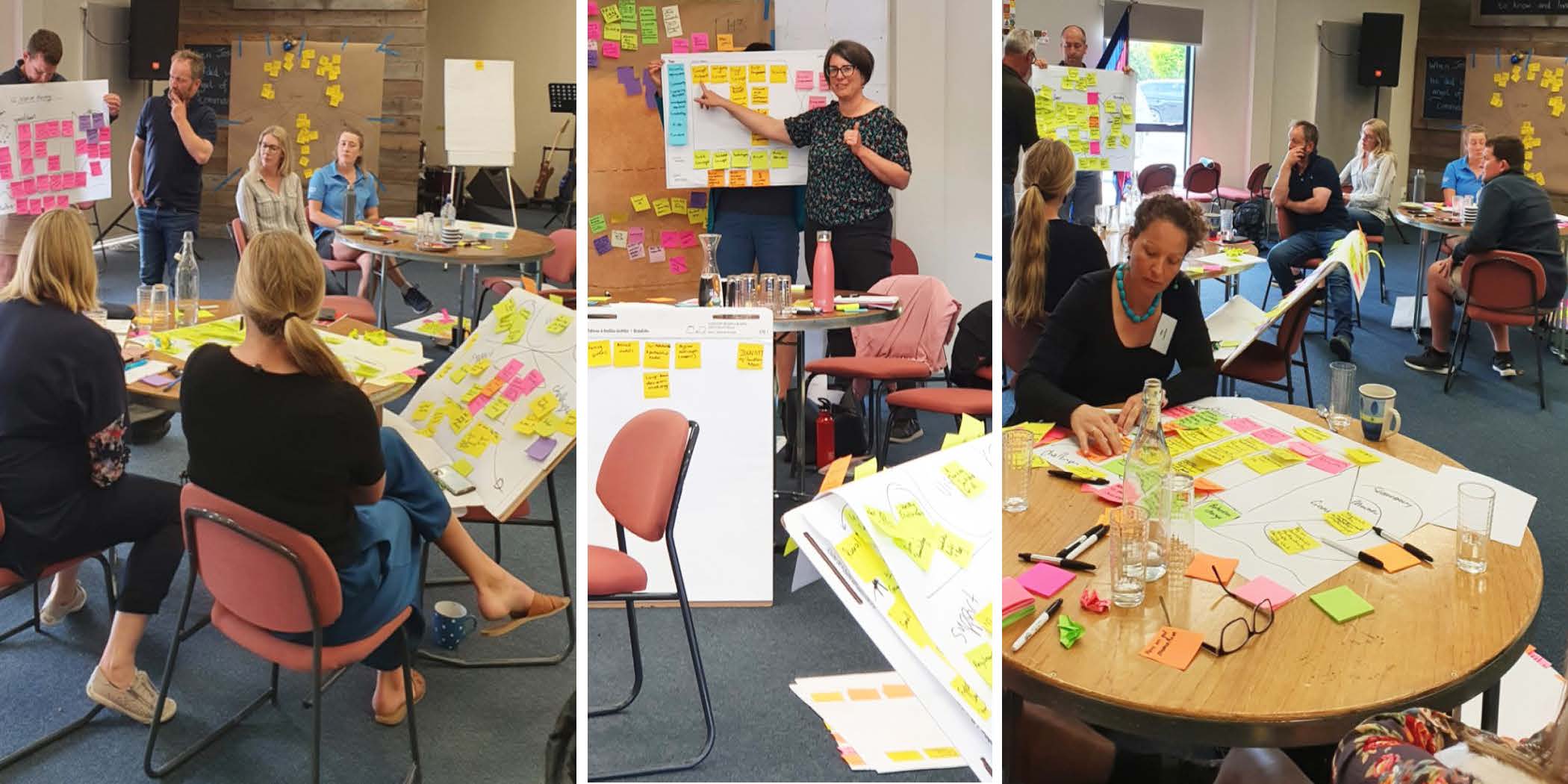
Each workshop was attended by about twenty farmers, catchment co-ordinators, stakeholders, and local and regional government leaders. Introduced to a range of tools, models, and frameworks, attendees then took a deep dive into a session of insights work. 

The groups generated two hundred key insights, from which they produced three hundred ideas. These ideas were crafted into four game plans the attending leaders could share with their catchments, the Thriving Southland Team and Board. 

When asked how the workshops were for attendees, three strong feedback themes emerged: empowering, big picture, and thought provoking. Many also felt that they had a new platform for influencing change. 

Lynsey Stratford, 2021 Nuffield Scholar and attendee, posted on LinkedIn:

“This was a great opportunity to learn some new skills and identify opportunities for the region alongside other food and fibre producers and stakeholders.” 

Another attendee stated, “We left armed with the models, tools, and insights we need to build capability with our teams.”  

If you’d like to get hold of the workshop summaries, please email either Hamish Gow or Chris Parsons, Hamish.Gow@lincoln.ac.nz or Chrisparsons@ruralleaders.co.nz 

Inviting expressions of interest in a Board Trustee role.

Inviting expressions of interest in a Board Trustee role.

The NZRLT is currently seeking expressions of interest from Nuffield Alumni in a Board Trustee role, beginning January 2022.  

Former Chair and incumbent Trustee, Andrew Watters is due to step down creating a rare opportunity to be involved in primary sector, education, and leadership governance.   
 
As part of a forward-thinking group of industry leaders, you will be supporting the NZRLT and its vision to grow world-class leaders for our country.    
 
This is a voluntary position and encompasses a four-year term. The role requires a time commitment of five board meetings annually, and three full days for the Nuffield Scholarship interview, selection process and awards.  

If you would like to express your interest in this opportunity to give back to rural New Zealand and contribute to building our country’s leadership capability, please send your CV and cover letter to Chris Parsons, NZRLT CEO, at chrisparsons@ruralleaders.co.nz 

Or, if you would like a confidential discussion, please call either Chris Parsons on 021 779 272, or NZRLT Chair, Kate Scott on 027 495 7486.  

Expressions of interest close Friday 26th November 2021. 

The new Trustee will be appointed prior to Christmas, and in time for the first board meeting in late January 2022.  

Mel Poulton: Insights from a Special Agricultural Trade Envoy.

Mel Poulton

Mel Poulton: Insights from a Special Agricultural Trade Envoy.

2014 Nuffield Scholar Mel Poulton is someone with a unique perspective. Well, two really. As both a food producing farmer and New Zealand’s Special Agricultural Trade Envoy, we asked Mel to share her perspectives on trade, Nuffield, Brexit, and an industry grappling with significant global challenges.

Question: What do you do in your various roles?

Mel Poulton: In and on my farm business, I’m on both sides of the farm gate. I do anything from stockwork to bulldozing, to making all the decisions required to run a business. 

In the Special Agricultural Trade Envoy (SATE) role, following my appointment, border closures and a vastly different global operating context, have meant changing how the role is delivered. It’s a two-pronged approach with an international and a domestic focus, mixed with face to face and virtual engagement.  

I’ve been more purposeful working with the world here in NZ, by way of direct engagement with the International Diplomatic Corps here (they are the eyes, ears, and influencers of their nations in NZ). This engagement includes taking Ambassadors on x-sector farm tours, hosting Diplomatic Corps meetings, and meeting with them one-to-one, or with industry groups. I am also working internationally on virtual platforms, speaking on panels, webinars, or virtual meetings with farmers, and private and public sector organisations.  

Covid has provided opportunity for me to invest more time and effort with NZ sectors (all food and fibre – except Forestry and Fisheries). My background is the sheep and beef sector, but I put a high priority on building a greater understanding of the other sectors I represent as well. I use these insights when engaging with each of the sectors, government, and the world.  

Helping NZ food and fibre producers broaden their understanding of the global and domestic context is a priority too. Both behind and beyond our farm gates.  

Q: What changes have you seen since being in your SATE role?

MP: Quite a few things.

Trade negotiations. 
Trade negotiations, particularly the New Zealand-UK Free Trade Agreement (FTA), have been the fastest progressed trade negotiations in New Zealand history to get to Agreement in Principle – so I’ve been told. Much of this negotiation has been done virtually, also a first. This will change the way trade negotiations occur in the future. A lot less travel overall.

Farm subsidies. 
Direct and indirect farm subsidies in large economies, such as the USA, have increased exponentially. People may argue they have already exceeded agreed WTO thresholds.

Growing distrust. 
There’s a growing distrust of governments in the democratic world. Governments need to work on their social licence to operate. Social licence is not just a thing for food producers.

Supply chain vulnerability. 
Just In Time (JIT) delivery has been exposed for its supply chain vulnerability in this global pandemic. Economies and businesses will now be building more capacity in their value chain system. This will mean a more conservative approach to exports and imports, to withstand the volatility, uncertainty, complexity, and ambiguity (VUCA) in the world of trade, market access and freight.

Nevertheless, nothing beats high trust and long-term government to government, business to business, and people to people relationships across the world. New Zealand has optimised these relationships throughout the pandemic to utilise market diversity for navigating trade, market, and supply chain disruption.

For example, Covid19 related trade agreements to secure medical imports and food exports. As well as digital certification for export products, through to relationships that our major exporters have with freight companies, importers, and international customers. The last 18 months haven’t been easy, but these strong relationships, and diversity of markets, have shown their worth to New Zealand.

Food security. 
Economies are moving from thinking about food security, to actively putting mechanisms in place to secure their food supply in a pandemic disrupted system, e.g., green lanes in Europe. There’s also a slow nuanced shift from food security to nutritional security taking place.

Regulatory pressure. 
Farmers and food producers in New Zealand and around the world are wrestling with the multi-layered challenges of regulatory pressure (particularly on the environmental and climate change fronts), as well as market volatility, and Covid 19 induced uncertainty. This is increasing farm input costs and diminishing the tools available for farmers to use to produce food.

As an example, farmers in Europe have real fears about their ability to produce the volume of food required to stay viable and maintain food security. The new farm to fork strategy in the EU is deliberately shifting organic food production up to 25%, with rules to reduce synthetic fertiliser by 50%. Glyphosate use is under threat too. In some places farmers can’t use it (I note in New Zealand, the EPA is currently undertaking a review of Glyphosate use). There’s major transformational change happening in Europe.

The rush of multi-layered change gives a sense of exponential pressure. Farmers all over the world are feeling exasperated, frustrated, misunderstood and under siege. All the same, if there is anywhere in the world I would rather be farming right now, it is here in New Zealand.

We’ve navigated major challenges in the past, and when farmers look at the change they’ve implemented on their farms over the course of their careers, or in the intergenerational businesses they are running, we can take confidence in the fact we are already change agents.

A uniquely positioned New Zealand. 
From a New Zealand food producer’s perspective, farmers here are uniquely positioned. Without subsidies, we aren’t dancing to someone else’s tune in quite the same ways as farmers receiving subsidies elsewhere. There are two sides to this. On one hand we’re not being bailed out at the next threat, but we also get to take full responsibility to master the destiny of our businesses. So, we have an ability to create workable solutions in a way that keeps our businesses competitive globally.

With an innovative, integrated systems approach, we can create solutions to challenges like reducing our global warming impact, improving native biodiversity and water quality, while producing high quality, safe, nutritious food – delivered with integrity.

In New Zealand we have an industry ecosystem focussed on helping farmers create and implement solutions. Our research centres and academic institutions, both provide science and knowledge, and help support farmers crack real challenges. There are the easily accessible service providers, and the folk in Government ministries – who are in the teams working hard on trade negotiation to ensure the best possible outcomes for access to markets, and on removal of tariffs and non-tariff barriers to create a level playing field for New Zealand. Let’s keep it that way.

This ecosystem enabling success is our major competitive advantage in the world. We’ve really got to leverage this and remember we’re all on the same team.

We must not be paralysed by fear, but instead celebrate what we’ve already achieved throughout our farming careers and take confidence that we can use our whole systems thinking to improve what we do for our natural resources, our people, businesses, and our nation.

Q: What links between International Trade and International Policy have you seen, with direct and indirect implications behind your farm gate?

MP: Let’s summarise how it works first. There are recognised global challenges. Then international forums are established to address these challenges, leading to international commitments made by member states (different nations).  

Examples of this include United Nations Sustainable Development Goals (SDG) and the Paris Accord on Climate Change. Some international commitments are legally non-binding. But where it applies to the WTO (World Trade Organisation) they are often legally binding.  

Once those international commitments are made, each economy, member state, or nation must determine its own policy and regulation to deliver on its commitments. That gets shaped up (with some consultation in the process) and is rolled out by the government of the day, and folks like us everyday people have to make it work on the ground. The Government then reports back to those international forums, or institutions, on what our progress has been against the commitments the Government made. COP26 is an example of this. 

Given New Zealand’s economy is so internationally exposed and dependent, we need to be at the international table to maintain influence.  

But to have influence we need to have integrity and demonstrate action. So, these international commitments have been drivers for shaping NZ Government policy on Sustainability and Climate Change. Examples here are the New Zealand freshwater regulations and climate change targets. Both resulted in changes on my farm, and on farms all over New Zealand, which is increasing costs and could reduce revenue for some.  

If we do it right, there could also be opportunity to reduce costs and increase profitability. It will be different for every business. The bottom line is that financially there’ll be change, so we need to reconfigure the financials for a new shape to our businesses. Easier for some than others, and not all will be the same. 

The environmental, social, and economic outcomes are significant across NZ, and underestimated. In some cases, we might secure a market premium for this work, though there is no guarantee what we’re doing delivers a premium to food producers in New Zealand for all products in all markets. I have more confidence this work will enable us to obtain and maintain market access to customers.  

This is where the work of our trade negotiators, ensuring a level playing field in market, is so critical for ensuring the changes we’re making here in NZ don’t make us uncompetitive on the international market. I’ve seen their tireless, relentless work, day, and night, to get the best possible outcomes for New Zealand. Many of these negotiators are the hidden superstars of our food and fibre ecosystem.  

What is going on in New Zealand around environment and climate change is often a focus of interest from others in my international engagements. I talk about what these regulations and targets mean for me, and what I am investing in to address the challenges in my farm business, alongside promoting what other farmers from the different sectors are doing in New Zealand. I also give a clear message that much of this cannot be done quickly when taking a whole systems approach. Effective change takes time. Farmers the world over get this.

Q: How do you think Brexit will play out for New Zealand trade? The obvious and not so obvious.

MP: The choice of the UK people and UK parliament to pursue Brexit is forging transformational change for the UK food and fibre sector. The transition period will take 15 to 20, even 30 years to find a new equilibrium. Like the 30 years it took New Zealand to find equilibrium when agriculture subsidies were removed here.  
 
This change requires a culture shift in thinking about UK farm business structures, their subsidy system, domestic policies, and rebalancing their trade and export portfolio beyond the common market, to a global market. Add major geostrategic inflection points in trade and security, affecting us all, and you have a UK trying to position itself as a global strategic leader.

Its focus in the Asia-Pacific region, particularly regarding the FTA’s it is currently negotiating with Australia and New Zealand, along with its formal request to join the Comprehensive and Progressive Trans-Pacific Partnership (CPTPP), all highlight the trade and security opportunities and challenges it perceives.  
 
So, building more structure into the relationships of allies like New Zealand and Australia by way of FTA’s is an important part of their process to find their new place in the world. This is providing new trade opportunities for New Zealand, subject to the NZ-UK FTA and their accession to the CPTPP. 
 
In the future it may create more competition in our export markets too. It will also create opportunities for more collaboration on the global stage, especially where we align with the values and perspectives that matter to both economies.

Q: What does New Zealand need to do more, and less of, now and in the future?

MP: Because our food and fibre sector is orientated to international markets, we need to continue to pursue being the best we can be. This means achieving optimal standards, positioning ourselves to have the best integrity, facts, processes, and story for all the concerns that governments, markets, customers, and consumers may direct at us.  

Whether these be from the position of protectionism or not, we still have to give ourselves the best chance of capturing opportunity. So, concerns about animal welfare, food safety, or environmental stewardship, e.g., water, soil, biodiversity, chemical and fertiliser usage, climate change, labour, the list goes on. These are the things we need to keep improving to position ourselves to open as many doors as possible, and to keep flexibility, adaptability, agility, and economic viability open to us.  

We have already demonstrated plasticity through this pandemic, and we need to fully embrace a plasticity approach in our lives, our businesses, and how we engage with the world.  

We need to be able to maintain our essence and values, while changing and reshaping the way we live, do business, trade, and collaborate with others, as we all grapple with significant global challenges.     

Q: How has doing a Nuffield Scholarship helped you?

MP:   The Nuffield Scholarship has been an important part of my personal and professional development. It’s been a stepping-stone for doing what I do now, on and off farm. The international networks, the doors of opportunity opened, the domestic and international insights as well as the ‘aha’ moments. These all contribute to my thinking, conversations, and ideas on the farm and in the world of trade.  

That said, and without taking away from Nuffield, the older I get and the more I learn, it seems the more questions I have and the more I need to learn. 
I’d like to encourage all readers to keep that hunger to learn, take some confidence from the change we’ve already made on our farms, in our businesses and our whole industry with our systems thinking.  

Let’s keep doing what we do best – producing top quality food and fibre to the best of our abilities.  

Optimising all we do with high standards, care and integrity for our environment and natural resources, our people, communities, and for the economic viability of our businesses and nation. 

Balanced with humility, we need to be able to hold our heads high and have pride in who we are and what we do. Keep being the best you can be. 

Download report
Read Mel Poulton 2014 Nuffield report “Capturing value.”

Three Kelloggers among Zanda McDonald Awards Finalists.

Adapted from an article on the Zanda McDonald Award website. 

Judges of the Zanda McDonald Award, will crown not one but two winners for 2022 – one from each side of the Tasman. 

Now in its eighth year, the prestigious award recognises young future leaders working in agriculture and provides an impressive prize package centred around a tailored trans-Tasman mentoring programme. The eight talented finalists – include four from New Zealand, three of whom are graduates of the Kellogg Rural Leadership Programme.  

All finalists have been selected for their passion for the industry, strong leadership skills, and the contributions they’re making in the primary sector. 

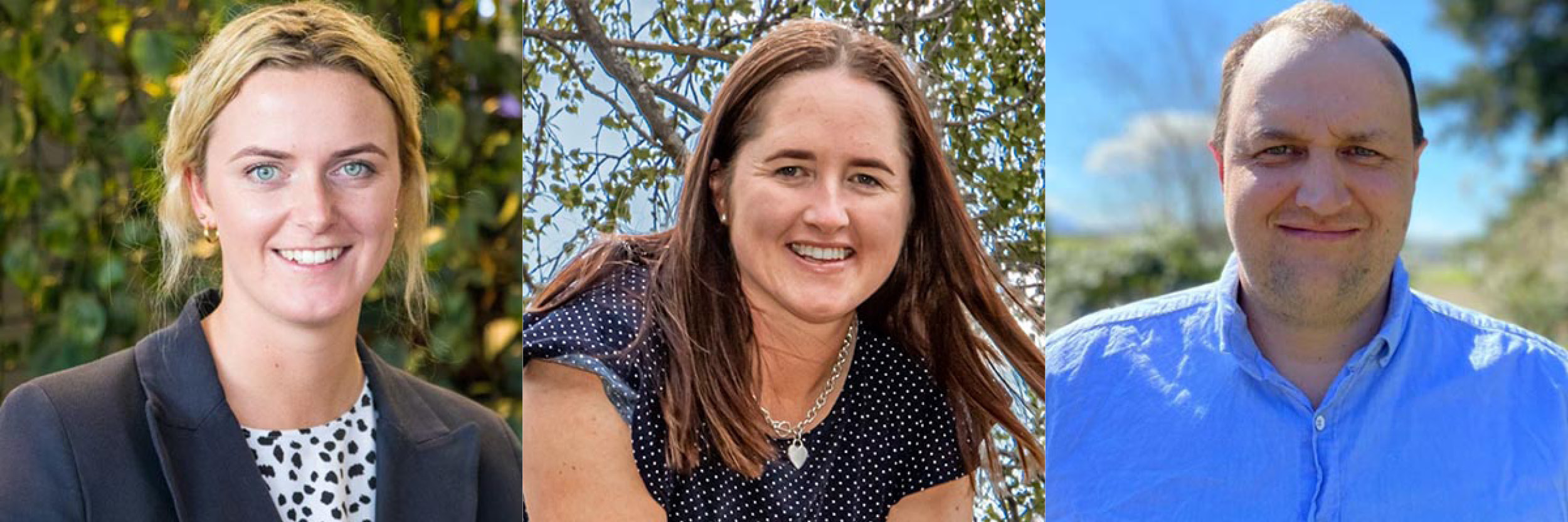
The four New Zealand finalists are 2019 Kellogg Scholar Katie Vickers, Head of Sustainability and Land Use for Farmlands;  

2017 Kellogg Scholar Olivia Weatherburn, National Extension Programme Manager for Beef + Lamb New Zealand;  

2017 Kellogg Scholar Rhys Roberts, CEO of market garden and farm operation Align Farms;  

and Adam Thompson, director of Restore Native Plant Nursery, beef farmer and mortgage broker. 

Richard Rains, award chairman says whilst Covid-19 travel restrictions drove the change to two awards, it has also created an exciting opportunity. With the increase to eight finalists and two winners, the award can have a positive impact on more future leaders in Australia and New Zealand.  

“We’re thrilled to be able to invest in the future of all eight finalists, and our two winners, and help with their future career and personal development. Our judges have again been overwhelmed with the level of talent and capabilities of this years’ candidates,” said Rains. 

The Australian and the New Zealand winner will each pick up an impressive personal development package, including a personalised mentoring trip in Australia and New Zealand (when travel allows), up to $10,000 worth of tailored education or training, media coaching, and other mentoring and industry opportunities. 

Winners will be announced in November 2021. 


A rural connection

By Royna Ngahuia Fifield-Hakaraia (Ngāti Rangatahi, Ngāti Whititama)  

You might have noticed a new magazine on the stands lately. Shepherdess is a publication that offers something no other magazine does: an unapologetic celebration of women in rural Aotearoa. Published by Kristy McGregor – a twenty-nine-year-old Australian based on a dairy and beef farm at Manakau, Horowhenua – the quarterly magazine unearths stories on all matters of social and cultural life in the regions. 

Humble beginnings. 

Kristy is the first person to admit that Shepherdess has come from humble beginnings. Initially, there were a series of conversations with Claire Dunne, the founder of Australian magazine Graziher, then an Instagram page and a blog, and finally the first edition was in stores in March, 2020 – a few weeks before New Zealand’s first Covid-19 lockdown.  

“I’d known Claire for a few years and in our conversations we both recognised that there was a real opportunity for a nationwide publication that spoke to rural life,” Kristy explains. “But when Claire said to me, “How about we start the magazine?” in early 2019, I had just had my first baby and was about to dive back into my resource management job in Wellington – it definitely wasn’t the best timing. Deep down, though, I knew there was never going to be a perfect time and I really believed in what the magazine could provide for rural women, so I decided to give it a go.” 

Beating the odds. 

The journey, of course, hasn’t been without its bumps. Less than 40 per cent of start-up businesses in New Zealand survive past the first two years and Kristy faced her first big hurdle early on. She found herself at the helm of Shepherdess with no experience in publishing or running a business.

“As we were preparing the first edition and pulling everything together for the March launch, Claire’s circumstances changed and she needed to focus her energy in Australia,” says Kristy. “Suddenly, I went from working with someone who has years of publishing experience to being on my own, but I just knew that I had to give it a try.  

“I had been living in New Zealand for nearly six years and I felt that I had a bit of an understanding about the experiences and perspectives of rural New Zealand, especially with living and working on my partner’s family farm in the Horowhenua.

“Really I stumbled into the role of publisher – what I really wanted to do was connect people and I could see that the magazine could be a tool to do that.” 

Growing up in suburban Sydney.

Kristy grew up on a quarter acre block in Camden, a small, suburban area on the outskirts of Sydney. But through her father’s work as an agricultural teacher as well as invitations by extended family to go and stay at their farms, Kristy’s childhood was filled with experiences of rural life. “As a kid, I would go and stay with family friends in Jamberoo, Parkes and Canowindra,” says Kristy.

“I have memories of watching a newborn calf plop onto the ground, or visiting the local butcher where, like in many small towns, they run a tab under the family name. Some days I would sit on the enclosed veranda in the baking sun for hours, trying to avoid the flies. It was this sense of simplicity and familiarity that I really loved growing up, and as I got older these were the things I found myself gravitating towards.” 

Home in Horowhenua.

Kristy moved to New Zealand in 2014, after meeting Michael Keeling, a Kiwi who was working in western Queensland before taking over the family farm back home in Horowhenua. “My first year here was really hard,” Kristy explains.

“I was away from my friends and family and everything I had built over in Australia, and my introduction to dairy farming was a partner who worked fifteen-hour days, ate and slept and then did it all again the next day. There was very little social life, and there was a lot I had to learn. I brought home a pet lamb that first year and I quickly learnt that you don’t want to add anything to your plate during calving if you can help it!” 

Despite all the challenges, Kristy is still here and still based in the Horowhenua with Michael and their two children, Hartley, three, and Tully, one. And eighteen months after its debut Shepherdess is currently curating its eighth edition, is stocked in 400 stores nationwide and has built an online community of 15,000 and growing, with an estimated readership of 18,000 per edition.

Women from across the country write to Kristy, explaining how they had always hoped a magazine like Shepherdess would appear at their local bookstore and how much it means to them to see women like themselves reflected back in its pages and stories.  

Collaboration, connection and community.

“Collaboration is what has propelled the magazine. I remember in the few months before our first edition, sitting down with Claire Dunne and she had a whiteboard and a pen and was giving me a publishing 101 lesson because I really had no idea. I even roped in my mother-in-law to bake the cakes for the recipes in the first edition! But we were lucky to have organisations like Beef + Lamb New Zealand and Farmlands, who – bravely – endorsed us from the start. And a great team of talented women have come on board so that the magazine could become a reality.” 

Shepherdess fills a large gap in Aotearoa’s media landscape: telling stories that matter to women living in rural and regional areas and providing a space for underrepresented women’s stories to be shared; with a concerted focus on Te Reo and the experiences of wāhine Māori.  

“For me, it’s just a gut feeling that I have that I couldn’t make a publication in 2021 and not honour Te Ao Maori.

Throughout this journey, I have learnt so much about our communities and businesses. Our first editions might not have been perfect, but we strive to be better and better every time, and as a team we are continually improving and refining.

Running a business is often like a jigsaw, fitting people’s strengths to their roles and figuring out how we best work together so that we can produce the best possible experience for our readers.” 

It was in talking to other rural women that Kristy realised there was a real need for a magazine that can hold space for women who might be isolated, either socially or geographically. That other women wanted a publication that spoke to their fears and struggles as well as their sense of pride and belonging for the many wonderful things happening in rural Aotearoa.  

Shepherdess connects its readers to rural and regional Aotearoa from the comfort of their couch, kitchen table or out in the paddock if need be.

“We showcase women from all parts of the country and all areas of industry who are facing the same things as everyone else and who are trying to figure out how best to do it all.

“I think reading these stories, that are all our stories, fills us up and creates a special feeling of community. I’m really frank about knowing what it’s like for most mums out there – my office is right here on the farm with my kids underfoot, the palettes of magazines on the back of a truck, roll in right after the tanker.

“I’m doing Zoom calls while breastfeeding or checking copy and looking at design mock-ups late at night after the kids are in bed. But its also extremely rewarding to be getting these amazing stories out there. It’s exciting to have found something that I really resonate with, that feels so closely connected to me.”  

To subscribe, purchase the latest edition of Shepherdess or read more stories that have featured in the magazine, head to the website www.shepherdess.co.nz or into any one of their many stockists across the country, a list of which can also be found on the website. Use the code RURALLEADERS on the website at check out for an extra edition free with any annual subscription purchased.

Good value in changing times.

If you look very hard for the Pandemic’s silver linings, you’ll find a few.  

There’s a growing appreciation for the rural sector. According to UMR data from last year, support for dairy and sheep and beef farmers has risen 9%. The reason cited was the heavy government spending on the Covid-19 relief package, leaving a public asking, “How’re we going to pay for all this?”  

Also cutting through the gloom are the countless innovations taking place as the effort to adjust continues. And like many organisations cornered by the pandemic’s refusal to negotiate, the New Zealand Rural Leadership Trust has had to adapt on the move. One example was when Nuffield Scholars were affected by the close of international travel. An innovation in the form of a New Zealand based experience emerged.  

The Global Tour of New Zealand.

The ‘Global Tour of New Zealand’, as it was quickly named by last years’ Nuffield Scholars, gave a unique view of the country’s food and fibre sector value chains. This year, the programme has been made richer still. The Value Chain Innovation Programme will begin in January 2022 and  
is now open to a larger number of people in the primary sector. 

One of the programme’s two facilitators, Sir Graeme Harrison Professorial Chair of Global Value Chains and Trade Hamish Gow says, “The Value Chain Innovation Programme provides the opportunity to lift the lid on some of New Zealand’s leading value chains, exploring their working components and analysing how they create value.”  

Building the value.

Much work has gone into building a cache of exciting and varied case studies across dairy, arable and horticulture value chains to name a few. Participants learn straight from the source. They gain unique insights into food and fibre innovation, in both domestic and international markets.

Businesses don’t always get the opportunity to explore innovation across other industries. The new programme gives a wide view of established and novel value chains. Participants compare and transpose thinking at a time when the primary industries are going through the biggest period of transformational change since the 1980’s.  

If you’re in food and fibre, now is the time to be gaining a pan-sector view of as many successful business models as possible,” says Prof. Gow. “Increasingly the most successful value chains are those with business models that are closely aligned to their customers, use protected IP, and provide innovative shared value structures.” 

The programme runs over five weeks, two of these are spent on the road. The remaining time is spent on an individual research report. “It will be a busy few weeks, with the time commitment being 100 hours on field trips, guest lectures and networking, online lectures and discussions, tutorials, and another 50 hours self-directed learning,” said Prof. Gow. 

The programme delivery team.

New Zealand Rural Leadership Trust CEO Chris Parsons remarked, “As a global leader and thinker in value chain design, innovation and entrepreneurship, Professor Gow is uniquely qualified to impart deeper strategic learning and insight into 2022’s programme.”  

The depth on the team is bolstered further with Leadership and Strategic Development Consultant, Phil Morrison, ONZM. “We are also fortunate to have Phil onboard. He brings a different leadership perspective, drawing on a career in military command, and in the delivery of innovation, strategic and leadership training as a consultant. We couldn’t hope for a stronger team.”  

Once completed, the programme will give participants the competencies, confidence, and networks to influence change and lead transformation at an enterprise level and throughout regional New Zealand.  

Chris Parsons says, “We hope this programme will lead to positive larger scale change as our graduates continue to grow and contribute to a fast-changing food and fibre sector.”

Rural Leaders are taking applications until 28 November 2021, with a scheduled start date of 16 January 2022.  

Applications can be made at ruralleaders.co.nz/value-chain/.

A Royal Connection: The Commonwealth Study Conference Global Leaders Series.

The Commonwealth Study Conference Global Leaders Series (CSC) took place online recently. This was the first occasion Rural Leaders had been invited to attend. CSC Leader and Patron, HRH The Princess Royal also attended the event for the formal launch of this quarterly programme.

The series is designed to take on the big subjects, overlaying leadership, and hearing from key leaders around the Commonwealth.

Hosted by Coutts & Co. CEO, and Deputy Chair CSC UK, Peter Flavel, and Sir Alan Parker, Chair CSC UK, 28 countries were represented, over 200 people were online. Many insightful questions were asked, including: mental health, COVID-19, loss, EV’s, sustainability and that it’s ‘OK not to be OK’.

A range of topics were covered by speakers including Bernard Looney CEO, BP, who was very open about the challenges and opportunities for BP and the environment. As CEO, he has set BP on an extremely ambitious course of transformation as an energy company.

The meeting was held in tandem with other like-minded organisations such as RASC, NZ Rural Leaders, Nuffield Scholars, and the CSC UK delivery partners ‘The Association of Commonwealth Universities.’

HRH The Princess Royal made several helpful observations on societal expectations and then on blue and green hydrogen.

The event put Nuffield and NZ Rural Leaders in the minds of some significantly senior international leaders.

Of the event, Peter Flavel said that this was a “Significant point in CSC history – delighted to be partnering with CSC Global Alumni.”

A special thanks to those who were able to attend. And for those who missed it, we will endeavour to share the recording once the Palace approves it.

Kate Scott elected Board Chair for the New Zealand Rural Leadership Trust.

Kate Scott has been elected as the new Board Chair for the New Zealand Rural Leadership Trust, at the fourth Regular Meeting for 2021, held on the 8th of September. Outgoing Chair, Andrew Watters, has brought a wealth of experience, and passion to his time as Chair, and through a critical period in the Trust’s growth. Andrew will remain as trustee until an election takes place for his replacement in autumn, 2022.

In vacating the Chair, Andrew has expressed, “Thanks go to my fellow Trustees and the NZRLT team, led very ably by Chris Parsons, who have made the Chair’s role a joy to occupy. It’s a pleasure to hand over the reins to Kate Scott, 2018 Nuffield Scholar. NZRLT is a leadership organisation, and succession planning is a key outcome of successful leadership. In Kate we can see the next generation of Governors leading the organisation as we seek to attract and transform talent through our world class Kellogg, Value Chain Innovation and Nuffield programmes.”

On being elected Kate said, “I am honoured by the opportunity to step into the role of Chair, and am looking forward to continuing to work alongside the other trustees, the chief executive and the team to continue to deliver on our aspiration of growing world-class leaders for our country.”

 “It is a real privilege to be able to continue the exceptional work of previous chairs, including Andrew, who has led the organisation through some significant growth over the past few years.”

 “Stepping into this role at a time when New Zealand’s food and fibre sector is at the crossroads of significant change and opportunity, is both exciting and important. Leadership by farmers and growers will be fundamental to how we navigate what lies ahead. I am excited by the opportunity to strengthen our collective position through collaboration and teamwork, so that we can continue to deliver people who are capable of leading the food and fibre sector in the future.”

 “It is also a pleasure to be able to give back to the organisation that supported my own Nuffield journey and in doing so I strive to make those that have gone before proud of what we do for those that will come after us.”

Craige Mackenzie: Right place, right time.

Rural Leaders talked to 2008 Nuffield Scholar Craige Mackenzie about change, technology and precision farming. His business, Vantage NZ, helps remove the complexity around technology-enabled change, while
the family farm demonstrates precision in practice.

But as Craige explains, what really matters is mindset.

The foundations of a mindset.

Growing up, we knew the value of a dollar. They were hard to come by. We did the best we could with what we had. I was keen to get out and earn, so I finished school and went farming with my family. I learned early on that I enjoy pushing myself.

At 18 I travelled to the United States, instead of going to university. I saw the world for the first time, and it felt like we were all only limited by our imaginations. Coming home was a jolt back to reality. It was the 80’s and a tough period for farmers. If you have a hard time at any point in your career, the start is the place to have it. You learn how to survive early.

We took over the farm in 1984, buying it from my parents. We put in irrigation, expanded, and eventually removed all the stock from the system. We went into intensive seed production.

In 2006 we ventured into the dairy industry too, building up to 1240 cows at the peak. Then along came M. bovis. But it’s interesting, from adversity came opportunity. By having to cut the stocking rate down, we found our milk production per cow went up. We were on the efficiency journey, simply by doing the best we could in a tough situation.

Production is vanity. Profit is sanity.

In 2008 I did a Nuffield Scholarship, something I felt fortunate to receive. It meant travelling around the world for six months. My study topic was very broad, ‘Understanding the Carbon Footprint in Farming Systems.’ At the heart of it, I thought, if we cut inputs by 30% and still maintain outputs, we’ve reduced our carbon footprint by 30%, which in turn increased profitability.

While travelling I saw some intensive operations in Europe, broad acre framing at scale in the USA and Canada, through to small holder farms in China. It’s interesting to see what drives different decision-making and farming practises. Often these are influenced by subsidies and support mechanisms rather than efficiency, although I also saw some good examples of Precision Ag too.

Sometime after, I recall talking with Raj Khosla, the head of the International Precision Agriculture Association. He asked me to present at a conference, and I said “Ah Raj, we don’t really do precision.” He said, “…well you know exactly how many kilograms of fertiliser it takes to grow a tonne of wheat don’t you? You know what your inputs are. My friend, you are doing precision agriculture.”

Technology is a decision support tool, not a decision tool.

From then on, I understood what we were doing. We started thinking, how do we go faster? How do we do better? All of a sudden, it became easy to decide to invest in more technology to enable these things. So, we looked at crop sensors, moisture probes, electromagnetic mapping of soils, all sorts of new technology. But again,

the biggest change wasn’t the technology, it was our mindset.

One of the most important things about investment in technology, is profitability. The more you can reduce inputs while maintaining outputs, the more you are free to invest in technology.

You circle back around to re-invest your profit into the technology that reduces inputs. Like machinery that places a bottlecap of fertiliser on every plant. Exactly the right amount at exactly the right time. That leads to better environmental outcomes as well.

After our daughter finished her degree at Lincoln, we asked her what she wanted to do. We saw there was an opportunity to help farmers work smarter, to make more informed decisions. That’s when Agri Optics NZ was born. We’re exclusive Trimble dealers for New Zealand now too, offering a range of products under the Vantage NZ brand.

At the heart of it all is GPS technology: GPS, flow control, steering, automation, and land levelling software. GPS is the enabler though. Without GPS you can’t really do any of the other clever things that result in precision outcomes.

Is it better to go rabbit shooting with a .22 or a shotgun?

I gave a presentation in Bonn at a climate change meeting. Somebody asked me, what’s the silver bullet that fixes things? And I said, it’s not a silver bullet, it’s a silver shotgun.

We need multiple tools in a biological food production system. We need lots of levers to pull. Yes, you’ve only got short range with your shotgun, but you’ve got a whole lot of cover.

There’s no one thing that does it all though. So you need to carefully integrate all your tools into the farming system, rather than the farmer into the tool system.

Is the regulatory environment moving more arable farmers into precision?

The higher the regulatory pressure, the more people will work to get ahead of the challenges those regulations create. We need to continue to have as many tools on the shelf as possible to meet them. As tough as it’s getting, we need to be out in front of it.

I’d rather be having conversations with government and regulators, trying to constructively slow things down to help make the best decision, and create the best outcome for everyone, including the environment. To build the time needed to think about a more considered approach. There’s no advantage in putting regulations in place that are unachievable. None.

We’ve had lots of regulators here over the years. It’s hard for them to push regulation when you’re already past where they think they want to go.

If we can show we’re not leaching anything through the profile in the growing season, like water from irrigation, then it’s very hard for them to say we’re putting nitrates into the groundwater. Especially when there’s nothing getting past the roots. Having the data to show this is powerful.

Unlike GMO, is CRISPR a tool you’ll get to use?

The first thing is, CRISPR is GMO. Rob Horsch was at the forefront of GMO technology. He worked for Monsanto for 20 years on Roundup Ready, which is where it all started.

I had an interesting conversation with Rob a couple of years ago at a crab restaurant somewhere on the East Coast of the US. He said what you’ve got to remember is CRISPR is only going to make small changes in GMO technology. For example, GMO changes a normal wheat plant into a glyphosate Roundup Ready plant. Or equally, it changes a plant to being insect resistant. These are large jumps. Whereas CRISPR only makes small tweaks.

CRISPR is a bit like a pair of molecular scissors. You make small edits by cutting strands of DNA. It has huge applications for treating and preventing disease, correcting genetic defects, and improving crops.

There are changes with CRISPR that will be useful to New Zealand agriculture. Like ryegrass that reduces methane emissions. CRISPR could be a way for GMO to come in to New Zealand, as incremental, more palatable changes for consumers.

Has precision has been a way to stay competitive without GMO?

There’s two things that drive that. One, we don’t live in a country complicated by subsidies. A lot of farming around the world is. We run a business. We’ve had to make sure we are profitable. Precision practices help make that happen.

Two, when you travel like I did with Nuffield, you see the challenges that face the farming system when you’re not careful. Herbicide-resistant weeds are one of the challenges countries with GMO have steaming down the track at them.

Precision agriculture still fits even if you do have GMO’s. Because it’s really about the right product, delivered the right way, at the right time. It doesn’t matter which area of the food production system you’re in either: horticultural, arable, sheep and beef, it can fit every sector.

Will the future of farming look like the start of Interstellar, with autonomous everything?

We used to be sheep, beef and cropping, now we’re 100% cropping. Some of the crops we grow today: spinach, pak-choy, carrots, radish, have mostly evolved in the last few years because food production systems have changed.

We’ve got dairy cows on the Canterbury Plains, driven by the fact that the Waikato was too expensive. With irrigation, Canterbury was seen to be the right place. We know that some of that will go back the other way. And yes, there’ll be more automation, because labour is likely to remain an issue for agriculture.

We’ve been developing bigger machines to maximise production. As autonomous technology advances, the machinery will get smaller, smarter, and run for longer. It will be about maximising profitability. A profitability mindset will be the only one worth having.

We’re all looking further ahead into the future now too. It’s like driving a car, you’ve got a large window to look out the front and a small rear vision mirror. Yes, we should know where we’ve been, but really, we’re more interested in seeing where we’re going and what challenges are coming at us.

Challenges like synthetic fertiliser and pesticide use. Like shifts in consumer food preferences. We’ve got climate change and some water challenges too. All those things are going to shape what we do. They will have a big impact on how we operate and what a farm of the future looks like.

That’s where technology and an understanding of how you use water for example, becomes increasingly important. Soil moisture probes helped cut our water use by over 35%. We wouldn’t have thought our current water footprint per kilogram produced was even possible ten years ago.

Learn from your successes and imagine the next ones.

In 2016 we were fortunate to receive the ‘International Precision Farmer of the Year’ award.

We worked hard for it, but some of our success came from the fact that we live in an environment where you can grow pretty much anything: high yield wheat, ryegrass, many crops.

We’ve got water. We’ve got access to fertiliser and technology. So compared to many places globally, we have a wealthy environment.

We have challenges, but we have many opportunities to be successful here too. I do believe we’re only limited by our imagination as to what we can do, and what we can achieve.

Follow the link to read Craige’s Nuffield report Understanding the carbon footprint in farming systems, released in 2008.

Connect with Craige on LinkedIn.

The Mackenzie Study – a view of leadership

The Mackenzie Study – a view of leadership

The Otago Business School and the Department of Economics recently conducted research on behalf of The Mackenzie Charitable Foundation and The New Zealand Rural Leadership Trust.

‘The Mackenzie Study’ revealed remarkable results on the personal gains in entrepreneurial skills attributable to participation in the Kellogg and Nuffield Programmes. It is Nuffield Scholars’ broad and consistent level of achievement over time, that resonates most.

Preliminary findings are a compelling case for anyone considering applying for a 2022 Nuffield Scholarship, or looking to develop their leadership ability through the Kellogg Rural Leadership Programme.

A comprehensive survey of Nuffield Scholarship Alumni was conducted in June this year, with invitations sent to all 135 living alumni.

The study had an unusually high participation rate of over 50%, especially given the flooding in Canterbury.

We’ll be presenting more results in due course, including comparisons between alumni and current cohorts. For now, here are just some of the findings demonstrating the professional accomplishments of Nuffield Scholarship Alumni.

Each result is a strong call to potential applicants for the 2022 Nuffield Scholarships, to apply before midnight this Sunday, August 15.