2026 Nuffield NZ Farming Scholarship. Apply by 17 August 2025. Read More...

Apply for 2026 Nuffield NZ Farming Scholarship by 17 August 2025. More details...

Inspiring value chain change – book your place on 2023’s Value Chain Innovation Programme.

The Value Chain Innovation Programme is ideal for those looking to give their strategic and entrepreneurial mindsets a boost.

Want to start a new business on-farm, lead value chain transformation, or start an entirely new value chain on, say, cherries? Or simply bolstering our value chain and farming and food production systems knowledge, then the Value Chain Programme offers high alignment to those.

Since 2020 Nuffield Scholars have had the opportunity to participate in this unique value chain immersion, whether that was 2021’s ‘World Tour of New Zealand’ pilot programme, or the first Value Chain Innovation Programme, held last year.

Fellow participants will be a mix of mid to senior level leaders, with some looking to develop new businesses.

2022’s cohort found the Programme inspiring and informative. Here are comments from Allan Richardson and Satwant Singh, 2022 Value Chain participants.

The Value Chain Innovation Programme was an action-packed week with highly motivated people from every industry in the sector.
 We saw the leading adopters of value chain innovation, they told us their pathways to success, often with one-on-one contact.

Just as important has been the new network of industry leaders that I travelled with, and now keep in contact with. Allan Richardson

And from Satwant Singh,

The Programme was a great opportunity to connect and re-energise with likeminded industry leaders and learn more about our own backyard. We can sometimes get narrow minded to our own industry (speaking for myself as dairy).

This programme showcased multiple successful NZ value chains first hand from farmer to market, providing some great insights and learnings. 

The greatest value I took from the Programme though, was the people who all still keep in touch regularly.

This one-week immersion tour runs from 12-18 November (Auckland to Napier) and focuses on North Island based dairy, red meat, apple, and kiwifruit value chains.  

Facilitators Prof. Hamish Gow and Phil Morrison bring a wealth of knowledge, experience and approachability to the Programme. They enjoy debate, discussion and the exploration of ideas. There’ll be plenty of that on the coach (aka the Think-tanker) in-between panel discussions, operation visits, and in conversations with business leaders and owners.

You can read both facilitators’ bios by clicking below. You’ll also find an application form below – just get it to us before midnight Sunday.

If you are interested in joining mid November’s fast-filling tour, just reach out to Matt Hampton at matthampton@ruralleaders.co.nz

Nuffield Scholars on their GFP’s.

In this Alumni in the Spotlight we share a couple of James Allen’s LinkedIn posts of some pre-GFP travel. (#NuffieldNZ). Images below show James’ visits, including the University of Illinois.

We follow this up with a summary of the Global Focus Programme (GFP) travel so far completed, or to be completed soon by Scholars from the last few cohorts.

James Allen, LinkedIn Post 1 – 2 weeks ago.

First part of the Nuffield journey underway. Thanks to all the wonderful people at Purdue, Illinois and Missouri Universities for their willingness to share ideas, as we all consider how technology is changing the way we farm, and the way we use information. Thanks to the Nuffield sponsors for making it possible! 

James Allen, LinkedIn Post 2 – 6 days ago.

Finishing up the US leg of my Nuffield journey. Thank you to the wonderful people at Purdue University, University of Illinois, Missouri University, Kansas State University, Bayer, Climate Fieldview, and Grasslands (and many more!) for your hospitality and willingness to share ideas.

My Nuffield study is examining how the role of the agricultural advisor/extension agent will evolve as technology is changing the way we farm and the way we use information.

I have gained good insights about how AI is being used to improve site specific recommendations for farmers that can both improve financial performance and reduce environmental impacts at the same time. I believe AI has the potential to help us manage the ever increasing amount of data farmers are collecting, to make better decisions.

Now heading to the UK to talk to the best and brightest!

Summary of the Global Focus Programme (GFP) travel by recent Scholars.


2023 Scholars

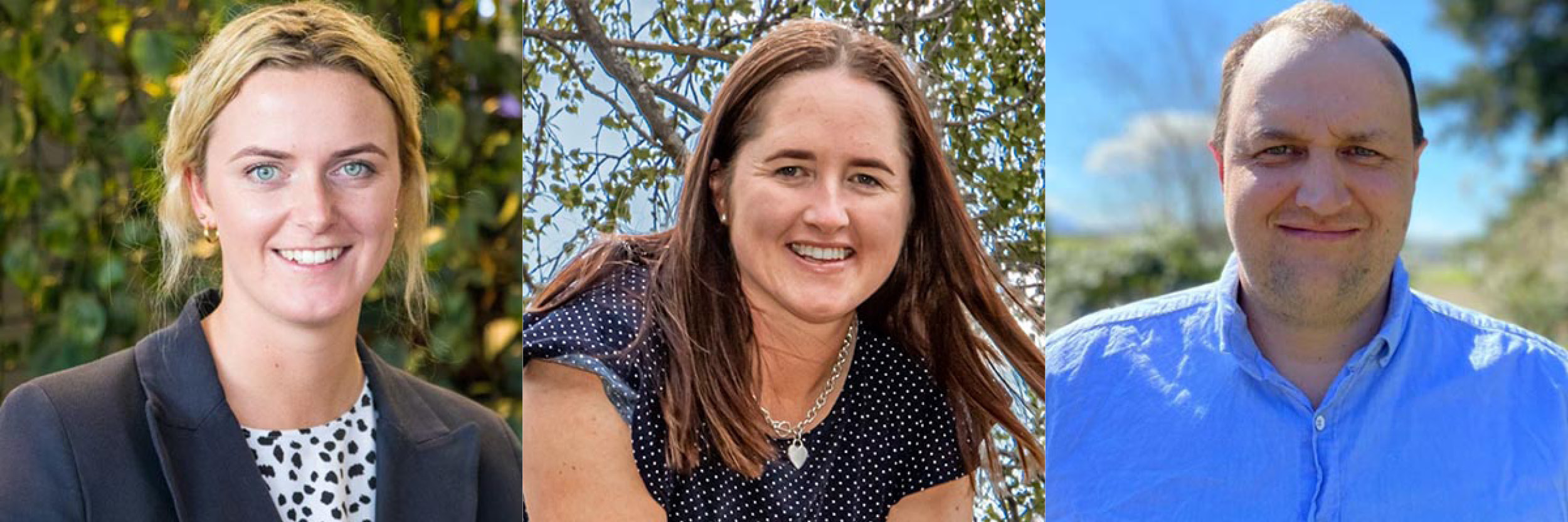
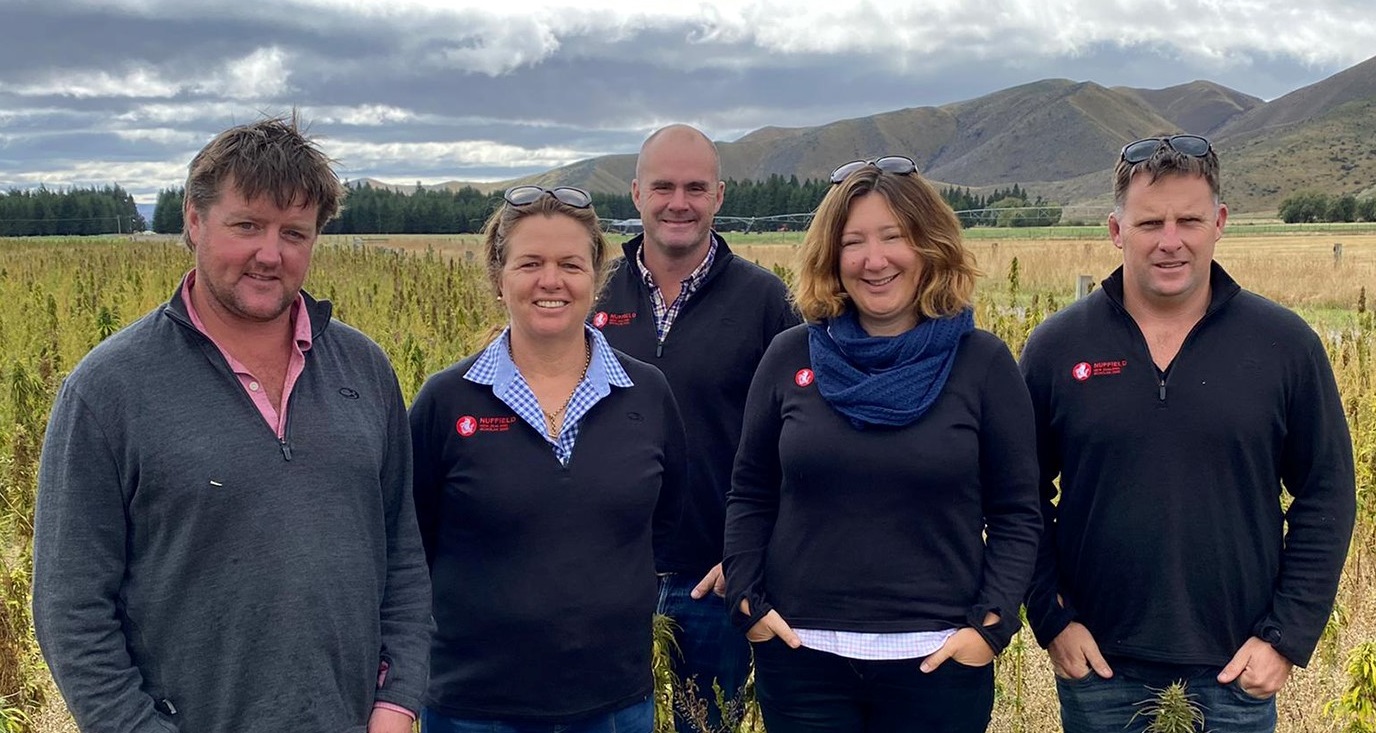
James Allen (2nd from left) – is currently traveling independently (USA mostly) as detailed in the posts above. James will also join a GFP traveling to: Kenya, Norway, UK, Spain, Italy.

Kerry Worsnop (2nd from right) – is currently doing independent travel and will join a GFP traveling to: Argentina, Ireland, France, Poland.

Kylie Leonard (Left) – March/April 2023 did the Nuffield Triennial, then went to Brazil, USA, UK, Belgium. Kylie also went on independent travel as well.

Matt Iremonger (Right) – March/April 2023 did the Nuffield Triennial, then went to Brazil, USA, UK, Belgium. Like Kylie, Matt also undertook independent travel.


2022 Scholars

Anthony Taueki (Centre) – March/April 2023 did the Nuffield Triennial tour, then went to Brazil, USA, UK, Belgium.

Parmindar Singh (Left) – October/November 2023, will be in Argentina, Ireland, France, Poland.

Lucie Douma (Right) – May/June 2023 was in Singapore, Qatar, Germany, USA.

2021 Scholars

Lynsey Stratford (Left) – August 2022 was in Japan, Belgium, Ireland, USA.

Dan Eb (Centre) – May/June 2023 was in Singapore, Japan, Israel, Netherlands, USA.

David Eade (2nd from right) – May/June 2023 was in Singapore, Japan, Israel, Netherlands, USA.

Ben Anderson (2nd from left) – March/April 2023 was in Brazil, USA, UK, Belgium.

John Foley (Right) – August 2022 was in Japan, Belgium, Ireland, USA.

Lisa Rogers appointed CEO Rural Leaders.

Press Release: Lincoln, 28 July 2023.

The Board of the New Zealand Rural Leadership Trust (Rural Leaders) has announced the appointment of Lisa Rogers, current General Manager, to the role of Chief Executive Officer.

Rogers brings nearly six years’ expertise and knowledge gained as Programmes Manager and more recently, as General Manager of the Trust.

Rogers replaces former Chief Executive Officer, Chris Parsons, who resigned in April to take up the Chief Commercial Officer role at MyFarm Investments.

Since joining Rural Leaders in 2017, Rogers has led its highly respected programmes. These include the Kellogg Rural Leadership and the Value Chain Innovation Programmes. She has also helped steer the Nuffield New Zealand Farming Scholarship, which sees up to five sector leaders embark on a period of research and international travel each year.

Bringing professionalism and insight to the Trust’s long-established leadership development platforms, Trust Chair, Kate Scott, also welcomed the stability and expertise Rogers offers.

“We are excited about Lisa’s appointment and what it will mean for the Trust. Lisa will ensure continuity of our projects, such as the Food and Fibre Leadership Development Project while also delivering a steady operational and strategic momentum, both for our investing partners and for our team.”

Rogers brings a deep understanding of Rural Leaders’ operational and strategic ambitions, along with a wealth of pan-sector influences and knowledge gained from senior management roles in food and fibre, extraction and banking and finance.

“Lisa not only brings her valuable experience to the role, she is, at her core, genuinely passionate about the people in food and fibre and the growth of its leaders,” adds Scott.

As General Manager, Rogers has been acting in the capacity of interim CEO of Rural Leaders since May. 

The Mackenzie Study – Nuffield and Kellogg latest results.

The Mackenzie Charitable Foundation have initiated research alongside the New Zealand Rural Leadership Trust, in collaboration with Otago Business School and the Department of Economics, to investigate the contribution of Kellogg and Nuffield Alumni to Food and Fibre.

Research covering 72 years of Nuffield and 43 years of Kellogg Rural Scholarship.

The objective of the research has been to collect data measuring within-person gains in entrepreneurial leadership and capability-building that occurs because of the Kellogg and Nuffield programmes.

The first survey was conducted with the New Zealand Nuffield Alums (178 at the time of the survey – with 68 survey participants). Through this process, the Team learned several ways to refine the survey and then ran a similar survey with Kellogg Alums (960 at the time of the survey – with 234 survey participants).

Entrepreneurship is frequently measured as the proportion of people in self-employment. By that broad measure, the Study has found that rural entrepreneurship is very much alive and well among alums.

This latest Mackenzie Study report builds on the progress report from February 2022 and as such, offers a recalibration of some earlier published headline results.

The methods used to measure entrepreneurial leadership skills (ELS) draw on international peer-reviewed academic literature in experimental economics, psychology, and management science.

The Study measured real-world entrepreneurial achievements by counting new business starts, FTE jobs created, export revenues, and leadership roles. This contributes to the participant’s ELS profile.

Characteristics of the Nuffield and the Kellogg Scholar.

Nuffield Scholars are, on average, in their 40s. They are rigorously selected and undertake a self-guided international exploration of Food and Fibre challenges and opportunities.

The Nuffield Scholarship is runs over 15 months and includes at least 16 weeks of international travel.

Nuffield aims to develop the insight and foresight to keep New Zealand at the global forefront of Food and Fibre-producing nations. Leadership development is an outcome of each Scholar’s experiential journey rather than an output of the Programme.

By contrast, Kellogg Scholars are, on average, in their 30s. The Kellogg

The Programme is facilitated and runs over six months. Each programme can take up to 24 Scholars, meaning more Kellogg Scholars graduate than Nuffield Scholars. Leadership capabilities are a defined learning output of the Programme.

This is likely a first-of-its-kind cross-sectional study, designed to compare each participant at multiple time points and will give New Zealand’s Food and Fibre sector a world-leading insight into the art and science of building entrepreneurial capability.

Here are the headline results from the Study.

Nuffield.

The average Nuffield alum has started 3.6 businesses, played a direct role in creating 47.0 FTE jobs, and served in 14.0 senior leadership roles.

Over 40% of Nuffield alums have served in government-appointed or elected leadership roles. At the time of survey, 178 Nuffield alums had collectively served in an estimated 2,488 leadership roles (other than government roles), played a direct role in creating an estimated 641 businesses, and 8,295 FTE roles. 

Kellogg.

The average Kellogg alum has started 1.7 businesses, created 35.0 FTE jobs, and served in 14.0 senior leadership roles.

Approximately 26.9% of Kellogg alums have served in government-appointed or elected leadership roles. Since the inception of the New Zealand Kellogg Rural Leadership Programme, 960 Kellogg alums have collectively served in over 26,858 leadership roles (other than government roles), played a direct role in creating an estimated 1,632 businesses, and 33,600 FTE roles.

The collective Nuffield and Kellogg Alum’s results.

These collective results include the creation of an estimated 2,273 businesses, 41,895
jobs,
 and service in 29,347 leadership roles.

Just as importantly, both alum groups reported better personal outcomes after attending the programmes, including better well-being, expanded social networks, and higher earnings. This is an impressive contribution.

Both alum groups demonstrated economic, social, and environmental contributions to New Zealand’s Food and Fibre sector. One of the notable findings is the very high rate of self-employment compared to New Zealand as a whole (over 60% for Nuffield and Kellogg, compared to 7.5% nationally, 28% in the dairy industry, and 30% in the red meat and wool industry).

The Team have seen very few data sets in New Zealand with self-employed proportions this large.

Where to next for the Mackenzie Study?

The Mackenzie Study also includes foundational data for longitudinal research. The analysis of this is currently underway. The longitudinal study is focused on collection of before-after survey data for just the Kellogg Programme.

The intention is for this data collection to continue as future cohorts’ baseline and exit surveys are added. This, in order to achieve greater statistical precision and an ever-strengthening evidence base documenting gains in entrepreneurial leadership associated with participation in the Kellogg Programme.

Download the full Mackenzie Study Report here.

Seeking applications for an Associate Trustee. New Zealand Rural Leadership Trust.

NZRLT Board and 2023 Scholars
Current Board of Trustees with 2023 Nuffield New Zealand Farming Scholars, November 2022.

The Board of the New Zealand Rural Leadership Trust (NZRLT) is seeking applications for an Associate Trustee. 

This appointment is for 12 months starting February 2023 and finishing in February 2024. 

The NZRLT Board meets six times per year and holds additional meetings as required. The duration of each meeting typically runs to half a day.  

The NZRLT is seeking applications from Programme Alumni (Nuffield, Kellogg and Value Chain Innovation Programmes). 

Role of the board 

The Board operates under the NZRLT Trust Deed. Its role is to represent, and promote the interests of, the Trust and, thereby, industry investors and alumni. Having regard to its role the board directs, and supervises the management of, the business and affairs of the NZRLT including: 

  • Strategy. ensuring the NZRLT’s goals are clearly established, and strategies are in place for achieving them, 
  • Policies. establishing policies for strengthening the performance of the NZRLT including ensuring management is proactively seeking to build the business through innovation, initiative, technology, new products, and the development of its business capital, 
  • Performance. monitoring the performance of management appointing the CEO. 
  • deciding on whatever steps are necessary to protect the NZRLT’s financial position and the ability to meet its debts and other obligations when they fall due, and ensuring that such steps are taken, 
  • Fiduciary Responsibilities. ensuring the NZRLT’s financial statements are true and fair and otherwise conform with law, 
  • Standards. ensuring the NZRLT adheres to high standards of ethics and corporate behaviour, 
  • Risk. ensuring the NZRLT has appropriate risk management/regulatory compliance policies in place. 

In the normal course of events, day-to-day management of the NZRLT is left to management. All Trustees are expected to operate objectively in the interests of the NZRLT. The board is collectively responsible for the success of the NZRLT.  

As Associate Trustee your voice will be welcomed at the Board Table, but as a non-voting member you will not be required or accustomed to act or exercise controls and powers required of the permanent Trustees. 

Timing and location of board meetings, and time commitment 

The board normally meets six times per year and holds additional meetings as the occasion requires. The duration of each meeting typically runs to half a day. You will receive the board papers for the meeting by one week prior. 

In addition to routine board meetings, you should allow for preparatory work and travel, and ensure that you are able to make the necessary overall time commitment. All Trustees are expected to have carefully reviewed all board papers and related material sent to them for meetings. 

Remuneration 

This is an unpaid role. However, the NZRLT will reimburse all direct and indirect expenses such as accommodation and travelling expenses, reasonably and properly incurred, and documented. 

To apply

Written application and CV should be emailed to Chris Parsons, CEO, NZRLT at chrisparsons@ruralleaders.co.nz.

Or alternatively, feel free to email Chris to arrange a time for a confidential discussion. 

Applications close midnight, January 9, 2023. 

We look forward to receiving your application, and if successful, working with you to grow world-class leaders for our country. 

Where it started – The Global Tour of New Zealand.

Value Chain Innovation Programme Logo

The ‘Global Tour of New Zealand’, as it was quickly named by 2020’s Nuffield Scholars, gave a unique view of the country’s food and fibre sector value chains. This year, the programme will be made richer still.

The Value Chain Innovation Programme will begin in September 2022 and is now open to a larger number of people in the primary sector. 

Building the value. 

A lot of work has gone into building a collection of exciting and varied case studies across dairy, arable, horticulture value chains. Participants learn straight from the source. They gain unique insights into food and fibre innovation, in both domestic and international markets.

The new programme gives a wide view of established and novel value chains. Participants compare and transpose thinking at a time when the primary industries are going through the biggest period of transformational change since the 1980’s.  

“If you’re in food and fibre, now is the time to be gaining a pan-sector view of as many successful business models as possible,” says Lincoln University Lecturer Prof. and Programme Co-facilitator Hamish Gow,

“Increasingly the most successful value chains are those with business models closely aligned to their customers, use protected IP, and provide innovative shared value structures.”

The programme runs over five weeks, two of these are spent on the road. The remaining time is spent on an individual research report. “It will be a busy few weeks, with the time commitment being 100 hours on field trips, guest lectures and networking, online lectures and discussions, tutorials, and another 50 hours self-directed learning,” said Prof. Gow.  


The programme delivery team. 

New Zealand Rural Leadership Trust CEO Chris Parsons remarked, “As a global leader and thinker in value chain design, innovation and entrepreneurship, Professor Gow is uniquely qualified to impart deeper strategic learning and insight into the September programme.”  

Leadership and Strategic Development Consultant, and Programme Co-facilitator Phil Morrison, ONZM, further strengthens the team. “We are also fortunate to have Phil onboard. He brings a different leadership perspective, drawing on a career in military command, and in the delivery of innovation, strategic and leadership training as a consultant. We couldn’t hope for a stronger team”, added Chris Parsons. 

Building leadership capability. 

Once completed, the programme will give participants the competencies, confidence, and networks to influence change and lead transformation at an enterprise level and throughout regional New Zealand.  

Chris Parsons says, “We hope this programme will lead to positive larger scale change as our graduates continue to grow and contribute to a fast-changing food and fibre sector.” 

Rural Leaders are taking applications until Sunday 10 July.

Applications can be made at ruralleaders.co.nz/value-chain/ 

KPMG Food and Fibre Insights Course.

KPMG New Zealand and the University of Waikato have partnered to deliver a new and unique Food and Fibre Insights Course. 

The part-time, six-week course is targeted at working professionals who are seeking to expand their knowledge of topics at the forefront of agri-food systems. 

Facilitated by Ian Proudfoot, Jack Keeys, Professor Frank Srimgeour, and Dr Jack Dorner, it will deliver leading insight collated from experts across New Zealand and the world. It will cover one topic per week. 

Course structure will include a combination of independent learning, working through readings, videos, and questions on an online learning platform, in addition to a weekly virtual discussion session. Further information about the course can be found in the attached brochure.  

An exclusive discount code has been offered to Rural Leader readers and is available here: Partner’s link 

If you have any questions or would like any further information, please feel free to contact Jack Keeys via email at jkeeys@kpmg.co.nz, or by phone on 09 363 3502. 

FMG Young Farmer of the Year – Tasman Regional Final. 

Meet you Saturday night at Springston Hall.

Did you know Mary Bumby introduced honeybees to New Zealand in 1839? No? Incredibly, her name has nothing to do with the naming of Bumble Bees, or any bees. Quite possibly history’s greatest example of a surname impacting the course of a life.  

The seven Tasman Region finalists for the FMG Young farmer of the Year hadn’t heard of Mary’s exploits either. Though they had answers to other questions during the four quiz rounds at Springston Hall, Saturday evening, 19th February.  

Rural Leaders were fortunate to be invited by our strategic investing partner FMG to catch this thrilling conclusion to several days of competition, to find the Tasman Regional Winner. Competitors had given their all in three components of competition: Agri-business, Agri-skills, and Agri-Sports. They crafted a ‘chair’ from a wood palette, filleted (in some cases butchered) a salmon, they did the maths on the application of fertiliser, and competed in fencing too.  

And so, it all came down to the Springston Hall for the fourth Agri-Knowledge component, to determine the winner and finalists for the national competition later this year. 

Te Radar sounds the alarm.

After a BBQ dinner and some masked, socially-distanced mixing, long-time host Te Radar kicked off the evening with the housekeeping, which included the obligatory fire evacuation notice – and at that exact moment an actual fire alarm sounded. We all evacuated. The rural fire brigade eventually gave the all-clear and the seven finalists took their places.

The finalists were: Archie Woodhouse and Phoebe Smailes of Lincoln University Young Farmers, Andrew Allan and George Dodson of Lincoln Young Farmers, Jonny Brown of Dunsandel Young Farmers, Ash Foley of Waimakariri Young Farmers, and Blair Anglesey of Renwick Young Farmers. 
 
Entering this final evening, Jonny Brown had the lead, with Andrew Allan in second.  

Fingers on buzzers please.

The first round ‘Photo ID’ asked contestants to identify everything from a specific arable crop to a breed of pig, through to filling in a missing element on a familiar sector logo. 

Round two ‘Rapid Fire’ gave each contestant 30 seconds of questions. Performances here were strong, with the highlight being an ability to anticipate the answer to a question cut-off by the timer. Contestants were allowed to answer despite not having the full question.  

Best anticipation efforts were Archie Woodhouse’s ‘Marlborough’ to the cut question “What region…?” (What region is the mainstay of New Zealand mussel farming?”) And Phoebe Smaile’s ‘Four,’ to the cut question “What is the minimum clearance…?” (“What is the minimum clearance for equipment from overhead powerlines?”)  

Round three was an observation round. Here a video was played with questions following. A hard round, though had this not been a dry event, it would have been harder still. 

And the winner of the FMG Young Farmer of the Year, Tasman is...

The final round was a ‘quick buzzer,’ here big movers were Phoebe Smailes and Ash Foley, but not enough to break into the top three. After a focussed period of calculation from the judges, the final places were awarded.  

The top female competitor’s prize went to Ash Foley. Third place, by just one point, went to Archie Woodhouse, second was Andrew Allan, and seasoned competitor Jonny Brown took the overall win, after missing out last year. 

FMG Young Farmer of the Year Tasman Regional Winner

This was an expertly organised event and a thoroughly enjoyable evening. Thank you to FMG’s Michelle Stephenson for the invite. 
 
The Contest series Grand Final is scheduled for Whangarei in July. 
 
Keep an eye out for details here.

Madison Pannett on GenZ in the primary sector.

Madison Pannett is a 2021 Kellogg Scholar who recently made the news with her Kellogg research on attracting Generation Z into the primary industries.  

You can review her report here, Generation Z and the environment – how can we use their passion to attract them into food and fibre sector careers?

In a nutshell the report takes a close look at how and why the sector’s careers need to be more aligned with this influential generation’s values. 

The interview with Radio New Zealand’s Jesse Mulligan is short and to the point. For anyone looking to bring new talent into their operation, it’s well worth the five-minute investment.  

Madison speaks about the way the primary sector’s economic performance is the most common messaging theme in media, something GenZ are not generally interested in or motivated by.  

According to her research, GenZ are motivated by environmental issues and their ability to make a bigger difference to them. She concludes, a job should be spoken about in terms of how it fits into the bigger picture, particularly regarding global warming – rather than in financial or economic terms.  

Listen to Jesse Mulligan interview Madison below. 

You can also read an earlier article published in the Waikato Herald. In this article Madison also talks about how we might inspire young people into the primary sector. 

Follow the link to read the article on nzherald.co.nz website.

A typical day on the Value Chain Innovation Study Tour.

Craigmore Farming Horticulture Study Trip

The Value Chain Innovation Programme is made up of three phases spanning six weeks from May 9 to June 19. You can find out more about the programme and its core elements here.

Probably the most involved point of the five-week experience is the industry immersion study tour (Phase Two).

What will a typical day on the tour look like?

A fair description would be “busy”. But here’s more about what to expect.

We should note first that this ‘typical day’ may be subject to pandemic or scheduling related changes. 

Day five. In summary, there will be horticulture, food science and much more on the day. Generally, no one day will be dedicated to a particular value chain, but rather each piece of a value chain will be spread across several days.

You’ll be waking up in Central Hawke’s Bay. It’s an early start with breakfast at 06:30, and on the bus by 08:00.

On this particular day, the first destination is scheduled to be Craigmore’s Springhill Horticulture operation. You’ll arrive by 09:00.

Craigmore Springhill.

Craigmore manages farm and forest investments and was established in 2009 by two New Zealand family farmers, Forbes Elworthy and Mark Cox. Craigmore has an experienced team managing 18,000 hectares of dairy, grazing, forestry, and horticultural properties, that includes Springhill. 

You can preview Craigmore’s Springhill operation in this video

At around 11:00 the bus will depart for Massey University campus in Palmerston North, where you’ll be visiting several units. You should get there by 13:00.

The Riddet Institute.

First stop on campus is the Riddet Institute.

The Riddet Institute aims to build the knowledge and skills to tackle the challenges facing our fast-changing food sector, through discovery-led research at the frontier of food materials science. 

To learn more about Riddet, watch this interview with the Institute’s Deputy Director, Professor Warren McNabb. Scroll to the section beginning 3:15sec and ending 7:40sec for some insight into their work. 

Next is Massey Food Experience and Sensory Testing Laboratory (Feast). 

Feast, Food Pilot, and MAF Digital Lab – Massey University.

To gain a clearer picture about the type of work Feast conduct, look at this short video covering research on the use of a holo-lens. This work was done to determine what impacts mixed-reality technology could have on a consumer’s enjoyment of food. 

Still on the Massey University campus, the next stop is Massey Food Pilot. 

The Food Pilot at Massey includes the largest collection of food processing equipment in the southern hemisphere. They work with innovators and organisations to provide solutions to food-related challenges. 

Food Pilot is part of the New Zealand Food Innovation Network (NZFIN), it provides the facilities and the expertise to develop new products and processes, from idea to commercial success. Services can include evaporating and drying, chopping, mincing, cooking and process control, extrusion and puffing. 

While the this video isn’t on Food Pilot specifically, it does give some indication as to how Food Pilot fits into the FoodHQ ecosystem. There’s also plenty of footage from inside the Food Pilot testing areas. 

The next destination is the Fitzherbert Science Centre, where you will visit the Massey AgriFood Digital Lab

The MAF Digital Lab is a solution focussed research centre developing applications in advanced technology within the primary production, agricultural and food supply chain. MAF leverages Massey University’s wide capability in precision agriculture, primary production science and horticulture supply chains, sensor technology, robotics, AI, and data science.

Massey Univeristy Lab

Later in the afternoon, you are scheduled to visit Fonterra’s Research and Development Centre (FRDC). 

Home to 130 PhDs and 350 dairy patents, innovation is a key part of New Zealand Milk Products’ (NZMP), and ultimately Fonterra’s reason for being. Within NZMP, the FRDC is dedicated to dairy innovation and research. 

This video gives a good introduction to NZMP and the FRDC. 

Wharerata – BBQ dinner.

The next stop is your final destination for the day – Wharerata, where casual drinks and a BBQ dinner will be organised for the group. A quick week one tour review will take place before dinner at this historic homestead.  

By 20:00 you’ll be at your accommodation, where you can enjoy some free time or an early night as you are up at 06:00 the next morning to hit the road again.

The schedule is intense – but it will be worth it!

If you haven’t checked out yet the following podcasts, take the time to listen to Professor Hamish Gow’s Podcast ‘Value chain thinking’, and James Parson’s Podcast ‘When value-add doesn’t add up’. They’re both excellent for further context.  

Contact us with any questions, we’re ready to help. 
If you would like to find out more about the programme, contact Lisa Rogers today. Either call on 021 139 6881, or email at lisarogers@ruralleaders.co.nz.

Ready to register your interest in the Value Chain Innovation Programme?