2026 Nuffield NZ Farming Scholarship. Apply by 17 August 2025. Read More...

Apply for 2026 Nuffield NZ Farming Scholarship by 17 August 2025. More details...

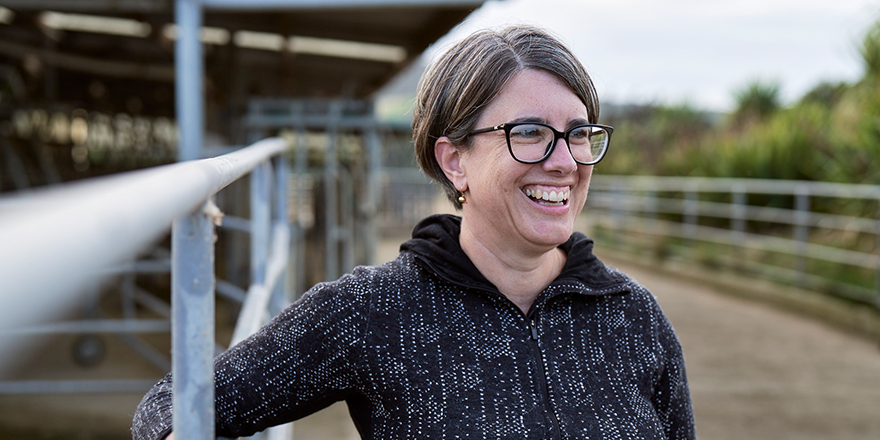
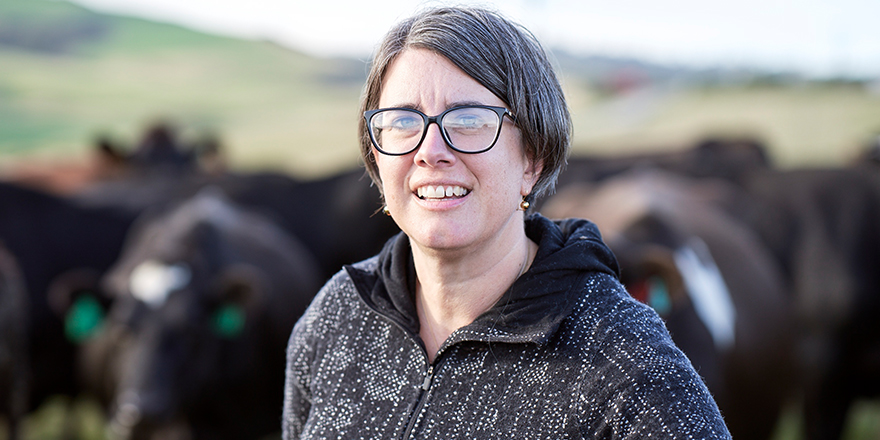
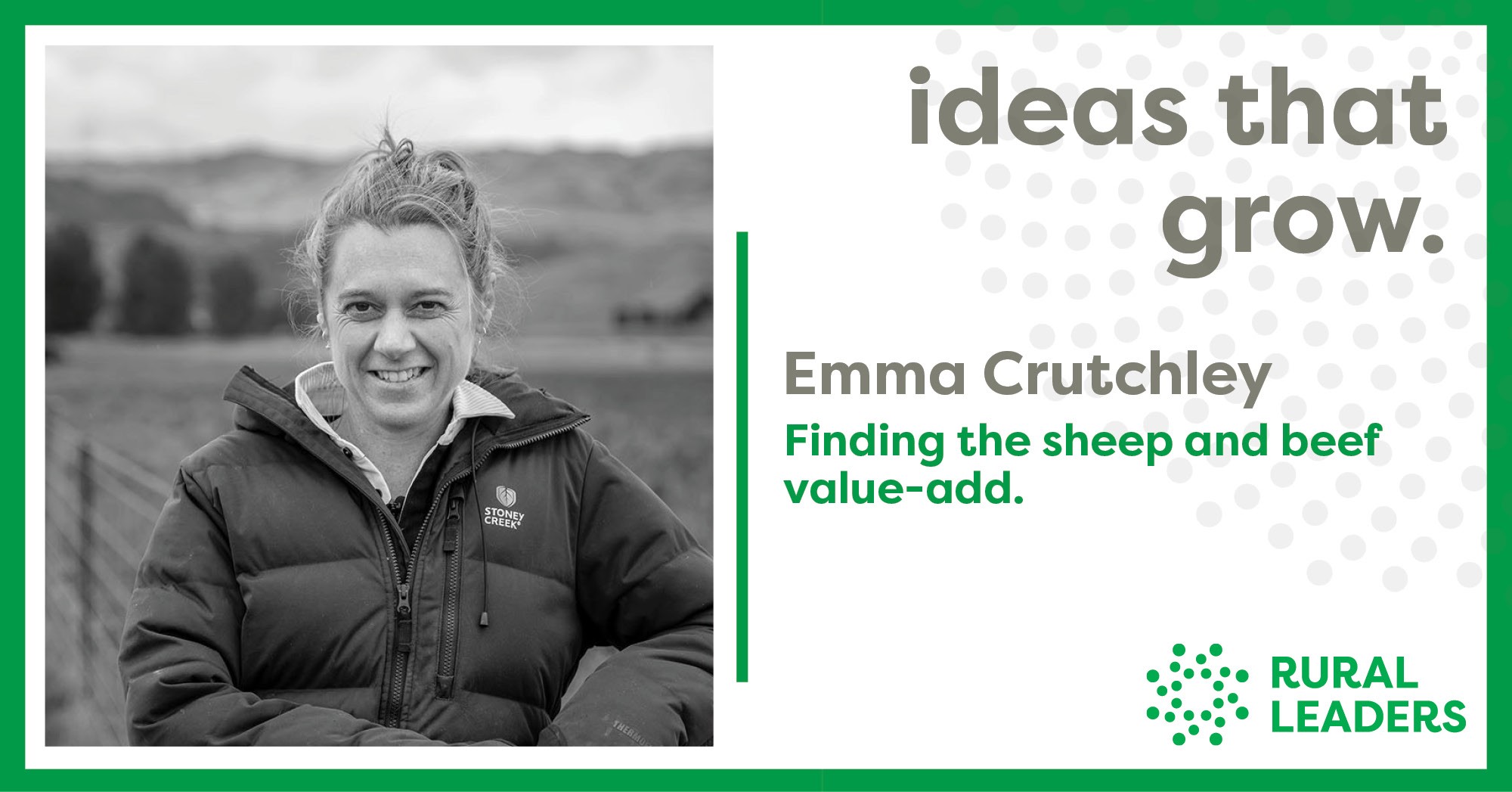
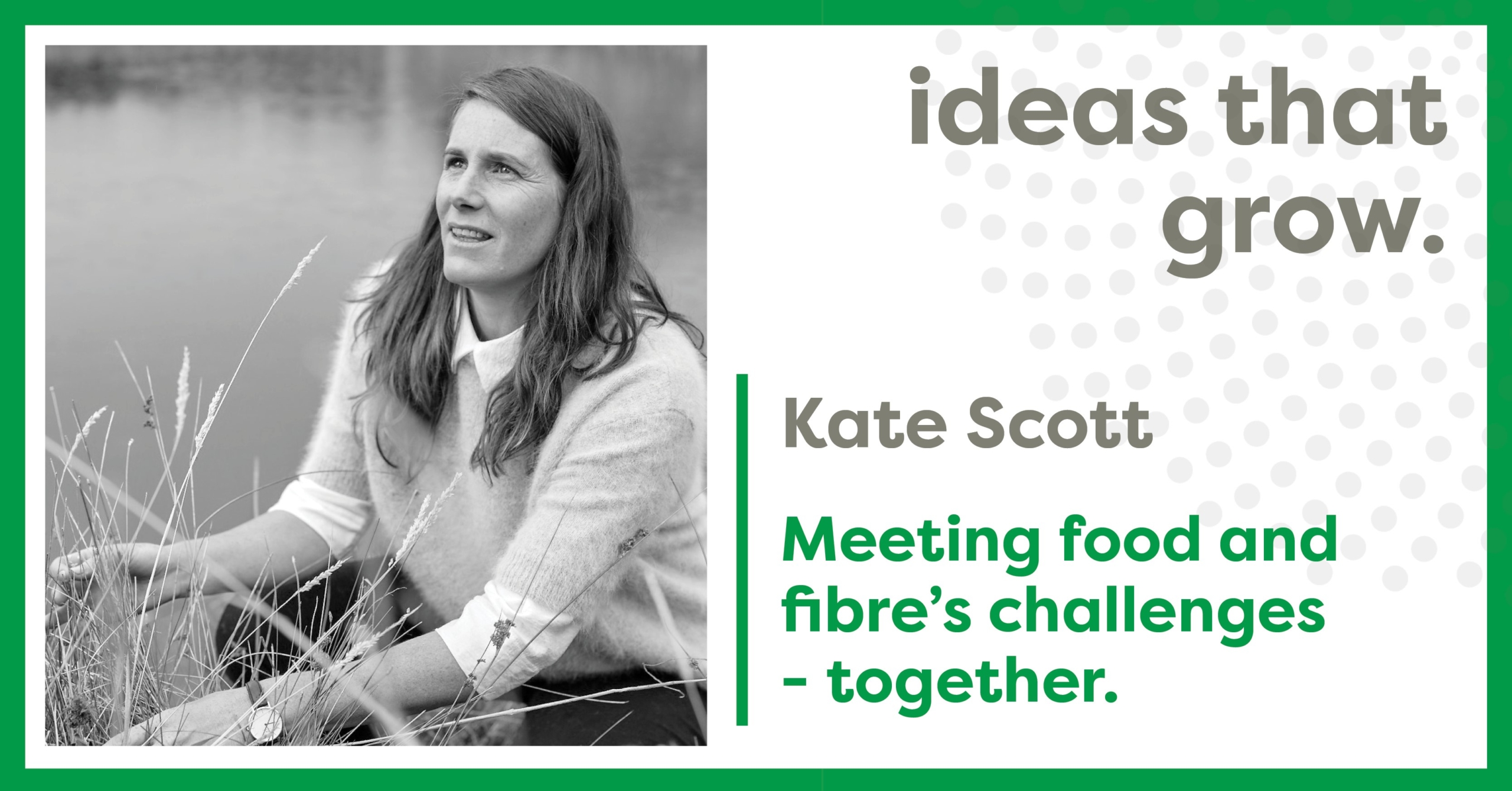
Emma Crutchley. Finding the sheep and beef value-add.

Emma Crutchley, 2018 Kellogg Scholar, talks to Bryan Gibson, Farmers Weekly managing editor about some of the challenges sheep and beef farming faces in a water-short region.

Emma discusses her Kellogg research, the Value Chain Innovation Programme, and the work being done on ‘Puketoi’ to find value-add.

Listen to Emma’s podcast here or read the transcript below.

Bryan GibsonManaging Editor of Farmer’s Weekly.

Kia Ora, you’ve joined the Ideas That Grow podcast, brought to you by Rural Leaders. In this series, we’ll be drawing on insights from innovative rural leaders to help plant ideas that grow so our regions can flourish. Ideas that Grow is presented in association with Farmers Weekly.

My name is Bryan Gibson, Managing Editor of Farmers Weekly and this week, we are talking to Otago sheep and beef farmer, Emma Crutchley.

Bryan Gibson:
G’day, Emma. How’s it going?

Emma Crutchley, 2018 Kellogg Scholar, sheep, beef and arable farmer.
Good, thank you Bryan. How are you?

BG: Yeah, I’m really good. Yeah, so whereabouts in Otago are you?

EC: My husband, and I and two children live in a little inland basin called the Maniototo in Central Otago on a sheep, beef, and arable farm here called Puketoi.

BG: Sounds like a lot of work.

Maniototo sheep, beef and arable farming.

EC: Yep. So, I grew up here. My grandfather bought the farm in 1939, and we go a couple of more generations back here in the Maniototo. He’s one of the youngest sons, and he moved over from Kyeburn to Puketoi then.

I am an ’80s child, so I remember little bits of farming growing up through there. And I’m the youngest daughter out of…I’ve got an older brother. When I was younger, I had a love for animals and the farm and I could literally be found in any lamb pen, in any dog kennel, any filthy, smelly, or challenging job.

Growing up, I would be neck-deep in it. Mum and dad never really had a chance to get me out of it, and not that they ever thought that was a thing. They were very supportive of all their children, regardless of gender, being involved in the farm. I guess growing up here, I went away to boarding school and continued my love for the farm straight to Lincoln, and I never really looked anywhere else. From there, I moved on to work as a rural professional, as an agronomist, working in Christchurch for PGG Wrightson, and then later working for Pamu out of Wellington.

I knew I’d return home to the farm, but I was always a little bit hesitant because I love being around people and I love my networks and the social life side of it. I knew if I moved home, I was moving to a relatively isolated place away from a lot of the people that I really enjoyed being around.

I knew that it was the best opportunity I had and always something I really wanted to do. So I moved home in 2009, and imported a husband to the Maniototo, because it won’t come as a surprise, but being a small, rural community, everyone’s relatively related. I knew I had to find a husband before I moved home. So, yeah, he came home, and he moved here in 2010. And yeah, so we’ve worked to take over the family farm from my parents.

We’ve got just under 500 hectares of irrigation. The rainfall here is often what ‘wows’ people, it’s a 350ml rainfall. So irrigation creates the resilience we need to do what we do. We’re arable, so we grow about 100 hectares of arable crops: wheat, barley, peas, linseed, clover, rye for seed, and a few other bits-and-bobs as they come along.

We’ve got an angus stud as well. So we sell about 25 stud bulls each year. The main thing we do here, that is our main point of production, is our lambs. We have about six and a half thousand ewes. And apart from replacements, we finish all lambs born on the farm and also purchase more store lambs in January and carry them through as well to meet the demands of what we can produce and who we supply.

I do a lot in the advocacy space with Federated Farmers in Otago and also as a director for Irrigation New Zealand. My husband is very involved and he leads a lot of the rural fire stuff in this area. Being in a dry climate, it’s one of our challenges, I suppose.

BG: That sounds like a massive and diverse life you’ve got.

EC: Yeah, there’s a wee bit going on. They’ve got two kids of the mix, two, eight, and 10, so they keep us on our toes.

BG: Now, you mentioned the engagement with the Rural Leaders Programme was a Kellogg report, I think it was in 2018, that was on how to manage water efficiently and what that might mean. I guess it’s an issue that’s close to your home – and your heart. That’s why you took it on?

Kellogg research into water sharing in a water-short catchment.

EC: Well, as you know in 2017, one of the top election issues was around freshwater and how it’s managed in New Zealand. There was a lot of pressure around irrigation and the association with water quality and quantity. At that time, I was a director on our local irrigation company.

Being in this extreme climate where we are short growing season – long winters, and the value that irrigation is to our business in terms of the resilience and our adaption to climate change, I knew when I applied for the Kellogg Programme, exactly what I wanted to study in terms of a research project.

I’d been looking at it for a while, because the kids were, at the time, I think they were two and four, and at that time they’re starting to get a little bit more…I don’t know…I just went and did it!

So, my project was on water sharing in a water-short catchment, which was basically focusing in around, freshwater governance, or even crossing into environmental governance. I looked at different models from around the world and different examples of how water was managed, ownership rights, community management, and then investigated some of the policy settings we have. Also some of the solutions that might work in that space.

I think one of the learnings I got out of that was, as farmers in New Zealand we’re incredibly individualistic in how we run our businesses and that is a reflection of the challenges. The challenges we faced in the ’80s, we found ourselves then in that time of high interest rates and challenging Rogernomics type stuff. As individual farmers we had to farm our way out of it. We did that really, really well. But then that’s led us to being really innovative.

We need to understand the ‘why’ as to why the change is happening. I’m probably going a little bit off track here, but that project set the scene for me, for doing a lot of work over the last six years in the advocacy space and advocating for not only enabling farmers room to understand the ‘why’, but also those connections with stakeholders and the importance of that.

At the end of the day, the government calls the shots on policy, but the people that are voting for the government are our stakeholders, our New Zealand public, and the importance of understanding that dynamic for long-term goals rather than focusing on short-term advocacy outcomes.

BG: Yeah, I know you’ve done a lot of work. We had some stories in the newspaper this year on some of the work you’ve done to advocate for some changes to some of the water plans down your way?

Farming and the environment.

EC: I guess the thing that in Otago, we’ve worked first off the bat with land and water plans and regional policy statement, and I guess we’re also one of the most diverse regions in a Otago. For me, or for everyone really, farming systems in New Zealand are heavily intertwined with the environment. There’s always going to be public interest in farming because of our association with the environment that we farm in.

Everyone’s always looking over our fence. From that, it’s like, how do we set it up, so we enable farmers who are very good at change. So for that example, multiple challenges can be solved with one solution, and one challenge can be solved with multiple solutions. And what I mean by that is, how do you enable policy settings that enable this diverse, incredibly stunning region to actually find the scope within those policy settings to innovate around the challenge and to solve the different water quality, biodiversity, climate change challenges that we have faced.

I think advocacy is probably…I think it’s changing. We need to start learning. But it’s like communicating in a way which enables you to be understood. And my thoughts around that is we had in the Upper Taieri, one of our biggest challenges was the Upper Taieri plain and the diverse hydrology landscape that was tied up in the national wetland regulations. Then what that was the unintended consequence that that was going to create.

So, we had our big jobs for a nature project set up at that time, which involved the relationships with multiple stakeholders. I guess we always knew that if we were going to be successful in changing the settings around the wetland regulations that we needed to have a common ground with our stakeholders and what we were trying to achieve.

I know there’s a lot of narrative around, for example, the stock exclusion regulations and the huge cost they create on farmers. If you can flip that into, we need the tools in the toolbox to manage our environment, in a way that is best for the environment and best for our rural communities. We need to recognise the role that livestock can play within those systems to control our weeds and help with pest control. That was a common ground that we found.

So when we went to MFE with that case to Minister Parker, it was probably a more resonating message than just saying, ‘Oh, it’s a huge cost of fencing, and we’re going to lose all this land that we can graze’, which doesn’t resonate with everyone. They actually don’t care. They just want fresh water and they want a pristine environment. It’s explaining it in a way that actually identifies the unintended consequence of that.

So off the back of that, we managed to get that cut out of the stock exclusion rules, but it’s still a work in progress. We’ve still got to continue that conversation with our regional council as part of our water plan.

The art of making the tough conversations easier.

BG: Sounds like you’re at the forefront of a type of evolution that’s been talked quite a lot in terms of managing our natural assets – has many stakeholders who mostly want to do the same thing. It’s not an us and them farmers versus, say, fishermen or environmentalists or anything like that. And if you can in advance find those shared values, then it’s much more easy to overcome the challenge.

EC: Yeah, and I think I was talking to Julia Jones a couple of months ago and we’re brainstorming. I think she said something, and it was ‘we have a responsibility to seek to understand diverse perspectives’, then I added on the end, ‘we also need to give ourselves the personal freedom to change our minds’. I guess for me, that crosses into the fact that we are a small part of the population in New Zealand.

Like a lot of people like those in Auckland don’t really care about farming. They might want a pristine environment, but they don’t care about farmers as such. So the best way to get people to understand your perspectives is to actually listen to them and when you can create an environment which lets people feel like they’re understood – it takes away the defensiveness and the silos, and it creates more of a safe space to continue that conversation.

So when you’re really passionate, I think, and I have to be aware of this, because I’m really passionate about Ag and what we do, but passion can show up in many different ways. And when you’re passionate about a topic like farming or the environment and both, probably, most of the farmers fit into both those camps, but it’s like, how do you talk to someone and create that curiosity to let them feel like they’re heard? And then you create that connection and then that’s progress.

The Value Chain Innovation Programme and finding the value-add.

BG: Now, you’ve had a more recent Rural Leaders experience. You were on the Value Chain Innovation Programme this year. What was that all about?

EC: Yeah. So my lane, probably, in the past year has been a lot around the environmental stuff – freshwater, irrigation. But as a sheep and beef farmer, we are doing so much behind the farm gate in terms of how we farm and environmental gains on-farm. For us, because we are main point of production is lamb and finishing lambs, we’ve seen a lot of disruption within the supply chain over the past few years, especially since COVID.

Then we had another one more recently this year, where some of the guys we’ve worked really closely with over the past few years to develop our lamb supply programme. We went to them eight years ago, probably a little bit frustrated at the time, we wanted to supply a product that worked with our lamb, our supply chain, and what was actually needed within that, so we could add more value.

So they came back to us. We said to them, ‘how can we better support what you’re trying to do so we can add value to what we’re trying to do?’ They came back and they said, we need to know when your lambs are coming three to four months ahead. We need all year-round supply, and we need to have a consistent hook weight. And we went ‘righto’ and took that away. Then over the next few years, we worked really hard to actually schedule three to four months out and supply 11 to 12 months of the year and build a system around that, but then also target those specific hook rates and get it right. So, it worked really well.

Then when we had a bit of disruption within our meat company, probably three or four months ago, it blew a bit of that away. It blew away those trusted relationships, and it’s a bit of an ‘aha’ moment for me, and I realised how vulnerable we are to what happens in that supply chain and what we do. Because when your main part of your business is producing lambs and something happens in the supply chain, that’s a big issue.

I’d looked at the Value Chain Innovation Programme last year and I thought it was probably not really in my lane. And then I was like, well, actually, it really is in my lane, because if we’re doing all this other environmental stuff and trying to add value on-farm, we need a supply chain that actually supports what we’re trying to do.

So we, as farmers with our increasing costs, our sheep and beef farmers, especially the catchment limits that you’re trying to farm within, you can’t just produce your way out of it anymore. So, the real important thing that I’m seeing is, how can we value-add?

I applied for the Value Chain Innovation Programme with Hamish (Gow) and Phil (Morrison) to look at all the different value chain examples through the North Island. We got on a bus in Auckland and went down to Hamilton, explored the Fonterra markets with the Fonterra value chain around there, going to a dairy farm and then into the Fonterra factory, and also looking at LIC and DairyNZ and how those operations also support the dairy industry.

Then we investigated kiwifruit, and we also went to Robotics Plus in Tauranga. That was pretty amazing, seeing some of the tech that and the robots that they can pull in to support different production systems.

From there, we went down to Taupo and went to Pamu, and also sheep and beef there. I’m probably missing one, but over to Hawkes Bay to look at the apples as well, and also First Light Foods and a couple of others in there, just investigating what all these systems are trying to target. From there, I figured out that we are…yeah, I feel like we are lacking a little bit in leadership to support innovating the value chain to create value for what we do.

A lot of us are also limited in the land use change that we can actually do to add value. So it’s really important to me to start thinking about how we do add value through the supply chain.

BG: It seems to be like the Holy Grail. A lot of the feedback I get at the newspaper about various regulations and environmental and sustainable goals, people just go, well, we were promised it was value-add, and we’re not seeing it. We’re still slave to the schedule, that sort of thing. And so that’s a real hard nut to crack.

EC: And it’s never going to be easy. People will probably listen and say, she’s crazy. You can’t do that. But what options do we actually have in some cases? It’s like saying, well, okay, it’s hard, but what else are we going to do? Because in New Zealand, we’re actually not… I don’t know, we’re passionate about what we do, we have an amazing industry in sheep and beef.

I guess the other thing is we’ve also…when I think about, I’m very much Ag right through my life. Everything that I see as sheep and beef farmer supports what I can do behind the farm gate and creating efficiencies within the farm gate. There’s not a lot that actually looks at how we create value through the supply chain.

So I think that was probably a bit of an ‘aha’ for me throughout the (Value Chain Programme) trip, is actually realising that, yeah, we are actually stuck. There’s been amazing work done, but it’s like, how do we realise that, yes, a lot of what we do, even with our industry bodies, is focused on production, and behind the farm gate, but there’s not a lot on added value.

BG: Well, the cool thing is, I guess, that the product is amazing already, so it’s a good launching pad.

EC: Yeah, 100 %

BG: It sounds like your experience with Rural Leaders has been pretty rewarding. Is that something you’d recommend to others.

EC: Yeah, absolutely. I don’t know where we would be in New Zealand’s primary sector without Rural Leaders – there’s some great options of different programmes you can get involved with, and there’s always stuff to learn. I think even if I went back and did either of those courses again, you’d still pick up something new.

The people you meet along the way as well and I guess the networks. And I guess when I’m thinking about something and I know I don’t know the answer from those networks, I have a fairly good idea that I will know someone that will. And if they don’t, they’ll know someone that will. It’s a small, small place, the New Zealand primary sector, and there’s a lot of power and networks as well.

BG: Thanks for listening to Ideas that Grow, a Rural Leaders podcast in partnership with Massey and Lincoln Universities, AGMARDT, and FoodHQ. This podcast was presented by Farmers Weekly. 

For more information on Rural Leaders, the Nuffield New Zealand Farming Scholarships, the Kellogg Rural Leadership Programme, or the Value Chain Innovation Programme, please visit ruralleaders.co.nz
Julia Galwey. By-product to buy product – Pearl Veal NZ.

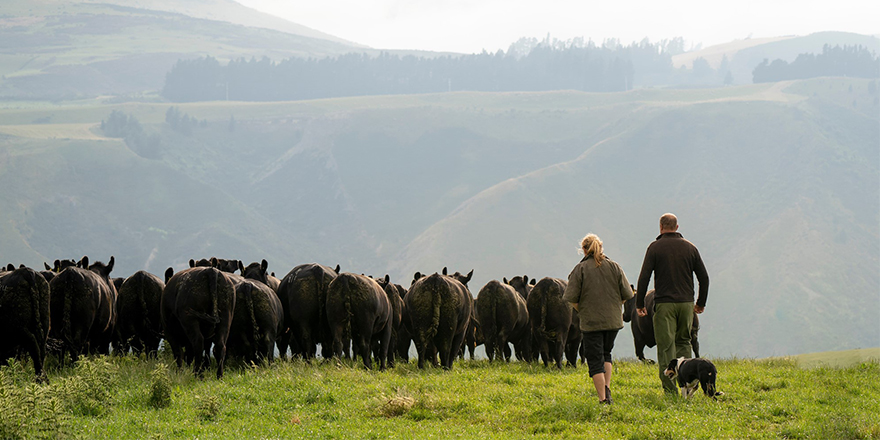
An innovation story that covers the journey from an idea to the challenges of development, and to implementation. Julia Galwey, 2020 Kellogg Scholar, talks about Pearl Veal NZ, a new sustainable utilisation of the bobby calf resource.

Pearl Veal NZ was the winner of the Silver Fern Farms Market Leader Award at the 2023 Beef+LambNZ Awards in mid October.

Listen to Julia’s podcast here or read the transcript below.

Bryan GibsonManaging Editor of Farmer’s Weekly.

Kia Ora, you’ve joined the Ideas That Grow podcast, brought to you by Rural Leaders. In this series, we’ll be drawing on insights from innovative rural leaders to help plant ideas that grow so our regions can flourish. Ideas that Grow is presented in association with Farmers Weekly.

My name is Bryan Gibson, Managing Editor of Farmers Weekly and this week I am talking to the recent winner of the Market Leader Award at the Beef and Lamb New Zealand Awards, Julia Galwey.

Bryan Gibson:
G’day Julia, how’s it going?

Julia Galwey, 2020 Kellogg Scholar and Co-Founder Pearl Veal:
Good, thank you Bryan. How are you?

BG: Pretty good, where are you calling from today?

JG: I am calling from my home office in Christchurch.

BG: Nice. Have you been getting all the wind we’ve been getting up here?

JG: Yeah, it’s been pretty mixed bag at the moment. Very much spring weather.

Winning at the Beef+LambNZ Awards.

BG: Yeah. Now, it was a pretty big time for you, the Beef and LambNZ Awards.

JG: Yeah, it was pretty neat for Pearl Veal to be recognised at such a wonderful event. Just have an evening of celebrating lots of positive things happening in the industry with the various finalists and category winners. A big thank you to Beef and LambNZ for hosting the event, and also to Silver Fern Farms for sponsoring the market leader category.

BG: Yeah. Now, can you just tell us a bit about your background in the food and fibre sector?

Background - Julia Galwey, 2020 Kellogg Scholar.

JG: Sure. I grew up on a sheep and beef and deer farm near Fairlie in South Canterbury. Then I headed off to Lincoln to do an Ag Science degree. Following that, I had six years in the agribusiness team for ANZCO Foods based in Ashburton, which was a neat team to be involved in, and a really varied role, that got me going in the meat industry.

Then in 2018, Alan McDermott and myself, we set up Agri-Food Strategy, which is our own agribusiness consultancy company. It focuses on working with farmers and agribusinesses to address strategic challenges and opportunities. I guess, again, it’s been pretty varied in terms of the work I’ve been involved with in that space.

BG: Now, you took on a Kellogg Scholarship in 2020, which, of course, was the year of the lockdown, if I remember correctly. You chose to do it on a value chain for veal. What made you think of that subject?

Kellogg research into the potential of the bobby calf resource.

JG: Good question. Yeah, I guess the idea to look at this for my report was just being around the meat industry and the bobby calf topic continues to come up in conversations. There just wasn’t really a lot of information that I could see here in New Zealand in terms of looking at older veal animals as an option for this resource, a by-product of the dairy industry. I didn’t really want to focus on the discussion or debate around the bobby calves themselves. I did for some context in my report, but I just wanted to focus on looking at one potential solution or opportunity for utilising some of that resource.

BG: Then, of course, it’s one thing to write a report about this stuff, but you carried that on and started a business. How did that get off the ground?

JG: I guess while I was doing my research report, there’s a few things that came up in terms of some learnings and drivers or motivators. One of them was probably around learning how much of a bigger risk the bobby calf thing was here in New Zealand. Especially compared to other countries in terms of the scale, with our couple of million versus Australia would be the next biggest, at around 400,000.

The report highlighted we were out there on our own in terms of how big of an issue it might be going forward. Some of that, was a bit of a driver. I learned a bit around the varying types of veal markets that there were internationally and saw some opportunity, but I really struggled to find any information on pasture-fed veal systems.

So, it became obvious that maybe there was an opportunity for New Zealand to diversify in terms of our offering in the veal space with what we’ve got here. Also, in terms of some of those credence attributes – pasture-fed, free-range, rather than copying some of the international veal systems.

From research to innovation.

As I was doing the report, Alan McDermott, who’s my business partner, was keen to have a go. We could test out what opportunity there really might be. I mean, it’s all very well, like you say, writing a report, but you just must have a go to see whether something might work or not. Halfway through my project, that’s what we started doing.

We had a quick brainstorm for a name so we could get a company set up. There are quite a few negative connotations around the name ‘veal’, which I learned a bit about while I was doing my report, in terms of some of the historic practices that used to happen in terms of how veal was raised internationally.

There was, I guess, some questions around whether we should even call it veal or not. But we talked to a few chefs, and they pointed out that we need to call it what it is. That’s what they know it is. A lot of them have trained internationally and used it before, so just stick with what it is, but make sure you build a story you can underpin your brand with. We sourced some under 12 months of age, a whole 12 of them, and found a processor that was happy to process them for us.

We set up cut specs and went along to the plant to see how it would go and then started sending some products to chefs to see what they thought. We had a development chef that we were introduced to through a contact, and he kindly took us around Wellington for a couple of days. He introduced us to a few chefs and helped us learn how that world works in terms of getting into restaurants and talking to chefs – and how to get on their menus.

Building scale.

The feedback on the product was great. We started working with the team at Synlait, including one of my fellow Kellogg cohort members, which was quite cool. They’ve been supportive in what we were trying to do and helped us connect with some of their dairy farm suppliers who were keen to give it a go and rear some calves. It’s been a nice fit for us to work with the Synlait team and some of their suppliers.

BG: How difficult is that process? You’ve got a prototype product and you’ve started with a small number of animals to begin with, then you’ve got to scale that up to something that’s a viable business. What’s the process there?

JG: It’s one of the trickier things to balance. It’s a bit of a chicken and egg in terms of you’re not quite sure in terms of what market you’ve got, but you need to get enough product that you’ve got enough to supply to a restaurant to put it on their menu. Yeah, it is a difficult balance, and some of that is just to take a risk. I guess for us, one of the things that we were quite focused on was building around the story and attributes we wanted to go around our brand. With some of that starting with animal welfare for us in producing the best calf possible.

The rearing regime and how it works.

There’s quite a lot of challenge in terms of veal as anything must be produced before the calf is 12-months old, so a lot of the challenge is around getting it to grow as fast as possible and to reach a heavy weight in that time. It needs a good start in life as a calf, to be able to do that. Some of our system was built around a particular rearing regime in terms of good colostrum.

Then we only use whole fresh milk rather than milk powder, which has had a lot of the good bits taken out of it. Milk is what’s designed for the calf, so let’s just give it that and obviously some pasture as well. But because of that rearing regime, we can’t just go out and get any calf on the market.

It starts right from the start in terms of what we’ve built to underpin our brand. That also is a little bit harder in terms of, like you say, we’re planning what we need over a year in advance, and you don’t necessarily know what your market is then. A bit of risk, I guess, and just a balance of starting smallish so that you learn the risks, learn the things you need to iron out as you go.

BG: Getting back to your rearing regime, that must mean you need to work pretty closely with the farmers who are actually doing this stuff?

Collaborating for success.

JG: Definitely. I think the other thing in that space is the Synlait farms that we’re working with are all certified ‘Lead with Pride’, which again, helps underpin animal welfare and the colostrum management. Obviously, our contracts have got the rearing regime outlined in them, and we talk them through what that looks like and why. We also don’t have meal as part of our rearing regime. Part of that is around wanting to remain grain-free, so 100% pasture-fed and antibiotic-free, so that we can look at going into the US market in time.

Again, it’s the whole fresh milk, no meal. It is a bit of a change to how calves are traditionally reared here. We’ve got to work closely with the farmers on what that looks like. We’re thankful for those first few farms that were willing to take a bit of a risk and rear and finish calves for us.

We were a couple of random people saying, here, we want to contract you to rear these calves in a particular way and finish them through to an age and weight that’s not traditional here. They had to trust a bit that we would take them when we said we would and have a processor to process them and pay them.

I guess that’s probably also part of what’s been quite helpful working within the Synlait team. That helped farmers have a go. There’s just some great farmers out there that are keen to try something different and learn with us, which has been nice.

BG: Yeah. Now, who are you selling to now? What are your export markets, or locally?

JG: Currently, we are pretty much mostly domestic market into high-end restaurants. We’ve just started doing a little bit into some smaller retailers here, and we’ve just started a little bit of export.

BG: Now, obviously, the bobby calf issue is one that New Zealand’s farming industry is grappling with. Do you see this type of initiative as part of a solution?

A new veal value chain.

JG: Yeah, I mean, the bobby calf issue is obviously a big social license to operate topic in the dairy industry, and it’s a pretty tricky thing to navigate with the views of community here and also our customers and consumers globally.

I guess we just have to keep asking ourselves if we’ve got practices that we’re comfortable and being transparent about, and if not, then what are our opportunities and solutions to do something differently? I guess that’s really what we’re trying to do with Pearl Veal is.

I don’t like to focus too much on the bobby calf aspect of it. But more the opportunity that exists to take some of that resource and add value to produce a really quality veal-based product with a story and a brand that’s underpinned by animal welfare standards and a pasture-based system that we believe in. We’re proud to share with chefs and customers and consumers here.

BG: Of course, back to where this all started, the Kellogg Programme –  how did you find it? Is it something you’d recommend to others who were thinking about doing it?

The Kellogg Rural Leadership Programme - where it started.

JG: Yeah, absolutely. It was such a good course and I guess a real opportunity to network too. We had such a great cohort of people. It was a good cross-sector group of people. You get to meet people that you wouldn’t normally be working with and the people and the speakers that come in are incredible. It really broadens your thinking and opens your networks and I would highly recommend it to anyone considering it.

That’s why I did it. It’s something that once people have done it, they’re always recommending to anyone that hasn’t. If you get that opportunity, jump at it. I think it’s one of those things that probably never feels like the right time when you’re in your working career because you’re always busy or home life as well. You just have to jump in and do it.

BG: Thanks for listening to Ideas that Grow, a Rural Leaders podcast in partnership with Massey and Lincoln Universities, AGMARDT and FoodHQ. This podcast was presented by Farmers Weekly.

For more information on Rural Leaders, the Nuffield New Zealand Farming Scholarships, the Kellogg Rural Leadership Programme, or the Value Chain Innovation Programme, please visit ruralleaders.co.nz
Dr Alison Stewart – FAR and the role of arable systems in agriculture.

In this podcast, Dr Alison Stewart, CEO at the Foundation for Arable Research, talks with Farmers Weekly’s Managing Editor, Bryan Gibson, about the role of arable in agriculture, her role at FAR and the delivery of research that benefits growers.

Dr Stewart also discusses her involvement with the Kellogg Rural Leadership Programme and the importance of exposure to diversity of thought for leaders in Food and Fibre.

Listen to Alison’s podcast or read the transcript below.

Bryan GibsonManaging Editor of Farmer’s Weekly.

Kia Ora, you’ve joined the Ideas That Grow podcast, brought to you by Rural Leaders. In this series, we’ll be drawing on insights from innovative rural leaders to help plant ideas that grow so our regions can flourish. Ideas that Grow is presented in association with Farmers Weekly.

My name is Bryan Gibson, Managing Editor of Farmers Weekly and this week I am talking to Dr Alison Stewart, CEO at FAR, the Foundation for Arable Research, and a regular speaker on the Kellogg Rural Leadership Programme.

Bryan Gibson:
G’day Alison. How’s it going?

Dr Alison Stewart – Chief Executive Officer at the Foundation for Arable Research (FAR).
Yeah, great. Thanks for having me.

BG: Great to have you here. Now, you’re the Chief Executive of Far. What’s been happening in your world lately?

The current arable context.

AS: Well, we’ve just had a referendum. So, every six years, our levy peers vote to decide whether FAR is doing a good job and they want to continue paying their levy. So that happened just last month. I guess for the last year, we have been focused a little bit on the referendum and making sure that the growers know what we’re doing and what value it delivers. And fortunately, yes, we got good support.

Although I have to say getting growers to vote was the biggest challenge. They’ve just got so much happening in their lives at the moment and so much information being thrown at them that they’re almost in a situation where finding the time to vote in a referendum was not a high priority. That actually was the biggest challenge, convincing them to get onto their computer and vote.

BG: And running the organisation, what does your job entail? What do you do in a week?

AS: My job is to make sure that everybody else in the company is doing their job really well. I’m joining all the dots. We’ve got some amazing research staff who are out there doing applied research, trying to find new management systems, new tools, new technologies that will assist our farmers.

We also have a lot of extension people focused on trying to support them with all of the compliance regulations that are coming down the track. And then we also have to deal with the biosecurity incursions. We’re dealing with two at the moment.

Amongst all of that, we’re just trying to promote to the general public, to the other sectors, to the government, the value of arable systems and the value that they bring to New Zealand agriculture. I jump around a lot, getting involved in lots of things, across lots of areas, at different levels of responsibility. It’s never a dull day.

BG: Yeah. Our Food and Fibre Sector is dominated by the big two animal proteins. I guess, as you say, the animal sector is as big and successful of its own accord, but in some ways plays second or third fiddle sometimes?

AS: Oh, very much so. That frustrates me in the sense that we actually underpin the livestock sector because we produce all of the seed and the grass seed that they need to grow their pastures to feed their cows. If we go under, then the livestock sector is going to be substantially worse off.

We also produce a large amount of the animal feed the dairy sector and the beef sector and the poultry sector need. So, I’m not sure that we ever get full recognition for the important role we play, not only in our own right through producing milling wheat and quality seed crops, but also underpinning the livestock sector. I try to remind my colleagues in the dairy and beef and sheep sector that they need us as much as we need them.

World-leading seed production.

BG:  I guess a lot of people do just think of fields of maize or barley or wheat, but that seed production part of things is really important, but also quite an opportunity and a success for New Zealand, isn’t it? We’re quite good at it.

AS: Absolutely. It does help that the big global seed companies can see that they can get out of Northern Hemisphere seasons and they can get seed crops being produced in New Zealand. We have really good environmental conditions.

We have good quality certification, verification and accountability systems. We’re seen to be a very important seed producer. That’s really good from the perspective of an arable farmer because it provides a really nice rotation.

We’ve got our foundational cereal crops, but then we’ve got the seed crops in the foundation of the rotation and that gives a nice diversity, but it also introduces the opportunity to capture another revenue source.

Dr Alison Stewart - A CEO’s career path.

BG: Now, how did you get to the position you’re in now? What’s your career been like? What did you do when you left school?

AS: Well, I mean, gosh, I’ve been around the block. I’ve always been interested in plants. Even as a child, I was always out in the garden with my mum planting and looking after plants. I did botany at university, and then I did a PhD in plant pathology, and then I came to New Zealand.

Obviously, I’m Scottish, and I came to New Zealand, got a lecturing job at Auckland University, and it was the old Botany department. That was how I started off my career being an academic, and I had 10 years at Auckland. Then I moved down to Lincoln University because I wanted to be doing more applied research and more closer to the actual farming sector. I was 18 years at Lincoln University as an academic, running a big research centre, looking at sustainable production systems.

Then I decided to challenge myself a little bit more and I went off to California and ran a biotech company. Then I came back to New Zealand and headed up forestry science in Rotorua with Scion. Then I moved from there and came to be the CEO of FAR.

I’m probably relatively unusual in the sense that I’ve been in academia, I’ve been in the CRI system, I’ve been in a commercial company and I’m now working in an industry body. I’ve worked across horticulture, vegetable cropping, herbal cropping, and forestry. So it gives me a nice broad perspective on what’s happening, particularly in the plant-based sectors in New Zealand.

FAR - delivering the arable research that benefits growers.

BG: Well, that’s quite a CV. I’m interested in your interest in applied science and knowledge transfer. That’s something that’s been talked about in our sector as something that works pretty well, but does need work, if you know what I mean. Is that something that you think is moving the dial over the years?

AS: Oh, most certainly. I mean, there isn’t much point in doing research if you’re not going to get the results of the research out, being taken up and used by farmers and growers. FAR in particular, over the last 25 years, has been an exemplar of an organisation that has effectively delivered its research to benefit the growers.

It’s becoming more difficult because the environment is so much more challenging for growers. I won’t say the good old days, because I never think that the old days are actually that good. But in the past, FAR would do research and it would be identifying a new plant growth regulator or a new fungicide or a better fertiliser programme. And you’d go out and you’d say, if you do X, Y and Z, that will deliver a one-ton increase in yield.

That’s a really easy story to tell. The growers will go, that’s a good idea. I’ll do that. The growers get a one-ton increase and they think, Oh, my levy is good value for money for us doing a good job. But we’ve driven yield optimisation pretty close to the optimum.

A challenging arable environment.

Now the challenge is, how do we maintain those optimum yields given all of the constraints that growers now have around input costs and compliance around fresh water and climate change. That’s a much, much harder knowledge exchange programme because you’re potentially, and quite often, telling the growers something that they don’t want to hear. So you’re always trying to find a way in which you can present that information in as positive a way as possible.

At this moment in time in New Zealand, farmers feel as if they’re really under the pump with people throwing compliance regulations at them, their cost of production is going up. So often their headspace is not necessarily that favourably inclined towards hearing some quite difficult messaging. It’s challenging. It’s a really challenging space for the growers, and it’s a really challenging space for the labour organisations.

FAR and the Kellogg Rural Leadership Programme.

BG: Very much so. Now, turning to Rural Leaders, you have a bit to do with the Kellogg Programme, is that correct?

AS: Yeah. I mean, they roll me out twice a year where I come and I talk to the new cohort of rural leaders. I’m one of these people that, and it causes me a lot of angst over the years, I tend to just say exactly what I think. That can get me into a lot of trouble!

I really enjoy challenging young people around what they’re thinking, why they’re thinking it, and what they want to achieve in their careers. I love having discussions around what leadership actually means, because leadership means quite different things to different people.

In New Zealand agriculture at this moment in time, with all of the challenges that are coming up, it’s really hard to be a leader because levy organisations, for example, are reliant on doing what their levy peers want them to do, and that sometimes prevents you from being able to take a true leadership position.

I really like talking about some of those challenges, and it’s a good environment because it’s not out in the public arena. You’re not going to get hung out to dry on social media, but you’re able to have some really honest and sometimes quite painful discussions about how New Zealand agriculture needs to move into the future and the changes that need to be made. And that young cohort of Kellogg leaders are up for those kinds of discussions, and I just love it.

BG: I mean, it’s an interesting group because most of them already have a career and then they have a day job, and then Kellogg is back to school. So I guess it’s different from your previous work in academia, where it was 9:00 to 5:00 learning. And that has some upside, I think, of the Kellogg Programme, do you think?

Kellogg exposes leaders to diversity of thought and opinion.

AS: I think it’s a fantastic programme because it provides an opportunity to bring multiple thought processes to the table. Scott Champion, who’s one of the key Facilitators on the Programme; he’s very well connected and he can bring quite disparate views to the discussion.

That’s really important because if you stay in your own industry, in your own space, in your silo, then all that happens is that everybody validates preconceived ideas and it’s really good to be challenged.

I think that’s what the Kellogg Leadership Programme does. It makes you realise that what you thought you knew and what you thought was a valid belief, there may actually be alternative viewpoints. You have to open your mind to different ways of thinking and different people’s perceptions of agriculture and different conclusions that you can draw from the vast amount of research that’s out there.

It’s a fantastic learning opportunity for young people to avoid getting into a siloed mantra of just believing the here and now and what people they tend to engage with think. It’s a bit like when you google something, the algorithm sitting in behind Google can work out what your preconceived ideas are, and therefore they tend to give you links to things that validate those preconceived ideas.

I think we’ve always got to try and make sure that we don’t get into that mentality of thinking that because we believe something now, that means it must be true.

BG: Cross-discipline research or work in real time, isn’t it?

AS: Absolutely, yeah.

BG: So, you’d recommend the Programme to anyone thinking about the big issues facing the sector, and thinking about leadership?

AS: I think you have to be prepared to put time and effort into it. It’s like anything in life that if you don’t commit and put your passion and energy into it, you’re not going to get the same amount of benefit out of it. I think you have to be prepared to come to the table and listen to those diverse views and be prepared to change your opinion about things.

If you come to the Kellogg Programme with a preconceived idea that you’re right and everyone else is wrong, you’re not going to get the benefit out of the Programme.

BG: Thanks for listening to Ideas that Grow, a Rural Leaders podcast in partnership with Massey and Lincoln Universities, AGMARDT and Food HQ. This podcast was presented by Farmers Weekly.

For more information on Rural Leaders, the Nuffield New Zealand Farming Scholarships, the Kellogg Rural Leadership Programme, or the Value Chain Innovation Programme, please visit ruralleaders.co.nz
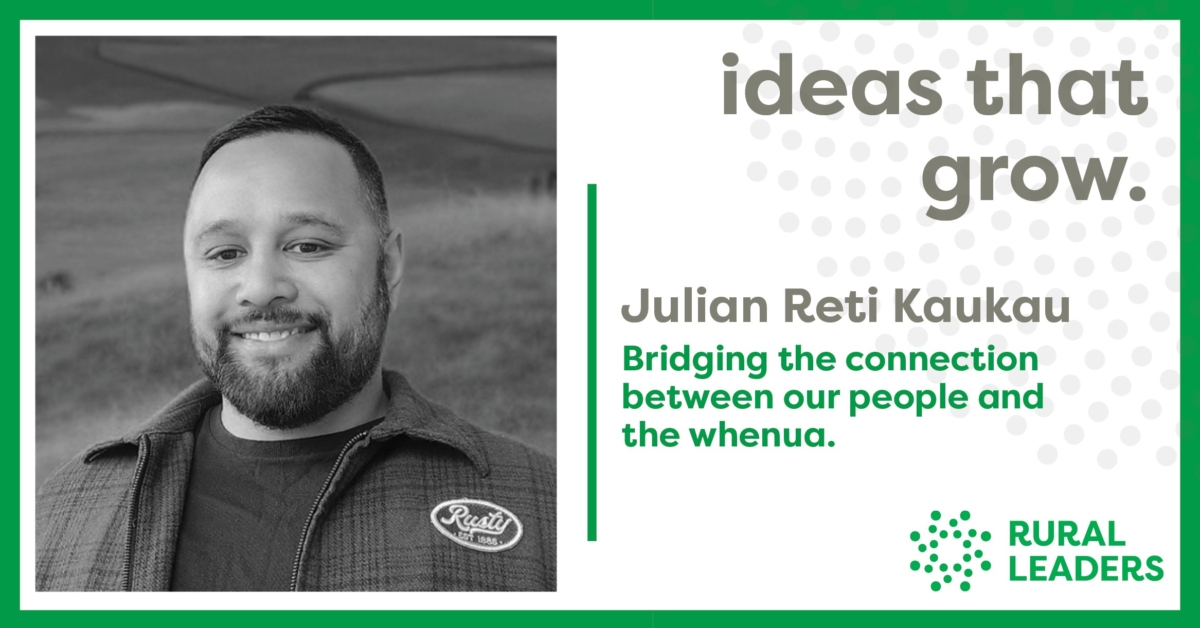
Julian Reti Kaukau – Bridging the connection between our people and the whenua.

In this podcast, Julian Reti Kaukau, 2021 Kellogg Scholar, talks with Farmers Weekly’s Managing Editor, Bryan Gibson, about his Kellogg research and to share insights from his work with MPI Māori Agribusiness.

In reference to his research, Julian reflects on the historic prowess of the Waikato Maniapoto Māori in the agriculture and horticulture sectors and suggests that by harnessing the wisdom of the ancestors who once nurtured the Whenua, today’s Kaitiaki can make profound and impactful economic and sustainable decisions for the Whenua and their futures.

Julian believes that Māori who have been disconnected from their homelands can better reconnect with their Tupuna Whenua, fostering a profound sense of Tūrangawaewae, enhancing the Mana of the Whānau and Hapū, honoring important Tīkanga such as Manaakitanga and be given the ability to uphold the crucial role of Ahi Kaa.

Julian completed his Kellogg research on how can Waikato Maniapoto Māori  landowners increase productivity whilst improving the environmental protection of their land?

Listen to Julian’s podcast here or read the transcript below. As always, the transcript has been modified for readability.

Bryan GibsonManaging Editor of Farmer’s Weekly.

Kia ora, you’ve joined the Ideas That Grow podcast, brought to you by Rural Leaders. In this series, we’ll be drawing on insights from innovative rural leaders to help plant ideas that grow so our regions can flourish. Ideas that Grow is presented in association with Farmers Weekly.

My name is Bryan Gibson, Managing Editor of Farmers Weekly and this week I am talking to Julian Reti Kaukau, a 2021 Kellogg Scholar and currently the Facilitator Programme Lead for Māori Agribusiness at the Ministry for Primary Industries. How’re doing Julian?

Julian Reti Kaukau – 2021 Kellogg Scholar, Facilitator Programme Lead for Māori Agribusiness at MPI.

I’m doing great. Thank you, Bryan.

BG: Cool. Where are you calling in from today?

JR: I’m calling in from Rotorua in the sunny Bay of Plenty.

BG: Now, you were a 2021 Kellogg Scholar. How did you find that experience?

Completing Kellogg and settling on a research topic.

JR: The Programme was geared up to bring out the most in terms of that academic space within myself, that may have been neglected since I left high school. In all reality, having gone into the workforce pretty much as I turned 18, having the opportunity to go into the academic space was quite onerous.

I felt the Kellogg Programme helped guide and shape me. Patrick Aldwell was instrumental in assisting me to basically learn how to write, how to write well, and get my writing out there in the public space so that I could share what was on my heart and mind. In summary, I think that’s what the Kellogg Programme helped to do – is to really get those thoughts out.

I think those thoughts were really great ideas – at least to me – the Programme enabled me to get these out there in a more public domain and allow others to provide some feedback, thoughts and alignments on some of those ideas. I think that’s what Kellogg really did for me.

BG: Now, what did you focus your studies on? What was your report about?

JR: Initially, it was a bit of going around in circles trying to flesh out your topic. I actually started wanting to do a report around Māori Agri-business. But as you get further into the Programme, you realise you might have to go a little bit deeper, more specific and compartmentalise your particular subject because Māori Agri-business is quite broad in general.

I specifically chose to focus on the area that I whakapapa to, or have genealogical ties to, which is the Waikato and Maniapoto area, namely the King Country.

Embracing history for an informed future as Kaitiaki of the whenua.

JR: My topic was around what’s happened over the last 150 years with having a thriving agricultural primary sector within the Waikato, Maniapoto. Then leading into the 1860s period with the land wars and then the following land confiscations of almost 1.2 million acres of land being confiscated between 1860 and 1865, and a further 1 million acres being confiscated through various legislative policies between 1870 and 1970.

I think what really made me want to focus in on my own people, my own backyard, if you want to call it, is that we were once a powerhouse in agriculture. Our people were quite fast and quick to pick up the knowledge around agriculture, and I always felt that the future for our people is within the land.

So in order for us to be good stewards or kaitiaki of the whenua moving forward, we have to know a thing or two about how to look after the land. Whether that be in primary production or in an environmental capacity. That’s why I chose to go deep on around how our people could embrace the history that we once had, take those learnings and knowledge of our elders, right through the pre 1860 period, the post 1860 period up to about 1970, and having 1970 till today.

Then really look at the leadership that we had within our hapu and our iwi and our whana and take learnings out on how we could maintain our mana, maintain our footprint, our foundations of our land. For me, I believe that’s through making the land sustainably economical, whether it be a dairy, sheep and beef, forest, plantation, horticultural enterprise, whatever. But doing it right, doing it properly, pretty much, Bryan.

BG: There seems to be a movement to obviously the sustainability movement in farming is finally, I guess, getting momentum. That links beautifully to some of the things you’ve been talking about in terms of kaitiakiakitanga, and manaaki whenua. Is that something you found in your studies?

Kaitiakitanga and the sustainabilty movement.

JR: I wouldn’t say that I found it in my studies. It’s probably a concept that I’ve always grown up with. I’ve seen it enacted or lived out by my grandmother, my grandfather, out there on their quarter acre with the most beautiful garden, the māra, that you would ever see, feeding the masses.

Then as I got older and went to visit the cousins in the rural areas and seeing them out on the land and seeing how they connect and relate to our whenua, be it partaking in a mahinga kai, which is the collection of watercress, pūha, and eels. Or collecting kai moana, seafood, and just really acknowledging that the sustenance of all human life and animal life comes from Mother Earth.

There’s a reciprocity philosophy that co-joins guardianship of the land where we acknowledge that our life comes from the land. Therefore, we must do what we can to ensure that that life is going to be enjoyed by our children and our grandchildren, but at the same time, they create a life of some type of bountiful sustenance while we’re here on Earth.

In terms of the kaitiakitanga, I know there’s a huge movement towards sustainability that’s probably more in light of the impacts the rapid industrialisation of the primary sector has had. Now we’re now starting to see those impacts visibly, be it with nutrient-dense rivers or waterways or underground aquifers being depleted, and in the erosion of our soils.

It usually just comes hand-in-hand when you’re seeing those types of impacts, whether you’re Māori or non-Māori. You feel a deep sense to try and protect and restore that so that your children and your grandchildren can enjoy the same economic sustainability that you currently or once enjoyed yourself.

So in terms of kaitiakitanga, it’s wrapped around those points I’ve just mentioned Bryan, and more. And when I say more, so for Māori, it comes to whakapapa, which is the connection that you have through your ancestors to particular land and the efforts that your ancestors put into their land to maintain it for the future generations – to have a living of it.

There’s a dual concept of sustainability, but also protecting what was set out by your forefathers and mothers and making sure that’s passed down to the next generation. There’s probably a lot in there.

BG: Yes. And you’re still involved in some projects in that region, aren’t you? You were working for a Haukinga mai ki te whenua. Can you tell me a little bit about that?

Reconnecting our people with the whenua.

JR: Yeah, when you work in the Māori space, if you don’t have a proper employment contract, then you’re pretty much a volunteer. I’m volunteering on a number of trusts and boards.

Probably the one that’s the closest to my heart is Hokianga mai ki te whenua, which is a project initiated by my whanau to bring relations brought up in urban settings, in cities, or even overseas, like Australia, and connect them back to their foundational roots.

It gives them a sense of where their ancestors once dwelled and lived, and a sense of their own belonging and where they come from. Basically, just to answer the question, who am I?

Then it’s a journey. We have multiple engagements, which we call wānanga, which can be also called workshops, over a period of years. Then it’s building on each wānanga. One could be around, where do we get this land from? How did we come to be where we are today? Currently, 95% of our people live outside of our land-based areas. How do we bring our people back?

To do that, you need to have some type of economic base. All we have is land. What can we do with the land we have to ensure we can bring at least some of our people back home so that the mana, the mana whenua of our whenua is upheld and our fires, or what we call ahi kā, continue to burn.

BG: Also in your day job, you work in the Māori Agribusiness section of MPI? Is that right? What does that involve?

JR: It involves a number of jobs, mainly listening, first and foremost. Listening to the many pātai and ideas of our people. Being in a special place where we stand as conduits between Crown funds, the Crown support, and the aspirations of our people.

Mahi in Māori Agribusiness.

What I have found to date, depending on which groups that I’m working with, is that a lot of our people don’t have a strong understanding on how to seek support to assist them with their land aspirations. Whether this be to potentially take over a long-term lease of their land leased out to the local neighbour for the last 60, 70 years. Yes, I’ve seen a few of those. What do I do with this land now?

A good example here would be to be able to get some expert advice, some sound feedback on what to do with their land. Usually, it requires a person of knowledge and experience on certain areas, such as land use options, which requires a bit of money to pay someone to get that done.

Now, whanau that have been in those situations, where they’ve had no money coming into a land block, have the opportunity to work with Māori Agribusiness, to work with the experts that we currently have employed within our team, and also the networks that we have outside of MPI, to assist them in making sound decisions for the future of their land. That’s just one small aspect.

We cover a number of areas within the directorate of Māori Agribusinesses, but the main overall objective is to assist our people with their economic, sustainable aspirations. That is, producing healthy produce from their whenua that’s going to sustain their people, their whanau, their communities, and ultimately, New Zealand as a whole.

BG: That’s excellent. Māori agribusiness in New Zealand is currently a powerhouse, but as you mentioned, with the history that we share in New Zealand, it’s also in some ways just still getting started. What are your hopes for the future on how Māori agribusiness can thrive?

Future hopes for Māori Agribusiness.

JR: It’s a good question, Bryan. I’ve been involved in Māori agribusiness for most of my working life, almost 22 years. What I’ve seen over this time is probably the lack of capability and capacity within our own people, Māori, to be able to work within their iwi organisations. Especially in relation to the primary sector assets they may hold and to really drive from the front.

That could either be a member in the executive team or governance team, being able to make tupuna or mukapuna decisions, as future decisions that impact on our children.

The reason why I highlight that is because a lot of our organisations, they are currently hiring the best people to run our primary sector assets. The best people may not necessarily be Māori people. I find that some of their thinking that comes from running a multimillion-dollar enterprise is largely economic thinking, not necessarily Māori thinking.

That’s why I have mentioned that the lack of capacity and capability within our people being an area of focus I would like to see be invested in and to continually improve on. This, so we have more of our people, their whakapapa to the whenua, making decisions about the future of their whenua.

BG: That’s great. Just circling back to the Kellogg Programme, is it something you’d recommend for others?

The Kellogg Rural Leadership Programme and digging deeper.

JR: Most definitely. It was a challenge and something that I had a peripheral understanding of. I’ve seen others go through the Programme over the years, but it was something I thought that was maybe a little bit out of my league. That’s mainly because I don’t have a strong academic background.

I pretty much left school 16, 17, and went straight into the labour workforce. That’s where I felt was my place and I really loved it there. But over the years, you come across great mentors and you build great relationships, and you start to realise that you could probably do more than you think you can.

Joining the Kellogg Programme for me was a bit of an out-of-the-box experience, putting myself out there. I’m quite introverted by nature, so having to promote myself amongst others that were also vying to be a part of the Kellogg Programme at the time I joined. It was out of my comfort zone. But then being a part of the process, being part of the cohort, you meet some great people, some awesome people that are up and coming and doing big things in the primary sector today.

You make some great mates; you make some great friends. But also, the Programme is well thought out in terms of the people that are leading it. Scott Champion comes to mind. The way that he facilitated and drove the cohort from start to finish, keeping us all on track, keeping us all to the tasks, that helps you dig deeper and brings out the best in you. If I can encourage anyone that’s thinking about wanting to do the Kellogg Programme, do it if you have the opportunity to do so.

For more information on Rural Leaders, the Nuffield New Zealand Farming Scholarships, the Kellogg Rural Leadership Programme, or the Value Chain Innovation Programme, please visit ruralleaders.co.nz
Dan Eb – Moving to citizen-connected food and farming.

Dan Eb, 2021 Nuffield Scholar, is based in Auckland. Dan runs Dirt Road Comms, established to support those building a more just food system. He is also the founder of Open Farms.

With one foot on a Kaipara farm and one in the city, Dan is well placed to talk about the importance of re-connecting urban kiwis with our land, food and farmers.

Awarded a Nuffield Scholarship in 2021, Dan completed his research on
The Home Paddock: A strategy for values-led redesign of the domestic food system.

Listen to Dan’s podcast or read the transcript below.

Bryan GibsonManaging Editor of Farmer’s Weekly.

Kia Ora, you’ve joined the Ideas That Grow podcast, brought to you by Rural Leaders. In this series, we’ll be drawing on insights from innovative rural leaders to help plant ideas that grow so our regions can flourish. Ideas that Grow is presented in association with Farmers Weekly.

My name is Bryan Gibson. I’m the Managing Editor of Farmers Weekly and this week we are checking in with a recent Nuffield Scholar, Daniel Eb. How’s it going?

Daniel Eb – 2021 Nuffield Scholar, founder of Open Farms and marketing specialist.
Kia Ora. Very well, thanks.

BG: And where are you calling from?

DE: I’m calling from Auckland, but half the time you’ll find me at the family farm up in Kaipara.

BG: And is that where you grew up, in Kaipara?

Work fuelled by rural and urban perspectives.

DE: I mostly grew up in the city. I was very lucky to have a foot in both camps. We bought a farm when I was a teenager, and I would normally spend the weeks in the city. Then, either most weekends or every second weekend up at the farm. The older I’ve got, the more time I’ve been able to spend up there.

BG: I know a little bit about your work over the last few years. I mean, you’ve married those two aspects of your upbringing into a career, haven’t you?

DE: That’s exactly it. My mother’s been in public relations for a long time and my father’s a farmer. So I thought, you know what, let’s do agri-comms. 

BG: You run Dirt Road Communications. Tell me a little bit about that.

DE: Dirt Road Communications is a purpose marketing agency. I’m selective of the people I work with. They need to be driving towards a shared mission of mine, which is a just and regenerative food system in Aotearoa, New Zealand.

I have the privilege of working with people like AgriWomen’s Development Trust, who are really focused on building capability amongst farmers. I work with local food system advocates as well. We’re looking more at systemic issues and big changes in food and farming. I support these people with digital marketing and brand positioning, helping them understand their value proposition, building big projects, that sort of thing.

Forging stronger connections to food and our farming system.

BG: That is in the same wheelhouse as your Nuffield Scholar Report, isn’t it?

DE: The report was an opportunity to slow down and look at the big picture as to the change these organisations are driving for. It was about articulating, well, what the future looks like when we achieve a food and farming system in New Zealand that benefits producers and every kiwi, because food is really important and it doesn’t just drive our economy, it drives our families, it drives our culture, and it drives our health.

The report was an opportunity to step back and paint a picture of what success could look like when we change that system.

BG: Yeah. It’s a criticism or a challenge often talked about in terms of our food production sector that it’s so good at certain things, but that it’s lost the connection to its own community, if you know what I mean? Because we export 95 % of all the food we produce. Therefore, all our food prices are driven by international market forces, like the price of cheese, which gets on everyone’s nerves. Is that something that you were looking to address?

DE: I think you’ve explained it really well. I like to tell stories to explain these big concepts. The thing I think about is, if you’re a kiwi mum living in, I don’t know, Auckland, Wellington, or Christchurch, 84 % of us live urban lives now, so you’re one of that big majority. You’re aware that in the background food and farming is important to New Zealand as an economic driver. But, the thing that you’re most worried about is, what are you feeding your child for dinner? Is it healthy? Is it nutritious? Has it been grown as sustainably as possible? Is it affordable?

As growers and producers, we’re really good at the production side of things, but that relationship is really important. That Kiwi mum’s kids are going to be the people that we want to recruit into food and farming later on. If they’ve got a broken relationship with food and farming, it’s going to be really difficult to encourage them into food and farming careers. That Kiwi mum’s a voter. She might end up voting for parties that want to be more restrictive on food production.

We’re seeing that now with all the regulation that’s coming through. There’s a missed opportunity that she’s not going to jump on social media or when she’s overseas, badmouth food and farming in New Zealand. There’s a missed opportunity to turn her into an advocate for what we’re doing because she has a broken relationship with food and farming or with farming.

How do we strengthen the connection to food and food production?

We can’t think about farming without thinking about its role in society, and this is now an urbanised society. Until we start building things to rebuild that connection and start taking that relationship seriously, we’re going to continue to see bad results. I think those three big areas; recruitment, social license, and the ability to tell a cool, authentic, proven story overseas.

BG: So how do you go about unpacking this, or solving this, or moving the dial on this problem in a Nuffield Scholar Report? Where did you start? How do you go about it?

DE: Slowly and painfully is probably the best description. The first place I went to was to take a really zoomed-out view, and think, how do we often think about food and farming, and how should we think about food and farming? We often think about it as a business and as an industry, but I feel that food and farming doesn’t necessarily belong just there. I think it should be thought about more as a public good.

Food and farming as a public good.

An example for public good is health care and education. These are sectors within our society that have a high degree of touch with everyday New Zealanders. There’s a whole lot of trust, like social license is almost unquestioned. No one questions whether we need education. It’s just there.

I’ve had the privilege of having a lot of time on farm, so I know that the farm can be a place of healing, it can be a place of learning, it could be a place of inspiration, it could be a place of health. In my eyes, farming has the ability to transcend just a mere industry: shoes, iPhones, socks, handbags, and actually sit in a public good space.

I think that reframe is really important because it opens up a lot of potential. Now you can start saying, well, how would we make farming more like education? Why is education such a trusted sector? It opens up more opportunities for things like funding, because now you can say, can we go to the Ministry of Environment, Ministry of Education, Ministry of Social Development, and the MPI together and do system change. Because it’s really good for society. So, you’re suddenly in a different ball game just from that mindset shift. So that was the first bit.

BG: And you’re not talking about, for example, if we look at education, a lot of the schools are run centrally. You’re talking more about a partnership in a way of looking at things. So farming businesses go, my bottom lines are met by making a profit on these animals that I raise, but also taking these things off in a social or environmental sense. Is that the idea?

DE: Yeah, that’s the starting place. Then you start to think about what concrete solutions would look like. Education might not be the best example in this instance. Healthcare is probably a better example. To me, healthcare is quite interesting because you effectively have two models that sit side by side. You’ve got a private health care model where people pay for service, and then you’ve got a public health care model. Interestingly, doctors flip between the two. You can have public doctors that operate privately and vice-versa.

Regardless of which system you play in, every doctor gets paid well. It’s a very respected role in society. To me, they’re solutions that mindset will prompt you into.

A relatively concrete solution that I could see is if there was an organisation set up to encourage farmers who are farming close to cities to transition to local food economies and local food business models. Whether that’s community supported agriculture or technology driven food distribution, like Happy Cow Milk, which is the Fonterra factory-in-a-box model. That has some government support because it would be required to reduce the amount that some consumers are paying for food and it could operate on something like a postcode system where, depending on your postcode, you pay a different amount for your food.

But alternatively, a farmer who’s further away from town would probably participate in the more status quo export model running through your processor and then selling our kai overseas. There’s no reason why those two things can’t sit well blended together. But by having that, some farmers incentivised to operate in that local system, you’re solving all these other big issues like social license, like recruitment, like people understanding where their food comes from, and also creating this really fertile ground to tell a really compelling international story about food security and how important kai is to New Zealanders, and this is how we treat it. You’re creating content and you’re building this overseas provenance story as well.

So, a lot of it really does sit within that reframe that, you know what, smart investment from industry and government into these public good food system models, particularly local, can net some massive results in the long-run.

Opening farms for a win-win.

BG: I guess we should mention, since you’re the bright spark behind Open Farms, that programme was run on a lot of farms and most of them were relatively close to urban centres. That showed that there was appetite from both farmers and from the general public to come together and engage on this food journey.

DE: Exactly, and I think if we could build local food models that by design connect urban kiwis with the sources of at least some of their food production, then there’s an economic rationale to a farmer to host open days. Now there’s an economic rationale for a farmer to connect with a local school, and maybe there’s some financial incentives that go along with that. Suddenly, you’re breaking that barrier, that 60-minute barrier between city limits and where farming starts.

You start blurring that line and I think the blurring that line is really important if we’re going to solve some of these entrenched issues that urbanism has created over the last 50, 60 years. But we need new models to do that. We can’t just hope a couple of open farm days are going to do it. We actually have to do relatively large system change to design the outcomes that we want.

BG: What else did you find in your report that you think could help in this values driven food transition?

DE: I think it’s important to believe this change is already happening. This isn’t something we have to manufacture. This idea of citizen connected businesses or new business models; this stuff’s already happening organically. It’s about latching on to that. Instead of seeing that as a threat to the export talk, dominated, centralised system of food, we see that as a really supportive ancillary model that the two can gel well together. I do just want to reiterate that these two models aren’t in competition at all. Quite the opposite. I know when we talk about public good, it starts getting into the realm of politics and words like socialism get thrown around and stuff like that, I think that’s a side track.

At the end of the day, we’ve got to focus on the outcomes we actually want and be a bit ideologically agnostic. This is 2023, and we need every tool we’ve got on the table to fix some of these deeply entrenched problems. In terms of other stuff, I think there’s a whole lot of smart tactical plays that we can do to get us there as well.

The Nuffield Global Focus Programme and public good overseas.

These are things like social diversifications that we can layer on to farms. I’ve just come back from my Nuffield GFP travel, and one of the things that really stood out was a bunch of people in the Netherlands who are using their farms in partnership with local health care providers or local schools. These are financial business transactions and having kids come onto the farm regularly as a partnership with local schools. It’s becoming an education platform.

There was one farmer who had partnered with a local healthcare provider to bring kids with learning disabilities onto the farm. It was a collaboration between a healthcare provider, a learning disability specialist, and the farmer. They were all co-collaborating to create this programme for those kids. Now, the funder is the Ministry of either education or health care in that instance. But that diversification costs the farmer to build a hut to make sure they don’t get rained on and some time to build the system. But at the end of the day, that’s a revenue generating diversification that he’s layered onto his farm. That costs him very little and it’s returning him a good profit.

We’re desperate for these ways to eke out some more margin off our landscapes. I just think that these community connection diversifications are an unearthed gem. They cost very little to do. Yes, there’s some soft skills that are required, and there’d be some upskilling, and you’d have to get relatively comfortable with new people coming onto the farm too. But it’s a lot cheaper than putting in kiwifruit for example. Then you’re also running the risk of a bad harvest and all that stuff. There’s very little risk here.

I think in a time when traditional food production on our farms is becoming harder; pick a reason: government regulation, higher import costs, climate change, poor returns on global markets, this social diversification is just gold. I just don’t feel that enough farmers, particularly in those peri-urban areas, are seeing that. That’s what a large part of my work is, building projects that make it easy to move into this new citizen-connected farming model, which I think is going to be really valuable for farmers who are cash-strapped.

BG: Now, you mentioned your travels. That’s obviously a big part of the Nuffield. Any other highlights from your trips you abroad?

DE: Heaps. I’m trying to write up a bit of a reflections document now. It’s hard because I keep trying to add stuff in instead of taking stuff out. We had a great group. We went to Japan, then Israel, then the Netherlands, then Washington DC, and the Central Valley in California. To me, a highlight was seeing what the driving force behind agriculture in these different contexts was. We’d go to Israel where water infrastructure was at the scale and of the excellent standard that it is, not because of government policies or anything like that, but it was all done for security reasons. Security is the number one driver in Israel. So, agriculture is almost a by-product of security. That’s what happens when you fight three existential wars in the last 70 odd years.

Interestingly, the big driver in a place like Japan was tradition. They’ve actually inadvertently figured out through trial and error and population growth in a relatively restricted coastal plain, that they have to fuse agriculture and urban life together. Outside of downtown Tokyo, the landscape is a mix of residential business, rice paddies, vegetable gardens.

They don’t have a social license problem because their geography represents that breaking of the barriers and fusion of urban and rural and food production and the lifestyles that I’ve been talking about. The geography has pushed them into a space. It’s interesting to look at those places and think, Well, what’s our driving force? If we’re honest with ourselves, right now, it’s agribusiness. It’s an economic powerhouse. There’s nothing right or wrong with that. But to me, that feels very limited. I think there’s a lot we can explore and experiment on top of it as just an economic powerhouse.

I think food and farming can be a public good. Interestingly, I think our geography, this idea that we’re basically restricted as Kiwis to our urban centres, and there’s a whole lot of farmland in between, that’s a huge barrier. We’ve got to build little strings and break little gaps in that wall, particularly in our peri-urban areas, to get where we want to go. That being a society where people are really proud of food and farming, are healthy, and see food and farming not just as a viable career, but as a mission and a purpose for something that they want to do for the rest of their life.

I think that’s entirely achievable. We just got to build things to do it.

The Nuffield Scholarship experience.

BG: How have you found the Nuffield experience overall?

DE: Awesome. Honestly, I can’t recommend it highly enough. I think everyone’s experience is a little bit different. I think it can give you what you’re looking for, even if you don’t really know what that is. For me, it was time. It was a forced requirement to sit down and write out my manifesto, almost. These thoughts are running through my head. How are they all working together? What am I aiming for? And that was really valuable for me. It’s enabled me to articulate some of these things, which are pretty hard ideas to describe. And so Nuffield gave me time, whereas I can say that for a lot of my fellow scholars, Nuffield gave them experience, or some learning about themselves that they wouldn’t otherwise have got. For me, it was time.

BG: Thanks for listening to Ideas that Grow, a Rural Leaders podcast in partnership with Massey and Lincoln Universities, AGMARDT and Food HQ. This podcast was presented by Farmers Weekly.

For more information on Rural Leaders, the Nuffield New Zealand Farming Scholarships, the Kellogg Rural Leadership Programme, or the Value Chain Innovation Programme, please visit ruralleaders.co.nz
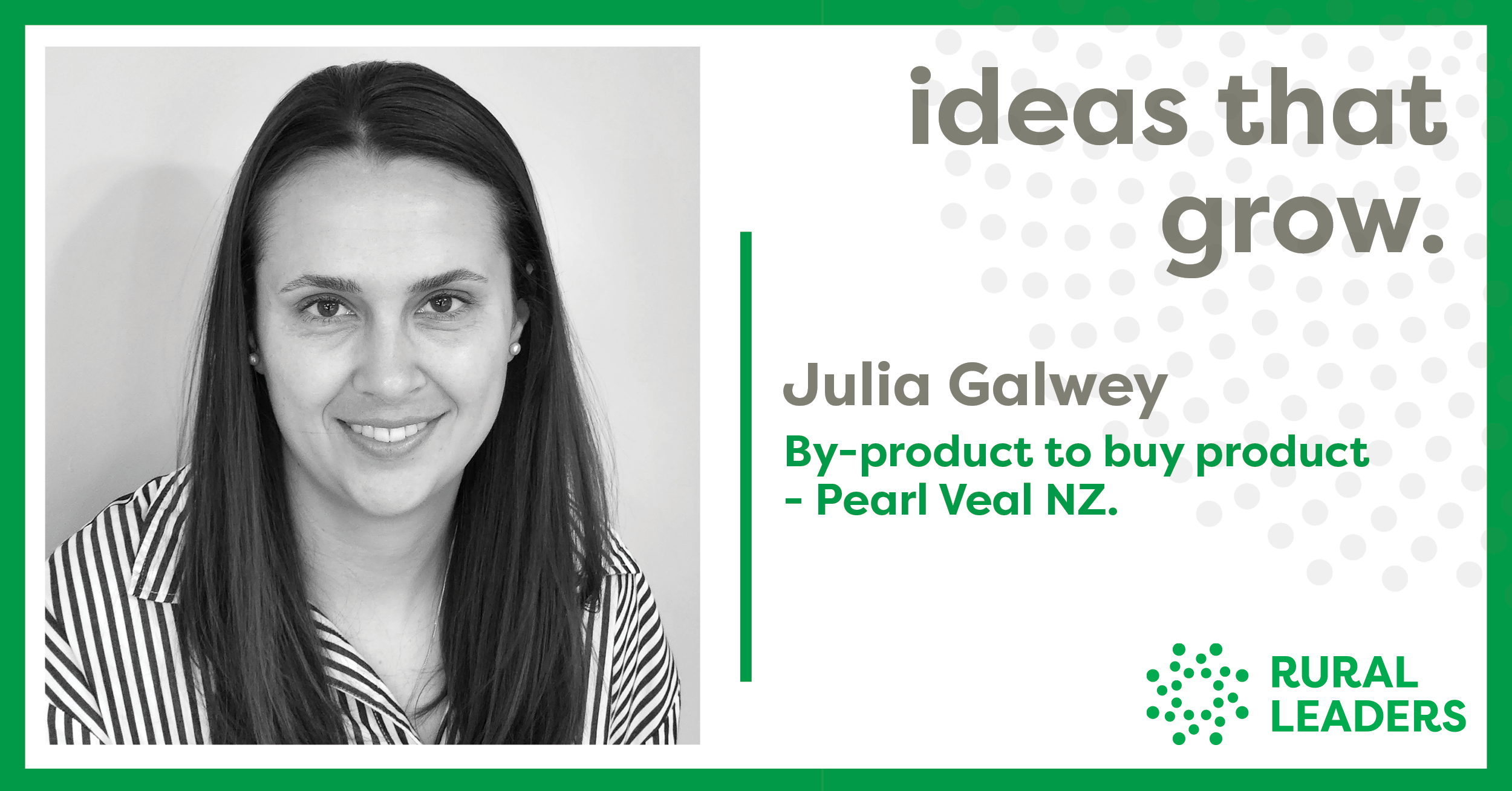
Mel Poulton – Transformation before transaction: The potential of NZ’s Food and Fibre IP.

Mel Poulton is a farmer first and foremost, running a sheep and beef farm based in the Tararua District. She is also finishing her tenure as New Zealand’s Agriculture Trade Envoy.

Awarded a Nuffield Scholarship in 2014, Mel completed her research on
Capturing Value: Building a sweet spot between trade negotiations, market access and the exports of expertise.

Listen to Mel’s podcast above or read the transcript below.

Bryan GibsonManaging Editor of Farmer’s Weekly.

Welcome to the ‘Ideas that Grow’ podcast. I’m Bryan Gibson, Managing Editor of Farmers Weekly. This week I’m talking to agricultural trade specialist and farmer Mel Poulton. Now, you were a Nuffield scholar in 2014, is that correct?

Mel Poulton 
– 2014 Nuffield Scholar, farmer, Special Agricultural Trade Envoy.
Correct.

BG: I understand you did your Nuffield Scholar Report on agricultural IP and how to best send it out into the world and also get the best value for it. Can you tell us a little bit about what you found out?

The untapped potential of New Zealand’s agricultural IP.

MP: At the time, as a food producer and somebody who, through our levies was investing in New Zealand science, research, and development for New Zealand farming to give us a competitive edge in the world, it was a concern to me to hear that our IP was being effectively given away in the hope of an FTA for market access. That was how I was certainly interpreting it at the time.

I spent a bit of time traveling to different nations around the world looking at IP trade, market access, and looking at what went well and what didn’t, what could we learn from that, and is this even a good idea for New Zealand? I came back with the conclusion that actually, given who we are and what we do and our constraints, leveraging our IP is a really good strategy for New Zealand.

But I wasn’t convinced that we were doing it well, and I felt like we needed to better value or recognise our IP, value our IP, package our IP, and then be able to leverage value from it, not just by way of the hope of market access through an FTA, because we’ve seen in recent years what can happen with economic coercion and suddenly markets being closed to us. 

Food and Fibre’s intellectual property opportunity.

So, if you end up giving away your IP and then those markets close, what have you got left? Some people might disagree, but I think that’s a relevant concern that New Zealand needs to be really mindful of with regard to its strategy and how it navigates its way in the world and how it leverages its IP.

How do we do it in such a way that those that have invested in that IP can extract value from it, short, medium, and long term, for the good of New Zealand and for the good of our Food and Fibre Sector and our people who have invested.

BG: A better strategy needed on the intellectual property front. Very good. Now, of course, you’re just finishing up a term as the Special Agricultural Trade Envoy (SATE), which means in terms of market access and trade deals and the world food system, you’d have widened your scope on things to more than just intellectual property, to food itself. But are there similar themes at play there as we try and extract value from our agricultural sector.

MP: There’s an enormous amount of opportunity for us to extract value from our IP in ways that we haven’t really considered before, or broadening it a whole lot more than what we do. Thinking about that in the context of a growing global population with a real concern around food security and even more importantly, nutrition security.

Then given the challenges of climate change and the environment and the constraints that’s putting on food production in different parts of the world, I feel confident given what I’ve seen in recent years and the travels that I’ve done both on my Nuffield Scholarship and since then as SATE for New Zealand. I think there’s an enormous opportunity for food production to increase in many parts of the world and especially those countries with developing agriculture. I think there could be small changes made that generate big gains.

Working together with developing agricultural nations for mutual benefit.

Some of these countries with developing agriculture have potential to really lift production. Whereas New Zealand and parts of Europe, for example, feeling more and more constrained as to how much more food production they can actually lift.

The talk is that New Zealand feeds 40 million people. Well, that’s barely feeding one city. Mexico City itself is 40 million people. When you think about the scheme of things in our place in the world, how do we strategically position ourselves to be good in the world and good for the world and continue with a transaction strategy that grows really awesome food and beverages that are highly nutritious and safe?

And also has the integrity behind it with regard to environment and climate and all the other factors around labour and all of the environmental, social, and economic factors that make up the back story to our product.

So we’ve got to be able to have that integrity, but also recognise what our potential for lifting things further for New Zealand. How do we leverage off the strengths that we have as a nation? I think there’s huge potential to be able to work with, learn together with, and build together with, other countries with developing agriculture and leveraging our IP, but not selling it as it is, but leveraging it and adapting it to create something new.

BG: So, it’s far more than just selling a product or an idea and leaving it at that. It is working with the people on the other end of the transaction long term.

A shift to transformation before transaction.

MP: Well, it’s effectively transformation before transaction. If you were to put value on or weighting on it, historically, we’ve had a transaction approach to things. I think there’s still a future for us in that because we grow and sell food to the market – that earns us revenue. I think it’s going to be for the growing needs of New Zealand and the economic growing needs of New Zealand, that we need to figure out how we grow further.

If we’ve got constraints here, then how do we grow together with others being good for the world and good in the world? It’s actually going in there with humility and saying, well, we’ve learned some stuff in our context, we recognise that you’re operating in a different context, we understand you’ve got goals and vision for growth for yourselves, so how can we work together, learning from our IP and a principles approach, to develop something entirely new that could actually help you achieve your goals and help us achieve our goals.

BG: That makes sense. In a finite environment, if one sector has reached their limit, then the only logical place to go is to help others up their production to a level where they can sustain themselves better. 

Further trade ties with India and the role of humility.

MP: I was just in India a short while ago, and they really want us to be investing there. The challenge for New Zealand is that we’ve got stories, we’ve got examples, we’ve got experience investing in other countries. Some of the challenge around that is sometimes we’ve gone in a little bit proud and arrogant, taking a copy and paste approach that hasn’t necessarily worked because you’re operating in a completely different system, a completely different environment, and operating context.

Copy and paste won’t work. It won’t work in many countries because New Zealand is unique in that it is an island nation, small, tight-knit ecosystem, driven by a temperate maritime climate. Just copying and pasting that, there’s very few places in the world you can do that in. That’s why we’ve got to shift our thinking to learning, growing and working together with others to create something entirely new that works in the operating context for them and also works for us.

BG: When you read about the possibilities of doing more trade with India, quite often the first thing you hear is, ‘yeah, but they won’t take our dairy products’. And so deal’s off the table. But I think what you’re saying might be that it’s a bit more nuanced than that, and there are things we can do and we should be doing?

MP: It’s most certainly more nuanced than that. I suppose my take home message from my time in India is – there’s a bunch – the first one is, we really do have to conduct ourselves with humility. I think from those that I engage with in India, they have an allergic reaction to anything remotely arrogant, remotely hinting of a colonialism approach. So, if we even begin to think that we can conduct our way without humility and without deep, deep respect and without a hunger to learn and understand and focus on building relationships, I think we’re going to go nowhere fast.

At the same time, they really do want to grow. They’re grappling with some big challenges, and they’ve got enormous potential to lift by doing small things really well. Talking to the Indian High Commissioner to New Zealand, they really do want us to be investing there.

But again, this is where we’ve got to be thinking about a broader picture than just a single process investment. We’ve actually got to be thinking about how do we grow the whole ecosystem. It’s government to government, industry to industry, farmer to farmer, company to company, people to people.

It’s building all of the ecosystem that is an Indian centric one, or whatever country it might be in the world, something that really works so that whatever investment we do there, it’s going to be successful. But we can be guaranteed it’s not going to be a copy and paste of what we see here in New Zealand. We have to completely shift our thinking altogether.

BG: Now, I mean, our food production ecosystem here in New Zealand is pretty well developed and pretty really well thought of, do you think it’s well placed to meet some of these global challenges?

The value of New Zealand’s Food and Fibre ecosystem and its people.

MP: I have no doubt in my mind that one of our greatest strengths and most undervalued strengths is our ecosystem. By that, I mean all of the folks that are working for New Zealand and in New Zealand companies and the Food and Fibre Sector offshore, including our diplomatic teams. I think we’ve got amazing people in the MFAT and MPI and different government ministries who are working hard for the success of our sector offshore when they’re engaging on the certification and standards and all sorts of things.

We’ve got great people across our sector, good organisations who are absolute experts in doing things that food producers wouldn’t even dream of doing. These people are technically competent, highly skilled, and very effective at their job. Then we have all the folks working in our industry good organisations. You’ve got all the processors, exporters, packers, all exceptionally good at what they do for our sector. Then we’ve got all of our service sector too. No farmer would be able to operate without our service sector.

Then underpinning the whole lot is the science, academia, and research that goes on, that’s delivered the knowledge over the years. We’ve got to keep investing in that science, research, and development because they underpin our success. Then without the food producers themselves who are innovative, creative, solutions focused, businesspeople who are juggling so many variables and navigating their businesses without subsidies, to generate revenue for New Zealand. It’s just an exceptional ecosystem that works together.

The ecosystem is tight, it’s well linked, and relative to similar ecosystems in other countries, New Zealand has something special where we can turn on a dime, we can make decisions, and we can react and can also pre-empt and get ourselves on the front foot to capture opportunities globally as well. I think that was most recently best demonstrated through COVID – just watching how the whole ecosystem came together to navigate it. I’m not saying it was easy. But relative to other countries, New Zealand navigated that well. Our sector navigated it well. There’s a lot we can be proud of about that.

Staying nimble, flexible, and adaptable in a fast-changing world.

BG: And as we know, there are a lot of other shocks around the world now that need to be navigated. So it looks like it’s all shoulders to the wheel again, isn’t it?

MP: It’s all on. What we’ve got to work hard to do is make sure the top two inches of our thinking and our head space is in the right place, make sure we’re positive, we’re constructive, we’re focused on the priorities, we’re rational and logical in the decision making that we’re doing. That we’re taking an integrated systems approach to it, and that we stay nimble, flexible, and adaptable.

Sometimes life happens where a shock is something you can bounce back from. Sometimes it’s a shock where things are forever changed and it’s never going to be the same again. That’s where we’ve got to have plasticity, where we’ve got to be able to be sure of our core values, who we are, what’s important, and be able to reshape ourselves to be optimally placed to navigate what’s in front of us.

A Food and Fibre Sector under the pump.

BG: So, Mel, we’ve been talking about big picture issues for global farming, how does that square with what New Zealand farmers are facing at the moment? How will that work for them?

MP: I suppose when we’re talking about a big picture strategy for New Zealand, we really need to be thinking about how we strategically position ourselves on the global stage in the long term in such a way that we try to deliver short-, medium-, and long-term return back to New Zealand. We’ve also got to acknowledge the fact that right now, there are many farmers, food producers, packers, exporters that are really under the pump big time right now, especially those that have been hit by the weather.

There are folks down in Ashburton and West Coast that are still recovering from the damage that they sustained in recent severe weather events. We’ve got to be mindful that people are under enormous environmental, social, and economic pressure right now.

We need to keep in mind that when we discuss these big picture strategies, we’ve got to be able to look after our people, look after our businesses, look after our environment with the here and now. And how we build the recovery to be able to be best positioned from a market facing point of view, but also just how do we find our place here in New Zealand in this new operating context we’re in at a domestic level, but also at an international level too.

There’s a lot of balls that we’re juggling and it’s complex. I suppose my point really is it’s all fine and well talking about big picture strategy, but we’ve got to look after the people and be acutely aware that we need to be able to get the support, the enabling infrastructure, the enabling business environment, and context to be able to help people recover and stand back up.

Remoulding and reshaping to fit a changed environment.

In some cases, that whole plasticity piece, we do have to remould and reshape, and that might look entirely different to what it was in the past. Because in some cases, with some life events it’s never going to be the same again.

So we need to be giving people scope and space to be able to remould, reshape and create something that is still true to its core values, but looking quite different because it’s in a different operating context – it can’t go back to what it was before.

BG: Thanks for listening to Ideas That Grow, a Rural Leaders Podcast in partnership with Massey and Lincoln Universities, AGAMRDT and Food HQ, this podcast was presented by Farmers Weekly.

For more information on Rural Leaders, the Nuffield New Zealand Farming Scholarships, the Kellogg Rural Leadership Programme, or the Value Chain Innovation Programme, please visit ruralleaders.co.nz
Hamish Marr – Glyphosate, Nuffield, and cropping today.

Hamish Marr is a fifth generation mixed arable farmer from Methven, Canterbury. He received a Nuffield Scholarship in 2019, completing his research on the topic
Can we farm without glyphosate?

Hamish is Vice Chairman of the New Zealand Seed Authority and is involved in two groups at the foundation for Arable Research, the Research and Development Advisory Committee, and ARG – the Arable Research Group here in Mid-Canterbury. 

Listen to Hamish’s podcast above or read the transcript below.

Bryan GibsonManaging Editor of Farmer’s Weekly.

Welcome to the ‘Ideas that Grow’ podcast. I’m Bryan Gibson, Managing Editor of Farmers Weekly. With me today is Hamish Marr. G’day, Hamish, how’s it going? 

Hamish Marr – 2019 Nuffield Scholar and mixed arable farmer.
Good thanks, Bryan.

BG: And where are you calling from today?

HM: I’m calling from Methven, about an hour, southwest of Christchurch. Lovely winter’s day here.

BG: And you run a farming operation there?

One farm, five generations of farmers.


HM: Yes, we’ve got a 500-hectare mixed arable farm, 400 hectares of different cereal crops and small seed crops, and we have pasture enterprise on the side of that. So, we run dairy heifers twelve months of the year, and we have finishing lambs in the autumn and dairy cows in the winter.

BG: How’s the year been for you so far?

HM: Well, it’s been mixed. I mean, we had a tremendous harvest with great weather at harvest time and good yields across the board, and a pretty good autumn. So Canterbury is flush with feed this year as opposed to other seasons just gone.

BG: That’s good to hear. And have you been doing that for a while?

HM: Yes, our family has been on our place since 1873. I’m the fifth generation. If any of my children decide to carry on, they’ll be 6th generation. So, you were here for a wee while.

BG: It’s great to see a farm that’s handed down through the generations and is still thriving.

HM: Yeah. I mean, me personally, I did a BCom Ag in the late the late nineties. And then was a Field Officer for Ravensdown Fertiliser for four years and then came home to the farm in about 2005. So, I’ve been farming not quite 20 years now.

The Nuffield experience.

BG: You were a Nuffield Scholar a couple of years ago. How did you find that experience?

HM: Look, there’s probably not words that can describe it.

A once in a lifetime, life changing, very humbling, eye-opening, eye-watering year of my life. Looking at everything in food production, how we live, farming and politics and everything in one year, it was amazing. Fascinating. I think you ask every Nuffield Scholar; they would say the same thing – beyond their wildest dreams.

Glyphosate use in New Zealand.

BG: Now, your studies focused on the use of glyphosate, which is often a contentious issue in agriculture these days, isn’t it?

HM: Well, it’s very contentious, and that’s the reason why I chose it. I chose it because it was in the news a lot at the time, and there were rumours in New Zealand and certainly around the world, that it was going to be deregistered.

Our farming systems, certainly the farming systems in Canterbury here, and most of New Zealand, where the use of Roundup underpins how we do things and how we move between pastures and crops. If we took that away, it would completely change the way we do things. I wanted to understand how our production systems would look if we were to do away with it.

BG: Obviously, as part of your studies, you do a bit of travel abroad. What did you find out about how different nations use glyphosate around the world?

Glyphosate use overseas.

HM: I spent a year looking at farming systems all around the world, and I hate the term conventional farming, but I looked at conventional farming: organics, regen Ag and inverted commerce, rice farming, horticulture orchards, vegetable production, indoor animal agriculture, extensive and intensive farming all around the world.

There’s a whole lot of conclusions, and the first one is that everywhere you go around the world is different. New Zealand is unique in the way we do things. Unique in the fact that we’re dominated by animal agriculture.

Our animal agriculture is predominantly outside, so the animals go to the food, as opposed to many countries where the food goes to the animals. Because those countries are cutting and carrying feed to animals, their systems are predominantly arable based. By very nature of that, the usage of Roundup compared to what we do here in New Zealand is significantly higher.

We have a real point of difference in this country. If you think about the Roundup story in isolation, we don’t use a lot of it just because of the way our farming system is. And also, the fact that our farming systems are pasture based is, again, another point of difference compared to a lot of other places.

BG: Do you think it’s one of those situations which quite often comes up when global conversations around food production make their way to New Zealand, that we’re not really part of the mix because we have our own way of doing things?

Glyphosate application rates in NZ compared to abroad.

HM: Yes. Look, I visited a place in the UK, a large place, and this was a lightbulb visit for me. They reduced their glyphosate usage on this farm. Big place. When I say big, about 30,000 ha. They reduced their glyphosate usage by 90% simply by adding sheep into their farming mix. And I suddenly thought, well we’re already doing that in New Zealand. That’s standard practice.

So, when you look down into the numbers and the application rates on a total per hectare basis in this country, we’re so far down compared to a lot of other developed countries for that fact.

I also saw the impacts of the other extreme Roundup ready crops in the Northern Hemisphere, United States and Canada, where applications of four or five times a year are not uncommon. When you multiply that up by the millions of hectares involved, it’s easy to understand how Roundup is now in the food chain in a lot of those countries.

BG: Now, despite finding out about the issues with some of those Roundup ready crops and those problems that they can have in some parts of the world here in New Zealand, while we don’t have those, Roundup is still pretty important to some of our farming systems, isn’t it?

Glyphosate as a strategic farming tool.

HM: I think in that sense we are a real outlier. That starts from the simplest of things. We’re a small island nation in the middle of the Pacific Ocean, so we’ve got this lovely temperate maritime climate. A lot of our competitors are continental countries. So in its simplest form, their weather patterns are completely different. And the weather patterns dictate what you do.

The way people farm, say, in Europe, it’s evolved over 2000 years. Well, agriculture in this country, we’ve only been really at it for a couple of hundred years. We’re a very young country compared to a lot of other places. With that, when some of the things aren’t ingrained in us as a population of people.

BG: And then you have the flow on effects of tilling the soil, which has been found to be bad for soil loss and releases carbon.

HM: Yeah, all that stuff. The nuts and the bolts of it is that we can’t on a global scale or even a national scale, do away with that as a strategic tool. Because what it does in sort of broad-acre farming, and I term pastoral farming in this as well, is that it reduces the amount of time in between crops because it takes away the work that cultivation used to do prior to its use.

Prior to Roundup’s use the way to control weeds and to establish a new pasture or a new crop, it involved about six-months-worth of cultivation because it was the cultivation that killed the remnants of the pre pasture, as it were, or crop. Roundup does that in one application, and you can sow your next pasture or crop or whatever it is that day. 

To go backwards, away from that, you think about take six months of production out and that has huge impacts.  I’m not saying that’s true in every situation because it 100% isn’t true in every situation, but it is a reality in a lot of cases.

BG: How did the report received? Once it came out?

Taking the Nuffield research to the people.

HM: Well, I have done probably between 50 and 60 little talks around the country and town halls and to Lions clubs and to farm groups. I’ve been to two garden clubs. All sorts of different groups have been interested in what I have to say.

I think I just tell the story of exactly how farming systems work and how all these things that we do on farm work and why we do them. I found myself, in a lot of cases, having to compare farming to your vegetable garden and to think about a cropping farm as a vegetable garden, and your dairy farm or your sheep farm as your lawn. Your lawn stays down for infinitum, as does a lot of pasture. So, we don’t actually do anything to them.

Your vegetable garden, on the other hand, is being turned over all the time into something new. There’s a very clear rotation involved and all of those things I had to think about things a wee bit, but hopefully I got the story across.

BG: Now you’ve completed your report. What’s life been like for you since then? You back on the farm?

Nuffield, Kellogg and giving back to the Sector.

HM: I have been on the farm, and that keeps me very busy. But also, I am the Vice Chairman of the New Zealand Seed Authority. That’s an industry good group involved in setting policy within the certified seed industry. I sit on that board as a representative from the herbage seed subsection of Federated Farmers. We, as the name suggests, represent the farmers that grow herbage seeds: ryegrasses, clovers, cocksfoots, fescues, etc.

I’m involved in two groups at the foundation for Arable Research, the Research and Development Advisory Committee, and ARG – the Arable Research Group here in Mid-Canterbury. I’m on a couple of other things in our local town, so, no, I keep pretty busy, to be honest.

BG: They don’t call it rural leaders for nothing, I guess. Certainly sets you up to be one.

HM: Yeah, it’s a privilege. It’s a privilege to represent farmers on those things, and I do enjoy it.

Anyone involved in food production should consider a Kellogg or a Nuffield. It opens your eyes to so many other things and it challenges your perspective. I went away with these preconceived ideas about what we do and why we do it, and then went and looked at all these other things and came home with a completely different understanding and perspective of how things are done. Also, how things fit together and what we’re doing right and what we’re doing wrong.

BG: Just before we wrap up Hamish, what are some of the issues you’re facing right now as an Arable farmer?

The main issues facing arable farmers.

HM: Well, that’s a great question, Bryan. I think the first one, and I think every arable farmer would agree with me on, is one of viability. I mentioned at the start we had a great harvest, and we did. But we face, like a lot of other farmers, increasing costs, and very static prices for our produce at the other end.

So, yes, our prices have increased a wee bit, but nowhere to the extent that our input costs have. And a lot of crops we grow now, we are barely breaking even when you consider our fixed costs of production.

We grow a lot of high value small seeds in this country for our own export, but also for domestic use. Our domestic production takes up about 20% of the total produced of the 80% that’s left.

Prices have really fallen away, and demand has fallen away over the last twelve months. To the extent that there is seed sheds full of seed that would have been exported, that is not going to be exported in the next twelve months.

Those supply chain issues will have effects on the ground for farmers, and there will be challenges with what arable farmers do produce on their farms in the next twelve months, two years, three years, because these things take a little while to unwind.

“It’s not all beer and skittles out there.”

Options for cropping farmers in the next two years are going to be challenged by not only profitability, but actually by options as well. It’s not all beer and skittles out there.

It’s interesting, we had a wonderful harvest, as I said, but that wonderful harvest has filled up the stores in this country, and we’ve seen prices drop domestically for grain because of the surplus. So what’s good on one hand is not so good on the other. The industry has got its own challenges.

I would finish that by saying now, of course, that the world wants plant-based food, so the future variable farming I see is rosy. We just have to get there.

BG: Hopefully just a matter of waiting out this next couple of years and you can thrive after that.

HM: Yeah, that’s it.

BG: Thanks for listening to Ideas That Grow, a Rural Leaders Podcast in partnership with Massey and Lincoln Universities, AGAMRDT and Food HQ, this podcast was presented by Farmers Weekly.

For more information on Rural Leaders, the Nuffield New Zealand Farming Scholarships or the Kellogg Rural Leadership Programme, please visit ruralleaders.co.nz
Dr Scott Champion – Seeing beyond the boundary fence: Strategic leadership development for Food and Fibre now.

Dr Scott Champion has a wealth of sector knowledge, gained not just from tenures at the top of organisations such as Beef+LambNZ, but from possessing a genuine passion for helping our rural leaders grow. 

As Facilitator and Programme Director of the Kellogg Rural Leadership Programme, Scott plays a vital role lifting rural leadership capability. 

Bryan Gibson – Managing Editor of Farmer’s Weekly.

Welcome to the ‘Ideas that Grow’ podcast. I’m Bryan Gibson, Managing Editor of Farmers Weekly. With me today is Dr Scott Champion, who is the programme leader for Kellogg. G’day, Scott. How’s it going? 

Scott Champion – Facilitator and Programme Director of the Kellogg Rural Leadership Programme

Yeah good thanks Bryan. Great to be with you. 

Bryan: We often talk to the scholars themselves about their individual research projects, but with the Kellogg Programme, you’re in charge of running the programme as a whole. How long have you been with Rural Leaders?

Running the Kellogg Rural Leadership Programme – what’s involved.

Scott: I’ve been running the programme for about five years now and had actually spoken at the programme as a guest speaker prior to that. So it’s been a real delight to be involved over the last five years. And it’s a programme now that’s been going for close on 50 years and has put through over 1000 graduates in that time. 

Bryan: What’s involved in running the programme? Obviously, there’s attracting people to get involved, there’s organising their meetings and get-togethers and what they’re going to study and marking assignments. What else is there? 

Scott: The focus really, from my time as course director, is on the face to face interaction and the way we connect between what we call phases. So the programme itself is divided into three of these phases.  

The Kellogg Programme’s three phases – Phase One.

Scott: The first one is nine days long, second one is five days long, and then the third one is five days long. So they’re quite intense, particularly that first phase, across the nine days. So we run two programmes a year.  
 
Each programme has about 24 participants. Sometimes it’s a little bit less, sometimes it’s a little bit more. And the focus in each of those, really the nine day intense phase one, is all about getting to understand concepts of leadership. Where also we use the analogy of a toolbox. We’re trying to give our Kellogg participants tools that they can use to go out and be more effective and contribute both into their own businesses or the business that they work in, but also in the sector more broadly.  
 
We think about things like presentation skills, leadership models, and tools. And then also in that first phase, we’re trying to introduce them into aspects of the different components of the broader food and fibre sector that they might not be aware of. 
 
For example, if you work in Horticulture, giving you an opportunity to understand what are the big picture issues that are happening in dairy and vice versa across that sort of plethora of industries that are operating in New Zealand. So that’s our focus around phase one.  

Kellogg Phase Two.

Phase two is completely different. We come to Wellington, so I should say phase one and phase three are both typically held at Lincoln.

We come to Wellington for phase two, and that’s all about the economy, politics, and concepts of influence, models of government communications, the role of media, things like that.  

Kellogg Phase Three.

Then in phase three, we come back to Lincoln again. I think you might have mentioned earlier, the Kellogg Scholars are undertaking a project through the five or six months that they’re on the Kellogg Programme and that’s on a topic of their own choosing.

It’s quite a significant piece of work and they’re presenting those back to the group. We also get some industry people coming along to those presentations and then we tie the programme together. So that’s the broader structure across the five or six months of the Kellogg Programme. 
 
Bryan: So someone turning up, as a newly minted Kellogg Scholar, and that first phase one, those nine days, it’s sort of full on workshops and a lot of listening and a lot of talking, and you bring together people from all around the Sector, and all around the country into that?  

What to expect on Kellogg.

Scott: Absolutely. We’re deliberately trying to do that and to get a real mix of different industries. So one of the things we’re trying to do is expose people beyond the boundaries of their day to day and give them an opportunity to think more broadly. So that’s pretty important to us.

It’s really interesting when you talk to the Kellogg Scholars at the end of the programme about what’s been most valuable. One of the things that they often talk about is the fact that they got to understand things outside the boundaries of the industry they typically work in.  
 
What many of these people will do is they’ll be in that transition from technical roles to general management and focusing more on people and managing teams and those sorts of things. So creating that broader understanding and giving them an opportunity to think beyond their technical skill set is one of the things that we’re really trying to do. But the first nine days is quite full on. It’s a real immersion. 

One of the things we try to do is have lots of speakers coming to present. We might have Chairs or CEOs or Directors, quite senior people from around the sector and make sure in those sessions we’re opening up lots of time for discussion and Q and A. It’s not just that monologue from the front.

One of the things I always say, is at the start of phase one, that you’re going to learn as much from one another as you do from those that you hear presenting at the front of the room. 

The Kellogg Final Research Project.

Bryan: Do people applying to be Kellogg Scholars have an idea in mind of what they’re going to do their project on, or are those formed as the programme goes forward? 
 
Scott: I guess the answer to that question is yes and no. So we do get Kelloggers to think about their project topic prior to joining us in Phase One. We kicked off a couple of weeks ago, and we actually ran a video conference prior to the start of the face to face programme to give them an opportunity to get more information on the nature of their projects, to do a bit of thinking about what they wanted to focus on when they came into Phase One.  
 
Some of the conversations we have around project topics happen here. But often what people do is they’ve got a broad idea of the area that they want to work in, but as they get exposed to some of the content in Phase One, even as we head sometimes towards phase two, they’ll refine the topic, narrow it down, and get more focus. I think the answer, Bryan, is yes, they do. But often the interactions with one another, the interactions with the content, will help refine that and give it a real impact as they go through the programme. 
 
Bryan: I’ve interviewed 20 or 30 of the Rural Leaders Scholars and a number of them said to me, I had what I thought was a fantastic idea for the project and after sitting through this or talking to one of my fellow Scholars, I realised that my angle was wrong and it went this way – and it was much better for it. 
 
Scott: Absolutely. And you’re right, that’s often a point of feedback, and we talked about that at the start, just saying, this is probably going to happen and that’s fine. Be aware that your topic might change and shift a bit as you go through and you learn more and you start to think about things from other perspectives you might not have been exposed to before.

The Kellogg Rural Leadership Programme and the Nuffield New Zealand Farming Scholarship. What are the differences?

Bryan: Maybe it may not be clear to some, but what is the difference between a Kellogg and a Nuffield Scholarship?
 
Scott: Sure, it’s a great question which we get asked all the time. They’re quite different programmes. So the Nuffield Programme is a year-long experience. It’s individually directed.  
 
The Nuffield Scholars are really focusing on a project topic and then designing their own experiences – gathering information and data as they write the report. So there’s a report that comes out of a Nuffield Scholarship as well. They design that themselves in conjunction with the trust and mentors that they’ve put together.  Obviously, travel is a big component of a Nuffield. So going offshore, immersing in other agri-contexts is a really key part and has always been a key part of Nuffield.  
 
The Kellogg Programme is six months long and more structured in the sense that we are running the phases I described previously. Where we have content that we’re putting in front of Kelloggers and getting them to think about and interact with. And their project is obviously shorter in duration and more compact in terms of what’s required. So Kellogg is more structured and shorter.  

Scott: They’re different rather than staircasing one way or the other. In fact, recently we’ve had someone who had previously done a Nuffield Scholarship, come back and do the Kellogg Programme. There have been a number of people who’ve done Kellogg Programmes and then gone on to do Nuffield Scholarships. So, different in scope and focus, and I guess, the degree of self-direction that there is in them. 

What academic support is available to Kellogg Scholars?

Bryan: I guess there are lots and lots of people in the food and fibre sector who would get really excited about leadership training and being in the room with all these people. They might be a bit daunted by the sort of academic aspect of putting together a large project. Is there support for that and how academic are they? How does that work? 
 
Scott: There is support, absolutely. So I’m really fortunate to have a colleague, Dr Patrick Aldwell, who was previously one of the Deans at Lincoln. Patrick is involved in the programme. He was the Course Director prior to me and he still looks after the project component. Patrick’s enormously experienced in the sector, but also in terms of just how do you do a really good piece of research?  
 
One of the things we say to our Kellogg Scholars is, look, you might not have done one of these before, and actually, you might not have to do another report like this again.  
 
If you think about the core skillset that we’re trying to encourage you to experience and build into your toolkit, it’s about how do you identify a really great problem?

How do you define a solid research question or a problem definition around that?

How do you go out and collect data and talk to people and assemble information to analyse that? And then, how do you craft a really compelling response to what it is that you’ve been working on over the last six months and to respond to that research question? 
 
If you can generalise those skills, they can be used in a really significant array of different contexts, whether that’s a family, farming or growing business. Whether that’s working with a bunch of colleagues, whether that’s reporting up to a management team, a senior leadership team, or a board. That logic and argument is something we’re really trying to give people an opportunity to experience.  

Yes, lots of support, and I think, as we say, even if you haven’t done it before, and even if you’re not doing it again, there are really core skills here about logic and how you create really compelling arguments to have impact and influence as well. 

Kellogg Programme Director Scott Champion – background.

Bryan: Now, you yourself have a background in academic study, and you’ve been at the top of industry good groups in New Zealand. Tell us a little bit about how your journey to where you are now. 

Scott: As you can probably tell, I’m an Australian from the accent, which hasn’t faded. I’ve been here for about 20 years now, so I’m a city kid who did agriculture, sort of stumbled across agriculture when I was trying to work out what I wanted to do when I finished school.

I’ve just had a really wonderful professional career and opportunities to date. I love the broader food and fibre sector and have had fabulous experiences here in New Zealand. I did an undergraduate degree at the University of New South Wales in Sydney and it’s actually a programme that doesn’t exist anymore. It was called Wool and Animal Science. It had a sort of a textile component – as well as an Ag component.  

My technical background is in wool and I then did a PhD in Animal nutrition and ended teaching after that in the School of Agriculture at the University of Tasmania in Hobart.

The school had lots of really close connections with industry and Tasmania’s economy was a lot like New Zealand’s. Very food and fibre dependent. I was teaching Animal Nutrition and Physiology and Introduction to Ag and Hort. I did that for six years.  

New Zealand and the path to Kellogg.

Scott: I then came across here to New Zealand to work for the New Zealand Merino Company, as Research, Development and Product Innovation Manager. I had four and a half years there. Again, wonderful experience working with a great bunch of people who were doing interesting things and really trying to think about Merino fibre in a different way and that tight connection to growers.  
 
Then I went to the industry body, which was then Meat and Wool New Zealand, which then became Beef+LambNZ. I had ten years there. I had a GM role, looking after policy and promotion, and then the last seven and a half years as CEO.

Then almost seven years ago now, we started a little consulting practise called Primary Purpose. There are three of us in the business. We describe ourselves as sort of a niche research, advisory and analytics firm, working across food and fibre in New Zealand.

So, yeah, we work across all of the sort of major industries and then for about probably a quarter to a third of my time, is the Kellogg work. So it’s a lovely mix. 
 
Bryan: Now, having led Beef+LambNZ for quite a long time and then being away from it for a while, what are your thoughts on the industry group’s advocacy efforts in the last few years and do you think the criticism of them is valid? 

Common challenges beyond the boundary fence.

Scott: I’ve been thinking about this a bit lately having had a number of conversations with people, that in my time, so almost seven years ago I left, a lot of the focus was around productivity improvement.

In my time with Beef and Lamb, I think from memory, it was the 2006/2007 season, was sort of the worst year in 50 years in real terms for profitability in the sheep and beef sector.  
 
So that’s, how do we stay profitable as individual farming businesses and how do we stay in the game? The challenges around that was a real theme that ran through my time there. One of the things that really strikes me now is, we look at the dominant conversations that hit the front pages of your publications, and we talk about them in the Kellogg Programme too.  
 
There are these big cross sector issues around environment, animal welfare, social licence and all of the different components of that. How do we maintain that social licence with the public onshore and offshore in our export markets to continue to be able to export and deliver the products that people want? 
 
It’s a really significant shift. The boundaries of the problems now and the things that we talk about, they don’t line up with the boundaries of an individual business. They don’t stop at an individual farm or an orchard’s fence line. How you deal with that is quite challenging. The ability of the sectors to work with one another and operate with one another, I think is really critical. 

We’ve seen various models and approaches like that developed over the last while. That feels like it’s quite different to what it was ten years ago, 15 years ago, in terms of what’s required, in terms of focus, but also at an individual farm and business level. Of course, there’s still the requirement to make those individual productivity improvements and to focus on the business and stay in the game.  

So one of the things that has been pretty challenging, both for individual businesses, and for the service sector and also for the industry bodies, is it’s an ‘and’ conversation as well as supporting individual businesses to continue to improve. We have to connect across the sector to address these big cross sector issues as well. So it’s a pretty full agenda.

Gaining perspectives on the sector’s big challenges with Kellogg.

Bryan: I think that point you made about these issues being far wider than the boundary fence is quite important, because I almost feel that if more in the industry did the Kellogg Programme, they’d realise at the moment, a lot seem to take the ‘my farm’ attitude to an all of world issue.

Whereas if you had a more holistic view of what consumers are feeling overseas, the social licence position in New Zealand, then there would be a different perspective on things. 
 
Scott: Yes. I think one of the responses we often get, and we run a little activity on the last day of the Kellogg Programme with a conversation about what was most valuable to you as you’ve gone through the programme. One of the responses we’ll often get from participants is ‘I got insights into other sectors beyond my own and I learnt that I can generalise and they’re actually dealing with many of the same issues that I am’.  
 
So the context might be different if I go from horticulture, to dairy, to sheep and beef, to forestry, whatever it might be. But if I push that level up, that issue up, and think about it at a slightly more strategic level, there are really similar things here that we’re trying to grapple with.

I think when you do that, it does give you opportunity to connect with others, to get different insights, to think about things in different ways.  
 
So, in terms of the context of the Kellogg Programme, what we’re trying to do with our 50 or so Scholars each year, is to get them to think about ‘how do I look across to other sectors and other places and beyond the boundaries of food and fibre as well other things going on in tech or manufacturing or whatever it might be.

Where I go, the context is a bit different, but actually, there’s an analogy there. There’s something I could really learn from that. I think about how to adapt it. I might be able to bring it back into my own context and do something a bit better, or a bit faster, or with a bit more impact, or whatever. 

The Kellogg Programme in 2023.

Bryan: All right, so two and intakes a year into the Kellogg Programme. So I guess you’ve got another cohort kicking off mid-year, is that right? 

Scott: Yeah, sometimes three intakes, but that’s right. We kicked off our last programme two or three weeks ago, last week of January, first week of February. That programme goes through to July, and actually we start our second programme of the year just before we finish our first programme of the year. So we’ll have a programme running from mid-June through to the end of November. Applications are closing, I think about 16 April, for that second programme of the year. 

Bryan: So anyone interested can get all the details on the Rural Leaders website, I guess? 

Scott: Absolutely. If they go and have a look at the Rural Leaders website, they’ll see some blue coloured links there through into the Kellogg Programme, and that will give them all the details.  

Thanks for listening to ‘Ideas that Grow’ the Rural Leaders Podcast in partnership with Massey and Lincoln Universities, and Agmardt. This podcast was presented by Farmers Weekly.

Kate Scott: Meeting food and fibre’s challenges, together.

Kate Scott is a 2018 Nuffield Scholar and Chair of the Board of the New Zealand Rural Leadership Trust and is part of the team behind Forefront: 2023 Rural Leaders Agribusiness Summit and its line up of speakers and panelists.

Pulling together a speaker ensemble of this calibre has been no easy task, but as Kate explains the chance to bring industry together for one day – makes the effort well worthwhile. 

Forefront, the Summit theme, will focus on those businesses making change now – those providing solutions to the sector’s and the world’s biggest agribusiness challenges and opportunities.

Forefront - Rural Leaders Agribusiness Summit

Bryan Gibson – Managing Editor of Farmer’s Weekly.

I’m Bryan Gibson, Managing Editor of Farmers Weekly. And with me I have my first repeat visitor to the podcast, Kate Scott. How’s it going?

Kate Scott – 2018 Nuffield Scholar and Chair of the Board of Rural Leaders.

I’m good. Thank you, Bryan. And yourself?

The 2023 Rural Leaders Agribusiness Summit - Together for a day.

Bryan: Yeah, really good. So, today we’re here to talk about the upcoming Rural Leaders Agribusiness Summit, which is at the Christchurch Town Hall on the 27 March. Kate, you’ve been involved in putting this together.

Kate: Yes, I have. There’s a great team of people have been working hard to bring not only the one-day, Rural Leaders Agribusiness Summit together, but also the Nuffield Triennial Conference together too.

We started planning this event back in 2020, but we were a casualty of Covid like many events. And so, we’re now looking forward to March when we can host our Summit. It’s going to be amazing to not only welcome some of our international guests who will be attending the as part of their involvement with the Nuffield Triennial, but also really looking forward to getting a broad and diverse range of New Zealand farmers, agribusiness and rural professionals along to hear our great line up speak at the Agribusiness Summit.

Bryan: Now, when we talked a while back, your [Nuffield] research was on the evolution of New Zealand farming into a more sustainable place and I guess that’s something that’s going to be a focus of the [Summit] day, isn’t it?

Challenges and opportunities in a fast-changing world.

Kate:  Yeah, it is. And it will probably be of interest to some of the listeners that we’ve chosen to theme our conference for the day ‘Forefront’.

The reason behind choosing Forefront was about not only getting in front of all the challenges that the primary sector are facing, but also looking at it through a lens of opportunity.

How can we be at the front of this change and find ways to innovate and take advantage of a changing world? I guess that’s then gone on to help us to create the speaker themes for the conference.

Summit day themes and speakers – Our World.

Kate:  We’ve split the day into three broad topic areas. The first is taking a more global picture. It’s called Our World. Here we’re talking about some of those big challenges in our natural environment.

We’ve got some speakers touching on climate change. Doctor Harry Clark will share his incredible breadth of knowledge [on climate change] with us.

We’ve got a speaker talking to us about the role of solar, particularly from a farming perspective – a woman by the name of Karin Stark. Karin and her husband farm in Australia. She’s done a lot of work using solar energy and developing solar panels within their farming business and how they integrate that more generally. So that’s going to be an interesting part of that first Our World theme.

Then we also have a speaker talking about the opportunity the sea brings and how we utilise our oceans as a resource and as an opportunity to grow our primary sector.

Summit day themes and speakers – Our People.

Kate:  Then we move into our second, which is Our People. That will look at consumer trends and trade. I guess we’ve seen a massive shift in international trends and how that’s changed over the last few years, particularly on the back of COVID and what other trends might emerge around the agrifood and the consumer side of things.

So, to help us to understand both the challenges and the opportunities there, we have Vengalis Vitalis who many of you will know as our Deputy Secretary of Trade here in New Zealand. He’ll be talking about a global view of trade from a New Zealand perspective.

We have Lain Jager joining us to talk about what the role of future food and genetic modification might mean for food production in New Zealand. Then we’ve also got Emma Parsons from Fonterra who’s going to be talking to us about what Fonterra see from that consumer trends and trade perspective. Already a great line-up of speakers.

Summit day themes and speakers – Our Future.

Kate:  Our last session for the day is called Our Future. We’re wanting to try to change that up a little bit. So, we’ve got four or five speakers who are going to talk for a shorter period of time – a little bit snappier – talking about all those opportunities around entrepreneurship, leadership, the future, social, economic and environmental wellbeing.

We have Traci Houpapa talking to us about future leadership and a Te Ao Maori perspective – and possible new business models. We have Angus Brown from Arepa, Mark McLeod Smith from Halter, and we also have Dr Ellen Nelson, who will be talking to us about the future of work.

I’ve just given you a big download of the programme! But it’s exciting to have a broad range of topics and people to be able to come together to look at our sector in a positive light. To take some motivation and opportunity to challenge what we’re doing, look for what’s new and the what next? for our sector.

Bryan:  It’s great that with the world opened up again, getting some of these global perspectives on the shared challenges that agriculture faces. Some of those people will be in the room. Sometimes these changing consumer perceptions, along with the ins-and-outs of trade deals and that sort of thing, sometimes is second hand knowledge to a lot of the agricultural community here – so it’s good to get a view from the ground, but a different ground.

Devry Boughner Vorwerk - Rural Leaders Agribusiness Summit Keynote Speaker.

Kate:  Exactly. I think it’s an integral part of what we do, but unless we’re actively doing it, it’s almost one of those back-end functions. We don’t always think about these things if we’re down on the farm driving our tractor or milking our cows.

To that point, our keynote speaker is a woman by the name of Devry Boughner Vorwerk. Devry is coming out to see us from the States and she has amazing background in terms of having been Chief Communications Officer and Global Head of Corporate Affairs at Cargill.

She has her own sustainability entrepreneurship business and is going to be talking big picture setting for us around international business and development. She’s going to be able to do an amazing job of setting the scene initially and then helping us to draw in all the pieces of the puzzle as we hear from our other speakers throughout the course of the day.

Bryan:  I did some reading on her earlier in the week and sounds like she’s going to bring some real amazing insight. I mean, Cargill is one of the biggest meat producers in the United States – and then she moved to, I think, Grubhub for a while, didn’t she?

Kate:  That’s my understanding as well. And then having done both that policy side of things and the international business, I’m really looking forward to hearing Devry speak. The fact that she’ll be able to join us in person is really a good outcome given only a few years ago we were having to cancel the Summit.

Bryan:  In that last session too, when we talk about challenges, quite rightly, I guess people often see that as cost and loss of opportunity. But in fact, there are people out there capitalising on meeting those challenges and there’s going to be some real-world examples of how you can do that.

Kate:  Listeners may have heard of Ellen Nelson through her role in helping to secure places for the Afghani refugees last year. Ellen has done a world of research into the way in which we work. She challenges us to think about can we look at the world with ‘can we work school hours’?

Ellen has some interesting insights on how we leverage a lot of our mums and dads who might want to actually be able to work different hours, and how do we do that within our farming business? So, a slightly different perspective, but one that is as applicable to agriculture as any other sector.

Open to farmers, growers, agribusiness professionals and anyone who cares about the future of food and fibre.

Bryan:   So, what sort of people are you hoping to attract?

Kate:  We’re open to all comers, but we’re keen to make sure that our on-the-ground farmers have the opportunity to attend. I guess one of the reasons we decided to make the Summit a one-day event was that we know how difficult it is for people to get off their farm for too long. We’re wanting our farmers to come. We’ve had a great number of registrations already, as you’d expect.

We’ve got a bunch of our agribusiness representatives from our food companies, from other consultancies, we’ve got bankers, we’ve got some of our more senior leaders from government organisations. A real cross section of our sector. I think that’s where we’re trying to go – that the more views and perspectives we can get in the room, the greater the conversation and the questions.

One of the key things that we wanted to be able to do through the Summit was to provide the platform for a safe and robust conversation, where when you break out from morning tea, you can pick up one of these interesting topics that we would have heard about, talk to some people about their views and get the conversation going.

So, trying to kickstart the conversations on some of these big topics.

Bryan:  And of course, everything will be kept on time, on track and on message from some pretty cool people running the show.

Bringing the Summit to life and the sector together.

Kate:  Yes, we have got Corin Dann, an experienced journalist most will probably have heard of through the National Program – on breakfast in the mornings. Corin has very kindly agreed to come and facilitate our sessions for the day. A big part of the sessions will be the panel discussions and the conversations.

At the end of the day, we’re going to have a wrap up session where we get Devry back on stage with our other guests and Corin, to have an in-depth conversation around what’s happening, what the future looks like and the opportunities.

[From] the back end, the chair of the Summit, Murray King, and a small committee of volunteers will all be working hard in the to make sure people are well fed and well-watered, and that everything is kept to time.

For those who haven’t been to an event at the Town Hall in Christchurch before, one of the highlights is always the food. They do a great job there of showcasing local produce – they try to support their local Canterbury growers. The food is also something that’s always good to look forward to in those events.

Bryan:  The building itself is something quite special. It’s such a wonderful piece of architecture.

Kate:  It is iconic, so it’s great.

Bryan:  And there’s a dinner.

The Rural Leaders Agribusiness Summit Dinner.

Kate:  Yes, we have a dinner that will be hosted after the Summit. So, there are still some tickets available for that, although they are selling out very fast. The dinner will allow people to come together and to take the conversation to that next step. We will also be joined at the dinner by Minister O’Connor, who is going to be speaking. And we have some evening entertainment from Te Radar.

Another exciting part of the Summit is that it will include our international Nuffield guests who are actually going to be here in New Zealand as part of a ten day conference – where we kick off on the Saturday or the Friday night actually, prior to the Summit. It’s a bit of a traveling trip from Canterbury all the way [down the South Island] and finishing in Queenstown the following weekend. So, it’ll be a great opportunity to connect with a wide audience from around the globe.

Bryan:  Excellent. Well, that sounds [like] something for everyone to think about attending. How do people go about getting tickets if they’re interested?

Kate:  Yeah, go and have a look on the Rural Leaders website. There’s a big headline that flashes up that says Forefront. Click on that to head to the registration page to attend the Summit and/or the Dinner.

Rebecca Hyde – Collaboration, cooperation and finding the common ground. 

Rebecca Hyde - Ideas that grow podcast interview

Ideas That Grow: Rebecca Hyde, 2017 Nuffield Scholar and 2021 Kellogg Scholar

Lynsey Stratford has discovered farmers make a few assumptions that aren’t very helpful – like accepting the fact that work might be dangerous and there’s nothing anyone can do about it. As Lynsey explains, “There are changes we can make, but those assumptions and those mindsets have been deeply held for quite some time.” 

As a consultant, Lynsey helps the primary sector with people management and development services and training. And, when it comes to health and safety she says, “We shouldn’t expect people to just know this stuff, but rather teach them and support them as they develop skills.” 
 
Lynsey’s research report unpacks the paradox that while farmers care about their people, farms as workplaces are overrepresented in fatal accident and injury statistics. So, what can be done to improve this?

Bryan Gibson – Editor of Farmer’s Weekly.

I’m Bryan Gibson, Farmers Weekly Editor. And with me today I have Rebecca Hyde. 

Rebecca Hyde – 2017 Nuffield Scholar and 2021 Kellogg Scholar, Oxford, North Canterbury.

Thanks, Bryan.

Bryan:  So, where are you calling in from? 
 
Rebecca: I’m based at Oxford in North Canterbury. 

Bryan:  And what keeps you busy down there? 

Working with Catchment Groups. 

Rebecca: I’m a Farm Environment Consultant, so I spend a lot of my time dealing with farmers and actually at the moment I’m working predominantly with a catchment group. It’s great to be dealing with farmers in the same area and focusing on the catchment within that region. 
 
Bryan: And with catchment groups, it’s a system that really seems to be working quite well in a lot of places. 
 
Rebecca: Yes, it is. What I’m enjoying about it is you’re getting a good idea of what farmers are really facing, the challenges within the catchment or sub-catchments, and then you’re able to be quite tailored and specific to those areas. So, you see a lot of common themes coming through when you’re talking to farmers in the same area, which then allows you to be quite specific and help the catchment group or farmers in the best way possible, all working together. 
 
Bryan:  Yes, and all for positive outcomes, really, isn’t it? 
 
Rebecca:  Yes, absolutely. 

Nuffield research into collaboration. 

Bryan:  Now that kind of works in quite nicely with your Nuffield Scholarship, doesn’t it? Because you looked at collaboration for environmental gains. 
 
Rebecca:  Correct, yes. So actually, the catchment group I’m now working on, we’ve had an MPI funded project for the last two-and-a-half years, but that was established back in 2016. It came off the back of a plan change for the Hurunui District Landcare Group. It was a plan change for the Hurunui regional area. It was through that the collaboration or collaborative process was being worked through.  
 
At that time, I was working across other areas in Canterbury, but they had the zone groups set up and the word collaboration kept coming up a lot. It was often used in the frames of how do we collaborate better, or why aren’t we able to collaborate on this? So, this word continued to come up and at the time I was involved in a few other things with Beef+LambNZ as well, and I thought, well, what’s happening globally and how can we better understand this? So that was really a key trigger for me to look at Nuffield. 

Same, same but different. 

Bryan:  So what did you find when you went around the globe looking at this issue? 
 
Rebecca:  I looked at a lot of places within land use, but also outside of it. I met with some people in Silicon Valley, for example, because collaboration isn’t something that’s unique to agricultural land-based activities, it is something that is right across the board. What I found was there was often a common good or a common purpose, that people were trying to achieve.  
 
The other thing that was common was that often there was sort of a burning platform, so some decisions were needing to be made and that was where collaboration was being used. But the other thing that stood out quite a lot was the word collaboration gets used regularly or often, but it might be partnership or cooperation that might be needed.  
 
It’s understanding how you’re needing to work together and then working in the most appropriate way. There are some key differences between, say, a partnership, collaboration, and cooperation. So even though they’re just words, there is quite a difference there. 
 
Bryan:  Yeah, I guess in some ways people might need to work together to reach a singular goal and in other cases there are people doing the same thing who could get efficiencies if they work together. 
 
Rebecca:  Exactly. So, for example, cooperation might be working together for those efficiencies, but you’re working in isolation still. Whereas collaboration really is about coming together for a common good. So, let’s say you’re a catchment group with some dairy farmers and sheep and beef farmers and maybe some Iwi there as well – you might be all representing your certain areas, but once you start collaborating, it’s about that mutually beneficial area.  
 
Let’s say a water body, that becomes the key purpose as opposed to what you might have been representing. That’s often where we get it a bit wrong because we’re still strongly aligned to what we were representing. It’s a change of focus. 
 
Bryan:  I guess if you bring other stakeholders into a situation, then what success looks like changes, doesn’t it? Because you’re sort of ticking boxes that you wouldn’t have ticked on your own. 

The foundations of successful collaboration.

Rebecca:  The other thing too is that is quite time consuming – collaboration. One thing I noticed was where there were some good examples of it abroad, a lot of time put into building the relationships, the understanding, getting on that common ground.  
 
Often in New Zealand we were just rushing through that foundation piece and then with human nature, we’re very good at focusing on what you don’t agree on rather than what you do agree on. 
 
We tend to get into the stuff we don’t agree on a bit too soon because that sort of foundational trust and understanding is not there yet. That was one of the key things we saw when it was successfully happening – there was a good base understanding of what was all agreed on and then sort of reflecting back on it as well. Like, are we still on the same track? Are we still trying to achieve the same goal? Has the goal changed? Because things can change when you start a project. It’s that conscious effort of reflecting and reviewing on the process. 
 
Bryan:  Is it just a matter of taking the time and getting an understanding of all the players involved? Or are there frameworks or structures you can put in place to help you along the way? Or both? 

The importance of neutral facilitation. 

Rebecca:  Yeah, both. The other thing too was having someone that can facilitate it. A couple of examples that I saw where the facilitator worked effectively – they had government backgrounds, so they had been quite familiar about how the structure works within government. These were in areas like environmental regulation so that facilitator knew what needed to be bundled up to get it back to government.  
 
They were very neutral with the parties that they were all dealing with. Having that person as neutral as possible in that Facilitation process – that was something that I observed coming back home. I’m just talking about the Environment Canterbury (ECAN) examples that I was dealing with at the time. But the Facilitators were often ECAN staff members, so they weren’t neutral in the process. There again, that trust piece wasn’t quite there with the stakeholders. The person that’s trying to pull together everyone’s thoughts and help with the direction of the group is pretty key as well. 
 
Bryan:  Catchment groups seem to work because you have the common goal. You have support from people who are like you, and they face the same challenges. You also have that kind of almost friendly competition thing going on. You don’t want to be the one who’s not doing the work, I guess. Is that fair? 
 
Rebecca:  Are you meaning like peer pressure? 
 
Bryan:  Sort of, yeah. 

The strengths of Catchment Groups. 

Rebecca:  Yes but hopefully in a positive way. We’ve noticed that in the project that I’m working on now in the Hurunui, we’re doing a one-on-one approach. We’ve found that once we got to that critical mass, there were farmers that were just wanting to be involved because everyone else was and they didn’t want to be the odd ones out.  
 
There’s absolutely that effect that catchment groups can have. I suppose it’s a bit of FOMO – people do want to be involved and it’s a good thing to be involved with as well, because to me, it’s sort of about putting all the pieces to the puzzle together. It’s a real strength of catchment groups as well, because you are across a common area, say a sub catchment – you can then work with everyone within that and that’s a real strength. 
 
Bryan:  Yeah, I guess it’s also a way of switching things from having to live up to regulations or expectations and turning it into, here are some goals we want to reach, and it will help us in these ways and so it’s more of a positive mindset, I guess. 
 
Rebecca:  It is. I think the beauty of a catchment group and working with the community is that you’re working with the people that live there and they want the best for the environment that they’re living in. Often there’s generational farmers there as well, or people living within those catchments, they’re not necessarily doing things intentionally wrong, but there’s some tweaks or improvements that can be made to get a better outcome.  
 
That’s the beauty of a catchment group as well, because farmers are very good at dealing with what’s in their farm gate, but sometimes struggle beyond the farm gate. Where a catchment group also has a real strength, is around pulling together all those pieces of that puzzle to get an overview, to then help those farmers understand what occurs beyond the farm gate and how they can help to minimise those risks or improve the environment around them. 

On Nuffield and Kellogg. 

Bryan:  Now, I think you are one of the first two-time scholars we’ve had on the podcast because you did the big one first at Nuffield, then you went on and did a Kellogg sometime later. Can you tell me about why you wanted to do that? 
 
Rebecca:  Sure. When I did my Nuffield, I was at a bit of a crossroads. Do I want to look more high level on New Zealand and its place in the world? I certainly felt at the time a Nuffield was more appropriate for what I was wanting to do than a Kellogg and so I was fortunate to get my Nuffield. That was 2017.  
 
Fast forward about three years and I’d started my own business and we went into COVID, and I’d been an Associate Trustee on the New Zealand Rural Leadership Trust as well.  So, I got a bit more exposure to the Kellogg Programme and I was particularly interested in the second module, which is Wellington based, looking at how Wellington operates.  
 
I thought it was a great opportunity to have a go at a Kellogg because I had started my own business – I knew the value of a network. And the cohort you have on Kellogg is a very broad network within Food and Fibre in New Zealand. That was appealing to me. Understanding Wellington or getting a bit of a front row seat into Wellington for a week in a sort of post COVID environment. 

Professional and personal development.  

Things have changed quite a lot and I’ve always been quite big on personal development, so I saw Kellogg as a great opportunity for me to do that within my own business. That was one of the key reasons I looked at a Kellogg and I did have people go,” …is this not (a step) backwards?” A few people made comments like that – and it’s like, no, they’re just very different programmes. They absolutely complement each other – they are standalone programmes.  
 
I thoroughly enjoyed my Kellogg, and (as part of my research) I was able to collaborate between Iwi and Farmers in the Hurunui District where I’ve been working. So that was just an opportunity as well. I do quite like the research aspect as well in these programmes. I suppose, looking at a specific topic that I could do a bit of a deep dive into.  
 
Bryan:  As I was going to say, you came back for a second crack. So, you must really value the Rural Leaders ethos and programmes? 
 
Rebecca:  I absolutely do. I’m a big believer that if you ever put yourself into something, you will only get as much out of it as what you put into it. I think certainly the Kellogg is such a well put together programme, and that it was really appealing for me at the time. And having, as I said, started my own business and wanting to expand some networks into other areas as well – it was great. 

Is the food and fibre sector collaborating well? 

Bryan:  So do you think in the last five or six years, that word collaborate, is it being used as intended now? Are we doing a better job at it in the Food and Fibre Sector? 
 
Rebecca:  I think we are. I must admit, every time I hear a news story or something like that and the word collaboration comes up, my ears certainly prick up. I think we are getting a lot better regarding how it’s being used, when it should be used, and what we need to do to make it effective. I do see improvements. I think we’ve still got a wee way to go, though, in ag. I think the last 18 months, probably twelve months, we’ve got a bit fragmented again. 
 
That was another comment that came from people I was meeting abroad (on Nuffield). They’re like, “God, New Zealand is so small, how can you all not be on the same page together?” And you would think that, but we do seem to be quite good at that fragmentation within the sector. Hopefully 2023 might see us a little less fragmented. I think what’s good for the Food and Fibre Sector is good for New Zealand. We need to remember that. 
 
Bryan:  Thanks for listening to Ideas that Grow, a Rural Leaders podcast in partnership with Massey and Lincoln Universities, AGMARDT and Food HQ. 
 
This podcast was presented by Farmers Weekly.