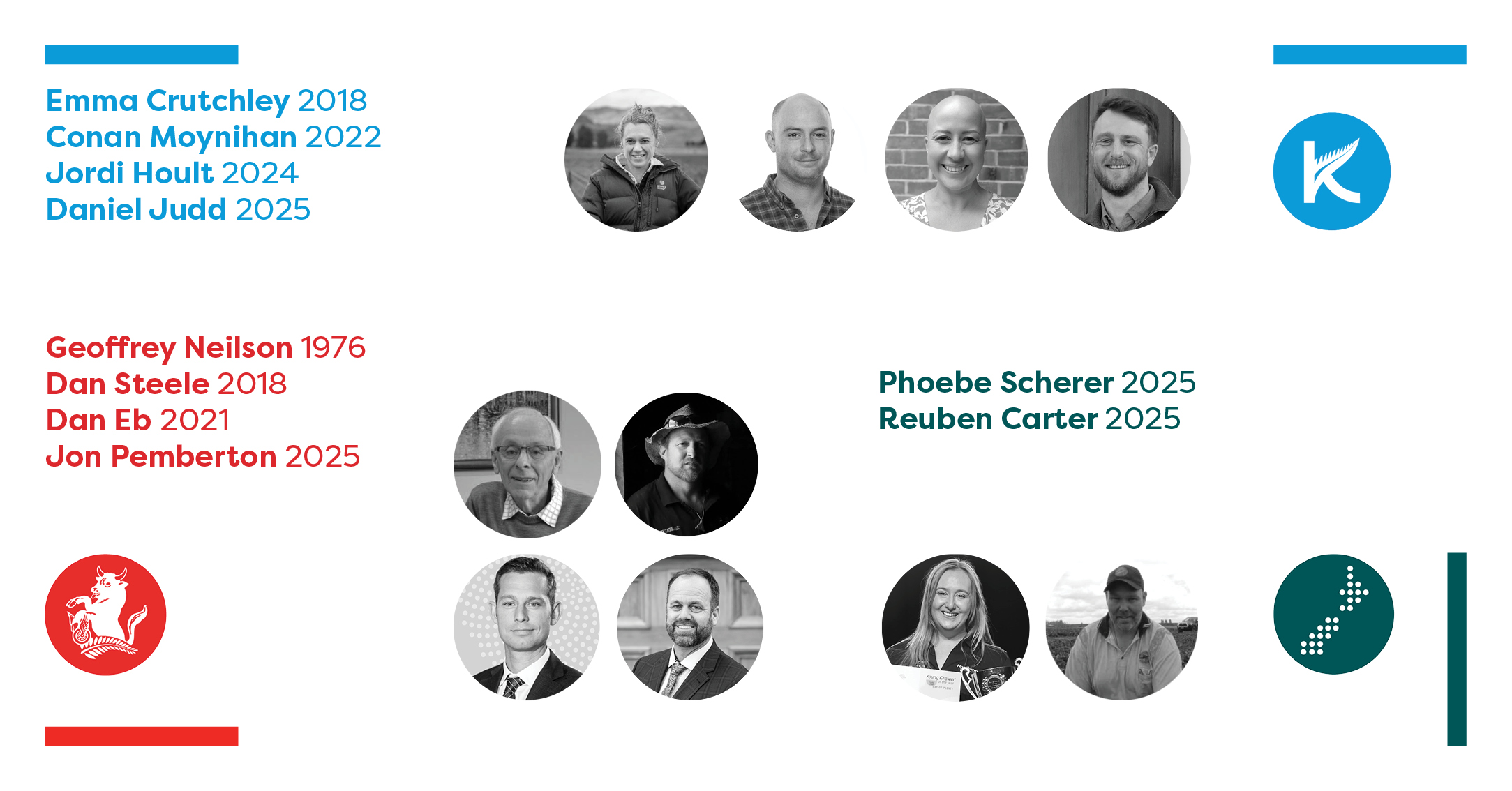
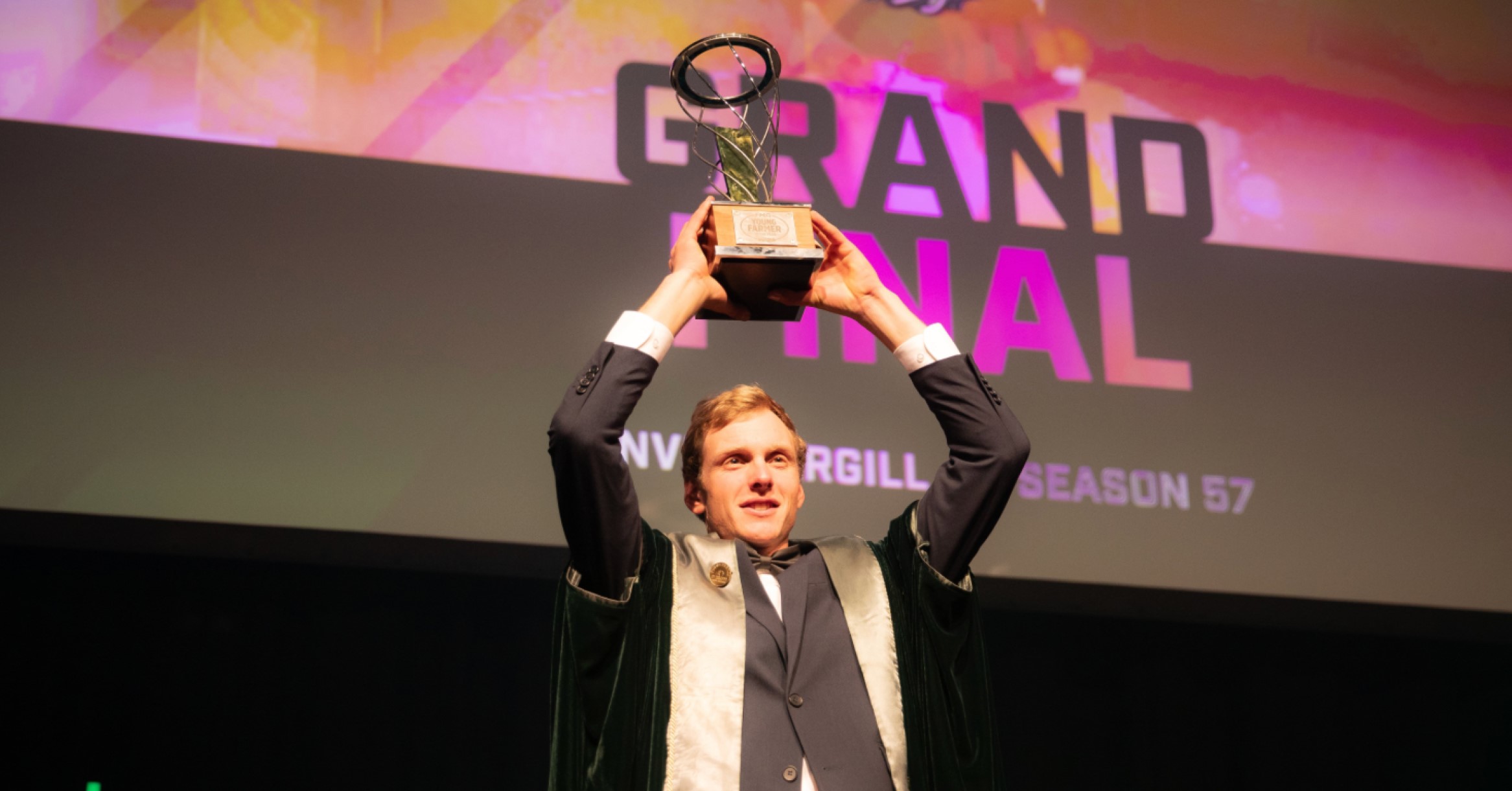
2026 Nuffield NZ Farming Scholarship. Apply by 17 August 2025. Read More...

Apply for 2026 Nuffield NZ Farming Scholarship by 17 August 2025. More details...

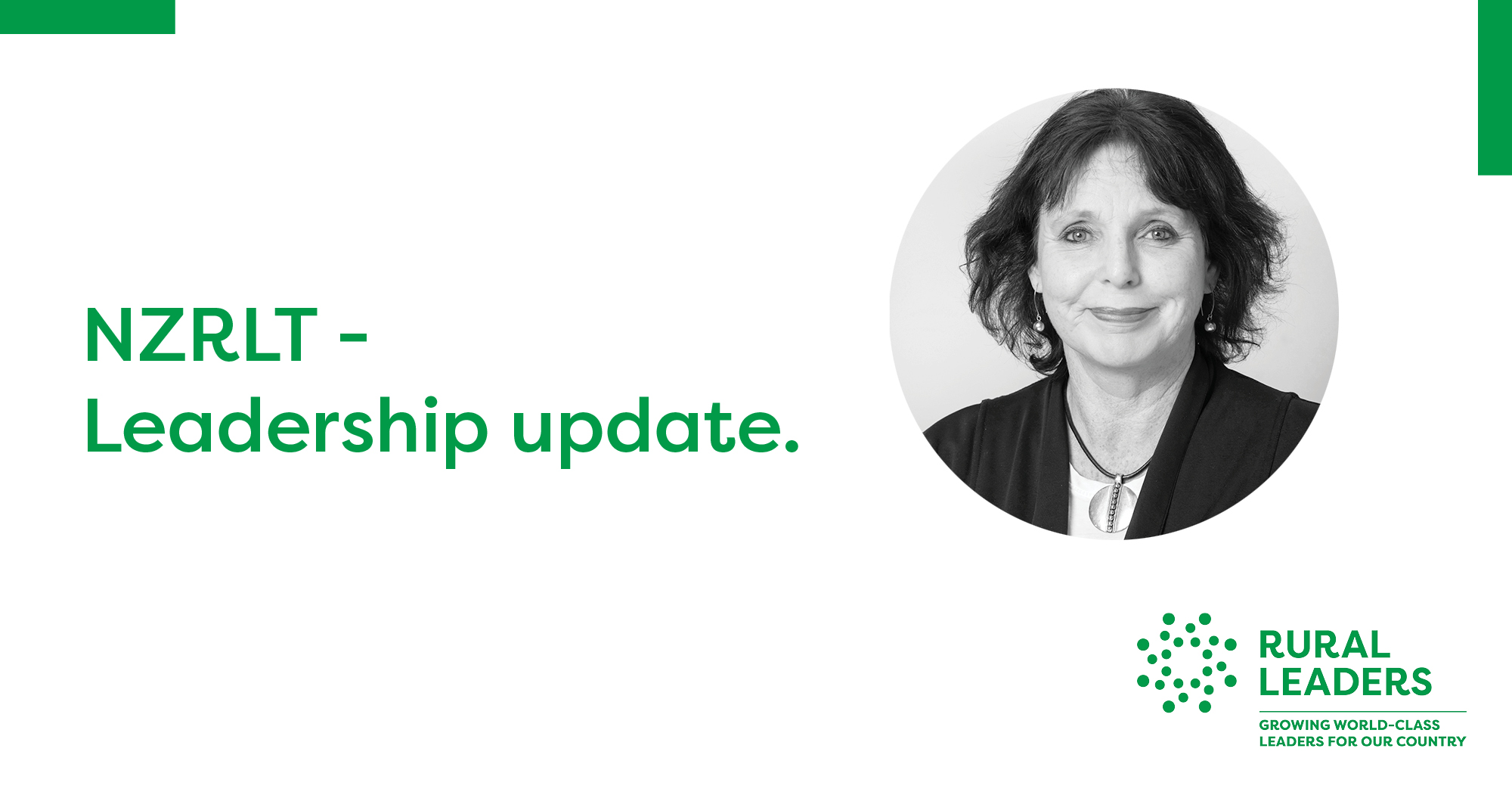
NZRLT (Rural Leaders) Leadership update.

After nearly nine years with Rural Leaders, including the last two and a half years as Chief Executive Officer, Lisa Rogers has decided the time is right to move on from her role, effective 9 January 2026.

During her time with the Trust, Lisa has made a significant and lasting contribution. She has led Rural Leaders through several major projects and periods of change, and now feels the time is right for someone new to build on this work and continue to advance the Trust.

While the Board is saddened by Lisa’s decision to move on, it fully supports her choice and is confident that her influence on Rural Leaders and rural leadership will continue well beyond her tenure with the organisation.

The Board will begin a recruitment process in the new year. Over the coming weeks, we will also work with the Rural Leaders’ team to ensure the continued delivery of our programmes.

The Board is very confident in the teams’ ability to continue to deliver to the high standard they are known for during this period of change.

If you would like to discuss this announcement further, please feel free to get in touch at Kate@landpro.co.nz

Kind regards,
Kate Scott
Board Chair, NZ Rural Leadership Trust

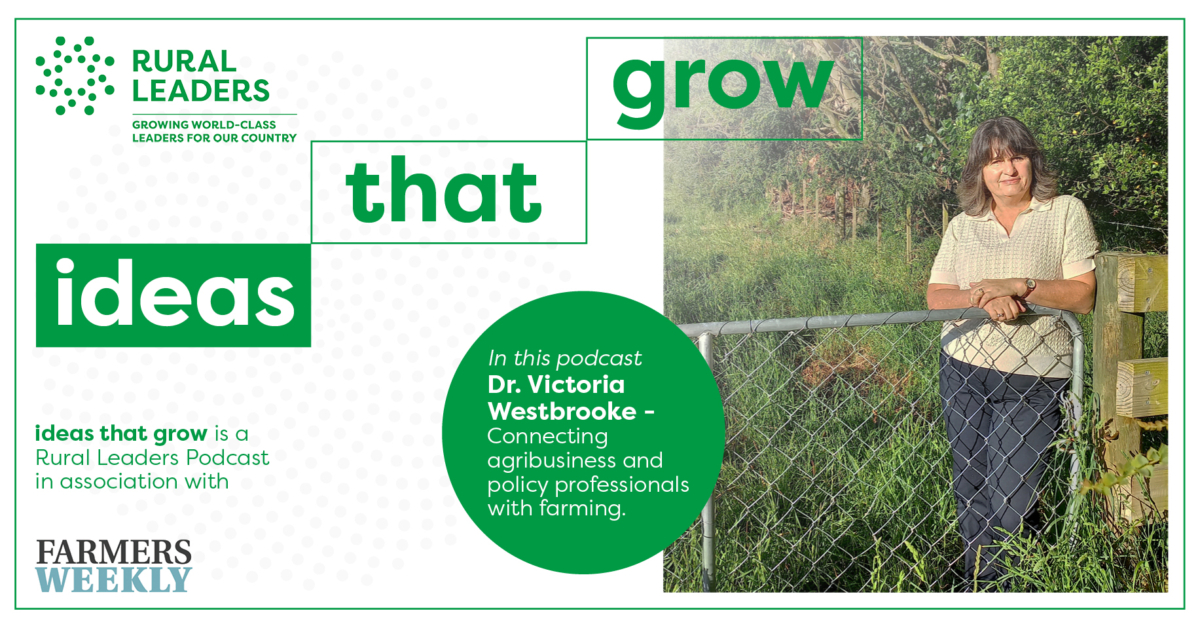
Dr. Victoria Westbrooke – Connecting agribusiness and policy professionals with farming.

Listen to this episode of Ideas that Grow, or click on one of the platform icons below to listen on your favourite player:

In this episode of Ideas That Grow, Bryan Gibson, Farmers Weekly Managing Editor, talks to Dr. Victoria Westbrooke, Senior Lecturer in the Department of Land Management and Systems at Lincoln University.

Victoria discusses the Engage Programme, a three-day professional development initiative run in partnership between Lincoln University and Rural Leaders, designed to bridge the gap between agribusiness professionals and on-farm realities.

Victoria offers keen insight into why providing contextual farm knowledge to technology specialists, researchers, environmental professionals, and policy-makers is crucial for helping them apply their expertise effectively.

Episode Transcript

You’ve joined the Ideas That Grow podcast, brought to you by Rural Leaders. In this series, we’ll be drawing on insights from innovative rural leaders to help plant ideas that grow so our regions can flourish. Ideas That Grow is presented in Association with Farmers Weekly.

Bryan Gibson, Managing Editor of Farmers Weekly:
I’m your host, Farmers Weekly editor, Bryan Gibson. This week, we’re talking about one of the specialist programmes Rural Leaders offers, the Engage programme run in conjunction with Lincoln University.

With me to discuss it is Dr. Victoria Westbrooke. Kia ora, how are you going?

Dr. Victoria Westbrooke, Senior Lecturer Department of Land Management and Systems, Lincoln University:
Great, thanks.

BG: Good. You’re a senior lecturer at Lincoln. What do you focus on there and what’s your work like?

VW: I’m only focused on farm management. I teach both undergraduate and postgraduate level. I also really enjoy teaching a class on consultancy and extension, again, at the undergrad and postgrad level. That class is really about students being able to use the information they’ve got at Lincoln and work with farmers and others to put their knowledge into practise when they leave Lincoln and to go out into the real world to work.

BG: What was your journey to Lincoln like? What’s your career background?

VW: Well, I actually did my degree at Lincoln a few years ago now. I then spent the first 10 years working as a farm consultant in the Waikato and then worked with AgResearch. So, helping translate science and research into practise. I enjoyed helping farmers reach objectives and just seeing that translation. I think New Zealand is really good at that, and it was great to be a part of it.

The next 10 years was cool. That was overseas. I spent a couple of years in UK, having a look at UK farming systems and indulging in my passion of travel. We then moved to Australia, where I did my PhD and had a look at some farm systems there, which were completely different, merging on tropical systems.

For the last 10 years or so, I’ve been lecturing at Lincoln, again in farm management and extension and doing some research on the side as well. I enjoy working with students and seeing their journeys as they grow.

BG: Did you always know that the food and fibre sector would be where you would work?

VW: I guess so. I really enjoy growing things. I’m a keen gardener and have this most wonderful garden at home, which I’m very lucky for. Love seeing people grow too, seeing ideas work on farms, love seeing farmers get where they want go. That sort of thing gives me a real kick.

A partnership to develop stronger connections with farmers.

BG: Rural Leaders has a pretty close relationship with Lincoln University. Tell me a little bit about how Lincoln contributes to the Rural Leaders programmes.

VW: I guess I can talk about the Engage one as a specific example. What I saw is we had a need for some really good professionals in the sector that may not necessarily have had a farm background. I’m talking about technology people, some researchers, environmental people. I thought, how can we welcome them into the sector and give them some background or context to New Zealand farming systems to turbocharge the knowledge and expertise that they already have. How can we help them to apply it.

When I was working on that, I thought Rural Leaders would be the ideal group to work with. They’ve got a good track record. I found them really excellent. We could sit down throw ideas around. That’s how it worked for me in my situation was just having their expertise, a very strong track record, strongly networked into the industry. For me, they were the ideal partner.

BG: Yeah, I guess one of the key challenges that our food and fibre sector has is that there’s often a feeling among farmers in the field that some of the bureaucrats or other people who are agribusiness professionals or at least having an input into how farming is done in New Zealand, some of them don’t have that knowledge of what it’s like to actually implement these things in the field every day.

Knowledge, confidence and connection in agriculture.

VW: The people that we’ve worked with through Engage, who have participated, are keen to work with farmers and help them work well in New Zealand Inc. That passion is really there. Part of this programme is, how can we help them with some of that context in a way that suits their professional lifestyle and their professional requirements and get them connecting directly with farmers, not through two or three other links.

Some form of experiencing the farmer’s challenges. Initially, I had thoughts of participants spending a day with a farmer in their ute. I’m not sure that was particularly practical for everybody. Again, working with rural leaders, we were able to mould that working with farmers and talking directly with farmers into a three-day, doable programme for everyone that got some of that close connection.

For example, one of the participants was actually staying with me. She came from Wellington, hadn’t spent a lot of time on farms, and simply getting her rugged up to go out for a day on farm in July – she experienced the environment the farmer worked in. Simply making sure she had gloves, hat, mittens, and that kind of thing. That was something that you can’t read about or doesn’t normally land if you read about it. But if you’re going out for a day, it does.

BG: You mentioned people being Wellington-based. A lot of people who are decision-makers or policymakers, that sort of thing, are in the cities. Having that first-hand experience of the farming life must make them a lot more confident or at least know that their day-to-day work will land better with those who are having to implement it.

VW: Yeah, it just provided a real background and that lived experience. We’ve got the Engage programme at three days. The key is the middle day, actually going on farm. They’ve spent a day working together in a discussion group format that Rural Leaders does very well. Then it’s onto a bus and going out to our wonderful host farmer. We’ve had Malcolm Cairns and Hamish Marr. The morning’s out on a mixed arable operation, family-based. Then the afternoon has been going out to Matt Iremonger’s which is more of a focus on dairy and technology.

On one of our first programmes, a lot of the participants were just quite keen to do a bit of calf feeding. We were going to talk about some really high-brow stuff. They saw the calves and they really enjoyed it. Seeing Matt operate Halter, we turned up when the cows were to go for milking. We stood in the paddock and Matt and his manager at the time were driving halter and we could see it. Seeing it then talking about the people who are actually working with it, seeing the cow’s reaction, just that really one-to-one or based experience is really important and really enjoyable.

What to expect from the Engage Programme.

BG: If someone signs up for the Engage programme, maybe just talk through what they can expect when they’re doing it.

VW: Firstly, it’s a really welcoming environment that Rural Leaders provides. It’s facilitated. There’s lots of discussions. It’s not a talk at or dare I say lecture type environment. We definitely didn’t want that. These people are professionals with really impressive skills and expertise. It’s more of a discussion, not a ‘talk to’.

Rural Leaders, through their networks, have got some excellent people for the first day, providing an overview of the global perspective of agriculture. We’ve got some people that wear both a farmer hat and professional hat talking about challenges farmers faced.

Then I talk about farming systems and farm finances. This is very much from the farmer perspective, and as much as possible, there’s people that are actually farmers and involved in there. We’re talking about the whole Ag sector. Often, we work in our own particular area that we’re passionate about. I like Ag extension and consultancy type things, but it’s important to look at the whole package because farmers are faced with a whole package, not just fertiliser, which we may work in, or environment that we may work in. Often, there’s a group dinner, and the discussions there are probably just as important as those held during the day.

Participants have actually met people from different parts of the sector as well. The highlight for me has always been the day on farm, which I’ve just briefly discussed. So out in the bus, take lunch, and talking directly with the farmers. We go and have morning tea with them. They take us around their farm. The farmers are experienced talking to groups, but they’re still at the coalface. Those visits tend to go a little bit into the areas that participants are interested in. The final day is two-thirds of a day. There’s a talk about reflection about what they found on farm, Māori land ownership and perspectives. That’s a really good session. Then we talk about rural communities. The reason for that is, again, looking at the whole picture that farmers are sitting within not just one particular aspect. Then there’s finishing up looking at environmental consulting, but that can vary depending on the group.

Looking at the whole farming system.

BG: You mentioned the rural communities. That’s really important because I think some people sitting off remotely would view a farm as a set of financial budgets or a catchment for nutrients and water cycling and that sort of thing. But in actual fact, it’s a place where a family lives. There are neighbours, there are schools, there are rugby clubs. Those things are what sustains farming communities.

VW: Yeah, it’s that whole system, that environment, looking at it, that’s really important. I think we get passionate about as a profession, our own particular area. This is a chance to look at the whole system from a farmer’s perspective. You may get an appreciation of where your particular passion area sits within the farmer’s world type thing. Why are they not as passionate as you about your area? Well, this is where it sits for a farmer and how it fits with their bigger thing.

We had one person who is looking at offering a technology service on farm, and he went away delighted because he could then see where his technology offering could fit for farmers, what from a farmer’s perspective might spin their wheels, save them time, whatever. He said, Okay, he will now develop his offering in that way to fit more with what a farmer may actually want. He understood why they may be reluctant to take his technology offering from his business.

BG: That’s amazing because you see it time and again, someone turns up with what they feel is like the latest game-changing bit of tech that’s going to change farming. But when it actually comes to implementing it on farm, they perhaps haven’t had that close contact to know if it’s working in with the other things that happen day to day on a farm.

VW: Yeah, it’s this massive load of cogs all in to react and big clockwork mechanism in an old analogue clock. They all interweave together.

Looking closer at the Engage Programme.

BG: One of the things that comes up-time and again in these chats I have with people who have been involved in Rural Leaders programmes is that the course itself is great, but one of the great pieces of value you get from it is the network and the connections you make while you’re on the course. That seems to be the case here, too.

VW: It’s not as long as Kellogg or some of the other courses. It is a three-day course. That was deliberate because when we did our initial research, we got strong feedback that because it’s a face-to-face course, we had to recognise the time limitations people have in professional life. That’s why we came up with the three-day programme because we did want to keep it face-to-face.

Rural leaders are passionate about that, which I agree with, because then you can actually talk directly to people. I think the group dinner and the way that it’s facilitated lets people meet from different aspects. We’ve had people that have reconnected or got a list of people that if they need somebody in this different area, they now have somebody that they can contact to do that. So, yeah, that’s another important part of sharing.

BG: When we pull back and look at the bigger picture of New Zealand’s food and fibre sector, we are having big conversations about how to develop people into leadership roles. Sometimes you can look at it as there’s farmers who come up through industry bodies, and there’s agribusiness professionals who maybe have a more academic path. The Engage system, to me, seems to be a way to bring that together.

VW: Yeah, it’s, again, the people that are passionate about the food and fibre sector have some wonderful skills and knowledge that we very much need. I’m really hoping we’ll provide them with the confidence to go on to some of those leadership roles with just that wee bit more contextual knowledge or the farmer’s view.

The other thing is some people coming on the programme work with one particular group of farmers, and this is, again, just broadening out for that background and context. So hopefully, it’s part of their leadership journey. They also know how Rural Leaders operate then through the programme, so they can have a taster of what our future work with Rural Leaders may look like. That’s useful as well, I think.

BG: Yeah, I guess it gives people a bit more empathy with the people who might be end users of either the product or the policy that they are working on, you get a better understanding of how that lands, what that means for someone’s day-to-day life, that thing.

If someone’s keen in finding out more about the Engage programme or perhaps signing up, what’s the next step for them?

VW: Rural Leaders They have an excellent website, and they have all of the details there. My understanding is the Engage programme will be running next year.

The other option is Rural Leaders have customised the programme and can do so for particular groups. For ASB, they work with their rural managers who really wanted to focus on environmental aspects. They took out the day on farm because those rural managers are constantly out on farm. That programme was adapted for them. They’ve also worked with the Ellett Trust and other groups there to develop a programme specifically for scientists and researchers to communicate with farmers. That customisation option is available as well.

BG: Thanks for listening to Ideas That Grow, a Rural Leaders’ podcast presented in Association with Farmers Weekly. For more information on Rural Leaders, the Nuffield New Zealand Farming Scholarship, the Kellogg Rural Leadership Programme, the Engage Programme and the Value Chain Innovation Programme, please visit ruralleaders.co.nz.

Alumni in the Spotlight – Clare Bradley, Jared Clarke, Kelly Heckler, Tracey Perkins, Erica van Reenen, Dr Jordi Hoult

Here are just a few of the media pieces covering the impact of Rural Leaders’ Programme Alumni in industries and communities across the sector. 

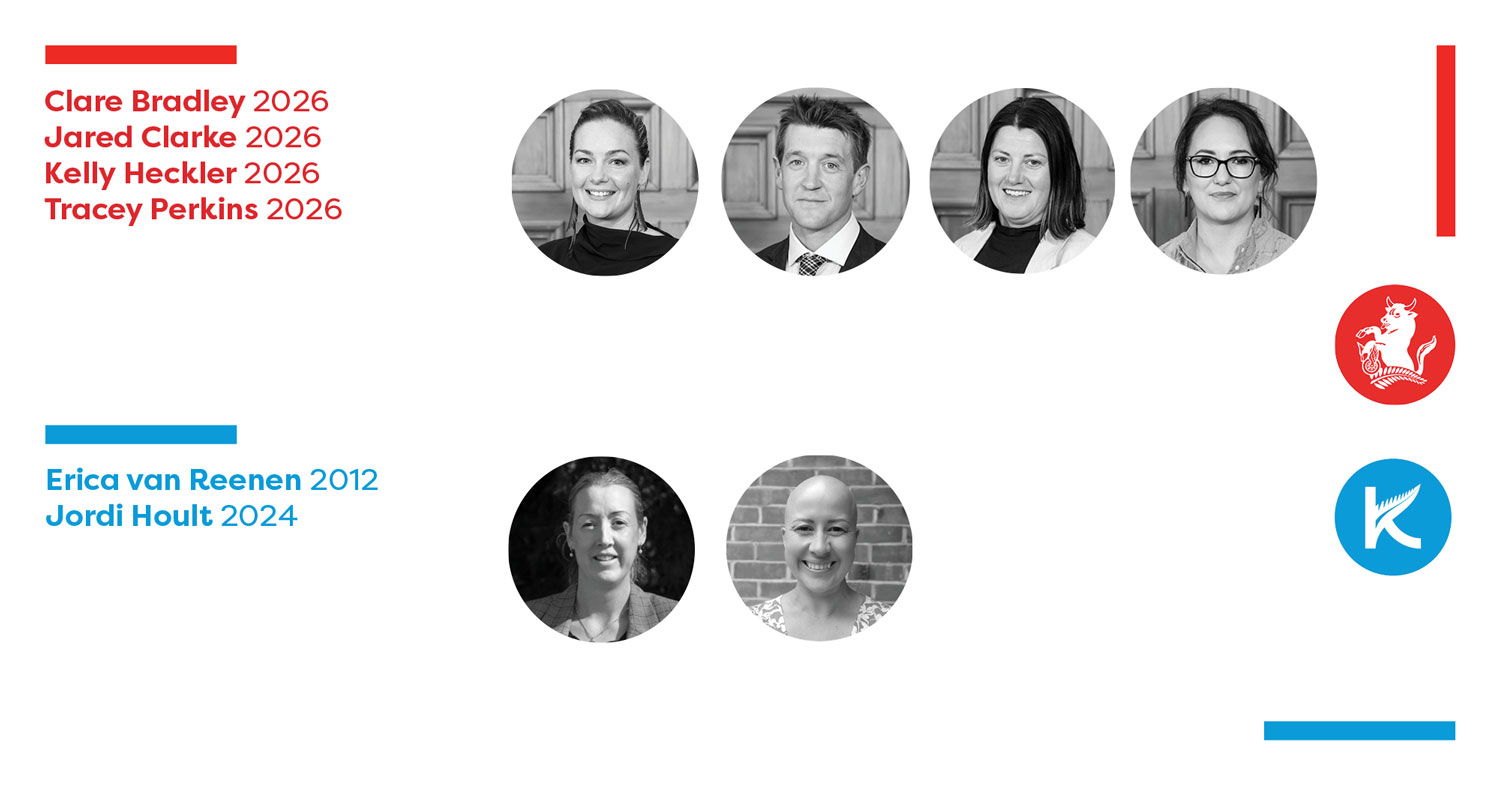
Clare Bradley, Jared Clarke, Kelly Heckler, Tracey Perkins, 2026 Nuffield Scholars

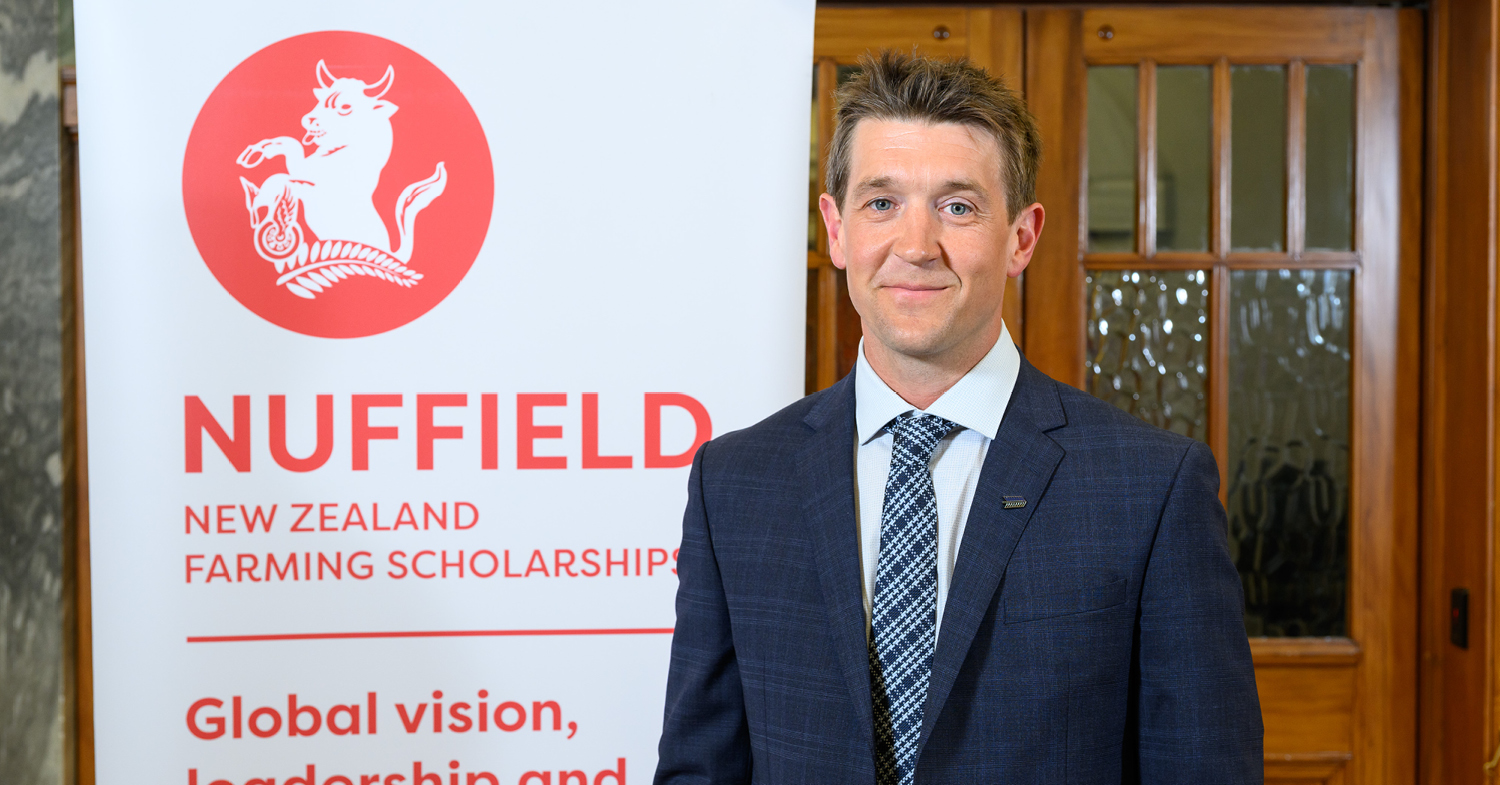
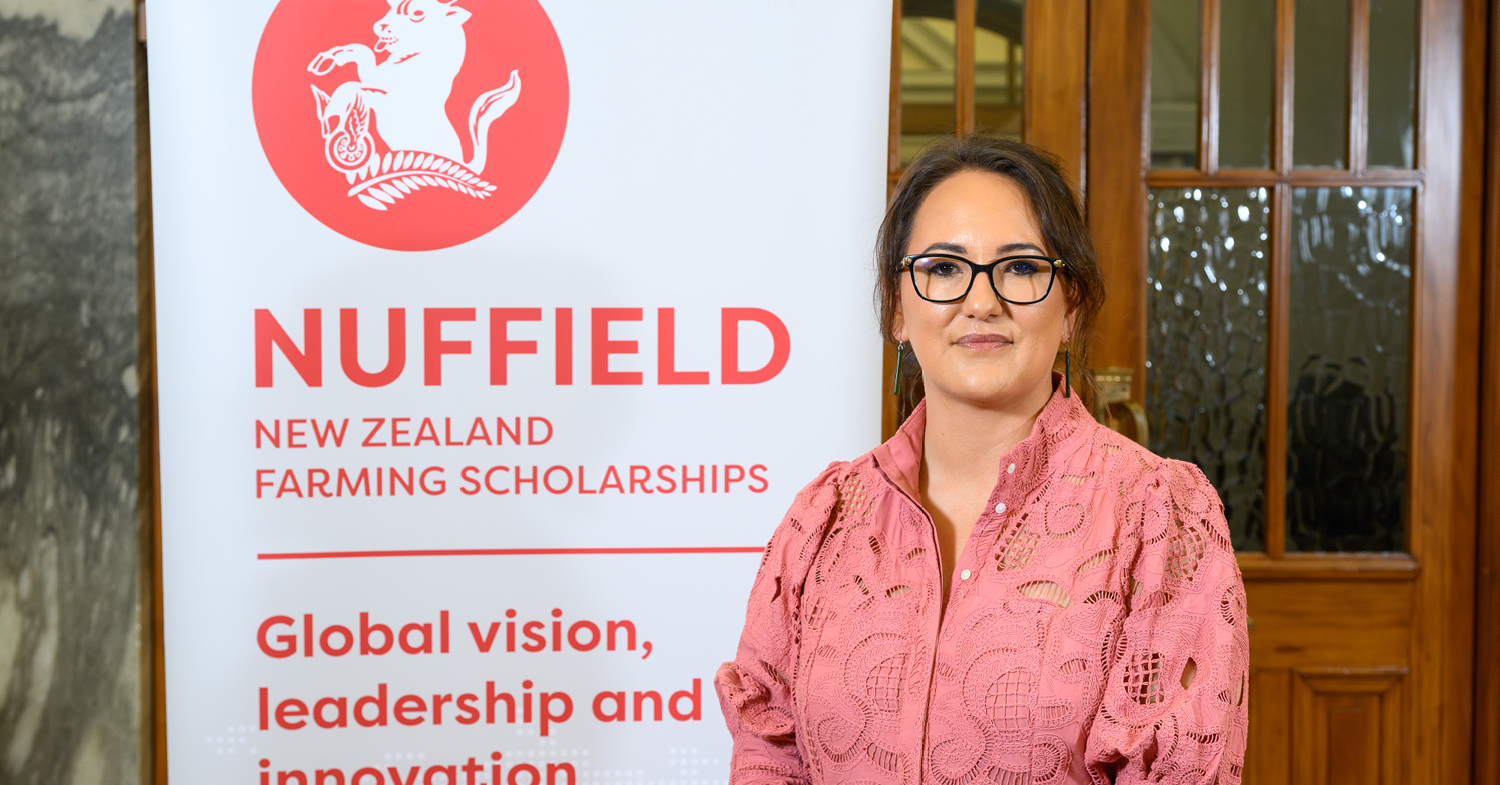
The four new Nuffield Scholars received their awards in Parliament on 4 November.
From Canterbury, Otago and the Bay of Plenty, and representing industries including dairy, sheep and beef and aquaculture, they join 193 Nuffield New Zealand alumni and over 2000 international alumni.

Coverage in the news includes:

Erica van Reenen, 2012 Kellogg Scholar

Erica van Reenen featured on REX (Rural Exchange) recently. Erica is the 2025 Rural Professional of the Year and AgFirst Chair. Erica spoke about her time working in government policy at the intersection of the Clarke and Key tenures. And she spoke about the lessons she learned and her time as a Kellogg Scholar. Listen to the podcast episode here.

Dr Jordi Hoult, 2024 Kellogg Scholar

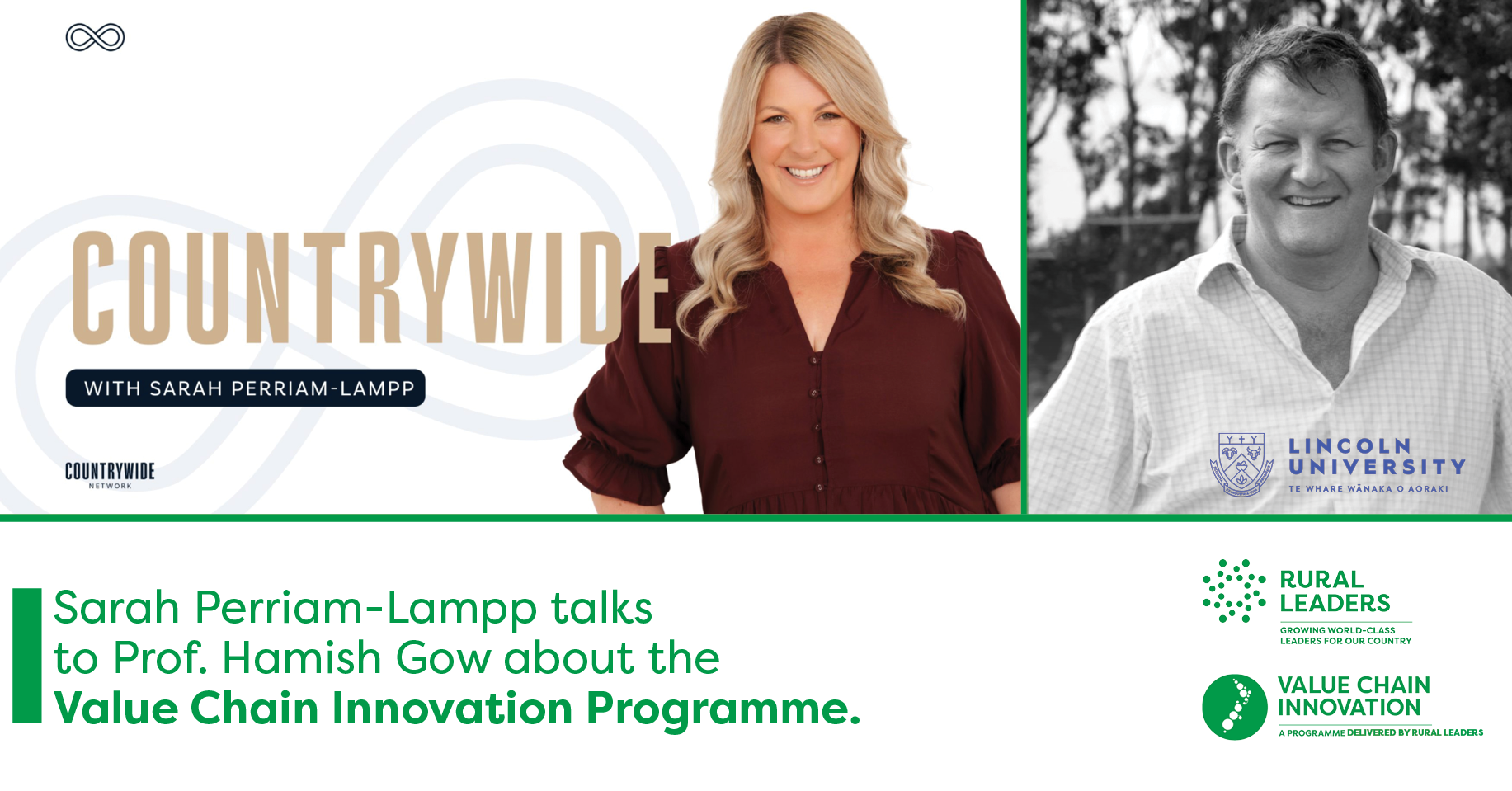
Dr Jordi Hoult, discusses drawing on her Kellogg research and experience in New Zealand’s food and fibre sector with Sarah Perriam-Lampp on the CountryWide podcast. Jordi explores how to empower mid-career professionals often overlooked in leadership. She identifies her Kellogg research “the missing middle” and highlights mentorship and flexible development as key to helping people in their 30s–50s thrive and shape the sector’s future. 

Listen to the podcast episode here.

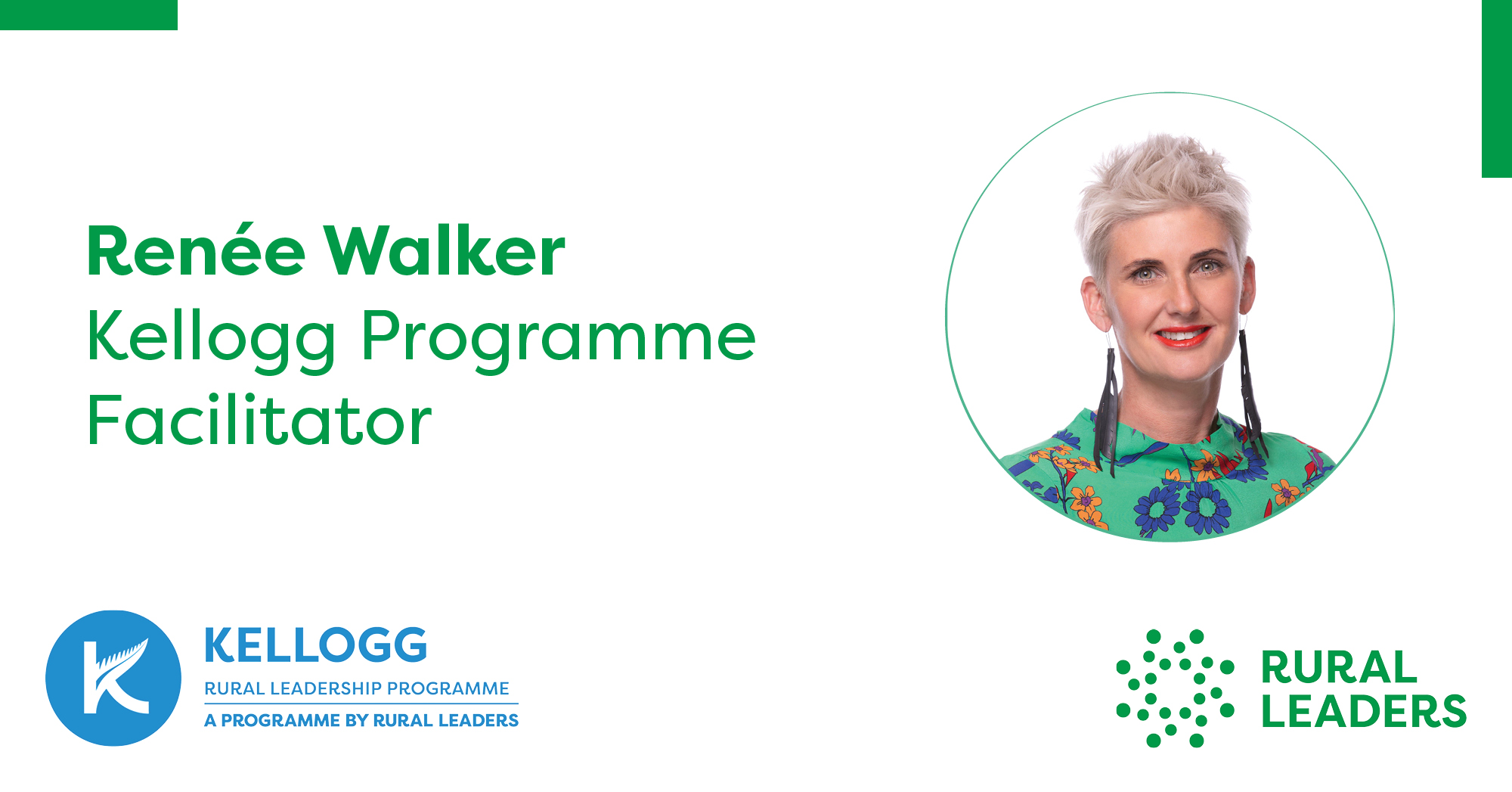
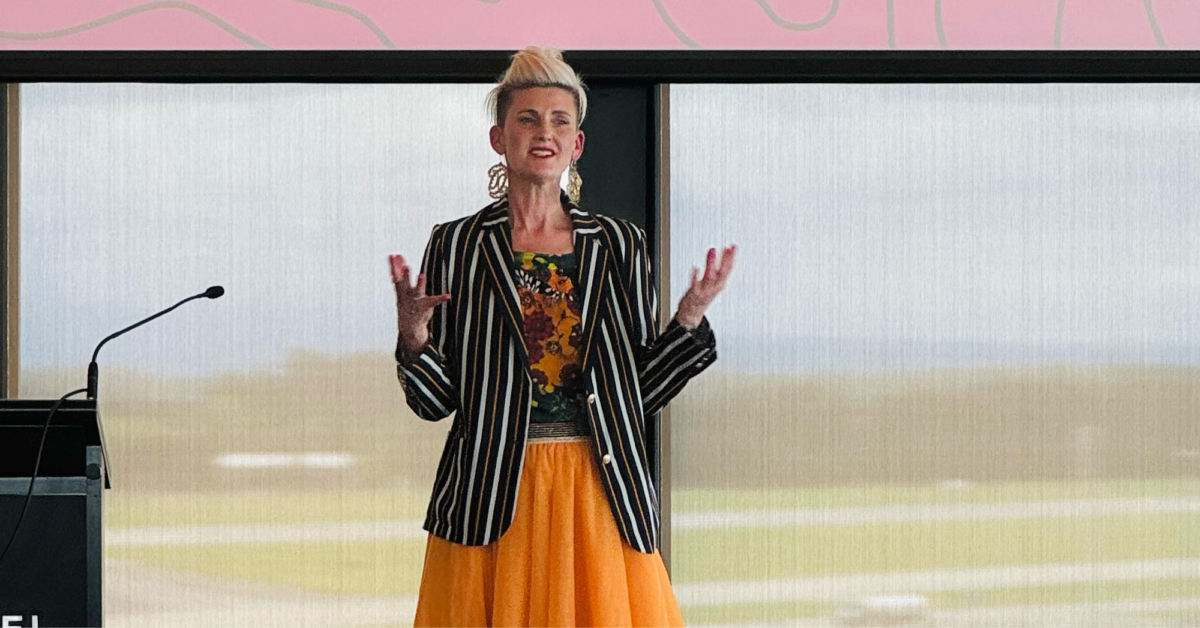
Renée Walker joins the Rural Leaders team.

The New Zealand Rural Leadership Trust (Rural Leaders) is pleased to announce the appointment of Renée Walker as Kellogg Programme Facilitator. Renée will join Kellogg Programme One 2026.

For Renée Walker, Rural Leaders’ newly appointed Kellogg Programme facilitator, leadership has always been about people – seeing them, understanding them, and helping them unlock their own potential.

A former Chief Operating Officer and senior executive with more than 20 years’ experience leading teams through transformation and culture-building, Renée has built a career defined by involvement, visibility, and genuine connection. She has led through complexity – notably during Canterbury’s post-earthquake recovery -and brings deep experience in strategy, change leadership, and executive-level coaching.

Today, Renée is the director of The Leadership Revolutionist and Thrive For Life, working across New Zealand to equip leaders – from senior executives to Year 13 students – with the confidence, mindset, and capability to lead with heart and courage. She is known for her high-energy facilitation style, practical frameworks, and ability to create space for honest reflection and meaningful change. Her facilitation work spans boardrooms, classrooms, and conference stages, including leadership programmes, culture workshops, and Extended DISC and NLP-based development experiences.

From two large North Otago farming families, Renée’s connection to the rural sector runs deep. “It’s not just the backbone of New Zealand,” Renée reflects. “It is New Zealand. The rural sector is who we are.” With generations of family farming behind her, she understands the culture, values and pressures of rural life – and the pride that goes with it.

That rural pride led to working with Alliance Group – New Zealand’s only 100% farmer-owned red meat cooperative at the time – working in a role supporting and advocating for farmers. “My family have always been Alliance shareholders and suppliers,” Renée explains. “It felt important to be part of something that represents farmers so directly.”

Renée’s leadership journey began with a childhood dream of teaching, inspired by a grandmother who taught in small rural schools. “I thought you could only change lives by being a teacher,” Renée says. “But I realised leadership can do that too, being the person who sees others and helps them grow.”

Her career has spanned marketing, communications, insurance, and government relations, including her role as Deputy Chief Executive at EQC. “I’ve never been defined by a title,” Renée insists. “I don’t claim to be the smartest or the most technical person in the room, but I get people, and that’s been my greatest strength.”

Her work now focuses on culture, capability, and future-ready leadership – areas she believes are essential in a rural sector navigating generational change. “Young people don’t want hierarchy – they want autonomy, influence, and choice. That shift can be confronting… but also incredibly exciting for the sector.”

As the Kellogg Rural Leadership Programme Facilitator, Renée hopes to foster “…more diversity of voice…” in the sector. “We need different ways of thinking at the table,” Renée says. “Leadership is about helping people have an informed voice, especially as governments’ views of the rural sector can change.”

Outside work, Renée describes life as “integrated rather than balanced.” She balances time with her 13 year old son, and large extended family with community and board roles. Renée serves on the boards of the Christchurch Symphony Orchestra and the Riccarton Rotary Youth Trust, is a registered Marriage Celebrant, and an active supporter of several charities.

“I’m not known for relaxing…one of my key values is curiosity – I believe the more curious you are and the more you do, the more interesting and connected you become. That’s how you can really help others.”

Renée joins Kellogg Programme One 2026, which starts 27 January in Lincoln.

2026 Nuffield NZ Farming Scholars announced.

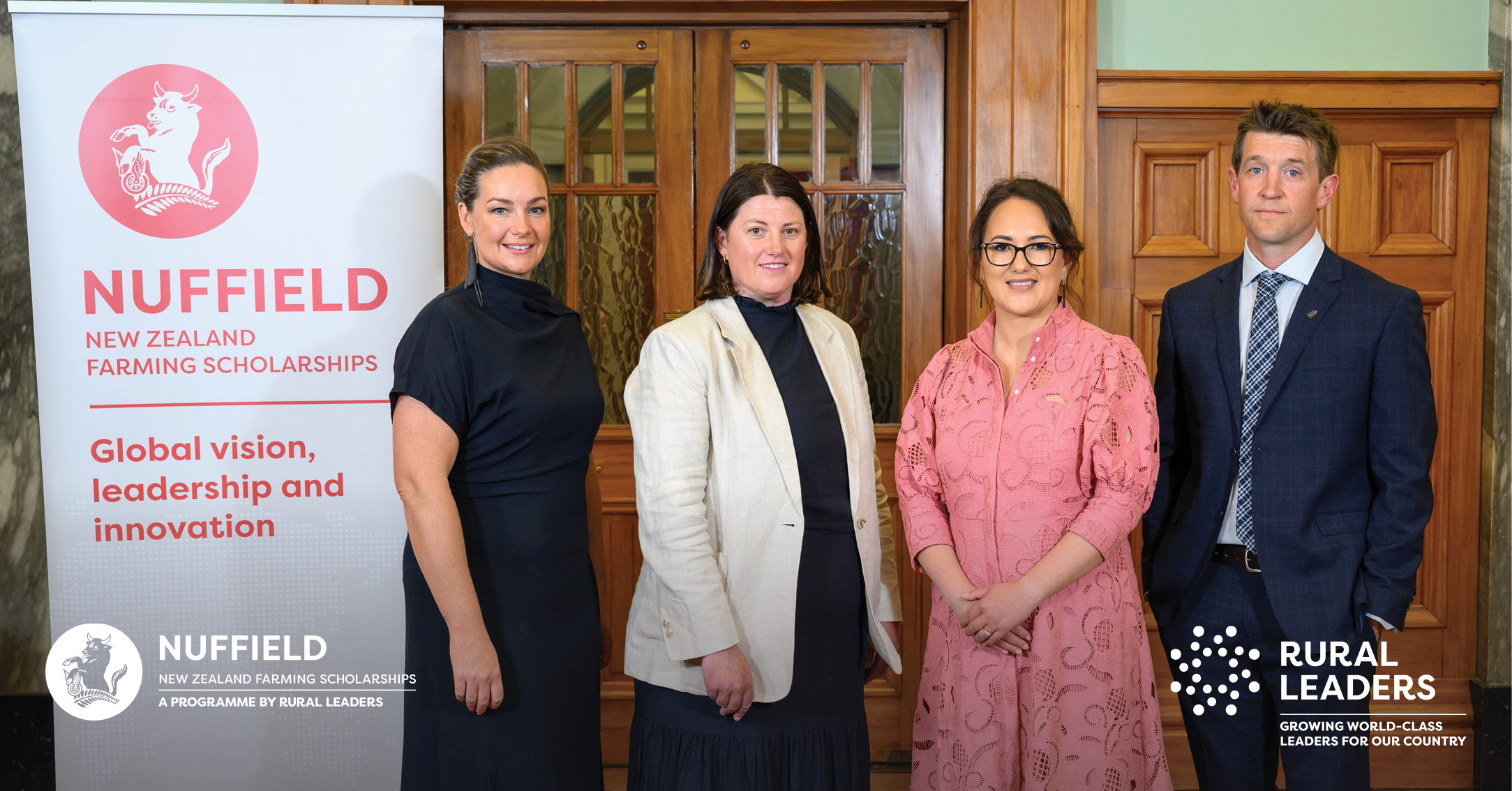
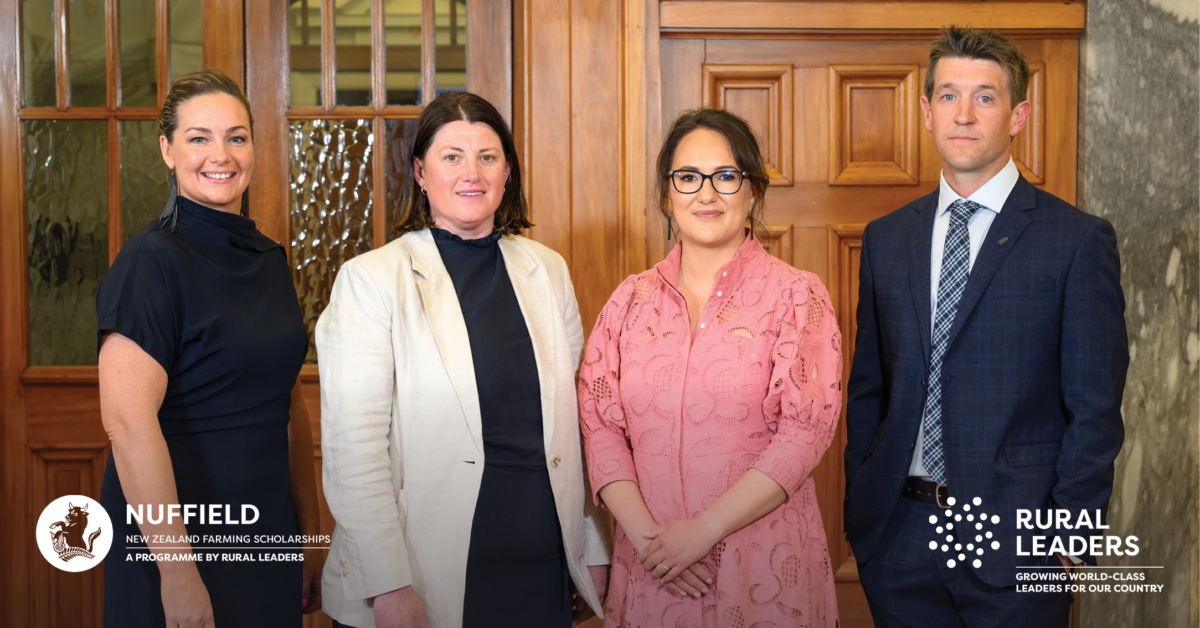
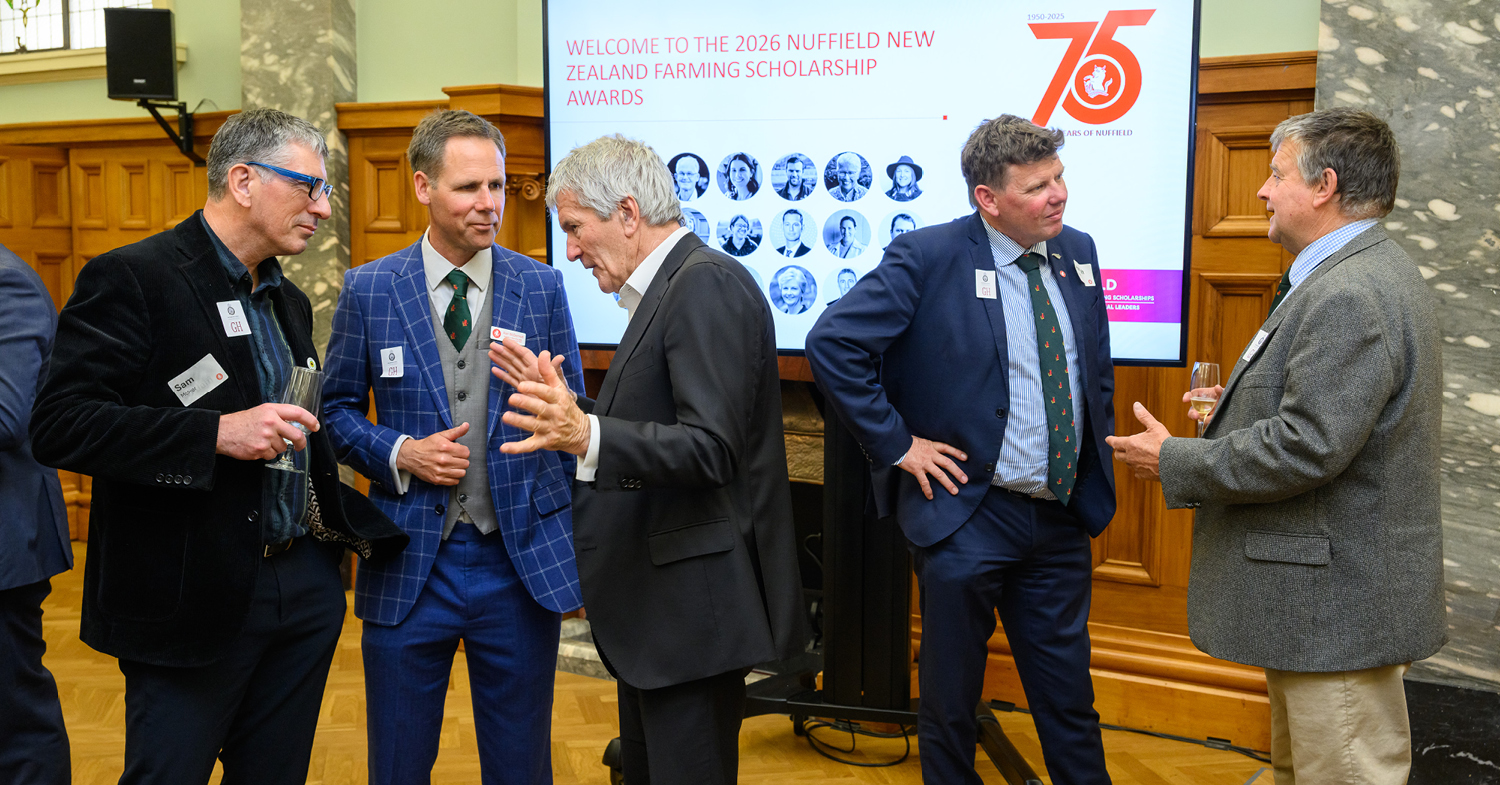
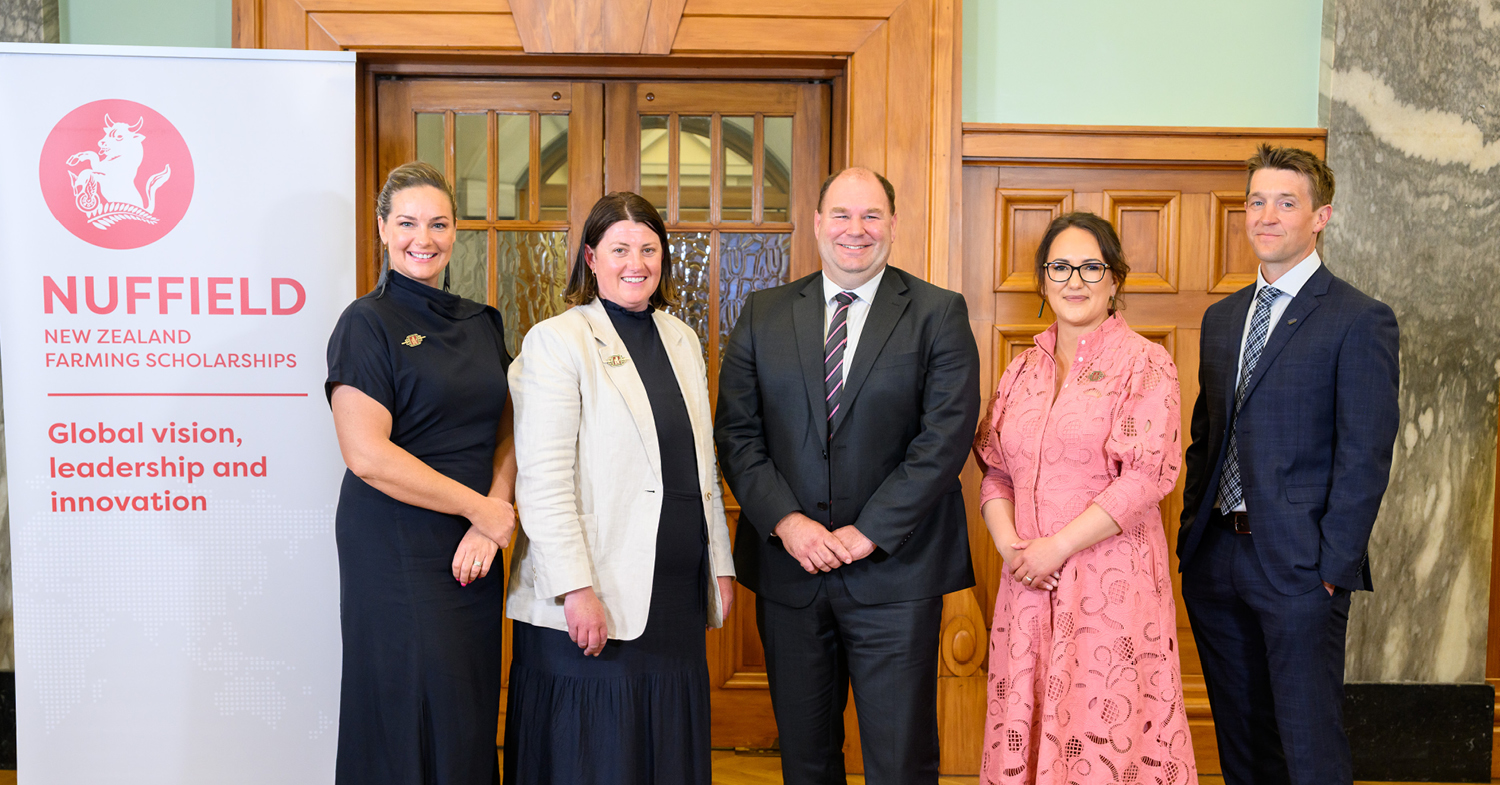
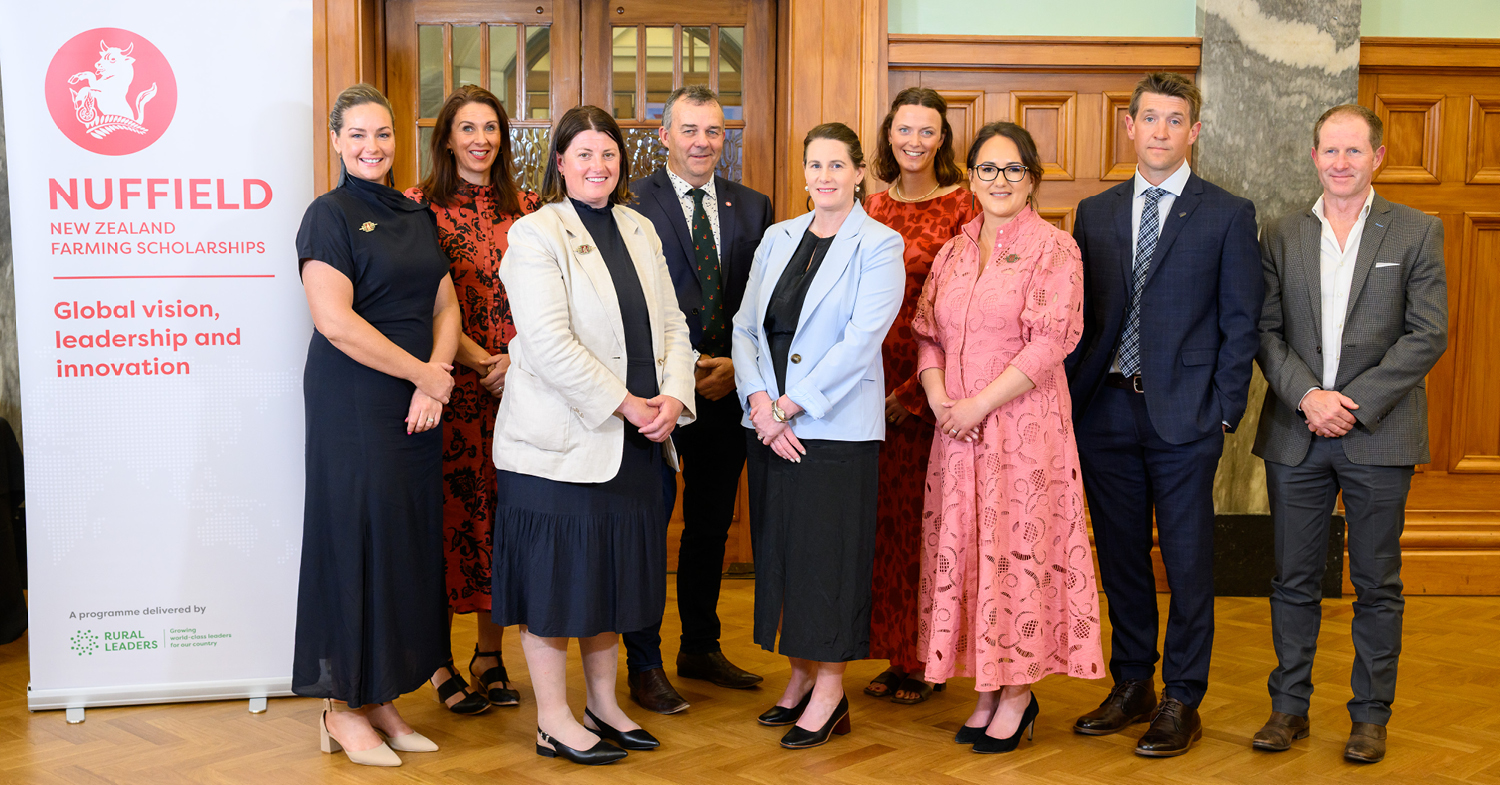
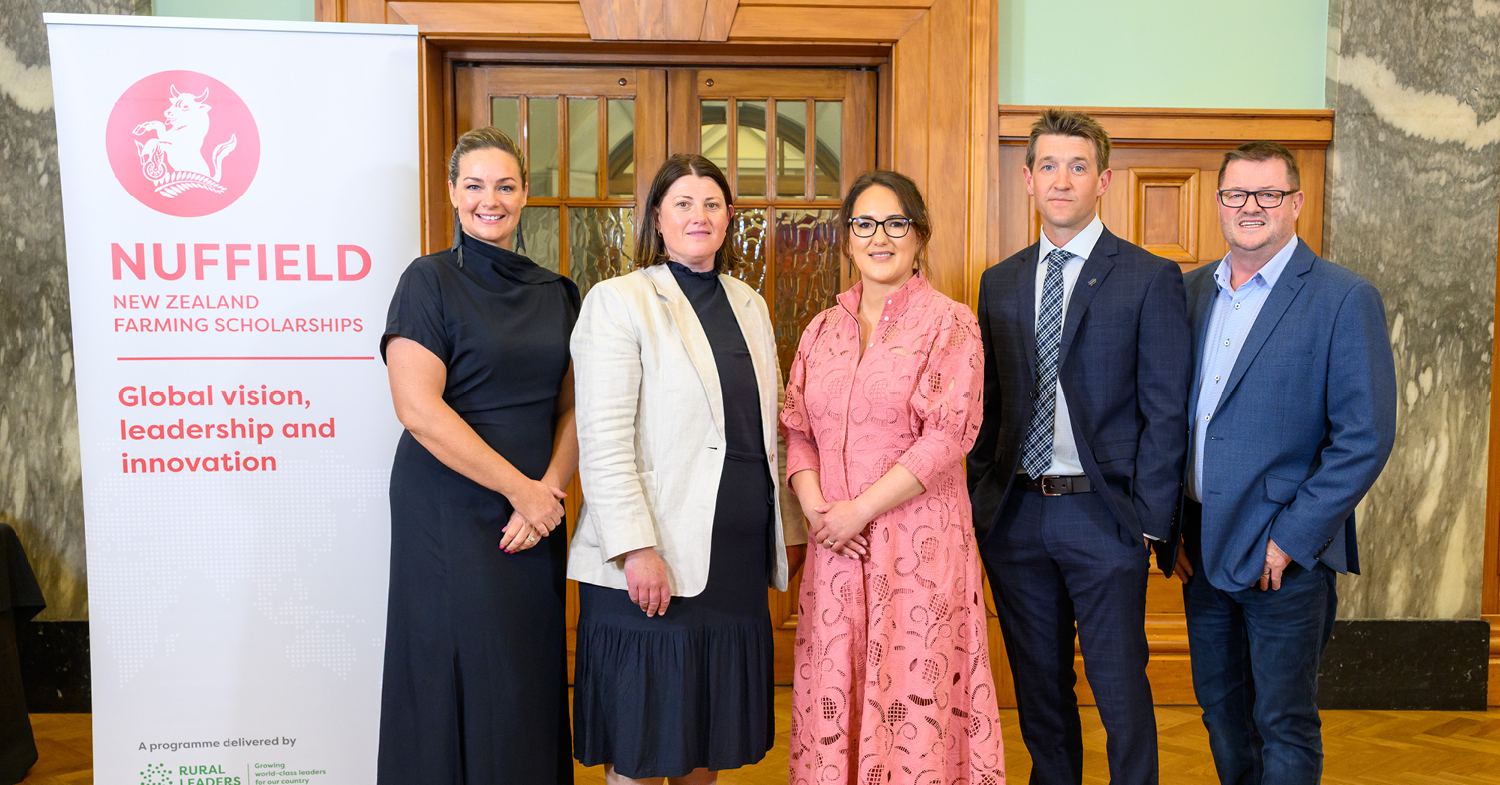
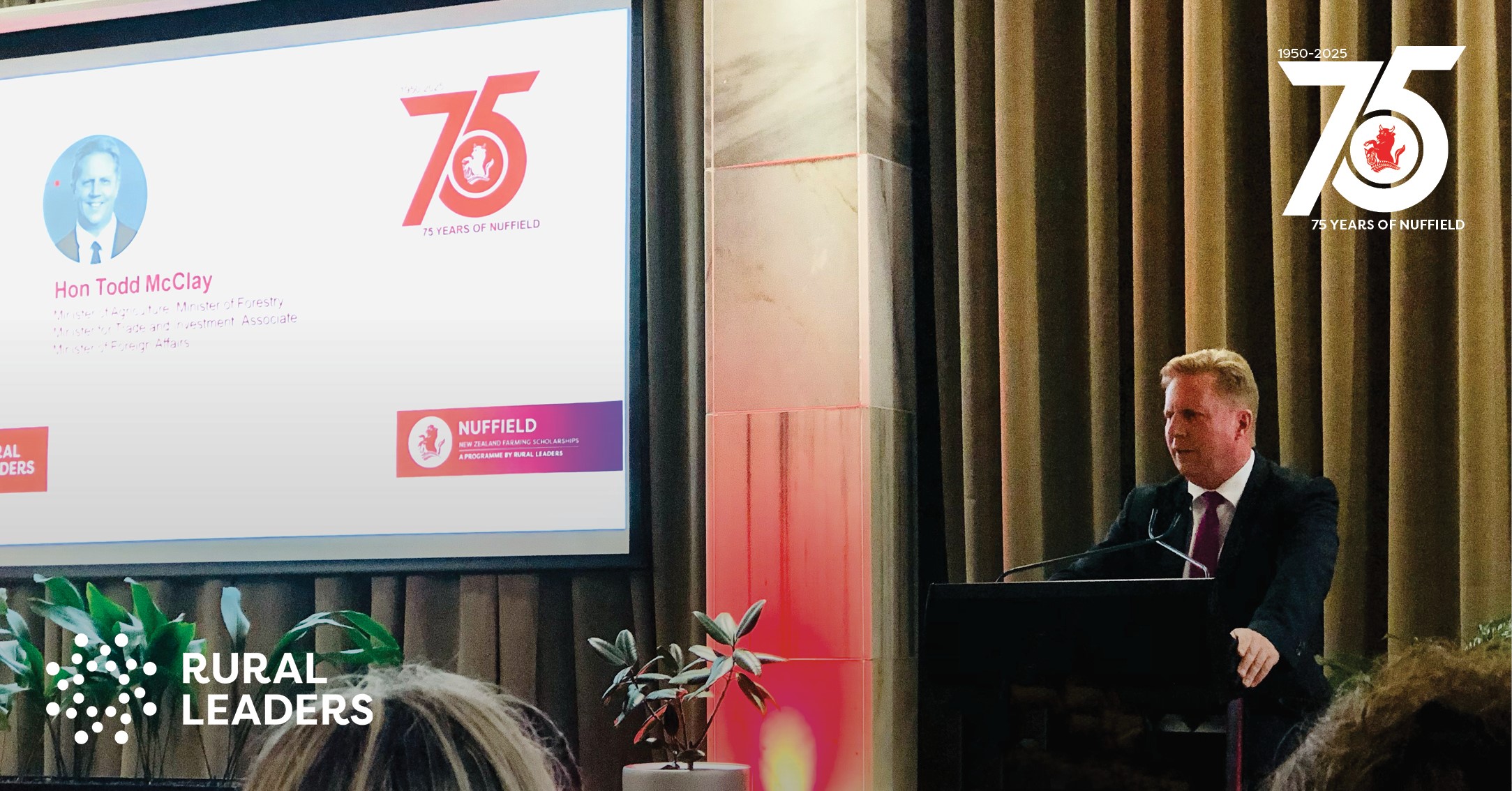
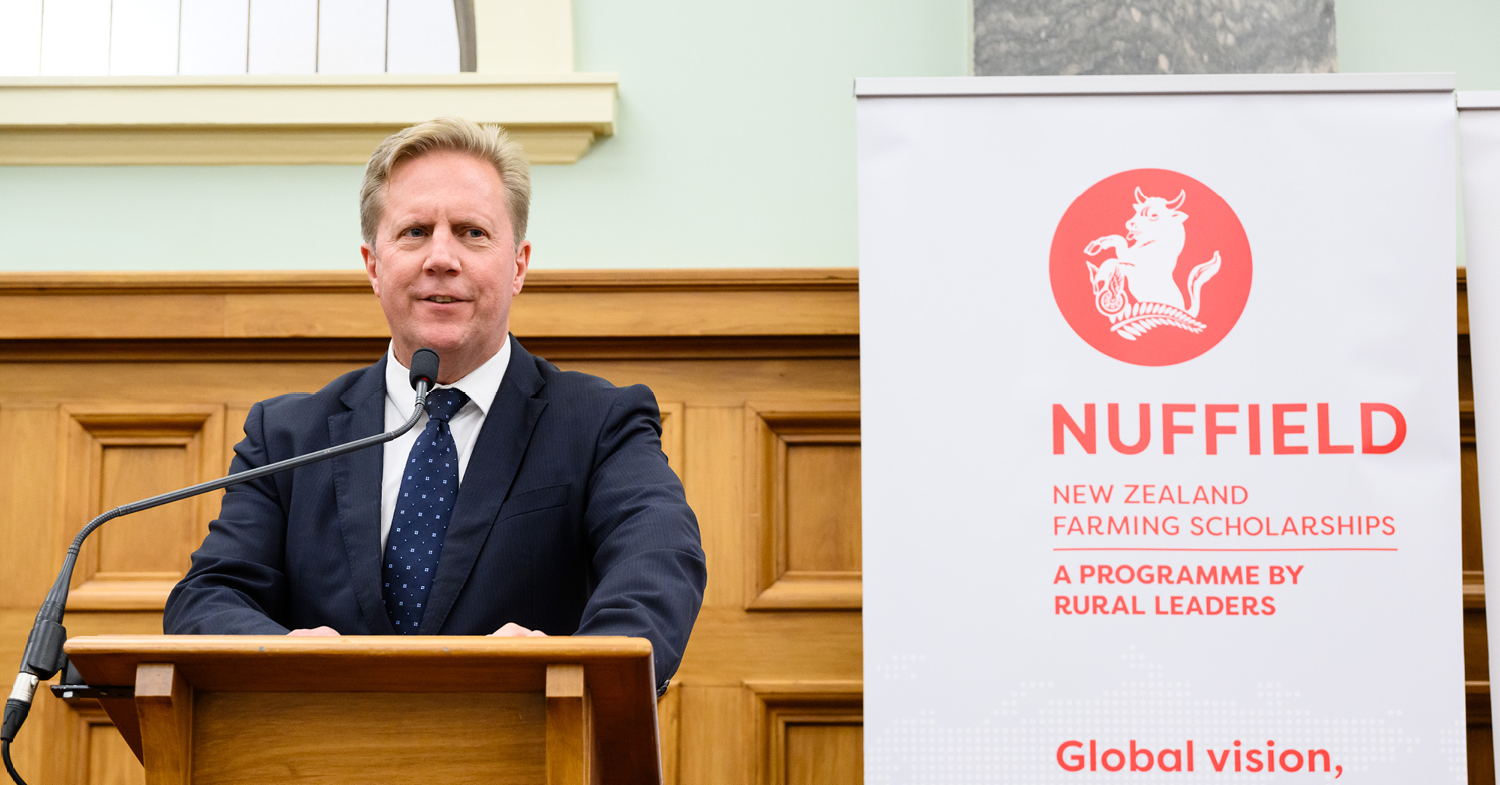
Last night (Tues 4 Nov) at Parliament, in front of Rural Leaders’ investing partners and political and industry leaders, Hon. Minister Todd McClay awarded the 2026 Nuffield Scholarships to four new leaders. 

Nuffield Farming Scholarships have been awarded to New Zealand’s Primary Industries leaders for 75 years.

With a global network of more than 2,000 alumni, 197 of these from New Zealand, Nuffield continues to help build rural leadership capability and Food and Fibre NZ’s global profile.

Last night at Parliament, in front of Rural Leaders’ investing partners and political and industry leaders, Hon. Minister Todd McClay awarded the 2026 Nuffield Scholarships to four new leaders.

The 2026 scholars represent three regions and several industries including dairy, aquaculture, and red meat.

The cohort will undertake a Rural Leaders delivered programme that offers a life-changing opportunity for travel, study of the latest agriculture innovations and an introduction to decision-makers around the world.

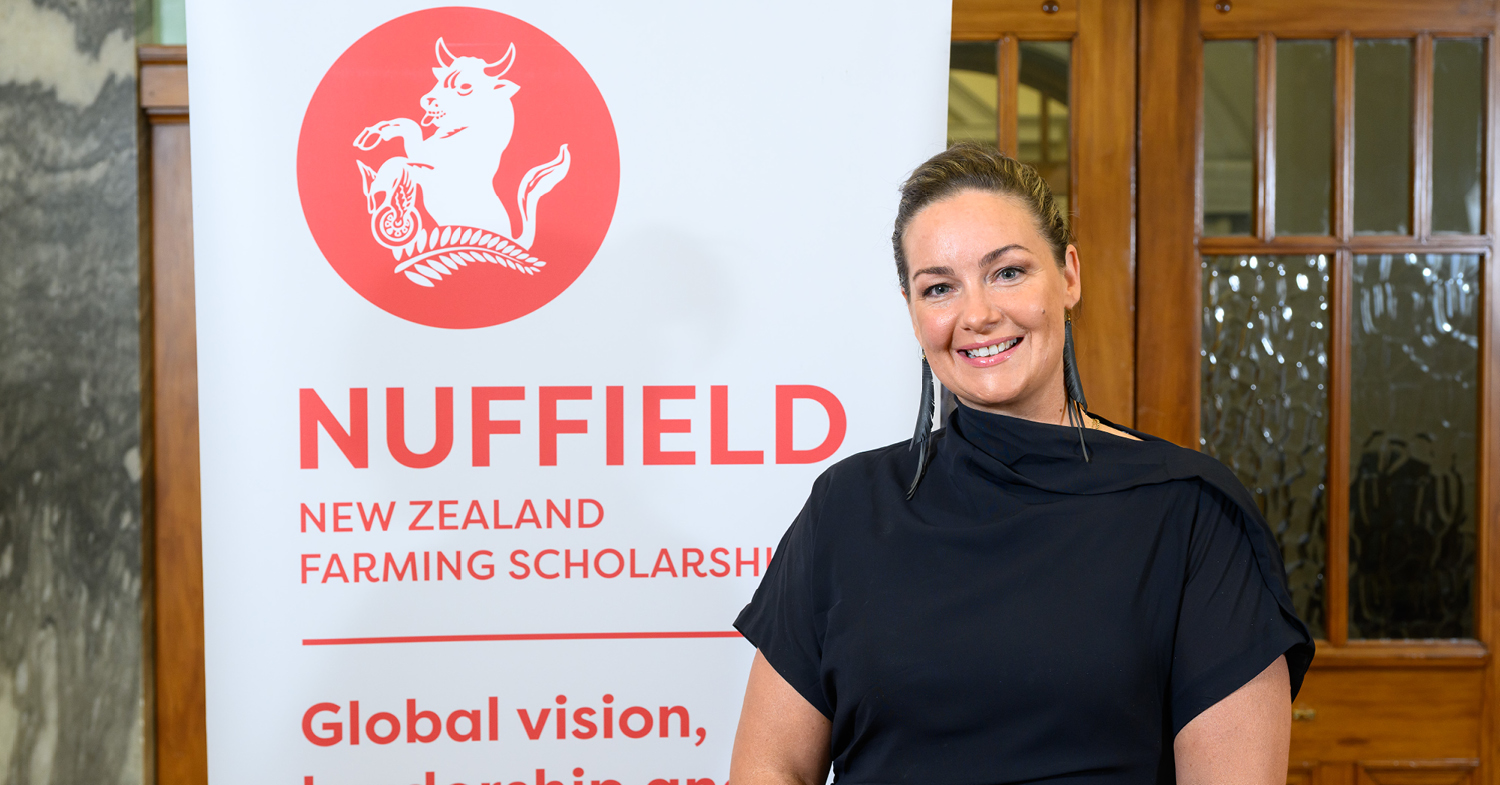
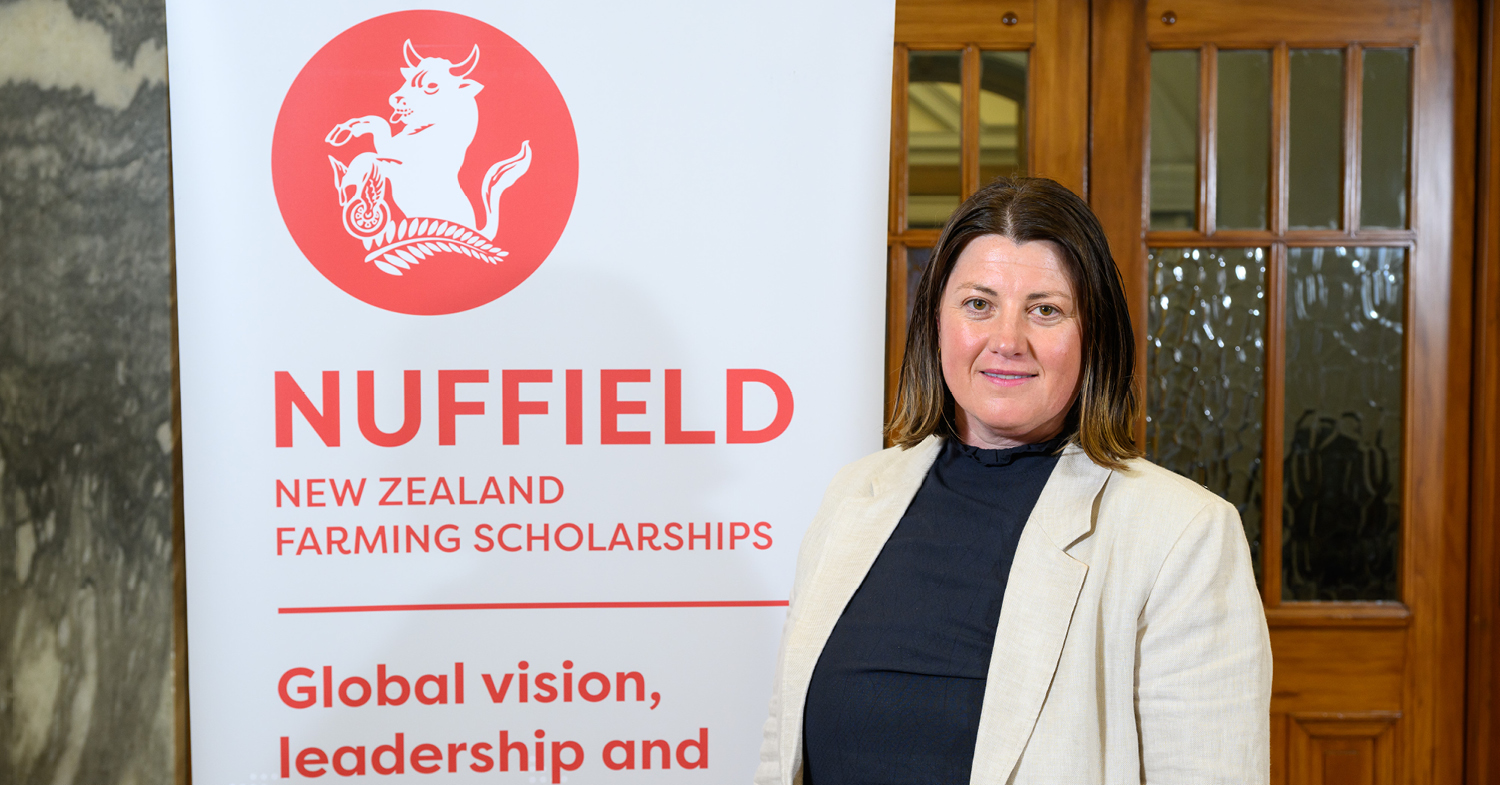
The new scholars were announced by Minister McClay as: Clare Bradley, a Bay of Plenty Aquaculturalist, Jared Clarke, a Canterbury Farmer, Kelly Heckler, an Otago Farmer, and Tracey Perkins, a Canterbury Farmer. They are the 194th, 195th, 196th and 197th New Zealand scholars respectively.

“Clare, Jared, Kelly and Tracey have shown they value giving back to community and industry, they display innovative approaches to their work, and they have demonstrated a track record of meeting challenges head on. 

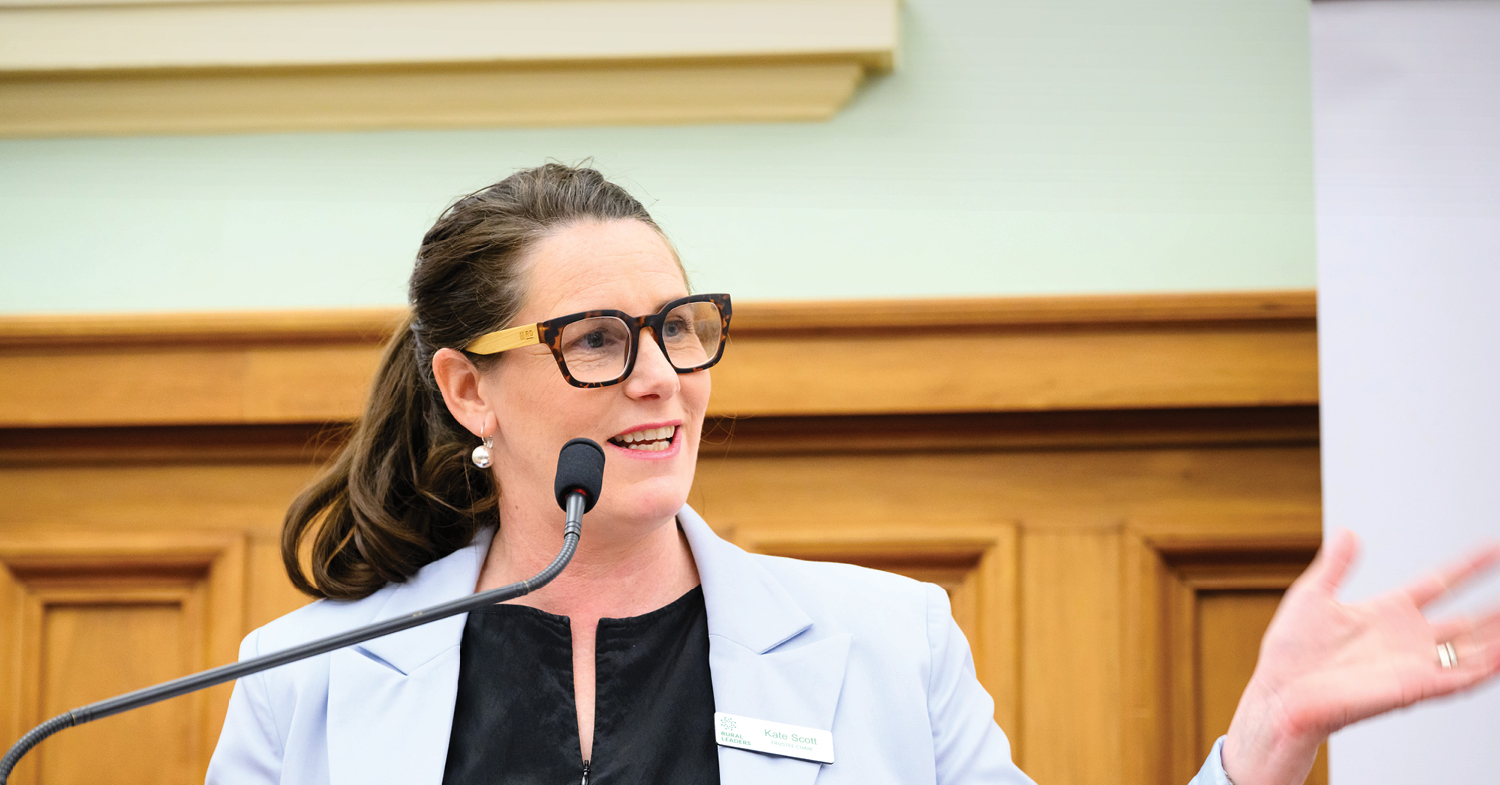
Ultimately, they are now tasked with finding those deep insights that will create lasting benefit for New Zealand food and fibre, their industries and their communities,” said Kate Scott, Rural Leaders and Nuffield NZ Chair.

Lisa Rogers, Rural Leaders’ CEO added, “Clare, Jared, Kelly and Tracey have each exhibited the characteristics that embody a Nuffield Scholar and ambassador for NZ Food and Fibre.”

Introducing the 2026 Nuffield New Zealand Farming Scholars.

Clare Bradley, CEO AgriSea, Bay of Plenty
Clare Bradley is based in Paeroa with her children and husband AgriSea Chief Innovation Officer, Tane. Clare, CEO, leads a 30-strong team pioneering seaweed-based bio-stimulants, animal health supplements, and high-value hydrogels for agriculture and biotechnology. 

Clare is a leading advocate for the sustainable growth of Aotearoa’s seaweed sector. Guided by appreciation & respect for the marine environment, Clare has championed innovation that protects New Zealand’s underwater forests while creating economic, environmental, and cultural value. 

As the founding Chair of the Aotearoa New Zealand Seaweed Association, and Rere ki Uta, Rere ki tai, Clare is driving collaboration between Western science and Mātauranga Māori to build a trusted, sustainable sector. 

Under her leadership, AgriSea promotes local empowerment, zero-waste production, and circular economy principles. Known for her environmental vision, Clare continues to shape New Zealand’s emerging blue economy, turning the country’s rich marine biodiversity into a model of innovation and guardianship.

Clare’s Nuffield research is likely to explore the economic, environmental, and logistical viability of smaller, decentralised processing hubs and whether they can create local jobs, strengthen value chains, and enhance commercial resilience.

Jared Clarke, Farmer, Canterbury (John Hopkins Scholarship Award Winner)
Jared Clarke is a Canterbury dairy farmer with a strong record of performance, innovation and team development. A Lincoln University B.Ag.Sci (Hons) graduate.

From 2017 to 2022, Jared and his wife Victoria operated Two Rivers Ltd, a 50/50 sharemilking business milking 2,000 cows. In 2022, they formed an equity partnership and purchased Mount Rivers Ltd, a 1,000-cow irrigated dairy farm supplying A2 milk to Synlait. Under their leadership, the business has delivered high returns, sustainability initiatives and strong team retention. 

Jared believes that “turning sunlight into food is a noble task.” Known for his ability to ignore constraints, he enjoys helping fellow farmers where he can on performance, people and innovation. 

Off-farm, Jared’s governance work includes director of Barrhill Chertsey Ltd, a member of the Canterbury Farm Business Group, and a former member of LIC’s Shareholder Reference Group.

Interested (and passionate) about the potential for a reduced reliance on imported energy, both on-farm and at a national level, Jared’s Nuffield research is likely to be on the generation and storage of energy.

Kelly Heckler, Farmer, Community Leader, Central Otago
Kelly Heckler and her family farm Lauder Creek, a high-country sheep and beef property in the Manuherekia catchment of Central Otago.

Kelly is a values-driven leader and advocate for sustainable food and fibre production, recognised for her commitment to intergenerational resilience in New Zealand’s primary industries. 

As chairperson of Otago Water Resource Users Group, Kelly led the organisation through a major transformation, restructuring it into a formal incorporated society to improve accountability and adaptability. “Real impact doesn’t always come with grand gestures … it’s often about steady progress behind the scenes,” says Kelly.

Kelly’s leadership philosophy centres on authenticity and collaboration. Her experience navigating policy reform and community engagement has deepened her understanding of the challenges facing rural New Zealand.

Kelly aims to build a resilient, intergenerational farming business and advance innovative farm-planning solutions that support people and environment. She sees the future of agriculture as one built on integrity, communication, and shared purpose. “When we bring people together behind a common vision, we can shape a thriving, sustainable future for generations to come,” added Kelly.

Kelly is exploring research in Freshwater Management with specific focus on water allocation in overallocated catchments.

Tracey Perkins – Farmer, Sustainable Land and Water Management Advisor, Founder of AgriThrive

Tracey Perkins is a Canterbury-based dairy farmer, facilitator, and sustainable land and water management advisor who combines hands-on agricultural experience with a deep commitment to helping rural communities thrive.

Living in Darfield on a 1050-cow dairy farm with her partner Jonny and their three children, Tracey balances family life with leadership in sustainable land use and rural development.

Of Ngā Puhi and Raukawa descent, Tracey brings both cultural grounding and practical expertise to her work.

As the Founder and Lead Facilitator of AgriThrive, she is the only agricultural facilitator in New Zealand using a trauma-informed, farmer-to-farmer approach. A graduate of the Kellogg Rural Leadership Programme, she has over a decade of professional experience in biosecurity and environmental sustainability.

Tracey’s achievements include forming and guiding numerous Canterbury catchment and community groups, leading successful teams, and recently serving as Campaign Manager for Selwyn Mayor Lydia Gliddon.

She is passionate about empowering people to build resilient, solutions-focused communities. Whether through AgriThrive, local schools, or industry leadership, she champions collaboration, sustainability, and the belief that lasting change starts with people.

Tracey intends to explore “The Third Model,” an approach integrating Indigenous stewardship principles with the operational and economic realities of intensive agriculture to create a sustainable foundation for New Zealand’s future.

Congratulations to the four 2026 Nuffield scholars.

For more information about the Nuffield New Zealand Farming Scholarships,
go to
 https://ruralleaders.co.nz/nuffield


Fresh from their award night, our Nuffield Scholars featured in a RNZ interview, listen here:

Richard Green – time to think differently about our food and fibre value chains.

In this episode ofIdeas That Grow, Bryan Gibson, Farmers Weekly Managing Editor, talks to Richard Green, farmer, director and 2025 Value Chain Innovation Programme alum. 

Richard discusses his background and his Value Chain Innovation Programme experience.

Richard offers keen insight into why understanding value chains and value chain models is so important for anyone wanting to take advantage of the opportunities New Zealand Inc. and farming have to integrate our value chains and think globally.

Listen to this episode of Ideas that Grow, or click on one of the platform icons below to listen on your favourite player:

Episode Transcript

You’ve joined the Ideas That Grow podcast, brought to you by Rural Leaders. In this series, we’ll be drawing on insights from innovative rural leaders to help plant ideas that grow so our regions can flourish. Ideas That Grow is presented in Association with Farmers Weekly.

Bryan Gibson, Managing Editor of Farmers Weekly:
You’ve probably heard of the Nuffield and the Kellogg Programmes, but Rural Leaders has some other programmes it administers as well. One of those is the Value Chain Innovation Programme, which is open for applications until 23 November. The programme runs in early February (2026).

With me to talk about the programme today is Richard Green, who did it earlier this year. Richard, how’s it going?

Richard Green, 2025 Value Chain Innovation Programme.

Cool, thanks, Bryan.

BG: Tell me a little bit about yourself. What do you do for a crust? Where do you live? 

A diverse background in and out of food and fibre.

RG: I live just out of Christchurch, actually, in a little place called Ladbrooks, which is just on the edge of the town boundary on a few acres. But I’ve had a really interesting career to date Bryan. I’ve done lots of things, but I spent the first 10 years of my career as a farm consultant, working in the farm gate, helping businesses achieve their objectives and family farming businesses, generally.

Then the next 10 years of my career was pretty much involved beyond the farm gate, and I was involved quite deeply in the seed industry. We owned a company called Agricom, a couple of us, and we ended up selling that into PGG Wrightson Seeds. Then I ran the international business for PGG Wrightson Seeds for about five years.

Then the next The next 10 years, a bit longer actually, if I’m honest, perhaps the next 15 years, I’ve stepped out of day to day, been involved in businesses, and ended up doing a lot of governance and working across a large number of businesses. Those mainly in the agri and food sector, but a few not-for-profits and a few outside agriculture.

We’ve been deeply involved in retirement villages and commercial property and honey businesses as well, my wife and I.

BG: Yeah, so quite a diverse background. One of those governance roles you had was with Rural Leaders.

RG: Yeah, correct. When I left PGG Wrightson Seeds to stay connected with a lot of networks, I actually applied for a role. Nuffield at the time were advertising for a CE, and I applied for that role for a day a week. I did that for three years and then was involved with the trustees and pulling Kellogg into the Rural Leaders’ framework and setting up Rural Leaders. And then I was on the board for a few years after that with Rural Leaders.

I was also involved in AGMARDT and in FAR, as trustee in AGMARDT and then director on FAR, Foundation Arable Research. And both those are quite involved in Kellogg, particularly. And to speak with a lot of Kelloggers doing their projects, I think it’s absolutely fascinating, they have such good insights they get as to how the industry operates and where the opportunities are for them to add value to.

BG: The Value Chain Programme, a lot of people might not know a lot about it. That obviously offers in-depth insights into how our food and fibre sector operates, doesn’t it?

Why do the Value Chain Innovation Programme?

RG: Yes, and probably, Bryan, the more time I spend in the industry, the more I realise that we can do so much within the farmgate, and I still believe there’s lots of opportunities to improve there with technology. But a lot of the growth and the value that we can create will actually be beyond the farm gate.

The way we set an industry up to succeed, and then the way we get market signals back and align behind behaviour through the whole industry. For me, that’s why the Value Chain course, I decided this time last year, I guess, that it was something I wanted it to do.

I chair the joint venture between Headwaters and Alliance Meats, which forms the Lumina Land Programme. I’m deeply involved in that value chain. I was really looking for insights as to how do other industries operate, what’s best in class look like, even those industries that we are going really well, what would they like to change if they could wave a magic wand? I wanted to learn from everyone else that was going on the same journey as me, and so that’s why I applied.
BG: What’s actually involved when you signed up to the course? What actually happens?

What happens on the Value Chain Innovation Programme?

RG: Well, it was actually even signing up was quite an interesting process, and I assume it’s still the same, but you had to explain yourself, talk about yourself, and what you wanted to achieve out of doing the course. I probably should go back and read that again.

The process started, for us it was slightly earlier, I think this programme’s in February ’26, whereas ours was late January ’25. It involved a week of immersion in businesses and visiting businesses. I think the programme’s basically the same. We met in Hawke’s Bay on a Sunday morning, and we spent the Sunday with Professor Hamish Gow, facilitating a process talking about almost the academic view on value chains and also grounding that with his experience globally.

Those frameworks, and particularly one called the value discipline framework, that has been so helpful for me in the 10 months since then. I’ve used it so frequently as a way of thinking about value chains. Then during the week, we referred back to those models we talked about on that Sunday all the way through.

I think there’s circa 12 or 14 people on the course, all from different parts of New Zealand, all from different industries, all different ages and stages. So, actually learning their story is always a big key part of that.

And then we spent a full-on day looking in Hawke’s Bay at three different Apple businesses operating within the Apple industry, all operating slightly differently. One being TNG Global, one being Rockit, and one being Mr. Apple.

Then we drove all the way through to Rotorua that night on the bus, plus had a diversion or had an accident on the Napier Taupo Road, so we had to sit there for a couple of hours, so, we had plenty of time to talk on the bus. That’s where you really unpick the day and get everyone’s different views.

Then we spent a day and a half looking at the whole kiwifruit industry, right from R&D and new varieties, right on farm, right through the industry issues, biosecurity issues, and then deep into Zespri, or sorry, pack houses before Zespri, and then Zespri as to where their growth opportunities are, where their challenges are, and actually looking at this hugely successful industry, looking at understanding where it came from. It was a deregulated industry in the ’80s, and it was failing.

And then we went over the hill to Waikato, looked at the dairy industry, a deep-dive, the same way we did with kiwifruit, right from R&D, the milk testing station, on-farm, factories, and then where Fonterra is going. It was the Fonterra value chain we studied.

Then we also looked at the meat industry with Greenlea (Premier) Meats, and that was fascinating insight. Then we also talked about technology and how technology could disrupt value chains going forward. Then we had some case study learnings at the end of it. By the time we left on the Saturday, we were inspired, had new ways of thinking, but we were also pretty buggered!

Understanding value chains.

BG: You mentioned it earlier, as you say, lots of farmers or people in food and fibre know a lot about how to produce food on farm, how to grow grass or how to grow kiwifruit or apples, that sort of thing. But once someone comes and picks it up, a lot happens. And understanding how that works and the challenges that those who are processing and marketing our produce face, that’s really good to have a good understanding of that across the It’s a small sector, isn’t it?

RG: Yeah, and I actually now understand better also, Bryan, as a farmer sitting within the farmgate, you also need to understand who you partner with. Because how your partner is setting themselves up to win, and I use this word sitting in yourself up to win quite often because you’ve actually got to work out where your niche is right through the value chain and how you can leverage that niche to be successful. Because the profits can’t flow back to the farm unless your partner in the value chain is successful. There’s different ways of being successful. There’s no one way.

The thing we learned is some are successful because they innovate around products, and Zespri is one of them, and they have unique products, controlled by IP and they’re champions at bringing on new products to solve customer problems.

Some innovate around customers and work back from customers to solve their problems. It might be through consistency of a product or timing of delivery or something. They work back the whole value chain to solve customers’ challenges. Some, which is historically what we’ve been really good at in New Zealand, has been the lowest cost producers and providing value with a certain quality standard for the customer.

And so they are the only three areas you can win in. And the insight was you can be successful in two, but never in three. And so as a farmer, you have to know what’s your partner in the value chain, how they’re aligned themselves to win, and whether that meets what you see as you want to do, because you have to be aligned to a similar value discipline as them. So we don’t do a lot of discussion about that and talking about that because we only look at our part of the value chain.

So I think that’s what I found invaluable, and everyone on the course found invaluable, just that ability to look up and down the whole value chain and actually think about how does everyone win and how could we win far greater together if we actually work together different or better.

BG: It is so important to have that alignment of ideology, I guess. Everyone needs to know where you’re going and what your goals are. Otherwise, if you don’t get that aligned, then the chain breaks.

RG: We find that very much within our Lumina Land Programme. We’re a customer-intimacy type value chain – I worked out. I didn’t actually know that beforehand, but I probably did, but then you have a model to wrap it around. So transparency and alignment around everyone’s goals and financial incentives to align everyone around, that’s pretty important, too.
So I got considerable value and as a side note, Bryan, I always believe, and I absolutely believe, I’ve done a lot of personal development over my career, and I always tell people that there’s a 10 times return on investment. So whatever I invest, I can get 10X on that, I believe, within the next two or three years. I absolutely believe they are this Value Chain (Innovation) Programme.
I got so inspired by it I’ve committed to doing one this next January at Harvard, actually, which is a lot more expensive than the Value Chain programme, but it just has made me realise that the opportunities we’ve got as New Zealand Inc. and farming to actually integrate our value chains better and think a lot more globally.

BG: I actually never thought myself about those three ways to win, but you know it subconsciously. Giving it names and putting models and theory around it is something else again.

Think differently. Get inspired.

RG: The interesting thing is, Bryan, that all our training, my training through Lincoln, and I assume still now, and all our teachings, actually, we’re taught how to perform and operate in the operational excellence space. But it’s actually jumping that chasm and actually working back from customers and thinking of it quite differently, about marketing, about branding and around IP. We lack skills in those areas, and we lack ways to finance some of that, too. So that’s been a limitation to growing some of those business models.

I think we actually need to think a lot more like that and actually work out how we build skills in each of these. To me, there’s no right or wrong value discipline. It’s just whatever you do, you’ve got to do exceptionally well, and you’ve got to be able to carve out a niche and a point of difference from all your competitors by doing it well.

BG: In terms In terms of value chains, we quite often, in our thinking, focus on the food producer and the marketer or last seller at the end of the chain. But those things like processing the packhouses, the packaging, the transport, all that stuff, it’s not very sexy, I guess, but it’s so important.

RG: It’s absolutely critical. I can talk from experience around our Lumina Lamb, which is a partnership between the farmers with their genetics and their farming system, which is a codified farming system and the unique feed we put. Then the processor, which is Alliance Meats, and they’re processing and timely processing, where it’s all forecasted.

Also their ability to process the cuts that were required, to collect the offal when we’re trying to add value on offal and pelts, and then the transportation issues, which are huge on a global basis to get, whether it’s a container or a carton in the market. Then right through to how you partner with, in our case, chefs in food service, and how you get access to that. And yet in a big long chain, one breakdown can absolutely kill the whole chain. And so everyone’s just as important as each other, or it doesn’t work.

BG: It sounds like this programme would suit anyone in food and fibre. Everyone works in their own little space in the chain. But if you want to know about the rest of the links, then this is the course for you, I guess.

RG: What would make it really excellent, cost a lot more. But if you could get offshore and follow right back from the customer, that’s the only missing bit in that. But that’s just another level in terms of cost and time. But I think for everyone producing food, it ends up in a value chain.

Anyone who’s considering how their value chain could be optimised and having the ability to think and talk at those levels with directors, whether it’s co-ops or the companies they supply.

But even comparing and contrasting across industries. I mean, why do we see the kiwifruit industry as being successful and potentially the dairy industry versus sheep and beef? Versus the apples industry? What could we learn out of that?

Why is Rockit? What’s their target market in their niche versus Mr. Apple? How are they carving out different business models? If Anyone interested in business is really valuable. Anyone interested in sitting there saying, How do I develop skills to work out who I partner with in the future from my farm business? I think it’s very valuable.

BG: Yeah, and it has that in the field, practical, Here’s what we’re doing as a business aspect to it, but also, Hamish gives you the theory to look at it critically.

RG: Yeah, and the majority of the people in the course, when I did it last year, were practical farmers. All of us came from within the farm gate way of thinking, and we were trying to stretch ourselves beyond. That was the beauty. We’re actually all very similar from our backgrounds, although we’re from all different industries.

BG: Excellent. As I said earlier, the next value chain programme, applications are open until the 23rd of November, and the programme runs from the 8th to the 14th of February next year.

Thanks for listening to Ideas That Grow, a Rural Leaders podcast presented in Association with Farmers Weekly. For more information on Rural Leaders, the Nuffield New Zealand Farming Scholarship, the Kellogg Rural Leadership Programme, and the Value Chain Innovation Programme, please visit Ruralleaders.co.nz

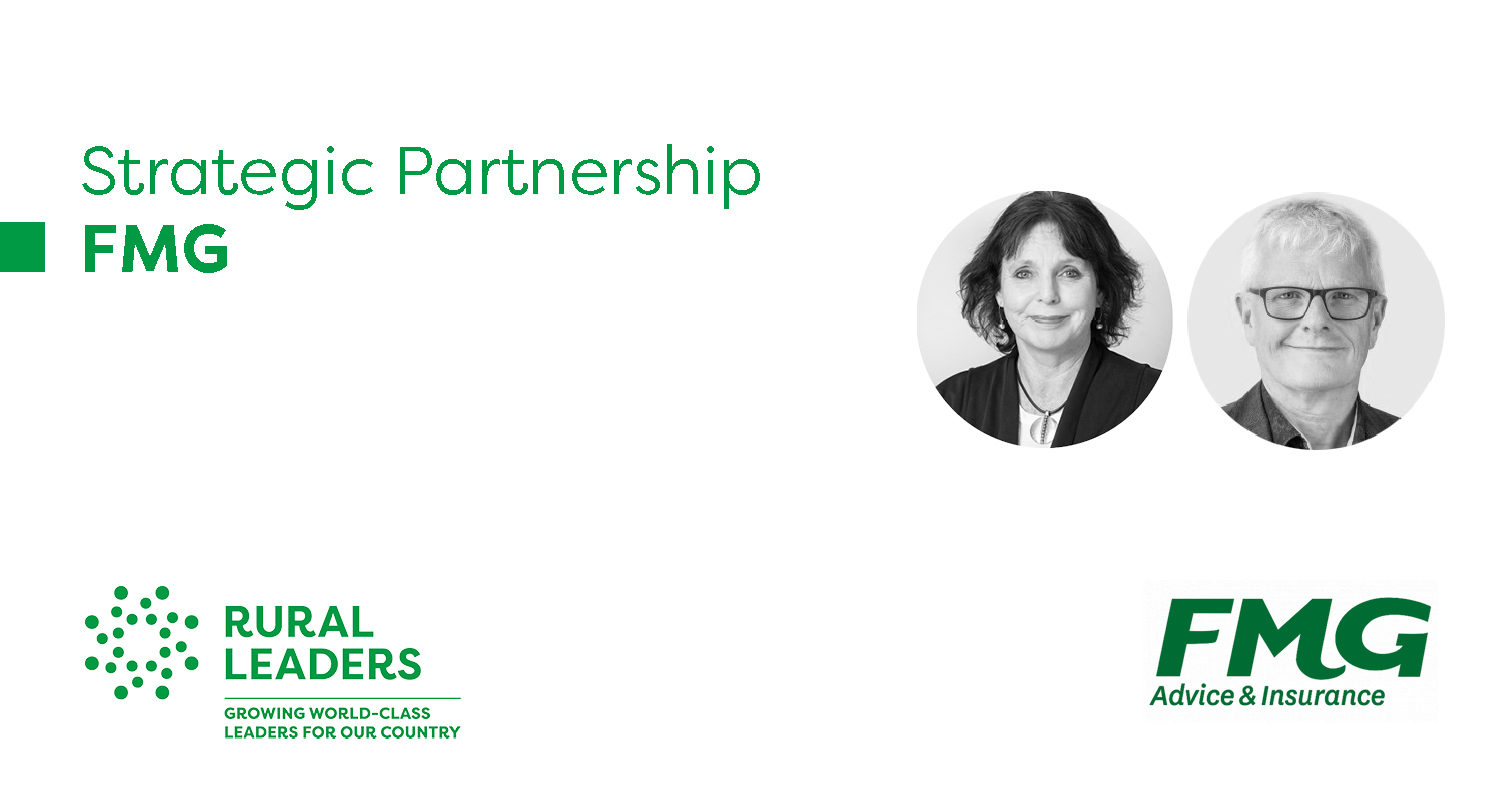
FMG and Rural Leaders renew Strategic Partnership.

The New Zealand Rural Leadership Trust (Rural Leaders) is pleased to announce the renewal of their Strategic Partnership agreement with FMG.

Rural Leaders and Strategic Partner FMG, have renewed their partnership agreement, reinforcing a shared commitment to lifting leadership capability and to building stronger rural communities.

The new agreement formalises the continued alignment of values and support for Rural Leaders’ mission to develop capable industry leaders who, in turn, strengthen the communities they represent.

As a Mutual, FMG takes a long-term view – building long-term connections with rural New Zealand and reinvesting to help build strong and prosperous rural communities. FMG sponsors over 700 local events each year, from smaller lamb and calf days right up to National Field Days, and the FMG Young Farmer of the Year contest.

The renewal of the FMG-Rural Leaders partnership, alongside a long-standing relationship with Rural Leaders’ Programme Partner Farmlands, exemplifies this focus.

”FMG has been supporting farmers and growers for over 120 years now, and we’re committed to supporting the generations to come. It is a privilege to partner with Rural Leaders and support the future of farming in New Zealand Aotearoa. No doubt, our rural leaders will continue to challenge the status quo, team up to pool resources, share knowledge and capability as they have throughout our country’s history,” said Pete Frizzell, Chief Marketing Officer, FMG.

With FMG’s support, Rural Leaders’ programmes will continue to develop confident, skilled leaders equipped to tackle the challenges and opportunities facing their communities, industries, and the Food and Fibre sector.

“The partnership’s impact is evident in the transformative growth of our programme alumni, who consistently demonstrate enhanced leadership ability, show great resilience, and are better equipped to drive change”, said Lisa Rogers, CEO, Rural Leaders.

FMG also fosters leadership development internally, with employees regularly attending the Kellogg Rural Leadership Programme.
FMG has been a Strategic Partner of Rural Leaders since the Trust’s formation in 2017.

(Pictured – Pete Frizzell, Chief Marketing Officer at FMG, and Lisa Rogers, CEO Rural Leaders).

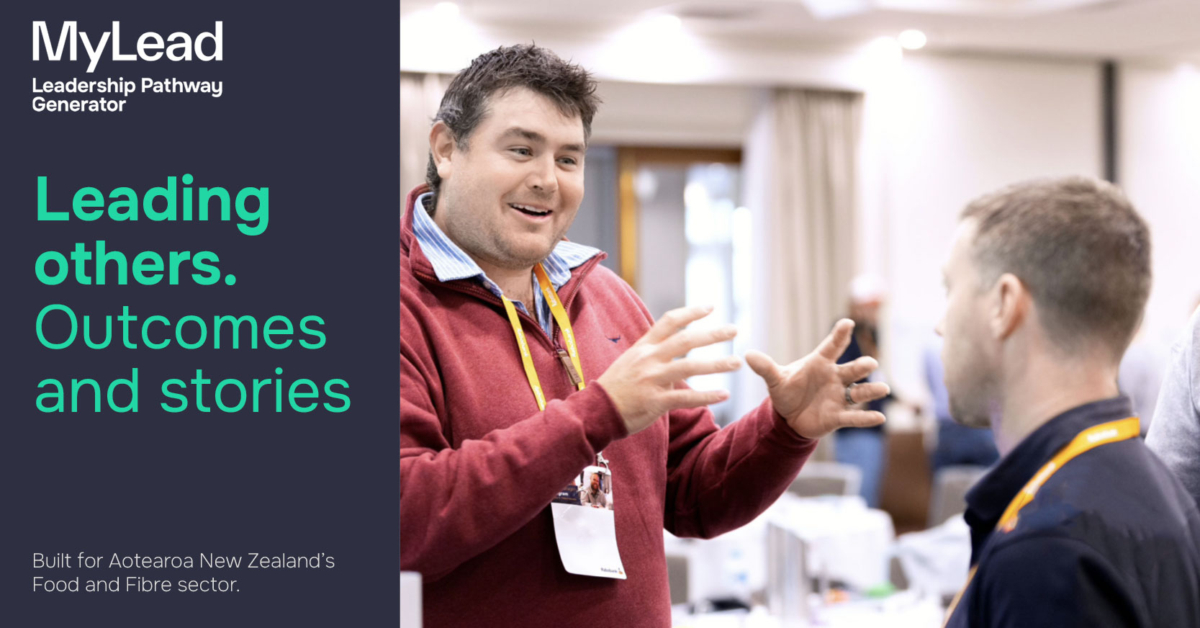
MyLead – Supporting stronger leadership in Food and Fibre.

MyLead: Supporting stronger Leadership in Food and Fibre.

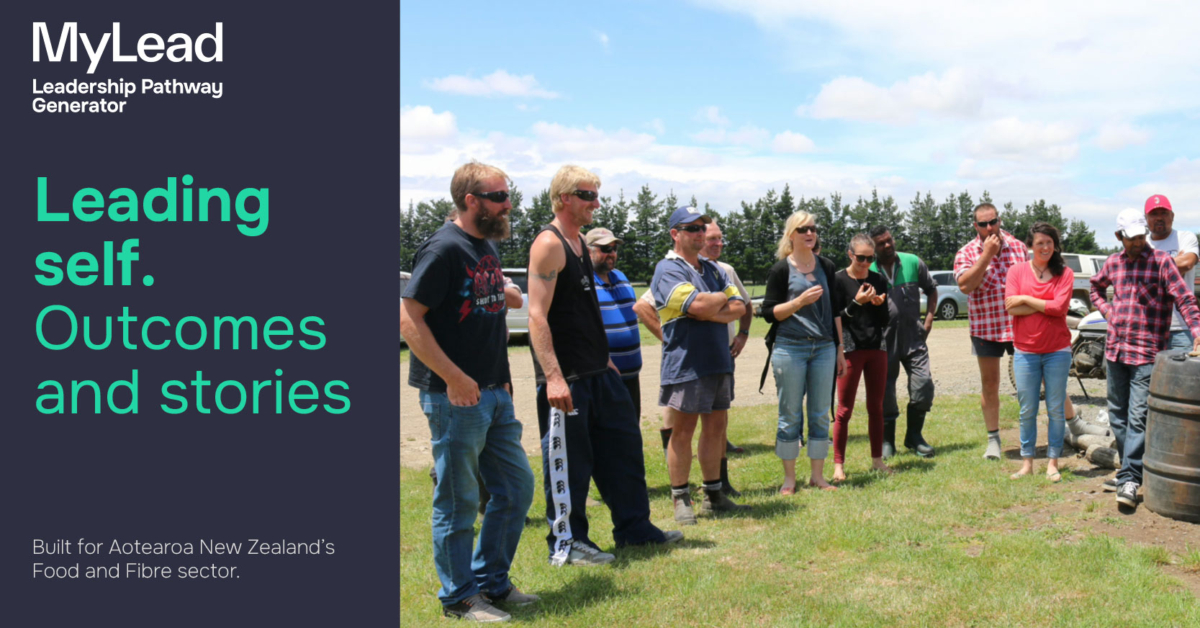
A closer look at MyLead’s leadership stage outcomes and the industry stories that bring these to life.

MyLead.co.nz helps individuals at all stages of their leadership journey identify tailored development pathways to support their personal and professional growth.

MyLead marks a step toward a more coordinated and impactful approach to developing our sector’s most important asset – our people.

Research commissioned by Food and Fibre Centre of Vocational Excellence and led by Rural Leaders provides a leadership framework. The site brings this framework to life with an ecosystem of leadership programmes along with leadership outcomes by stage, supported by real industry stories.

The outcomes and stories vary depending on both the stage and industry selections users make on the site, making it a personalised experience.

What follows is an opportunity to review all of the leadership outcomes from the framework and their supporting stories.

These have been categorised, as they would be on MyLead, under the three leadership stages: leading self, leading others, leading strategy.

Leading self (team member/team leader)

Those at the Leading Self stage are focused on planning and executing tasks to achieve organisational or team objectives.

Leaders build trust

Relationships are founded on trust. It is also the oxygen that leadership breathes. How leaders behave builds or destroys trust. Without trust, suspicion, misunderstandings, failing relationships, and toxic workplaces quickly follow.

Story from the Sector

Leaders have empathy

To learn and understand others, we must demonstrate empathy. This is the ability to see and understand someone else’s perspective without judging it, or them… Demonstrating a genuine care and empathy for the team was frequently cited as a core attribute of what kaimahi (workers) in the sector wanted from their leaders.

Story from the Sector

Leaders are resilient

As a concept, resilience refers to the ability to endure and absorb the shocks of the world and recover from adversity… The good news is it is a learnable skill. For example, leaders can practice focusing on what they can control, taking charge of their thoughts, and adopting helpful habits.

Story from the Sector

Leaders are curious

Curiosity is a hunger to learn and grow further… The best leaders are not just curious about those things that directly relate to them, but they are also curious about what is happening beyond their immediate environment and how they might be able to adapt ideas from elsewhere.

Story from the Sector

Leaders understand their reputation

As leaders, we need to understand our reputation. Asking for 360-degree feedback can be very useful here (and potentially very confronting). How do other people see us? And does this reflect who we believe we are?

Story from the Sector

Leaders are in tune with their feelings

We lead people when we move them emotionally. So as leaders, we need to understand how emotions work, how they impact our thinking, affect our physical bodies, and how they spread between people.

Story from the Sector

Leaders understand their own drivers and values

As the leader, we are our first team member. So, leading ourselves is our first leadership responsibility. Knowing ourselves is a big ask, because it means exploring what it is that makes us tick—to differentiate between things that give us strength and those that cause grief.

Story from the Sector

Leading others (manager/general manager)

Those at the Leading Others stage bridge strategy and action by organising and systemising for success.

Leaders hold people to account

Leadership involves taking accountability for the behaviours and performance of the team while having the courage to share responsibility and authority with them.

Story from the Sector

Leaders delegate authority

As the leader, we are accountable for the results and wellness of our team. A leader’s accountability cannot be divided or delegated, but our authority and responsibilities can and should be… It takes courage to let go and let others act for us, knowing they may do it differently to us.

Story from the Sector

Leaders make effective decisions

Effective leadership is not a popularity contest. Leadership comes with scars. This is because a leader’s calling is to change-up (or adapt) the game rather than optimise the current game. To change with the times, the sector needs leaders with the courage of their convictions.
Story from the Sector

Leaders invest in people’s growth

As leaders we grow people, and our people grow the Food and Fibre our nation relies on. When we invest in our people, we invest in our business, not least because our people make decisions every day that have a material impact on the purpose or profit of our organisation.

Story from the Sector

Leaders deal with status and power

Leadership roles typically come with status and power which, to the unprepared, can be intoxicating. Leaders who put their own interests first, or who start thinking their elevated position equates to importance, set a rot in action that will ultimately undermine themselves and the results they seek to create.
Story from the Sector

Leaders serve something greater than themselves

Truly leading well is an act of service. Our role as the leader, is to serve the collective, not ourselves… An ethos of service works by unlocking one of leadership’s paradoxes (to lead we must serve). Leaders who serve, harness the reciprocal energy of the collective group or team.
Story from the Sector

Leaders make one-to-one connections

Leaders build a bridge between themselves and other people. To do this, leaders build trust, get alongside their people, and do more than just communicate— they connect. At its best, connecting is akin to creating a sense of family, this is the Māori value of whakawhanaungatanga.

Story from the Sector

Leaders know and understand others

As leaders, in addition to knowing ourselves we need to know others. To know others, we must seek to understand them. The things we seek to learn about ourselves (personality, thinking style, emotions, and resilience) are the same things we need to be curious about in seeking to know others.

Story from the Sector

Leading strategy (executive/director)

Those at the Leading Strategy stage focus on articulating the vision, generating value and creating competitive advantage.

Leaders energise the team

Energy is the wellspring of true leadership. When we are truly leading, the alignment of our whole self with meaningful purpose energises us and others are drawn to it. Finding what energises us and what feels true, is leadership’s X-factor. This is when the magic happens.

Story from the Sector

Leaders connect the team to an organisational purpose

People need to know that what they do matters. Leaders ensure their people understand how their task is important to the bigger picture. People simply want to know why they’re doing a task; this is what makes it meaningful.

Story from the Sector

Leaders create an environment where team members have autonomy over their timing and place of work

Flexible working practices should, as the name says, be flexible. It is unrealistic to think we can apply flexible working practices universally across an organisation. The goal is to apply them where possible. Organisations that embrace flexibility will maximise the pool of talent they can recruit from.

Story from the Sector

Leaders create an environment where team members have the autonomy to determine how best to conduct their tasks

People don’t want to be micromanaged. To give our people more autonomy, we need to focus more on the outputs we want them to achieve, and less on their inputs (methods, hours, and location required to deliver those outputs). In the end, it is as simple as giving people choice.

Story from the Sector

Leaders role model belonging

As leaders, we must create an environment where all our people feel they truly belong. This includes us. If we are brave enough to be authentic, we show our team members that it is safe for them to be authentic too.

Story from the Sector

Leaders create an environment where all team members feel safe to be their full and authentic selves

Leaders create an environment where everyone in their team can bring their whole, authentic, unique self to work and feel truly valued and included.

Story from the Sector

Generate your own leadership development pathway

Visit MyLead.co.nz

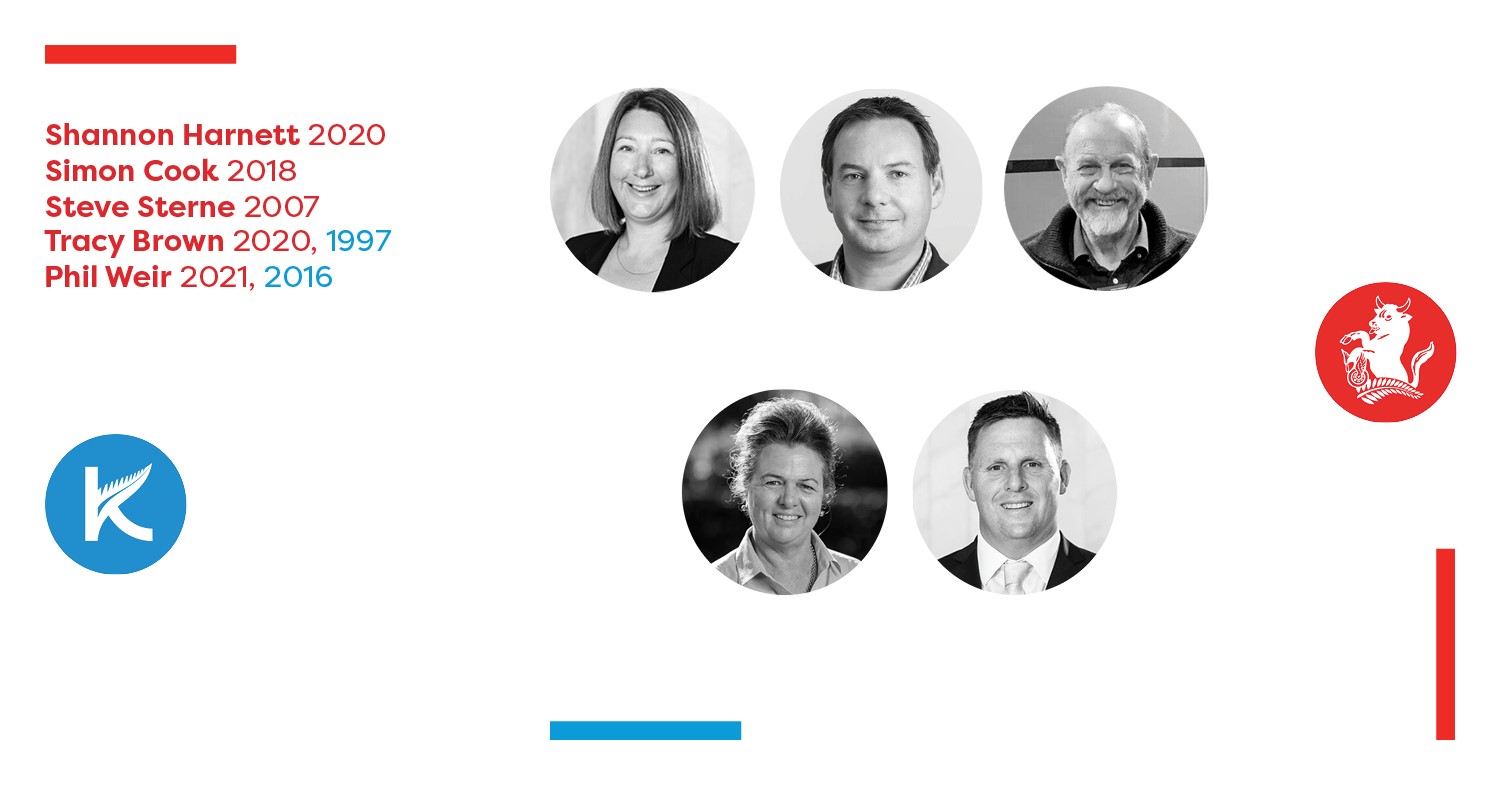
Alumni in the Spotlight – Tracy Brown, Shannon Harnett, Steve Sterne, Simon Cook, Phil Weir

Here are just a few of the media pieces covering the impact of Rural Leaders’ Programme Alumni in industries and communities across the sector. 

Shannon Harnett, 2020 Nuffield Scholar

Shannon Harnett shares her recent AI learning experience exclusively with Rural Leaders.

Read Shannon’s article here.

Tracy Brown, 2020 Nuffield Scholar, 1997 Kellogg Scholar

Tracy Brown has been re-appointed unopposed as a director to the DairyNZ Board.

Read the article here.

Phil Weir, 2020 Nuffield Scholar, 2016 Kellogg Scholar

Phil Weir has an opinion piece published on Farmers Weekly about whether it’s time to consider feedlots as ‘batteries’ for the meat supply chain.

Read the article here.

Steve Sterne, 2007 Nuffield Scholar

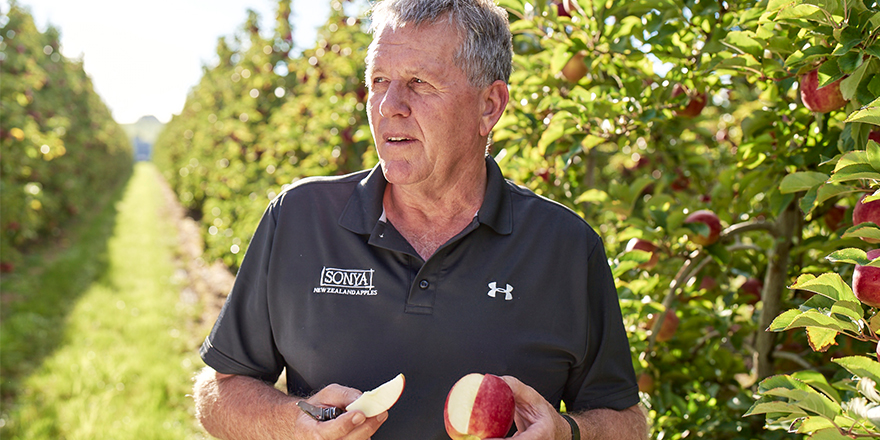
Steve Sterne was recently honoured with NZPork’s Outstanding Contribution Award.

Read the article here.

Simon Cook, 2018 Nuffield Scholar

Simon Cook has been elected to the Horticulture New Zealand board.

Read the article here.

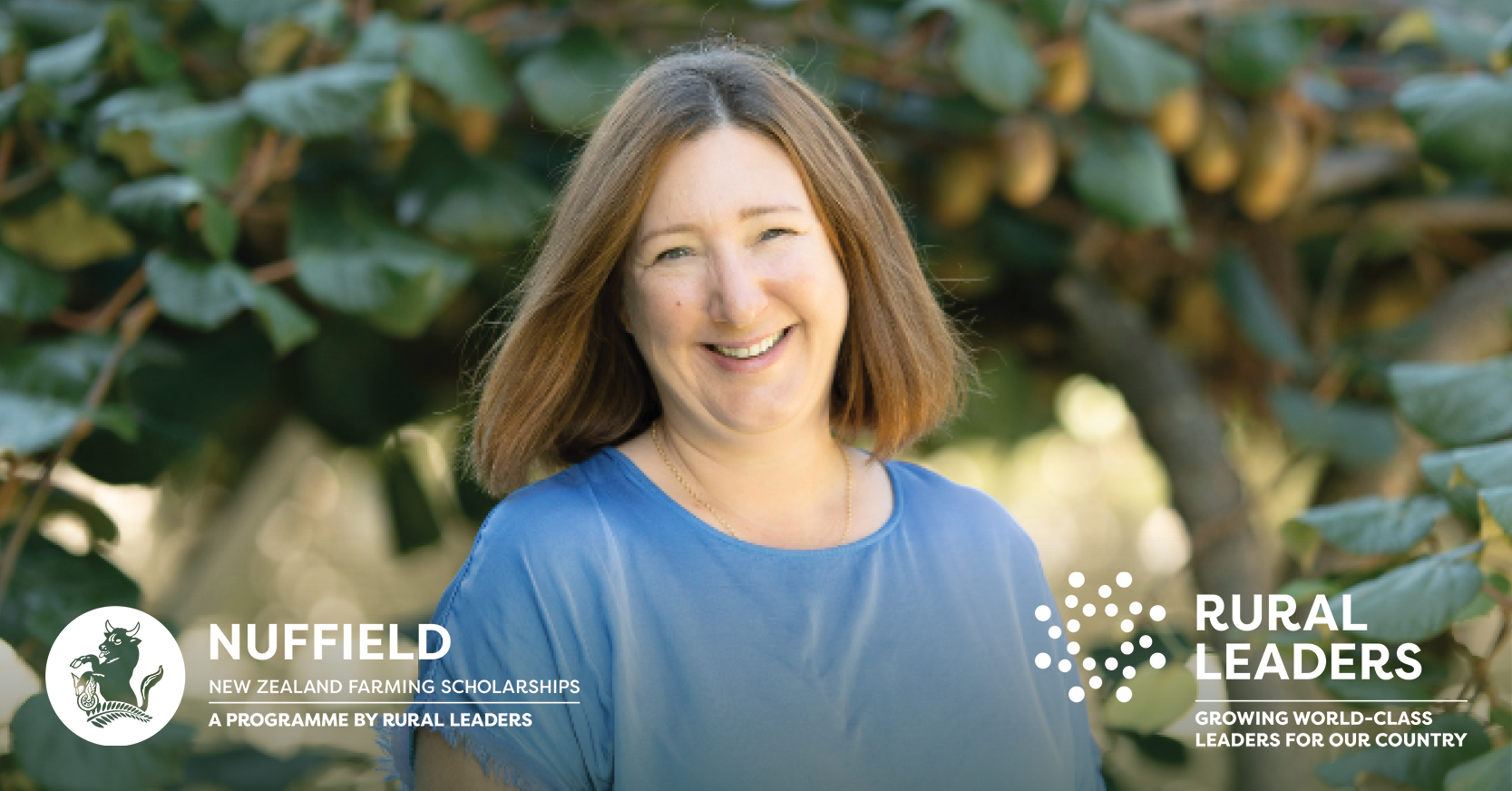
Shannon Harnett – Making AI work for you

Shannon is a 2020 Nuffield Scholar, Director and Co-Owner of Rural Accountants and has investments in agriculture, horticulture and aquaculture businesses. In this article Shannon shares her insights into how to make AI work well for you.

Making AI Work for You
The first time I saw ChatGPT in action was in the summer of 2023, at a friend’s house. We asked it to write a poem about accountants. It was hilarious — but underneath the humour, I realised the potential.

Very quickly, AI became my assistant. At first, it fixed grammar and spelling in emails and reports. My writing became sharper, more concise, and easier to read with far less grammar and spelling mistakes! Mark Twain once said, “If I had more time, I would have written less.”  With AI, that constraint no longer applies.

The real turning point, though, was when I used AI to turn something messy into something structured and useful. Not “robots taking over the world.” Just getting the AI to ask me questions, one by one, about a project I was working on, then pulling my answers into a clean, usable format.

That’s when it clicked: AI isn’t just a word-smithing assistant. It’s a strategic tool. Used well, it takes work off your plate, sharpens your thinking, and creates scale without the hours of refining.

It Starts with the Question
The biggest lesson? It’s not about having the right answer. It’s about asking the right question.

I now frame prompts like I’m briefing a new hire: clear role, clear context, clear task. For example, as a CEO, I don’t just type, “Help me with strategy.” That’s far too broad. Instead, I say:

“You are my Scaling Up Strategy Assistant. Ask me one question at a time. Start with People, then Strategy, then Execution, then Cash, then Risks & Opportunities. Only show me the full summary once we’ve covered all five areas.”
The result is an interactive interview where AI does the admin while I do the thinking. That’s the power of a good prompt: it forces clarity, and the output is miles better than a vague question ever delivers. And, in truth, learning to prompt AI has made me a better leader — clearer, more structured, and more intentional in what I ask of others.

Small Steps, Big Wins
You don’t need to overhaul your whole business to start. Try it on something small, try it on something creative.

Don’t know what to have for dinner? Take a photo of what’s in the fridge, upload it to AI, and it’ll generate recipes with step-by-step instructions.

It sounds trivial, but it proves the point: AI can sift through messy inputs, structure them, and give you something useful in seconds. In business, the same applies — pulling data from multiple reports, tidying client communications, or drafting meeting notes. These aren’t tasks we can’t do. They’re tasks that chew through time — and AI gives that time back.

The Power of Projects
The real magic happens when you start treating AI as a project partner. I’ve been experimenting with GPT-powered projects that run like structured workflows — guiding me step by step, capturing the right inputs, and producing a clear, consistent output.

Here’s what that looks like:

  • A marketing project where AI builds a content calendar in my brand voice.
  • A reporting project where AI pulls numbers from my files and formats them into a tidy monthly pack.
  • A strategy project where AI interviews me (or my team) and distils the answers into a one-page plan.

You define the outcome, give AI the right resources (files, data, context), set simple rules, and let it guide the process. The result is structure, quality, and momentum — without false starts or bottlenecks.

And once a project is set up, anyone in the team can run it. That means clarity and consistency, whether I’m leading it or handing it over.

AI in the Tools You Already Use
AI isn’t just in chat windows. It’s already creeping into the software you use every day.

Take Microsoft Copilot. It can scan emails and Teams chats, spot an approval request (“Can I go ahead with this?”), and track it. If three days go by without a reply, it nudges the approver and updates the requester.

That alone kills the “lost in the inbox” problem that slows teams down. But it also shines at surfacing related documents inside Microsoft 365 — I’ve saved hours finding what I need.

A New Way of Leading
Here’s the mindset shift: AI isn’t just tactical. It’s strategic.

The sticky note on my desk simply says:
“How can AI help me do this?”

Whether I’m writing a report, mapping a process, or planning strategy, I pause and ask where AI could take the load. Most of the time, it’s not about replacing me. It’s about clearing space so I can show up where it really matters — with clients, with strategy, with people.

How to Start Today
If you’re ready to dip your toe in, here’s a simple path:

  • Pick one task you repeat often (emails, stakeholder lists, client notes).
  • Write a clear prompt that sets role, context, and task.
  • Let AI break it into questions and interview you.
  • Use the output, tweak it, and save the prompt for next time.

Once you’ve got one win, build a small “AI toolkit” for yourself and your team — a set of prompts or projects that anyone can use.

Final Thought
AI won’t magically run your business or your life. But it will tidy the messy bits, speed up the slow bits, and track the bits you’d usually forget.

And when you start treating AI less like a novelty and more like a colleague — one that never gets tired of chasing approvals or formatting tables — you’ll see what I’ve seen: the power to do more, without burning yourself or your team out.

I completed the Spark-funded AI Mini MBA course, and it was one of the best investments of time I’ve made. If you get the opportunity, take it.

Shannon’s 2020 Nuffield report on Kiwifruit PVR’s ‘Getting Plant Varieties Right’ can be viewed here.