2026 Nuffield NZ Farming Scholarship. Apply by 17 August 2025. Read More...

Apply for 2026 Nuffield NZ Farming Scholarship by 17 August 2025. More details...

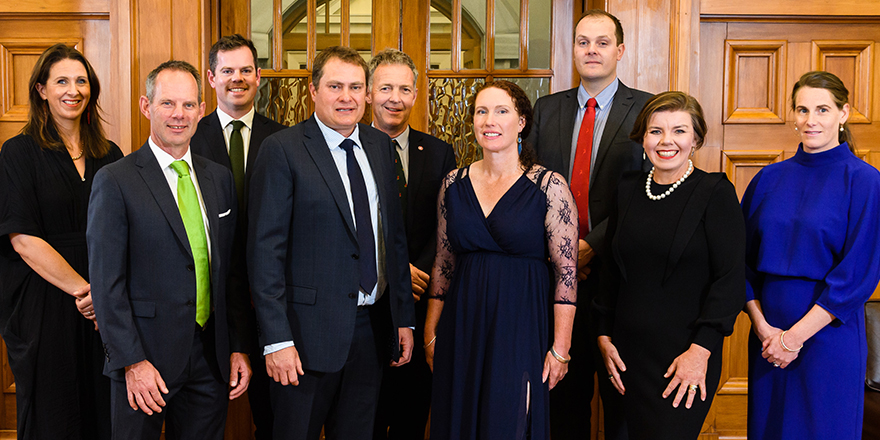
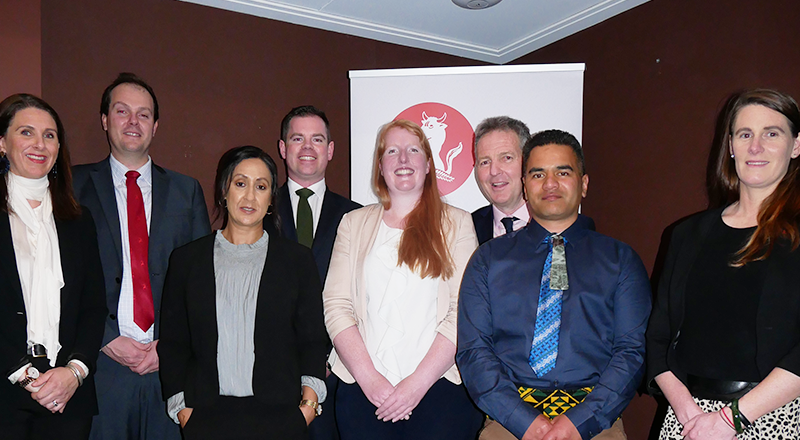
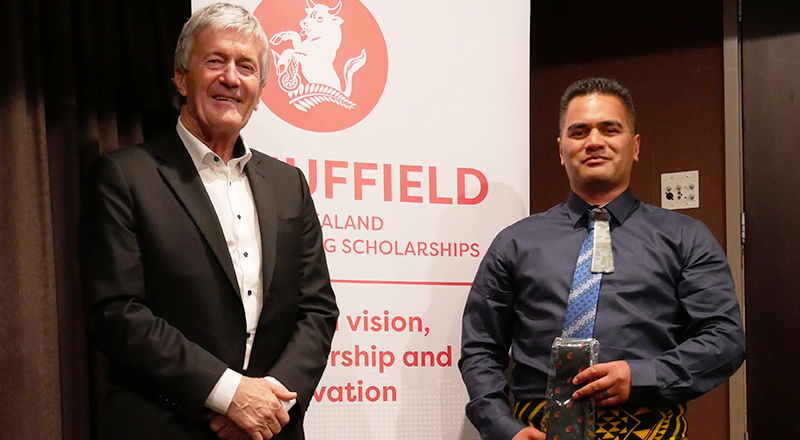
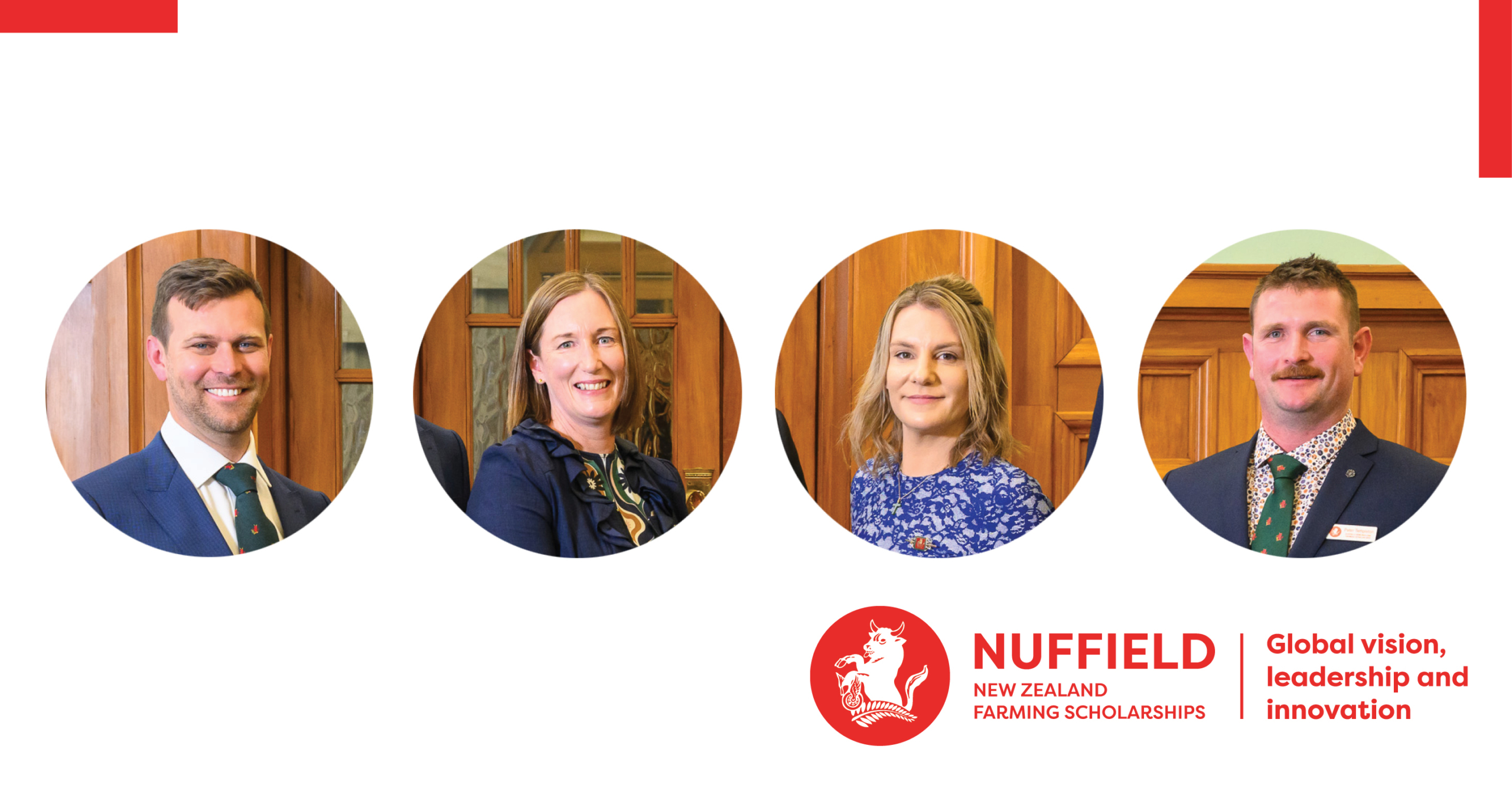
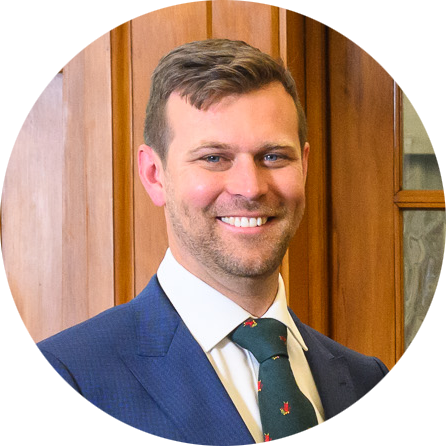
Meet the 2024 Nuffield New Zealand Farming Scholars.

Carlos Bagrie

Carlos Bagrie

Carlos Bagrie has been across multiple ends of food production and the value chain, including primary production, distribution, retail and media.

He recently founded Royalburn Station, a renowned high-country farm that has carved a niche for itself by distributing premium quality food to some of New Zealand’s top-tier restaurants.

Carlos further diversified influence in the food sector when he co-founded My Food Bag. This innovative food distribution company helps answer the ‘what’s for dinner?’ question for tens of thousands of Kiwis every week. During the COVID lockdowns, Carlos played director and videographer, filming TV1’s hit ‘Nadia’s Comfort Kitchen’ on his iPhone.

In 2022, Carlos found himself in front of the cameras on TV3’s ‘Nadia’s Farm’, a TV show that highlighted the intricacies of farm life and food production at scale.

Alongside his wife, Carlos delved into the world of books and media. Together, Carlos and Nadia self-published a series of Number 1 best-selling cookbooks that resonated with home cooks.

Carlos can usually be found on the farm, either in the butchery, on the combine harvester, or moving mobs of sheep across the property. 

“I’m humbled to be selected as a Nuffield Scholar and will be focussing my research on circular farming systems that reduce waste while improving the bottom line.”

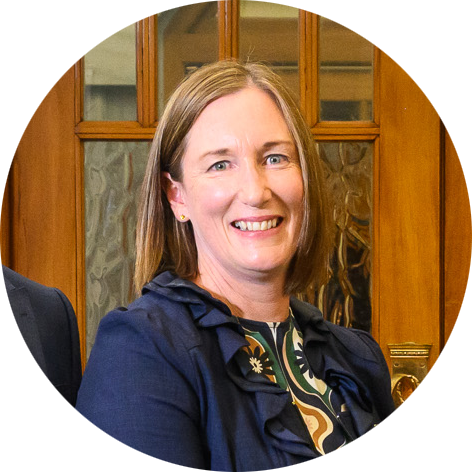
For Rachel Baker, the Primary Sector is both a passion and growth enabler. Her path has always involved the people, communities and business of food production.

Rachel’s extensive professional experience includes working as a dairy veterinarian, a dairy farm systems consultant, sharemilker, dry stock farm owner, educator, and more recently, an asset manager for horticulture investment businesses. 

“While being relatively new to horticulture, my role as Portfolio Manager of MyFarm Investments’ Hawke’s Bay apple syndicates, has enabled me to learn, understand and challenge the grower model. I have been involved with development and management of 100ha of Rockit® plantings in Hawke’s Bay and Gisborne.”

Rachel’s current governance experience includes serving as a trustee of the Rockit Apple Growers Trust and directorships of horticulture and commercial property. Rachel is a 2016 Kellogg Scholar, a 2018 NZ Dairy Woman of the Year finalist and past Chair of the NZ Dairy Industry Awards. 

On Rachel’s proposed Nuffield research, she states, “My research topic will explore the impact, challenges and opportunities of existing and proposed global food strategies on food producers, with particular interest in the applications for New Zealand.”

Rachel’s recent focus has been the response and recovery of properties impacted by Cyclone Gabrielle.
Rachel Baker
Jenna Smith

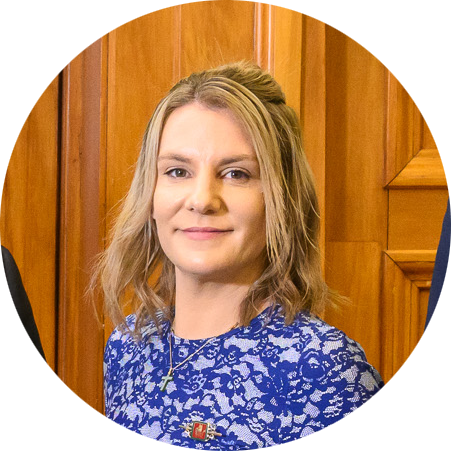
Jenna is the current Chief Executive of Pouarua – a diverse Māori Agribusiness encompassing Dairy, Arable, Beef and Horticulture on the Hauraki Plains.

Jenna serves as a trustee for DWN, on the board of BEL Group and chairs St Francis Catholic School in Thames.

Jenna has extensive corporate agriculture experience across Waikato, Canterbury, Otago and Southland, having previously worked for SOE Pāmu, and syndicated overseas investment farming portfolios. During this time, she has always “kept a gumboot in the grass” through her and her husband’s farming businesses.

Leading Pouarua Farms to be awarded as finalists in the prestigious Ahuwhenua Trophy for excellence in Māori Farming in 2021, Jenna was also named a finalist in the 2021 Zanda McDonald Award which recognises talent and passion for Agriculture across Australia and New Zealand.

“I am looking to study economically and sustainably viable alternate land uses for lowlands and peatlands that are highly susceptible to climatic pressures.”

Passionate about creating environmentally sustainable agribusinesses – Jenna regularly contributes to advisory boards for MfE, MBIE and MPI.

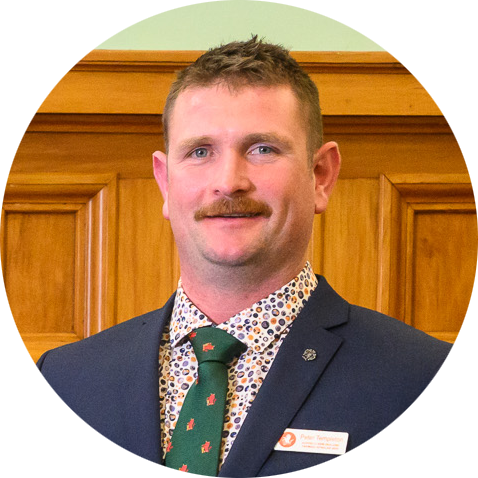
Peter Templeton is a 5th generation dairy farmer based on the south coast of Southland. 32 years old, Peter is passionate about southland dairy farming.

Peter has been dairy farming for 11 seasons, working his way up from 2IC to farm manager before returning to the family farm in 2016. Peter began his ownership journey as a 50/50 sharemilker for five seasons, before leasing the farm for two seasons and finally owning the farm in August 2023.

Peter is interested in focusing on the future of farming, what it is likely to look like on an individual farm basis – in particular on new technologies to implement on farm.

“I am always curious to see other systems and challenging myself to see what I could use in my own environment.”

Peter also states he is excited to see and gain a better understanding of New Zealand’s value chains, understand how they intend to innovate to compete.
Peter Templeton

Peter Templeton

Vocational pathways from the grassroots up.

Aotearoa, finds itself in a moment of profound transformation, where uncertainties and new prospects intertwine. This juncture offers a truly unique opportunity for vocational pathways within the primary industries to align themselves with the ever-evolving demands of the industry and deliver meaningful outcomes for all whānau (families) and hapori (communities).

The time has come for various stakeholders, including Industry, Iwi (Māori tribes), Government, Community, High schools, and Tertiary/Vocational Education providers, to gain a deep understanding of our current position and grasp the essential requirements for collective progress. By joining forces, we can effectively navigate the shifting landscape and work collaboratively towards a brighter future.

Our industries are in a constant state of progression, fueled by the seamless integration of cutting-edge technology, artificial intelligence, and innovative cultivation systems. Recognizing the significance of pastoral care and responding to the community’s aspirations for viable career opportunities, as opposed to mere jobs, holds utmost importance. To cater effectively to these rapidly evolving industries, we must ensure that our vocational pathways are adaptable, well-suited to emerging opportunities, and capable of keeping pace with advancements.

By embracing this paradigm shift, we open doors to a world where traditional wisdom and contemporary knowledge converge. It is a world where we foster sustainable practices, nurture talent, and cultivate the next generation of industry leaders. This collaborative effort enables us to craft vocational pathways that not only address the immediate needs of the industry but also empower individuals to forge fulfilling and prosperous futures.

Together, let us embark on this transformative journey, where Industry, Iwi, Government, Community, High schools, and Tertiary/Vocational Education providers come together in synergy. Through comprehensive understanding, shared goals, and dynamic adaptation, we can shape a future where vocational pathways serve as gateways to success, prosperity, and harmony in Aotearoa.

New Zealand Dairy trade and market expansion opportunities

New Zealand exports in excess of 90% of its dairy products and is the world’s leading supplier of whole milk powder to China. New Zealand must expand current dairy trade markets and identify emerging market opportunities to remain competitive in the global dairy trade. New Zealand is an export dependent country, that efficiently produces milk and dairy products in excess of domestic market requirements. Returns from dairy trade contribute over 40% of food and fibre revenue which is more than 80% of the total export revenue to the New Zealand economy. China is New Zealand’s largest dairy product export market, importing an estimated NZD$8.3 billion of whole milk powder during the 2022 year. Pre-COVID and the Russia – Ukraine conflict, the demand for New Zealand dairy products was increasing in the Asia and Middle East regions; particularly in countries such as Japan, the UAE and Singapore. Food security has become a priority for countries such as the UAE and Singapore, who are dependent on food imports to feed their populations.

Dubai, Tokyo and Singapore are studied in this research, exploring trade expansion opportunities throughout the Asia and Middle East regions, through applying a gateway city model. The literature describes gateway cities as business hubs, linking international financial and consumer markets and connecting nearby regions where trade has been restricted due to political instability, social unrest, or bureaucratic red tape. The importance of political stability in the gateway city and country is an important element for gateway cities. Both Dubai and Singapore are well respected in their regions for the secure flow of finance and reliable financial systems. Geopolitical uncertainties can be high in Asia and the Middle East regions and Dubai and Singapore are recognised as a safe place to engage in business and investment.

Gateway cities perform an important role of connecting their hinterlands and peripheries to the global trade network. Gateway cities further perform a brokerage role; mediating the flow of goods, capital and labour; creating a connection between regions through a central role in logistics, transportation and wholesaling. Gateway cities gain wealth from their regions and create regional economic wealth. They are cities that are seen as attractive places to live and work for foreign talent, tourists and investors. Further, gateway cities like Singapore and Dubai have Governments who have invested in creating trade relationships that support the ease of trade and access to markets. Tokyo is a unique gateway city, connecting Tokyo to Japan’s domestic market and the wider Asia region. Japan has gained power and influence through regional and global economies; connecting to its hinterland and other world
cities.

The Asia and Middle East regions are the largest volume importers of whole milk powder (WMP), followed by skim milk powder (SMP), cheese and butter. The UAE is the second largest volume importer of WMP, behind China during the 2017-2021 years. The ten largest volume importers of SMP are from the Asia region and the Middle East countries do not feature on the top ten list. Japan is the largest volume importer of cheese and the UAE is the sixth largest volume importer of cheese. Five Middle East countries feature as the top ten cheese importers across the Asia and Middle East regions. Butter is the least imported dairy product across the regions, however Singapore, the UAE and Japan all feature on the top ten largest volume importer list for the 2017-2021 years for butter. New Zealand will remain a strong exporter of WMP and butter and the cheese market is one that can be further expanded. New Zealand is a larger volume exporter of dairy products across the Asia region, and the Middle East market creates an opportunity for market expansion. The UAE, Japan and Singapore are three countries which feature on the top ten importing countries across the Middle East and Asia for all four dairy product imports.

Domestic dairy production in Japan is highly regulated to create a stable supply of fresh milk for the domestic market. The cost of producing milk in Japan is high, with a dependency on feed imports, driving the cost of production. Despite strong Government support and subsidies, Japanese Dairy Farmers are experiencing the challenge of increasing business debt and an ageing workforce. Japanese consumers enjoy engaging with the origin of their dairy products and agri-tourism is popular. Health benefits drive Japanese consumer behaviour towards dairy product choice and dairy products such as: international cheeses, yoghurts, drinking yoghurts and protein drinks are becoming increasingly popular. Singapore and Dubai have limited domestic production of milk and are reliant on imported dairy products.

Singapore has a diverse population. The expatriate population contributes to 30% of the total population and has influenced Singaporean diets, resulting in an increase of dairy product consumption. Singaporean consumers are health conscious and consider dairy based protein for health and nutrition benefits. Singapore and Dubai import more than 90% of their food for their domestic population. Up to 90% of Dubai’s population are expatriates from over 200 nationalities. Dubai supermarkets are specifically targeted at consumer groups and cater for a super diverse population meeting the needs by extensive food imports. The UAE is experiencing a shift towards more value-add, convenient and healthier food alternatives, developing a taste for westernised diets; influenced by a growing expatriate population. Food security strategies have created heightened awareness for food import dependent countries; Singapore and the UAE. The Singaporean Government has invested in science, innovation and research to look at alternative forms of growing food and protein. Singapore is well known for its science and research centres along with its urban strategy.

Further research to understand the influence of country-based culture on consumer food choices across Asia and the Middle East is required. Current research does not adequately understand the cultural influences on dairy product choice and consumption. Understanding country-based culture provides an insight into the daily eating habits, rituals, traditions and consumption patterns. Asia has been a traditional consumer of plant-based protein and understanding the social shift that is occurring particularly in ageing populations is important.

Consumption of food has been linked to economic and social factors, including disposable income, age, education, family member and family size. Consumer buyer behaviour is different for domestic populations compared to expatriate populations, particularly in Singapore and Dubai, where the expatriate population is significantly higher than Japan. Increasing urbanisation also impacts consumer food choices along with population growth leading towards higher value foods and an increase in dairy product consumption.

Keywords for Search: Parmindar Singh

Data sharing to achieve data interoperability

New Zealand is a country of entrepreneurs and leaders in the creation of new systems and apps that can capture on farm data. A significant opportunity to automate data collection to match the systems together and see the data holistically still remains. Each company is creative and innovative in their own right, but farmers and growers want to see the data consolidated. This is how they can make robust, science-based decisions on farm.

This is becoming increasingly important as we move into a digital world where information is accessible at consumers’ fingertips – we need farm data to be in this same realm. With the new generation coming through, it is no longer enough to have values and show what farmers stand for, we also need to prove it.

During my Nuffield year I spent four months overseas visiting different agriculture companies, farmers, and governments. I came back with a strong understanding of the risks of not integrating our data. Covid-19 has changed our world faster than ever before. There are new standards and requirements to be met that are being imposed by consumers. No longer can we afford to look at siloed data systems.

We should not be afraid of transparency because the world is demanding it. Our consumers are demanding it. If we do not do it the effect will be that we will be told how to farm because we haven’t proved we are better than 10 years ago. I believe we do farm better. But belief does not cut it anymore. For the next generation coming through we need the data and the evidence of our farms to back up our claims.

No country or system I came across has a fully integrated farm data system. In New Zealand we are well placed to try something new around data interoperability because many of our companies are co­operatives and farmer owned. We are in the premium space and need to hold our premium position. We also need to have all the information available to make the best decisions on farm and enable scenario planning and modelling. We should be able to answer questions such as:

• What happens if I put 40 kilograms less fertiliser on per hectare? What does that do to my beef production and revenue line?
• What happens if I invest in cow monitoring technology and then catch mastitis and disease earlier? What does this do to production and revenue?

Consider the emerging discipline of a farm data manager. The farm data manager will work directly with farmers and growers to determine their drivers for farming and to create a data strategy. Every farmer and grower has different needs, drivers, and reasons for being. Different data points interest different farmers. Each farm and farmer or grower require a solution that matches their driver and strategy.

Farmers and growers need a bespoke solution for them – a data manager can assist with this. It is not practicable for every farm to employ a data manager. Instead, a data manager will have a portfolio of farmers and growers they work with to give them a solution that best works for them. We need to try something different to move forward on on-farm data interoperability.

This report proposes establishing a new discipline of the farm data manager. Farmers and growers are not expected to be finance experts instead they outsource this to an accountant to support them. So why are we asking them to be data experts? Instead, a farm data manager can support them.

Keywords for Search: Lucie Douma, Lucy Duma

Where are our women?

Executive summary

The Women in Kiwifruit group has a goal of inspiring, connecting and elevating women in the Kiwifruit Industry. To understand the current status of the representation of women in the Kiwifruit industry this report was conducted. It aimed to answer if women are well represented across the Kiwifruit workforce (paddock to plate) through completing a ‘health check’. A literature review identifying documented benefits and barriers of women in the workplace and the greater themes of diversity and business culture. A diverse workforce is not a nice to have, it is morally, ethically, social, and financially beneficial business decision. Women contribute to increased levels of innovation, and better risk management.

A series of semi structured interviews were completed with 8 Kiwifruit industry leaders and 2 smaller forum groups. Following this a thematic analysis highlighting common themes. A lack of women was identified across senior leadership levels and certain roles like grower services and orchard management.

Although it was highlighted that the industry has greatly improved as it has grown, common barriers for women succeeding in the Kiwifruit industry were unconscious bias, lack of flexible working conditions and business culture. All leaders highlight great opportunities for change if a team or manager had a mind-set attuned for embracing change, or who personally valued diversity.

When a descriptive statistical analysis was completed on employment data from a Kiwifruit postharvest organisation it showed that at an overall staff numbers level 49-53% of the workforce was female. More women were employed in admin, HR, finance and quality roles and less in grower services, orchard, senior leadership and forklift positions.

As roles progressed in seniority and required a higher degree of leadership fewer women were seen. This was equated to;

  • The presence of unconscious bias during promotional discussions
  • Women’s role as primary caregivers not being compatible to roles that do not provide flexibility in work hours or rely on tacit knowledge.
  • Women doubting their personal ability, having a lack of confidence or fear of being authentic and vulnerable.

Recommendations to address the imbalance of women across the increase include

  • Collecting more data and monitoring to provide analytical metrics and reduce speculation on gender imbalances and pay parity.
  • Being bold with leadership decisions to create change and expect change from the team around you.
  • Encourage women to support women through connection and mentoring.
  • Cultivate diversity values from the bottom up and top down across the industry.
  • Adopt fit for purpose business cultures that values diversity and people.

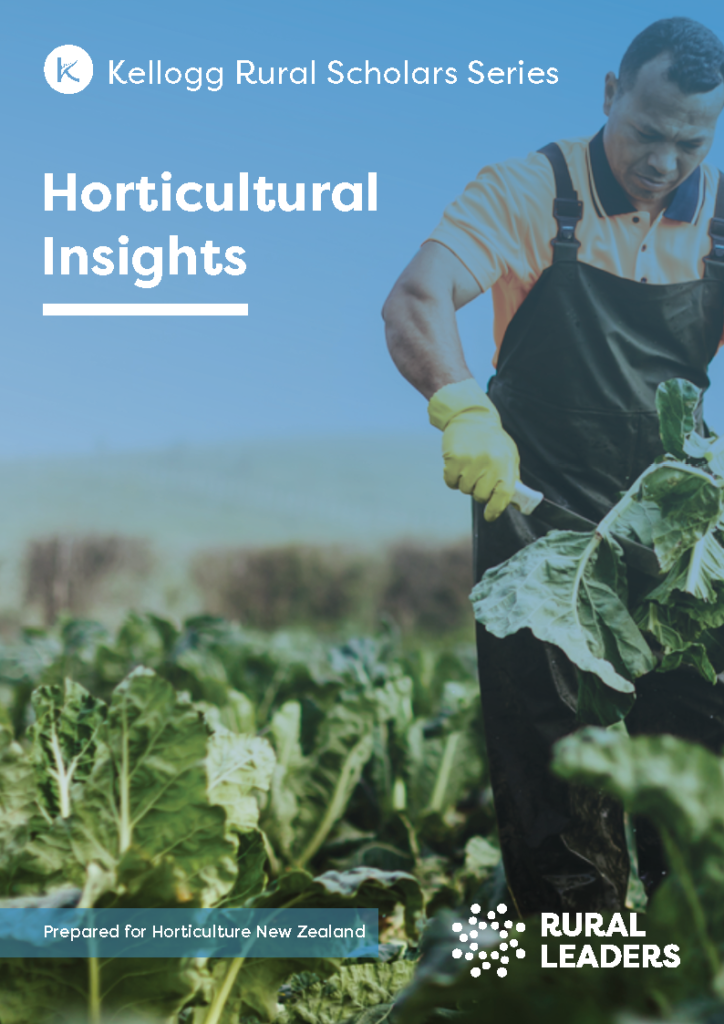
Kellogg Rural Scholars Series: Horticultural Insights

Kellogg Rural Scholars Series: Horticultural Insights

New Zealand’s food and fibre sector is full of capable and purpose driven people. Supported by Horticulture New Zealand and an incredible group of
Partners, the New Zealand Rural Leadership Trust is privileged to be entrusted with growing many of these people in their leadership journey.

A key aspect of the rural leadership approach is research-based scholarship. The clarity of thought and confidence this approach promotes is transformative.

Many Kellogg and Nuffield Scholars go on to live their research. They build businesses. They advance community and social enterprises. They influence
policy and they advocate for animal and environmental outcomes, informed by an ability for critical analysis and their own research-fuelled passion.

The relevance of research by emerging strategic leaders – with their sleeves rolled up – is no more apparent than it is in New Zealand’s Horticulture Sector.

In the following pages we are delighted to précis 14 horticultural research reports by Kellogg Scholars. The full reports can be found at
https://ruralleaders.co.nz/kellogg-our-insights/

The reports traverse topics as wide and timely as horticultural futures, social impacts on Iwi, the potential for impact investing, technical production and
profitability topics.

Ngā mihi,  
Chris Parsons

and the NZ Rural Leaders Team 

Download and read the full report here:

Could herbicide resistance reduce the growth potential of our primary industries?

Executive summary

Background: Thanks to our climate, location and innovate farming practices NZ primary producers have become very successful through being highly efficient at producing high quality and trusted foods.

Crop protection products have contributed to the success of New Zealand farmers and growers for many years. Whilst this is likely to continue for the foreseeable future, the rate that plants, insects and diseases are developing resistance to these tools is growing and likely to increasingly cost our industry and country into the future.

This report focuses on herbicide resistance and compares our situation in New Zealand to other OECD countries we often compare ourselves with. This report highlights current knowledge and/or awareness gaps, shares information we might use to influence decision making and propose ideas that we might adopt to tackle this issue.

This report answers two questions;

  1. Could herbicide resistance reduce the growth potential of NZ’s primary industries?

  2. How might NZ mitigate the affects of herbicide resistance to our primary sectors?

Key Findings: Herbicide Resistance is a significant and growing threat to global food production (CropLife Australia). In NZ, the incidence of herbicide resistance has risen significantly over the last two decades (NZ Plant Protection Society). In one recent arable sector survey, completed in the canterbury region, it was reported that 48% of farms tested had some form of herbicide resistance (Buddenhagen 2021).

An overseas example from the UK shows one weed (Black Grass) is costing the UK economy nearly £400 million and 800,000 tonnes of lost harvest yield each year, with potential implications for national food security. The worst-case scenario – where all fields have a high proportion of resistant black-grass – could result in an annual cost of £1 billion, with a wheat yield loss of 3.4 million tonnes per year (Rothamsted 2019).

The majority of herbicide resistance cases have arisen during a time where only one new herbicide mode of action has been introduced, in the last 30 years (Blois 2022). When considering this trend, along with the industries need to replace “old chemistry” products and as certain ingredients become restricted, prohibited or ineffective (APHANZ 2021), it’s clear we need to be doing more to manage this issue to be able to farm effectively into the future.

Recommendations: More detail is discussed in the recommendations section of this report. For this section I have kept this brief and grouped into six key areas;

1, Strategy – Whilst we support those currently managing herbicide resistance issues and those working in this area, we also should develop cohesive strategies. The plural is important, as in conjunction with a national strategy, this should be supported by regional and sector strategies to maximize results.

2, Awareness – To succeed, we will need to lift the level of importance of this issue, such that it receives more ‘band width’ and focus with in each of our farming sectors and on farm. Respected farming leaders could help champion this (similar to rural mental health).

3, Collaborate – We must act together in a structured way. For this to be most effective, we should consider how we can best engage national and regional government, science, sector bodies, rural professionals and applicators, but with farmers and their advisors in mind so that practices are practical.

4, Educate – Our sector is well resourced with experienced people in the following areas; science, extension and industry. With a staged and cohesive approach, we can improve knowledge levels on how to improve outcomes into the future. We are fortunate to have much science to refer to in this area.

5, Support – With the development of national, regional and sector plans, farmers will need support to help them implement these locally. Local groups should be developed and supported so that practices and strategies can be implemented. This will of course need national and local funding to succeed, this should be a mix of government (national and regional), sector and industry.

6, Act – With the benefit of clear, national, regional and sector plans we must implement change, utilizing new, existing and local best management practices to reduce the growth in future incidences of herbicide resistance to improve outcomes for our industry and farmers. This could start with reviewing the NZ Herbicide Resistance Task Force, which is a group of NZ Plant Protection Society members who are actively involved with researching herbicide resistance within New Zealand, to decide if this is fit for purpose and whether further support and investment is needed.

Rural Leaders – the big moves in 2022.

Rual Leaders

Here’s a look at some of Rural Leaders’ big moves in 2022. 

The first Value Chain Innovation Programme. 

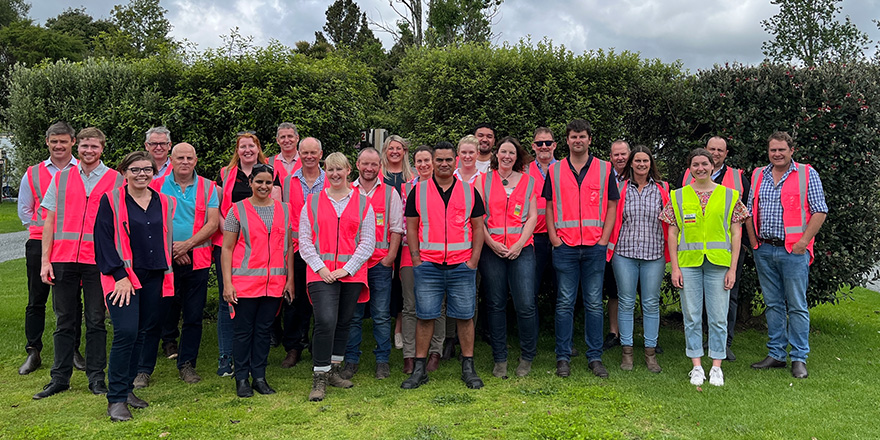
We completed the first Value Chain Innovation Programme. Twenty-two food and fibre professionals and producers took part in this immersive one-week tour of key North Island value chains.  

Everyone came out fizzing. It was refreshing, exhilarating and it changed mindsets. Everyone wanted to replicate the experience and insights on a larger scale. How could we scale it to tackle the large issues confronting NZ primary industries?” stated Prof. Hamish Gow, who co-facilitated the programme with Phil Morrison. 

There are plans afoot to repeat the programme in 2023 – this time with a South Island version. 

Visit the programme page.

The busiest Kellogg year in its 50+ year history. 

When the tough gets going… yep. We knuckled down to deliver five phase three’s, four phase two’s and three phase one’s. If our maths is correct that’s twelve phases for 2022, when a ‘normal’ year would see six.  
 
This was in part because Rural Leaders, in partnership with Whanganui and Partners, delivered the second regional Kellogg Programme.  
 
Despite flipping to a hybrid experiential-digital delivery model – the previous two years saw a number of interruptions from Covid, so 2022 was often about catching several programmes up. 
 
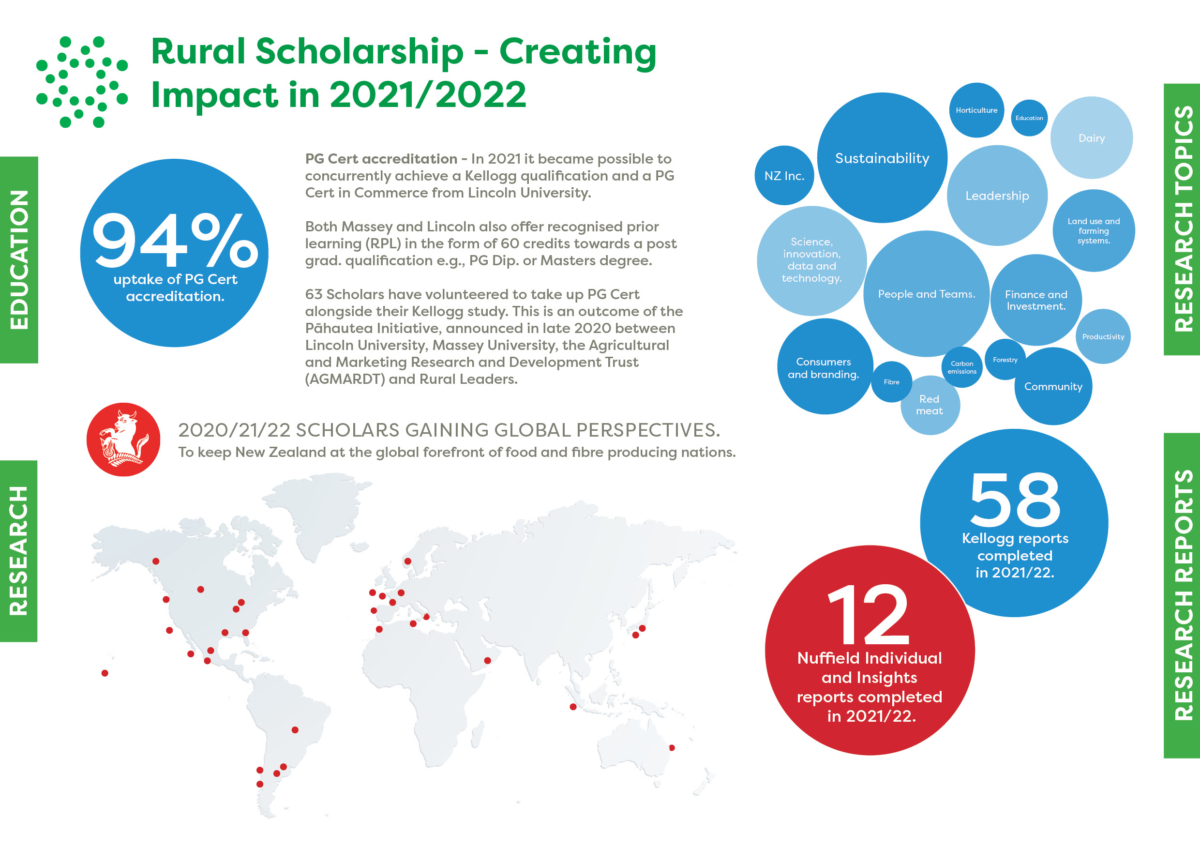
A silver lining here, was the graduation of the 1000th Kellogg Scholar.  
 
Thank you to the Scholars for their commitment and to the Rural Leaders’ Management, Facilitation and Academic teams. It’s been a big year for Kellogg. 

Nuffield international travel. 

We don’t want to dwell on Covid, but there was some catch-up to do on our Nuffield Scholars’ travel plans too. 2022 saw the completion of three year groups’ international travel. The logistics work required here is substantial, even on a ‘normal’ year. 
 
Thanks to plenty of hard work, Nuffield Scholars managed to put quite a few dots on the map. We are sure the fruits of this exposure to leading agricultural thinking will pay dividends to food and fibre in the future. 

2023 Rural Leaders Agribusiness Summit announced. 

Many alumni and much of our team is involved in organising this landmark event for Rural Leaders.

We’re not going to add much else here, except to say – book your seat today. Head to https://ruralleaders.co.nz/rural-leaders-international-summit-day.

We were finalists. 

We made finalist in the people development category of Beef+LambNZ Awards. We didn’t win but it was great to be acknowledged alongside many other passionate and hardworking enterprises in food and fibre.

Stepping up the academic and impact tempo.

Accreditation of the Kellogg Rural leadership Programme saw a full year of applications across the five graduating cohorts. In all around 90% throughout the year signed-up for accreditation. 
  
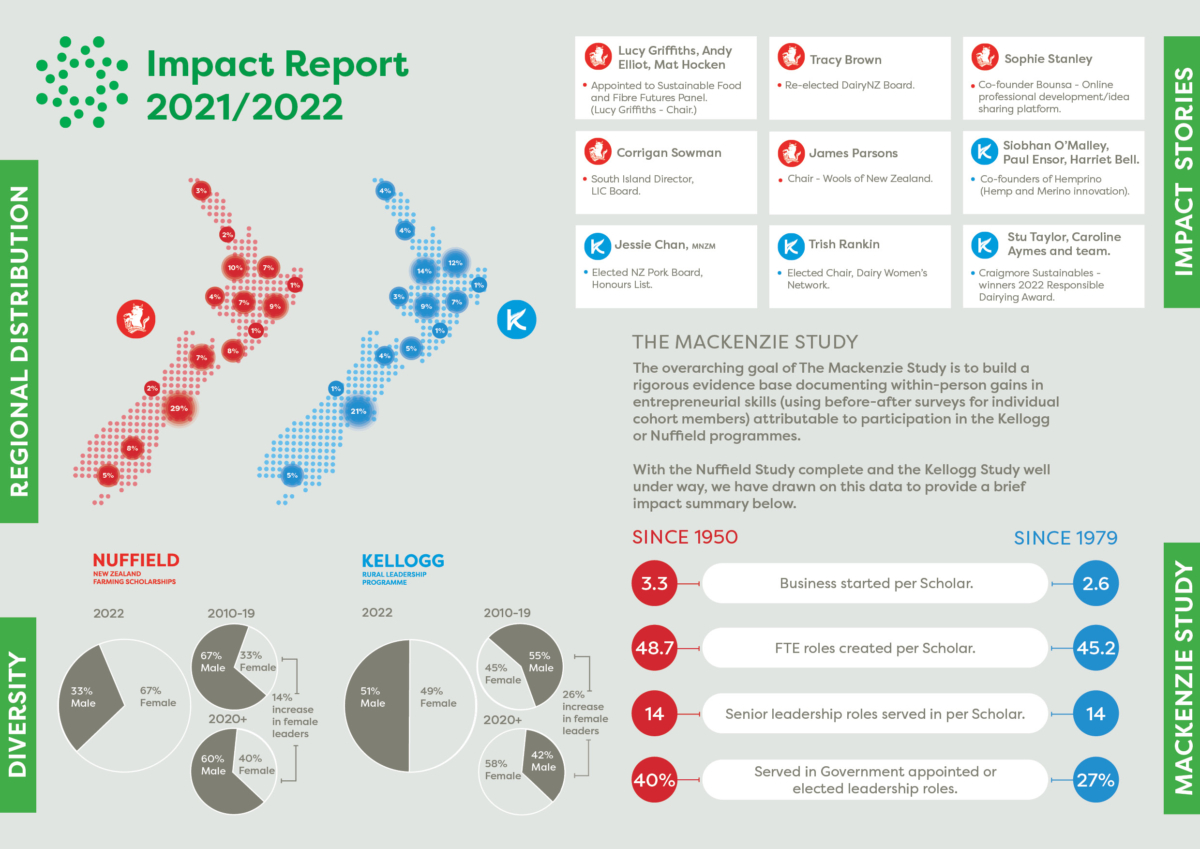
The Mckenzie Study’s Kellogg piece has just been completed. We’ll share some of the findings on the impact Kellogg Scholars have made in the New Year.  
 
We’ve pulled together a two-page summary of 2021 and 2022, that also features some of the big moves made by our Scholars in the Food and Fibre Sector. 

Take a look at the key impact statistics below or download here. 

Rebecca Hyde – Collaboration, cooperation and finding the common ground. 

Rebecca Hyde - Ideas that grow podcast interview

Ideas That Grow: Rebecca Hyde, 2017 Nuffield Scholar and 2021 Kellogg Scholar

Lynsey Stratford has discovered farmers make a few assumptions that aren’t very helpful – like accepting the fact that work might be dangerous and there’s nothing anyone can do about it. As Lynsey explains, “There are changes we can make, but those assumptions and those mindsets have been deeply held for quite some time.” 

As a consultant, Lynsey helps the primary sector with people management and development services and training. And, when it comes to health and safety she says, “We shouldn’t expect people to just know this stuff, but rather teach them and support them as they develop skills.” 
 
Lynsey’s research report unpacks the paradox that while farmers care about their people, farms as workplaces are overrepresented in fatal accident and injury statistics. So, what can be done to improve this?

Bryan Gibson – Editor of Farmer’s Weekly.

I’m Bryan Gibson, Farmers Weekly Editor. And with me today I have Rebecca Hyde. 

Rebecca Hyde – 2017 Nuffield Scholar and 2021 Kellogg Scholar, Oxford, North Canterbury.

Thanks, Bryan.

Bryan:  So, where are you calling in from? 
 
Rebecca: I’m based at Oxford in North Canterbury. 

Bryan:  And what keeps you busy down there? 

Working with Catchment Groups. 

Rebecca: I’m a Farm Environment Consultant, so I spend a lot of my time dealing with farmers and actually at the moment I’m working predominantly with a catchment group. It’s great to be dealing with farmers in the same area and focusing on the catchment within that region. 
 
Bryan: And with catchment groups, it’s a system that really seems to be working quite well in a lot of places. 
 
Rebecca: Yes, it is. What I’m enjoying about it is you’re getting a good idea of what farmers are really facing, the challenges within the catchment or sub-catchments, and then you’re able to be quite tailored and specific to those areas. So, you see a lot of common themes coming through when you’re talking to farmers in the same area, which then allows you to be quite specific and help the catchment group or farmers in the best way possible, all working together. 
 
Bryan:  Yes, and all for positive outcomes, really, isn’t it? 
 
Rebecca:  Yes, absolutely. 

Nuffield research into collaboration. 

Bryan:  Now that kind of works in quite nicely with your Nuffield Scholarship, doesn’t it? Because you looked at collaboration for environmental gains. 
 
Rebecca:  Correct, yes. So actually, the catchment group I’m now working on, we’ve had an MPI funded project for the last two-and-a-half years, but that was established back in 2016. It came off the back of a plan change for the Hurunui District Landcare Group. It was a plan change for the Hurunui regional area. It was through that the collaboration or collaborative process was being worked through.  
 
At that time, I was working across other areas in Canterbury, but they had the zone groups set up and the word collaboration kept coming up a lot. It was often used in the frames of how do we collaborate better, or why aren’t we able to collaborate on this? So, this word continued to come up and at the time I was involved in a few other things with Beef+LambNZ as well, and I thought, well, what’s happening globally and how can we better understand this? So that was really a key trigger for me to look at Nuffield. 

Same, same but different. 

Bryan:  So what did you find when you went around the globe looking at this issue? 
 
Rebecca:  I looked at a lot of places within land use, but also outside of it. I met with some people in Silicon Valley, for example, because collaboration isn’t something that’s unique to agricultural land-based activities, it is something that is right across the board. What I found was there was often a common good or a common purpose, that people were trying to achieve.  
 
The other thing that was common was that often there was sort of a burning platform, so some decisions were needing to be made and that was where collaboration was being used. But the other thing that stood out quite a lot was the word collaboration gets used regularly or often, but it might be partnership or cooperation that might be needed.  
 
It’s understanding how you’re needing to work together and then working in the most appropriate way. There are some key differences between, say, a partnership, collaboration, and cooperation. So even though they’re just words, there is quite a difference there. 
 
Bryan:  Yeah, I guess in some ways people might need to work together to reach a singular goal and in other cases there are people doing the same thing who could get efficiencies if they work together. 
 
Rebecca:  Exactly. So, for example, cooperation might be working together for those efficiencies, but you’re working in isolation still. Whereas collaboration really is about coming together for a common good. So, let’s say you’re a catchment group with some dairy farmers and sheep and beef farmers and maybe some Iwi there as well – you might be all representing your certain areas, but once you start collaborating, it’s about that mutually beneficial area.  
 
Let’s say a water body, that becomes the key purpose as opposed to what you might have been representing. That’s often where we get it a bit wrong because we’re still strongly aligned to what we were representing. It’s a change of focus. 
 
Bryan:  I guess if you bring other stakeholders into a situation, then what success looks like changes, doesn’t it? Because you’re sort of ticking boxes that you wouldn’t have ticked on your own. 

The foundations of successful collaboration.

Rebecca:  The other thing too is that is quite time consuming – collaboration. One thing I noticed was where there were some good examples of it abroad, a lot of time put into building the relationships, the understanding, getting on that common ground.  
 
Often in New Zealand we were just rushing through that foundation piece and then with human nature, we’re very good at focusing on what you don’t agree on rather than what you do agree on. 
 
We tend to get into the stuff we don’t agree on a bit too soon because that sort of foundational trust and understanding is not there yet. That was one of the key things we saw when it was successfully happening – there was a good base understanding of what was all agreed on and then sort of reflecting back on it as well. Like, are we still on the same track? Are we still trying to achieve the same goal? Has the goal changed? Because things can change when you start a project. It’s that conscious effort of reflecting and reviewing on the process. 
 
Bryan:  Is it just a matter of taking the time and getting an understanding of all the players involved? Or are there frameworks or structures you can put in place to help you along the way? Or both? 

The importance of neutral facilitation. 

Rebecca:  Yeah, both. The other thing too was having someone that can facilitate it. A couple of examples that I saw where the facilitator worked effectively – they had government backgrounds, so they had been quite familiar about how the structure works within government. These were in areas like environmental regulation so that facilitator knew what needed to be bundled up to get it back to government.  
 
They were very neutral with the parties that they were all dealing with. Having that person as neutral as possible in that Facilitation process – that was something that I observed coming back home. I’m just talking about the Environment Canterbury (ECAN) examples that I was dealing with at the time. But the Facilitators were often ECAN staff members, so they weren’t neutral in the process. There again, that trust piece wasn’t quite there with the stakeholders. The person that’s trying to pull together everyone’s thoughts and help with the direction of the group is pretty key as well. 
 
Bryan:  Catchment groups seem to work because you have the common goal. You have support from people who are like you, and they face the same challenges. You also have that kind of almost friendly competition thing going on. You don’t want to be the one who’s not doing the work, I guess. Is that fair? 
 
Rebecca:  Are you meaning like peer pressure? 
 
Bryan:  Sort of, yeah. 

The strengths of Catchment Groups. 

Rebecca:  Yes but hopefully in a positive way. We’ve noticed that in the project that I’m working on now in the Hurunui, we’re doing a one-on-one approach. We’ve found that once we got to that critical mass, there were farmers that were just wanting to be involved because everyone else was and they didn’t want to be the odd ones out.  
 
There’s absolutely that effect that catchment groups can have. I suppose it’s a bit of FOMO – people do want to be involved and it’s a good thing to be involved with as well, because to me, it’s sort of about putting all the pieces to the puzzle together. It’s a real strength of catchment groups as well, because you are across a common area, say a sub catchment – you can then work with everyone within that and that’s a real strength. 
 
Bryan:  Yeah, I guess it’s also a way of switching things from having to live up to regulations or expectations and turning it into, here are some goals we want to reach, and it will help us in these ways and so it’s more of a positive mindset, I guess. 
 
Rebecca:  It is. I think the beauty of a catchment group and working with the community is that you’re working with the people that live there and they want the best for the environment that they’re living in. Often there’s generational farmers there as well, or people living within those catchments, they’re not necessarily doing things intentionally wrong, but there’s some tweaks or improvements that can be made to get a better outcome.  
 
That’s the beauty of a catchment group as well, because farmers are very good at dealing with what’s in their farm gate, but sometimes struggle beyond the farm gate. Where a catchment group also has a real strength, is around pulling together all those pieces of that puzzle to get an overview, to then help those farmers understand what occurs beyond the farm gate and how they can help to minimise those risks or improve the environment around them. 
On Nuffield and Kellogg. 

Bryan:  Now, I think you are one of the first two-time scholars we’ve had on the podcast because you did the big one first at Nuffield, then you went on and did a Kellogg sometime later. Can you tell me about why you wanted to do that? 
 
Rebecca:  Sure. When I did my Nuffield, I was at a bit of a crossroads. Do I want to look more high level on New Zealand and its place in the world? I certainly felt at the time a Nuffield was more appropriate for what I was wanting to do than a Kellogg and so I was fortunate to get my Nuffield. That was 2017.  
 
Fast forward about three years and I’d started my own business and we went into COVID, and I’d been an Associate Trustee on the New Zealand Rural Leadership Trust as well.  So, I got a bit more exposure to the Kellogg Programme and I was particularly interested in the second module, which is Wellington based, looking at how Wellington operates.  
 
I thought it was a great opportunity to have a go at a Kellogg because I had started my own business – I knew the value of a network. And the cohort you have on Kellogg is a very broad network within Food and Fibre in New Zealand. That was appealing to me. Understanding Wellington or getting a bit of a front row seat into Wellington for a week in a sort of post COVID environment. 

Professional and personal development.  

Things have changed quite a lot and I’ve always been quite big on personal development, so I saw Kellogg as a great opportunity for me to do that within my own business. That was one of the key reasons I looked at a Kellogg and I did have people go,” …is this not (a step) backwards?” A few people made comments like that – and it’s like, no, they’re just very different programmes. They absolutely complement each other – they are standalone programmes.  
 
I thoroughly enjoyed my Kellogg, and (as part of my research) I was able to collaborate between Iwi and Farmers in the Hurunui District where I’ve been working. So that was just an opportunity as well. I do quite like the research aspect as well in these programmes. I suppose, looking at a specific topic that I could do a bit of a deep dive into.  
 
Bryan:  As I was going to say, you came back for a second crack. So, you must really value the Rural Leaders ethos and programmes? 
 
Rebecca:  I absolutely do. I’m a big believer that if you ever put yourself into something, you will only get as much out of it as what you put into it. I think certainly the Kellogg is such a well put together programme, and that it was really appealing for me at the time. And having, as I said, started my own business and wanting to expand some networks into other areas as well – it was great. 

Is the food and fibre sector collaborating well? 

Bryan:  So do you think in the last five or six years, that word collaborate, is it being used as intended now? Are we doing a better job at it in the Food and Fibre Sector? 
 
Rebecca:  I think we are. I must admit, every time I hear a news story or something like that and the word collaboration comes up, my ears certainly prick up. I think we are getting a lot better regarding how it’s being used, when it should be used, and what we need to do to make it effective. I do see improvements. I think we’ve still got a wee way to go, though, in ag. I think the last 18 months, probably twelve months, we’ve got a bit fragmented again. 
 
That was another comment that came from people I was meeting abroad (on Nuffield). They’re like, “God, New Zealand is so small, how can you all not be on the same page together?” And you would think that, but we do seem to be quite good at that fragmentation within the sector. Hopefully 2023 might see us a little less fragmented. I think what’s good for the Food and Fibre Sector is good for New Zealand. We need to remember that. 
 
Bryan:  Thanks for listening to Ideas that Grow, a Rural Leaders podcast in partnership with Massey and Lincoln Universities, AGMARDT and Food HQ. 
 
This podcast was presented by Farmers Weekly.  

Where Does the Future Lie for the Arable Industry in Canterbury?

William Wright Kellogg report image

Executive summary

Arable farming in Canterbury is at a crossroads. The wettest harvest in the last 30 years, coupled with high inflation, low profitability, and a changing regulatory scene, has seen farmer morale at its lowest point in many years.

Changes in land use to dairy or dairy support and more extensive family farming operations buying up smaller operations have caused the number of arable farming businesses to decrease significantly over the last 20 years.

In the early 2000s there were over 1200’s arable farms in Canterbury. This has now been reduced to less than 500 (Merrilees, 2021). Recent freshwater regulations now mean that converting to more intensive land uses is difficult. If profitability issues continue to worsen farmers now feel like they have few options.

This report aims to provide a broad overview of the arable industry in Canterbury with a key focus on understanding whether maintaining a business-as-usual approach to farming would be enough to maintain operations into the future. A literature review, informal indicative interviews and two proven models were used to answer the following questions:

  • Why is it important to have a viable arable industry on the Canterbury Plains?
  • Can arable farmers continue to operate business as usual?
  • What factors determine the underlying cause of poor profitability in the industry?
  • What are the potential solutions to improve the long-term viability of the industry?

Canterbury Arable Farmers are highly skilled and have access to some of New Zealand’s best soils, irrigation, and research. Canterbury’s climate, infrastructure and skilled grower group means that they are undeniable world leaders in grain and seed production and are critical to the success of our red meat and dairy industries as well as the security of New Zealand’s domestic food supply.

However, Canterbury arable farmers are facing a number of challenges both domestically and internationally and the long-term viability of the arable industry as a whole is potentially under threat from high rates of attrition, low returns on investment and fragmentation of the growers.

Reliance on the traditional growth pathway of increasing production is unlikely to be
sustainable in the long term, though current external forces driving high commodity values may enable the status quo to be maintained in the short-medium term.

Arable farms are flexible and agile in nature which means they are well poised to pivot into new opportunities as they arise. The key areas where the arable industry can improve its long-term viability are:

  • Continue to build resilience into farm systems.
  • Cooperate.
  • Stop beating up the merchants.
  • Differentiate the offering.
  • Invest or partner in supply chains.

If Canterbury arable farmers continue to sit back and expect a better future without taking any action the industry will likely continue to diminish. If farmers take the opportunity that a favourable short-term outlook provides them then the opportunities are endless.