2026 Nuffield NZ Farming Scholarship. Apply by 17 August 2025. Read More...

Apply for 2026 Nuffield NZ Farming Scholarship by 17 August 2025. More details...

Corrigan Sowman 2019 Nuffield Scholar – Global Insights: Food producers in pressure cooker

WE ARE not alone as New Zealand farmers, feeling the weight of change bearing down on us.

It is a global trend.

It has many different, complex drivers but two stand out – consumers’ willingness to pay for sustainability and farmers ability to capture it.

The resulting pressure is evident in a recent survey of Canadian farmers that found 45% have high levels of perceived stress, 58% met the criteria for anxiety classification and 35% met the criteria for depression.

A United States survey found 30% of farmers say mental health is a major problem for them, 48% of rural residents have more mental health challenges than a year ago, younger people are the most vulnerable and 91% of farmers/farm staff say financial issues and fear of losing their farms affect their mental health.

Recently in New Zealand a Ministry of Health Report presented to MPs showed suicide is up 20% in rural areas.

Across the world this year while doing my Nuffield Scholarship, I have seen incredible technical mastery in agriculture with yield increases, novel genetics, automation and precision and regenerative soil practices on a massive scale.

But the stats don’t lie. Farmers are under increasing pressure like never before.

To understand pressure I think there is no better place to start than with excellent Kiwi author and psychologist Dr Ceri Evans.  In Evans’ book, ‘Perform Under Pressure’, he talks about pressure as high stakes, uncertainty, small margins, fast changes and judgment.

And after my travels I’ve added a sixth, ‘losing one’s identity’.

I would like to highlight the last three because I think that is what is different right now and not just in New Zealand. Farmers are feeling overwhelmed by the pace of expected change and we are feeling judged like never before. It all contributes to questioning our identity as farmers.

Evans talks about the red and blue parts of our mind in his book. He describes our red mind as the emotions side that helps us make quick decisions in the blink of an eye, the fight, flight or freeze skills we are conditioned with from birth. Our blue mind is the logical, systematic slower-thinking part. It helps us solve complex problems and communicate them to others.

The problem with pressure, like the situations we now face with freshwater and climate regulations is we feel the weight of expectations, scrutiny and consequences building up and it triggers our red brain. 

We want to fight, we want to get out or just stop because we can’t see a future any more.

However, the focus needs on what we can control, not what we can’t. 

As farmers we are well versed in managing around aspects we can’t control like the weather, trade distortions and currency and we have built robust systems to help influence the outcomes of this uncertainty the best we can.

How we think, however, is something psychologists agree we can control.

Twelve years ago New Zealand rugby realised it didn’t understand pressure either.

Today, I suggest our primary sector could take a lead from our ABs. We might have lost in the semi but even South African coach Rassie Erasmus recognises the All Blacks’ consistency makes them the team to benchmark off. Why? They have learned how they think is as important as their technical efficiency.

Our challenge individually and as a sector is to build on the great work started by FarmStrong and endorsed by the examples in Evans’ book. Can we build our ability to be more comfortable with the uncomfortable?

We have trained our All Blacks to become masters of better decision-making under pressure. Can we train ourselves?

The regulation coming at agriculture is the gap we must overcome. Considering the information that I have heard presented during my travels it’s not unrealistic given the demands of our customers and certainly tomorrow’s customers. 

A good place to start and something every one of us can control is how we think under pressure.  If you haven’t visited FarmStrong or seen Evans’ book, I recommend them.

Cam Henderson 2019 Nuffield Scholar – Global Insights: Energy – the next ag evolution?

PRICES are good and interest rates are low but farmers’ moods are down because the regulatory pressure gives them little hope for the future.

Researchers are furiously searching for more sustainable ways of farming food and fibre but what if there was a whole new sector that could provide a light at the end of the tunnel?

As Kiwis we are all rightly proud of having over 80% of electricity come from renewable energy.

But it’s a statistic that has made us complacent.

If you consider all energy sources in New Zealand – natural gas, oil, coal and other fuels used for industry and transport – we are only 40% renewable.

All that fossil fuel energy is responsible for about 40% of our total greenhouse gas emissions and that’s a discussion that gets lost in the shadow of the agricultural methane debate.

So, what if there are solutions that not only bring down agricultural GHG emissions but in doing so bring down our energy emissions too.

It turns out some of New Zealand’s largest ag-producing competitors have already figured this out.

In California every electricity user pays a levy that goes into a fund to support large, on-farm solar installations. Farms with 1MW of solar installed on about a hectare of panels are not uncommon, providing the farmer and the state with renewable power at a fraction of the capital cost to the farmer.

In Ireland, dairy farmers are incentivised to put solar on their roofs as are farmers across the European Union.

In Germany, Northern Ireland and California bio-digestors are being subsidised to take in slurry and excess food and crop waste to produce biogas that can be further refined into biomethane. It can then be injected into the existing natural gas network.

The opportunity that really shows promise is energy crops for biofuel.

New Zealand has a short, rocky history with biofuel but we are now lagging the world in biofuel development and are one of the few Organisation for Economic Co-operation and Development countries without a minimum biofuel level in our fuel.

The International Energy Agency outlook sees biofuels as the major renewable transport fuel at least until 2050.

And yes, that beats electric vehicles.

Biofuel is already a big user of corn in the United States and of sugar beets in the EU. In New Zealand we have huge potential for energy crops – sugar beet and corn to get us started then tree crops of willow, pine, miscanthus and other high-volume cellulosic crops as technology develops.

So, as a dairy farmer I can picture having an acre of solar panels in an unused corner of the farm. Perhaps complemented with a wind turbine and a pipe or a tanker to take my slurry to the local bio-digester. The nutrients being returned in dry form to spread on my land and 10-20% of my dairy farm in an energy crop rotation that provides animal feed and allows me to economically drop my cow numbers, methane emissions and urine nitrates by the same amount.

And all using technology that is already available.

But the underlying success factor internationally might be hard to swallow here.

It will take more policy and regulation. But this time it would be to the benefit of farming.

The simple truth is fossil fuels will always be the cheaper option.

If we want change then we need the Government to intervene to create the right environment.

Policy makers in the EU and US are still trying to perfect that policy and it requires discussion from many sides but the US Department of Agriculture and Department of Energy are now working together to explore further renewable energy generation opportunities.

And that would be the first step here in New Zealand, a conversation that unites our national energy and agriculture strategies.

Wouldn’t it be great for New Zealanders to see agriculture not as the climate change problem but the climate change solution.

Hamish Murray 2019 Nuffield Scholar – Global Insights: Bridging the communication gap

THERE is an increasing breakdown in the communications between young and older farmers and both are struggling to get what they want and need out of conversations.

We have a generation of farmers raised by parents who lived through World War II, which shaped their childhoods and where no one spoke about the emotional stuff of fear or weakness. No positive feedback was given or received for fear of getting a big head.

Contrast that with the generations entering the workforce today who are growing up with a constant stream of feedback via social media and online lives that is so constant they’ve never considered life could be any different.

It is no wonder our farming businesses are struggling to engage and motivate younger farm staff and those employed don’t feel valued or that they are contributing.

As someone who sits firmly in the middle of these two groups, taking over from my baby boomer father and now employing ever-increasing numbers of younger generations and school leavers. The contrast between young and old feels like the opposite ends of the paddock.

My recent Nuffield travels looking at the tech start-up world of the Silicon Valley and insights gained from those designing mobile and computer games highlighted just how constant the stream feedback is. Consciously part of the design to engage and keep players focused, gamers receive real-time feedback on their progress. They get constant updates on their travel towards the end goal including location, time remaining, amount of life or energy left, how much stuff they might have in inventory, even how other players are doing. Then, in some games, the screen or players might flash if in imminent danger.

Combine this thought with immediate likes or recognition for pictures and comments on social media and even the way our schooling system has changed from final exams for school cert, bursary or university study when I took them 15 years ago compared with NCEA and the achievement of credits throughout the year.

How does the type, volume and timing feedback we give on-farm compare? How has it evolved in the same time frame?

More than ever before those entering the workforce today crave continuous feedback.

They demand and respect those who can create a more responsive managerial style and those supervisors they can create a relationship with.  The internet has created a culture of ongoing communication and intense connectedness so it is no surprise we are beginning to expect the same standards in the rest of our lives.

Those starting out in our rural industries are equally as ambitious and hardworking as all of those before them and all want to feel valued and part of our businesses.

To contribute they want to share opinions and bounce ideas in a constructive environment and regular feedback allows that to happen while irregular and unstructured feedback keeps the conversation one-sided and in the power of the boss.

Don’t mistake the need or call for continuous feedback as a self-indulgent need for praise.

More than ever the world of employment is highly competitive for those entering the workforce.

Entry level jobs require some level of on-farm experience and this uncertain, changing environment is a challenge different from the structured one of schools and universities.

The quest is not to tell me how good I am but more what can I do better to understand where they stand and how they are performing, all part of a desire to progress and develop.

The desire for training and development through learning experiences is reported as being higher in priority for those entering the workforce than all other on-the-job benefits. Alongside formal training, continuous feedback is training in itself, because it helps to establish clear and pragmatic next steps towards objectives, so is critical in keeping our staff challenged and inspired.

From where I sit I see business owners who underestimate the incredible demand for feedback from their staff, then struggle with the tools to give it, having never had it modelled in their own lives. Versus the increasing need from those employed, who are so used to getting it continuously, without asking, they don’t know how to ask for it.

How might we bridge this gap? What capacity do we need to build?

Ben Hancock 2019 Nuffield Scholar – Global Insights: Farm societies have common issues

Ben Hancock 2019 Nuffield Scholard

FARMING the world over as much as the context, production and scale vary, shows, as the saying goes, the more things change, the more they stay the same.

After nearly six months on the road of my Nuffield journey I was struck by the similarities across continents and farming systems.

So many of the issues we face in New Zealand can be translated to our counterparts around the world.

This highlights that we have allies in dealing with the challenges we face and that we’re not in this alone.

In many developed countries there are the same concerns of the widening gap between urban and rural communities and the challenge of attracting people into their agricultural sectors.

At an agri-tech symposium in the American mid-west, plenty of cutting-edge ideas, gadgets and technologies were proposed and introduced to solve a myriad of issues. After two days of the symposium a panel of mostly young and engaged farmers was asked what their main concerns were. They repeated a familiar concern: finding staff, especially good staff.

The dairy farmers in Kenya I visited were concerned about connecting with their consumers though the connection is a more literal one – the actual logistics of getting their product to consumers elsewhere in Kenya, regardless of whether they are small subsistence farmers or larger more commercial operations.

A reliable supply chain is of more concern than perceptions of production.

Even so, their perception in the community still helps when the almost inevitable threat of land theft approaches.

Frustration in having a political voice is a common theme in many countries and agricultural sectors.

Within a few minutes of meeting the owner of a packing house in California he asked what I thought of President Donald Trump but he didn’t want to hear what I thought. He wanted to tell me what he thought. So much of what he vented was born out of frustration of not being represented in state or federal politics or in the general public.

So how does New Zealand differ?

New Zealand does have a great reputation and it has been enabled by our government and regulators.

The trust in our production systems and goodwill in terms of how New Zealand is perceived and behaves on the international scene is an asset for our industry.

The five Nuffield scholars benefitted in our travels from New Zealand’s international reputation.

The Christchurch massacre occurred while we were in the United States. Often the perceptions of New Zealand’s reaction from locals was one of sympathy for what had happened but also an appreciation of the community’s response and Government decisiveness.

Our nation’s reputation is more important to New Zealand’s agriculture than elsewhere. Take the red meat sector. More than 90% of what we produce is exported. Our reputation matters.

After a long day riding in the back of a van across nearly the length of Romania our group of scholars reached Bulgaria. Rather worn out and hungry we found a nice enough place to eat. Lo and behold, there was New Zealand lamb on the menu.

Nothing else on the menu hinted as to where it came from. Somewhere on the border between Romania and Bulgaria our reputation still carried weight. Perhaps it was the only thing any locals would know of New Zealand.

It really hit home that our community is here, our customer is there. The appreciation for New Zealand’s image and all that it entails is valued by our customers. Yet a lot of the headwinds that are buffeting New Zealand’s agriculture sector and rural communities are generated locally.

I saw some perverse outcomes of government involvement in industries and, though I’m reluctant to admit, there might be some benefits.

For example, in Ireland, if society decides an action such as conservation or environmentalism is a priority that benefits wider society at a cost to the producer, wider society contributes in some form – whether through taxpayer-funded support or at the local checkout.

On returning to New Zealand it feels as though the support and validity gained through regulation has changed. The inundation of regulatory and societal pressure is wearing on rural communities. However, we’re not alone in this. There are seismic shifts happening globally.

The detachment between the community and consumer means the cost of demands on production are difficult to meet. Ultimately, though, the Garden of Eden can’t be demanded without someone needing to pay the full price for having that shiny apple.

Hamish Marr 2019 Nuffield Scholar – Global Insights: Attacking the noblest profession

AFTER almost half of this year travelling the world there are a lot of thoughts in my head regarding agriculture and farming.

The biggest take-home for me is the universal problem of people wanting what they haven’t got simply through believing the grass is always greener over the fence and genuinely not understanding agriculture and what is involved in food production.

This fact was spelled out very clearly to me when two environmentally minded vegans in Germany told me the problem with German agriculture was that the cows were inside a lot of the time and farmers should put their cows outside all year like New Zealand farmers do.

Of course, that bought a smile from me because in NZ the green movement wants us to put our cows inside to be more like Europe.

So, who do we believe and who is right?

It is the same argument with synthetic meat, this seemingly new food on the block is going to save the planet and the people.

My question is how can a multi-ingredient, heavily processed, made-in-a-factory product even be compared to ruminant protein?

Nutritionists and health professionals all talk of whole, nutrient-dense foods consumed in moderation as part of a balanced diet.

Animal meat is the ultimate whole food, laden with nutrients and, best of all, it can be eaten without any process intervention.

In the 1980s and 1990s everyone was going to die prematurely from heart disease from eating too much butter and the alternative and golden ticket to eternal life was margarine. Now, in 2019, there is very little margarine sold as the apparent health benefits actually never came to be.

Genetically modified plants are almost enemy number one world over through misinformation about pesticide use and apparent food safety concerns.

The marketers and lobbyists will have you believe GM has led to huge increases in chemical use and it has been a campaign to sell agrichemicals by large, multi-national companies.

In truth GM was designed so farmers would apply less chemicals, both insecticides and herbicides, and the companies would make their money selling the patented seeds.

GM corn, for example, contains a naturally occurring fungus (Bacillus thuringiensis). BT, as it’s known, is registered as the safest organic insecticide in organic and biological farming when used on its own and yet because it has been bred to occur in corn it is labelled as hazardous by the very people calling for safe food.

At some point all western countries are going to face a wall of loud, anti-farming noise and governments will respond to the voters.

In the Netherlands, France and Germany we are seeing populations calling for more regulation to limit productivity.

Farmers, personally, will be the collateral damage in what will result and this will happen in NZ at some point.

What the people making the noise fail to grasp is the effect they have on people.

Recently, I was asked by a panel about my thoughts on morale in agriculture considering how good prices are.

My response was simple. Morale is extremely low and will remain so as farmers feel targeted.

They are made to feel responsible for a multi-generational production model that successive governments and regulators have promoted.

They feel targeted by a media seemingly interested in a story and they feel targeted by groups that understand only small parts of what are very complex systems.

I can tell you first hand when you criticise what a farmer does you criticise them, their home and their very reason for being.

It is not like criticising a company that can hide behind a name. The effects are real and they are very personal. Farming is a very emotional-laden occupation and farmers feel genuinely responsible for producing a good product for those who choose not to do it themselves.

The regulations facing agriculture will not go away and they they will almost certainly change in form and the way they are administered but regulation is probably here to stay if what is happening in other countries happens here.

It seems the life of any regulation begins as noise that gets louder regardless of the facts.

We have to remember our farms are outdoor factories and what we do can be openly seen by anyone who drives down the road.

By default that makes us targets unlike any indoor factory where trucks go in one side and out the other and something mysterious happens inside.

In general, people talk only about small components of our farming systems but talk as if they are experts and you have to think that just because I have teeth, it doesn’t make me a dentist.

The challenge for agriculture is to find a way through by understanding what the people want and in doing so try to explain why farming is so complex, diverse and at the same time the noblest occupation.

Hamish Marr Nuffield 2019 Scholar
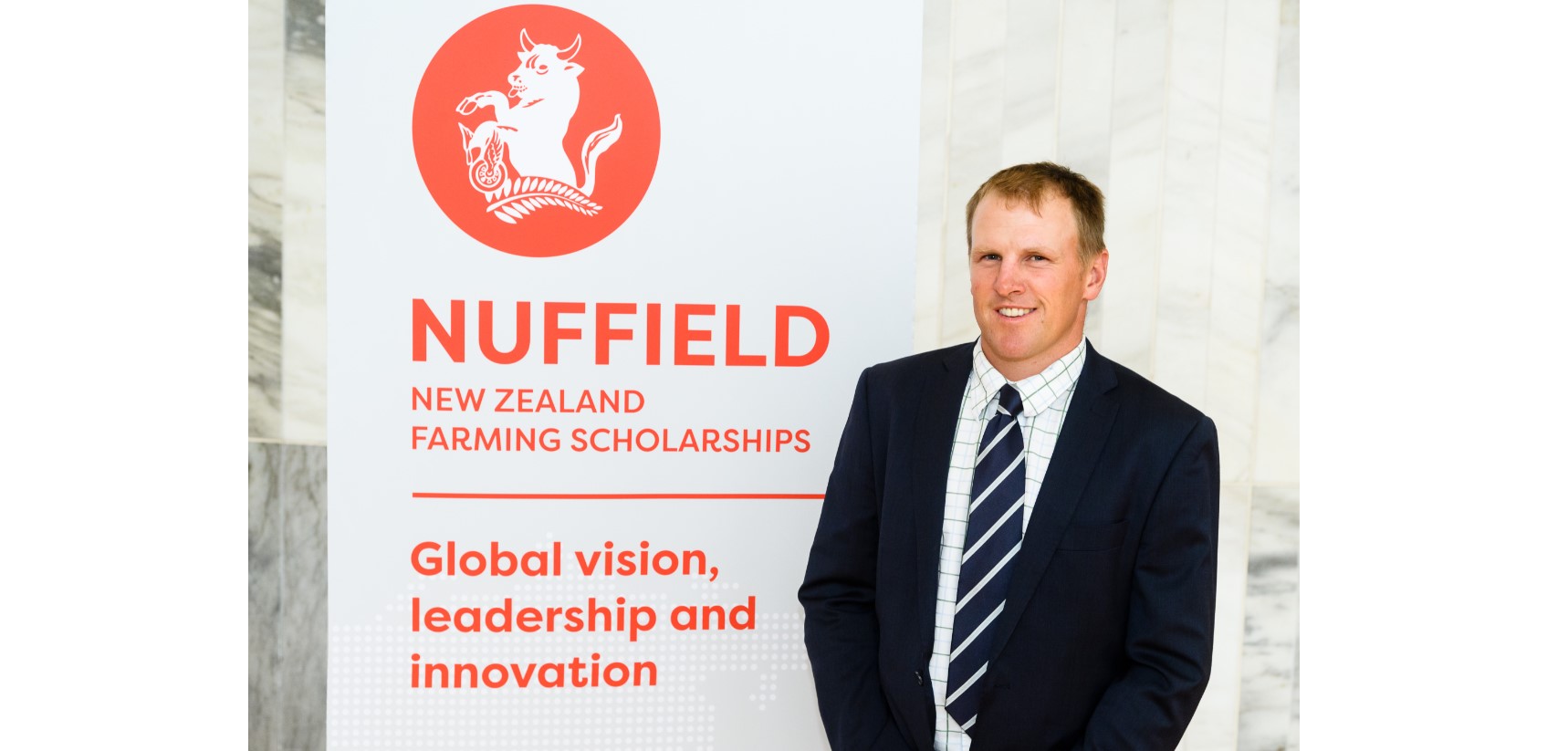
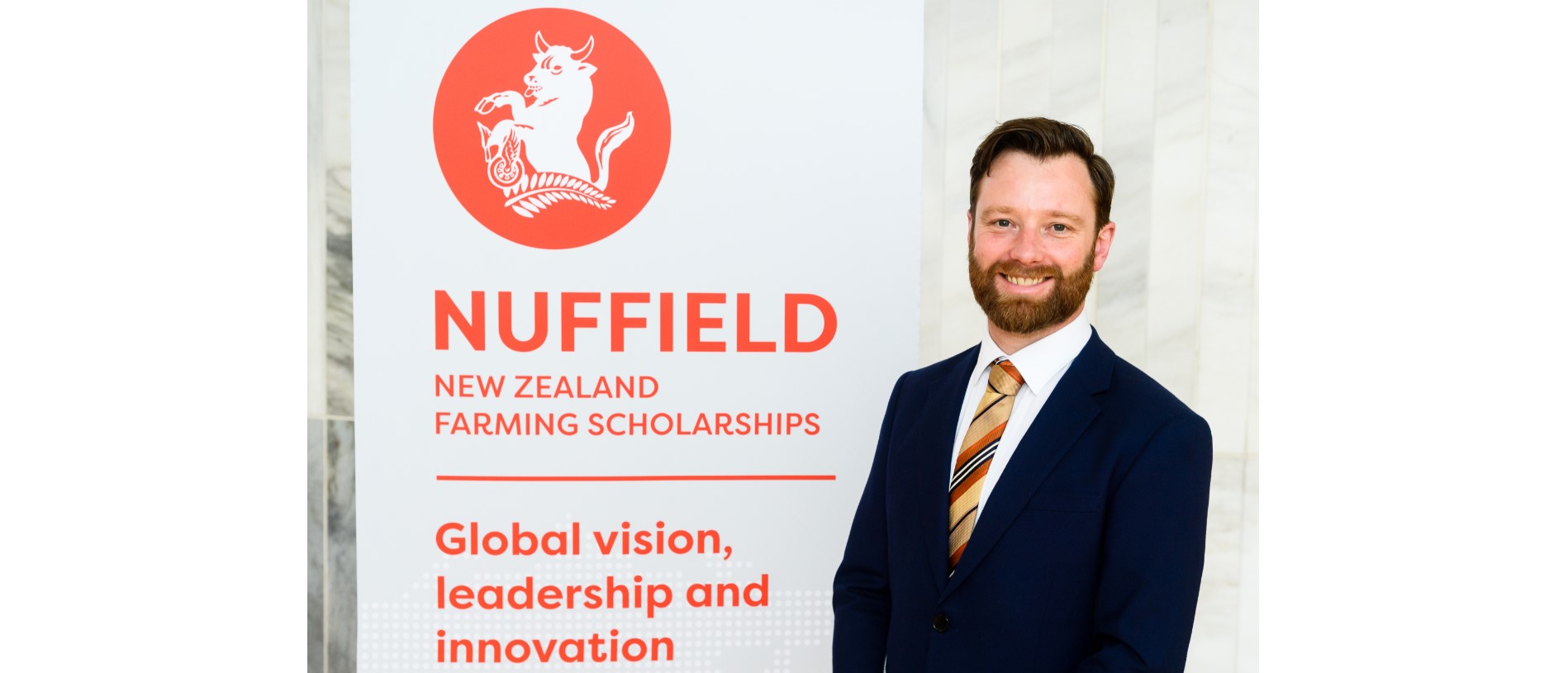
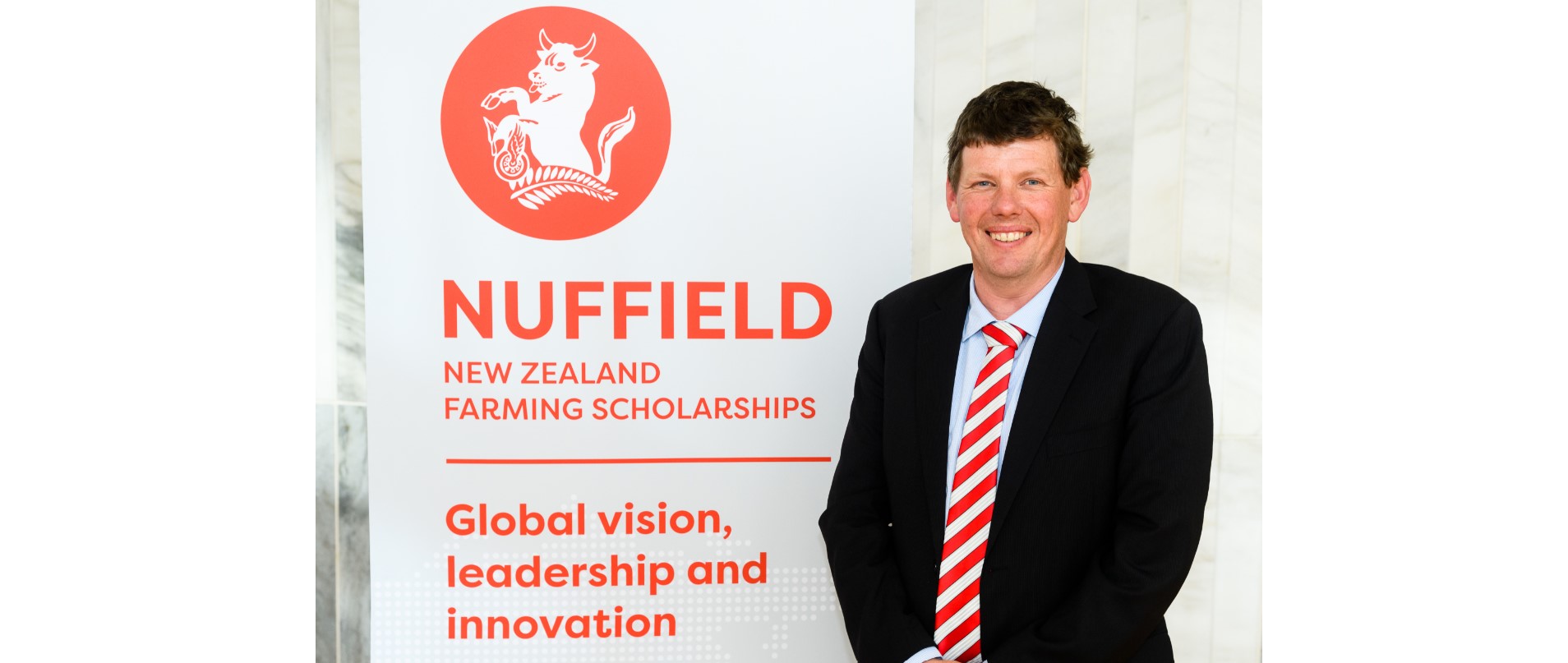
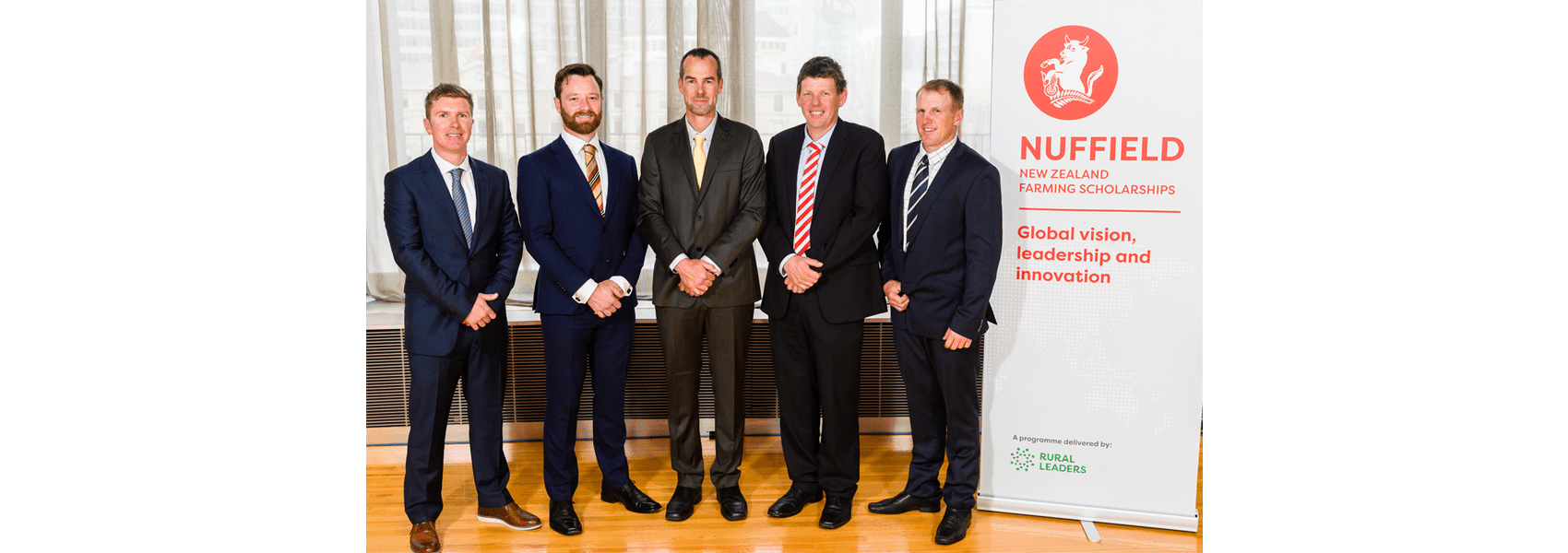
Nuffield Scholars for 2019 announcement at Parliament. Photo by Mark Coote/markcoote.com

INTERNATIONAL AGRIBUSINESS SUMMIT & KELLOGG ALUMNI GET TOGETHER

23rd of March, 2020 in Christchurch

Details will be out soon but HOLD THIS DATE and START ROUNDING UP YOUR COHORT

We hope to keep your leadership juices going with an exciting and different one day event with some topical and new international and NZ speakers and panels. Part of the Nuffield2020 series of events & open to the wider industry- this will be a bigger and different one day event to our inaugural 2017 Kellogg Summit! There will be events scheduled around the one day Summit for Kelloggers to reconnect and explore!

Check out the website here for initial information.

Get your cohort together and organise a reunion in Christchurch!.

2019 Regional Forums – August

Come along and bring a potential Nuffielder or Kellogger as a guest!

A new initiative to connect all our alumni in each region with a chance to;

  • meet and connect with other Kelloggers & Nuffielders in your region
  • bring and introduce someone who may be interested in doing a Kellogg or Nuffield programme in 2020 or in future
  • hear some insights from recent Nuffield & Kellogg scholar reports
  • connect with possible mentors/mentees
  • give feedback and interest in ongoing professional development or local initiatives

We have to start somewhere and have identified 6 regions for this year and will then will do different regions next year. Invitations will be sent to all alumni in those regions in next week.

  • Hawkes Bay – 13th August, Hawkes Bay
  • Bay of Plenty – 14th of August, Mt Maunganui
  • Nelson/Marlborough – 15th August, Blenheim
  • Northland – 20th August, Whangarei
  • Southland/Otago – 22nd August, Gore
  • Waikato – 27th August, Hamilton

Not in these regions?
If you know some potential Kelloggers or YOU can attend one of the below, we would love to see you or them!! Just contact usprogrammes@ruralleaders.co.nz as the invitation to the forums will only go to those in each region.

To register your interest in an event, email programmes@ruralleaders.co.nz

2019 Regional Forums – August

Come along and bring a potential Nuffielder or Kellogger as a guest!

A new initiative to connect all our alumni in each region with a chance to;

  • meet and connect with other Kelloggers & Nuffielders in your region
  • bring and introduce someone who may be interested in doing a Kellogg or Nuffield programme in 2020 or in future
  • hear some insights from recent Nuffield & Kellogg scholar reports
  • connect with possible mentors/mentees
  • give feedback and interest in ongoing professional development or local initiatives

We have to start somewhere and have identified 6 regions for this year and will then will do different regions next year. Invitations will be sent to all alumni in those regions in next week.

  • Hawkes Bay – 13th August, Hawkes Bay
  • Bay of Plenty – 14th of August, Mt Maunganui
  • Nelson/Marlborough – 15th August, Blenheim
  • Northland – 20th August, Whangarei
  • Southland/Otago – 22nd August, Gore
  • Waikato – 27th August, Hamilton

Not in these regions?
If you know some potential Kelloggers or YOU can attend one of the below, we would love to see you or them!! Just contact usprogrammes@ruralleaders.co.nz as the invitation to the forums will only go to those in each region.

To register your interest in an event, email programmes@ruralleaders.co.nz

Nuffield Triennial Conference Update: Michael Tayler

The last six months has been a very busy time for our Triennial Nuffield 2020 committee. With now only around 15 months until we have delegates arriving for our conference, we are very aware we still have a lot to do.  

Our aim is to produce a world-class conference that will showcase New Zealand’s innovative and leading edge agri-food sector. Highlighting Maori agriculture and demonstrating innovation and sustainability in our businesses. 

Some of the things we have been focusing on are; 

Communication/Marketing 

  • We have created a promotional video to be played at the individual countries conferences and will be putting another video out before registrations open 
  • We have created a basic website that we will continually add to www.nuffield2020.com  
  • We have set up social media accounts on Facebook and Twitter @Nuffield2020 and #Nuffield2020. 
  • NZ Alumni have been emailed a ‘save the date’ announcement including ways they can help 
  • International Alumni have been emailed a ‘save the date’ announcement with a program overview  
  • We have selected approximately 20 ‘Triennial Ambassadors’ from different year groups to help us promote the Triennial in their countries  

Biennial & Triennial Program 

  • Confirmed dates are:
    – Biennial  20th– 21st March 2020 
    –  Triennial 22nd-29th March 2020
    –  Technical tours 30th March – 1st April 2020 
  • We have selected catering and accommodation options 
  • We have spent time researching in the Central Otago and Canterbury regions looking at potential field trip options  
  • We have also put together a Program overview (attached: Triennial A4 Program Overview 181018). 

Sponsorship 

  • We have created a sponsorship prospectus document with insets for different levels of sponsorship 
  • Have been approaching targeted companies to become a partner of Nuffield 2020 

There is no doubt though that raising a sufficient level of sponsorship will have a key impact on our ability to put together a world-class conference so if any of the alumni have some suggestions, contacts or ideas regarding sponsorship we would welcome them. 

Finally, for our conference to be successful, we will need the help and support of our New Zealand alumni. This is a unique opportunity to show the rest of the world New Zealand agriculture at its best and we would love you to be a part of it.  

So please put 20th March – 1st April 2020 into your diaries now. We look forward to seeing you all in March 2020! 


Michael Tayler 

Chairman 

Nuffield Triennial 2020 

Simon Cook 2018 Nuffield Scholar – Global Insights: Biosecurity, from the border to the farm gate

My interest in biosecurity started with the harsh lessons of the PSA incursion into kiwifruit in New Zealand. My small orchard was only 500m away from ground zero and like all growers, I got a crash course in the importance of basic biosecurity and hygiene practices.  

I started my Nuffield travels around the world hoping to look at examples of on farm biosecurity practices. It was disappointing to see a total lack of preparedness worldwide, and the only farmers engaging in biosecurity had done so after an incursion had already established.  

The worst example of this was, after visiting farms in Qatar which is known to have foot and mouth, we could fly directly to France and head straight from the airport onto a dairy farm with no questions asked. Its little wonder that worldwide we are seeing an increase in exotic pest incursions taking their toll on agricultural production.  

Even with world class biosecurity protecting our border, we cannot stop everything. Once we accept that, then it becomes critical what happens inside the border and how we as individuals protect our own border – the farm gate. 

After 20 weeks and as many countries it was great to finally meet a farmer that got Biosecurity. He was a banana farmer from Queensland facing the threat of TR4 – a devastating banana disease. One of his comments that really struck me was biosecurity wasn’t about the things you do – the procedures the footbaths. Biosecurity is about culture. It’s about creating a culture that encourages everyone to accept responsibility for their own biosecurity.  

 The challenge is where will the drive to change this culture come from. Farmers in Britain have forgotten the lessons of foot and mouth and in the kiwifruit industry after only 7 years we are already losing the lessons we learnt. The only way to overcome this is to create a culture where biosecurity is just a part of everyday life – it becomes business as usual. 

 It’s pleasing to see the launch in New Zealand of Biosecurity 2025’s campaign Ko Tatou – this is us which is about trying to start a national culture of biosecurity awareness. The key is how do we build on this and how do we create this culture within the primary industries. 

Re-defining agricultural policy for better environmental outcomes.

Kate Scott 2018 Nuffield Scholar - Global Insights.

I have come to the view so far during my travels that globally New Zealand Agriculture is punching well above its weight in terms of both its understanding of the impacts of its activities on the environment, but also in its recognition of the need to change.

This is not to say that we have achieved all that is needed, in fact we are still some way from this. However I believe that we have at least started along the path towards finding solutions to reduce the environmental footprint of agriculture, and to achieve this we need to overcome the following challenges.

The first challenge is goal setting. As I see it there is broad consensus on the need to change, however we need a game plan to guide us on our journey, otherwise how do we go about making this change if we don’t know where we are going? This plan must set out long term, ambitious goals that define what agriculture in New Zealand will look like in the future. Until we have done this any change to our approach remains piecemeal and is unlikely to reduce the footprint of agriculture.

The second challenge is about taking a holistic approach. The path we take must encompass holistic management that is outward looking. We can no longer continue to look at the challenges of agriculture as isolated component parts, and we cannot define our road map without bold leadership at all levels.

We must encompass holistic, community centric, collaborative decision making.

Engaging all of New Zealand will be critical to solving the challenges that we face.

The third challenge is enabling evidenced based decision making. This must play a lead role in shaping our road map.

The fourth challenge is enabling technology.  We must continue to encourage innovation and find new tools that help guide our decision making and enable better environmental outcomes.

Information and data are the currency that will bring agriculture from reactive to revolutionary, and we must adopt these now at speed and at scale.

The final challenge is driving a shift to outwards looking policy. I think the answer lies in redefining our approach to policy. This requires a shift from a reactive regulatory approach to a proactive regulatory approach, where regulation and policy is the backstop rather than the front door.

We need to move towards capturing and monetising our sustainability, and to do this we need to address the five challenges:

  • Clear vision vs. Vague plan
  • Holistic Working Approach vs. Silos Working Approach
  • Evidence Based Decision Making vs. Thought Based Decision Making
  • Technology Uptake vs. Status Quo
  • Policy Incentives vs. Policy Punishment by Rules.

I encourage you all to get on board with making bold changes for the future of New Zealand, and New Zealand Agriculture.

You can read Kate’s full speech on LinkedIn here > https://www.linkedin.com/pulse/re-defining-agricultural-policy-better-environmental-outcomes-scott/

Turi McFarlane 2018 Nuffield Scholar – Global Insights: Farm optimisation for sustainable productivity within environmental constraints

Right now, farmers throughout New Zealand are confronted by a need to implement change to improve multiple environmental outcomes while still returning a profit. 

Supporting them on this journey industry groups, regional councils and central government have developed the Good Farming Practice Action Plan for Water Quality, which acknowledges a range of Industry Agreed Good Management Practices. This has been useful in providing clarity and collaborative industry support for farmers around agreed standards. But I’ve found myself asking the question, “what happens when good practice is not good enough’? By that I mean, what happens when farmers who in good faith have invested in changes to improve the environment to be considered operating at Good Farming Practice, still exceed community agreed limits? My Nuffield research seeks to explore this issue, considering farm and land use optimisation at both farm and catchment scale. 

Farm Environment Plans (FEPs) are often hailed as a primary means to help farmers improve environmental outcomes – and I agree, they have a huge role to play in this space. A tool which farmers can take ownership of to drive tailored and farm specific actions targeting specific management objectives. 

However, I really think that we need to utilize FEPs better, and I fear that as they are linked to compliance with an increasingly dominant pass/fail focus around Good Management Practice, FEPs are losing more of the aspiration of a living document and becoming more a tick box for minimum standards. 

In the early stages of my individual travels I have been pulling apart different examples of Farm Environmental Planning in Canada, Australia and the UK, leaving me with several key insights – a few of which I’ve highlighted below: 

  • We need to be encouraging farmer innovation with FEPs and provide real market linked incentives for their success.  
  • FEPs should reflect a holistic farm assessment which considers environmental, financial, social, and cultural priorities.  
  • Environmental considerations should have a broad focus, more effectively incorporating aspects around native biodiversity, climate, and greenhouse gas emissions.  
  • We need to be able to more effectively recognise cultural aspects and functions to our landscapes such as mahinga kai. 
  • We should better inform FEPs with non-regulatory decision support tools considering the role and function of ecosystem services and land use optimisation at farm and catchment scale. 

To help set farmers up to succeed in the long term, we need to enable effective Farm Environment Planning – linked to market and informed by non-regulatory decision support tools and farm systems modelling.

Solis Norton 2018 Nuffield Scholar – Global Insights: The impact on our primary production systems of our transition to a low carbon economy

The impact on our primary production systems of our transition to a low carbon economy 

Leader 

Economic projections for our low emissions economy miss a fundamental physical challenge in our transition. Biophysical analysis and our primary food systems can address this. Here’s how.  

Background 

The transition from energy dense fossil fuels to far less dense renewable alternatives is the story of our time. We need a huge transition to low emission energy systems.  

Urgency is growing so fast it’s now being hailed a war-scale mobilization of change.  

New Zealand’s transition is outlined in our proposed Zero Carbon Act. An outstanding and enormous step forward, this document puts us on the front foot internationally. 

But see it in context. Its underlying modelling is rooted solely in economics 

The problem  

Economics does not reflect the physical impact of our transition, especially on energy.  

Taxes, tariffs, interest rates, discounts, exchange rates, bonuses, deficits, etc etc. Strip them away to look purely and simply at the energy aspects of transition.  

As a key part of my Nuffield study I did this for the data behind the Carbon Zero Act. I used a method from biophysical economics known as Energy Return On Energy Investment 

This method makes a ratio of the amount of energy our society uses (in coal, petrol, diesel, PV, wind etc) relative to the amount we invest in obtaining that energy (mining, refining, building wind turbines, and shipping fossil fuels etc). Simply put: a ratio of outputs to inputs on an energy scale.  

Today, this ratio for our national energy mix is 20:1. Under our ambitious transition scenario for 2050, this ratio is 9:1.  A drop of over 50%. 

The impact on our economy and especially our primary food systems is unknown, completely unanticipated and probably substantial. Think of it like an alcoholic transitioning from vodka and whiskey to beer and wine. Surely there must be withdrawal symptoms. Where will they bite hardest?  

We cannot afford to pursue a transition path on economic merits for several years to have it crash into physical constraints. Reversing back and changing tack would be a massive failure. A loss of resources, loss of trust, loss of direction, loss of time.  

The solution 

We need a ‘Transition Institute’ within the Independent Climate Body. It does these energy analyses and tackles other biophysical issues. We pioneer integration of its outcomes in our primary food chain, because these people have an immensely practical and innovative grasp of this very physical approach to system optimization. Besides the fact that they drive export revenue. Just the nuts and bolts of transition. No silicon valley. No virtual reality. No exotic financial instrumentation. 

Linking our physical knowledge and our economic knowledge, we map out a transition that fits both our financial aspirations and our biophysical boundaries. We’ll lead the world by a good margin in achieving this.  

Solis Norton  

solisnorton1@gmail.com 

Andy Elliot 2018 Nuffield Scholar – Global Insights: What focus should the NZ agri food sector put on nutrition and high value ingredients

My journey started with a quest to explore what a move to focus more on nutrition would mean for our Primary Industries. 

If we diversified and invested into ingredients, extractable compounds and functional claims from our existing production could we increase value for export and develop new market opportunities? 

In Canada I had an epiphany.  There I met companies who were commodity producers of legumes and grains, within three years they have transitioned to different varieties to become ingredient companies and are now growing specialised crops for customers. These companies are now investing in their own breeding programmes and product formulation businesses, because their produce is no longer grown for visual consumer preferences, it’s grown for its nutrition or extractable value as ingredients. 

This was a catalyst for me to think about how NZ could develop secondary income streams that focus on nutrition, micro-nutrients and dietary minimums, and develop a BACK STORY to our food, the environment, our waste, a more diverse, integrated food system.  

Premium food should ultimately boost health, our mental health and our wellbeing…… as Industry we need to take a greater lead in developing this strategy around our food. 

 I believe it’s becoming too risky and expensive for us all to solely focus on end consumer.  

Food fashion is far more unpredictable than nutrition, so why do we focus on trying to understand food fashion over nutrition. 

If we chose to work with strategic customers already in market, customers who develop products such as formulated foods, nutraceuticals, vitamins, dietary supplements, pharmaceuticals. 

If we co-design solutions and products for their existing customer base, we would be opening a new business model and opportunity for growth and export from our existing base. 

By working with companies in market, we can utilise their science capability, their consumer research and knowledge, their technology, their Govts funding and their investment $$.  We can double up.  Our new customer in this space is a customer who already has customers. 

We do not have to do everything in NZ anymore or own all the IP.   It’s making us too slow and too unresponsive to market opportunities.  

We have science and tech capability, but we need strategies that offer both value creation and solutions to environmental and health problems.  

More engagement internationally would position us competitively with other countries who have a head start in Industries and market offerings we are just developing.  With strong leadership we accelerate adoption of resilient agriculture models and build a more expansive Industry vision. 

The opportunity that NZ’s Primary Industry has is an opportunity to create a new pathway. 

A story around nutrition, transparency and the environment. 

You can read Andy’s full speech on LinkedIn here > https://www.linkedin.com/pulse/food-fashion-far-more-unpredictable-than-nutrition-so-andy-elliot/


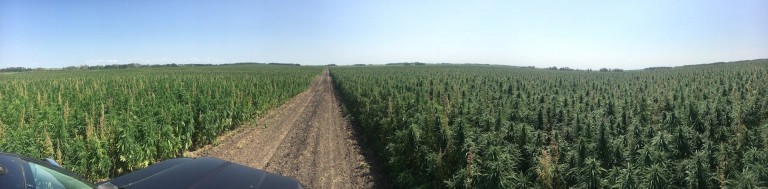
Manitoba hemp field

Saskatoon food centre

2019 Nuffield Scholars announced

The 2019 Nuffield scholars were announced on Tuesday 6th November at parliament by Hon Damien O’Connor Minister of Agriculture and Minister for Biosecurity, Food Safety, and Rural Communities. They are:

Ben Hancock

Ben was raised on his family’s Wairarapa hill country sheep and beef cattle farm. He is now based in Wellington working for Beef + Lamb New Zealand as a senior analyst, still near the farm and often back home to work.

After working in research and conservation roles in New Zealand, USA and Panama, Ben completed his PhD investigating eco-system services. Ben worked for the Ministry for Primary Industries in biosecurity policy before joining Beef + Lamb New Zealand.

With New Zealand’s agriculture export-focused, improving the diversity of markets can help to minimise volatility and maximise highest value outcomes. There are markets that have traditionally used sheep products that maybe under-utilised by New Zealand. Ben is interested in researching this during his scholarship.


Cam Henderson 

Cam owns and operates a 750 cow dairy farm near Oxford, North Canterbury. With degrees in engineering and finance, he has worked in a range of dairy industry roles including time with Fonterra and DairyNZ.

Alongside overseeing farming operations, Cameron currently commits much of his time to the Waimakariri Zone Committee in setting local environmental limits and to representing farmers as North Canterbury Federated Farmers Provincial President.

“All farmers will benefit from adopting the latest innovative practices on the farm and encouraging others to do the same. The faster we can encourage farming to evolve, the less regulatory and public pressure we will have to endure”. Finding the factors that increase the speed of innovation adoption among farmers is a key interest for Cameron.

A trainee in music, golf, snowboarding, flying and Te Reo, Cameron enjoys learning and giving anything a go.


Corrigan Sowman 

Corrigan lives in the small rural community of Golden Bay with his wife Ruth Guthrie and their two sons Wylie (7) and Tim (5). He is a partner and manager of the family’s dairy farming business alongside his parents and brother Sam. Corrigan is a graduate of Massey University with a Bachelor of Applied Science, was a former Consulting Officer with DairyNZ and Farm Consultant with FarmRight in Canterbury.

Alongside managing their 400ha dairy farming business, Corrigan has several off-farm roles. He is Chair and Independent Director of the South Island Dairy Development Centre (SIDDC) which operates the Lincoln University Dairy Farm. He is also Deputy Chair of the DairyNZ Dairy Environmental Leaders Forum, an initiative to foster and strengthen environmental stewardship and community leadership amongst New Zealand Dairy Farmers.

Farming practices that strengthen the integrity of the food produced is something Corrigan wants to better understand. “How can we give our farmers better market signals about the value they are creating in their production systems, especially inside a large cooperative?”


Hamish Marr 

Hamish is a 41-year-old, 5th generation, an intensive arable farmer from Methven in the South Island. Hamish is married to Melanie and they have three daughters aged 8,5 and 3. Prior to a farming career, Hamish graduated Lincoln University with B COM Ag in 2000 and then spent 4 years with Ravensdown Fertiliser as a field officer based in Ashburton. With his brother and parents, they farm 500ha of arable crops specialising in small seeds.

Outside of farming and family, Hamish is involved in several industry organisations. He is also active within Federated farmers and represents the Herbage seed growers section in Mid Canterbury and within that on the management committee for the Seed Quality Merchants Association, a board that oversees the seed certification scheme on behalf of MPI. Hamish is also involved with the Foundation for Arable Research on the Mid Canterbury Arable Research Group and the Research and Development Advisory Committee. Outside of work he has become a council member on the Ashburton Scottish society representing the Ashburton Pipe Band.

Farmers over the years have become dependent on a vast array of synthetic agrichemicals as a means of controlling weeds, pests and diseases and as a result, increasing yields across the board but this is being challenged and Hamish hopes to study the regulation that is being introduced in Europe and the implications for NZ.


Hamish Murray 

Hamish, wife Jessica, three children, Lucy (5) Margot (3) and Jonty (1) farm Bluff Station a 13000 ha High Country property in Marlborough. South Island NZ. He completed an agricultural degree at Lincoln University NZ, economics at Cambridge University (UK), and worked with the New Zealand Merino Company, before returning home to farm in 2008.

Hamish has been managing the farming operation including sheep, cattle and a recent diversification into beekeeping and honey production. He is also on the governance board for the Post Quake farming group helping with recovery from the November 16 Kaikoura Earthquake and a production science group for the New Zealand Merino Company.

Hamish has a real focus on people and relationships and is planning to investigate how the differences in environment, education and culture have shaped the values of our consumers and employees. Recognizing and understanding how these values have been formed and vary between culture and generations is key the success of our marketing efforts being a small export-led country. He aims to search out those organisations in our key export markets for wool, meat and honey which are engaging consumers and understand what is making them successful.

GM Update: 2018 in review

We are reaching the end of a busy year for Rural Leaders and our two programmes – the Nuffield Scholarships & the Kellogg Rural Leadership Programme.  While we have tried to make this a year a time of some consolidation after the launch of the new organisation and branding and the increased responsibilities, the projects and opportunities keep arising and enthusiasm from a busy management and governance team keeps emerging!

For this last E Nuff of 2018, I would like to give an overview of the highlights and achievements of the organisation and the programmes for the year which has involved the contribution of a larger team as highlighted below. 

2018 Highlights/Achievements  

Marketing  

  • Launched new branding (logo & applications) for Rural Leaders and Kellogg programmes & Refreshed the Nuffield brand to modernise and be consistent with the branding of Rural Leaders as the organisation
  • Launched a new website hosting both programmes and Rural Leaders with multiple entry points 
  • Appointed a part-time marketer – Clara Sweetman to drive our marketing activities
  • Increased significantly the media coverage and exposure of Kellogg & Nuffield projects supported by our media partnerships 
  • Had at least 5 alumni featured in On Farm Story with David Kidd starring on a Country Calendar episode. 

Financial & Sponsorship  

  • Re-signed four of our programme partners for a further period – thank you for your support Farmlands, Zespri, Hort NZ, FAR 
  • Bought onboard new Service & Media partners with KPMG, NZ Farming Life (Dairy Exporter & Country Wide) and Global HQ (Farmers Weekly & Dairy Farmer) 
  • Introduced new accounting and reporting systems as required under the Charities Act, with the support of our KPMG partner. 

Governance  

  • Farewelled and thanked Chair Juliet Maclean for her exceptional leadership and contribution to the big changes introduced, particularly the new branding. 
  • Welcomed James Parsons on to the board as Nuffield appointed Trustee 
  • Recruited, after a robust selection process, a new independent Board member, Louise Webster who will start the role in January (click here for more info on Louise) 

Programmes  

Nuffield 

  • Hosted a Nuffield International GFP New Zealand leg in Hawkes Bay and Bay of Plenty in April 
  • Delivered a fantastic, well supported Nuffield NZ Biennial Conference in Tauranga in May, thanks to Dave Hurst and his team  
  • Discussed and debated high quality presentations from the 2016 & 2017 Scholars.  
  • Selected five high quality 2019 scholars (see their profiles in this E Nuff)  
  • 2018 Scholars presented insights and debated implications for NZ to an audience of our investing partners 
  • Hosted the 2019 Nuffield Awards with over 75 industry guests & alumni attending  
  • Launched Nuffield 2020 Triennial event globally with a great video resource 
  • Appointed a project manager for the Triennial – Deb Gee from Higher Perspectives Consulting  

Kellogg 

  • Ran two 6 x month Kellogg programmes coordinating the involvement of over 40 industry leaders 
  • Graduated 48 new leaders within a broad diversity of sectors, geographical location, gender, age, ethnicity.
  • Published 48 new pieces of rural research for industry & public use. 

Our vision of “Growing NZ Through Thriving Rural Communities” and the achievement of the steps toward this could not be achieved without the ongoing contribution and time of the following; 

Rural Leaders Team:  Programme Coordinator Lisa Rogers, Marketing & Comms Clara Sweetman, our Kellogg programme leader Scott Champion and Project Support Patrick Aldwell & Nuffield Advisor, Hamish Gow. 

The Trustees:  Andrew Watters (Chair), Hamish Fraser, Michael Tayler, James Parsons, Craige Mackenzie, Associate Matt Hocken and Juliet Maclean (chair prior to June) 

Strategic partner representatives (National Advisory Group) 

  • Dairy NZ – Jenny Jago (prior to May – Mark Paine) 
  • Agmardt – Malcolm Nitsche 
  • Beef + Lamb NZ – Doug Macredie and Richard Wakelin 
  • FMG – Andrea Brunner 
  • Mackenzie Charitable Foundation  –  Mary Ross 

Programme Partners: Farmlands, FAR, Horticulture NZ, Zespri, MPI, TIAA  

From us all, at Rural Leaders, we wish all a great Xmas and New Year.


Nuffield International Triennial and NZ Nuffield Conference

20 March – 01 April 2020

Christchurch, New Zealand


Join us at Nuffield2020, the key forum for Nuffield alumni globally to get together for networking, ongoing learning and development. We have a programme that will focus on successful innovation and business models as we innovate for the future. Nuffield2020 coincides with our bi-annual Nuffield New Zealand conference and an important milestone of 70 years of the Nuffield New Zealand organisation and scholarships.


See the program of events and more information on our website www.nuffield2020.com


Contact:

Deb Gee  |  Conference Secretariat

secretariat@nuffield2020.com or +64 27 606 1810

Chair Update: Andrew Watters

Andrew Watters, Nuffield New Zealand Chair

This time of the year is a busy period for trustees, selecting and presenting our 2019 Nuffield scholars.  The process is robust and involves shortlisting, referee checks and of course the interview process.  It all culminates with the announcement in the Banquet Hall of Parliament in early November. 

You will see from the profiles that we have very good hands-on farmers in this year’s selection with representation in dairy, sheep & beef, fibre, arable sectors.  It is also notable that the topics initially selected (which can change) are very outward/ market/ customer focused in recognition that the challenges and opportunities facing many sectors are more about the how and why of what we are doing on-farm than the what. 

We obtained excellent feedback from this year’s scholar announcement event.  Prior to the Awards, we had a highly valuable two-hour session engaging returning scholars and programme partners on topics and perspectives facing NZ and global agriculture.  And at the formal announcement at Parliament more than 75 people enjoyed hearing perspectives on the 2018 Scholar’s preliminary insights on their research topic which included challenges of setting environmental policy, the physical limitations of moving to low carbon energy systems, the need to optimise farm systems within environmental limits, the need for NZ agriculture to up its game on biosecurity and the opportunities for high value nutritional ingredients. 

One notable fact that we will be addressing in future selections is the lack of diversity amongst our scholar group.  We are under-represented this year in horticulture, in Maori agribusiness and in women scholars.  This isn’t an issue of selection, it is an issue of ensuring that we get a sufficiently diverse group of applicants.  We will be developing some plans to address this for the new year.  The answer is probably a mix of better engagement with our business partners and sponsors around candidate nomination and some more activity in the regions. 

Since our last Enuff, I am pleased to confirm the appointment of Louise Webster as an independent trustee.  As noted on our website, Louise brings a different skill set based around technology, innovation and leadership development.  Louise will join the Trust Board in January following a six-month sabbatical in Europe looking at the agri-food and other sectors.  We look forward to her contribution helping us ensure we remain relevant in a fast-changing world. 

I can also report on progress on the Thought Leadership or Rural Communities project.  Utilising the ‘Good to Great’ hedgehog as an organising concept, we have confirmed as a Trust that we are passionate about “Growing New Zealand through thriving rural communities”.  We are working on the other two components of the hedgehog but believe we can be world’s best at “Developing rural leaders that can solve (or untangle) wicked problems”.  And finally, we think that our real economic engine (how we secure ongoing funding) is “delivering leaders, and cost-effective solutions, that can address wicked problems” for our programme partners and sponsors. 

A wicked problem is defined as a problem that is difficult or impossible to solve because of incomplete, contradictory and changing requirements that may be difficult to recognise.  An effort to solve one aspect of a wicked problem may create other problems.
 

The trend towards commoditisation, the need to meet environmental standards, climate change, the role of genetic engineering, attracting young kiwis to work on farms are all examples of wicked problems.  Often these problems are across industry rather than within industry silos. 

As an organisation, we have limited resources so we need to crawl before we walk.  What we can do in the near term is ensure that our new scholars (Nuffield and Kelloggs) understand the wicked problem concept and can develop their topic area into an aspect that we need to solve for the future of NZ agriculture.  We then need to better leverage the post scholarship period to ensure scholars can engage with our partners and the alumni to transfer their knowledge into positive action. 

Finally, as we near the Christmas period it is important to acknowledge the work of Anne Hindson and her very small team.  They are currently fully engaged in running the Nuffield (working with 2018 and 2019 scholar groups) and Kellogg programs (class 38 just completed last week) & planning for the 2019 courses starting in mid-January and supporting the Nuffield Triennial work being done by Michael Taylor and his group.  As we move forward it will be important that we match our desire for impact with resourcing and this in-between time can be difficult to traverse. 

Obituary for John Clarke

John Clarke was awarded a Nuffield Scholarship in 1963.

One of New Zealand’s great leaders in the N. Z. agricultural business, in particular the New Zealand wool industry, John Clarke passed away on 12 May 2018 in Dunedin.

John was involved in the sheep, beef, dairy, cropping and pig farming industries.  He was a member of the Producer Board’s Electoral Committee;  became Chairman of the New Zealand Wool Board between 1072-1980;   served as a Director of the Otago Dairy Co-Operative;   the Kiwi Dairy Co-Operative;   a Director of The National Bank;  and served as a Governor on the Board of Columba College, Dunedin.

His involvement in his local community as a leader both nationally and internationally within the wool industry John was formally recognised for these services.  In 1981, he was honoured with the CMG (Companion of the Order of St Michael and St George) and  received the NZ 1990 Medal for services to his community.

Anyone wishing to make contact with John’s wife, Margaret, and his family can do so by sending a message to 113 Quatermain Rd, Clinton South Otago 9584.

Peter Jensen Raises a Challenge to Alumni

Peter Jensen encouraged alumni to pay it back at the 2019 Nuffield NZ AGM announcing that he and his wife Anne were donating $40k, the equivalent of one scholarship, to the Nuffield Capital Fund.  

He challenged every scholar for whom the scholarship had been a life changing event, either in their business or personal life, or both to donate over their lifetime the equivalent of a current scholarship ($40k) in recognition of the opportunities that it provided each person in their business and personal life.  

I am showing that I believe that in donating back the equivalent of a scholarship I can ensure this amazing opportunity continues well into the future and Nuffield NZ is in a strong position to continue to spearhead rural leadership development into the future” says Peter. 

He follows another generous contribution of $10k by Derek Daniels earlier and contributions some years ago by other alumni and events. 

The fund is currently sitting at just over $810k so our target is not unrealistic! 

To download a donation form click here or if you need to discuss options please contact GM Anne Hindson on 027 431 7575 or annehindson@ruralleaders.co.nz 

Background  

The Nuffield Capital Fund was set up a number of years ago to build a fund of $1million to ensure that the Nuffield legacy would continue in times of ‘shocks and challenges’ such as the loss of a major sponsor or a rural/country recession. The interest from this fund would support at least two scholarships each year and enable ongoing leadership development opportunities for alumni i.e. attendance at courses, development opportunities. 

The fund will ensure Nuffield continues to be the pinnacle of rural and agri food leadership development in New Zealand into the future.  

Obituary for Hugh Roberts

Hugh was a highly active member of the Nuffield Alumni and at the 2015 Nuffield Australia National Conference in Albury, was acknowledged for a 40-year reign as a Nuffield Scholar. 

Hugh was a well-known grains industry advocate, former agri-politician who had a long association with the NSW Farmers Association and other industry bodies. He was also a strong advocate for genetically modified (GM) crops.  

Until recently, Hugh and his wife Jenny lived at “Birralee”, a 485 hectare property which became widely known as the base of a successful registered seed business, specialising in triticale and legume varieties.
 

Hugh was awarded a Nuffield Scholarship in 1977 to study British agriculture, and the British seed industry in particular. You can read Hugh’s final report here.

He has represented the agricultural industry in many roles, including with NSW Farmers Association, Grains Council of Australia and Bio Technology Australia Advisory Council, Australian Seeds Authority and the Australian Crop Accreditation System.

GM Update: Our new branding

Anne Hindson, General Manager, August 2018

Andrew in his Chair update, focuses on Nuffield strategic initiatives and NZRLT board activities, while this update covers management activities of the NZRLT Trust (incorporating both Nuffield and Kellogg programmes) as well as Nuffield programme activities and reflections.

The launch of our new brandingin late June, has occupied a large amount of my time. Juliet Maclean led the project which began in January, through the brand development including the research, strategy, creative, story, and identity to get it to the brand kit and roll out stage.  Juliet’s commitment to making sure the Nuffield and Kellogg programmes are relevant for our future markets is invaluable in setting us up for the future.  

We started with the development of a new brand for our new organisation – the New Zealand Rural Leadership Trust (referred to as Rural Leaders) accompanied by a new fresh logo for the Kellogg programme and a refreshed modernised logo for the Nuffield Scholarships. If you missed our email with the story behind the branding, click here for a detailed explanation and video.

We created a single website which now hosts Rural Leaders and the two programmes, but have ensured that all Nuffield (and upcoming Kellogg) marketing drives people directly to the Nuffield page on the new site.  Over time, we hope to position Rural Leaders as the recognised organisation delivering both programmes with marketing going to just that site. 

The single website also provides one platform for our joint alumni to interact with both programmes and alumni activities. It is the first step in bringing our alumni groups together also under one umbrella organisation for thought leadership activities. The final step in this project is the transfer across of several hundred reports from both sites which will take some time. 

The new branding is now fully adopted in all communications; the response has been very positive from internal and external audiences.  

The appointment of Clara Sweetman as a part time marketing contractor in late June has already bought results with a raised social media profile and some fresh ideas. This is a resource which has been needed for a while but was delayed until the rebranding process had occurred. Clara joins us after contracting for Farmlands, before having her first child.  

Our 2019 Nuffield Scholarships close on 19 August and at the time of writing this newsletter we are waiting anxiously to see the calibre of applicants who apply. It is getting harder to market the Scholarships with the clutter of advertising and messaging, so the marketing strategies are continually being reviewed.  5 years ago, most of our marketing was focused on the rural print publications and alumni networks while now our vehicles are social media, testimonials and alumni shoulder tapping.  We are also trying to work more closely with each industry sector to get them identifying their emerging leaders and encouraging this as part of their pathway. 

While I appreciate that it has always been a big commitment and investment to undertake a scholarship, we are seeing and hearing some of the following challenges /barriers for the next generation of potential scholars;  

  • Young family commitments – many in the 30 – 40 age group are just starting families or have very young children 
  • Working partners – ability to cover family/business is reduced 
  • Diversity of investment often across several farm types or production systems so no natural breaks in workload  
  • More sole operators with no backup from family or others and no fulltime managers to take workload 
  • Greater opportunities to travel overseas, attend international forums  
  • Competing programmes and options to develop leadership skills  

While there is greater flexibility for doing the individual research travel there is still a requirement to be overseas at least 4 months in a 10-month period and complete the full scholarship in a year, which is tighter than other Nuffield countries with timelines of 18 – 24 months.  Of course, we do note to scholars that learning how to reorganise ‘life’ to take on new challenges is part of the benefits of undertaking a scholarship. 

As alumni numbers grow we also need to connect our recent scholars into the support network where alumni provide the opportunities and support their development post the scholarship. The Biennial Conference provided a great launchpad with this year’s 2016 and 2017 presenting scholars and it is pleasing that their topics are attracting industry interest with all of them having presented at conferences and industry forums before and after the Conference. 

Their 15min video presentations on the website and You Tube is proving to be a popular vehicle for those wanting to get an overview of their reports. If you haven’t checked them out, click here https://ruralleaders.co.nz/nuffield-presentations/ 

Planning for the 2020 Nuffield Triennial Conference is well under way with an organising committee meeting this week to sign off some key dates, branding, components. This will allow us to release the first marketing for the event to Nuffield alumni globally through country conferences, direct mail and using alumni contacts 

This is a very big commitment for the organisation in terms of resource, time and financial resources, and the full support of all alumni, which I am sure will be forthcoming.  

Upcoming Events 

  • Kellogg Course 38 delivery: June – November 
  • Kellogg Course 39 2019 Applications close:19 October  
  • Nuffield Selections: September/Oct 
  • 2019 Nuffield Awards: 6 November 

Chair Update: What Lays Ahead

Andrew Watters, Chair, Board of Trustees
August 2018

I hope you agree with me that the Tauranga Biennial Nuffield conference was a great event.  It had a nice mix of local content, thought leadership and catching up with old friends

I thought our new scholars did a very good job of presenting their project findings and their views on the issues and opportunities facing New Zealand and global agriculture.  And for them, it is a perfect introduction to the Nuffield fold.  The mix of youthful enthusiasm and wise perspectives from our range of generations is a strength of our Nuffield body. 

Thank you’s have been extended to the local organising committee led by Dave Hurst; the conference was well organised and operated with a $15,000 surplus assisted by securing valuable local sponsorship – this surplus has been transferred into the Nuffield Capital Fund. 

At the AGM, James Parsons was elected to fill the vacancy left by Juliet Maclean and I was re-elected.  Following the meeting the board elected me as your new Chair.  Thanks to Lucy Griffiths and Steve Wilkins for also being prepared to put their names forward for election.   

I would like to acknowledge the service of Juliet Maclean with her contribution of six years as a trustee including the past two as chair.  Juliet was instrumental in setting up the original consortium between Lincoln University and Nuffield New Zealand which provided both a potential leadership pathway for people in agriculture but also enabled the organisation to take on professional management.  Her work culminated in forming the New Zealand Rural Leadership Trust (NZRLT) with full operational control of the Kellogg scholarship programme. 

The outcome is to be appreciated but the behind-the-scenes work from Juliet along with our GM, Anne, was critical to the outcome.  Juliet also led our 2017 strategy review process which resulted in the rebranding of our programmes and the branding of the Trust, and the consideration of the Rural Thought Leadership and Advocacy Project.  Juliet has left Rural Leaders and the Nuffield program in exceptionally good heart and she has set a high mark for us all to perform to. 

The constitution of NZRLT requires four scholars elected by the Nuffield Alumni and two independents who are approved by our strategic partners.  Hamish Fraser has and continues to fill one of these roles, and we have had a vacancy that we are close to filling.  We have run a very successful recruitment process with 26 high quality applicants, quite astounding given this is a voluntary role.  At the time of writing we are completing referee checks on our preferred candidate.  A key element for us is seeking diversity in skills, experience and thought.  We look forward to announcing the appointment in coming days. 

Two related matters raised at the AGM was the fact that we have been holding AGMs only at our biennial conference (the constitution requires an AGM to be held annually), and that the Nuffield NZ financial reports are less meaningful now given all operations are under the Rural Leadership Trust.  The board have considered both these matters, we intend to hold an AGM via webinar in off-conference years and we will report the financial results of the NZRLT to the Nuffield alumni, noting that this is a separately constituted Trust and reporting structure. 

One general comment from past scholars and our strategic partners is the need to ensure that we get sufficient representation from grass-root scholars in our Nuffield programme.  This will be a continued work-on for the board including our processes for attracting applicants and how we assess applicants.  Although our agricultural economy is seeing the traditional within and outside farmgate boundaries blurring, we do need to get the balance right between selecting scholars who can shape the future of NZ agriculture and equipping our grass roots to work in a more complex world, including as farmer elected members on co-operative and industry boards. 

The thought leadership programme is progressing, albeit with small steps.  Work with other rural leaders and in particular our strategic partners suggests strong support for mobilising our Nuffield and Kellogg alumni to ensure that we win the debates on matters important to the future of rural communities.  We have decided to trial our first initiatives on a couple of regions to ensure that we learn ‘how’ we can be effective.  We expect to be in touch with scholars in those regions this spring. 

Michael Tayler and his team continue to work on the 2020 triennial conference which of course is a combination of our NZ biennial and the international triennial.  There is some consideration at Nuffield International that this may be the last triennial (perhaps replaced by annual travel opportunities flowing from the annual CSC conferences) although we need to see more debate on the proposed changes. It is important that our NZ alumni support this event in all ways and we will come back to you soon to help market the event with your cohorts. 

Finally, it is pleasing to report the on-going growth of the NZ Nuffield Farming Scholarship Trust’s fund performance.  As at the end of June the fund’s balance was $811,000 with an 11.74% return in the last 12 months and a time weighted return of 12.83% since inception (May 2010).  The fund has been supported by donations from scholars and business partners, but the growth strategy implemented ably by Craigs Investment Partners has been a significant help.  You will read separately about Peter Jensen’s generous ‘giving back’ which has been an important contribution to the fund.   

I wish you the best for the spring ahead; we have rarely seen agricultural prices so firm (other than wool) right across our industry and although there may be trade headwinds ahead there is at least some NZD relief being bought to bear.   

Social licence to operate or licence to produce – Kate Scott 2018

I was interested by the fact that many felt that New Zealand was perhaps the country feeling some of the most significant scrutiny, with a few people commenting on the fact that New Zealand’s farmers are now considered to be on the table of social standing at about the same level as the politicians.

By Kate Scott, 2018 Nuffield New Zealand Scholar

It’s not every day you walk into a room of 80 odd people and the entire room is abuzz with chatter, where people come together with a common and passionate link – agriculture and food. It’s also not every day that you get to attend the Contemporary Scholars Conference (CSC) as a Nuffield Scholar.

This year we were able to travel to the proverbial home of agriculture, the Netherlands for a week of immersion in all things Nuffield, including the opportunity to hear from some great speakers, to enter into some challenging debates, see some of the amazing opportunities that the Netherlands have to grow food, as well as to hear about the challenges that the Netherlands is facing in the agriculture space. It was however surprising that despite the Netherlands producing approximately 12 billion litres of milk per year that it was not overly easy to find fresh milk for your cuppa tea!

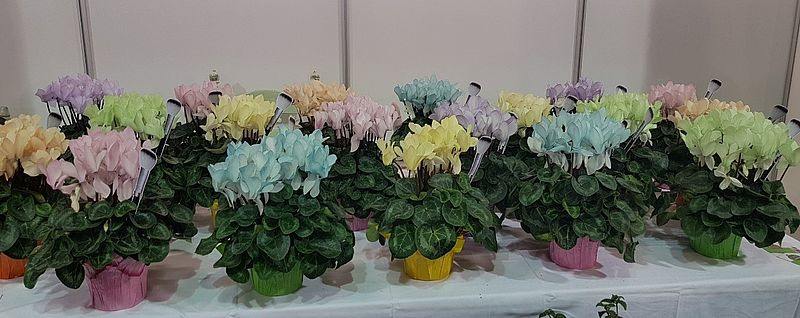
A couple of highlights included the opportunity to cycle to the farm of 2015 Scholar Gerjan Snippe where we were able to see the inner workings of Biobrass their organic cooperative farming business, and for me a highlight was also being able to attend the Royal Holland Flower Market, a modest 270ha area of land dedicated entirely to the selling and distribution of flowers and plants! (the inside tip for those of you interested in flowers, is that ‘pastel’ colours are on trend for the coming seasons).
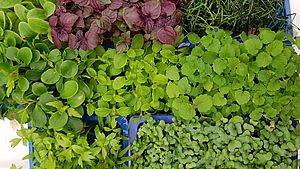
It was also a great opportunity to visit the recently opened World Horticulture Centre, which was a great example of collaborative use of space between industry, education and research to advance development in the Horticulture sector.  The Netherlands is truly world leading when it comes to horticulture and their ability to grow an abundance of food and produce, especially from a relatively small footprint.

I was also given the opportunity to participate in a panel discussion on the ‘future of agriculture 2030’ from a New Zealand perspective. This enabled me to reflect on where we are at the moment, and what the opportunities might be for New Zealand in the future. One of the key things that came to mind for me was that there is a clear need for us to have an agriculture strategy, and that we need to focus on having the hard conversations so that there is a path forward for NZ to be the most environmentally friendly farming nation in the world. The opportunity is there for us as the leaders in the agriculture sector to seize, but we need to be brave enough to start the conversation.

Despite a jammed packed schedule at the CSC, there was also opportunity to observe some commonality amongst the various countries represented including the increasing disconnect between rural and urban communities, leading to a number of discussions around ‘social licence to operate’ or ‘licence to produce’. I was interested by the fact that many felt that NZ was perhaps the country feeling some of the most significant scrutiny, with a few people commenting on the fact that New Zealand’s farmers are now considered to be on the table of social standing at about the same level as the politicians.

There was also a lot of talk about the vegan movement, which I observed as creating a lot of angst for some amongst the room. However, where some see this as a threat to the agriculture sector, I see it as an opportunity. I don’t believe we are going to change the views of those who are so strongly engrained in their vegan view of the world, but I also don’t see that there will be a move to the majority of people choosing to be vegans (certainly not in the short to medium term).

The opportunity to focus on providing good quality, nutritious food which is known to be safe, exceeds animal welfare requirements and growing in an environmentally sustainable way is where we need to be spending our time. Those nations who can move quickly towards providing this certainty, traceability and confidence in their food, stand to prosper from the increasing knowledge that food consumers have. I believe New Zealand has the ability to lead this space.

After having spent the week in the Netherlands I am still firmly of the view that New Zealand is still at the leading edge in many aspects, and that if we can foster a collaborative approach to managing the effects of agriculture, that our future will continue to prosper as an agricultural leading nation.