2026 Nuffield NZ Farming Scholarship. Apply by 17 August 2025. Read More...

Apply for 2026 Nuffield NZ Farming Scholarship by 17 August 2025. More details...

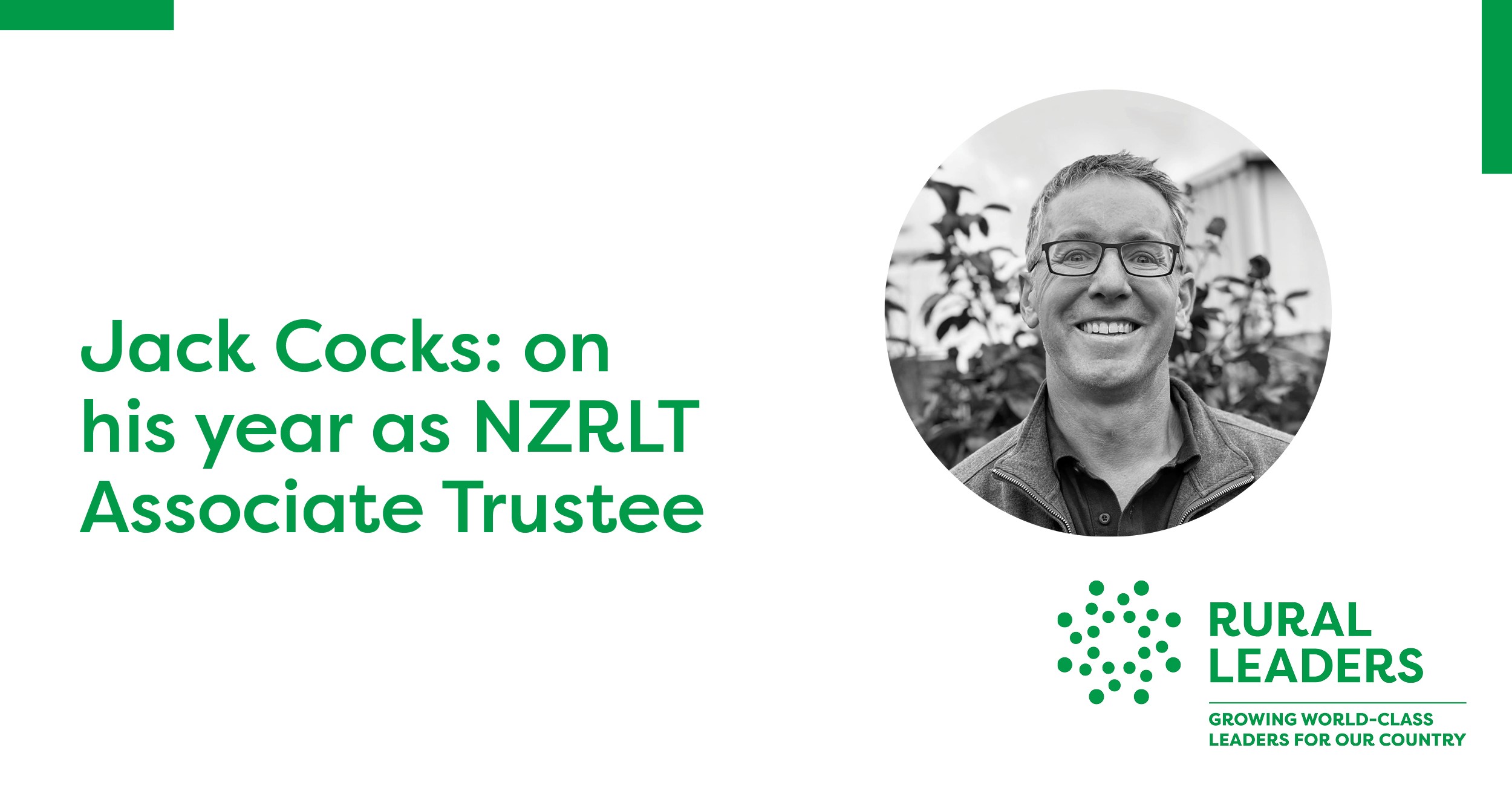
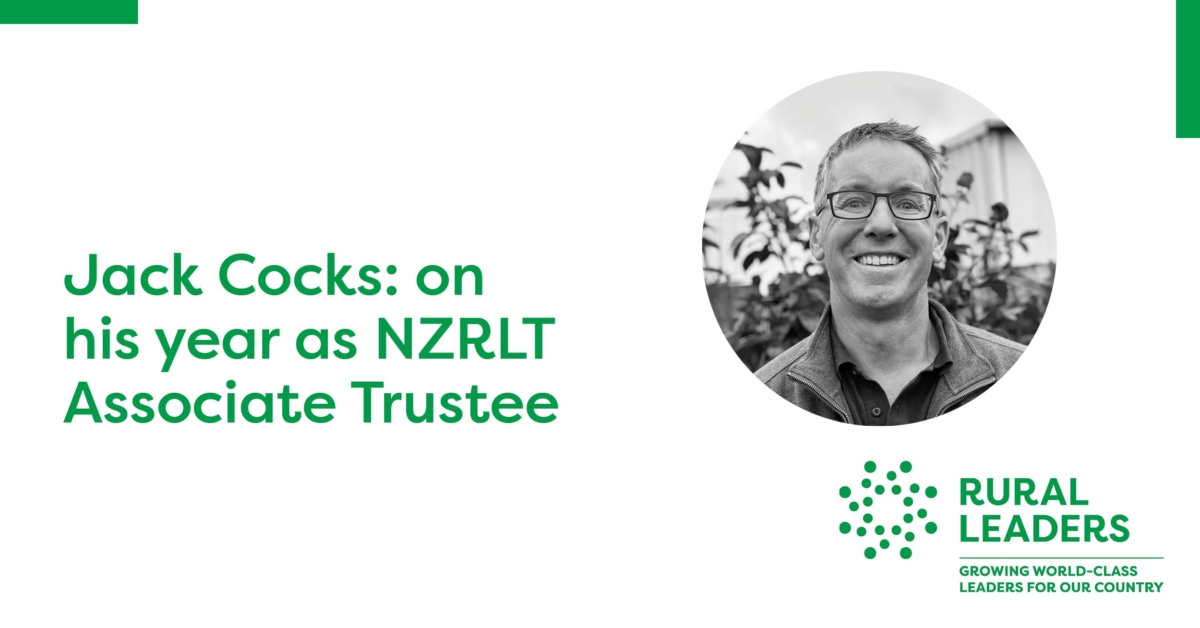
Jack Cocks signs off on a year as the NZRLT Associate Trustee.

Jack Cocks has just finished a one year term as Associate Trustee for the New Zealand Rural Leadership Trust (Rural Leaders).

Jack is a high country farmer who holds a bachelor’s degree in farm management from Lincoln University and a masters in agricultural economics from the University of Illinois. He is as much at home in the city as he is in the Otago high country running Mt. Nicholas Station with his wife and children.

Jack suffered a life-threatening brain aneurysm twelve years ago which saw him spend eight months in hospital over six years and undergo fifteen major surgeries.

Following this experience he researched how ‘Resilient Farmers Thrive in the Face of Adversity’ through the Kellogg Rural Leadership Programme. He is now a well-respected speaker on farmer resilience.

Early in 2024 Jack joined the New Zealand Rural Leadership Trust (Rural Leaders) as an Associate Trustee to learn more about governance from the Trust’s experienced board.

“I enjoyed learning from the other trustees. They all had different skill areas and very smart perspectives too. Being part of a team was also an appealing thing to me. The frequent events, such as the Kellogg networking event in Wellington, were great too.”

Mt. Nicholas is remote, so Jack cites the board interactions, both online and in-person, as being another important draw. “You’re not in an immediate community here at Mt. Nicholas. You’re not going to the local field days, meetings or functions that often. So, keeping involved with board matters was enjoyable,” says Jack.

Jack’s plan is to now shift his focus closer to home, on family and the business.

“Our kids are going through high school, they’re both week-day boarding in Invercargill, two and a half hours away. It’s a reasonable commitment to head up and down the road every week.

I’m still doing one or two speaker engagements a month. I’m able to give back a bit to the sector and the community, and a lot of that has spun out of my Kellogg,” adds Jack.

Jack plans to continue his governance journey once his children leave school. He acknowledges the strong foundation the year as an Associate Trustee has given him and he mentions some advice he was given before he went into the role.

“Some advice I got from a wise director before joining Rural Leaders as Associate Trustee, was to look at the one year term in three parts. The first part is asking plenty of questions. The second part is establishing credentials. The final part is adding some value.

I didn’t throw any ideas around for a start, but tried to understand the business. Then I established myself in that second part and looked for ways to add value in that last part. Some of the work that Lisa Rogers and I were doing towards the end with the Value Chain Innovation Programme; like looking at an offshore component for it, fits into that.

That’s how I approached the one year, and I found that advice really useful. It reassured me that I didn’t need to go in guns blazing,” says Jack.

Kate Scott, Rural Leaders Board Chair, spoke of Jack’s measured and intelligent approach to his time as Associate Trustee, “The knowledge Jack has passed on, especially around farmer resilience, has been invaluable. Jack’s calm, clear and curious nature make him a standout as he continues his governance journey.”

Katie Rodwell recently joined as the new Associate Trustee, marking the end of Jack’s year.

“It was a tremendous opportunity. I thank the board and the Rural Leaders’ team for their openness and inclusiveness. I really felt comfortable and that I could contribute to make a difference,” concludes Jack.
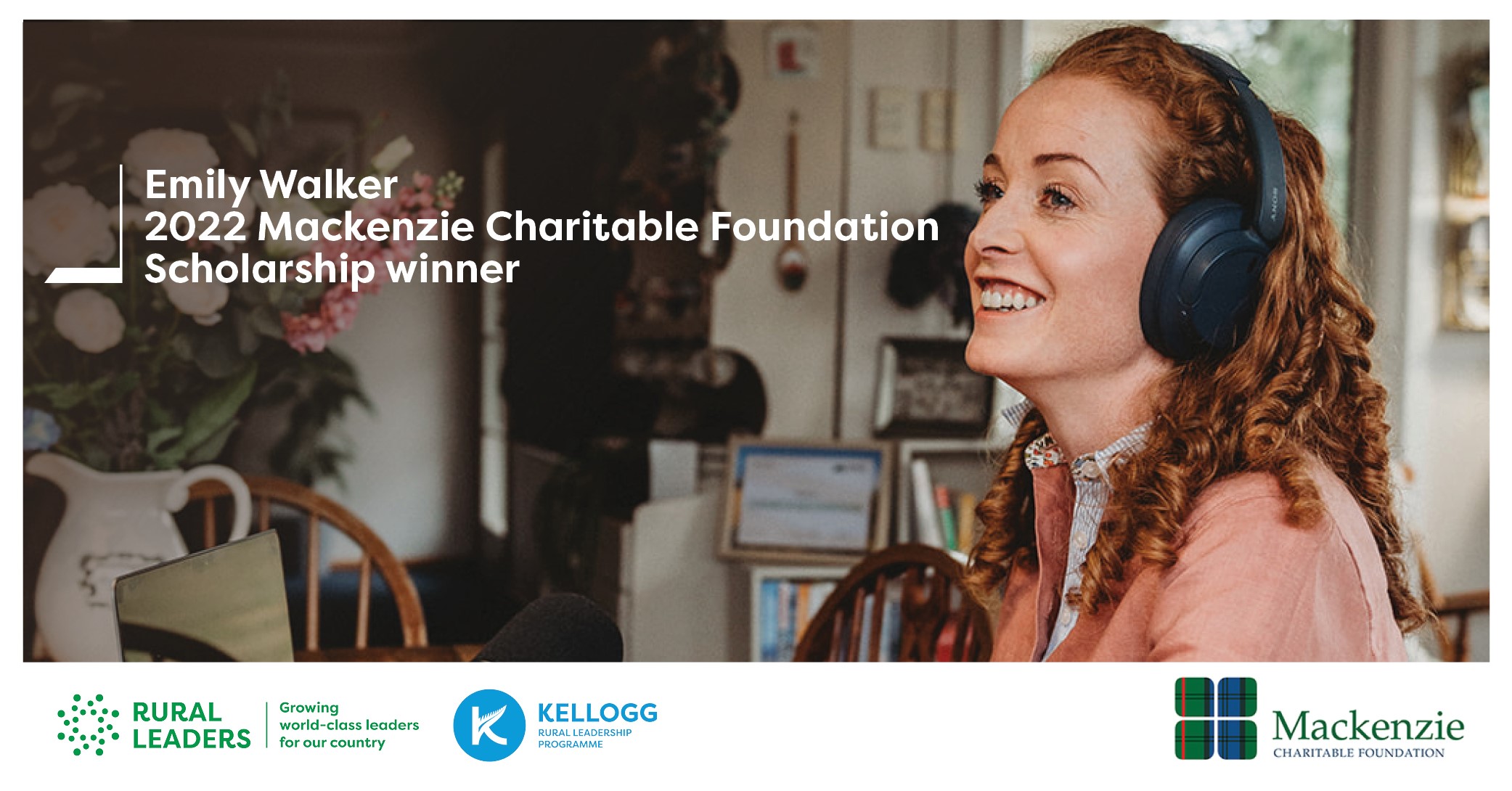
Emily Walker – making an impact in New Zealand agribusiness.

From Engineer to Agri-Strategist: Emily Walker’s Path to Making an Impact in New Zealand’s Agribusiness Sector

A Canterbury native, Emily Walker’s story so far, has been marked by a commitment to innovation, sustainability, and leadership—values that are now shaping her efforts to play a role in transforming New Zealand’s agricultural sector.

The Spark: A Mackenzie Charitable Foundation Scholarship.

In 2022, Emily was awarded the Mackenzie Charitable Foundation Scholarship, a pivotal moment in her career. As a structural engineer with a Master’s in Engineering Management, she had already established herself in the engineering world. However, a growing interest in agribusiness led her to explore ways to combine her technical background with her passion for supporting sustainable farming practices.

“The Mackenzie Scholarship gave me the financial support and confidence to explore my ideas further on the Kellogg Rural Leadership Programme,” Emily says. “Without it, my pivot into the agri-sector would not have happened the way it has.”

Emily’s Kellogg research, asked a key question: Does an evidence-based approach to decision-making improve outcomes for small-scale agribusinesses in New Zealand? The research aimed to identify ways that evidence-based frameworks could enhance decision-making, particularly in the face of the complex environmental, social, and economic challenges farmers face.

The findings of her research were clear: there is strong demand for better decision-making tools that help farmers evaluate and balance these impacts. Key recommendations included maintaining a deep understanding of the operating environment, aligning decisions with core values, and implementing multi-disciplinary boards to support decision-making.

The Kellogg Rural Leadership Programme and a Business Launch.

The Mackenzie Charitable Foundation Scholarship enabled Emily to participate in the Kellogg Rural Leadership Programme. Despite holding down a demanding full-time job, she took leave to complete the programme. The skills and confidence Emily gained during Kellogg were instrumental in the launch of Tupu Strategic, a consultancy offering strategic and governance advisory services to agribusinesses.

Emily’s work with Tupu Strategic is grounded in the principles of her research. “I’ve integrated what I learned in Kellogg into every aspect of my work,” Emily says. “The decision-making framework is now a core part of my strategy work, governance roles, and client engagements. It’s been incredibly rewarding to see how these tools can help drive better outcomes for the sector.”

Expanding Reach: Governance and Podcasting.

Since completing the Kellogg Programme, Emily’s career has rapidly expanded. In 2024, she became an Associate Trustee for both Wai Wānaka and AgResearch, roles that allow her to grow her governance skills while contributing to the strategic direction of key organisations in the food and fibre sector.

But it’s not just about boardrooms and business strategy. Emily also co-hosts and produces the Ag in Conversation podcast, a platform she describes as her most impactful project yet.

The podcast provides a space for open, thoughtful discussions on some of agriculture’s most pressing issues, ranging from rural women’s mental health to global trade agreements. By bringing the “kitchen table” conversations of rural communities into a global spotlight, Ag in Conversation aims to educate both those inside and outside the sector about the challenges and opportunities facing New Zealand agriculture.

“We aim to scale impact through education,” Emily explains. “By diving into complex issues and sharing them with a wider audience, we can foster deeper understanding and encourage more informed conversations, both in the sector and beyond.”

Balancing it all.

In addition to her professional commitments, Emily is also a farmer and mother to a one-year-old daughter. Life on the farm in Tarras, in Central Otago, brings its own set of challenges, but she embraces the necessary juggling act.

“Balancing the podcast, client work, governance roles, farm life, and being a mum is definitely a challenge, but each part brings its own rewards,” she says. “The diversity of my experiences—whether it’s from the farm, the podcast, or my governance work—helps me grow and make a bigger impact in everything I do.”

Looking Ahead.

Looking to the future, Emily’s ambition is clear. She plans to continue her leadership development and expand her influence in the agribusiness sector through both governance and education. She is committed to creating a lasting impact by fostering evidence-based decision-making practices, supporting rural communities, and advocating for sustainable, forward-thinking strategies within food and fibre.

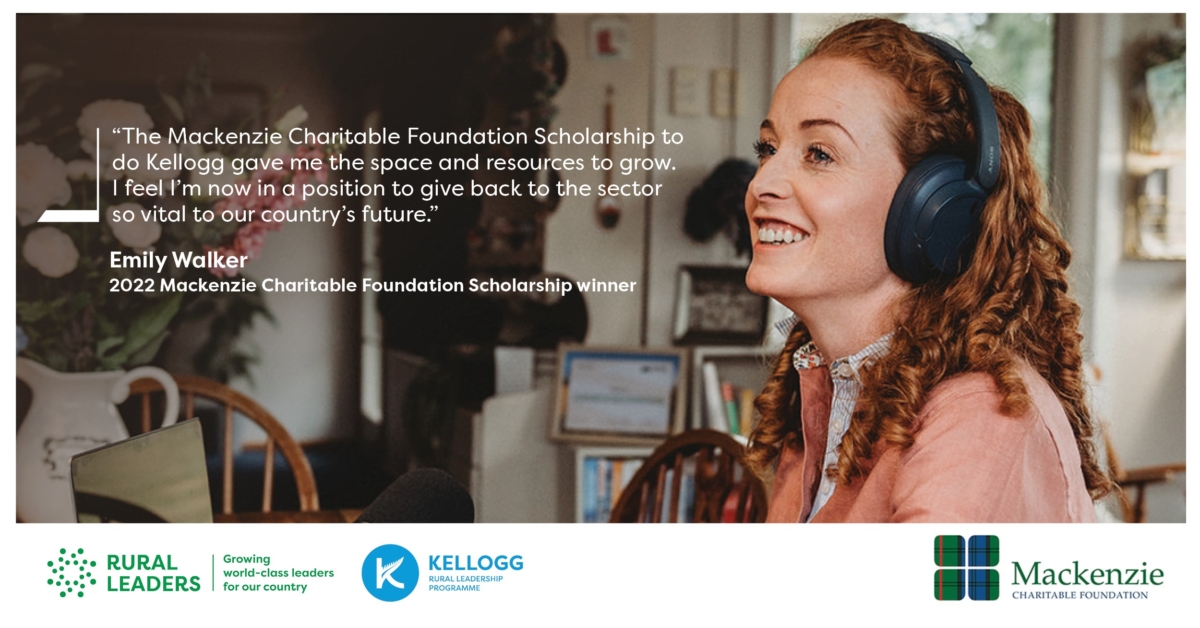
“The Mackenzie Scholarship set me on a trajectory towards making meaningful change in agriculture,” Emily reflects. “It gave me the space and resources to grow, and now I’m in a position to give back to the sector that is so vital to our country’s future.”

You can view Emily’s Kellogg report here.

Isabelle Coates – networking, leadership, and giving back.

Isabelle Coates, 2021 Mackenzie Charitable Foundation Scholarship Winner, 2022 Kellogg Scholar.

For young professionals in the food and fibre sector, finding the right opportunities to grow and make a meaningful impact can be challenging. But for Isabelle Coates, the Mackenzie Charitable Foundation and the Kellogg Rural Leadership Programme provided both a transformative experience and a vital network of connections that has helped to shape her career path and her passion for supporting others.

Motivations for Applying: A Desire to Give Back.

The journey began while working for a not-for-profit, where limited resources sparked a desire to make a bigger impact. The organisation faced the common challenge of workforce attraction and retention, a theme that has become central to Isabelle’s career path. “I was working for a not-for-profit at the time, so we didn’t have a lot of money, but we were trying to do a lot with what we had,” said Isabelle. “The role opened my world to the power of workforce retention. Like many in my network, I wanted to do so much.”

Isabelle’s background in the meat industry, where she had previously been supported by the Meat Industry Association, further fuelled her drive. She wanted to give back to the industry that had supported her and had an ambitious vision for a project that aimed to secure funding to help improve workforce challenges within the meat processing industry. Gaining consensus from a large number of meat processors proved difficult – leaving the project in limbo. Despite this, Isabelle continued to look for opportunities to make a difference.

Winning the Mackenzie Charitable Foundation Scholarship: A Vote of Confidence.

Winning the Scholarship enabled her to complete the Kellogg Rural Leadership Programme. It also marked a pivotal moment in her career. “Being so early in my career, winning the Scholarship meant a lot,” she shared. “It was a vote of confidence that the Mackenzie Charitable Foundation were willing to invest in me and, more broadly, in young people wanting to advance and grow in the sector.”

At a time when many young professionals can often feel uncertain about their place in food and fibre, the Scholarship offered not only financial support but a vital network of peers, mentors, and industry leaders. “There’s over two and a half million dollars’ worth of scholarships in the food and fibre sector, but so many people don’t know about them or don’t have the confidence to apply,” she explained. “Winning The Mackenzie Charitable Foundation Scholarship to do Kellogg, showed me that there’s a need for young talent and that the sector wants to invest in our growth.”

Kellogg didn’t just provide Isabelle with technical skills and knowledge—it also helped her grow her confidence and broaden her professional network, an invaluable asset early in her career. “Kellogg helped me grow my confidence. It gave me the tools to think more critically, be more efficient with my time, and to avoid my own past mistakes like falling into the work habits that lead to burnout,” said Isabelle.

After Kellogg: A New Outlook and Career Path.

Since completing the Kellogg Rural Leadership Programme, Isabelle’s career trajectory has shifted. She transitioned from PGG Wrightson to Muka Tangata, where she worked on qualifications and standards for nine months, engaging heavily with the forestry and agricultural industries. From there, Isabelle moved internally to a role focused on engaging with the dairy, sheep, beef, and deer industries. “I really enjoyed the human connection in my role. It was the huge motivation for applying,” she said. “I love meeting farmers and understanding the challenges and opportunities they face across New Zealand’s diverse farming regions.”

Alongside her career, Isabelle has also found time to start a Young Farmers Club in the Waihora Banks Peninsula area, offering a platform for young people to connect, share experiences, and build leadership skills. “I was a little bit lonely in my previous role to be honest, so I wanted to create something that could help others feel connected,” she said. “We’ve got about 16 members right now, and it’s been really rewarding to see people build their networks.”

A Commitment to Creating Impact.

As Isabelle’s career progresses, she remains focused on creating real impact. Whether that’s connecting farmers to policymakers or helping young people build the confidence to lead, she believes change begins with listening. “Making a difference starts with someone listening,” she said. “The change happens at the intersection of people doing clever things for the right reasons, and then you connect the dots.”

For Isabelle, the future is about more than advancing her own career. It’s about driving human-centred change and creating a supportive, connected network that just might help shape the future of New Zealand agriculture.

You can view Isabelle Coates’ Kellogg Research report here.

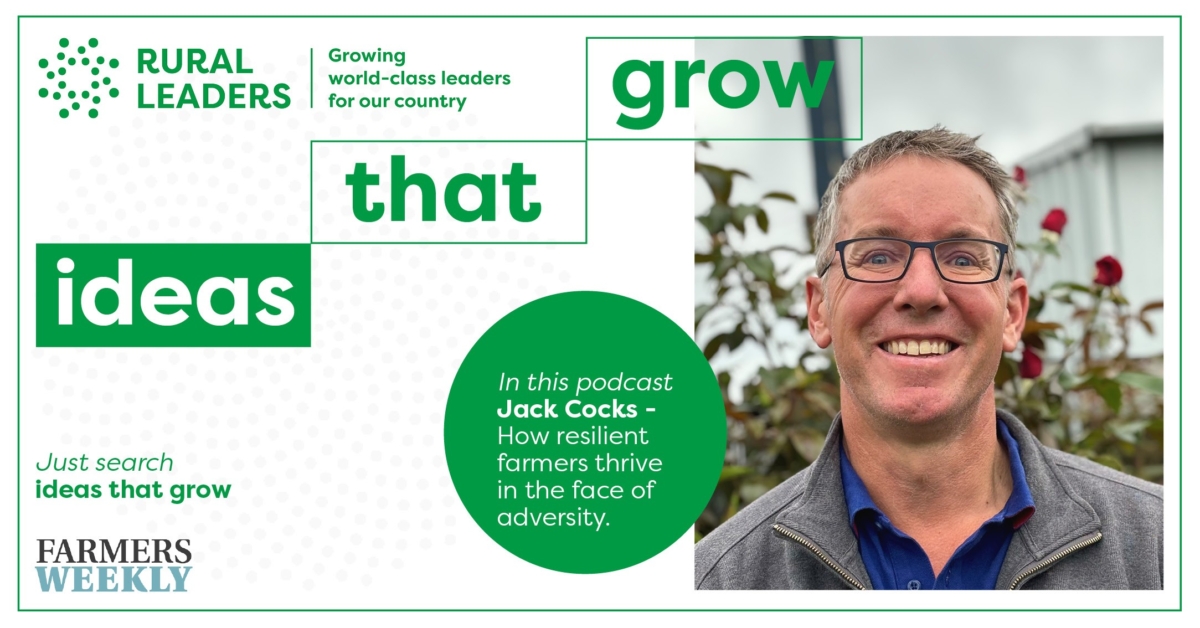
Jack Cocks – How resilient farmers thrive in the face of adversity.

In this podcast Jack Cocks, 2021 Kellogg Scholar talks to Bryan Gibson Managing Editor Farmers Weekly, about his research into resilience in the face of adversity.

Jack faced his own adversity in the form of a brain aneurysm that sparked a recovery journey spanning 15 surgeries over six years. 

Jack works on Mt. Nicholas Station with his family. He shares the three things all resilient and thriving farmers have in common here.

Bryan GibsonManaging Editor of Farmer’s Weekly.
You’ve joined Rural Leaders’ Ideas That Grow podcast. In this series, we’ll be drawing on insights from innovative rural leaders to help plant ideas that grow so our regions can flourish. Ideas that Grow is presented in association with Farmers Weekly.

Bryan Gibson, Managing Editor of Farmers Weekly.
You’re with Ideas That Grow, the Rural Leaders podcast. I am Farmers Weekly Managing Editor, Bryan Gibson. This week our special guest is Jack Cocks from Mount Nicholas Station. G’day Jack. How’s it going?

Jack Cocks, Mt. Nicholas Station.
G’day Bryan. I’m good, thanks. How are you?

BG: Yeah, good. Now, you were part of the Kellogg Programme two or three years ago, and you focused on farmer resilience, which is obviously a very important issue, but you’ve got a special reason for doing that, don’t you?

Well qualified to share insights on resilience.

JC: Yeah, I stumbled into it. It wasn’t something I really intended to be studying or to get involved in. Probably something I probably couldn’t define 20 years ago, what resilience was. But my wife and I have been farming here for about 16 years. About 11 years ago, I had a brain aneurysm caused by a rare form of inflammation between some blood vessels in my brain. Almost died, expected to die, had a number of complications, got a lot of time in surgery, in hospital, and a lot of surgeries over the next six years.

Then out of that experience, I got told I was a resilient character for bouncing back from adversity, and I didn’t really think I was that particularly resilient, and I didn’t think I knew what I was talking about – talking about resilience to a group. I felt everybody faces adversity.

Kate, my wife, and I were talking about this one morning over breakfast, and she said, why don’t you do the Kellogg Programme and study resilience? So, that’s how I got involved in Kellogg and how I ended up studying resilience.

BG: Tell us a little bit about what you found through your studies and how it made you understand your journey better or relate to it, or see any difference there, I guess.

Thriving in the face of adversity.

JC: I wanted to figure out how resilient farmers thrive in the face of adversity, which I use as a definition of resilience, that is, their ability to thrive in the face of adversity. So, to answer that question, I found five farmers throughout the South Island who had all faced major adversity, and they’d thrived in the face of that.

I sat down with each of for two or three hours, and we talked about their life pre-adversity, what it was they’d gone through, and then how they felt they’d been resilient. Out of that, there were some very strong similarities across those five farmers that all unknowingly, and independent of each other, had done the same things to be resilient and get through adversity. It all came together quite nicely in a simple little model.

Purpose, why, and connection.

BG: Because I guess often, we think about resilience as a moral quality, if you know what I mean, like courage or something like that. But it seems what you’re saying is resilience is something that anyone can do if they have the tools or know the process.

JC: Yeah, very much so. It’s something you can learn. Some people will be naturally more resilient than others and able to handle adversity. But it is something you can learn. I guess the model that came out of my Kellogg project was trying to develop some tools that people could utilise in their own lives to be more resilient.

So, when they faced the next challenge, and we all face challenges. They’re able to better handle that and get through that adversity.

BG: What is the model?

JC: So, there was three things that these five farmers all did. They all had very strong purpose, so they understood why they were doing what they were doing, and they were all very good at keeping connected. So, they surrounded themselves with people who could help them through adversity, and they all understood their wellbeing, or what they needed in their lives to be well and to be happy.

It came together visually in the form of a triangle with purpose at the top. That’s the ‘why’, connection being the glue in the middle of the triangle. That’s the ‘who’. And then wellbeing as the ‘what’ at the base of the triangle. That’s what came out of my Kellogg project. I’ve since done a couple of papers with a friend of mine, Joanne (Jo) Stevenson, a farmer in North Canterbury, and Hamish Gow at Lincoln University, which we’ve talked about and published in different journals.

Telling the resilience story.

BG: Tell me a little bit about that process. Are you from an academic background

JC: No, not at all. I’m probably quite academic for a farmer. I’ve got a postgraduate degree, but the first one was for the Institute of Primary Industry Management that Jo and I did. And then the second paper was for the International Farm Management Congress, which Jo, Hamish and I put together, and I presented that in Canada.

I guess where that came from, and this was Jo’s idea, Bryan, but one of the things that really came through when I’ve done probably 30 talks over the last five or six years about my health story, and resilience and the outcomes of my Kellogg research.

One of the things that came through to me was that people really resonate with the stories, the individual stories, my story of what I’d gone through from a health perspective and these five farmers I studied in the Kellogg Project.

So, Jo saw this, she’s got a background in resilience and found that there’s actually a lot of literature that suggests we can build our own resilience through understanding stories, through the stories we build ourselves on how we’ve navigated adversity, and hearing stories about how other people have navigated adversity.

So, if I hear a story about how you’ve gotten through a financial challenge or a family challenge, or whatever, and been really resilient, that might in-turn develop my own resilience and say, Oh, actually, I know Bryan got through that challenge by doing this. He’s come through the other side really well, so that suggests I can do the same. That most recent paper that I presented in Canada was based around that.

Resilience in a time of rapid change.

BG: Having presented internationally on this, are places like Canada, other places doing this work as well? Do they have the same take on it?

JC: I think it resonated certainly with the audience in Canada. It really did. I think resilience is something that increasingly is needed by everybody in the world. I think something that resonates with people, is that we all face adversity and we all need to be resilient. It’s not just me, in my family that’s had a health challenge. Everybody goes through challenges.

BG: Sometimes you hear people say a focus on resilience means you’re adapting people to deal with broken systems, and perhaps we should deal with the broken systems. But that’s simplistic as well, I guess. There’s always going to be obstacles, challenges in front of everyone, and it’s having the tools in the toolbox to be able to deal with them. Is that something you’d agree with?

JC: Yeah, I think so. There’s a lot of interpretations of resilience. Sometimes it’s being tough. Traditionally, it’s been bouncing back from adversity. But people that work in the resilience field now think because adversity is so common and constant, we’ve had COVID, climate change, a cost-of-living crisis. We actually need to be able to thrive in the face of adversity rather than just bounce back. So, that’s the current thinking from people that are working in the field of resilience.

Resilience is our ability to thrive in the face of adversity. But it’s a word that gets used a fair bit these days, and that’s possibly misinterpreted and mis-defined.

BG: I guess that’s something important as well. You mentioned we have seen resilience as returning to whatever we thought normal was or what was beforehand as quickly as possible. But to have an enduring effect, it’s actually about doing the right things and coming out stronger and more able to cope. And that might take longer and might look different for different people, I guess.

JC: Yes. I guess these three strategies that I came out of this Kellogg research, the idea was that they’re applicable to anyone, be it a farmer, be it a health challenge, or be it a financial challenge, you can apply these. It’s important to be resilient, to have a strong sense of purpose, a strong reason why your dairy farming in the Manawatu makes it easy for you to recover from a flood, or sheep farming in the Wairarapa makes it easier for you to get through a dry spell if you’ve got that strong reason why you’re farming where you are. And then connection and wellbeing are really important as well. But those three strategies, I think, are applicable to all farmers and everybody.

A sense of purpose.

BG: Now you’ve done all this work, the Kellogg Scholar Report, other papers written, obviously presented around the place. How do you feel now when looking back before you did all this through your health issues? Did you do what you now put on the tin, so to speak?

JC: Did I achieve what I wanted to by doing Kellogg?

BG: No, it was more talking about how you got through your challenge. Did you do it in a way that you would now prescribe as the way to do it?

JC: Oh, yes. Yeah, I see what you mean. I guess I’d been okay or all right. I’d been connected with other people. I had a huge network of support, my family and friends that helped me through that health challenge. I was probably reasonably good at understanding my wellbeing and figured out what I needed to do to keep happy and well.

People have asked, were you depressed or did you suffer from depression? And I got pretty annoyed at times with being in hospital, but I don’t think I did suffer depression. Those two things I was probably not too bad at, Bryan. The purpose was something that came out of the Kellogg research. These five farmers all had that strong sense of purpose, and that’s something I’ve tried to put in place in my life since. And that’s been a really valuable thing.

Kellogg and life on Mt. Nicholas Station.

BG: Those five farmers, what were their challenges? Just to put some context around how this resilience method can be applied. What had they gone through?

JC: So, one was a health challenge, one was climatic, one was financial, one was family, and then one was grief, personal loss. So, the five typical most common forms of adversity that farmers face, not all forms of adversity, but five of the more common forms. These farmers were from Southland to Marlborough and scattered in between. So, a pretty good spread across different farming systems.

BG: Different types of people, too, different age ranges and that sort of thing?

JC: Yeah, probably 30 years difference in age from the youngest to the oldest.

BG: I guess it just goes to show that if you have the building blocks there about how to navigate these things, it doesn’t matter who you are, where you’re from, you can apply them to your own situation.

JC: Yes, absolutely.

BG: The Kellogg Programme itself, it seems like a lot has come out of it for you. What was that like for you, doing the work?

JC: It was a fantastic programme. It’s very well structured, it’s well organised and facilitated. Great speakers, great content, a peer group that you go through with. So, for me, it was probably… It sounds a bit flippant Bryan, but it was probably a life-changing experience for me because I’d been pretty well in my mid-30s, and then almost died.

I’d been on a walking frame and had to regain my speech and learned to walk again multiple times to get to the level where I was able to contribute and take part in that programme. But it’s a great programme. I can’t really say enough good things about it.

BG: How are things for you now, Mount Nicholas? Obviously, a lot of work involved there. Things going okay?

JC: Yeah, and I think it’s pretty good. It’s been a pretty good climatic season for us over the last 12 months. It’s quite challenging financially as it is for all farmers in the country or all businesses, all people in New Zealand at the moment. But yeah, climatically, it’s been a good season for us.

BG: And if prices go down a bit further or the snow comes in or whatever the challenges are, you’ve got the magic triangle to fall back on, I guess.

JC: Yeah, that does help. It certainly does help. I wouldn’t advise this at all, Brian, to anyone, but you’re having a life, a near-death experience certainly puts things in perspective. When things are a bit turning a bit pear-shaped, you’ve still got your life and your health and your family. At the end of the day, you’re going to have challenges. That’s what I’ve really learned over the last 10 or 11 years.

Thanks for listening to Ideas That Grow, a Rural Leaders podcast presented in association with Farmers Weekly.

For more information on Rural Leaders, the Nuffield New Zealand Farming Scholarships, the Kellogg Rural Leadership Programme, the Engage Programme, or the Value Chain Innovation Programme, please visit ruralleaders.co.nz

Know Your Why – Motivations for a Sustainable Future.

Executive summary

With growing demands for sustainability in the food and fibre industries, there is mounting pressure from consumers to produce environmentally responsible products. This report addresses the necessity for the New Zealand dairy industry to prioritise climate change concerns and associated greenhouse gas emissions to secure a sustainable future.

The report aims to understand the motivations behind the adoption of new innovations by dairy farmers and learn how to accelerate the uptake of practices that reduce greenhouse gas emissions, thereby ensuring the long-term sustainability of farming in New Zealand. Additionally, the report aims to create a resource to inform government, industry bodies, and non-governmental organisations (NGOs) about alternative approaches to motivate farmers in reducing greenhouse gas emissions positively.

The research question guiding this study is: How can we motivate New Zealand dairy farmers to embrace practices that effectively reduce greenhouse gas emissions?

A literature review was conducted to gain insights into the significance of greenhouse gases in the New Zealand dairy industry. The review examined the impact and relevance of greenhouse gases within the New Zealand dairy industry. 23 semi-structured interviews were used to uncover the motivations that would drive New Zealand dairy farmers to adopt practices aimed at reducing greenhouse gas emissions on their farm. Responses were categorised into the following high-level themes:

WHY (belief): Explored the aspects of purpose, motivation, social structure, and trust.
HOW (actions): Focused on leadership, communication, and pathway implementation.
WHAT (result): Addressed knowledge acquisition, problem definition, and barriers encountered.

Information gathered from the literature review and semi-structured interviews, highlighted the importance of understanding the “WHY” behind motivations and the utilisation of effective communication strategies (“HOW”) to drive the adoption of sustainable practices within the New Zealand dairy industry.

Recommendations:

  • Leverage the intrinsic values and purpose that farmers already possess. When developing GHG related communications to dairy farmers, industry partners should inspire farmers towards transformative change by building on farmers’ existing intrinsic values and encouraging mastery to drive toward continuous improvement.

  • Emphasise the importance of the economic benefits and social licence to operate. Milk processors need to communicate to farmers and rural professionals the potential advantages of being market leaders in greenhouse gas emissions reduction and the consequences of falling behind.

  • Create a single location for information regarding greenhouse gas related resources. Ministry for the Environment should provide and manage a resource location (i.e. website) for reputable GHG related literature, policies, regulations and general resources related to climate change specifically for the dairy sector.

  • Provide greenhouse gas emissions resources for veterinarians. New Zealand Veterinarian Association (NZVA) should curate a list of reputable sources of information regarding greenhouse gas emissions regulations, mitigation strategies, and the economic advantages of adopting practices that reduce GHG emissions. As a trusted source of information, veterinarians can disseminate this information to dairy farmers.

Tracey Reynolds

Lean on Me: The Effectiveness of Psychosocial Services Available to Farmers Following Adverse Events.

Executive summary

Climate change is increasing the frequency of climatic extremes. Accordingly rural psychosocial services must be prepared to support farmers in the face of increased adverse events. For those farmers most severely affected, the rural clinical mental health services which treat farmers are often underfunded, under resourced and difficult to access due to structural inequities.

New Zealand’s economy and wellbeing of its people are intricately linked to the success of the primary sector. Therefore, farmers’ psychosocial recovery after an adverse event is vital, not only for moral reasons, but sound economic reasons.

This project examines who the stakeholders are in the rural psychosocial ecosystem, how farmers interact with these stakeholders, and how these stakeholders in turn interact together. It aims to understand the challenges and constraints to delivery of effective psychosocial services, and solutions to overcome these challenges and constraints.

The key learnings of this project are:

  • Distant stakeholders who set policy and control funding are removed from rural communities’ needs and consequently, prioritisation and understanding of rural mental health suffer.
  • There is a lack of strategic direction and metrics in rural mental health, and specifically psychosocial recovery following adverse events. There is a dearth of data, duplication and confusion of roles, unsustainable funding models for psychosocial services and a stretched clinical mental health workforce. All of which contribute to a less effective service for farmers.
  • Psychosocial services need more support to develop and deliver their services.
  • There is currently no plan to address rural mental health clinical workforce issues.
  • In the absence of sector leadership, the government is currently leading the psychosocial response after adverse events which is leading to ineffective outcomes for farmers.

The recommendations from this project are:

  • Develop a long-term national strategy for rural mental health including psychosocial recovery following adverse events, led by the sector and its industry co-funded mental health champion/ chief executive (CE).
  • Establish a role within MPI’s Rural Communities’ office to advocate rural mental health and improve prioritisation of rural mental health.
  • Develop a rural pathway for clinical psychologists and psychiatrists with their respective registration bodies to bolster the rural mental health workforce, overseen by Ministry of Health and the sector’s mental health champion/ CE.
  • Fund and resource existing psychosocial services, such as Rural Support Trust, to attract and develop some in-house clinical expertise to lessen the burden on the rural clinical workforce.
  • Prioritise rural connectivity to enable technological solutions, with subsidisation for satellite connectivity.

Vanessa Thomson

The Competition for Farmer Sentiment.

Executive summary

Sheep and beef farmer sentiment is profoundly negative, impacting how farmers view the world around them, how they respond to change and their mental health. The decline in farmer sentiment has coincided with a perceived increase in the competition for sentiment from industry representatives, lobby groups and advocates and has important ramifications for future industry cohesion.

This research project seeks to explore if industry leaders, representatives and lobby groups are further reinforcing and exacerbating negative sentiment by the way they are communicating with farmers and the potential future consequences of their approach.

This project first researched trends in farmer sentiment including the underlying drivers of sentiment, then sought to understand how and why industry leaders are communicating with farmers, including the use of social media. Finally, the project looks at future consequences arising from how industry organisations are competing for farmer sentiment and makes recommendations for industry leaders to consider when communicating with and attempting to influence farmers.

The methodology comprises a literature review; investigative interviews to uncover and discuss research on this topic; 16 semi-structured interviews with industry leaders, industry organisations and rural media; and an analysis of media releases and social media posts from industry organisations to understand the focus, content and engagement of their communications.

Key findings
Negative farmer sentiment is manifesting as decreased trust in government and industry representatives, increased fear and anxiety, and uncertainty for the future. Farmers feel threatened and consider they are not valued, understood, or listened to.

While industry organisations are not consciously competing, part of their approach is to use media and social media to underscore to farmers that they are being heard and supported, ensuring relevancy, attribution and ongoing financial support. This is resulting in the use of emotional language, topics and targeted campaigns that permeate fear and anxiety among farmers.

The methods and media channels used by industry organisations to influence farmers’ perceptions are conceivably exacerbating negative sentiment and distrust of these industry organisations, risking becoming counterproductive to their original objectives.

Moreover, this strategy could result in damaging consequences for the farming sector such as polarisation, cohesiveness, perception and social licence to operate.

Industry organisations are using social media platforms to connect to farmers, however, these platforms are designed to promote high levels of engagement, often through reinforcing divisiveness and polarisation. By using social media as an effective method to reach widespread audiences and contributing to messages of fear, uncertainty and anxiety for the future, industry organisations may unwittingly be creating an environment where disinformation and polarisation thrive.

Recommendations
Recommendations for industry leaders and organisations to consider when communicating with farmers to prevent further exacerbating negative sentiment and potential unintended consequences include:

• Consider the potential impact of communication on farmer sentiment.
• Model best behaviour.
• Create a safe space for industry discussion and debate.
• Develop communication strategies that bring farmers on the journey.
• Raise industry awareness of the presence and impact of mis- and disinformation.

Duane Redward

Bridging the gap: Exploring the impact of musculoskeletal health on performance and injury risk in the Food and Fibre Sector.

Executive summary

Working in the food and fibre sector is undoubtedly renowned as a ‘manual’ career. Good musculoskeletal health is essential in allowing workers to move, without pain or restriction, in life and work. To ensure the longevity of their career, workers must have sufficient levels of musculoskeletal health to allow the physical capability and capacity to perform at work every day, now and into the future.

This research seeks to understand the nature and extent of work-related musculoskeletal disorders in the food and fibre sector and how musculoskeletal health may correlate with injury risk and performance outcomes. The aims of the research are to:

  • Review the nature and extent of work-related musculoskeletal disorders in the food and fibre sector.
  • Explore any potential correlation between musculoskeletal health, injury risk and performance outcomes.
  • Investigate sector understanding of injury risk factors.
  • Investigate how musculoskeletal injury risk is currently managed in the food and fibre sector.
  • Evaluate the potential benefits and barriers to adopting a more integrated and holistic approach to
  • managing performance and mitigating injury risk in the food and fibre sector.

The methodology comprises a literature review to form the theoretical foundation from which to compare and contrast qualitative and quantitative data collected through multi-method data collection. A three-stage process was created to engage with industry employees: an online questionnaire, enrollment on a health and wellbeing app called Symmio, and a follow-up online questionnaire. A three-stage process was created to engage with food and fibre sector leaders responsible for injury risk management, comprising of an online questionnaire, a semi-structured interview, and a post-interview follow-up online questionnaire. Data was also collected and analysed through a Functional Movement Screen in the wool harvesting industry. Results were collected and explored from the industry employees’ engagement with the Symmio app. Closed questions for the online questionnaires were analysed, and a thematic analysis approach was taken to look at the open questions from the questionnaires and the interviews.

Work-related safety is about creating a safe working environment, eliminating or minimising the risks at work that can impact a worker’s health. Data analysis shows that the proportion of work-related injuries attributed to musculoskeletal disorders is twice as high in the food and fibre sector than is demonstrated across the general population, with 60% of the overall burden of harm from work-related injury. However, work-related health is also about the way worker health may impact working safely; therefore, worker health and wellbeing are injury risk factors. Results showed the importance of musculoskeletal (MSK) health and its contributing factors in influencing future injury risks and that the presence of risk factors may have a detrimental effect on the performance and productivity of the workforce. Opportunities to design holistic and educational approaches into the workplace as standard protocol and as just part of ‘what we do’ was seen as a requirement.

Recommendations from this research were:

  • Co-investment is required from MPI, MBIE, WorkSafe NZ, ACC and industry good organisations to collaboratively resource the development of an over-arching strategy that bridges the gap between wellbeing and injury risk management. The strategy must align with the future Primary Industry Wellbeing Strategy.

To guide this strategy, further research is needed in the following areas:

  • ACC and WorkSafe should conduct research on the nature and extent of MSK health risk factors, pain, and movement dysfunction sector-wide using an evidence-based screening tool. Subsequently, objective data could be provided about sector-specific requirements.
  • Current government-funded injury risk management research projects should look to integrate evidence based screening tools into their data collection and intervention development process to provide objective evidence about the effectiveness of interventions.

Laura Hancock