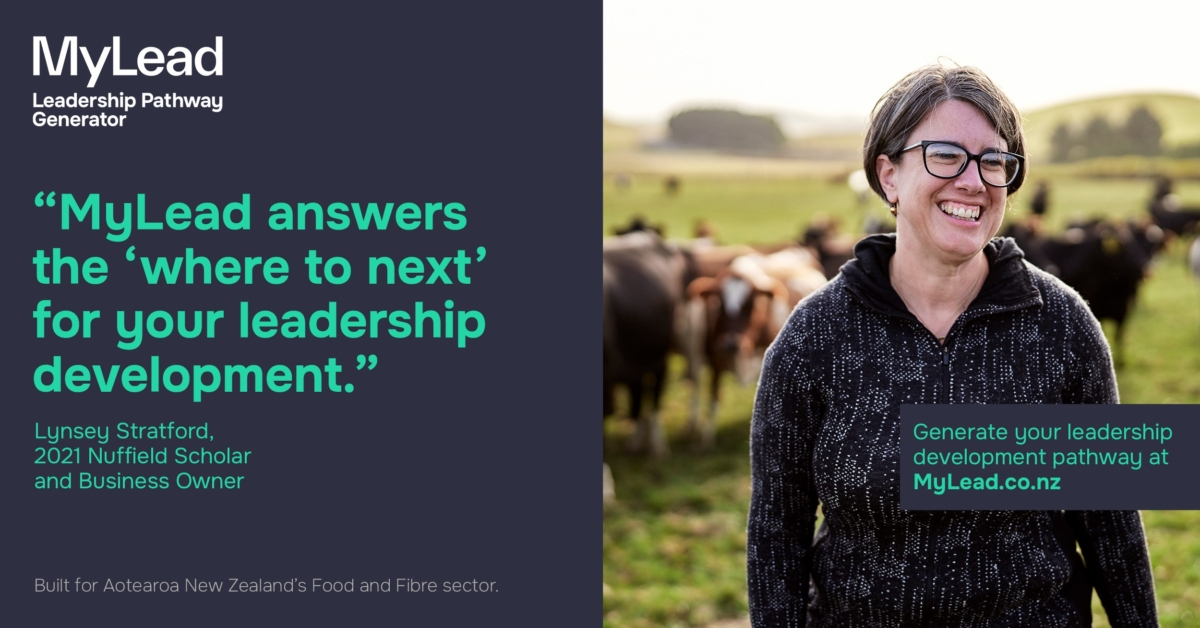
2026 Nuffield NZ Farming Scholarship. Apply by 17 August 2025. Read More...

Apply for 2026 Nuffield NZ Farming Scholarship by 17 August 2025. More details...

Kerry Worsnop shares Scholarship experience at Nuffield 75th.

Nuffield Farming Scholarships celebrated 75 years in New Zealand last Thursday.

100+ Scholars and their partners gathered for dinner, to hear from an excellent line-up of speakers and of course, chat.

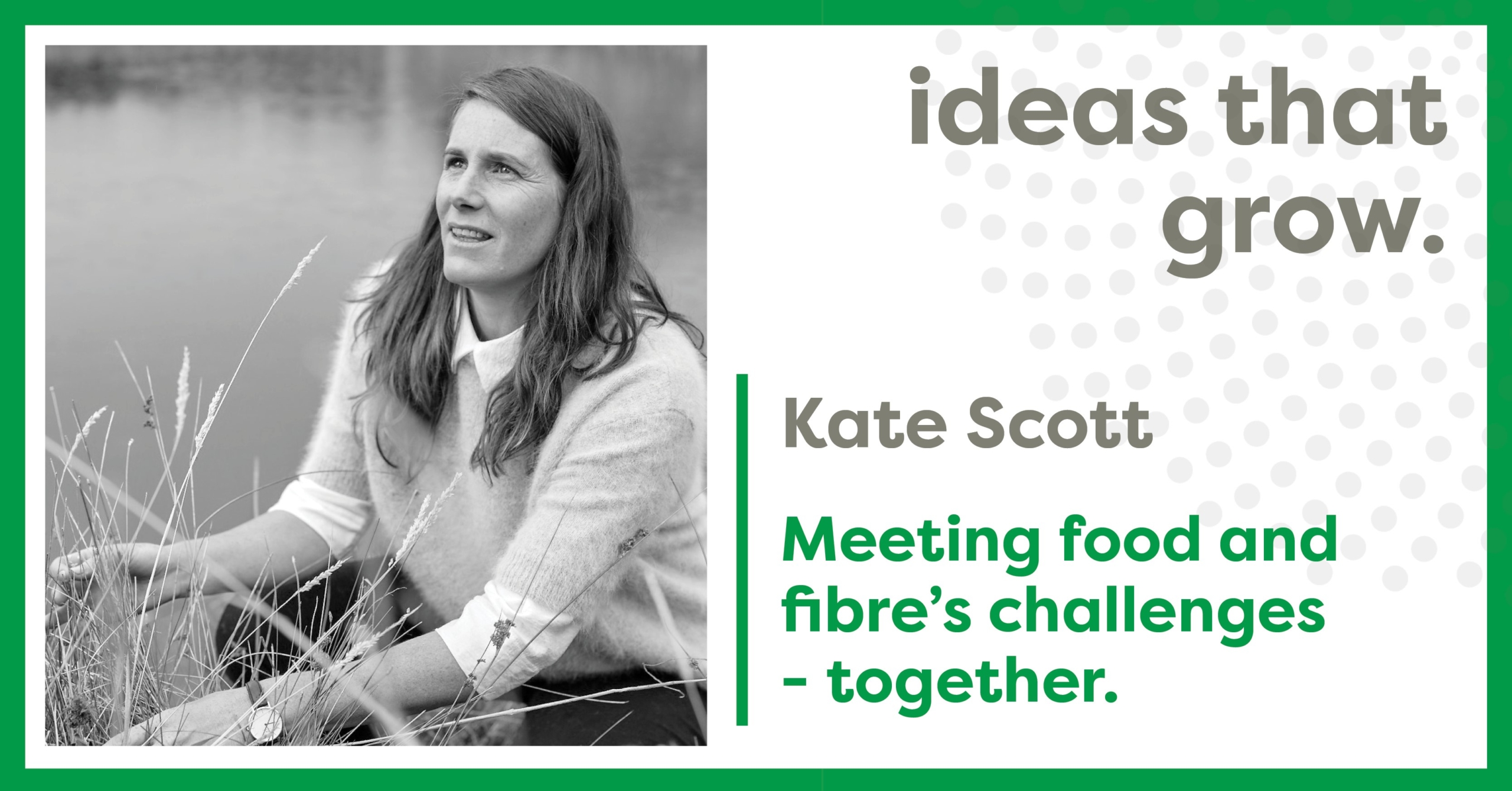
Kate Scott, NZRLT Board Chair (2018 Scholar) opened and spoke on the impact of Nuffield Scholars before introducing host Hon Todd McClay. 

Julian Raine (1997 Scholar) and Kerry Worsnop (2023 Scholar), spoke about their Nuffield experiences including some of the challenges overcome and unique opportunities encountered.

You can read Kerry’s speech below.

One of the most important moments of the night was an announcement by the Hopkins family.

John Hopkins,1979 Nuffield Scholar, passed in 2022. John and wife Elaine, gave generously to the Nuffield Programme over the years. This generosity included providing a Scholarship for Ben Anderson, 2021 Nuffield Scholar.

John and Elaine’s son and granddaughter, Andrew and Chelsea Hopkins, attended the dinner. Chelsea announced they would again support a Scholar onto Nuffield.

Here’s an excerpt from Chelsea’s LinkedIn post that echoes her excellent speech on the night:

“… My grandfather, John Hopkins was a 1979 Nuffield Scholar. I have fond memories of him telling me how the scholarship transformed him and the lasting impact it had on his life. I was lucky enough to share his story with the attendees last night and for this I am truly grateful.

To give back to the programme that gave us so much, we are providing a scholarship for 2026 Nuffield Scholars to support the next generation of agricultural leaders.

Being a part of last night’s celebration was super special for Dad and I. It was a reminder that life’s moments, although sometimes small, can have big impacts. This is a night I won’t forget.

A big thank you to Lisa Rogers, Rural Leaders and Kate Scott for the invite and making us feel so welcome.”

Andrew and Chelsea Hopkins are pictured below (image 4).

Images are: 1 – Hon Todd McClay. 2 – Owen Jennings (1980), Craige Mackenzie (2008). Lucy Griffiths (2014) Ben Hancock (2019). 3 – Gavan Herlihy (1985), Nick Tripe (1967), Richard Davison (1986). 4. Andrew and Chelsea Hopkins. 5 – Ian Mackenzie (1993). 6 – Marise James (1998), Don McFarlane (1981). 7 – Hon Damien O’Connor, Allan Richardson (1998). 8 – Don McFarlane, Ronny Percy, Nick Tripe, Elizabeth Davison, Richard Davison. 9 – Hon Denis Marshall (1983), Martin Nelson (1983). Bryn James, Brian Smith.

You can read Kerry Worsnop’s speech from the 75th Dinner below. It was an excellent speech that may be useful for those considering a Nuffield NZ farming Scholarship in 2026.

Take a read, it gives some great insight into what to expect.

Scholarships are open until 17 August.

Kerry Worsnop, 75th Nuffield dinner speech, Parliament.

I applied for a Nuffield scholarship at one minute to midnight on the night that applications closed in 2022, having pitched it to my husband at about 9.30 that night.

Now because he’s used to me doing random things, Marcus just rolled his eyes, sort of shrugged, told me to do what I wanted and said he was going to bed.

On reflection, had my application not been so last minute, I would likely never have submitted it. The fact that I did set in chain a sequence of events that will forever make 2023 a pivotal year in my life. And that is without accounting for the two cyclones.

That’s another story.

Now for you poor souls who have had two- or maybe five doses of my research, you’ll be pleased to know that I’m not going to ram it down your throats again. But what I am going to do, is give you a little bit of my journey and in it, hopefully you recall some of your own.

I left New Zealand like many of you will have, wondering what in the hell I was doing, feeling overwhelmed with the magnitude of what I was attempting, and amazing that anyone was crazy enough to fund it.

I had no idea how to hustle meetings with foreign dignitaries, executives, scholars and all the others whose knowledge I would need to augment my own.

But like all of you – I would learn.

I learned that every no, was one step closer to a yes. That every connection can yield three more and most remarkably, that my own knowledge would become a form of currency, the medium of exchange valued by those whose own curiosity would draw them into a room with me.

I learned the value of being able to trade in ideas, to appreciate something I can only describe as intellectual alchemy.

My questions took me to Washington, Pennsylvania, Canada, the UK, the Netherlands and others. 11 countries in all.

I stayed in basements, slept in hostels – had one very dodgy experienced accidentally being the only female in a sardine can room with 7 men from all corners of the world.

I missed flights, misplaced luggage and got lost on numerous occasions – but only once did I end up in the wrong city attempting to board the wrong ferry. Naturally – another Nuffielder put me up for night on half-an-hours’ notice, and on I went.

I met people like Guy Peters, the godfather of public policy research who himself had no real reason to meet me – beyond the fact that New Zealand was fascinating to him.

I found myself in incredible situations, an exclusive cocktail party with US senators, meeting the UK’s agriculture minister, in rooms with countless officials, public servants and farmer organisations and farmers themselves.

I marvelled at how many people made time for me and the generosity of spirit that every Nuffielder I met seemed to share.

For the rest of my life I will never forget the two days I spent with Dorothy Fairburn in Yorkshire, or the lengths that Katlyn Cruiskburg went to, to host me in Canada.

Of course no Nuffield would be complete without someone being sick in a suitcase after too many vodka shots (it wasn’t me) and the painful test of everyone’s social endurance that is the GFP program.

It doesn’t matter if you visited Argentina, Ireland, Poland and France as I did, or India, China and Zimbabwe as others have, the universal truth is that our humanity and the land itself connects us.

I applaud Nuffield NZ for ensuring the GFP’s are an integral part of the journey and I maintain the ultimate test of your capacity – is can you still be talking some kind of sense at midnight when your host is still in fine form but you’re on day 26 of your GFP and it’s your turn to be leader, so you can’t go to bed.

And this is where the rubber hits the road. As New Zealand scholars, we have a clear expectation set for us and we understand our role as ambassadors for our country and for this organisation.

I expect that of all the scholars world wide, New Zealanders are the least likely to go to bed when the host still wants to talk, and we are the most likely to ask questions when someone needs to show an interest, even if it’s the 500th dairy farm visit.

New Zealand Rural Leaders Trust sets the standard and it’s Nuffield program stands alone in offering a truly life changing experience. Much like the Greek myth of Odysseus, once we have wondered the word in search of answers we can not help but return changed.

In accepting a New Zealand Nuffield scholarship you agree to explore parts of the word, and parts of yourself that you may never have reached alone.

In return Nuffield in this country defends the space for your conclusions. They did this for me, and likely, for most of you.

I can not emphasise enough the value in this.

Not every country offers this. I spent time with scholars agonising over the fact that their conclusion were increasingly at odds with the business model of their sponsor, I spent time with others for whom getting the sponsorship itself predetermined their research topic.

In New Zealand our most curious minds are entirely free to search the world for answers and when they return, they are free to speak whatever truth they find.

This is exceptionally rare in a world where research funding is thin and increasingly political and where commercial interests often guard the doors.

Our sponsors deserve great recognition and immense gratitude for their willingness to support such impartiality, which no doubt at times may have been at odds their own interests.

So my message to all those who deliver this program and to those who support it, you have created something precious and rare, and this country is ultimately the better for it.

Thank you.


Alumni in the Spotlight – Marise James, Amber Carpenter, Iain Inglis, and more.

Here are just a few of the media pieces covering the impact of Rural Leaders’ Programme Alumni in industries and communities across the sector. 

Marise James, 1998 Nuffield Scholar

This is one we missed. Former Fonterra director Marise James told Dairy News that the future of the dairy industry depends upon the direction of travel with respect to climate change.

Marise says, “Farming has always been the backbone of the New Zealand economy, seeing us through really tough times and creating a place in the world that recognises the value of high-quality food, fibre and health production.”

Read the article here.

Carlos Bagrie, 2024 Nuffield Scholar

Carlos was in Farmers Weekly a couple of weeks ago encouraging a national conversation on what other options NZ’s economy may have to enjoy stronger economic growth.

Talking to Farmers Weekly, Carlos said, “Our growth in agriculture is pretty much looking to be more linear than exponential heading into the future. It is not that there are not gains still to be made, it’s just those gains are more seconds than minutes in terms of performance lift.”

Read the article here.

Iain Inglis, 2024 Kellogg Scholar

CountryWide spoke to Iain Inglis, about his Kellogg research report ‘Better cattle handling: For people, product and perception’.

Iain covers off three opportunities that come from Low stress handling – improved operational efficiency, enhanced meat quality, and a safer working environment for handlers.

Read the article here.

Sarah How, 2019 Kellogg Scholar

Sarah How was featured recently in Alumni in the Spotlight, but we missed this article in Sheperdess. Sarah is the co-founder of Landify, a platform which connects farmers with potential partners and investors to explore collaborative opportunities in farming.

The April article talks about her background, the Landify story, and on being a finalist for the 2025 Zanda McDonald Award.

Read the article here.

Amber Carpenter, 2018 Kellogg Scholar

Amber featured on page 92 of the latest NZ dairy magazine. Amber and her husband Fraser, have recently purchased a digital marketing business to sit alongside Grass Roots Media, also owned by the couple.

Take a read of Amber’s story here.

Kellogg Programme One 2025 (K53) graduate.

Congratulations Programme One 2025. 18-inperson days in Lincoln and in Wellington, one research report, one presentation of said research report, tens of insights sessions from industry leaders, workshops, reflections, at least 22 new friendships, and much more.

This graduation marked the completion of the research component of Kellogg. Scholars presented their work to the cohort throughout their phase three. Their reports will be made available on the Rural Leaders’ site in the next two weeks.

The graduation ceremony was held in Lincoln University’s Memorial Hall. Thank you to Lincoln University (NZ) for the use of this incredible space.

Lisa Rogers, Rural Leaders CEO got the graduation ceremony started, introducing new Rural Leaders Associate Trustee, Katie Rodwell (2019 Scholar).

Katie spoke to the graduates about the transformation the programme had created for her. Katie discussed the critical thinking skills, networks and connection that are developed on Kellogg, and encouraged the group to stay connected and to lean into any opportunities for growth.

This cohort’s reports will be shared with investing partners for a first preview, then more widely soon after.

As a heads-up, scholars and their report topics (under broad theme headings) are as follows:

Environmental management in agriculture.

Adam Williamson
Water quality in the Amuri basin – where are we at?

Jodie Goudswaard
Balancing profit and environment: Insights from New Zealand’s leading dairy farms.

Cameron Walker
Enhancing on-farm carbon stocks.

Jess Ross
Softer Crop Protection, The Way of The Future?

The business of agriculture and horticulture.

Michele Cranefield
From Seed to Success – Transitioning Farm Ownership in New Zealand – The Ownership Equation: Exiting with Value, Entering with Vision.

Emma Harvey
Opportunities within New Zealand agri-tourism.

Kurt Harmer
Dairy diversification into raw and pasteurised milk sales.

Pare Taikato
The opportunity cost to New Zealand of under-developed whenua Māori.

Malinda Wynyard
Building diversity in New Zealand dairy export markets for independent manufacturers.

Grant Kay
Dairy farmers love sharing data…but there is a ‘but’.

Sam Connor
Partnerships within the food and fibre sector: do they return value to the farm gate?

Kaitlin Bates
Smart Nutrition, Stronger Herds: A Holistic Approach to NZ Dairy Excellence.

Matt Ward
How can we maximise profitability in our decreasing ewe flock?

Daniel Judd
The soils gap: Interactions between culture, research and fertiliser.

Developing our people and communities.

Emma Weston
Career satisfaction and job retention for front line vets in government roles.

Katrina Roberts
Dairy farmer-female veterinary advisor relationships in New Zealand: Identifying the key attributes of a flourishing partnership.

Morgan Jones
How do we develop financial literacy in rural New Zealand?

Michele Findaly
What factors enable trusted, high value relationships between rural managers and clients in New Zealand’s food and fibre sector?

Jack Dwyer
Leadership qualities needed for first time managers.

Richie Cameron
How can the sheep and beef industry retain farm managers without ownership opportunities?

Anthea Yule
Does the decline in school bus services highlight more significant issues affecting rural primary education?

Phil Holland
Guardians or executioners: Navigating the ethics of deer control.

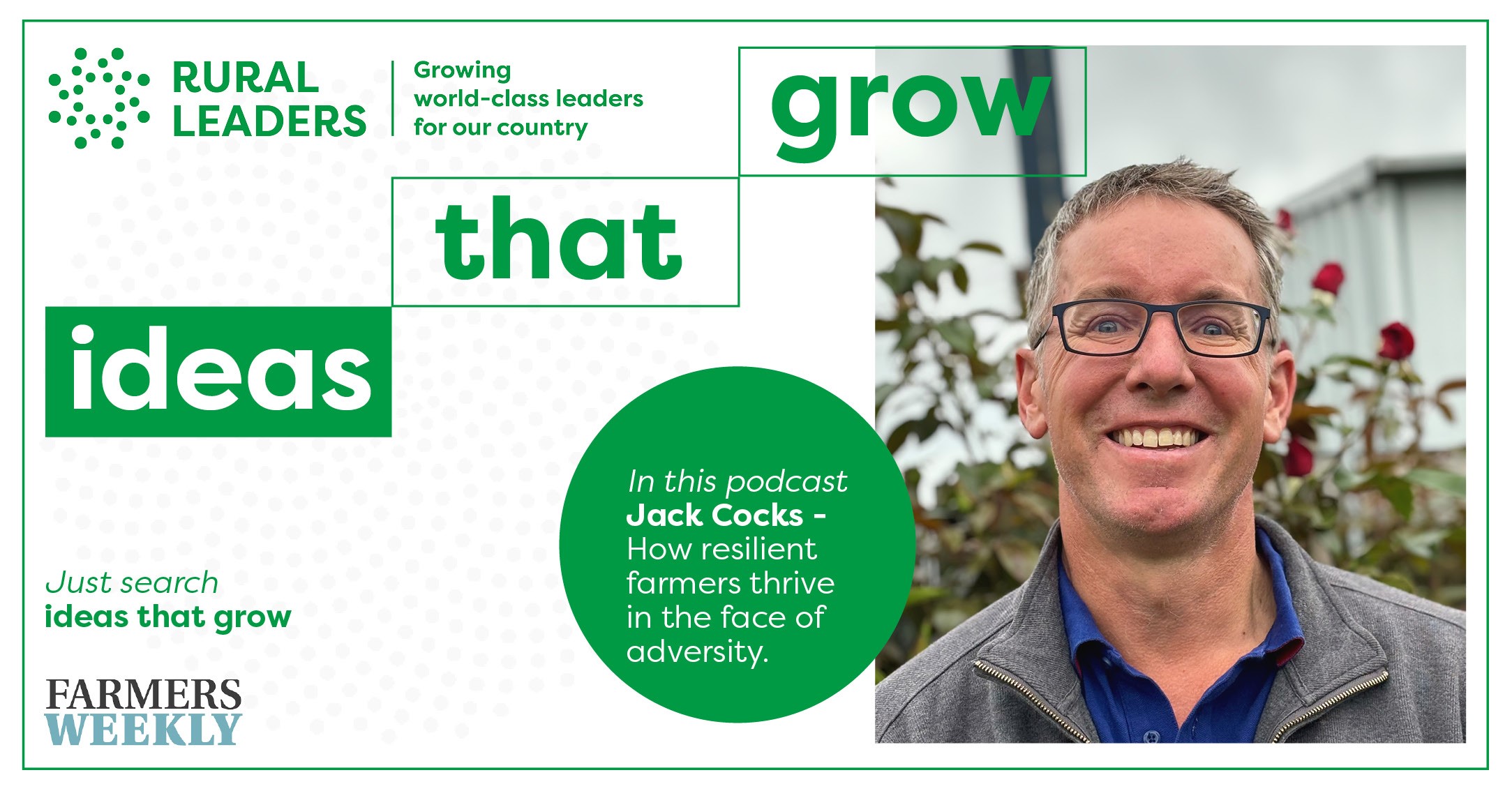
Jack Cocks signs off on a year as the NZRLT Associate Trustee.

Jack Cocks has just finished a one year term as Associate Trustee for the New Zealand Rural Leadership Trust (Rural Leaders).

Jack is a high country farmer who holds a bachelor’s degree in farm management from Lincoln University and a masters in agricultural economics from the University of Illinois. He is as much at home in the city as he is in the Otago high country running Mt. Nicholas Station with his wife and children.

Jack suffered a life-threatening brain aneurysm twelve years ago which saw him spend eight months in hospital over six years and undergo fifteen major surgeries.

Following this experience he researched how ‘Resilient Farmers Thrive in the Face of Adversity’ through the Kellogg Rural Leadership Programme. He is now a well-respected speaker on farmer resilience.

Early in 2024 Jack joined the New Zealand Rural Leadership Trust (Rural Leaders) as an Associate Trustee to learn more about governance from the Trust’s experienced board.

“I enjoyed learning from the other trustees. They all had different skill areas and very smart perspectives too. Being part of a team was also an appealing thing to me. The frequent events, such as the Kellogg networking event in Wellington, were great too.”

Mt. Nicholas is remote, so Jack cites the board interactions, both online and in-person, as being another important draw. “You’re not in an immediate community here at Mt. Nicholas. You’re not going to the local field days, meetings or functions that often. So, keeping involved with board matters was enjoyable,” says Jack.

Jack’s plan is to now shift his focus closer to home, on family and the business.

“Our kids are going through high school, they’re both week-day boarding in Invercargill, two and a half hours away. It’s a reasonable commitment to head up and down the road every week.

I’m still doing one or two speaker engagements a month. I’m able to give back a bit to the sector and the community, and a lot of that has spun out of my Kellogg,” adds Jack.

Jack plans to continue his governance journey once his children leave school. He acknowledges the strong foundation the year as an Associate Trustee has given him and he mentions some advice he was given before he went into the role.

“Some advice I got from a wise director before joining Rural Leaders as Associate Trustee, was to look at the one year term in three parts. The first part is asking plenty of questions. The second part is establishing credentials. The final part is adding some value.

I didn’t throw any ideas around for a start, but tried to understand the business. Then I established myself in that second part and looked for ways to add value in that last part. Some of the work that Lisa Rogers and I were doing towards the end with the Value Chain Innovation Programme; like looking at an offshore component for it, fits into that.

That’s how I approached the one year, and I found that advice really useful. It reassured me that I didn’t need to go in guns blazing,” says Jack.

Kate Scott, Rural Leaders Board Chair, spoke of Jack’s measured and intelligent approach to his time as Associate Trustee, “The knowledge Jack has passed on, especially around farmer resilience, has been invaluable. Jack’s calm, clear and curious nature make him a standout as he continues his governance journey.”

Katie Rodwell recently joined as the new Associate Trustee, marking the end of Jack’s year.

“It was a tremendous opportunity. I thank the board and the Rural Leaders’ team for their openness and inclusiveness. I really felt comfortable and that I could contribute to make a difference,” concludes Jack.

FMG Young Farmer of the Year winner to attend the Kellogg Rural Leadership Programme.

Hugh Jackson, a Waikato Bay of Plenty Young Farmer, has won the title of New Zealand’s top young farmer. 

Hugh is a 26-year-old sheep and beef farmer and was crowned the 57th FMG Young Farmer of the year at the Grand Final event in Invercargill on 5 July.

Working on his family’s farm north of Raglan, Jackson also has an interest in technology, and a passion for mental health.

Jackson believes technology will play a big role in shaping in the future of farming, as well as in the lives of the young people who will be using it. 

The New Zealand Rural Leadership Trust (Rural Leaders), in partnership with Lincoln University, sponsor the FMG Young Farmer of the Year winner on a place to attend the Kellogg Rural Leadership Programme. Rural Leaders and the University have been doing this for several years.

Rural Leaders CEO, Lisa Rogers said it was a close finish but Hugh’s determination shone through, and added, “We look forward to seeing Hugh on the Kellogg Programme soon. It was a privilege to attend the Grand Final and see first-hand, the depth of talent we have coming through New Zealand Young Farmers.”

New Zealand Young Farmers chief executive Cheyne Gillooly in a Young Farmers article said Jackson impressed everyone with his talent. “…It’s inspiring to see the recognition go to someone who will not only be a strong ambassador for the next generation of young farmers, but across the agricultural industry.” 

Source: https://www.youngfarmers.co.nz/news/hugh-jackson-crowned-2025-fmg-young-farmer-of-the-year

Katie Rodwell joins NZRLT as Associate Trustee.

The NZRLT Board and Leadership Team welcomed Katie Rodwell, Associate Trustee, to the NZRLT Board in May.

Katie replaces outgoing Jack Cocks. We’ll share more on Jack and his time with the NZRLT board soon.

Katie has recently returned to work after being on maternity leave for a year. She is looking forward to getting into the year and the new governance opportunity that being selected as Associate Trustee represents.

Rural Leaders caught up with Katie on her third week back at Rabobank to discuss her background and why she went for this governance role.

Katie, her husband, Luc and son Paddy, live in North Canterbury, just on the outskirts of Amberley. They have been on their six hectare block just over a year and a half.

Katie grew up on a farm north of Kaikoura; a farm that sold just before the Kaikoura earthquakes. Since then Katie has been Canterbury-based for most of her life. She attended Lincoln University and after graduating went to Farmlands Cooperative, where she worked for eight years as both Brand Manager and Marketing Manager.

This was followed by a move into the Head of Sustainability and Land Use role. Then to Rabobank as Sustainability Manager where she has been for three years, two of which were working – one on maternity leave.

Katie completed the Kellogg Rural Leadership Programme in 2019 as part of cohort 40. Her Kellogg research looked at the consumer-driven and environmental challenges the primary industries face. Her report proposed New Zealand lead in nutrient-dense, sustainable food, using innovation, education, and collaboration to reshape agriculture and meet rising health-focused demand.

It was the Kellogg experience that underscored her decision to join the Rural Leaders’ Board. “It was a really transformative experience for me, and I wanted to give back to the organisation that had helped me so much”, Says Katie.

The opportunity to work with and learn from Rural Leaders’ experienced board members, Katie cites as one of the other standout reasons for her decision.

“I also relate strongly to the vision of Rural Leaders – around growing our leaders and the importance of developing leaders in our sector. I want to help drive impactful change so, I see Rural Leaders and the programmes and projects they undertake as being a powerful tool to help achieve that.

My passion is around how we create thriving, resilient farming businesses, and I see that having good leaders is fundamental to achieving that”, concludes Katie.

On the appointment, Kate Scott, NZRLT Board Chair said, “We’re pleased to have Katie join the NZRLT Board as Associate Trustee. Katie brings a range of skills but most of all a demonstrated passion for leadership development in food and fibre.”

Katie’s first official board meeting as Associate Trustee will be this month (July).

Pulse Check. A Rural Leaders and PwC collaboration.

Rural Leaders, in partnership with PwC New Zealand, have piloted a new concept: the Future Food and Fibre Leaders Pulse Check. It’s a snapshot of what’s top of mind for the latest Kellogg Rural Leadership Programme cohort, captured through a workshop facilitated by PwC and Rural Leaders earlier this year.

What do the next generation of food and fibre leaders believe we need to act on right now?

The result? Five clear, practical messages for today’s leaders—touching on:

  • Harnessing tech in a producer-centric way
  • Balancing productivity with sustainable resource use
  • Strengthening confidence through regulatory certainty
  • Building our global reputation
  • Investing in people through better systems and storytelling

👉 Download the Pulse Check here.

This is the first time we’ve run this kind of initiative—and we’d love to hear your thoughts. Is this useful? What could make it better? What other voices should we bring to the table?

Please get in touch with Lisa Rogers at Rural Leaders if you would like to discuss.

Thank you to PwC, our Strategic and Programme Partners for their ongoing support of the Kellogg Programme and our shared mission to grow leadership in the food and fibre sector.

Kellogg offers two qualifications.

Just over a week ago, many alumni of the 52nd Kellogg cohort graduated with Post Graduate Certificates.

Credentialisation of the Kellogg Programme through Rural Leaders’ academic partners Lincoln University means Kellogg graduates can gain the Post Graduate Certificate in Commerce as well.

The next opportunity to do this for yourself will be on Kellogg Programme One, 2026 (late January start). Early applications are welcome. Head here for more information.

Congratulations to these double qualification recipients.

Congratulations to the following PG Cert graduates from cohort 52 Nick Martin, Megan Fox, Cheyenne Wilson, Richard Pentreath, James Prunty, Hamish Symons, Kendal Buchanan, Jordi Hoult, Laura Deeming, Iain Inglis, Whitney Conder, Ben Aiken, Oliver Hampson, Kate Kellick, Hamish Hodgson, Anita Fleming.

And also graduating were Wyatt Johnston, Lisa Lunn and Allan Dunn from the 51st cohort.

Image comes courtesy of Lincoln University.

Kellogg Rural Leadership Programme cohort 52 (Programme Two 2024)

2024 Nuffield NZ Farming Scholarship reports.

Rural Leaders is pleased to be able to share the 2024 Nuffield Scholars’ Individual Research Reports.

Our four 2024 Scholars have undertaken research on a diverse range of topics, each addressing a topical and significant challenges in Food and Fibre, from sustainable land use to succession, and from the future of farming to genetic technology.

The Nuffield Scholarship is about impact – so, we hope you find these reports inspiring and thought-provoking.

We’d like to acknowledge those of you who have contributed your time and experience to the Scholars, a Nuffield Scholarship is after all, a team effort.

This year we have included a one-page summary of each report. You will find these short report summaries via the buttons below.

Carlos Bagrie – Beyond the farm gate: Rethinking New Zealand’s economic future.

Agriculture and tourism in New Zealand face growth limits, threatening export earnings. With global trade shifting and land constraints increasing, we must rethink NZ’s economic future; exploring high-value industries, supply chain control, and innovation.

It’s time to ask: what comes after agriculture and tourism to sustain long-term prosperity?

Rachel Baker – Coding for Change: Navigating adoption of gene editing in the New Zealand primary sector.

Gene editing in New Zealand’s primary sector offers opportunities to address climate change, sustainability, and productivity. Proposed legislation aims to align regulations with trading partners, balancing innovation with public trust.

Early engagement, investment in innovation, and leadership in regulatory frameworks are essential to enhance competitiveness and drive sector growth.

Jenna Smith – Changing the Bog-Standard: Repeatable solutions for Aotearoa’s Peatlands.

Occupying only 1% of Aotearoa’s land yet holding close to a fifth of the nation’s ecosystem carbon, New Zealand’s peatlands are indispensable but rapidly degrading. This report does not offer a silver bullet, but a new way of looking at what we’ve long called marginal land. It suggests that peatlands, when managed well, can be part of our productivity, our identity, and our climate response—not in spite of their wetness, but because of it.

Peter Templeton – Putting the Success back into Succession.

New Zealand’s farm succession faces challenges due to aging farmers, rising land prices, and financial barriers. The report explores alternative models like share-farming and equity partnerships, emphasising the need for early planning, government support, and industry leadership.

Innovative succession pathways are crucial for sustaining the agricultural sector’s future.

Threads of influence. A Champion of rural leadership development.

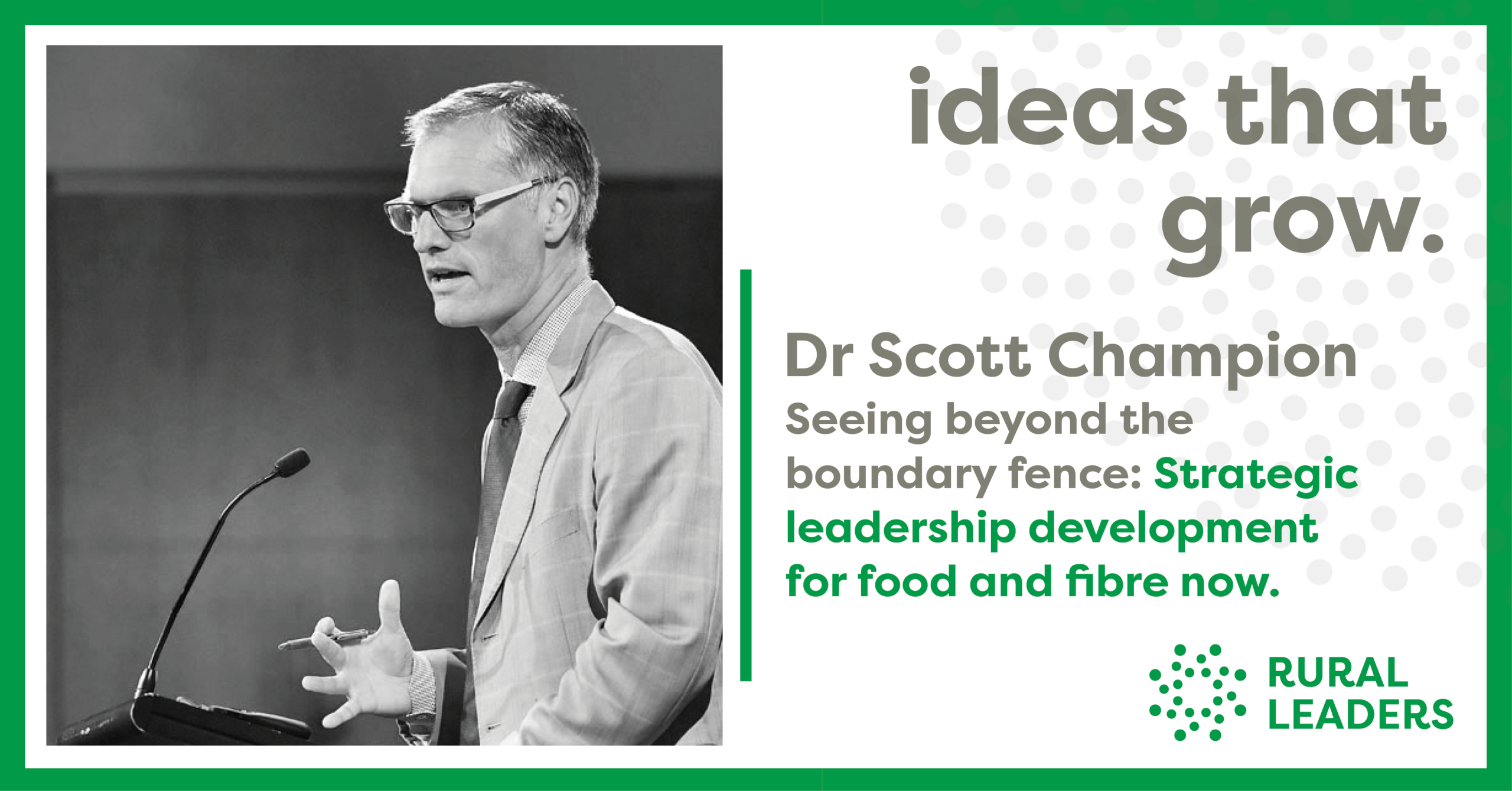
For the last eight years Dr Scott Champion has been a key figure in the development of leaders in food and fibre. He has made a direct impression on over 300 leaders on the Kellogg Rural Leadership Programme and many more through Nuffield, Engage and the HortNZ Leadership Programme.

Scott’s deep sector-wide knowledge, delivery style, ability to deftly weave discussion threads, and tease out insights, has made him one of the sector’s most in-demand facilitators.

As Scott leaves his role with Rural Leaders for a new challenge at Foundation for Arable Research (FAR), we thought we’d take a look at his career so far – one chaptered by key sector roles, research, and developing food and fibre’s leaders.

Foundations in agriculture.

Dr Scott Champion’s journey into agriculture didn’t start in the heartland of rural New Zealand. The story is no less compelling. Raised in Sydney, Scott was drawn to the land from a young age. Family connections to farming in New South Wales sparked an early fascination in the potential of agriculture to sustain humanity in exciting new ways.

His entry into agriculture came at an open day at the University of New South Wales. Scott came across a programme in wool and animal science. He enrolled in the degree, and this soon led to a deep scientific interest, particularly in the relationship between animal nutrition and wool quality. This path took him on to a PhD, which he completed partly in Sydney and partly in Tasmania.

After completing his doctoral studies, Scott moved into teaching and research in animal science at the University of Tasmania. Then in 2001, a new opportunity arose: a product development and research role with the New Zealand Merino Company.

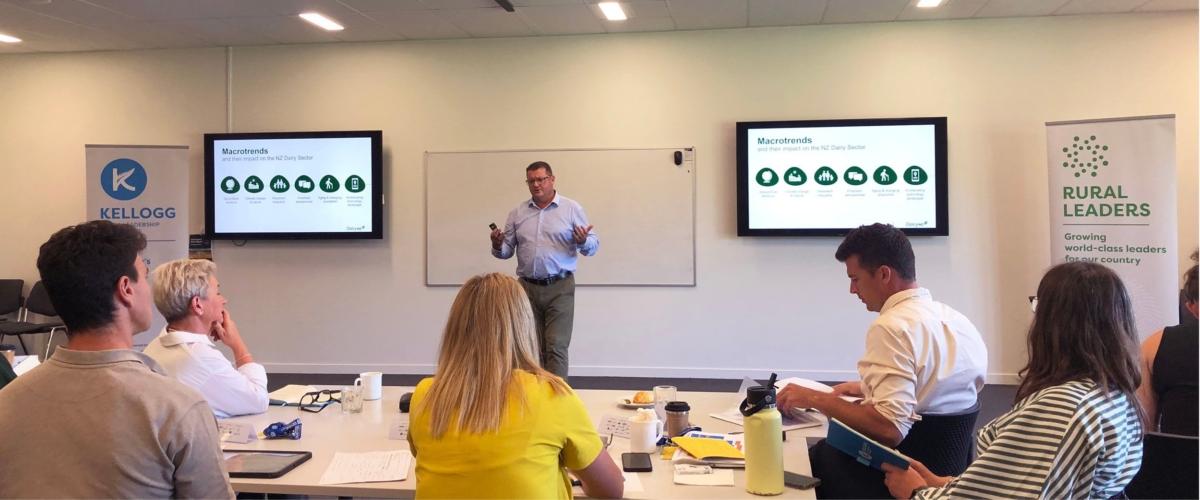
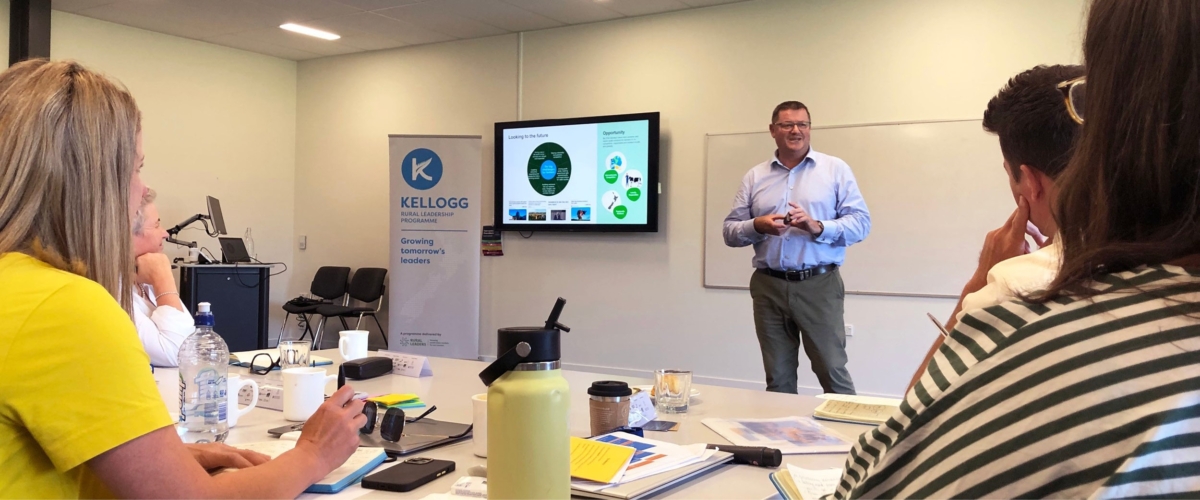
Scott on-farm with a recent Engage Programme cohort.

Science and innovation.

At this time, the New Zealand Merino Company had challenged the long-standing wool auction system, which traditionally kept growers disconnected from brands and consumers. Instead, the company fostered an attribute-based, contract-led supply chain model. The partnership with Icebreaker, one of the company’s earliest and most well-known collaborators, illustrated this shift well. By building direct links between growers and end-users, the New Zealand Merino Company helped brands create compelling product stories while giving growers visibility and value beyond auction prices.

Scott’s science background played a pivotal role in telling the story of Merino wool in new and practical ways. He worked alongside the commercial wool team to deliver training and develop retailer experiences that showcased the performance benefits of Merino, such as moisture absorption and fire resistance, often through live demonstrations. These tactile, science-backed experiences helped redefine how retailers and consumers perceived wool, especially internationally, where traditional wool was often associated with scratchiness and discomfort.

“We thought of ourselves as being an ingredient brand that could sit inside retail brands. So the purpose was not to create a retail brand in its own right around New Zealand Merino, but to create an attribute, an origin story that functioned as an ingredient brand,” says Scott.

the New Zealand Merino Company’s approach, Scott notes, wasn’t just commercial, it was transformational. The company positioned Merino not just as a material, but as an important performance attribute. This shift, from commodity to value-added story, inspired similar approaches across the food and fibre sector.

The CEO.

Scott’s next move was to Beef + Lamb New Zealand (B+LNZ), initially as General Manager of Market Access  and Services. The position brought together technical policy, trade access, animal welfare, and red meat promotion; areas that spanned local and international impact. Scott worked on initiatives such as the Five Nations Beef Alliance (which later expanded to seven countries), focusing on improving global trade outcomes for beef.

Later, Scott was appointed CEO of B+LNZ and concurrently led the New Zealand Meat Board, where in addition to strategic oversight, he was responsible for managing farmer reserves and quota access for red meat exports to the US and EU.

Following his tenure at B+LNZ, Scott explored a new direction, founding the consultancy Primary Purpose with a business partner. The consultancy would offer strategic advice and social research across food, agriculture, and natural resources.

Growing rural leaders.

Around this time, Scott’s relationship with the Kellogg Rural Leadership Programme deepened. Having previously been a regular industry speaker on Kellogg, he took on the role of Programmes Director and lead facilitator.

Speaking to Kellogg participants, Scott emphasises leadership is not about titles or standing at the front of the room telling others what to do, it’s more about being in the middle, understanding context, and drawing on lived experience. One of the programme’s unique strengths, he says, is its ability to give people confidence, regardless of their academic background. Participants, some without tertiary education, emerge from the programme with a deeper sense of self and purpose, and an understanding of the broader food and fivre industry.

Kellogg also offers access to influential speakers and one-on-one conversations with senior leaders across government and industry. For many participants, it’s a rare chance to see high-level leadership up close and to realise that those in senior roles are human, facing many of the same challenges anyone else does.

“The convening power of the programme is often underestimated. People are always willing to talk to our Kellogg cohorts. These are people who would have lots of things that they can potentially do in that time slot. I think that’s a mark of Kellogg’s standing”, says Scott.

The long-term impact of Kellogg is increasingly evident, with alumni populating boards, advisory groups, and sector leadership roles. The programme, nearing its 50th year, continues to be a vital part of New Zealand’s rural leadership pipeline.

“As the sector becomes more complex, the need for good leaders who understand context is significant. Not just the narrow technical nature of many of the roles that we all operate in, but that they truly understand the wider context in which they’re operating. I think that’s a key benefit of Kellogg – it’s what makes it so unique”, says Scott.

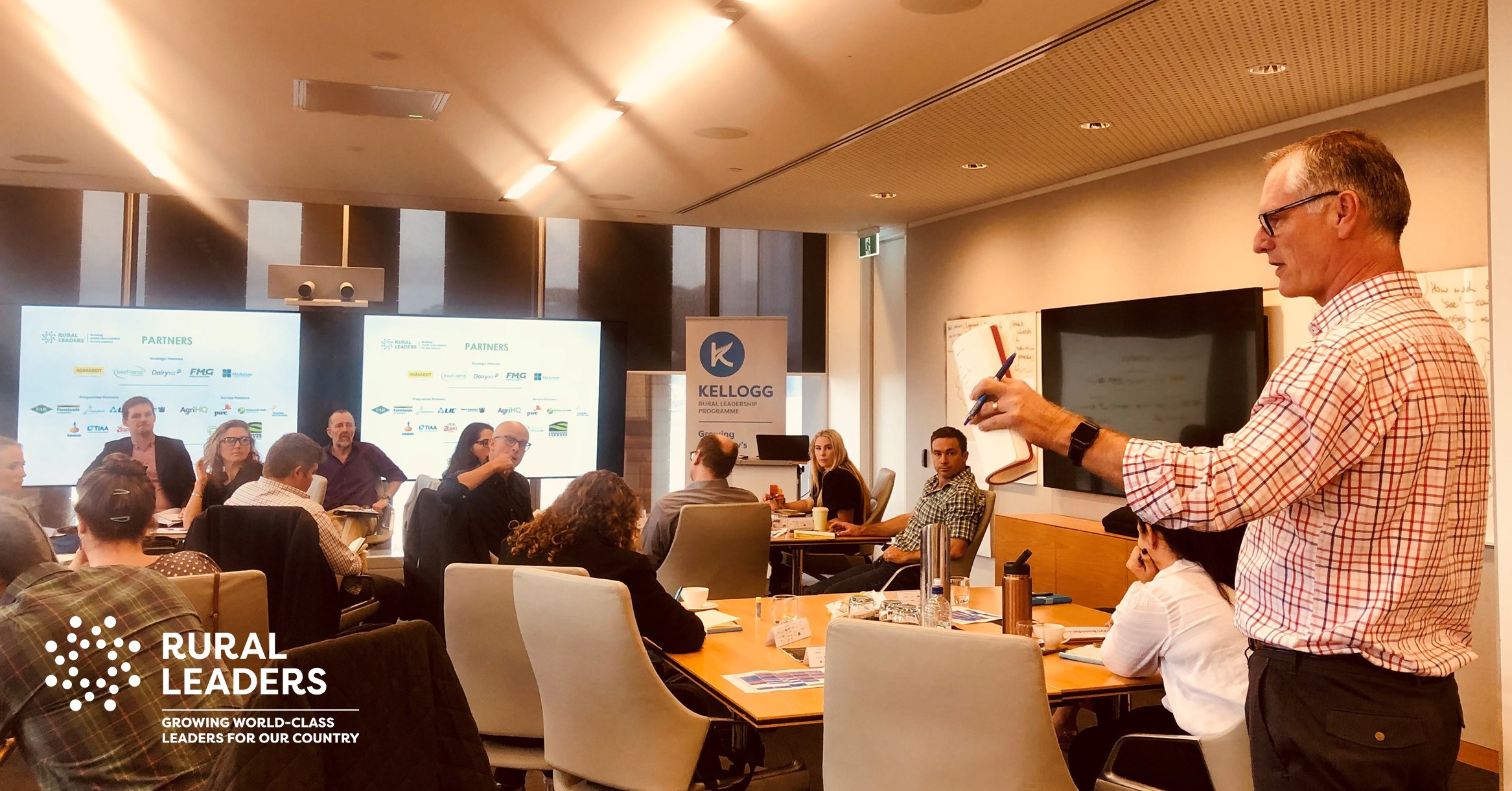
Scott with Kellogg Rural Leadership Programme cohort 52 (Programme Two 2024)

More to do.

Looking ahead, Scott is set to take on a new challenge. In July, he begins as CEO of the Foundation for Arable Research (FAR), working alongside current CEO, and friend of Kellogg, Dr Allison Stewart through June. FAR is widely respected for its research and extension services in the arable sector, and Scott is looking forward to contributing further.

Meanwhile, Primary Purpose, will continue under the leadership of the partners. The business remains committed to supporting clients with insight-driven strategy and research, helping organisations navigate the complex landscape of agriculture and food production.

From animal science to strategic leadership, Scott Champion’s career has so far been marked by curiosity, innovation, and a desire to give back. His impact has rippled through the primary industries in both Australia and here in New Zealand.

“When done well, applying good leadership can have a hugely exponential impact on the wellbeing and performance of people, teams, communities, industries and on a country. It’s been a privilege to have played a role in developing leaders through Rural Leaders’ Kellogg Programme and I look forward to coming full-circle and returning as a speaker”, adds Scott.

Over the last 8 years, Scott has been an integral part of not only the Kellogg Rural Leadership Programme but Rural Leaders as a whole. 

“Scott has brought wisdom, insight and encouragement to all that have attended our Kellogg and Engage programmes. It has always been satisfying to watch the personal confidence and clarity of thought shine through programme participants as Scott guided them through their Kellogg journey. While we are sorry to see Scott move on, we are delighted for him and his new role at FAR”, concludes Lisa Rogers, CEO Rural Leaders.