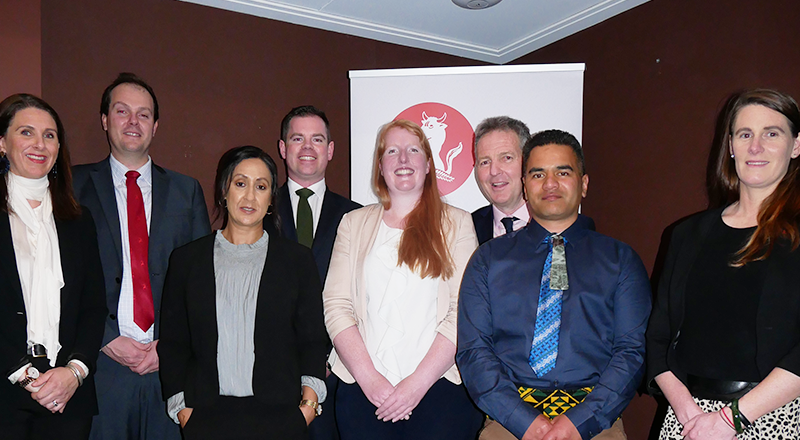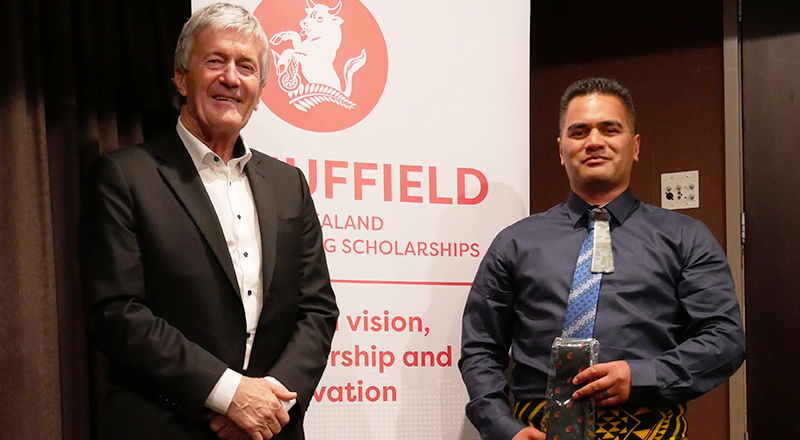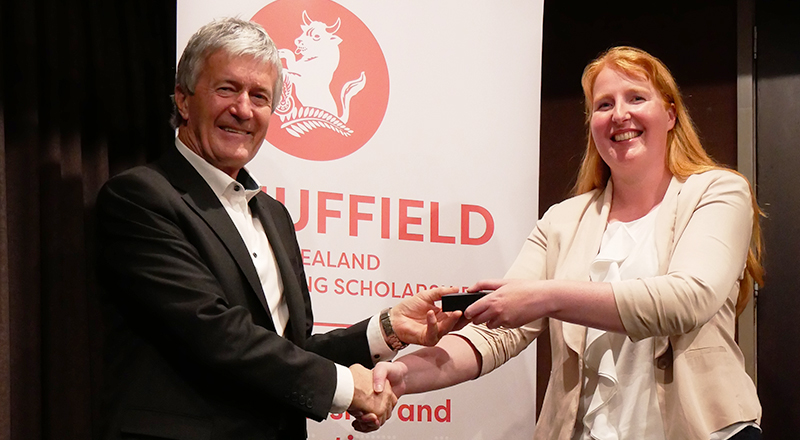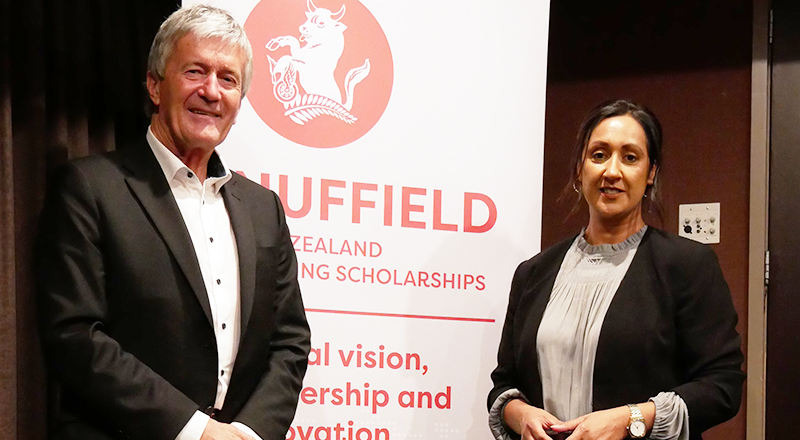
2026 Nuffield NZ Farming Scholarship. Apply by 17 August 2025. Read More...

Apply for 2026 Nuffield NZ Farming Scholarship by 17 August 2025. More details...

A larger-than-life Nuffield alum passes.

The New Zealand Rural Leadership Trust (Rural Leaders) and Nuffield New Zealand are saddened by the recent passing of Garrick Murfitt, 1977 Nuffield Scholar.

Garrick was a hill-country farmer first and foremost and was involved with Horizons Regional Council since joining as statutory member in 1992. He went on to be elected to represent the Tararua District and served as Chair from 2006 to 2010.

Garrick was involved in a number of collaborative initiatives involving local government, iwi and hapū and was also a driver of the improved health of the Manawatū River.
Horizons CE, Michael McCartney said of Garrick, “He was a larger than life chartacter … a joy to work with, and loved by everyone. He was a wonderful person and a man of real public service.”

Garrick is survived by his wife Jane, sons Simon, Richard and Daniel, daughter Emma, and grandchildren Taylor, Ben, Grace, Ellen, Beth, Anna, Tobias, Jack, Lucy, Poppy and Beatrice.

You can leave a message for Garrick’s family here.

You can read a Herald article here.

Zespri and Rural Leaders renew Programme Partnership

The New Zealand Rural Leadership Trust (Rural Leaders) is pleased to announce the renewal of its long-running Programme Partnership agreement with Zespri.

Zespri are highly engaged in rural leadership development and in the support of the programmes that help build the strategic leadership capacity in our food and fibre sector.
With the support of Zespri, Rural Leaders’ programmes continue to grow leaders who have the awareness, confidence and skills to take advantage of the opportunities and challenges confronting the sector and its communities.
Rural Leaders are proud to partner with Zespri and the sector it supports.

(Pictured – Jason Te Brake, Zespri CEO, and Lisa Rogers, Rural Leaders’ CEO.

Lisa Rogers – Leadership Programmes and Pathways.

If we believe the Food and Fibre sector has a Leadership challenge versus a Productivity challenge, then developing our sector’s leadership capability needs to be a priority.

In this podcast, Lisa Rogers, CEO, Rural Leaders talks to Bryan Gibson, Managing Editor, Farmers Weekly about the recently released report ‘A Path to Realising Leadership Potential in Aotearoa NZ’s Food and Fibre Sector’, along with its leadership development framework, and the leadership programmes serving as key tools for building more and ever greater leaders for our country.

Listen to Lisa’s podcast here or read the transcript below.

Bryan GibsonManaging Editor of Farmer’s Weekly.
You’ve joined Rural Leaders’ Ideas That Grow podcast. In this series, we’ll be drawing on insights from innovative rural leaders to help plant ideas that grow so our regions can flourish. Ideas that Grow is presented in association with Farmers Weekly.

Bryan Gibson, Managing Editor of Farmers Weekly.
You’re with Ideas That Grow, the Rural Leaders podcast. I am Farmers Weekly Managing Editor, Bryan Gibson, and with me today is Lisa Rogers, Chief Executive of Rural Leaders. G’day Lisa, how’s it going?

Lisa Rogers, CEO, Rural Leaders
Great. Thanks, Bryan. It’s good to be here.

BG: Now, as we know, Rural Leaders is in the business of creating people who are primed to go into leadership roles. But recently, you’ve been involved in a big report on the state of leadership pathways in New Zealand is and how they might be improved. Can you tell me a little bit about that?

A new report that aims to help solve an old challenge.

LR: Yeah, sure. We’ve recently released a significant report in developing leaders in the Sector. It’s called a Path to Realising Leadership Potential in Aotearoa, New Zealand’s Food and Fibre Sector. We’re very proud of this piece of work that the authorship team has taken almost two years to bring together.

It was originally commissioned and supported by Food and Fibre CoVE – the Centre of Vocational Excellence. They commissioned Rural Leaders to conduct research into the state of leadership development in the sector and to also create a principles-based model towards leadership development. This report is now out. The report covers three main areas: Why we lead, how we lead, and how we are going to continue to grow leadership.

The idea is for this work to become a user guide, for want of a better word. And there is a framework that sits around it as well for people to be able to identify where they are on their leadership journey and to then look at what programmes and what a pathway might look like for their development, depending on where they are in their journey and their age and stage.

So, yeah, it’s a great piece of work.

BG: Obviously, when we think about leadership in the Food and Fibre sector, there are the likes of the Kellogg and Nuffield Programmes. There are other programmes out there, AgriWomen’s Development Trust, and there are various associate board member roles that various processes play. Do we have the infrastructure in place to succeed in building new leaders?

Leadership development programmes and pathways.

LR: I think there’s a great range of exemplars and programmes that are out there. The structure is the thing that’s been missing up until now. A lot of organisations and people have considered this over the years, and this is a foundational piece of work to be able to start creating an ecosystem system that we’re going to have.

It’s not going to necessarily be all about New Zealand Rural Leadership Trust. We want to be part of this, along with everyone else. So, what we’re wanting to do is get a great range of programmes that are there from early days or vocational type programmes. So, from first steps on their leadership development right through operations teams and into that strategic level of leadership as well, which traditionally, Kellogg and the Nuffield Scholarship have been in that later stage.

But we’re also developing and delivering new programmes as well. We’re very proud to be also involved in the Horticulture New Zealand Leadership Programme, which is in that operational space, and looking now at team leadership programme as well. Rural Leaders has got a lot of great programmes to be as exemplars of this leadership journey, but we also want to bring other organisations in to have their programmes there for delivery as well. They’ll obviously still belong to those organisations, but we want everyone to play in this space.

Horticulture New Zealand Leadership Programme, the Value Chain Programme and Engage.

BG: You mentioned the Horticulture New Zealand Leadership Programme, and of course, we know about Kellogg and Nuffield. What are some of the other programmes that Rural Leaders specifically has?

LR: Traditionally, we’re about leadership, and we still absolutely are. That’s our core purpose. But we are also increasingly moving into the capability space now and development of those leaders in the sector. We have the Value Chain Innovation Programme, which runs every year. It’s seven days going through to our iconic four big value chains.

It’s an amazing opportunity to do deep dives into the sheep and beef, the dairy, horticulture, and kiwi fruit industries, and understanding why they are such an important part of our sector, along with all the moving parts that go with that. There are always new changes, and that’s an incredible week with Professor Hamish Gow and Phil Morrison from down in Southland.

We also run a new programme called Engage, which is really starting to pick up a head of steam now. It started off as a joint venture with Lincoln University and Ministry for the Environment. It’s for people coming into this sector who have got great transferable skills but weren’t necessarily brought up in a farming or food and fibre environment. So, they have a three-day immersive programme with us, and we’re finding that that is becoming quite a go-to programme for us as well.

Rural Leaders is starting to build a real stable of programmes and become known as a leader development organisation more than anything else, which is so exciting.

BG: Obviously, the programmes that are out there and the support for people is a key aspect. But leadership is built in the workplace, isn’t it? In the relationships you have and the opportunities you’re given, maybe even when you’re just starting out in your career. We’ve mentioned the report. Are there other tools in the toolbox that can help workplace places develop their staff?

Rural Leaders provides tools for leadership development.

LR: Absolutely. So, the report is all about identifying that pathway. There’s a capability framework there. So, we want people to come in and have a look at this in a way that is accessible. So very shortly, we’re building a microsite, for want of a better word, so it’ll be mobile friendly. 

It’s a way of having a look at where they are now on their journey. So, we assess, am I at the beginning of my leadership development? Have I been doing this for a while? Am I looking for a change? If I’ve been doing something for a while? And then actually ask a few more questions around that. And then this framework will give them some suggestions on programmes that they can be involved in now, some stuff they might like to look at in another year or two’s time, and then further out from there as well. 

Again, it’s an independent assessment, so we’re not necessarily pushing them into all our programmes, although there’s some great opportunities there. But it might be that other organisations have got some great programmes around for them as well. And we certainly include the like of Muka Tangata as well and some of the WDC programmes that are out there – the Workforce Development Councils.

So, we’re also looking at how these can be micro-credentialed, so they give true value for the people who are undertaking them as well. We’re also looking at developing a high-performing teams programme. We see that as a real gap in the availability about being able to create an environment for thriving and high-performing teams.

BG: Identifying the people who have leadership potential and working with them is one thing. I guess Food and Fibre has often struggled to attract some of the talent to the sector from schools and that sort of thing; traditionally pushing people towards medicine, and law. How do we shift the dial there? Because the Food and Fibre sector is so important to New Zealand. It’s so big, in a sense. It really needs to have the best and brightest there, doesn’t it?

With good leadership, people stay.

LR: It sure does. When you think that there’s almost 360,000 people working in this sector now, and it’s worth over $55 billion a year in export income, it’s an incredibly important part of New Zealand’s economy. And up until now, one of the statistics that’s come out of this research is that the churn rate through the sector is something like 71% after three years. Now, that’s extraordinary. Even if you take into consideration seasonal workers, RSC workers coming into the country to work, particularly in horticulture, that’s just mind boggling to think that 71% of people are gone after three years.

The cost to the economy of that, for each time somebody turns over out of a job is just extraordinary. What we need to do is make sure that we can address this and have people who come into the sector and want to stay. To feel like they’ve got some path to grow and develop in there, and that there is a long-term view for them.

Now, it can be in all sorts of aspects of the sector. It doesn’t have to be necessarily a path towards farm ownership, because we want this report, and the framework, to apply to people working in the Food and Fibre service industries as well as on farm or on an orchard.

It’s as applicable to anybody who is an owner or an employer as it is to someone who’s a worker. We want everyone to be able to see themselves in here and look at this framework that we’re putting forward and say, this is where I see myself now, these are the things I’d like to think about developing myself, in particular, my leadership. Once we’ve got people who are feeling as though they have got a purpose and a pathway in front of them, we’re more likely to see a more settled and productive workforce sitting there. We see that this has got huge economic as well as social benefits for the sector.

For more information on Rural Leaders, the Nuffield New Zealand Farming Scholarships, the Kellogg Rural Leadership Programme, the Engage Programme, or the Value Chain Innovation Programme, please visit ruralleaders.co.nz

Rachel Baker – Insights (from an insider) on the Nuffield Global Focus Programme.

In this podcast, Rachel Baker, 2024 Nuffield Scholar talks to Bryan Gibson, Managing Editor, Farmers Weekly, and gives a unique perspective from inside Nuffield.

Rachel speaks about about some of the similarities and differences between the farming systems in the countries she has visited with New Zealand’s.

Rachel discusses insights from Indonesia’s primary industries, France’s love of food, Denmark entering an emissions scheme, California’s water challenges and Chile’s low rates of Research and Development.

This is a must listen for anyone considering a Nuffield Scholarship in 2025 or beyond.

Listen to Rachel’s podcast here or read the transcript below.

Bryan GibsonManaging Editor of Farmer’s Weekly.
You’ve joined Rural Leaders’ Ideas That Grow podcast. In this series, we’ll be drawing on insights from innovative rural leaders to help plant ideas that grow so our regions can flourish. Ideas that Grow is presented in association with Farmers Weekly.

Bryan Gibson, Managing Editor of Farmers Weekly.
Welcome to Ideas That Grow, a podcast from Rural Leaders. I’m your host, Bryan Gibson, the Managing Editor of Farmers Weekly. We’ve got a very special guest today, a current Nuffield Scholar, Rachel Baker. G’day, Rachel, how are you?

Rachel Baker, 2024 Nuffield Scholar
Yeah, good. Thanks, Bryan. Thanks for having me.

BG:
Now, where are you calling in from? Where’s home for you?

A Nuffield Scholar with a background in many industries.

RB: Home for me is Central Hawkes Bay, tucked up near the Ruahine Ranges. My husband and I graze just under 500 dairy heifers. I guess in my day job, I’m portfolio manager for pit fruit for my farm investments. And also with a dairy background, I do some consulting with dairy farmers.

BG: Quite a range of farming industries involved there.

RB: Yeah, life isn’t a straight line. It’s a wiggly line. There are a few stories behind those changes. But I’ve been fortunate. I’ve got a foot in agriculture, and I guess a foot in horticulture as well. So, it keeps me busy and keeps life interesting.

BG: Was that always going to be the path for you? Did you grow up on a farm or was it something you found?

RB: I grew up on a small farm, but my mother was from a large sheep and farming family here in Hawkes Bay. So, I’ve always been involved in farming, but I actually did a veterinary degree. So, I worked as a veterinarian for a short period of time and then morphed into dairy consulting. Then my husband and I took an opportunity to go share milking. So that’s how we entered the dairy sector and had some really good experiences there and actually sold our cows and bought a dry stock farm. That’s how we ended up grazing dairy heifers.

The transition to horticulture really came about through dairy connections within my farm investments. Because I live in Hawkes Bay, I said yes to an opportunity to oversee some of those early apple developments. That was seven years ago and still involved, yeah, still learning and enjoying it along the way with the dairy.

BG: Attracting more investment into food production sectors is pretty vital. So, you’ve got a big job.

RB: It is a good story because it’s bringing capital into the agriculture and horticultural sector, largely from New Zealanders, which is a really positive story. So, yeah, I’m really pleased to be involved in managing their investments.

Halfway through a Nuffield Scholarship.

BG: Now, you’re smack bang in the middle, I guess, of your Nuffield Scholarship Programme. How’s it going for a start, and what subject area are you looking at?

RB: Yes, I am part way through my scholarship at the moment. I’m interested in looking at New Zealand’s global proposition in terms of being a food exporter. In terms of Nuffield itself, the programme really is comprised of three parts. The third part is that research project and doing individual research, which I’m yet to do.

The Nuffield Contemporary Scholars Conference (CSC).

The first part is a conference where all the scholars from that year from around the globe meet together in a country, which changes every year. It’s a conference looking at global issues as well as the host country itself. We were fortunate that Brazil was the host country for 2024.

We went to Brazil in March and had our global scholars conference there. The second part to Nuffield is a global focus programme, and I’ve just come back in early July from that, which is a small group travelling together through five countries in five and a half weeks looking at food production.

The Nuffield Global Focus Programme (GFC).

BG: Can you tell us more about the Global Focus Programme?

RB: There are a number of different Global Focus Programmes based on different times of the year to try and give an opportunity to fit within your own farming and work calendar, and also different countries as well. The countries our group visited were: Indonesia, France, Denmark.

We also went to California and to Chile. The group was made up of 12. They were a good representation of countries as well. We had six Australians, two from Ireland, a Brazilian, a Chilean, and a Zimbabwean. We all travelled together through that time, and obviously got to know each other really well, as well as looking at the challenges and opportunities in all of those countries.

BG: First up, I mean, having that range of people from diverse farming-related backgrounds must be really cool to just talk while you’re travelling and understand how other people think about things.

RB: It was a really diverse group not only in terms of the countries but also what sectors people were involved in. We had tulip grower from Tasmania through to a pig farmer from Zimbabwe. Also, people involved in international fertiliser and the food trade. We had a really nice cross-section, good conversations, and learning together as a group.

That farmer, peer-to-peer learning, you just can’t beat it. When you’re on the road together for that time, you get to know each other well. You learn a lot from each other as well as, obviously, who you’re meeting day to day.

GFC - first stop Indonesia.

BG: Tell us a little about Indonesia. We forget that it’s one of the most populous countries on Earth. It’s not that far away, but when you think of it, you think of some beaches and things like that. But what food production facilities or operations did you take a look at?

RB: Indonesia was our first country, and it was fascinating. A huge population, well over 200 million. So compared to New Zealand, you couldn’t get a better contrast to start. We were hosted by an Australian who had set up cattle feed lots there over 30 years ago.

We’re really fortunate that we got good insights into a lot of different food sectors as well. We did see cattle feed lots, imported cattle from Australia being finished there in Indonesia, through to spice and pepper processing.

We went out on fishing boats with some local fishermen, right through to seeing pineapple plantations being harvested by hand in 40 plus degree heat and 90 % humidity. So, we got a really good range of scale, but also some real subsistence farming as well – from a single man climbing up trees and harvesting palm sugar and making a living out of that.

BG: And where did you head next? Scandinavia?

Nuffield GFC – France.

RB: So, from Indonesia, we headed to France. We spent our time in Normandy, in the north. And again, we got some good insight into French farming. France is just a wonderful food culture. They really celebrate food and they’re really proud of what they produce. A lot of it is artisan. It’s got provenance associated with it. And so, we got a real feel for that.

French farming is in a challenging place at the moment. They feel they’re under threat from imported food products coming in at a cheaper cost to what they can produce. That’s a challenging time for them. But by the same token, there are a lot of strong cooperatives in France. We got a good insight into some cooperative models, which, of course, having a number of strong cooperatives in New Zealand was really interesting.

BG: Yeah, what you were saying about the narrative that goes along with French food, it is so strong. A lot of people think this is something we could try to emulate here. I guess, put some real culture around our food production. I mean, is that something you see as worthwhile?

RB: As a New Zealand food producer, I think we produce high-quality food. It’s safe food from a food security viewpoint. So, any opportunity I had, I was looking for New Zealand produce in the countries we were visiting. There’s quite a buzz when you actually find New Zealand produce in a store or a supermarket when you’re travelling. So, I think from that regard, the food that I saw, the quality that was in front of the consumer was largely very good.

As food producers, we need to be high quality. There’s a lot of challenge coming to us or at us from countries with lower costs of production. I think quality is paramount and I think we should be proud of that. The provenance of New Zealand, it came up-time and time again. New Zealand was mentioned a lot – that it’s a beautiful country and we produce lovely food. So, we should leverage off that.

BG: Yeah. Now, where did it head next?

Nuffield GFC – Denmark.

RB: Next, we went to Denmark. So, it was an interesting time actually being there because not long after we left Denmark, they announced that agriculture would have an emissions tax from 2030. It was great timing for us. I think while I was away, New Zealand pushed pause on agriculture entering emissions trading scheme. So, the timing to be there in Denmark when they were deciding, they’d made the commitment they were going to go. It was just the uncertainty for farmers around what it actually looked like.

I found Denmark very similar to New Zealand in many ways. So, that was quite a good insight. They have a very high wages, and a high tax rate in Denmark, but obviously they have a very strong education, health, welfare system as well. In terms of trying to make a profit, it was a challenge for Danish farmers at this time.

BG: I’ve read a little about the plan that Denmark has to introduce that emissions levy. I know the agreement was nutted out by the government with stakeholders, and that includes some industry groups from the farming sector, so they did get to help mould it. On the ground there, were there farmers you spoke to? How were they feeling about it? Uncertain, I guess?

RB: I think they just wanted to have some certainty. There’s a great quote that uncertainty is the cancer of business. I think they just wanted to be certain about what the plan and the future looked like for them.

I think from a Danish farmer perspective, they do get good support, and they’ve got some excellent programmes in place around, say, a green accelerator programme. This is where they can get up to 70% rebate on any investment in technology that’s going to advance them towards sustainability and a green future.

It was clear that even though they were going to be entering an emissions tax, there was no doubt they wanted to maintain their food production and their productivity. In terms of entering the scheme was – it was not to reduce the amount of food that they were going to produce. It was just that they were going to produce it in a more environmentally sustainable way. From that perspective, I think that they felt there was support available to them to make the transition, and that’s quite refreshing.

BG: That’s really interesting. When I think about incentives for more sustainable production, you often think of planting and retiring land and that sort of thing. But having subsidies for technology, which is a completely different proposition, seems a bit more enticing to both sides of the equation.

RB: I think they’re looking at multiple solutions. They’re going to pump billions into retiring some peat lands in Denmark to help with their emissions transition. I also think biodiversity came up a lot in most of the countries we visited. And again, that’s a real opportunity for New Zealand, because if you look at the land area that we have in native forest and also in farmed land, what area has actually been retired or riparian planted?

We really need to map that and leverage off that because I believe it’s going to be a global food currency – biodiversity in the future. So, we have it and we’re making really good progress. I think we need to leverage that to our advantage.

Nuffield GFC – California.

BG: Now, California, a big state, a food basket in many ways for the United States. That must have been fun.

RB: Yeah, it was really interesting. It’s the fifth largest economy in the world, if it was to be treated as though it was a country. So, we spent time in California, in Fresno, up through to Sacramento.

It was very hot. We had a heatwave while we were there, which was uncomfortable for most of us. But the big story there is water and really getting a good insight into the water challenges they’ve got in California. With less ice melt out of the Sierra Nevada Mountains, more rain, more precipitation, more growing cities, all demanding more water.

California - the water scarcity challenge.

Their sources of water are surface with allocation rights for deep-water, groundwater takes. They’ve got real challenges around a six-inch rainfall in Fresno County. Maybe they get 50% of their allocated volume from surface water. They’re needing to take groundwater as well. So, there are big recharging programmes in place. One farm we went to had spent $15 million USD on a recharge system, which may only be used every three or four years.

Then further up, closer to the Delta, the Government’s proposing putting in a $25 billion USD pipeline in to pump water through to Los Angeles and San Francisco. So, you’ve got real contention around water rights and water use and what priorities should be in place.

So, it was really good for us to see that. But also, you do wonder what areas may not be in horticulture in California in the future. So, there’s some real challenges there for them around not only the infrastructure, but just the allocation of water as well.

BG: Yeah, the last few years, they’ve been focusing on some pretty thirsty crops there, haven’t they?

RB: They have. I guess also the challenge is they’ve had real success growing almonds and selling almonds. But again, they’re almost running the risk of commoditising their own value product by planting more and more hectares. So, it’ll be interesting to see how that plays out.

Nuffield GFC – Chile.

BG: And further down the Coast of Americas, Chile, it always amazes me that place. I’ve not been there, but it’s so long and thin.

RB: It is the longest and thinnest country in the world. Narrow, I think, in diameter than New Zealand, from border to border. So, that was our last country. We left 40 plus degree heat in California and went into the single-digit temperatures in Chile, which was a bit of a shock for us all. But hey, what a great country.

We had some really good insight into Chile and, I guess, in policy to start with. Also, looking at Chile as a country that is open to foreign investment. We saw examples of that in Chile. But again, similar challenges, less ice melt, more precipitation, lack of infrastructure, investment, a slow consenting process.

On-farm storage of water was not really progressing very quickly at all. It’s a low-wage economy. We went to an avocado plantation on very steep country that in New Zealand would be sheep and beef or planted in forestry. Their staff were harvesting with football boots, with sprigs, because it’s so steep. So, they were harvesting avocados by hand. Just to see that on that steep country was quite mind-blowing. They’re a real powerhouse of cherry production and apple production too.

I’m involved in the apple industry with the work that I do so, it was really interesting. Just the scale of some of their operations was really significant. One thing I found interesting was that levy-funded R&D didn’t appear to exist in Chile. That’s a real challenge for them in terms of keeping pace with, say, countries like New Zealand. We could fund more, of course, but we have a real focus on research and development and advancement of varieties, et cetera. So, I felt we certainly had a competitive advantage there.

What’s next on the Nuffield Scholarship Programme?

BG: So, you’re back in Aotearoa, and you’ve got a lot to digest from all that, I guess. Next up for you in the Nuffield Programme is putting pen to paper?

RB: Yeah, that third part of the Nuffield Scholarship is individual travel. So, I’m starting to develop my travel and research plans. I plan to spend some more time away looking, as I said before, that value proposition for New Zealand into the future. So, visiting countries that maybe operate in the same markets as us or maybe they’re customers of ours, and really drilling deeper into that.

BG: Sounds really exciting. Thanks for that, Rachel. All the best for the rest of your Nuffield journey.

The 2025 Nuffield New Zealand Farming Scholarship applications close 18 August.

RB: Thank you. And for those that are thinking about applying for Nuffield, I’d really encourage them to really think strongly about applying because from my perspective, this is filling that global piece I really wanted to develop, being involved in food production.

This really is unparalleled. It’s an amazing opportunity. For those people that are thinking about applying for a Nuffield Scholarship, put that imposter-syndrome to the side and put your best foot forward because it really is an amazing opportunity.

BG: Thanks for listening to Ideas That Grow, a Rural Leaders podcast presented in Association with Farmers Weekly. For more information on Rural Leaders, the Nuffield New Zealand Farming Scholarship, the Kellogg Rural Leadership Programme, and the Value Chain Innovation Programme, please visit ruralleaders.co.nz

For more information on Rural Leaders, the Nuffield New Zealand Farming Scholarships, the Kellogg Rural Leadership Programme, the Engage Programme, or the Value Chain Innovation Programme, please visit ruralleaders.co.nz

Horticulture NZ Leadership Programme partnership.

A fast-changing industry needs more adaptble and capable leaders.

Horticulture is fast-changing. It has big goals, such as doubling the farmgate value of production. The industry wants to do this in a way that lifts the prosperity of its people while also protecting the planet.

The environment horticulture now operates in is more complex than it has ever been. It will need a pool of high-performing, current and potential leaders with the confidence and skills to take the industry into the future.

The New Zealand Rural Leadership Trust (Rural Leaders) are partnering with HortNZ to deliver the highly regarded and in-demand HortNZ Leadership Programme.

“A sustained flow of capable and self-aware leaders is critical to the Food and Fibre sector remaining vital and vibrant into the future. The Sector needs leaders that are continuously developing themselves and the teams they work with.

This addition to Rural Leaders’ suite of programmes, fully realises our intent to include an operational level programme as part of a wider leadership development ecosystem.

We are pleased to be working in partnership with HortNZ to deliver this important piece of a horticulture leader’s development journey”, Said Lisa Rogers, CEO, Rural Leaders.

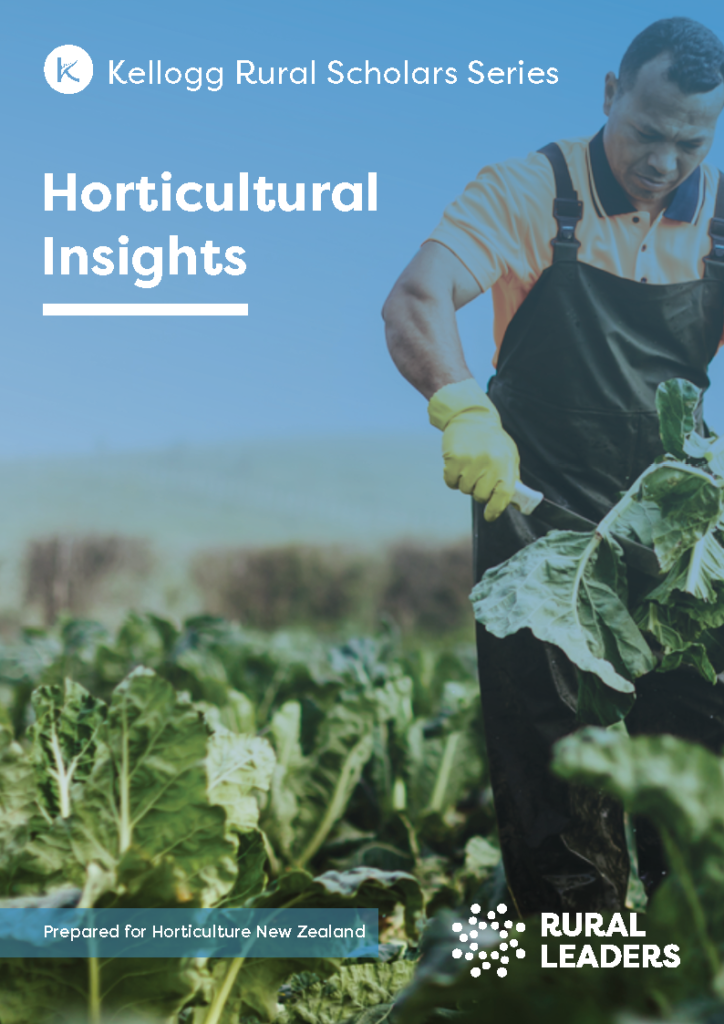
The programme is designed to help leaders capture the opportunities and address the challenges offered by the industry’s expected growth and change. Participants will be fruit and vegetable growers, their employees, or from organisations closely associated with growing. They will join the more than 300 leaders who have graduated from the programme since 2002.


A key piece of the Food and Fibre sector’s leadership development ecosystem.

The HortNZ Leadership Programme took a break in 2023 to be reviewed against the current industry landscape. An additional evaluation was completed by Scarlatti, funded by Food and Fibre CoVE.

Food and Fibre CoVE also commissioned Rural Leaders to undertake research to define, design and develop an integrated approach tailored for Food and Fibre to help establish leadership development pathways for our people to grow and succeed. 

The research outputs include the Capability Development Framework, introduced in the report, ‘A path to realising the leadership potential of Aotearoa New Zealand’s Food and Fibre Sector’. Key elements from the Capability Development Framework were also reviewed alongside the HortNZ Leadership Programme.

HortNZ Leadership Programme timetable.

The Programme is delivered by Rural Leaders in two phases and over nine weeks starting 13 August 2024 and finishing 19 October 2024:

  • Phase one: five days (13 –18 August 2024 in Auckland)
  • Phase two: three days (17-19 October 2024 in Wellington)
  • Personal leadership plan – six weeks over the Programme.

Designed to build participants’ confidence to take the lead and to create influence, the programme will also develop business skills, such as communication, teamwork, critical thinking and problem solving.

It includes sessions that aim to generate an awareness of strategy, how to use it,
as well as developing a personal plan. A key feature of the programme is the opportunity to network and grow relationships with other like-minded emerging and current influential leaders.


Alumni in the Spotlight – Julian Raine, Tracy Brown, Anna Gower-James and more.

It’s been another busy month or two for alumni in the news. Here are just a few of the media pieces covering the impact of Rural Leaders’ Programme Alumni in industries and communities across the sector. 

Julian Raine, 1997 Nuffield Scholar.

As you may well have heard, Julian Raine, 1997 Nuffield Scholar, won the Outstanding Contribution Award at the Federated Farmers’ Primary Industries Awards on July 2nd.

Julian is a former Chair of the NZ Rural Leadership Trust and has also chaired the Apple Futures Programme. He has been a trustee of the Massey Lincoln Agricultural Industry Trust, he has co-chaired the Nelson Tasman Climate Forum, and is a member of the Primary Sector Council.

Judges noted that he is, and continues to be, an innovator and leading entrepreneur in horticulture and dairy. His leadership and commitment to giving back, both nationally and in the Nelson community, including involvement in the Waimea Community Dam project, has spanned three decades.

This article gave a strong account of the win.

Take a read of the Farmers Weekly article.

Jason Te Brake, 2014 Kellogg Scholar.

Jason Te Brake’s appointment as Zespri’s new Chief Executive hit the headlines several weeks back. On his appointment Jason said, 

“My focus will be on leading the Zespri team to capture the significant demand opportunities in the market, on strengthening our supply chain and operational performance to maximise value in the market, and on ensuring we return as much of that value back to growers as possible.”

Take a read of this Waikato news article on Jason’s background and his plans for the Kiwifruit marketer.

Kate Scott, 2018 Nuffield Scholar.

In June’s ‘The Journal’ (From NZIPIM, Vol 28, No 2), Kate Scott, 2018 Nuffield Scholar shares her findings from her time in Brazil on the Nuffield Global Focus Programme (GFP).

Kate’s article explores the idea that Brazil might be a little more than its stereotype – 
a large-scale, beef-producing, Amazon deforesting nation in the South Americas.

The article goes into some ideas that potentially paint an alternative picture.

You can download and read the article here.

Image below: Julian Raine with his ‘Outstanding Contribution Award’ at July’s
Primary Industries Awards.

Tracy Brown, 2020 Nuffield Scholar.

In late June, it was announced Tracy Brown will take over as board chair of DairyNZ in October. Tracy replaces Jim van der Poel, 2002 Nuffield Scholar, who has been chair of DairyNZ since 2017.

DairyNZ has a governing board of eight members. Five directors are elected by farmers and three are independent and appointed by the board. Congratulations to Jim on his exceptional service and to Tracy on her election. This article from Rural News Group had it covered.

Anna Gower-James, 2023 Kellogg Scholar.

An article in the Spring edition of the New Zealand Dairy Exporter by Anna Gower-James explores the growth of Nigerian dairy consumption and looks at its potential from a New Zealand trade perspective.

The article is based on Anna’s Kellogg Rural Leadership Programme report and is available in the latest issue (Spring 2024) of New Zealand Dairy Exporter.

Anna’s full report is available here.

Dan Eb, David Eade, John Foley, 2021 Nuffield Scholars.

On a regular basis (generally once a week) one of four Nuffield Scholars, Dan Eb, David Eade, Phil Weir, or Ben Anderson, pen an article for Farmers Weekly’s ‘Eating the Elephant’.

Here is the now substantial archive which includes recent additions from Dan and David, as well as Phil Weir.

This month, guest writer John Foley added his learned touch to the group’s efforts. John’s article ‘The courage to be a pragmatist’, proposes that we just might have been better at getting things done in the past. John writes,

“Kennedy was a pragmatist. He fundamentally changed his politics to reflect the reality of American society and wasn’t afraid to lose political capital. For modern New Zealand, the pragmatism to build infrastructure and create enduring government policies is hard to find. As a result, things aren’t done.”

Take a read of John’s article here.

Another article from the archive well worth a read is Dan Eb’s June 19 piece on his Nuffield travel. The Global Focus Programme (GFP) is a key piece of the Nuffield Scholarship, placing small groups of about a dozen international scholars together on a tour of several continents and many countries.

“May-June 2023, my Nuffield Farming Scholarship sling-shotted me and 11 other scholars across Singapore, Japan, Israel, the Netherlands and the United States.”

For anyone considering a 2025 Nuffield Scholarship, this article gives you some real insight into what it means to develop a global view.

Applications for 2025 Nuffield Scholarships are open until 18 October. 

Cheyenne Wilson, 2024 Kellogg Scholar.

Cheyenne Wilson is currently on the Kellogg Rural Leadership Programme and will graduate in November.

Cheyenne’s Kellogg research focuses on identifying the tools and mechanisms needed for rangatahi to thrive in the Food and Fibre sector.

Take a read of this Farmer’s Weekly article ‘Bridging tradition and innovation in NZ farming’ covers the journey so far of this busy and community-minded Kellogger.

Kylie Leonard, 2023 Nuffield Scholar.

The 2023 Nuffield Scholars, Kylie Leonard, Kerry Worsnop, Matt Iremonger and James Allen were each interviewed on the CountryWide or Dairy Exporter podcasts.

The most recent of these was Kylie Leonard’s coverage of her Nuffield report ‘Boots on the ground are part of the solution. Transitioning agriculture towards sustainability together.’ 

Interviewed by Sarah Perriam-Lampp, the podcast determines that farmers to need to be at the table when it comes to fostering sustainable practices in the agriculture sector.

Kylie says that the best uptake is when farmers have had the choice to change, and lead by example within their community.

Take a listen to Kylie’s podcast here.

You can also find the remaining 2023 Nuffield Scholar podcasts below.

James Allen, Matt Iremonger and Kerry Worsnop.

A big thank you to Sarah and her team for these fantastic podcasts.

Image below: Emma Crutchley at the launch of the KPMG Agri-business agenda. Fieldays.

Emma Crutchley, 2018 Kellogg Scholar.

Emma was asked to contribute to the launch of the KPMG New Zealand Agribusiness Agenda at Mystery Creek Field days.

Take a read of Emma’s LinkedIn post covering her participation on the panel, together with Jason Te Brake, Jason Doherty, Ian Proudfoot and others.

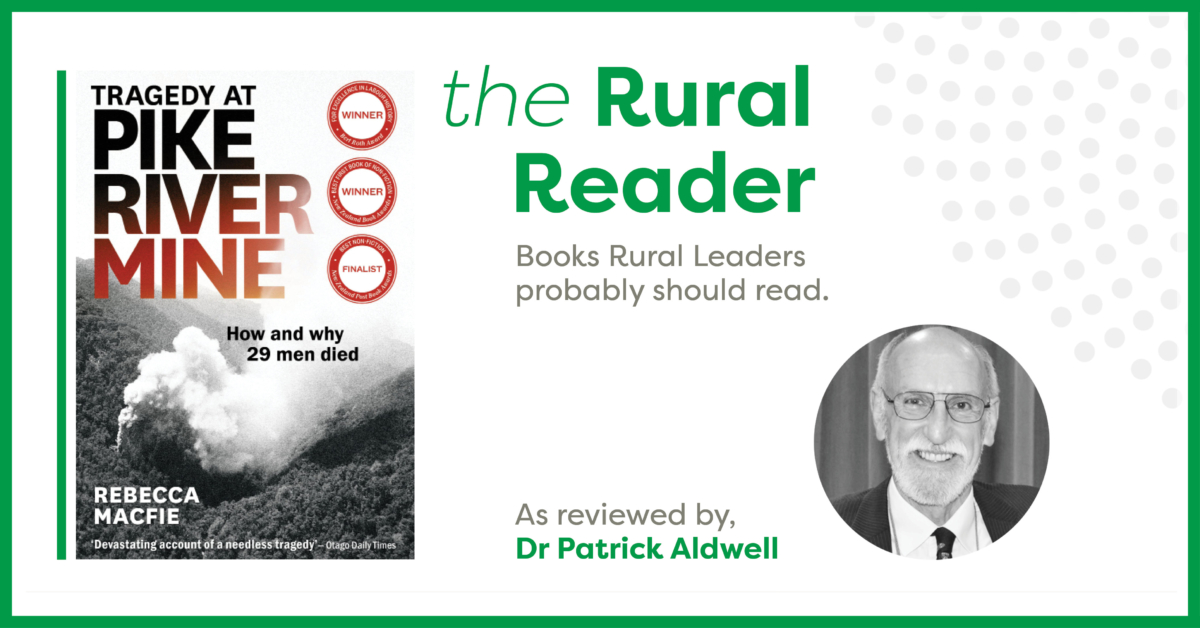
Dr Patrick Aldwell retires after 25 years of service to Kellogg.

Dr Patrick Aldwell has made a hugely positive impact on thousands of people from across the Food and Fibre sector. Passionate about life-long learning, he has also made the academic and strategic support of anyone who needed it, his life-long mission. On the Kellogg Programme alone, he did this for twenty five years. 

Now he has officially retired from Kellogg (well probably, mostly).

Since retiring from Lincoln University as Dean of the Faculty of Commerce in 2012, 
Dr Patrick Aldwell continued to focus on agribusiness programmes that build leadership capability in Food and Fibre.

These included the Kellogg Rural Leadership Programme, the Horticultural Leadership Programme, the Nuffield Scholarship and Future Food Network programmes.  

Prior to returning to Lincoln University in 1998, Patrick was a scientist for 20 years at the then Forest Research Institute in the Trade, Marketing and Economics group. During this time he worked on New Zealand land use issues and internationally for the UN and World Bank on capacity-building for science infrastructure projects. 

Patrick’s disciplines are in the fields of regional and industrial economics and strategic management. He has degrees from Massey University, Monash University, the University of Washington and a Dip. Agri from Lincoln University. 

Patrick never tires of sharing his knowledge with students and sector leaders. He is sought out for academic support and strategic guidance, particularly when it comes to tackling the big challenges facing the primary industries and its rural communities.

Today Patrick’s academic interests lie in fields of technological change, rural issues, the interface between agricultural intensification and other ecosystems, and on building our sector’s leadership capability. 

To this end, Patrick’s 25 years with the Kellogg Rural Leadership Programme, were marked by his support and encouragement of the rural leaders he taught.

One recent Māori Agri-business graduate of the Kellogg Programme said of Patrick, “He was instrumental in assisting me to basically learn how to write, how to write well, and to get my writing out there in the public space so that I could share what was on my heart and mind.” Comments such as this are typical and frequent.

He provided academic guidance and knowledge-rich support to rural leaders not just on the Kellogg Programme, but also the Horticulture Leadership Programme and many more. It is not just his dedicated academic support for students and scholars, but it is also to people in their ‘day jobs’ as well.

As Dean, Patrick’s long-time colleague, Associate Professor Charles Lamb, now Divisional Director at Lincoln University, said, “Dr Aldwell’s stand out quality was his genuine empathy for his staff”.

Images top and bottom – the graduation of the 50th Kellogg cohort. November 2023.

Shaping the critical and strategic thinking ability of hundreds on Kellogg.

Patrick’s involvement in the Sector runs so deep it can be hard to find a place he hasn’t had a significant positive impact on the primary industries’ people and their communities.

In late November last year, the Kellogg Rural Leadership Programme celebrated the graduation of its 50th cohort. Patrick was asked to speak to a large crowd of Scholars and industry leaders, not just as the Academic Director of the Programme, but as someone who had influenced the trajectory of over 800 of the Programme’s 1100+ alumni.  

Patrick has often said that one of the biggest thrills he gets is hearing of the successes of those in rural New Zealand he has taught, encouraged or perhaps provided quiet counsel to when times were tough on-farm. 

The length of time served, the passion, commitment, and the individuals influenced by Patrick’s involvement in key sector programmes, particularly around leader capability lift, means his impact on the primary industries has been exponential.

His fifty years of service to the Sector, positively influencing trade, science, academia and people, stands as tacit evidence of his dedication and passion for the primary industries.

In the last two decades Patrick has focused more specifically on addressing leader capability lift in the primary industries. Patrick understands the exponential impact stronger and ever-better leader ability can have in creating better outcomes for rural communities and their people.

As a simple and frequently occurring example, it is common to hear Patrick has spent hours working into the night, consulting with a farmer or grower who has been working all day on their operation. He takes a genuine interest in them as business owners, as team members, as students and as human beings. Whether on Zoom, over the phone, or in-person, Patrick never shies from helping the rural people and communities he is so passionate about.

From everyone at Rural Leaders, and the rural leaders you have supported and encouraged, enjoy your retirement Patrick.

Gilman Scholars to visit New Zealand – hosted by Rural Leaders.

Gilman and Rural Leaders forge Food and Fibre education alliance.

In partnership with Rural Leaders, the U.S. Mission to New Zealand will undertake a week-long, interactive programme for Gilman alums working in fields related to global food security.

As part of their professional development the Gilman alums will examine how New Zealand navigates geopolitical and climate change risks as a Food and Fibre based economy.

Participants will gain insights into policies, technologies, and adaptation measures aimed at securing the agricultural sector and mitigating environmental impacts, crucial for sustaining New Zealand’s role as a global food supplier amidst evolving global challenges.

“We are excited to be hosting this programme with Gilman and the US Department of State. It gives us an opportunity to showcase New Zealand’s innovation and initiatives towards food security and how we create resilience throughout our food systems,” said Lisa Rogers, CEO, Rural Leaders.

Benjamin A. Gilman International Scholarship Background.

The U.S. Department of State’s Benjamin A. Gilman International Scholarship Program enables students of limited financial means to study or intern abroad. The Scholarship aims to encourage students to study and intern in a diverse array of countries; in 2024 this will include New Zealand.

The week-long programme called ‘Mission New Zealand – Navigating Geopolitical Tensions and Climate Change as an Agri-based Economy’,  has been designed to give the visiting Scholars a deep dive into global food security.

Running from Monday 26th – Friday 30th August 2024, and facilitated by Dr. Scott Champion, the Programme features a stellar line-up of modules and speakers, including:

A Global Perspective, Ian Proudfoot (Global Head of Agribusiness, KPMG).

Te Ao Māori Perspective, Jess Smith (Regional Director – Te Tai Hauauru
Te Puni Kōkiri).

Food Security/Food Safety Perspective, Hon Minister Andrew Hoggard (Minister for Biosecurity and Food Safety).

A Discussion on Trade, Hamish Marr (Special Agricultural Trade Envoy), Brian Wilson (Divisional Manager – Trade Policy & Negotiation Division, Ministry of Foreign Affairs & Trade)

Value Chains in the NZ Food and Fibre Sector, Prof. Hamish Gow (Professor – Global Value Chains & Trade, Lincoln University).

Global Food Security, a NZ Government Perspective, Hon Minister Todd McClay (Minister of Trade and Agriculture). 

Silver Fern Farms, Ryan MacArthur (On Farm Sustainability Manager).

Fonterra, Charlotte Van Der Lee (Sustainability Manager).

Precision Agriculture, Craige MacKenzie (2008 Nuffield Scholar).

Supply Chain, Lyttelton Port Company – Simon Munt (Chief Customer and Supply Chain Officer).

Biosecurity, Regulations, and Emissions Reductions, Julie Collins (Deputy Director-General Policy and Trade, Ministry for Primary Industries).

Global food security, the NZ Perspective, Hon Damien O’Connor (Labour Party Spokesperson for Foreign Affairs, Land Information, Trade and Transport, Member of NZ Parliament).

Final Overview, Lisa Rogers (CEO, NZ Rural Leaders), Dr. Scott Champion (Dir. Primary Purpose, Facilitator), Margaret Walrod (Foreign Service Officer at U.S. Department of State, U.S. Embassy, Wellington), Theresa Gagnon (Program Officer at U.S. Department of State, Bureau of Educational and Cultural Affairs (ECA), USA).

The Programme also features several reflection sessions with Facilitator Dr. Scott Champion, farm visits (Matt Iremonger, Alan and Carina Friedman and Marr Farms), dinners, and recreational activities.

Why visit us? The New Zealand context.

As an agribusiness nation, New Zealand remains dependent on its agricultural and horticultural product exports to maintain a healthy economy. Each year, New Zealand exports approximately 90% of its dairy, meat, fruit, and vegetables to a value of USD 32 billion. However, this economic backbone is vulnerable to geopolitical tensions and climate change.

Geopolitically, New Zealand’s agriculture is affected by global conflicts. During the Russia-Ukraine war, farmers faced decisions regarding exports to Russia amidst international sanctions, highlighting the sector’s exposure to global political dynamics.

Climate change presents significant challenges, with intensified weather events like Cyclone Gabrielle disrupting supply chains and threatening agricultural viability.

The sector is also grappling with increased animal diseases and oceanic impacts on aquaculture, exacerbated by its substantial greenhouse gas emissions.

“This partnership highlights Rural Leaders’ desire to forge stronger relationships with international connections,” added Lisa Rogers.

Other Scholar groups will visit Columbia and Zimbabwe later this year.

To find out more about the Gilman Scholarships visit here.

Farmlands and Rural Leaders renew Programme Partnership

The New Zealand Rural Leadership Trust (Rural Leaders) is pleased to announce the renewal of its Programme Partnership agreement with Farmlands.

Farmlands and Rural Leaders have enjoyed a productive partnership for many years. In that time both organisations have worked together to help build the strategic leadership capacity in our food and fibre sector. 

Working with Farmlands, Rural Leaders’ programmes aim to grow world-class leaders for our country. These are leaders who have the skills, networks, awareness, and confidence to deal strategically with the significant changes confronting the sector, its communities, and the environment.

Rural Leaders are proud to partner with Farmlands and the sector it supports.

(Pictured – Tanya Houghton, Farmlands’ CEO, and Lisa Rogers, Rural Leaders’ CEO).

Foundation for Arable Research and Rural Leaders renew Programme Partnership

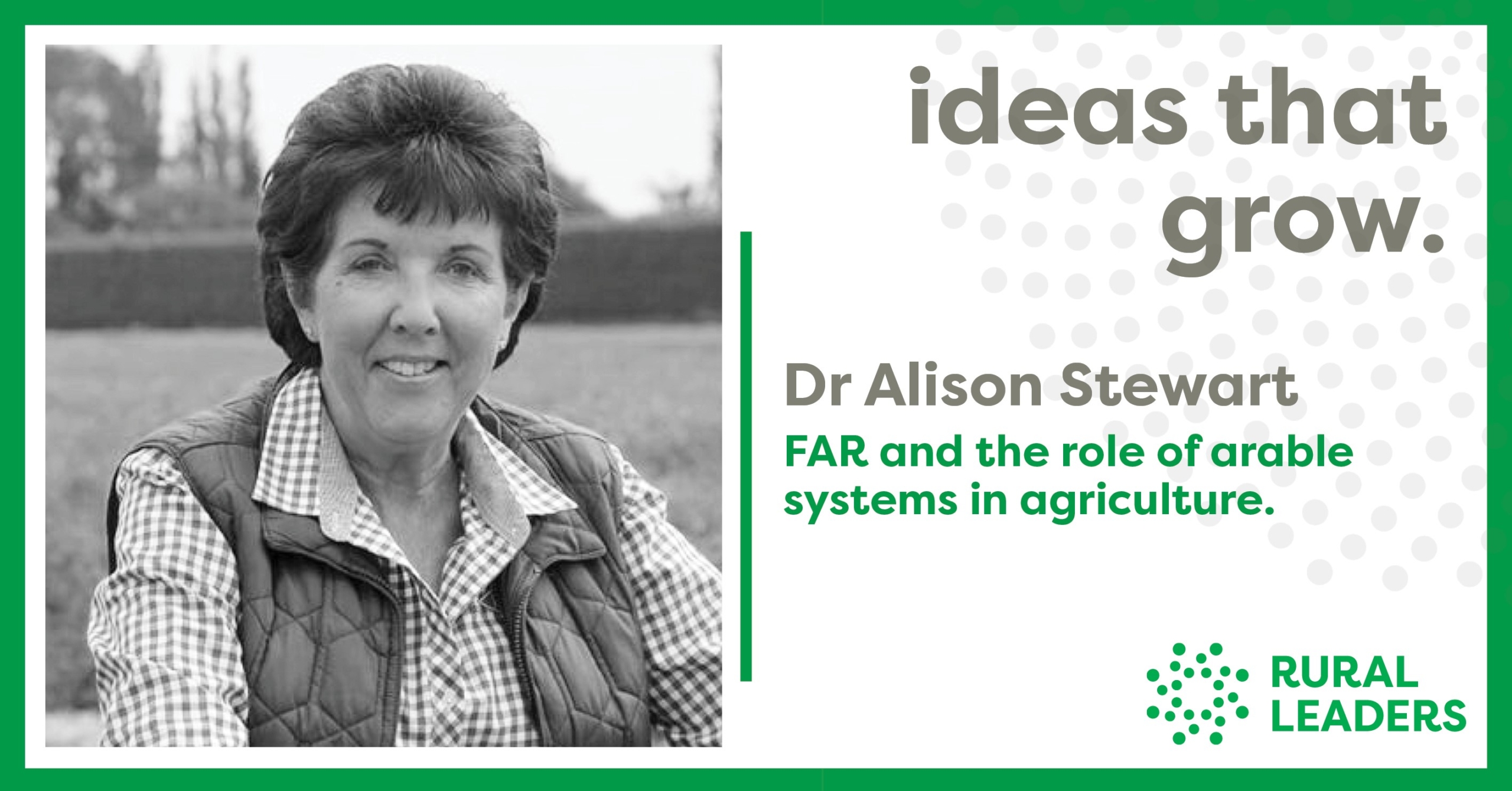
The New Zealand Rural Leadership Trust (Rural Leaders) is pleased to announce the renewal of the Programme Partnership agreement with the Foundation for Arable Research (FAR).

FAR and Dr Alison Stewart’s involvement with Rural Leaders’ Programmes goes back not too long after the formation of Rural Leaders in 2017.

While arable growers on Rural Leaders’ programmes benefit from FAR’s programme sponsorship and input, FAR also supports the development of leadership and leaders from industries across the Food and Fibre Sector.

The important role FAR and arable growers play cannot be understated. Their work underpins the livestock industries. Growers produce the grass seed for pastures and animal feed in the dairy, beef and poultry industries. Rural Leaders are proud to partner with this key organisation and the industry it supports.

Dr Stewart’s own involvement with Rural Leaders is often hands-on as a regular speaker on the Kellogg Rural Leadership Programme. Kellogg scholars learn about the work FAR does and the role it plays, as well as Dr Stewart’s own leadership journey, experience and insight.

“…you’re able to have some honest and sometimes quite painful discussions about how New Zealand agriculture needs to move into the future and the changes that need to be made. And that cohort of Kellogg leaders are up for those kinds of discussions. I just love it.” Dr Alison Stewart, 2023.

Pictured above is Dr Alison Stewart, Foundation for Arable Research, CEO, and Lisa Rogers, Rural Leaders’ CEO.

Foundation for Arable Research background.
FAR is an applied research organisation responsible to New Zealand’s arable growers. It is involved with funding of arable, maize research and technology transfer.

FAR contributes funds to research programmes, often in collaboration with government funded organisations or universities. Involvement in specific research programmes is driven by the interests of New Zealand’s arable growers.

Research is split between three themes: Maximising productivity and value; Environmental and social best practice; and Resilient cropping in farming systems.

Each year, in consultation with growers across the country, FAR reviews and updates the short, medium and long-term projects within each theme.

Levy funds are also used to secure additional Government funding through programmes such as the Sustainable Food + Fibre Futures Fund.

FAR’s research and extension portfolio supports our vision of A vibrant and profitable arable sector producing healthy, value-added food, feed and seed.

Amongst the work in applied research, the search for new management systems, tools and new technologies to assist growers, FAR also works on supporting growers with compliance and biosecurity.  

“We also promote to the general public, to the other sectors, to the government, the value of arable systems and the value that they bring to New Zealand agriculture.” Dr Alison Stewart, 2023.