2026 Nuffield NZ Farming Scholarship. Apply by 17 August 2025. Read More...

Apply for 2026 Nuffield NZ Farming Scholarship by 17 August 2025. More details...

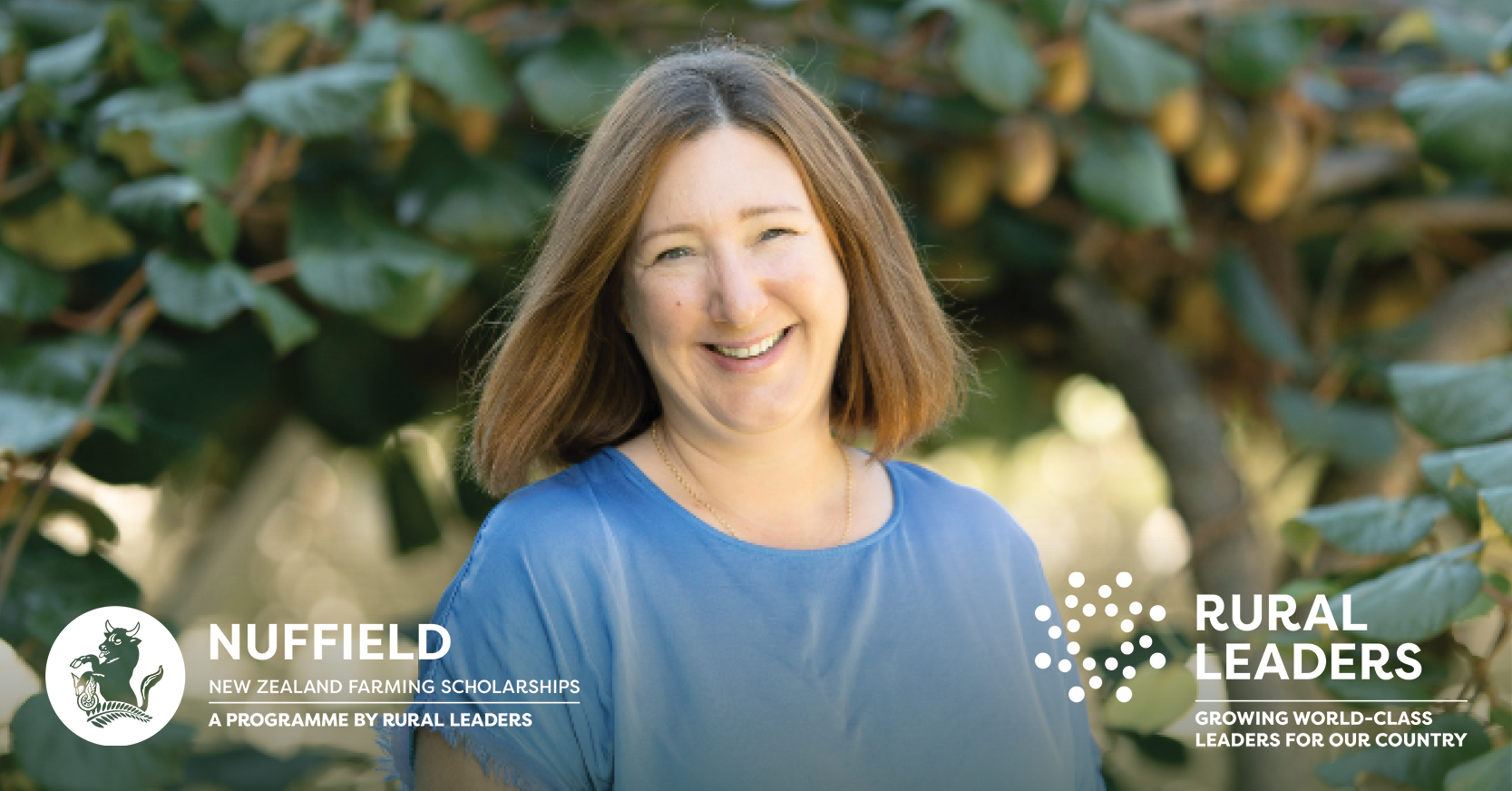
Shannon Harnett – Making AI work for you

Shannon is a 2020 Nuffield Scholar, Director and Co-Owner of Rural Accountants and has investments in agriculture, horticulture and aquaculture businesses. In this article Shannon shares her insights into how to make AI work well for you.

Making AI Work for You
The first time I saw ChatGPT in action was in the summer of 2023, at a friend’s house. We asked it to write a poem about accountants. It was hilarious — but underneath the humour, I realised the potential.

Very quickly, AI became my assistant. At first, it fixed grammar and spelling in emails and reports. My writing became sharper, more concise, and easier to read with far less grammar and spelling mistakes! Mark Twain once said, “If I had more time, I would have written less.”  With AI, that constraint no longer applies.

The real turning point, though, was when I used AI to turn something messy into something structured and useful. Not “robots taking over the world.” Just getting the AI to ask me questions, one by one, about a project I was working on, then pulling my answers into a clean, usable format.

That’s when it clicked: AI isn’t just a word-smithing assistant. It’s a strategic tool. Used well, it takes work off your plate, sharpens your thinking, and creates scale without the hours of refining.

It Starts with the Question
The biggest lesson? It’s not about having the right answer. It’s about asking the right question.

I now frame prompts like I’m briefing a new hire: clear role, clear context, clear task. For example, as a CEO, I don’t just type, “Help me with strategy.” That’s far too broad. Instead, I say:

“You are my Scaling Up Strategy Assistant. Ask me one question at a time. Start with People, then Strategy, then Execution, then Cash, then Risks & Opportunities. Only show me the full summary once we’ve covered all five areas.”

The result is an interactive interview where AI does the admin while I do the thinking. That’s the power of a good prompt: it forces clarity, and the output is miles better than a vague question ever delivers. And, in truth, learning to prompt AI has made me a better leader — clearer, more structured, and more intentional in what I ask of others.

Small Steps, Big Wins
You don’t need to overhaul your whole business to start. Try it on something small, try it on something creative.

Don’t know what to have for dinner? Take a photo of what’s in the fridge, upload it to AI, and it’ll generate recipes with step-by-step instructions.

It sounds trivial, but it proves the point: AI can sift through messy inputs, structure them, and give you something useful in seconds. In business, the same applies — pulling data from multiple reports, tidying client communications, or drafting meeting notes. These aren’t tasks we can’t do. They’re tasks that chew through time — and AI gives that time back.

The Power of Projects
The real magic happens when you start treating AI as a project partner. I’ve been experimenting with GPT-powered projects that run like structured workflows — guiding me step by step, capturing the right inputs, and producing a clear, consistent output.

Here’s what that looks like:

  • A marketing project where AI builds a content calendar in my brand voice.
  • A reporting project where AI pulls numbers from my files and formats them into a tidy monthly pack.
  • A strategy project where AI interviews me (or my team) and distils the answers into a one-page plan.

You define the outcome, give AI the right resources (files, data, context), set simple rules, and let it guide the process. The result is structure, quality, and momentum — without false starts or bottlenecks.

And once a project is set up, anyone in the team can run it. That means clarity and consistency, whether I’m leading it or handing it over.

AI in the Tools You Already Use
AI isn’t just in chat windows. It’s already creeping into the software you use every day.

Take Microsoft Copilot. It can scan emails and Teams chats, spot an approval request (“Can I go ahead with this?”), and track it. If three days go by without a reply, it nudges the approver and updates the requester.

That alone kills the “lost in the inbox” problem that slows teams down. But it also shines at surfacing related documents inside Microsoft 365 — I’ve saved hours finding what I need.

A New Way of Leading
Here’s the mindset shift: AI isn’t just tactical. It’s strategic.

The sticky note on my desk simply says:
“How can AI help me do this?”

Whether I’m writing a report, mapping a process, or planning strategy, I pause and ask where AI could take the load. Most of the time, it’s not about replacing me. It’s about clearing space so I can show up where it really matters — with clients, with strategy, with people.

How to Start Today
If you’re ready to dip your toe in, here’s a simple path:

  • Pick one task you repeat often (emails, stakeholder lists, client notes).
  • Write a clear prompt that sets role, context, and task.
  • Let AI break it into questions and interview you.
  • Use the output, tweak it, and save the prompt for next time.

Once you’ve got one win, build a small “AI toolkit” for yourself and your team — a set of prompts or projects that anyone can use.

Final Thought
AI won’t magically run your business or your life. But it will tidy the messy bits, speed up the slow bits, and track the bits you’d usually forget.

And when you start treating AI less like a novelty and more like a colleague — one that never gets tired of chasing approvals or formatting tables — you’ll see what I’ve seen: the power to do more, without burning yourself or your team out.

I completed the Spark-funded AI Mini MBA course, and it was one of the best investments of time I’ve made. If you get the opportunity, take it.

Shannon’s 2020 Nuffield report on Kiwifruit PVR’s ‘Getting Plant Varieties Right’ can be viewed here.
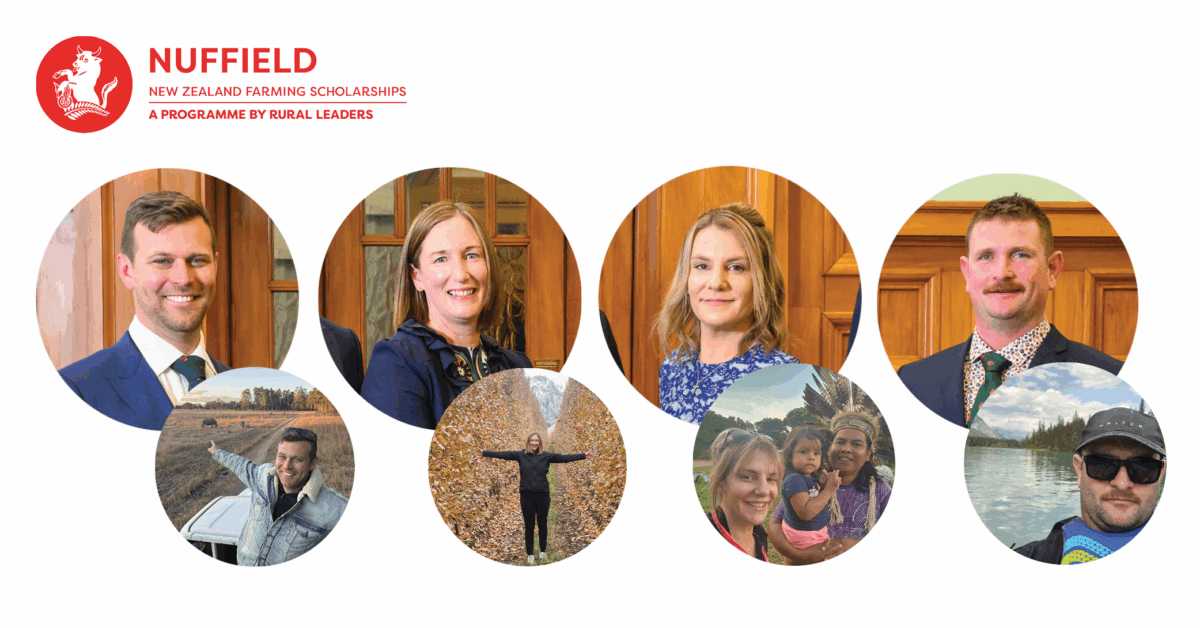
 

2024 Nuffield NZ Farming Scholarship reports.

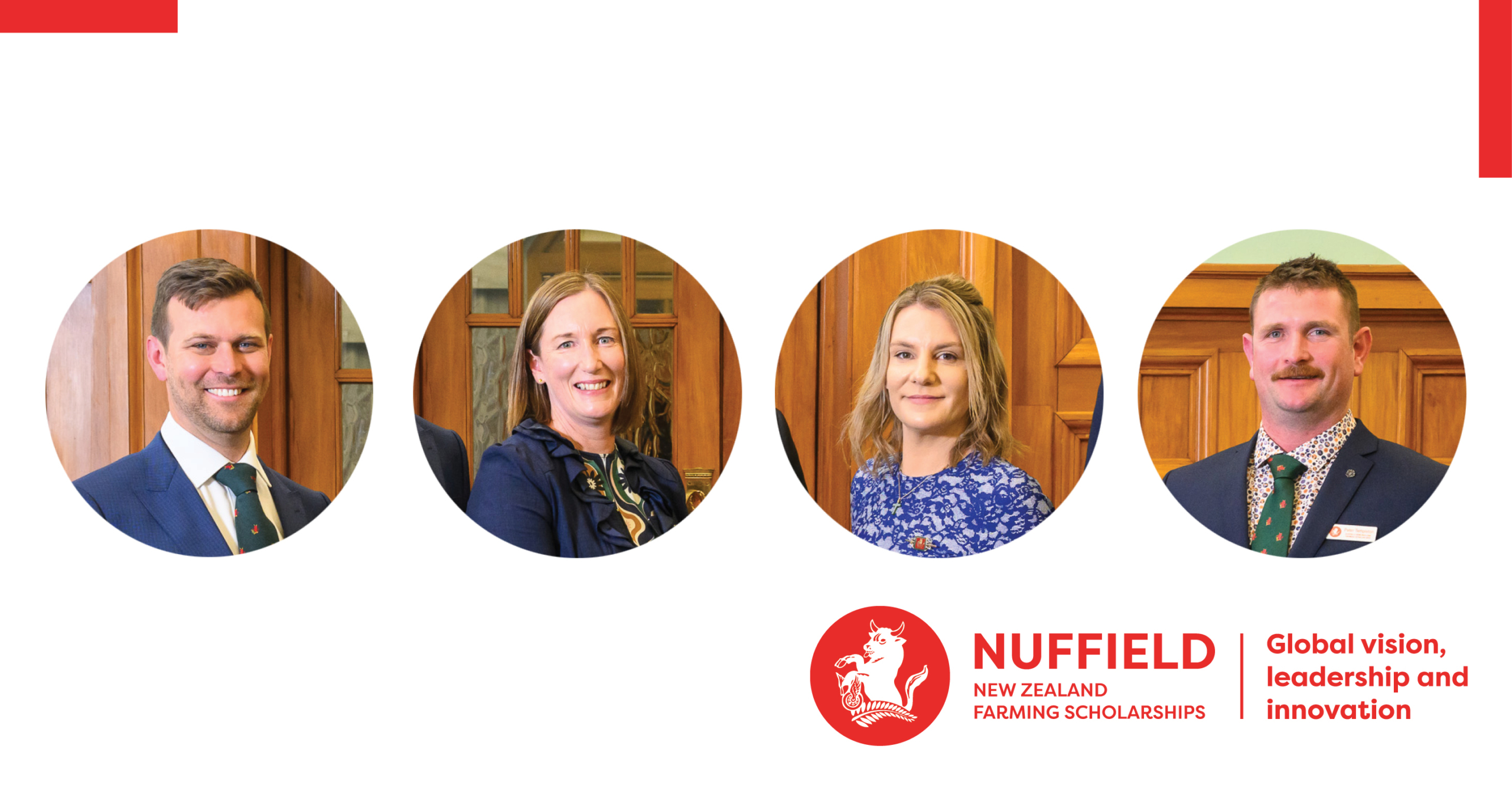
Rural Leaders is pleased to be able to share the 2024 Nuffield Scholars’ Individual Research Reports.

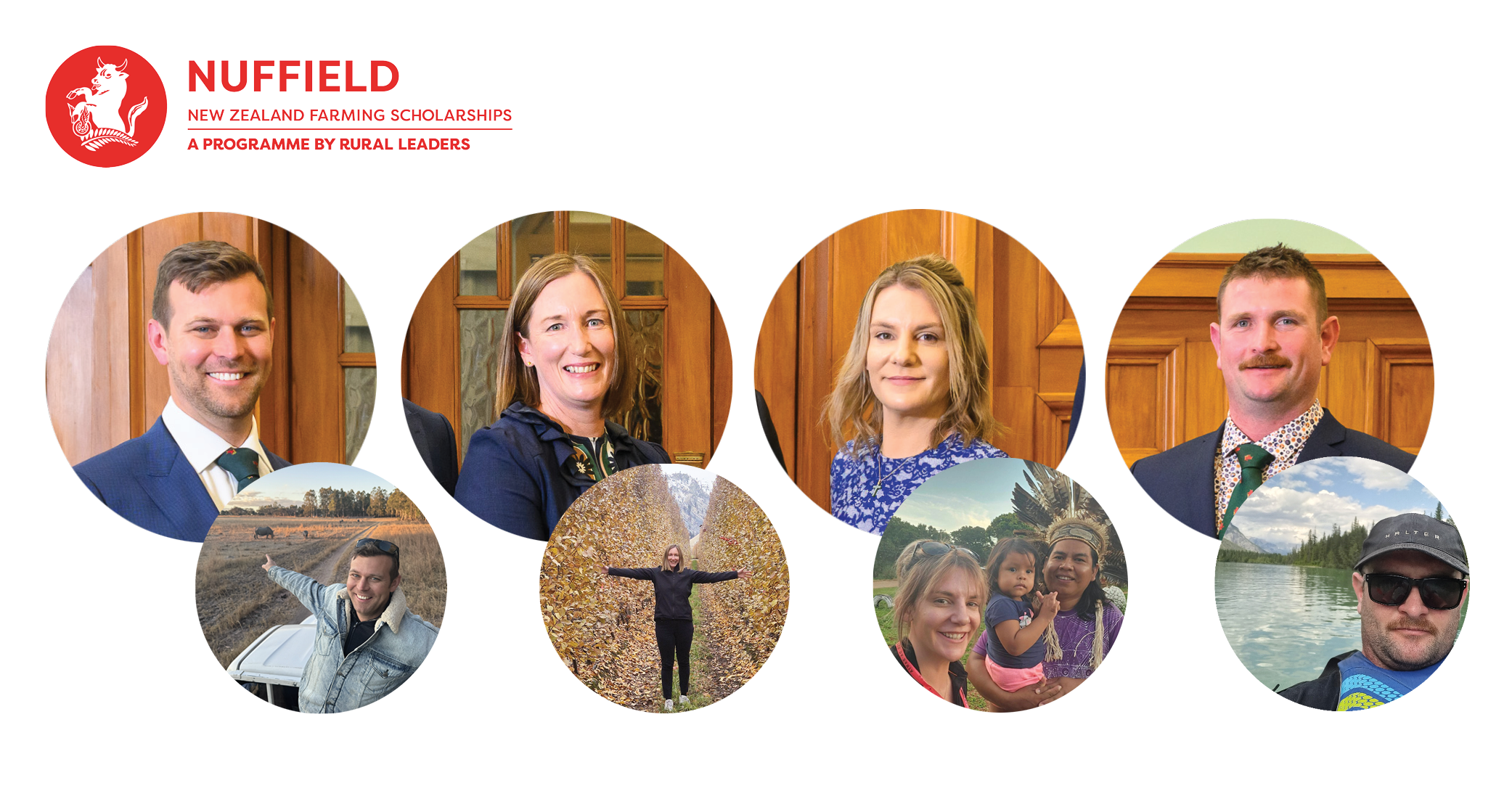
Our four 2024 Scholars have undertaken research on a diverse range of topics, each addressing a topical and significant challenges in Food and Fibre, from sustainable land use to succession, and from the future of farming to genetic technology.

The Nuffield Scholarship is about impact – so, we hope you find these reports inspiring and thought-provoking.

We’d like to acknowledge those of you who have contributed your time and experience to the Scholars, a Nuffield Scholarship is after all, a team effort.

This year we have included a one-page summary of each report. You will find these short report summaries via the buttons below.

Carlos Bagrie – Beyond the farm gate: Rethinking New Zealand’s economic future.

Agriculture and tourism in New Zealand face growth limits, threatening export earnings. With global trade shifting and land constraints increasing, we must rethink NZ’s economic future; exploring high-value industries, supply chain control, and innovation.

It’s time to ask: what comes after agriculture and tourism to sustain long-term prosperity?

Rachel Baker – Coding for Change: Navigating adoption of gene editing in the New Zealand primary sector.

Gene editing in New Zealand’s primary sector offers opportunities to address climate change, sustainability, and productivity. Proposed legislation aims to align regulations with trading partners, balancing innovation with public trust.

Early engagement, investment in innovation, and leadership in regulatory frameworks are essential to enhance competitiveness and drive sector growth.

Jenna Smith – Changing the Bog-Standard: Repeatable solutions for Aotearoa’s Peatlands.

Occupying only 1% of Aotearoa’s land yet holding close to a fifth of the nation’s ecosystem carbon, New Zealand’s peatlands are indispensable but rapidly degrading. This report does not offer a silver bullet, but a new way of looking at what we’ve long called marginal land. It suggests that peatlands, when managed well, can be part of our productivity, our identity, and our climate response—not in spite of their wetness, but because of it.

Peter Templeton – Putting the Success back into Succession.

New Zealand’s farm succession faces challenges due to aging farmers, rising land prices, and financial barriers. The report explores alternative models like share-farming and equity partnerships, emphasising the need for early planning, government support, and industry leadership.

Innovative succession pathways are crucial for sustaining the agricultural sector’s future.

2025 Nuffield New Zealand Farming Scholarships awarded in Parliament.

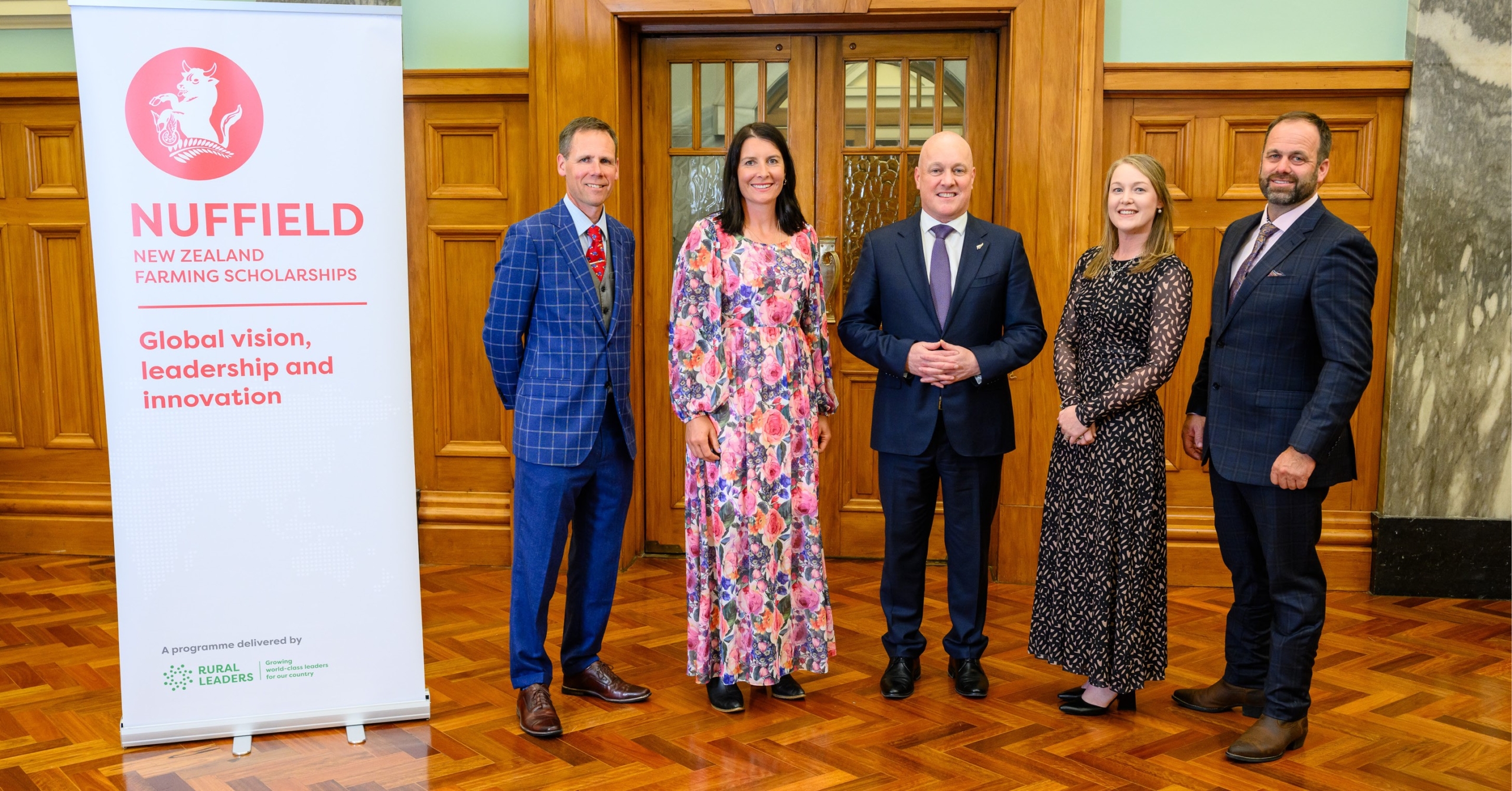
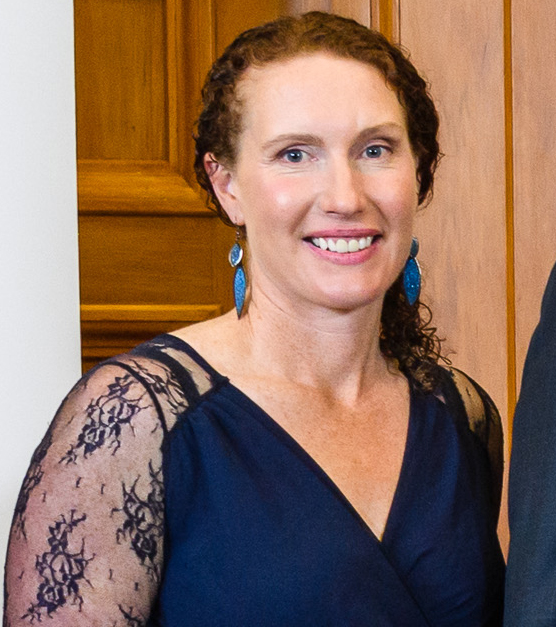
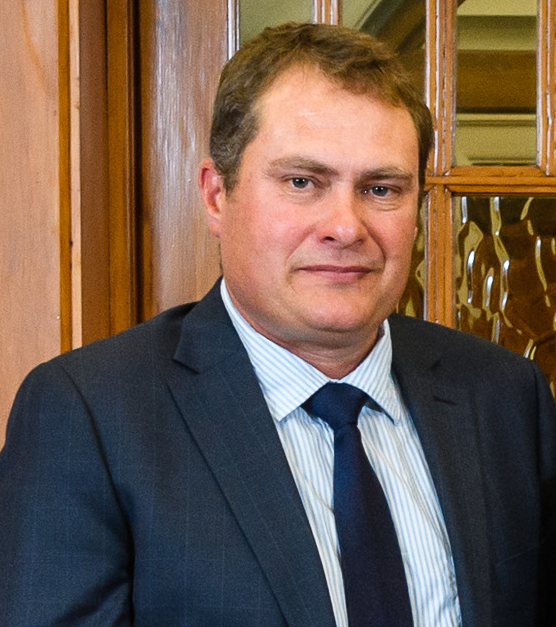
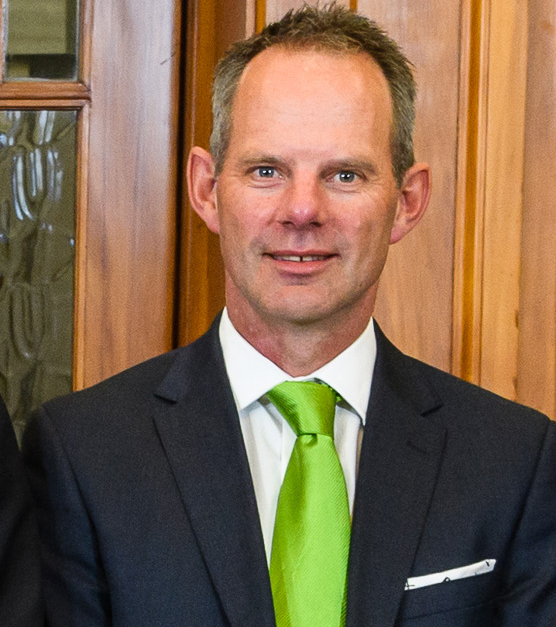
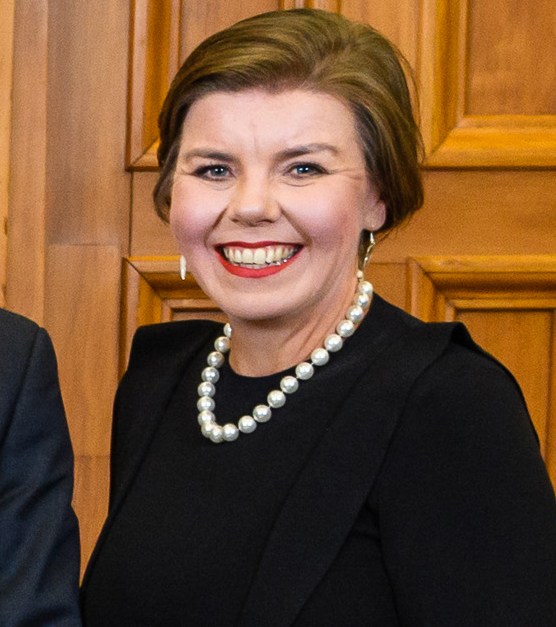
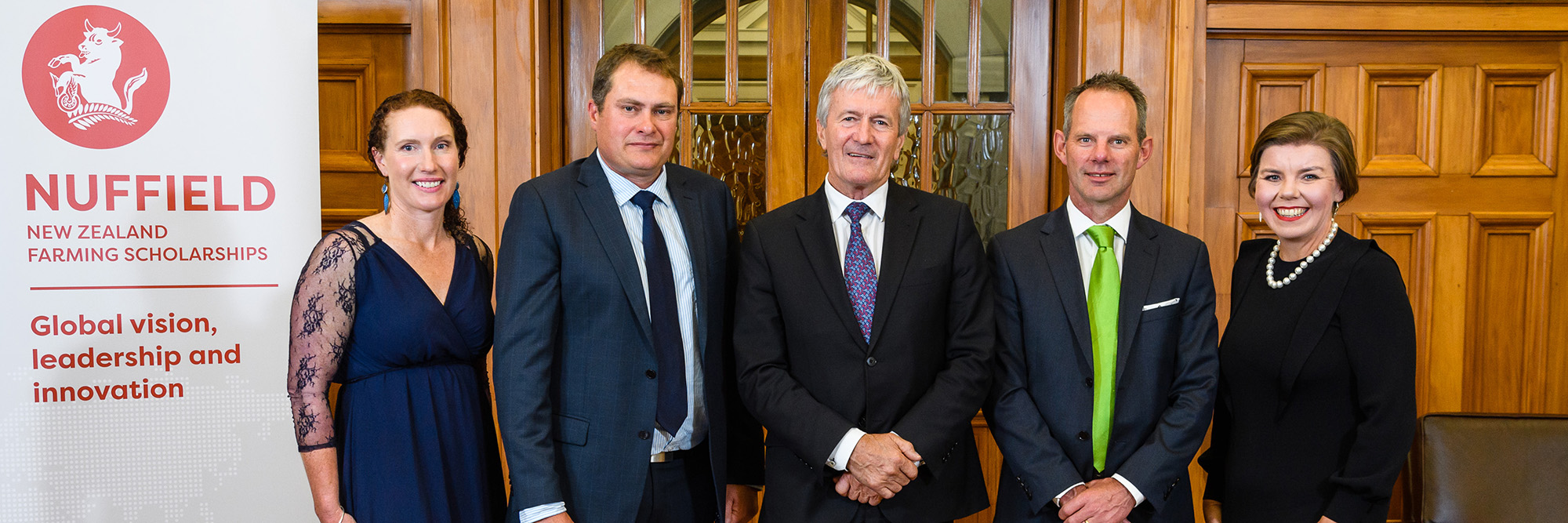
Four Food and Fibre sector leaders were awarded 2025 Nuffield New Zealand Farming Scholarships last night in Wellington by Hon Nicola Grigg.

Rt Hon Christopher Luxon, Prime Minister of New Zealand, was also in attendance.

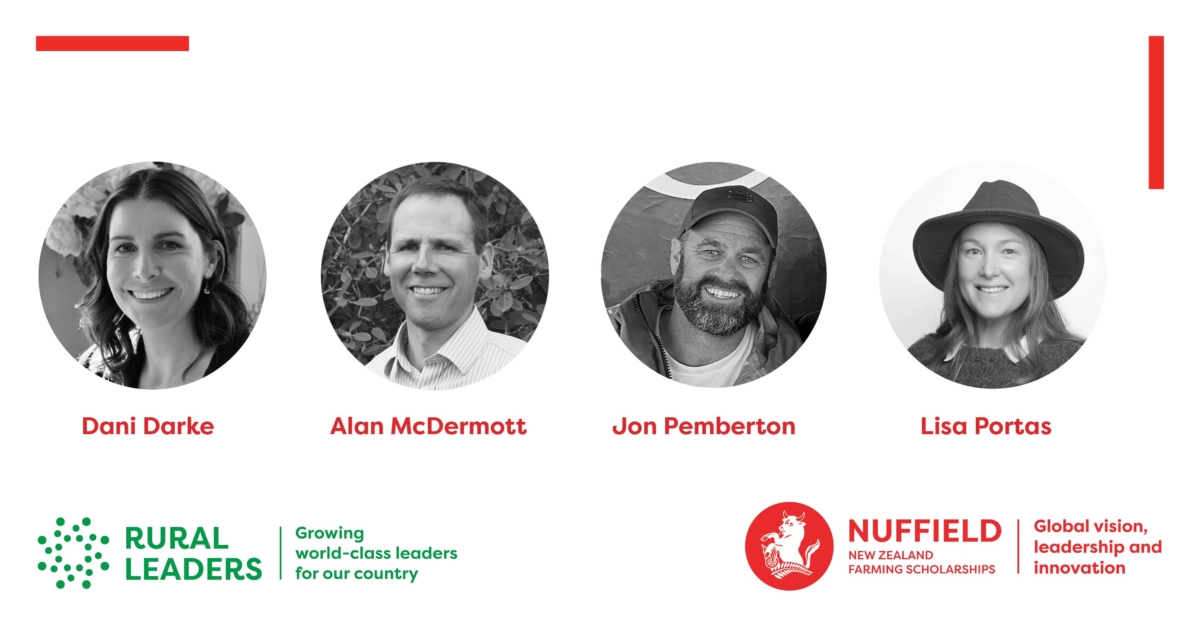
Hon Nicola Grigg announced the new Scholars as:

Dani Darke, King Country. (Farmer, Governance).
Dani, her husband Anthony and their three daughters, farm a 630ha sheep + beef operation in Aria, Waitomo.

“In a great rural community – farms grow many things, one of the most important is growing great humans”, says Dani Darke.

Dani is passionate about promoting sustainable and profitable farm businesses that support vibrant rural communities. “Rural communities make up the heart of New Zealand and I want to be part of ensuring this way of life continues for generations to come”, added Dani Darke.

After earning a degree in Agriculture, Dani embarked on a career in agri-banking and later was Livestock Manager for a meat exporter. An AWDT Escalator graduate, Dani has also held leadership roles including Chair of Beef + Lamb Mid-Northern Farmer Council, and in 2019 Dani served as Associate Director with Ospri. Dani is a Partner at Rural Coach and a Director with Ballance Agri-Nutrients.

Dani is interested in organisations supporting rural people and their communities and enjoys spending time with rural folk, and the ‘doers’ in our communities who make stuff happen. In her downtime, she enjoys tramping, horse riding, boating and skiing.

Alan McDermott, Golden Bay. (Business Owner, Entrepreneur).
Alan is founder of Pearl Pastures, which works with dairy farmers and finishers to produce rose veal from surplus dairy calves.

Pearl Veal is marketed to premier restaurants in New Zealand and internationally.

The business brings together many strands that are core to Alan – sustainability, human and animal wellbeing, and creating delicious food.

Alan is also a partner in AgriFood Strategy, a consultancy working with businesses and the wider sector on significant strategic issues such as sustainability, value chain performance, and establishing premium end-to-end value chains.

Alan led the collaboration that brought together farm assurance for the red meat sector and the development of the sector’s sustainability assurance programme. He recently worked with Headwaters on Lumina lamb, was a director of Red Meat Profit Partnership and has been involved in, and chaired, advisory boards for several other entities.

Alan grew up on a sheep and beef farm in the hills of Hawke’s Bay and studied at Massey University and now thrives in Golden Bay.


Jon Pemberton, Southland. (Farmer, Governance).
Jon, his wife Birgit and their 3 school-aged children, operate two dairy farms either side of Edendale, Southland.

Jon currently holds roles including, Environment Southland Southern Ward Councillor, Ag Proud NZ Chair, National Lamb Day steering group chair and committee member of Three Rivers Catchment and Edendale Aquifer groups.

Jon and his family try to make the most of any spare time they have by getting out and enjoying Southland. That can be doing anything from sea fishing and camping through to hunting and skiing.

Jon was highly motivated to apply for a Nuffield because of the engagement he has had with Nuffield alumni over the last few years. 

“They are often such critical and analytical thinkers – I’ve found this refreshing. The discussions I have had around the big challenges facing the sector that we need to address now and, in the future,”, Said Jon Pemberton.

Lisa Portas, South Wairarapa. (Agri-business).
Lisa is a South Wairarapa, regenerative sheep and beef farmer with her husband Kurt and their two boys. They have called the area home for 16 years.

At Palliser Ridge, Lisa wears many hats, as director, shareholder, and Expansion Manager. Lisa oversees diversification ventures, such as agri-tourism, exports, manufacturing, and managing both B2C and B2B relationships. A key part of her role is the creation and protection of the farm’s brand.

Lisa is passionate about sharing the farm’s natural fibres with the world, and a recent highlight has been securing contracts for their entire 40-tonne wool clip at prices that cover shearing costs.

Lisa is interested in taking a deeper dive into the strong wool space and to explore the international landscape.

Outside Palliser Ridge, Lisa also holds three directorships in tourism and manufacturing and delivers guest lectures on strong wool at Auckland University of Technology.

Congratulations to the recipients of the Nuffield Farming Scholarships for 2025, the 75th Year of Nuffield and Year of the Rural Leader.

The Nuffield Scholarships are funded by Rural Leaders’ Strategic Partners DairyNZ, FMG, Mackenzie Charitable Foundation, AGMARDT, and Programme Partners Beef + Lamb New Zealand, Ministry for Primary Industries, Farmlands, LIC, Rabobank, FAR, HortNZ, and Zespri.

Meet the 2024 Nuffield New Zealand Farming Scholars.

Carlos Bagrie

Carlos Bagrie

Carlos Bagrie has been across multiple ends of food production and the value chain, including primary production, distribution, retail and media.

He recently founded Royalburn Station, a renowned high-country farm that has carved a niche for itself by distributing premium quality food to some of New Zealand’s top-tier restaurants.

Carlos further diversified influence in the food sector when he co-founded My Food Bag. This innovative food distribution company helps answer the ‘what’s for dinner?’ question for tens of thousands of Kiwis every week. During the COVID lockdowns, Carlos played director and videographer, filming TV1’s hit ‘Nadia’s Comfort Kitchen’ on his iPhone.

In 2022, Carlos found himself in front of the cameras on TV3’s ‘Nadia’s Farm’, a TV show that highlighted the intricacies of farm life and food production at scale.

Alongside his wife, Carlos delved into the world of books and media. Together, Carlos and Nadia self-published a series of Number 1 best-selling cookbooks that resonated with home cooks.

Carlos can usually be found on the farm, either in the butchery, on the combine harvester, or moving mobs of sheep across the property. 

“I’m humbled to be selected as a Nuffield Scholar and will be focussing my research on circular farming systems that reduce waste while improving the bottom line.”

For Rachel Baker, the Primary Sector is both a passion and growth enabler. Her path has always involved the people, communities and business of food production.

Rachel’s extensive professional experience includes working as a dairy veterinarian, a dairy farm systems consultant, sharemilker, dry stock farm owner, educator, and more recently, an asset manager for horticulture investment businesses. 

“While being relatively new to horticulture, my role as Portfolio Manager of MyFarm Investments’ Hawke’s Bay apple syndicates, has enabled me to learn, understand and challenge the grower model. I have been involved with development and management of 100ha of Rockit® plantings in Hawke’s Bay and Gisborne.”

Rachel’s current governance experience includes serving as a trustee of the Rockit Apple Growers Trust and directorships of horticulture and commercial property. Rachel is a 2016 Kellogg Scholar, a 2018 NZ Dairy Woman of the Year finalist and past Chair of the NZ Dairy Industry Awards. 

On Rachel’s proposed Nuffield research, she states, “My research topic will explore the impact, challenges and opportunities of existing and proposed global food strategies on food producers, with particular interest in the applications for New Zealand.”

Rachel’s recent focus has been the response and recovery of properties impacted by Cyclone Gabrielle.

Rachel Baker

Jenna Smith

Jenna is the current Chief Executive of Pouarua – a diverse Māori Agribusiness encompassing Dairy, Arable, Beef and Horticulture on the Hauraki Plains.

Jenna serves as a trustee for DWN, on the board of BEL Group and chairs St Francis Catholic School in Thames.

Jenna has extensive corporate agriculture experience across Waikato, Canterbury, Otago and Southland, having previously worked for SOE Pāmu, and syndicated overseas investment farming portfolios. During this time, she has always “kept a gumboot in the grass” through her and her husband’s farming businesses.

Leading Pouarua Farms to be awarded as finalists in the prestigious Ahuwhenua Trophy for excellence in Māori Farming in 2021, Jenna was also named a finalist in the 2021 Zanda McDonald Award which recognises talent and passion for Agriculture across Australia and New Zealand.

“I am looking to study economically and sustainably viable alternate land uses for lowlands and peatlands that are highly susceptible to climatic pressures.”

Passionate about creating environmentally sustainable agribusinesses – Jenna regularly contributes to advisory boards for MfE, MBIE and MPI.

Peter Templeton is a 5th generation dairy farmer based on the south coast of Southland. 32 years old, Peter is passionate about southland dairy farming.

Peter has been dairy farming for 11 seasons, working his way up from 2IC to farm manager before returning to the family farm in 2016. Peter began his ownership journey as a 50/50 sharemilker for five seasons, before leasing the farm for two seasons and finally owning the farm in August 2023.

Peter is interested in focusing on the future of farming, what it is likely to look like on an individual farm basis – in particular on new technologies to implement on farm.

“I am always curious to see other systems and challenging myself to see what I could use in my own environment.”

Peter also states he is excited to see and gain a better understanding of New Zealand’s value chains, understand how they intend to innovate to compete.

Peter Templeton

Peter Templeton

Meet the 2023 Nuffield New Zealand Farming Scholars.

Kerry Worsnop

Kerry Worsnop describes herself as a rural advocate, born and raised on a South Waikato dairy farm, she later ventured into the hills of the East Coast north of Gisborne.

The business was originally shaped by both her partner’s and her own desire to own a farm and their early years were devoted to this pursuit, operating a contracting business and leasing land before purchasing Taheke, 36 km west of Gisborne in 2013.

Inspired by extramural study, the next few years incorporated various roles in the community and employment, building a toolkit based on resource management skills and a passion for interface between policy and the ‘real world’.

This interest led to a three-year term as a Gisborne District Councillor, a role where the issues facing that interface became impossible to ignore. “I want to help solve some of these problems” Kerry says, “A lot of our policy outcomes aren’t great – we must be able to do this better!”

Matt Iremonger, alongside his wife Katy and daughters Alice and Abby, operate diverse pastoral farms on Banks Peninsula and in the Ellesmere district in Canterbury.

These properties include hill country sheep and beef breeding, intensive irrigated finishing and dairy support, along with dairy farms and native and exotic forestry.

Matt studied at Lincoln University graduating with a BCom (Hons) and completed the Rabobank Executive Development Program in 2017.

“I am planning to undertake research into the integration of beef production from the dairy industry to create a high value premium product”, Said Matt.

Matt Iremonger

James Allen

James Allen is CEO of AgFirst, New Zealand’s largest provider of primary sector consultancy services. A key focus of his consultancy work is business planning, farm systems design, environmental management, and agribusiness project work, both nationally and internationally.

James is also the president of the New Zealand Fieldays Society, a Fellow of the New Zealand Institute of Primary Industry Management, and a previous national president of New Zealand Young Farmers. He was a grand finalist in the Young Farmer of the Year Contest in 1999 and again in 2002.

Originally from a sheep and beef farm near Raetihi, James and his wife Kerry now live at Matangi, along with their three sons. Alongside the consultancy business James and Kerry are partners in a variety of farming and non-farming businesses. In his free time James enjoys diving, tramping, skiing and cycling.

“Participating in the Nuffield Programme has been a long-term goal and I’m looking forward to the challenge. My research topic will be focused on re-defining what excellence looks like for the agricultural consultancy sector in the midst of change,  to help keep New Zealand farmers at the leading edge of profitability and sustainability,” Said James.

Kylie Leonard was elected to the Fonterra Cooperative Council in 2020 and serves on the Cooperative culture committee.  She is also on the Taupo District Council, representing the East Rural Ward, a Director of Vetora and is a Trustee of Hillary Outdoors.

Kylie is Chair of the Lake Taupo Protection Joint Committee and the Taupo East Rural Community group. She is also on the Board of Trustees at the school her daughter attends. Kylie is proudly married to Rick and has 3 daughters, Kate, Isla and Eloise.

Previously Kylie received a local hero medal, awarded Dairy Woman Community Leader of the Year and finalist in Dairy Woman of the Year, finalist in the Woman of Influence awards and Emerging Governance leader.

Kylie developed an investment property portfolio which lead to an equity partnership in a mixed farming operation involving both Dairy and beef in the Central Plateau.

“I am passionate about quality food production, our farm, my community and especially my family. I am curious to look behind the farm gate into environmental health, social equity and economic performance to meet the challenges of the future. I don’t know what I don’t know and am very excited about this opportunity,” Said Kylie.

Kylie Leonard

2023 Nuffield New Zealand Scholars Announced

2023 Nuffield New Zealand Scholars Awarded.

Wellington, 8 November 2022

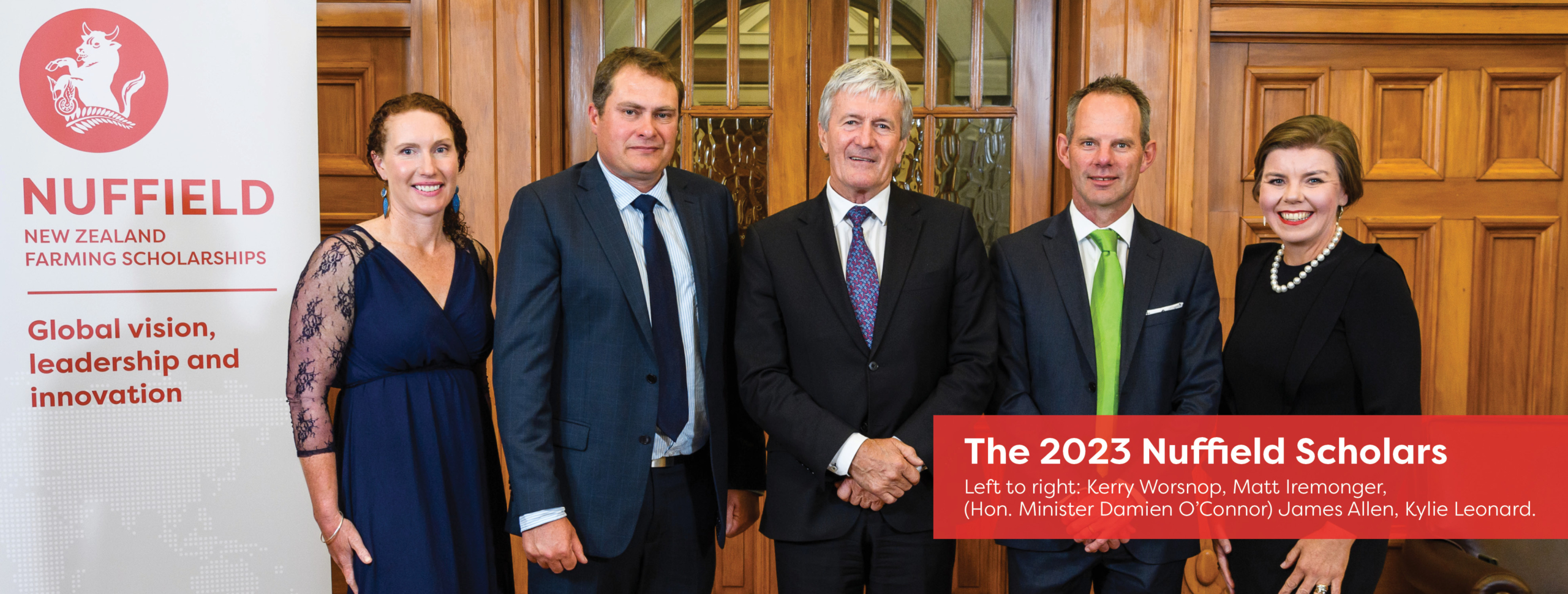
Congratulations to our 2023 Nuffield New Zealand Scholars!

Kerry Worsnop, a Gisborne based Sheep and Beef Farmer, Company Trustee, and Environmental Consultant.

Matt Iremonger, a Sheep and Beef and Dairy Farmer from Banks Peninsula, in Canterbury.

Kylie Leonard, a Taupo based Dairy Farmer, Governance Specialist, and dual Board Chair.

James Allen, a Waikato based Agribusiness Consultant and Managing Director.

Find out more about the 2023 recipients >>

Four emerging Food and Fibre Sector leaders have been awarded 2023 Nuffield New Zealand Farming Scholarships. Each has received their awards from Hon. Minister Damien O’Connor. The Awards Ceremony was held in the Grand Hall at Parliament in Wellington last night. The New Zealand Rural Leadership Trust (Rural Leaders), who administer the Nuffield New Zealand Farming Scholarship, hosted the event.

Strong interest in the Nuffield Farming Scholarship.

This year saw the most applicants for the prestigious Nuffield Farming Scholarship since 2018. To ensure that the new 2023 Scholars can travel and gain international insights to the same level as their predecessors, The Nuffield Trustees increased the value of the Scholarship, in recognition of the increased cost of travel.

Correspondingly this has meant that only four Scholars were selected, making the competition to gain a coveted Scholarship even tougher this year. Each Scholar brings talent, passion, perspective, and a track record of performance. Their job now is to find insights and build foresight to benefit our sector.

“We wish to acknowledge all those who applied. The field of applicants was particularly strong and representative of the regions and industries within our Sector. It is safe to say, there is some real talent in our regions,” Said Chris Parsons, CEO, Rural Leaders.

The collective impact of Nuffield Scholars.

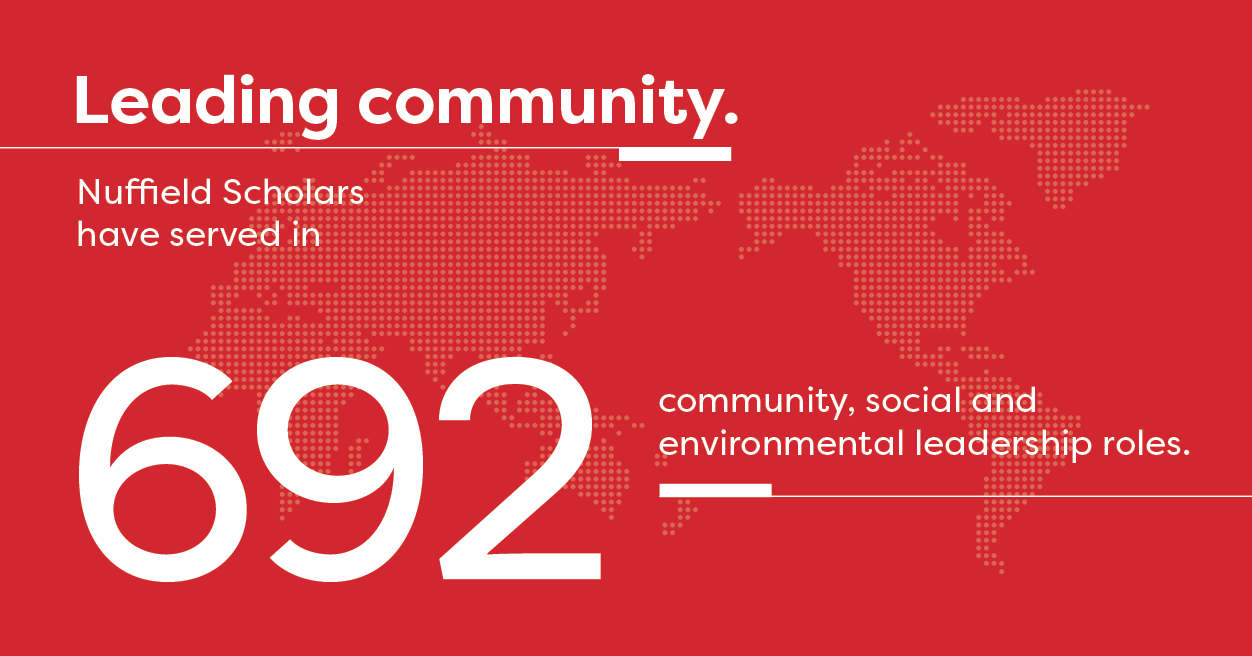
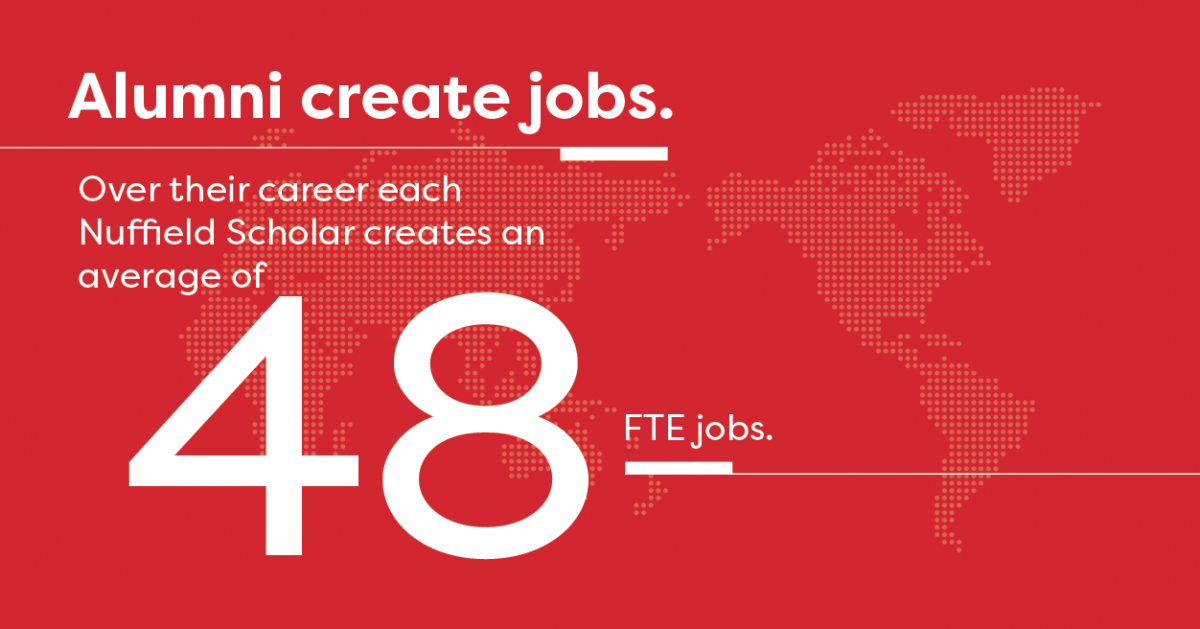
Nuffield Alumni’s collective impact on the Food and Fibre Sector has recently been highlighted by the Mackenzie Study, a Rural Leaders’ collaboration with The Otago University School of Business. The study maps the in-person and sector gains from participation in the Nuffield Programme. Some of the study’s findings include:

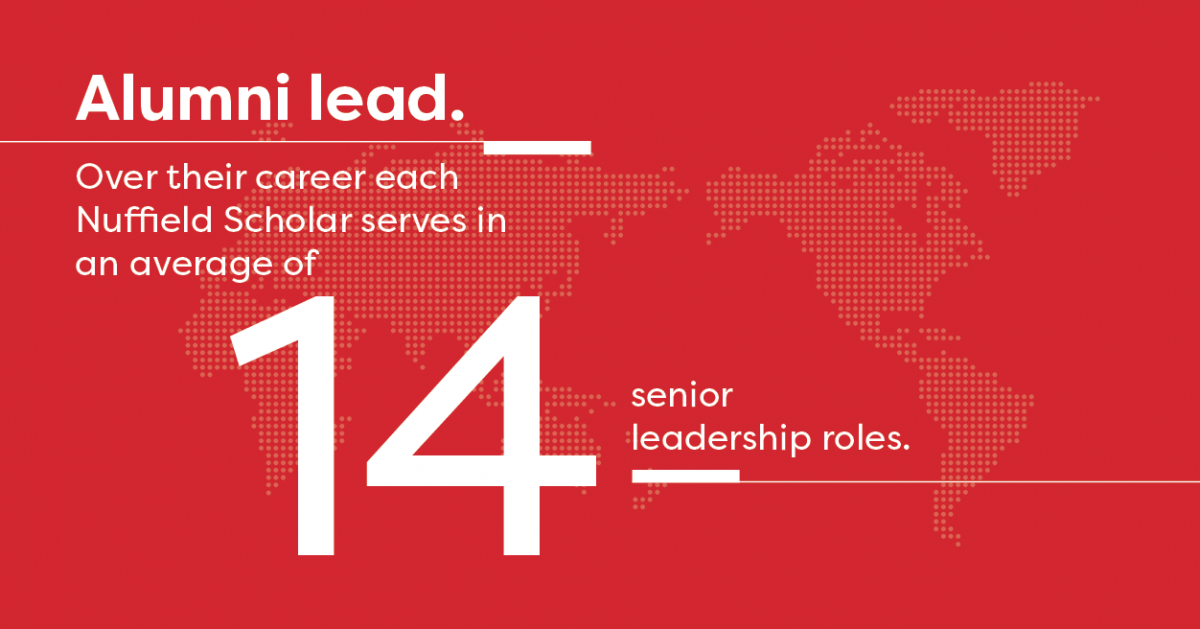
  • Nuffield Scholars hold 14 senior leadership roles over their career.
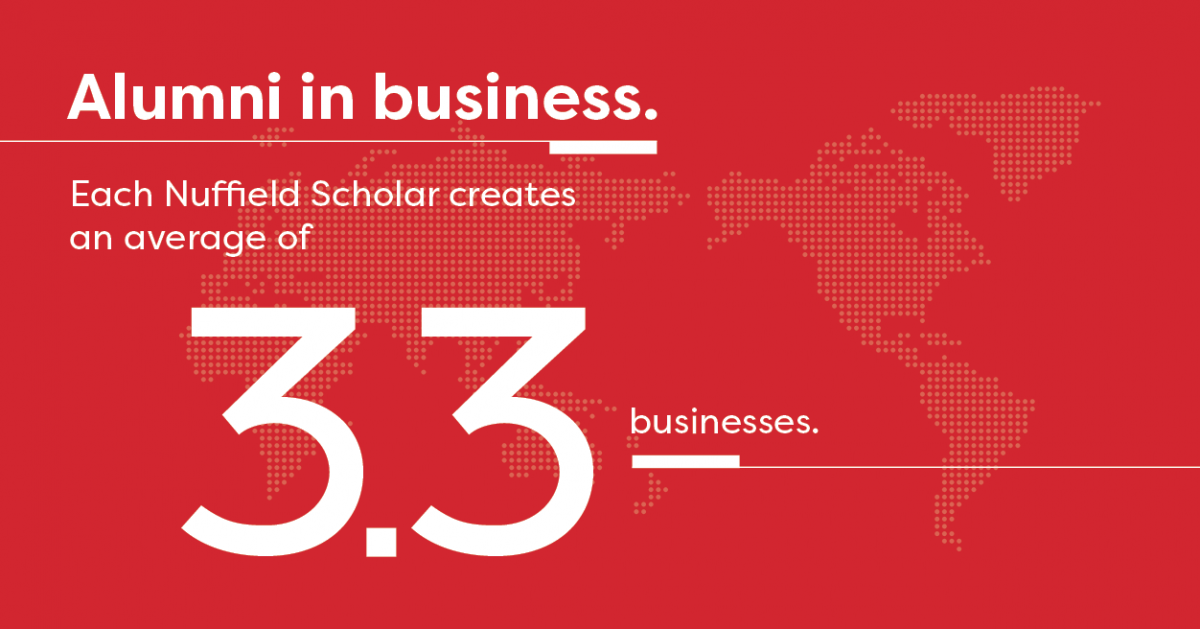
  • Each Scholar has created an average of 3.3 businesses.
  • And each creates an average of 48 FTE roles.

“The contribution and impact New Zealand Nuffield Scholars have made on New Zealand Agriculture, regionally, nationally and globally is significant, and it is a real pleasure to be able to see the opportunity that lies ahead of the 2023 scholars to continue to create impact for the future benefit of New Zealand Agriculture”, Said Kate Scott, Rural Leaders Board Chair.

In addressing the Rural Leaders’ Strategic Partners: AGMARDT, DairyNZ, Beef+LambNZ, Mackenzie Charitable Trust, and FMG, Kate Scott said, “The positive impact on New Zealand Agriculture that is created by New Zealand Nuffield Scholars would not be possible without the generous and ongoing support of our partner organisations, who are an integral part of our mission to create world class leaders for New Zealand.”

Within this context of achievement by Nuffield Alumni, the new 2023 Nuffield Scholars were announced by Minister O’Connor as:

Kerry Worsnop, a Gisborne based Sheep and Beef Farmer, Company Trustee, and Environmental Consultant.

Matt Iremonger, a Sheep and Beef and Dairy Farmer from Banks Peninsula, in Canterbury.

Kylie Leonard, a Taupo based Dairy Farmer, Governance Specialist, and dual Board Chair.

James Allen,
a Waikato based Agribusiness Consultant and Managing Director.

The 2023 Nuffield Scholars’ research topics will cover a range of our biggest food and fibre challenges including: environmental health, social equity and economic performance, integration of beef production from the dairy industry, and fit for purpose rural professionals.

The Nuffield Scholars will bring a valuable global perspective to their research through an intensive travel itinerary of visits, meetings and experiences, designed to lead to a period of transformative personal insight and growth.

The four new Scholars will join the over 180 Nuffield Alumni, awarded scholarships over the last 71 years.

Find out more about the 2023 recipients >>

Hamish Murray: Building stronger on-farm teams by getting out of the way.

Hamish Murray podcast - Building stronger on-farm teams

From Bluff Station to Cambridge University and back.​

This transcript of the podcast was edited for clarity.

Bryan Gibson – Editor of Farmer’s Weekly. 
I’m Bryan Gibson, editor of the Farmer’s Weekly. And this morning I’m talking to Hamish Murray. How’s it going? 

Hamish Murray – 2019 Nuffield Scholar, Bluff Station, Marlborough. 
Good. Thanks, Bryan. And you?

BG: You’re in Marlborough, is that right? 

HM: We are an hour south of Blenheim, 45 minutes north of Kaikoura on the east coast, inland at Kekerengu. 

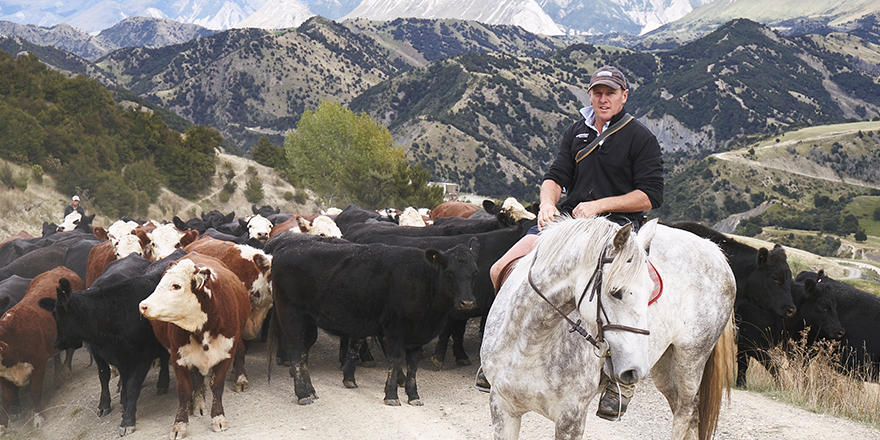
We’re a high-country sheep and beef farm that stretches into the Clarence Valley. The Homestead is about five minutes from the coast and goes all the way into the base of Tapuae-o-Uenuku. It’s about 35 km’s to the back boundary. We run Merino sheep, Hereford Angus cattle, and we have about 800 beehives. 

BG: How have things been going this year for you? 

HM: We’ve had a great season with 300mm of rain through late January, early February. It’s meant our autumn has been incredible, and stock are in good condition. We’re through the bulk of our work now. It’s starting to quiet down for the next five weeks before we look at shearing ewes at the start of August. 

BG: I noticed from your bio you went to Cambridge University? 

HM:  Yeah. I suppose like many farmers at one point, you were told to get out and go and do something other than agriculture. And so, I spent a lot of my former years trying to give myself an opportunity to do anything other than be a farmer.  

I was sitting on a train on the way to a job interview in London, after graduating from Cambridge. It was then that I realised I really wanted to be back in New Zealand chasing stock around and being part of the farming community. I wanted to give our children the opportunity to grow up with the same experiences as we had. 

BG: How was that time in the UK at university for you? Must have been quite eye opening. 

HM: I was fortunate to get the opportunity to study there. I played a good level of sport playing in the varsity match on a couple of occasions while studying economics.

It was an incredible experience. It pushed me mentally as far as I could have been pushed. The expectation to perform and to be part of that was a great challenge. I thoroughly enjoyed it and look back on it fondly. 

Hamish Murray at Bluff high country station

Pushing your limits and personal growth.

BG: And in 2019 you went through the Nuffield Scholarship Programme. 

HM: Again, fortunate to be given the opportunity to do some travel. I felt that when I was in the UK, I was on a student budget. So, I didn’t really get the opportunity to do the travel that I would’ve liked while I was there.

The Nuffield Farming Scholarship gave me the opportunity to look at agriculture in different parts of the world with a whole lot of like-minded people.  

My topic was to look at teams and what made certain businesses successful or workplaces more enjoyable and engaging for staff. 

I had a real challenge about five years after coming home from overseas. We had a significant drought here in Marlborough and North Canterbury, and it pushed me to an emotional breaking point. I’d played top level sport so I knew, physically, how far I could push myself.  

Studying at Cambridge I’d reached that mental breaking point also. My limits had been challenged there. But I’d never had an emotional breaking point like this drought caused. I’m not unique in that. Everybody has these challenges. At that time, I exhausted myself trying to keep our team, our staff, and our family going. 

That was a significant point for me. I became focused on how to better lead myself first. That grew over the next couple of years as we recovered and then grew into how to better lead our teams.   

Hamish Murray at Bluff station

Nuffield study and building better teams.

My focus at the time of the Nuffield was around productive, efficient, and effective teams. What makes some places more engaging and motivating for staff to work in.

Then with Nuffield I was lucky enough to look at businesses all around the world that were held up on those pillars. What made them different, what made them tick, and what might that mean for the future of work in New Zealand – in the ag space, especially. 
 
BG: So can you talk a little bit about who you looked at and what some of the keys to building a successful team might be? 
 
HM: With my Nuffield travel I got to see businesses in the Netherlands healthcare industry that had developed these self-managing teams called Buurtzorg. I spent time in Silicon Valley too, looking at a lot of tech companies.  

Everywhere I went, I was looking at teams and what made them successful. And then coming home, I spent time with the Crusaders looking at what made them different. How have they been able to win multiple championships, seemingly pulling from the same talent pool as the rest of New Zealand.  

BG: And were there some takeaways from that can be applied to the agriculture situation? What sort of changes did you end up making, say, in your own business to overcome the sort of challenges you had with the drought?  

Building self-awareness and self-aware teams.

HM: A lot of what I learned was building on those challenges we had been working through. Self-awareness was a huge one. Building self-awareness together as a team was significant for all these businesses. They found their own individual ways to work together on the soft skills that make teams work well together.  

People don’t leave a job necessarily because they don’t like it. They leave the job because they don’t like the boss or their workmates.  

 “So much of what we focus on is the technical stuff in doing the job, rather than working on working together.” 

How do we best understand the individual attributes that people bring to a team? Little things as simple as how do people like to learn? How do they like to communicate? For example, what do I look like on a good day? What do I look like on a bad day? And how to come up with strategies as a team to overcome those things. 
 
BG: You mentioned the Crusaders and Scott Robertson’s approach to coaching and team culture. He seems to find out, as you say, the best way to do knowledge transfer, depending on that person’s mental makeup. And that’s part of the success, isn’t it? 

HM:  Absolutely. One example for me was the way every business or every super rugby franchise has their values in big print somewhere in their changing room so that everyone sees them. It’s kind of the way that people do it.

The real gold comes from when you spend time to work out with people what those values look, sound, and feel like.  

Until you dig deeper with your individuals. As the people in your team change, how does that look, sound, and feel for those particular people at that time? That makes these things come alive and become more of an ingrained part of your culture. 

BG: It seems that the world we live in now seems to be more challenging for both individuals and workplaces. So, this kind of approach and strategy, if you are running a team, is only going to become more important.

The Nuffield Scholarship and creating the space to grow.

HM: Wellbeing is important but being able to bring your whole self to work is even more so. As you get away from the hierarchy of things, people want to be able to turn up. They don’t want to be a different person at work than at home.  

To truly understand people, we’ve got to listen and ask better questions, and get to the bottom of truly understanding them. Then we can build a safety network of people around them, allowing them to flourish in our workplaces. 

BG: So you obviously enjoyed the experience of going through the Nuffield Programme? 

HM: I couldn’t recommend it enough. One of the greatest challenges for me, and one of the biggest learnings, was being able to set our business up with our team to create the opportunity for staff to step into that space. Then I could be away for nearly five months.

They really grew into that opportunity, by me getting out of their way, yet still giving them enough support.  

I think that’s been one of the greatest growth opportunities for me – is create the space for our team to step into. They’ve thrived in that opportunity. 

We haven’t gone back to where we were before. That has been significant and enjoyable for me. And when I look back on the opportunity, the travel, the study, and the chance to look around and gain many ideas from many businesses around the world – it was fantastic.  

“When I think back on what the greatest significance has been, it would be the growth in our team and in our business, simply because of being able to get my own ego out of the way.” 

BG:  Among all of what we’ve been speaking about, there was the earthquake down your way, too. That must have been a massive challenge. 

HM: It was, yes. We had four of six houses rebuilt. I was away, so my wife and three kids were living in a cottage while our house was being rebuilt. Jess managed the rebuild, looked after three kids who were just five, three, and one – while I was traveling around the world with Nuffield.

Yes, there were lots of challenges in that – but lots of growth for all of us too. 

BG: Teamwork with a capital ‘T’ there. Good grief. 

HM: Yeah. Very lucky, very grateful. And it’s nice to be able to repay some of the faith that people have put in me. 

BG: Thanks for listening to Ideas That Grow, a Rural Leaders podcast. This podcast was presented by Farmers Weekly.

For more information on Rural Leaders, the Nuffield New Zealand Farming Scholarships, please visit ruralleaders.co.nz/nuffield.

Connect with Hamish on LinkedIn.

Mel Poulton: Insights from a Special Agricultural Trade Envoy.

Mel Poulton

Mel Poulton: Insights from a Special Agricultural Trade Envoy.

2014 Nuffield Scholar Mel Poulton is someone with a unique perspective. Well, two really. As both a food producing farmer and New Zealand’s Special Agricultural Trade Envoy, we asked Mel to share her perspectives on trade, Nuffield, Brexit, and an industry grappling with significant global challenges.

Question: What do you do in your various roles?

Mel Poulton: In and on my farm business, I’m on both sides of the farm gate. I do anything from stockwork to bulldozing, to making all the decisions required to run a business. 

In the Special Agricultural Trade Envoy (SATE) role, following my appointment, border closures and a vastly different global operating context, have meant changing how the role is delivered. It’s a two-pronged approach with an international and a domestic focus, mixed with face to face and virtual engagement.  

I’ve been more purposeful working with the world here in NZ, by way of direct engagement with the International Diplomatic Corps here (they are the eyes, ears, and influencers of their nations in NZ). This engagement includes taking Ambassadors on x-sector farm tours, hosting Diplomatic Corps meetings, and meeting with them one-to-one, or with industry groups. I am also working internationally on virtual platforms, speaking on panels, webinars, or virtual meetings with farmers, and private and public sector organisations.  

Covid has provided opportunity for me to invest more time and effort with NZ sectors (all food and fibre – except Forestry and Fisheries). My background is the sheep and beef sector, but I put a high priority on building a greater understanding of the other sectors I represent as well. I use these insights when engaging with each of the sectors, government, and the world.  

Helping NZ food and fibre producers broaden their understanding of the global and domestic context is a priority too. Both behind and beyond our farm gates.  

Q: What changes have you seen since being in your SATE role?

MP: Quite a few things.

Trade negotiations. 
Trade negotiations, particularly the New Zealand-UK Free Trade Agreement (FTA), have been the fastest progressed trade negotiations in New Zealand history to get to Agreement in Principle – so I’ve been told. Much of this negotiation has been done virtually, also a first. This will change the way trade negotiations occur in the future. A lot less travel overall.

Farm subsidies. 
Direct and indirect farm subsidies in large economies, such as the USA, have increased exponentially. People may argue they have already exceeded agreed WTO thresholds.

Growing distrust. 
There’s a growing distrust of governments in the democratic world. Governments need to work on their social licence to operate. Social licence is not just a thing for food producers.

Supply chain vulnerability. 
Just In Time (JIT) delivery has been exposed for its supply chain vulnerability in this global pandemic. Economies and businesses will now be building more capacity in their value chain system. This will mean a more conservative approach to exports and imports, to withstand the volatility, uncertainty, complexity, and ambiguity (VUCA) in the world of trade, market access and freight.

Nevertheless, nothing beats high trust and long-term government to government, business to business, and people to people relationships across the world. New Zealand has optimised these relationships throughout the pandemic to utilise market diversity for navigating trade, market, and supply chain disruption.

For example, Covid19 related trade agreements to secure medical imports and food exports. As well as digital certification for export products, through to relationships that our major exporters have with freight companies, importers, and international customers. The last 18 months haven’t been easy, but these strong relationships, and diversity of markets, have shown their worth to New Zealand.

Food security. 
Economies are moving from thinking about food security, to actively putting mechanisms in place to secure their food supply in a pandemic disrupted system, e.g., green lanes in Europe. There’s also a slow nuanced shift from food security to nutritional security taking place.

Regulatory pressure. 
Farmers and food producers in New Zealand and around the world are wrestling with the multi-layered challenges of regulatory pressure (particularly on the environmental and climate change fronts), as well as market volatility, and Covid 19 induced uncertainty. This is increasing farm input costs and diminishing the tools available for farmers to use to produce food.

As an example, farmers in Europe have real fears about their ability to produce the volume of food required to stay viable and maintain food security. The new farm to fork strategy in the EU is deliberately shifting organic food production up to 25%, with rules to reduce synthetic fertiliser by 50%. Glyphosate use is under threat too. In some places farmers can’t use it (I note in New Zealand, the EPA is currently undertaking a review of Glyphosate use). There’s major transformational change happening in Europe.

The rush of multi-layered change gives a sense of exponential pressure. Farmers all over the world are feeling exasperated, frustrated, misunderstood and under siege. All the same, if there is anywhere in the world I would rather be farming right now, it is here in New Zealand.

We’ve navigated major challenges in the past, and when farmers look at the change they’ve implemented on their farms over the course of their careers, or in the intergenerational businesses they are running, we can take confidence in the fact we are already change agents.

A uniquely positioned New Zealand. 
From a New Zealand food producer’s perspective, farmers here are uniquely positioned. Without subsidies, we aren’t dancing to someone else’s tune in quite the same ways as farmers receiving subsidies elsewhere. There are two sides to this. On one hand we’re not being bailed out at the next threat, but we also get to take full responsibility to master the destiny of our businesses. So, we have an ability to create workable solutions in a way that keeps our businesses competitive globally.

With an innovative, integrated systems approach, we can create solutions to challenges like reducing our global warming impact, improving native biodiversity and water quality, while producing high quality, safe, nutritious food – delivered with integrity.

In New Zealand we have an industry ecosystem focussed on helping farmers create and implement solutions. Our research centres and academic institutions, both provide science and knowledge, and help support farmers crack real challenges. There are the easily accessible service providers, and the folk in Government ministries – who are in the teams working hard on trade negotiation to ensure the best possible outcomes for access to markets, and on removal of tariffs and non-tariff barriers to create a level playing field for New Zealand. Let’s keep it that way.

This ecosystem enabling success is our major competitive advantage in the world. We’ve really got to leverage this and remember we’re all on the same team.

We must not be paralysed by fear, but instead celebrate what we’ve already achieved throughout our farming careers and take confidence that we can use our whole systems thinking to improve what we do for our natural resources, our people, businesses, and our nation.

Q: What links between International Trade and International Policy have you seen, with direct and indirect implications behind your farm gate?

MP: Let’s summarise how it works first. There are recognised global challenges. Then international forums are established to address these challenges, leading to international commitments made by member states (different nations).  

Examples of this include United Nations Sustainable Development Goals (SDG) and the Paris Accord on Climate Change. Some international commitments are legally non-binding. But where it applies to the WTO (World Trade Organisation) they are often legally binding.  

Once those international commitments are made, each economy, member state, or nation must determine its own policy and regulation to deliver on its commitments. That gets shaped up (with some consultation in the process) and is rolled out by the government of the day, and folks like us everyday people have to make it work on the ground. The Government then reports back to those international forums, or institutions, on what our progress has been against the commitments the Government made. COP26 is an example of this. 

Given New Zealand’s economy is so internationally exposed and dependent, we need to be at the international table to maintain influence.  

But to have influence we need to have integrity and demonstrate action. So, these international commitments have been drivers for shaping NZ Government policy on Sustainability and Climate Change. Examples here are the New Zealand freshwater regulations and climate change targets. Both resulted in changes on my farm, and on farms all over New Zealand, which is increasing costs and could reduce revenue for some.  

If we do it right, there could also be opportunity to reduce costs and increase profitability. It will be different for every business. The bottom line is that financially there’ll be change, so we need to reconfigure the financials for a new shape to our businesses. Easier for some than others, and not all will be the same. 

The environmental, social, and economic outcomes are significant across NZ, and underestimated. In some cases, we might secure a market premium for this work, though there is no guarantee what we’re doing delivers a premium to food producers in New Zealand for all products in all markets. I have more confidence this work will enable us to obtain and maintain market access to customers.  

This is where the work of our trade negotiators, ensuring a level playing field in market, is so critical for ensuring the changes we’re making here in NZ don’t make us uncompetitive on the international market. I’ve seen their tireless, relentless work, day, and night, to get the best possible outcomes for New Zealand. Many of these negotiators are the hidden superstars of our food and fibre ecosystem.  

What is going on in New Zealand around environment and climate change is often a focus of interest from others in my international engagements. I talk about what these regulations and targets mean for me, and what I am investing in to address the challenges in my farm business, alongside promoting what other farmers from the different sectors are doing in New Zealand. I also give a clear message that much of this cannot be done quickly when taking a whole systems approach. Effective change takes time. Farmers the world over get this.

Q: How do you think Brexit will play out for New Zealand trade? The obvious and not so obvious.

MP: The choice of the UK people and UK parliament to pursue Brexit is forging transformational change for the UK food and fibre sector. The transition period will take 15 to 20, even 30 years to find a new equilibrium. Like the 30 years it took New Zealand to find equilibrium when agriculture subsidies were removed here.  
 
This change requires a culture shift in thinking about UK farm business structures, their subsidy system, domestic policies, and rebalancing their trade and export portfolio beyond the common market, to a global market. Add major geostrategic inflection points in trade and security, affecting us all, and you have a UK trying to position itself as a global strategic leader.

Its focus in the Asia-Pacific region, particularly regarding the FTA’s it is currently negotiating with Australia and New Zealand, along with its formal request to join the Comprehensive and Progressive Trans-Pacific Partnership (CPTPP), all highlight the trade and security opportunities and challenges it perceives.  
 
So, building more structure into the relationships of allies like New Zealand and Australia by way of FTA’s is an important part of their process to find their new place in the world. This is providing new trade opportunities for New Zealand, subject to the NZ-UK FTA and their accession to the CPTPP. 
 
In the future it may create more competition in our export markets too. It will also create opportunities for more collaboration on the global stage, especially where we align with the values and perspectives that matter to both economies.

Q: What does New Zealand need to do more, and less of, now and in the future?

MP: Because our food and fibre sector is orientated to international markets, we need to continue to pursue being the best we can be. This means achieving optimal standards, positioning ourselves to have the best integrity, facts, processes, and story for all the concerns that governments, markets, customers, and consumers may direct at us.  

Whether these be from the position of protectionism or not, we still have to give ourselves the best chance of capturing opportunity. So, concerns about animal welfare, food safety, or environmental stewardship, e.g., water, soil, biodiversity, chemical and fertiliser usage, climate change, labour, the list goes on. These are the things we need to keep improving to position ourselves to open as many doors as possible, and to keep flexibility, adaptability, agility, and economic viability open to us.  

We have already demonstrated plasticity through this pandemic, and we need to fully embrace a plasticity approach in our lives, our businesses, and how we engage with the world.  

We need to be able to maintain our essence and values, while changing and reshaping the way we live, do business, trade, and collaborate with others, as we all grapple with significant global challenges.     

Q: How has doing a Nuffield Scholarship helped you?

MP:   The Nuffield Scholarship has been an important part of my personal and professional development. It’s been a stepping-stone for doing what I do now, on and off farm. The international networks, the doors of opportunity opened, the domestic and international insights as well as the ‘aha’ moments. These all contribute to my thinking, conversations, and ideas on the farm and in the world of trade.  

That said, and without taking away from Nuffield, the older I get and the more I learn, it seems the more questions I have and the more I need to learn. 
I’d like to encourage all readers to keep that hunger to learn, take some confidence from the change we’ve already made on our farms, in our businesses and our whole industry with our systems thinking.  

Let’s keep doing what we do best – producing top quality food and fibre to the best of our abilities.  

Optimising all we do with high standards, care and integrity for our environment and natural resources, our people, communities, and for the economic viability of our businesses and nation. 

Balanced with humility, we need to be able to hold our heads high and have pride in who we are and what we do. Keep being the best you can be. 

Download report
Read Mel Poulton 2014 Nuffield report “Capturing value.”

2022 Nuffield New Zealand Farming Scholarships awarded.

2022 Nuffield Farming Scholars

2022 Nuffield New Zealand Farming Scholarships awarded.

Three emerging food and fibre sector leaders have been awarded 2022 Nuffield New Zealand Farming Scholarships. Each has received a personal letter of congratulations from Hon. Damien O’Connor, Minister of Agriculture, Minister for Trade and Export Growth, Biosecurity, Land Information, and Rural Communities.

The New Zealand Rural Leadership Trust (NZRLT) is proud to announce the 2022 Nuffield New Zealand Farming Scholarship recipients. The Scholars are:

Parmindar Singh, a Waikato based Dairy Farm Manager, Company Director, and a recent master’s graduate. 

Anthony Taueki, a horticulturalist from the Hawke’s Bay, leads horticulture courses at Fruition, New Zealand Apples and Pears, Tatau Tatau o te Wairoa, and many more.
Lucie Douma, leads a new team at the Ministry for Primary Industries (MPI) looking at disruptions to domestic food and fibre supply chains, and primary sector COVID recovery.

Chris Parsons, NZRLT CEO said, “This group comes from the most diverse range of backgrounds we have seen in recent times. Each Scholar brings talent, passion, perspective, and a track record of performance. Their job now is to find insights and foresight to benefit our sector.

“We wish to acknowledge all those who applied. It is safe to say, there is some real talent in our regions. Selecting three Scholars this year has given our Trustees and the Industry National Advisory Committee the opportunity to fund the start-up of an exciting new programme, the Value Chain Innovation Programme. The intention will be to return to selecting five Scholars again next year”, said Parsons.

Covid 19 restrictions mean this year’s scholarship recipients’ formal awards ceremony at Parliament, will be delayed until February 2022, when Minister O’Connor will award the scholarships in person.

2022 Scholars will follow last year’s travel approach, contingent on the local and global pandemic travel situation. This lets scholars defer the international travel component of the programme until border restrictions permit.

Kate Scott, NZRLT Chair, said, “As part of their Nuffield journey, the three 2022 Scholars will also join the Value Chain Innovation Programme to gain a deeper understanding of the challenges and opportunities in front of our sector, before they venture abroad.

“The Scholarship will offer new opportunities and experiences through an immersive programme and will help to shape future world-class leaders for the New Zealand food and fibre sector” said Scott.

Their research topics are likely to cover a range of our biggest food and fibre challenges including, building resilience in our value chains, data interoperability, emerging market opportunities for trade in dairy, and finding sustainable pathways into the primary industries for rangatahi.

The three new Scholars will join more than 170 Nuffield Alumni awarded scholarships over the last 71 years.

Meet our 2022 Nuffield New Zealand Farming Scholars.

Lucie Douma, 2022 Nuffield New Zealand Scholar

Lucie Douma 

Agri-professional, Livestock
Wellington

Lucie is of Dutch descent and is based in Wellington. She currently leads a new team at the Ministry for Primary Industries (MPI) looking at disruptions to the domestic food and fibre supply chains, and primary sector COVID recovery.

Lucie has a Master of Science degree from Oxford University, where she studied human-wildlife conflict. Her initial research topics of interest are data interoperability or building resilience within the value chain.

Lisa Rogers, NZRLT Programme Manager, commented, “Lucie is a great example of the policy talent we have coming through in our sector. She is greatly invested in the future of agriculture in New Zealand.”

Parmindar Singh- 2022 Nuffield New Zealand Scholar

Parmindar Singh

Dairy farmer, Company Director
Waikato

Parmindar is a fourth generation New Zealand dairy farmer of Indian descent. A company director and independent consultant, she is near completion of her master’s degree at Waikato University.

Parmindar’s research topic of interest is emerging market opportunities for trade in dairy. On her proposed research Parmindar says, “As a proud, intergenerational dairy farmer, my goal is to identify the shift that is occurring globally and identify future trade and market opportunities for New Zealand farmers.”

On Parmindar’s selection Lisa Rogers noted, “Parmindar is bright and fearless, with a lifetime of community involvement and entrepreneurship in the Agri-sector. Nuffield is lucky to have her as a Scholar.”

Anthony Taueki, 2022 Nuffield New Zealand Scholar

Anthony Taueki

Horticulturalist, Kaiako,
Hawke’s Bay

A horticulturalist from the Hawke’s Bay, Anthony is of Ngati Kahungunu descent. He leads, organises, and conducts horticulture courses and training programmes with Fruition Horticulture, New Zealand Apples and Pears, Tatau Tatau o te Wairoa, Ministry of Social Development and Ngati Kahungunu Inc.

Passionate about helping rangatahi find sustainable pathways into primary industries, Anthony’s research topic of interest is growing opportunities from the roots up.

Of Anthony’s selection Lisa Rogers said, “Anthony is a natural leader who is highly collaborative. He has integrity, passion, and a strong desire to influence in New Zealand’s Agri-sector.”

“I look forward to working with all three of our Scholars over their scholarship journey”, Lisa Rogers said.

About Nuffield New Zealand Farming Scholarships.

Nuffield Farming Scholarships have been offered to farmers, growers, fishers, and foresters since 1950. The scholarships were established in the United Kingdom by Lord Nuffield for farmers to explore best agricultural practice and facilitate innovation through sharing knowledge and ideas in food and fibre globally.

The scholarships are among the most respected awards in the food and fibre sector. They offer a life-changing opportunity for travel, study of the latest developments and an introduction to leaders and decision-makers around the world, who would not normally be accessible.

With a network of more than 1,600 alumni internationally, the programme continues to build New Zealand’s rural leadership capability and the food and fibre sector’s profile internationally.

For more information about Nuffield go to https://ruralleaders.co.nz/nuffield

For more information, please contact:

Matt Hampton
Marketing and Communications Manager
Rural Leaders
Ph. 0274 171 065
E: matthampton@ruralleaders.co.nz

The Mackenzie Study – a view of leadership

The Mackenzie Study – a view of leadership

The Otago Business School and the Department of Economics recently conducted research on behalf of The Mackenzie Charitable Foundation and The New Zealand Rural Leadership Trust.

‘The Mackenzie Study’ revealed remarkable results on the personal gains in entrepreneurial skills attributable to participation in the Kellogg and Nuffield Programmes. It is Nuffield Scholars’ broad and consistent level of achievement over time, that resonates most.

Preliminary findings are a compelling case for anyone considering applying for a 2022 Nuffield Scholarship, or looking to develop their leadership ability through the Kellogg Rural Leadership Programme.

A comprehensive survey of Nuffield Scholarship Alumni was conducted in June this year, with invitations sent to all 135 living alumni.

The study had an unusually high participation rate of over 50%, especially given the flooding in Canterbury.

We’ll be presenting more results in due course, including comparisons between alumni and current cohorts. For now, here are just some of the findings demonstrating the professional accomplishments of Nuffield Scholarship Alumni.

Each result is a strong call to potential applicants for the 2022 Nuffield Scholarships, to apply before midnight this Sunday, August 15.