2026 Nuffield NZ Farming Scholarship. Apply by 17 August 2025. Read More...

Apply for 2026 Nuffield NZ Farming Scholarship by 17 August 2025. More details...

Sustainable Impact Investing into New Zealand’s Horticultural Sector: Is there an Opportunity and Can We Capitalise on It?

Executive Summary

The global perspective on investment is changing from traditional financial metrics to the relatively recent idea of “impact investing”. This is where investments are made with the objectives of creating a positive impact on environmental and social matters as well as receiving financial returns. The growth in this movement has raised questions on whether there is potential within New Zealand’s horticultural industry to market its perceived sustainability and therefore access this pool of capital. With this theory in mind, this report looks to quantify the sustainability of the sector as well as analysing the ability of the investment sector in New Zealand to take advantage of impact investing theory.

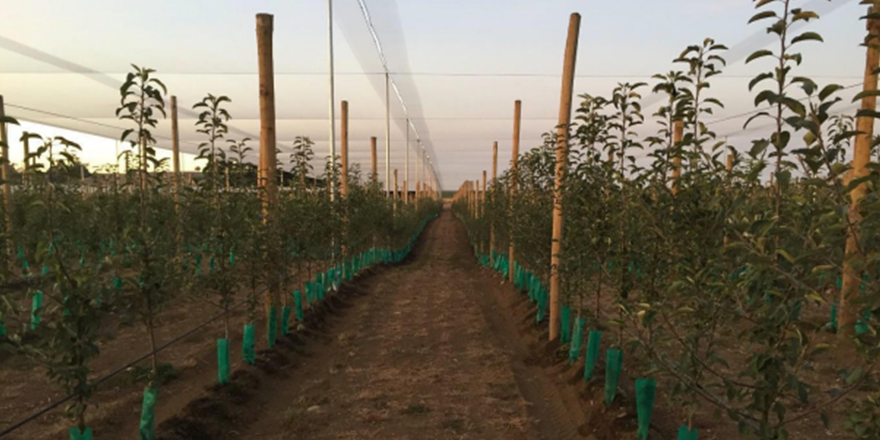
To achieve this aim, this study uses an analytical framework to measure the carbon footprint of orchards and vineyards as a proxy for environmental sustainability. The model uses a case study of six different orchards and vineyards, owned by Craigmore Sustainables, to get an understanding of the variability within the sector. In addition to the carbon footprint modelling, four informal interviews of leading New Zealand primary industry investment managers and large-scale corporate farmers and foresters were performed to get an understanding of the extent to which the primary industry and its investors are concerned and report on sustainability.

Using the purpose-built carbon model, the producing orchards and vineyards were shown to have a net positive impact on the environment through large sequestration by the plants and compost. The two developing apple and kiwifruit orchards were shown to have comparatively high net emissions in their early years. It was shown that there is significant variation in the sequestration potential of different crop types (apples have the greatest potential sequestration per ha). In addition, the impact of organics was tested across the kiwifruit orchards with organic management producing less emissions overall than a conventional orchard.

Across the multiple interviews and literature reviewed, it was shown that there is significant variation in the positioning of investment funds and corporate farmers on the idea of impact investing. In general, foreign, and younger investors appeared to be further advanced in the understanding of impact investment and its opportunities. However, for the New Zealand market to fully appreciate and take advantage of impact investment opportunities that will arise in the primary industry space, there needs to be changes to the consistency and transparency of sustainability reporting and fund raising.

Although this study provides a baseline understanding of the potential sustainability of the horticultural industry, there are several recommendations that need to be considered in either further research or by leading organisations within the sector. These are:

  • Where possible, the increase in establishment and use of other quantifiable sustainability metrics in addition to carbon
  • Provide actual on-orchard data to test the strength and applicability of the carbon footprint modelling.
  • Further research into the environmental sustainability of orchards in an intensity-based approach such as kg CO2-eq per tray produced or per $

In addition, there are also recommendations for the industry’s investment sector to capture the possibilities of the impact investment movement:

  • To increase the measurement and reporting of the sustainability of the industry and therefore utilise the existing foreign impact investment interest as well as being prepared for when the domestic New Zealand investor base ultimately increase their focus on impact investment.
  • For the industry to either create a universal accredited standard of reporting and measurement for sustainability of a business or to align itself to current global reporting standards and initiatives.

These recommendations will help to increase investor confidence in the industry and therefore increase the potential uptake of the opportunity for impact investment.

Siobhan O’Malley and Wayne Langford – win Primary Industries ‘Champion Award’ 2020

Congratulations to two of our Kellogg Alumni – Siobhan O’Malley and Wayne Langford – who were the winners of the 2020 ‘Champion Award’ at the Primary Industries Awards on 23 November in Wellington. 

Siobhan and Wayne were selected as winners of this category for their outstanding efforts as Founders of their National Charity ‘Meat the Need.’

What is the Champion Award?

“The Champion Award is intended to enable the primary industries’ community to recognise the efforts of one of its own. This is an award for the grassroots unsung hero, the genuine ‘good bugger’ who has championed their rural community and their industry. The award goes to an individual who goes beyond their own farm or business, to help others with their own challenges either in times of extreme need or in times of daily necessity.” (Copy sourced from 
https://primaryindustries.co.nz/awards/categories).

The Primary Industries 2020 ‘Champion Award’ category is also sponsored by Rural Leader’s Service partner Federated Farmers.

Siobhan and Wayne are the Founders of ‘Meat the Need’ a national charity that supplies much needed meat to City Missions and food banks. The Meat is donated by farmers, processed, packed and delivered to those most in need.

Find out more about ‘Meat the Need’ and donate here.

Kellogg Tai Tokerau Networking Event – 1st December 2020

Join us at the Kellogg Tai Tokerau Networking Event!

Tuesday, 1st December at 6.30pm

At the Orchard, 35 Walton St, Whangarei

Hear from our Northland Kelloggers – Paul Martin and Graeme Peter about their Kellogg experience. Network with other Kelloggers!

Explore how doing the Kellogg Rural Leadership Programme in Tai Tokerau in 2021 can help you accelerate your career in the Food and Fibre Sector.

Paul Martin, 2016 Kellogger

“The Kellogg programme has been a key part in my governance journey. I’ve developed a number of networks through the course. Those networks have supported me and inspired me to continue my growth both professionally and personally.”

Paul Martin

Paul is a self-employed Agribusiness Consultant working under the Headlands banner, with clients throughout the Northland region. In addition to his consultancy work Paul is involved in a number of governance roles within the Dairy Industry and Bee Industry. Locally, Paul is the President of the Whangarei Bee Club, and a Trustee of Reconnecting Northland.

Paul’s 2016 Kellogg research topic focused on ‘How New Zealand dairy farmers can thrive in the face of milk price volatility.’

Graeme Peter, 2020 Kellogger

“The connections and learnings I have gained from doing a Kellogg are incredible. I feel very privileged to be part of the course and in particular the calibre of my cohort.”

Graeme Peter

Graeme is the Regional Food Safety and Assurance Manager for Fonterra in Northland. He works with farmers in Northland on animal welfare, food safety and assurance claims on farm.

Graeme will graduate from the 2020 Kellogg Rural Leadership Programme at the end of November. His Kellogg research topic is ‘Corporate Social Responsibility of Aotearoa Dairy Farmers – the Current Situation and How We Win.’ This body of research focuses on the four pillars of corporate social responsibilities (economic, legal, ethical and philanthropic).

Graeme’s drive is to keep Aotearoa dairy farmers and their families as leaders on the world stage, in our farm systems and animal welfare. Graeme says “The Northland Dairy sector faces many challenges and my Kellogg project has helped me bring a wider New Zealand and international view to these issues and has also provided access to incredibly talented and informative people.”

Siobhan O’Malley & Wayne Langford – Meat the Need

In our last newsletter we featured the work Siobhan O’Malley and Wayne Langford have been doing with their new charitable venture ‘Meat the Need’. 

Tune in to this podcast where Siobhan and Wayne talk about how and why they got started on the ‘Meat the Need’ charity concept.

To find out more about Meat the Need charity or to donate click here: https://meattheneed.org/

Anna Nelson’s work for King Country River Care Group

Anna Nelson, 2016 Kellogger, is currently working as the Co-ordinator for King Country River Care Group.

Anna recently featured on Sarah’s Country where she talked about the work she has been doing for the King Country River Care Group who have been awarded an $844K grant to support clean waterways in the King Country.

Click here to listen to Sarah’s Country podcast >>>

Programme partners update

logo

We were pleased to welcome LIC on board as a Programme Partner in June this year with the signing of a three-year agreement.

Our partnership with LIC helps support NZ Rural Leaders mission to grow world class leaders capable of local, national and international impact.

LIC is a herd improvement and agri-technology co-operative that empowers farmers through the delivery of superior genetics and technology.

Find out more about LIC here.

Rural Leaders are pleased to have re-signed a three year partnership agreement with GlobalHQ in July.

GlobalHQ is a data and information business supporting New Zealand Agripreneurs, including every farmer in the country. Their brands include Farmers Weekly, Dairy Farmer, Onfarm Story,  Agri HQ, Farmer’s Voice, Sarah’s Country.

We thank GlobalHQ for their continued support in helping us deliver the Kellogg and Nuffield programmes.

Find out more about Global HQ here.

NZTE Funding Assistance for Kellogg Applicants

Rural Leaders are now registered with the NZTE business Capability Scheme. applicants may be eligible to receive funding assistance up to 50% of the Kellogg course fee.

Kellogg applicants now may be eligible to receive funding assistance up to 50% of their course fee.​

Do you qualify for funding?

The following criteria will be used by the Regional Business Partners to identify whether or not your business qualifies for funding:

  • Have undergone an assessment with a Regional Business Partner (i.e. Growth Advisor)
  • Have fewer than 50 full time employees.
  • Are registered for GST in New Zealand
  • Are operating in a commercial environment.
  • Are a privately owned business, or are a Māori Trust or incorporation under the Te Ture Whenua Māori Act 1993 or similar organisation managing Maori assets under multiple ownership.
  • Demonstrate a desire to innovate and grow.

For more information or to apply for the funding available through NZTE, please visit their website.

Or click here to find out more about the new Kellogg Regional Initiatives.

To receive updates on Kellogg courses and initiatives, register your interest here:

Kellogg Course : Cancellation Policy

We select each course intake based on a mix across sectors, region, gender, culture and age. Unsuccessful applicants are advised once the selection decision is made. 

Withdrawals after the selection process, therefore, create a change in the desired mix of participants and possible unfilled positions on the course.  A cancellation policy will apply as follows:

  • Cancellation within one month of course start:                 
    75% refund
  • Cancellation within 7 days of course start: 
    No refund
  • Course deferment/transfer:
    Admin fee of $250 +GST if more than one month prior to course start date

Please note:
Only one course transfer/ deferment will be accepted before cancellation policies above will apply.

If payment has not been received an invoice will be sent for the relevant cancellation/ deferment fee.

Written applications for refunds due to circumstances beyond control will be considered on an individual basis.