2026 Nuffield NZ Farming Scholarship. Apply by 17 August 2025. Read More...

Apply for 2026 Nuffield NZ Farming Scholarship by 17 August 2025. More details...

Kellogg offers two qualifications.

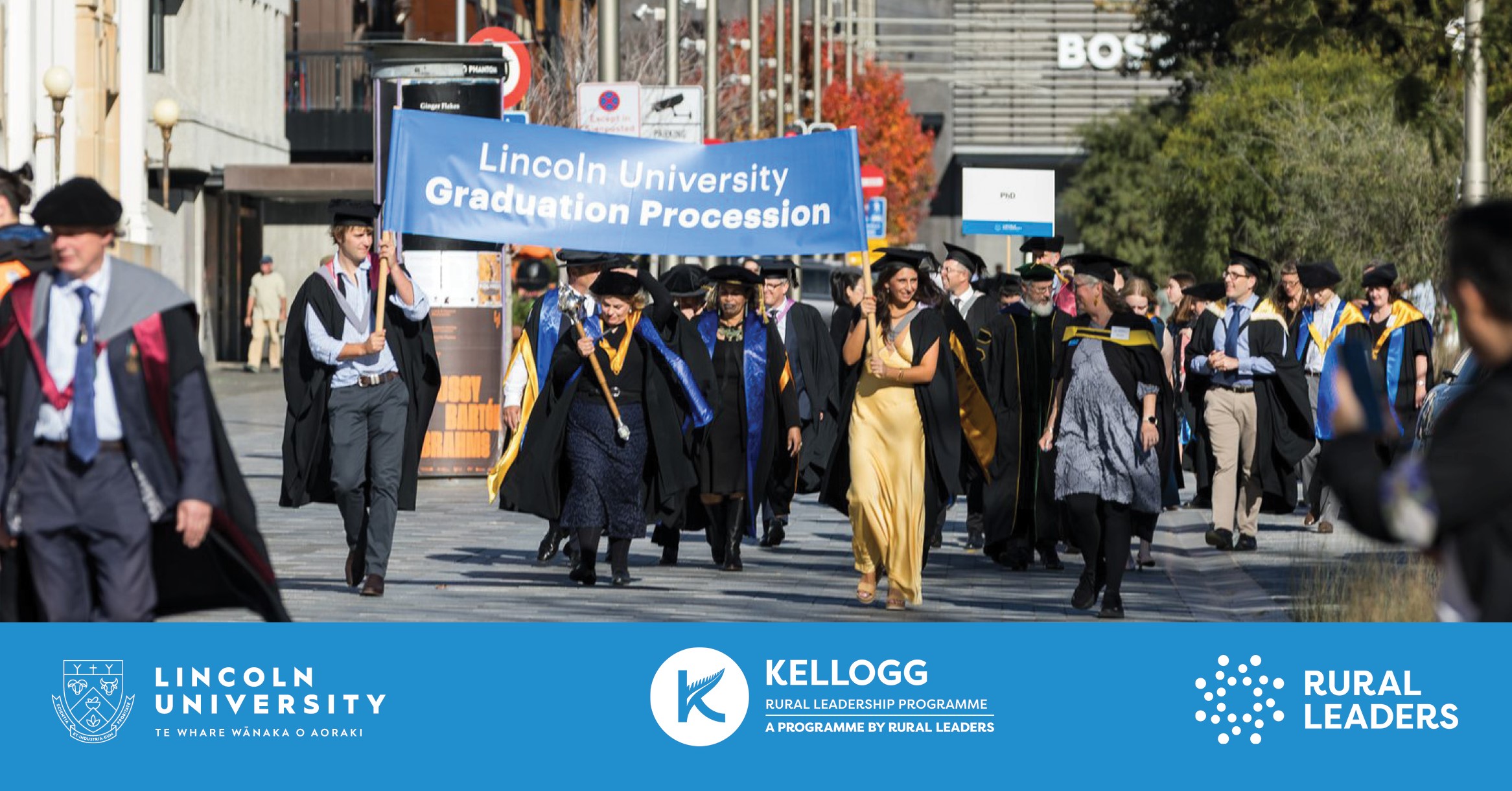
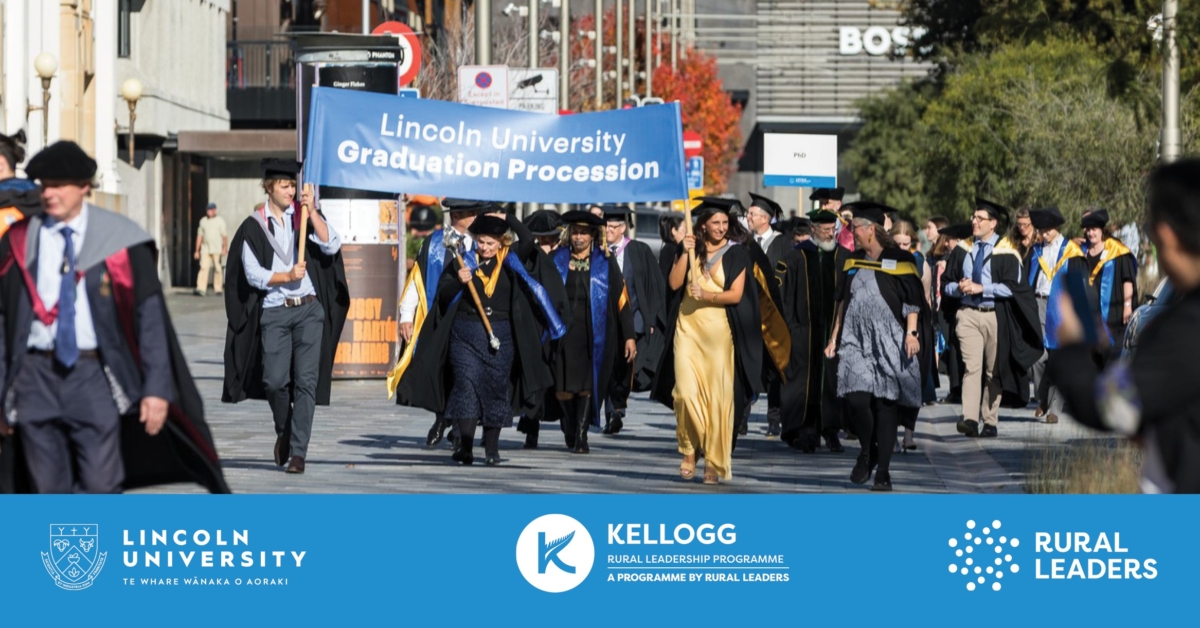
Just over a week ago, many alumni of the 52nd Kellogg cohort graduated with Post Graduate Certificates.

Credentialisation of the Kellogg Programme through Rural Leaders’ academic partners Lincoln University means Kellogg graduates can gain the Post Graduate Certificate in Commerce as well.

The next opportunity to do this for yourself will be on Kellogg Programme One, 2026 (late January start). Early applications are welcome. Head here for more information.

Congratulations to these double qualification recipients.

Congratulations to the following PG Cert graduates from cohort 52 Nick Martin, Megan Fox, Cheyenne Wilson, Richard Pentreath, James Prunty, Hamish Symons, Kendal Buchanan, Jordi Hoult, Laura Deeming, Iain Inglis, Whitney Conder, Ben Aiken, Oliver Hampson, Kate Kellick, Hamish Hodgson, Anita Fleming.

And also graduating were Wyatt Johnston, Lisa Lunn and Allan Dunn from the 51st cohort.

Image comes courtesy of Lincoln University.

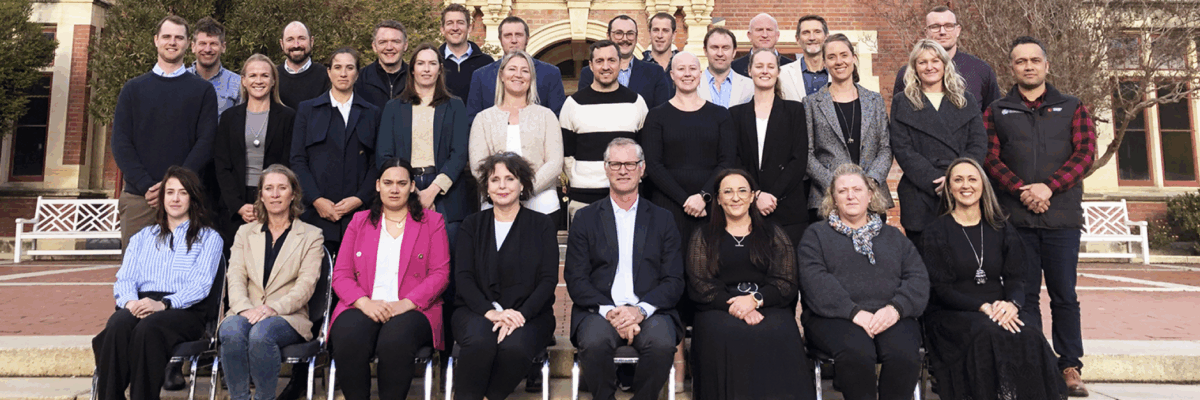
Kellogg Rural Leadership Programme cohort 52 (Programme Two 2024)

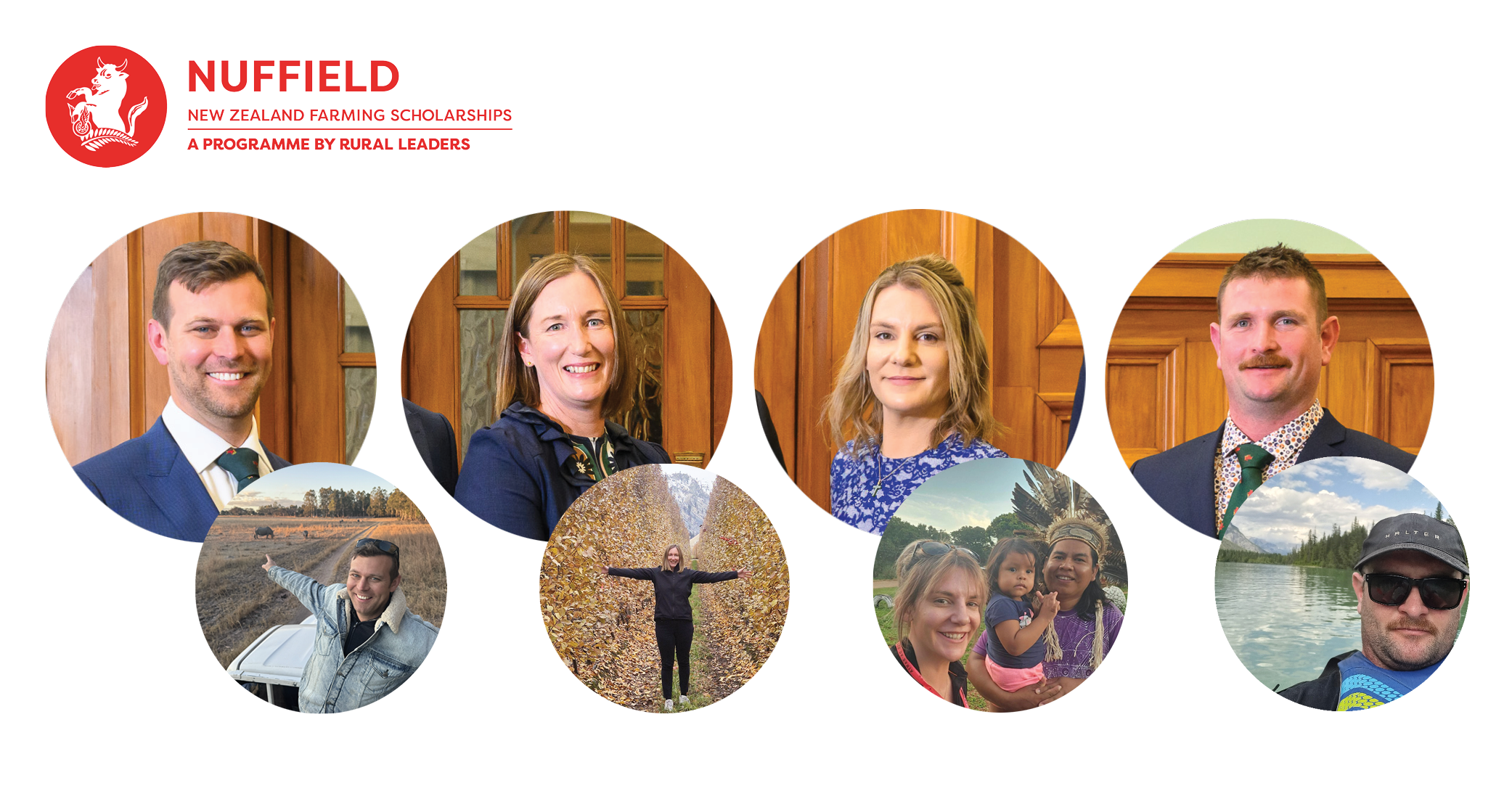
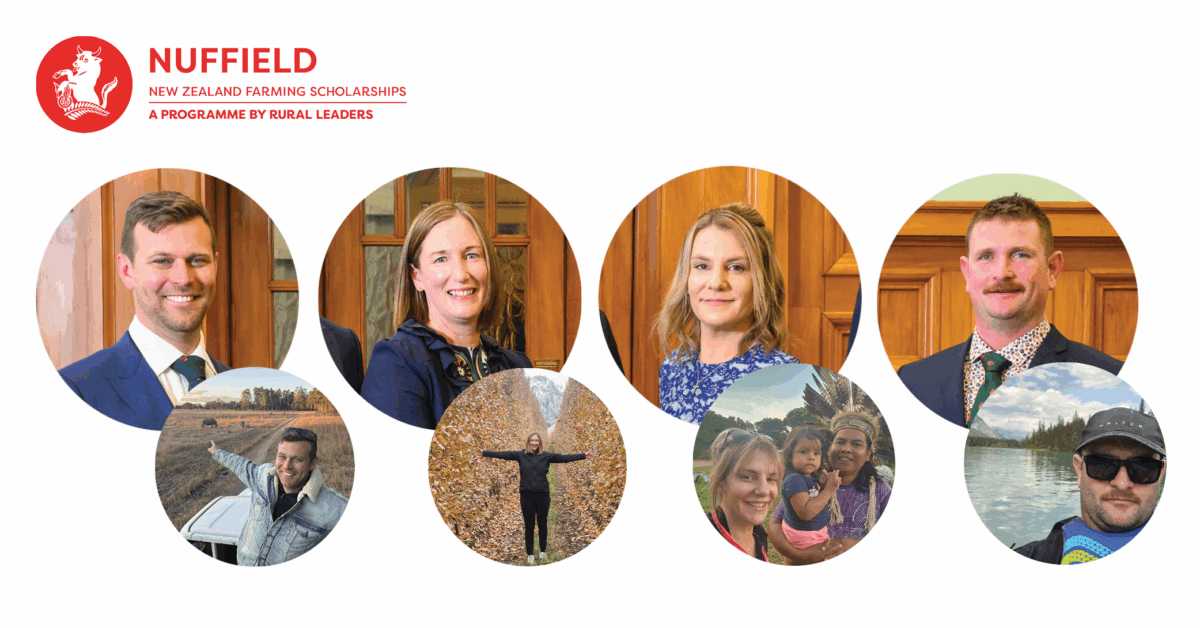
2024 Nuffield NZ Farming Scholarship reports.

Rural Leaders is pleased to be able to share the 2024 Nuffield Scholars’ Individual Research Reports.

Our four 2024 Scholars have undertaken research on a diverse range of topics, each addressing a topical and significant challenges in Food and Fibre, from sustainable land use to succession, and from the future of farming to genetic technology.

The Nuffield Scholarship is about impact – so, we hope you find these reports inspiring and thought-provoking.

We’d like to acknowledge those of you who have contributed your time and experience to the Scholars, a Nuffield Scholarship is after all, a team effort.

This year we have included a one-page summary of each report. You will find these short report summaries via the buttons below.

Carlos Bagrie – Beyond the farm gate: Rethinking New Zealand’s economic future.

Agriculture and tourism in New Zealand face growth limits, threatening export earnings. With global trade shifting and land constraints increasing, we must rethink NZ’s economic future; exploring high-value industries, supply chain control, and innovation.

It’s time to ask: what comes after agriculture and tourism to sustain long-term prosperity?

Rachel Baker – Coding for Change: Navigating adoption of gene editing in the New Zealand primary sector.

Gene editing in New Zealand’s primary sector offers opportunities to address climate change, sustainability, and productivity. Proposed legislation aims to align regulations with trading partners, balancing innovation with public trust.

Early engagement, investment in innovation, and leadership in regulatory frameworks are essential to enhance competitiveness and drive sector growth.

Jenna Smith – Changing the Bog-Standard: Repeatable solutions for Aotearoa’s Peatlands.

Occupying only 1% of Aotearoa’s land yet holding close to a fifth of the nation’s ecosystem carbon, New Zealand’s peatlands are indispensable but rapidly degrading. This report does not offer a silver bullet, but a new way of looking at what we’ve long called marginal land. It suggests that peatlands, when managed well, can be part of our productivity, our identity, and our climate response—not in spite of their wetness, but because of it.

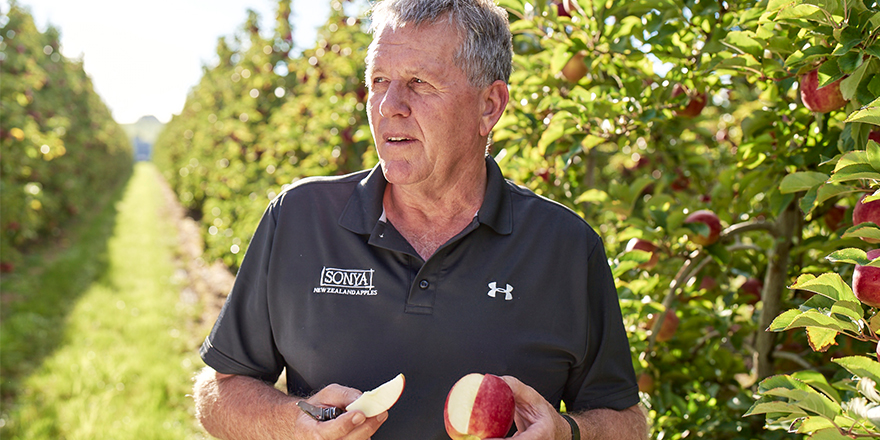
Peter Templeton – Putting the Success back into Succession.

New Zealand’s farm succession faces challenges due to aging farmers, rising land prices, and financial barriers. The report explores alternative models like share-farming and equity partnerships, emphasising the need for early planning, government support, and industry leadership.

Innovative succession pathways are crucial for sustaining the agricultural sector’s future.

Threads of influence. A Champion of rural leadership development.

For the last eight years Dr Scott Champion has been a key figure in the development of leaders in food and fibre. He has made a direct impression on over 300 leaders on the Kellogg Rural Leadership Programme and many more through Nuffield, Engage and the HortNZ Leadership Programme.

Scott’s deep sector-wide knowledge, delivery style, ability to deftly weave discussion threads, and tease out insights, has made him one of the sector’s most in-demand facilitators.

As Scott leaves his role with Rural Leaders for a new challenge at Foundation for Arable Research (FAR), we thought we’d take a look at his career so far – one chaptered by key sector roles, research, and developing food and fibre’s leaders.

Foundations in agriculture.

Dr Scott Champion’s journey into agriculture didn’t start in the heartland of rural New Zealand. The story is no less compelling. Raised in Sydney, Scott was drawn to the land from a young age. Family connections to farming in New South Wales sparked an early fascination in the potential of agriculture to sustain humanity in exciting new ways.

His entry into agriculture came at an open day at the University of New South Wales. Scott came across a programme in wool and animal science. He enrolled in the degree, and this soon led to a deep scientific interest, particularly in the relationship between animal nutrition and wool quality. This path took him on to a PhD, which he completed partly in Sydney and partly in Tasmania.

After completing his doctoral studies, Scott moved into teaching and research in animal science at the University of Tasmania. Then in 2001, a new opportunity arose: a product development and research role with the New Zealand Merino Company.

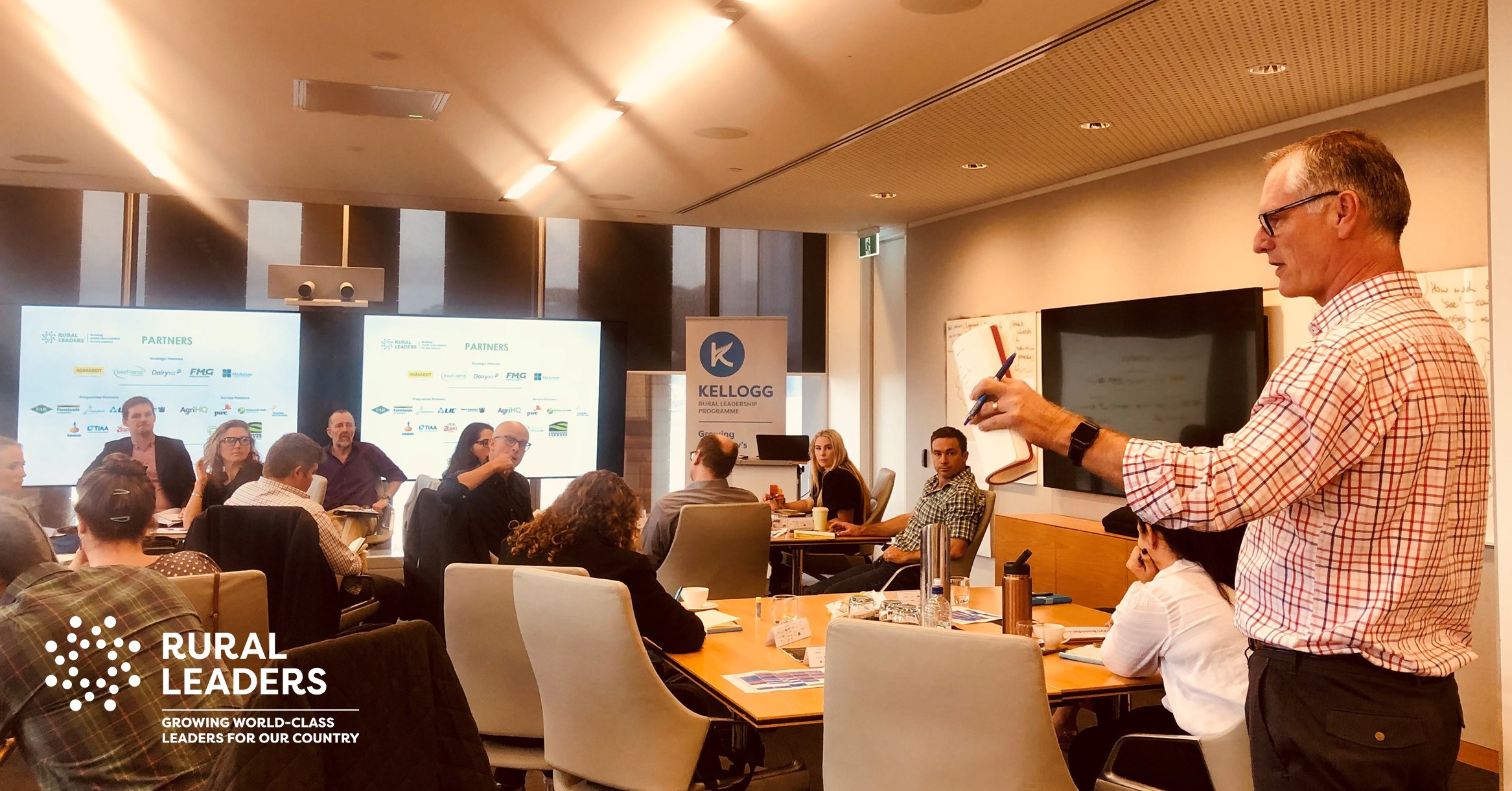
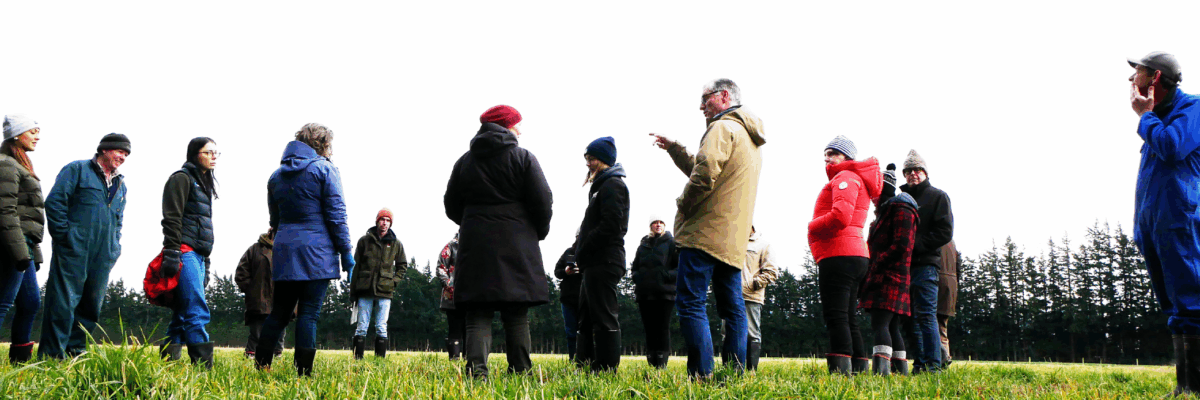
Scott on-farm with a recent Engage Programme cohort.

Science and innovation.

At this time, the New Zealand Merino Company had challenged the long-standing wool auction system, which traditionally kept growers disconnected from brands and consumers. Instead, the company fostered an attribute-based, contract-led supply chain model. The partnership with Icebreaker, one of the company’s earliest and most well-known collaborators, illustrated this shift well. By building direct links between growers and end-users, the New Zealand Merino Company helped brands create compelling product stories while giving growers visibility and value beyond auction prices.

Scott’s science background played a pivotal role in telling the story of Merino wool in new and practical ways. He worked alongside the commercial wool team to deliver training and develop retailer experiences that showcased the performance benefits of Merino, such as moisture absorption and fire resistance, often through live demonstrations. These tactile, science-backed experiences helped redefine how retailers and consumers perceived wool, especially internationally, where traditional wool was often associated with scratchiness and discomfort.

“We thought of ourselves as being an ingredient brand that could sit inside retail brands. So the purpose was not to create a retail brand in its own right around New Zealand Merino, but to create an attribute, an origin story that functioned as an ingredient brand,” says Scott.

the New Zealand Merino Company’s approach, Scott notes, wasn’t just commercial, it was transformational. The company positioned Merino not just as a material, but as an important performance attribute. This shift, from commodity to value-added story, inspired similar approaches across the food and fibre sector.

The CEO.

Scott’s next move was to Beef + Lamb New Zealand (B+LNZ), initially as General Manager of Market Access  and Services. The position brought together technical policy, trade access, animal welfare, and red meat promotion; areas that spanned local and international impact. Scott worked on initiatives such as the Five Nations Beef Alliance (which later expanded to seven countries), focusing on improving global trade outcomes for beef.

Later, Scott was appointed CEO of B+LNZ and concurrently led the New Zealand Meat Board, where in addition to strategic oversight, he was responsible for managing farmer reserves and quota access for red meat exports to the US and EU.

Following his tenure at B+LNZ, Scott explored a new direction, founding the consultancy Primary Purpose with a business partner. The consultancy would offer strategic advice and social research across food, agriculture, and natural resources.

Growing rural leaders.

Around this time, Scott’s relationship with the Kellogg Rural Leadership Programme deepened. Having previously been a regular industry speaker on Kellogg, he took on the role of Programmes Director and lead facilitator.

Speaking to Kellogg participants, Scott emphasises leadership is not about titles or standing at the front of the room telling others what to do, it’s more about being in the middle, understanding context, and drawing on lived experience. One of the programme’s unique strengths, he says, is its ability to give people confidence, regardless of their academic background. Participants, some without tertiary education, emerge from the programme with a deeper sense of self and purpose, and an understanding of the broader food and fivre industry.

Kellogg also offers access to influential speakers and one-on-one conversations with senior leaders across government and industry. For many participants, it’s a rare chance to see high-level leadership up close and to realise that those in senior roles are human, facing many of the same challenges anyone else does.

“The convening power of the programme is often underestimated. People are always willing to talk to our Kellogg cohorts. These are people who would have lots of things that they can potentially do in that time slot. I think that’s a mark of Kellogg’s standing”, says Scott.

The long-term impact of Kellogg is increasingly evident, with alumni populating boards, advisory groups, and sector leadership roles. The programme, nearing its 50th year, continues to be a vital part of New Zealand’s rural leadership pipeline.

“As the sector becomes more complex, the need for good leaders who understand context is significant. Not just the narrow technical nature of many of the roles that we all operate in, but that they truly understand the wider context in which they’re operating. I think that’s a key benefit of Kellogg – it’s what makes it so unique”, says Scott.

Scott with Kellogg Rural Leadership Programme cohort 52 (Programme Two 2024)

More to do.

Looking ahead, Scott is set to take on a new challenge. In July, he begins as CEO of the Foundation for Arable Research (FAR), working alongside current CEO, and friend of Kellogg, Dr Allison Stewart through June. FAR is widely respected for its research and extension services in the arable sector, and Scott is looking forward to contributing further.

Meanwhile, Primary Purpose, will continue under the leadership of the partners. The business remains committed to supporting clients with insight-driven strategy and research, helping organisations navigate the complex landscape of agriculture and food production.

From animal science to strategic leadership, Scott Champion’s career has so far been marked by curiosity, innovation, and a desire to give back. His impact has rippled through the primary industries in both Australia and here in New Zealand.

“When done well, applying good leadership can have a hugely exponential impact on the wellbeing and performance of people, teams, communities, industries and on a country. It’s been a privilege to have played a role in developing leaders through Rural Leaders’ Kellogg Programme and I look forward to coming full-circle and returning as a speaker”, adds Scott.

Over the last 8 years, Scott has been an integral part of not only the Kellogg Rural Leadership Programme but Rural Leaders as a whole. 

“Scott has brought wisdom, insight and encouragement to all that have attended our Kellogg and Engage programmes. It has always been satisfying to watch the personal confidence and clarity of thought shine through programme participants as Scott guided them through their Kellogg journey. While we are sorry to see Scott move on, we are delighted for him and his new role at FAR”, concludes Lisa Rogers, CEO Rural Leaders.

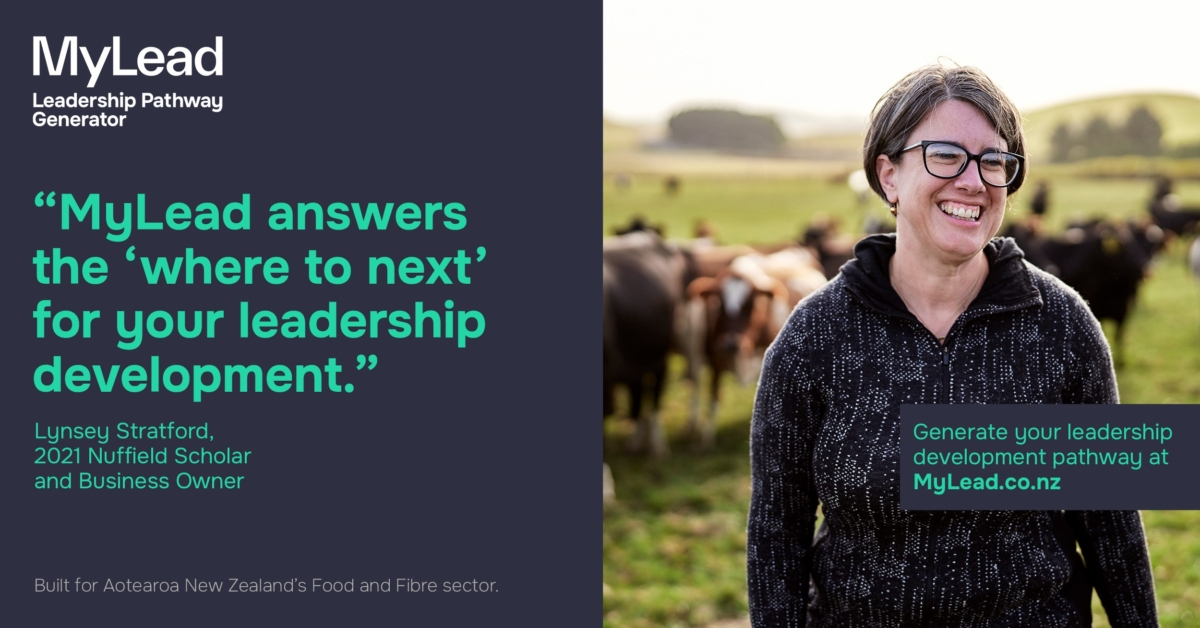
MyLead.co.nz is live.

Listen to our podcasts focused on discussion of the Food & Fibre CoVE Report and the MyLead platform.

MyLead.co.nz has been live for nearly a month with an invitation to feedback on user experiences. We’ve incorporated much of this feedback and from late May 2025, the site will feature the resulting enhancements.

Aligned to the NZ Rural Leadership Trust’s (Rural Leaders) purpose to grow world-class leaders for our country, MyLead helps to identify development pathways for people at all stages of their leadership journey.

This site is just one outcome of research conducted by Rural Leaders and commissioned by Food and Fibre Centre of Vocational Excellence (CoVE) and the site draws down information from this research relevant to each user.

MyLead allows a user of the site to generate a leadership development pathway based on two data inputs, ‘current leadership stage’ and ‘industry’.

Along with this pathway, MyLead gives actionable outcomes from the research’s latest Leadership Pathways Report https://ruralleaders.co.nz/realising-leadership-potential-in-new-zealands-food-and-fibre-sector/ with practical examples people can implement into practice immediately.

It’s really a starting point for anyone taking the lead on their, or their team’s, leadership development.

We have been gathering user experience feedback and incorporating this into the site, before the formal launch in late May.

“If our sector is to grow stronger it must nurture a sustained flow of capable and self-aware leaders that are continuously developing themselves and the teams they work with”, said Lisa Rogers, Rural Leaders CEO.

It is our hope that MyLead will help nurture our people and play a role in building an ever more vital and vibrant food and fibre sector into the future. We’ll continue to update and improve the site for the medium term, before offering programme partners to opportunity to login and manage their own programme(s) content.

A big thank you to all of the MyLead participating programme partners: NZ Young Farmers, AWDT, Beef + Lamb New Zealand, Business Torque Systems Ltd., University of Canterbury, DairyNZ, Dairy Training Ltd., Lead With Virtue, Mayfield Group, NZIPIM (NZ Institute of Primary Industry Management), Rural Coach, Rabobank New Zealand, HALO Training, Rural Leaders, STAMP, The University of Waikato, Horticulture New Zealand, Farmlands Co-operative Society Limited, Livestock Improvement Corporation (LIC), Activating Potential, FoodHQ, Silver Fern Farms Ltd.

Feedback to mylead@ruralleaders.co.nz

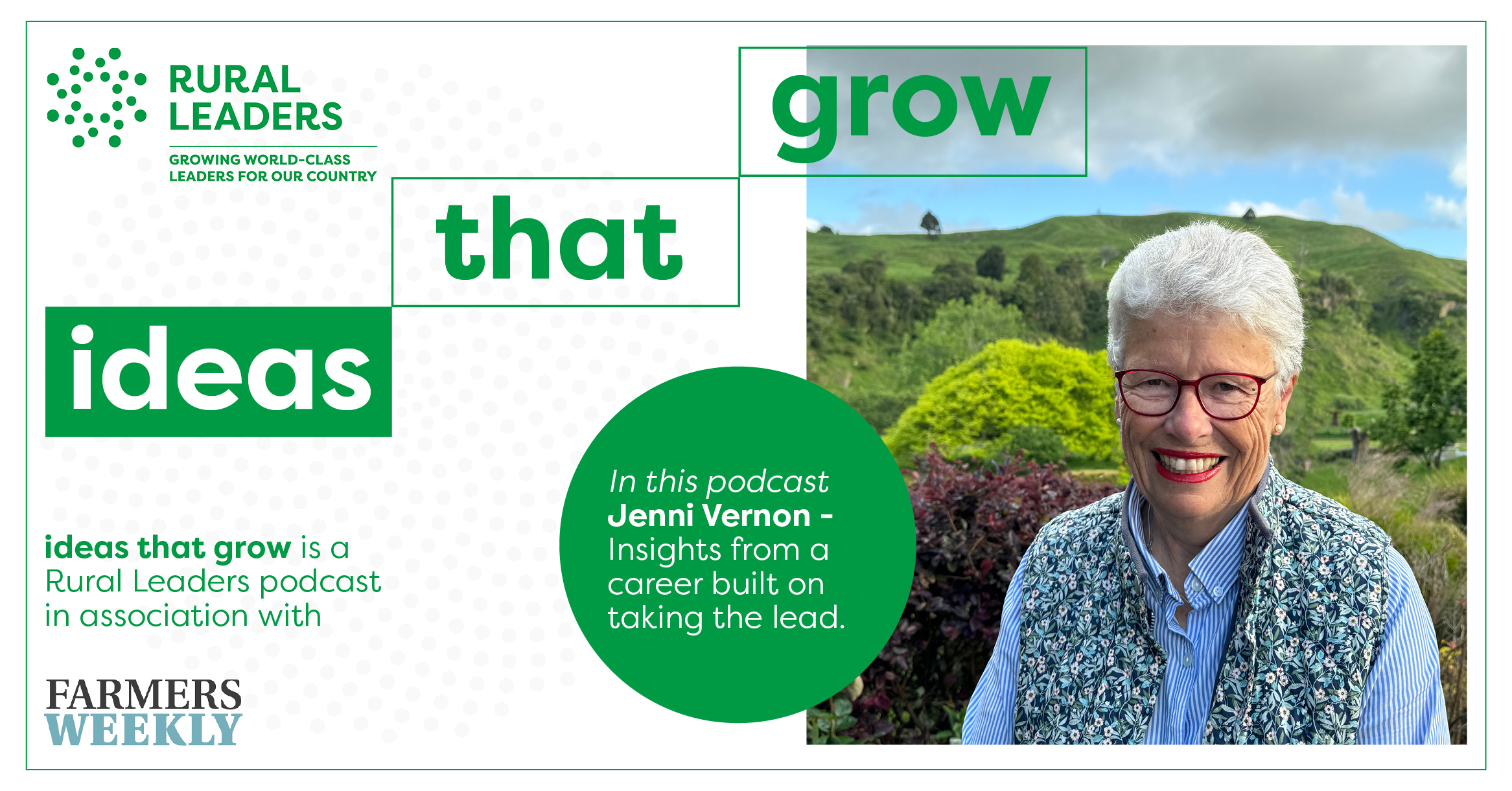
Jenni Vernon – Insights from a career built on taking the lead.

In this podcast, Jenni Vernon, 1994 Nuffield Scholar, Farmer, and former Chair of Environment Waikato, talks to Bryan Gibson, Managing Editor at Farmers Weekly, about how a lifetime of leadership in rural communities began with a strong connection to farming and a willingness to step forward.

Jenni also talks through her Nuffield research, the Nuffield experience, and on not underestimating the power of face-to-face communication in a sometimes-disconnected social media age.

Listen to this episode of Ideas that Grow, or click on one of the platform icons below to listen on your favourite player:

Episode Transcript

You’ve joined the Ideas That Grow podcast, brought to you by Rural Leaders. In this series, we’ll be drawing on insights from innovative rural leaders to help plant ideas that grow so our regions can flourish. Ideas That Grow is presented in Association with Farmers Weekly.

Bryan Gibson, Managing Editor of Farmers Weekly.
You’re with Ideas That Grow, the Rural Leaders podcast. I am Farmers Weekly Managing Editor, Bryan Gibson. This week on the show, we have a very special guest, Jenni Vernon, who is the very first woman to graduate with a Nuffield Scholarship. Kia ora, Jenni. How’s it going?

Jenni Vernon, Farmer, 1994 Nuffield Scholar:
Kia ora, Bryan. It’s great.

BG: You did the Nuffield Programme in 1994. What drew you to that? Do you have a background in farming? Did you grow up on one?

A strong connection to farming.

JV: My father was a rural bank manager, but my mother’s parents were farmers in the Ruahine Ranges at a little place called Rangawahia. My farming life really started following my grandfather around learning to ride ponies. In those years, 50% of his income was from wool. We used to do sheep dipping – plunging them in the sheep dip.

We used to have to pluck wool off dead ewes and off the barbed wire fences. That was my introduction to farming at a very early age. I always had a passion, really. Then I was led by a very good school friend to join the Young Farmers Organisation. And from there, just got involved with Young Farmers, became National President, and actually always worked in rural areas when I was a primary school teacher in Waipukarau.

Through Young armers I met my husband. We settled, or he lived on the Raglan Coast at Tāwhata on a small dairy farm. So, that was my real hands-on, ownership, full nine yards of being a farmer, and have done so ever since.

BG: What drew you to Rural Leaders and to apply for the Nuffield Scholarship?

From Young Farmers to a Nuffield Scholarship.

JV: I guess it was my experience through Young Farmers. I did 13 years there and went on to be National President. In 1985, I first did the Kellogg Rural Leadership Programme.

Just through opportunities and leadership roles, I could see that to do something like a Nuffield, where it really does extend you, not only your personal development, education-wise, but your international perspective too.

We are at the bottom of the world, all our exports, everything is offshore. That was one of that bigger picture issues. I guess Nuffield for me was a bit of a circuit breaker in my career because prior to winning my scholarship I was actually a divisional director for the New Zealand National Party. I was working there for eight years managing; I always said, ‘…people, paper and money.’

Many thought I would head down the line of becoming a central MP, but I don’t think that was really me. This opportunity to have a go at applying for Nuffield and gaining further leadership roles and a bigger worldview – came up, and I was fortunate to be selected and travelled in 1994.

It definitely met my expectations of being extended personally. But I’ve had a lifetime now of connection and value and actually being able to mix and meet, not just internationally. Within New Zealand we have amazing rural leaders, and I feel very privileged that I have learned a lot from those people. Our paths would never have crossed if I hadn’t done that.

That led me into a whole lot of other leadership opportunities. It really was a diving board into my future leadership roles, passion for rural communities and agriculture in general.

BG: What did you focus your scholarship on?

Nuffield research still relevant 30 years later.

JV: My research looked at the deregulation of the Milk Marketing Board, which was big thing in the UK at the time, and also looking at cooperatives.

Just by chance, one of my fellow Nuffield friends from Zimbabwe, Helen Locke, was the first woman to be selected from Zimbabwe, that same year. She was studying the Dutch flower industry because she had a huge flower enterprise. They exported their flowers to Europe through the Dutch market. That really was probably, for me, the highlight of my Nuffield because that really opened my eyes to the consumer market and how fickle consumer markets can be for something a fragile product like flowers.

It also opened my eyes to the amount of research and development that the Dutch government was spending – because flowers and seeds are a big export market. That was probably the highlight.

Even today, that study, and it’s what, 31 years ago that I did my scholarship, that is still relevant today, the consumer market. One day they want red roses, and the next minute, they want some dried weed that you find in the back garden or in the paddock.

We were privileged to see the back of the Dutch flower market, it’s absolutely huge. If it’s not sold, it’s just thrown out. It’s the equivalent is something like eight football fields and all these flowers had been flown in. If they didn’t want them that day, they were gone.

That meant that back in the countries like Zimbabwe and quite a lot of South American countries, they didn’t get any income. That was it. You’d produce that flower or product, and it took how long to grow it and then export and everything else.

What was equally interesting, an so was the deregulation of the Milk Marketing Board, because I looked at a company which is well known nationwide or worldwide, Kerry, in Northern Ireland, an island, and the influence of how they diversified their portfolio out of milk and into other industries. Then, of course, we I’ve got cooperatives, Fonterra, for example. Actually, 31 years later, my topics haven’t actually become obsolete, and I still look back and think I was very privileged to have that understanding way back then.

BG: Now, obviously, you went through this leadership programme, and as you touched on, it led to decades of leadership roles since then. Can you walk me through some of the greatest hits?

A career in leadership.

JV: Some of the greatest hits. Well, I had the privilege of being on the New Zealand Rural Leadership Trust (Rural Leaders) Board for six years. We went through that transition where we amalgamated the Kellogg and the Nuffield Programmes together.

I look at where the Trust is now with the other programmes. I was asked this question recently because I do a little bit of mentoring for women in leadership. One of the greatest hits was really to be actually Chairman of Environment Waikato, where we led the protection of Lake Taupo.

My greatest achievement was that my signature was on that paper protecting that lake forever. Now, it was a huge challenge. It was the first time farmers had to be consented. It was tough. There’s a lot of Māori, undeveloped land that will never be able to be developed to its economic potential to save the lake.

But that whole process and programme – to think that forever. I mean, we know that the lake’s water quality is going to deteriorate a little bit before it gets better, but it’s not long term. It’s going to have a better future than what it was probably looking like.

The most productive conversations are face-to-face.

BG: It seems we live in a bit of a sound bite world with social media and that thing. Being angry is commodified in some ways, which doesn’t help with actually thinking about the bigger picture as a nation.

JV: I guess I was privileged or otherwise that my term in local government, we didn’t have the influence of social media. I mean, yes, people could get angry with you, and yes, we were yelled at, but it was more face to face. It was in the local community hall or it was out in the field, standing on the ground, talking face to face.

There wasn’t this anonymous or down the line Facebook stuff. I mean, it was the beginning of, but certainly we didn’t have those anonymous Facebook conversations where nobody has any ownership. We owned it and we had to face up to it. I openly admit that there were times when it wasn’t very pleasant, but it was face to face.

It’s much harder to have a face to face conversation and be really nasty because there’s always a way through it. You can at least talk through the issues even if you want to raise your voice for the first ten minutes, generally, people calm down.

You’re right, the social media, I mean, I’m really glad, sounds very selfish, but I’m glad I’m not in local government or even central government now, where I think it’s sad that people find the need to hide behind the social media tool instead of actually upfronting. I mean, you can write submissions, that’s fine, but upfronting, honestly, within hall meetings and face-to-face. It’s a different world, a very different world. It’s one I struggle with at times.

BG: Now, you mentioned you still do some leadership mentoring? Do you have some work in that space? Yes. Are the attributes and skills and qualities of a good leader in the Food and Fibre sector, are they the same as they’ve always been?

Rural leadership pathways.

JV: They are, Bryan. In actual fact, one of the things that really concerns me is that we had a nice pathway into leadership roles in rural communities. When I first started, like young farmers or federated farmers, and then say your dairy board or apple and peer marketing board or whatever you wanted to do it. People seemed to want to embrace that.

Today, it seems harder for that pathway. I do have concern about people, how do you get into that leadership role? I do think sometimes that people have this view that once you’re a director or you’re on a board, that it’s easy, but it isn’t. It’s not fluffy stuff. It’s absolutely you’ve got a fiduciary duty. I think probably it’s harder now, because of time to run your business and the pressures and the responsibilities to take up some of those leadership roles. But certainly, if you do, it is exciting, and that’s where you can influence.

If you want change, it’s no good sitting in the back paddock and complaining. You’ve got to come to the front gate, and you’ve got to get out of your farm gate, and you’ve got to engage, and you’ve got to be part of a group, and that will lead you.

Some of the catchment groups, I look at them now. Some of those leaders, like Anna Nelson, for example, started off leading a big catchment group in, and now she’s Chairman of Silver Fern Farms.

It’s great to see that there is a pathway, but it is challenging. It’s still not easy for any generation to take it up because you have to, well, sometimes your business does suffer, but we do need to see people wanting to do that because we need a strong rural voice. The issues are not going to go away. They’re going to be more challenging, whether it’s environmental, whether it’s markets, or whether it’s political, dealing with your local councils or whatever. I mean, the issues are not going to go.

That’s the other thing that I look at and reflect is it’s harder for succession for family farms as well. That’s one of the other things that I have a bit of a concern about.

BG: Now, you mentioned that some of those tried and true pathways weren’t as strong as they used to be. But of course, there are the Rural Leaders Programme, obviously something you’d recommend to people.

Applying for a Nuffield.

JV: Totally, Bryan. It’s interesting. A lot of people go, Oh, I could never do that. I look at them and I go, Why not? The only thing stopping you is not applying. Because I’ve had questions like, how come you won a Nuffield Scholarship? Because, I mean, to be honest with you, Gordon and I only milked 180 cows on the Raglan Coast. We weren’t big-time farmers. But it was because I applied.

I applied myself in making sure that I was well prepared. I understood the dynamics of agriculture in New Zealand, the primary sector, but also internationally, and had a go. I also had mentors. I don’t mind saying it that John Kneebone was my… until he passed away, he was my mentor through my Nuffield, through being on the regional council for a lifetime.

If you can find somebody like that that helps you gain that confidence, because a lot of it is about confidence. That’s what Kellogg and Nuffield gives you – that confidence. People could say, I don’t have those qualities. Well, I could have looked in the mirror and said, well, neither did I. But actually, you’re surprised when you lift the lid, what’s underneath, and you can actually do it if you really want to.

I mean, I would never have guessed that my leadership pathway would have been what it has been over the last 50 years. Because if you looked at my school record, I was not a school prefect. I never won any prizes. Nothing. Absolutely nothing. So, it’s that one opportunity that taps into that reserve. When people say to me, I couldn’t do what you do. I say, No, you just don’t want to – but you can.

BG: For more information on Rural Leaders, visit the pages for Nuffield New Zealand Farming Scholarships, the Kellogg Rural Leadership Programme, the HortNZ Leadership Programme, the Engage Programme, or the Value Chain Innovation Programme.

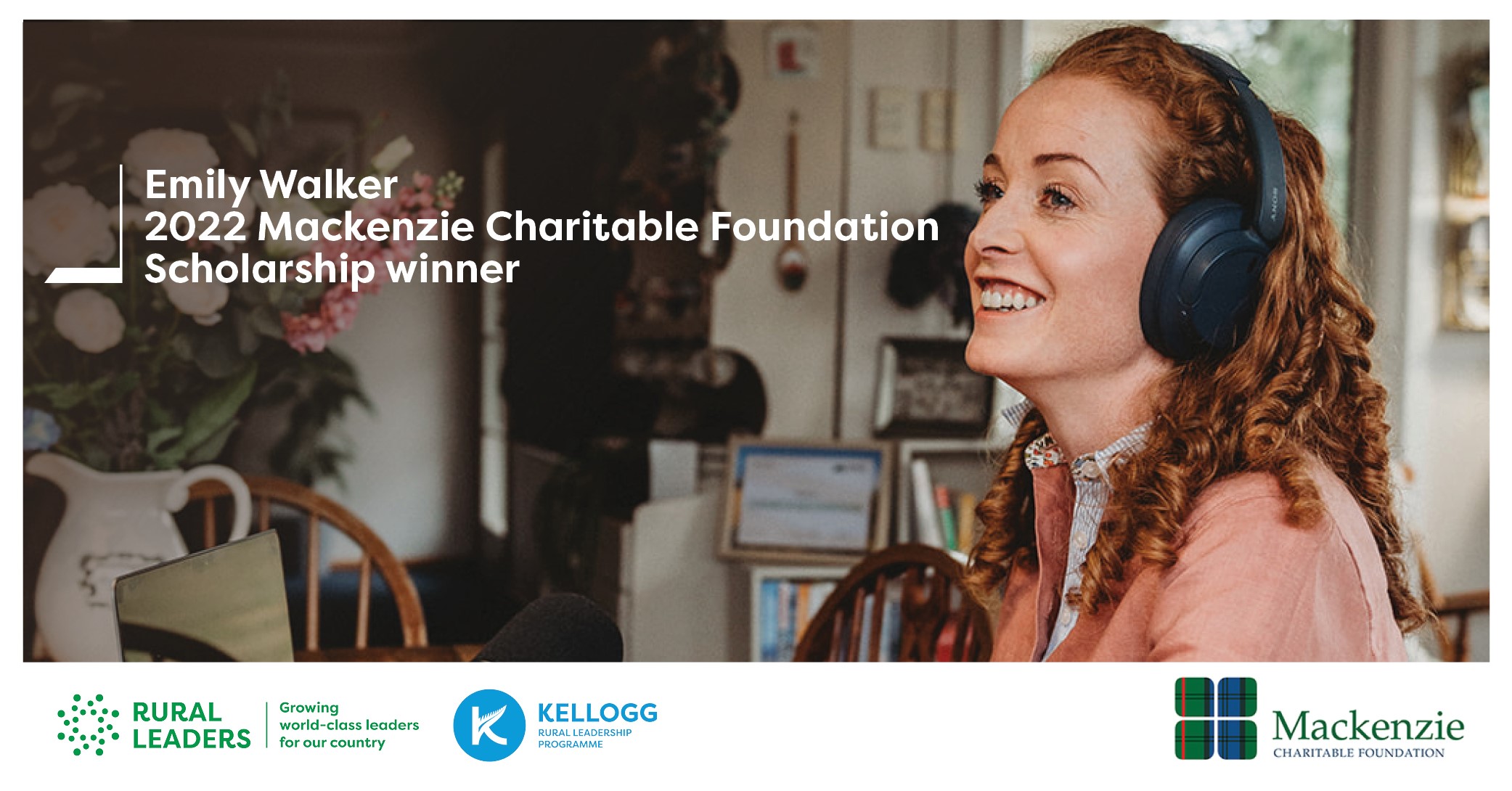
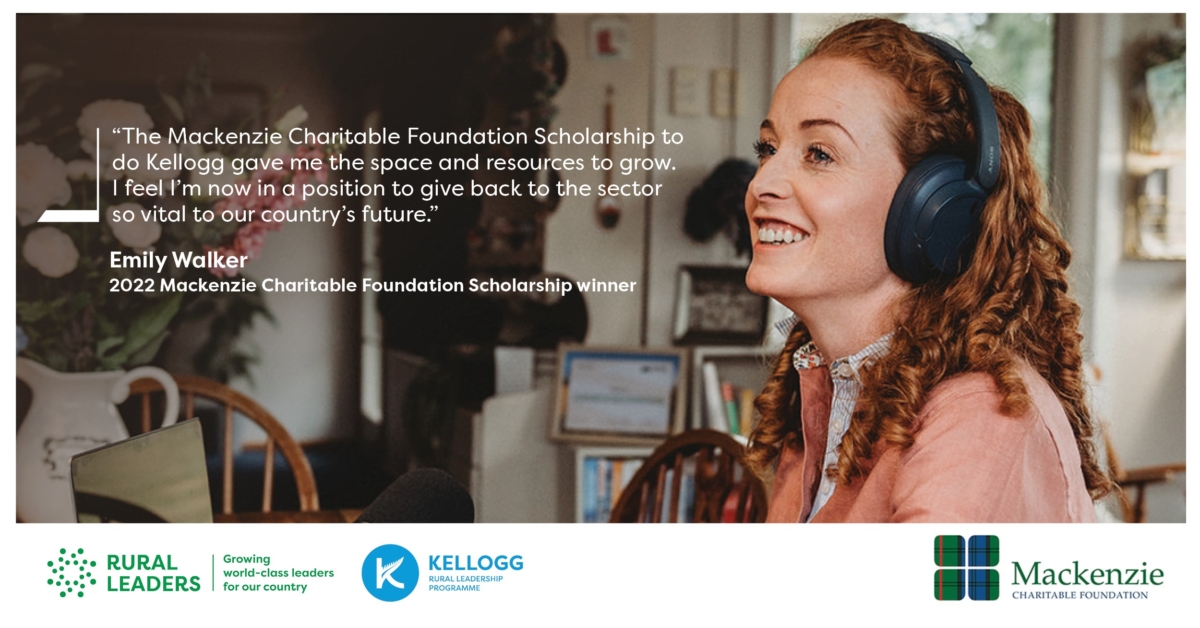
Emily Walker – making an impact in New Zealand agribusiness.

From Engineer to Agri-Strategist: Emily Walker’s Path to Making an Impact in New Zealand’s Agribusiness Sector

A Canterbury native, Emily Walker’s story so far, has been marked by a commitment to innovation, sustainability, and leadership—values that are now shaping her efforts to play a role in transforming New Zealand’s agricultural sector.

The Spark: A Mackenzie Charitable Foundation Scholarship.

In 2022, Emily was awarded the Mackenzie Charitable Foundation Scholarship, a pivotal moment in her career. As a structural engineer with a Master’s in Engineering Management, she had already established herself in the engineering world. However, a growing interest in agribusiness led her to explore ways to combine her technical background with her passion for supporting sustainable farming practices.

“The Mackenzie Scholarship gave me the financial support and confidence to explore my ideas further on the Kellogg Rural Leadership Programme,” Emily says. “Without it, my pivot into the agri-sector would not have happened the way it has.”

Emily’s Kellogg research, asked a key question: Does an evidence-based approach to decision-making improve outcomes for small-scale agribusinesses in New Zealand? The research aimed to identify ways that evidence-based frameworks could enhance decision-making, particularly in the face of the complex environmental, social, and economic challenges farmers face.

The findings of her research were clear: there is strong demand for better decision-making tools that help farmers evaluate and balance these impacts. Key recommendations included maintaining a deep understanding of the operating environment, aligning decisions with core values, and implementing multi-disciplinary boards to support decision-making.

The Kellogg Rural Leadership Programme and a Business Launch.

The Mackenzie Charitable Foundation Scholarship enabled Emily to participate in the Kellogg Rural Leadership Programme. Despite holding down a demanding full-time job, she took leave to complete the programme. The skills and confidence Emily gained during Kellogg were instrumental in the launch of Tupu Strategic, a consultancy offering strategic and governance advisory services to agribusinesses.
Emily’s work with Tupu Strategic is grounded in the principles of her research. “I’ve integrated what I learned in Kellogg into every aspect of my work,” Emily says. “The decision-making framework is now a core part of my strategy work, governance roles, and client engagements. It’s been incredibly rewarding to see how these tools can help drive better outcomes for the sector.”

Expanding Reach: Governance and Podcasting.

Since completing the Kellogg Programme, Emily’s career has rapidly expanded. In 2024, she became an Associate Trustee for both Wai Wānaka and AgResearch, roles that allow her to grow her governance skills while contributing to the strategic direction of key organisations in the food and fibre sector.

But it’s not just about boardrooms and business strategy. Emily also co-hosts and produces the Ag in Conversation podcast, a platform she describes as her most impactful project yet.

The podcast provides a space for open, thoughtful discussions on some of agriculture’s most pressing issues, ranging from rural women’s mental health to global trade agreements. By bringing the “kitchen table” conversations of rural communities into a global spotlight, Ag in Conversation aims to educate both those inside and outside the sector about the challenges and opportunities facing New Zealand agriculture.

“We aim to scale impact through education,” Emily explains. “By diving into complex issues and sharing them with a wider audience, we can foster deeper understanding and encourage more informed conversations, both in the sector and beyond.”

Balancing it all.

In addition to her professional commitments, Emily is also a farmer and mother to a one-year-old daughter. Life on the farm in Tarras, in Central Otago, brings its own set of challenges, but she embraces the necessary juggling act.

“Balancing the podcast, client work, governance roles, farm life, and being a mum is definitely a challenge, but each part brings its own rewards,” she says. “The diversity of my experiences—whether it’s from the farm, the podcast, or my governance work—helps me grow and make a bigger impact in everything I do.”

Looking Ahead.

Looking to the future, Emily’s ambition is clear. She plans to continue her leadership development and expand her influence in the agribusiness sector through both governance and education. She is committed to creating a lasting impact by fostering evidence-based decision-making practices, supporting rural communities, and advocating for sustainable, forward-thinking strategies within food and fibre.

“The Mackenzie Scholarship set me on a trajectory towards making meaningful change in agriculture,” Emily reflects. “It gave me the space and resources to grow, and now I’m in a position to give back to the sector that is so vital to our country’s future.”

You can view Emily’s Kellogg report here.

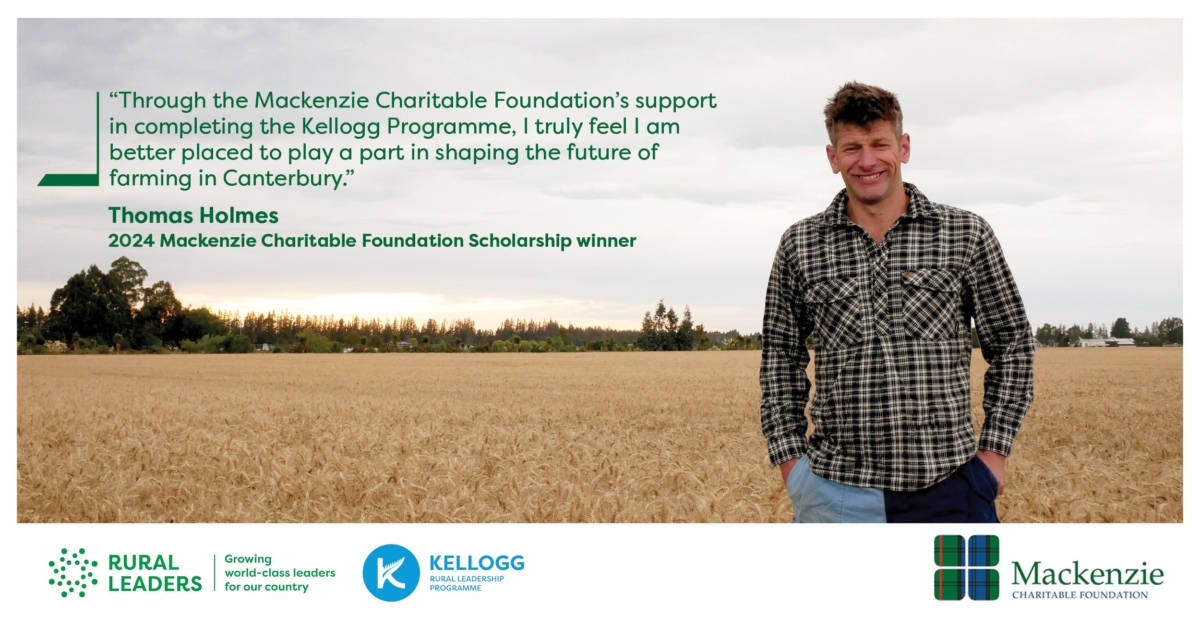
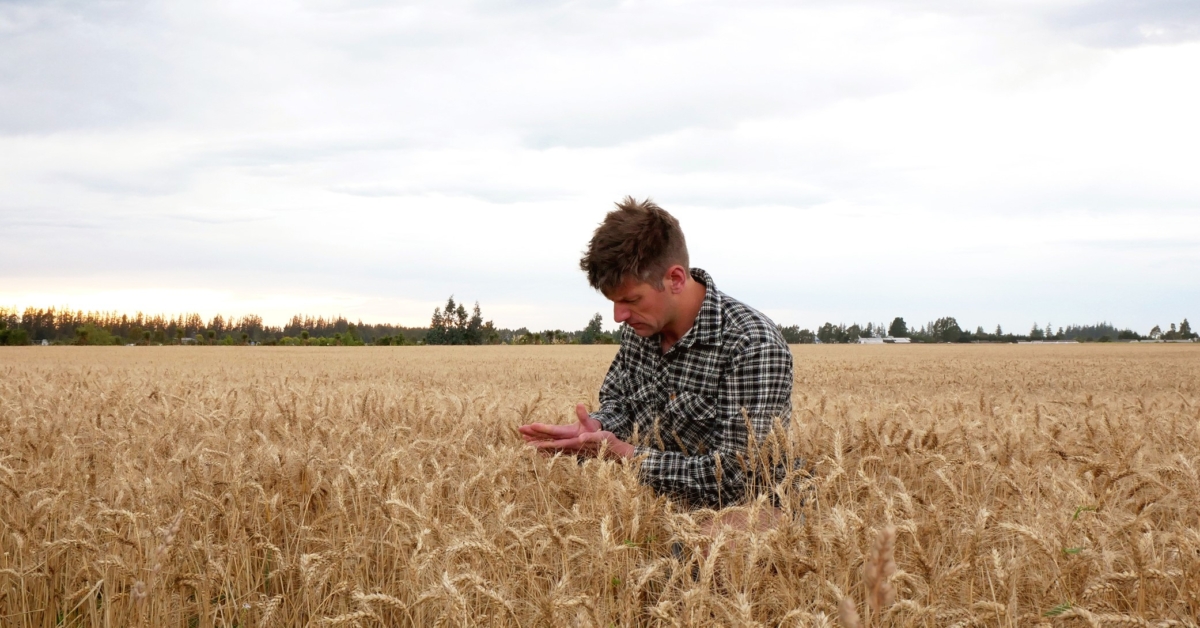
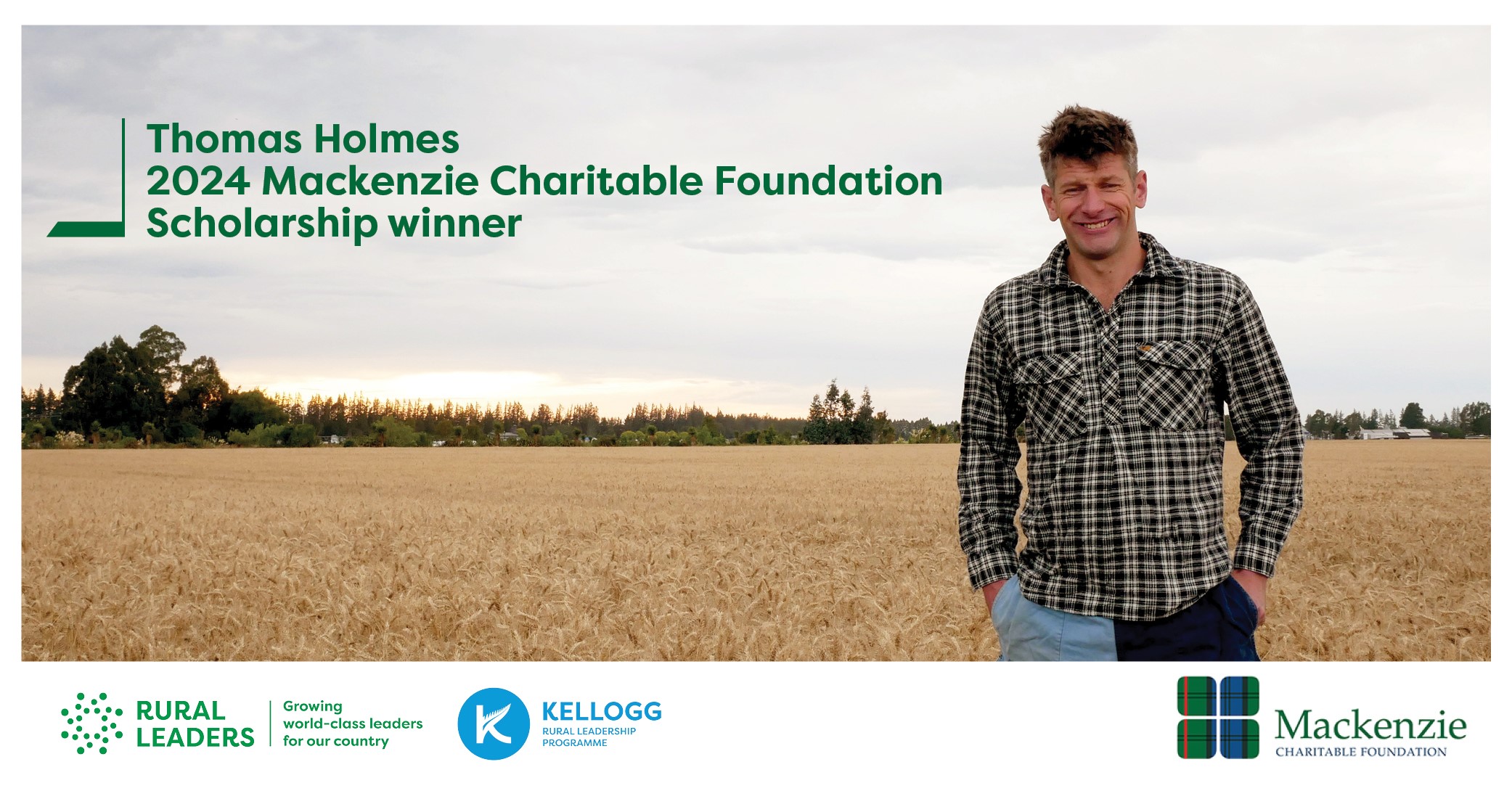
Thomas Holmes – scholarship opens doors for Canterbury arable farmer.

Kellogg Programme Scholarship Opens Doors for Canterbury Arable Farmer Focused on Industry Change.

A scholarship from the Mackenzie Charitable Foundation provided a unique opportunity for a Cantabrian to take part in the Kellogg Rural Leadership Programme. Kellogg gave Thomas Holmes the chance to expand his leadership skills and has provided him with a platform to advocate for change in the fast-evolving arable farming industry in Canterbury.

Roots in Canterbury farming and connection to the Mackenzie brothers.

Growing up on a mixed arable farm in Methven, where his family has farmed for nearly 150 years, Thomas has a deep connection to the land. He pursued an AgScience Honours degree at Lincoln University, before working for eight years across various farms in New Zealand, Canada, and the UK.

Thomas is currently employed in a Central Government role with Ministry for Primary Industries. He works to support farmers and growers navigating the increasingly complex regulatory and environmental landscape.

Thomas’s motivations for applying for the scholarship were twofold. Financial support was certainly a factor, but it was the story behind the Mackenzie Charitable Foundation that truly resonated with him. Inspired by the selflessness of two brothers who established the trust to support young people in the Canterbury region, he felt a strong personal connection to their values and desire to make a meaningful difference.

“The Trust’s foundations are all about giving back to the community, and it was the bother’s selflessness in this space that really drove me to apply,” said Thomas.

Expanding horizons with the Mackenzie Charitable Foundation Scholarship.

The Scholarship has enabled Thomas to take part in the Kellogg Programme, to engage with peers and experts across various industries and expand his professional network. For someone from a rural farming background, he explains, the opportunity to step outside his comfort zone and engage with others in the agricultural sector has been invaluable.

The role he holds with Government sees him acting as an On-Farm Support Advisor, where his primary role is to bridge the gap between farmers and the technical experts who assist them. Working closely with the arable farming community, he brings crucial information on everything from chemistry to land use changes. His expertise in arable farming allows him to provide tailored advice, helping farmers adapt to the ever-changing landscape of modern agriculture.

In a sector facing climate challenges, evolving regulations, and land use changes, Thomas believes farmers need clear, actionable guidance to make informed decisions. The shift towards new crops, such as stone fruit and apples, is one example of how quickly the Canterbury region is evolving.
“Arable farming is at a crossroads, but there’s a real opportunity to focus on the positives and identify where the silver linings are,” he explains.

The Kellogg Programme has played a pivotal role in Thomas’s professional and leadership development, particularly in his understanding of leadership. “I’ve realised that leadership isn’t about a single person at the top. It’s about collaboration and empowering teams,” he reflects. He credits the programme with expanding his thinking and helping him gain a clearer vision of where he wants to take his career in the future.

So, what does the future hold?

Looking ahead, Thomas is keen to take on more leadership responsibilities, either on-farm, in a government support role, or both. With an open mind about the potential of agri-tech and the future of the industry, he’s also considering opportunities like the Nuffield Scholarship as a way to broaden his perspective further. “I’d love to balance farming with supporting the wider sector,” he says, “and to contribute to meaningful change for the future of agriculture.”

The scholarship, he says, has given him the opportunity to reflect on the broader picture of New Zealand’s agricultural landscape and to think critically about the challenges and opportunities ahead.

“Through the Mackenzie Charitable Foundation’s support in completing the Kellogg Programme, I truly feel I am better placed to play a part in shaping the future of farming in Canterbury.”

You can view Thomas’s Kellogg report here.

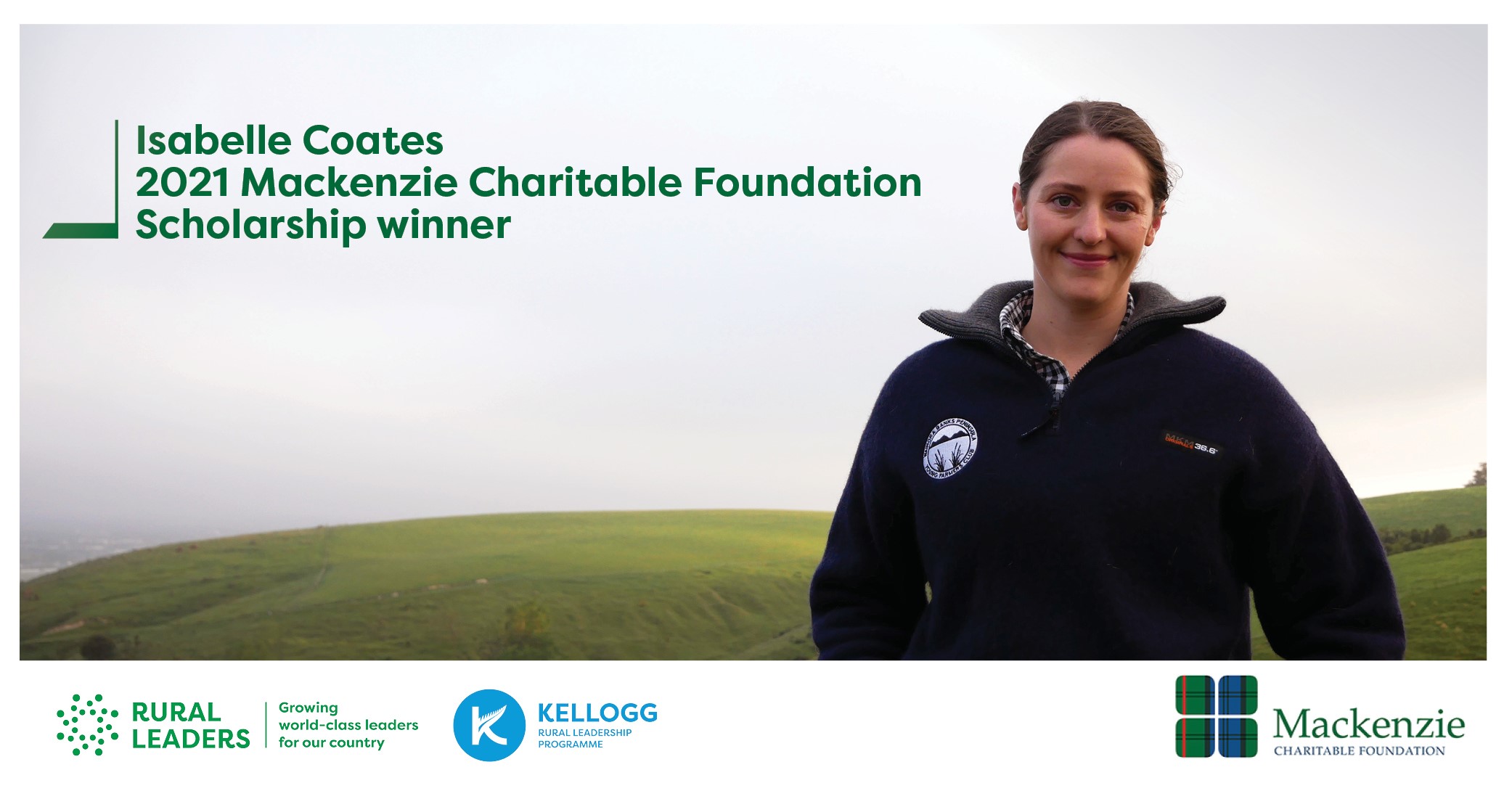
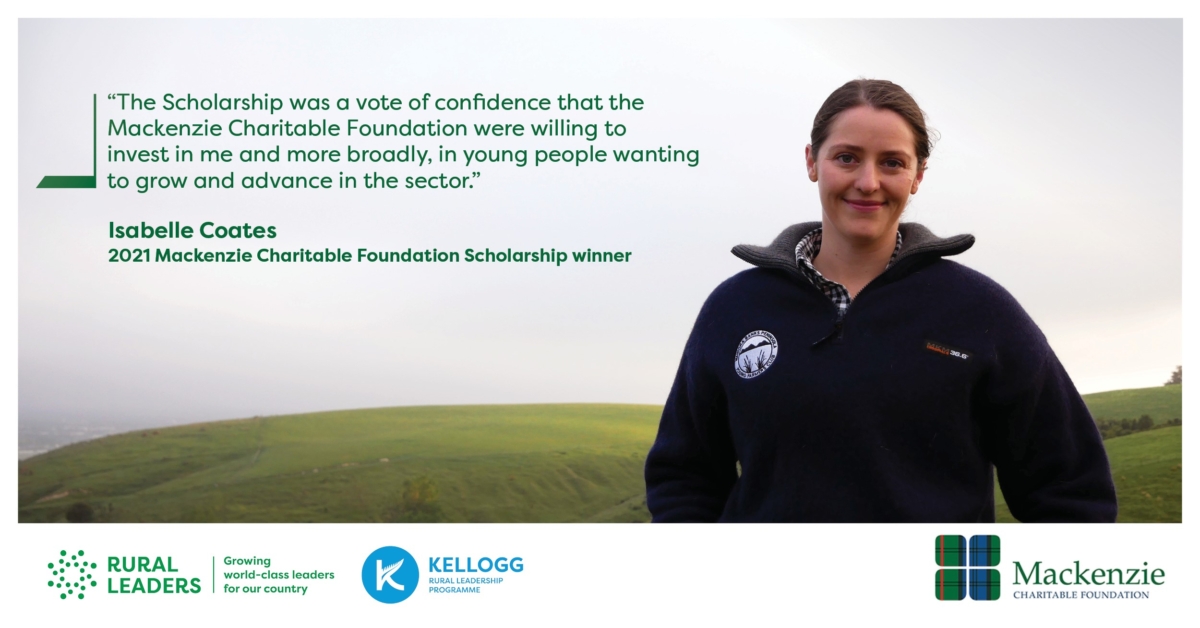
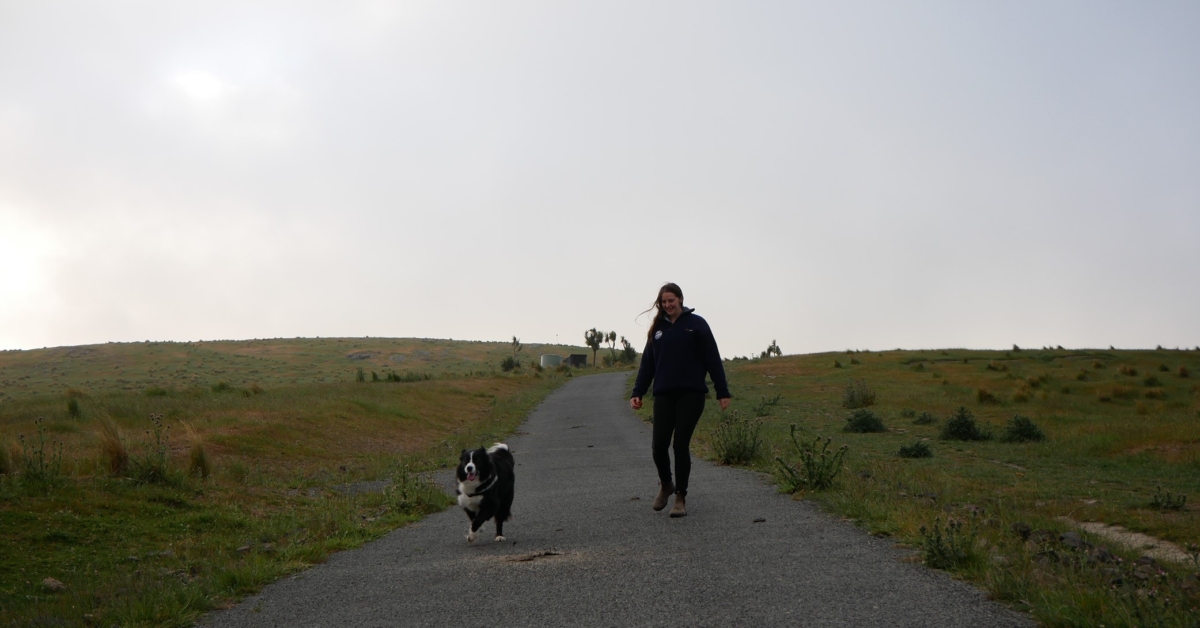
Isabelle Coates – networking, leadership, and giving back.

Isabelle Coates, 2021 Mackenzie Charitable Foundation Scholarship Winner, 2022 Kellogg Scholar.

For young professionals in the food and fibre sector, finding the right opportunities to grow and make a meaningful impact can be challenging. But for Isabelle Coates, the Mackenzie Charitable Foundation and the Kellogg Rural Leadership Programme provided both a transformative experience and a vital network of connections that has helped to shape her career path and her passion for supporting others.

Motivations for Applying: A Desire to Give Back.

The journey began while working for a not-for-profit, where limited resources sparked a desire to make a bigger impact. The organisation faced the common challenge of workforce attraction and retention, a theme that has become central to Isabelle’s career path. “I was working for a not-for-profit at the time, so we didn’t have a lot of money, but we were trying to do a lot with what we had,” said Isabelle. “The role opened my world to the power of workforce retention. Like many in my network, I wanted to do so much.”

Isabelle’s background in the meat industry, where she had previously been supported by the Meat Industry Association, further fuelled her drive. She wanted to give back to the industry that had supported her and had an ambitious vision for a project that aimed to secure funding to help improve workforce challenges within the meat processing industry. Gaining consensus from a large number of meat processors proved difficult – leaving the project in limbo. Despite this, Isabelle continued to look for opportunities to make a difference.

Winning the Mackenzie Charitable Foundation Scholarship: A Vote of Confidence.

Winning the Scholarship enabled her to complete the Kellogg Rural Leadership Programme. It also marked a pivotal moment in her career. “Being so early in my career, winning the Scholarship meant a lot,” she shared. “It was a vote of confidence that the Mackenzie Charitable Foundation were willing to invest in me and, more broadly, in young people wanting to advance and grow in the sector.”
At a time when many young professionals can often feel uncertain about their place in food and fibre, the Scholarship offered not only financial support but a vital network of peers, mentors, and industry leaders. “There’s over two and a half million dollars’ worth of scholarships in the food and fibre sector, but so many people don’t know about them or don’t have the confidence to apply,” she explained. “Winning The Mackenzie Charitable Foundation Scholarship to do Kellogg, showed me that there’s a need for young talent and that the sector wants to invest in our growth.”

Kellogg didn’t just provide Isabelle with technical skills and knowledge—it also helped her grow her confidence and broaden her professional network, an invaluable asset early in her career. “Kellogg helped me grow my confidence. It gave me the tools to think more critically, be more efficient with my time, and to avoid my own past mistakes like falling into the work habits that lead to burnout,” said Isabelle.

After Kellogg: A New Outlook and Career Path.

Since completing the Kellogg Rural Leadership Programme, Isabelle’s career trajectory has shifted. She transitioned from PGG Wrightson to Muka Tangata, where she worked on qualifications and standards for nine months, engaging heavily with the forestry and agricultural industries. From there, Isabelle moved internally to a role focused on engaging with the dairy, sheep, beef, and deer industries. “I really enjoyed the human connection in my role. It was the huge motivation for applying,” she said. “I love meeting farmers and understanding the challenges and opportunities they face across New Zealand’s diverse farming regions.”

Alongside her career, Isabelle has also found time to start a Young Farmers Club in the Waihora Banks Peninsula area, offering a platform for young people to connect, share experiences, and build leadership skills. “I was a little bit lonely in my previous role to be honest, so I wanted to create something that could help others feel connected,” she said. “We’ve got about 16 members right now, and it’s been really rewarding to see people build their networks.”

A Commitment to Creating Impact.

As Isabelle’s career progresses, she remains focused on creating real impact. Whether that’s connecting farmers to policymakers or helping young people build the confidence to lead, she believes change begins with listening. “Making a difference starts with someone listening,” she said. “The change happens at the intersection of people doing clever things for the right reasons, and then you connect the dots.”

For Isabelle, the future is about more than advancing her own career. It’s about driving human-centred change and creating a supportive, connected network that just might help shape the future of New Zealand agriculture.

You can view Isabelle Coates’ Kellogg Research report here.

Alumni in the Spotlight – Murray King, Penny Timmer-Arends, Alison Bentley, and Mihi Harris.

Alumni in the Spotlight - Feb 2025

Here are just a few of the media pieces covering the impact of Rural Leaders’ Programme Alumni in industries and communities across the sector. 

Murray King, 2003 Nuffield Scholar, ONZM

On Friday 7 February, Prime Minister the Rt Hon Christopher Luxon, Minister for Infrastructure Chris Bishop, and the new South Island Minister James Meager, Murray King ONZM and others, opened the Waimea Community Dam.

As the Prime Minster noted, this project is an “incredible legacy”, albeit one “we wish we’d got onto sooner”. And as MP Boyack noted, the region now has water security.

In no small part, thanks to the tenacity and leadership of Murray King and his colleagues.

Take a read of an article on the Waimea Water website here. https://waimeawater.nz/2025/02/10/dam-opening-ceremony/.

Penny Timmer-Arends, 2023 Kellogg Scholar

Penny contributed to a DairyNZ ‘Inside Dairy’ article recently. The article, ‘Decoding Rumination Data’, looks at the data wearables such as collars and tags can provide to measure a cow’s wellbeing. This technology has made monitoring rumination easier.

Take a read of the article that suggests visual monitoring and physical examinations should also be used to monitor rumination rates. https://www.dairynz.co.nz/news/decoding-rumination-data/.

Alison Bentley, 2023 Kellogg Scholar

Alison spoke to Radio New Zealand a couple of weeks ago about growing beef cattle, hazelnuts and a wide range of fruit on her small farm near Rotorua.

Alison says small farms have a pivotal role to play in addressing domestic food security and the environment.

“Seven hectares can produce a magnificent amount of food.”

Take a listen to the RNZ interview here: https://www.rnz.co.nz/national/programmes/countrylife/audio/2018976890/could-small-scale-farms-be-the-best-way-to-feed-the-country.

Mihi Harris, 2021 Kellogg Scholar

B+LNZ continues to build its support for Whenua Māori, with the establishment of a Kāhui (Māori agribusiness advisory group). Mihi Harris is now part of this seven-strong group that will represent the needs of Whenua Māori entities.

Read more about the Kāhui and about Mihi here: https://beeflambnz.com/news/meet-blnzs-maori-agribusiness-advisory-group.

The 2025 Food and Fibre CoVE Research and Insights Forum.

Food and Fibre CoVE Forum

The 2025 Food and Fibre CoVE Research and Insights Forum.

The 2025 Food and Fibre CoVE Research and Insights Forum showcased crucial projects delivered throughout the last year, that have helped address the challenges our sector faces, specifically around workforce talent, the pace of change in technology and uncertainty.

The two-day Forum got underway at Wharewaka in Wellington yesterday, with Rural Leaders’ CEO Lisa Rogers in attendance.

The following is a summary of the excellent posts (and photos) from Food and Fibre CoVE.

Day One.

The Honourable Andrew Hoggard opened and shared his vision for advancing a thriving skilled food and fibre workforce while Shamubeel Eaqub gave the economic realities and implications for NZ as a trading nation – a lot of it good news.

A session ‘Talent for our Future’ followed and brought the Skills Framework to life. This was conducted by Kathryn Koopmanschap, Nicky Murray and HTK Group’s Neala Rosandich.

The Skills Framework focuses on a skills-first approach encompassing: mōhio (understanding). mātau (expertise) and mārama (enlightenment).

Alongside this, a Te Ao Māori Skills Toolkit has been developed as a guide and support for learners, employers and providers.

View the Skills Framework toolkits here: Food and Fibre Skills Framework.

Forum goers also heard about the Secondary School Transitions and Pathways to Vocational Education, Training, and Employment project from Josh Williams of Skills Group.

To view the policy review by Josh Williams and Arthur Graves, or for more on the project, click here: Secondary School Transitions and Pathways to VET and Employment.

The second session captured a key range of projects focussed on workforce retention. Adam Barker of Scarlatti on insights looking into the possibility of coordinating New Zealand’s seasonal workforces between sectors and regions.

The final report is due to be published shortly.

Emma Boase of PwC New Zealand profiled the Employer Toolkit that has been developed for the ‘Retaining our People – Food and Fibre Retention Pilots’ project.

This toolkit for supervisors, managers and employers developed alongside industry provides free online information for better workplace wellbeing and culture, Māori cultural confidence, mentoring and more.

Head to www.employertoolkitnz.org to see this valuable work.

Sector snapshots from Dr Lesley Petersen included a sneak peek into the Aquaculture New Zealand mentoring and coaching pilot programme and the results from an impact evaluation of Mr Apple New Zealand Ltd’s internship, called Growing Future Horticulturalists. Both these pilots provide learning and guidance to take programmes like this to other food and fibre sectors.

Moerangi Vercoe and Daniel Wallwork of Muka Tangata Workforce Development Council shared the Te Haumako – Māori Workforce Development Plan recognising the significance of Māori agribusiness and growing demographic within food and fibre, with the opportunity to enhance qualifications and training that work for Māori.

You can read more on Te Haumako here: mukatangata.nz/te-haumako/

And connecting much of this work to leadership development is the Food and Fibre commissioned leadership project with Rural Leaders. The most recent report in this project, ‘A Path to Realising Leadership Potential in Aotearoa NZ’s Food and Fibre Sector’, was available to those attending.

Day Two.

Session three ‘Integrating Technology’, exploring the potential emerging technologies such as artificial intelligence has for food and fibre.

Dan Browne and Hamish Webber of Indelible – Creative Studio with CoVE’s Dr Lilla du Toit looked at how technology can advance learning and training capability, with AI researcher Dr Jace Hargis from Orlando on current possibilities.

Delegates gave new tools a go too – including an immersive experience on keeping safe when moving stock. 3 pilots to test the technology are underway with Beef + Lamb New Zealand, Te Wānanga o Aotearoa and DairyNZ.

Take a look at a report exploring the possibilities of emerging technologies for NZ food and fibre by Skills Group, here: Investing in Emerging Technologies: Gamification, VR and AI Research project and pilots.

The Scarlatti team’s Phoebe Gill and Julie Moularde spoke on two key projects including AI in assessment practices that are accessible for learners and providers.

Delegates were also introduced to Food and Fibre CoVE’s interactive Online Excellence Framework Scarlatti and Skills Group have done to bring the Rubrics and its ‘superpowers’ to life.

In Session four – a panel line-up spoke on positive disruption for the future of food and fibre VET. Grace Moscrip Josh Williams and Lisa Rogers, CoVE Board member Cheyenne Wilson and Chair, William Beetham who reflected on the learnings of the Forum’s two days – shaping a VET sector for the ever-evolving future-focussed food and fibre sectors of New Zealand.

Food and Fibre CoVE’s Chair William Beetham provided an update of Food and Fibre CoVE’s Future Directions Initiative, working with our stakeholders and PwC New Zealand on what comes next.

Have your say on what Food and Fibre CoVE’s focus should be beyond 2025. Click here: Food and Fibre CoVE Future direction