2026 Nuffield NZ Farming Scholarship. Apply by 17 August 2025. Read More...

Apply for 2026 Nuffield NZ Farming Scholarship by 17 August 2025. More details...

Navigating Sheep and Beef Manager Retention

Executive summary

A Challenge for the NZ Sheep and Beef Industry: Retaining Skilled Farm Managers

Attracting and retaining skilled sheep and beef farm managers is a critical challenge for New Zealand farm owners. Despite high demand, many experienced managers are leaving the sector, driven not only by better pay elsewhere but also by limited ownership opportunities, unclear career progression and unsupportive workplace dynamics.

Through an interview process conducted with farm owners, current farm managers and former farm managers that have left the industry, this report investigates the core retention issues, focusing on the difficulty of farm ownership, misaligned employer-employee expectations and the need to understand current farm manager motivations. While there are several themes obtained from these interviews, three main and interconnected themes were sighted:

  1. It is clear from the interviews that participants believe wages in sheep and beef management are lower than in other industries, making it hard for managers to build savings and secure their financial future. This, combined with a lack of clear career progression, inconsistent job titles and pay expectations, contribute to discontent.
  2. Workplace dynamics significantly impact job satisfaction. The demanding nature of farming often leads to a poor work-life balance, with long and often inflexible hours being a major source of frustration for the majority of managers, especially those with families. A positive work environment, built on trust, clear communication and feeling valued, is crucial. The absence of this was a key reason former managers left.
  3. The sharp rise in land price makes traditional farm ownership almost impossible for new entrants. While alternative equity models are proposed, they often lack clear, repeatable structures and have been met with scepticism in the sheep and beef sector, unlike in dairy.

Despite these challenges, a successful case study demonstrates that separating land ownership from the farm’s operating business can create viable equity partnerships, allowing managers to buy into the operating business directly. Crucially it addresses the entry and exit concerns around fluctuating livestock prices, the livestock buy-in prices are set at market value but the exit prices are set using the previous five-year average, reducing the risk of one of the partners strategically exiting when prices are high.

To address these issues within the sheep and beef sector, this report recommends that farm owners proactively invest time into their staff, understand their goals and help improve financial literacy, while planning for succession with innovative equity partnership models. Additionally, understand the benefits of workforce stability, as it reduces the significant costs associated with high staff turnover.

Farm managers should more clearly communicate their aspirations to farm owners and financial lenders, seek roles with clear progression, prioritise work-life balance and strategically build personal wealth.

Finally, the industry must establish clearer employment standards (like defined job titles and pay scales), as well as actively promoting well-structured equity partnerships. Consideration should be given by government to support equity partnerships through government-backed loan guarantees or tax incentives. Implementing these changes is vital for ensuring a stable and rewarding future for the managers within New Zealand’s sheep and beef sector.

Richard Cameron, Richie, Ritchie

The Soils Gap: Interactions Between Science, Commerce and Culture

Executive summary

Soils lay the foundation of al farming productivity. Whether the farm is managed conventionaly or holisticaly; it al starts with soil.

How farmers manage their soil is influenced by multiple factors. Overarching al of them is our scientific space which affects farmers’ perceptions both culturally and technically.

Linear, cause and effect, output focused, studies suit fertiliser research and fit well with our commercialised scientific frameworks. This product based mentality has extended into our shift towards environmental research with productive environmental science providing solutions through this lens. Meanwhile studies on soil function have been limited, and studies on soil function relating to productivity are non-existent. With baseline biological data missing, soil biology studies related to fertiliser usage have used inconsistent rudimentary measures that have not been built on over time.

The major players within our commercialised scientific frameworks have been driven by market incentives in a way that flies by soil biology and function without stopping to investigate. Public funding is limited, private funding won’t receive a product from it and our scientists have entire careers within this framework that encourages short term thinking. So the long game of soil, unwinding its complexity and variation, falls by the wayside in spite of the possibilities it can bring.

Farmers, in an effort to do the best they can, take advice based on these scientific outputs. The science technically supports fertiliser and culturally supports linear thinking. There is no scientific basis for holistic management, because the studies have not been conducted.

Combined with political and media portrayals, an unnecessary cultural gap is created between conventional and holistic farmers. A gap that limits what conventional farmers see as viable options and leaves holistic farmers to do their own experimentation.

This paper does not make arguments for or against either strategy, but rather highlights how different farmers consider soils within their systems and the challenges they experience in managing them. Combined with the views of advisors and scientists, it tries to explain the drivers behind these challenges and perceptions.

Daniel Judd

Guardians or Executioners – Navigating the Ethics of Deer Control

Executive summary

This report investigates the ethical, ecological, and cultural complexities surrounding wild deer control in Aotearoa New Zealand. Using an autoethnographic method integrated with policy analysis and a wide-ranging literature review, it explores why deer control remains so persistently contested, despite clear evidence of the environmental damage caused by expanding feral deer populations. Framed around the central question, Guardians or executioners? Navigating the ethics of deer control, the report critically examines how ethical frameworks shape, constrain, or enable management decisions in a settler-colonial context.

Introduced in the 19th and 20th centuries, deer have shifted from protected game species to pervasive pests. Today, they occupy more than 44 percent of the country’s land area, contributing to the decline of indigenous biodiversity, impeding native forest regeneration, and affecting productive land use (Mason & Allen, 2020). Although successive governments and agencies have undertaken control efforts, reinvasion, fragmented governance, and inconsistent investment have allowed deer populations to persist or expand in many regions.

This report weaves personal experience with academic critique to expose the moral tensions at the heart of contemporary deer control. Managing sentient animals through lethal means raises discomfort, resistance, and conflict, especially in rural and Māori communities. These tensions are not just policy obstacles; they reveal deeper misalignments between dominant control paradigms and the ethical, cultural, and ecological conditions in which they are applied.

Key themes include:

  • The enduring influence of settler-colonial narratives that frame deer as either invasive threats or charismatic game animals.
  • The emotional ambivalence and cultural complexity deer represent for many communities.
  • The fragmented statutory environment that contributes to inconsistent and ineffective management across land types and jurisdictions.

Chapters 7 and 8 assess historical and contemporary control strategies, including iwi-led restoration projects, community-based catchment programmes, and commercial harvesting through Wild Animal Recovery (WARO). Chapter 9 introduces relational ethics, ecological justice, and kaitiakitanga as alternative frameworks for understanding and guiding decision-making. Chapter 10 presents six future-oriented models for deer control, each grounded in collaborative, context-sensitive practice. These chapters collectively argue for a pluralistic and adaptive strategy that reflects the diversity of New Zealand’s landscapes and communities.

Key Findings and Recommendations

The report identifies several key findings that inform a new approach to deer management in Aotearoa New Zealand. First, ethical tensions are not peripheral but foundational. For deer control to maintain public legitimacy and long-term support, it must be conducted in ways that are humane, transparent, and culturally appropriate. Public discomfort and resistance are not merely obstacles to overcome but signals of deeper ethical concerns that must be addressed through inclusive practices.

Second, co-design with Māori and rural communities is essential. Initiatives such as the Raukūmara Pae Maunga Project illustrate the potential of place-based governance that aligns with Te Tiriti o Waitangi and incorporates local knowledge, values, and aspirations. These models offer powerful alternatives to top-down approaches and help ensure that management strategies are both socially legitimate and ecologically grounded.

Third, the complexity of deer management demands multiple concurrent approaches. No single model is sufficient. Effective outcomes will require a combination of landscapescale coordination, iwi-led governance, catchment-level collaboration, and adaptive management hubs. These approaches must be responsive to different ecological conditions, land-use priorities, and community relationships.

Fourth, the way deer control is framed in public discourse has real consequences. Moving away from militaristic and adversarial metaphors toward a language of care and responsibility can create space for more constructive, pluralistic dialogue. This shift in narrative can reduce polarisation and foster broader public engagement with the ethical dimensions of environmental stewardship.

Finally, there is an urgent need for a coherent national deer strategy. Such a strategy should provide integrated direction that balances biodiversity outcomes, ethical responsibility, and Treaty obligations. Without national coordination, efforts will remain fragmented and inconsistent, limiting their long-term impact.

Ultimately, this report calls for a paradigm shift in how deer management is conceptualised and enacted. Rather than viewing it solely as a technical challenge, it must be recognised as an ongoing ethical practice rooted in care, cultural legitimacy, and ecological responsibility. Through this reframing, Aotearoa New Zealand can develop deer control systems that are not only effective but also just and enduring.

Phil Holland, 

Partnerships within the Food and Fiber Sector: Do They Return Value to The Farm Gate?

Executive summary

Background

Highly productive soils are a precious and finite resource, critical for food production but also highly valued for climate regulation, water cycling, biodiversity, cultural significance, and recreation. However, research suggests that up to 75 percent (source FAO, 2020) of soils globally, are already degraded. Now more than ever, stakeholders needs to take actions that will firstly, halt further loss of highly productive soil to city expansion, and secondly protect and enhance remaining productive soils.

Methodology

A literature review was completed to understand recent research undertaken both in New Zealand and overseas that addresses the topic of soil health and specifically the importance of soil health as a measure of sustainability. Where possible, direct references to horticulture or fruit production were sought.

A series of semi-structured interviews were carried out to gather a range of perspectives from a diverse, but relatively small group of stakeholders. Thematic analysis was carried out to identify key themes.

Objectives and scope

The main objectives of this research project are to:

  • Understand the drivers that influence soil health outcomes in New Zealand
  • Understand how growers, industry bodies, researchers and government currently evaluate or manage soil health
  • Identify opportunities to improve soil health outcomes in New Zealand and how these may differ from the rest of the world

Key Findings:

Although participants in this project all recognised that soil health is important, their approach toward the management of soil varied widely.

Additional support in the form of education and extension will help to increase further adoption of sustainable practices that enhance soil health

Change in some parts of the sector is slow due to a combination of mindset and economic, or business-related headwinds that must be overcome.

Market demands and industry-led initiatives will increasingly influence grower practices and elevate the importance of soil health.

Recommendations:

  • With support, most growers will be capable of making changes to enhance soil health without increasing business risk.
  • Industry bodies and product groups should have strategies that elevate awareness of soil health.
  • Governments need to place equal emphasis on the protection of productive soils, as well as the enhancement of soil health.
  • Policy settings need to include clearly defined soil health objectives and allow local government to set regionally specific goals.

Sam Connor

Alumni in the Spotlight – Marise James, Amber Carpenter, Iain Inglis, and more.

Here are just a few of the media pieces covering the impact of Rural Leaders’ Programme Alumni in industries and communities across the sector. 

Marise James, 1998 Nuffield Scholar

This is one we missed. Former Fonterra director Marise James told Dairy News that the future of the dairy industry depends upon the direction of travel with respect to climate change.

Marise says, “Farming has always been the backbone of the New Zealand economy, seeing us through really tough times and creating a place in the world that recognises the value of high-quality food, fibre and health production.”

Read the article here.

Carlos Bagrie, 2024 Nuffield Scholar

Carlos was in Farmers Weekly a couple of weeks ago encouraging a national conversation on what other options NZ’s economy may have to enjoy stronger economic growth.

Talking to Farmers Weekly, Carlos said, “Our growth in agriculture is pretty much looking to be more linear than exponential heading into the future. It is not that there are not gains still to be made, it’s just those gains are more seconds than minutes in terms of performance lift.”

Read the article here.

Iain Inglis, 2024 Kellogg Scholar

CountryWide spoke to Iain Inglis, about his Kellogg research report ‘Better cattle handling: For people, product and perception’.

Iain covers off three opportunities that come from Low stress handling – improved operational efficiency, enhanced meat quality, and a safer working environment for handlers.

Read the article here.

Sarah How, 2019 Kellogg Scholar

Sarah How was featured recently in Alumni in the Spotlight, but we missed this article in Sheperdess. Sarah is the co-founder of Landify, a platform which connects farmers with potential partners and investors to explore collaborative opportunities in farming.

The April article talks about her background, the Landify story, and on being a finalist for the 2025 Zanda McDonald Award.

Read the article here.

Amber Carpenter, 2018 Kellogg Scholar

Amber featured on page 92 of the latest NZ dairy magazine. Amber and her husband Fraser, have recently purchased a digital marketing business to sit alongside Grass Roots Media, also owned by the couple.

Take a read of Amber’s story here.

Kellogg Programme One 2025 (K53) graduate.

Congratulations Programme One 2025. 18-inperson days in Lincoln and in Wellington, one research report, one presentation of said research report, tens of insights sessions from industry leaders, workshops, reflections, at least 22 new friendships, and much more.

This graduation marked the completion of the research component of Kellogg. Scholars presented their work to the cohort throughout their phase three. Their reports will be made available on the Rural Leaders’ site in the next two weeks.

The graduation ceremony was held in Lincoln University’s Memorial Hall. Thank you to Lincoln University (NZ) for the use of this incredible space.

Lisa Rogers, Rural Leaders CEO got the graduation ceremony started, introducing new Rural Leaders Associate Trustee, Katie Rodwell (2019 Scholar).

Katie spoke to the graduates about the transformation the programme had created for her. Katie discussed the critical thinking skills, networks and connection that are developed on Kellogg, and encouraged the group to stay connected and to lean into any opportunities for growth.

This cohort’s reports will be shared with investing partners for a first preview, then more widely soon after.

As a heads-up, scholars and their report topics (under broad theme headings) are as follows:

Environmental management in agriculture.

Adam Williamson
Water quality in the Amuri basin – where are we at?

Jodie Goudswaard
Balancing profit and environment: Insights from New Zealand’s leading dairy farms.

Cameron Walker
Enhancing on-farm carbon stocks.

Jess Ross
Softer Crop Protection, The Way of The Future?

The business of agriculture and horticulture.

Michele Cranefield
From Seed to Success – Transitioning Farm Ownership in New Zealand – The Ownership Equation: Exiting with Value, Entering with Vision.

Emma Harvey
Opportunities within New Zealand agri-tourism.

Kurt Harmer
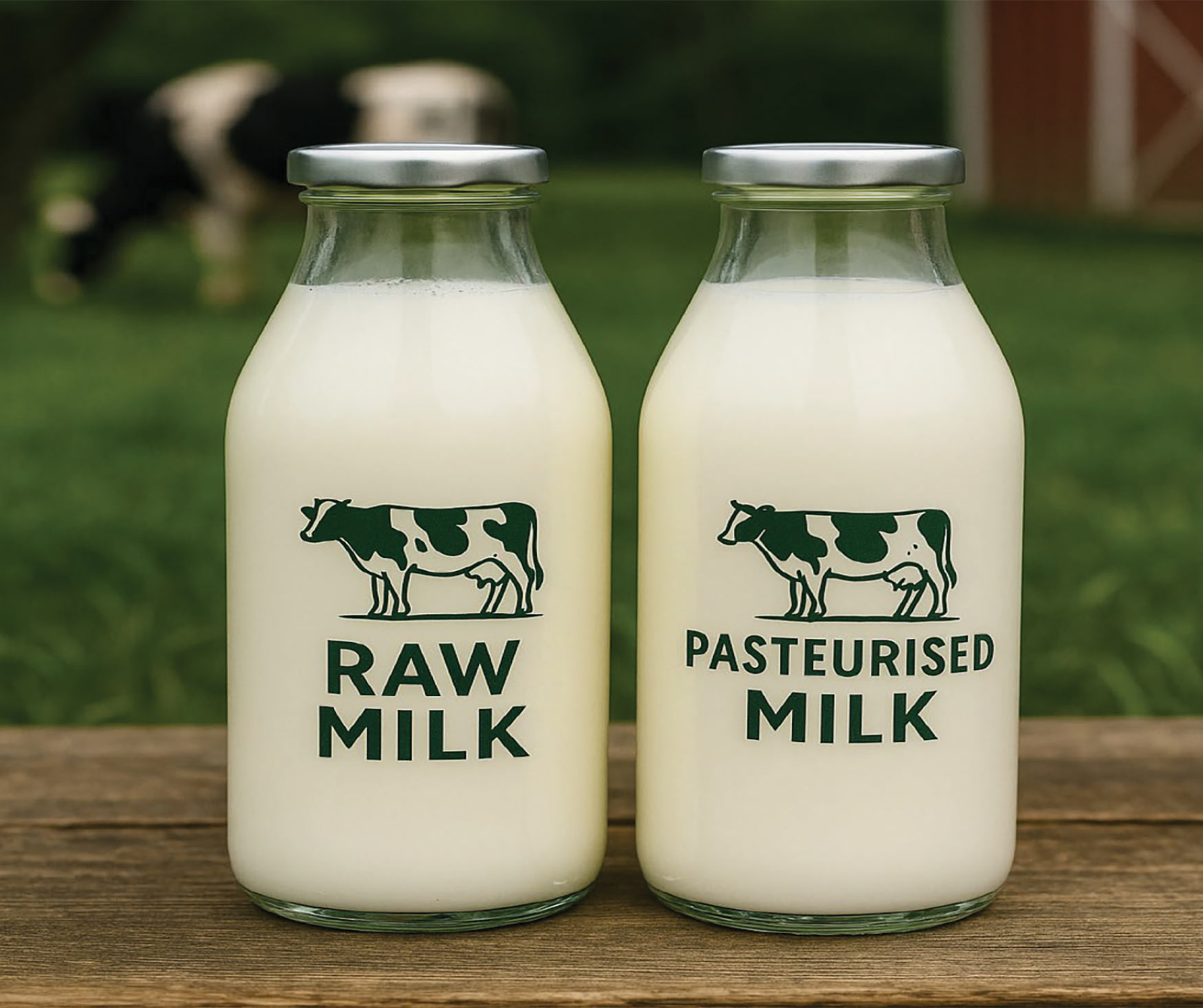
Dairy diversification into raw and pasteurised milk sales.

Pare Taikato
The opportunity cost to New Zealand of under-developed whenua Māori.

Malinda Wynyard
Building diversity in New Zealand dairy export markets for independent manufacturers.

Grant Kay
Dairy farmers love sharing data…but there is a ‘but’.

Sam Connor
Partnerships within the food and fibre sector: do they return value to the farm gate?

Kaitlin Bates
Smart Nutrition, Stronger Herds: A Holistic Approach to NZ Dairy Excellence.

Matt Ward
How can we maximise profitability in our decreasing ewe flock?

Daniel Judd
The soils gap: Interactions between culture, research and fertiliser.

Developing our people and communities.

Emma Weston
Career satisfaction and job retention for front line vets in government roles.

Katrina Roberts
Dairy farmer-female veterinary advisor relationships in New Zealand: Identifying the key attributes of a flourishing partnership.

Morgan Jones
How do we develop financial literacy in rural New Zealand?

Michele Findaly
What factors enable trusted, high value relationships between rural managers and clients in New Zealand’s food and fibre sector?

Jack Dwyer
Leadership qualities needed for first time managers.

Richie Cameron
How can the sheep and beef industry retain farm managers without ownership opportunities?

Anthea Yule
Does the decline in school bus services highlight more significant issues affecting rural primary education?

Phil Holland
Guardians or executioners: Navigating the ethics of deer control.

Richard Dawkins – from the World to Waihopai. A farmer’s path in rural leadership.

In this episode of Ideas That Grow, Bryan Gibson, Farmers Weekly Managing Editor, talks to Richard Dawkins, 2023 Kellogg Scholar and Marlborough sheep and beef farmer. Richard is also the new Meat and Wool Chair for Federated Farmers.

Richard discusses his family’s diverse 602-hectare farm operation, which includes sheep, cattle, forestry, and viticulture. He shares his experiences abroad and how returning home reignited his passion for farming.

Richard speaks about his Kellogg Rural Leadership Programme journey and research on lamb and ewe mortality, emphasising the need for better data and body condition scoring.

The discussion also covers leadership, collaboration, and the importance of timing when engaging in personal development.

Listen to this episode of Ideas that Grow, or click on one of the platform icons below to listen on your favourite player:

Episode Transcript

You’ve joined the Ideas That Grow podcast, brought to you by Rural Leaders. In this series, we’ll be drawing on insights from innovative rural leaders to help plant ideas that grow so our regions can flourish. Ideas That Grow is presented in Association with Farmers Weekly.

Bryan Gibson, Managing Editor of Farmers Weekly.
You’re with Ideas That Grow, the Rural Leaders podcast. I’m Bryan Gibson, the Managing Editor of Farmers Weekly. This week on the show, we have the new Meat and Wool Chair for Federated Farmers and Marlborough Sheep and Beef Farmer, Richard Dawkins. Richard, how are you?

Richard Dawkins, Farmer, 2023 Kellogg Scholar:
Yeah, good. Thanks, Bryan. The sun’s threatening to shine here, so we’ll take that as a win.

BG: Yeah, being pretty wet down your way, hasn’t it?

RD: Yeah, absolutely. We recorded 138mls in 24 hours, which was a record for us since 1954, but certainly, none of the damage compared to over the hill.

Farming to suit your environment.

BG: You farm up behind Blenheim, and you’re the latest in a long line of people in your family who have farmed there.

RD: Yeah. We’re 30 kilometres southwest of Blenheim, up the Waihopai Valley, or the Avon Valley, just off the Waihopai. I’m the third generation on the land, and my children will be the fourth. My wife, Jess, and I came home a decade ago and since have taken over and have three children.

BG: Excellent. Can you just Can you tell us a little bit about your farming business?

RD: We’re 602 hectares. The livestock side of the business is a composite ewe flock. We’re about 60% sheep and 40% cattle. We also do Jersey bulls, service bulls for the dairy industry, and some Friesians, which are just a straight fattening proposition for the works.

Our motto here has always been, you farm to suit your environment. You don’t modify the environment, you modify your farm systems to suit. We start lambing next week, late July, and main weaning is in November, and we sell all the lambs at weaning.

Last year was a record for us, actually. We sold 96% of the lambs straight off mum at 43. 5kg’s. Composite ewe flock, Jersey Bulls, a few Friesians, but we also have 20% of the property in farm forestry and 135 hectares of viticulture.

BG: Quite a diverse operation you’ve got going.

RD: Yeah, you have to be these days, don’t you? My father said in the late ’80s, 65% of his income was from wool. We’re now down under 1%, so yeah, just need to diversify those income streams a bit.

BG: Now, you mentioned you came back to the farm about a decade ago. You grew up there, I guess. What did you do after school?

Seeing the world before farming.

RD: Jess and I spent significant time in Western Australia. Funnily enough, we were in a different industry. We spent a fair amount of time working in the mines in WA near Kalgoorlie, and Jess was further north in Karata. But then we spent time in the United Kingdom as well, and it was really interesting to see their farm systems. I did a bit of labouring on farms. I worked on a dairy farm, more of an indoor system over there, and did a harvest up in Norwich, drove a lot of tractors.

So, yeah, that was a good experience. Good experience in Australia as well, but really glad to be home now and setting the foundation for the future, I suppose. We’re certainly not planning on going anywhere.

BG: Many, many, New Zealanders in their 20s head off to see the world. In a farming sense, do you think it’s good for people to go off and see, say, the likes of how you did a harvest a Norwich or a dairy farm in the UK?

RD: I think it is, Bryan, but there’s opportunity costs to everything isn’t there. Coming home in my mid-20s and seeing fellows in their teens who were a bit more advanced than me and had left school and gone straight into farming. It took a fair bit of catching up, which was a bit of a wake-up call.

You spend your childhood on the farm, but boy, there’s a big difference between helping dad shift some sheep and doing the tailing and things and helping in the sharing shed versus actually running a farm business. It took some catching up.

That’s what’s been fantastic about Federated Farmers is getting those farmer networks and rapidly expanding your knowledge. But at the same time, look, learning other industries, living in other countries, that was really valuable too.

Building knowledge and leadership skills.

I’ll tell you one positive was when we did come home, we were so full of enthusiasm. We hit the ground running and haven’t stopped, to be honest. Whereas some of my friends who did leave school and go straight into Ag, some of them are just thinking it’s a big wide world out there. Maybe I could go and try something else. I mean, it’s up to the individual, isn’t it? But there’s pros and cons with everything.

BG: Yeah, I often think that we see a lot of exporters and processors take farmer shareholders into export markets to give them an idea of actually what it’s like there and how people buy their food and how chefs cook it, or various other things. I think that global view and getting a first-hand understanding about how the fruit of their labour here in New Zealand is used, it can be really helpful in understanding why certain things have to happen.

RD: Yeah, for sure. I was fortunate enough to go on the Silver Fern Farms and Market Tour last year. We went through China and Korea, South Korea of course. Like you say, fantastic perspectives and quite mind-blowing, to be honest.

BG: Now, you’re a relatively recent Kellogg scholar. You went through the programme just a couple of years ago?

The Kellogg Rural Leadership Programme experience.

RD: So 2023, Phase One, part of K49. The timing for me was perfect, to be honest, in that I’d done a lot of industry stuff by that point. I had a few connections and a reasonable understanding of the bigger picture. But look, to go into Kellogg, it just really supercharged that foundation I had.

Getting those cross-sector connections, people from all walks of life, and hearing those different perspectives as well was hugely valuable and empowering. I guess since I’ve just carried on that journey, I would find very well-invested, I must say.

BG: That network that you build and the people you meet is really important. Of course, another thing they do is you find out quite a lot about yourself, which is good to what you’re good at, what you perhaps need to invest time into improving.

RD: Yeah, look, self-awareness is just absolutely essential. That was a big thing that I took out of it. It can be very confronting, but I think you go in as a bit of an unpolished diamond, and you have those courageous conversations and have that self-awareness.

You may be smooth off some of those rough edges. But some of those things you need to embrace, too. I’ve recognised that. Hey, I’m pretty extreme in this area, and maybe I need to tone it down sometimes. But look, maybe that makes me the man for the job with certain tasks. So, embrace those things as well.

Lamb and ewe mortality, leadership, and learning.

BG: Totally. Now, of course, a big part of the Kellogg Programme is the report you write. You looked at mortality in lambs and ewes?

RD: Yeah. I called it ‘Addressing Mortality in New Zealand Lambing Systems’ because I didn’t want to just purely focus on the lambs. Mortality in ewes is a huge issue as well. The findings were quite interesting. I guess the major takeaways were there’s not actually strong data sets out there.

The actual extent and understanding of the issue is not particularly good as an industry. Probably the lowest hanging fruit for progress is simply body condition scoring and feeding.

On the farm here, we take it to the enth degree, and we lamb our triplets indoors to give them extra care and attention. But look, as an industry, I think getting those body condition scores up and getting those pasture covers up prior and post-lambing is where we’d see the biggest gains.

BG: Now, you talk about data. I guess in a lot of cases, what happens on the farm stays on the farm in some ways in terms of the snow rolls in or whatever down in the high country and losses that no one quantifies in some ways.

RD: Yeah. It’s a real catch-22, isn’t it? In that our strategic advantage, our point of difference is those outdoor lambing systems. It’s free range for sure. How do you balance the welfare aspect versus that strategic advantage? I think the absolute majority of New Zealand farmers and farm systems are geared towards that low input, medium fecundity type breeding.

We do the indoor lambing here because we’re a highly fecund composite ewe flock, and it’s pretty simple at the end of the day, isn’t it? A ewe’s got two teats, and when she’s spitting out three or four lambs, I don’t think it’s controversial to say she needs a bit more TLC.

BG: Yeah, totally. In the drive for efficiency, which has been excellent over the years in the sheep and beef sector, that’s something everyone keeps in mind, I think.

RD: Look, and these composite ewes are amazing. Those ewes that leave the shed with three lambs, their average weaning weights, the combined weight of their three lambs was 110 kilos. That was at 105 days of age. So three lambs, straight off mum to the works, that’s about the most efficient ewe in the country. They’re big ewes, they’re 80 kilos at mating. But when you’re weaning 110 kilos of lambs, it’s worth putting the effort in. I mean, that’s just 1% of the flock, Bryan. Certainly not every ewe, but it is very rewarding when you get to weaning and all your effort pays off.

BG: Your project obviously completed, submitted, but it seems to have been read by some of the organisations that matter in our sector.

RD: I won’t take credit for that, I suppose. But it’s great, really cool to see Beef + Lamb  New Zealand pick up a lamb survival module now. I was involved behind the scenes, just having those discussions and organising a few things, bit of a working group. I’ve had a few podcasts and also going to have workshops around the country just focusing on lamb survival. That was one of my key recommendations. So full credit to them. It’s great to see.

Federated Farmers Meat and Wool Chair and further study.

BG: Now, obviously, the Kellogg Programme is based around growing rural leaders in our sector. You’ve come up through Federated Farmers, and you’re the new Meat and  Wool Chair. So it looks like you’re taking the ball by the horns in terms of leadership roles.

RD: Like I said earlier, it really did turbocharge things. I did learn a lot, learnt a lot through the process, but I think the biggest thing it gave me was confidence. Like, look, I can go through 500 hours or whatever I invested in. I was part of those deep conversations. I understood everything, had a really good cohort, and it just gave me that confidence to push to the next level.

It made me realise, hey, you are ready for those leadership positions. But it really was a foundation. One of the biggest takeaways for me was it’s fantastic work by the Rural Leaders team. I’ve actually connected the Kellogg Programme through Lincoln and Massey, and actually you can achieve a Postgraduate Certificate in Commerce.

That actually gains you entry to a master’s-level programme. After the Kellogg Programme, I went on to studying a Master of Business, and that’s taken all of that stuff I learned through Kellogg to a whole other level. That’s a fantastic opportunity for anyone. If they’re considering it, I’d be happy to talk people through that process.

BG: That’s excellent. I didn’t know about that. How are things going with Feds? How are you enjoying being on the National Exec?

RD: Look, it has been an absolutely flat out first fortnight. I probably look a bit tired at the moment. AGM and conference, followed by a lot of conversations. Obviously, a lot of media. We’ve had our oral submission to the select committee, and then on to the Silver Fern Farms Conference and all of the governance work that goes on in the background, the advocacy, the exciting stuff, the fun stuff.

But hey, this is a fantastic organisation. You have to govern as well. So, yeah, it’s been absolutely completely flat out. I think that may slow down a little bit, but with advocacy, the work never ends, and then we’ll be full steam ahead, trying to achieve what we want to achieve for not only the meat and wool council, but obviously every member too.

BG: It’s a big job and a big responsibility being the voice of our farming sector to not only the Beehive, but also the wider population of New Zealand, I guess, that you really are the window into that world.

Putting leadership development into practice.

RD: Yeah, you absolutely are. Look, it is a real privilege. When you come under a bit of pressure and you’re finally in this position, I guess your natural style comes out, shines. I’ve just realised that I’m more of a collaborator and a facilitator of these discussions. I don’t have a monopoly on good ideas. I have a fantastic council behind me, 24 men and women who volunteer their time and seven on the executive.

I think you need a bit of courage. Courage takes many forms. It’s putting a line in the sand and saying, this is not good enough, it needs to change. You probably saw that with the oral submission, the bill as it stands, isn’t fit for purpose. But courage is also saying, hey, I don’t know everything. Can I facilitate this discussion? Let’s get four or five people in a room and work out the pathway forward.

I mean, you’re never always going to agree, but at least have that talking to a friend or someone close to you and saying, This needs to change, that needs to change. We need to tidy up this area or that area. Actually, one thing I’m struggling with, which takes a bit of courage, is just learning to delegate. As a farmer, you see a problem, you want to go and fix it. But takes a bit of courage to say, Hey, I’ve got a bit much going on, or, You’re actually better at this than me, so could you please take care of it?

Again, we’ve got this council full of enthusiasm. So, yeah, quite often they’re willing to take up that mantle. And look, it’s just hugely appreciated these people volunteering their time, not for me, but for the whole sector.

BG: If someone’s out there thinking about developing their leadership skills to maybe looking at governance or just their own personal growth, the Kellogg Programme, something you’d recommend?

Get involved, be part of the bigger conversations.

RD: Look, it is, but I think it’s all about timing. I would really I encourage people to do a bit of that local provincial, maybe it’s volunteering any leadership position, and just do a bit of that.

Be part of those bigger conversations, those sector-wide conversations. Join your Federated Farmers and get involved. Join your Beef + Lamb New Zealand, various councils or working groups they have, or your rural advisory groups, things like that. Just get a bit of experience on that side of things, then go for Kellogg.

I think if you were just starting your leadership journey, you might not get as much out of Kellogg as you potentially could. But once you’ve done that foundation work, it’s absolutely fantastic.

BG: Thanks for listening to Ideas That Grow, a Rural Leaders podcast presented in Association with Farmers Weekly.

For more information on Rural Leaders, visit the pages for Nuffield New Zealand Farming Scholarships, the Kellogg Rural Leadership Programme, the HortNZ Leadership Programme, the Engage Programme, or the Value Chain Innovation Programme.

Jack Cocks signs off on a year as the NZRLT Associate Trustee.

Jack Cocks has just finished a one year term as Associate Trustee for the New Zealand Rural Leadership Trust (Rural Leaders).

Jack is a high country farmer who holds a bachelor’s degree in farm management from Lincoln University and a masters in agricultural economics from the University of Illinois. He is as much at home in the city as he is in the Otago high country running Mt. Nicholas Station with his wife and children.

Jack suffered a life-threatening brain aneurysm twelve years ago which saw him spend eight months in hospital over six years and undergo fifteen major surgeries.

Following this experience he researched how ‘Resilient Farmers Thrive in the Face of Adversity’ through the Kellogg Rural Leadership Programme. He is now a well-respected speaker on farmer resilience.

Early in 2024 Jack joined the New Zealand Rural Leadership Trust (Rural Leaders) as an Associate Trustee to learn more about governance from the Trust’s experienced board.

“I enjoyed learning from the other trustees. They all had different skill areas and very smart perspectives too. Being part of a team was also an appealing thing to me. The frequent events, such as the Kellogg networking event in Wellington, were great too.”

Mt. Nicholas is remote, so Jack cites the board interactions, both online and in-person, as being another important draw. “You’re not in an immediate community here at Mt. Nicholas. You’re not going to the local field days, meetings or functions that often. So, keeping involved with board matters was enjoyable,” says Jack.

Jack’s plan is to now shift his focus closer to home, on family and the business.

“Our kids are going through high school, they’re both week-day boarding in Invercargill, two and a half hours away. It’s a reasonable commitment to head up and down the road every week.

I’m still doing one or two speaker engagements a month. I’m able to give back a bit to the sector and the community, and a lot of that has spun out of my Kellogg,” adds Jack.

Jack plans to continue his governance journey once his children leave school. He acknowledges the strong foundation the year as an Associate Trustee has given him and he mentions some advice he was given before he went into the role.

“Some advice I got from a wise director before joining Rural Leaders as Associate Trustee, was to look at the one year term in three parts. The first part is asking plenty of questions. The second part is establishing credentials. The final part is adding some value.

I didn’t throw any ideas around for a start, but tried to understand the business. Then I established myself in that second part and looked for ways to add value in that last part. Some of the work that Lisa Rogers and I were doing towards the end with the Value Chain Innovation Programme; like looking at an offshore component for it, fits into that.

That’s how I approached the one year, and I found that advice really useful. It reassured me that I didn’t need to go in guns blazing,” says Jack.

Kate Scott, Rural Leaders Board Chair, spoke of Jack’s measured and intelligent approach to his time as Associate Trustee, “The knowledge Jack has passed on, especially around farmer resilience, has been invaluable. Jack’s calm, clear and curious nature make him a standout as he continues his governance journey.”

Katie Rodwell recently joined as the new Associate Trustee, marking the end of Jack’s year.

“It was a tremendous opportunity. I thank the board and the Rural Leaders’ team for their openness and inclusiveness. I really felt comfortable and that I could contribute to make a difference,” concludes Jack.

FMG Young Farmer of the Year winner to attend the Kellogg Rural Leadership Programme.

Hugh Jackson, a Waikato Bay of Plenty Young Farmer, has won the title of New Zealand’s top young farmer. 

Hugh is a 26-year-old sheep and beef farmer and was crowned the 57th FMG Young Farmer of the year at the Grand Final event in Invercargill on 5 July.

Working on his family’s farm north of Raglan, Jackson also has an interest in technology, and a passion for mental health.

Jackson believes technology will play a big role in shaping in the future of farming, as well as in the lives of the young people who will be using it. 

The New Zealand Rural Leadership Trust (Rural Leaders), in partnership with Lincoln University, sponsor the FMG Young Farmer of the Year winner on a place to attend the Kellogg Rural Leadership Programme. Rural Leaders and the University have been doing this for several years.

Rural Leaders CEO, Lisa Rogers said it was a close finish but Hugh’s determination shone through, and added, “We look forward to seeing Hugh on the Kellogg Programme soon. It was a privilege to attend the Grand Final and see first-hand, the depth of talent we have coming through New Zealand Young Farmers.”

New Zealand Young Farmers chief executive Cheyne Gillooly in a Young Farmers article said Jackson impressed everyone with his talent. “…It’s inspiring to see the recognition go to someone who will not only be a strong ambassador for the next generation of young farmers, but across the agricultural industry.” 

Source: https://www.youngfarmers.co.nz/news/hugh-jackson-crowned-2025-fmg-young-farmer-of-the-year

Katie Rodwell joins NZRLT as Associate Trustee.

The NZRLT Board and Leadership Team welcomed Katie Rodwell, Associate Trustee, to the NZRLT Board in May.

Katie replaces outgoing Jack Cocks. We’ll share more on Jack and his time with the NZRLT board soon.

Katie has recently returned to work after being on maternity leave for a year. She is looking forward to getting into the year and the new governance opportunity that being selected as Associate Trustee represents.

Rural Leaders caught up with Katie on her third week back at Rabobank to discuss her background and why she went for this governance role.

Katie, her husband, Luc and son Paddy, live in North Canterbury, just on the outskirts of Amberley. They have been on their six hectare block just over a year and a half.

Katie grew up on a farm north of Kaikoura; a farm that sold just before the Kaikoura earthquakes. Since then Katie has been Canterbury-based for most of her life. She attended Lincoln University and after graduating went to Farmlands Cooperative, where she worked for eight years as both Brand Manager and Marketing Manager.

This was followed by a move into the Head of Sustainability and Land Use role. Then to Rabobank as Sustainability Manager where she has been for three years, two of which were working – one on maternity leave.

Katie completed the Kellogg Rural Leadership Programme in 2019 as part of cohort 40. Her Kellogg research looked at the consumer-driven and environmental challenges the primary industries face. Her report proposed New Zealand lead in nutrient-dense, sustainable food, using innovation, education, and collaboration to reshape agriculture and meet rising health-focused demand.

It was the Kellogg experience that underscored her decision to join the Rural Leaders’ Board. “It was a really transformative experience for me, and I wanted to give back to the organisation that had helped me so much”, Says Katie.

The opportunity to work with and learn from Rural Leaders’ experienced board members, Katie cites as one of the other standout reasons for her decision.

“I also relate strongly to the vision of Rural Leaders – around growing our leaders and the importance of developing leaders in our sector. I want to help drive impactful change so, I see Rural Leaders and the programmes and projects they undertake as being a powerful tool to help achieve that.

My passion is around how we create thriving, resilient farming businesses, and I see that having good leaders is fundamental to achieving that”, concludes Katie.

On the appointment, Kate Scott, NZRLT Board Chair said, “We’re pleased to have Katie join the NZRLT Board as Associate Trustee. Katie brings a range of skills but most of all a demonstrated passion for leadership development in food and fibre.”

Katie’s first official board meeting as Associate Trustee will be this month (July).