2026 Nuffield NZ Farming Scholarship. Apply by 17 August 2025. Read More...

Apply for 2026 Nuffield NZ Farming Scholarship by 17 August 2025. More details...

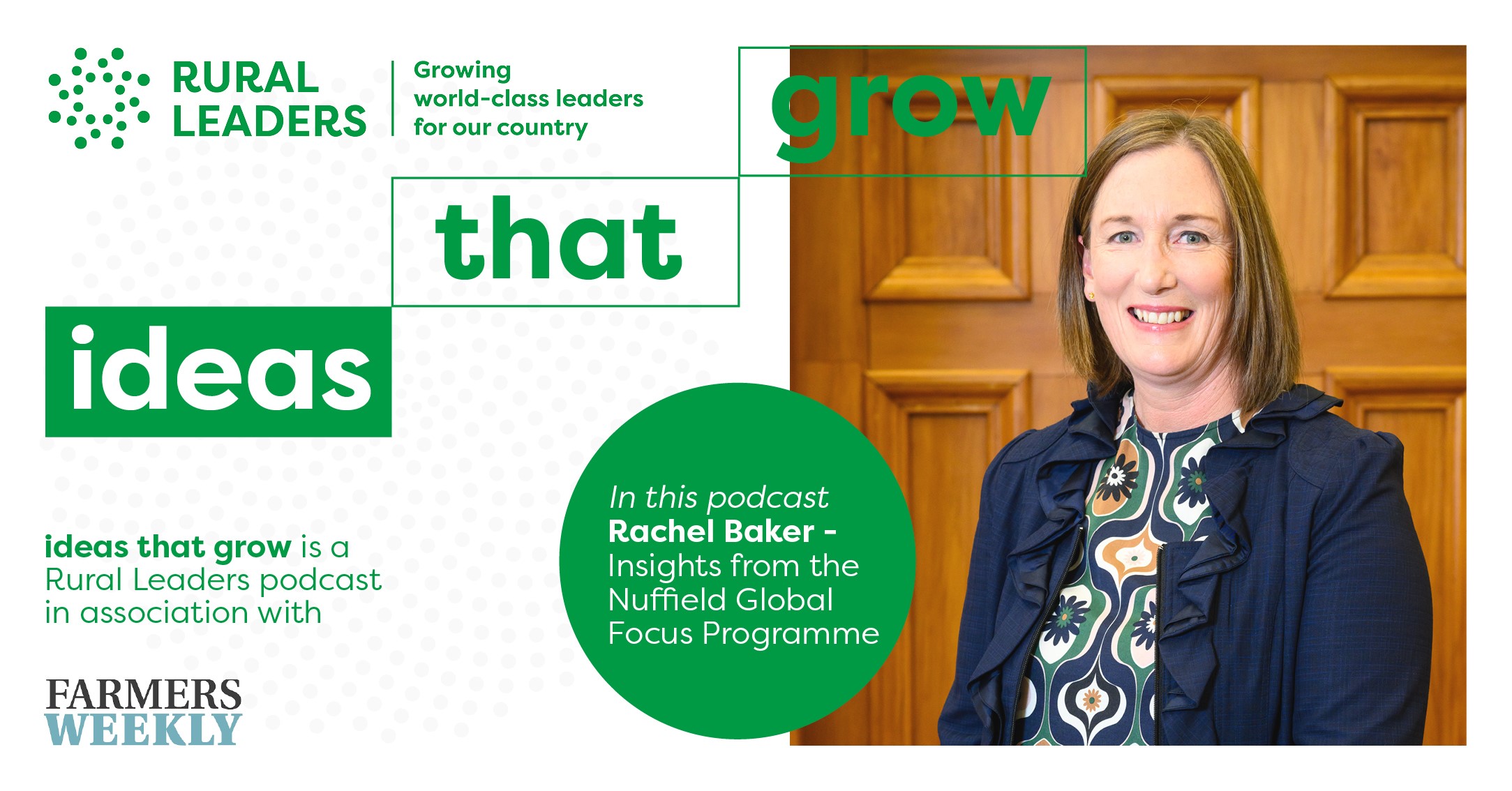
Coding for Change: Navigating adoption of gene editing in the New Zealand primary sector

Gene editing is poised to reshape the New Zealand primary sector by enabling adaptation to climate change, enhancing environmental sustainability, and boosting productivity.

Advancements in faster, safer, and more precise gene editing techniques have prompted proposals for new legislation to align New Zealand’s gene technology regulations with those of key trading partners. A balanced approach is needed, harnessing scientific innovation while maintaining public trust and market access.

Gene editing can transform parts of the agricultural value chain, especially scientific research, the biotech sector, and plant breeding. In other areas, its impact may be incremental and take time to reach meaningful scale. Therefore, managing expectations is critical so stakeholders maintain realistic views of both its benefits and limitations. Independent government and primary sector research will be important for ongoing monitoring and transparent reporting.

As New Zealand develops a regulatory framework, it has the chance to embed Environmental, Social, and Governance (ESG) principles. This would broaden assessment criteria beyond standard safety and risk to include economic, societal, and environmental impacts. Though this approach would require more intensive, case-by-case evaluations from regulators and applicants, it could increase trust among the public, the sector, and international trade partners.

Leadership from the primary sector is necessary to ensure agricultural impacts and opportunities are prioritised in regulation. Coordinated strategy frameworks for gene technology will help map innovation pipelines, risks, opportunities, and commercialisation timelines.

Early engagement with stakeholders, including government, sector bodies, farmers, growers, Māori, and the public is essential. These discussions should be grounded in relatable examples to support informed public opinion, rather than dictated by a top-down expert model. It is also important to acknowledge and respect those who oppose regulatory changes.

Driving innovation will require significant investment, supported by public-private partnerships and international collaboration. A key challenge lies in enhancing scientific capability and confidence, especially during uncertain times for the science sector.

New Zealand is encouraged to adopt a ‘fast follower’ approach to gene technology legislation, allowing it to benefit from scientific advancements while preserving public and trading partner trust. By navigating the adoption of gene editing carefully and inclusively, New Zealand can boost the primary sector’s productivity, sustainability, and global competitiveness.

Keywords for Search: Rachel Baker, Rachael

Changing the Bog-Standard; repeatable solutions for Aotearoa’s Peatlands

Peatlands might look like the scruffy margins of New Zealand’s landscape, yet these water-logged soils are anything but marginal. Although they cover barely one percent of Aotearoa, they warehouse roughly 20 percent of the nation’s total biomass carbon – part of a global system that stores more carbon than all the world’s forests combined. Drain them, however, and the peat shrinks and oxidises, emitting CO₂ and nitrous oxide. Recent estimates suggest that drained peat already contributes up to seven percent of New Zealand’s greenhouse-gas inventory. Put simply, landscapes that should be carbon vaults are leaking fast – and some of our biggest customers have noticed, with companies like Nestlé now asking suppliers to avoid peat-related emissions.

With more than 90 percent of our original wetlands already drained or degraded, the challenge is clear: how do we stop the loss without undermining farm profitability or rural livelihoods?

One answer is paludiculture – production systems purpose-built for permanently wet soils. By cultivating raupō, harakeke, sphagnum moss and other water-tolerant species, landholders can keep peat saturated while generating fibre, construction materials, substrates and, potentially, carbon-credit income. International evidence is compelling: rewetted dairy pastures in northern Germany and wet-farming pilots in England’s Cambridgeshire Fens are just a few examples showing that, with supportive policy and market signals, “peat-positive” enterprises can be both profitable and resilient.

This report also underscores that peatlands – repo – are taonga for Māori. For generations they have provided kai, rongoā and weaving fibre, and their cultural narratives are embedded in the whenua. Successful restoration therefore hinges on genuine co-design with mana whenua, blending mātauranga Māori with ecological science.

Restoring peatlands under paludiculture offers a practical pathway to reduce agricultural emissions while keeping land productive. By scaling up sustainable

management practices, New Zealand can balance economic growth with its climate commitments.

Momentum is building – stronger wetland rules under the National Policy Statement for Freshwater Management and dozens of pilot projects are already under way. Yet this report calls for a further step-change. It urges decision-makers to treat peatlands as critical national infrastructure – carbon banks, biodiversity reservoirs and cultural landscapes worthy of sustained investment.

The bottom line is clear: the science, tools and precedents already exist; the missing ingredient is collective will. Reframing peatlands as essential ecosystems is vital to cutting emissions, improving freshwater quality and protecting native species. This report concludes with a challenge: keep the ground wet on purpose and transform the future of peatland management.

Keywords for Search: Jenna Smith, Genna

Putting the Success back into Succession

Peter Templeton's report

Farm succession in New Zealand is a critical issue, with an aging farmer demographic and rising land prices making it increasingly difficult for younger generations to enter agriculture. This report explores the barriers to farm succession and potential pathways for ensuring the long-term sustainability of New Zealand’s agricultural sector.

The report examines the challenges of family farm succession, the growing influence of corporate farming, the affordability crisis in farmland, and alternative succession models.

Historically, farm ownership has depended on intergenerational succession, but rising land values and tighter financial conditions complicate this process.

Succession typically involves three key phases: physical contribution (working on the farm), financial decision-making (taking on financial responsibilities), and equity transition (the formal transfer of farm ownership). However, many succession processes fail due to poor planning, lack of communication, and financial challenges. Key barriers include the reluctance of older farmers to relinquish control, challenges in fairly compensating multiple siblings, and the high financial burden placed on successors.

Successful succession requires early planning, clear communication, and often the involvement of external advisors.

This report highlights the dramatic shift in farmland affordability, with land values rising so quickly that it now takes up to 60 years of savings to afford a farm deposit. As a result, corporate farming structures, which have access to capital and economies of scale, are becoming more common. While these models can improve efficiency, they risk concentrating land ownership and reducing local community decision-making. Key concerns include the loss of family-owned farms, reduced reinvestment in local communities, and a focus on short-term profits over long-term land stewardship.

Alternative succession models, such as share-farming agreements, equity partnerships, lease-to-buy agreements, profit-sharing models, and crowdfunding, offer ways for younger farmers to enter the industry without the capital constraints of traditional ownership. These models enable gradual equity building, risk-sharing, and community support for funding.

To facilitate these models, this report suggests several policy changes, including incentivising banks to accept livestock and plant assets as loan security, government-backed loan programmes, tax incentives for succession planning, and support for financial education. Industry leaders should also encourage a cultural shift toward treating farm succession as a strategic business process.

In conclusion, ensuring the sustainability of New Zealand’s agricultural sector requires fostering diverse, innovative pathways to farm ownership, supported by government, financial institutions, and industry bodies. Collaboration is essential to preserving New Zealand’s farming heritage.

Keywords for Search: Peter Templeton, Tempelton

Beyond the Farm Gate: Rethinking New Zealand’s Economic Future

New Zealand’s economy has long relied on agriculture and tourism, industries that have shaped national identity and driven export earnings. However, both sectors face growth limitations: agriculture contends with land constraints, environmental regulations, and changing trade dynamics, while tourism is volatile and constrained by infrastructure and environmental capacity. If these industries are nearing their natural limits, the country must consider its long-term economic strategy.

As a small, trade-dependent nation reliant on imports for manufacturing, energy, and technology, New Zealand must prioritise strong export earnings over GDP. Historically, agriculture and tourism have underpinned this, but their uncertain future growth poses challenges.

Lessons from Global Agriculture
This report examines global agriculture for lessons. In Brazil, agriculture is seen as limitless, driven by vast land expansion and investment. In contrast, the UK and Netherlands deliberately constrain farming. The UK pays farmers not to farm under ESG policies, while the Netherlands focuses on high-value niches and supply chain dominance, rather than sheer production. Despite its small size, the Netherlands exports more food than Brazil by controlling logistics, processing, and distribution.

New Zealand aligns more with the UK and Netherlands than Brazil. It lacks vast arable land, and environmental policies limit production expansion. The country is losing farmland: since 2017, over 260,000 hectares of pastoral land have shifted to forestry. Sheep numbers are at historic lows, and processing facilities like Alliance Smithfield have closed due to declining supply. Simultaneously, global trade dynamics are shifting. The EU’s Farm to Fork Strategy tightens environmental standards on imports, and UK trade deals with Australia and South America undermine New Zealand’s competitiveness. Heavy reliance on China, buying 40% of dairy and 30% of red meat, also poses risks.

The Path Forward: A National Conversation
New Zealand’s agricultural growth is likely to be linear, not exponential. This report calls for a national conversation about the next 25–50 years. Should the country emulate Ireland by using tax incentives to attract high-value industries? Should it invest in processing and logistics to retain more export value domestically? Could it lead in renewable energy, digital innovation, or advanced manufacturing?

New Zealand must proactively shape its future. The UK’s experience warns of deprioritising food production without alternatives, while the Netherlands shows that controlling the supply chain can be as valuable as production.

It’s time to ask: What comes next?

Keywords for Search: Carlos Bagrie, Karlos, Bagree

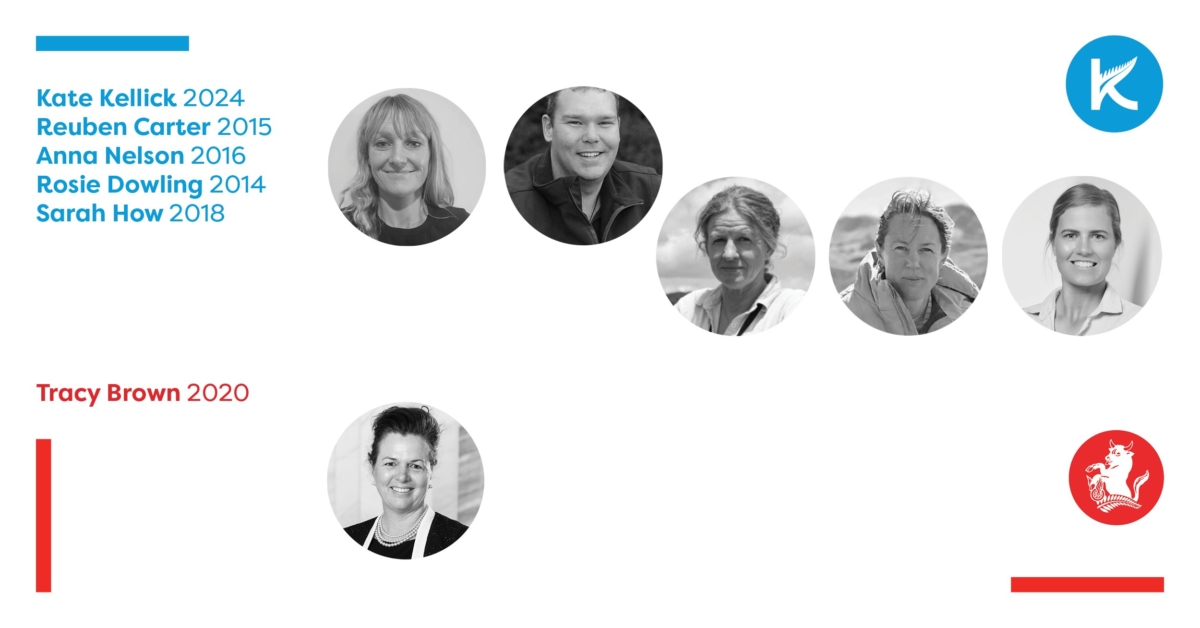
Alumni in the Spotlight – Anna Nelson, Rosie Dowling, Kate Kellick, Reuben Carter, Sarah How and Tracy Brown.

Here are just a few of the media pieces covering the impact of Rural Leaders’ Programme Alumni in industries and communities across the sector. 

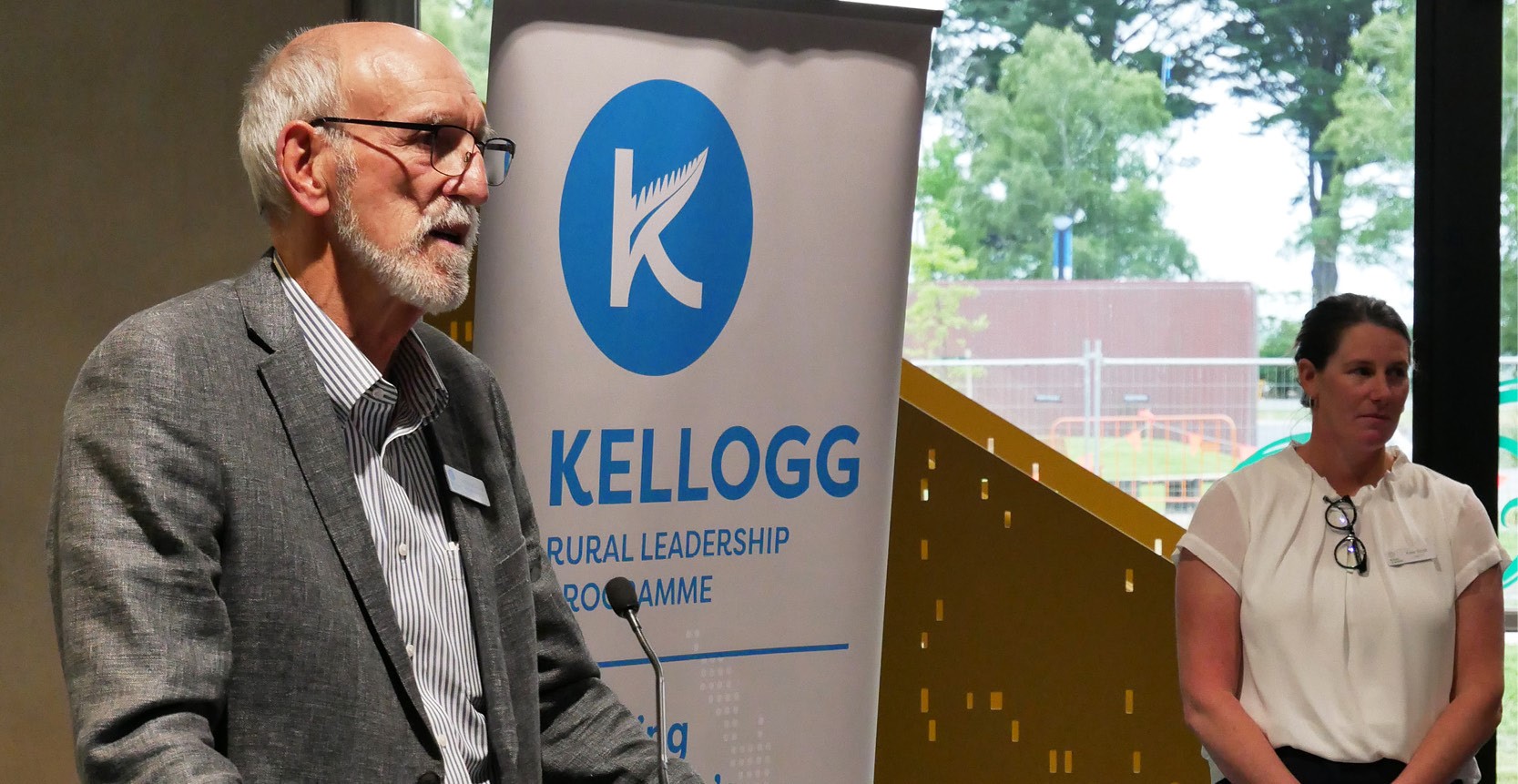
Kate Kellick, 2024 Kellogg Scholar.

Kate Kellick’s esheep, a shedding sheep breeding operation, hosted its first ram auction in Mangamahu near Wanganui recently.

The auction saw farmers from across the North Island, bid on the adaptive shedding sheep.

In a Farmers Weekly article by fellow Kellogg alum Cheyenne Wilson, Kate said: “It was quite surprising. There was a good turnout of people from all over the place. There were even a few bidding wars, with people vying for the same ram and pushing the prices right up.” 

During the auction the top ram fetched $8000, with an average price of $3500. 

“That’s apparently topped the average ram price in New Zealand,” Kellick said. 

“It definitely exceeded my expectations and makes all the hard work worthwhile.” 

Take a read of Cheyenne Wilson’s Farmers Weekly article here.

You can also read Kate’s Kellogg report here.

Reuben Carter, 2015 Kellogg Scholar and 2024 HortNZ Leadership Programme graduate.

A recent ODT Rural Life article charts Reuben’s career and life course so far – let’s just say he’s been a busy man. You can read more on Reuben’s journey here.

As a both a Kellogg Rural Leadership Programme and HortNZ Leadership Programme graduate Reuben is well equipped to deal with the challenges and opportunities the sector presents.

Reuben, is a crop manager with Oakley’s Premium Fresh Vegetables in Canterbury. Delivered by Rural Leaders, Reuben and his fellow cohort completed the HortNZ Leadership Programme in two phases over nine weeks, between August and October this year.

Take a read about Reueben’s HortNZ Leadership Programme experience here.

Tracy Brown, 2020 Nuffield Scholar.

Following up on last month’s post on Tracy Brown’s new role as Chair at DairyNZ, we share a recent DairyNZ ‘Talking Dairy’ Podcast.

In the podcast Tracy shares her inspiring journey and her vision for the future of New Zealand’s world-leading dairy industry.

You can hear how Tracy plans to steer DairyNZ to deliver greater value for farmers here.

Rosie Dowling, 2014 Kellogg Scholar.

Rural Leaders’ programme alumni appear regularly on Country Calendar.

In one of the most recent episodes, Rosie Dowling’s determination in the face of adversity features as she farms sheep and beef, raises her young kids after her husband dies, and runs a business making wool-insulated dog kennels.

This is an inspiring watch. Head here to view.

There’s also this article on Rosie, in CountryWide by Joanna Grigg.

Anna Nelson, 2016 Kellogg Scholar.

Anna Nelson has been Chair of the co-operative side of Silver Fern Farms for six months and will take over from Rob Hewett as Chair of the Shanghai Maling joint venture side of the business in May.

Anna also runs a 1450ha King Country sheep and beef farm with husband Blair.

You can read more about Anna in Farmers Weekly’s Land Champions series below.

You can read the article here.

Sarah How (Tait), 2018 Kellogg Scholar.

The Zanda McDonald Award, a prestigious trans-Tasman honour that recognises and nurtures exceptional talent in agriculture, has announced the final three New Zealand finalists for 2025. The finalists include Kellogg alum Sarah How (Tait) and Lincoln University alum Maegen Blom.

Sarah is Co-founder and General Manager of Landify Ltd, in South Canterbury.

You can read more about the Xander McDonald Awards here.

You can read the article here.
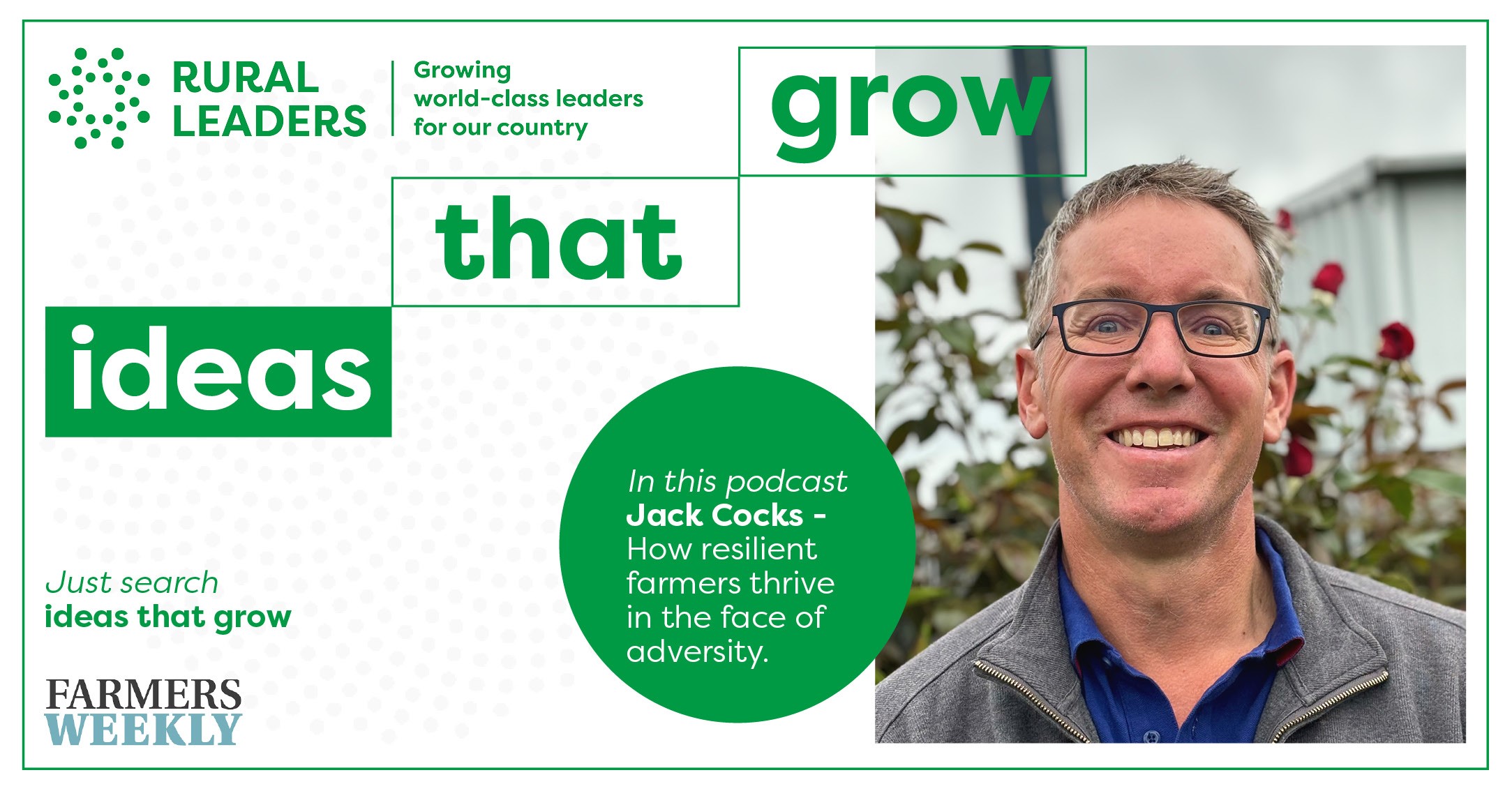
Dave Nuku on Kaitiakitanga and adopting a long term view.

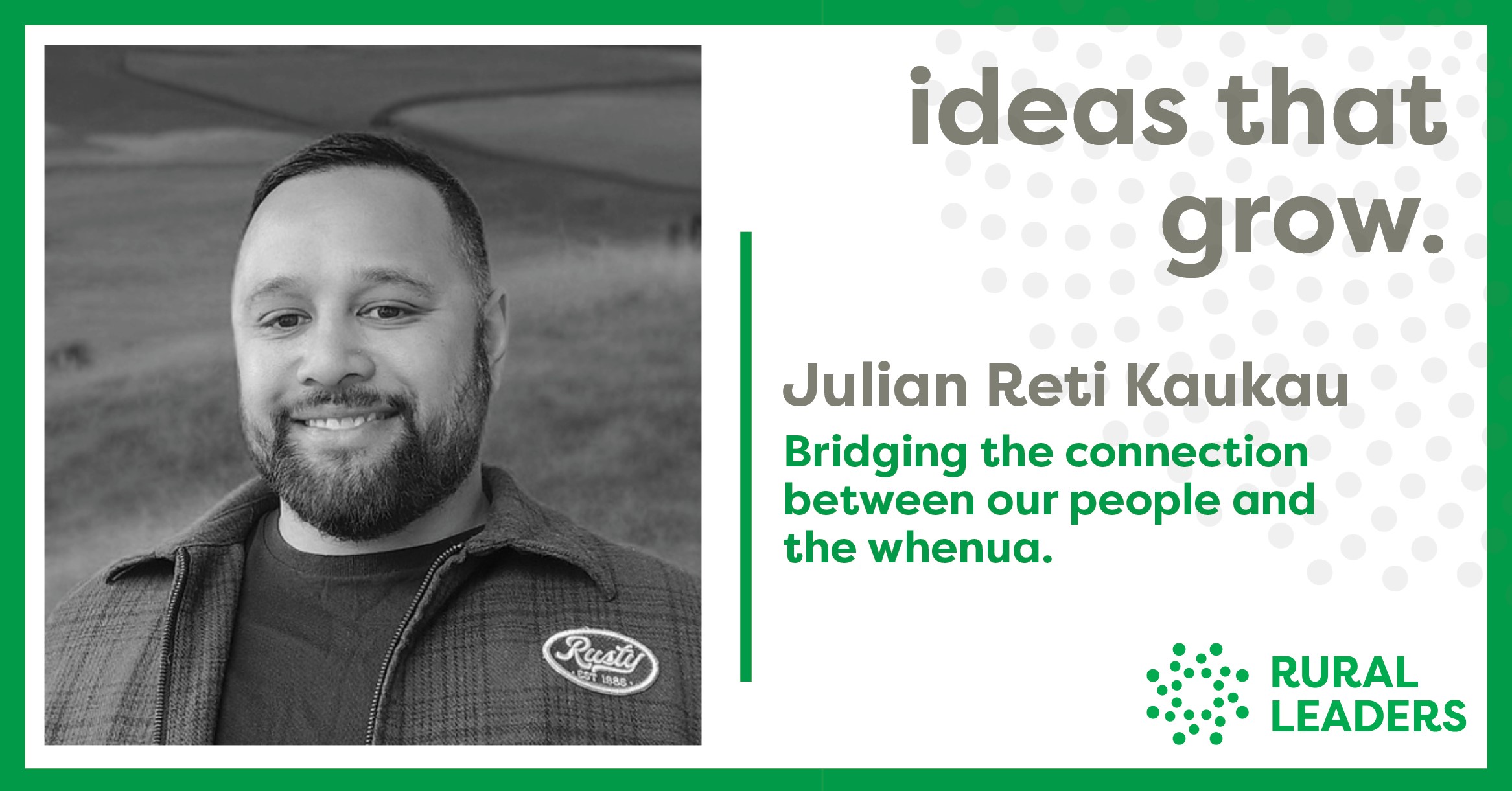
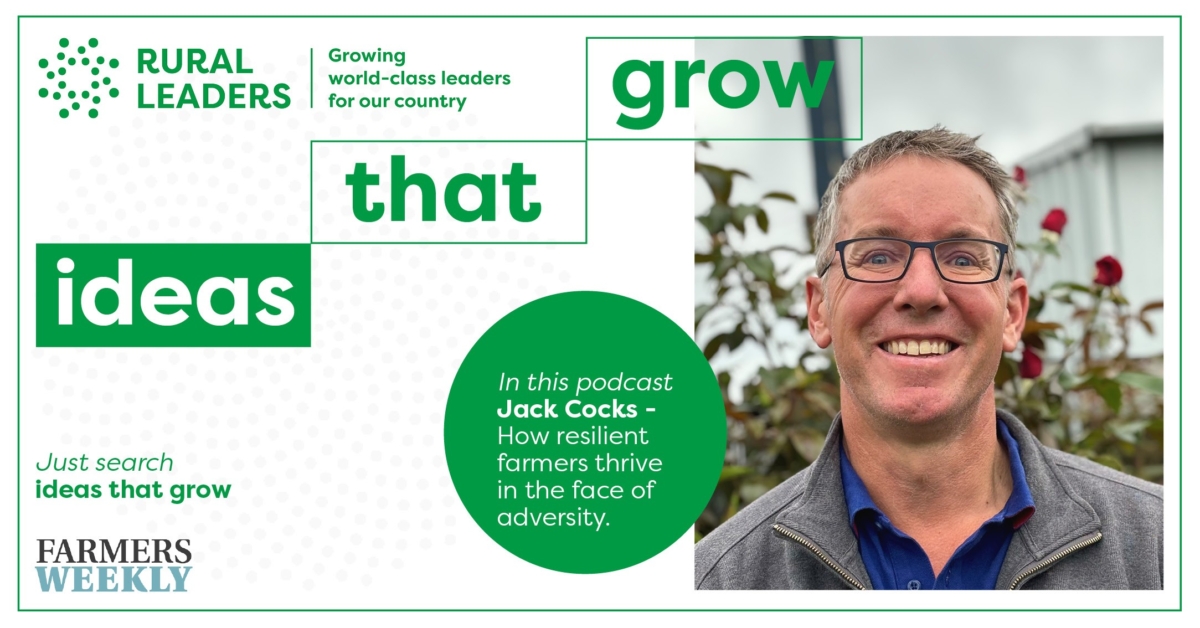
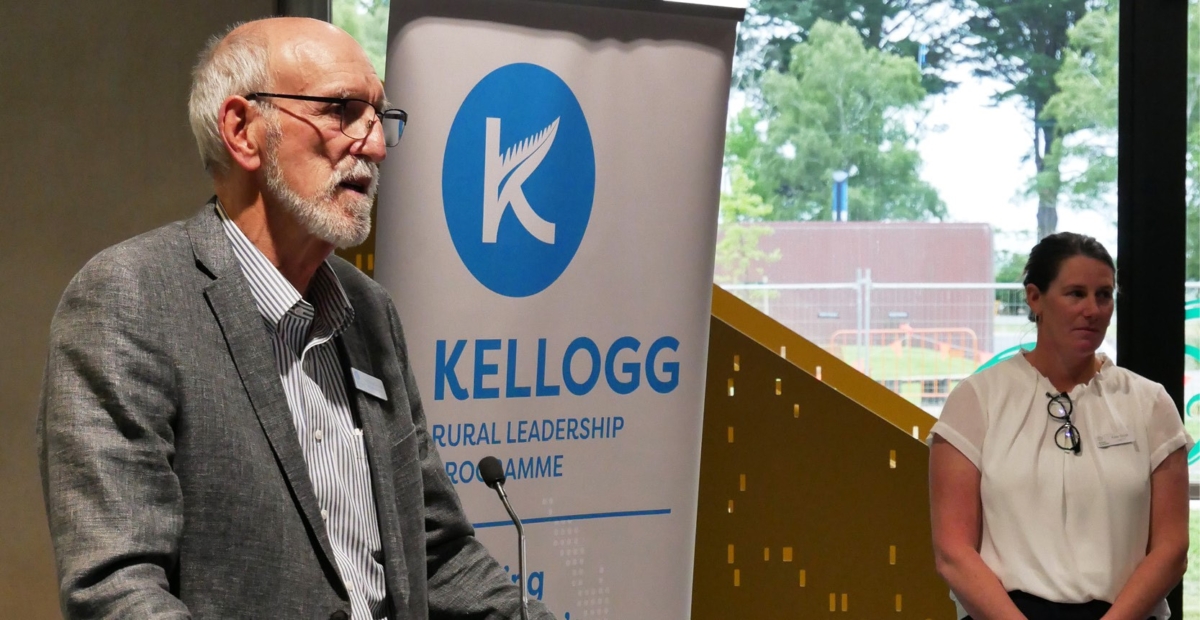
In this podcast, Dave Nuku, 2024 Kellogg Scholar, talks to Bryan Gibson, Managing Editor at Farmers Weekly, on his work with Ngamanawa Incorporation and about how adopting a philosophy of Kaitiakitanga can be in alignment with a strong and profitable business.

Listen to the podcast here.

Bryan GibsonManaging Editor of Farmer’s Weekly.
You’ve joined Rural Leaders’ Ideas That Grow podcast. In this series, we’ll be drawing on insights from innovative rural leaders to help plant ideas that grow so our regions can flourish. Ideas that Grow is presented in association with Farmers Weekly.

Bryan Gibson, Managing Editor of Farmers Weekly.
You’re with Ideas That Grow, the Rural Leaders podcast. I’m Bryan Gibson, Managing Editor of Farmers Weekly. This week, I’m talking to Dave Nuku. How’s it going?

Dave Nuku, 2024 Kellogg Scholar, Ngamanawa Incorporation.
DN: Hi, good Bryan and you?

BG: Going good, thank you. You’re one of the very recent Kellogg scholars. I understand your report has only just come out.

DN: I’ve had a fantastic experience with Kellogg. Just finished my report, so glad to have had that completed. Yeah, it’s good to be here with you today.

BG: Just tell us a little bit about yourself. Where are you from?

Bringing a global perspective to New Zealand food and fibre.

DN: I’m from the Bay of Plenty, up here in Tauranga, and have some strong whakapapa connections back here. My family have been here for a long time. I’m currently working for Ngamanawa Incorporation, managing a block of Māori land of around 4,000 hectares in the lower Kaimai.
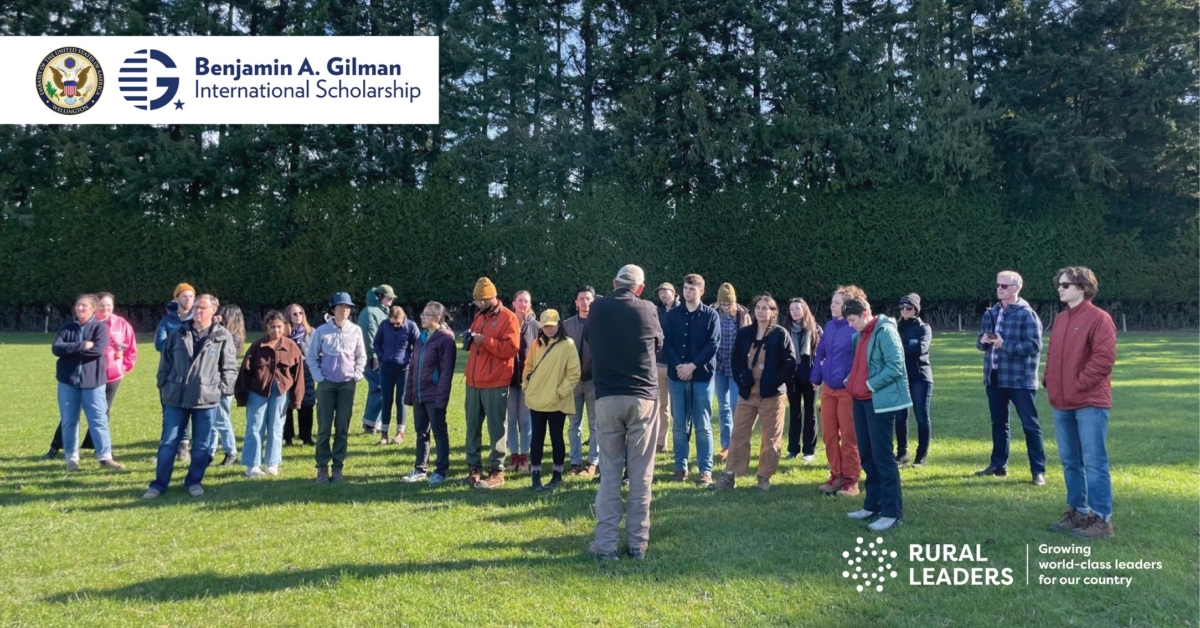
BG: Awesome. I was born in Tauranga, so I know the place pretty well. Has most of your career been in the food and fibre sector, or is that something relatively new to you?

DN: To be completely honest, it’s very new to me. I do not have a background in the food and fibre sector. I actually spent two decades overseas working through Southeast Asia, Hong Kong, Singapore, Philippines, Indonesia, Thailand, Malaysia. So I lived based in Malaysia, Hong Kong, and Singapore for several years in a completely different industry.

I was working for a multinational company over there running health clubs and resorts across Southeast Asia. So, it’s a big change from that perspective. I moved back home to Aotearoa a few years ago, just after COVID, and was fortunate enough to make a transition into the food and fibre sector with the Incorporation which our family have got long-standing connections with. It was a nice fit, but a very different industry – and all the differences that come with changing industries and countries.

BG: Yeah, that is quite a change, isn’t it? How did you find your time overseas? You’re obviously there a long time. environment.

DN: Absolutely loved being overseas, loved travel. My wife and I have got two kids as well, and so they were born overseas. So very much an international whanau. We did a lot of travel when the kids were young, and as they grew up. It was a constant part of our lives.

We were working in these different markets, so it was quite dynamic. Quite different to New Zealand. We were living in Malaysia and Singapore – so that’s closely connected to a lot of other countries, very easy to be mobile and get around. Businesses, languages, all of those things are very different, more nuanced, more complex than New Zealand in industries that we’re working at, but loved it. Absolutely loved it.

Having said all of that, it’s great to be home. I think Aotearoa, New Zealand is the best country on Earth and absolutely love living here, working here, and being home with my family.

BG: Tell me a little bit about the Incorporation you’re working for now.

Managing, leading, and stewardship.

DN: Yeah. So, Ngamanawa Incorporation has a large land block up in the lower Kaimai’s. Mainly the Incorporation has its roots in forestry. It’s around 2000 hectares of pine, radiata pine, and around 2000 hectares of native forest. In the native forest, we have a conservation team of five full-time Kaimahi or staff who are involved in our predator control efforts there.
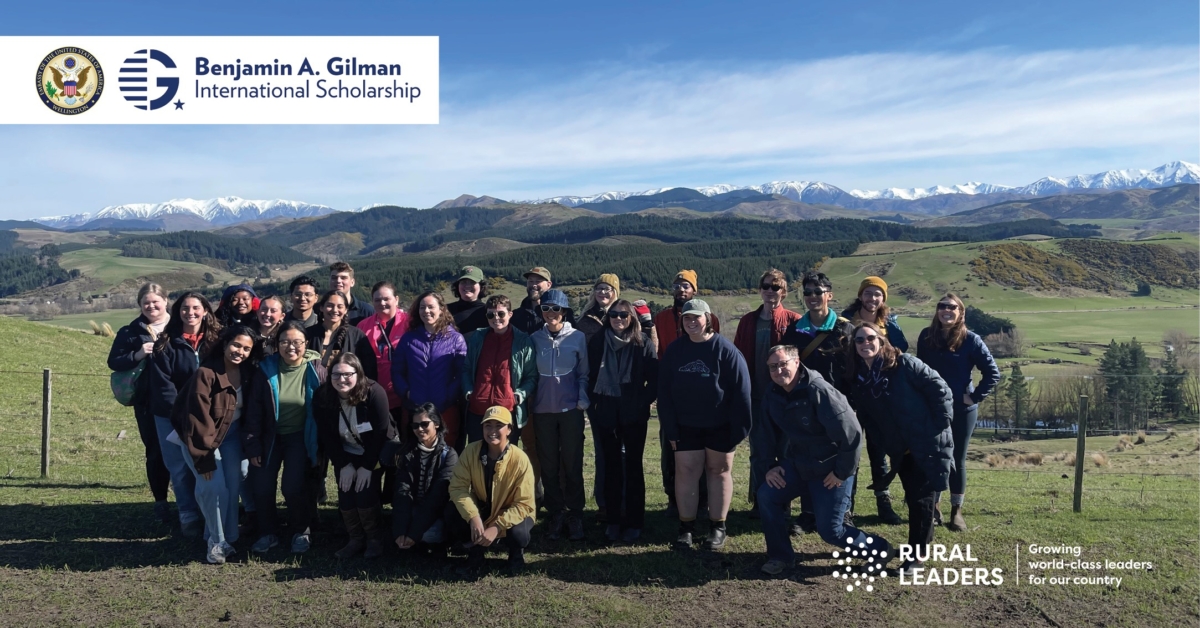
We do everything from monitoring the waterways, the habitat for native species, whether it’s tuna/eels or kōkako, or kiwis. We have a lot of those really special native species up on the block. As well as forestry, we’re also involved in horticulture. We have a kiwifruit orchard with golden and green kiwi fruit in the Kaimai area, a little bit closer to Tauranga.
Then we also have some investments in other horticulture crops, strawberries on Matakana Island and some rocket apples in the Hawke’s Bay. So, quite a mix of different business interests across the Incorporation. It keeps you busy and it’s varied.

BG: Yeah, a lot of variation and diversity there. I guess there’s a lot of different farming techniques, business management, and you’ve got the native block as well, which is more of a conservation approach, I guess. A lot to keep on top of.

DN: I think it’s the variety and that diversity that makes it fascinating for me. I have a really strong international business background, but it’s nice to be doing something that is very, I suppose, organic and something working for an entity that we’ve got a long-standing connection to.

The block, the incorporation is made up of a number of different blocks of traditional Māori land, that has been in Māori ownership for hundreds of years. It’s nice to be taking that and really making sure that it’s productive in terms of our forestry, and then also in the indigenous forest space and the native bush, really looking at preserving the native species there.

We also have a lodge for our shareholders, so you can book the lodge and go up there and enjoy it with your family. It’s nice on a lake with lots of waterways in the middle of the bush.

It’s also about connecting people to land as well. Then the horticulture and the kiwifruit is really that’s a lot of the day-to-day operations. Long time between drinks in terms of the business model for forestry, but with Kiwifruit. They’ve got a more seasonal cash flow in business requirements and operations there.

BG: How are things tracking for you guys at the moment? Has it been a good year? Things looking pretty good?

DN: It’s been a fantastic year for kiwifruit in general across the Bay. It’s been something that the industry has really needed. We had a couple of rough years there with COVID, and there were a number of weather events.

Also, some of our growers down in the Hawke’s Bay area were really affected by cyclone Gabrielle. But overall, the industry has had a great season, a really strong crop. I think a record season, just under 200 million trays, which is around about a 25% increase on the previous highest year for Zespri overall, who sell our kiwifruit into market.

It’s been a record crop. Growers have really benefited from it. Last year’s growing conditions were excellent. Not only did we get good volume, but it also got really good fruit quality, which has held up well in the markets. We sell that through into Europe, China, and other places.

You’ve got to celebrate the wins, and we’ll take those because horticulture can be challenging. There’s always weather events, and you’re always on your toes, and no two seasons are the same. We’ll just take the win and then really focus on trying to do that again this season.

A background into how a Māori Land Incorporation works.

BG: Now, probably most of our listeners have a bit of an idea about how a Māori Incorporation functions and is structured. But could you just give us an overview of how that works?

DN: Absolutely. The Incorporation is governed by a committee of management. They function more or less like a board, I suppose, if you could think of it in that way, with some really small, subtle differences. But if you think of them as a board that are duly elected by the shareholders to represent the shareholder interests in the land block.

The Incorporation itself is an amalgamation of five different blocks in the lower Kaimai area that were all brought together just for the economies of scale that comes with a motivating all that land, which led to the 4,000 hectares that we currently have. Then what ends up happening is all of the owners in those individual land blocks more or less get shares in the Incorporation as opposed to a direct ownership in the land itself. That’s the governance structure and the ownership structure is more like a shareholding reporting into the committee of management.

The big difference between a Māori Land Incorporation versus a trust where the owners of the land still retained a slightly different ownership model. The Incorporation has been around for around 50 years and came together in the 1970s to amalgamate the land blocks to secure the land over the long term.

At that time, we were facing some challenges with the confiscation of land through the Public Works Act for the hydro scheme that’s currently up in the in the Kaimais. As I said, that was the origin story of the Incorporation. It’s come together as a result of that. We got into forestry and then have diversified over the years.

Kaitiakitanga – guardianship/stewardship. Adopting the long term view.

DN: So, generally speaking, Māori Land Incorporation, long term holders of assets in land, long term view, primary in nature, forestry, horticulture, looking to diversify. We have some other stocks and portfolio financial products. But everything we do isn’t really driven on a quarterly basis in terms of returns. It’s much more about where we want to be in 5, 10, 15, 20 years.

BG: That’s something that a lot of people are thinking about more and probably should think about more is having that longer term view of where you’re going. Because you’re right, that quarterly reporting makes you overegg the omelette in some ways.

You can drive production to meet targets and then have some issues to clean up afterwards. Whether a more measured approach with more long term targets seems to be a better way to take care of our land?

DN: I think so. That’s definitely our view on it. It’s more of the Kaitiakitanga view. Kaitiakitanga, meaning guardianship or stewardship. I’d describe it in that way – which was the subject of my report. What I wanted to do, having come back from extensive experience overseas in more international markets, where stewardship, guardianship, long term, intergenerational ownership, wasn’t really anything that I worked in overseas.

I worked for companies, many of whom were private equity owned. So, a different modus operandi, so to speak, a different timeframe, buying and selling companies, building them, selling them to the next person.

Coming back into this environment with a much more long term view, real care for land and nature, led me to study Kaitiakitanga, which is the subject of my Kellogg report. The concepts and all of the different influences, in fact, as they tie into Kaitiakitanga, I thought that would be a good way to educate myself and bring myself back up to speed so I can use that philosophy when managing the Incorporation assets and people.

Kellogg and Kaitiakitanga as a pathway to enduring prosperity.

BG: So, your report, as we said just out very recently, is called ‘Kaitiakitanga as a pathway to enduring prosperity’. I was interested that you kicked off by saying a lot of us have a simplistic view of what Kaitiakitanga is.

DN: Yeah, I think it’s most often thought about or used as a term in reference to guardianship or stewardship with regard to the natural environment. Whilst that is a part of Kaitiakitanga, that’s only a small component of Kaitiakitanga.

The broader application of Kaitiakitanga is the idea that one has a relationship not only with the environment, but also with your family members, also with everything within that environment. And with that, we call it Whanaungatanga or kinship. And with that kinship, our relationship, comes responsibilities. And the responsibilities that come from that, Whanaungatanga, or kinship, are responsibilities of care and Manaakitanga, looking after the environment, looking after others, looking after yourself, respecting the spiritual dimension that are imbued in all things.

We believe as Māori that things have a spirit, they have a Wairua, they have a Mana, they have a life force, or Mauri. Just acknowledging and respecting those things, particularly in the Taiao, but also one’s self. It’s a real all-encompassing philosophy in terms of how one can approach their life.

For me, in the way in which I think about it for the Incorporation. I see myself as a Kaitiaki of the assets that are within my responsibility, making sure that they’re not only produce good results, but they don’t do harm, whether it’s to the environment.

We look at things like forestry and our aspirations there to convert more of that into indigenous forests over time, perhaps retire parts of that. We also take the responsibility quite seriously and invest a lot into the conservation space, trapping possums, predators, to be able to restore some of the natural bird life on our block, to get the bird numbers up. To do that, you need to suppress the predators because they tend to kill all the chicks and the eggs and so on and so forth. That’s an example of Kaitiakitanga there.

Our team have rituals or practises that they use each day when they go out into the bush. They protect their Wairua or their Mauri. They’ll say special Karakia or incantations or prayers to protect themselves.

They’ll also ask for blessing and protection when they do the work in the bush. Then likewise, within the organisation itself, our philosophy is driven by Kaitiakitanga in terms of starting meetings with Karakia, with prayer, acknowledging people within the meeting or anyone who may have, for example, for us as Māori, in speaking back to that kinship and relationship connection.

We’ll also acknowledge those who may have passed on, their family connections and those within the region or the Mutu of Tauranga, the rohe of Tauranga will acknowledge them and do a Mihi to them and their family. So, all of these different practises that feed into Kaitiakitanga are all a part of the way you operate the way that you live and aspire to live.

Can you have alignment between Kaitiakitanga and propseprous business?

BG: As the title of your report suggests, Kaitiakitanga is not in opposition to having a prosperous and profitable business operation, is it? I mean, enduring prosperity, you can make a good living for all of your shareholders.

DN: Absolutely. That’s the aim. I suppose that was really what drew me to the subject  they’re not opposing forces. One can be a good steward of the land, good steward of themselves and a guardian, and still prosper and have good economic returns, whether it’s for your shareholder, whether it’s for your Whanau or your business or whatever it is. Those are not things that are opposing their nature. I think that comes back to the long term view.

Then also considering in a broader sense what the return on an investment might be. An example of that would be we most often measure return on investment in dollar terms. Whilst that’s an important metric, it’s not the only metric. For example, we have businesses we’ve invested in, and they have a really good social return for our people.

It’s about unlocking the potential of some of our Māori land, by our people, for our people and creating employment opportunities. Like growing high-value horticulture crops. The case in point is the blueberry investment we’ve made. We know that that investment is not just about a hard and fast financial return. That is also about investing in capability and building skills in high value horticulture.

We can accept that for that type of investment that may carry a higher risk, so to speak. But we think the returns are going to be social in nature as well as ultimately a sustainable, profitable business. We’re prepared to take on a bit more risk because we can see that we measure success differently, so to speak. You have the right size that for your Incorporation in your business.

We’re not going to put all your eggs in that type of investment, but we do take a number of smaller investments that allow us to be more adventurous. Then as those businesses grow and perform, then we can scale them up knowing that they have a good return for our people, for our land, and then also from a financial or Putea perspective for our shareholders.

BG: Obviously, your report looks at this quite in-depth. You’ve looked at the literature, of course, and case studies. You’ve made some recommendations about how to incorporate more of a Kaitiakitanga mindset into a food and fibre of sector business. What are some of those?

Three recommendations to include Kaitiakitana principles into business.

DN: What came out of the report that I did were a series of recommendations that I think I did expect would be the outcome. They are, first and foremost for Māori entities where there’s an opportunity to include Kaitiakitana principles. Those are things like in the culture of the organisation, having Tūkanga, what we call Tūkanga or Māori protocols around the Karakia, Mihi, acknowledgement of people, those who have passed special occasions, opening meetings with Karakia, finishing meetings with Karakia, welcoming new guests into your office with Mihi and Whakatau. That would be one example of something that the Incorporation does.

Also, there are some tools out there that one can use to exercise the Kaitiakitanga in regards to waterways. There’s a really cool tool called the Mauri compass, which allows you to measure the habitat of certain wildlife, wild species. For example, the native silverbelly tuna (or eels) that we have here. We do a lot of work in that space. So, water quality, habitat cover, abundance of life within the waterways, et cetera. Creating benchmarks using the Mauri compass across those different areas. Then setting some goals based on that.

One of the other recommendations that came out of the report was the importance of really capturing Kaitiakitanga and incorporating it into what we call our SAIPO, our strategic investment priorities and objectives document that outlines how we invest in different things and incorporating Kaitiakitanga as a guiding principle. So, that one, we’re investing in things that we’re proud of, that we want to be in, that are going to be good for the Taiao and the environment as opposed to things that aren’t.

That we are also making investments for a certain portion of our asset base. We’re looking at that as a good financial return, but also a good social return as well. And so, we have the lens of Kaitiakitanga, that’s our perspective, and we look at different investments.

Those were the three recommendations, what you can do on a daily basis in your Incorporation to make it part of what you do. Two is, tools that you can use in the natural environment. Three is, how you can weave it into your governance structures or your investment structures so that you’re getting involved with things where you can exercise your Kaitiakitanga.

BG: I talk to a lot of people and do a lot of reading in my job running Farmers Weekly. It seems to me that there’s a lot in the Incorporation’s view of how to run things that everyone could learn whether they’re a family farm in Canterbury, or wherever they are.

It gives a story to someone about the weighing up all of the externalities and the balance sheets of what you’re doing in terms of sustainability, social responsibility, social licence to operate, profitability, that sort of thing. Is that something you think?

Kaitiakitanga - universal principles for a long term view.

DN: I think the principles are universal. I really do think they’re universal. We’re talking about them in a Māori context here, but these are principles that you find in many indigenous populations across the world. I think you’ll find them in non-indigenous populations as well.

Part of the research that I looked into, you’d see new concepts emerging, for example, in the US, around steward ownership models that are really very similar to Kaitiakitanga, where entities that are in the environmental space, in the education space, or the charitable space in the US. They have come up with certain corporate structures that allow them to separate the stewardship values as a separate and enduring part of the governance structure that oversees those companies.

Irrespective of who the owners might be, they’re still held accountable to those principles of stewardship, and that’s really aimed at enshrining those principles of guardianship over these different assets, more common in the environmental space. I suppose my point is that that’s an example of the same concept halfway across the world being implemented and enshrined in legislative corporate law. Because I think it’s a lot of people are wanting to do that.

I think there are a lot of entities out there that are saying, Hey, look, these are really good principles of long term view, not just measuring the bottom line from a dollar perspective, but also from a social perspective. I think that a more holistic view and long term view is better. I mean, anything, even from an investment perspective, if you invest in it for longer, it’s generally better. I think there’s a lot of principles that could apply to any business.

BG: I was reading just the other day about something that applies to the other end of the supply chain, NZ Story, which is part of New Zealand Trade and Enterprise, did its most recent survey with Chinese consumers.

They found that after COVID, they were connecting more with their history and felt that New Zealanders, the fact that we embrace our indigenous culture and what we do more than some other colonised countries, was a point of difference for us. So, it’s an interesting thing to think about as well.

DN: I think we’ve got a great story. I think we’ve got the greatest country in the world. I really do. I think New Zealand is an incredible country. I think we do food and fibre really, really well. I hope there’s opportunities to lean into these indigenous narratives and concepts because they’re good for their environment, good for people.

That also sounds, as you’ve said, that they have a powerful resonance with other people abroad and other cultures. In typical New Zealand fashion, we’re probably too humble about it, quite modest. I think it’s okay to say, hey, look, these are things that we do really well. We do lean into it. That’s a part of our culture and our history, and we should be proud of.

The Kellogg Rural Leadership Programme.

BG:Now, how did you find the whole process of going through the Rural Leaders’ Kellogg Programme?

DN: I can absolutely say without any word of a lie or doubt that it was the best leadership programme that I’ve ever done. The most complete and thorough. The quality of the information from the presenters that you’re exposed to is really world-class.

We’ve got some of the best educators presenting content, a wide variety, too. People with military backgrounds, doctors, professors, politicians, farmers, horticulturalists, you name it. Te Ao Māori educators and specialists too. The broader array of leaders in all of these different fields and to be able to listen to them, to interact with them, to learn from them was just incredible.

It was a very, very special experience. Throughout that all, you’ve also got this report that you need to produce. You’re constantly taking in information from these presenters. You’re learning a lot from some of the best young minds, and probably I wouldn’t put myself in that, but more of a more mature vintage, shall we say myself. But they’re really, really great leaders in their own right who come in to do this course. You end up learning a lot from the people around you. That’s very motivating. Iron sharpens iron, so the whole experience has been exceptional.

If I was to say one thing to someone considering doing it, is to absolutely do it, go for it, but do not underestimate the amount of time it’s going to take you, and the focus and commitment that you’re going to need to get the most out of it. It’ll be worth it, but it’s a lot of great work.

You can read Dave’s Kellogg Report ‘Kaitiakitanga as a pathway to enduring prosperity’ here.

Thanks for listening to Ideas That Grow, a Rural Leaders podcast presented in association with Farmers Weekly.

For more information on Rural Leaders, the Nuffield New Zealand Farming Scholarships, the Kellogg Rural Leadership Programme, the Engage Programme, or the Value Chain Innovation Programme, please visit ruralleaders.co.nz

Dairy animal welfare in New Zealand

Executive summary

Public concern for the welfare of farmed animals is increasing. While New Zealand is often considered progressive in terms of its animal welfare legislation, we are not devoid of welfare issues when it comes to the management of animals within our food production systems. When considering dairy animals, cattle are often the main focus; however, dairy goats and dairy sheep are both emerging industries within New Zealand. Therefore, this report will encompass all three species.

Determining priority issues of animal welfare is critical to ensure limited funding and research is focused in the most appropriate areas, and to ultimately improve on-farm practices and animal welfare. It also allows for awareness to be raised regarding animal welfare best practice, and to highlight where the status quo is being challenged and where novel approaches are being used to address priority issues.

Whilst previous research has used expert consensus to identify priority welfare issues in dairy animals, there is no New Zealand specific data. Therefore, the overarching objective of this project was to determine priority welfare issues specific to New Zealand, by using a multistakeholder approach. Specifically, the aims of this project were to 1) determine how stakeholders rate known welfare issues for the three species, 2) determine specific priority issues of animal welfare for the three species, 3) identify novel approaches that are being used within the industry/sector to help mitigate the identified priority issues.

A review of the scientific and industry relevant literature was conducted to establish a list of documented welfare issues for each species (i.e., dairy cattle, dairy goats and dairy sheep). An online survey was then developed and circulated to a range of stakeholders (including veterinarians, farmers, scientists, government, NGO’s) for them to rate the constructed list of welfare issues in terms of severity and occurrence using Likert scale questions. Additionally, using open ended questions respondents were asked to specify their top three welfare priorities and to identify any novel approaches being used to improve animal welfare. Follow up semi-structured interviews were conducted to gain additional information for some of the identified novel approaches.

Key survey findings:

  • A high percentage of respondents rated the severity of lameness as having a high or very high impact for all three species (76%, 83%, 71% for dairy cattle, goats, and sheep respectively). Furthermore, lameness was identified as the top priority issue for all three species.
  • The severity of painful procedures was rated higher in dairy goats and sheep compared to dairy cattle.
  • Delayed veterinary care and/or delayed euthanasia featured high in terms of severity for all three species.
  • A high percentage of respondents rated the occurrence of surplus offspring (71%, 85%, 35% for dairy cattle, goats, and sheep respectively) and early dam separation (81%, 75%, 41% for dairy cattle, goats, and sheep respectively) as very frequently or always in all three species. Additionally, surplus offspring was identified as a priority issue for dairy cattle and dairy sheep.
  • Lameness and surplus offspring were reoccurring themes across the survey responses for all three species. Therefore, they were the focus for follow up interviews regarding novel approaches.
    • Novel approaches to improve the welfare of surplus offspring included creation of new value streams through premium meat products, and the breeding of dairy beef,
    • Novel approaches for lameness centred around innovative technologies (e.g. Herd-i).

Recommendations:

  • Stakeholder collaboration is needed to solve ‘wicked’ problems. There is no silver bullet to solve complex welfare challenges. Commitment from stakeholders for continuous improvement across the supply chain is required to solve or at least reduce some of these issues (i.e. surplus offspring).
  • Showcase and support the innovative thinkers and early adopters. There are farmers and companies challenging the status quo and coming up with innovative ways to overcome welfare issues. They deserve recognition, industry and government support and financial assistance. If we are proactive and support the innovators and early adopters, then we can drive animal welfare change through farmer lead solutions rather than being pushed by policy and regulations from government.
  • New Zealand cannot rest on its laurels. We need to be proactive when it comes to animal welfare to ensure we maintain our social license to farm, keep up with public expectation of pasture-based animal production systems, and to meet changing domestic and international market expectations.

Laura Deeming

Creating a Thriving Food and Fibre Sector for Rangatahi in Aotearoa: He Ara Whakatipu

Executive summary

Ka mua, ki muri – Walking backwards into the future

The food and fibre sector stands as a cornerstone of Aotearoa’s economy, employing 367,000 people and contributing significantly through agriculture, horticulture, forestry, and fisheries. With Māori assets in the sector valued at over $23 billion, and rangatahi Māori comprising a substantial proportion of the Māori population, the future of the industry is intrinsically linked to the empowerment and success of these young leaders. This report explores the barriers rangatahi face, identifies opportunities for growth, and offers strategies to create a thriving and inclusive sector where rangatahi Māori can lead with confidence and pride.

Through kaupapa Māori-centred research, including surveys and wānanga, this study captures the lived experiences of rangatahi and their supporters. It reveals that systemic challenges, such as limited access to culturally aligned education and training, insufficient career guidance, financial constraints, and workplaces that fail to authentically integrate tikanga Māori, are significant barriers to their success. Many rangatahi feel disconnected from industry pathways that do not reflect their values or aspirations, while financial pressures and geographical isolation further compound these challenges.

However, the research also highlights transformative opportunities for change. Initiatives grounded in Te Ao Māori values, including culturally aligned leadership programmes, mentorship networks, and hands-on training schemes, have already shown their potential to foster confidence, build skills, and inspire rangatahi to see their place within the sector. These successes demonstrate the importance of prioritising cultural authenticity, holistic support, and equitable access in fostering meaningful engagement.

Te Whare Tapa Whā, Mason Durie’s holistic model of wellbeing, provides a vital framework for understanding what it means for rangatahi to thrive. Participants described success as more than individual achievement, emphasising the importance of balance across spiritual, emotional, physical, and social dimensions. Thriving is inherently collective, rooted in contributions to whānau, hapū, and iwi, and in alignment with cultural identity and aspirations.

To enable rangatahi Māori to thrive, the report identifies the need for systemic change across the food and fibre sector. Education and training programmes must reflect Māori values and provide clear, culturally aligned pathways into meaningful careers. Mentorship, grounded in Māori perspectives, can connect rangatahi with role models who inspire and guide them toward leadership roles. Workplaces must become inclusive spaces where tikanga Māori is authentically integrated, creating environments where Māori identity is valued and celebrated. Financial support, including scholarships and subsidies, is critical for reducing economic pressures and enabling rangatahi to fully participate. Additionally, amplifying Māori leadership and sharing success stories can inspire others and challenge outdated perceptions of the sector.

The vision outlined in this report is of a food and fibre sector that honours the strengths of Māori culture, values, and leadership. In this future, rangatahi Māori are not only participants but transformative leaders, shaping an industry that is innovative, sustainable, and deeply reflective of Aotearoa’s bicultural heritage. Achieving this vision requires a collective commitment to dismantling barriers, fostering inclusivity, and embracing Māori perspectives at every level.

This is a moment of immense opportunity. By addressing the challenges identified and implementing the strategies proposed, the food and fibre sector can position itself as a global leader in cultural authenticity and sustainability. Empowering rangatahi Māori is not just an investment in individuals but a commitment to securing the future resilience and prosperity of the sector for generations to come.

The vision presented here is one of a food and fibre sector where rangatahi Māori are not only participants but transformative leaders. By addressing systemic barriers and embracing the strengths of Māori culture and identity, the sector can lead globally in sustainability, innovation, and cultural authenticity. This is a unique opportunity to act collectively, ensuring the sector’s resilience and prosperity for generations to come.

Cheyenne Wilson

Partnerships within the food and fibre sector

Executive summary

A partnership approach involves the pooling of resources, competencies, capacity and expertise, thereby achieving outcomes that add value to what each party could achieve by acting alone (Warner & Sullivan, 2004). New Zealand’s food and fibre sector benefits when participants work together to solve its challenges and bring value to the farm gate.

The purpose of this report is to evaluate what value working together brings to farmers and growers and the different types of potential value that can returned to the farm gate through the lens of industry partnerships. The objectives of the study were to address two primary questions.

  1. What are the elements of a successful partnership?
  2. What value can partnerships bring to the farm gate?

The methodology comprises a narrative literature review of existing works. This provided a base knowledge for conducting eight semi-structured interviews with a mixture of rural professionals, farmers, and growers. The themes identified from the literature review and interviews were then collated into a thematic analysis.

The results of this analysis showed that in order to return value, a partnership must be successful. Elements identified as contributing towards the success of a partnership we categorised using Sinek’s (2009) Golden Circle model of why, how and what. Purpose sat core of the model with trust, goalsetting, equity, management and people making the middle layer of how. Finally, structures and contracts were identified as the product of purpose, the what.

It was established that partnerships can bring social, productivity and profitability benefits to the farm gate. Productivity, which is often qualitative, typically leads to improved profitability over the long term. Profitability was found to be an instant benefit to the farm gate and was easily communicated and measured. Social value is often referenced within developing countries and was not widely discussed within interviews.

Recommendations for the food and fibre industry are:

  • Participants within the food and fibre sector should view working with others as an opportunity to create greater value than what one can achieve by working alone.
  • Initiatives that involve working with other parties should be formed and communicated from the inside out, starting with purpose.
  • Communicating effectively and engaging farmers and growers is fundamental to creating value at the farm gate, communication should be tailored to a diverse audience.

Sam Connor, Samuel

Climate Change in the Waikato – Land use opportunities and threats

Executive summary

The Waikato region is a stronghold for the New Zealand primary industries. With agriculture contributing above average levels of the regions GDP when compared to the rest of New Zealand (Keenan, Mackay, & Paragahawewa, 2023). This performance is off the back of strong pastoral farming performance, mostly dairy. The lack of diversity within Waikato’s agricultural land use brings both opportunities and risks.

The climate is changing, we have seen this in the past 10 years, with an increasing number of extreme weather events. The purpose of this study is to investigate the impact of these changes on potential land use to identify opportunities for new land uses and threats to the current land uses.

This study reviews relevant literature and spatially analyses the New Zealand climate projections data set (in ArcGIS) within the Waikato region. This analysis also includes consideration of the versatility of the land as classified by Land use capability (Classes 1-3).

From the literature review, there were some key findings that drove the spatial analysis for this study.

  • THI is projected to increase, which may cause heat stress challenges for livestock based land uses.
    • Whilst the dataset does not include THI 72 data the proxy hot days has been used to consider this. While this does not give a direct indication of heat stress it does indicate the likelihood of heat stress.
  • Cold extremes are predicted to reduce, potentially making way for an increase crop type options.
    • A study on the number of frost days has been used to investigate this.
  • Nationally drought risk is predicted to increase, however within the Waikato this risk is mitigated by an increase in annual rainfall according to Wang et al (2014).
    • Potential evaporation deficit (PED) has been used to indicate drought risk.

The dataset used is taken from the Ministry for the Environment, provided by NIWA as New Zealand’s most up to date climate change projections. Within the dataset there are a number of variables and for each variable there are a number of scenarios. This study looks at;

  • Total annual rainfall
  • Hot days (days where the maximum air temperature exceeds 25oC).
  • Frost days (days where the minimum air temperature is below 0oC)
  • Potential Evapotranspiration Deficit (PED)
  • Growing Degree Days (GDD)

For each variable this study analysed the baseline period of 1995-2014 versus the following scenarios;

  • The sustainability pathway (as defined by the IPCC AR6) – SSP1 – 2.6
  • The middle of the road pathway (also defined by the IPCC AR6) – SSP2 – 4.5

Each for both of the future periods of 2021 – 2040 and 2080 – 2099.

  • Mean annual rainfall projected change estimates are minimal
  • Hot days are projected to increase by up to 61 days by 2100.
    • The projected increase in hot days will increase the risk of heat stress for livestock and reduce livestock productivity.
  • PED is projected to increase by 2100
    • The increase in PED equates to increased likelihood of drought, increasing the importance of growing drought tolerant plants/pastures/trees etc.
  • Frost days are projected to reduce.
    • Enabling increased productivity for frost sensitive crops and diversification into these land uses.
  • Growing degree days will increase.
    • Enabling increased productivity and diversity of land uses as more subtropical and tropical species become viable land uses.

Current land use in the Waikato is dominated by livestock based production. This is potentially underutilising some of the high quality soils in our region. The projected change in the climate for the Waikato provides risk to the livestock-based production that we (Waikato) are so reliant on currently, it also provides opportunities for other land uses to be come viable.

Potential land uses this study considered include;

  • Berries
  • Sweetcorn
  • Avocados
  • Citrus
  • Asparagus
  • Peanuts
  • Kumara
  • Macadamia

Further research into;

  • Mitigation options for heat stress,
  • Pasture alternatives,
  • Barriers to land use change,
  • Where potential investment into the value chain should go in the Waikato,
    are recommended for next steps.

Kendal Buchanan