2026 Nuffield NZ Farming Scholarship. Apply by 17 August 2025. Read More...

Apply for 2026 Nuffield NZ Farming Scholarship by 17 August 2025. More details...

Leadership during a crisis.

Henry McIntosh_report image

Executive summary

The Covid-19 pandemic hit New Zealand during 2020 and the horticulture sector was immediately faced with an extremely challenging situation. The sector was operating under very strict rules and experienced significant effects to the wider supply chain. But overall, the sector performed very well during 2020.

The aim of this report is to understand how the New Zealand horticulture sector successfully navigated the unknown during the initial phase of the pandemic, specifically focussing on leadership.

The question I wanted to answer was ‘what are the most effective leadership strategies during a crisis?’.

I completed a literature review to analyse some of the previous work done on crisis leadership and interviewed six senior leaders from New Zealand’s horticulture sector. These people were actively involved in directing the industry and leading their stakeholders through the early phase of the pandemic.

The clear answer to my question regarding the most effective crisis leadership strategy was to implement a people-first approach. Removing the controllable worries that people have about the situation. Keeping people busy to maintain a sense of purpose and continuing a level of social interaction are all key parts of a people-first strategy. 

With this approach, people are motivated to continue as normal and will often create better results. A lot of the interviewees reported better team engagement, efficiencies, and overall business performance during this period.

It is clear, that without this people-first approach, New Zealand’s horticulture sector would not have managed this period as successfully as it did.

Communication was also a significant part of the successful leadership strategy. There was no fear about potentially over-communicating. Getting the correct and most up to date information out to all stakeholders quickly was a focus. Many communication systems have been completely refreshed as a result.

The pandemic situation was developing so quickly, that often learnings from previous weeks or from other businesses were very useful to handle new challenges. Being conscious of the learning opportunity was challenging for businesses, but once embraced, systems and processes improved significantly.

Recommendations:

  • Cultivate a company culture that puts people first and ensure that staff can recognise this prioritisation.
  • Invest in professional development and networking opportunities to continually upskill staff and create opportunities for pan-industry connections.
  • Review and re-create the existing communication plans to ensure the best tools and strategies are being used.
Kellogg Rural Scholar Series: ‘Dairy Insights’.

Here’s an introduction from Rural Leaders CEO Chris Parsons, on the new Dairy Insights report.

New Zealand’s food and fibre sector is full of capable, and purpose driven people. Supported by DairyNZ, Livestock Improvement Corporation and an incredible group of partners, the New Zealand Rural Leadership Trust is privileged to be entrusted with growing many of these people in their leadership journey.

A key aspect of the rural leadership approach is research-based scholarship. The clarity of thought and confidence this approach promotes is transformative. 

The set of reports précised in this edition are penned by Scholars from the Kellogg Rural Leadership Programme. The Kellogg programme has been equipping rural leaders for strategic impact since 1970. The selection of reports is just a sample of reports by Scholars from the Dairy Industry.  

They grapple with the big issues facing New Zealand Dairy and are written by people living and working in the Sector. Many Kellogg and Nuffield Scholars go on to live their research. They build businesses. They advance community and social enterprises. They influence policy and advocate for animal and environmental outcomes, informed by an ability for critical analysis and their own research-fuelled passion. Rural Scholarship is about impact.  

In the following pages we are pleased to précis 14 dairy research reports by Kellogg Scholars. The full reports can be found at https://ruralleaders.co.nz/kellogg-our-insights

The reports traverse topics as wide and timely as innovation, markets, people, sustainability and social issues.  

Ngā mihi,  
Chris Parsons

and the NZ Rural Leaders Team 

Download and read the full report here:

Kellogg Phase Two – what does it look like? 

Kellogg Rural Leadership Programme - Wellington week

One of the highlights of the Kellogg Rural Leadership Programme is the Wellington based, Phase Two. Scholars of the 48th Kellogg Programme (internally referred to as K48), will begin their Phase Two in September.

The week is delivered in a specific order designed to reveal the political and economic context carefully, each step building on the last.  

Dr Scott Champion, will facilitate, expertly introducing Scholars to this part of the Programme. Phil Morrison facilitates on other Kellogg Programmes. Dr Champion deftly fills the spaces between influential speakers, encouraging discussion and imparting his own extensive knowledge, so that the whole experience is as seamless as it is inspiring.  

So, what will Phase Two look like for the Scholars of the 48th Kellogg Rural Leadership programme?

Note, this gives an idea of how any Phase Two will flow. Details and speakers are subject to change. 

Kellogg Phase Two - The Political and Economic Context for Leadership.

Day One 

Dr Champion introduces this phase. 

Lian Butcher talks about the role of local and regional government. Lian is General Manager, Greater Wellington Environment Group

Jessica Smith is a Kellogg Scholar and talks about Māori governance and management, as well as her role as Regional Director of Te Tai Hauāuru

Vangelis Vitalis talks about trade policy and market access.  

Mike Petersen discussion session. Mike wears and has worn many hats, one of which was as SATE, New Zealand’s Special Agricultural Trade Envoy.

He is passionately committed to advancing New Zealand here and on the global stage.  

Day Two

Dr Champion leads each morning with a reflection session, designed to discuss the previous day, draw insights, and connect these with the upcoming speakers. 

Chris Parsons, CEO Rural Leaders will talk Civics (the rights and duties of citizenship) to get the morning underway. 

Nicola Hill and Rachel Groves, cover political structures and processes. Nicola is  Te Whanau a Apanui Takutai Moana Application Lead and was formerly nearly five years with the department of the Prime Minister and Cabinet. Rachel is a Principal Policy Analyst with the Ministry of Justice. 

Barbara Kuriger, a Member of Parliament for the National party, gives some insights into the inner workings of government. 

Hon. Damien O’Connor, MP for West Coast-Tasman, Minister of Agriculture, Minister for Trade and Export Growth, Biosecurity, Land Information, and Rural Communities. 

Question time, followed by networking at PWC.

Kellogg Wellington phase 2022

Day Three

Reflection session.

Ewan Kelsall and Kevin Hackwell, speak about the role of NGO’s, interest groups and lobbyists. Ewan is a Senior Environmental Policy Advisor for Federated Farmers and Kevin is Group Manager Campaigns and Advocacy for Forest and Bird.

Sam Halstead, speaks about the role of journalism and PR. Sam is Director at Latitude, Strategy and Communication.

Leaders Meetings. Small groups have one-on-ones with Sector leaders. This is a no-holds-barred discussion where leaders share their good decisions, their bad ones and what they would do differently if they could.

Networking function at PWC. The programme dials up the networking during phase two with this opportunity to get in front of industry leaders and policymakers.  

Day Four

Reflection session. 

Anna Rathe, Submissions Workshop 1 and 2. In two parts and delivered either side of lunch, Anna leads this workshop. Anna is a Strategy and Risk Policy Leader with Horticulture New Zealand.  

Sam Halstead, Communications Skills Workshop. Also delivered in two parts, this workshop expertly covers a lot of ground, focusing on the pieces that matter. 

Day Five. 

Reflection session. 

Martin Workman, Chief Advisor at the Ministry for the Environment. Martin leads a ‘big issues’ discussion and talk.  

Project Workshop. This 90-minute session is designed to help develop project topics. It’s a good time to air any challenges Scholars might be facing.
 
Goal setting and Phase Two close.

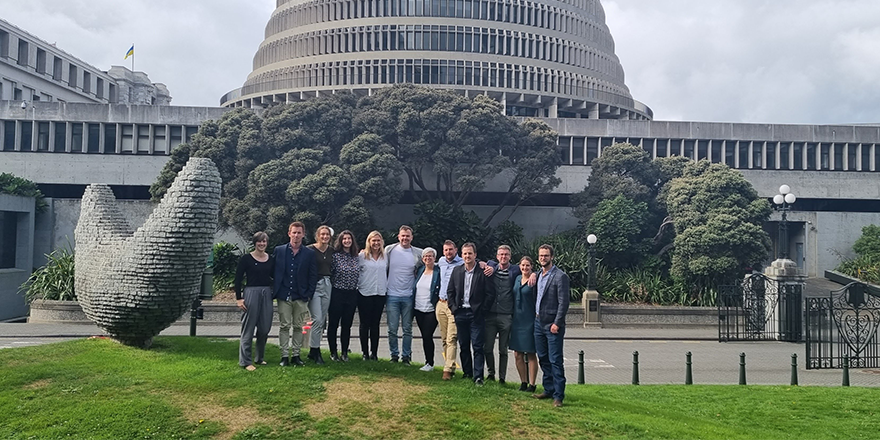
Kellogg Wellington phase 2022_group photo

Want to experience this for yourself. Register your interest in the Kellogg Rural Leadership Programme today.  

2023’s January and June intakes at Lincoln. 

Kellogg Programme One, Lincoln: 24 January – 7 July 2023 

Applications close: Sunday, 30 October 2022. 

Kellogg Programme Two, Lincoln: 13 June – 30 November 2023 

Applications close: Sunday, 16 April 2023.

The carbon credit currency

Carbon credits
Carbon credits

By Sam Mander, Environmental Consultant, The AgriBusiness Group and 2022 Kellogg Scholar.

The article is reprinted from the Real Estate Magazine, with permission from the publisher The Real Estate Institute of New Zealand.

Indigenous forest land and the carbon sequestration opportunity for New Zealand landowners always seems to be downplayed — deemed too expensive, too hard, or inferior compared to exotic forests.

Sam Mander, Environmental Consultant at The AgriBusiness Group, debunks this myth and provides an understanding of how to identify the indigenous carbon opportunity.

Kanuka, manuka, regenerating native vegetation or planted native restoration sites hold a significant opportunity for carbon sequestration. But fundamentally, where the opportunity really lies in this space is where a natural seed source is present.

Land with naturally regenerating indigenous forest requires no capital input, eliminating the usual barriers of expensive planting regimes and delicate forest management.  

We don’t want to discourage the planting of new native areas, particularly around areas of ecological significance, but to capitalise on the low hanging fruit, landowners must take advantage of existing native seed stocks and develop these areas to accelerate the growth of regenerating New Zealand’s indigenous landscape.  

Determining eligible indigenous forest land

Indigenous forest areas are eligible to enter the Emissions Trading Scheme (ETS) if they meet the Ministry for Primary Industries (MPI) forest land definition. 

What is carbon sequestration?

Carbon sequestration is the process by which carbon dioxide is absorbed during photosynthesis, and is stored as carbon in biomass (trunks, branches, foliage, and roots). Source: nzfoa.org.nz 

Sam Mandes_Carbon Credit Currency

MPI’s forest land definition states that forests must: 

  • Reach at least one hectare in area 
  • Reach at least 30 metres average width 
  • Have species that can grow five metres high 
  • Have the potential to reach 30% canopy cover
  • Meet the above as of 1 January 1990 or after 
  • Have met all of the above as of 1 January 1990. 


If a landowner has property that has manuka, kanuka, mixed podocarps, or areas they are thinking of planting native species (including in riparian zones — the interface between land and a river or stream) carbon credits can be earned if the areas meet the forest land definition. 
 
One carbon credit is equivalent to one tonne of carbon sequestered; therefore, the tonnes of carbon sequestered by the forest each year are the total number of annual carbon credits available.

Tonnes of carbon are calculated on a per hectare basis, and the value of one tonne is equal to the current carbon price ($76/NZU/tonne). 
 
You’re typically looking for a natural seed source present with conditions that favour natural dispersion, growth and succession. Any native species can be included if it has the potential to reach five metres in height at maturity. 
 
The most common example of opportunity is regenerating kanuka and manuka forest land areas.  
 
To earn carbon credits, landowners need to electronically map the land to certain standards and capture aerial imagery to prove the forest area meets the forest land definition. 

The value of credits a landowner can receive and for how long they will receive them largely depends on the species growing on the land.

The MPI carbon lookup tables determine that indigenous forests can earn carbon credits from sequestration in the first 50 years of growth. 

How to assess the native forest area

This can be a difficult process for landowners; fortunately, professional forestry companies and environmental consultants like myself have developed methods for assessing forest land definition and providing the result of the assessment to MPI for a successful ETS application. 

“The value of credits a landowner can receive and length of time they will receive them largely depends on the species growing on the land.” 

Depending on the forest scenario, we use a combination of ground vegetation sampling, plotting, and integrated drone imagery to determine and prove this. In most cases, this is where an expert may need to be involved. 

A recent example is a property with an indigenous natural seed source. An assessment found it had 35 hectares of post-1989 indigenous forest land that had regenerated since 1990, with a forest age of approximately 17 years.

Forest species were predominantly kanuka, manuka, among other mixed podocarps. Carbon credits can be claimed for the remaining 33 years of carbon sequestration. 

Economically speaking, at the current carbon price, this equated to an average annual cash flow of $16,000, or cumulatively, $539,000. In summary, the opportunity to earn carbon credits for indigenous forest land is significant, particularly where a natural seed source is present.

The property mentioned above is among many that we have worked on which provides a great example of the type of property that is common around rural New Zealand and one that holds value from indigenous carbon sequestration. 

Planting trees to offset carbon isn’t a silver bullet against climate change.

However, carbon credits allow landowners to balance the scales for those unavoidable emissions on the path to reduction and has potential to generate financial benefits for those who wish to engage in these sustainable practices.

Download Sam’s report Carbon Sequestration Potential.

How Resilient Farmers Thrive In The Face Of Adversity

Resilient Farmers_Jack Cocks_Joanne R. Stevenson

By Jack Cocks and Joanne R. Stevenson.

Article is reprinted from The Journal with permission from the publisher, NZ Institute of Primary Industry Management

Farmers face adversity from multiple sources and additional challenges to other sectors of society. To date, there does not appear to be a simple high-level resilience-focused model for how farmers can be more resilient ‘personally’.

This article, which is the result of a Kellogg Rural Leadership Study on ‘How Resilient Farmers Thrive in the Face of Adversity‘, is a first step towards developing that model.

The study found there were three key strategies that facilitated farmer resilience – purpose, connection and well-being.

Adversity affects farmers from multiple sources

Like all members of society, farmers face adversity in a range of forms from health crises to financial volatility, family challenges and personal loss. Due to the nature of their business, however, farmers are more vulnerable than those in other industries to climate challenges and global market shifts. They are also often toiling at the coalface of legislative changes and can have less access to appropriate support services. 

More than other industries farmers have strong identity ties to their land and business, meaning that disruptions to the farm are de facto disruptions to the farming family. They also typically live at their place of work.

The current global environment (autumn 2022) – experiencing climate, a global pandemic and a war in Eastern Europe – highlights the dynamism, volatility and interconnected global marketplace in which New Zealand farmers operate. 

Developing strategies to recover quickly from adversity, or ‘building resilience’, is essential to achieving long-term success in farming. While there are a number of tools and resources available that address social-emotional resilience, there does not appear to be a simple, high-level resilience-focused model developed specifically for farmers.

Such a model could be used by farmers when facing adversity to ask themselves, ‘Are we implementing the key strategies and techniques (both as an individual and as a team of individuals) that we need to be resilient in the face of this adversity?’ 

More than other industries farmers have strong identity ties to their land and business, meaning that disruptions to the farm are de facto disruptions to the farming family.

Context

The lead author, Jack Cocks, an Otago high country farmer, experienced adversity from a life-threatening brain injury which saw him in a coma, suffer a cardiac arrest, a seizure and a pulmonary oedema.

On day one in hospital Jack’s family was given a prognosis that their husband, dad and son would likely be dead today. The best case scenario was that he would survive but spend the rest of his life in an institution.

He obviously did survive, and the following six years saw him undergo 15 major surgeries and spend eight months in hospital re-learning to talk, and several times re-learning to walk. 

Through this experience and recovery Jack has been told that he is a resilient character. He has been asked to give several talks to farmers on his experience and how he developed resilience through adversity.

He found that giving these talks was a humbling and surprising experience for the feedback received.

However, the presentations were based on just one farmer’s thoughts and he had two questions he could not answer from them: 

  • The adversity he had faced, while bad, was it any worse than what many people face? 
  • Were his ideas on resilience applicable to all farmers, or were they just the ideas of one farmer who had faced some adversity? 

Five areas of adversity

The five areas of adversity and a brief synopsis of each case are given below: 

Health

Doug, who farms on the East Coast, faced severe adversity in the form of depression. This was primarily brought about through farming in what became an eight-year drought.

Natural disasters, climate and weather

Andy, who farms in Canterbury, has farmed through a succession of major weather events, snowfalls and droughts. He has a great deal of knowledge about how to farm through adversity.

Financial

Kevin and Jody, who farm in Otago, have faced a very high amount of adversity in their lives starting from before they emigrated to New Zealand.

Their major adversity in this country has been financial, in the form of a very low dairy payout in their first two seasons as 50:50 sharemilkers. 

Family 

Brent and Jo, who farm in Southland, experienced a number of challenges to farm succession early in their farming career. Communication and a desire to split assets evenly among all children, farming and non-farming, were the major challenges.

They have since done everything right to complete succession with Brent’s siblings and are an example for how farm succession can successfully be completed with their own children. 

Personal loss 

Melissa lost her husband to cancer and has since done tremendous good for her community. 

It would be impossible and unfair to compare each of these stories. The level of adversity and the situations they have faced are so different that any of them would have responded differently, perhaps better, perhaps worse.

The choice of case study participants provides representation of the common sources of adversity farmers in New Zealand face and a cross-section of the likelihood of adversity from the ‘wow, that is incredible’, to ‘yes, our neighbours have been in that situation – I’ve seen it many times.’

The most remarkable story of resilience is notable for the breadth of the sources of adversity and the severity of the situation they faced.

One of the case studies is therefore an important reminder of the possibility of compounding disruptions, where adverse events seem to stack up, showing the way that resilience can be repeatedly eroded and then built back up.

Jack was able to identify some of the case study participants because they have shared their stories publicly, mobilising the power of story-telling to process their own adverse event and improve the lives of others by sharing their message.

Interviewing and examining their stories collectively revealed common themes that underpinned this diverse range of experiences. 

Resilience strategies and the ‘Resilience Triangle’

Analysing the interviews revealed the common resilience strategies that the five case study participants knowingly or unknowingly put in place in their lives.

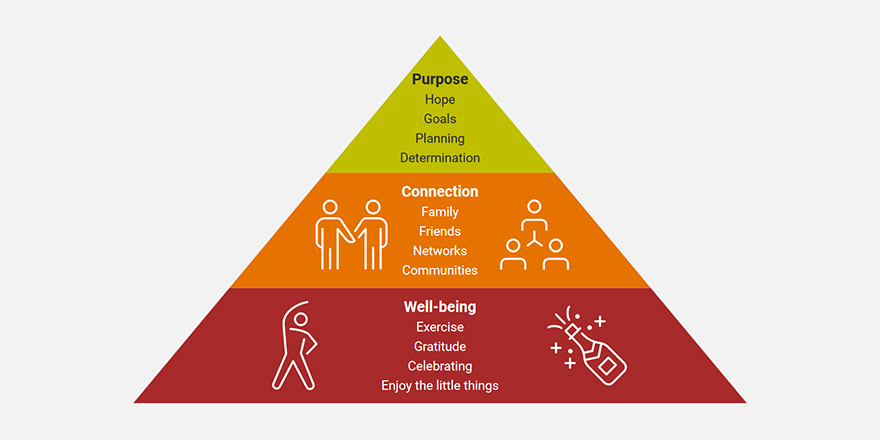
These strategies are captured in the form of a three-level triangle, the ‘Resilience Triangle’: 

Purpose 

This is the reason we are doing what we’re doing; the ‘direction’ of the triangle, the ‘why’. 

Connection 

This is the middle of the triangle; the ‘glue’ that holds it together, or the ‘who’. This is keeping connected with other people – friends, family, farming networks and local communities.

These connections are the people in our lives who buoy us up and encourage us to achieve, to rise above, and to have courage when going through adversity. 

Well-being 

This is the base of the triangle. It is, ‘what do I need in my life to be well’ or to be happy and content? It is the ‘foundation’ for resilience, the ‘what’. 

Participants in the study placed different weighting and had different consciousness of the use of these strategies, but they are common across all five cases.

Key to the effectiveness of these resilience building strategies is the combinations of approaches across the three levels and how the participants have implemented the strategies in their lives. 

For each of these strategies there were four ‘enabling techniques’ below each one that the farmers used to enable resilience at each level.

There are different enablers that underpin their sense of purpose, connection and well-being. We could identify enablers that, when missing, eroded resilience at different levels of the triangle. 

The resilience triangle_Jack Cocks_Joanne R. Stevenson

The lead author cites that after brain injury induced balance issues, having sufficient stability to be able to dress standing up was a cause for celebration after having to sit on the bed to do this for so long. Enjoying the little things such as seasonal foods, a sunrise, or the first birdsong in the early spring were all cited as enablers of well-being.

Conclusions

This study was concerned with developing a theory for how resilient farmers thrive in the face of adversity. It found that the case study participants employed three strategies in their lives to be resilient: 

  • they lived with ‘purpose’ in that they had a clear understanding of ‘why’ they were doing what they were doing 
  • they were very good at keeping ‘connected’ with those people around them who would and could help them through periods of adversity 
  • they also understood what they needed to do to keep ‘well’ – what they needed in their lives to be happy and content. 

Also, for each of these three strategies there were four enabling techniques which these farmers employed to facilitate each strategy. 

Rural professionals supporting our farmers need a clear understanding of not only the causes of adversity, but some of the strategies and techniques they can use to be resilient. 

The future global environment in which New Zealand farmers operate will face significant volatility, turmoil and potentially subsequent adversity. 

Rural professionals supporting our farmers need a clear understanding of not only the causes of adversity, but some of the strategies and techniques they can use to be resilient. We believe this study is a first step in crystallising how resilient farmers thrive in the face of adversity.

Acknowledgements

Thanks are due to the Kellogg Rural Leadership Programme for developing and delivering such an excellent programme. Also, to the five case study participants who have openly shared their stories of adversity and resilience, as they are remarkable and inspirational farmers. 

Jack Cocks is a sheep and beef farmer in the Otago high country and previously a partner in AbacusBio, a Dunedin agribusiness and science consultancy. Dr Joanne R. Stevenson is a Principal Consultant with Resilient Organisations Ltd and farms in partnership with her husband on a North Canterbury sheep and beef property. 

Corresponding author: jackcnz@icloud.com 

Hamish Murray: Building stronger on-farm teams by getting out of the way.

Hamish Murray podcast - Building stronger on-farm teams

From Bluff Station to Cambridge University and back.​

This transcript of the podcast was edited for clarity.

Bryan Gibson – Editor of Farmer’s Weekly. 
I’m Bryan Gibson, editor of the Farmer’s Weekly. And this morning I’m talking to Hamish Murray. How’s it going? 

Hamish Murray – 2019 Nuffield Scholar, Bluff Station, Marlborough. 
Good. Thanks, Bryan. And you?

BG: You’re in Marlborough, is that right? 

HM: We are an hour south of Blenheim, 45 minutes north of Kaikoura on the east coast, inland at Kekerengu. 

We’re a high-country sheep and beef farm that stretches into the Clarence Valley. The Homestead is about five minutes from the coast and goes all the way into the base of Tapuae-o-Uenuku. It’s about 35 km’s to the back boundary. We run Merino sheep, Hereford Angus cattle, and we have about 800 beehives. 

BG: How have things been going this year for you? 

HM: We’ve had a great season with 300mm of rain through late January, early February. It’s meant our autumn has been incredible, and stock are in good condition. We’re through the bulk of our work now. It’s starting to quiet down for the next five weeks before we look at shearing ewes at the start of August. 

BG: I noticed from your bio you went to Cambridge University? 

HM:  Yeah. I suppose like many farmers at one point, you were told to get out and go and do something other than agriculture. And so, I spent a lot of my former years trying to give myself an opportunity to do anything other than be a farmer.  

I was sitting on a train on the way to a job interview in London, after graduating from Cambridge. It was then that I realised I really wanted to be back in New Zealand chasing stock around and being part of the farming community. I wanted to give our children the opportunity to grow up with the same experiences as we had. 

BG: How was that time in the UK at university for you? Must have been quite eye opening. 

HM: I was fortunate to get the opportunity to study there. I played a good level of sport playing in the varsity match on a couple of occasions while studying economics.

It was an incredible experience. It pushed me mentally as far as I could have been pushed. The expectation to perform and to be part of that was a great challenge. I thoroughly enjoyed it and look back on it fondly. 

Hamish Murray at Bluff high country station

Pushing your limits and personal growth.

BG: And in 2019 you went through the Nuffield Scholarship Programme. 

HM: Again, fortunate to be given the opportunity to do some travel. I felt that when I was in the UK, I was on a student budget. So, I didn’t really get the opportunity to do the travel that I would’ve liked while I was there.

The Nuffield Farming Scholarship gave me the opportunity to look at agriculture in different parts of the world with a whole lot of like-minded people.  

My topic was to look at teams and what made certain businesses successful or workplaces more enjoyable and engaging for staff. 

I had a real challenge about five years after coming home from overseas. We had a significant drought here in Marlborough and North Canterbury, and it pushed me to an emotional breaking point. I’d played top level sport so I knew, physically, how far I could push myself.  

Studying at Cambridge I’d reached that mental breaking point also. My limits had been challenged there. But I’d never had an emotional breaking point like this drought caused. I’m not unique in that. Everybody has these challenges. At that time, I exhausted myself trying to keep our team, our staff, and our family going. 

That was a significant point for me. I became focused on how to better lead myself first. That grew over the next couple of years as we recovered and then grew into how to better lead our teams.   

Hamish Murray at Bluff station

Nuffield study and building better teams.

My focus at the time of the Nuffield was around productive, efficient, and effective teams. What makes some places more engaging and motivating for staff to work in.

Then with Nuffield I was lucky enough to look at businesses all around the world that were held up on those pillars. What made them different, what made them tick, and what might that mean for the future of work in New Zealand – in the ag space, especially. 
 
BG: So can you talk a little bit about who you looked at and what some of the keys to building a successful team might be? 
 
HM: With my Nuffield travel I got to see businesses in the Netherlands healthcare industry that had developed these self-managing teams called Buurtzorg. I spent time in Silicon Valley too, looking at a lot of tech companies.  

Everywhere I went, I was looking at teams and what made them successful. And then coming home, I spent time with the Crusaders looking at what made them different. How have they been able to win multiple championships, seemingly pulling from the same talent pool as the rest of New Zealand.  

BG: And were there some takeaways from that can be applied to the agriculture situation? What sort of changes did you end up making, say, in your own business to overcome the sort of challenges you had with the drought?  

Building self-awareness and self-aware teams.

HM: A lot of what I learned was building on those challenges we had been working through. Self-awareness was a huge one. Building self-awareness together as a team was significant for all these businesses. They found their own individual ways to work together on the soft skills that make teams work well together.  

People don’t leave a job necessarily because they don’t like it. They leave the job because they don’t like the boss or their workmates.  

 “So much of what we focus on is the technical stuff in doing the job, rather than working on working together.” 

How do we best understand the individual attributes that people bring to a team? Little things as simple as how do people like to learn? How do they like to communicate? For example, what do I look like on a good day? What do I look like on a bad day? And how to come up with strategies as a team to overcome those things. 
 
BG: You mentioned the Crusaders and Scott Robertson’s approach to coaching and team culture. He seems to find out, as you say, the best way to do knowledge transfer, depending on that person’s mental makeup. And that’s part of the success, isn’t it? 

HM:  Absolutely. One example for me was the way every business or every super rugby franchise has their values in big print somewhere in their changing room so that everyone sees them. It’s kind of the way that people do it.

The real gold comes from when you spend time to work out with people what those values look, sound, and feel like.  

Until you dig deeper with your individuals. As the people in your team change, how does that look, sound, and feel for those particular people at that time? That makes these things come alive and become more of an ingrained part of your culture. 

BG: It seems that the world we live in now seems to be more challenging for both individuals and workplaces. So, this kind of approach and strategy, if you are running a team, is only going to become more important.

The Nuffield Scholarship and creating the space to grow.

HM: Wellbeing is important but being able to bring your whole self to work is even more so. As you get away from the hierarchy of things, people want to be able to turn up. They don’t want to be a different person at work than at home.  

To truly understand people, we’ve got to listen and ask better questions, and get to the bottom of truly understanding them. Then we can build a safety network of people around them, allowing them to flourish in our workplaces. 

BG: So you obviously enjoyed the experience of going through the Nuffield Programme? 

HM: I couldn’t recommend it enough. One of the greatest challenges for me, and one of the biggest learnings, was being able to set our business up with our team to create the opportunity for staff to step into that space. Then I could be away for nearly five months.

They really grew into that opportunity, by me getting out of their way, yet still giving them enough support.  

I think that’s been one of the greatest growth opportunities for me – is create the space for our team to step into. They’ve thrived in that opportunity. 

We haven’t gone back to where we were before. That has been significant and enjoyable for me. And when I look back on the opportunity, the travel, the study, and the chance to look around and gain many ideas from many businesses around the world – it was fantastic.  

“When I think back on what the greatest significance has been, it would be the growth in our team and in our business, simply because of being able to get my own ego out of the way.” 

BG:  Among all of what we’ve been speaking about, there was the earthquake down your way, too. That must have been a massive challenge. 

HM: It was, yes. We had four of six houses rebuilt. I was away, so my wife and three kids were living in a cottage while our house was being rebuilt. Jess managed the rebuild, looked after three kids who were just five, three, and one – while I was traveling around the world with Nuffield.

Yes, there were lots of challenges in that – but lots of growth for all of us too. 

BG: Teamwork with a capital ‘T’ there. Good grief. 

HM: Yeah. Very lucky, very grateful. And it’s nice to be able to repay some of the faith that people have put in me. 

BG: Thanks for listening to Ideas That Grow, a Rural Leaders podcast. This podcast was presented by Farmers Weekly.

For more information on Rural Leaders, the Nuffield New Zealand Farming Scholarships, please visit ruralleaders.co.nz/nuffield.

Connect with Hamish on LinkedIn.

Leading in uncertain times.

For New Zealand’s food and fibre leaders, championing change is rewarding and meaningful work. Though these are complex times, where driving a purpose across diverse stakeholders, motivations and attitudes can mean these rewards come at a price.

Increasingly leaders are feeling overwhelmed – with a lot coming at them. They run businesses, sometimes volunteering in their community as well. They wear multiple hats, face multiple responsibilities and all too often burnout lurks behind the next deadline.

To nurture New Zealand’s food and fibre leaders, the Agri-Women’s Development Trust (AWDT) is delivering a new programme with a leadership focus, offering the support they need for an uncertain and stressful environment.

‘Know your Mindset. Lead what Matters’ is a short, online programme aimed at grass-roots leaders of change, behind and straddling the farm gate. It’s for both women and men driving change – helping them to manage multiple pressures, calmly and clearly.

Adapted from AWDT’s successful ‘Know your Mindset. Do what Matters’, it aims to understand leaders’ struggles and give them proven, usable tools and techniques to do the same with their teams.

The antidote to tricky times.

Leading is often a lonely place. This new programme connects farmers, growers, rural professionals, and funders across the sector to face common leadership wellbeing issues together.

It’s in this same spirit that AWDT and the New Zealand Rural Leadership Trust (Rural Leaders) have come together as well. Along with the programme’s other partners MPI and Farmstrong, both Trusts are sharing ideas to help grow resilience in leaders today – and tomorrow.

Lisa Sims, AWDT, and Chris Parsons, Rural Leaders, talked recently about the programme and the context it lives in.

What to expect from ‘Know your Mindset. Lead what Matters’.

In a time of mounting pressure for rural New Zealanders, participants will learn how stress affects their ability to plan and act effectively as a leader. They gain practical tools to listen for signs of stress in teams or rural communities. They learn how to respond to them and lead them through change.

Running across two evenings, ‘Know your Mindset. Lead what Matters’ is presented by a registered Clinical Psychologist and Chartered Organisational Psychologist, alongside AWDT facilitators who work in breakout spaces where participants share stories and support each other. It’s a heavy-hitting line-up of presenters and one with a deep rural knowledge.

Creating a strong base from which to lead. 

The programme explores the impact that uncertainty, disruption, and change might have on thinking and behaviour. Participants build on this and develop a shared understanding of how to talk with and support others.

Time is also spent identifying traps for leaders along with learning to use tools to navigate working with people, stress, and emotions.

Participants round out the programme by gaining clarity about the positive changes they can make with their own leadership and building a realistic action plan to make those changes happen.

When, where, and how much does it cost?

The first ‘Know your Mindset. Lead what Matters’ programme is set for:

30 June, 7pm-8.30pm and 7 July, 7pm-9pm.

It is delivered online via Zoom and will cost $45 + GST per person.

To register for this timely programme head to https://www.awdt.org.nz/programmes/know-your-mindset-lead-what-matters/

Kate Scott: Front footing the fast-moving regulatory environment.

Kate Scott podcast

Ideas That Grow: Kate Scott, 2018 Nuffield Scholar.

The interview with Kate Scott took place in May 2022 and the version below was edited for clarity. Listen to the podcast above for the original conversation.

Bryan Gibson – Editor of Farmer’s Weekly.

I’m Bryan Gibson, editor of the Farmer’s Weekly. And today we are talking to Kate Scott who is calling from central Otago. Is that right Kate?

Kate Scott – 2018 Nuffield Scholar and Landpro Executive Director.
Yes, it is. I’m based in, what is typically, sunny Central Otago. So, a little place called Bannockburn is where I call home, which is just out of Cromwell for those listeners who aren’t familiar with the area.

Bryan: Good stuff. And what took you to Bannockburn?

From dairy farming in Taranaki to environmental consulting in Otago.

KateA little bit of a strange story. So, some people will know that I hail from Taranaki originally. I grew up on a dairy farm in Taranaki and some 16 years ago, my husband and I packed up our life to go and milk cows in central Otago. So probably not the most usual journey to dairy farming – was shifting from dairy farming central to Central Otago. But that’s how we ended up in the South Island.

Bryan: And enjoying the journey down there?

Kate:  Yeah, look, it’s been an amazing journey for us. So, my husband, who coincidentally, his first name is Scott – it confuses a lot of people when I refer to him. But Scott and I shifted down and we were on farm, milking cows for about seven or eight years all up. Then we took the opportunity to pursue some other avenues at that point, after a year of working together on farm. We moved off-farm and started Landpro, which is a consultancy business that’s been growing since 2007, now to a team of about
80 people.

We’re an environmental consultancy business and probably 60 to 70% of our work would be in the primary sector, working with farmers and growers to help them to navigate what are not insignificant hurdles and challenges in the environmental space. And now we also happen to call a small vineyard home too. I can’t say I know a heck of a lot about vineyards, but it’s been a pretty quick learning curve and something that we are really enjoying. Being able to have a little bit of space in such a beautiful part of the country.

Bryan Wow. So, you are making wine now!

KateYeah. To be fair. I don’t really make it, the only thing I’m probably good at is the drinking bit, but we do have some wonderful winemakers that work with us to make the wine from the grapes we are growing on our land.

Bryan: Well, that is um, a terribly important skill to have.

Kate: It is.

The Nuffield Scholarship and gaining new perspectives.

Bryan: And amongst all that, I think it was 2018 when you did your Nuffield Scholarship, is that correct?

Kate: That’s right. So, I was a 2018 Nuffield Scholar. That was an amazing journey, you know, having that opportunity to travel the world and to not only undertake, a research project, which I’ll tell you about in a little bit, but also that opportunity for personal growth and reflection and understanding. And I think as much as anything, to understand how the world works.

For me, probably one of the standouts was learning about the role of geopolitics within food and within agriculture. And I call on the things that I observed and learnt during that process often – now in my day job. But yeah, it’s certainly been one heck of a journey since that time. That’s for sure.

Bryan: Now your topic seems to me to be a little bit related to your consultancy, is that right? Um, taking a look at how New Zealand farmers can embrace, and improve sustainability, that sort of thing.

Kate: Yeah, that’s correct. What I did my research on was enabling better environmental outcomes in agriculture. Back in 2018, I was starting to see a bunch of the challenges that certainly a number of my clients were facing. How could they ensure they continued to have profitable businesses, but deliver better outcomes for the environment too? So those challenges that we’re all probably feeling more acutely now.

I took that opportunity to go and have a look to understand what things we were doing well. I asked, what are the areas where we can do things better? Some of the findings I identified in my research were things like, you know, I felt that we had to have an overarching strategy for sustainable agriculture within New Zealand, because if we’re not all on the same page, in terms of where we are wanting to go, how are we going to get there? How do we create that coherence?

I also identified during that study, that there’s a bunch of barriers in the way. And look, it’s perhaps a little odd for the consultant to say, but in my view, sometimes I think, if we could change our approach and view the world with a ground-up perspective and have less regulation, not more, we might actually end up with much better outcomes for our communities, for our environment and for our businesses. And so all these things that are just as relevant then as they are now.

I think the importance of supporting and enabling farmers to continue to do really great work is hugely important to me. That’s what drives me to get out of bed in the morning. It’s knowing that by working with those clients, we’re actually helping them to showcase and demonstrate the good things they are doing and identify the areas where they can continue to work on to do more.

And I think it’s been a real shift in the view of farmers in that space, since 2018. You know, the amount of knowledge and understanding that farmers have gained in that time has also been quite significant.

The Nuffield Research and a global context.

Bryan: Now, obviously you did a bit of travel. What did you see out there in the big, bad world, that either worked or didn’t as far as this goes?

Kate: One of the things I found really fascinating at the time, that was probably quite reassuring, was that New Zealand farmers for a while there were certainly getting a really bad rap about all the terrible things they did. But when I went out and had a look at the way that agriculture was being undertaken and other parts of the world, it pretty much highlighted for me that there was a lot of things we were doing very well.

In terms of managing the effects of our activities on the environment. I think one of the other things that stood out for me is that we actually have quite different challenges in terms of our environmental impacts from farming here in New Zealand compared to elsewhere.

An example of that would be that we run a predominantly pastoral agricultural system and therefore our impacts on fresh water, they will be some of the core concerns we see, and still see, here in New Zealand. Whereas if you go to other parts of the world there’s a whole lot more of their agriculture undertaken in indoor systems.

The impacts and the challenges that were top of mind for those farmers at that point in time were more along the greenhouse gas and emissions space. Identifying that we all have the same top 10 issues and challenges we are trying to overcome. They just came in a different order, depending which parts of the, the world we were undertaking our activities. I found that quite fascinating.

The other thing that I found interesting was the differences in scale. Some of the solutions I might have seen that were being deployed around some of the climate-smart agriculture in places like Denmark, for example, where, you know, you’re talking about very small-scale farms, perhaps those solutions aren’t likely to gain much in the way of traction in New Zealand. So, look, I think that was a really fascinating observation – that there isn’t a one size fits all in terms of an approach. I don’t think there’s any one silver bullet out there.

Bryan: You mentioned earlier about the pros and cons of having quite a strict regulatory framework. Did you see anything abroad that was better or worse than what we have?

Kate: It’s fair to say the deep-dive that I did into the regulatory space, around controls relating to agriculture in the environment – it’s probably fair to say that as a general rule New Zealand has some of the more stringent requirements. Obviously, some regions are different to others, but if we go into some of the more stringent regional requirements around land use controls on farming, it often wasn’t the case that those same level of controls were necessarily required through parts of Europe, where I spent a lot of my time. They had other controls and measures in place.

So, for example, it might have been the P caps that might’ve been in place. Yes, they had some controls, but they probably weren’t quite as stringent as some of the challenges we were facing here.

But they’re also quite difficult to compare because there were different layers of government, and different issues and challenges that were trying to be overcome. That was probably one of the challenges when I was trying to do a more in-depth analysis. It became quite difficult cause you weren’t always comparing apples with apples.

Tackling agriculture’s regulatory challenges.

Bryan: Seems to me, sticking with that regulatory sort of avenue, that the market itself seems to be starting to move farmers and food producers in that direction. And you know, maybe you can get more buy in that way. Is that something you’re seeing?

Kate: Yeah, look, I’ve seen a really big shift. I spend a lot of time talking to a broad range of farmers from a range of different sectors and catchment groups. And one of the things I often talk about is the fact that we need to make sure that from a mindset point of view, if we stop thinking about all of this change being regulatory driven.

It’s not just central government or local government making the rules to say that we have to change. If we actually think about it in the context of the consumer and those people that want to buy our meat or our milk, or our wood, those people are wanting to see, and be confident, that the products that they’re buying are doing the right thing. Whether that’s by the environment, or by people, or by animal welfare.

I very much believe that there’s a real market-driven change occurring there. But again, if we come back to our mindset, if we view the change in the construct of a market-driven change, then instead of doing it because someone’s telling us to do it, which we inherently don’t like to do, then our reason for doing it is a little bit different.

So, it becomes a lot easier to think, well actually, the reason I want to show why I’m doing a good job is because I want such and such, you know, and, you know, let the market actually value what I’m doing, and what I’m delivering, and how I’m doing a good job. The perspective shift actually helps to drive people along towards the change piece.

Bryan: I guess, chasing premium is a lot better than avoiding fines.

Kate: Exactly. It’s a pretty strong incentive there.

Sustainability and the speed of change.

Bryan: Yeah. Obviously, it’s been three or four years since you carried out your studies, and as we’ve been talking, the journey along this sustainability path is continuing – how do you feel about where we are at the moment?

Kate: I think one of the biggest challenges we’ve got at the moment is the speed at which things are changing. It doesn’t matter whether you’re in the rural sector or you’re in any other sector – the speed and pace of change is getting quicker. One of the challenges I have in my job is things are changing so quickly, that sometimes it feels like you are trying to drink from a firehose. I think that’s the overwhelming bit that everyone’s probably feeling and the pressure that everyone’s feeling.

I think that there’s an amazing amount of good work being done by farmers, and by catchment groups and communities coming together to actually understand how they can do a better job. That’s not always recognised for what it is either.

My advice to farmers is keep doing a good job, keep striving for change and improvement. If you take little steps, you’ll actually get there. That’s something we’ll start to see bed in a little more.

One of the challenges everyone is facing is this lack of certainty, particularly when we look in the regulatory space, how do we plan for what’s coming? Or how do we plan to implement change when we don’t know if it’s stopped, or is it still coming? I think that’s the part that people are finding hard to overcome in terms of taking that next step in the progress space.

Bryan: As you say, the pace of change seems to be quickening and people in my line of work are probably somewhat responsible for some of that. But one thing you can’t make go faster is the physical and biological processes of the environment, so you know, it takes a while for changes to filter through, doesn’t it?

Kate: Yeah, it sure does. And you know, we also need to make sure that if we want change to be a long and enduring change, I strongly believe that that change needs to be led from the ground up, rather than the top down.

A really big part of my Nuffield research was about taking that, that ground up approach and leading everyone along with you rather than telling them what to do. I think, where we are starting to see some of that meaningful change is from those communities and those areas where they’ve actually seen the value in coming together as groups to support the change.

That comes back to the fact you need to have a profitable business to be able to implement change. There’s still a lot of work going to have to continue to happen around how we adjust our farm systems to meet the challenges from both a climate change, and from a biodiversity point of view. But it’s a matter of how we find ways to work together and support that together, rather than the loneliness of trying to do it on your own the whole time?

The Nuffield Scholarship – positive, life-changing, challenging, and giving back.

Bryan: So now it’s quite obvious that in your Nuffield studies you’ve learned a lot, but how was the experience for you?

Kate: Hmm, you’ve spoken to a number of scholars through the podcast series you’ve been doing, but they all, well the ones I’ve listened to, talk about the fact that it was this life changing moment. That’s completely true. But I often try, when people ask me about it, to describe it as being this event that is kind of a positively disruptive thing in your life, that at the time.

Sometimes when you’re living it, you are, not sure what it means. It tips your world upside down and you feel very uncomfortable about your place in the world. But as you work your way through that, and you get the opportunity to reflect on it, then you see it as this hugely positive experience.

For me, that positivity comes from the people you meet, the family of other scholars that wrap around you. That you have this network of people, of Nuffield scholars open to you picking up the phone or flicking them an email. And they’re immediately interested in connecting with you on any range of issues or challenges.

And that’s about that whole challenging of your perspective and your knowledge and your understanding – building yourself.

The people have been the amazing part of the opportunity and that personal growth, that business growth too, certainly that also comes from that experience. It’s been one of the most amazing things that has happened.

I think sometimes we can get or fall into the trap where we think we do our Nuffield Scholarship, and then that’s that – the end. But actually, I would probably view Nuffield, and once you complete your travels and your report, that’s kind of the start of the journey. It’s asking what next? and how we apply what we’ve learned, and how we give that back to our sector – to the primary sector, that’s the really exciting piece.

The future of food and fibre is in the hands of our bold and our grounded people – those who give back to their communities and industries.

Sound like you?

Lucie Douma: Entering an unknown future – 2022 Nuffield CSC – Norfolk, United Kingdom

Lucie Douma, 2022 Nuffield New Zealand Scholar

I was lucky enough to be at the first Contemporary Scholars Conference (CSC) to take place as the world is starting to see out the other side of the Covid pandemic. It was quite surreal to be with two-years’ worth of scholars (roughly 140 people) from 15 countries, all in one place for eight days. Considering most of us have not travelled for more than two years it was a bit of re-learning how to travel and manage the new ‘Covid’ rules. But it felt normal again. This feeling couldn’t be bet.

The feeling of returning to normality comes with a number of new challenges. These global challenges affect all of our agriculture systems and our farmers. The challenges we are facing are:

  • Two weeks before the CSC took place, Russia invaded the Ukraine.
  • Dealing with the aftermath of the world being shutdown for two years from Covid, and the damage this has caused to our respective supply chains.
  • The implementation of Brexit and creation of new Free Trade Agreements with countries.

These large challenges were common themes to all of our discussions during the conference.

How do we navigate this new world from Norfolk?

We also spent a significant amount of time at the Norwich Research Park which is home to pioneering research and solutions to some of the world’s biggest challenges including; food shortages, an ageing population and climate change. The perfect place for us! Here we tackled some big questions from potential meat free days to water shortage.

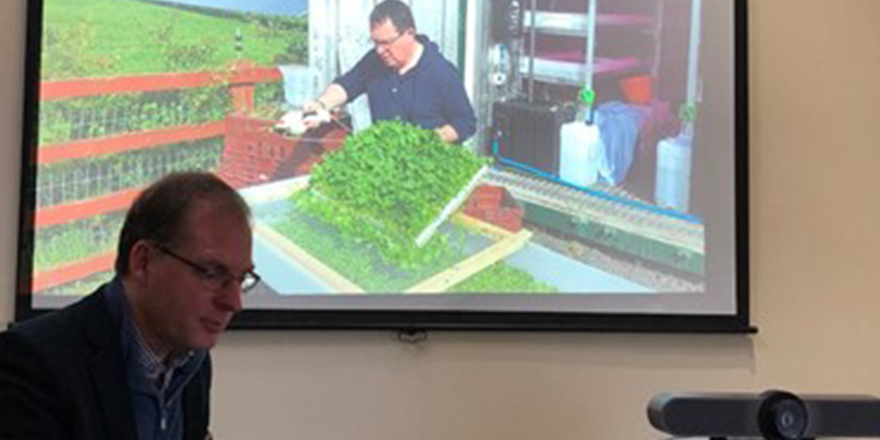
Innovation in agriculture in Norfolk can be seen at the Food Enterprise Park where Fischer Farms has begun work on a £25m project to build the world’s largest vertical farm. The vertical farm will be 25,000sqm of stacked growing space for salad leaves, herbs and other fresh produce for supermarkets.

Fischer Farms claims they will be able to produce the same amount of food in its four-acre building as would be possible on 1,000 acres of conventional British farmland. What does this mean for conventional British farming? The question becomes, is there room for both and how do they co-exist? This is what Tristan Fischer (CEO of Fischer Farms) tasked us with designing a solution for.

Tristan Fischer, CEO of Fischer Farms

Learning from other scholars

I greatly valued learning from the other scholars on the challenges they face in their countries with agriculture. It was heartening to hear that we face similar challenges. However, having read through other Nuffield reports these challenges were already recognised 5-10 years ago.

One example is the vegan movement, which is getting worse and there is now a greater level of activism amongst vegan and environmental groups who appear to have coalesced in some areas (including the UK).

If this is a sign to come, then in New Zealand we really need to be thinking how we can reduce our rural-urban divide. How do we encourage more participation in our agriculture sector? Is there a role for data here? This will lead me through to the rest of my research on data interoperability and the value of data.

Thank you to Rural Leaders and all those who support Nuffield for enabling us to travel to Norfolk and come together as a global community to address some of our big challenges in the sector. The experience and what I have taken out of it is invaluable, including all the new friends I have made.

Ngā mihi nui.

Parmindar Singh: 2022 CSC Insights – Norfolk, UK

Parmindar Singh- 2022 Nuffield New Zealand Scholar

Background

The 2022 Nuffield Contemporary Scholars Conference (CSC) was held during March 2022.  Nuffield 2021 and 2022 Scholars travelled from 15 countries and were hosted in Norfolk, UK.  Prior to our departure in March the New Zealand Government announced their plan to relax border restrictions, welcoming New Zealand residents back to New Zealand.  With this announcement we had the opportunity to attend the CSC in the UK and represent Nuffield New Zealand. 

Pre-conference, Lucie Douma and I spent time with Nuffield Scholars David and Christine Hill in Norwich. David and Christine introduced us to agriculture to Norfolk, where we visited their arable farming business, visited friends of the Hills who were dairy farmers in the village and toured the local town and village getting an insight into farming in Norfolk.  David and Christine shared with us their farming and family history and the challenges the UK farming sector was facing.  

Farms in the Norwich area consisted of generational farming with long-time family connections to the land and estates. Larger estates like Holkham Hall consisted of variable farming and commercial enterprises and considerable land ownership. These estates are well recognised in the UK, along with their family ownership and heritage and in some circumstances their association to the House of Lords. 

The UK Farming Situation: March 2022

The Russian invasion on Ukraine, has created a global humanitarian crisis.  In the UK, it signified the immediate concern for food security and the additional pressure on farmers who had already been challenged over the past two years.  Spiralling input costs were front of mind, particularly with wheat, fuel, energy and fertiliser costs.

Russia’s significant control over the supply of gas though the UK and the EU, imposed not only an increasing input cost on farm, however also increasing household and living costs.    General conversation with the UK public, posed an anxious population with the on-going impact of covid-19 on businesses and the additional pressures from the Russian invasion on the Ukraine.  It was interesting to note, that although the general UK population was sighting increasing food costs in the supermarkets, when comparing UK super market food costs with New Zealand super market food costs, it appeared that the cost of food in the UK was significantly less that the cost of food in New Zealand.

Additional changes in agriculture in the UK also reflect the transition from the long-standing EU scheme of agricultural subsidies (Common Agricultural Policy [CAP]) to the phasing out of the subsidy scheme with the exit of the UK from the EU. Post Brexit, the UK is navigating the challenges of staff shortages and increasing costs of production (which are likely to see the cost of local produce continue to increase), creating additional pressure for UK farmers.

Regenerative Agriculture was a topic discussed often and referred to as an opportunity to restore soil health and the quality of waterways, whilst reducing greenhouse gas emissions and enabling a healthy ecosystem; expanding the conversation of the global environmental challenge.

UK dairy farmers also expressed the increasing pressure and scrutiny they were facing from the public on environmental and animal welfare issues.

The CSC Agenda

The CSC agenda included presentations from agricultural leaders, identifying agriculture and the food of the world, British agriculture in a global setting, the impact of agriculture on climate and the global environmental challenge.

The all-important health, safety and wellbeing also featured on the agenda, with some real-life take-home messages and scenarios.  A visit to the Norwich Research Park, highlighted the research and innovation undertaken in searching for solutions to worldwide challenges in food-related disease and research into plant sciences and species. 

We also visited the Norwich Food Enterprise Park.  This park has been created to encourage and support food production, processing and agriculture through co-location of commercial enterprises. Our visit to the park provided us with an opportunity to participate in a small group activity to come up with solutions to challenges four businesses in the park were facing.  It was a great way to learn about real case scenarios and learn about a group of diverse agricultural businesses. 

A visit to Houghton Estate and Dairy was enlightening, hearing from two enthusiastic farmers about their journey.  Holkham Hall & Estate, was the final destination in Norwich.  Holkham was somewhat surreal, with history dating back to the 1600’s and a family estate that was built for the 1st Earl of Leicester in the 1700’s.  The Estate consists of 25, 000 acres, with business ranging from agriculture, holiday park, retail to property development. 

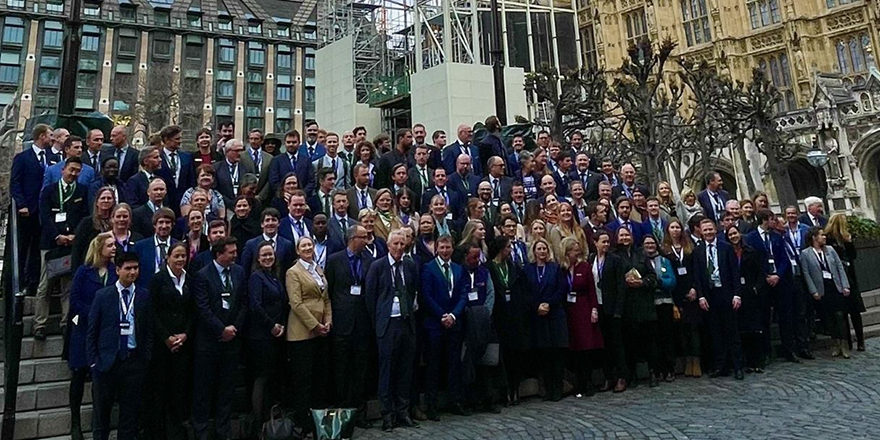
The final few days of the conference were spent in London, with a visit to the Houses of Parliament and a celebration to mark the closing of the CSC Conference with a Gala Dinner. 

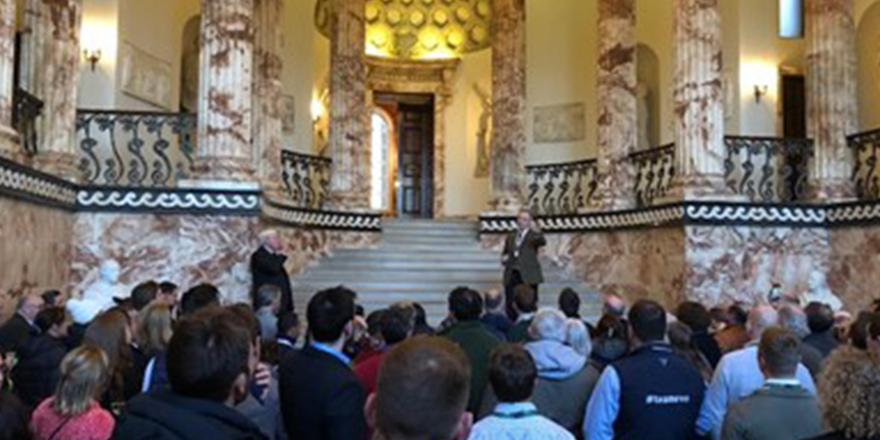
Group photo Nuffield CSC 2022

Learning from Global Scholars

The CSC offered the opportunity to engage with global agricultural leaders.  Learning from other scholars about their country and their agriculture was a highlight.

Such a diverse group of agricultural enthusiasts, ranging from: cows, camels, poultry, crocodile, pigs, vineyards, horticulture, bees, deer, sheep, flowers, arable, sheep and beef to agricultural service and technology providers and developers (no doubt there was more).  From the opening of the CSC on March 7th to the closing of the CSC March 14th, each day, a country group would present agriculture in their country.

Learning about how countries engage in agriculture and listening to the proud country men and women talk about their work and their countries work back home, was a great start to every day at the CSC.  

NZ Farming vs UK Farming

UK is farmed according to landscape, water availability and weather/climate conditions much like NZ.  Norwich for example consisted of predominantly arable farms, with variable crops (dominant crops included: wheat, oilseed rape and sugar beet) and forward negotiated contract agreements.  Arable farms consisted of large fields and it was interesting to note that some fields were planted with more than one crop simultaneously. 

Although the EU is recognised as a leading exporter of Dairy alongside New Zealand and the US, the UK was not seen as a leading exporter of dairy, conversely more of a domestic producer.  New Zealand exports more than 90% of domestically produced dairy products and revenue exports contribute significantly to the New Zealand economy.  The UK reports significantly less contribution to its national economy from its agricultural exports.

Across the UK, dairy farming appears to be more predominant in the South.  As with NZ, some dairy systems are more complex than others and weather dictates the type of dairy system applied.  The dairy farms we visited in Norfolk, housed their animals in barns, which appeared to be the dominant form of dairy farming system applied in this particular region in UK. 

New Zealand Brand Reputation

CSC participant and fellow scholar feedback consistently focussed on a global perception of New Zealand producing premium agricultural products, with a focus on grass fed and an organic style of farming where products can be traced back to origins of a country that cares about their environment and animal welfare.  “New Zealand punches above its weight”, was a consistent and humbling message from many fellow scholars. 

My insight from the conference and travel, was that New Zealand is profound at producing premium quality food.  Globally we are viewed as leading in all thing’s agriculture and we are seen as a country who cares about environment factors and animal welfare.  We have a great story to tell, and we are getting better at telling it!