2026 Nuffield NZ Farming Scholarship. Apply by 17 August 2025. Read More...

Apply for 2026 Nuffield NZ Farming Scholarship by 17 August 2025. More details...

A health check of women in the Kiwifruit workforce.

Yvette Jones Kellogg report

Executive summary

The Women in Kiwifruit group has a goal of inspiring, connecting and elevating women in the Kiwifruit Industry. To understand the current status of the representation of women in the Kiwifruit industry this report was conducted. It aimed to answer if women are well represented across the Kiwifruit workforce (paddock to plate) through completing a ‘health check’.

A literature review identifying documented benefits and barriers of women in the workplace and the greater themes of diversity and business culture. A diverse workforce is not a nice to have, it is morally, ethically, social and financially beneficial business decision. Women contribute to increased levels of innovation, and better risk management.

A series of semi structured interviews were completed with a variety of Kiwifruit industry leaders, followed by a thematic analysis highlighting common themes. A lack of women was identified across senior leadership levels and certain roles like grower services and orchard management.

Although it was highlighted that the industry has greatly improved as it has grown, common barriers for women succeeding in the Kiwifruit industry were unconscious bias, lack of flexible working conditions and business culture. All leaders highlight great opportunities for change if a team or manager had a mind-set attuned for embracing change, or who personally valued diversity.

When a statistical analysis was completed on employment data from a Kiwifruit postharvest organisation it showed that although on average women were well represented there was an imbalance across roles identified by industry leaders. More women were employed in Admin, HR, Finance and Quality roles and less in Grower Services, Orchard, Senior Leadership and Forklift positions. As levels of leadership were increased fewer women were seen due to a varieties of internal and external factors.

Recommendations to address the imbalance of women across the increase include collecting more data and monitoring to provide analytical metrics and reduce speculation. Being bold with leadership decisions to create change and expect change from the team around you.

Encourage women to support women through connection and mentoring. Cultivate diversity values from the bottom up and top down across the industry. Adopt fit for purpose business cultures that values diversity and people. 
 

Opportunities to improve efficiency in the fresh produce supply chain.

Marcus Tietjen Kellogg report

Executive summary

The fresh produce sector in New Zealand produces some of the world’s greatest fruit and vegetables. There is a complex all-encompassing machine that connects the farms these products are grown on to the final consumer. This machine is the Fresh Produce Supply Chain (FPSC).

New Zealanders enjoy an excellent range of fresh fruit and vegetables that can be purchased through a variety of sales channels. The most dominant and effective channel is through supermarkets which have access to supply via fresh produce marketers and growers directly. These suppliers provide
fresh produce of good quality, at scale consistently and at a reasonable price throughout the year to meet the tastes and preferences of consumers.

This project has been completed to further understand the FPSC and seek efficiencies that can be made that reduce volatility in supply, reduce food waste and reduce the margin between what the consumer pays, and grower receives.

We aim to answer three key questions being: what are the challenges for the current fresh produce supply chain from the farm gate in New Zealand? What technology and supply chains exist today outside of fresh produce? And does a different, more efficient system fit in today’s fresh produce supply chain and would this be accepted by industry stakeholders?

The key findings were growers in NZ are aligning themselves with retailers and marketers in partnership style relationships. Growers with smaller scale struggle to compete in fragmented industries where information is less available and less direct from the consumer.

Over time there has been a shift in the paradigm from growing for the market floor auctions, to growing for consumer demand based on high information sharing from retailers and marketers. This has resulted in a more deliberate crop rotation and sustainable growing system, reducing wasted product and improving price stability.

Technology in FPSC has huge potential however supply chain participants are cautious and considerate on technology they invest in. Blockchain technology can support efficiencies by reducing reliance on trust on intermediaries. The internet of things can provide an interface between supply chain practice and software systems. This can log important information which can give retailers and consumers confidence in quality of product and appropriate handling.

Consolidation of fragmented industries will support greater efficiencies as grower scale increases and vertically integrate to control more downstream practices. We also see intermediaries investing in upstream practices such as farms and greenhouses.

Recommendations are summarised as follows:

  • Encourage vertical integration where supply chains are owned or controlled between grower and retailer. For growers that have the scale and access to capital they should build partnerships with retail entities and invest in infrastructure to reduce reliance on other supply chain participants.

  • Cooperate within sector to vertically integrate if scale is not achievable. This can be done by the establishment of regional cooperative organisations to allow smaller scale growers to pool resources, invest in infrastructure and supply direct to retailers.

  • Increase communication between FPSC participants with accurate data in fragmented product categories to share accurate crop details.

  • Drive increased consumer awareness of imported vs local produce with signage andbranding that clearly differentiates products.

  • Encourage investment in internet of things and Blockchain technology for import product to reduce volume of poor-quality import product brought to NZ consumers.

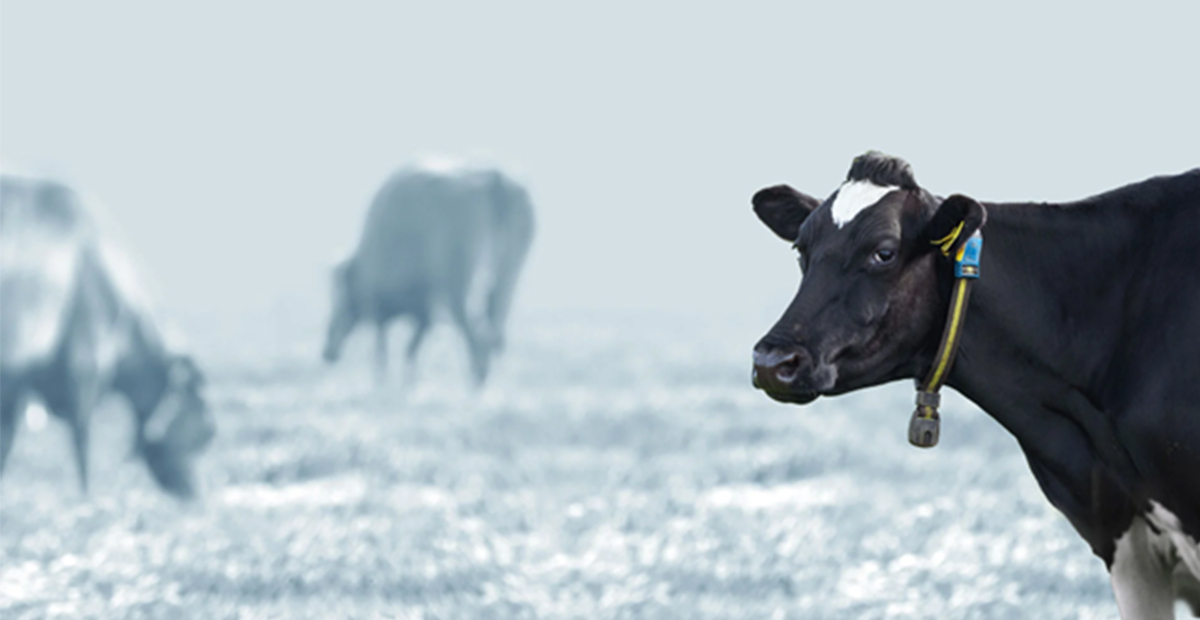
Early Implementation and the Future of Individual Cow Monitoring Technology in the New Zealand Dairy Industry.

Cameron Burton Kellogg report

Executive summary

The New Zealand dairy industry has a labour shortage from managers to farm assistants. This has pushed producers to look for automation options to reduce dependency on labour.

Recent and ongoing improvements have produced large-scale, commercially viable individual cow monitoring technologies that can significantly reduce the workload on farms as well as increase animal performance and health measures. Suppliers of these technologies report a positive return on investment and a reduction in labour
requirements.

The industry has seen significant growth in the uptake and implementation
of these technologies over the last 2-3 years. Implementation of emerging technologies is not always successful; challenges and limitations will exist in a commercial context that are not foreseen during the development or in early trials.
This report will explore the intended application for these technologies and how this
compares with current uptake and implementation at scale on commercial dairy farms.

It will explore areas of successful implementation and areas where obstacles have
reduced performance or prevented the technology to be utilised as expected. Current
and prospective users of the technology need to understand how different technologies in the market are likely to be implemented on their farms. This will help to make informed decisions around which technologies will achieve a more desirable outcome over the long term.

This report will help the suppliers and developers of individual cow monitoring technologies identify areas where their products are not being successfully implemented, and areas for further development to ensure the success of their technology in the New Zealand dairy industry.


A review of national and international literature was undertaken to confirm the accuracy and reliability of the technologies available to ensure they would improve or exceed the status quo of our performance in the New Zealand dairy industry. The review examined the commercial viability of these products and looked to the future of the development and application of individual cow monitoring technologies.

Qualitative, semi-structured interviews then took place with suppliers of the technologies, users, and non-users. Uptake, success and failure, and future development of the technology were examined.

Key Findings

  • The technology is highly accurate and viable for a profitable outcome in a
    commercial large-scale context.
  • All users agreed that the initial application has been successful and the return on investment has been neutral or positive.
  • There is potential for greater return on investment from ongoing training and
    implementation of the full complement of features the technology has to offer.
  • Challenges exist with the usability of the software and the sensitivity of health alerts specific to New Zealand’s outdoor grazing systems.

Recommendations

Producers

  • Develop a user-friendly interface as fast as possible, and regularly connect with users for improvements and future development.
  • Reduce the sensitivity of health alerts and integrate on-farm weather conditions with health alerts to limit false positives from weather events.
  • Ensure recruitment and the training of support staff can meet customer requirements as uptake increases. New support staff could double as sales staff to allow for early recruitment.
  • Outsource and fund third parties for technical support. Farm consultants, vets, farm advisors, and other rural professionals could be used to help educate and review the data.
  • Produce actionable reports/groups of cows from the data to minimise the interpretation and increase action taken on the farm. 

Current and future consumers

  • Prior to implementing any brand of individual cow monitoring technology, research the current and future access to after-sales support and technical specialists to ensure you will have ongoing support. Pay particular attention to your exposure to individual staff moving out of the role and limiting the technical support available.
  • Be prepared to put the time and effort into learning and understanding the software as there is an interpretation of raw data required.
  • Ensure the technology you implement is largely mainstream to ensure support from other users and increase the chances of new employees being familiar with the software.
  • Work with vets and advisors to create protocols and policies to shift from clinical diagnosis to subclinical investigation and diagnosis before clinical illness impacts production and profitability.

Capturing value on-farm.

Megan Fitzgerald Kellogg Research Report

Executive summary

More consumers are seeking food products that have credence attributes, such as improved animal welfare outcomes, lower environmental impact, and positive social impacts. Credence attributes cannot be seen or tasted, consumers only know they are being met by information being passed from producer, through the supply chain to them.

Commodity supply chains struggle to pass on accurate, complex information, leaving consumers who are seeking these attributes looking to buy their food through other outlets. Savarese et al., (2020) identified a real opportunity for New Zealand farmers if they are able to connect to these market segments. This research identifies the key requirements a family farm must have to successfully establish and maintain a short value chain.

Coinciding with the growing consumer market, is a risker macro-economic environment where farmers are subjected to tighter margins on commodity markets. Short value chains present opportunities to diversify risk through accessing alternative markets, equity growth without a dependence on acquiring more land, and a way to include more family members in the family farming business.


This research uses semi structured interviews to collect information from family farm businesses who are selling food products directly to consumers. A thematic analysis is carried out to identify the key requirements to consider when establishing a short value chain.

Establishing and sustaining a short value chain is a cyclic process that needs constant realignment between the resources the farm business has and the demands of the customer segment. Farm businesses must have the desire to connect to consumers and the ability to identify opportunities that allow them to connect with consumers in a cost-efficient way.

Success relies on mobilising the businesses resources and establishing a production system that creates a constant supply of quality product. Finally, the business must continually seek opportunities to realign with changing consumer demands and maintain their competitive advantage – which comes back to identifying opportunities.

The defining characteristics of family farm businesses who participate in short value chains is their ability to create and sustain consumer trust. This trust results in consumers who are willing to pay more for their product.

From the analysis of successful short value chains in New Zealand there are a number of recommendations for family farm business wishing to establish and participate in a short value chain.

The key recommendations are to 

  1. establish your family values and align these to customer segments to decrease costs associated with mobilising resources,

  2. spend time creating a production system that produces consistent, quality products that your consumer wants,

  3. connect with your consumers, provide transparency on product details through face-to-face and more permanent marketing such as websites, social media, etc., and

  4. constantly seek feedback and opportunities to better meet your consumer’s needs.

Seeking applications for an Associate Trustee. New Zealand Rural Leadership Trust.

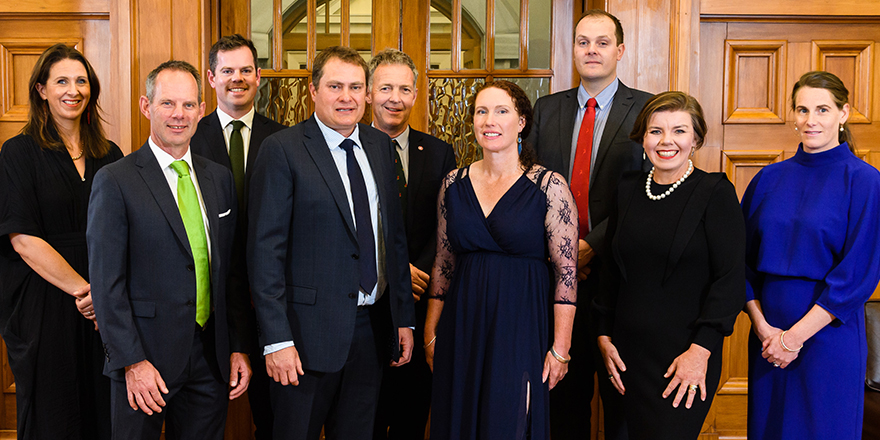
NZRLT Board and 2023 Scholars
Current Board of Trustees with 2023 Nuffield New Zealand Farming Scholars, November 2022.

The Board of the New Zealand Rural Leadership Trust (NZRLT) is seeking applications for an Associate Trustee. 

This appointment is for 12 months starting February 2023 and finishing in February 2024. 

The NZRLT Board meets six times per year and holds additional meetings as required. The duration of each meeting typically runs to half a day.  

The NZRLT is seeking applications from Programme Alumni (Nuffield, Kellogg and Value Chain Innovation Programmes). 

Role of the board 

The Board operates under the NZRLT Trust Deed. Its role is to represent, and promote the interests of, the Trust and, thereby, industry investors and alumni. Having regard to its role the board directs, and supervises the management of, the business and affairs of the NZRLT including: 

  • Strategy. ensuring the NZRLT’s goals are clearly established, and strategies are in place for achieving them, 
  • Policies. establishing policies for strengthening the performance of the NZRLT including ensuring management is proactively seeking to build the business through innovation, initiative, technology, new products, and the development of its business capital, 
  • Performance. monitoring the performance of management appointing the CEO. 
  • deciding on whatever steps are necessary to protect the NZRLT’s financial position and the ability to meet its debts and other obligations when they fall due, and ensuring that such steps are taken, 
  • Fiduciary Responsibilities. ensuring the NZRLT’s financial statements are true and fair and otherwise conform with law, 
  • Standards. ensuring the NZRLT adheres to high standards of ethics and corporate behaviour, 
  • Risk. ensuring the NZRLT has appropriate risk management/regulatory compliance policies in place. 

In the normal course of events, day-to-day management of the NZRLT is left to management. All Trustees are expected to operate objectively in the interests of the NZRLT. The board is collectively responsible for the success of the NZRLT.  

As Associate Trustee your voice will be welcomed at the Board Table, but as a non-voting member you will not be required or accustomed to act or exercise controls and powers required of the permanent Trustees. 

Timing and location of board meetings, and time commitment 

The board normally meets six times per year and holds additional meetings as the occasion requires. The duration of each meeting typically runs to half a day. You will receive the board papers for the meeting by one week prior. 

In addition to routine board meetings, you should allow for preparatory work and travel, and ensure that you are able to make the necessary overall time commitment. All Trustees are expected to have carefully reviewed all board papers and related material sent to them for meetings. 

Remuneration 

This is an unpaid role. However, the NZRLT will reimburse all direct and indirect expenses such as accommodation and travelling expenses, reasonably and properly incurred, and documented. 

To apply

Written application and CV should be emailed to Chris Parsons, CEO, NZRLT at chrisparsons@ruralleaders.co.nz.

Or alternatively, feel free to email Chris to arrange a time for a confidential discussion. 

Applications close midnight, January 9, 2023. 

We look forward to receiving your application, and if successful, working with you to grow world-class leaders for our country. 

Barriers to Genetic Potential Through Sire Selection in New Zealand Sheep Farms

Executive summary

Agriculture contributes to 50% of New Zealand’s gross greenhouse gas emissions, an industry that is largely dominated by ruminants producing methane (Ministry for the Environment, 2022).

The Climate Change Response Act 2002 has set a target to reduce biogenic methane emissions to 24–47 per cent below 2017 levels by 2050. Therefore, the reduction of methane emissions from livestock is of significant environmental and economic importance.

It has been demonstrated that there is repeatable, individual variation in the methane emissions of sheep and that part of that variation is genetically heritable. There is now a breeding value that allows commercial farmers to rank, select and purchase lower methane emitting sires. This is currently the only tangible and proven mitigation farmers can start implementing on their farms right now.

In a time where our consumers are more discerning than ever before about how their food is produced, it is vital that commercial farmers utilise resources and technologies wherever possible to further our competitive advantage through sustainable practices.

However – regardless of personal views on climate change or political policies – do commercial farmers have the capacity and capability to understand the opportunity that these low methane-emitting genetics bring?

This research focuses on understanding the barriers to genetic potential through sire selection on New Zealand sheep farms.

To gather information on the barriers for farmers in relation to breeding decisions a literature review was undertaken to understand the gap in knowledge of farmers with regards to genetics, along with establishing factors in commercial farmer behavioural change and understanding of complex decision-making in relation to animal breeding decisions.
This was followed by an unstructured interview process with four farmers from three different farming enterprises, to establish a journey map to understand each farmer’s experiences, by creating a map of their interactions with sire selection. Farmers were selected to represent different types of farming enterprises and perspectives within the sector.

This process also helped to establish a picture of their current level of understanding, perceptions and preferences in genetic decision-making and identification of barriers to genetic potential through sire selection within the farm systems.

Key Findings

Given the significant advances in genetic and recording technologies over the past 20-30 years, it could be assumed that sire selection decisions should have become simpler. However, though these technological advances may provide more information, the complexity and scope of the information may also overwhelm farmers.

Martin-Collado, et al. (2018) describes that when people are faced with complex decisions and/or are exposed to information overload, this leads to either impulsive often suboptimal decision-making or they use simplification strategies (i.e. heuristics).
In terms of effecting meaningful change through genetic decision-making, the ability to effectively compare a farmer’s system with that of others appears to be an instigator to change.

There is a significant educational role to fill with regard to sire selection and genetic decision-making. Whilst we have sheep which are genetically lower methane emitting or significantly more tolerant to facial eczema available for purchase now, there is much to be done to assist the commercial farmer to realise the opportunities available to them when it comes to genetics.

Recommendations

Beef + Lamb NZ should aim to develop a number of tools and resources aimed towards genetics education and extension for both commercial farmers and breeders.

The development of these tools and resources should:

  • consider the individualism of farmers and their systems, the behaviour of change and complex decision heuristics,

  • be developed in collaboration with subject matter experts and farmers to be relatable for the intended audience,

  • share the success stories of farmers who have successfully harnessed the opportunity of genetics,

  • be created for a range of delivery mechanisms to cover a range of learning styles.

    • These should be developed in collaboration with industry partners to facilitate the uptake of these resources by these parties to assist in the dissemination and delivery of the resources.

Organic, Regenerative and Sustainable.

Executive summary

To answer the question, this report considers if these methods can be defined, it explores the main principles and drivers based on a comprehensive literature review; the baseline is conventional farming, and the research shows sustainable farming is usually regenerative and organic and often conventional.

Organic, regenerative, and sustainable are all buzz words; they are methods of farming, growing, and processing; also used in marketing for recognition and financial advantage. This report found that a farmer may align their identity with their chosen method and a consumer’s decision to purchase may be based on their understanding of these terms and an alignment of their values, particularly where there is a premium paid. This report found consumers use the terms loosely and the complexities of farming methods are not understood by non-farmers.

There are no definitive definitions of organic, regenerative agriculture (RA), sustainable or conventional farming in New Zealand (NZ). Each method is guided by principles, and the report finds there are few differences between these, and this means that farmers can use principles from any method. Sustainable practices guide each of the methods and much conventional farming.

NZ farming already has a clean green advantage, and many farmers are leaders in best practice which can be explored further. This report considers the new term, regenerative organic and found its meaning and the relationship with organic farming is not yet established in NZ.

The quick and simple answer is yes, a farmer may be across all these methods, but if claiming to be organic, must be certified.

Organics has had enormous success in becoming well established with stable export markets; legislation is imminent providing credibility and consumer protection; it is odd that organics received little mention in the RA research projects or in strategic planning for the food and fibre sector. It is unclear where it fits into the bigger picture for food and fibre.

Progress on RA is at an impasse waiting for industry and or government leadership; however, the journey has started, and recent announcements of research projects will provide much needed evidence and guidance on the extent that existing farm methods are already aligned with RA.

Some leading NZ scientists claim this task has already been done and there is nothing more to be gained. If RA is to gain traction, time is of the essence. NZ needs a strategy, purpose, and an agreed direction. There is an opportunity for NZ to lead the direction of RA.

The report briefly considers if there is a premium to be gained from these farming methods and how this is reflected in the export markets. This matters for NZ because, “our economic security depends on the primary sector, which this year earned us a record $53.3bn in exports” announced Minister Damien O’Connor1. In July 2022, red meat sales reached $1.1 billion according to the Meat Industry Association (Red meat exports reach $1.1b., 2022), NZ needs to continue to add value to its exports, rather than rely on volume of production by identifying its advantage, guaranteeing the quality of its farming systems, and marketing its story.


The food and fibre sector must act quickly, otherwise another nation will lead in regenerative and sustainable farming and the potential market advantage to NZ is lost.

Recommendations

The project provided clarity that there needs to be a collaborative way forward, the following actions are recommended to achieve a unified direction:

Strategy to establish the role and future of New Zealand farming methods

  • The Government to facilitate a collaborative effort from industry organisations, the Ministry for Primary Industries (MPI) and research organisations to establish a representative leadership group (the Group).

  • The Group to deliver a Strategy for organic, regenerative, and sustainable farming for the short and long term; this should align with, other sector specific strategies and address sustainable practices across New Zealand farming.

Research

  • The Group should develop a methodology across all farming systems linking production, product quality, livestock, health, and well-being, adopt a holistic view, including evaluation of environmental, social and health impacts. This work must align with existing research programmes.

  • The Group will distinguish between organic and regenerative farming, address the meaning of organic regenerative and sustainable, and include the outcomes in the overarching strategy.

Trade and Export

  • The Group will develop the New Zealand story for consumers, investigate new markets, grow existing ones, and optimise what New Zealand does well.

The Value Chain Innovation Programme – Sector value-add. 

Value Chain Innovation Programme 2022 Cohort

Rural Leaders and Lincoln University have just wrapped up a collaborative delivery of The Value Chain Innovation Programme, a seven-day bus tour of New Zealand’s four major sectors: dairy, red meat, kiwifruit, and apples. 

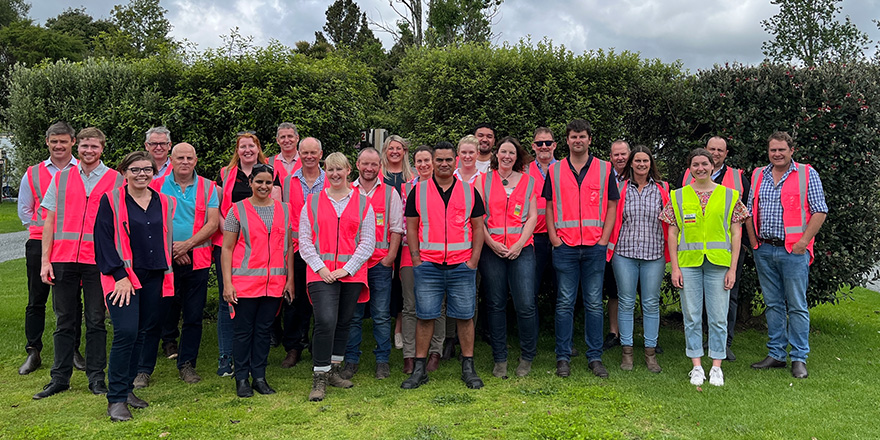
A fully subscribed programme of 22 students, including senior growers, farmers, consultants, industry professionals and government took part in this North Island value chain immersion. 

“The carefully selected combination of participants on the programme resulted in many varying opinions coming together in positive debate, to solve problems constructively.  

This was helped in no small part by facilitators Professor Hamish Gow and Cllr. Phil Morrison, who laid out a framework at the start of the programme, to help us really dig into what we were seeing,” said Kylie Leonard, 2023 Nuffield Scholar and programme participant. 

The Value Chain classroom on wheels.

The bus itself became a rolling classroom for the week-long immersion. Between visits, back on the bus, students discussed, debated and unpacked insights and issues as they arose. Onboard, critical reflection resulted in ten key issues being agreed on. 

“One of these issues is that New Zealand is still moving from volume to value and there’s a lot of players who are still volume based – but that’s ok. They run a value chain model that creates value out of volume, whereas others are moving to value-add.  

The big example here was non-IP apples at $2 per kilogram in the supermarket, versus Rockit Apple NZ which gets $2.99 for a 76-gram container – as sold at some service stations in Napier. This translates to about $39 per kilogram,” said Professor Hamish Gow, Programme Facilitator. 

An immersive learning process.

Perhaps critical for the students was the participatory process, the action-based learning, and the process of engagement where an entire value chain is walked – from one end to the other. 

Comparative analysis was used to understand how the many firms create, capture, and distribute value in their respective value chain comparatively across four sectors. 

“It’s that depth of understanding people gain once they do the comparative analysis. It allows you to get to the crux of how a value chain operates and what’s critical.  

That’s what we built within the programme – a platform for people to rapidly evaluate and understand how firms create value and whether they were effective in the way that they were trying to do this, then how they capture and distribute it, along with implications of that for industry,” said Prof. Hamish Gow. 

Value Chain Innovation Programme 2022 Cohort

A framework for unpacking value chains.

Three separate value chain discipline alignment models were explored during the programme: Operational Excellence, an efficiency value model – like Fonterra. Product Leadership – a technically superior product – like Zespri. And finally, Customer Intimacy – as in First Light Foods or Rockit Apples. 

“Firms such as Fonterra follow more of an Operational Excellence discipline, that’s driven by volume. In Operational Excellence, you create value from volume, efficiency and scale economies.  

In Product Leadership, you must invest a lot of time and money in R and D, innovation, and brand to create a technically superior branded product. Several students suddenly realised that it’s a 15-to-20-year lead for commercialisation for a new version of kiwifruit or apple.  

In Customer Intimacy, firms focus on gaining deep insights and understanding of their customers and addressing their concerns. 

Exceptional firms and value chains excel in one discipline alignment and are above average in other two disciplines as well,” added Prof. Hamish Gow. 

Where to next for the Value Chain Innovation Programme?

Participants canvassed felt the programme was a huge success and well worth the significant time investment away from family and work commitments.  

“Everyone came out fizzing. Everyone realised within the first day that the bus was a safe haven where we could engage in challenging discussions and debates.  

It was refreshing, exhilarating and it changed mindsets. Everyone wanted to replicate the experience and insights on a larger scale. How could we scale it to tackle the large issues confronting NZ primary industries? I think we’ll do the South Island sometime in 2023,” concluded Prof. Gow. 

It seems pairing up with a South Island Programme is likely – and potentially an international version too. At some point in the future, this may become the next logical step – post Kellogg Rural Leadership Programme – in primary industries leadership development.  

AGMARDT supports leadership development with new Kellogg Scholarships.

Lee-Ann Marsh and Nick Pyke, AGMARDT

AGMARDT Trustees have approved support for three new scholarships that seek to improve access to leadership development. The New Zealand Rural Leadership Trust (Rural Leaders) deliver the Kellogg Rural Leadership Programme, a critical point on the rural leadership pathway.  

AGMARDT’s support will manifest as three scholarships specifically for the Kellogg Programme. 

“We want to help improve access to leadership development by countering some of the challenges scholars can face. These may include the ability to meet the financial commitment required to undertake learning.  

It is vital industry does all it can to ensure leadership potential is given the space it needs to grow. To help achieve this, we’re thrilled to give our support to scholars looking to enter the Kellogg Programme,” said Lee-Ann Marsh, AGMARDT General Manager. 

How the AGMARDT Leaders Scholarship works.

The AGMARDT Leaders Scholarship allows three scholars to enter the Kellogg Programme per year. It covers the $6,500 fee for the Programme. A fee already generously subsidised by Rural Leaders’ Investing Partners, including AGMARDT.  

Applicants for the AGMARDT Leaders Scholarship are encouraged to contact the Programmes Manager at Rural Leaders to discuss the opportunity and how it might be best tailored to their own circumstances.  

“We are grateful to AGMARDT for their continued support of leadership development in the Food and Fibre Sector. Their support reflects AGMARDT Trustees’ desire to make leadership development as accessible as possible, especially those who might not have the balance sheet support of bigger organisations.  

This also recognises that in a fast-changing environment, we need grounded leaders who are strategically capable, now more than ever,” said Chris Parsons, Rural Leaders CEO. 

The new AGMARDT Leaders Scholarship will be available from Kellogg Programme One, January 2023, and joins three regionally available Scholarships that also support participation in the Kellogg Rural Leadership Programme.

These are:

AGAMRDT Leaders Scholarship 

Three scholarships to participate on the Kellogg Programme per year valued at up to $6,600 each. These scholarships seek to increase access to leadership development. 

Whanganui and Partners Regional Scholarship 

Two scholarships per year to promote leadership in the Whanganui Region. Valued at $2,500 each, the scholarships are available to those attending NZ Rural Leaders Programmes who are from the Whanganui region or contributing to the Whanganui region.  

Te Puni Kōkiri Scholarships 

Up to two scholarship places on the Kellogg Rural Leadership Programme may be awarded. Valued at $6500 each, the Te Puni Kōriri Scholarships support Māori in the Food and Fibre Sector to develop stronger strategic leadership skills. 

Whāngarei A&P Society Scholarship 

One scholarship per year to cover fees. The Whāngarei A&P Scholarship aims to grow future strategic leaders for Northland’s Food and Fibre Sector.  

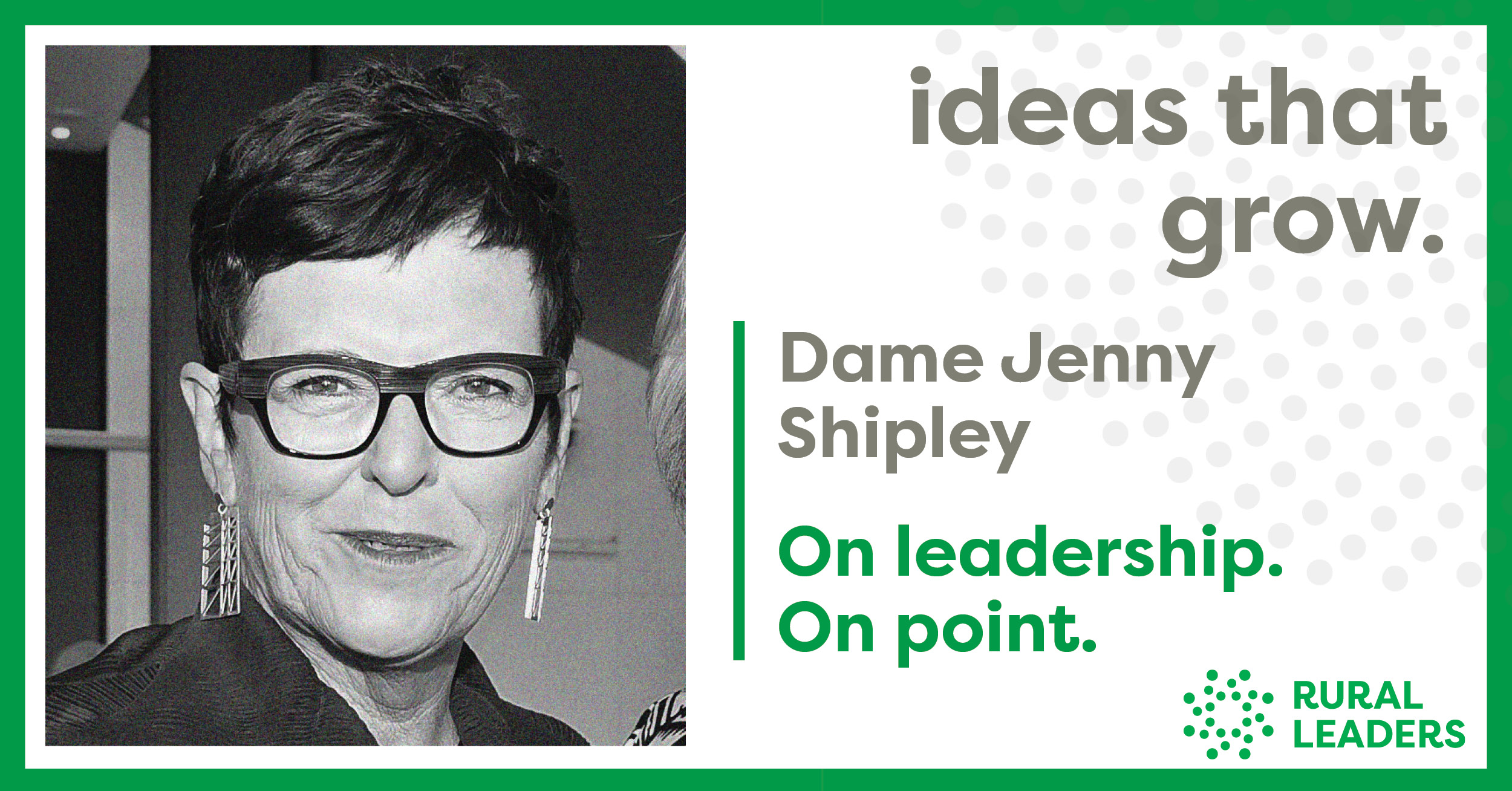
Dame Jenny Shipley: On Leadership. On Point.

On leadership. On point.

Lynsey Stratford has discovered farmers make a few assumptions that aren’t very helpful – like accepting the fact that work might be dangerous and there’s nothing anyone can do about it. As Lynsey explains, “There are changes we can make, but those assumptions and those mindsets have been deeply held for quite some time.” 

As a consultant, Lynsey helps the primary sector with people management and development services and training. And, when it comes to health and safety she says, “We shouldn’t expect people to just know this stuff, but rather teach them and support them as they develop skills.” 
 
Lynsey’s research report unpacks the paradox that while farmers care about their people, farms as workplaces are overrepresented in fatal accident and injury statistics. So, what can be done to improve this?

Bryan Gibson, editor of Farmers Weekly.

I’m Bryan Gibson, Farmers Weekly Editor. This week, I have a very special guest, Dame Jenny Shipley. How’s it going? 

Dame Jenny Shipley, 1984 Kellogg Scholar, Bay of Islands.
Very well, thank you.

Bryan: Good. And where are you calling in from today?

Dame Jenny: Well, I live in Russell in the Bay of Islands now. And while I still do a lot of traveling domestically and when I can internationally, this is where we call home.

Bryan: Oh, wonderful. The winterless north. 

Dame JennyThe winterless north, and it couldn’t be a greater contrast really, from my beautiful Canterbury electorate. But even learning to garden in the north is an entirely different process. But I’m enjoying it very much. 

Bryan: Now, you grew up down in the Deep South, is that right? And spent a lot of your political career at least, in MidCanterbury?

Strong South Island roots.

Dame Jenny: Yes, I was born in Gore and my father was a Presbyterian Minister in Pukerau at the time. So many of those early roots were in a truly rural area. And interestingly, I’m going back there this weekend to take part in a nice ceremony.  So I stay connected with a lot of those old roots, even though I’m now living somewhere else. 

I spent a lot of my time in the South Island, and the early part of my life, in Nelson and that also has transformed. I don’t think there was a grapevine in Blenheim, or in the Marlborough area when I was a child. It’s a magnificent example of intense of horticulture today.  

As a student I went to Canterbury and met Burton and the rest is history. We farmed and then I went into politics and had the great privilege of representing one of the most productive electorates in the country in that central and Mid-Canterbury area. 

Bryan: Such a powerhouse of a rural area isn’t it? 

Dame Jenny: Very much, yes. 

Kellogg and the desire to lead.

Bryan: You connected with Rural Leaders for the first time doing a Kellogg Scholarship back in the early eighties, is that correct? 

Dame Jenny: Yes. We were young and farming, and I was already involved in a lot of community leadership. At that time the challenges for agriculture in New Zealand were huge. The change was immense, the economic viability was demanding, interest rates were horrifying. Rural communities were very active, with a lot of emphasis on leadership.  

I got given the opportunity to apply for the Kellogg Rural Leadership Programme, which was an emerging force at that stage. I forget whether it was year three or four that I was a member of – but it was a fabulous experience and in many respects it clarified my desire to lead.  

The Programme taught me a lot about what else I needed to focus on in order to be effective. But it definitely gave me the strength and sense of impetus to get on – initially as a Counsellor in my local Malvern area and then into politics. 

Is sector history repeating?

Bryan: We talk about the early to mid-eighties in the farming world. It was obviously, as you say, such a disruptive time. Many people think that we’re going through a similar sort of thing now. Do you see those comparisons? 

Dame Jenny: Well, I think the commodity cycle is much stronger at the moment, although it’s clearly able to be volatile depending on what happens both at home and abroad.  

The other difference, I think, is that agriculture today in New Zealand is not dependent on government subsidies. At that stage you’ll recall, there were multiple transitions going on – the support for agriculture was being removed, the markets were extremely volatile and the farming community was really facing challenges on multiple fronts.  

Even in my early years as a Member of Parliament, the residual effects of that period flowed through – it was a very difficult period. Today I think that while there are huge challenges coming up economically, I personally think the agricultural sector is in a very resilient state.  

But what is different now, is that there are so many regulatory pressures coming on farming which I don’t think were present in our era. And so, yes, there are huge challenges, but I think the economic viability overall gives at least some ability for farmers to confront those. I think the leadership question is different too, though, and perhaps that’s something that needs to change. So it’s relevant for where we are now.  

Bryan: How is that, do you think? 

Dame Jenny: Well, when we were farming, all of us belonged to Federated Farmers. It was a widespread group. Husbands and wives turned up and it was an active process in most local communities. I’m not familiar with whether that’s the case now. But like many organisations, I think that they’ve become more professional.  

But whether the grassroots element of representation is as strong, I don’t have such a feel for that. But I think that what we’re coming into is that we have to have both the agricultural leaders reflecting the experience of farmers on the ground and making the case very clearly about what can and can’t be done, and indeed what has been done.  

We need to share our good news more often.

If I can just pause on this point for a moment. I’ve observed enormous change by farming in response to public pressures. I travel quite a lot around the country and have just have been down through the Waikato – right into the West Coast part of it.  

One of the things that struck me over the last five years is that what started off as tree planting on agricultural land for emissions purposes, now the work around wetlands and the fencing of streams and things. New Zealanders can be very confident that the farming community is not only responding but leading in some of these areas.  

To come back to the point, I think that for farming to advocate for itself, it’s not only advocating for what’s annoying and frustrating them, but there’s also a huge need for us as an agriculturally strong community to continue to share both the gains and the commitment of the agricultural community to farming well both for themselves, the community, and the future. I think that’s a big change.  

When we were farming, many were just farming to survive. Now, I see farmers all over the place investing not only in best practice for themselves, but I do see a lot of change. I think the voice of that needs to be shared across the community much more broadly so that the urban New Zealand population both values agriculture and understands that it’s moving in response to many of the concerns that urban communities have. 

Bryan: Farming, as you say, is always evolving for the most part in New Zealand because we are very good at it, and improving. That gets lost sometimes. 

Dame Jenny: Well a lot of it is a social response. I mean, farmers will tell you that they are fencing streams and planting for their own benefit and the benefit of their own environment. But there’s a huge public good element in it which unless people either have a chance to see, or you share how much is being done, or see the change that’s going on.

A sector supporting New Zealand through tough times.

I think that urban-rural split has always been a risk in New Zealand and it’s one we can’t afford to give airtime too. Because, frankly, if you just thought that even in the COVID period, if we had not had a strong agricultural sector during the last three years when the global economy had been disrupted, New Zealand’s position economically would be far more dire than it is at the moment.  

Tourism collapsed, a number of other productive areas were compromised and yet agriculture was able to carry a huge proportion of the earnings, as it’s always done. But thankfully, on a strong commodity cycle at this particular time, and again, I think we should name the value of agricultural exports. The effort agriculture puts into the New Zealand economy to support our way of life, in a broad, holistic sense – not a them and us sense. 

We’re in this together, being the best we can be at home and selling the best we can abroad in a best practice sense. I think if we keep sharing that over and over again, there’ll be a better understanding between rural and urban communities. 

Leadership needs to reflect the people on the ground.

Bryan: Just touching on what you mentioned earlier about how historically, people like Federated Farmers, organisations like that, had a very, kind of a, grassroots focus. It’s quite evident at the moment around the emissions pricing process that a large number of those grassroots farmers think that the farming leadership has, if not deserted them, then certainly not represented them well. What’s your take on how they go about that? And what are the challenges that those farming leaders have in engaging with the government on things like this? 

Dame Jenny: Well look, I’d be the last one to criticise them because I know how hard it is. I have admired the agricultural leadership, that they have taken a more inclusive, let’s find solutions together approach. I have been involved in a number of significant working parties not only on emissions, but in a number of areas that I can think of which I’ve simply been a distant observer. But I’ve noticed that level of engagement.  

The problem is, in any leadership model, if you aren’t both working with, and then reflecting the people on the ground who actually live agriculture every day and have to implement the stuff, not only physically but also economically, then you have to test whether your leadership is in isolation as opposed to being able to carry people forward.  

I do think we have to support the leadership group because unless they are able to foot it with the officials and the government ministers and be supported at that level, then they’re clearly not serving their constituency anyway. But every organisation, and I don’t want to make a judgment on Federated Farmers because I simply am not close enough to it, but there have to be systems where it’s not only consultation.  

Often we say, well, we consulted, or we sent out a document and gave them a chance to comment. I think that for people to genuinely become supporters of a regime, they have to have a deep sense of ownership. They need to be able to see themselves in whatever is proposed as opposed to seeing something being imposed on them, which they don’t or can’t relate to.  

So the test of high quality engagement and consultation has got to be that measure of – can the people we’re representing see themselves in the proposed solutions or are we just saying, well, regardless of what you think, you’ve got to be there in five or ten years’ time. That’s not easy to do. I think in New Zealand’s circumstances, whether it’s agriculture or Maori – Pakeha relations, or any of the other demanding spaces, we’ve just got to put the time and work into it. 

The power of industry at the highest level of decision-making.

Bryan: Now, just digging into that a little more. I mean, you were obviously in central government for a long time. What’s it like in those meetings with industry? How much power do the industry leaders from the agricultural community have when they sit down around the table with the likes of MPs, Prime Ministers, officials? 

Dame Jenny: The answer is, it depends. And I’m thinking back on two or three occasions where the agricultural sector and governments were working intensely. When a government decides, for example, to break up monopolies, I think the conversations are quite demanding. 

I recall at the time that we decided to break up a number of public organisations, the electricity sector and of course the dairy industry was in the line of sight. That was never an easy conversation and the agricultural leaders, and particularly the directors of the original company very much resisted that. In those moments, you’ve got to put the economic argument of why these particular sectors needed to be able to face competition, not only in their growers interest, but also in New Zealand’s market in the world. The resilience and flexibility to attract investment.  

We were trying to grow the New Zealand economy and grow the efficiency of the New Zealand economy in the world. So to some extent, in those big strategic moments, it’s tense, because sometimes you’ll have agricultural leaders with you as champions. Sometimes you’ll have small players wanting you to act and take on the big players. 

So there’s many dynamics going on.  

Usually before those moments, if it’s a strategic question, the ministers will have debated the relative merits of this before they go barging in and say, well, look, the government has decided to strategically move forward and create competition in the agricultural marketing sector, or whatever it is. And then you try and engage.  

It’s a wee bit like the emissions environment where you’re having to say, look, we have to work out a way in which to change. It is going to be different from what is the case now, so let’s try and work out where the mechanisms are and how we can move forward.  

Sometimes you’re responding to requests from the agricultural sector to solve problems and then it’s straightforward. Your meet as equals at the table. You put the facts on the table, you get the officials to work through and come up with a solution. Often in the majority of cases, things just get sorted out. But in the big, complex policy issues, where big change is required, there’s higher degrees of tension, but generally you get there in time. 

The Kellogg Programme and leadership pathways.

Bryan: Now, you mentioned to me before we came on that as well as the Kellogg Programme, you’ve been involved in a number of other leadership programmes. Do you think there are good pathways into leadership positions in New Zealand at the moment? 
 
Dame Jenny: The Kellogg Programme is fantastic. I’d encourage any community to keep identifying young leaders and to promote them into those Programmes. Often people think, these people are too young. I must have been, I don’t know, 32 or thereabouts when I went into Kellogg. Often at that stage, you haven’t identified your leadership purpose and your particular intentions as to how you will use your leadership skills. But others often see leadership potential in those young people.  
 
There’s no question that our political environment, our economic and social environment, need younger people coming through all the time in order for us to be able to shape the future successfully. I would encourage people to look for those chances and look for individuals who they can sponsor or promote and make sure they support them. Because often these are the young people, male and female, who have got kids and are trying to run a farm and all that. So the programmes themselves are a big commitment, but it’s worth it.  

Supporting leadership development.

The other programme, I was actually involved in establishing, was Rural Women Stepping Out, I think we called it at the beginning. It was run out of Lincoln and was only initially a two or three day – and sometimes only a one day programme. 

But it was at a time where there was huge economic stress on many farming communities. Lots of women came and had lots of examples of how women entrepreneurs were establishing small rural businesses to supplement the income of farms at that time.  

Much of it was in the cottage industries, or services – many aspects of agriculture. I think that sharing and bringing together helped a lot of those women sustain the pressure of that period. I guess my point here is, rural communities are very important to New Zealand and keeping both men and women well and supporting them to be as engaged as they can be, both in running the farms and running the rural communities of which they’re a part.  

Any support in leadership and leadership development is well worth the investment. So whether it’s the leaders at universities or the sponsors that are the companies who make these things happen, so that these families can make the choice, I think agriculture and New Zealand benefit from programmes like Rural Women, the Kellogg Programme and the Field Scholarships. All of those platforms are invaluable in terms of the legacy and the investment that they’ve made. 

Bryan:  Thanks for listening to Ideas That Grow. This podcast was presented by Farmers Weekly. For more information on Rural Leaders, the Nuffield New Zealand Farming Scholarships or the Kellogg Rural Leadership Programme, please visit ruralleaders.co.nz