2026 Nuffield NZ Farming Scholarship. Apply by 17 August 2025. Read More...

Apply for 2026 Nuffield NZ Farming Scholarship by 17 August 2025. More details...

Social licence about trust

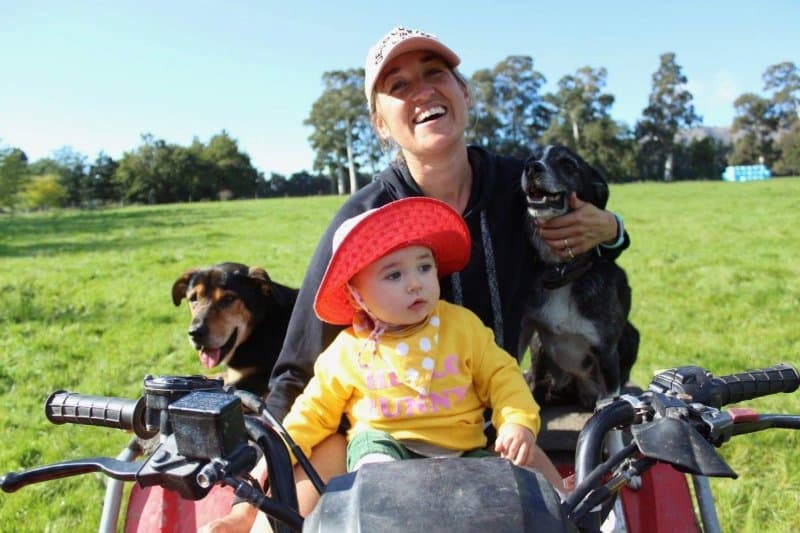
Penny Clark-Hall is passionate about helping rural communities.

Ms Clark-Hall is the founder of New Zealand’s first social licence consultancy, helping farmers and agri-businesses earn and maintain their social licence to operate.

She is excited about speaking at the Women’s Enviro Evening in Clinton later this month, saying meaningful change had to come from grassroots, or “the ground up”.

That had a domino effect and, if everyone did their “own little bit” then it all added up to something big, she said.

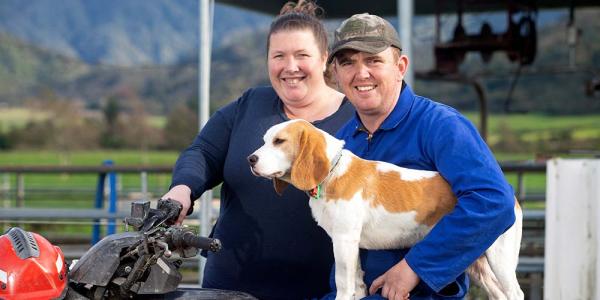
The evening, which will be held in the Clinton Town Hall on Tuesday, July 30, has been organised by local woman Sandra Campbell.

Mrs Campbell, who with husband Chris is in an equity partnership on a 500-cow dairy farm between Clinton and Balclutha, attended a food and fibre conference in Christchurch a few years ago.

She left feeling enthused both about their own business and also about sustainability. The aim was of this month’s meeting was to bring top speakers back to community level and make it accessible, she said.

Click here to read more.

It’s not weak to speak

It was a warm, sunny afternoon in Takaka in Golden Bay. 

As daylight beamed through a window only to hit the back of a curtain, Kellogger, Wayne Langford found himself bedridden in a cool, dark room. He had been flat on his back every afternoon for more than a week to escape his constant mental anguish.

But this day was different.

“I had like an out-of-body experience.

“It was as though I was hovering above myself looking down and saying ‘what the hell are you doing in bed?’”

It was 2pm on March 18, 2017. 

It was his 34th birthday.

“I couldn’t help but think I should be out and about celebrating with people, not stuck indoors….”

To read more about Wayne Langford by Luke Chivers, click here.

Sophie Stanley – Enthusiasm for a digital future

Enthusiasm for a digital future key asset for Dairy Women’s trustee role 
1 July 2019

Enthusiasm for a digital future is a key asset Auckland based tech enthusiast Sophie Stanley feels she can bring to the Dairy Women’s Network as the newest member of its trust board.

“I’ve worked with the Dairy Women’s Network in the past and have always admired what they are doing in the community to support women in the dairy industry,” she said. “I thought it was an organisation I could add a lot of value too and opportunities like this don’t come along that often.”

Stanley, 32, felt her youth and enthusiasm for a digital future was the key asset that she would will bring to the role.

“Having lead an agtech company in the US for the last two years I bring experience from the technology sector with agile and design thinking, and also have international experience working with farmers in the Midwest, USA.”

She said her experience travelling as a scholarship recipient of the prestigious rural leadership programme Nuffield New Zealand where she researched social media in the agricultural sector highlighted the importance of community and good use of technology, but stresses the importance of face to face connections.

“Used well, technology should be leveraged to enhance knowledge, community and connection, but real human interaction remains very important.”

Chair of the Dairy Women’s Network Board of Trustees Cathy Brown said Stanley had a strong understanding of strategy development and execution.

“Her digital knowledge will be an asset as the Dairy Women’s Network tells the story of the amazing women who work in the industry. We look forward to having Sophie on the team,” she said.

Stanley spent a year as an Associate Director on the Rural Leadership Consortium board (Nuffield NZ) following travelling overseas and has worked extensively in the banking and technology sectors.

“I feel excited to join a team who are committed to enabling transformational change in agribusiness, particularly with women,” she said.

“The agricultural sector has long been a passion of mine, and I believe that grassroots organisations such as Dairy Women’s Network provide so much value to its members by providing a community and access to tools and knowledge that can help them thrive.”

With strong rural roots resulting from growing up on a sheep and beef farm in Rangitaiki, in the Bay of Plenty, Stanley has always had a strong passion for agriculture and food production. She graduated from Massey University with a Bachelor of Science (Agricultural Science) and Bachelor of Business Studies (Economics) and went on to spend five years working as an Agri Manager for ANZ Bank with dairy farmers in Morrinsville.

In 2013 when she won the Nuffield Scholarship to research the impact of social media in agriculture she was one of the youngest scholars to ever be awarded it.

She joined cloud software company Figured in 2014 to build the vision for a cloud based agri accounting software, spending four years helping grow the company that included moving to Omaha, Nebraska to launch the business in the United States.

The call of New Zealand’s beaches and mountains saw her return home earlier this year to take up a role working on building app partner programmes for the global ecosystem at Xero.

An avid reader, podcast listener and traveller who says she loves learning about food systems, politics, economics and climate change, she has found time to run her first 50 kilometre ultramarathon in February and is training for her next ultramarathon in Taupo in October.

Stanley’s first Dairy Women’s Network Trust Board meeting will be in September.

http://www.scoop.co.nz/stories/BU1907/S00023/enthusiasm-for-a-digital-future.htm

Cam Henderson on Environmental Engagement

New Zealand farmers are “more environmentally engaged” than their European counterparts, a North Canterbury dairy farmer says.

Cam Henderson, who farms in Oxford, has just returned from eight weeks visiting the US, Mexico, Brazil and the Netherlands as part of an agricultural scholarship programme.

Expecting the Netherlands to be ahead of New Zealand on environmental protection, he found they were less concerned about their farming impact.

“Their reputation is very clean and green, but I felt quite the opposite when I was there,” he said. 

“I saw drains running through to rivers with cropping right to the edge. There were no setbacks or sediment traps…


To read more about Cam’s travels, find the full article here – https://www.stuff.co.nz/business/farming/113822842/global-tour-suggests-kiwi-farms-outperforming-europe-on-environmental-protection 

Supporting environmental sustainability in the red meat sector

Executive Summary

With the New Zealand economy dependent on primary industries and export, New Zealanders concerned about the state of our natural environment, the ever-increasing focus on climate change, global consumers’ changing expectations and disruptive technologies challenging our existing systems and processes; significant questions for the primary industries rise.

Are our land-based farm systems fit for purpose and do our practices have a sustainable future? How can we create economic value without destroying what we value environmentally?

The primary industries are under a lot of pressure to address managing the environment and the recently proposed Fresh water package raises the discussion on how our farmers can adapt their systems to do so. So how are we, as an industry, supporting them?

The aim of this project was to investigate what support the red meat industry offers its farmers  while they are working towards achieving environmental sustainability for their farm businesses.

The method used to complete this project was a combination of literature review, data collection and qualitative research. Thematic analysis was used to bring the collected data together. It provided a framework and identified 3 main themes:

  • CULTURe
    The why: industry leadership and why would farmers change what they are doing?
  • CLARITY
    The what: what do the farmers need to do and what is in it for them?
  • CAPABILITY
    The how: now the farmers knows what they need to do, how can they do it?

The main outcomes from the investigation are as follows:

  • To achieve environmental sustainability, we also need to maintain social and economic sustainability
  • Change of behavior is required
  • Farmers have different drivers than rural professionals
  • There is a lack of leadership and collaboration
  • There is a disconnect between policy makers and the service industry, mainly coming from a lack of farm systems knowledge
  • The biggest challenge goes to regulation and capability of the sector

The biggest opportunity in achieving environmental sustainability lies in the how part but support for the farmer is often the most limiting step. Hence building farmers’ and rural professionals’ capability and therefore their confidence is key.

Key recommendations as a result from this project are as follows:

  • Strive for clear regulation
  • Set SMART goals
  • Design a framework for pathways to environmental sustainability
  • Communicate actionable knowledge
  • Create engagement, commitment and collaboration in stakeholders
  • Follow up on completion and success
  • Ensure repeatability for each step of the process

Leadership that supports collaboration between farmers, scientists, industry professionals and organisations is going to be critical.  The sector needs to have a structured approach, with systems and processes in place.

First, Catch Your Crayfish – Linking New Zealand Food Producers and Consumers for everyone’s benefit.

Executive Summary

New Zealand produces enough premium quality, safe food to feed approximately 40 million people (McCready, Tim. July 19th 2018).  It could safely be assumed then that accessing such amazing quality food in the region or even country of production would be an easy ask.  This is not always the case. Currently New Zealand’s economy is heavily based around food and produce exports.

In a time when food quality and safety is top of mind for purchasers it would make sense to give local New Zealand residents ready access to the best and freshest of what we produce.

Top New Zealand chefs are beginning to search for and cook with premium quality locally produced and foraged produce but are finding it extremely hard to source a consistent supply.  They are looking for premium local produce with a verifiable story to tell their customers. 

To allow consumers and food service kitchens access to our best and freshest produce, New Zealand needs a system which links producer and customer with premium produce via short, profitable supply chains.

This report aims to answer the question “Does the formation of a sales platform linking food producers and consumers in New Zealand have merit?” 

Shorter supply chains and closer linkage between producer and consumer will allow more communication, in-depth understanding and the formation of relationships to benefit all parties. 

I recommend an industry good organisation undertakes an in-depth survey of New Zealand food producers asking about their potential utilisation of such a sales platform.  Utilising these results, I recommend that group also facilitates the creation of a platform which is locally based with the minimal amount of administrative and financial setup requirements as possible. 

I recommend that price remains an important consideration for participating producers, the value of the provenance and production story must be matched with affordability for consumers.

A Classroom View of New Zealand’s Primary Industry

Executive Summary

We certainly can’t argue with the fact that New Zealand has recognised the issues around the future of the Primary Industries workforce. We read about it every day, we have data to prove it and a sector constantly talking about it. Initiatives throughout the country have been set up to try and combat the issue but do we need a more central collaborative solution to the problem?

“Education is the most powerful weapon which you can use to change the world”
 Nelson Mandela

With our Primary Industry requiring 50,000 additional skilled workers by 2025 and the world having 10 billion mouths to feed by 2050. The importance of education and skills has never been greater. For many years in New Zealand, Agriculture Education and Training has been a significant topic of discussion. Our future primary sector sits  with  the  young  New Zealander’s of today. Generating passion and knowledge early will be a powerful weapon of use in the industry.

The aim of this report is to better understand how students make decisions around career choice and to evaluate the impact that an NCEA Agribusiness study programme in New Zealand has had for the Primary Industries.

The method used for this study is a qualitative and thematic analysis on the current situation, the history and the issues that we are faced with around Agricultural Education in New Zealand. Thematic analysis allows identification of different perspectives around the issue and helps to recognize some possible outcomes. Interviews with Kerry Allen, Agribusiness Project Curriculum Director and Mel Simmons, Agribusiness Advisor were used to gain insight into a newly developed NCEA Agribusiness programme which describes the key challenges as being:

  • Perception of the Primary Industries
  • Student Attraction
  • Teacher Education & Support
  • Assessment levels
  • Cross Sector Support

With the industry undergoing rapid change and innovation the ability for people to keep up is challenged. The resources and support within our education sector appear to be coming up short. The complexity around education required is quite significant.

When we look at the numbers it is alarming to see where our future knowledge is coming from, what the future of our industry looks like and the pressures we are going to be placing on the people we leave behind to produce off our land and provide science based research and advice. Key recommendations as a result of this research are as follows:

  • Offering of Scholarships for career changes to encourage teachers to train in the Agribusiness
  • Generate appeal for Primary Industry workers to cross over into education to influence the next generation
  • Ensure the promotion of job variety and prosperity within the primary industry is far reaching e.g. students, teachers and parents
  • Ability for universities to be able to train teachers in the Agribusiness subject
  • Explore the option of being able to integrate throughout the main subjects of the NZ curriculum.
  • Create strong collaborative working links between the Ministry of Primary Industries and the Ministry of Education

Recognising the primary sector workforce issues isn’t the hard part but coming up with successful solutions is. The ability to help alleviate challenges continually faced by initiatives like the Agribusiness programme lies within the industry and could be the key that unlocks the door.

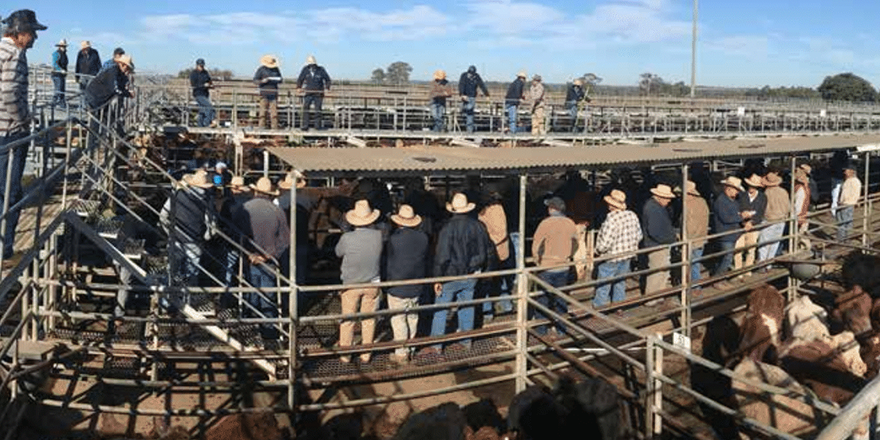
ONLINE LIVESTOCK AUCTIONS: Australian success, and the potential for New Zealand

Executive Summary

This paper provides a background of the Australian Livestock industry with a specific focus on the rise of an online auctions platform, AuctionsPlus (www.auctionsplus.com.au).

My findings show that the use of AuctionsPlus can deliver verifiable economic and social benefits to its users.

During a research trip throughout Australia’s rural New South Wales and Victoria I spoke with Farmers, Feedlot operators, Stock Agents, Transport operators, Saleyard managers and Meat buyers about industry dynamics from their unique perspectives. The focus of these discussions was to understand how AuctionsPlus integrated into their business, where the platform worked best for them and where it didn’t.

I’ve then considered the relevance of all these factors in the New Zealand context to understand the potential benefits for our own industry.

AuctionsPlus is neither a fundamentally new method of transacting livestock nor a disruptive technology. It does however harness favourable attributes of traditional sales methods and combine them on a single, highly efficient internet marketplace where vendors, agents and buyers can participate without the need to come together physically.

I’ve found that tangible economic advantages alone are not enough to drive adoption, and that the social benefits of improved animal welfare and bio-security outcomes can drive adoption even in the absence of any direct financial advantage. Also, stock agents and farmers

are more likely to support the platform when existing relationships can be maintained.

The real key to long-term success is the establishment of underlying trust in the platform and its users.

At the time of writing New Zealand does not have a comparable sales method and questions remain as to whether the New Zealand market has the scale to support this business model, or what level of market penetration will be needed to support a sustainable business. At least two companies are looking to fill this market opportunity and my recommendations will give those in this relatively new field a grounding in the lessons learned during AuctionsPlus’s journey to success. I believe this success can be replicated in New Zealand for the good of all industry stakeholders.

The most important recommendation I make is that to initially gain traction, a successful online platform will need to have the full support of Stock Agents. While this is an electronic marketplace; people are at its core.

An industrial analysis of dairy processors in New Zealand

Execute Summary

After 18 years of DIRA legislation, Fonterra has gone from being an almost monopolistic company within New Zealand’s dairy processing industry, to being involved in a very competitive market place with the introduction of some major competitors in the shape of Open Country Dairy and Synlait to name a couple. This report shows how each company differentiates themselves from each other in an industry where the base product is exactly the same; milk. This differentiation of final products allows competition to be established in overseas markets for each of the companies. This competition within New Zealand for a stable or reducing milk pool, has created an increase in returns for farmer suppliers; without the threat of new entrants into its processing space, Fonterra would not be as strong as it currently is. Fonterra’s strategies have been shaped around delivering the best return possible for its farmer suppliers, to ensure that they are not tempted to supply another processor, and to deal with the restrictions the DIRA has created around Fonterra.

This report gives insights into how each processor performs in comparison to one another, how each processors strategy of processing its products results in different revenue per kgMS, and how this revenue is distributed, either to farmer shareholders or to private shareholders. The report should also highlight the amount of competitors within New Zealand’s dairy processors that are foreign owned.

Recommendations: 

  • Fortify: Revitalized and continued support of Fonterra as a market leader; Fonterra is the market leader, not purely due to market share, but mostly by transparency allowing it to openly show everyone how it operates and sets its milk price and share price, by flying the “NZ Inc” flag and doing a lot of industry work on its own accord, while by default, taking other processors along for the ride. The Fonterra Co-Operative is the reason the dairy industry in New Zealand is so strong, this needs to be remembered and revered by all farmer suppliers.
  • Future proof: Farmer suppliers need to look beyond their own balance books to determine if a change in processor is actually beneficial in the long term. Does your new milk processor have any obligation to keep paying you a good farm gate milk price if Fonterra or DIRA are out of the picture; who is your new or potential processor working for, you or its shareholders?
  • Deregulate: DIRA legislation needs to be removed, and quickly. The initial aim of consumer protectionism is no longer required, as there are now enough processors within New Zealand for this to be controlled by market forces; which was part of the initial idea of DIRA. DIRA is also hindering Fonterra’s ability to be able to make strategic decisions with its supplier base and all of its processing sites; not being able to accuratly predict milk supply in the future accurately, hinders investment strategy and direction. Having the ability to control entry and exit of suppliers, along with the abolishment of the regulated milk supply to competitor’s legislation, will allow more certainty around investments into processing capabilities; which means more product to process and add value to, and more money into New Zealand’s economy and not into Foreign owned companies.
  • Compromise: Determine what amount of market share is optimum for each of New Zealand’s dairy processors so that New Zealand’s export margins are optimized for New Zealand’s benefit. This should include some competition within New Zealand, such as Synlait, so that Fonterra has some competition to constantly benchmark itself against, but not so much that buyers in foreign markets have the ability to bargain with exporters of New Zealand products.


Adding value to Onions

Executive Summary

This paper is aiming to add value to second grade onions that unable to be sold locally or exported. The aim was to understand what could be done with them to make them more saleable in the market place here and overseas.

It is very early on looking into the process of adding value to second grade onion, by freeze drying or dehydration. While freeze drying has been the obvious first choice due to the lack of nutrition loss during the process and longer shelf life. The cost of investment is high for freeze drying which results in a high cost product to sell into the market place.

While looking into the adding value to second grade onions by freeze drying, the following areas were researched:

  • Difference between Freeze drying and Dehydrating,
  • Understand the freeze drying process,
  • Advantages and Disadvantages of Freeze Drying,
  • Financial analysis of freeze drying costs,

The paper recommends that this is looked into further as from what I have obtained this is a viable business. Margins are not overly high while contracting freeze drying, but once business is established and is it is feasible to purchase a Cuddon Freeze Dryer the margins would increase substantial.