This report aims to identify a pathway for dairy farmers to move from land farmers to land owners. In this report, I single out a pathway known as lease farming and analyse the feasibility and financial pathway to farm ownership over a ten-year time frame.
To begin I set the scene on trends formed over the last decade in our dairy sector. I analyse milk price, land price, debt levels and track the statistics behind the decline in Herd Owning Share Milkers or HOSM.
Within this report is the numerical and financial data of an example lease contract I have created. This example has been designed for this report and is not currently in use. I have analysed varying examples of ‘in use’ lease contracts and have create d a contract that suits the objectives I have set out.
The key fundamental to this report is for land ownership transfer from lessor to lessee. This can be measured by the lessee’s equity level being greater than 25% of the total dairy business at year ten. I have factored in the ability to maintain relationships with farm owners as well as rural professionals, being an under lying benefit to the lessee to take ownership at year ten.
I conclude by addressing the need to look towards the future when determining our next pathway through the dairy industry and how we can make the current environment work for ourselves.
We produce food in an ever-changing world but one thing remains the same, we need to retain our land in our hands because we are the only ones who do kiwi.
According to the UN, food production must double by 2050 to meet the demand of the world’s growing population. Innovative strategies are needed to help combat hunger, which already affects more than one billion people in the world. (un.org 2009)
The world is changing and I believe the historical poor perceptions of the primary sector are no longer acceptable. There are students out there hungry for knowledge. My goal is to be proactive and help plant the seed of primary sector interest in their minds.
My rationale behind tackling this subject is the unacceptable, ill-informed opinions that our school leavers are still being exposed to.
My aim is to understand school leaver knowledge and awareness of primary sector career diversity.
My research was gathered via an 18 question questioner surveying 20 students, an interview with three ASB Future Leaders and an interview with two teachers.
Key findings;
Historical poor perceptions by parents, teachers and career advisors that are effecting knowledge of modern primary sector career options.
Our youth are very interested in knowing more regarding New Zealand’s primary sector, there is strong interest in finding careers that help New Zealand’s economy prosper.
Creating interest is only the first step, nurturing that interest right through to employment is lacking.
Tying together social media, technology and emotional marketing are the key to creating change.
Recommendations and action list;
The creation of a national curriculum tailored to New Zealand’s key economic drivers.
The use of cutting edge technology on a national scale to expose our students, parents and teachers to modern, world leading primary sector opportunities.
Create a concept that follows initial interest all the way through to employment.
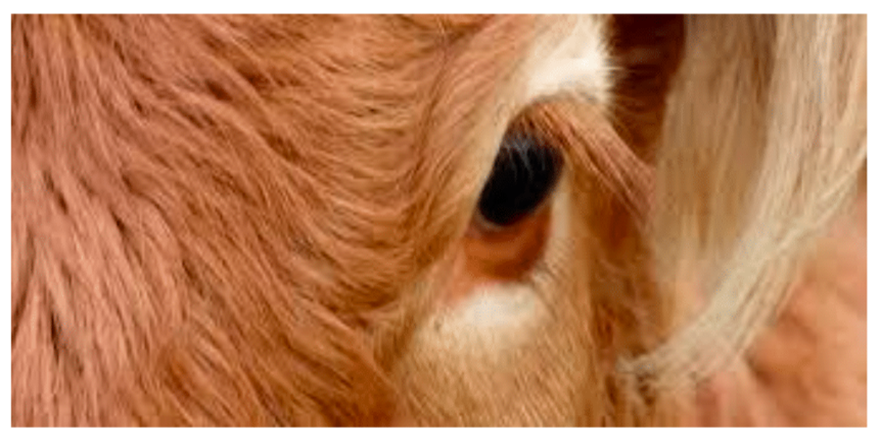
Infectious Bovine Keratoconjunctivitis (IBK) commonly known as Pinkeye in cattle is a long established animal health problem in New Zealand. Pinkeye is a painful and debilitating condition that can severely affect animal productivity. It is a bacterial infection of the eye that causes inflammation and in severe cases temporary or permanent blindness. Most cattle producers will be familiar with pinkeye but may not know how to best treat it and minimise its spread within the herd.
The economic impact of the disease is significant due to it being highly contagious. Pinkeye can affect up to 85% of a mob, the disease is painful because the eye becomes sensitive to UV light. Affected weaner calves losing up to 10% of their body weight. In rare cases when both eyes are affected cattle may die from starvation, thirst and accidents. The cost and time used treating infected cattle adds to the economic losses.
Managing an intensive large scale calf rearing farm in the Waikato, Pinkeye can be a challenge for the farm. Two of the three years the farm has vaccinated against the disease and one year we didn’t vaccinate at all. In the year we didn’t vaccinate against the disease there didn’t appear to be any more infected calves than previous years. I wanted to know why?
Piliguard is the only commercial vaccine available in New Zealand. It covers three strains of Moraxella bovis bacteria. This is where the science community is in debate over the number of Moraxella’s that exist. 38 strains of Moraxella have been identified by restriction endonuclease DNA analysis ‘BRENDA’ (R.B Marshall, P.J. Winter, B.S. Cooper, A.J. Robinson.1985) Other literature states there are only 7 strains that exist in New Zealand. What isn’t in debate is the only vaccine available does not provide full immunity. Most would conclude that at best it covers half of them.
The use of antibiotics to treat infected animals is common practice. With a worldwide shift to reduce antibiotic use in the food chain and antibiotic resistance increasing, trying to find an alternative to injecting antibiotics is important.
It is a widely held belief by Organic American dairy farmers that supplementing kelp into the diet of cattle reduces the susceptibility to pinkeye due to increased Iodine levels in the tears. It was very difficult to find scientific evidence to support this argument. One study that took place last year at the University of Minnesota stated nothing was known about the Iodine concentration in tears and the conclusion was that cattle fed kelp (Ascophyllum nodosum) for 30 days and no effect on Moraxella bovis (M.bovis) bacteria, the main agent that causes pinkeye.
Five key findings are:
Vitamin A. I believe all farmers should supplement young animals with vitamin A from a young age. Very few currently do this. It appears calves not reared by cows are naturally deficient in vitamin A. It is thought that nutritional deficiencies specifically vitamin A, Selenium and Copper may contribute to Pinkeye. If any vitamin or mineral can be singled out and ranked, vitamin A is the most important. Vitamin A is important in the fight against disease it is extremely important in for vision and protection of the eyes. The immune function against viral, bacterial and parasitic infections. Virtually all immune cells are effected by vitamin A. This is sometimes referred to as the anti-infection vitamin. The younger the animal the sooner the vitamin deficiency with express itself. Young calves have lower body stores of vitamin A. Hot weather, disease, parasites and other stressors are believed to decrease the efficiency with which vitamin A is utilised.
Stress and the environment; this is a major contributor to Pinkeye. Dusty yards, heat, flies, thistles, large mobs of animals, lack of shading are all examples of environmental factors that can increase the onset of pinkeye. A good preventative plan should be mindful of these factors. Any stress weakens the immune system. In times of stress animals use up valuable vitamin and mineral reserves which reduce the efficacy of the immune system.
Kelp. The main question which drove this report was whether supplementation of kelp could improve the incidence of Pinkeye in calves. Although this is anecdotal I believe supplementing calves’ diet with kelp which has over 60 vitamins and minerals would assist greatly in helping to replace valuable vitamins and minerals lost in stressful periods. Because kelp is a plant, it is in a highly absorbable and available form for cattle.
There is very little research on Pinkeye in New Zealand. Too little diagnostic testing is done in regards to Pinkeye. Gribbles Veterinary Laboratory who I spoke with said they would get less than ten eye swabs sent to them a year. There are nearly 10 million cattle in NZ, and veterinarians surveyed nationwide said about 10% of cattle develop the disease a year depending on the season. That means approximately that 1 million cattle contract the disease a year and veterinarians are sending in less than ten eye swabs a year. This simply isn’t good enough. Until now differentiating between types of Moraxella has never been possible. This is about to change with a new qPCR machine which will enable the science community to learn exactly what bacteria’s we are dealing with. And hopefully to develop a vaccine to cover all the strains.
Antibiotics. These are the only real tool we have in treating the disease. If the current antibiotics we are using to treat Pinkeye have a reduction in efficacy we will be facing a severe animal health challenge, which could possibly be avoided by further widespread diagnostic testing going forward.
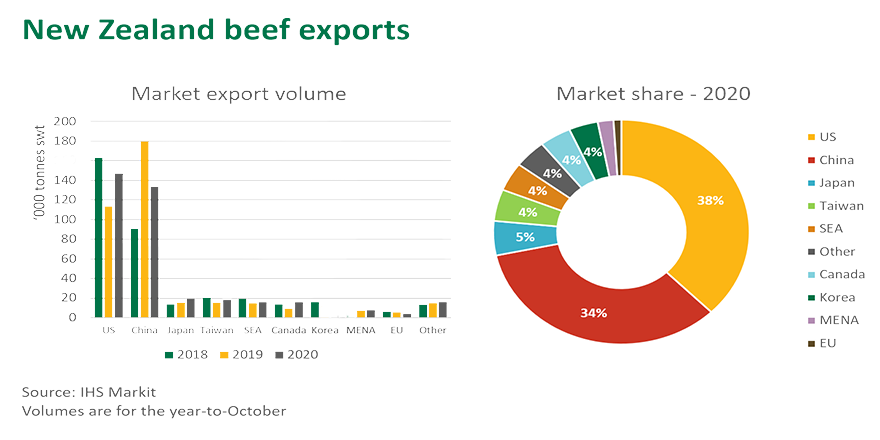
With a national sheep flock that has halved in size over the past 25 years, yet maintained output the Sheep and Beef sector is bursting with innovators and top producers, full of passion and enthusiasm to improve profitability. A cornerstone that drives the profitability beyond the farm gate is the consumer’s decisions on what, when, how they want to eat, and the quantity of consumers in these markets. The world population is growing, expected to be at 9.7 billion by 2050, how can we as an exporting nation capture this growth and turn it into revenue. Developing nations continue to grow their consumption, expected to increase 107mmt by 2020, whilst developed countries will grow by 19mmt in the same period. Population growth, urbanization, infrastructure development and shifting incomes could all lead to a genuine livestock revolution. This growth will not come without pressures and expectations on environmental and animal welfare fronts, with one hectare feeding 22 people with potatoes, contrastingly only 1 and 2 people for beef and lamb respectively.
Global sheep flocks have declined by 5.3% from 1990 to 20 13, a hybrid model of “ New Market Orientation ” , “ Shrink-To-Fit ” and “ The Knowledge Industry ” are needed to shape the future of the industry.
The opportunity is to be the farmers market of the world, the world artesian butchery, the corner retailer for the rest of the world. It’s how we pitch our image, our reputation and market it in savvy modern ways which will dictate the success of our future. The market changes and evolves, sheep farming was historically based on wool production, with no one thinking about synthetic carpets. Evolution of meat markets have seen the size of product decrease from a traditional leg roast, to a ready to eat or snackable meal. These measurable changes alongside emotive purchasing decisions, such as environmental sustainability and animal welfare which have had CAG of 72% and 42% respectively. We must pay special consideration to these attributes in our marketing package, but more importantly these have got to be driven from a farm level, and farmers must walk the talk and be proud of what they are improving, rather than see it as a compliance protocol.
We must be engaged in extracting the value of products we are selling through engaging with consumers. Ian Proudfoot quotes that industry exports worth $37 billion, are worth $.25 trillion at the consumer’s level. For every dollar collected here in New Zealand, there are six or seven dollars added by the time it reaches the consumer. The selling market will change, and be segregated by the big industrial players (e.g. JBS) and the niche high value operators, we can’t afford to be lost in the middle.
We must be prepared for a livestock revolution, have data and information on our stock to be able to use that data, to create a quantum shift in quality of products sold. We are on the verge of a quantum shift in livestock consumption and production. Our prerequisite is to embrace the opportunity to tell the story of our production cycle, where it’s from and what it is. We have a great story, we must be happy, upbeat and proud of what we are doing, sharing with New Zealand what we do, so a sales team of 4.5 million New Zealanders can sell to the world. The red meat sector needs to get savvy and upmarket, exit the dinosaurs currently employed and employ a fresh team of city born, innovative young millennials to drive this message. They are the face of what our future consumers, let them sell it to their peers. It’s imperative to learn from the past to prepare for the future, it’s a new way of doing business, don’t be frightened by change, but be excited by the challenge.
This project aims to assess what DairyNZ can do to improve the way it learns from other organisations.
Thirteen interviews were carried out, seven with people from DairyNZ and six from organisations related to the kiwifruit industry (HortNZ, KVH, NZKGI, Zespri). The interviews were transcribed and then analysed. The key findings below are supported by the literature.
All those interviewed believe there are gains to be had through improving the way their organisation learns from others. The key benefit would be better and smarter solutions with lower risk and cost.
Five factors are outlined as having significant impacts on an organisation’s ability to learn better from other organisations. These are leadership, organisational culture, empowerment of personnel, process, and reward. These were needed in all organisations regardless of size; however in the smaller organisations some of these factors may be addressed in a less formal manner.
Currently there are many barriers that restrict learning from other organisations. To address these requires a change in the learning culture within the organisation, personnel empowerment through delegated authority and time, and leadership to bring about these changes. Other factors including establishing a clear and transparent process and rewards were also noted as barriers but were not as significant as the previous three. Addressing these barriers requires concerted focus and willpower from the leadership of the organisation. It is acknowledged that all five aspects are interlinked and as one changes this will impact the others, so an integrated approach is needed for the change to occur. For DairyNZ to achieve better and smarter results for farmers, they need to learn more effectively from other organisations. This can be said for any organisation that wishes for the same outcomes. The results of this project are not limited to DairyNZ, being relevant to any organisation wishing to achieve better and smarter results.
The future of the New Zealand Primary industries will rely on its ability to remain agile in the face of ever increasing change.
Equally for success to be realised there is a call for the industry to know; where its current position is (and launch from this); how it lifts the level of innovation; increases ambidexterity across the value network, and insures the right level of investment is happening to enable long term gains.
The question this proposal sets out to answer is: How could the New Zealand Primary industries become more adaptive to disruptive change through Investing in Innovation?
Through a series of case studies (Sanford, Synlait, Mr. Apple and Comvita), and interviews with ‘key players’ that have connections to investment in innovation, it is clear to see that the traditional ‘no.8 wire’ approach will not be enough to leverage the sort of innovation needed.
Using technology to gain zero distance to our customers will enable the creation of more mindful products that will come as a result of having more compelled consumers. Our value network will have to foster integration across both axes (vertical and horizontal) to enable the experience and benefits impactful alignment will bring. Underpinning this will be some fundamental shifts in the way I3 is backed, be it private internally/externally or publicly sourced finance.
Eight key recommendations across four key areas have been derived as a result of the findings of this proposal, with the aim trying to determine what an I3 life cycle could involve.
The Global Focus Programme is transformational – not only in personal development but also in the way you come to view New Zealand’s agri-food sector.
USA
For me my Africa GFP began in the United States in Delaware where we were shown what a cataclysmic mistake it has been to devalue food in the way American society has. With only 8 per cent of household income spent on food, and the average citizen eating 50 per cent of their meals in restaurants and takeaway outlets, it has been a frantic scrabbling to the bottom by meat producers.
One large egg farmer we visited had increasingly expanded his operation and was automating as fast as capital access would allow. Why? Because Americans want cheap food. It could almost be part of their constitution. Their pride in ‘producing the cheapest food in the world’ as one farmer put it is evident, not only in the continuing cheapening of products but also in the waistlines and wastage of citizens.
That devaluation of food is spreading through-out the developed world – but may be arrested with the younger consumers coming through – especially with the rapidly developing social conscience among them. But, in the meantime it will lead to a quicker expansion into automation, and increased unemployment – something one Senator shared, he was at a loss to know how to handle the fallout from.
All farmers we spoke to, voted for Trump purely because they were tired of what they termed ‘over regulation’ from Obama’s regime. And there were some ugly conversations had, where many prejudices were displayed by farmers, who seemingly feel his victory gives them license to express them freely – even to our fascinated Nuffield group!
Perhaps most disappointing to me about some of the farmers we visited, was the level of apathy in their businesses. One dairy farm had 100 million consumers living within a 100-mile radius. His operation was not economical or efficient, but because of his customer base, he had willing consumers on his front doorstep. His answer was to make ice cream and within a year had a $1 million US turnover from his diversification. It wasn’t particularly good ice cream and the shop on the farm was not overly enticing. And therein lies the issue…where a density of population can lead to laziness in business strategy. I found myself wishing more than once that New Zealand had access to that kind of consumer base on their doorstep!
The United States also began a consistent theme I was to see repeated over the next eight weeks. The ascent of Australia over and above us is real and is frustrating. In the United States Australia has 44 per cent of sheep meat market while New Zealand has just 15 percent. Their products were clever, well considered and marketed sophisticatedly. Vegetarian fed was one such example of clever messaging!
New Zealand as a brand was not significant, and with Australia also working in that space of branding their country of origin as a safe, clean, environmentally sustainable product, my fears increased for the positioning of NZ Inc in the global market.
Eastern Europe
Eastern Europe gave me an insight to regionalism – and how this is going to be an incredibly serious mega-trend that has vast implications to our food sectors. Even in developing countries like the Ukraine we witnessed the consumers desire to shop locally. We learnt not to assume in an under developed country that the consumer isn’t educated on sustainability. In Kenya, even the poorest villagers had a phone. Those devices give every consumer a ticket to the world of food production. And we can never take that for-granted.
So what then is our plan B with 95 per cent of our produce exported? What happens if tomorrow’s consumer outright rejects New Zealand products based on sustainability? How then do we fight that? And are we prepared for it? And during our Czech Republic visit we were told that German supermarket giant, Lidyl, intends to implement regional policies by buying within a local radius only.
Kenya
In Kenya, I was to understand subsistence farming and how those farmers far surpass in terms of numbers the large corporate farms we were to see in the likes of Eastern Europe. This really put the constant message we are hearing globally about the need to feed the world in context.
Simple technical farming advice could significantly increase production and quality of lives for subsistence farmers worldwide. Take that increase in production and the disappointing amount of food wastage in the world and you have an answer to those that cry wolf on needing to increase food production.
I struggled to be comfortable in Kenya with businesses, such as a large Dutch flower operation we visited, that were overseas owned, and making money because they had the advantage of cheap labour and less Government regulation.
Yes, these businesses were clever, but I struggled because the feeling that was imparted to me, particularly after talking to a supermarket buyer in South Africa, was that ethics in business will increasingly be looked at and scrutinized by the new generation of consumers.
South Africa
South Africa gives me great hope for the future of Africa. At present it is corrupt, and difficult to do business in. But the new generation coming through are entrepreneurial, educated and determined to oust their parents’ regimes. It is an innovative disrupters dream and will be a powerhouse in the future.
So, I’ve come back experiencing conflicting emotions about New Zealand’s place in agri-business globally. Our domestic issues seem less relevant than they did to me and I often see them now as being somewhat of a sideshow that distracts us from what must always be our number one focus – our overseas consumer.
As you read this I will be travelling in the United Kingdom, Ireland, Holland and Belgium on the first leg of my personal studies where I’m investigating consumer mega trends, the science of perception and learning about successful long-term messaging.
Before the end of the year I will be heading back to the United States and travelling a little in Canada as well as Mexico before touching base in Asia early next year.
I cannot thank Nuffield International and our wonderful team in Nuffield New Zealand enough for this incredible opportunity. That hunger to learn is a powerful driver and I look forward to meeting up with you in November.
In the meantime, if you are interested in further expanding upon some of the issues I’ve written about please see my blog at farmjourno.wordpress.com.
I was fortunate to be part of a relatively small group of 8 Nuffield scholars, of diverse farming backgrounds and visit 6 countries on the ‘Brazil GFP’. Countries visited were well developed or mostly developed in terms of their economies and agricultural industries and included Brazil, Mexico, US, Ireland, France and NZ. One of the key benefits I believe the GFP offers is the context it gives of the global agri-food business and therefore the perspective around NZ as a producer and marketer. As one large scale US, dairy farmer producer put it ‘NZ is small and cute’ which is pretty hard to argue with.
As many scholars have noted before me, the GFP is also provides a personal challenge in terms of mental stamina, getting some sleep and relationship management among your fellow scholars. This in itself is a valuable exercise personal development and self-awareness, as is driving a rental van in a mega-city full of motorists in a hurry. I am sure the post GPS guidance era of scholars have it so much easier than the ones who went before trying to read road maps.
Common Themes
As one travels through multiple countries and talks to farmers, there are many common issues and themes that begin to emerge. It is a universal thing, whether it is a group of farmers, bakers or candlestick makers, when they get together, the conversation eventually reverts to what are the challenges and issues, and despite different geographies, cultures and enterprises the themes were remarkably similar. Some of them I will pick up on here. Not many primary producers are getting well paid for what they do or earn a respectable return on capital. There are of course exceptions that have a different strategy and they are were the ones well worth listening to. Some examples, but not an exhaustive list of the businesses achieving higher returns included: Farm to consumer businesses, or cutting out the middle men/vertical integration. Requires large local consumer base and appears difficult to scale up. Organic premiums on enterprises where yield drag was not too high, e.g. Soy bean production at 3 times the conventional price with only 25% yield drag compared to conventional. Scale, high volume outputs with good economies of scale achieved on inputs and infrastructure, e.g. Large-scale US containment dairy or arable. Niche production of a product where there are barriers to entry or a unique comparative advantage due to location, climate etc.
Urbanisation
Urbanisation continues to be a growing trend in all countries visited and results in more disconnect with farming and further diminishes attraction of farming to young people due to shrinkage of rural communities. This disconnect also places more obligation on farmers to produce sustainably and improve environmental and animal welfare performance as the more urbanised a country becomes, the higher the expectation around these issues seems to be.
Succession Issues
Lack of effective farm succession is widespread and this results in older farmers operating businesses that keep getting smaller relative to the ever- increasing size of an economic unit. Lack of scale and fresh energy in the business then leads to underperformance in output, returns and investment.
Labour
Labour and staff was predictably a regular issue that came up for discussion. In many countries, available immigrant labour was more willing, but this is not a popular political solution. Automation solutions are going to help, but not going to change the game in farming in my view.
Having a large domestic consumer population does not translate into higher returns and arguably at present, exporting countries like us are enjoying as high returns as anywhere. The closer farmers get to the supermarkets, (with their inherent business model of lowering prices on the shelf), the tougher it gets. As one producer said, the supermarkets make sure they keep us alive, but only just.
Changing traits
Consumer trends and the way food is retailed is very fluid and changing at an astonishing rate. Producers and retailers of agri-food are presented with multiple consumer desires including conventionally produced/low cost, non-GMO, antibiotic free natural free-range grass fed, certified organic, locally produced and more recently plant based/synthetic. It is difficult to pick an individual trend from the above list that is certain to deliver volume the best and value in the long term. This list of traits was shorter 5 years ago and one wonders what other food traits will emerge in coming years? In addition to this, there is the question of how most food going to be retailed through large stores, small ones, purchased via e-commerce delivered by a drone or eaten out of home. The spend on out of home eating is either now ahead of almost catching up with in-home spend on food depending on country so as farmers we need to think about this.
The rhetoric around the challenge of feeding 9 billion people within the next 2 decades has been a bit overdone as the world has the physical farming resources to feed many more than that right now. It just requires a viable farmgate return for farmers to engage the land into production that is currently sitting idle or undeveloped. While this observation might be defendable now, there are some very large water scarcity, land degradation and climate change issues on the horizon which will have an impact. Focus is also moving to nutrition rather than food. The obesity trend and an aging population, signal massive future healthcare costs to government, so quality nutrition will be the focus either through education or if that doesn’t work, regulation.
Political Climates
Politically, Trump and Brexit have raised genuine concerns from a lot of farmers we met. US farmers are worried about budget cuts to Ag support and immigration clampdowns. Academics are concerned about reduced R&D budgets and the post Brexit landscape is of concern to anyone producing in or exporting to Europe, including NZ and Ireland.
In closing, a highlight of the GFP for me personally was hosting the group through the South Island of NZ. Despite my own familiarity with what we saw, it was great to receive the views and perspectives of the Aussies, Canadian, American and Dutchman in the group. Hearing the group constantly ask where all the well-publicised environmental degradation was, how impressed they were with the knowledge, efficiency and capability of the hosts and the overall experience of friendly people, great food and stunning landscapes. It was a good way to finish an amazing experience and a reminder how blessed we are to live and do what we do in NZ.
Dear Nuffield Scholars,At the recent Nuffield Triennial Conference held in the UK, delegates were given the option of participating in a tour of East Africa in June 2018. We would like to give all Nuffield Scholars the opportunity to register their interest and provide 1-2 brief paragraphs on why they wish to participate and what value they believe they can add to the tour. Details on this tour can be accessed via the link below. Please submit your Expression Of Interest by 5pm GMT on Monday 31st July. Regards Jim Geltch CEO Nuffield International PO Box 586 Moama NSW 2731 Direct Ph: (03) 54800755 Fax: (03) 54800233 Mobile: 0412696076 Email: jimgeltch@nuffield.com.au Skype: geltch1315 Internet: nuffieldinternational.org Document Link: http://www.nuffieldinternational.org/db/attachments/596819970fa60_2018EastAfricanNuffieldTour.pdf
Reg was awarded a Nuffield Farming Scholarship in 1963. He travelled on his Scholarship during 1964, spending 6 months in the United Kingdom then the United States of America, looking at wheat and meat production. He took the opportunity to go to France looking at fodder radish, and sugar beet production.After his Scholarship, he returned to the farm at Browns, Southland, where he stayed for the next five years.
In 1968, he was appointed as the New Zealand Department of Foreign Affairs Farm Management Expert to the Thailand Land Development Department for a two year term. This was extended in 1970 with working stints following in Sabah, Sarawak, Singapore and West Malaysia.
He and wife Doris set up their own business based in Singapore, as Dalzell & Associates, agriculture consultants. A few of the projects over the next 14 years included; time on an oil palm estate in Kluang, Malaysia, using the waste products of oil palm manufacture to make feed for swamp buffalo; revegetating a bauxite mine in Sungai Rengit on the south tip of Malaysia; and also established a flock of sheep – Coopworths crossed with local sheep.
Reg’s contribution to the Southland community was through Rotary, being a member and official with Cromwell & Invercargill clubs as well as various community associations.
In true Nuffield fashion he & Doris hosted and retained strong links with many internationals, particularly from his Nuffield studies.
Doris died 10 days after Reg a few days short of her 95th birthday.