2026 Nuffield NZ Farming Scholarship. Apply by 17 August 2025. Read More...

Apply for 2026 Nuffield NZ Farming Scholarship by 17 August 2025. More details...

NZRLT (Rural Leaders) Leadership update.

After nearly nine years with Rural Leaders, including the last two and a half years as Chief Executive Officer, Lisa Rogers has decided the time is right to move on from her role, effective 9 January 2026.

During her time with the Trust, Lisa has made a significant and lasting contribution. She has led Rural Leaders through several major projects and periods of change, and now feels the time is right for someone new to build on this work and continue to advance the Trust.

While the Board is saddened by Lisa’s decision to move on, it fully supports her choice and is confident that her influence on Rural Leaders and rural leadership will continue well beyond her tenure with the organisation.

The Board will begin a recruitment process in the new year. Over the coming weeks, we will also work with the Rural Leaders’ team to ensure the continued delivery of our programmes.

The Board is very confident in the teams’ ability to continue to deliver to the high standard they are known for during this period of change.

If you would like to discuss this announcement further, please feel free to get in touch at Kate@landpro.co.nz

Kind regards,
Kate Scott
Board Chair, NZ Rural Leadership Trust

2026 Nuffield NZ Farming Scholars announced.

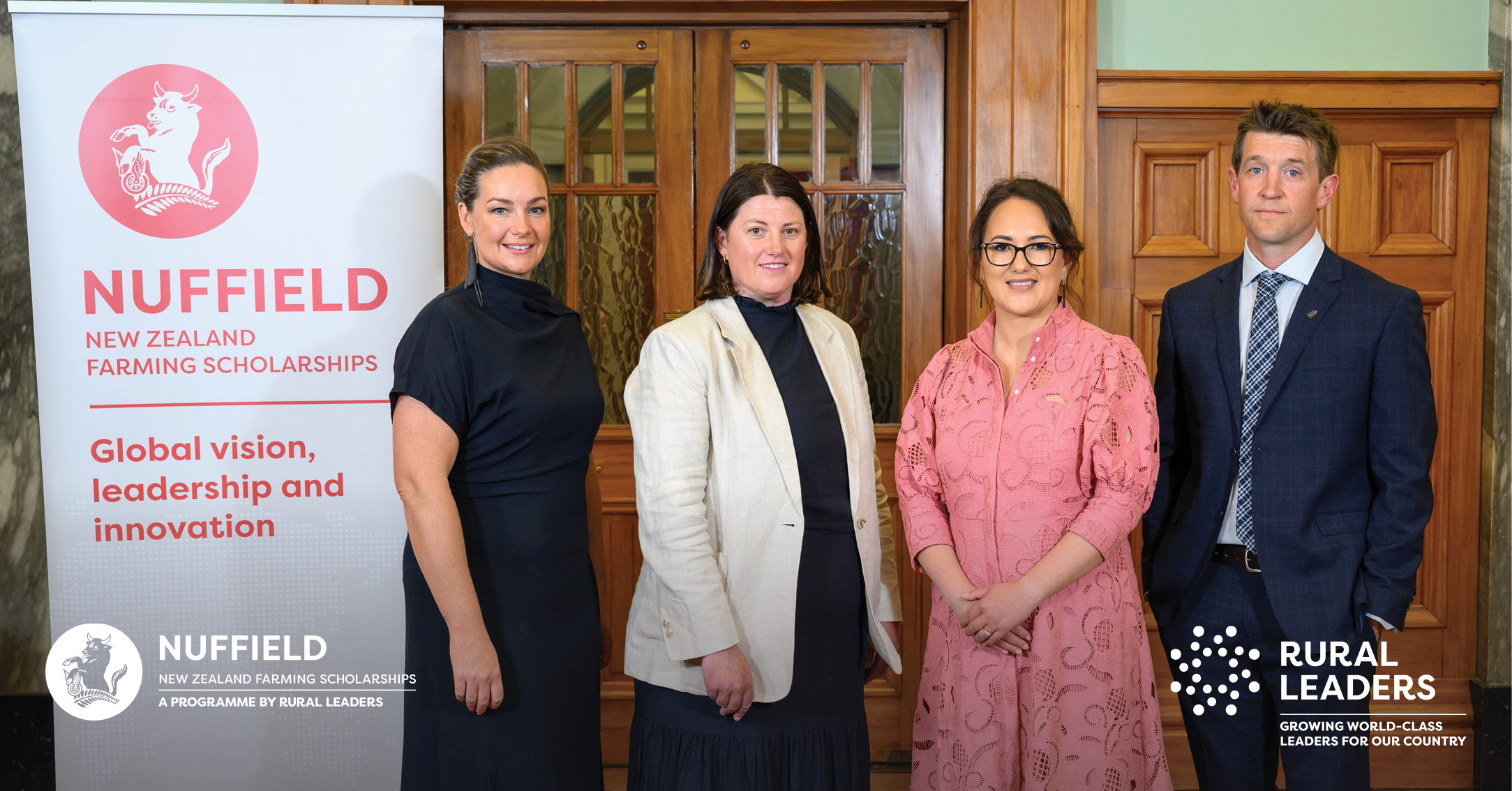
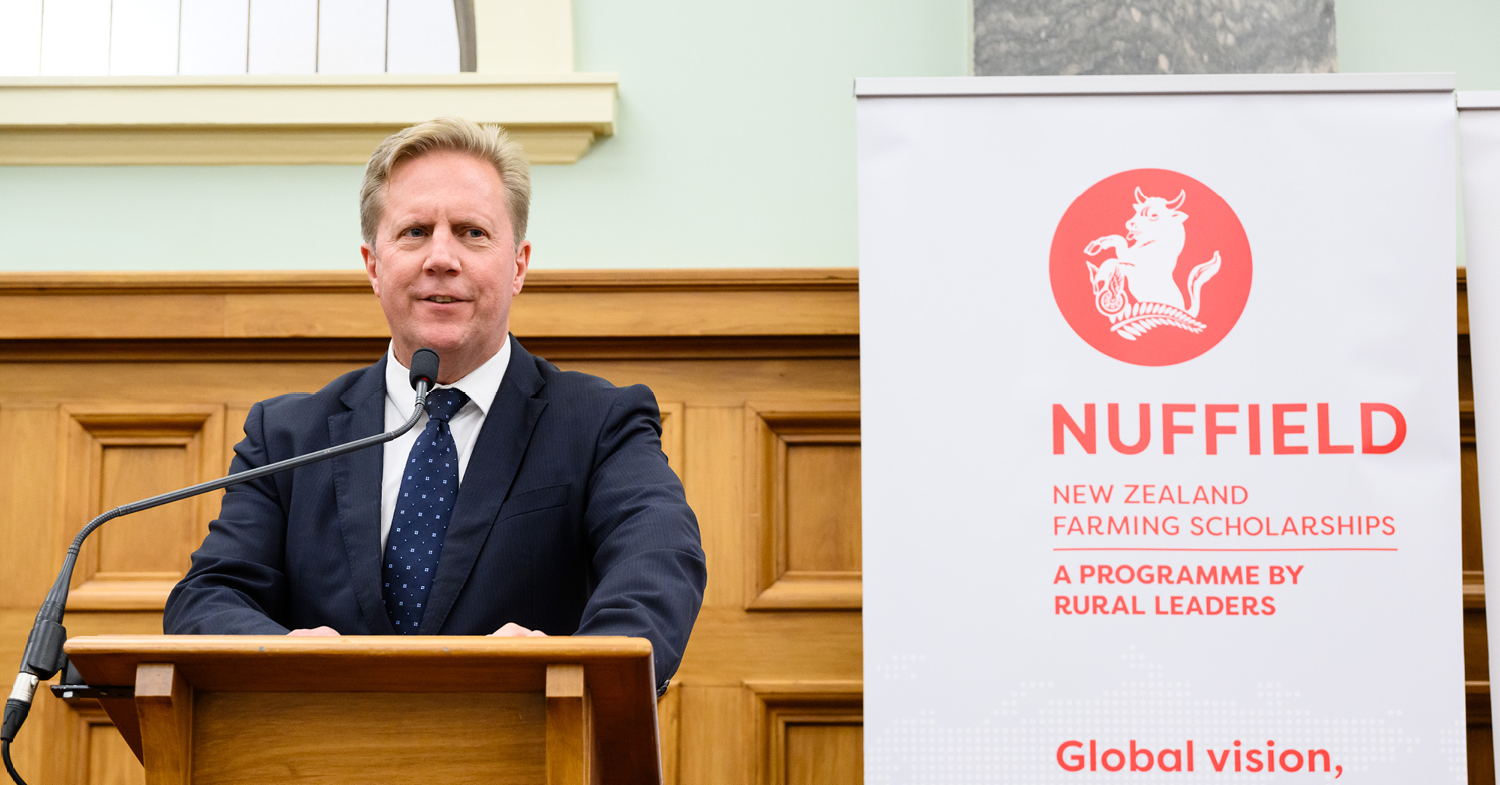
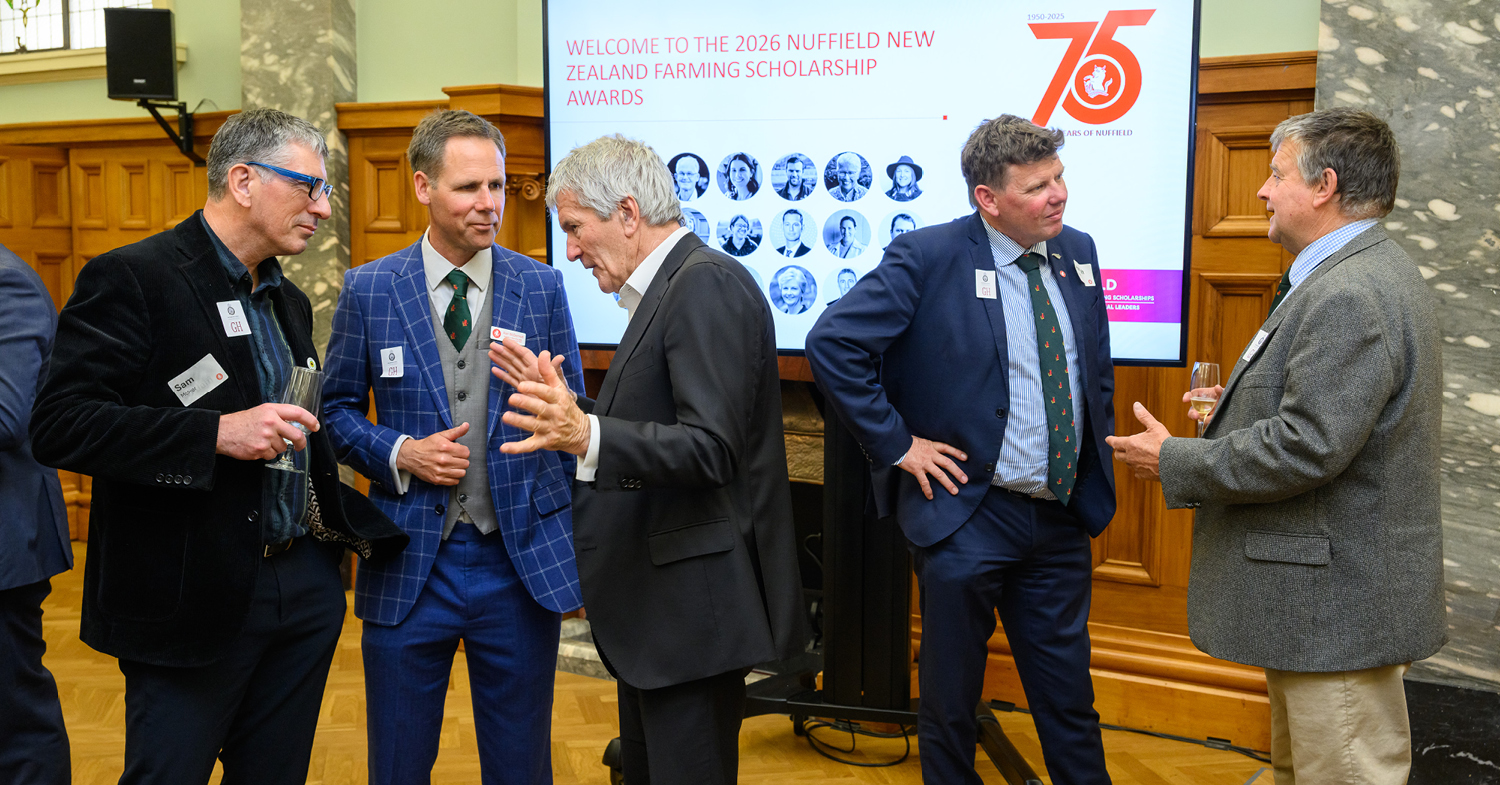
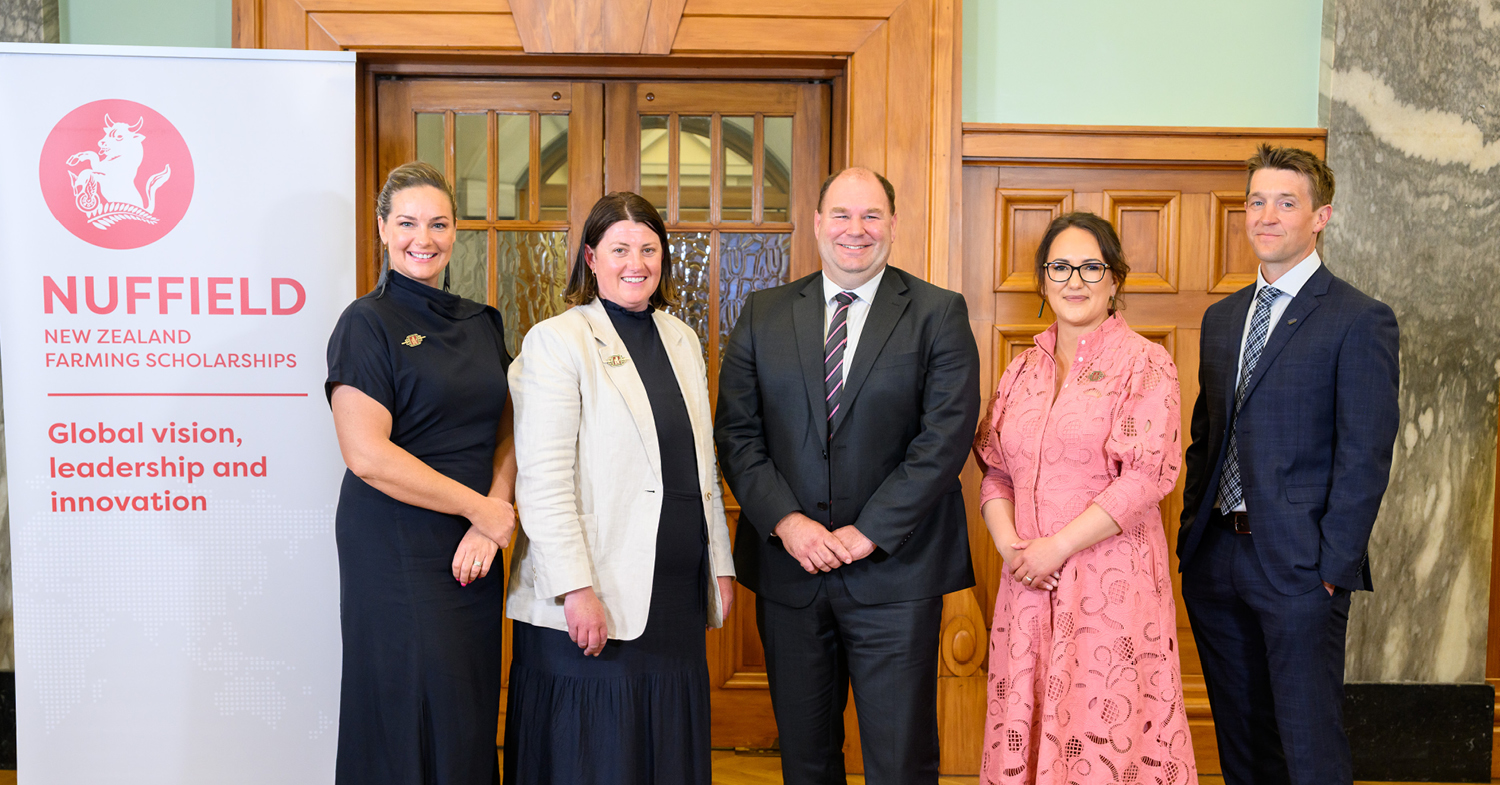
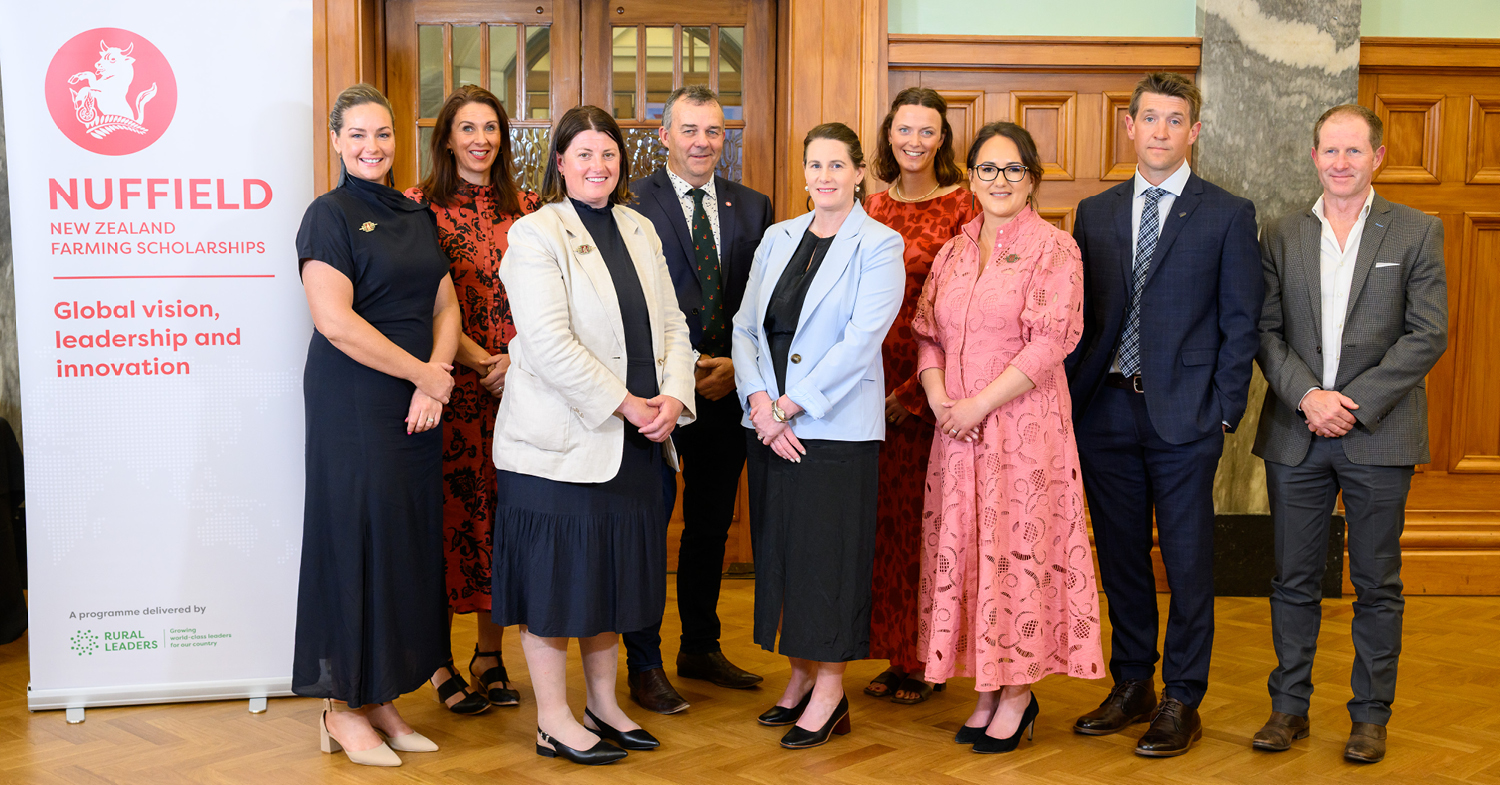
Last night (Tues 4 Nov) at Parliament, in front of Rural Leaders’ investing partners and political and industry leaders, Hon. Minister Todd McClay awarded the 2026 Nuffield Scholarships to four new leaders. 

Nuffield Farming Scholarships have been awarded to New Zealand’s Primary Industries leaders for 75 years.

With a global network of more than 2,000 alumni, 197 of these from New Zealand, Nuffield continues to help build rural leadership capability and Food and Fibre NZ’s global profile.

Last night at Parliament, in front of Rural Leaders’ investing partners and political and industry leaders, Hon. Minister Todd McClay awarded the 2026 Nuffield Scholarships to four new leaders.

The 2026 scholars represent three regions and several industries including dairy, aquaculture, and red meat.

The cohort will undertake a Rural Leaders delivered programme that offers a life-changing opportunity for travel, study of the latest agriculture innovations and an introduction to decision-makers around the world.

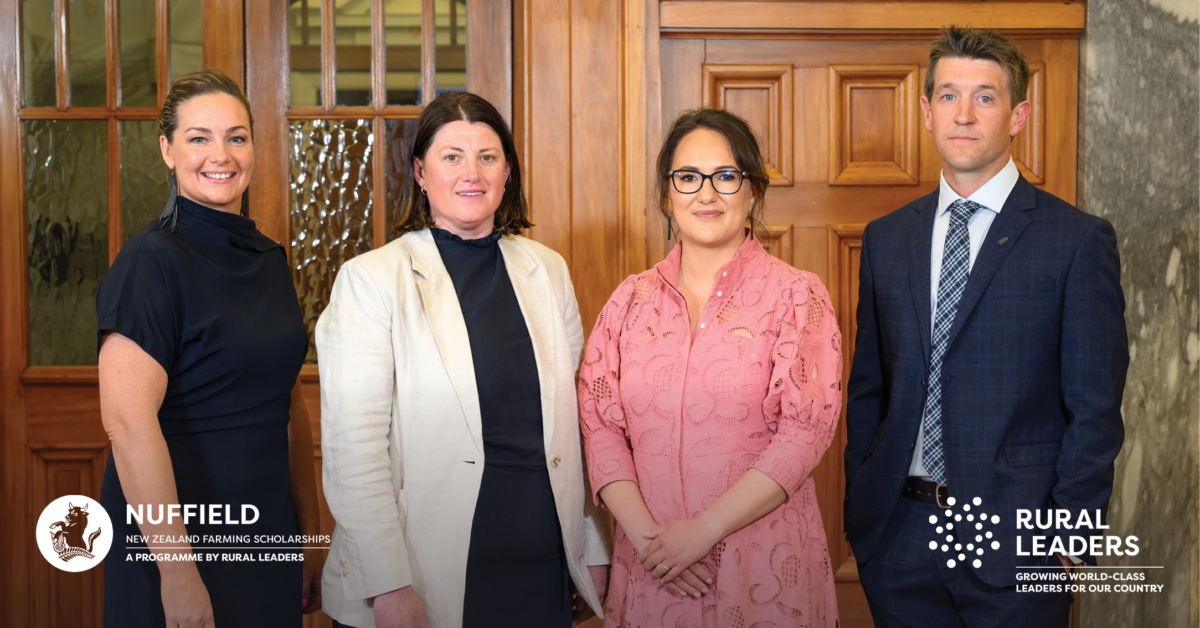
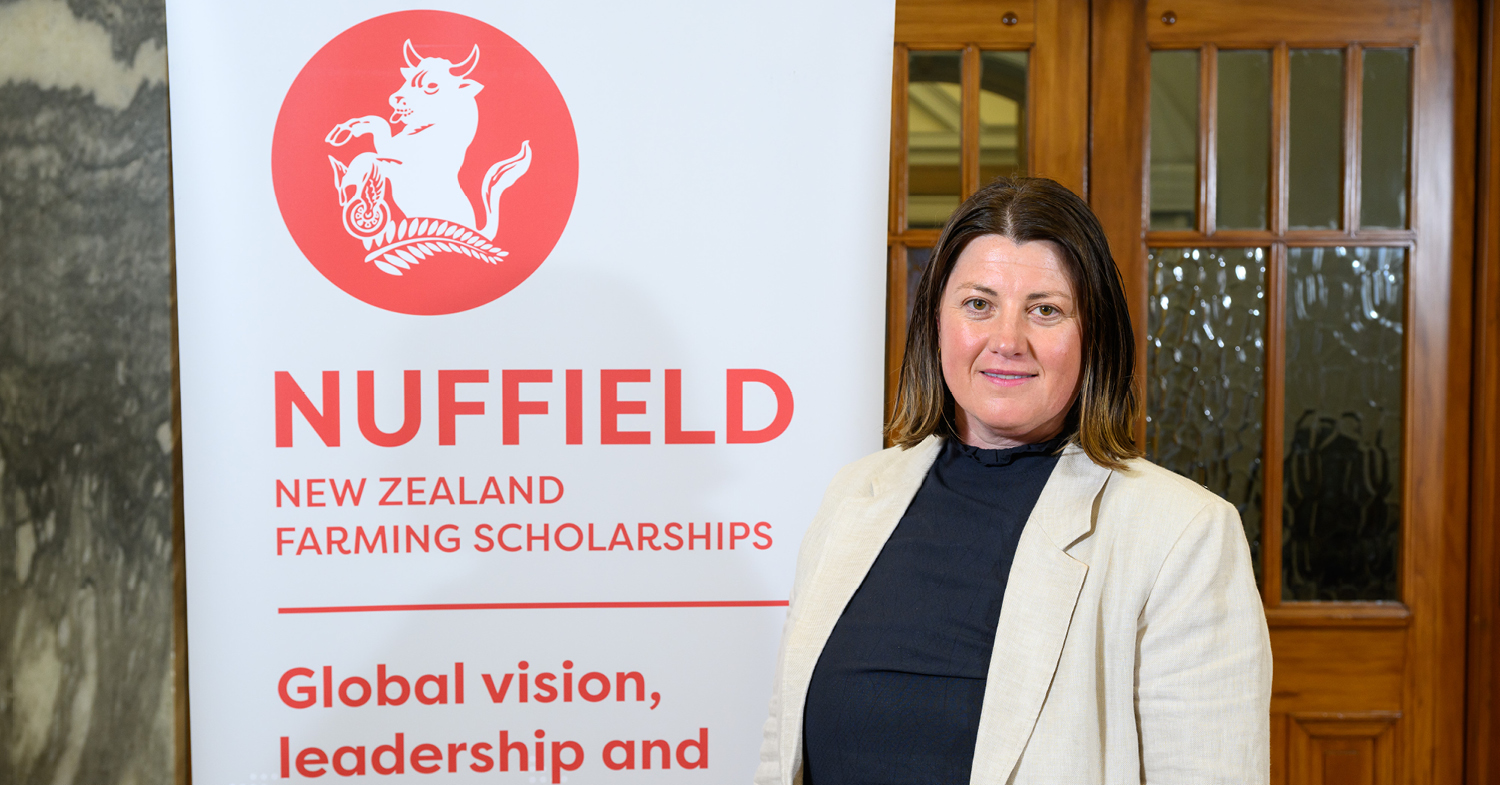
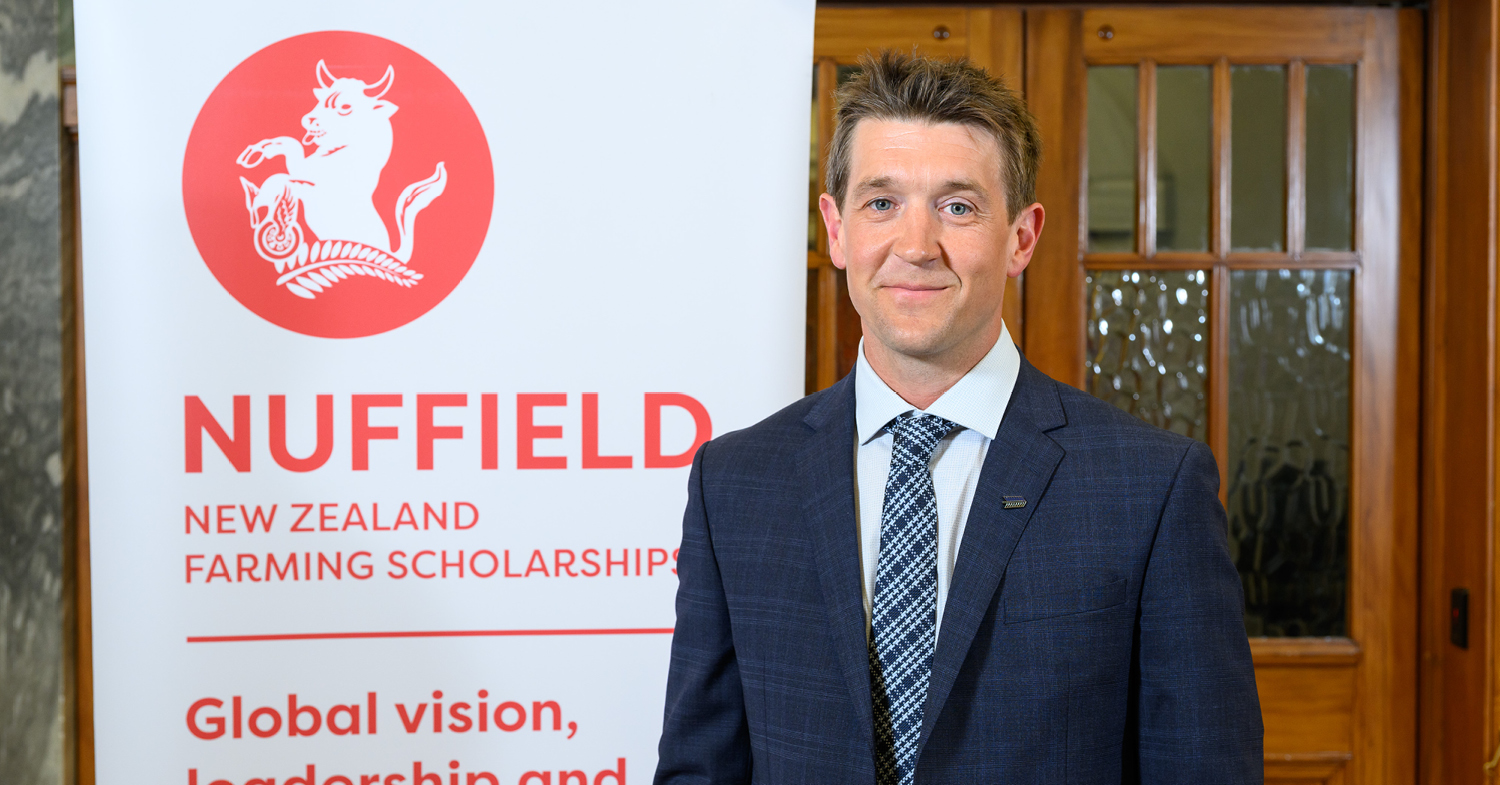
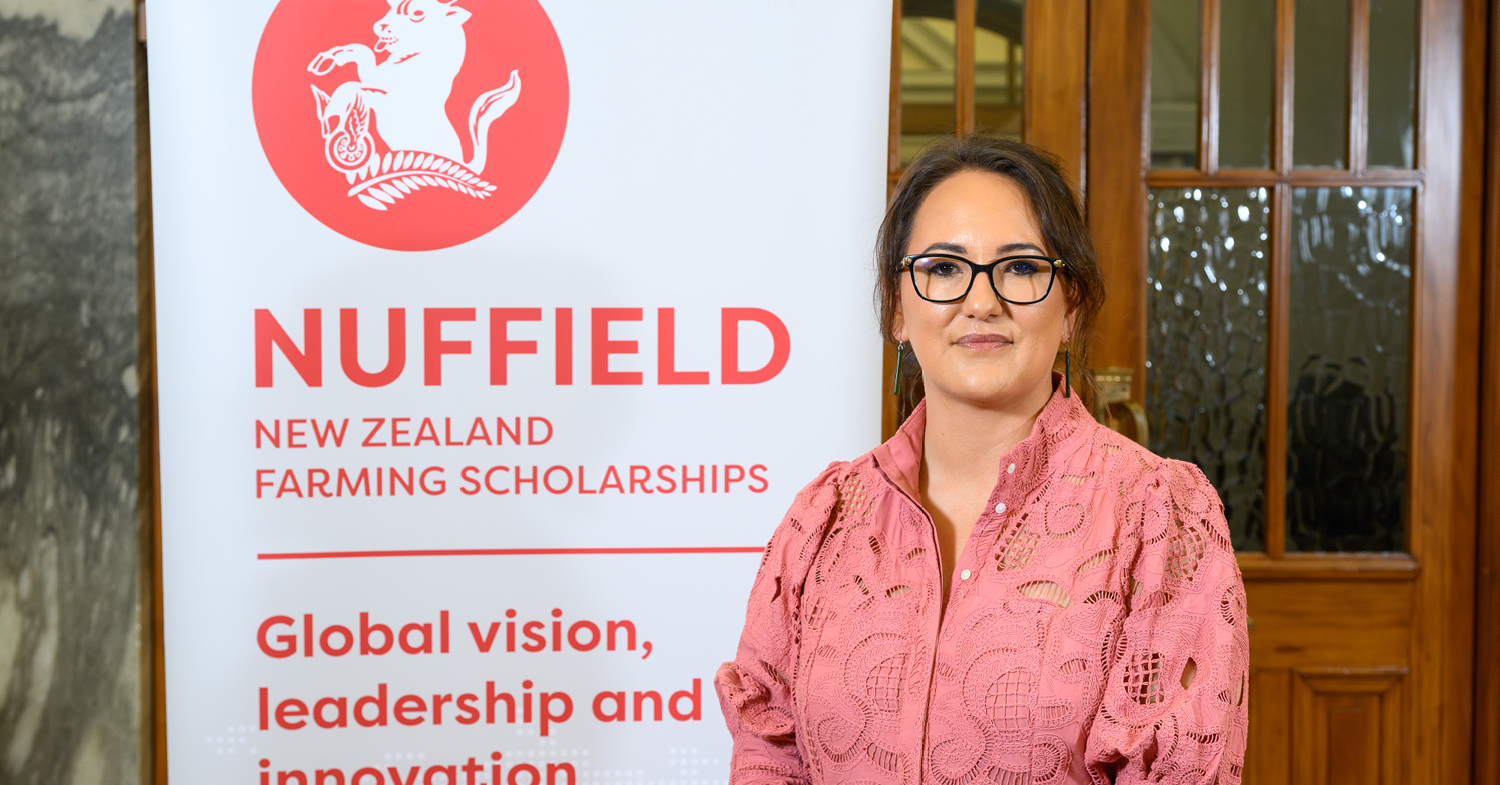
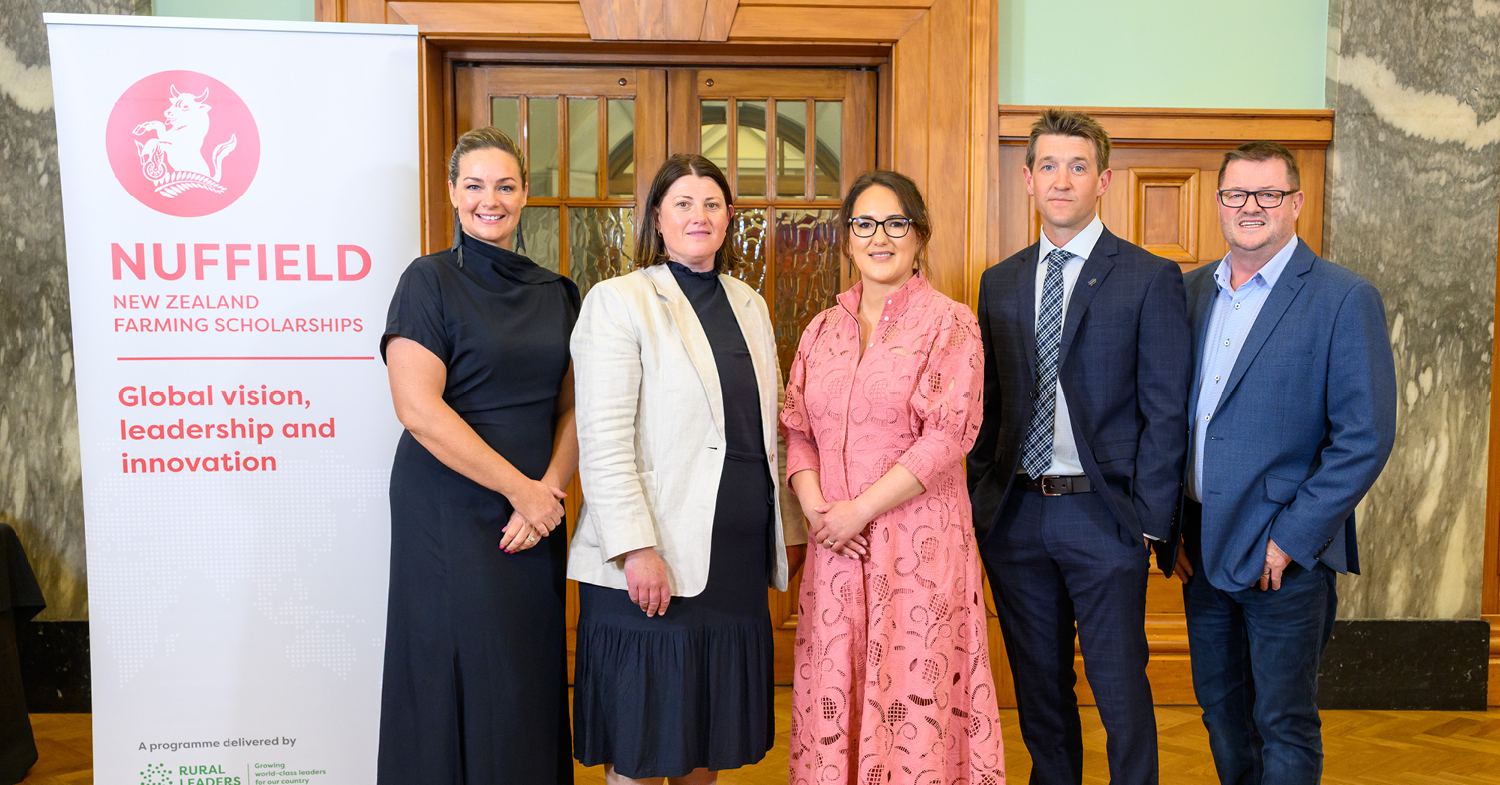
The new scholars were announced by Minister McClay as: Clare Bradley, a Bay of Plenty Aquaculturalist, Jared Clarke, a Canterbury Farmer, Kelly Heckler, an Otago Farmer, and Tracey Perkins, a Canterbury Farmer. They are the 194th, 195th, 196th and 197th New Zealand scholars respectively.

“Clare, Jared, Kelly and Tracey have shown they value giving back to community and industry, they display innovative approaches to their work, and they have demonstrated a track record of meeting challenges head on. 

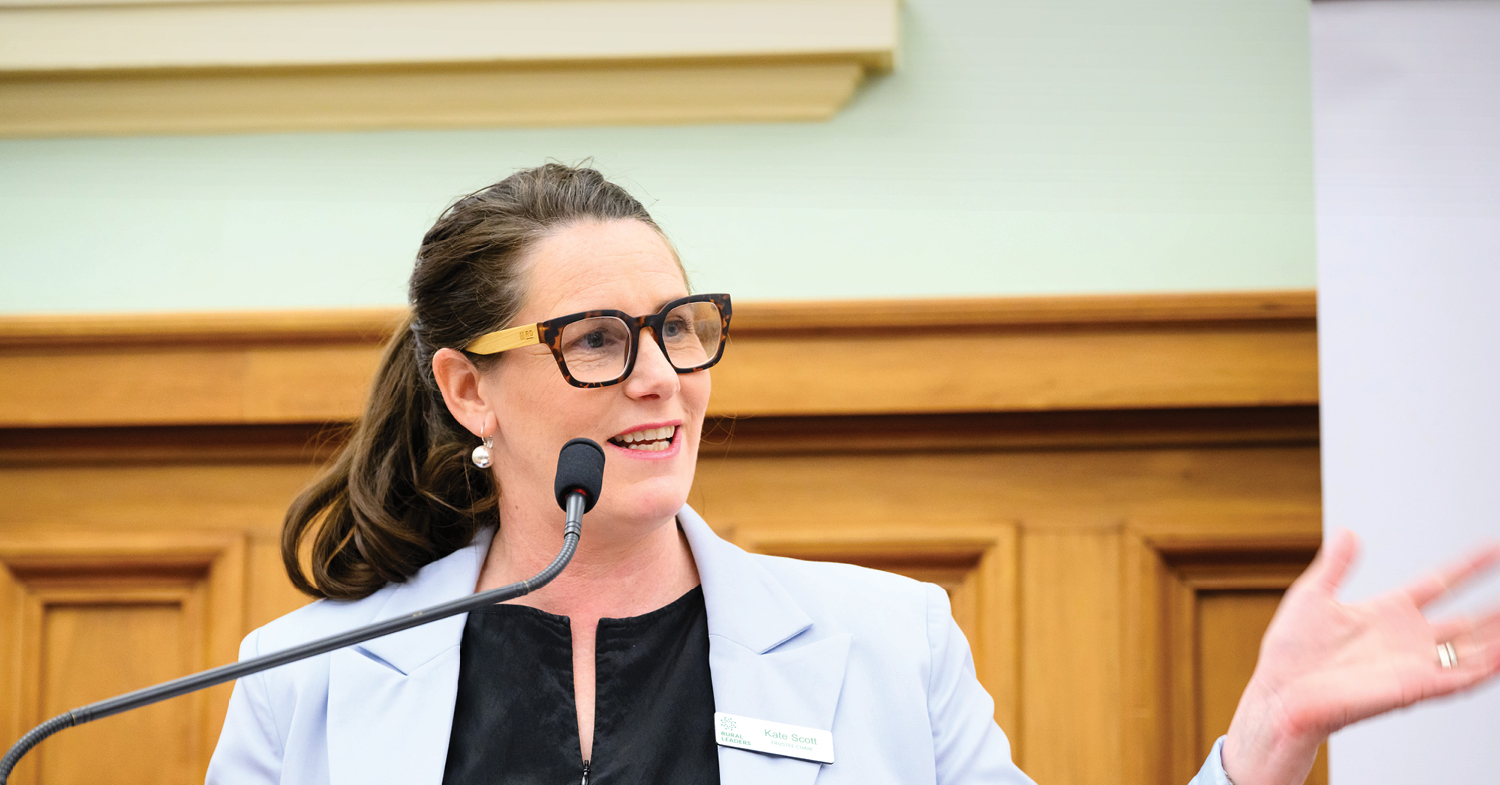
Ultimately, they are now tasked with finding those deep insights that will create lasting benefit for New Zealand food and fibre, their industries and their communities,” said Kate Scott, Rural Leaders and Nuffield NZ Chair.

Lisa Rogers, Rural Leaders’ CEO added, “Clare, Jared, Kelly and Tracey have each exhibited the characteristics that embody a Nuffield Scholar and ambassador for NZ Food and Fibre.”

Introducing the 2026 Nuffield New Zealand Farming Scholars.

Clare Bradley, CEO AgriSea, Bay of Plenty
Clare Bradley is based in Paeroa with her children and husband AgriSea Chief Innovation Officer, Tane. Clare, CEO, leads a 30-strong team pioneering seaweed-based bio-stimulants, animal health supplements, and high-value hydrogels for agriculture and biotechnology. 

Clare is a leading advocate for the sustainable growth of Aotearoa’s seaweed sector. Guided by appreciation & respect for the marine environment, Clare has championed innovation that protects New Zealand’s underwater forests while creating economic, environmental, and cultural value. 

As the founding Chair of the Aotearoa New Zealand Seaweed Association, and Rere ki Uta, Rere ki tai, Clare is driving collaboration between Western science and Mātauranga Māori to build a trusted, sustainable sector. 

Under her leadership, AgriSea promotes local empowerment, zero-waste production, and circular economy principles. Known for her environmental vision, Clare continues to shape New Zealand’s emerging blue economy, turning the country’s rich marine biodiversity into a model of innovation and guardianship.

Clare’s Nuffield research is likely to explore the economic, environmental, and logistical viability of smaller, decentralised processing hubs and whether they can create local jobs, strengthen value chains, and enhance commercial resilience.

Jared Clarke, Farmer, Canterbury (John Hopkins Scholarship Award Winner)
Jared Clarke is a Canterbury dairy farmer with a strong record of performance, innovation and team development. A Lincoln University B.Ag.Sci (Hons) graduate.

From 2017 to 2022, Jared and his wife Victoria operated Two Rivers Ltd, a 50/50 sharemilking business milking 2,000 cows. In 2022, they formed an equity partnership and purchased Mount Rivers Ltd, a 1,000-cow irrigated dairy farm supplying A2 milk to Synlait. Under their leadership, the business has delivered high returns, sustainability initiatives and strong team retention. 

Jared believes that “turning sunlight into food is a noble task.” Known for his ability to ignore constraints, he enjoys helping fellow farmers where he can on performance, people and innovation. 

Off-farm, Jared’s governance work includes director of Barrhill Chertsey Ltd, a member of the Canterbury Farm Business Group, and a former member of LIC’s Shareholder Reference Group.

Interested (and passionate) about the potential for a reduced reliance on imported energy, both on-farm and at a national level, Jared’s Nuffield research is likely to be on the generation and storage of energy.

Kelly Heckler, Farmer, Community Leader, Central Otago
Kelly Heckler and her family farm Lauder Creek, a high-country sheep and beef property in the Manuherekia catchment of Central Otago.

Kelly is a values-driven leader and advocate for sustainable food and fibre production, recognised for her commitment to intergenerational resilience in New Zealand’s primary industries. 

As chairperson of Otago Water Resource Users Group, Kelly led the organisation through a major transformation, restructuring it into a formal incorporated society to improve accountability and adaptability. “Real impact doesn’t always come with grand gestures … it’s often about steady progress behind the scenes,” says Kelly.

Kelly’s leadership philosophy centres on authenticity and collaboration. Her experience navigating policy reform and community engagement has deepened her understanding of the challenges facing rural New Zealand.

Kelly aims to build a resilient, intergenerational farming business and advance innovative farm-planning solutions that support people and environment. She sees the future of agriculture as one built on integrity, communication, and shared purpose. “When we bring people together behind a common vision, we can shape a thriving, sustainable future for generations to come,” added Kelly.

Kelly is exploring research in Freshwater Management with specific focus on water allocation in overallocated catchments.

Tracey Perkins – Farmer, Sustainable Land and Water Management Advisor, Founder of AgriThrive

Tracey Perkins is a Canterbury-based dairy farmer, facilitator, and sustainable land and water management advisor who combines hands-on agricultural experience with a deep commitment to helping rural communities thrive.

Living in Darfield on a 1050-cow dairy farm with her partner Jonny and their three children, Tracey balances family life with leadership in sustainable land use and rural development.

Of Ngā Puhi and Raukawa descent, Tracey brings both cultural grounding and practical expertise to her work.

As the Founder and Lead Facilitator of AgriThrive, she is the only agricultural facilitator in New Zealand using a trauma-informed, farmer-to-farmer approach. A graduate of the Kellogg Rural Leadership Programme, she has over a decade of professional experience in biosecurity and environmental sustainability.

Tracey’s achievements include forming and guiding numerous Canterbury catchment and community groups, leading successful teams, and recently serving as Campaign Manager for Selwyn Mayor Lydia Gliddon.

She is passionate about empowering people to build resilient, solutions-focused communities. Whether through AgriThrive, local schools, or industry leadership, she champions collaboration, sustainability, and the belief that lasting change starts with people.

Tracey intends to explore “The Third Model,” an approach integrating Indigenous stewardship principles with the operational and economic realities of intensive agriculture to create a sustainable foundation for New Zealand’s future.

Congratulations to the four 2026 Nuffield scholars.

For more information about the Nuffield New Zealand Farming Scholarships,
go to
 https://ruralleaders.co.nz/nuffield


Fresh from their award night, our Nuffield Scholars featured in a RNZ interview, listen here:

Hamish Gow – Inside the Value Chain Innovation Programme

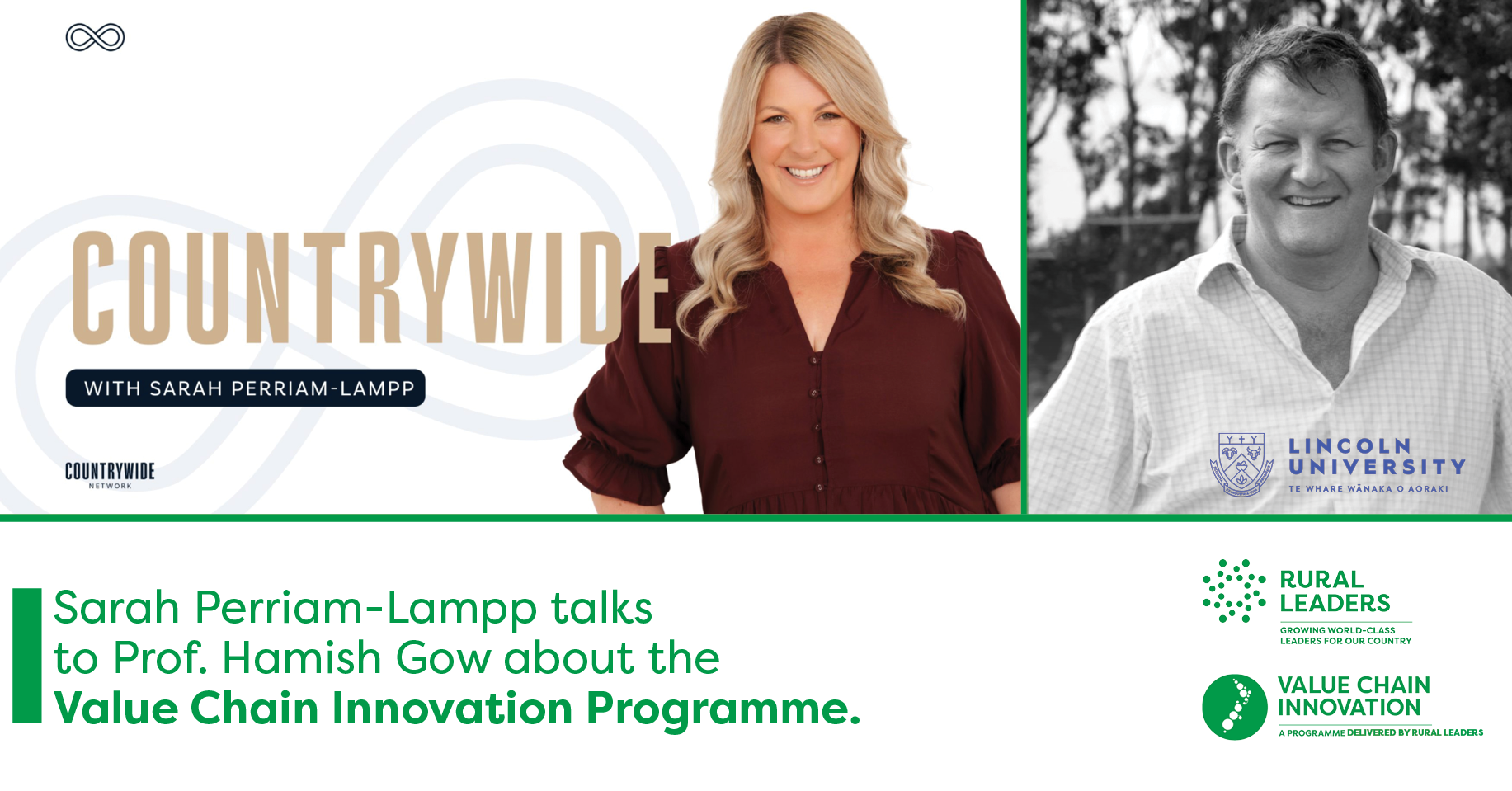
In this episode of The CountryWide Podcast, Sarah Perriam-Lampp talks with Lincoln University’s Professor Hamish Gow about the Value Chain Innovation Programme, delivered by Rural Leaders.

Hamish explains how the programme takes participants inside New Zealand’s dairy, kiwifruit, apple and red meat sectors to understand how value is created, captured and shared, and why the real learning happens on the bus as farmers, entrepreneurs and industry leaders connect and challenge their thinking.

Listen to the episode below, or click on one of the platform icons below to listen on your favourite player:

CountryWide Podcast Transcript

Sarah Perriam-Lampp, CEO and Editor-in-Chief, CountryWide:
Welcome to another episode of the CountryWide podcast, and catching up with one of my favourite people, Hamish Gow from Lincoln University. Today we’re going to talk about the Value Chain Innovation Programme, something that I absolutely loved doing a few years ago. I’m sure it’s evolved a little bit from the first one?

But I’m really keen to hear about what everyone gets up to on the programme because the deadline to submit your application for 2026 is coming up soon. So, Hamish, can you tell us a little bit about the programme and how it’s evolved?

Hamish Gow, Professor, Lincoln University:
Well, it hasn’t really evolved a lot, right? Because it’s designed to give the participants a model or framework to be able to understand and evaluate value chains and how we create value in those value chains. Then we walk through the four major value chains in New Zealand, two in the livestock sector and two in horticulture.

The Four Value Chains

HG: We walk through the dairy value chain and analyse and evaluate how Fonterra creates economic value for farmers and how that comes back to them. We then walk through the Zespri value chain and look at how that brings value back to both the orchard owners as well as into the other members of it, which are the packhouses, and understand that model. We then look at the apple industry and how that creates value for the growers.

Then finally, we look at the red meat sector and understand how value comes back to farmers and producers in the red meat sector. And around the edges of that, we look at government support, regulation, and legislation, and how that’s enabled some of them and caused constraints on them, and then technology, and how that’s supporting it as well.

It hasn’t changed a lot from when you went on, the only difference is, we’ve gone in reverse. We used to start in Hamilton with the dairy sector and work to the Hawke’s Bay and end with apples. Now we’re starting in the Hawke’s Bay with apples and working our way through to Hamilton and ending with the dairy sector.

Target Participants

SPL: For those who are unfamiliar with it, this is a programme run as part of the Rural Leaders organisation (they look after Kellogg and Nuffield). It is really for quite a wide range of people, getting farmers and growers to look beyond the farm gate, isn’t it? As well as those who work in the sector to fully understand the vertical integration of a value chain.

HG: Yes, it’s aimed at both people who are directors and senior leaders within the industry. So it could be farmers, it could be people inside the processing facilities, it could be marketers who are trying to understand it, it could be entrepreneurs, as well as the government players who are supporting as well as the input providers, bankers, insurance providers, fertilisers, etc.

Core Learning Framework

HG: It really gives you this end-to-end understanding all the way from the basic inputs all the way through to understanding the market and how we really create economic value for our customer in the market. It’s also, what’s the mechanisms that we use to be able to capture that value and then share that across everyone in the value chain? And that’s the key piece is really understanding not just that this is how it all operates, but then this is the mechanisms that are used to be able to create value, capture that value, and then share that value and how that gets shared back to everyone.

And what makes some channels work in one way versus other channels work in a different manner or form. We look at three basic models of value chains.

Intellectual Property Insights

SPL: It really does open your eyes, particularly if you are quite industry-centric in your day-to-day – If you’re really in the dairy industry or sheep and beef and don’t really understand as much about horticulture. I took away so much, and there’s lots of little gems, Hamish, but one of them was I’d never appreciated plant licencing and breeding and how that IP is controlled and how that flows through the value chain.

HG: Absolutely. In the horticulture industry, that’s the key way that they capture value, because it stops people trying to copy them. We’ve got two different models. We’ve got a model that operates within the kiwifruit industry, which is everyone combined within Zespri. And then Zespri owns the IP. Zespri doesn’t own a lot of things, but it owns all the IP around the plant variety rights for the gold kiwifruit, for the Sungold. And then it also operates in a slightly different model in the apple industry. And that’s the real two key pieces. It’s those plant variety rights which give them protection for an extended period of time and allow them to build a value chain that creates economic value, allows them to capture it and then return it back to the owners of their IP. But also they have a sharing mechanism which allows them to share it across the growers and the other players along that channel.

Rethinking Value Creation

SPL: The other major thing I realised, which is really interesting timing with the sale of Fonterra’s consumer brands, is how a lot of these supply chains are built to not actually have value, because it’s more around operational efficiency and that is the value.

HG: Yes, lots of people are only now coming to the grips with this. In New Zealand government, we’ve had this whole idea about value add, but we don’t actually understand it. Our naïve perspective of value add, is just put a brand on things and sell it to a customer. But there’s a whole lot of value to be created by being the provider of the highest quality ingredients. Therefore, that allows your customers, the processor/food manufacturer, to be able to run their systems a lot more efficiently and deliver a lot more consistent product to their customer.

It’s very expensive to go and work with a final consumer, but stepping back from that and delivering the best quality inputs to them, which are really, really consistent, allows them to operate way more efficiently. There’s huge value opportunities there, which is what Fonterra does. Fonterra is this amazing producer of high-quality specialty ingredients that the top food companies absolutely require from us. And that’s always one of the ‘a-ha moments’ that comes out of it. People realise we don’t actually need all of these brands. We actually spend a lot of money on them.

Global Market Reality

HG: It’s easy to do branding when you’re selling to your own domestic consumers. But New Zealand is the only developed country in the world for which their primary market is not a domestic consumer. Therefore, there’s 180 countries in the world that we sell to. And there’s thousands, well, actually tens of thousands, hundreds of thousands of different markets across all those countries that we sell to. It’s very difficult from a branding standpoint to really understand who that customer is and what we need to do with them.

They’re in a different country, different culture, different language, different institutional structures. Often, it’s an ingredient space that actually creates us the greatest value. That’s where we’re creating most of our economic wealth in New Zealand, without us knowing that.

Preparation for International Engagement

SPL: For those who have been fortunate to go in market overseas, what I’ve taken away from it, is how you’ve structured it so that the Nuffielders do the Value Chain tour before they do go overseas, which means that you actually understand your own backyard. So, you’re informed on a value chain before you go in market overseas. Many of us don’t actually understand that piece, do we?

HG: Yes, we often know our little wee piece of the value chain, but we don’t actually understand how a whole value chain operates or works. We know how to make money in our piece, but we don’t actually understand how all the pieces of the puzzle all connect together and collectively how they create value. Then, because we don’t understand that, we don’t actually understand our adjacent value chains, how they operate and how they make money.

Mental Models for Analysis

HG: And so we make assertions about them, which are really assumptions, and they’re actually incorrect. And so it’s only when you walk and understand those different models that they have, that you’ve got this ability to be able to engage and learn and understand how you make money in your value chain. But then you can start looking at other value chains that are operating out there in the world, both in New Zealand, but also overseas. Because effectively, we simplify it down to basically three different models that run.

And that’s the key thing.  Once you get it down to that level, you can look at almost any value chain and go, ‘that’s this type of value chain. How’s that different from the ones we’ve looked at? It’s different in this way.’ Suddenly, you’ve got this mental model that you can use and make sense of.

Programme Success Stories

SPL: What have been some of the highlights for you on the programme? It’s been three times you’ve run it? If you think about the people that have been through the programme, that you’ve seen real ‘a-ha moments’ or anything that’s come from it that’s been impressive?

HG: We’ve had a couple of key players who came through, were both chairmen of the boards of a startup on this last programme with a range of farmer suppliers coming into it. They had a massive answer to a-has, and you watched them as their mind changed with the way that they could articulate what they were doing and how they could share that to all of their constituent farmer suppliers.

But also how they could communicate what they were doing to their key industry partners who were processing for them to help them understand how they were doing stuff and the way they were running their business model and value chain and how that differentiated from their market partners, so they weren’t actually in competition with each other.

Organisational Alignment

HG: So that was a really important a-ha, and they suddenly had the power to be able to have a conversation with all those different stakeholders and help them understand how they were different and what that meant for them strategically. And what that meant for them as far as investment goes, how they could communicate with everyone. I’ve watched that happen since the last programme.

They came through… it was this a-ha moment. Now you just watch how their communication and the alignment and getting everyone to… it’s like a rowing eight. They’ve got everyone rowing together in the same direction at the same stroke rate, and they’re just pulling ahead as a result of that. It’s fantastic. It’s got everyone throughout the organisation, all the way from the board through management, to all of their strategic partners, all the way back to the farmers.

They are now all lifting together as they row that eight forward all in the same direction. Before, they were actually going against each other and they were crabbing at times. Now, it’s a smooth drive forward.

Learning Environment

SPL: Lovely analogy. The power is in the visits, but the magic happens on the bus, isn’t it?

HG: Yes, the experience where you look at things is on the visits, but the power and the real engagement and magic is on the bus and the group of people on the bus. The bus becomes our learning environment, it’s our safe haven. What I act as is the ‘honest broker’ to be able to facilitate the discussion and the debate as we go on the bus and we unpack what we’ve seen. But we also help set up what we’re expecting to see. Then people go in there and they look at it and they go, ‘actually, that’s not what I expected’.

Then we unpack where that conflict occurs. That’s really powerful. It’s those discussions and debates as you go along on the bus, that’s where all the power is. That’s where everyone has that real aha moment as they make sense of that. And not only make sense of what they’ve seen, but it’s this application of ‘how does that apply to my business that I run and my value chain that I’m operating in’ and asking hard questions about how you do things and how they need to operate.

Programme Details and Networking

SPL: And you make some fantastic friends. I ended up going to one of their weddings because he married my friend. So that was really nice. But really great networking as well of different people across the city that you probably wouldn’t meet otherwise. For those who are interested, it will run between the 8-14 of February, 2026. Applications will close on the 23rd of November 2025. We’ll put a link in the description below so that you can get all of the information.

It is a five-day tour, and as Hamish said, starting in the Hawke’s Bay and ending in Hamilton. You’re with your group the entire time, staying at various places, and then on the bus, as he was saying there. Thank you very much for your time, Hamish. I look forward to following who ends up on the programme next year. There’s lots of familiar faces, and just Hearing from them firsthand afterwards is pretty inspiring, and just around how much their mind has been blown.

To apply for the 2026 Value Chain Innovation Programme (runs 8-14 February) head to the Rural Leaders site.

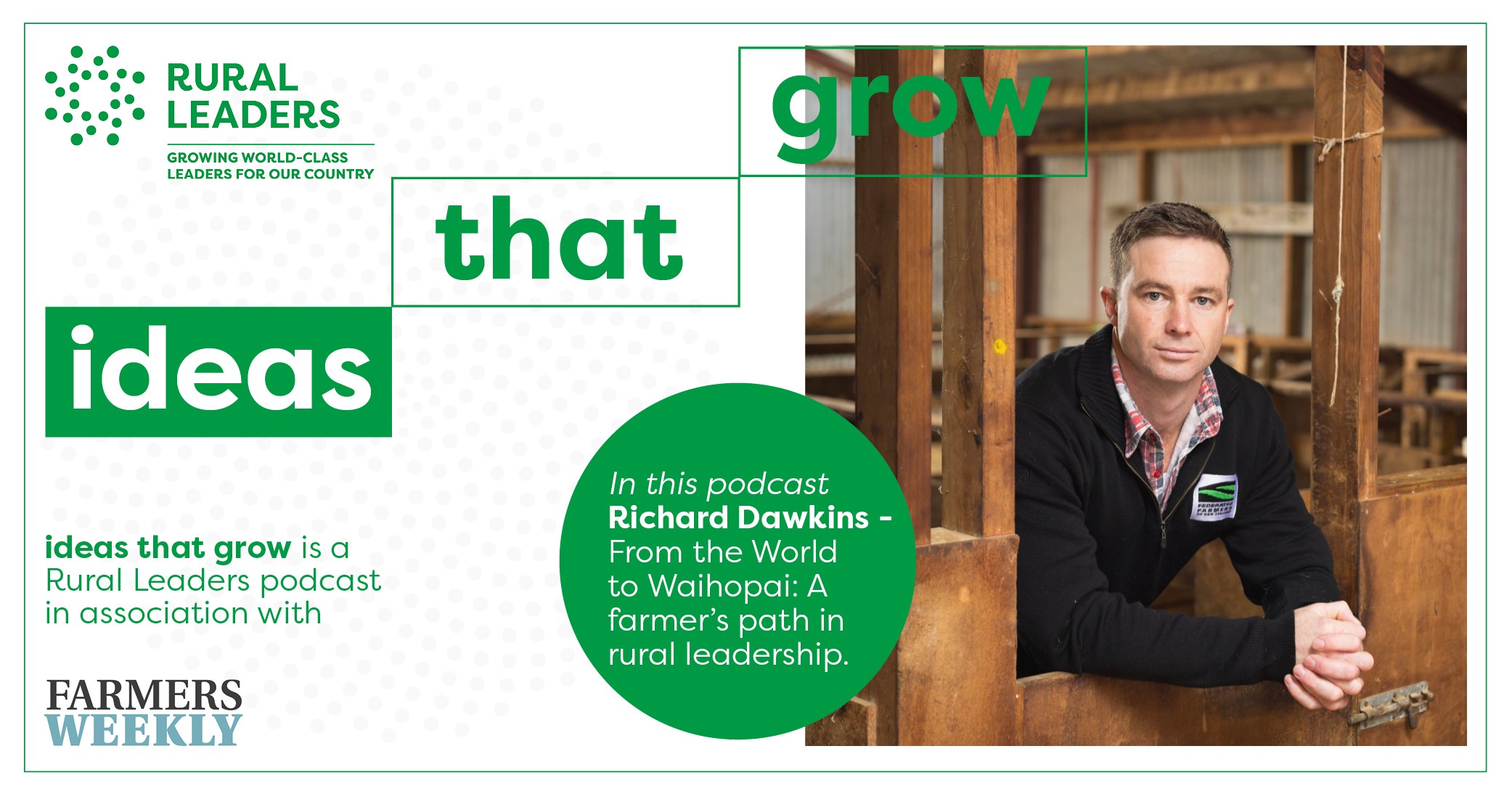
Richard Dawkins – from the World to Waihopai. A farmer’s path in rural leadership.

In this episode of Ideas That Grow, Bryan Gibson, Farmers Weekly Managing Editor, talks to Richard Dawkins, 2023 Kellogg Scholar and Marlborough sheep and beef farmer. Richard is also the new Meat and Wool Chair for Federated Farmers.

Richard discusses his family’s diverse 602-hectare farm operation, which includes sheep, cattle, forestry, and viticulture. He shares his experiences abroad and how returning home reignited his passion for farming.

Richard speaks about his Kellogg Rural Leadership Programme journey and research on lamb and ewe mortality, emphasising the need for better data and body condition scoring.

The discussion also covers leadership, collaboration, and the importance of timing when engaging in personal development.

Listen to this episode of Ideas that Grow, or click on one of the platform icons below to listen on your favourite player:

Episode Transcript

You’ve joined the Ideas That Grow podcast, brought to you by Rural Leaders. In this series, we’ll be drawing on insights from innovative rural leaders to help plant ideas that grow so our regions can flourish. Ideas That Grow is presented in Association with Farmers Weekly.

Bryan Gibson, Managing Editor of Farmers Weekly.
You’re with Ideas That Grow, the Rural Leaders podcast. I’m Bryan Gibson, the Managing Editor of Farmers Weekly. This week on the show, we have the new Meat and Wool Chair for Federated Farmers and Marlborough Sheep and Beef Farmer, Richard Dawkins. Richard, how are you?

Richard Dawkins, Farmer, 2023 Kellogg Scholar:
Yeah, good. Thanks, Bryan. The sun’s threatening to shine here, so we’ll take that as a win.

BG: Yeah, being pretty wet down your way, hasn’t it?

RD: Yeah, absolutely. We recorded 138mls in 24 hours, which was a record for us since 1954, but certainly, none of the damage compared to over the hill.

Farming to suit your environment.

BG: You farm up behind Blenheim, and you’re the latest in a long line of people in your family who have farmed there.

RD: Yeah. We’re 30 kilometres southwest of Blenheim, up the Waihopai Valley, or the Avon Valley, just off the Waihopai. I’m the third generation on the land, and my children will be the fourth. My wife, Jess, and I came home a decade ago and since have taken over and have three children.

BG: Excellent. Can you just Can you tell us a little bit about your farming business?

RD: We’re 602 hectares. The livestock side of the business is a composite ewe flock. We’re about 60% sheep and 40% cattle. We also do Jersey bulls, service bulls for the dairy industry, and some Friesians, which are just a straight fattening proposition for the works.

Our motto here has always been, you farm to suit your environment. You don’t modify the environment, you modify your farm systems to suit. We start lambing next week, late July, and main weaning is in November, and we sell all the lambs at weaning.

Last year was a record for us, actually. We sold 96% of the lambs straight off mum at 43. 5kg’s. Composite ewe flock, Jersey Bulls, a few Friesians, but we also have 20% of the property in farm forestry and 135 hectares of viticulture.

BG: Quite a diverse operation you’ve got going.

RD: Yeah, you have to be these days, don’t you? My father said in the late ’80s, 65% of his income was from wool. We’re now down under 1%, so yeah, just need to diversify those income streams a bit.

BG: Now, you mentioned you came back to the farm about a decade ago. You grew up there, I guess. What did you do after school?

Seeing the world before farming.

RD: Jess and I spent significant time in Western Australia. Funnily enough, we were in a different industry. We spent a fair amount of time working in the mines in WA near Kalgoorlie, and Jess was further north in Karata. But then we spent time in the United Kingdom as well, and it was really interesting to see their farm systems. I did a bit of labouring on farms. I worked on a dairy farm, more of an indoor system over there, and did a harvest up in Norwich, drove a lot of tractors.

So, yeah, that was a good experience. Good experience in Australia as well, but really glad to be home now and setting the foundation for the future, I suppose. We’re certainly not planning on going anywhere.

BG: Many, many, New Zealanders in their 20s head off to see the world. In a farming sense, do you think it’s good for people to go off and see, say, the likes of how you did a harvest a Norwich or a dairy farm in the UK?

RD: I think it is, Bryan, but there’s opportunity costs to everything isn’t there. Coming home in my mid-20s and seeing fellows in their teens who were a bit more advanced than me and had left school and gone straight into farming. It took a fair bit of catching up, which was a bit of a wake-up call.

You spend your childhood on the farm, but boy, there’s a big difference between helping dad shift some sheep and doing the tailing and things and helping in the sharing shed versus actually running a farm business. It took some catching up.

That’s what’s been fantastic about Federated Farmers is getting those farmer networks and rapidly expanding your knowledge. But at the same time, look, learning other industries, living in other countries, that was really valuable too.

Building knowledge and leadership skills.

I’ll tell you one positive was when we did come home, we were so full of enthusiasm. We hit the ground running and haven’t stopped, to be honest. Whereas some of my friends who did leave school and go straight into Ag, some of them are just thinking it’s a big wide world out there. Maybe I could go and try something else. I mean, it’s up to the individual, isn’t it? But there’s pros and cons with everything.

BG: Yeah, I often think that we see a lot of exporters and processors take farmer shareholders into export markets to give them an idea of actually what it’s like there and how people buy their food and how chefs cook it, or various other things. I think that global view and getting a first-hand understanding about how the fruit of their labour here in New Zealand is used, it can be really helpful in understanding why certain things have to happen.

RD: Yeah, for sure. I was fortunate enough to go on the Silver Fern Farms and Market Tour last year. We went through China and Korea, South Korea of course. Like you say, fantastic perspectives and quite mind-blowing, to be honest.

BG: Now, you’re a relatively recent Kellogg scholar. You went through the programme just a couple of years ago?

The Kellogg Rural Leadership Programme experience.

RD: So 2023, Phase One, part of K49. The timing for me was perfect, to be honest, in that I’d done a lot of industry stuff by that point. I had a few connections and a reasonable understanding of the bigger picture. But look, to go into Kellogg, it just really supercharged that foundation I had.

Getting those cross-sector connections, people from all walks of life, and hearing those different perspectives as well was hugely valuable and empowering. I guess since I’ve just carried on that journey, I would find very well-invested, I must say.

BG: That network that you build and the people you meet is really important. Of course, another thing they do is you find out quite a lot about yourself, which is good to what you’re good at, what you perhaps need to invest time into improving.

RD: Yeah, look, self-awareness is just absolutely essential. That was a big thing that I took out of it. It can be very confronting, but I think you go in as a bit of an unpolished diamond, and you have those courageous conversations and have that self-awareness.

You may be smooth off some of those rough edges. But some of those things you need to embrace, too. I’ve recognised that. Hey, I’m pretty extreme in this area, and maybe I need to tone it down sometimes. But look, maybe that makes me the man for the job with certain tasks. So, embrace those things as well.

Lamb and ewe mortality, leadership, and learning.

BG: Totally. Now, of course, a big part of the Kellogg Programme is the report you write. You looked at mortality in lambs and ewes?

RD: Yeah. I called it ‘Addressing Mortality in New Zealand Lambing Systems’ because I didn’t want to just purely focus on the lambs. Mortality in ewes is a huge issue as well. The findings were quite interesting. I guess the major takeaways were there’s not actually strong data sets out there.

The actual extent and understanding of the issue is not particularly good as an industry. Probably the lowest hanging fruit for progress is simply body condition scoring and feeding.

On the farm here, we take it to the enth degree, and we lamb our triplets indoors to give them extra care and attention. But look, as an industry, I think getting those body condition scores up and getting those pasture covers up prior and post-lambing is where we’d see the biggest gains.

BG: Now, you talk about data. I guess in a lot of cases, what happens on the farm stays on the farm in some ways in terms of the snow rolls in or whatever down in the high country and losses that no one quantifies in some ways.

RD: Yeah. It’s a real catch-22, isn’t it? In that our strategic advantage, our point of difference is those outdoor lambing systems. It’s free range for sure. How do you balance the welfare aspect versus that strategic advantage? I think the absolute majority of New Zealand farmers and farm systems are geared towards that low input, medium fecundity type breeding.

We do the indoor lambing here because we’re a highly fecund composite ewe flock, and it’s pretty simple at the end of the day, isn’t it? A ewe’s got two teats, and when she’s spitting out three or four lambs, I don’t think it’s controversial to say she needs a bit more TLC.

BG: Yeah, totally. In the drive for efficiency, which has been excellent over the years in the sheep and beef sector, that’s something everyone keeps in mind, I think.

RD: Look, and these composite ewes are amazing. Those ewes that leave the shed with three lambs, their average weaning weights, the combined weight of their three lambs was 110 kilos. That was at 105 days of age. So three lambs, straight off mum to the works, that’s about the most efficient ewe in the country. They’re big ewes, they’re 80 kilos at mating. But when you’re weaning 110 kilos of lambs, it’s worth putting the effort in. I mean, that’s just 1% of the flock, Bryan. Certainly not every ewe, but it is very rewarding when you get to weaning and all your effort pays off.

BG: Your project obviously completed, submitted, but it seems to have been read by some of the organisations that matter in our sector.

RD: I won’t take credit for that, I suppose. But it’s great, really cool to see Beef + Lamb  New Zealand pick up a lamb survival module now. I was involved behind the scenes, just having those discussions and organising a few things, bit of a working group. I’ve had a few podcasts and also going to have workshops around the country just focusing on lamb survival. That was one of my key recommendations. So full credit to them. It’s great to see.

Federated Farmers Meat and Wool Chair and further study.

BG: Now, obviously, the Kellogg Programme is based around growing rural leaders in our sector. You’ve come up through Federated Farmers, and you’re the new Meat and  Wool Chair. So it looks like you’re taking the ball by the horns in terms of leadership roles.

RD: Like I said earlier, it really did turbocharge things. I did learn a lot, learnt a lot through the process, but I think the biggest thing it gave me was confidence. Like, look, I can go through 500 hours or whatever I invested in. I was part of those deep conversations. I understood everything, had a really good cohort, and it just gave me that confidence to push to the next level.

It made me realise, hey, you are ready for those leadership positions. But it really was a foundation. One of the biggest takeaways for me was it’s fantastic work by the Rural Leaders team. I’ve actually connected the Kellogg Programme through Lincoln and Massey, and actually you can achieve a Postgraduate Certificate in Commerce.

That actually gains you entry to a master’s-level programme. After the Kellogg Programme, I went on to studying a Master of Business, and that’s taken all of that stuff I learned through Kellogg to a whole other level. That’s a fantastic opportunity for anyone. If they’re considering it, I’d be happy to talk people through that process.

BG: That’s excellent. I didn’t know about that. How are things going with Feds? How are you enjoying being on the National Exec?

RD: Look, it has been an absolutely flat out first fortnight. I probably look a bit tired at the moment. AGM and conference, followed by a lot of conversations. Obviously, a lot of media. We’ve had our oral submission to the select committee, and then on to the Silver Fern Farms Conference and all of the governance work that goes on in the background, the advocacy, the exciting stuff, the fun stuff.

But hey, this is a fantastic organisation. You have to govern as well. So, yeah, it’s been absolutely completely flat out. I think that may slow down a little bit, but with advocacy, the work never ends, and then we’ll be full steam ahead, trying to achieve what we want to achieve for not only the meat and wool council, but obviously every member too.

BG: It’s a big job and a big responsibility being the voice of our farming sector to not only the Beehive, but also the wider population of New Zealand, I guess, that you really are the window into that world.

Putting leadership development into practice.

RD: Yeah, you absolutely are. Look, it is a real privilege. When you come under a bit of pressure and you’re finally in this position, I guess your natural style comes out, shines. I’ve just realised that I’m more of a collaborator and a facilitator of these discussions. I don’t have a monopoly on good ideas. I have a fantastic council behind me, 24 men and women who volunteer their time and seven on the executive.

I think you need a bit of courage. Courage takes many forms. It’s putting a line in the sand and saying, this is not good enough, it needs to change. You probably saw that with the oral submission, the bill as it stands, isn’t fit for purpose. But courage is also saying, hey, I don’t know everything. Can I facilitate this discussion? Let’s get four or five people in a room and work out the pathway forward.

I mean, you’re never always going to agree, but at least have that talking to a friend or someone close to you and saying, This needs to change, that needs to change. We need to tidy up this area or that area. Actually, one thing I’m struggling with, which takes a bit of courage, is just learning to delegate. As a farmer, you see a problem, you want to go and fix it. But takes a bit of courage to say, Hey, I’ve got a bit much going on, or, You’re actually better at this than me, so could you please take care of it?

Again, we’ve got this council full of enthusiasm. So, yeah, quite often they’re willing to take up that mantle. And look, it’s just hugely appreciated these people volunteering their time, not for me, but for the whole sector.

BG: If someone’s out there thinking about developing their leadership skills to maybe looking at governance or just their own personal growth, the Kellogg Programme, something you’d recommend?

Get involved, be part of the bigger conversations.

RD: Look, it is, but I think it’s all about timing. I would really I encourage people to do a bit of that local provincial, maybe it’s volunteering any leadership position, and just do a bit of that.

Be part of those bigger conversations, those sector-wide conversations. Join your Federated Farmers and get involved. Join your Beef + Lamb New Zealand, various councils or working groups they have, or your rural advisory groups, things like that. Just get a bit of experience on that side of things, then go for Kellogg.

I think if you were just starting your leadership journey, you might not get as much out of Kellogg as you potentially could. But once you’ve done that foundation work, it’s absolutely fantastic.

BG: Thanks for listening to Ideas That Grow, a Rural Leaders podcast presented in Association with Farmers Weekly.

For more information on Rural Leaders, visit the pages for Nuffield New Zealand Farming Scholarships, the Kellogg Rural Leadership Programme, the HortNZ Leadership Programme, the Engage Programme, or the Value Chain Innovation Programme.

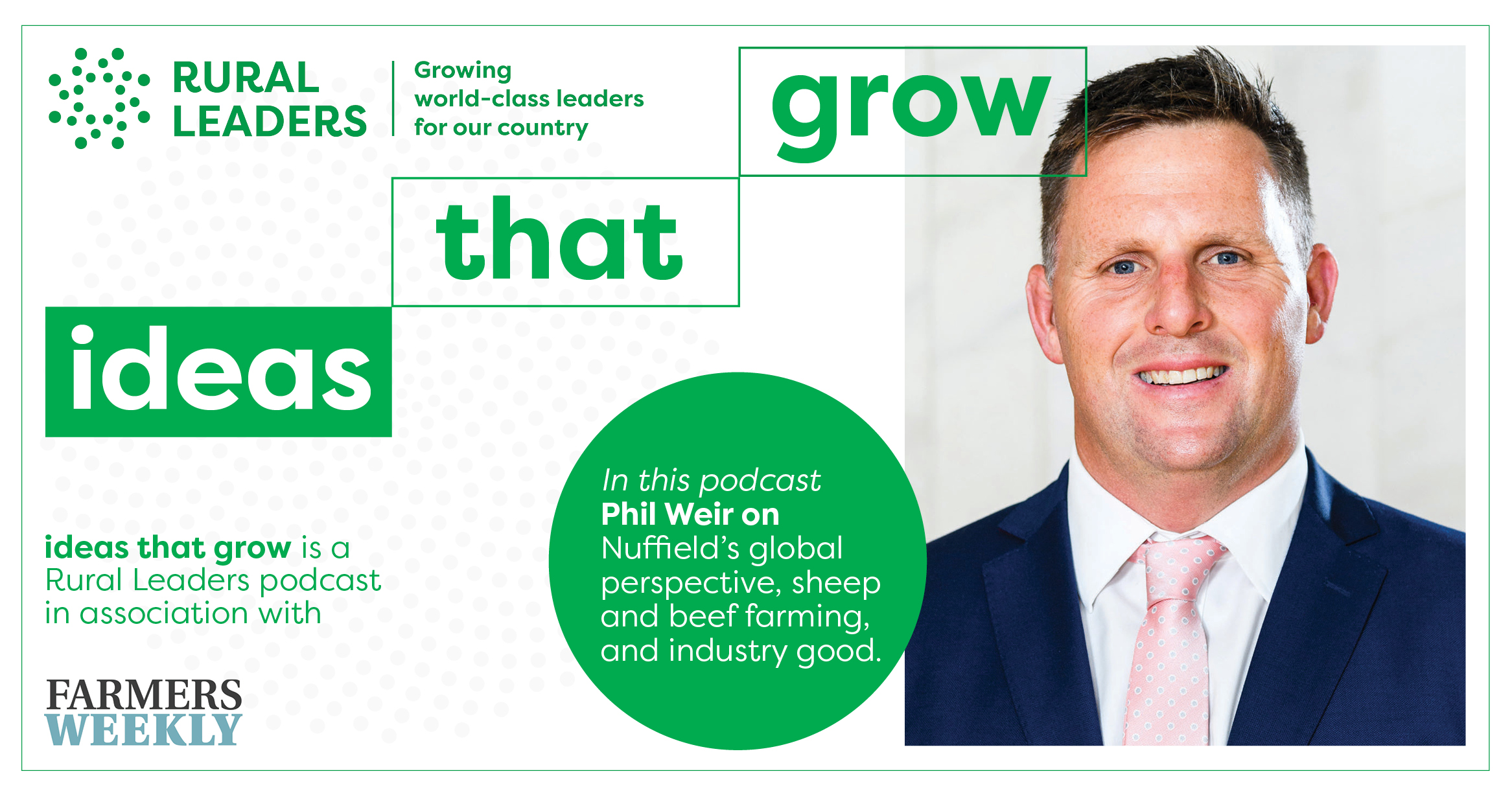
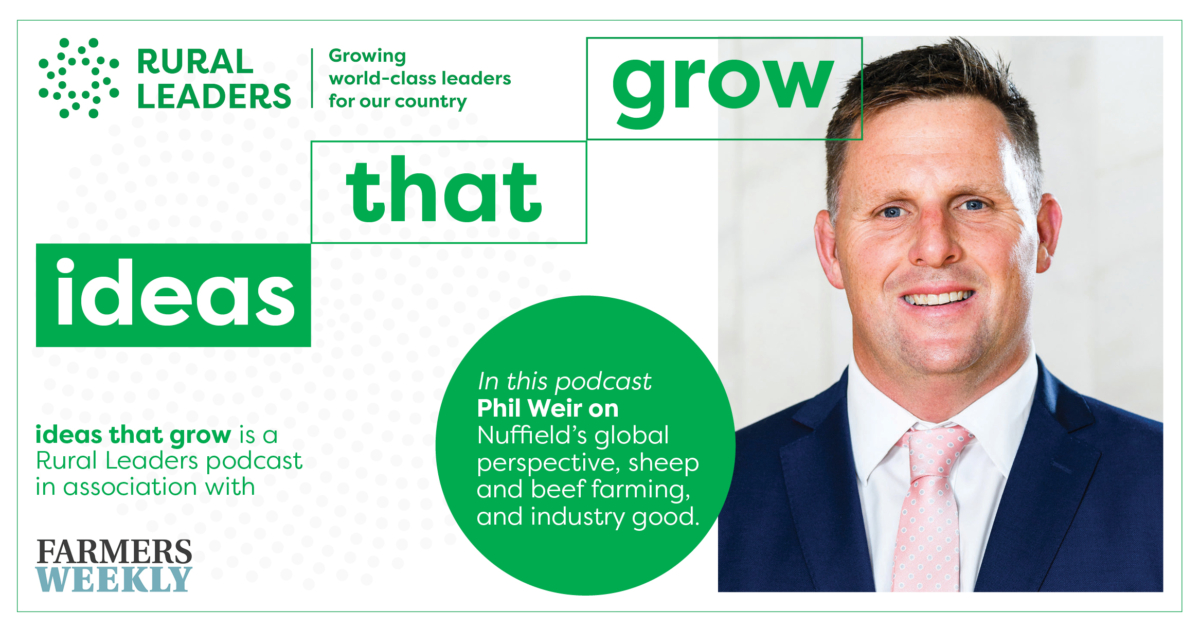
Phil Weir on Nuffield’s global perspective, sheep and beef farming, and industry good.

In this podcast, Phil Weir, 2020 Nuffield Scholar, Farmer, Director B+LNZ and Associate Director AGMARDT, talks to Bryan Gibson, Managing Editor at Farmers Weekly, about the positive value industry good brings to farming.

Phil also talks through some of the challenges and opportunities for sheep and beef farming and how his Nuffield Scholarship and research has given him a valuable global perspective.

Listen to this episode of Ideas that Grow, or click on one of the platform icons below to listen on your favourite player:

Episode Transcript

You’ve joined Rural Leaders’ Ideas That Grow podcast. In this series, we’ll be drawing on insights from innovative rural leaders to help plant ideas that grow so our regions can flourish. Ideas that Grow is presented in association with Farmers Weekly.

Bryan Gibson, Managing Editor of Farmers Weekly.
You’re with Ideas That Grow, a  Rural Leaders podcast. I’m Bryan Gibson, Managing Editor of Farmers Weekly. With me on this week’s show is Phil Weir, 2020 Nuffield Scholar. G’day Phil, how’s it going?

Phil Weir, Farmer, 2020 Nuffield Scholar, Consultant, Farmer Director B+LNZ and Associate Director AGMARDT:
Hey, Bryan. How’s it going?

BG: Pretty good thanks. Now, you’re a farmer in the Waikato, and also sit on a board or two, don’t you?

PW: Yeah, I’m, first and foremost a farmer in Te Pahu in the Waikato. We’re sheep and beef farming here, and I’ve been doing that for about seven years. Had a range of other roles in an agribusiness prior to that, and then did a Nuffield Scholarship in 2020, which we’ll probably touch on because it was an interesting time to do that.

Since then, I’ve become a farmer elected director for Beef + Lamb New Zealand, and that also involves the New Zealand Meat Board and an Associate Trustee with AGMARDT. And then do a little bit of consulting for AgFirst Waikato. So, I keep myself busy enough and a nice diversity of things going on. So nothing never gets too boring, right? That’s great.

BG: That’s where I met you the first time was when you turned up for your first Nuffield weekend, wasn’t it?


Doing a Nuffield Scholarship during COVID.

PW: Yeah, I think so. I think we were getting media training at that point, Bryan, about how to talk to journalists and then that thing. So hopefully, some of that flashes back to me, I guess, today. But yeah, we were down in Wellington at that point preparing for… That would have been 2019, and we would have been preparing for what a Nuffield Scholarship was to look like.

Ultimately, the experience I had was a wonderful one, but probably one that was a little bit different than when we were sitting when I first met you and in 2019. But I think the whole Nuffield thing, I think this year is 75 years of Nuffield, and I was really lucky to get a scholarship. As I mentioned, did it during COVID, which meant that some of the travel arrangements didn’t happen right away, but absolutely, we did at some point get to go around the world and see some fantastic agribusinesses.

I think one of the cool things was reflecting prepping for this was we did the first Value Chain Programme around New Zealand, so Rural Leaders are now running a programme which looks at how good New Zealand agribusiness and agriculture and growing is.

And we were lucky to be the forced guinea pigs for that because we couldn’t go abroad. And so we got the chance to go and have a look at the best growers and best Agribusiness is in New Zealand, and I think it’s fantastic that programme now has been created probably out of the back of that.

I think it’s so valuable to go and look at what’s in your own country because we do so many things really well. That was one of the lucky things, I guess, about a COVID disruption. Every cloud has a silver lining.

BG: That programme’s going great guns these days. As the old ad used to say, ‘don’t leave town until you’ve seen the country’. Did you grow up in a farming family? Have you always been rurally focussed?


A call back to the farm.

We grew up in a small dairy farm, so I showed Ayrshire Cows as a teenager and a child. My wife brings up some of the photos with me leading cattle around the ring.

We grew up on a small dairy farm on the outskirts of Hamilton. In. It was fantastic. It was the classic family farming upbringing. We were probably fairly poor, but we didn’t want for anything, I guess. We were lucky, we were on the outskirts of town, so we got the best of both worlds. Then after high school, I probably tried to get as far away from agriculture as I could, to be honest.

I went and did a social… I started doing engineering and found that wasn’t quite for me. And then social science. And then went and did a master of marine management in Canada. So, for someone to get seasick, it was a bit of a novel thing to go do, but it was probably just a case of seeing the world, right?
Then I ended up living in Sweden with my wife in a range of places before we made it back to New Zealand via Australia and then worked at AgResearch. In a few business roles there. Then the opportunity to come farming on my wife’s family farm presented itself in 2017. We took that opportunity. So, it was full circle, I guess. Probably I tried pretty hard to get away from it, but kept nagging away to come back and have a crack. When the opportunity presented, we took it.

BG: I get that story a lot when I talk to your alumni in the Nuffield and Kellogg Programmes. A lot of them grow up in farming, head off and pursue other things, do things in other fields, see the world. Then, I don’t know, something nags at them, and they find themselves back where it all started.

I think it’s pretty hard to get past the fundamentals of rural life. Particularly, as you become a parent, you have plenty of space, and you have fresh air, and you don’t have some of the challenges associated with having children in urban environments. I think It’s not all roses going back from a corporate or agribusiness to a farming role. Farming is quite hard work, and there’s different challenges to it.

PW: I think that’s probably one of the big drivers. I think that’s what we reflect on that we really like about it, is that life It’s still an opportunity for both us and probably our children as well.

BG: On the sheep and beef farming side of things, it’s been a pretty tough few years, hasn’t it?

Sheep and beef farming now.

PW: It has. Yeah, there’s no doubting it. It’s been tough. Everyone experienced rapid inflation, so your costs escalated significantly. At the same point, we had the global commodities really dipped. So it was tough, particularly for sheep farmers.

There hasn’t been a whole lot of love from wool for a for a long time, and some of the high pricing that existed around COVID for sheep came off at a really unfortunate time. So it has been really hard. I think it’s great now there’s a sense that most people’s budgets are able to balance.

When I hang out with other farmers, I see more confidence. It’s partly just because you know you can make the box balance, and ultimately, you’re working for a profit or to be able to have some improvements. I think, really, there’s across the country, we got smacked with weather events amongst that as well, whether it be Gabriel or Northland weather events.

I think most of the North Island anyway had an event that costs significant amounts to farming businesses. It’s been a hard couple of years with interest rates and other things. But I think it’s on the right trajectory now. One’s going down and the prices are going up. So, I think make hay while the sun shines, Bryan.

BG: Yeah, I’ve been talking to AgriHQ analysts a bit over the past few weeks, and they’re surprised but happy with the way things are looking in terms of export demand and farm gate returns. They don’t see a downside coming soon. It looks like it’s going to be pretty good throughout the season. So that’s great stuff.

The outlook is positive.

PW: I think it’s nice to know that the strong prices are projected to continue. The world’s not without a fair dose of crazy right at the moment, but things could change. But I guess the fundamentals is a bit of a deficit of protein, and the protein that we produce. It’s nice to be in that position at the moment.

BG: Just getting back to your Nuffield experience. Obviously, you investigate an idea, I guess. Your report was on the changing world in farming and diversification and resilience and that sort of thing, wasn’t it?

PW: My Nuffield report, I guess when I entered it, I’d come from a research environment. I believe there’s a whole lot of value in farmers and growers investing collectively. I looked the industry good bodies and how they might best arrange themselves.

I had a particular focus on commodity levies bodies. But I guess probably what I found through that was that there’s a whole lot of industry good activity that goes on. And ultimately, New Zealand does a really good job in doing a lot of that.

We’ve got Beef + Lamb New Zealand, DairyNZ and other organisations, but we’ve got a whole range of other industry good bodies. And to be honest, it probably worked pretty well together. I think I probably looked at it from the angle and I proposed some change that could happen.

The value of industry good to farmers.

PW: I suppose the starting point was, and I guess it’s why I’ve become a beef and land director, is that I see massive value in individual farmers contributing a small amount of money in the form of a levy or a relatively small amount of money in the form of a levy to enable certain activities to happen that we otherwise couldn’t do.

The R&D work and the helping farmers to perform better in areas where you’ve got market values, the stuff that I’ve always been interested in. I don’t know whether it was ‘Tragedy of the Commons’ reading that when I was at university or something like that, but that whole pooling of resources to get a better outcome and stuff that the market won’t fund the area I was interested in.

I was lucky to look at the New Zealand system, but also to look at the United Kingdom and some European examples, Australia and the US as well. I guess probably what the outcome of it was is that when it’s all finished, I don’t think any system’s perfect, but our one does a pretty good job.

BG: That’s really good to hear because I guess in terms of the industry good organisations, you could argue we’ve been through one of the more turbulent times in recent memory, I guess, fuelled by the emissions pricing process, which ended up with a lot of people questioning how farming side of things went through it.

We seem to have evened out on the other side of that now. Of course, this government doesn’t have such a strong hand of regulation on the sector. It’s good to hear that through your insights globally, we look pretty good compared to others.

PW: Yeah, Bryan, I think the He Waka Eka Noa and water and those big media issues are often what people think of as the work that some of this industry good stuff does. But I think probably the thing we often forget is the amount of other work that goes on.

So whether it be the benchmarking work that can enable a farmer through Beef + Lamb’s economic service or a dairy base or some other tool to work out, well, hey, if I have this property and I’m running this system, then how are my peers going economically? What are they spending their money on? How does that work? Those data sets that have been prepared on behalf of industry for many years are really powerful and really important and can help us farm better.

I think there’s also areas where industry good bodies can ultimately collect some resources and they can make determinations around where some of our investment is spent from an R&D perspective. If we look at facial eczema in our area, if it rains today, then I’ll be happy. But in another level, I’ll be worrying a wee bit about facial eczema.

The fact that there’s an industry good body, in our case, doing work on that’s great. It’s not something I can afford. I can’t afford to do that work, but it’s stuff that very much underpins my business. I think we often forget or get caught up in those couple of big political critical areas where there’s a bit of conflict that clouds our overall perspective of all the good stuff that goes on.

BG: And of course, New Zealand being so unique in the world of farming, with its geography, climate farming systems, we’ve really got to do all that stuff here. We can’t just import IP or knowledge from other places because no one does it quite like we do.

PW: We’re so unique, right? There’s not many people produce sheep meat or kiwifruit, for that matter at any real scale. We’re the leaders in that, or us in Australia, and it depends maybe on what product you’re talking about.

Ultimately, we do have a unique primary production system based on grass, and so we have some unique challenges we need to deal with. I think it’s great that for the most part, growers have, whether it be onions, or potatoes, or tomatoes, or dairy beef, sheep, whatever, pulled little bits of funds together to help out the collective. It’s probably builds a problem like cooperatives and other collective models that have been really effective and efficient to helping New Zealand Ag, I think.

Despite your Nuffield experience being curtailed or hit, I guess, with the pandemic, how did you find the whole thing?

The Nuffield experience.

It was a life-changing experience, Bryan. To that point, we were on Tangalooma Island, which is off the Coast of Brisbane, like a tropical paradise, doing this scholar conference for Nuffield when the world fell apart during COVID. I think the group this year are coming to New Zealand. And so what happens there is that 100 scholars from each year converge on one location and discuss global agriculture. So we got the start of that, and then things changed.

But I guess probably what Nuffield provides as perspective, I think. Perspective as to where New Zealand’s agricultural system fits. So the basic thing of it is you get to travel and then you do a report. But through the travel piece, I suppose from a perspective, you get to see a range of different agricultural systems. Our group visited North Carolina, we visited Argentina, we visited Chile, we visited a range of places.

So, we saw agriculture in the United Kingdom. We saw agriculture being done on a range of scales, from massive feed lot systems, to avocados and lemons being growing on areas where there was basically no soil left, and it was all irrigation and social licence issues to do with that.

Then right down to small scale producers, 20,000 sheep, milk, dairy sheds, 100,000 hams hanging up in Iberian ham factories. So, you got the range of scale and perspective. And so I think that made me think about what is the role for New Zealand agriculture. I think the other one that it does is it provides a significant amount of confidence. And I think that’s across all leadership programmes.

Gaining confidence through leadership development.

I did Kellogg a number of years ago, and I think it provided the same thing. Both programmes empower the individual to think that they are credible contributors, that they can have an opinion, that their ideas are important, and that they can discuss and work through those with a range of different people in the industry.

So you get to interact with the people that are running the big businesses, whether it be Fonterra or Zespri, or others, and you get to hear their perspectives. I think that confidence is something that I’ve definitely taken from it. I think, yeah, confidence and perspective are probably the two . I think the other one that’s probably also stuck with me is, I remember Julian Raine talking to us, who’s been heavily involved with rural leadership in New Zealand.

He’s saying that a lot of it’s about how spending as much time as you can to really understand a problem. I guess part of it is it’s a programme, and I think Kellogg as well, they really encourage you to critically think about an issue to go a bit past the social media grab or the particular part of spin or headline grabbing that might be going on and actually think, what is this? Whose perspective is this from? What does it mean for me? What does it mean for the people I might represent?

For me, that was a really powerful learning experience. I’m very grateful for the Nuffield and for the sponsors that sit behind it.

BG: So, you’d recommend it to those thinking about doing it?

Investing in yourself.

You often speak with people that are looking at doing it and there’s no great time to do it. But the reality is you’ll probably have young kids, you’ll probably have… You will have business commitments. And what it makes you do is drop all of that and invest time in yourself and understanding agribusiness or agriculture globally. They used to stick you on a ship and send you off for six months, but now it’s more like five or six weeks. But regardless, it is a circuit America.

The programmes when you’re abroad are so busy, you can’t be running your own business at home. You struggle to deal with the family affairs, and so it provides a real disconnect. That is one of the strengths of it. I think that the best time to do it is now. It’s not going to get any easier to do it. I feel scholarship-wide, very young kids. I have a very supportive wife. I was very lucky in that sense. But I think it’s something you just need to do. The immersive learning component of it is something that’s really unique. I really encourage people to have a crack at it.

BG: Thanks for listening to Ideas That Grow, a Rural Leaders podcast presented in association with Farmers Weekly.

You can read Phil’s Nuffield report here.

For more information on Rural Leaders, the Nuffield New Zealand Farming Scholarships, the Kellogg Rural Leadership Programme, the HortNZ Leadership Programme, the Engage Programme, or the Value Chain Innovation Programme, please visit ruralleaders.co.nz

Coding for Change: Navigating adoption of gene editing in the New Zealand primary sector

Gene editing is poised to reshape the New Zealand primary sector by enabling adaptation to climate change, enhancing environmental sustainability, and boosting productivity.

Advancements in faster, safer, and more precise gene editing techniques have prompted proposals for new legislation to align New Zealand’s gene technology regulations with those of key trading partners. A balanced approach is needed, harnessing scientific innovation while maintaining public trust and market access.

Gene editing can transform parts of the agricultural value chain, especially scientific research, the biotech sector, and plant breeding. In other areas, its impact may be incremental and take time to reach meaningful scale. Therefore, managing expectations is critical so stakeholders maintain realistic views of both its benefits and limitations. Independent government and primary sector research will be important for ongoing monitoring and transparent reporting.

As New Zealand develops a regulatory framework, it has the chance to embed Environmental, Social, and Governance (ESG) principles. This would broaden assessment criteria beyond standard safety and risk to include economic, societal, and environmental impacts. Though this approach would require more intensive, case-by-case evaluations from regulators and applicants, it could increase trust among the public, the sector, and international trade partners.

Leadership from the primary sector is necessary to ensure agricultural impacts and opportunities are prioritised in regulation. Coordinated strategy frameworks for gene technology will help map innovation pipelines, risks, opportunities, and commercialisation timelines.

Early engagement with stakeholders, including government, sector bodies, farmers, growers, Māori, and the public is essential. These discussions should be grounded in relatable examples to support informed public opinion, rather than dictated by a top-down expert model. It is also important to acknowledge and respect those who oppose regulatory changes.

Driving innovation will require significant investment, supported by public-private partnerships and international collaboration. A key challenge lies in enhancing scientific capability and confidence, especially during uncertain times for the science sector.

New Zealand is encouraged to adopt a ‘fast follower’ approach to gene technology legislation, allowing it to benefit from scientific advancements while preserving public and trading partner trust. By navigating the adoption of gene editing carefully and inclusively, New Zealand can boost the primary sector’s productivity, sustainability, and global competitiveness.

Keywords for Search: Rachel Baker, Rachael

Changing the Bog-Standard; repeatable solutions for Aotearoa’s Peatlands

Peatlands might look like the scruffy margins of New Zealand’s landscape, yet these water-logged soils are anything but marginal. Although they cover barely one percent of Aotearoa, they warehouse roughly 20 percent of the nation’s total biomass carbon – part of a global system that stores more carbon than all the world’s forests combined. Drain them, however, and the peat shrinks and oxidises, emitting CO₂ and nitrous oxide. Recent estimates suggest that drained peat already contributes up to seven percent of New Zealand’s greenhouse-gas inventory. Put simply, landscapes that should be carbon vaults are leaking fast – and some of our biggest customers have noticed, with companies like Nestlé now asking suppliers to avoid peat-related emissions.

With more than 90 percent of our original wetlands already drained or degraded, the challenge is clear: how do we stop the loss without undermining farm profitability or rural livelihoods?

One answer is paludiculture – production systems purpose-built for permanently wet soils. By cultivating raupō, harakeke, sphagnum moss and other water-tolerant species, landholders can keep peat saturated while generating fibre, construction materials, substrates and, potentially, carbon-credit income. International evidence is compelling: rewetted dairy pastures in northern Germany and wet-farming pilots in England’s Cambridgeshire Fens are just a few examples showing that, with supportive policy and market signals, “peat-positive” enterprises can be both profitable and resilient.

This report also underscores that peatlands – repo – are taonga for Māori. For generations they have provided kai, rongoā and weaving fibre, and their cultural narratives are embedded in the whenua. Successful restoration therefore hinges on genuine co-design with mana whenua, blending mātauranga Māori with ecological science.

Restoring peatlands under paludiculture offers a practical pathway to reduce agricultural emissions while keeping land productive. By scaling up sustainable

management practices, New Zealand can balance economic growth with its climate commitments.

Momentum is building – stronger wetland rules under the National Policy Statement for Freshwater Management and dozens of pilot projects are already under way. Yet this report calls for a further step-change. It urges decision-makers to treat peatlands as critical national infrastructure – carbon banks, biodiversity reservoirs and cultural landscapes worthy of sustained investment.

The bottom line is clear: the science, tools and precedents already exist; the missing ingredient is collective will. Reframing peatlands as essential ecosystems is vital to cutting emissions, improving freshwater quality and protecting native species. This report concludes with a challenge: keep the ground wet on purpose and transform the future of peatland management.

Keywords for Search: Jenna Smith, Genna

Putting the Success back into Succession

Peter Templeton's report

Farm succession in New Zealand is a critical issue, with an aging farmer demographic and rising land prices making it increasingly difficult for younger generations to enter agriculture. This report explores the barriers to farm succession and potential pathways for ensuring the long-term sustainability of New Zealand’s agricultural sector.

The report examines the challenges of family farm succession, the growing influence of corporate farming, the affordability crisis in farmland, and alternative succession models.

Historically, farm ownership has depended on intergenerational succession, but rising land values and tighter financial conditions complicate this process.

Succession typically involves three key phases: physical contribution (working on the farm), financial decision-making (taking on financial responsibilities), and equity transition (the formal transfer of farm ownership). However, many succession processes fail due to poor planning, lack of communication, and financial challenges. Key barriers include the reluctance of older farmers to relinquish control, challenges in fairly compensating multiple siblings, and the high financial burden placed on successors.

Successful succession requires early planning, clear communication, and often the involvement of external advisors.

This report highlights the dramatic shift in farmland affordability, with land values rising so quickly that it now takes up to 60 years of savings to afford a farm deposit. As a result, corporate farming structures, which have access to capital and economies of scale, are becoming more common. While these models can improve efficiency, they risk concentrating land ownership and reducing local community decision-making. Key concerns include the loss of family-owned farms, reduced reinvestment in local communities, and a focus on short-term profits over long-term land stewardship.

Alternative succession models, such as share-farming agreements, equity partnerships, lease-to-buy agreements, profit-sharing models, and crowdfunding, offer ways for younger farmers to enter the industry without the capital constraints of traditional ownership. These models enable gradual equity building, risk-sharing, and community support for funding.

To facilitate these models, this report suggests several policy changes, including incentivising banks to accept livestock and plant assets as loan security, government-backed loan programmes, tax incentives for succession planning, and support for financial education. Industry leaders should also encourage a cultural shift toward treating farm succession as a strategic business process.

In conclusion, ensuring the sustainability of New Zealand’s agricultural sector requires fostering diverse, innovative pathways to farm ownership, supported by government, financial institutions, and industry bodies. Collaboration is essential to preserving New Zealand’s farming heritage.

Keywords for Search: Peter Templeton, Tempelton

Beyond the Farm Gate: Rethinking New Zealand’s Economic Future

New Zealand’s economy has long relied on agriculture and tourism, industries that have shaped national identity and driven export earnings. However, both sectors face growth limitations: agriculture contends with land constraints, environmental regulations, and changing trade dynamics, while tourism is volatile and constrained by infrastructure and environmental capacity. If these industries are nearing their natural limits, the country must consider its long-term economic strategy.

As a small, trade-dependent nation reliant on imports for manufacturing, energy, and technology, New Zealand must prioritise strong export earnings over GDP. Historically, agriculture and tourism have underpinned this, but their uncertain future growth poses challenges.

Lessons from Global Agriculture
This report examines global agriculture for lessons. In Brazil, agriculture is seen as limitless, driven by vast land expansion and investment. In contrast, the UK and Netherlands deliberately constrain farming. The UK pays farmers not to farm under ESG policies, while the Netherlands focuses on high-value niches and supply chain dominance, rather than sheer production. Despite its small size, the Netherlands exports more food than Brazil by controlling logistics, processing, and distribution.

New Zealand aligns more with the UK and Netherlands than Brazil. It lacks vast arable land, and environmental policies limit production expansion. The country is losing farmland: since 2017, over 260,000 hectares of pastoral land have shifted to forestry. Sheep numbers are at historic lows, and processing facilities like Alliance Smithfield have closed due to declining supply. Simultaneously, global trade dynamics are shifting. The EU’s Farm to Fork Strategy tightens environmental standards on imports, and UK trade deals with Australia and South America undermine New Zealand’s competitiveness. Heavy reliance on China, buying 40% of dairy and 30% of red meat, also poses risks.

The Path Forward: A National Conversation
New Zealand’s agricultural growth is likely to be linear, not exponential. This report calls for a national conversation about the next 25–50 years. Should the country emulate Ireland by using tax incentives to attract high-value industries? Should it invest in processing and logistics to retain more export value domestically? Could it lead in renewable energy, digital innovation, or advanced manufacturing?

New Zealand must proactively shape its future. The UK’s experience warns of deprioritising food production without alternatives, while the Netherlands shows that controlling the supply chain can be as valuable as production.

It’s time to ask: What comes next?

Keywords for Search: Carlos Bagrie, Karlos, Bagree

Beef + Lamb New Zealand and Rural Leaders renew partnership.

The New Zealand Rural Leadership Trust (Rural Leaders) is pleased to announce the renewal of its partnership agreement with Beef + Lamb New Zealand (B+LNZ).

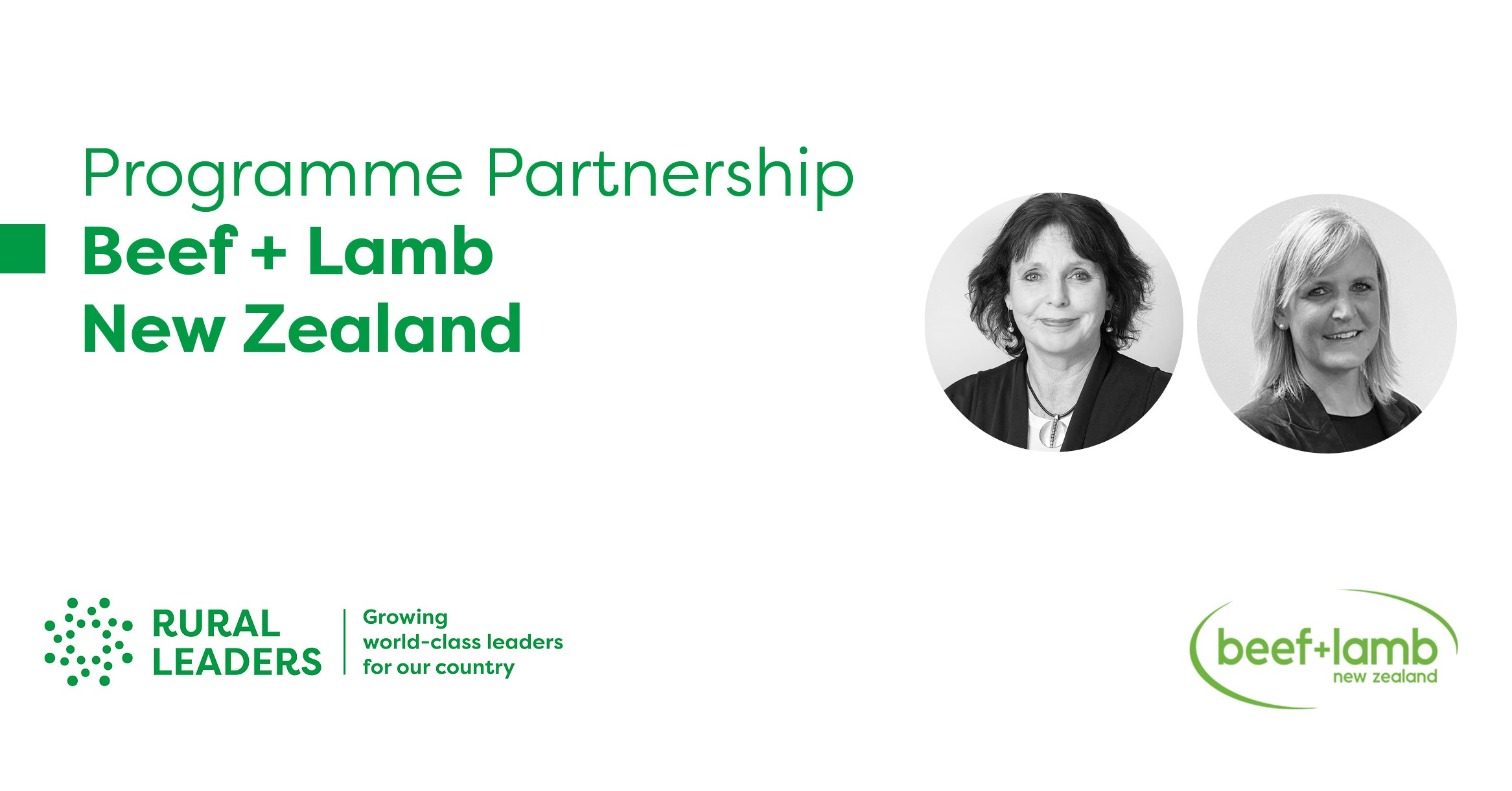
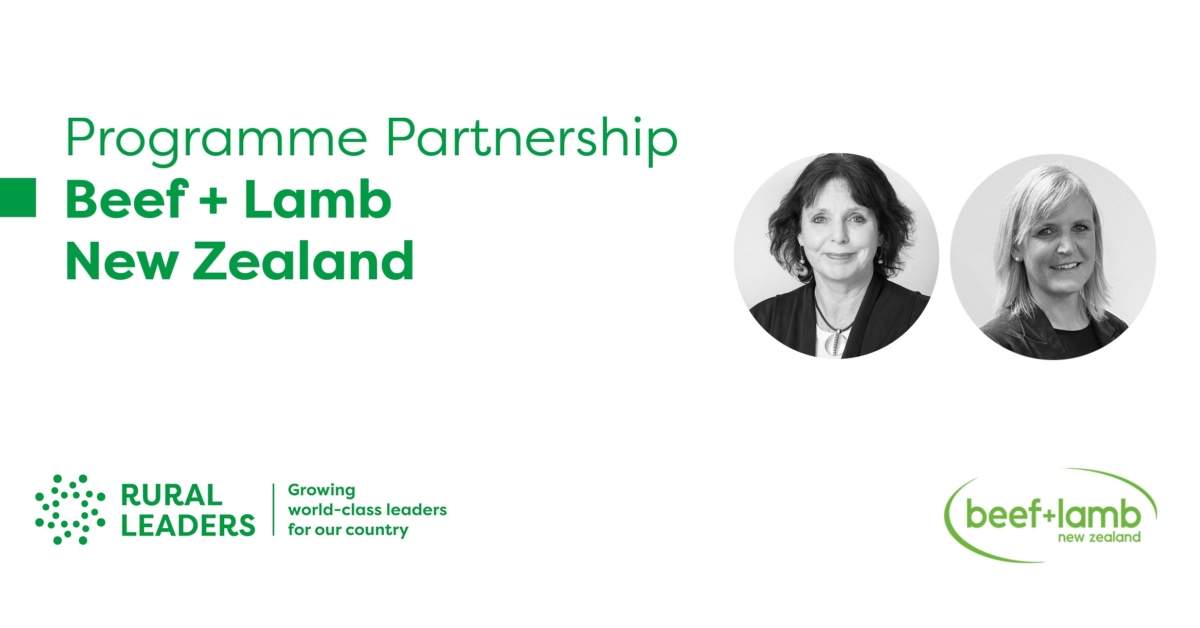
Pictured: Lisa Rogers, CEO, Rural Leaders (left). Justine Kidd, GM Extension, B+LNZ (right).

One of the New Zealand Rural Leadership Trust’s (Rural Leaders) earliest industry partners is Beef + Lamb New Zealand (B+LNZ).  

The signing of a new partnership agreement between the two organisations aligns strongly with B+LNZ’s People and Capability Strategy focused on improving on-farm talent retention. Core to delivering on the objective of increasing the retention of people from their first day on farm to their third year is the role of on-farm leadership. Leadership that creates great work environments, communities and futures for people in the sector.

Justine Kidd, General Manager Extension, Beef + Lamb New Zealand, says, “On-farm leadership is critical to solving the challenge of our people’s future on farm. We are attracting enough young talent to the sector, but we aren’t holding them. Rural Leaders’ world-class delivery of leadership programmes supports our strategy, and we are looking forward to our continued joint effort growing great rural leaders across New Zealand.”

“B+LNZ’s partnership with Rural Leaders is a strong fit with two of our three investment pillars; ‘On-Farm’ focused on talent retention directly on farm and ‘Energising’ focused on growing leadership capability, celebrating and sharing stories of success.”, adds Justine Kidd.

To this end, B+LNZ recently announced farmers Richard Cameron and Natasha Cave would be the 2025 recipients of the B+LNZ Leadership Advancement Scholarships. They each receive full sponsorship to complete the Kellogg Rural Leadership Programme in 2025, along with mentorship from a B+LNZ leader aligned with their interests.

Lisa Rogers, CEO, Rural Leaders says, “The Rural Leadership Advancement Scholarships will become a flagship opportunity for the sheep and beef industry’s farmer-leaders. We look forward to playing a key role in these leaders’ development and future, both as people and as change-makers.”

The next available Kellogg places are for Programme Two 2025, 24 June start. Applications close April 13, 2025.