2026 Nuffield NZ Farming Scholarship. Apply by 17 August 2025. Read More...

Apply for 2026 Nuffield NZ Farming Scholarship by 17 August 2025. More details...

Hamish Gow – Inside the Value Chain Innovation Programme

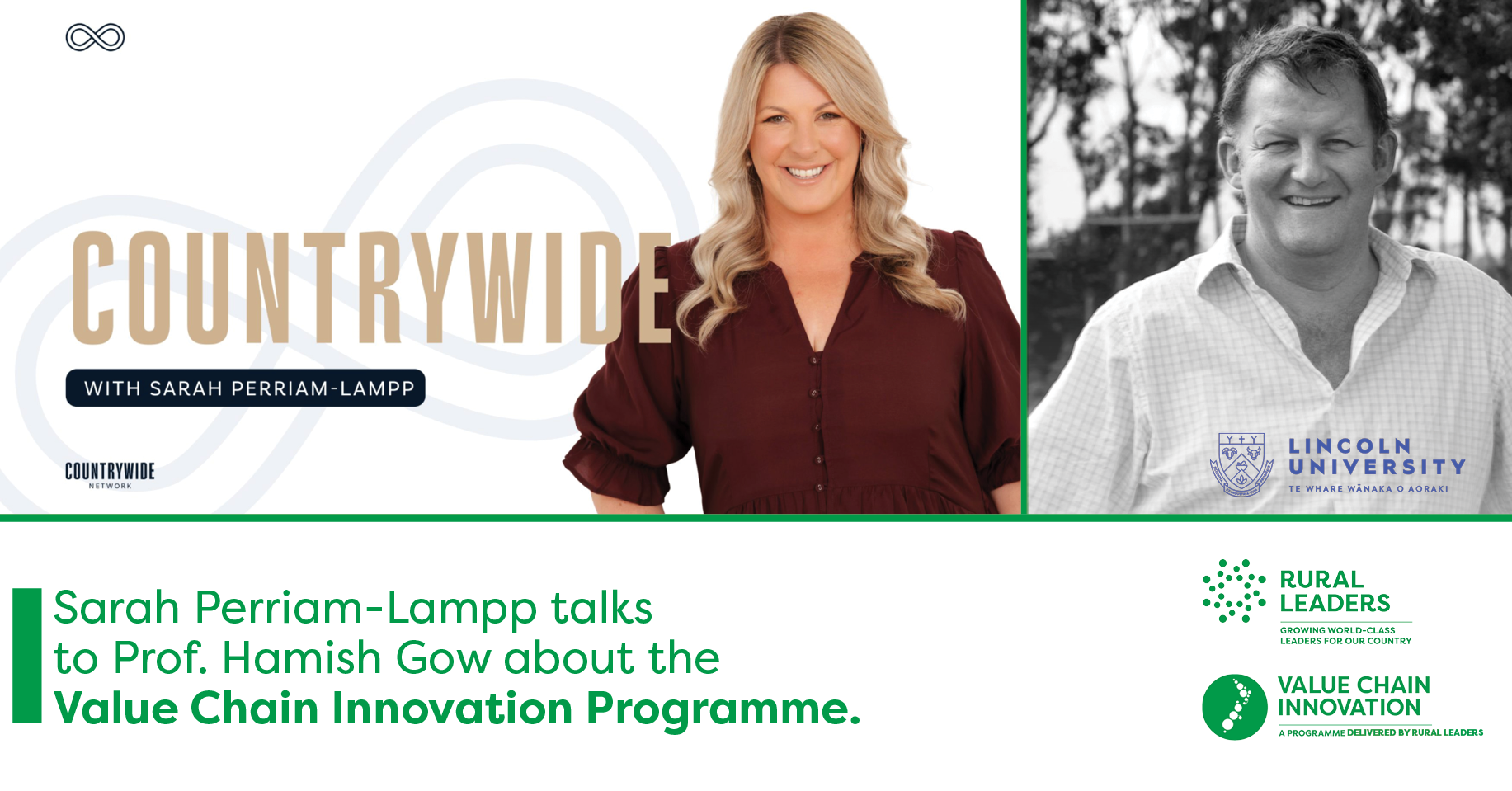
In this episode of The CountryWide Podcast, Sarah Perriam-Lampp talks with Lincoln University’s Professor Hamish Gow about the Value Chain Innovation Programme, delivered by Rural Leaders.

Hamish explains how the programme takes participants inside New Zealand’s dairy, kiwifruit, apple and red meat sectors to understand how value is created, captured and shared, and why the real learning happens on the bus as farmers, entrepreneurs and industry leaders connect and challenge their thinking.

Listen to the episode below, or click on one of the platform icons below to listen on your favourite player:


CountryWide Podcast Transcript

Sarah Perriam-Lampp, CEO and Editor-in-Chief, CountryWide:
Welcome to another episode of the CountryWide podcast, and catching up with one of my favourite people, Hamish Gow from Lincoln University. Today we’re going to talk about the Value Chain Innovation Programme, something that I absolutely loved doing a few years ago. I’m sure it’s evolved a little bit from the first one?

But I’m really keen to hear about what everyone gets up to on the programme because the deadline to submit your application for 2026 is coming up soon. So, Hamish, can you tell us a little bit about the programme and how it’s evolved?

Hamish Gow, Professor, Lincoln University:
Well, it hasn’t really evolved a lot, right? Because it’s designed to give the participants a model or framework to be able to understand and evaluate value chains and how we create value in those value chains. Then we walk through the four major value chains in New Zealand, two in the livestock sector and two in horticulture.

The Four Value Chains

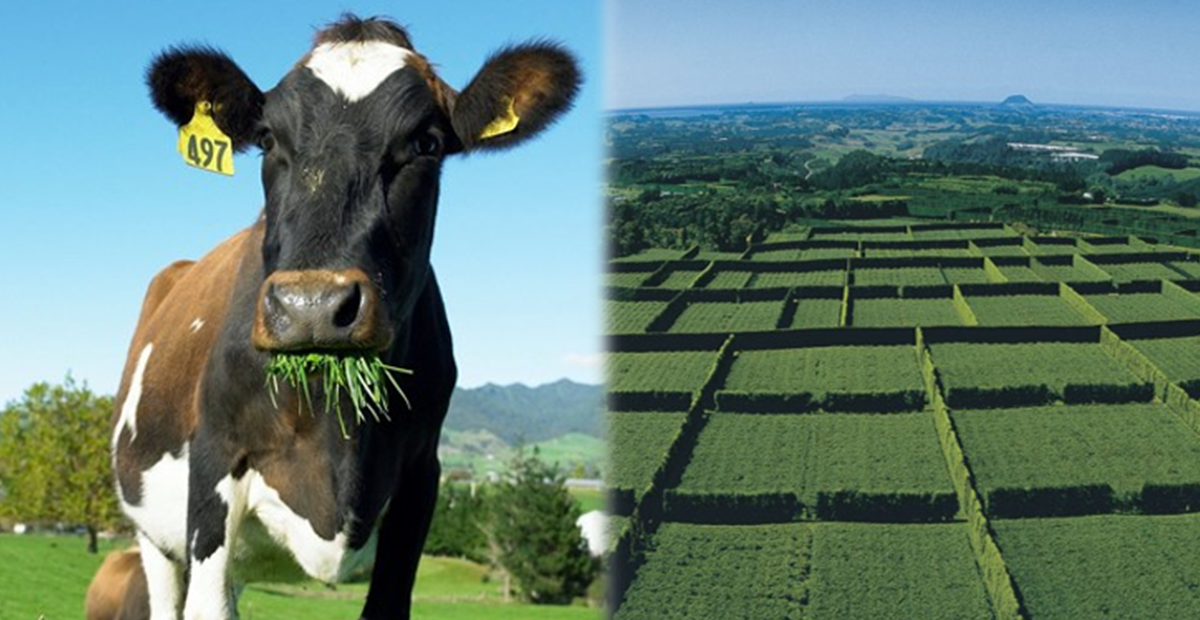
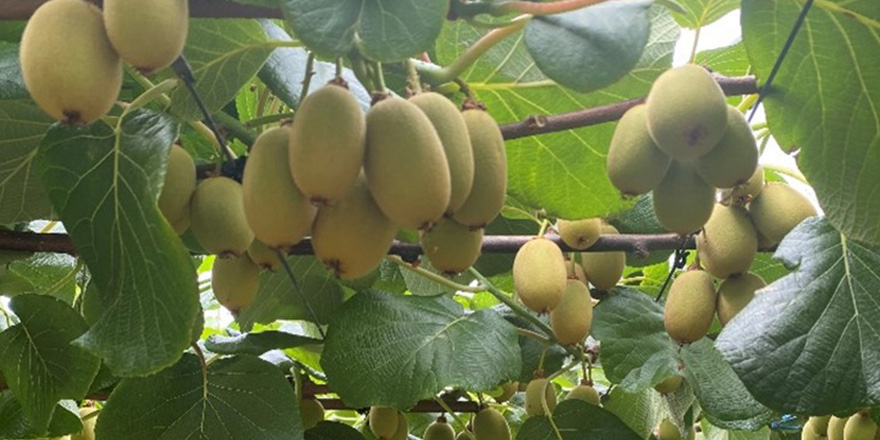
HG: We walk through the dairy value chain and analyse and evaluate how Fonterra creates economic value for farmers and how that comes back to them. We then walk through the Zespri value chain and look at how that brings value back to both the orchard owners as well as into the other members of it, which are the packhouses, and understand that model. We then look at the apple industry and how that creates value for the growers.

Then finally, we look at the red meat sector and understand how value comes back to farmers and producers in the red meat sector. And around the edges of that, we look at government support, regulation, and legislation, and how that’s enabled some of them and caused constraints on them, and then technology, and how that’s supporting it as well.

It hasn’t changed a lot from when you went on, the only difference is, we’ve gone in reverse. We used to start in Hamilton with the dairy sector and work to the Hawke’s Bay and end with apples. Now we’re starting in the Hawke’s Bay with apples and working our way through to Hamilton and ending with the dairy sector.

Target Participants

SPL: For those who are unfamiliar with it, this is a programme run as part of the Rural Leaders organisation (they look after Kellogg and Nuffield). It is really for quite a wide range of people, getting farmers and growers to look beyond the farm gate, isn’t it? As well as those who work in the sector to fully understand the vertical integration of a value chain.

HG: Yes, it’s aimed at both people who are directors and senior leaders within the industry. So it could be farmers, it could be people inside the processing facilities, it could be marketers who are trying to understand it, it could be entrepreneurs, as well as the government players who are supporting as well as the input providers, bankers, insurance providers, fertilisers, etc.

Core Learning Framework

HG: It really gives you this end-to-end understanding all the way from the basic inputs all the way through to understanding the market and how we really create economic value for our customer in the market. It’s also, what’s the mechanisms that we use to be able to capture that value and then share that across everyone in the value chain? And that’s the key piece is really understanding not just that this is how it all operates, but then this is the mechanisms that are used to be able to create value, capture that value, and then share that value and how that gets shared back to everyone.

And what makes some channels work in one way versus other channels work in a different manner or form. We look at three basic models of value chains.

Intellectual Property Insights

SPL: It really does open your eyes, particularly if you are quite industry-centric in your day-to-day – If you’re really in the dairy industry or sheep and beef and don’t really understand as much about horticulture. I took away so much, and there’s lots of little gems, Hamish, but one of them was I’d never appreciated plant licencing and breeding and how that IP is controlled and how that flows through the value chain.

HG: Absolutely. In the horticulture industry, that’s the key way that they capture value, because it stops people trying to copy them. We’ve got two different models. We’ve got a model that operates within the kiwifruit industry, which is everyone combined within Zespri. And then Zespri owns the IP. Zespri doesn’t own a lot of things, but it owns all the IP around the plant variety rights for the gold kiwifruit, for the Sungold. And then it also operates in a slightly different model in the apple industry. And that’s the real two key pieces. It’s those plant variety rights which give them protection for an extended period of time and allow them to build a value chain that creates economic value, allows them to capture it and then return it back to the owners of their IP. But also they have a sharing mechanism which allows them to share it across the growers and the other players along that channel.

Rethinking Value Creation

SPL: The other major thing I realised, which is really interesting timing with the sale of Fonterra’s consumer brands, is how a lot of these supply chains are built to not actually have value, because it’s more around operational efficiency and that is the value.

HG: Yes, lots of people are only now coming to the grips with this. In New Zealand government, we’ve had this whole idea about value add, but we don’t actually understand it. Our naïve perspective of value add, is just put a brand on things and sell it to a customer. But there’s a whole lot of value to be created by being the provider of the highest quality ingredients. Therefore, that allows your customers, the processor/food manufacturer, to be able to run their systems a lot more efficiently and deliver a lot more consistent product to their customer.

It’s very expensive to go and work with a final consumer, but stepping back from that and delivering the best quality inputs to them, which are really, really consistent, allows them to operate way more efficiently. There’s huge value opportunities there, which is what Fonterra does. Fonterra is this amazing producer of high-quality specialty ingredients that the top food companies absolutely require from us. And that’s always one of the ‘a-ha moments’ that comes out of it. People realise we don’t actually need all of these brands. We actually spend a lot of money on them.

Global Market Reality

HG: It’s easy to do branding when you’re selling to your own domestic consumers. But New Zealand is the only developed country in the world for which their primary market is not a domestic consumer. Therefore, there’s 180 countries in the world that we sell to. And there’s thousands, well, actually tens of thousands, hundreds of thousands of different markets across all those countries that we sell to. It’s very difficult from a branding standpoint to really understand who that customer is and what we need to do with them.

They’re in a different country, different culture, different language, different institutional structures. Often, it’s an ingredient space that actually creates us the greatest value. That’s where we’re creating most of our economic wealth in New Zealand, without us knowing that.

Preparation for International Engagement

SPL: For those who have been fortunate to go in market overseas, what I’ve taken away from it, is how you’ve structured it so that the Nuffielders do the Value Chain tour before they do go overseas, which means that you actually understand your own backyard. So, you’re informed on a value chain before you go in market overseas. Many of us don’t actually understand that piece, do we?

HG: Yes, we often know our little wee piece of the value chain, but we don’t actually understand how a whole value chain operates or works. We know how to make money in our piece, but we don’t actually understand how all the pieces of the puzzle all connect together and collectively how they create value. Then, because we don’t understand that, we don’t actually understand our adjacent value chains, how they operate and how they make money.

Mental Models for Analysis

HG: And so we make assertions about them, which are really assumptions, and they’re actually incorrect. And so it’s only when you walk and understand those different models that they have, that you’ve got this ability to be able to engage and learn and understand how you make money in your value chain. But then you can start looking at other value chains that are operating out there in the world, both in New Zealand, but also overseas. Because effectively, we simplify it down to basically three different models that run.

And that’s the key thing.  Once you get it down to that level, you can look at almost any value chain and go, ‘that’s this type of value chain. How’s that different from the ones we’ve looked at? It’s different in this way.’ Suddenly, you’ve got this mental model that you can use and make sense of.

Programme Success Stories

SPL: What have been some of the highlights for you on the programme? It’s been three times you’ve run it? If you think about the people that have been through the programme, that you’ve seen real ‘a-ha moments’ or anything that’s come from it that’s been impressive?

HG: We’ve had a couple of key players who came through, were both chairmen of the boards of a startup on this last programme with a range of farmer suppliers coming into it. They had a massive answer to a-has, and you watched them as their mind changed with the way that they could articulate what they were doing and how they could share that to all of their constituent farmer suppliers.

But also how they could communicate what they were doing to their key industry partners who were processing for them to help them understand how they were doing stuff and the way they were running their business model and value chain and how that differentiated from their market partners, so they weren’t actually in competition with each other.

Organisational Alignment

HG: So that was a really important a-ha, and they suddenly had the power to be able to have a conversation with all those different stakeholders and help them understand how they were different and what that meant for them strategically. And what that meant for them as far as investment goes, how they could communicate with everyone. I’ve watched that happen since the last programme.

They came through… it was this a-ha moment. Now you just watch how their communication and the alignment and getting everyone to… it’s like a rowing eight. They’ve got everyone rowing together in the same direction at the same stroke rate, and they’re just pulling ahead as a result of that. It’s fantastic. It’s got everyone throughout the organisation, all the way from the board through management, to all of their strategic partners, all the way back to the farmers.

They are now all lifting together as they row that eight forward all in the same direction. Before, they were actually going against each other and they were crabbing at times. Now, it’s a smooth drive forward.

Learning Environment

SPL: Lovely analogy. The power is in the visits, but the magic happens on the bus, isn’t it?

HG: Yes, the experience where you look at things is on the visits, but the power and the real engagement and magic is on the bus and the group of people on the bus. The bus becomes our learning environment, it’s our safe haven. What I act as is the ‘honest broker’ to be able to facilitate the discussion and the debate as we go on the bus and we unpack what we’ve seen. But we also help set up what we’re expecting to see. Then people go in there and they look at it and they go, ‘actually, that’s not what I expected’.

Then we unpack where that conflict occurs. That’s really powerful. It’s those discussions and debates as you go along on the bus, that’s where all the power is. That’s where everyone has that real aha moment as they make sense of that. And not only make sense of what they’ve seen, but it’s this application of ‘how does that apply to my business that I run and my value chain that I’m operating in’ and asking hard questions about how you do things and how they need to operate.

Programme Details and Networking

SPL: And you make some fantastic friends. I ended up going to one of their weddings because he married my friend. So that was really nice. But really great networking as well of different people across the city that you probably wouldn’t meet otherwise. For those who are interested, it will run between the 8-14 of February, 2026. Applications will close on the 23rd of November 2025. We’ll put a link in the description below so that you can get all of the information.

It is a five-day tour, and as Hamish said, starting in the Hawke’s Bay and ending in Hamilton. You’re with your group the entire time, staying at various places, and then on the bus, as he was saying there. Thank you very much for your time, Hamish. I look forward to following who ends up on the programme next year. There’s lots of familiar faces, and just Hearing from them firsthand afterwards is pretty inspiring, and just around how much their mind has been blown.

To apply for the 2026 Value Chain Innovation Programme (runs 8-14 February) head to the Rural Leaders site.
Julian Reti Kaukau – Bridging the connection between our people and the whenua.

In this podcast, Julian Reti Kaukau, 2021 Kellogg Scholar, talks with Farmers Weekly’s Managing Editor, Bryan Gibson, about his Kellogg research and to share insights from his work with MPI Māori Agribusiness.

In reference to his research, Julian reflects on the historic prowess of the Waikato Maniapoto Māori in the agriculture and horticulture sectors and suggests that by harnessing the wisdom of the ancestors who once nurtured the Whenua, today’s Kaitiaki can make profound and impactful economic and sustainable decisions for the Whenua and their futures.

Julian believes that Māori who have been disconnected from their homelands can better reconnect with their Tupuna Whenua, fostering a profound sense of Tūrangawaewae, enhancing the Mana of the Whānau and Hapū, honoring important Tīkanga such as Manaakitanga and be given the ability to uphold the crucial role of Ahi Kaa.

Julian completed his Kellogg research on how can Waikato Maniapoto Māori  landowners increase productivity whilst improving the environmental protection of their land?

Listen to Julian’s podcast here or read the transcript below. As always, the transcript has been modified for readability.

Bryan GibsonManaging Editor of Farmer’s Weekly.

Kia ora, you’ve joined the Ideas That Grow podcast, brought to you by Rural Leaders. In this series, we’ll be drawing on insights from innovative rural leaders to help plant ideas that grow so our regions can flourish. Ideas that Grow is presented in association with Farmers Weekly.

My name is Bryan Gibson, Managing Editor of Farmers Weekly and this week I am talking to Julian Reti Kaukau, a 2021 Kellogg Scholar and currently the Facilitator Programme Lead for Māori Agribusiness at the Ministry for Primary Industries. How’re doing Julian?

Julian Reti Kaukau – 2021 Kellogg Scholar, Facilitator Programme Lead for Māori Agribusiness at MPI.

I’m doing great. Thank you, Bryan.

BG: Cool. Where are you calling in from today?

JR: I’m calling in from Rotorua in the sunny Bay of Plenty.

BG: Now, you were a 2021 Kellogg Scholar. How did you find that experience?

Completing Kellogg and settling on a research topic.

JR: The Programme was geared up to bring out the most in terms of that academic space within myself, that may have been neglected since I left high school. In all reality, having gone into the workforce pretty much as I turned 18, having the opportunity to go into the academic space was quite onerous.

I felt the Kellogg Programme helped guide and shape me. Patrick Aldwell was instrumental in assisting me to basically learn how to write, how to write well, and get my writing out there in the public space so that I could share what was on my heart and mind. In summary, I think that’s what the Kellogg Programme helped to do – is to really get those thoughts out.

I think those thoughts were really great ideas – at least to me – the Programme enabled me to get these out there in a more public domain and allow others to provide some feedback, thoughts and alignments on some of those ideas. I think that’s what Kellogg really did for me.

BG: Now, what did you focus your studies on? What was your report about?

JR: Initially, it was a bit of going around in circles trying to flesh out your topic. I actually started wanting to do a report around Māori Agri-business. But as you get further into the Programme, you realise you might have to go a little bit deeper, more specific and compartmentalise your particular subject because Māori Agri-business is quite broad in general.

I specifically chose to focus on the area that I whakapapa to, or have genealogical ties to, which is the Waikato and Maniapoto area, namely the King Country.

Embracing history for an informed future as Kaitiaki of the whenua.

JR: My topic was around what’s happened over the last 150 years with having a thriving agricultural primary sector within the Waikato, Maniapoto. Then leading into the 1860s period with the land wars and then the following land confiscations of almost 1.2 million acres of land being confiscated between 1860 and 1865, and a further 1 million acres being confiscated through various legislative policies between 1870 and 1970.

I think what really made me want to focus in on my own people, my own backyard, if you want to call it, is that we were once a powerhouse in agriculture. Our people were quite fast and quick to pick up the knowledge around agriculture, and I always felt that the future for our people is within the land.

So in order for us to be good stewards or kaitiaki of the whenua moving forward, we have to know a thing or two about how to look after the land. Whether that be in primary production or in an environmental capacity. That’s why I chose to go deep on around how our people could embrace the history that we once had, take those learnings and knowledge of our elders, right through the pre 1860 period, the post 1860 period up to about 1970, and having 1970 till today.

Then really look at the leadership that we had within our hapu and our iwi and our whana and take learnings out on how we could maintain our mana, maintain our footprint, our foundations of our land. For me, I believe that’s through making the land sustainably economical, whether it be a dairy, sheep and beef, forest, plantation, horticultural enterprise, whatever. But doing it right, doing it properly, pretty much, Bryan.

BG: There seems to be a movement to obviously the sustainability movement in farming is finally, I guess, getting momentum. That links beautifully to some of the things you’ve been talking about in terms of kaitiakiakitanga, and manaaki whenua. Is that something you found in your studies?

Kaitiakitanga and the sustainabilty movement.

JR: I wouldn’t say that I found it in my studies. It’s probably a concept that I’ve always grown up with. I’ve seen it enacted or lived out by my grandmother, my grandfather, out there on their quarter acre with the most beautiful garden, the māra, that you would ever see, feeding the masses.

Then as I got older and went to visit the cousins in the rural areas and seeing them out on the land and seeing how they connect and relate to our whenua, be it partaking in a mahinga kai, which is the collection of watercress, pūha, and eels. Or collecting kai moana, seafood, and just really acknowledging that the sustenance of all human life and animal life comes from Mother Earth.

There’s a reciprocity philosophy that co-joins guardianship of the land where we acknowledge that our life comes from the land. Therefore, we must do what we can to ensure that that life is going to be enjoyed by our children and our grandchildren, but at the same time, they create a life of some type of bountiful sustenance while we’re here on Earth.

In terms of the kaitiakitanga, I know there’s a huge movement towards sustainability that’s probably more in light of the impacts the rapid industrialisation of the primary sector has had. Now we’re now starting to see those impacts visibly, be it with nutrient-dense rivers or waterways or underground aquifers being depleted, and in the erosion of our soils.

It usually just comes hand-in-hand when you’re seeing those types of impacts, whether you’re Māori or non-Māori. You feel a deep sense to try and protect and restore that so that your children and your grandchildren can enjoy the same economic sustainability that you currently or once enjoyed yourself.

So in terms of kaitiakitanga, it’s wrapped around those points I’ve just mentioned Bryan, and more. And when I say more, so for Māori, it comes to whakapapa, which is the connection that you have through your ancestors to particular land and the efforts that your ancestors put into their land to maintain it for the future generations – to have a living of it.

There’s a dual concept of sustainability, but also protecting what was set out by your forefathers and mothers and making sure that’s passed down to the next generation. There’s probably a lot in there.

BG: Yes. And you’re still involved in some projects in that region, aren’t you? You were working for a Haukinga mai ki te whenua. Can you tell me a little bit about that?

Reconnecting our people with the whenua.

JR: Yeah, when you work in the Māori space, if you don’t have a proper employment contract, then you’re pretty much a volunteer. I’m volunteering on a number of trusts and boards.

Probably the one that’s the closest to my heart is Hokianga mai ki te whenua, which is a project initiated by my whanau to bring relations brought up in urban settings, in cities, or even overseas, like Australia, and connect them back to their foundational roots.

It gives them a sense of where their ancestors once dwelled and lived, and a sense of their own belonging and where they come from. Basically, just to answer the question, who am I?

Then it’s a journey. We have multiple engagements, which we call wānanga, which can be also called workshops, over a period of years. Then it’s building on each wānanga. One could be around, where do we get this land from? How did we come to be where we are today? Currently, 95% of our people live outside of our land-based areas. How do we bring our people back?

To do that, you need to have some type of economic base. All we have is land. What can we do with the land we have to ensure we can bring at least some of our people back home so that the mana, the mana whenua of our whenua is upheld and our fires, or what we call ahi kā, continue to burn.

BG: Also in your day job, you work in the Māori Agribusiness section of MPI? Is that right? What does that involve?

JR: It involves a number of jobs, mainly listening, first and foremost. Listening to the many pātai and ideas of our people. Being in a special place where we stand as conduits between Crown funds, the Crown support, and the aspirations of our people.

Mahi in Māori Agribusiness.

What I have found to date, depending on which groups that I’m working with, is that a lot of our people don’t have a strong understanding on how to seek support to assist them with their land aspirations. Whether this be to potentially take over a long-term lease of their land leased out to the local neighbour for the last 60, 70 years. Yes, I’ve seen a few of those. What do I do with this land now?

A good example here would be to be able to get some expert advice, some sound feedback on what to do with their land. Usually, it requires a person of knowledge and experience on certain areas, such as land use options, which requires a bit of money to pay someone to get that done.

Now, whanau that have been in those situations, where they’ve had no money coming into a land block, have the opportunity to work with Māori Agribusiness, to work with the experts that we currently have employed within our team, and also the networks that we have outside of MPI, to assist them in making sound decisions for the future of their land. That’s just one small aspect.

We cover a number of areas within the directorate of Māori Agribusinesses, but the main overall objective is to assist our people with their economic, sustainable aspirations. That is, producing healthy produce from their whenua that’s going to sustain their people, their whanau, their communities, and ultimately, New Zealand as a whole.

BG: That’s excellent. Māori agribusiness in New Zealand is currently a powerhouse, but as you mentioned, with the history that we share in New Zealand, it’s also in some ways just still getting started. What are your hopes for the future on how Māori agribusiness can thrive?

Future hopes for Māori Agribusiness.

JR: It’s a good question, Bryan. I’ve been involved in Māori agribusiness for most of my working life, almost 22 years. What I’ve seen over this time is probably the lack of capability and capacity within our own people, Māori, to be able to work within their iwi organisations. Especially in relation to the primary sector assets they may hold and to really drive from the front.

That could either be a member in the executive team or governance team, being able to make tupuna or mukapuna decisions, as future decisions that impact on our children.

The reason why I highlight that is because a lot of our organisations, they are currently hiring the best people to run our primary sector assets. The best people may not necessarily be Māori people. I find that some of their thinking that comes from running a multimillion-dollar enterprise is largely economic thinking, not necessarily Māori thinking.

That’s why I have mentioned that the lack of capacity and capability within our people being an area of focus I would like to see be invested in and to continually improve on. This, so we have more of our people, their whakapapa to the whenua, making decisions about the future of their whenua.

BG: That’s great. Just circling back to the Kellogg Programme, is it something you’d recommend for others?

The Kellogg Rural Leadership Programme and digging deeper.

JR: Most definitely. It was a challenge and something that I had a peripheral understanding of. I’ve seen others go through the Programme over the years, but it was something I thought that was maybe a little bit out of my league. That’s mainly because I don’t have a strong academic background.

I pretty much left school 16, 17, and went straight into the labour workforce. That’s where I felt was my place and I really loved it there. But over the years, you come across great mentors and you build great relationships, and you start to realise that you could probably do more than you think you can.

Joining the Kellogg Programme for me was a bit of an out-of-the-box experience, putting myself out there. I’m quite introverted by nature, so having to promote myself amongst others that were also vying to be a part of the Kellogg Programme at the time I joined. It was out of my comfort zone. But then being a part of the process, being part of the cohort, you meet some great people, some awesome people that are up and coming and doing big things in the primary sector today.

You make some great mates; you make some great friends. But also, the Programme is well thought out in terms of the people that are leading it. Scott Champion comes to mind. The way that he facilitated and drove the cohort from start to finish, keeping us all on track, keeping us all to the tasks, that helps you dig deeper and brings out the best in you. If I can encourage anyone that’s thinking about wanting to do the Kellogg Programme, do it if you have the opportunity to do so.

For more information on Rural Leaders, the Nuffield New Zealand Farming Scholarships, the Kellogg Rural Leadership Programme, or the Value Chain Innovation Programme, please visit ruralleaders.co.nz

Could herbicide resistance reduce the growth potential of our primary industries?

Executive summary

Background: Thanks to our climate, location and innovate farming practices NZ primary producers have become very successful through being highly efficient at producing high quality and trusted foods.

Crop protection products have contributed to the success of New Zealand farmers and growers for many years. Whilst this is likely to continue for the foreseeable future, the rate that plants, insects and diseases are developing resistance to these tools is growing and likely to increasingly cost our industry and country into the future.

This report focuses on herbicide resistance and compares our situation in New Zealand to other OECD countries we often compare ourselves with. This report highlights current knowledge and/or awareness gaps, shares information we might use to influence decision making and propose ideas that we might adopt to tackle this issue.

This report answers two questions;

  1. Could herbicide resistance reduce the growth potential of NZ’s primary industries?

  2. How might NZ mitigate the affects of herbicide resistance to our primary sectors?

Key Findings: Herbicide Resistance is a significant and growing threat to global food production (CropLife Australia). In NZ, the incidence of herbicide resistance has risen significantly over the last two decades (NZ Plant Protection Society). In one recent arable sector survey, completed in the canterbury region, it was reported that 48% of farms tested had some form of herbicide resistance (Buddenhagen 2021).

An overseas example from the UK shows one weed (Black Grass) is costing the UK economy nearly £400 million and 800,000 tonnes of lost harvest yield each year, with potential implications for national food security. The worst-case scenario – where all fields have a high proportion of resistant black-grass – could result in an annual cost of £1 billion, with a wheat yield loss of 3.4 million tonnes per year (Rothamsted 2019).

The majority of herbicide resistance cases have arisen during a time where only one new herbicide mode of action has been introduced, in the last 30 years (Blois 2022). When considering this trend, along with the industries need to replace “old chemistry” products and as certain ingredients become restricted, prohibited or ineffective (APHANZ 2021), it’s clear we need to be doing more to manage this issue to be able to farm effectively into the future.

Recommendations: More detail is discussed in the recommendations section of this report. For this section I have kept this brief and grouped into six key areas;

1, Strategy – Whilst we support those currently managing herbicide resistance issues and those working in this area, we also should develop cohesive strategies. The plural is important, as in conjunction with a national strategy, this should be supported by regional and sector strategies to maximize results.

2, Awareness – To succeed, we will need to lift the level of importance of this issue, such that it receives more ‘band width’ and focus with in each of our farming sectors and on farm. Respected farming leaders could help champion this (similar to rural mental health).

3, Collaborate – We must act together in a structured way. For this to be most effective, we should consider how we can best engage national and regional government, science, sector bodies, rural professionals and applicators, but with farmers and their advisors in mind so that practices are practical.

4, Educate – Our sector is well resourced with experienced people in the following areas; science, extension and industry. With a staged and cohesive approach, we can improve knowledge levels on how to improve outcomes into the future. We are fortunate to have much science to refer to in this area.

5, Support – With the development of national, regional and sector plans, farmers will need support to help them implement these locally. Local groups should be developed and supported so that practices and strategies can be implemented. This will of course need national and local funding to succeed, this should be a mix of government (national and regional), sector and industry.

6, Act – With the benefit of clear, national, regional and sector plans we must implement change, utilizing new, existing and local best management practices to reduce the growth in future incidences of herbicide resistance to improve outcomes for our industry and farmers. This could start with reviewing the NZ Herbicide Resistance Task Force, which is a group of NZ Plant Protection Society members who are actively involved with researching herbicide resistance within New Zealand, to decide if this is fit for purpose and whether further support and investment is needed.

Happy and Healthy at Work.

Executive summary

Labour and its shortage remain a critical issue that needs addressing, with the growth of horticulture predicted, coupled with on-orchard automation look ing closer to 2030. With low unemployment in New Zealand, engaging the Recognised Seasonal Employer (RSE) workforce is vital to remaining successful as an industry.

The purpose of this report is to understand and provide recommendations for the key attributes of a successful team within the seasonal RSE workforce, focusing on the kiwifruit industry. The methodology includes a literature review on the characteristics of a seasonal workforce and breaking down what a successful team looks like, followed by semi-structured interviews with ten orchard owners and pastoral care managers to gain insights from their experience with RSE teams. Themes were generated through thematic analysis to provide conclusions and recommendations.

Key findings

A family culture with a village mentality is key to the success of an RSE team and results in a team that is both happy and healthy at work. Team building and a homely living environment add to this. RSE employees’ purpose of making money to send home to their families, needs to be kept front of mind.

The RSE team needs to be well-formed with the right mix of skills, experience, and personalities with a clear and well-understood leadership structure. The team leader must be trusted and respected, creating productivity and success. Peer mentoring also adds to team success with team members supporting and encouraging one another.

The mindset of continuous improvement is essential to the success of the RSE team. Highly engaged RSE employees need development opportunities beyond their day-to-day tasks.

The relationship is symbiotic, with New Zealand employers needing to be willing to learn more about the values and culture of the Pacific Islands. All parties working together need to have a strong cultural understanding of similarities and differences, which improves team performance. Planning for continuity and succession is vital.

Recommendations

The following recommendations are made to orchardists looking to build a successful RSE team:

  • Develop a family culture, cultivating the village mentality. This is developed through having an inclusive living environment and creating a home away from home by their New Zealand employers.

  • Ensure all permanent employees have a good understanding of the similarities and differences of the Pacific Islander culture. This can be developed through developing a cultural training programme for all permanent staff.

  • Ensure RSE employees understand their purpose and motivation for being in New Zealand which is sending money home to their families. Checking in on this regularly to keep them reminded of their purpose is important to retain engagement.

  • Put in place an RSE team leader that is trusted and well-respected.
    • Create a culture of empowerment amongst the team to allow peer mentoring across team members.

  • Put in place regular team-building activities and be in regular communication with the RSE team.

  • The New Zealand employer needs to have a mindset of continuity and succession. The key to this is building a strong referral system.

  • Ensure RSE employees have access to development opportunities. The main provider of this is Vakameasina.

  • Be open to learning about the values and culture of the Pacific Islands.