2026 Nuffield NZ Farming Scholarship. Apply by 17 August 2025. Read More...

Apply for 2026 Nuffield NZ Farming Scholarship by 17 August 2025. More details...

Hamish Murray: Building stronger on-farm teams by getting out of the way.

Hamish Murray podcast - Building stronger on-farm teams

From Bluff Station to Cambridge University and back.​

This transcript of the podcast was edited for clarity.

Bryan Gibson – Editor of Farmer’s Weekly. 
I’m Bryan Gibson, editor of the Farmer’s Weekly. And this morning I’m talking to Hamish Murray. How’s it going? 

Hamish Murray – 2019 Nuffield Scholar, Bluff Station, Marlborough. 
Good. Thanks, Bryan. And you?

BG: You’re in Marlborough, is that right? 

HM: We are an hour south of Blenheim, 45 minutes north of Kaikoura on the east coast, inland at Kekerengu. 

We’re a high-country sheep and beef farm that stretches into the Clarence Valley. The Homestead is about five minutes from the coast and goes all the way into the base of Tapuae-o-Uenuku. It’s about 35 km’s to the back boundary. We run Merino sheep, Hereford Angus cattle, and we have about 800 beehives. 

BG: How have things been going this year for you? 

HM: We’ve had a great season with 300mm of rain through late January, early February. It’s meant our autumn has been incredible, and stock are in good condition. We’re through the bulk of our work now. It’s starting to quiet down for the next five weeks before we look at shearing ewes at the start of August. 

BG: I noticed from your bio you went to Cambridge University? 

HM:  Yeah. I suppose like many farmers at one point, you were told to get out and go and do something other than agriculture. And so, I spent a lot of my former years trying to give myself an opportunity to do anything other than be a farmer.  

I was sitting on a train on the way to a job interview in London, after graduating from Cambridge. It was then that I realised I really wanted to be back in New Zealand chasing stock around and being part of the farming community. I wanted to give our children the opportunity to grow up with the same experiences as we had. 

BG: How was that time in the UK at university for you? Must have been quite eye opening. 

HM: I was fortunate to get the opportunity to study there. I played a good level of sport playing in the varsity match on a couple of occasions while studying economics.

It was an incredible experience. It pushed me mentally as far as I could have been pushed. The expectation to perform and to be part of that was a great challenge. I thoroughly enjoyed it and look back on it fondly. 

Hamish Murray at Bluff high country station

Pushing your limits and personal growth.

BG: And in 2019 you went through the Nuffield Scholarship Programme. 

HM: Again, fortunate to be given the opportunity to do some travel. I felt that when I was in the UK, I was on a student budget. So, I didn’t really get the opportunity to do the travel that I would’ve liked while I was there.

The Nuffield Farming Scholarship gave me the opportunity to look at agriculture in different parts of the world with a whole lot of like-minded people.  

My topic was to look at teams and what made certain businesses successful or workplaces more enjoyable and engaging for staff. 

I had a real challenge about five years after coming home from overseas. We had a significant drought here in Marlborough and North Canterbury, and it pushed me to an emotional breaking point. I’d played top level sport so I knew, physically, how far I could push myself.  

Studying at Cambridge I’d reached that mental breaking point also. My limits had been challenged there. But I’d never had an emotional breaking point like this drought caused. I’m not unique in that. Everybody has these challenges. At that time, I exhausted myself trying to keep our team, our staff, and our family going. 

That was a significant point for me. I became focused on how to better lead myself first. That grew over the next couple of years as we recovered and then grew into how to better lead our teams.   

Hamish Murray at Bluff station

Nuffield study and building better teams.

My focus at the time of the Nuffield was around productive, efficient, and effective teams. What makes some places more engaging and motivating for staff to work in.

Then with Nuffield I was lucky enough to look at businesses all around the world that were held up on those pillars. What made them different, what made them tick, and what might that mean for the future of work in New Zealand – in the ag space, especially. 
 
BG: So can you talk a little bit about who you looked at and what some of the keys to building a successful team might be? 
 
HM: With my Nuffield travel I got to see businesses in the Netherlands healthcare industry that had developed these self-managing teams called Buurtzorg. I spent time in Silicon Valley too, looking at a lot of tech companies.  

Everywhere I went, I was looking at teams and what made them successful. And then coming home, I spent time with the Crusaders looking at what made them different. How have they been able to win multiple championships, seemingly pulling from the same talent pool as the rest of New Zealand.  

BG: And were there some takeaways from that can be applied to the agriculture situation? What sort of changes did you end up making, say, in your own business to overcome the sort of challenges you had with the drought?  

Building self-awareness and self-aware teams.

HM: A lot of what I learned was building on those challenges we had been working through. Self-awareness was a huge one. Building self-awareness together as a team was significant for all these businesses. They found their own individual ways to work together on the soft skills that make teams work well together.  

People don’t leave a job necessarily because they don’t like it. They leave the job because they don’t like the boss or their workmates.  

 “So much of what we focus on is the technical stuff in doing the job, rather than working on working together.” 

How do we best understand the individual attributes that people bring to a team? Little things as simple as how do people like to learn? How do they like to communicate? For example, what do I look like on a good day? What do I look like on a bad day? And how to come up with strategies as a team to overcome those things. 
 
BG: You mentioned the Crusaders and Scott Robertson’s approach to coaching and team culture. He seems to find out, as you say, the best way to do knowledge transfer, depending on that person’s mental makeup. And that’s part of the success, isn’t it? 

HM:  Absolutely. One example for me was the way every business or every super rugby franchise has their values in big print somewhere in their changing room so that everyone sees them. It’s kind of the way that people do it.

The real gold comes from when you spend time to work out with people what those values look, sound, and feel like.  

Until you dig deeper with your individuals. As the people in your team change, how does that look, sound, and feel for those particular people at that time? That makes these things come alive and become more of an ingrained part of your culture. 

BG: It seems that the world we live in now seems to be more challenging for both individuals and workplaces. So, this kind of approach and strategy, if you are running a team, is only going to become more important.

The Nuffield Scholarship and creating the space to grow.

HM: Wellbeing is important but being able to bring your whole self to work is even more so. As you get away from the hierarchy of things, people want to be able to turn up. They don’t want to be a different person at work than at home.  

To truly understand people, we’ve got to listen and ask better questions, and get to the bottom of truly understanding them. Then we can build a safety network of people around them, allowing them to flourish in our workplaces. 

BG: So you obviously enjoyed the experience of going through the Nuffield Programme? 

HM: I couldn’t recommend it enough. One of the greatest challenges for me, and one of the biggest learnings, was being able to set our business up with our team to create the opportunity for staff to step into that space. Then I could be away for nearly five months.

They really grew into that opportunity, by me getting out of their way, yet still giving them enough support.  

I think that’s been one of the greatest growth opportunities for me – is create the space for our team to step into. They’ve thrived in that opportunity. 

We haven’t gone back to where we were before. That has been significant and enjoyable for me. And when I look back on the opportunity, the travel, the study, and the chance to look around and gain many ideas from many businesses around the world – it was fantastic.  

“When I think back on what the greatest significance has been, it would be the growth in our team and in our business, simply because of being able to get my own ego out of the way.” 

BG:  Among all of what we’ve been speaking about, there was the earthquake down your way, too. That must have been a massive challenge. 

HM: It was, yes. We had four of six houses rebuilt. I was away, so my wife and three kids were living in a cottage while our house was being rebuilt. Jess managed the rebuild, looked after three kids who were just five, three, and one – while I was traveling around the world with Nuffield.

Yes, there were lots of challenges in that – but lots of growth for all of us too. 

BG: Teamwork with a capital ‘T’ there. Good grief. 

HM: Yeah. Very lucky, very grateful. And it’s nice to be able to repay some of the faith that people have put in me. 

BG: Thanks for listening to Ideas That Grow, a Rural Leaders podcast. This podcast was presented by Farmers Weekly.

For more information on Rural Leaders, the Nuffield New Zealand Farming Scholarships, please visit ruralleaders.co.nz/nuffield.

Connect with Hamish on LinkedIn.

Kate Scott: Front footing the fast-moving regulatory environment.

Kate Scott podcast

Ideas That Grow: Kate Scott, 2018 Nuffield Scholar.

The interview with Kate Scott took place in May 2022 and the version below was edited for clarity. Listen to the podcast above for the original conversation.

Bryan Gibson – Editor of Farmer’s Weekly.

I’m Bryan Gibson, editor of the Farmer’s Weekly. And today we are talking to Kate Scott who is calling from central Otago. Is that right Kate?

Kate Scott – 2018 Nuffield Scholar and Landpro Executive Director.
Yes, it is. I’m based in, what is typically, sunny Central Otago. So, a little place called Bannockburn is where I call home, which is just out of Cromwell for those listeners who aren’t familiar with the area.

Bryan: Good stuff. And what took you to Bannockburn?

From dairy farming in Taranaki to environmental consulting in Otago.

KateA little bit of a strange story. So, some people will know that I hail from Taranaki originally. I grew up on a dairy farm in Taranaki and some 16 years ago, my husband and I packed up our life to go and milk cows in central Otago. So probably not the most usual journey to dairy farming – was shifting from dairy farming central to Central Otago. But that’s how we ended up in the South Island.

Bryan: And enjoying the journey down there?

Kate:  Yeah, look, it’s been an amazing journey for us. So, my husband, who coincidentally, his first name is Scott – it confuses a lot of people when I refer to him. But Scott and I shifted down and we were on farm, milking cows for about seven or eight years all up. Then we took the opportunity to pursue some other avenues at that point, after a year of working together on farm. We moved off-farm and started Landpro, which is a consultancy business that’s been growing since 2007, now to a team of about
80 people.

We’re an environmental consultancy business and probably 60 to 70% of our work would be in the primary sector, working with farmers and growers to help them to navigate what are not insignificant hurdles and challenges in the environmental space. And now we also happen to call a small vineyard home too. I can’t say I know a heck of a lot about vineyards, but it’s been a pretty quick learning curve and something that we are really enjoying. Being able to have a little bit of space in such a beautiful part of the country.

Bryan Wow. So, you are making wine now!

KateYeah. To be fair. I don’t really make it, the only thing I’m probably good at is the drinking bit, but we do have some wonderful winemakers that work with us to make the wine from the grapes we are growing on our land.

Bryan: Well, that is um, a terribly important skill to have.

Kate: It is.

The Nuffield Scholarship and gaining new perspectives.

Bryan: And amongst all that, I think it was 2018 when you did your Nuffield Scholarship, is that correct?

Kate: That’s right. So, I was a 2018 Nuffield Scholar. That was an amazing journey, you know, having that opportunity to travel the world and to not only undertake, a research project, which I’ll tell you about in a little bit, but also that opportunity for personal growth and reflection and understanding. And I think as much as anything, to understand how the world works.

For me, probably one of the standouts was learning about the role of geopolitics within food and within agriculture. And I call on the things that I observed and learnt during that process often – now in my day job. But yeah, it’s certainly been one heck of a journey since that time. That’s for sure.

Bryan: Now your topic seems to me to be a little bit related to your consultancy, is that right? Um, taking a look at how New Zealand farmers can embrace, and improve sustainability, that sort of thing.

Kate: Yeah, that’s correct. What I did my research on was enabling better environmental outcomes in agriculture. Back in 2018, I was starting to see a bunch of the challenges that certainly a number of my clients were facing. How could they ensure they continued to have profitable businesses, but deliver better outcomes for the environment too? So those challenges that we’re all probably feeling more acutely now.

I took that opportunity to go and have a look to understand what things we were doing well. I asked, what are the areas where we can do things better? Some of the findings I identified in my research were things like, you know, I felt that we had to have an overarching strategy for sustainable agriculture within New Zealand, because if we’re not all on the same page, in terms of where we are wanting to go, how are we going to get there? How do we create that coherence?

I also identified during that study, that there’s a bunch of barriers in the way. And look, it’s perhaps a little odd for the consultant to say, but in my view, sometimes I think, if we could change our approach and view the world with a ground-up perspective and have less regulation, not more, we might actually end up with much better outcomes for our communities, for our environment and for our businesses. And so all these things that are just as relevant then as they are now.

I think the importance of supporting and enabling farmers to continue to do really great work is hugely important to me. That’s what drives me to get out of bed in the morning. It’s knowing that by working with those clients, we’re actually helping them to showcase and demonstrate the good things they are doing and identify the areas where they can continue to work on to do more.

And I think it’s been a real shift in the view of farmers in that space, since 2018. You know, the amount of knowledge and understanding that farmers have gained in that time has also been quite significant.

The Nuffield Research and a global context.

Bryan: Now, obviously you did a bit of travel. What did you see out there in the big, bad world, that either worked or didn’t as far as this goes?

Kate: One of the things I found really fascinating at the time, that was probably quite reassuring, was that New Zealand farmers for a while there were certainly getting a really bad rap about all the terrible things they did. But when I went out and had a look at the way that agriculture was being undertaken and other parts of the world, it pretty much highlighted for me that there was a lot of things we were doing very well.

In terms of managing the effects of our activities on the environment. I think one of the other things that stood out for me is that we actually have quite different challenges in terms of our environmental impacts from farming here in New Zealand compared to elsewhere.

An example of that would be that we run a predominantly pastoral agricultural system and therefore our impacts on fresh water, they will be some of the core concerns we see, and still see, here in New Zealand. Whereas if you go to other parts of the world there’s a whole lot more of their agriculture undertaken in indoor systems.

The impacts and the challenges that were top of mind for those farmers at that point in time were more along the greenhouse gas and emissions space. Identifying that we all have the same top 10 issues and challenges we are trying to overcome. They just came in a different order, depending which parts of the, the world we were undertaking our activities. I found that quite fascinating.

The other thing that I found interesting was the differences in scale. Some of the solutions I might have seen that were being deployed around some of the climate-smart agriculture in places like Denmark, for example, where, you know, you’re talking about very small-scale farms, perhaps those solutions aren’t likely to gain much in the way of traction in New Zealand. So, look, I think that was a really fascinating observation – that there isn’t a one size fits all in terms of an approach. I don’t think there’s any one silver bullet out there.

Bryan: You mentioned earlier about the pros and cons of having quite a strict regulatory framework. Did you see anything abroad that was better or worse than what we have?

Kate: It’s fair to say the deep-dive that I did into the regulatory space, around controls relating to agriculture in the environment – it’s probably fair to say that as a general rule New Zealand has some of the more stringent requirements. Obviously, some regions are different to others, but if we go into some of the more stringent regional requirements around land use controls on farming, it often wasn’t the case that those same level of controls were necessarily required through parts of Europe, where I spent a lot of my time. They had other controls and measures in place.

So, for example, it might have been the P caps that might’ve been in place. Yes, they had some controls, but they probably weren’t quite as stringent as some of the challenges we were facing here.

But they’re also quite difficult to compare because there were different layers of government, and different issues and challenges that were trying to be overcome. That was probably one of the challenges when I was trying to do a more in-depth analysis. It became quite difficult cause you weren’t always comparing apples with apples.

Tackling agriculture’s regulatory challenges.

Bryan: Seems to me, sticking with that regulatory sort of avenue, that the market itself seems to be starting to move farmers and food producers in that direction. And you know, maybe you can get more buy in that way. Is that something you’re seeing?

Kate: Yeah, look, I’ve seen a really big shift. I spend a lot of time talking to a broad range of farmers from a range of different sectors and catchment groups. And one of the things I often talk about is the fact that we need to make sure that from a mindset point of view, if we stop thinking about all of this change being regulatory driven.

It’s not just central government or local government making the rules to say that we have to change. If we actually think about it in the context of the consumer and those people that want to buy our meat or our milk, or our wood, those people are wanting to see, and be confident, that the products that they’re buying are doing the right thing. Whether that’s by the environment, or by people, or by animal welfare.

I very much believe that there’s a real market-driven change occurring there. But again, if we come back to our mindset, if we view the change in the construct of a market-driven change, then instead of doing it because someone’s telling us to do it, which we inherently don’t like to do, then our reason for doing it is a little bit different.

So, it becomes a lot easier to think, well actually, the reason I want to show why I’m doing a good job is because I want such and such, you know, and, you know, let the market actually value what I’m doing, and what I’m delivering, and how I’m doing a good job. The perspective shift actually helps to drive people along towards the change piece.

Bryan: I guess, chasing premium is a lot better than avoiding fines.

Kate: Exactly. It’s a pretty strong incentive there.

Sustainability and the speed of change.

Bryan: Yeah. Obviously, it’s been three or four years since you carried out your studies, and as we’ve been talking, the journey along this sustainability path is continuing – how do you feel about where we are at the moment?

Kate: I think one of the biggest challenges we’ve got at the moment is the speed at which things are changing. It doesn’t matter whether you’re in the rural sector or you’re in any other sector – the speed and pace of change is getting quicker. One of the challenges I have in my job is things are changing so quickly, that sometimes it feels like you are trying to drink from a firehose. I think that’s the overwhelming bit that everyone’s probably feeling and the pressure that everyone’s feeling.

I think that there’s an amazing amount of good work being done by farmers, and by catchment groups and communities coming together to actually understand how they can do a better job. That’s not always recognised for what it is either.

My advice to farmers is keep doing a good job, keep striving for change and improvement. If you take little steps, you’ll actually get there. That’s something we’ll start to see bed in a little more.

One of the challenges everyone is facing is this lack of certainty, particularly when we look in the regulatory space, how do we plan for what’s coming? Or how do we plan to implement change when we don’t know if it’s stopped, or is it still coming? I think that’s the part that people are finding hard to overcome in terms of taking that next step in the progress space.

Bryan: As you say, the pace of change seems to be quickening and people in my line of work are probably somewhat responsible for some of that. But one thing you can’t make go faster is the physical and biological processes of the environment, so you know, it takes a while for changes to filter through, doesn’t it?

Kate: Yeah, it sure does. And you know, we also need to make sure that if we want change to be a long and enduring change, I strongly believe that that change needs to be led from the ground up, rather than the top down.

A really big part of my Nuffield research was about taking that, that ground up approach and leading everyone along with you rather than telling them what to do. I think, where we are starting to see some of that meaningful change is from those communities and those areas where they’ve actually seen the value in coming together as groups to support the change.

That comes back to the fact you need to have a profitable business to be able to implement change. There’s still a lot of work going to have to continue to happen around how we adjust our farm systems to meet the challenges from both a climate change, and from a biodiversity point of view. But it’s a matter of how we find ways to work together and support that together, rather than the loneliness of trying to do it on your own the whole time?

The Nuffield Scholarship – positive, life-changing, challenging, and giving back.

Bryan: So now it’s quite obvious that in your Nuffield studies you’ve learned a lot, but how was the experience for you?

Kate: Hmm, you’ve spoken to a number of scholars through the podcast series you’ve been doing, but they all, well the ones I’ve listened to, talk about the fact that it was this life changing moment. That’s completely true. But I often try, when people ask me about it, to describe it as being this event that is kind of a positively disruptive thing in your life, that at the time.

Sometimes when you’re living it, you are, not sure what it means. It tips your world upside down and you feel very uncomfortable about your place in the world. But as you work your way through that, and you get the opportunity to reflect on it, then you see it as this hugely positive experience.

For me, that positivity comes from the people you meet, the family of other scholars that wrap around you. That you have this network of people, of Nuffield scholars open to you picking up the phone or flicking them an email. And they’re immediately interested in connecting with you on any range of issues or challenges.

And that’s about that whole challenging of your perspective and your knowledge and your understanding – building yourself.

The people have been the amazing part of the opportunity and that personal growth, that business growth too, certainly that also comes from that experience. It’s been one of the most amazing things that has happened.

I think sometimes we can get or fall into the trap where we think we do our Nuffield Scholarship, and then that’s that – the end. But actually, I would probably view Nuffield, and once you complete your travels and your report, that’s kind of the start of the journey. It’s asking what next? and how we apply what we’ve learned, and how we give that back to our sector – to the primary sector, that’s the really exciting piece.

The future of food and fibre is in the hands of our bold and our grounded people – those who give back to their communities and industries.

Sound like you?

Finding the next Nuffield Scholarship recipients. 

Nuffielders 2022

After recent Nuffield strategic work, the Rural Leaders Team and the NZRLT Board have identified five highly desirable core attributes of a Nuffield Scholar. These won’t come as any great surprise to Nuffield Alumni, but articulating these simply has been a valuable exercise, especially as our 2023 Scholarship search is set to begin. 

Here are the five attributes any scholar selection process will look for in terms of evidence that they exist or have the potential to emerge in an applicant.

Bold

The will to step forward, be willing to challenge conventional thinking, to act, to make decisions with confidence. 

Innovative

Someone who can develop and express original thinking and ideas.

Motivated 

Driven to go above and beyond to accomplish a goal. Someone who can find the energy and confidence needed to do so. 

Perceptive  

Possesses the cognitive, observational, and critical thinking abilities to assess challenges and generate usable insights.   

Community-minded 

Motivated to contribute to community by collaborating and sharing skills, knowledge, experience, and ideas, forging ever-stronger connections with people and place. 

Six Alumni to help with this years’ Scholar search. 

We’re fortunate to have so many inspiring alumni to help us drive this years’ scholar search. We’ll need to represent as many industries as possible as well as show the changing face of food and fibre.  

From the Catlins to Nelson – Scholars photographed doing their thing. 

We set off a on a road trip recently to capture a few Nuffield Alumni – in their natural habitat.  

From a time and budget perspective, travel was kept in the South Island. We hope to make it up to the North Island as well at some stage.

There are still many industries not yet represented – we’ve done our best for now covering: Aquaculture, dairy, sheep and beef, horticulture, agri-business, and more broadly, entrepreneurialism. 

A big thank you to the Nuffield Alumni that agreed to help us with this shoot. Your generosity with your time and the effort you made was greatly appreciated. Those images shown, or some like them, will be used in advertising for the upcoming 2023 search. Here’s a preview.

Kate Scott, 2018 Nuffield Scholar

Kate Scott, 2018 Nuffield Scholar

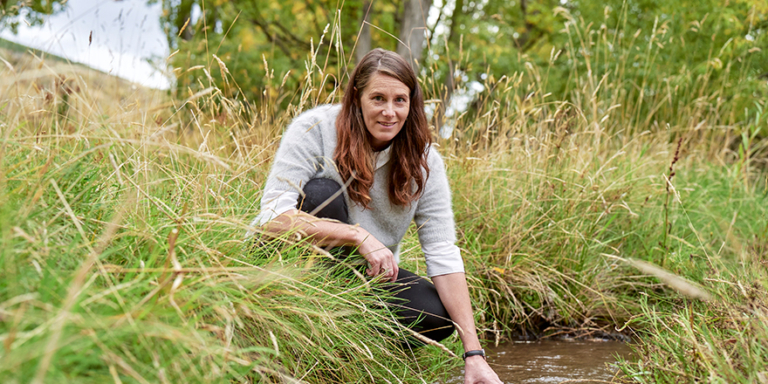
While much of Kate’s work is done indoors these days, running her business Landpro, she has a background in resource management planning, part of which involves testing water. We wanted to show Kate outside, on the land, doing the work she did when she started her business in 2007.  

Kate balances a young family with work and involvement with organisations outside of work too, such as being Chair of the New Zealand Rural Leadership Trust. 

Julian Raine, 1997 Nuffield Scholar

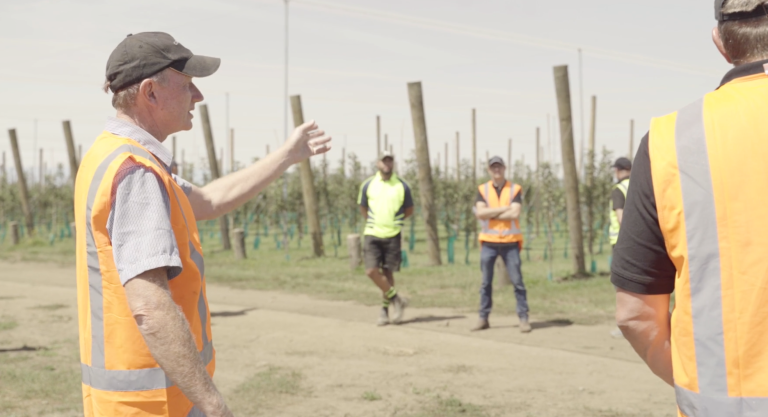
Julian is involved in both the horticulture and dairy industries. For the purposes of this campaign, we captured Julian in one of his apple orchards near Richmond, in Marlborough. Julian is also partners with fellow Nuffield Scholar Murray King in Appleby Ice-cream.  

One of Julian’s dairy farms was recently recognised by the SPCA for infrastructure aiding animal well-being. He has an eye on the future too, making at least a third of his orchards robot-ready. 

Lynsey Stratford, 2021 Nuffield Scholar

Lynsey is a non-practising lawyer involved in her local rural community. She is a consultant for her business Primary People, which provides people management and development services to the primary sector. 

We wanted to shoot Lynsey out with husband Chris on their dairy farm, situated in a unique part of the country at Curio Bay in Southland. Here, they have also recently covenanted 30 hectares of incredible bushland.  
 

Andy Elliot, 2018 Nuffield Scholar

Andy Elliot, 2018 Nuffield Scholar

Andy is based in Nelson, Marlborough and is Research and Business Development Manager at Wakatū. He is at the cutting edge of aquaculture research and far from being daunted by the need for a lab, he created his own at the Cawthron Aquaculture Park. He is currently developing several projects.  
 
Andy was also recently appointed to the Investment Advisory Panel for Sustainable Food and Fibre Futures. 

Desiree Reid-Whitaker, 2019 Nuffield Scholar

Desiree Reid-Whitaker, 2010 Nuffield Scholar

Desiree is a former dairy farmer who learned the craft of whiskey distillation from some of the world’s best. Returning home to New Zealand, she spent six months finding the right location to build the Cardrona Distillery.  

We wanted to capture Desiree in a beautiful environment loaded with visual clues that she has built everything in the most authentic way, not the easiest way. 

Hamish Murray, 2019 Nuffield Scholar

Hamish farms sheep, cattle, and runs a substantial honey operation at Bluff Station, near Kaikoura. The station is as visually beautiful as it is vast and is run by an exceptional team of people. No surprises there, as Hamish is just as passionate about his own growth as he is about his team’s.  

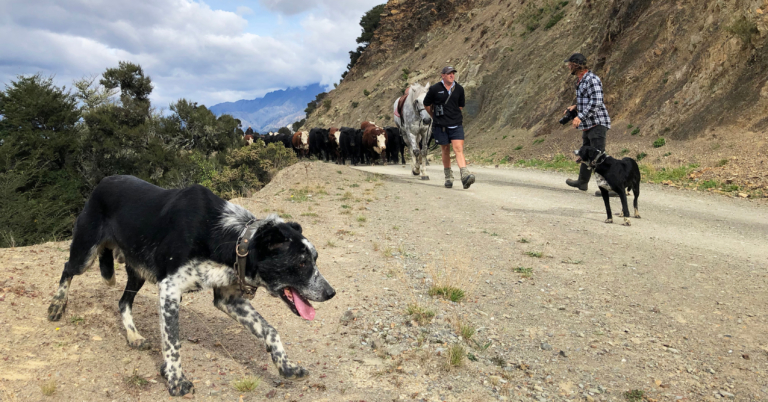
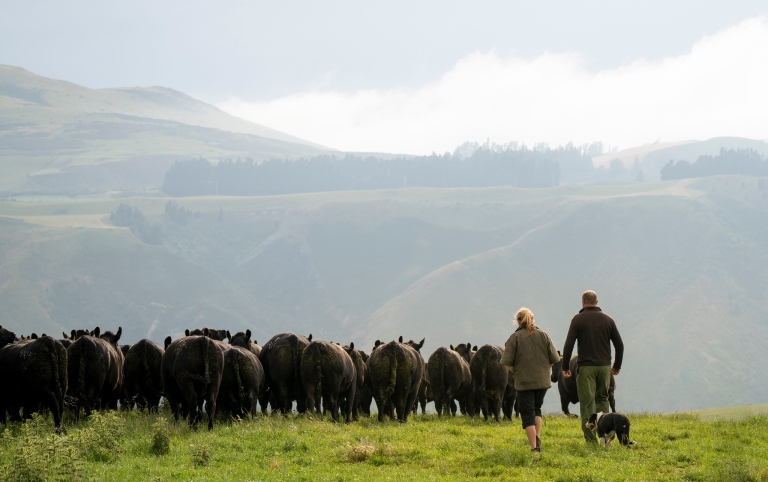
We were spoiled for choice at Bluff Station, the landscape is a photographer’s dream. The goal was to capture Hamish working – in this case moving cattle.

The Nuffield Contemporary Scholars Conference 2022.

Lucie Douma and Parmindar Singh, 2022 Nuffield New Zealand Farming Scholars, have been in Norfolk, UK, for the Contemporary Scholars Conference (CSC).

Back after two years’ hiatus, due to the Covid-19 pandemic, the CSC ran between 7 and 15 March.

The Contemporary Scholars Conference – all together now, finally.

The Conference gathers Scholars from the current year and creates opportunities for them to learn and get to know each other at the start of their Nuffield journeys. Nuffield Scholars each bring different expertise, and all are keen to share knowledge and discuss the big challenges.

The CSC is followed by the Global Focus Programme (GFP), where Scholars split into groups to travel around the globe, visit multiple countries, businesses, institutions, and research organisations. On the GFP, Scholars will begin to dig deeper into their topics of interest, they will gather information and explore solutions and ideas.

CSC 2022 – Food, climate, health.

The theme of this years’ Conference was “Food, Climate, Health”, but by all accounts, the discussions were far reaching and went beyond the theme, not surprising given the aim of any Nuffield initiative has always been to look at things differently.

The Conference itinerary was packed with quality content, Q and A sessions, workshops, and plenty of opportunity for networking between Scholars.

In a post early on the CSC, Lucie and Parmindar both share the excitement,

“What a privilege to be able to join 150 people from across 15 countries at the Nuffield Contemporary Scholars Conference in both Norwich and London.

The week was packed with inspirational speakers, farm visits, gala dinners, meeting MPs, and getting to know how other countries farm. We’ve met some incredible people along the way.”

The elephant in the room: War time food security.

When the Conference was planned, everyone’s mind was preoccupied with the Covid pandemic and when we would get that under control. If we only knew…

Just couple of weeks before the start of the CSC, a new global challenge arose – the Russian invasion in Ukraine, bringing a tsunami of worries around the world – the humanitarian devastation, the economic sanctions, the shifts in the political stances on so many issues. But there are massive implications for the agricultural sector and food security, caused by the war and the sanctions imposed on Russia and Belarus.

As part of the conference a Dutchman, named Kees Huizinga, who farms in Ukraine, addressed the scholars and talked about what it is to farm in a war zone.

As Lucie recounts, “Kees gave a sobering account of what is happening on the ground in the Ukraine, where farmers have less than a two-week window to plant their crops for the next year, including wheat. They are short 200,000t of diesel and are afraid to drive their tractors at night because they light up like Christmas trees and become targets.”

Everyone in the room felt the situation required immediate action.

“I just heard of a group of UK farmers who are driving to the Ukraine border next week to drop off supplies. This is real action. My question to you is what can we do from New Zealand to support these farmers?”, asked Lucie.

Scholar, Camila Hayseldon-Ashby, from the UK also conveys the sense of urgency and desperation she felt during Kees’s talk:

“As well as the humanitarian and moral impact, the war will have a huge impact on food production. We go to our political representatives and make sure they understand how this is impacting food production and global food security.”

Aled Rhys Jones, Nuffield Farming Scholar, broadcaster, and podcaster tweeted,

Visiting the locals: Condimentum.

Another highlight for the New Zealand Scholars, was the visit to Condimentum. Lucie shared on LinkedIn after the meeting:

Great to spend the morning with CEO, David Martin and the wider team at Condimentum where they are going through an exciting Growth stage while servicing a 10 year contract with Unilever to supply Coleman’s Mustard, an iconic brand in the UK. Parmindar Singh and myself learnt a lot about the mustard business and suggested ways they could use their by-products as an income stream instead of a waste stream #Condimentum

The end of the beginning.

The week appeared very intense and busy, even from afar, and in Lucie’s words “An excellent week spent getting to know 150 scholars, across two years from all around the world.”

Another attendee, Helen Wyman, quoted Nuffield Scholar Wyn Owen at the conclusion of the conference – ‘The end of the beginning’ as she elaborates on the experience,

“On Tuesday I returned home emotional, tired and overwhelmed but after a few days of reflection I am excited about the future and look forward to visiting my new friends around the UK and the globe very soon.”

These were only some of the anecdotes from the conference. We’ll hear more from Lucie and Parmindar when they return to New Zealand to collect their thoughts.

The conference is over, but the journey still lays ahead. For most of the participating scholars, it will never end. After all, being a Nuffield Scholar is, above all, a mindset – to keep searching, keep daring, keep improving. 

Lincoln University, Kellogg, and Rural Leaders – a collaboration spanning decades

Based on campus since 1979, the Kellogg Rural Leadership Programme has a long connection with Lincoln University, having been developed by the Kellogg Company as a way of enhancing global leadership capability.

In 2013, the programme was transferred to the newly-formed New Zealand Rural Leadership Consortium, which merged it with the prestigious Nuffield New Zealand Farming Scholarship to create a single organisation. Four years later, the consortium became a registered charitable trust and changed its name to the New Zealand Rural Leadership Trust (Rural Leaders).

A partnership known as the Pāhautea Initiative was announced in late 2020 between Lincoln University, Massey University, the Agricultural and Marketing Research and Development Trust (AGMARDT) and Rural Leaders.

The initiative focuses on lifting education levels across the sector and building deeper leadership benches in the regions, with the aim of creating a sustainable future for food and fibre. Accreditation of core programmes is key to delivering on the partnership’s purpose.

Kellogg accreditation strengthens the bond with Lincoln University.

Rural Leaders, Lincoln University and Massey University have further strengthened ties by offering academic accreditation for those who undertake the Kellogg Rural Leadership Programme.

After completing the programme, Kellogg scholars can opt into a Postgraduate Certificate in Commerce.

Alternatively, they can allocate the 60 credits they can earn towards the 180 required credits for a Lincoln University taught master’s degree.

Scholars can also elect to use their 60 credits towards a master’s degree at Massey University.

Additionally, accreditation may soon be available for the Nuffield New Zealand Farming Scholarship, although this is a work in progress, says Rural Leaders’ Programme Manager Lisa Rogers.

“Theoretically, it would be a diploma, or 120 points towards a 180-point taught masters.”

A dedicated Kellogg programme team. 

The Kellogg Rural Leadership Programme team – including Rural Leaders facilitators Dr Scott Champion and Phil Morrison, Dr Patrick Aldwell and examiner Professor Hamish Gow – work hard to provide a varied and stimulating learning experience.

The programme includes two papers, the first of which requires the completion of specific assignments and is delivered by Scott Champion and Phil Morrison.

The second paper, delivered by Dr Patrick Aldwell, involves completing a research project and giving a presentation at the end of the programme.

Rural Leaders deliver three Kellogg Programmes a year, with two based at Lincoln University. The other, in alignment with the Pāhautea Initiative’s aim of growing flourishing regions, is regionally based. The next location, in May 2022, will be Whanganui.

Each programme is delivered to 20 to 24 scholars. Numbers are kept low to ensure a transformative experience, as the Kellogg journey is as much about learning from fellow scholars and developing a pan-sector network of friends as being exposed to industry leaders and new ideas.

A shared history and a shared future.

Rural Leaders have a strong presence on campus and increasingly share alumni with the university now that Kellogg scholars can gain a Lincoln postgraduate certificate.

Lisa Rogers says she is keen to see the long association continue to grow.

“We often get graduates from the Lincoln Future Leaders Scholarship Programme coming through to do the Kellogg. While we may not see recent undergraduates apply, it’s something we see happening later in their careers.”

Fun fact: Up to 50% of participants in any one Kellogg Programme have previously graduated from Lincoln University.

Kellogg team building rope bridge

Whanganui and Partners and Rural Leaders serve Strategy for Lunch.

A collaboration between Whanganui and Partners and Rural Leaders, Strategy for Lunch, has been created to meet a need among business owners, to engage more confidently in business strategy discussions and design. 

The programme consists of five neatly wrapped, bite-size, online sessions that provide the tools and knowledge to help Whanganui business owners build their strategic capability.

Some of New Zealand’s leading strategic facilitators have come together to deliver the five 90-minute, online workshops, from midday every Friday, starting 11 March.

Strategy for Lunch is designed for business owners from across all sectors and industries who are looking to advance their strategic skills, knowledge, and their businesses. 

The programme will help business owners undertake their own strategic analysis, identify opportunities, and to evaluate their strategic choices.

From sharing frameworks and tools, to recommended reading, review and reflection sessions, and group discussions, this innovative programme gives business owners a strong knowledge foundation from which to tackle their own strategic challenges.

Here’s a brief week by week outline of what participants can expect to cover and learn in this smart and highly accessible programme.

Week 1: 11 March – Orientation.

An introduction to core strategy concepts. We’ll also outline the programme’s  
5-week journey. We’ll answer questions like, what is strategy? What isn’t strategy? What are the forces influencing our world today? And tomorrow? 

Week 2: 18 March – Strategic framing. 

Aims to understand a business’s value discipline and maps its business model. Questions we’ll answer in this session are, what is your ‘value discipline’? How do you create customer value? What is your business model for delivering customer value? 

Week 3: 25 March – Strategic definition. 

Defines a customer’s “job to be done”. This session also aims to understand customer drivers of value. It will unpack what the best options are to increase value for your customers?   

Week 4: 1 April – Strategic options. 

This session aims to explore a business’s strategic innovation options. We’ll answer questions like, how might you design or adapt your strategy for a competitive advantage? How do you develop a blue ocean strategy? 

Week 5: 8 April – Strategic action. 

This final session brings it all together. We evaluate strategic choices, including key implementation considerations. WE answer questions like, how do you move from strategy prototype to market offering? How do you test and validate an MVP? What are the key considerations for scaling-up innovation? 

Find out more about Strategy for Lunch, or to register, head to
https://discoverwhanganui.nz/news/strategy-for-lunch/ 

KPMG Food and Fibre Insights Course.

KPMG New Zealand and the University of Waikato have partnered to deliver a new and unique Food and Fibre Insights Course. 

The part-time, six-week course is targeted at working professionals who are seeking to expand their knowledge of topics at the forefront of agri-food systems. 

Facilitated by Ian Proudfoot, Jack Keeys, Professor Frank Srimgeour, and Dr Jack Dorner, it will deliver leading insight collated from experts across New Zealand and the world. It will cover one topic per week. 

Course structure will include a combination of independent learning, working through readings, videos, and questions on an online learning platform, in addition to a weekly virtual discussion session. Further information about the course can be found in the attached brochure.  

An exclusive discount code has been offered to Rural Leader readers and is available here: Partner’s link 

If you have any questions or would like any further information, please feel free to contact Jack Keeys via email at jkeeys@kpmg.co.nz, or by phone on 09 363 3502. 

Two Te Puni Kōkiri Scholarships available for Kellogg Whanganui.

Te Puni Kōkiri is generously sponsoring two places on Whanganui’s Kellogg Rural Leadership Programme, May start.

This is an extraordinary scholarship opportunity, covering programme fees and giving applicants the chance to develop leadership skills closer to home.  
These scholarships are open to passionate Māori as part of their leadership journey in the Food and Fibre Sector.

Those wishing to apply for a scholarship, should include a cover letter with their application indicating why they should be selected. 

In the cover letter, evidence should be shown of leadership in Māori Food and Fibre, along with discussing how the scholarship will contribute to personal leadership development.

How to apply.

To get an application underway, prospective applicants should register their interest through the link below. They’ll receive an application form to complete. When they return this form, include a cover letter indicating intention to apply for the scholarship, at the top. 

For any questions about the scholarship please don’t hesitate to get in touch with Lisa Rogers, Programme Manager, at lisarogers@ruralleaders.co.nz 

FMG Young Farmer of the Year – Tasman Regional Final. 

Meet you Saturday night at Springston Hall.

Did you know Mary Bumby introduced honeybees to New Zealand in 1839? No? Incredibly, her name has nothing to do with the naming of Bumble Bees, or any bees. Quite possibly history’s greatest example of a surname impacting the course of a life.  

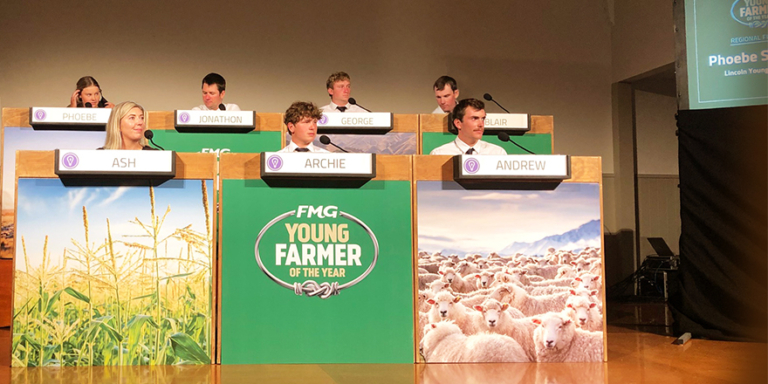
The seven Tasman Region finalists for the FMG Young farmer of the Year hadn’t heard of Mary’s exploits either. Though they had answers to other questions during the four quiz rounds at Springston Hall, Saturday evening, 19th February.  

Rural Leaders were fortunate to be invited by our strategic investing partner FMG to catch this thrilling conclusion to several days of competition, to find the Tasman Regional Winner. Competitors had given their all in three components of competition: Agri-business, Agri-skills, and Agri-Sports. They crafted a ‘chair’ from a wood palette, filleted (in some cases butchered) a salmon, they did the maths on the application of fertiliser, and competed in fencing too.  

And so, it all came down to the Springston Hall for the fourth Agri-Knowledge component, to determine the winner and finalists for the national competition later this year. 

Te Radar sounds the alarm.

After a BBQ dinner and some masked, socially-distanced mixing, long-time host Te Radar kicked off the evening with the housekeeping, which included the obligatory fire evacuation notice – and at that exact moment an actual fire alarm sounded. We all evacuated. The rural fire brigade eventually gave the all-clear and the seven finalists took their places.

The finalists were: Archie Woodhouse and Phoebe Smailes of Lincoln University Young Farmers, Andrew Allan and George Dodson of Lincoln Young Farmers, Jonny Brown of Dunsandel Young Farmers, Ash Foley of Waimakariri Young Farmers, and Blair Anglesey of Renwick Young Farmers. 
 
Entering this final evening, Jonny Brown had the lead, with Andrew Allan in second.  

Fingers on buzzers please.

The first round ‘Photo ID’ asked contestants to identify everything from a specific arable crop to a breed of pig, through to filling in a missing element on a familiar sector logo. 

Round two ‘Rapid Fire’ gave each contestant 30 seconds of questions. Performances here were strong, with the highlight being an ability to anticipate the answer to a question cut-off by the timer. Contestants were allowed to answer despite not having the full question.  

Best anticipation efforts were Archie Woodhouse’s ‘Marlborough’ to the cut question “What region…?” (What region is the mainstay of New Zealand mussel farming?”) And Phoebe Smaile’s ‘Four,’ to the cut question “What is the minimum clearance…?” (“What is the minimum clearance for equipment from overhead powerlines?”)  

Round three was an observation round. Here a video was played with questions following. A hard round, though had this not been a dry event, it would have been harder still. 

And the winner of the FMG Young Farmer of the Year, Tasman is...

The final round was a ‘quick buzzer,’ here big movers were Phoebe Smailes and Ash Foley, but not enough to break into the top three. After a focussed period of calculation from the judges, the final places were awarded.  

The top female competitor’s prize went to Ash Foley. Third place, by just one point, went to Archie Woodhouse, second was Andrew Allan, and seasoned competitor Jonny Brown took the overall win, after missing out last year. 

FMG Young Farmer of the Year Tasman Regional Winner

This was an expertly organised event and a thoroughly enjoyable evening. Thank you to FMG’s Michelle Stephenson for the invite. 
 
The Contest series Grand Final is scheduled for Whangarei in July. 
 
Keep an eye out for details here.

Changing the narrative – an online Kellogg session.

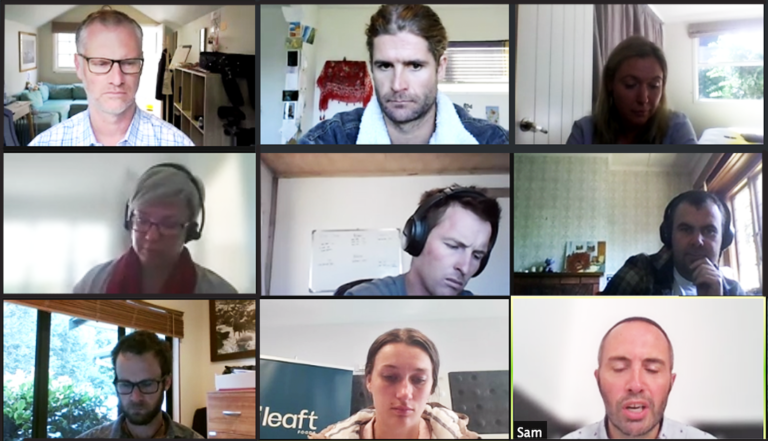
Kellogg has had to adapt during the Pandemic, to a hybrid model, working both online with tools like Zoom, and in-person when it is safe to do so.

One positive thing about video calls, and for some one might be a stretch, is being able to sit on the side-lines occasionally, with mute on and video off. You get all the benefits of the call, without needing to worry about asking clever questions.

So, muted and invisible we joined Scholars on Phase Two of the Kellogg Rural Leadership Programme, to listen to Sam Halstead of Latitude Strategy and Communication. Sam works in Public Relations, focussing on the primary production sector.

Phase Two is important for Kellogg Scholars. It gives an economic, political, and environmental context. It zeroes in on how to engage and influence decision making at a local, regional, industry and central government level. And engaging means communicating effectively. Enter Sam.

The most scrutiny in a generation for the primary sector.

Sam began his presentation with a slide headed ‘The most scrutiny and pressure in a generation.’ Discussion moved easily from one example substantiating this, after another.

The next slide, ‘It’s not all bad,’ presented positive sector perception statistics, based on recent polls from UMR Market Research. The pendulum has been moving in the other direction through Covid – with a public realising New Zealand now has big bills to pay and that the primary sector might be the one to help. The numbers make interesting reading:

  • New Zealanders have a positive view of the primary sector.
  • New Zealanders remain strongly positive about horticulture (67% positive, 29% neutral, 4% negative).
  • Sheep and beef farming (58% positive, 29% neutral, 13% negative).
  • And dairy farming (55% positive, 29% neutral, 16% negative).

Changing primary sector narratives with human connection.

While sentiment is on the up, the big challenges remain. Challenges that continue to impact the way the public views the primary sector. Sam took scholars through how public relations is utilised to help address some of these.

‘Changing the narrative,’ Sam explained, is about human connection and building trust over time – to change the narrative over time. Briefly, that might mean:

  • Avoiding the echo chamber – telling our stories outside of the sector.
  • Enlisting champions, or advocates.
  • Collaborating – avoiding confrontation.
  • Better leverage of the sector’s points of difference.
  • Owning issues and improving performance – sharing those improvements.
  • Building high quality relationships.
  • Most importantly – strive for human connection.

These sessions, delivered both online and in-person, help scholars build a critical awareness mindset, build confidence, and empower scholars to create change – public relations is just one tool in the toolbox that can help.

Ben Todhunter: Observations from a high-country station.

Ben Todhunter is a 2006 Nuffield Scholar and High Country Farmer. He farms Cleardale Station with his family in the Rakaia Gorge, Canterbury.  

Below are the closing lines from Jim Morris’s poem ‘Rewards’. They capture the spirit of the high country farmer and as such are personal to Todd. Jim Morris was from neighbouring Manuka Point Station, and is now retired.

The ranges vast are here to stay 
And he’s content to spend his day, 
Working in their rugged grip 
His recompense – the love of it.

This is a compilation of some of Ben’s LinkedIn posts from 2021.

#1. Pressure and release

December 2021 

A young calf got caught away from the main mob. Rather than applying pressure to the calf, Ben backs off, mum doubles back to bring the calf back to the mob herself. 

Quoting Monty Roberts, Ben writes:

Pressure and release. It’s a fundamental tenet of moving livestock. It also applies to humans as well. As a leader, working with tension or pressure to grow someone is a balance. How do you learn to get the judgement right?

Lesley Prior, Tellenby Merino Stud, Commented:  
Great example of good stock handling. Quiet, patient and ‘going with the flow,’ but with gentle direction where necessary.  

#2. Pondering geology

October 2021 

Ben observes that the rocks and stones scattered on his farm have ancient stories to tell.

Ben writes:
A collection of photos of some terminal and lateral moraine boulders. The greywacke rocks have fallen onto glacial ice and were carried up to 70km before being deposited in-situ approximately 18,000 years ago. 

The greywacke was formed over a 200-million-year period as tens of thousands of metres of sediments built up off the edge of Gondwana. The sediments were eventually buried, deformed, hardened, and uplifted to become the rocks that formed the Southern Alps. 

Link to ‘Te Ara – building a continent.’ 

It’s useful therapy to ponder the stories of these rocks when considering your significance, or lack of, in the world. 


Victoria Harvey, Climate change PHD researcher, commented: 
A great reminder of our place and time in this world. Plus, very clean air judging by that lichen. 

#3. Embracing technology

November 2021 

To reduce the time intensive process of matching dam with lamb, and at the same time increasing the quality of pedigree data, Ben introduced smart collars to Cleardale.  

Ben writes:
Our current master shepherd (my father) is proving difficult to replicate and scale. These collars have Bluetooth technology and record proximity to other tags. If they are worn for 48 hours they provide an accurate record of the lambs and their mothers. 

This is the same technology that can be used for some of the proposed contact tracing systems for disease management.  

Helen Thoday, Solutions and Development at DairyNZ, commented: 
That’s so much better than binoculars and spray-painted numbers.

#4. Perspective

May 2021 

Ben observed an interesting play of light and perspective. 

Ben writes:
Fascinating light on a frosty evening. They say the best time to show off livestock is in the afternoon light, but this may be taking it to extremes. 

Gordon Ray, Lecturer at Grenoble Ecole de Management, commented: 
On first impression, almost looks like a bubbly lava flow; when I noticed it’s sheep moving. I’ve worked with a large herd of sheep (1600) and the movement is so fluid as to almost look like slow motion water. Very cool video – thanks for sharing! 

Ben comments:
Gordon Ray, large groups of animals can have real flow. 

#5. Pushing too hard

November 2021 

Curiosity or greed? A heifer gets caught in farm equipment looking for the lush grass beneath it. (the heifer was freed unharmed!)

Ben writes:
You know that time when you just go a little further than you should’ve? 

Peter Stannack commented: 
Boundaries are for testing. How else do you find out who you really are? 

#6. Filling your soul

January 2021 

Concepts of mindfulness, wellbeing, and connection to nature are explored in this post.  

Ben writes:
There’s something deeply therapeutic, listening to and watching water. 

This Awa or river, the Rakaia, is a big part of our lives and has many moods. Here it is flowing at 145 cumecs (cubic metres per second). The highest peak flow ever recorded was 5594 cumecs at midnight on January 9th, 1994.  

We are involved with two groups protecting the special landscapes, flora, and fauna of The Rakaia from the gorge to the main divide. I’d like to extend that to the Coast as well. In a recent assessment the Rakaia scored the highest of all the braided Canterbury rivers to be proposed for World Heritage status. 

The Whanganui River has been granted the status of a legal person. “I am the river; the river is me” affirms the deep connection of the Māori tribes of Whanganui to their ancestral river. 

My connection to the Rakaia is not in that form. It is in the form of wonder, and respect, and love, and a place I can go to fill my soul. Where do you go to fill your soul? 

Sam Martin, Exterior Architecture UK, commented:  
Anywhere I can walk under trees works for me. Which is lucky given the situation here in London and our living so close to many commons and parks. 

#7. A river runs through it

October 2021 

“You have my full attention.” Was Mac’s response to a text last year. 

This is a story about the power of story. The story of a table with a story that tells a story. 

We live beside the Rakaia River. Our Awa originates in the heart of the Southern Alps/Kā Tiritiri o te Moana from the Ramsey and Lyell Glaciers. It is a braided river coloured blue from the glacial flour at its origin. Occasionally Totara logs are carried down river from the mountains and are deposited in front of our farm. 

Now Mac who was a neighbour and a top ad man, has now retired and become an accomplished luthier. He’d made me a stunning guitar from a previous piece of Totara and had expressed interest in working again with the special wood. So, when I found a suitable log, I sent a photo and immediately received the above reply. 

Half an hour later he was on site thinking of possibilities. In his words “You are being trusted with an absolute gem of a tree, and you prepare it with the full respect and care that its mana demand. It was an absolute privilege to be asked to give this tree a new life.” 

We then carved out a small bit suitable for guitars and kept the remainder. Maybe to build a table… 

A few weeks later Mac asked if we’d like him to make a kitchen table for us. 

Yes! Yes, was the response.

Mac enlisted the help of another neighbour and master wood whisperer Rob, to craft something special. 

We had a few other pieces of wood from the replaced decking and guardrails of the historic Rakaia Gorge bridge and knowing the talents of these two we provided dimensions for our house and for my frame and left them to it. 

Now for those who know about farm tables, a lot of business gets done around them, people are hosted, discussions are held and family times are lived around these tables. Being a storyteller Mac knew this and wondered if the table could tell a story? “Could it become a centre-piece, not just physically, but also emotionally and attitudinally? Could it have personality?” 

The idea of a river table was born. A table with whakapapa. 
“The idea was to re-create the tree’s relationship with the Rakaia River, representing its journey to Cleardale and the farm’s relationship with the river.” 

And that is what we’ve got. Timber from the mountains, carried and battered by the river, inlaid with a representation of that braided river and held up by timbers from a bridge to the past, repurposed to create memories into the future for a family whose lives are intertwined with that Awa. 

A special Taonga, which has a story, tells a story and will be part of many more stories. Thanks so much gents. 

Partha Ghosal, Clean Energy, commented:  
“You had my full attention.” So much so I read it twice! Never knew of Totara, let alone that it could make a stunning guitar/table. Something to do with your storytelling flair and a Luthier giving full respect maybe? Just love what you, he, and your wood whisperer achieved in the end. Your special Taonga. 

A typical day on the Value Chain Innovation Study Tour.

Craigmore Farming Horticulture Study Trip

The Value Chain Innovation Programme is made up of three phases spanning six weeks from May 9 to June 19. You can find out more about the programme and its core elements here.

Probably the most involved point of the five-week experience is the industry immersion study tour (Phase Two).

What will a typical day on the tour look like?

A fair description would be “busy”. But here’s more about what to expect.

We should note first that this ‘typical day’ may be subject to pandemic or scheduling related changes. 

Day five. In summary, there will be horticulture, food science and much more on the day. Generally, no one day will be dedicated to a particular value chain, but rather each piece of a value chain will be spread across several days.

You’ll be waking up in Central Hawke’s Bay. It’s an early start with breakfast at 06:30, and on the bus by 08:00.

On this particular day, the first destination is scheduled to be Craigmore’s Springhill Horticulture operation. You’ll arrive by 09:00.

Craigmore Springhill.

Craigmore manages farm and forest investments and was established in 2009 by two New Zealand family farmers, Forbes Elworthy and Mark Cox. Craigmore has an experienced team managing 18,000 hectares of dairy, grazing, forestry, and horticultural properties, that includes Springhill. 

You can preview Craigmore’s Springhill operation in this video

At around 11:00 the bus will depart for Massey University campus in Palmerston North, where you’ll be visiting several units. You should get there by 13:00.

The Riddet Institute.

First stop on campus is the Riddet Institute.

The Riddet Institute aims to build the knowledge and skills to tackle the challenges facing our fast-changing food sector, through discovery-led research at the frontier of food materials science. 

To learn more about Riddet, watch this interview with the Institute’s Deputy Director, Professor Warren McNabb. Scroll to the section beginning 3:15sec and ending 7:40sec for some insight into their work. 

Next is Massey Food Experience and Sensory Testing Laboratory (Feast). 

Feast, Food Pilot, and MAF Digital Lab – Massey University.

To gain a clearer picture about the type of work Feast conduct, look at this short video covering research on the use of a holo-lens. This work was done to determine what impacts mixed-reality technology could have on a consumer’s enjoyment of food. 

Still on the Massey University campus, the next stop is Massey Food Pilot. 

The Food Pilot at Massey includes the largest collection of food processing equipment in the southern hemisphere. They work with innovators and organisations to provide solutions to food-related challenges. 

Food Pilot is part of the New Zealand Food Innovation Network (NZFIN), it provides the facilities and the expertise to develop new products and processes, from idea to commercial success. Services can include evaporating and drying, chopping, mincing, cooking and process control, extrusion and puffing. 

While the this video isn’t on Food Pilot specifically, it does give some indication as to how Food Pilot fits into the FoodHQ ecosystem. There’s also plenty of footage from inside the Food Pilot testing areas. 

The next destination is the Fitzherbert Science Centre, where you will visit the Massey AgriFood Digital Lab

The MAF Digital Lab is a solution focussed research centre developing applications in advanced technology within the primary production, agricultural and food supply chain. MAF leverages Massey University’s wide capability in precision agriculture, primary production science and horticulture supply chains, sensor technology, robotics, AI, and data science.

Massey Univeristy Lab

Later in the afternoon, you are scheduled to visit Fonterra’s Research and Development Centre (FRDC). 

Home to 130 PhDs and 350 dairy patents, innovation is a key part of New Zealand Milk Products’ (NZMP), and ultimately Fonterra’s reason for being. Within NZMP, the FRDC is dedicated to dairy innovation and research. 

This video gives a good introduction to NZMP and the FRDC. 

Wharerata – BBQ dinner.

The next stop is your final destination for the day – Wharerata, where casual drinks and a BBQ dinner will be organised for the group. A quick week one tour review will take place before dinner at this historic homestead.  

By 20:00 you’ll be at your accommodation, where you can enjoy some free time or an early night as you are up at 06:00 the next morning to hit the road again.

The schedule is intense – but it will be worth it!

If you haven’t checked out yet the following podcasts, take the time to listen to Professor Hamish Gow’s Podcast ‘Value chain thinking’, and James Parson’s Podcast ‘When value-add doesn’t add up’. They’re both excellent for further context.  

Contact us with any questions, we’re ready to help. 
If you would like to find out more about the programme, contact Lisa Rogers today. Either call on 021 139 6881, or email at lisarogers@ruralleaders.co.nz.

Ready to register your interest in the Value Chain Innovation Programme?

From the Mackenzie Study: The Case for Kellogg.

Otago University

Work on the Mackenzie study continues with Professor Nathan Berg of the Otago Business School and the Department of Economics made possible with the support of the Mackenzie Charitable Foundation.

Since receiving the results on the gains attributable to participation in the Nuffield Scholarship, collation of results from the Kellogg Alumni survey has now begun.  

While more work needs to be done to present the data, we thought we would share a series of long-form responses from the Kellogg survey. These in themselves begin to paint a picture of the value of the programme to alumni, in terms of personal development, career advancement and industry influence.  

The responses have been left anonymous and any information that might reveal a respondent’s identity has been removed. 

Nearly one hundred Kellogg Alumni completed the survey. 

Searching for further motivation to complete your Kellogg Lincoln or Kellogg Whanganui application? You may find it here. 

What have been your most important accomplishments and did Kellogg play a role?

“Critical analysis of all situations. Kellogg helped solidify this process.” 

Kellogg taught me how to deal with problem situations and be able to answer questions from media reps. Kellogg also gave me confidence to address open meetings of farmers and Iwi reps.

Employment positions held. Community roles held (school board, parish, sport, and service clubs). Kellogg played a role – Yes. Improved skill base particularly around communication and leadership.

“The course helped with critical thinking and confidence.”

“My leadership career and influence. Helped me think strategically and made me match fit.” 

“Understanding myself better, how I affect others. The development of networks and doors opened by the programme. Personal brand building.” 

Contributing to strengthening capability and capacity in the agricultural sector.

“Start-up with two fellow Kelloggers – definitely a result of Kellogg.” 

“Leadership roles on boards of industry specific, or primary sector education boards plus NSO boards… Had creditability and capability having done a recognised course like Kellogg. Throughout the years the networks you form with either people who did it with you or had done it at other times was helpful to open doors and connections.” 

“Underway with a new company starting a new value chain. I completed my Kellogg project on this topic, so it very much helped.” 

“Since being a Kellogger I went onto become a Nuffield Scholar which I regard as a real accomplishment. Following that, I have started a new farm business and [have] become more involved with local industry. Kellogg… opened a lot of doors.” 

Forming a people and training team and ensuring the business had a successful part to play in sector upskilling. My Kellogg project and the learnings around it were the catalyst for this.

“Moving from hands-on farming to a corporate role. Kellogg gave me the networks and confidence to make the move.” 

“…Enjoyed widening my social and professional network and learning of other like-minded people. Having the mix across food production was great – everything from grapes to sheep to kiwifruit to Ag IT.

Kellogg helped with development of governance skills and gave me confidence to get involved in a large number of initiatives.

“Confidence and experiencing others’ opinions and ideas, and great fellowship with others on the course.” 

Kellogg helped me particularly in improving my leadership and social skillsets…”

“Networking and connecting. Having a sound understanding of the basics about how Wellington works was a highlight which I could not have done without the doors that Kellogg opened during that part of the course.” 

“I have played a significant role in building biosecurity preparedness for the primary sector and being a Kellogger has contributed to this, in part by exposing me to some inspirational people – and understanding the habits that lead to success.” 

“It helped me see that the people I viewed as leaders were not that different from me. It gave me confidence in who I am and whetted my appetite for more.” 

“I learned a great deal as a Kellogger, and that has contributed to all I have done…It made me a better person, better equipped with insights and with the ability to consider decisions. But I wasn’t completely hopeless before!” 

“Before the programme, I ran hard and fast at everything I did. This generally worked but came at a huge cost to my family life, my personal life, and my mental health. 

I still push myself every day to be better, but after hearing ways others in my cohort dealt with stress, I was able to learn to keep my mind on the rails. Mainly – I don’t need to do everything on my own. My cohort was the best – heaps of us are still in touch, helping each other along the way.”

“Respect from others for having completed Kellogg and respect between alumni.” 

Horticulture: When a road trip bears fruit.

Central Otago Horticulture - Engagement with industry to find ways to build capability

Lincoln University and the New Zealand Rural Leadership Trust (Rural Leaders), hit the road last week, travelling throughout South and Mid Canterbury and Central Otago.

Professor Hamish Gow of Lincoln University and Chris Parsons, Rural leaders’ CEO, have successfully established stronger links with the horticulture sector and in particular, growers from the pip and stone fruit industries.  

The series of visits were expertly organised, attended, and hosted by Chelsea Donnelly, GoHort Career Progression Manager for Central Otago. The road trip was designed to gain a better understanding of the opportunities for collaboration between Lincoln University, Rural Leaders, and the horticulture sector. 

Also joining the group was Dr. Clive Kaiser, Associate Professor at Lincoln University. Clive is a legend of the cherry fruit industry, and it seemed this status was clear when growers produced Clive’s co-authored book, Sweet Cherries, also known as ‘The International Bible of Cherry Fruit Production.’ “The book would appear from bookshelves, top drawers, and coffee tables, with Clive humbly signing more than a few on request,” said Hamish Gow. 

Professor Gow went on to say,

“This was a real bonus on the trip. To have Clive Kaiser and Chris Parsons there connecting with the sector in such an authentic way, created an atmosphere where the prospect of further collaboration just seemed inevitable.”

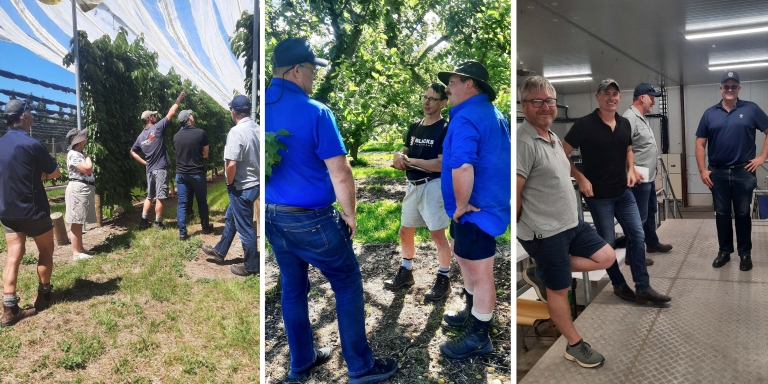
The visits included numerous growers, orchards and packhouses, with each discussing the technical production challenges, competency requirements, and opportunities for Rural Leaders and Lincoln University to collaborate in the co-design and development of capability building programmes. 

“Everyone we met was as excited as we were to see both Lincoln University and Rural Leaders engaging with industry. It was a highly productive research trip likely to have exponential benefits for all involved,” enthused Professor Gow. 

Growers and grower groups also expressed interest in exploring the idea of ‘field-labs’ on their farms, as way to further increase productivity and capability, “That’s something we’re extremely excited about exploring”, said Hamish Gow, “If anyone would like to talk more on that idea, please don’t hesitate to get in touch.” 

Professor Gow can be contacted at Hamish.Gow@lincoln.ac.nz 

Doing better by our people.

There are figures on our primary sector’s labour transience that make for alarming reading. They’re remarkably high. In case you missed them, only 29% of those entering the primary sector remain after three years.  

While factors behind the statistics are complicated, one of the simpler, often cited reasons for leaving the sector is poor workplace culture. That falls strongly into the preventable turnover basket. And preventable turnover equates to 78% of total dairy transience, meaning four out of five people who have left the sector, might’ve stayed, had we done better by them.  

Bad news, old news, good news.

It’s not just farm workplaces buckling culturally under today’s stresses either, it’s large agri-businesses too, with allegations of poor management, and unaddressed toxic cultures more common than they should be. 

In both small farms and in larger business, failure to fix a problem culture can lead to performance issues and the destruction of the relationships with the people and teams helping those operations succeed. That’s the bad news. It’s also old news and too big to wrestle with here. So, we’ll offer a couple of pieces of good news about a few people trying to make a difference instead. 

Individual farms are now leading change, enthusiastically embracing management thinking from other industries. Farm owners, exposed to high performance ideas and practises bring their learning back home, to the farm. Couple this with a wider acceptance of wellbeing philosophies (previously known as ‘that touchy-feely-stuff’) and you have individual farming operations reporting much needed decreases in staff turnover. 

Rebecca and Brent Miller: Kellogg Scholars making changes. 

At the heart of what Rebecca and Brent Miller do lies a simple idea, if you work on yourself before you work on your team, good things will follow.  

Rebecca has just won ‘Emerging Leader’ at the 2021 Westpac Champion Business Awards. It’s an award that recognises performance across all industries, not just the primary. The award blurb states, ‘recognising a leader who is ambitious in outlook and vision, one who embraces innovation, shows resilience, and who inspires and invests in others.’ All good things, so it’s worth taking a closer look for ideas worth sharing. 

“What we stand for, our values, our negotiables, and non-negotiables, are all important for us, our team, and our farm. Everything comes down to knowing our strengths, weaknesses, and how we’re likely to contribute within a collaborative framework.” 

The school of hard knocks. 

Fifteen years ago, sharemilkers Rebecca, Brent, and their young children, were at a crossroads. It’s a familiar dairying family story, 2:30am to 7:30pm, 28 days on, two days off, moving between farming positions constantly and far too many tricky experiences with farm owners – their employers. They were on the brink of breakdown. All bets were on leaving farming forever.  

“We thought something had to give. But then you realise all your skills are in dairying. It was all we knew. So, we decided to stay and really reflect on what it was we needed from our next employer.”  

“We researched farm owners who supported, coached, and mentored their staff. We knew that if we were to stay in dairying and grow, we had to find the right environment for that to happen. Sadly, at the time, they weren’t easy to find – but eventually we did.” 

“We’d put business first at all costs in the past and that approach wasn’t working for us. We now knew it had to be family first.”  

Building the trust.

The Millers found an employer who opened their books, allowing them to benchmark against over a dozen farms in the owner’s network. The power of knowing ‘the numbers’ meant better decisions could be made, and efficiencies found by gently applying the right pressure at the right time. This sharing quickly built trust between themselves and the owners.  

“Passing that on and taking care of our team, seeing them grow and succeed, became a priority for us too. We have learned that as leaders of a team, the environment we provide on the farm, the behaviour, the way we share, interact, the words we use, the decisions made, and by who, are just a few of the factors in a high trust, high-performing and connected team.”  

The Millers strongly believe in the idea of sharing what they can to help others improve their on-farm methods and culture too.  

“MilkIQ is a platform for achieving that. It’s fuelled by a passion for people and driven by a desire to help them succeed.”  

With MilkIQ the Millers have just gone out and said ‘hey, this is who we are.’ “It’s a wellbeing tool, hopefully demonstrating trust in practise.” 

Hamish Murray Bluff Station Nuffield

Hamish Murray: A Nuffielder making changes. 

In a Farmstrong article from earlier this year, Nuffield Scholar and high-country sheep and beef farmer, Hamish Murray, also acknowledged the importance of his own journey. He spent a year on his Nuffield scholarship studying businesses with high-performing team cultures, including time in Silicon Valley, and in Christchurch with the Crusaders Rugby Team. He observed their continued focus on ‘soft skills,’ and shared values. 

“Soft skills are things like the way you communicate, make decisions, reflect and feedback. If you understand each other [other’s styles], you can combine to make good decisions.” 

“We’ve also done an exercise with our team to agree on what values will drive the decisions in our business. It’s empowering everyone to move forward, and it allows me to stand back and let the others lead.” 

The results speak for themselves.

Hamish is confident this approach is paying off. One good indicator has been a reduced staff turnover. Hamish acknowledges how important it is to create an environment that allows others to flourish and one that attracts and keeps great people. A big part of that he says, is letting your ego go, getting out of people’s way and asking the questions that help others do an excellent job. To do that he says, you have to work on yourself first. 

“Sometimes it’s not until you get to breaking point that your own learning and reflection kicks in. The journey for me started at a real low, but now I look back and think I’m incredibly lucky to have had that experience.”  

Hamish is referring to the stresses created by the Marlborough and Canterbury drought of 2014/15.  

“Trying to keep everyone going when you had no control over anything was so draining … we ended up with stock on fourteen different properties. The support I’ve had from my family and my team, the groundwork we’ve done together has really given me the confidence to keep learning and growing our business.” 

It starts in your own back paddock. 

Rebecca, Brent, and Hamish have shown that one small, first step toward keeping people in primary sector, in a ‘start in your own backyard kind of way’ has to be toward yourself, then to your own ‘FarmilyTM,’ your rural community, and beyond to industry. Rebecca adds, “What we can control first is our own behaviour. When our behaviours are good, we allow others to be the same and we start creating that change.” 

Rebecca Miller did the Kellogg Rural leadership Programme in 2018. Her study topic was: Is there a need for an information platform to collaborate primary sector events? 

Brent Miller, Rebecca’s husband, did the Kellogg Programme in 2020. His study topic was: What is the true cost of transience to the New Zealand dairy industry? 

Hamish Murray is a 2019 Nuffield Scholar. Hamish’s research was Future farm workplaces. It investigated the work environment needed to attract and retain people in the primary sector.


Rural Leaders and Thriving Southland collaborate.

Workshops in Southland, collaboration between NZ RUral Leaders, Thriving Soutland and Lincoln University

Thriving Southland, in collaboration with the New Zealand Rural Leadership Trust and Lincoln University, recently ran two successful workshops, held over four days. The workshops sought to strengthen rural leadership capability in the region and inspire catchment leaders and their teams to work on problems and deliver outcomes for a thriving Southland.

Think to Thrive: Strategy

The first Strategy Workshop, ‘Think to Thrive,’ was held in Winton on the 1st and 2nd of December. It was designed to form a pathway between today’s Southland and where it might be tomorrow. 

Trust to Thrive: Leadership

The second workshop ‘Trust to Thrive’ was held in Invercargill. With a focus on leadership, it was designed to build on the outcomes of workshop one. It drew on the facilitators’ skills in delivering world-leading military intent-based team building frameworks, and helping leaders learn to empower their teams to work and win together.

The facilitators

The workshops were co-facilitated by Chris Parsons, MNZM, DSD, Rural Leaders CEO, Professor Hamish Gow, Lincoln University, Phil Morrison ONZM, Freelance Consultant and Kellogg Programme Facilitator, and Rob Hoult DSD, a Leadership Development Specialist. 

The participants

Each workshop was attended by about twenty farmers, catchment co-ordinators, stakeholders, and local and regional government leaders. Introduced to a range of tools, models, and frameworks, attendees then took a deep dive into a session of insights work. 

The groups generated two hundred key insights, from which they produced three hundred ideas. These ideas were crafted into four game plans the attending leaders could share with their catchments, the Thriving Southland Team and Board. 

When asked how the workshops were for attendees, three strong feedback themes emerged: empowering, big picture, and thought provoking. Many also felt that they had a new platform for influencing change. 

Lynsey Stratford, 2021 Nuffield Scholar and attendee, posted on LinkedIn:

“This was a great opportunity to learn some new skills and identify opportunities for the region alongside other food and fibre producers and stakeholders.” 

Another attendee stated, “We left armed with the models, tools, and insights we need to build capability with our teams.”  

If you’d like to get hold of the workshop summaries, please email either Hamish Gow or Chris Parsons, Hamish.Gow@lincoln.ac.nz or Chrisparsons@ruralleaders.co.nz 

Inviting expressions of interest in a Board Trustee role.

Inviting expressions of interest in a Board Trustee role.

The NZRLT is currently seeking expressions of interest from Nuffield Alumni in a Board Trustee role, beginning January 2022.  

Former Chair and incumbent Trustee, Andrew Watters is due to step down creating a rare opportunity to be involved in primary sector, education, and leadership governance.   
 
As part of a forward-thinking group of industry leaders, you will be supporting the NZRLT and its vision to grow world-class leaders for our country.    
 
This is a voluntary position and encompasses a four-year term. The role requires a time commitment of five board meetings annually, and three full days for the Nuffield Scholarship interview, selection process and awards.  

If you would like to express your interest in this opportunity to give back to rural New Zealand and contribute to building our country’s leadership capability, please send your CV and cover letter to Chris Parsons, NZRLT CEO, at chrisparsons@ruralleaders.co.nz 

Or, if you would like a confidential discussion, please call either Chris Parsons on 021 779 272, or NZRLT Chair, Kate Scott on 027 495 7486.  

Expressions of interest close Friday 26th November 2021. 

The new Trustee will be appointed prior to Christmas, and in time for the first board meeting in late January 2022.  

Mel Poulton: Insights from a Special Agricultural Trade Envoy.

Mel Poulton

Mel Poulton: Insights from a Special Agricultural Trade Envoy.

2014 Nuffield Scholar Mel Poulton is someone with a unique perspective. Well, two really. As both a food producing farmer and New Zealand’s Special Agricultural Trade Envoy, we asked Mel to share her perspectives on trade, Nuffield, Brexit, and an industry grappling with significant global challenges.

Question: What do you do in your various roles?

Mel Poulton: In and on my farm business, I’m on both sides of the farm gate. I do anything from stockwork to bulldozing, to making all the decisions required to run a business. 

In the Special Agricultural Trade Envoy (SATE) role, following my appointment, border closures and a vastly different global operating context, have meant changing how the role is delivered. It’s a two-pronged approach with an international and a domestic focus, mixed with face to face and virtual engagement.  

I’ve been more purposeful working with the world here in NZ, by way of direct engagement with the International Diplomatic Corps here (they are the eyes, ears, and influencers of their nations in NZ). This engagement includes taking Ambassadors on x-sector farm tours, hosting Diplomatic Corps meetings, and meeting with them one-to-one, or with industry groups. I am also working internationally on virtual platforms, speaking on panels, webinars, or virtual meetings with farmers, and private and public sector organisations.  

Covid has provided opportunity for me to invest more time and effort with NZ sectors (all food and fibre – except Forestry and Fisheries). My background is the sheep and beef sector, but I put a high priority on building a greater understanding of the other sectors I represent as well. I use these insights when engaging with each of the sectors, government, and the world.  

Helping NZ food and fibre producers broaden their understanding of the global and domestic context is a priority too. Both behind and beyond our farm gates.  

Q: What changes have you seen since being in your SATE role?

MP: Quite a few things.

Trade negotiations. 
Trade negotiations, particularly the New Zealand-UK Free Trade Agreement (FTA), have been the fastest progressed trade negotiations in New Zealand history to get to Agreement in Principle – so I’ve been told. Much of this negotiation has been done virtually, also a first. This will change the way trade negotiations occur in the future. A lot less travel overall.

Farm subsidies. 
Direct and indirect farm subsidies in large economies, such as the USA, have increased exponentially. People may argue they have already exceeded agreed WTO thresholds.

Growing distrust. 
There’s a growing distrust of governments in the democratic world. Governments need to work on their social licence to operate. Social licence is not just a thing for food producers.

Supply chain vulnerability. 
Just In Time (JIT) delivery has been exposed for its supply chain vulnerability in this global pandemic. Economies and businesses will now be building more capacity in their value chain system. This will mean a more conservative approach to exports and imports, to withstand the volatility, uncertainty, complexity, and ambiguity (VUCA) in the world of trade, market access and freight.

Nevertheless, nothing beats high trust and long-term government to government, business to business, and people to people relationships across the world. New Zealand has optimised these relationships throughout the pandemic to utilise market diversity for navigating trade, market, and supply chain disruption.

For example, Covid19 related trade agreements to secure medical imports and food exports. As well as digital certification for export products, through to relationships that our major exporters have with freight companies, importers, and international customers. The last 18 months haven’t been easy, but these strong relationships, and diversity of markets, have shown their worth to New Zealand.

Food security. 
Economies are moving from thinking about food security, to actively putting mechanisms in place to secure their food supply in a pandemic disrupted system, e.g., green lanes in Europe. There’s also a slow nuanced shift from food security to nutritional security taking place.

Regulatory pressure. 
Farmers and food producers in New Zealand and around the world are wrestling with the multi-layered challenges of regulatory pressure (particularly on the environmental and climate change fronts), as well as market volatility, and Covid 19 induced uncertainty. This is increasing farm input costs and diminishing the tools available for farmers to use to produce food.

As an example, farmers in Europe have real fears about their ability to produce the volume of food required to stay viable and maintain food security. The new farm to fork strategy in the EU is deliberately shifting organic food production up to 25%, with rules to reduce synthetic fertiliser by 50%. Glyphosate use is under threat too. In some places farmers can’t use it (I note in New Zealand, the EPA is currently undertaking a review of Glyphosate use). There’s major transformational change happening in Europe.

The rush of multi-layered change gives a sense of exponential pressure. Farmers all over the world are feeling exasperated, frustrated, misunderstood and under siege. All the same, if there is anywhere in the world I would rather be farming right now, it is here in New Zealand.

We’ve navigated major challenges in the past, and when farmers look at the change they’ve implemented on their farms over the course of their careers, or in the intergenerational businesses they are running, we can take confidence in the fact we are already change agents.

A uniquely positioned New Zealand. 
From a New Zealand food producer’s perspective, farmers here are uniquely positioned. Without subsidies, we aren’t dancing to someone else’s tune in quite the same ways as farmers receiving subsidies elsewhere. There are two sides to this. On one hand we’re not being bailed out at the next threat, but we also get to take full responsibility to master the destiny of our businesses. So, we have an ability to create workable solutions in a way that keeps our businesses competitive globally.

With an innovative, integrated systems approach, we can create solutions to challenges like reducing our global warming impact, improving native biodiversity and water quality, while producing high quality, safe, nutritious food – delivered with integrity.

In New Zealand we have an industry ecosystem focussed on helping farmers create and implement solutions. Our research centres and academic institutions, both provide science and knowledge, and help support farmers crack real challenges. There are the easily accessible service providers, and the folk in Government ministries – who are in the teams working hard on trade negotiation to ensure the best possible outcomes for access to markets, and on removal of tariffs and non-tariff barriers to create a level playing field for New Zealand. Let’s keep it that way.

This ecosystem enabling success is our major competitive advantage in the world. We’ve really got to leverage this and remember we’re all on the same team.

We must not be paralysed by fear, but instead celebrate what we’ve already achieved throughout our farming careers and take confidence that we can use our whole systems thinking to improve what we do for our natural resources, our people, businesses, and our nation.

Q: What links between International Trade and International Policy have you seen, with direct and indirect implications behind your farm gate?

MP: Let’s summarise how it works first. There are recognised global challenges. Then international forums are established to address these challenges, leading to international commitments made by member states (different nations).  

Examples of this include United Nations Sustainable Development Goals (SDG) and the Paris Accord on Climate Change. Some international commitments are legally non-binding. But where it applies to the WTO (World Trade Organisation) they are often legally binding.  

Once those international commitments are made, each economy, member state, or nation must determine its own policy and regulation to deliver on its commitments. That gets shaped up (with some consultation in the process) and is rolled out by the government of the day, and folks like us everyday people have to make it work on the ground. The Government then reports back to those international forums, or institutions, on what our progress has been against the commitments the Government made. COP26 is an example of this. 

Given New Zealand’s economy is so internationally exposed and dependent, we need to be at the international table to maintain influence.  

But to have influence we need to have integrity and demonstrate action. So, these international commitments have been drivers for shaping NZ Government policy on Sustainability and Climate Change. Examples here are the New Zealand freshwater regulations and climate change targets. Both resulted in changes on my farm, and on farms all over New Zealand, which is increasing costs and could reduce revenue for some.  

If we do it right, there could also be opportunity to reduce costs and increase profitability. It will be different for every business. The bottom line is that financially there’ll be change, so we need to reconfigure the financials for a new shape to our businesses. Easier for some than others, and not all will be the same. 

The environmental, social, and economic outcomes are significant across NZ, and underestimated. In some cases, we might secure a market premium for this work, though there is no guarantee what we’re doing delivers a premium to food producers in New Zealand for all products in all markets. I have more confidence this work will enable us to obtain and maintain market access to customers.  

This is where the work of our trade negotiators, ensuring a level playing field in market, is so critical for ensuring the changes we’re making here in NZ don’t make us uncompetitive on the international market. I’ve seen their tireless, relentless work, day, and night, to get the best possible outcomes for New Zealand. Many of these negotiators are the hidden superstars of our food and fibre ecosystem.  

What is going on in New Zealand around environment and climate change is often a focus of interest from others in my international engagements. I talk about what these regulations and targets mean for me, and what I am investing in to address the challenges in my farm business, alongside promoting what other farmers from the different sectors are doing in New Zealand. I also give a clear message that much of this cannot be done quickly when taking a whole systems approach. Effective change takes time. Farmers the world over get this.

Q: How do you think Brexit will play out for New Zealand trade? The obvious and not so obvious.

MP: The choice of the UK people and UK parliament to pursue Brexit is forging transformational change for the UK food and fibre sector. The transition period will take 15 to 20, even 30 years to find a new equilibrium. Like the 30 years it took New Zealand to find equilibrium when agriculture subsidies were removed here.  
 
This change requires a culture shift in thinking about UK farm business structures, their subsidy system, domestic policies, and rebalancing their trade and export portfolio beyond the common market, to a global market. Add major geostrategic inflection points in trade and security, affecting us all, and you have a UK trying to position itself as a global strategic leader.

Its focus in the Asia-Pacific region, particularly regarding the FTA’s it is currently negotiating with Australia and New Zealand, along with its formal request to join the Comprehensive and Progressive Trans-Pacific Partnership (CPTPP), all highlight the trade and security opportunities and challenges it perceives.  
 
So, building more structure into the relationships of allies like New Zealand and Australia by way of FTA’s is an important part of their process to find their new place in the world. This is providing new trade opportunities for New Zealand, subject to the NZ-UK FTA and their accession to the CPTPP. 
 
In the future it may create more competition in our export markets too. It will also create opportunities for more collaboration on the global stage, especially where we align with the values and perspectives that matter to both economies.

Q: What does New Zealand need to do more, and less of, now and in the future?

MP: Because our food and fibre sector is orientated to international markets, we need to continue to pursue being the best we can be. This means achieving optimal standards, positioning ourselves to have the best integrity, facts, processes, and story for all the concerns that governments, markets, customers, and consumers may direct at us.  

Whether these be from the position of protectionism or not, we still have to give ourselves the best chance of capturing opportunity. So, concerns about animal welfare, food safety, or environmental stewardship, e.g., water, soil, biodiversity, chemical and fertiliser usage, climate change, labour, the list goes on. These are the things we need to keep improving to position ourselves to open as many doors as possible, and to keep flexibility, adaptability, agility, and economic viability open to us.  

We have already demonstrated plasticity through this pandemic, and we need to fully embrace a plasticity approach in our lives, our businesses, and how we engage with the world.  

We need to be able to maintain our essence and values, while changing and reshaping the way we live, do business, trade, and collaborate with others, as we all grapple with significant global challenges.     

Q: How has doing a Nuffield Scholarship helped you?

MP:   The Nuffield Scholarship has been an important part of my personal and professional development. It’s been a stepping-stone for doing what I do now, on and off farm. The international networks, the doors of opportunity opened, the domestic and international insights as well as the ‘aha’ moments. These all contribute to my thinking, conversations, and ideas on the farm and in the world of trade.  

That said, and without taking away from Nuffield, the older I get and the more I learn, it seems the more questions I have and the more I need to learn. 
I’d like to encourage all readers to keep that hunger to learn, take some confidence from the change we’ve already made on our farms, in our businesses and our whole industry with our systems thinking.  

Let’s keep doing what we do best – producing top quality food and fibre to the best of our abilities.  

Optimising all we do with high standards, care and integrity for our environment and natural resources, our people, communities, and for the economic viability of our businesses and nation. 

Balanced with humility, we need to be able to hold our heads high and have pride in who we are and what we do. Keep being the best you can be. 

Download report
Read Mel Poulton 2014 Nuffield report “Capturing value.”

2022 Nuffield New Zealand Farming Scholarships awarded.

2022 Nuffield Farming Scholars

2022 Nuffield New Zealand Farming Scholarships awarded.

Three emerging food and fibre sector leaders have been awarded 2022 Nuffield New Zealand Farming Scholarships. Each has received a personal letter of congratulations from Hon. Damien O’Connor, Minister of Agriculture, Minister for Trade and Export Growth, Biosecurity, Land Information, and Rural Communities.

The New Zealand Rural Leadership Trust (NZRLT) is proud to announce the 2022 Nuffield New Zealand Farming Scholarship recipients. The Scholars are:

Parmindar Singh, a Waikato based Dairy Farm Manager, Company Director, and a recent master’s graduate. 

Anthony Taueki, a horticulturalist from the Hawke’s Bay, leads horticulture courses at Fruition, New Zealand Apples and Pears, Tatau Tatau o te Wairoa, and many more.

Lucie Douma, leads a new team at the Ministry for Primary Industries (MPI) looking at disruptions to domestic food and fibre supply chains, and primary sector COVID recovery.

Chris Parsons, NZRLT CEO said, “This group comes from the most diverse range of backgrounds we have seen in recent times. Each Scholar brings talent, passion, perspective, and a track record of performance. Their job now is to find insights and foresight to benefit our sector.

“We wish to acknowledge all those who applied. It is safe to say, there is some real talent in our regions. Selecting three Scholars this year has given our Trustees and the Industry National Advisory Committee the opportunity to fund the start-up of an exciting new programme, the Value Chain Innovation Programme. The intention will be to return to selecting five Scholars again next year”, said Parsons.

Covid 19 restrictions mean this year’s scholarship recipients’ formal awards ceremony at Parliament, will be delayed until February 2022, when Minister O’Connor will award the scholarships in person.

2022 Scholars will follow last year’s travel approach, contingent on the local and global pandemic travel situation. This lets scholars defer the international travel component of the programme until border restrictions permit.

Kate Scott, NZRLT Chair, said, “As part of their Nuffield journey, the three 2022 Scholars will also join the Value Chain Innovation Programme to gain a deeper understanding of the challenges and opportunities in front of our sector, before they venture abroad.

“The Scholarship will offer new opportunities and experiences through an immersive programme and will help to shape future world-class leaders for the New Zealand food and fibre sector” said Scott.

Their research topics are likely to cover a range of our biggest food and fibre challenges including, building resilience in our value chains, data interoperability, emerging market opportunities for trade in dairy, and finding sustainable pathways into the primary industries for rangatahi.

The three new Scholars will join more than 170 Nuffield Alumni awarded scholarships over the last 71 years.

Meet our 2022 Nuffield New Zealand Farming Scholars.

Lucie Douma, 2022 Nuffield New Zealand Scholar

Lucie Douma 

Agri-professional, Livestock
Wellington

Lucie is of Dutch descent and is based in Wellington. She currently leads a new team at the Ministry for Primary Industries (MPI) looking at disruptions to the domestic food and fibre supply chains, and primary sector COVID recovery.

Lucie has a Master of Science degree from Oxford University, where she studied human-wildlife conflict. Her initial research topics of interest are data interoperability or building resilience within the value chain.

Lisa Rogers, NZRLT Programme Manager, commented, “Lucie is a great example of the policy talent we have coming through in our sector. She is greatly invested in the future of agriculture in New Zealand.”

Parmindar Singh- 2022 Nuffield New Zealand Scholar

Parmindar Singh

Dairy farmer, Company Director
Waikato

Parmindar is a fourth generation New Zealand dairy farmer of Indian descent. A company director and independent consultant, she is near completion of her master’s degree at Waikato University.

Parmindar’s research topic of interest is emerging market opportunities for trade in dairy. On her proposed research Parmindar says, “As a proud, intergenerational dairy farmer, my goal is to identify the shift that is occurring globally and identify future trade and market opportunities for New Zealand farmers.”

On Parmindar’s selection Lisa Rogers noted, “Parmindar is bright and fearless, with a lifetime of community involvement and entrepreneurship in the Agri-sector. Nuffield is lucky to have her as a Scholar.”

Anthony Taueki, 2022 Nuffield New Zealand Scholar

Anthony Taueki

Horticulturalist, Kaiako,
Hawke’s Bay

A horticulturalist from the Hawke’s Bay, Anthony is of Ngati Kahungunu descent. He leads, organises, and conducts horticulture courses and training programmes with Fruition Horticulture, New Zealand Apples and Pears, Tatau Tatau o te Wairoa, Ministry of Social Development and Ngati Kahungunu Inc.

Passionate about helping rangatahi find sustainable pathways into primary industries, Anthony’s research topic of interest is growing opportunities from the roots up.

Of Anthony’s selection Lisa Rogers said, “Anthony is a natural leader who is highly collaborative. He has integrity, passion, and a strong desire to influence in New Zealand’s Agri-sector.”

“I look forward to working with all three of our Scholars over their scholarship journey”, Lisa Rogers said.

About Nuffield New Zealand Farming Scholarships.

Nuffield Farming Scholarships have been offered to farmers, growers, fishers, and foresters since 1950. The scholarships were established in the United Kingdom by Lord Nuffield for farmers to explore best agricultural practice and facilitate innovation through sharing knowledge and ideas in food and fibre globally.

The scholarships are among the most respected awards in the food and fibre sector. They offer a life-changing opportunity for travel, study of the latest developments and an introduction to leaders and decision-makers around the world, who would not normally be accessible.

With a network of more than 1,600 alumni internationally, the programme continues to build New Zealand’s rural leadership capability and the food and fibre sector’s profile internationally.

For more information about Nuffield go to https://ruralleaders.co.nz/nuffield

For more information, please contact:

Matt Hampton
Marketing and Communications Manager
Rural Leaders
Ph. 0274 171 065
E: matthampton@ruralleaders.co.nz

Three Kelloggers among Zanda McDonald Awards Finalists.

Adapted from an article on the Zanda McDonald Award website. 

Judges of the Zanda McDonald Award, will crown not one but two winners for 2022 – one from each side of the Tasman. 

Now in its eighth year, the prestigious award recognises young future leaders working in agriculture and provides an impressive prize package centred around a tailored trans-Tasman mentoring programme. The eight talented finalists – include four from New Zealand, three of whom are graduates of the Kellogg Rural Leadership Programme.  

All finalists have been selected for their passion for the industry, strong leadership skills, and the contributions they’re making in the primary sector. 

The four New Zealand finalists are 2019 Kellogg Scholar Katie Vickers, Head of Sustainability and Land Use for Farmlands;  

2017 Kellogg Scholar Olivia Weatherburn, National Extension Programme Manager for Beef + Lamb New Zealand;  

2017 Kellogg Scholar Rhys Roberts, CEO of market garden and farm operation Align Farms;  

and Adam Thompson, director of Restore Native Plant Nursery, beef farmer and mortgage broker. 

Richard Rains, award chairman says whilst Covid-19 travel restrictions drove the change to two awards, it has also created an exciting opportunity. With the increase to eight finalists and two winners, the award can have a positive impact on more future leaders in Australia and New Zealand.  

“We’re thrilled to be able to invest in the future of all eight finalists, and our two winners, and help with their future career and personal development. Our judges have again been overwhelmed with the level of talent and capabilities of this years’ candidates,” said Rains. 

The Australian and the New Zealand winner will each pick up an impressive personal development package, including a personalised mentoring trip in Australia and New Zealand (when travel allows), up to $10,000 worth of tailored education or training, media coaching, and other mentoring and industry opportunities. 

Winners will be announced in November 2021. 


A rural connection

By Royna Ngahuia Fifield-Hakaraia (Ngāti Rangatahi, Ngāti Whititama)  

You might have noticed a new magazine on the stands lately. Shepherdess is a publication that offers something no other magazine does: an unapologetic celebration of women in rural Aotearoa. Published by Kristy McGregor – a twenty-nine-year-old Australian based on a dairy and beef farm at Manakau, Horowhenua – the quarterly magazine unearths stories on all matters of social and cultural life in the regions. 

Humble beginnings. 

Kristy is the first person to admit that Shepherdess has come from humble beginnings. Initially, there were a series of conversations with Claire Dunne, the founder of Australian magazine Graziher, then an Instagram page and a blog, and finally the first edition was in stores in March, 2020 – a few weeks before New Zealand’s first Covid-19 lockdown.  

“I’d known Claire for a few years and in our conversations we both recognised that there was a real opportunity for a nationwide publication that spoke to rural life,” Kristy explains. “But when Claire said to me, “How about we start the magazine?” in early 2019, I had just had my first baby and was about to dive back into my resource management job in Wellington – it definitely wasn’t the best timing. Deep down, though, I knew there was never going to be a perfect time and I really believed in what the magazine could provide for rural women, so I decided to give it a go.” 

Beating the odds. 

The journey, of course, hasn’t been without its bumps. Less than 40 per cent of start-up businesses in New Zealand survive past the first two years and Kristy faced her first big hurdle early on. She found herself at the helm of Shepherdess with no experience in publishing or running a business.

“As we were preparing the first edition and pulling everything together for the March launch, Claire’s circumstances changed and she needed to focus her energy in Australia,” says Kristy. “Suddenly, I went from working with someone who has years of publishing experience to being on my own, but I just knew that I had to give it a try.  

“I had been living in New Zealand for nearly six years and I felt that I had a bit of an understanding about the experiences and perspectives of rural New Zealand, especially with living and working on my partner’s family farm in the Horowhenua.

“Really I stumbled into the role of publisher – what I really wanted to do was connect people and I could see that the magazine could be a tool to do that.” 

Growing up in suburban Sydney.

Kristy grew up on a quarter acre block in Camden, a small, suburban area on the outskirts of Sydney. But through her father’s work as an agricultural teacher as well as invitations by extended family to go and stay at their farms, Kristy’s childhood was filled with experiences of rural life. “As a kid, I would go and stay with family friends in Jamberoo, Parkes and Canowindra,” says Kristy.

“I have memories of watching a newborn calf plop onto the ground, or visiting the local butcher where, like in many small towns, they run a tab under the family name. Some days I would sit on the enclosed veranda in the baking sun for hours, trying to avoid the flies. It was this sense of simplicity and familiarity that I really loved growing up, and as I got older these were the things I found myself gravitating towards.” 

Home in Horowhenua.

Kristy moved to New Zealand in 2014, after meeting Michael Keeling, a Kiwi who was working in western Queensland before taking over the family farm back home in Horowhenua. “My first year here was really hard,” Kristy explains.

“I was away from my friends and family and everything I had built over in Australia, and my introduction to dairy farming was a partner who worked fifteen-hour days, ate and slept and then did it all again the next day. There was very little social life, and there was a lot I had to learn. I brought home a pet lamb that first year and I quickly learnt that you don’t want to add anything to your plate during calving if you can help it!” 

Despite all the challenges, Kristy is still here and still based in the Horowhenua with Michael and their two children, Hartley, three, and Tully, one. And eighteen months after its debut Shepherdess is currently curating its eighth edition, is stocked in 400 stores nationwide and has built an online community of 15,000 and growing, with an estimated readership of 18,000 per edition.

Women from across the country write to Kristy, explaining how they had always hoped a magazine like Shepherdess would appear at their local bookstore and how much it means to them to see women like themselves reflected back in its pages and stories.  

Collaboration, connection and community.

“Collaboration is what has propelled the magazine. I remember in the few months before our first edition, sitting down with Claire Dunne and she had a whiteboard and a pen and was giving me a publishing 101 lesson because I really had no idea. I even roped in my mother-in-law to bake the cakes for the recipes in the first edition! But we were lucky to have organisations like Beef + Lamb New Zealand and Farmlands, who – bravely – endorsed us from the start. And a great team of talented women have come on board so that the magazine could become a reality.” 

Shepherdess fills a large gap in Aotearoa’s media landscape: telling stories that matter to women living in rural and regional areas and providing a space for underrepresented women’s stories to be shared; with a concerted focus on Te Reo and the experiences of wāhine Māori.  

“For me, it’s just a gut feeling that I have that I couldn’t make a publication in 2021 and not honour Te Ao Maori.

Throughout this journey, I have learnt so much about our communities and businesses. Our first editions might not have been perfect, but we strive to be better and better every time, and as a team we are continually improving and refining.

Running a business is often like a jigsaw, fitting people’s strengths to their roles and figuring out how we best work together so that we can produce the best possible experience for our readers.” 

It was in talking to other rural women that Kristy realised there was a real need for a magazine that can hold space for women who might be isolated, either socially or geographically. That other women wanted a publication that spoke to their fears and struggles as well as their sense of pride and belonging for the many wonderful things happening in rural Aotearoa.  

Shepherdess connects its readers to rural and regional Aotearoa from the comfort of their couch, kitchen table or out in the paddock if need be.

“We showcase women from all parts of the country and all areas of industry who are facing the same things as everyone else and who are trying to figure out how best to do it all.

“I think reading these stories, that are all our stories, fills us up and creates a special feeling of community. I’m really frank about knowing what it’s like for most mums out there – my office is right here on the farm with my kids underfoot, the palettes of magazines on the back of a truck, roll in right after the tanker.

“I’m doing Zoom calls while breastfeeding or checking copy and looking at design mock-ups late at night after the kids are in bed. But its also extremely rewarding to be getting these amazing stories out there. It’s exciting to have found something that I really resonate with, that feels so closely connected to me.”  

To subscribe, purchase the latest edition of Shepherdess or read more stories that have featured in the magazine, head to the website www.shepherdess.co.nz or into any one of their many stockists across the country, a list of which can also be found on the website. Use the code RURALLEADERS on the website at check out for an extra edition free with any annual subscription purchased.

Good value in changing times.

If you look very hard for the Pandemic’s silver linings, you’ll find a few.  

There’s a growing appreciation for the rural sector. According to UMR data from last year, support for dairy and sheep and beef farmers has risen 9%. The reason cited was the heavy government spending on the Covid-19 relief package, leaving a public asking, “How’re we going to pay for all this?”  

Also cutting through the gloom are the countless innovations taking place as the effort to adjust continues. And like many organisations cornered by the pandemic’s refusal to negotiate, the New Zealand Rural Leadership Trust has had to adapt on the move. One example was when Nuffield Scholars were affected by the close of international travel. An innovation in the form of a New Zealand based experience emerged.  

The Global Tour of New Zealand.

The ‘Global Tour of New Zealand’, as it was quickly named by last years’ Nuffield Scholars, gave a unique view of the country’s food and fibre sector value chains. This year, the programme has been made richer still. The Value Chain Innovation Programme will begin in January 2022 and  
is now open to a larger number of people in the primary sector. 

One of the programme’s two facilitators, Sir Graeme Harrison Professorial Chair of Global Value Chains and Trade Hamish Gow says, “The Value Chain Innovation Programme provides the opportunity to lift the lid on some of New Zealand’s leading value chains, exploring their working components and analysing how they create value.”  

Building the value.

Much work has gone into building a cache of exciting and varied case studies across dairy, arable and horticulture value chains to name a few. Participants learn straight from the source. They gain unique insights into food and fibre innovation, in both domestic and international markets.

Businesses don’t always get the opportunity to explore innovation across other industries. The new programme gives a wide view of established and novel value chains. Participants compare and transpose thinking at a time when the primary industries are going through the biggest period of transformational change since the 1980’s.  

If you’re in food and fibre, now is the time to be gaining a pan-sector view of as many successful business models as possible,” says Prof. Gow. “Increasingly the most successful value chains are those with business models that are closely aligned to their customers, use protected IP, and provide innovative shared value structures.” 

The programme runs over five weeks, two of these are spent on the road. The remaining time is spent on an individual research report. “It will be a busy few weeks, with the time commitment being 100 hours on field trips, guest lectures and networking, online lectures and discussions, tutorials, and another 50 hours self-directed learning,” said Prof. Gow. 

The programme delivery team.

New Zealand Rural Leadership Trust CEO Chris Parsons remarked, “As a global leader and thinker in value chain design, innovation and entrepreneurship, Professor Gow is uniquely qualified to impart deeper strategic learning and insight into 2022’s programme.”  

The depth on the team is bolstered further with Leadership and Strategic Development Consultant, Phil Morrison, ONZM. “We are also fortunate to have Phil onboard. He brings a different leadership perspective, drawing on a career in military command, and in the delivery of innovation, strategic and leadership training as a consultant. We couldn’t hope for a stronger team.”  

Once completed, the programme will give participants the competencies, confidence, and networks to influence change and lead transformation at an enterprise level and throughout regional New Zealand.  

Chris Parsons says, “We hope this programme will lead to positive larger scale change as our graduates continue to grow and contribute to a fast-changing food and fibre sector.”

Rural Leaders are taking applications until 28 November 2021, with a scheduled start date of 16 January 2022.  

Applications can be made at ruralleaders.co.nz/value-chain/.

A Royal Connection: The Commonwealth Study Conference Global Leaders Series.

The Commonwealth Study Conference Global Leaders Series (CSC) took place online recently. This was the first occasion Rural Leaders had been invited to attend. CSC Leader and Patron, HRH The Princess Royal also attended the event for the formal launch of this quarterly programme.

The series is designed to take on the big subjects, overlaying leadership, and hearing from key leaders around the Commonwealth.

Hosted by Coutts & Co. CEO, and Deputy Chair CSC UK, Peter Flavel, and Sir Alan Parker, Chair CSC UK, 28 countries were represented, over 200 people were online. Many insightful questions were asked, including: mental health, COVID-19, loss, EV’s, sustainability and that it’s ‘OK not to be OK’.

A range of topics were covered by speakers including Bernard Looney CEO, BP, who was very open about the challenges and opportunities for BP and the environment. As CEO, he has set BP on an extremely ambitious course of transformation as an energy company.

The meeting was held in tandem with other like-minded organisations such as RASC, NZ Rural Leaders, Nuffield Scholars, and the CSC UK delivery partners ‘The Association of Commonwealth Universities.’

HRH The Princess Royal made several helpful observations on societal expectations and then on blue and green hydrogen.

The event put Nuffield and NZ Rural Leaders in the minds of some significantly senior international leaders.

Of the event, Peter Flavel said that this was a “Significant point in CSC history – delighted to be partnering with CSC Global Alumni.”

A special thanks to those who were able to attend. And for those who missed it, we will endeavour to share the recording once the Palace approves it.

Kate Scott elected Board Chair for the New Zealand Rural Leadership Trust.

Kate Scott has been elected as the new Board Chair for the New Zealand Rural Leadership Trust, at the fourth Regular Meeting for 2021, held on the 8th of September. Outgoing Chair, Andrew Watters, has brought a wealth of experience, and passion to his time as Chair, and through a critical period in the Trust’s growth. Andrew will remain as trustee until an election takes place for his replacement in autumn, 2022.

In vacating the Chair, Andrew has expressed, “Thanks go to my fellow Trustees and the NZRLT team, led very ably by Chris Parsons, who have made the Chair’s role a joy to occupy. It’s a pleasure to hand over the reins to Kate Scott, 2018 Nuffield Scholar. NZRLT is a leadership organisation, and succession planning is a key outcome of successful leadership. In Kate we can see the next generation of Governors leading the organisation as we seek to attract and transform talent through our world class Kellogg, Value Chain Innovation and Nuffield programmes.”

On being elected Kate said, “I am honoured by the opportunity to step into the role of Chair, and am looking forward to continuing to work alongside the other trustees, the chief executive and the team to continue to deliver on our aspiration of growing world-class leaders for our country.”

 “It is a real privilege to be able to continue the exceptional work of previous chairs, including Andrew, who has led the organisation through some significant growth over the past few years.”

 “Stepping into this role at a time when New Zealand’s food and fibre sector is at the crossroads of significant change and opportunity, is both exciting and important. Leadership by farmers and growers will be fundamental to how we navigate what lies ahead. I am excited by the opportunity to strengthen our collective position through collaboration and teamwork, so that we can continue to deliver people who are capable of leading the food and fibre sector in the future.”

 “It is also a pleasure to be able to give back to the organisation that supported my own Nuffield journey and in doing so I strive to make those that have gone before proud of what we do for those that will come after us.”