2026 Nuffield NZ Farming Scholarship. Apply by 17 August 2025. Read More...

Apply for 2026 Nuffield NZ Farming Scholarship by 17 August 2025. More details...

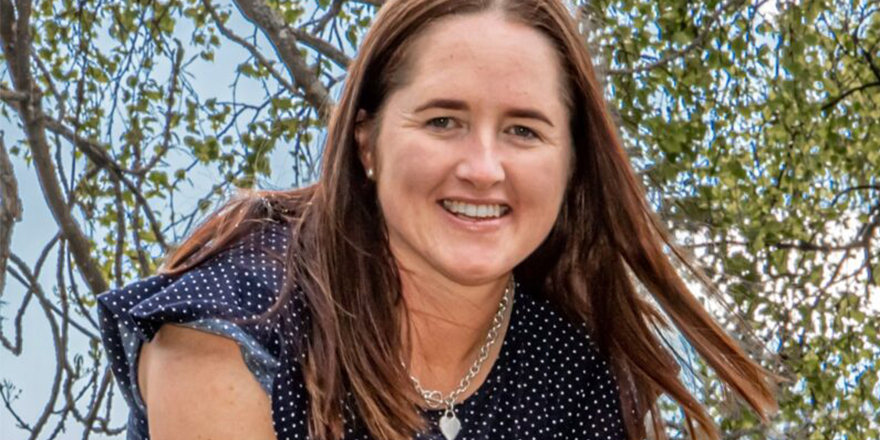
Olivia Weatherburn joins NZRLT Board as Associate Trustee. 

Olivia Weatherburn
Olivia Weatherburn

The NZRLT Board and Leadership Team are pleased to announce Olivia Weatherburn’s (Nee Ross) appointment as Associate Trustee. Olivia replaces Albert ‘Alby’ Hanson. We’ll share more on Alby’s positive and valuable contribution to the board in next month’s Rural Leader. 

Olivia joins Kate Scott, Chair, Michael Tayler, Rebecca Hyde and Craig Mckenzie, Trustees, and Hamish Fraser, Independent Trustee.  

In the appointment Kate Scott said, “We’re pleased to welcome Olivia to the NZRLT board. Olivia will bring a deep connection to the sector and a passion for the development of people.” 

Olivia is based in Southland living on a 700ha sheep and beef operation supporting her husband. 

“I am a farmer, rural professional and all-round advocate for the rural sector and its people. I see the opportunities as endless and am honoured and excited to be part of the red meat and wider food and fibre sector.” 

“Throughout my community roles with both New Zealand Young Farmers, Lions International, and day-to-day role at Beef + Lamb New Zealand (B+LNZ), I meet many people who have been positively impacted by the New Zealand Rural Leadership Trust and the programmes they deliver.”  

“I see the confidence and drive it gives our future leaders. In 2017 I was also privileged to complete the Kellogg Rural Leadership Programme and the outcomes from the experience and learnings have and continue to open doors for me”, says Olivia. 

An Associate Trustee role is for one year. It offers valuable governance in practice experience to those appointed, while providing the opportunity to contribute to the Board’s objectives and to the wider sector in a meaningful way. 

Olivia’s first official board meeting will be 19 April. 

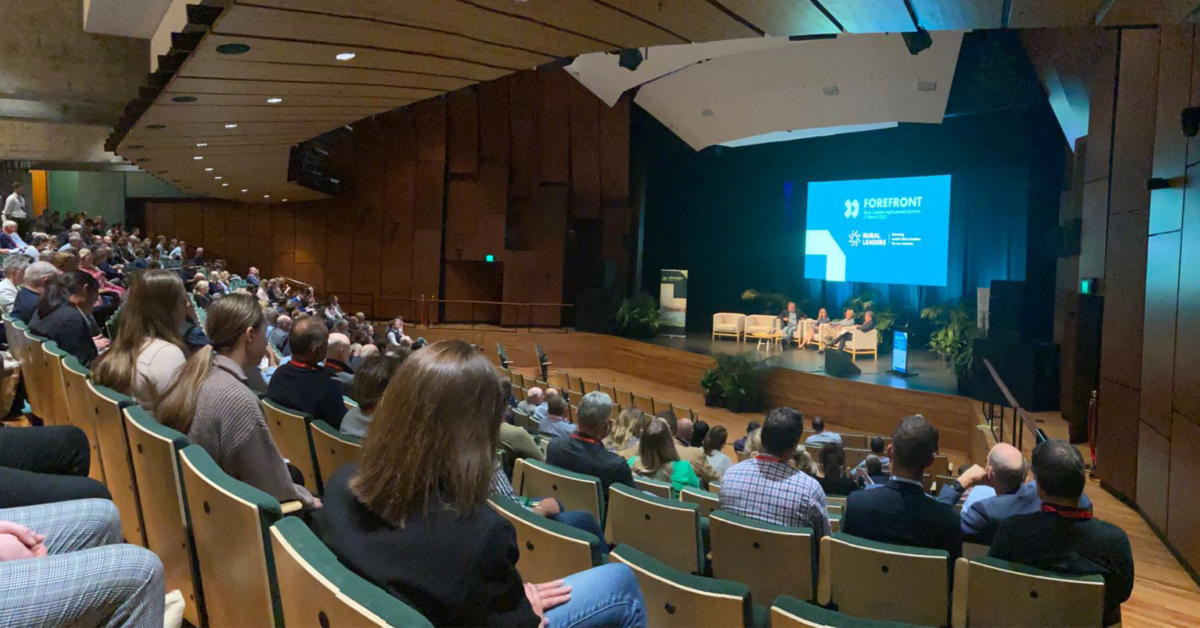
Rural Leaders Agribusiness Summit: One day, 12+ speakers, and a Town Hall full of Food and Fibre leaders.

With the Summit less than a month away now, registrations are strong, and the speakers, host, panellists and organising team, are set to deliver a stand out day for our sector.

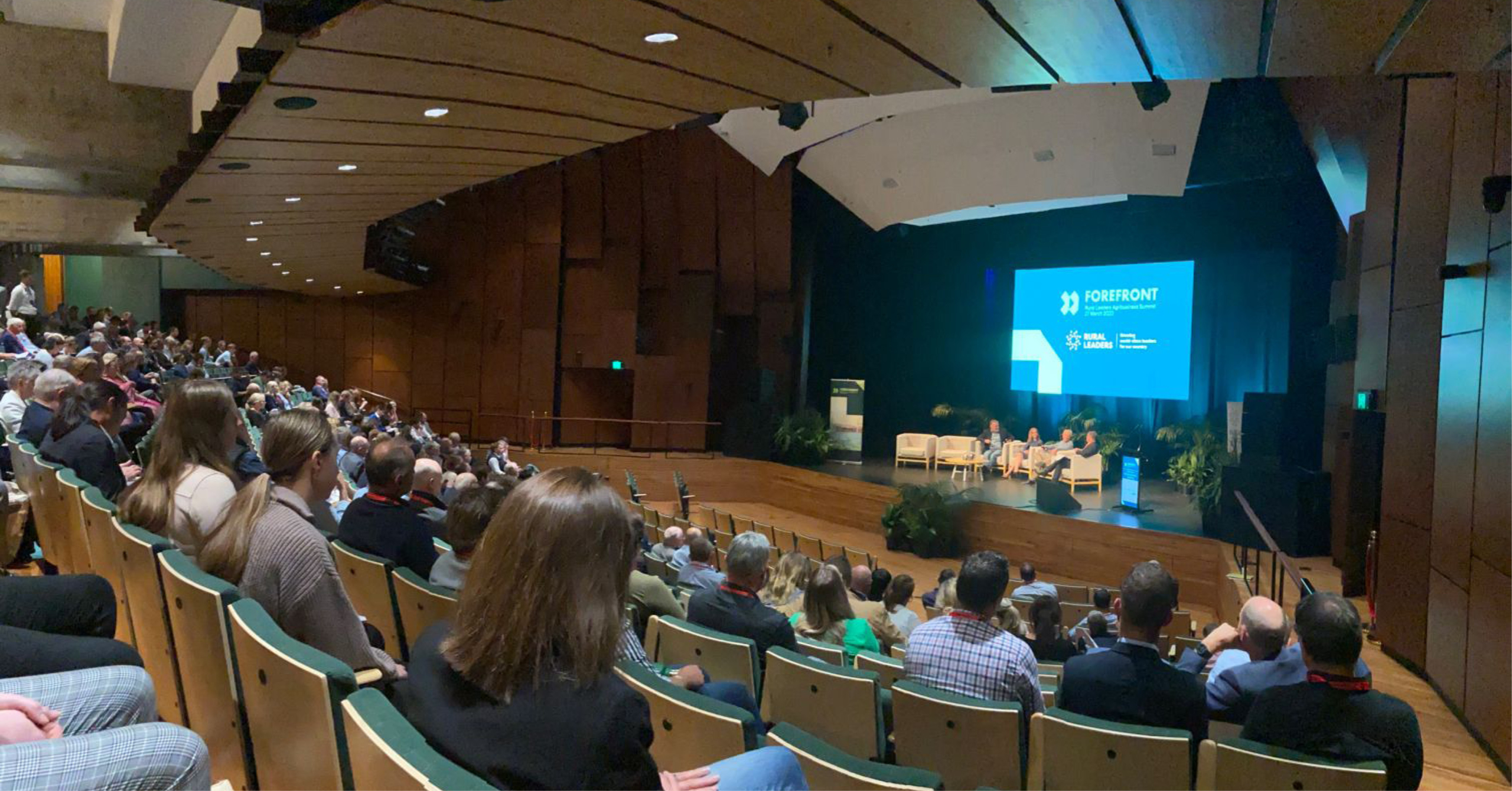
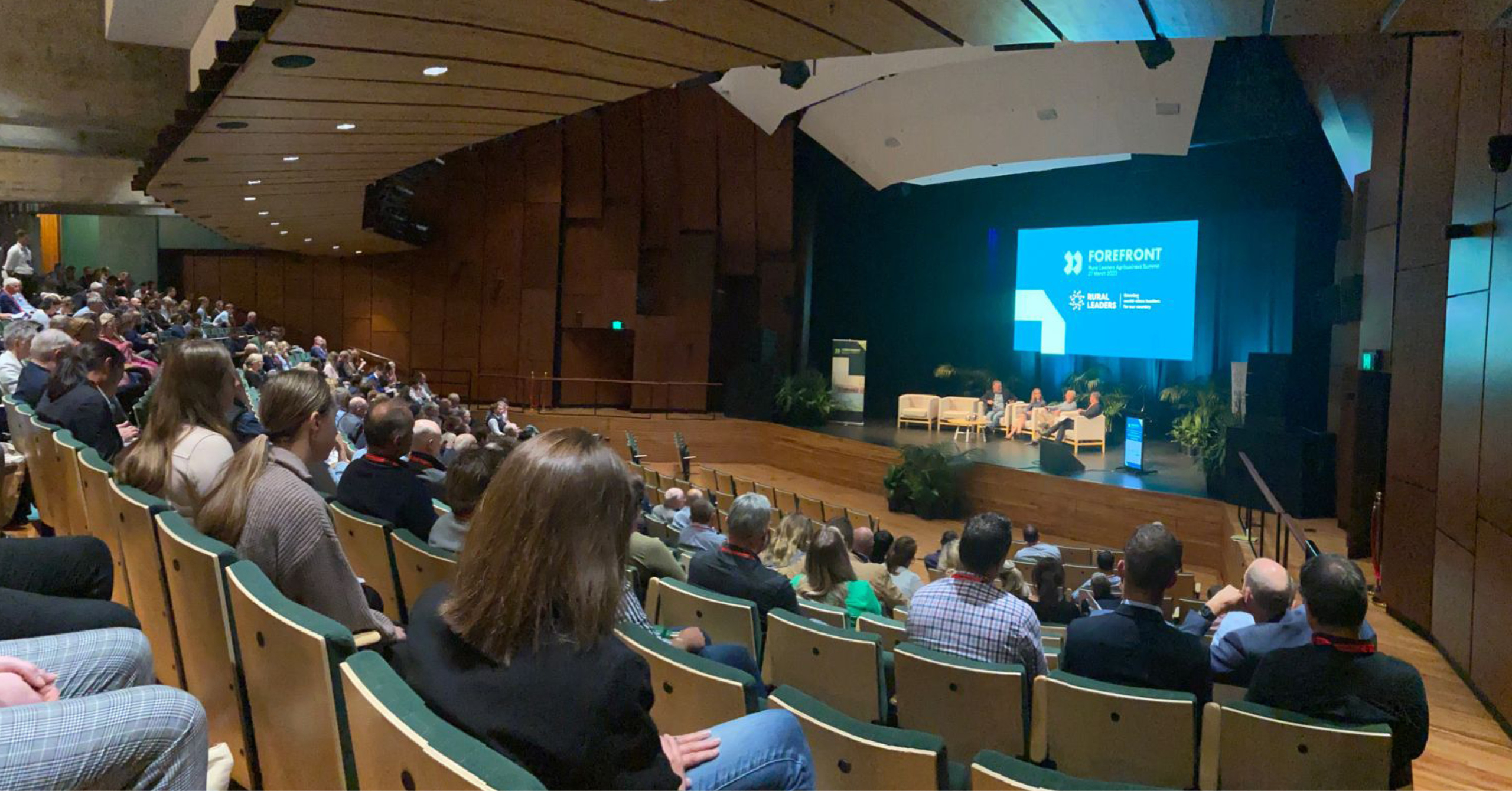
On Monday, 27 March, The Christchurch Town Hall will see food and fibre leaders, agribusiness professionals and growers from all over New Zealand, get together with international agriculture delegates and speakers.

Here’s a summary of the day, which includes a couple of new speakers since the last update.

Welcome Scene Setting

Snapshotting the imperative for change and the opportunities landscape – supercharging the discussions to come.

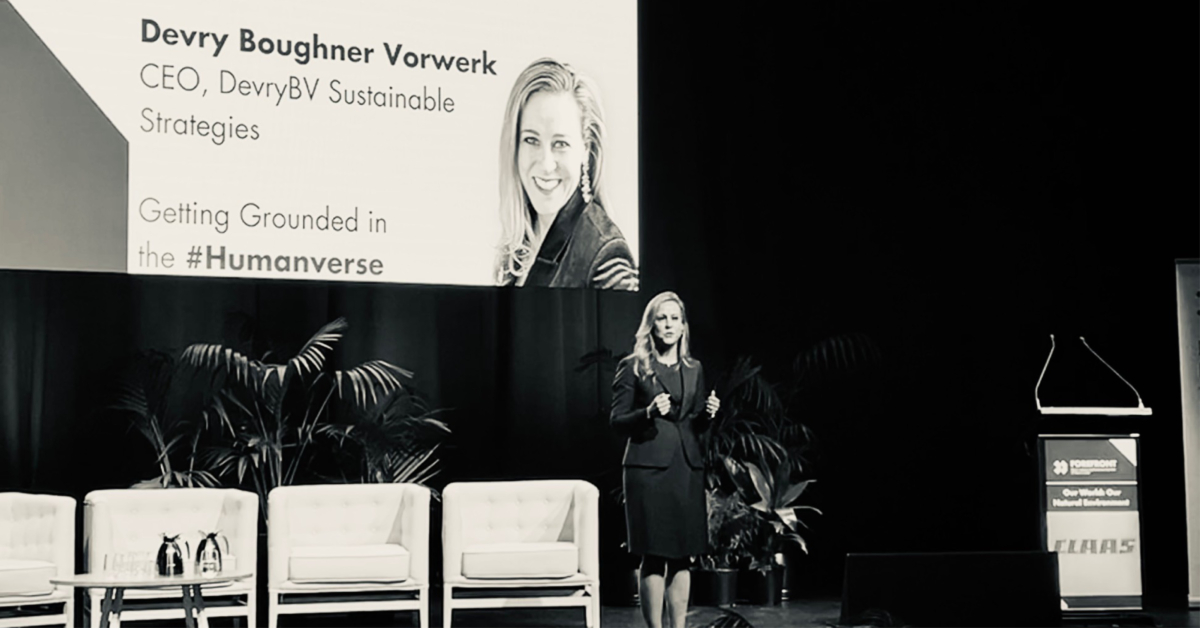
Devry Boughner Vorwerk CEO, DevryBV Sustainable Strategies

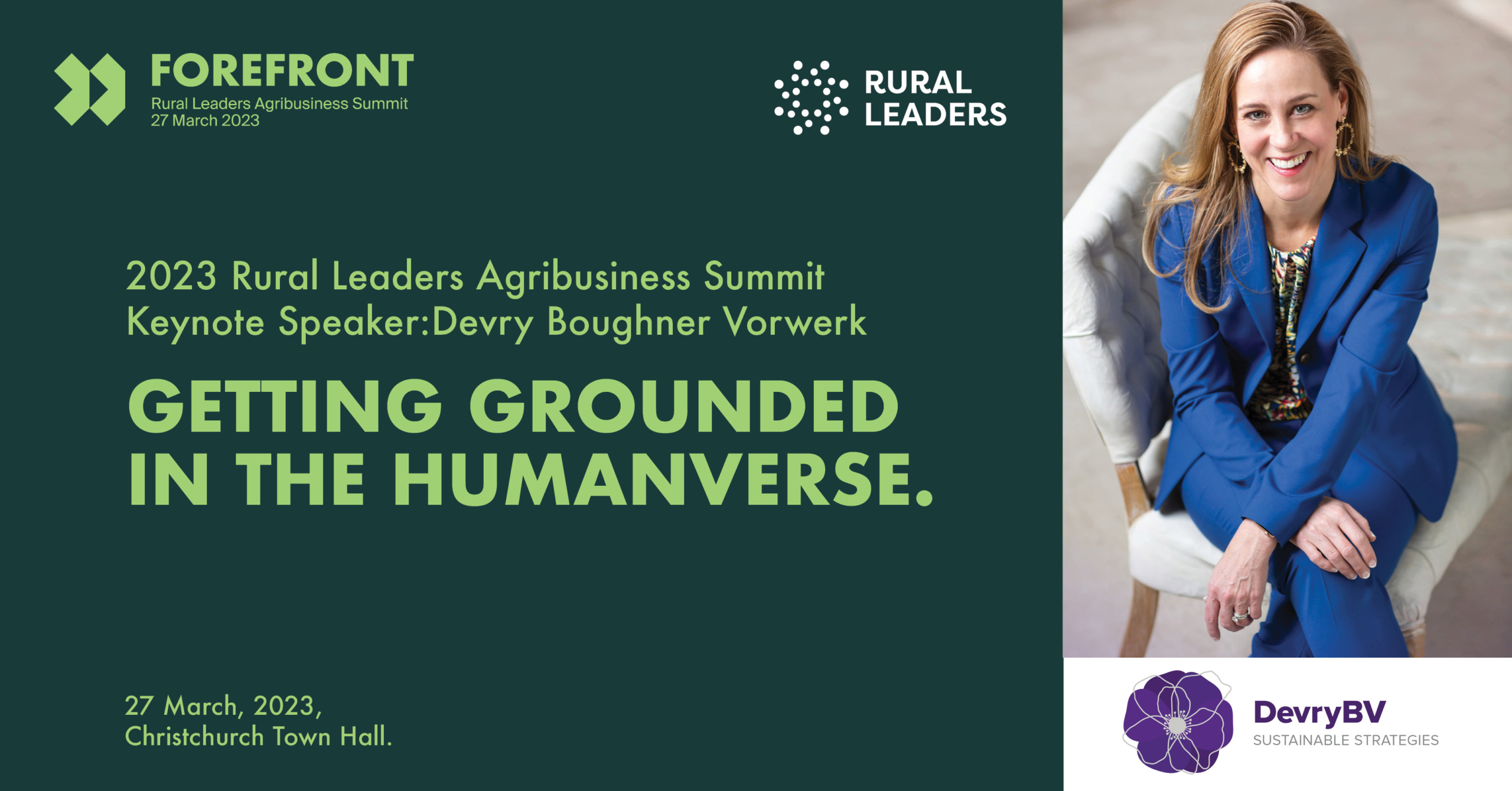
Embracing change while balancing shareholder and stakeholder expectations. To set the scene for the day, Devry’s Keynote piece ‘Getting grounded in the humanverse’, will outline the mechanisms to succeed where geopolitical volatility, climate change, and societal expectations are putting pressure on traditional business models.

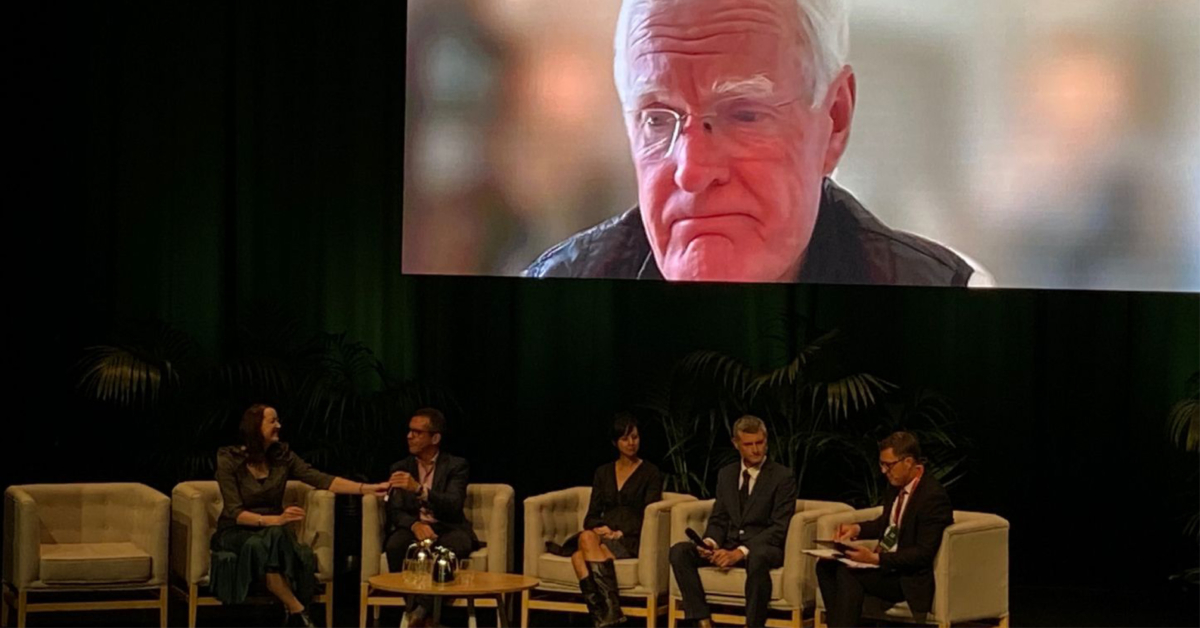
Our World: Our Natural Environment (10am-11:45am)

Speakers: Tom Sturgess, Volker Knutzsch, Karin Stark, Harry Clark.

Exploring leadership and innovation in the advancement and restoration of the natural resources critical to the future of agribusiness.

This stream will showcase champions nurturing and restoring our environment while remaining profitable, and early adopters building their business toward a carbon neutral future. It will also provide an oversight of the role of the public sector in delving outcomes for the natural environment, while touching on how NZ is shaping its future in the agriculture, food and fibre sector.

Our People: Consumer Trends & Trade (12:45pm – 2:30pm)

Speakers: Vangelis Vitalis, Lain Jager, Emma Parsons, Mark Foote, Anna Benny.

Businesses responding to the unstoppable international trends of power shifting to the consumer, business models being challenged, and the eastern movement of the world’s economic centre of gravity.

Our Future: Entrepreneurship & Leadership (3pm – 4:30pm)

Speakers: Julia Jones, Marl McLeod-Smith, Dr Ellen Joan Nelson, Angus Brown.

Concentrating on the future social, economic, and environmental wellbeing of agribusiness.

This stream will traverse the areas where value will be derived in generations to come, showcasing world-leading business exemplars and responsive new business models.

Presenters from a wide range of industries will show how economic viability will be the key to family business succession and intergenerational business value growth.

Consolidation and Wrap Up

A consolidation of discussions and a focus on the key takeaways and action commitments. Presented by panel and interviews from Corin Dann, Master of Ceremonies.

Learnings of agri-food and consumer businesses front footing the challenges of changing demographics, food trends and fads, and changes in consumer values.

To secure your seat for the Summit today, head to
https://ruralleaders.co.nz/rural-leaders-international-summit-day/

Changes at the helm of the New Zealand Rural Leadership Trust.

New Zealand rural Leadership team 2022
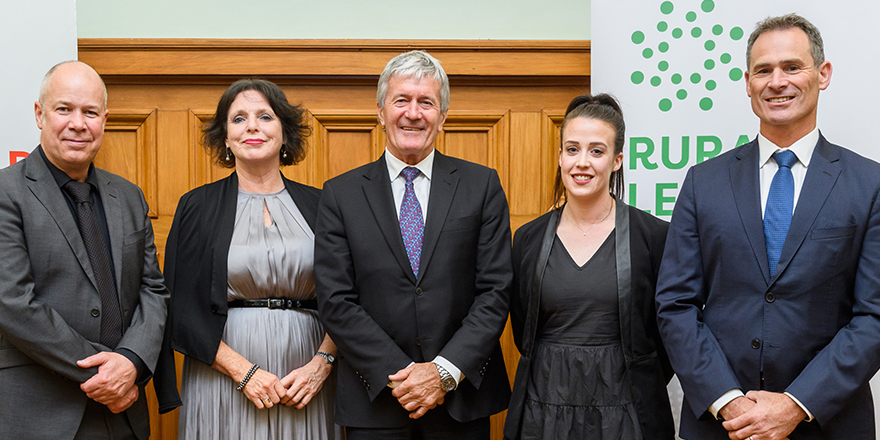
From left: Matt Hampton, Lisa Rogers, Hon Damien O'Connor, Annie Chant, Chris Parsons

Chris Parsons, CEO Rural Leaders has resigned after three years leading the Trust. Chris will take up a role with MyFarm Investments in May, where he will work closely with former NZRLT Chair and MyFarm CEO, Andrew Watters.

Under Chris’s leadership, characterised by strong purpose and gentle (but persuasive) direction, Rural Leaders has enjoyed a busy, effective and stimulating period of achievement.

“Chris’s contribution to NZRLT has been significant and impactful. Chris has helped to shape our purpose and contribute to growing world class leaders for New Zealand.

Under his leadership we have navigated many trying circumstances, including a global pandemic, but have emerged with a clear understanding of the needs of future leaders,” said Kate Scott, NZRLT Chair.

Here are some of the successes Chris has generated over the last three years. We have grouped these across four key areas: Programme Innovations, Projects, Presence and Partnerships, and Thought Leadership.

Programme Innovations

  • Kellogg PG Cert through Lincoln and RPL through Massey and Lincoln (96% uptake and 63 PG Certs awarded in the first 18 months).
  • Value Chain Innovation Programme, with Lincoln – to increase the entrepreneurial capabilities within the sector and to extend NZ Rural Leader’s impact.
  • undaunted by Covid, NZRLT actually increased the number of Kellogg Scholars and ran two regionally located programmes to increase the rural leadership bench in our regions.
  • Introduced geopolitics into Kellogg to better equip Scholars for a changing global environment.
  • Revitalised the Nuffield Scholarship, including a full review of the selection criteria.

Projects

  • Mackenzie Study, a world-class longitudinal study on the impact on NZ made by Nuffield and Kellogg Scholars over the last 72 years.
  • High-Performance Study with Lincoln University on behalf of MPI
  • Commissioned by the Food and Fibre CoVE to complete a major body of work to design an ecosystem for leadership development in NZ Food and Fibre Sector.

Presence and Partnerships

  • MoU with Massey, Lincoln and AGMARDT
    finalists in the inaugural B+LNZ & Rabobank people development awards.
  • Forged a relationship with the Australian Rural Leadership Foundation.
  • Built a closer working relationship with AWDT
    developed several regional partnerships (Whangarei A&P, Whanganui and Partners) to promote regional leadership growth.

Promote Thought Leadership

  • Established the Ideas that Grow podcast, hosted by AgriHQ to promote the thought leadership of our Scholars.
  • Established the Kellogg Insights Series that takes gives a thematic summary of Kellogg reports (eg Horticulture, dairy, Māori Agri business).
  • Upgraded the website and lifted the report quality to make Scholars thought leadership more accessible.

The Rural Leaders Team continue to build on many of these achievements. Chris, the NZRLT Board and leadership team have set into motion several initiatives set to generate further positive outcomes in the near future.

On the strong foundations Chris has helped set, we will continue to deliver outstanding leadership for the sector and look forward continuing to work alongside Chris in his new role,” added Kate Scott, NZRLT Chair.

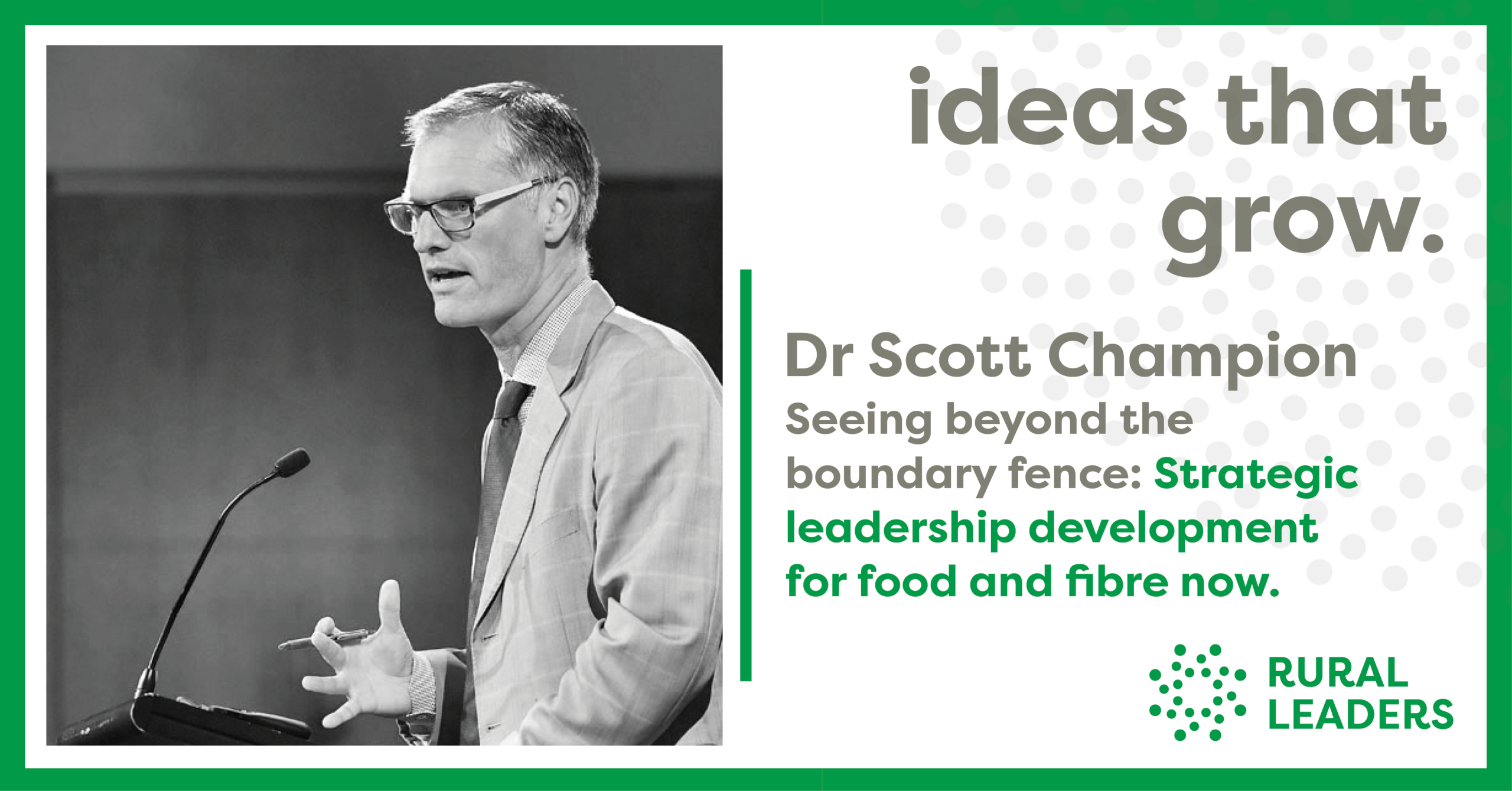
Dr Scott Champion – Seeing beyond the boundary fence: Strategic leadership development for Food and Fibre now.

Dr Scott Champion has a wealth of sector knowledge, gained not just from tenures at the top of organisations such as Beef+LambNZ, but from possessing a genuine passion for helping our rural leaders grow. 

As Facilitator and Programme Director of the Kellogg Rural Leadership Programme, Scott plays a vital role lifting rural leadership capability. 

Bryan Gibson – Managing Editor of Farmer’s Weekly.

Welcome to the ‘Ideas that Grow’ podcast. I’m Bryan Gibson, Managing Editor of Farmers Weekly. With me today is Dr Scott Champion, who is the programme leader for Kellogg. G’day, Scott. How’s it going? 

Scott Champion – Facilitator and Programme Director of the Kellogg Rural Leadership Programme

Yeah good thanks Bryan. Great to be with you. 

Bryan: We often talk to the scholars themselves about their individual research projects, but with the Kellogg Programme, you’re in charge of running the programme as a whole. How long have you been with Rural Leaders?

Running the Kellogg Rural Leadership Programme – what’s involved.

Scott: I’ve been running the programme for about five years now and had actually spoken at the programme as a guest speaker prior to that. So it’s been a real delight to be involved over the last five years. And it’s a programme now that’s been going for close on 50 years and has put through over 1000 graduates in that time. 

Bryan: What’s involved in running the programme? Obviously, there’s attracting people to get involved, there’s organising their meetings and get-togethers and what they’re going to study and marking assignments. What else is there? 

Scott: The focus really, from my time as course director, is on the face to face interaction and the way we connect between what we call phases. So the programme itself is divided into three of these phases.  

The Kellogg Programme’s three phases – Phase One.

Scott: The first one is nine days long, second one is five days long, and then the third one is five days long. So they’re quite intense, particularly that first phase, across the nine days. So we run two programmes a year.  
 
Each programme has about 24 participants. Sometimes it’s a little bit less, sometimes it’s a little bit more. And the focus in each of those, really the nine day intense phase one, is all about getting to understand concepts of leadership. Where also we use the analogy of a toolbox. We’re trying to give our Kellogg participants tools that they can use to go out and be more effective and contribute both into their own businesses or the business that they work in, but also in the sector more broadly.  
 
We think about things like presentation skills, leadership models, and tools. And then also in that first phase, we’re trying to introduce them into aspects of the different components of the broader food and fibre sector that they might not be aware of. 
 
For example, if you work in Horticulture, giving you an opportunity to understand what are the big picture issues that are happening in dairy and vice versa across that sort of plethora of industries that are operating in New Zealand. So that’s our focus around phase one.  

Kellogg Phase Two.

Phase two is completely different. We come to Wellington, so I should say phase one and phase three are both typically held at Lincoln.

We come to Wellington for phase two, and that’s all about the economy, politics, and concepts of influence, models of government communications, the role of media, things like that.  

Kellogg Phase Three.

Then in phase three, we come back to Lincoln again. I think you might have mentioned earlier, the Kellogg Scholars are undertaking a project through the five or six months that they’re on the Kellogg Programme and that’s on a topic of their own choosing.

It’s quite a significant piece of work and they’re presenting those back to the group. We also get some industry people coming along to those presentations and then we tie the programme together. So that’s the broader structure across the five or six months of the Kellogg Programme. 
 
Bryan: So someone turning up, as a newly minted Kellogg Scholar, and that first phase one, those nine days, it’s sort of full on workshops and a lot of listening and a lot of talking, and you bring together people from all around the Sector, and all around the country into that?  

What to expect on Kellogg.

Scott: Absolutely. We’re deliberately trying to do that and to get a real mix of different industries. So one of the things we’re trying to do is expose people beyond the boundaries of their day to day and give them an opportunity to think more broadly. So that’s pretty important to us.

It’s really interesting when you talk to the Kellogg Scholars at the end of the programme about what’s been most valuable. One of the things that they often talk about is the fact that they got to understand things outside the boundaries of the industry they typically work in.  
 
What many of these people will do is they’ll be in that transition from technical roles to general management and focusing more on people and managing teams and those sorts of things. So creating that broader understanding and giving them an opportunity to think beyond their technical skill set is one of the things that we’re really trying to do. But the first nine days is quite full on. It’s a real immersion. 

One of the things we try to do is have lots of speakers coming to present. We might have Chairs or CEOs or Directors, quite senior people from around the sector and make sure in those sessions we’re opening up lots of time for discussion and Q and A. It’s not just that monologue from the front.

One of the things I always say, is at the start of phase one, that you’re going to learn as much from one another as you do from those that you hear presenting at the front of the room. 

The Kellogg Final Research Project.

Bryan: Do people applying to be Kellogg Scholars have an idea in mind of what they’re going to do their project on, or are those formed as the programme goes forward? 
 
Scott: I guess the answer to that question is yes and no. So we do get Kelloggers to think about their project topic prior to joining us in Phase One. We kicked off a couple of weeks ago, and we actually ran a video conference prior to the start of the face to face programme to give them an opportunity to get more information on the nature of their projects, to do a bit of thinking about what they wanted to focus on when they came into Phase One.  
 
Some of the conversations we have around project topics happen here. But often what people do is they’ve got a broad idea of the area that they want to work in, but as they get exposed to some of the content in Phase One, even as we head sometimes towards phase two, they’ll refine the topic, narrow it down, and get more focus. I think the answer, Bryan, is yes, they do. But often the interactions with one another, the interactions with the content, will help refine that and give it a real impact as they go through the programme. 
 
Bryan: I’ve interviewed 20 or 30 of the Rural Leaders Scholars and a number of them said to me, I had what I thought was a fantastic idea for the project and after sitting through this or talking to one of my fellow Scholars, I realised that my angle was wrong and it went this way – and it was much better for it. 
 
Scott: Absolutely. And you’re right, that’s often a point of feedback, and we talked about that at the start, just saying, this is probably going to happen and that’s fine. Be aware that your topic might change and shift a bit as you go through and you learn more and you start to think about things from other perspectives you might not have been exposed to before.

The Kellogg Rural Leadership Programme and the Nuffield New Zealand Farming Scholarship. What are the differences?

Bryan: Maybe it may not be clear to some, but what is the difference between a Kellogg and a Nuffield Scholarship?
 
Scott: Sure, it’s a great question which we get asked all the time. They’re quite different programmes. So the Nuffield Programme is a year-long experience. It’s individually directed.  
 
The Nuffield Scholars are really focusing on a project topic and then designing their own experiences – gathering information and data as they write the report. So there’s a report that comes out of a Nuffield Scholarship as well. They design that themselves in conjunction with the trust and mentors that they’ve put together.  Obviously, travel is a big component of a Nuffield. So going offshore, immersing in other agri-contexts is a really key part and has always been a key part of Nuffield.  
 
The Kellogg Programme is six months long and more structured in the sense that we are running the phases I described previously. Where we have content that we’re putting in front of Kelloggers and getting them to think about and interact with. And their project is obviously shorter in duration and more compact in terms of what’s required. So Kellogg is more structured and shorter.  

Scott: They’re different rather than staircasing one way or the other. In fact, recently we’ve had someone who had previously done a Nuffield Scholarship, come back and do the Kellogg Programme. There have been a number of people who’ve done Kellogg Programmes and then gone on to do Nuffield Scholarships. So, different in scope and focus, and I guess, the degree of self-direction that there is in them. 

What academic support is available to Kellogg Scholars?

Bryan: I guess there are lots and lots of people in the food and fibre sector who would get really excited about leadership training and being in the room with all these people. They might be a bit daunted by the sort of academic aspect of putting together a large project. Is there support for that and how academic are they? How does that work? 
 
Scott: There is support, absolutely. So I’m really fortunate to have a colleague, Dr Patrick Aldwell, who was previously one of the Deans at Lincoln. Patrick is involved in the programme. He was the Course Director prior to me and he still looks after the project component. Patrick’s enormously experienced in the sector, but also in terms of just how do you do a really good piece of research?  
 
One of the things we say to our Kellogg Scholars is, look, you might not have done one of these before, and actually, you might not have to do another report like this again.  
 
If you think about the core skillset that we’re trying to encourage you to experience and build into your toolkit, it’s about how do you identify a really great problem?

How do you define a solid research question or a problem definition around that?

How do you go out and collect data and talk to people and assemble information to analyse that? And then, how do you craft a really compelling response to what it is that you’ve been working on over the last six months and to respond to that research question? 
 
If you can generalise those skills, they can be used in a really significant array of different contexts, whether that’s a family, farming or growing business. Whether that’s working with a bunch of colleagues, whether that’s reporting up to a management team, a senior leadership team, or a board. That logic and argument is something we’re really trying to give people an opportunity to experience.  

Yes, lots of support, and I think, as we say, even if you haven’t done it before, and even if you’re not doing it again, there are really core skills here about logic and how you create really compelling arguments to have impact and influence as well. 

Kellogg Programme Director Scott Champion – background.

Bryan: Now, you yourself have a background in academic study, and you’ve been at the top of industry good groups in New Zealand. Tell us a little bit about how your journey to where you are now. 

Scott: As you can probably tell, I’m an Australian from the accent, which hasn’t faded. I’ve been here for about 20 years now, so I’m a city kid who did agriculture, sort of stumbled across agriculture when I was trying to work out what I wanted to do when I finished school.

I’ve just had a really wonderful professional career and opportunities to date. I love the broader food and fibre sector and have had fabulous experiences here in New Zealand. I did an undergraduate degree at the University of New South Wales in Sydney and it’s actually a programme that doesn’t exist anymore. It was called Wool and Animal Science. It had a sort of a textile component – as well as an Ag component.  

My technical background is in wool and I then did a PhD in Animal nutrition and ended teaching after that in the School of Agriculture at the University of Tasmania in Hobart.

The school had lots of really close connections with industry and Tasmania’s economy was a lot like New Zealand’s. Very food and fibre dependent. I was teaching Animal Nutrition and Physiology and Introduction to Ag and Hort. I did that for six years.  

New Zealand and the path to Kellogg.

Scott: I then came across here to New Zealand to work for the New Zealand Merino Company, as Research, Development and Product Innovation Manager. I had four and a half years there. Again, wonderful experience working with a great bunch of people who were doing interesting things and really trying to think about Merino fibre in a different way and that tight connection to growers.  
 
Then I went to the industry body, which was then Meat and Wool New Zealand, which then became Beef+LambNZ. I had ten years there. I had a GM role, looking after policy and promotion, and then the last seven and a half years as CEO.

Then almost seven years ago now, we started a little consulting practise called Primary Purpose. There are three of us in the business. We describe ourselves as sort of a niche research, advisory and analytics firm, working across food and fibre in New Zealand.

So, yeah, we work across all of the sort of major industries and then for about probably a quarter to a third of my time, is the Kellogg work. So it’s a lovely mix. 
 
Bryan: Now, having led Beef+LambNZ for quite a long time and then being away from it for a while, what are your thoughts on the industry group’s advocacy efforts in the last few years and do you think the criticism of them is valid? 

Common challenges beyond the boundary fence.

Scott: I’ve been thinking about this a bit lately having had a number of conversations with people, that in my time, so almost seven years ago I left, a lot of the focus was around productivity improvement.

In my time with Beef and Lamb, I think from memory, it was the 2006/2007 season, was sort of the worst year in 50 years in real terms for profitability in the sheep and beef sector.  
 
So that’s, how do we stay profitable as individual farming businesses and how do we stay in the game? The challenges around that was a real theme that ran through my time there. One of the things that really strikes me now is, we look at the dominant conversations that hit the front pages of your publications, and we talk about them in the Kellogg Programme too.  
 
There are these big cross sector issues around environment, animal welfare, social licence and all of the different components of that. How do we maintain that social licence with the public onshore and offshore in our export markets to continue to be able to export and deliver the products that people want? 
 
It’s a really significant shift. The boundaries of the problems now and the things that we talk about, they don’t line up with the boundaries of an individual business. They don’t stop at an individual farm or an orchard’s fence line. How you deal with that is quite challenging. The ability of the sectors to work with one another and operate with one another, I think is really critical. 

We’ve seen various models and approaches like that developed over the last while. That feels like it’s quite different to what it was ten years ago, 15 years ago, in terms of what’s required, in terms of focus, but also at an individual farm and business level. Of course, there’s still the requirement to make those individual productivity improvements and to focus on the business and stay in the game.  

So one of the things that has been pretty challenging, both for individual businesses, and for the service sector and also for the industry bodies, is it’s an ‘and’ conversation as well as supporting individual businesses to continue to improve. We have to connect across the sector to address these big cross sector issues as well. So it’s a pretty full agenda.

Gaining perspectives on the sector’s big challenges with Kellogg.

Bryan: I think that point you made about these issues being far wider than the boundary fence is quite important, because I almost feel that if more in the industry did the Kellogg Programme, they’d realise at the moment, a lot seem to take the ‘my farm’ attitude to an all of world issue.

Whereas if you had a more holistic view of what consumers are feeling overseas, the social licence position in New Zealand, then there would be a different perspective on things. 
 
Scott: Yes. I think one of the responses we often get, and we run a little activity on the last day of the Kellogg Programme with a conversation about what was most valuable to you as you’ve gone through the programme. One of the responses we’ll often get from participants is ‘I got insights into other sectors beyond my own and I learnt that I can generalise and they’re actually dealing with many of the same issues that I am’.  
 
So the context might be different if I go from horticulture, to dairy, to sheep and beef, to forestry, whatever it might be. But if I push that level up, that issue up, and think about it at a slightly more strategic level, there are really similar things here that we’re trying to grapple with.

I think when you do that, it does give you opportunity to connect with others, to get different insights, to think about things in different ways.  
 
So, in terms of the context of the Kellogg Programme, what we’re trying to do with our 50 or so Scholars each year, is to get them to think about ‘how do I look across to other sectors and other places and beyond the boundaries of food and fibre as well other things going on in tech or manufacturing or whatever it might be.

Where I go, the context is a bit different, but actually, there’s an analogy there. There’s something I could really learn from that. I think about how to adapt it. I might be able to bring it back into my own context and do something a bit better, or a bit faster, or with a bit more impact, or whatever. 

The Kellogg Programme in 2023.

Bryan: All right, so two and intakes a year into the Kellogg Programme. So I guess you’ve got another cohort kicking off mid-year, is that right? 

Scott: Yeah, sometimes three intakes, but that’s right. We kicked off our last programme two or three weeks ago, last week of January, first week of February. That programme goes through to July, and actually we start our second programme of the year just before we finish our first programme of the year. So we’ll have a programme running from mid-June through to the end of November. Applications are closing, I think about 16 April, for that second programme of the year. 

Bryan: So anyone interested can get all the details on the Rural Leaders website, I guess? 

Scott: Absolutely. If they go and have a look at the Rural Leaders website, they’ll see some blue coloured links there through into the Kellogg Programme, and that will give them all the details.  

Thanks for listening to ‘Ideas that Grow’ the Rural Leaders Podcast in partnership with Massey and Lincoln Universities, and Agmardt. This podcast was presented by Farmers Weekly.

Kellogg Rural Scholars Series: Horticultural Insights

Kellogg Rural Scholars Series: Horticultural Insights

New Zealand’s food and fibre sector is full of capable and purpose driven people. Supported by Horticulture New Zealand and an incredible group of
Partners, the New Zealand Rural Leadership Trust is privileged to be entrusted with growing many of these people in their leadership journey.

A key aspect of the rural leadership approach is research-based scholarship. The clarity of thought and confidence this approach promotes is transformative.

Many Kellogg and Nuffield Scholars go on to live their research. They build businesses. They advance community and social enterprises. They influence
policy and they advocate for animal and environmental outcomes, informed by an ability for critical analysis and their own research-fuelled passion.

The relevance of research by emerging strategic leaders – with their sleeves rolled up – is no more apparent than it is in New Zealand’s Horticulture Sector.

In the following pages we are delighted to précis 14 horticultural research reports by Kellogg Scholars. The full reports can be found at
https://ruralleaders.co.nz/kellogg-our-insights/
The reports traverse topics as wide and timely as horticultural futures, social impacts on Iwi, the potential for impact investing, technical production and
profitability topics.

Ngā mihi,  
Chris Parsons

and the NZ Rural Leaders Team 

Download and read the full report here:

Kate Scott: Meeting food and fibre’s challenges, together.

Kate Scott is a 2018 Nuffield Scholar and Chair of the Board of the New Zealand Rural Leadership Trust and is part of the team behind Forefront: 2023 Rural Leaders Agribusiness Summit and its line up of speakers and panelists.

Pulling together a speaker ensemble of this calibre has been no easy task, but as Kate explains the chance to bring industry together for one day – makes the effort well worthwhile. 

Forefront, the Summit theme, will focus on those businesses making change now – those providing solutions to the sector’s and the world’s biggest agribusiness challenges and opportunities.

Forefront - Rural Leaders Agribusiness Summit

Bryan Gibson – Managing Editor of Farmer’s Weekly.

I’m Bryan Gibson, Managing Editor of Farmers Weekly. And with me I have my first repeat visitor to the podcast, Kate Scott. How’s it going?

Kate Scott – 2018 Nuffield Scholar and Chair of the Board of Rural Leaders.

I’m good. Thank you, Bryan. And yourself?

The 2023 Rural Leaders Agribusiness Summit - Together for a day.

Bryan: Yeah, really good. So, today we’re here to talk about the upcoming Rural Leaders Agribusiness Summit, which is at the Christchurch Town Hall on the 27 March. Kate, you’ve been involved in putting this together.

Kate: Yes, I have. There’s a great team of people have been working hard to bring not only the one-day, Rural Leaders Agribusiness Summit together, but also the Nuffield Triennial Conference together too.

We started planning this event back in 2020, but we were a casualty of Covid like many events. And so, we’re now looking forward to March when we can host our Summit. It’s going to be amazing to not only welcome some of our international guests who will be attending the as part of their involvement with the Nuffield Triennial, but also really looking forward to getting a broad and diverse range of New Zealand farmers, agribusiness and rural professionals along to hear our great line up speak at the Agribusiness Summit.

Bryan: Now, when we talked a while back, your [Nuffield] research was on the evolution of New Zealand farming into a more sustainable place and I guess that’s something that’s going to be a focus of the [Summit] day, isn’t it?

Challenges and opportunities in a fast-changing world.

Kate:  Yeah, it is. And it will probably be of interest to some of the listeners that we’ve chosen to theme our conference for the day ‘Forefront’.

The reason behind choosing Forefront was about not only getting in front of all the challenges that the primary sector are facing, but also looking at it through a lens of opportunity.

How can we be at the front of this change and find ways to innovate and take advantage of a changing world? I guess that’s then gone on to help us to create the speaker themes for the conference.

Summit day themes and speakers – Our World.

Kate:  We’ve split the day into three broad topic areas. The first is taking a more global picture. It’s called Our World. Here we’re talking about some of those big challenges in our natural environment.

We’ve got some speakers touching on climate change. Doctor Harry Clark will share his incredible breadth of knowledge [on climate change] with us.

We’ve got a speaker talking to us about the role of solar, particularly from a farming perspective – a woman by the name of Karin Stark. Karin and her husband farm in Australia. She’s done a lot of work using solar energy and developing solar panels within their farming business and how they integrate that more generally. So that’s going to be an interesting part of that first Our World theme.

Then we also have a speaker talking about the opportunity the sea brings and how we utilise our oceans as a resource and as an opportunity to grow our primary sector.

Summit day themes and speakers – Our People.

Kate:  Then we move into our second, which is Our People. That will look at consumer trends and trade. I guess we’ve seen a massive shift in international trends and how that’s changed over the last few years, particularly on the back of COVID and what other trends might emerge around the agrifood and the consumer side of things.

So, to help us to understand both the challenges and the opportunities there, we have Vengalis Vitalis who many of you will know as our Deputy Secretary of Trade here in New Zealand. He’ll be talking about a global view of trade from a New Zealand perspective.

We have Lain Jager joining us to talk about what the role of future food and genetic modification might mean for food production in New Zealand. Then we’ve also got Emma Parsons from Fonterra who’s going to be talking to us about what Fonterra see from that consumer trends and trade perspective. Already a great line-up of speakers.

Summit day themes and speakers – Our Future.

Kate:  Our last session for the day is called Our Future. We’re wanting to try to change that up a little bit. So, we’ve got four or five speakers who are going to talk for a shorter period of time – a little bit snappier – talking about all those opportunities around entrepreneurship, leadership, the future, social, economic and environmental wellbeing.

We have Traci Houpapa talking to us about future leadership and a Te Ao Maori perspective – and possible new business models. We have Angus Brown from Arepa, Mark McLeod Smith from Halter, and we also have Dr Ellen Nelson, who will be talking to us about the future of work.

I’ve just given you a big download of the programme! But it’s exciting to have a broad range of topics and people to be able to come together to look at our sector in a positive light. To take some motivation and opportunity to challenge what we’re doing, look for what’s new and the what next? for our sector.

Bryan:  It’s great that with the world opened up again, getting some of these global perspectives on the shared challenges that agriculture faces. Some of those people will be in the room. Sometimes these changing consumer perceptions, along with the ins-and-outs of trade deals and that sort of thing, sometimes is second hand knowledge to a lot of the agricultural community here – so it’s good to get a view from the ground, but a different ground.

Devry Boughner Vorwerk - Rural Leaders Agribusiness Summit Keynote Speaker.

Kate:  Exactly. I think it’s an integral part of what we do, but unless we’re actively doing it, it’s almost one of those back-end functions. We don’t always think about these things if we’re down on the farm driving our tractor or milking our cows.

To that point, our keynote speaker is a woman by the name of Devry Boughner Vorwerk. Devry is coming out to see us from the States and she has amazing background in terms of having been Chief Communications Officer and Global Head of Corporate Affairs at Cargill.

She has her own sustainability entrepreneurship business and is going to be talking big picture setting for us around international business and development. She’s going to be able to do an amazing job of setting the scene initially and then helping us to draw in all the pieces of the puzzle as we hear from our other speakers throughout the course of the day.

Bryan:  I did some reading on her earlier in the week and sounds like she’s going to bring some real amazing insight. I mean, Cargill is one of the biggest meat producers in the United States – and then she moved to, I think, Grubhub for a while, didn’t she?

Kate:  That’s my understanding as well. And then having done both that policy side of things and the international business, I’m really looking forward to hearing Devry speak. The fact that she’ll be able to join us in person is really a good outcome given only a few years ago we were having to cancel the Summit.

Bryan:  In that last session too, when we talk about challenges, quite rightly, I guess people often see that as cost and loss of opportunity. But in fact, there are people out there capitalising on meeting those challenges and there’s going to be some real-world examples of how you can do that.

Kate:  Listeners may have heard of Ellen Nelson through her role in helping to secure places for the Afghani refugees last year. Ellen has done a world of research into the way in which we work. She challenges us to think about can we look at the world with ‘can we work school hours’?

Ellen has some interesting insights on how we leverage a lot of our mums and dads who might want to actually be able to work different hours, and how do we do that within our farming business? So, a slightly different perspective, but one that is as applicable to agriculture as any other sector.

Open to farmers, growers, agribusiness professionals and anyone who cares about the future of food and fibre.

Bryan:   So, what sort of people are you hoping to attract?

Kate:  We’re open to all comers, but we’re keen to make sure that our on-the-ground farmers have the opportunity to attend. I guess one of the reasons we decided to make the Summit a one-day event was that we know how difficult it is for people to get off their farm for too long. We’re wanting our farmers to come. We’ve had a great number of registrations already, as you’d expect.

We’ve got a bunch of our agribusiness representatives from our food companies, from other consultancies, we’ve got bankers, we’ve got some of our more senior leaders from government organisations. A real cross section of our sector. I think that’s where we’re trying to go – that the more views and perspectives we can get in the room, the greater the conversation and the questions.

One of the key things that we wanted to be able to do through the Summit was to provide the platform for a safe and robust conversation, where when you break out from morning tea, you can pick up one of these interesting topics that we would have heard about, talk to some people about their views and get the conversation going.

So, trying to kickstart the conversations on some of these big topics.

Bryan:  And of course, everything will be kept on time, on track and on message from some pretty cool people running the show.

Bringing the Summit to life and the sector together.

Kate:  Yes, we have got Corin Dann, an experienced journalist most will probably have heard of through the National Program – on breakfast in the mornings. Corin has very kindly agreed to come and facilitate our sessions for the day. A big part of the sessions will be the panel discussions and the conversations.

At the end of the day, we’re going to have a wrap up session where we get Devry back on stage with our other guests and Corin, to have an in-depth conversation around what’s happening, what the future looks like and the opportunities.

[From] the back end, the chair of the Summit, Murray King, and a small committee of volunteers will all be working hard in the to make sure people are well fed and well-watered, and that everything is kept to time.

For those who haven’t been to an event at the Town Hall in Christchurch before, one of the highlights is always the food. They do a great job there of showcasing local produce – they try to support their local Canterbury growers. The food is also something that’s always good to look forward to in those events.

Bryan:  The building itself is something quite special. It’s such a wonderful piece of architecture.

Kate:  It is iconic, so it’s great.

Bryan:  And there’s a dinner.

The Rural Leaders Agribusiness Summit Dinner.

Kate:  Yes, we have a dinner that will be hosted after the Summit. So, there are still some tickets available for that, although they are selling out very fast. The dinner will allow people to come together and to take the conversation to that next step. We will also be joined at the dinner by Minister O’Connor, who is going to be speaking. And we have some evening entertainment from Te Radar.

Another exciting part of the Summit is that it will include our international Nuffield guests who are actually going to be here in New Zealand as part of a ten day conference – where we kick off on the Saturday or the Friday night actually, prior to the Summit. It’s a bit of a traveling trip from Canterbury all the way [down the South Island] and finishing in Queenstown the following weekend. So, it’ll be a great opportunity to connect with a wide audience from around the globe.

Bryan:  Excellent. Well, that sounds [like] something for everyone to think about attending. How do people go about getting tickets if they’re interested?

Kate:  Yeah, go and have a look on the Rural Leaders website. There’s a big headline that flashes up that says Forefront. Click on that to head to the registration page to attend the Summit and/or the Dinner.

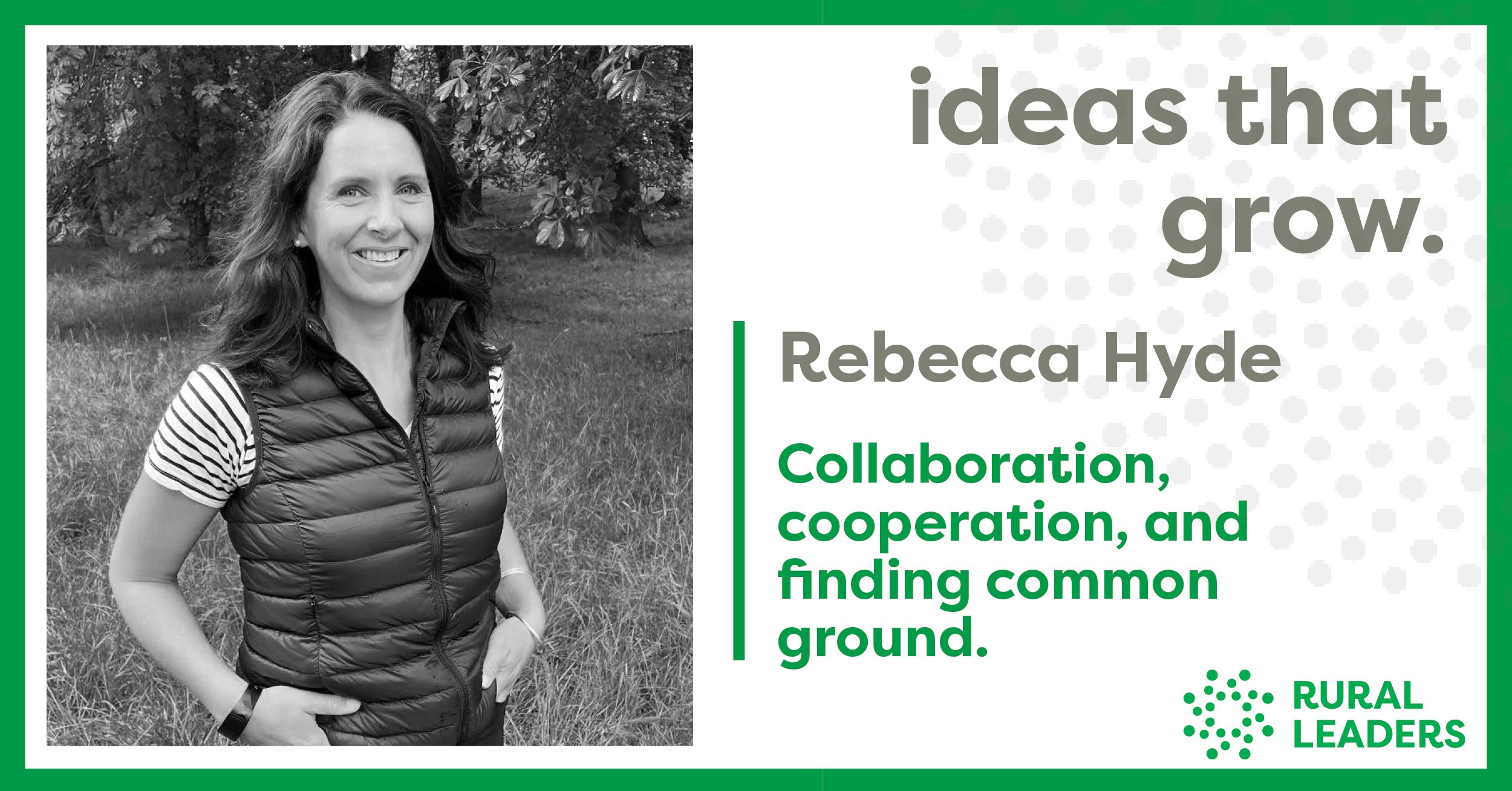
Rebecca Hyde – Collaboration, cooperation and finding the common ground. 

Rebecca Hyde - Ideas that grow podcast interview

Ideas That Grow: Rebecca Hyde, 2017 Nuffield Scholar and 2021 Kellogg Scholar

Lynsey Stratford has discovered farmers make a few assumptions that aren’t very helpful – like accepting the fact that work might be dangerous and there’s nothing anyone can do about it. As Lynsey explains, “There are changes we can make, but those assumptions and those mindsets have been deeply held for quite some time.” 

As a consultant, Lynsey helps the primary sector with people management and development services and training. And, when it comes to health and safety she says, “We shouldn’t expect people to just know this stuff, but rather teach them and support them as they develop skills.” 
 
Lynsey’s research report unpacks the paradox that while farmers care about their people, farms as workplaces are overrepresented in fatal accident and injury statistics. So, what can be done to improve this?

Bryan Gibson – Editor of Farmer’s Weekly.

I’m Bryan Gibson, Farmers Weekly Editor. And with me today I have Rebecca Hyde. 

Rebecca Hyde – 2017 Nuffield Scholar and 2021 Kellogg Scholar, Oxford, North Canterbury.

Thanks, Bryan.

Bryan:  So, where are you calling in from? 
 
Rebecca: I’m based at Oxford in North Canterbury. 

Bryan:  And what keeps you busy down there? 

Working with Catchment Groups. 

Rebecca: I’m a Farm Environment Consultant, so I spend a lot of my time dealing with farmers and actually at the moment I’m working predominantly with a catchment group. It’s great to be dealing with farmers in the same area and focusing on the catchment within that region. 
 
Bryan: And with catchment groups, it’s a system that really seems to be working quite well in a lot of places. 
 
Rebecca: Yes, it is. What I’m enjoying about it is you’re getting a good idea of what farmers are really facing, the challenges within the catchment or sub-catchments, and then you’re able to be quite tailored and specific to those areas. So, you see a lot of common themes coming through when you’re talking to farmers in the same area, which then allows you to be quite specific and help the catchment group or farmers in the best way possible, all working together. 
 
Bryan:  Yes, and all for positive outcomes, really, isn’t it? 
 
Rebecca:  Yes, absolutely. 

Nuffield research into collaboration. 

Bryan:  Now that kind of works in quite nicely with your Nuffield Scholarship, doesn’t it? Because you looked at collaboration for environmental gains. 
 
Rebecca:  Correct, yes. So actually, the catchment group I’m now working on, we’ve had an MPI funded project for the last two-and-a-half years, but that was established back in 2016. It came off the back of a plan change for the Hurunui District Landcare Group. It was a plan change for the Hurunui regional area. It was through that the collaboration or collaborative process was being worked through.  
 
At that time, I was working across other areas in Canterbury, but they had the zone groups set up and the word collaboration kept coming up a lot. It was often used in the frames of how do we collaborate better, or why aren’t we able to collaborate on this? So, this word continued to come up and at the time I was involved in a few other things with Beef+LambNZ as well, and I thought, well, what’s happening globally and how can we better understand this? So that was really a key trigger for me to look at Nuffield. 

Same, same but different. 

Bryan:  So what did you find when you went around the globe looking at this issue? 
 
Rebecca:  I looked at a lot of places within land use, but also outside of it. I met with some people in Silicon Valley, for example, because collaboration isn’t something that’s unique to agricultural land-based activities, it is something that is right across the board. What I found was there was often a common good or a common purpose, that people were trying to achieve.  
 
The other thing that was common was that often there was sort of a burning platform, so some decisions were needing to be made and that was where collaboration was being used. But the other thing that stood out quite a lot was the word collaboration gets used regularly or often, but it might be partnership or cooperation that might be needed.  
 
It’s understanding how you’re needing to work together and then working in the most appropriate way. There are some key differences between, say, a partnership, collaboration, and cooperation. So even though they’re just words, there is quite a difference there. 
 
Bryan:  Yeah, I guess in some ways people might need to work together to reach a singular goal and in other cases there are people doing the same thing who could get efficiencies if they work together. 
 
Rebecca:  Exactly. So, for example, cooperation might be working together for those efficiencies, but you’re working in isolation still. Whereas collaboration really is about coming together for a common good. So, let’s say you’re a catchment group with some dairy farmers and sheep and beef farmers and maybe some Iwi there as well – you might be all representing your certain areas, but once you start collaborating, it’s about that mutually beneficial area.  
 
Let’s say a water body, that becomes the key purpose as opposed to what you might have been representing. That’s often where we get it a bit wrong because we’re still strongly aligned to what we were representing. It’s a change of focus. 
 
Bryan:  I guess if you bring other stakeholders into a situation, then what success looks like changes, doesn’t it? Because you’re sort of ticking boxes that you wouldn’t have ticked on your own. 

The foundations of successful collaboration.

Rebecca:  The other thing too is that is quite time consuming – collaboration. One thing I noticed was where there were some good examples of it abroad, a lot of time put into building the relationships, the understanding, getting on that common ground.  
 
Often in New Zealand we were just rushing through that foundation piece and then with human nature, we’re very good at focusing on what you don’t agree on rather than what you do agree on. 
 
We tend to get into the stuff we don’t agree on a bit too soon because that sort of foundational trust and understanding is not there yet. That was one of the key things we saw when it was successfully happening – there was a good base understanding of what was all agreed on and then sort of reflecting back on it as well. Like, are we still on the same track? Are we still trying to achieve the same goal? Has the goal changed? Because things can change when you start a project. It’s that conscious effort of reflecting and reviewing on the process. 
 
Bryan:  Is it just a matter of taking the time and getting an understanding of all the players involved? Or are there frameworks or structures you can put in place to help you along the way? Or both? 

The importance of neutral facilitation. 

Rebecca:  Yeah, both. The other thing too was having someone that can facilitate it. A couple of examples that I saw where the facilitator worked effectively – they had government backgrounds, so they had been quite familiar about how the structure works within government. These were in areas like environmental regulation so that facilitator knew what needed to be bundled up to get it back to government.  
 
They were very neutral with the parties that they were all dealing with. Having that person as neutral as possible in that Facilitation process – that was something that I observed coming back home. I’m just talking about the Environment Canterbury (ECAN) examples that I was dealing with at the time. But the Facilitators were often ECAN staff members, so they weren’t neutral in the process. There again, that trust piece wasn’t quite there with the stakeholders. The person that’s trying to pull together everyone’s thoughts and help with the direction of the group is pretty key as well. 
 
Bryan:  Catchment groups seem to work because you have the common goal. You have support from people who are like you, and they face the same challenges. You also have that kind of almost friendly competition thing going on. You don’t want to be the one who’s not doing the work, I guess. Is that fair? 
 
Rebecca:  Are you meaning like peer pressure? 
 
Bryan:  Sort of, yeah. 

The strengths of Catchment Groups. 

Rebecca:  Yes but hopefully in a positive way. We’ve noticed that in the project that I’m working on now in the Hurunui, we’re doing a one-on-one approach. We’ve found that once we got to that critical mass, there were farmers that were just wanting to be involved because everyone else was and they didn’t want to be the odd ones out.  
 
There’s absolutely that effect that catchment groups can have. I suppose it’s a bit of FOMO – people do want to be involved and it’s a good thing to be involved with as well, because to me, it’s sort of about putting all the pieces to the puzzle together. It’s a real strength of catchment groups as well, because you are across a common area, say a sub catchment – you can then work with everyone within that and that’s a real strength. 
 
Bryan:  Yeah, I guess it’s also a way of switching things from having to live up to regulations or expectations and turning it into, here are some goals we want to reach, and it will help us in these ways and so it’s more of a positive mindset, I guess. 
 
Rebecca:  It is. I think the beauty of a catchment group and working with the community is that you’re working with the people that live there and they want the best for the environment that they’re living in. Often there’s generational farmers there as well, or people living within those catchments, they’re not necessarily doing things intentionally wrong, but there’s some tweaks or improvements that can be made to get a better outcome.  
 
That’s the beauty of a catchment group as well, because farmers are very good at dealing with what’s in their farm gate, but sometimes struggle beyond the farm gate. Where a catchment group also has a real strength, is around pulling together all those pieces of that puzzle to get an overview, to then help those farmers understand what occurs beyond the farm gate and how they can help to minimise those risks or improve the environment around them. 

On Nuffield and Kellogg. 

Bryan:  Now, I think you are one of the first two-time scholars we’ve had on the podcast because you did the big one first at Nuffield, then you went on and did a Kellogg sometime later. Can you tell me about why you wanted to do that? 
 
Rebecca:  Sure. When I did my Nuffield, I was at a bit of a crossroads. Do I want to look more high level on New Zealand and its place in the world? I certainly felt at the time a Nuffield was more appropriate for what I was wanting to do than a Kellogg and so I was fortunate to get my Nuffield. That was 2017.  
 
Fast forward about three years and I’d started my own business and we went into COVID, and I’d been an Associate Trustee on the New Zealand Rural Leadership Trust as well.  So, I got a bit more exposure to the Kellogg Programme and I was particularly interested in the second module, which is Wellington based, looking at how Wellington operates.  
 
I thought it was a great opportunity to have a go at a Kellogg because I had started my own business – I knew the value of a network. And the cohort you have on Kellogg is a very broad network within Food and Fibre in New Zealand. That was appealing to me. Understanding Wellington or getting a bit of a front row seat into Wellington for a week in a sort of post COVID environment. 

Professional and personal development.  

Things have changed quite a lot and I’ve always been quite big on personal development, so I saw Kellogg as a great opportunity for me to do that within my own business. That was one of the key reasons I looked at a Kellogg and I did have people go,” …is this not (a step) backwards?” A few people made comments like that – and it’s like, no, they’re just very different programmes. They absolutely complement each other – they are standalone programmes.  
 
I thoroughly enjoyed my Kellogg, and (as part of my research) I was able to collaborate between Iwi and Farmers in the Hurunui District where I’ve been working. So that was just an opportunity as well. I do quite like the research aspect as well in these programmes. I suppose, looking at a specific topic that I could do a bit of a deep dive into.  
 
Bryan:  As I was going to say, you came back for a second crack. So, you must really value the Rural Leaders ethos and programmes? 
 
Rebecca:  I absolutely do. I’m a big believer that if you ever put yourself into something, you will only get as much out of it as what you put into it. I think certainly the Kellogg is such a well put together programme, and that it was really appealing for me at the time. And having, as I said, started my own business and wanting to expand some networks into other areas as well – it was great. 

Is the food and fibre sector collaborating well? 

Bryan:  So do you think in the last five or six years, that word collaborate, is it being used as intended now? Are we doing a better job at it in the Food and Fibre Sector? 
 
Rebecca:  I think we are. I must admit, every time I hear a news story or something like that and the word collaboration comes up, my ears certainly prick up. I think we are getting a lot better regarding how it’s being used, when it should be used, and what we need to do to make it effective. I do see improvements. I think we’ve still got a wee way to go, though, in ag. I think the last 18 months, probably twelve months, we’ve got a bit fragmented again. 
 
That was another comment that came from people I was meeting abroad (on Nuffield). They’re like, “God, New Zealand is so small, how can you all not be on the same page together?” And you would think that, but we do seem to be quite good at that fragmentation within the sector. Hopefully 2023 might see us a little less fragmented. I think what’s good for the Food and Fibre Sector is good for New Zealand. We need to remember that. 
 
Bryan:  Thanks for listening to Ideas that Grow, a Rural Leaders podcast in partnership with Massey and Lincoln Universities, AGMARDT and Food HQ. 
 
This podcast was presented by Farmers Weekly.  

Seeking applications for an Associate Trustee. New Zealand Rural Leadership Trust.

NZRLT Board and 2023 Scholars
Current Board of Trustees with 2023 Nuffield New Zealand Farming Scholars, November 2022.

The Board of the New Zealand Rural Leadership Trust (NZRLT) is seeking applications for an Associate Trustee. 

This appointment is for 12 months starting February 2023 and finishing in February 2024. 

The NZRLT Board meets six times per year and holds additional meetings as required. The duration of each meeting typically runs to half a day.  

The NZRLT is seeking applications from Programme Alumni (Nuffield, Kellogg and Value Chain Innovation Programmes). 

Role of the board 

The Board operates under the NZRLT Trust Deed. Its role is to represent, and promote the interests of, the Trust and, thereby, industry investors and alumni. Having regard to its role the board directs, and supervises the management of, the business and affairs of the NZRLT including: 

  • Strategy. ensuring the NZRLT’s goals are clearly established, and strategies are in place for achieving them, 
  • Policies. establishing policies for strengthening the performance of the NZRLT including ensuring management is proactively seeking to build the business through innovation, initiative, technology, new products, and the development of its business capital, 
  • Performance. monitoring the performance of management appointing the CEO. 
  • deciding on whatever steps are necessary to protect the NZRLT’s financial position and the ability to meet its debts and other obligations when they fall due, and ensuring that such steps are taken, 
  • Fiduciary Responsibilities. ensuring the NZRLT’s financial statements are true and fair and otherwise conform with law, 
  • Standards. ensuring the NZRLT adheres to high standards of ethics and corporate behaviour, 
  • Risk. ensuring the NZRLT has appropriate risk management/regulatory compliance policies in place. 

In the normal course of events, day-to-day management of the NZRLT is left to management. All Trustees are expected to operate objectively in the interests of the NZRLT. The board is collectively responsible for the success of the NZRLT.  

As Associate Trustee your voice will be welcomed at the Board Table, but as a non-voting member you will not be required or accustomed to act or exercise controls and powers required of the permanent Trustees. 

Timing and location of board meetings, and time commitment 

The board normally meets six times per year and holds additional meetings as the occasion requires. The duration of each meeting typically runs to half a day. You will receive the board papers for the meeting by one week prior. 

In addition to routine board meetings, you should allow for preparatory work and travel, and ensure that you are able to make the necessary overall time commitment. All Trustees are expected to have carefully reviewed all board papers and related material sent to them for meetings. 

Remuneration 

This is an unpaid role. However, the NZRLT will reimburse all direct and indirect expenses such as accommodation and travelling expenses, reasonably and properly incurred, and documented. 

To apply

Written application and CV should be emailed to Chris Parsons, CEO, NZRLT at chrisparsons@ruralleaders.co.nz.

Or alternatively, feel free to email Chris to arrange a time for a confidential discussion. 

Applications close midnight, January 9, 2023. 

We look forward to receiving your application, and if successful, working with you to grow world-class leaders for our country. 

The Value Chain Innovation Programme – Sector value-add. 

Value Chain Innovation Programme 2022 Cohort

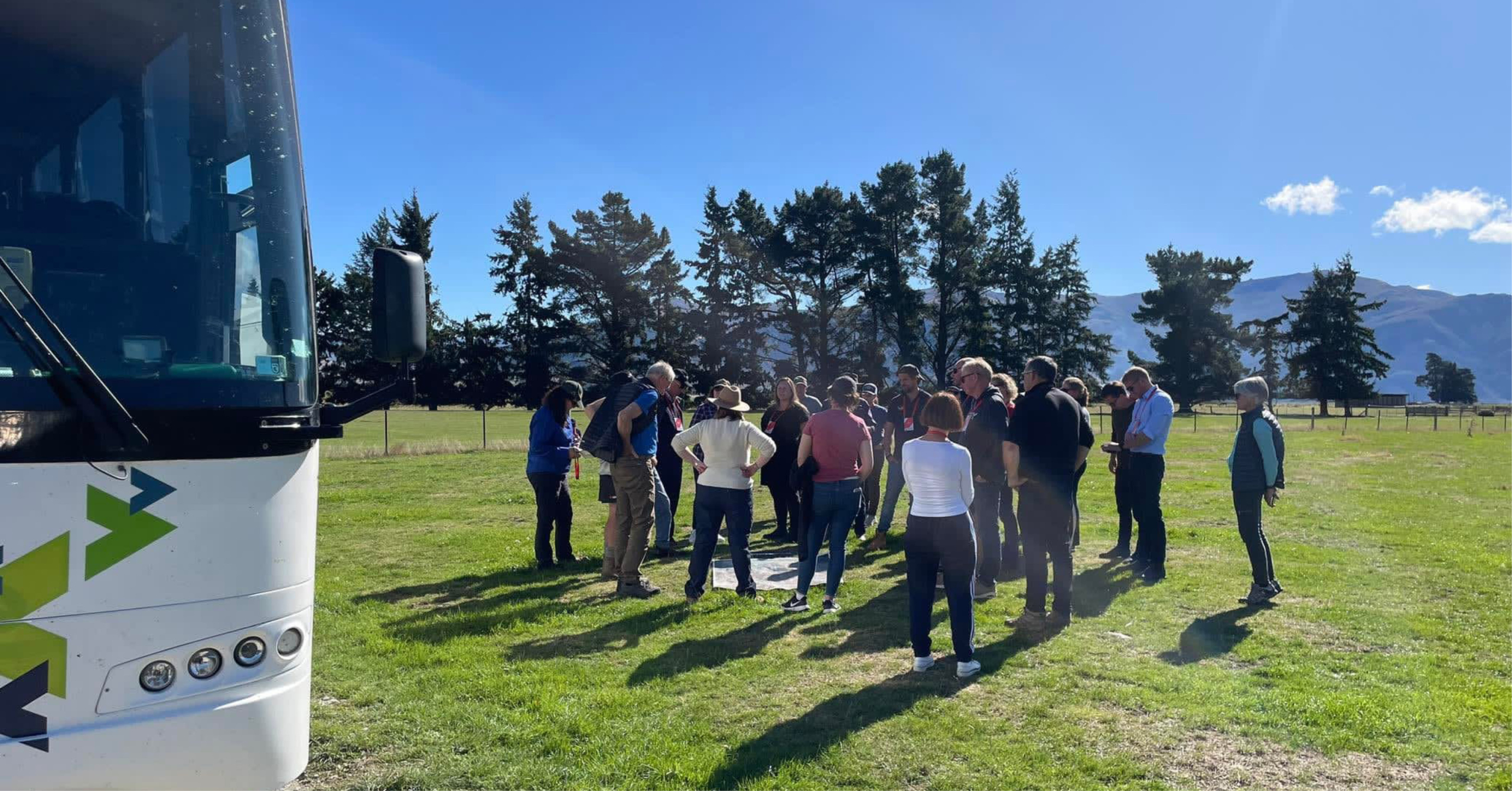
Rural Leaders and Lincoln University have just wrapped up a collaborative delivery of The Value Chain Innovation Programme, a seven-day bus tour of New Zealand’s four major sectors: dairy, red meat, kiwifruit, and apples. 

A fully subscribed programme of 22 students, including senior growers, farmers, consultants, industry professionals and government took part in this North Island value chain immersion. 

“The carefully selected combination of participants on the programme resulted in many varying opinions coming together in positive debate, to solve problems constructively.  

This was helped in no small part by facilitators Professor Hamish Gow and Cllr. Phil Morrison, who laid out a framework at the start of the programme, to help us really dig into what we were seeing,” said Kylie Leonard, 2023 Nuffield Scholar and programme participant. 

The Value Chain classroom on wheels.

The bus itself became a rolling classroom for the week-long immersion. Between visits, back on the bus, students discussed, debated and unpacked insights and issues as they arose. Onboard, critical reflection resulted in ten key issues being agreed on. 

“One of these issues is that New Zealand is still moving from volume to value and there’s a lot of players who are still volume based – but that’s ok. They run a value chain model that creates value out of volume, whereas others are moving to value-add.  

The big example here was non-IP apples at $2 per kilogram in the supermarket, versus Rockit Apple NZ which gets $2.99 for a 76-gram container – as sold at some service stations in Napier. This translates to about $39 per kilogram,” said Professor Hamish Gow, Programme Facilitator. 

An immersive learning process.

Perhaps critical for the students was the participatory process, the action-based learning, and the process of engagement where an entire value chain is walked – from one end to the other. 

Comparative analysis was used to understand how the many firms create, capture, and distribute value in their respective value chain comparatively across four sectors. 

“It’s that depth of understanding people gain once they do the comparative analysis. It allows you to get to the crux of how a value chain operates and what’s critical.  

That’s what we built within the programme – a platform for people to rapidly evaluate and understand how firms create value and whether they were effective in the way that they were trying to do this, then how they capture and distribute it, along with implications of that for industry,” said Prof. Hamish Gow. 

Value Chain Innovation Programme 2022 Cohort

A framework for unpacking value chains.

Three separate value chain discipline alignment models were explored during the programme: Operational Excellence, an efficiency value model – like Fonterra. Product Leadership – a technically superior product – like Zespri. And finally, Customer Intimacy – as in First Light Foods or Rockit Apples. 

“Firms such as Fonterra follow more of an Operational Excellence discipline, that’s driven by volume. In Operational Excellence, you create value from volume, efficiency and scale economies.  

In Product Leadership, you must invest a lot of time and money in R and D, innovation, and brand to create a technically superior branded product. Several students suddenly realised that it’s a 15-to-20-year lead for commercialisation for a new version of kiwifruit or apple.  

In Customer Intimacy, firms focus on gaining deep insights and understanding of their customers and addressing their concerns. 

Exceptional firms and value chains excel in one discipline alignment and are above average in other two disciplines as well,” added Prof. Hamish Gow. 

Where to next for the Value Chain Innovation Programme?

Participants canvassed felt the programme was a huge success and well worth the significant time investment away from family and work commitments.  

“Everyone came out fizzing. Everyone realised within the first day that the bus was a safe haven where we could engage in challenging discussions and debates.  

It was refreshing, exhilarating and it changed mindsets. Everyone wanted to replicate the experience and insights on a larger scale. How could we scale it to tackle the large issues confronting NZ primary industries? I think we’ll do the South Island sometime in 2023,” concluded Prof. Gow. 

It seems pairing up with a South Island Programme is likely – and potentially an international version too. At some point in the future, this may become the next logical step – post Kellogg Rural Leadership Programme – in primary industries leadership development.  

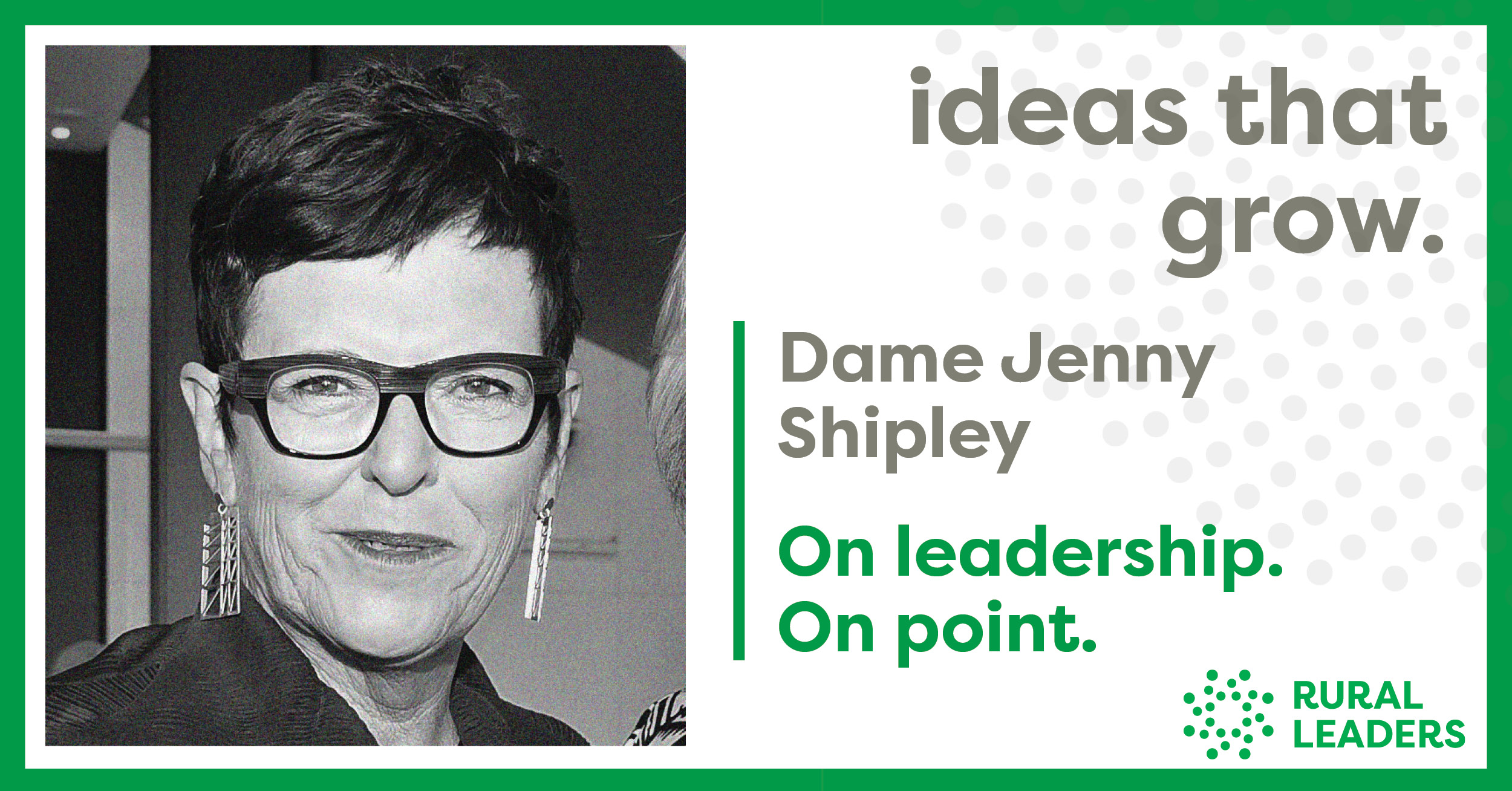
Dame Jenny Shipley: On Leadership. On Point.

On leadership. On point.

Lynsey Stratford has discovered farmers make a few assumptions that aren’t very helpful – like accepting the fact that work might be dangerous and there’s nothing anyone can do about it. As Lynsey explains, “There are changes we can make, but those assumptions and those mindsets have been deeply held for quite some time.” 

As a consultant, Lynsey helps the primary sector with people management and development services and training. And, when it comes to health and safety she says, “We shouldn’t expect people to just know this stuff, but rather teach them and support them as they develop skills.” 
 
Lynsey’s research report unpacks the paradox that while farmers care about their people, farms as workplaces are overrepresented in fatal accident and injury statistics. So, what can be done to improve this?

Bryan Gibson, editor of Farmers Weekly.

I’m Bryan Gibson, Farmers Weekly Editor. This week, I have a very special guest, Dame Jenny Shipley. How’s it going? 

Dame Jenny Shipley, 1984 Kellogg Scholar, Bay of Islands.
Very well, thank you.

Bryan: Good. And where are you calling in from today?

Dame Jenny: Well, I live in Russell in the Bay of Islands now. And while I still do a lot of traveling domestically and when I can internationally, this is where we call home.

Bryan: Oh, wonderful. The winterless north. 

Dame JennyThe winterless north, and it couldn’t be a greater contrast really, from my beautiful Canterbury electorate. But even learning to garden in the north is an entirely different process. But I’m enjoying it very much. 

Bryan: Now, you grew up down in the Deep South, is that right? And spent a lot of your political career at least, in MidCanterbury?

Strong South Island roots.

Dame Jenny: Yes, I was born in Gore and my father was a Presbyterian Minister in Pukerau at the time. So many of those early roots were in a truly rural area. And interestingly, I’m going back there this weekend to take part in a nice ceremony.  So I stay connected with a lot of those old roots, even though I’m now living somewhere else. 

I spent a lot of my time in the South Island, and the early part of my life, in Nelson and that also has transformed. I don’t think there was a grapevine in Blenheim, or in the Marlborough area when I was a child. It’s a magnificent example of intense of horticulture today.  

As a student I went to Canterbury and met Burton and the rest is history. We farmed and then I went into politics and had the great privilege of representing one of the most productive electorates in the country in that central and Mid-Canterbury area. 

Bryan: Such a powerhouse of a rural area isn’t it? 

Dame Jenny: Very much, yes. 

Kellogg and the desire to lead.

Bryan: You connected with Rural Leaders for the first time doing a Kellogg Scholarship back in the early eighties, is that correct? 

Dame Jenny: Yes. We were young and farming, and I was already involved in a lot of community leadership. At that time the challenges for agriculture in New Zealand were huge. The change was immense, the economic viability was demanding, interest rates were horrifying. Rural communities were very active, with a lot of emphasis on leadership.  

I got given the opportunity to apply for the Kellogg Rural Leadership Programme, which was an emerging force at that stage. I forget whether it was year three or four that I was a member of – but it was a fabulous experience and in many respects it clarified my desire to lead.  

The Programme taught me a lot about what else I needed to focus on in order to be effective. But it definitely gave me the strength and sense of impetus to get on – initially as a Counsellor in my local Malvern area and then into politics. 

Is sector history repeating?

Bryan: We talk about the early to mid-eighties in the farming world. It was obviously, as you say, such a disruptive time. Many people think that we’re going through a similar sort of thing now. Do you see those comparisons? 

Dame Jenny: Well, I think the commodity cycle is much stronger at the moment, although it’s clearly able to be volatile depending on what happens both at home and abroad.  

The other difference, I think, is that agriculture today in New Zealand is not dependent on government subsidies. At that stage you’ll recall, there were multiple transitions going on – the support for agriculture was being removed, the markets were extremely volatile and the farming community was really facing challenges on multiple fronts.  

Even in my early years as a Member of Parliament, the residual effects of that period flowed through – it was a very difficult period. Today I think that while there are huge challenges coming up economically, I personally think the agricultural sector is in a very resilient state.  

But what is different now, is that there are so many regulatory pressures coming on farming which I don’t think were present in our era. And so, yes, there are huge challenges, but I think the economic viability overall gives at least some ability for farmers to confront those. I think the leadership question is different too, though, and perhaps that’s something that needs to change. So it’s relevant for where we are now.  

Bryan: How is that, do you think? 

Dame Jenny: Well, when we were farming, all of us belonged to Federated Farmers. It was a widespread group. Husbands and wives turned up and it was an active process in most local communities. I’m not familiar with whether that’s the case now. But like many organisations, I think that they’ve become more professional.  

But whether the grassroots element of representation is as strong, I don’t have such a feel for that. But I think that what we’re coming into is that we have to have both the agricultural leaders reflecting the experience of farmers on the ground and making the case very clearly about what can and can’t be done, and indeed what has been done.  

We need to share our good news more often.

If I can just pause on this point for a moment. I’ve observed enormous change by farming in response to public pressures. I travel quite a lot around the country and have just have been down through the Waikato – right into the West Coast part of it.  

One of the things that struck me over the last five years is that what started off as tree planting on agricultural land for emissions purposes, now the work around wetlands and the fencing of streams and things. New Zealanders can be very confident that the farming community is not only responding but leading in some of these areas.  

To come back to the point, I think that for farming to advocate for itself, it’s not only advocating for what’s annoying and frustrating them, but there’s also a huge need for us as an agriculturally strong community to continue to share both the gains and the commitment of the agricultural community to farming well both for themselves, the community, and the future. I think that’s a big change.  

When we were farming, many were just farming to survive. Now, I see farmers all over the place investing not only in best practice for themselves, but I do see a lot of change. I think the voice of that needs to be shared across the community much more broadly so that the urban New Zealand population both values agriculture and understands that it’s moving in response to many of the concerns that urban communities have. 

Bryan: Farming, as you say, is always evolving for the most part in New Zealand because we are very good at it, and improving. That gets lost sometimes. 

Dame Jenny: Well a lot of it is a social response. I mean, farmers will tell you that they are fencing streams and planting for their own benefit and the benefit of their own environment. But there’s a huge public good element in it which unless people either have a chance to see, or you share how much is being done, or see the change that’s going on.

A sector supporting New Zealand through tough times.

I think that urban-rural split has always been a risk in New Zealand and it’s one we can’t afford to give airtime too. Because, frankly, if you just thought that even in the COVID period, if we had not had a strong agricultural sector during the last three years when the global economy had been disrupted, New Zealand’s position economically would be far more dire than it is at the moment.  

Tourism collapsed, a number of other productive areas were compromised and yet agriculture was able to carry a huge proportion of the earnings, as it’s always done. But thankfully, on a strong commodity cycle at this particular time, and again, I think we should name the value of agricultural exports. The effort agriculture puts into the New Zealand economy to support our way of life, in a broad, holistic sense – not a them and us sense. 

We’re in this together, being the best we can be at home and selling the best we can abroad in a best practice sense. I think if we keep sharing that over and over again, there’ll be a better understanding between rural and urban communities. 

Leadership needs to reflect the people on the ground.

Bryan: Just touching on what you mentioned earlier about how historically, people like Federated Farmers, organisations like that, had a very, kind of a, grassroots focus. It’s quite evident at the moment around the emissions pricing process that a large number of those grassroots farmers think that the farming leadership has, if not deserted them, then certainly not represented them well. What’s your take on how they go about that? And what are the challenges that those farming leaders have in engaging with the government on things like this? 

Dame Jenny: Well look, I’d be the last one to criticise them because I know how hard it is. I have admired the agricultural leadership, that they have taken a more inclusive, let’s find solutions together approach. I have been involved in a number of significant working parties not only on emissions, but in a number of areas that I can think of which I’ve simply been a distant observer. But I’ve noticed that level of engagement.  

The problem is, in any leadership model, if you aren’t both working with, and then reflecting the people on the ground who actually live agriculture every day and have to implement the stuff, not only physically but also economically, then you have to test whether your leadership is in isolation as opposed to being able to carry people forward.  

I do think we have to support the leadership group because unless they are able to foot it with the officials and the government ministers and be supported at that level, then they’re clearly not serving their constituency anyway. But every organisation, and I don’t want to make a judgment on Federated Farmers because I simply am not close enough to it, but there have to be systems where it’s not only consultation.  

Often we say, well, we consulted, or we sent out a document and gave them a chance to comment. I think that for people to genuinely become supporters of a regime, they have to have a deep sense of ownership. They need to be able to see themselves in whatever is proposed as opposed to seeing something being imposed on them, which they don’t or can’t relate to.  

So the test of high quality engagement and consultation has got to be that measure of – can the people we’re representing see themselves in the proposed solutions or are we just saying, well, regardless of what you think, you’ve got to be there in five or ten years’ time. That’s not easy to do. I think in New Zealand’s circumstances, whether it’s agriculture or Maori – Pakeha relations, or any of the other demanding spaces, we’ve just got to put the time and work into it. 

The power of industry at the highest level of decision-making.

Bryan: Now, just digging into that a little more. I mean, you were obviously in central government for a long time. What’s it like in those meetings with industry? How much power do the industry leaders from the agricultural community have when they sit down around the table with the likes of MPs, Prime Ministers, officials? 

Dame Jenny: The answer is, it depends. And I’m thinking back on two or three occasions where the agricultural sector and governments were working intensely. When a government decides, for example, to break up monopolies, I think the conversations are quite demanding. 

I recall at the time that we decided to break up a number of public organisations, the electricity sector and of course the dairy industry was in the line of sight. That was never an easy conversation and the agricultural leaders, and particularly the directors of the original company very much resisted that. In those moments, you’ve got to put the economic argument of why these particular sectors needed to be able to face competition, not only in their growers interest, but also in New Zealand’s market in the world. The resilience and flexibility to attract investment.  

We were trying to grow the New Zealand economy and grow the efficiency of the New Zealand economy in the world. So to some extent, in those big strategic moments, it’s tense, because sometimes you’ll have agricultural leaders with you as champions. Sometimes you’ll have small players wanting you to act and take on the big players. 

So there’s many dynamics going on.  

Usually before those moments, if it’s a strategic question, the ministers will have debated the relative merits of this before they go barging in and say, well, look, the government has decided to strategically move forward and create competition in the agricultural marketing sector, or whatever it is. And then you try and engage.  

It’s a wee bit like the emissions environment where you’re having to say, look, we have to work out a way in which to change. It is going to be different from what is the case now, so let’s try and work out where the mechanisms are and how we can move forward.  

Sometimes you’re responding to requests from the agricultural sector to solve problems and then it’s straightforward. Your meet as equals at the table. You put the facts on the table, you get the officials to work through and come up with a solution. Often in the majority of cases, things just get sorted out. But in the big, complex policy issues, where big change is required, there’s higher degrees of tension, but generally you get there in time. 

The Kellogg Programme and leadership pathways.

Bryan: Now, you mentioned to me before we came on that as well as the Kellogg Programme, you’ve been involved in a number of other leadership programmes. Do you think there are good pathways into leadership positions in New Zealand at the moment? 
 
Dame Jenny: The Kellogg Programme is fantastic. I’d encourage any community to keep identifying young leaders and to promote them into those Programmes. Often people think, these people are too young. I must have been, I don’t know, 32 or thereabouts when I went into Kellogg. Often at that stage, you haven’t identified your leadership purpose and your particular intentions as to how you will use your leadership skills. But others often see leadership potential in those young people.  
 
There’s no question that our political environment, our economic and social environment, need younger people coming through all the time in order for us to be able to shape the future successfully. I would encourage people to look for those chances and look for individuals who they can sponsor or promote and make sure they support them. Because often these are the young people, male and female, who have got kids and are trying to run a farm and all that. So the programmes themselves are a big commitment, but it’s worth it.  

Supporting leadership development.

The other programme, I was actually involved in establishing, was Rural Women Stepping Out, I think we called it at the beginning. It was run out of Lincoln and was only initially a two or three day – and sometimes only a one day programme. 

But it was at a time where there was huge economic stress on many farming communities. Lots of women came and had lots of examples of how women entrepreneurs were establishing small rural businesses to supplement the income of farms at that time.  

Much of it was in the cottage industries, or services – many aspects of agriculture. I think that sharing and bringing together helped a lot of those women sustain the pressure of that period. I guess my point here is, rural communities are very important to New Zealand and keeping both men and women well and supporting them to be as engaged as they can be, both in running the farms and running the rural communities of which they’re a part.  

Any support in leadership and leadership development is well worth the investment. So whether it’s the leaders at universities or the sponsors that are the companies who make these things happen, so that these families can make the choice, I think agriculture and New Zealand benefit from programmes like Rural Women, the Kellogg Programme and the Field Scholarships. All of those platforms are invaluable in terms of the legacy and the investment that they’ve made. 

Bryan:  Thanks for listening to Ideas That Grow. This podcast was presented by Farmers Weekly. For more information on Rural Leaders, the Nuffield New Zealand Farming Scholarships or the Kellogg Rural Leadership Programme, please visit ruralleaders.co.nz