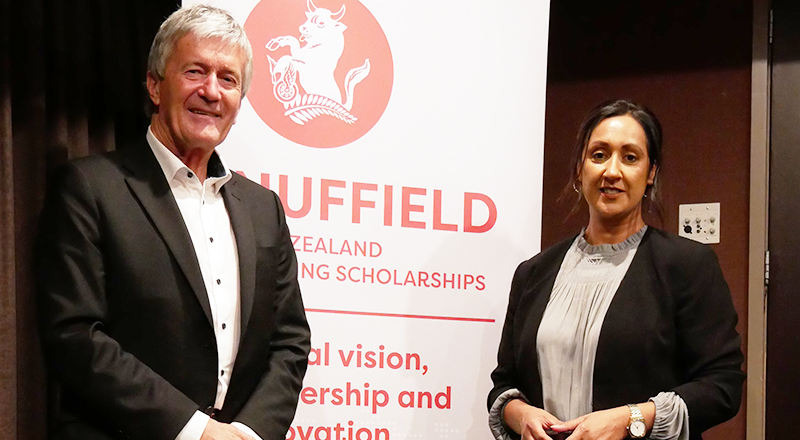
2026 Nuffield NZ Farming Scholarship. Apply by 17 August 2025. Read More...

Apply for 2026 Nuffield NZ Farming Scholarship by 17 August 2025. More details...

CEO update on Kellogg accreditation.

Rual Leaders

A message from our CEO Chris Parsons, MNZM, DSD, CMinstD.

Chris Parsons, CEO New Zealand Rural Leadership Trust

As the year flies by all too fast, I thought it good to pause a moment to highlight a key development that we have been working on for just over a year and to acknowledge some of the achievements that Nuffield and Kellogg Scholars and the NZ Rural Leaders family have made over the last 12 months.   

Firstly, Kellogg Scholars have embraced the opportunity to obtain a Post Graduate Certificate alongside their Kellogg qualification. This is an opt-in opportunity and to date 98% of Kelloggers have.  

We would like to acknowledge Lincoln University for offering the chance for food and fibre leaders to gain this additional value. 

We’d like to acknowledge Massey University too, for recognising Kellogg for up to 60 post-graduate credits applied to further learning in both their business school and college of sciences. 

We are on track for 62 Scholars to concurrently achieve a Post Graduate Certificate by the end of the year!   

This achievement marks the two-year anniversary of The Pāhautea Initiative – a partnership between Lincoln University, Massey University, the Agricultural and Marketing Research and Development Trust (AGMARDT) and Rural Leaders. 

The initiative focuses on lifting education levels across the sector and building deeper leadership benches in the regions, with the aim of creating a sustainable future for food and fibre. Accreditation of core programmes is key to delivering on the partnership’s purpose. 

If one of your neighbours or a work mate is considering becoming a Kellogg Scholar and opting in for the PG Cert, the good news is they do not need a prior degree to enrol for the PG Cert, we will work with you and Lincoln on admission requirements.  

Previous Kellogg Scholars (at this stage, from 2014 onwards) can apply for recognition of prior learning from Lincoln and Massey Universities, by contacting Lisa Rogers at lisarogers@ruralleaders.co.nz 

Finally, we’d like to acknowledge all those of you who have been selected to Boards, started businesses, led transformation, or helped your communities and environments.

Rural scholarship is all about creating impact – we get reports almost daily of alumni who are improving the sector and standing up to be counted.

Thank you for all you do! 

Lynsey Stratford: Changing how we work for better outcomes.

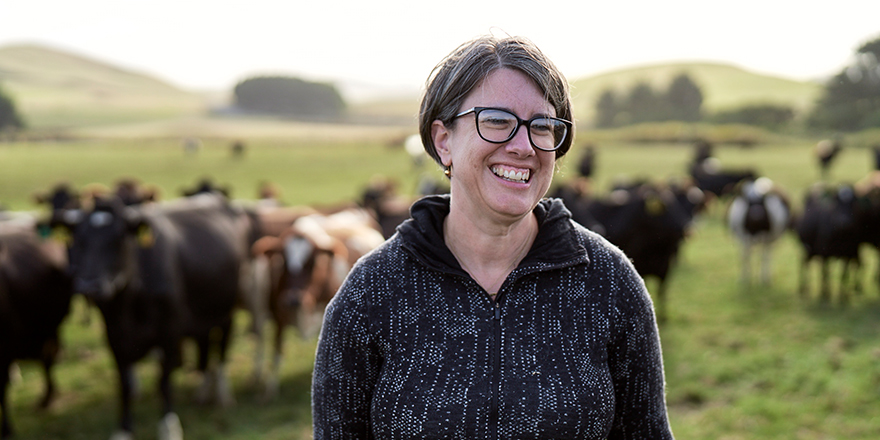
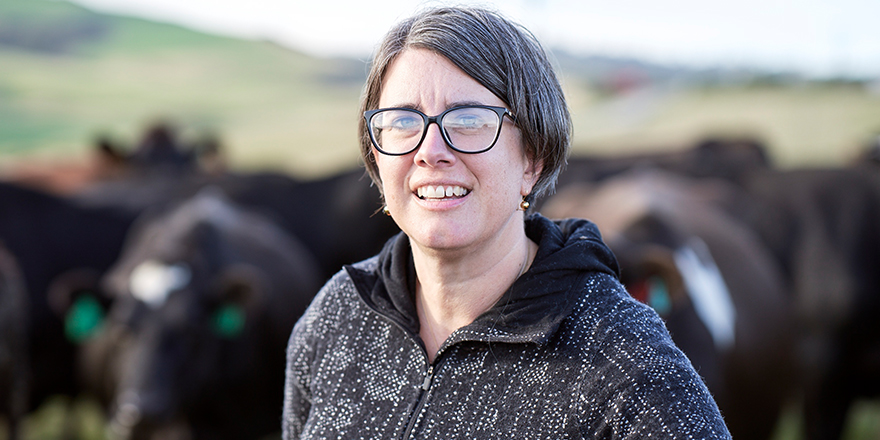
Ideas That Grow: Lynsey Stratford, 2021 Nuffield Scholar.

Lynsey Stratford has discovered farmers make a few assumptions that aren’t very helpful – like accepting the fact that work might be dangerous and there’s nothing anyone can do about it. As Lynsey explains, “There are changes we can make, but those assumptions and those mindsets have been deeply held for quite some time.” 

As a consultant, Lynsey helps the primary sector with people management and development services and training. And, when it comes to health and safety she says, “We shouldn’t expect people to just know this stuff, but rather teach them and support them as they develop skills.” 
 
Lynsey’s research report unpacks the paradox that while farmers care about their people, farms as workplaces are overrepresented in fatal accident and injury statistics. So, what can be done to improve this?

Bryan Gibson – Editor of Farmer’s Weekly.

I’m Bryan Gibson, editor of Farmer’s Weekly. Today, I’m talking to former lawyer, consultant, and dairy farmer, Lynsey Stratford. How’s it going? 

Lynsey Stratford – 2021 Nuffield Scholar, Curio Bay, Southland.

Good thanks. Nice to talk to you.

Digging deeper with a Nuffield Scholarship.

BryanWhat have you been up to?

Lynsey: I’ve been up in Christchurch with Rural Leaders, to celebrate the end of the scholarship programme for the 2020s and the 2021s.

BryanFantastic. As you mentioned you are a recent scholar. What made you choose the Nuffield Scholarship?

Lynsey:  To be honest, I applied just after our first COVID lockdown. Like everybody, I’d been thinking about what I enjoy doing during that time – being stuck inside. I love to travel and learn new things. I’ve always looked at the Scholarship and thought that the stories from previous scholars sounded like a great experience and opportunity.  
 
I didn’t really think I’d get a scholarship, but I thought, what the heck, let’s give it a go, and if nothing else it’ll be an interesting experience. I was very surprised and honored to be selected as a scholar for 2021.

Bryan: And what sort of area did you want to study? 

 Lynsey: I love working with people in the primary sector. I went into the scholarship thinking I would look at health and safety and providing better workplaces for people that are more productive and engaging for better health and wellbeing outcomes. 

My project ended up being called ‘Super Humans, Not Superheroes’. It looked at how we do all this fabulous stuff in the sector, but we’re probably asking a bit too much of ourselves. We expect to be superhuman, and our teams too. 

With a slightly different approach to structuring work, we could support better outcomes that are more engaging, create better work, more productivity, and still improve the health and safety of our people.

Challenging and changing mindsets toward on-farm workplace safety.

Bryan:  Working in the farming world, it’s a relatively dangerous place and it can be somewhat isolating at times. What sort of strategies do people need to try to work into their businesses to make it better for people? 

Lynsey: I guess the good thing is most are low, or no-cost, so you can make quite big changes without spending a lot of money. The key to it all is mindset.  
 
What I found was that farmers have some assumptions that aren’t very helpful. We accept the fact that work might be dangerous. We assume there’s nothing we can do about it. And that’s not right. There are changes we can make, but those assumptions and those mindsets have been deeply held for quite some time. 

Farmers don’t think they’ll ever get hurt. They think other people might. Generally, we don’t think that we are prone to accidents. So, we don’t really take any steps to manage the risks that there are in our work. We tend to normalise the fact that it is a dangerous occupation and so we don’t try and challenge that by changing how we work.  

If you’ve got family or team members who think that way, that’s a good place to start. We need people to help us understand that there are things that we can do to organise work better. So, lots of the time, we’ll be told what to do, but not necessarily the why or the how. And that’s just good team communication.  

We shouldn’t expect people to just know this stuff, but rather teach them and support them as they develop skills. 

Bryan: I guess an engaged work team is probably going to not only be more productive, but also be happier and safer, would you expect? 

An engaged farm team means thriving workplaces and better outputs.

Lynsey: Absolutely. There’s some shocking statistics from Gallup, who looked at engagement across the world. For New Zealand, only 20% of our workforce, and this is across all sectors, is fully engaged. If you’ve got a team of five people, that’s only one giving everything they’ve got.  
 
So, yeah, if we can tap into engagement, it’s better for people. They feel like they’ve got some control and they’re growing – they like to be there. So, if you’re an employer, those people will go that extra mile for you because they want to be at work and they feel passionate about it. 

And engagement is, if they feel you care about them, that they’ve got some control over how they themselves can organise their work. That they’re growing and developing – those are all things that we can improve if we start to think differently about how we organise work. 

Bryan: I guess what you’ve just been talking about feeds into the ‘why’ you’re there. If there’s a bigger goal that everyone is working towards, then that can help, can’t it? 

Lynsey:  I guess that’s where we’ve gone a bit wrong. In the past we’ve focused on compliance, but we haven’t seen these wider benefits of good work. And there’s some interesting stuff that’s been done by the Business Leaders’ Health & Safety Forum by Hillary Bennett. It said that if you improve how you set up work, train people, you’ve got good processes, so they understand their role, and their responsibility, and how to change how work gets done – if you do all those things well, you improve mental health as well.  
 
So, that’s another component of this, that we’re looking at wellbeing as well as physical health and safety. 

Bryan: People who are engaged, feeling good about themselves are probably going to produce better work and be safer when they do it, aren’t they? 

Lynsey: Yeah. And be on the thriving end of the spectrum of mental health, instead of the just surviving space – or not surviving at all. So, that’s what we want. We want good work that sets us up for thriving people and great farming. 

Bryan: So, you’ve just finished then? 

A different kind of Nuffield Scholarship experience.

Lynsey: Yes. We had an experience that was interrupted somewhat by COVID. So, it’s been a very weird scholarship experience because it’s kind of backwards. Usually, you do your international travel, and then you produce your report. Ours will be the other way around. But I think our experience, although different, has been just as good.  

What we did was travel as a cohort. So, the 2021 scholars linking in with the 2020 scholars. We traveled through New Zealand, from Northland right down to where I farm in Curio Bay, Southland. We did the length and breadth of New Zealand together. 

Then we did our research independently, but with as much as we could face-to-face. A lot of it had to be remote via Zoom. So, now I get to go and do my international travel through August, September, and October. 

Bryan: You might want a rewrite afterwards! 

Lynsey: I think that’s the aim. We kind of validate what we’ve seen, and if there’s anything we need to change, we’ll revisit. 

 
Bryan: And that’s exciting. I mean, the travel component is a big part of the scholarship. Where are you off to? 

Lynsey: My group goes to Japan, Belgium, Ireland, and California. 

Bryan: Well, that’s an exciting thing to look forward to. 

Lynsey: Yeah, it is. It’ll be a Northern Hemisphere trip in the summer. So, that’s also quite exciting now, as we sit here in Invercargill. 

Bryan: When you’re not knocking out your report as part of your Nuffield Programme, what does life look like for you? 

Lynsey: I’ve been married to a Kiwi dairy farmer for nearly 20 years now. Being on farm with him was a big part of life until recently. We sold our farm effective 1st of June. Now, we’re kind of redefining where we go and what we do, but I’m also a mum, which is very important to me.  
 
I’ve got two children that I like to focus on. I like to try and support them with school things and support our local community too. And then I also have a small consulting business that helps primary sector businesses – but all sorts of businesses manage their people. 

From cows to consulting – a farmer advising farmers.

Bryan: What sort of consulting or advice do you offer businesses? 

Lynsey:  So it’s interesting because I started out as an employment lawyer in the UK. There I was focused on compliance and getting agreements, policies, procedures and following all the legal requirements.  
 
I still do all those things, but I’m much more focused on trying to improve work setup so that we’ve got engaged teams, great communication, good processes. We’re training people and developing them, making sure that the behavior we’ve in the workplace is setting up a great culture that engages people. So, I’ve moved away from just focusing on the compliance. 

Bryan: I think that’s a move the agricultural and horticultural industries in New Zealand need to complete still. A lot of the reaction I get at the newspaper to health and safety reform, or regulation is that it’s just a hassle, a box-ticking exercise, whereas if you do change that mindset into creating a space where everyone can thrive, then that’s when the goal is going to be reached. 

Lynsey:  That’s one of the things I concluded in my research. It has been sold to us as a compliance exercise – but it takes a lot of resource to change mindsets. It’s not that easy. And so, the easier thing to do is to set us up for compliance, make sure we’ve got the plans in place. But if we really want to make change, it’s that mindset that we need to focus on. We need resources to do that.  
 
We need great people connecting farmers with good information that helps them understand the opportunity and ‘the why’ for them, whatever it is. That then supports them to develop the skills they need. And it’s not something that we can nail in one workshop or one interaction. The resourcing really needs to be there, and it needs to be long term. We’re talking about generational change if we want to change mindsets. 

I guess I’ll just give a shout out to Ben McLachlan. He’s a 2020 scholar and his report is about mindsets that help us change. He’s looking at the growth mindset, which I found was critical to getting great workplaces.  
 
A workplace where we’ve got a growth mindset is one where we understand that people can develop new ways of thinking and new skills if we give them the opportunity and the right support. I was stoked when I saw his work, as it aligns nicely with mine as well. 

Bryan: That leads into my next question about the community that being part of the Rural Leaders team builds among those who are working through the same cohort? 

Lynsey:  We were lucky. Talking to previous scholars, they have often got their scholarship, briefly met the New Zealand cohort, then gone overseas and developed relationships internationally – but not quite as tight a relationship with the New Zealand scholars.  
 
I think we’ve been lucky that we got that chance to spend time together, because of COVID. It’s the silver lining. It’s been amazing to see the projects that the scholars came up with across those two cohorts. Some of the best opportunities were the discussions that we had in the van as we toured New Zealand visiting leading businesses. Thanks to all those scholars who talked to me and shared their views.  

Bryan:  Excellent. So, the programme is something that you’d recommend to other people? 
 
Lynsey: Absolutely. It’s not easy. To do anything like this where you are basically challenging things that you thought or your beliefs in how the world works, that has been a challenge. But it’s been a unique opportunity too. I just can’t think where you’d get the chances that we got to visit all these amazing businesses.  
 
We went to certain Rocket and Aerospace businesses. I didn’t even know we had these kinds of businesses in New Zealand. If you want to stretch your assumptions and learn some new things and meet some awesome people, I thoroughly recommend it. 

Bryan: Thanks for listening to Ideas That Grow, a Rural Leaders podcast. This podcast was presented by Farmers Weekly. For more information on Rural Leaders, the Nuffield New Zealand farming scholarships, or the Kellogg Rural Leadership Programme, please visit ruralleaders.co.nz. 

The future of food and fibre is in the hands of our bold and our grounded people – those who give back to their communities and industries.

Sound like you?

Julian Raine:
The apple of a horticulture robot’s eye.

Julian Raine podcast_apple orchard_featured image

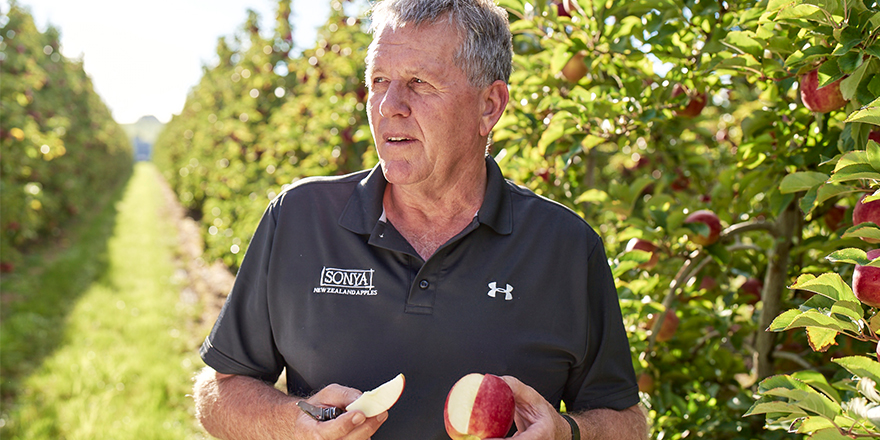
Ideas That Grow: Julian Raine, 1997 Nuffield Scholar.

Julian Raine is a 1997 Nuffield Scholar who quietly gets on with things worth shouting about.  
 
Julian runs a mixed Dairy and Horticulture operation and no matter what he’s producing, the one constant is innovation. From robots to getting back to milk in glass, Julian has an entrepreneur’s motivation and an innovator’s foresight. 

In this podcast, Julian talks with Farmer’s Weekly Editor Bryan Gibson about his diverse operation, some of the challenges he faces and some of the innovations he’s making to meet them – including moving to robot-ready on horticultural sites.  
 
Julian also talks about his Nuffield travel, what he learned and how his research played a role in helping shape an industry.  

The interview took place in May 2022 and the version below was edited for clarity. Listen to the podcast above for the original conversation.

Bryan Gibson – Editor of Farmer’s Weekly.

I’m Bryan Gibson, editor of the Farmer’s Weekly. And today we are talking to Julian Raine. How’s it going? 

Julian Raine – 1997 Nuffield Scholar, Dairy and Horticulture farmer/grower, Nelson. 

Good. Thanks, Bryan. 

The apple of a robot’s eye.

BryanAnd where are you calling in from today?

Julian:  I’m in Nelson. We have a farming operation, which includes dairy and horticulture, just south of Nelson in the Tasman region.

BryanThat’s quite a diverse business you got going there? 

Julian:  Yes, it is. The agricultural bit has been in the family for 180 years, so we’ve been around a while. Whereas the horticultural bit, I started with my business partners about 40 something years ago.

Innovating in a diverse operation.

Bryan: What do you focus on in the horticulture side of things? 

Julian: We have about 200 hectares of apples. I’m just trying to do the quick numbers off the top of my head – about 40 hectares of berries, all boysenberries. About 45 hectares of kiwifruit, and about five hectares of a new crop for us, feijoas. 

Bryan: Fantastic. And how have things been going this year? 

Julian: It’s been a good year in terms of growing. Been a lot more difficult to get things harvested with the shortage of staff. We completed harvest nearly a couple of months ago for all crops, so that’s good to have that behind us, although we were still packing apples well into July.  

There’s plenty of challenges with shipping and trying to get containers. We were running about a month behind with our shipping program, so that’s been a bit of a worry. 

Bryan: You haven’t had any of the weather or climate related yield issues they’ve had up in the North Island? 

Julian: No. No, we’ve been a bit fortunate thankfully, there was enough to contend with from COVID. 

Bryan: And the agriculture side of things, can you just tell me a little bit about that? 

Julian: Yes. We operate a fresh milk business. We deliver to about 3,000 households in the top of the South Island, Marlborough-Nelson-Tasman. We operate two dairy farms, and we buy and milk from another two dairy farmers. 

Bryan: So, it’s direct to the consumer. 

Julian: Yes. The home delivery is to the letter box, or to the back door, or front door. To cafes, restaurants. And we have several vending machines dotted around Nelson as well. 

Bryan: That seems to be a growing industry, isn’t it? 

Julian: It’s kind of back to the future really. When I was a lad, all the milk was basically bought at the front gate. And occasionally when you ran out, you went down to the dairy. So, we’ve kind of gone back to that model. 

Bryan: My first job I did all through high school was pushing a milk cart round the streets. I was there for the change from glass to the tetrapaks. 

Julian: Right. We’ve gone back to glass as part of what we do. 

We visited Julian at his apple orchard in April, where he has trees producing mostly the variety ‘Pink Lady’.

Julian spoke briefly about a new 500 cow, all-weather shed he has built, giving his operation ‘the tick’ from the SPCA, one of the first dairy farms in New Zealand to receive this endorsement. This dairy operation supplies Appleby Farms (Ice cream), a business collaboration between himself and Murray Taggart, a fellow Nuffield Scholar.

A Nuffield report creating impact.

Bryan: Now, it’s been a little while since you did your Nuffield report, 1997 I think you did it. But integrated fruit production, still relevant, I think. What do you remember of writing that report? 

Julian: As you say, it was 25 years ago. So, a bit of a distant memory, but many of the issues are still relevant today. What came from that report was a system I wrote called Green Grow, which was to deliver three things: Fruit with no residues, have some environmental indicators, and have a food safety system under something relatively new then called HACCP.  

This was a hazard analysis control point, which was what NASA used to send their astronauts into space. Because if you’re sick up there because of food, you’ve got a major problem. So, they wrote a food safety programme, and I adopted the bones of that, or the principles of that. 

They wanted to know whether the product was safe. The only way that we could guarantee the product being safe was essentially to take residues away. So, in terms of how we produce it, it’s up to us to battle the elements, with insects and fungi. 

When the consumer comes to consume it, they want to know that there’s nothing on there that can harm them or their kids. And then as part of that, some environmental indicators that say we haven’t harmed the environment in producing that fruit. 

Bryan: Space age fruit production, that sounds awesome. 

Julian: Yes, years later, I chaired the Apple Futures Programme, that was a three-year programme to deliver wider systems to get to the same point for the average grower. That’s pretty much about 80 something percent of the New Zealand industry now, with a fair chunk of the balance being organic. I wasn’t pretending to be organic. And yeah, we converted a whole industry in less than a decade. 

Bryan: The industry as a whole – horticulture, pip fruit and candy fruit, and that sort of thing has come a long way in the last decade or two, hasn’t it? 

Julian: It has. That was late 2000s, and since then it’s advanced even further. 

Setting up for horticultural automation.

Bryan: Do you have any other observations on how things have changed, running a kiwi fruit growing business in that time? 

Julian: We’ve set up our orchard systems now for being robot ready. We can’t keep going how we are. And so, investing in an orchard production system is a long timeframe. We must think about what the future will look like when we spend hundreds of thousands of dollars a hectare setting up an orchard.  

We’ve set our orchards up in anticipation for robots to be able to harvest. We think about how they’ll optically see the fruit, how they’ll pick it, and then how they’ll get that fruit from the tree into a bin. That’s what we’ve been busy at in the last decade. About 30 something percent of our orchards, anything we’ve planted in the last 10 years, are robot ready. 

Bryan: That’s interesting. You often think about building robots to pick the fruit as it sits. But there are a lot of things, I guess, row spacing and the way you propagate the trees, that sort of thing. 

Julian: Yes, and how we set the structure up. So single plane trees. It’s like a single plane hedge row, so the robotics and the sensors sensing the fruit, can’t go through the tree. So, it’s got to be on a single plane essentially. 

Bryan: That’s amazing. How far off do you think you are from getting the robots? Are you involved in any of that? 

Julian: The Americans and the Europeans are leading that race. We don’t have the technology here that’s needed for it. Although, there’s a small group headed by Steve Saunders in the Bay of Plenty who are working on kiwifruit robotics. They’ve tended to go more into the pack house and look at optics and how you pack fruit. 

In ten-years-time, we’ll have lights out factories packing apples. Again, to try and get 24 hour a day, seven day a week packing businesses going, we need to do the same thing with our harvest processes. When the sun goes down, we don’t all go home – robots will carry on. 

Bryan: Sounds very high tech and quite cool.  

Julian: There’s a lot of work to get it to that point. A few of us, I suppose, think about these things in the middle of the night, when other people are sleeping.  

You’ve got to work out where your business is going. About how you make it more efficient and keep a lid on cost. Because everyone is really cost conscious now, the consumer wants to buy more for less. And we’ve got to get cost out of our business and keep a high standard, because that’s really what our New Zealand brand is built on. 

Nuffield and the international travel experience.

Bryan: Now, going back to 1997, you also did a bit of travel as part of your studies? 

Julian: Yes. Through Southeast Asia, Europe, and Eastern Europe. It wasn’t long after the wall came down, I was in Hungary looking at soft fruit production. I was also in South America looking at what they were doing in Chile and, North America, in Washington.  

Really interesting to get a handle on what the leading lights were doing at that point in terms of their growing systems. 

Bryan: And in the time since, how would you say being involved in the Nuffield Programme has informed what you’ve done in those years?

Julian: Well, for me it was about the personal experience and honing my leadership skills and trying to lead producers through changes. Also, trying to think about things holistically, looking at a problem, not from just a single plane, but being able to not only go around and see the other person’s view, but be able to walk right around that issue and look at several points of view.  

I’m probably not finished yet – I’m always willing to give back to the industry. 

Bryan: The Rural Leaders, Nuffield Programme would be something you’d recommend? 

 Julian: Without Nuffield I wouldn’t have got to where I am today. It gave me not only a critical thinking ability, but it’s also given me a lot of resilience as well.  

I am also able to call on the experiences I saw around the world – the interactions not only with other primary producers, but also government officials and how government thinks.  

And how the EU operates, rightly or wrongly. And then most importantly, how consumers think, and always interacting with your customer to keep yourself up to date with what the customer wants to pay for, and what they don’t want to pay for.

Thanks for listening to Ideas That Grow, a Rural Leaders podcast. This podcast was presented by Farmers Weekly.

For more information on Rural Leaders, the Nuffield New Zealand Farming Scholarships, or the Kellogg Rural Leaders Programme, please visit ruralleaders.co.nz 

The future of food and fibre is in the hands of our bold and our grounded people – those who give back to their communities and industries.

Sound like you?

Kellogg Rural Scholar Series: ‘Dairy Insights’.

Here’s an introduction from Rural Leaders CEO Chris Parsons, on the new Dairy Insights report.

New Zealand’s food and fibre sector is full of capable, and purpose driven people. Supported by DairyNZ, Livestock Improvement Corporation and an incredible group of partners, the New Zealand Rural Leadership Trust is privileged to be entrusted with growing many of these people in their leadership journey.

A key aspect of the rural leadership approach is research-based scholarship. The clarity of thought and confidence this approach promotes is transformative. 

The set of reports précised in this edition are penned by Scholars from the Kellogg Rural Leadership Programme. The Kellogg programme has been equipping rural leaders for strategic impact since 1970. The selection of reports is just a sample of reports by Scholars from the Dairy Industry.  

They grapple with the big issues facing New Zealand Dairy and are written by people living and working in the Sector. Many Kellogg and Nuffield Scholars go on to live their research. They build businesses. They advance community and social enterprises. They influence policy and advocate for animal and environmental outcomes, informed by an ability for critical analysis and their own research-fuelled passion. Rural Scholarship is about impact.  

In the following pages we are pleased to précis 14 dairy research reports by Kellogg Scholars. The full reports can be found at https://ruralleaders.co.nz/kellogg-our-insights

The reports traverse topics as wide and timely as innovation, markets, people, sustainability and social issues.  

Ngā mihi,  
Chris Parsons

and the NZ Rural Leaders Team 

Download and read the full report here:

Where it started – The Global Tour of New Zealand.

Value Chain Innovation Programme Logo

The ‘Global Tour of New Zealand’, as it was quickly named by 2020’s Nuffield Scholars, gave a unique view of the country’s food and fibre sector value chains. This year, the programme will be made richer still.

The Value Chain Innovation Programme will begin in September 2022 and is now open to a larger number of people in the primary sector. 

Building the value. 

A lot of work has gone into building a collection of exciting and varied case studies across dairy, arable, horticulture value chains. Participants learn straight from the source. They gain unique insights into food and fibre innovation, in both domestic and international markets.

The new programme gives a wide view of established and novel value chains. Participants compare and transpose thinking at a time when the primary industries are going through the biggest period of transformational change since the 1980’s.  

“If you’re in food and fibre, now is the time to be gaining a pan-sector view of as many successful business models as possible,” says Lincoln University Lecturer Prof. and Programme Co-facilitator Hamish Gow,

“Increasingly the most successful value chains are those with business models closely aligned to their customers, use protected IP, and provide innovative shared value structures.”

The programme runs over five weeks, two of these are spent on the road. The remaining time is spent on an individual research report. “It will be a busy few weeks, with the time commitment being 100 hours on field trips, guest lectures and networking, online lectures and discussions, tutorials, and another 50 hours self-directed learning,” said Prof. Gow.  


The programme delivery team. 

New Zealand Rural Leadership Trust CEO Chris Parsons remarked, “As a global leader and thinker in value chain design, innovation and entrepreneurship, Professor Gow is uniquely qualified to impart deeper strategic learning and insight into the September programme.”  

Leadership and Strategic Development Consultant, and Programme Co-facilitator Phil Morrison, ONZM, further strengthens the team. “We are also fortunate to have Phil onboard. He brings a different leadership perspective, drawing on a career in military command, and in the delivery of innovation, strategic and leadership training as a consultant. We couldn’t hope for a stronger team”, added Chris Parsons. 

Building leadership capability. 

Once completed, the programme will give participants the competencies, confidence, and networks to influence change and lead transformation at an enterprise level and throughout regional New Zealand.  

Chris Parsons says, “We hope this programme will lead to positive larger scale change as our graduates continue to grow and contribute to a fast-changing food and fibre sector.” 

Rural Leaders are taking applications until Sunday 10 July.

Applications can be made at ruralleaders.co.nz/value-chain/ 

E Tipu 2022: The Boma Agri Summit.

E Tipu banner image

E Tipu 2022: The Boma Agri Summit will help catalyse the future of food and fibre in Aotearoa.

Set for 21-22 June in Ōtautahi Christchurch and virtually, E Tipu brings together remarkable speakers and changemakers to share mind-blowing insights, ignite vital conversations, and help shape the future of Aotearoa’s primary industries.
The summit features two days of talks from global and local leaders in agri, plus interactive workshops, expert panels and special Q&As, innovative exhibits, valuable cross-sector networking and more.

As a national event with global reach, E Tipu connects Aotearoa’s food and fibre sector with the world — tackling the critical questions around how we can be more innovative, collaborative, sustainable and profitable, now and into the future.

In-Person and Virtual tickets are on sale at etipu.boma.global, with special rates available for farmers, not-for-profits, startups, groups, youth and students.

As an E Tipu 2022 partner, Rural Leaders have been given a special offer for sharing with readers of The Rural Leader.

Use the code 100_RuralLeaders to save $100 on In-Person tickets and 20_RuralLeaders to save $20 on Virtual tickets. 

Lincoln University, Kellogg, and Rural Leaders – a collaboration spanning decades

Based on campus since 1979, the Kellogg Rural Leadership Programme has a long connection with Lincoln University, having been developed by the Kellogg Company as a way of enhancing global leadership capability.

In 2013, the programme was transferred to the newly-formed New Zealand Rural Leadership Consortium, which merged it with the prestigious Nuffield New Zealand Farming Scholarship to create a single organisation. Four years later, the consortium became a registered charitable trust and changed its name to the New Zealand Rural Leadership Trust (Rural Leaders).

A partnership known as the Pāhautea Initiative was announced in late 2020 between Lincoln University, Massey University, the Agricultural and Marketing Research and Development Trust (AGMARDT) and Rural Leaders.

The initiative focuses on lifting education levels across the sector and building deeper leadership benches in the regions, with the aim of creating a sustainable future for food and fibre. Accreditation of core programmes is key to delivering on the partnership’s purpose.

Kellogg accreditation strengthens the bond with Lincoln University.

Rural Leaders, Lincoln University and Massey University have further strengthened ties by offering academic accreditation for those who undertake the Kellogg Rural Leadership Programme.

After completing the programme, Kellogg scholars can opt into a Postgraduate Certificate in Commerce.

Alternatively, they can allocate the 60 credits they can earn towards the 180 required credits for a Lincoln University taught master’s degree.

Scholars can also elect to use their 60 credits towards a master’s degree at Massey University.

Additionally, accreditation may soon be available for the Nuffield New Zealand Farming Scholarship, although this is a work in progress, says Rural Leaders’ Programme Manager Lisa Rogers.

“Theoretically, it would be a diploma, or 120 points towards a 180-point taught masters.”

A dedicated Kellogg programme team. 

The Kellogg Rural Leadership Programme team – including Rural Leaders facilitators Dr Scott Champion and Phil Morrison, Dr Patrick Aldwell and examiner Professor Hamish Gow – work hard to provide a varied and stimulating learning experience.

The programme includes two papers, the first of which requires the completion of specific assignments and is delivered by Scott Champion and Phil Morrison.

The second paper, delivered by Dr Patrick Aldwell, involves completing a research project and giving a presentation at the end of the programme.

Rural Leaders deliver three Kellogg Programmes a year, with two based at Lincoln University. The other, in alignment with the Pāhautea Initiative’s aim of growing flourishing regions, is regionally based. The next location, in May 2022, will be Whanganui.

Each programme is delivered to 20 to 24 scholars. Numbers are kept low to ensure a transformative experience, as the Kellogg journey is as much about learning from fellow scholars and developing a pan-sector network of friends as being exposed to industry leaders and new ideas.

A shared history and a shared future.

Rural Leaders have a strong presence on campus and increasingly share alumni with the university now that Kellogg scholars can gain a Lincoln postgraduate certificate.

Lisa Rogers says she is keen to see the long association continue to grow.

“We often get graduates from the Lincoln Future Leaders Scholarship Programme coming through to do the Kellogg. While we may not see recent undergraduates apply, it’s something we see happening later in their careers.”

Fun fact: Up to 50% of participants in any one Kellogg Programme have previously graduated from Lincoln University.

Kellogg team building rope bridge

Value Chain Innovation Programme change of date. 

Value Chain Innovation Programme Logo

The start date for the Value Chain Innovation Programme is changing.  

Due to the acceleration of the current Covid outbreak, it will be challenging to deliver the Value Chain Innovation Programme to the high standard we require, and participants expect.  

The decision has therefore been made to shift the start date for this programme.  

To build in sufficient time to allow industry, stakeholders, and Rural Leaders, to establish more certainty regarding the current outbreak, a new date has been set for later this year.   

The new dates are: 
Value Chain Immersion Tour (2 weeks)  
Sunday, 18 September to Friday, 30 September 2022.  

Value Chain Innovation Report.  
Due mid to late October 2022.  

Virtual Zoom Masterclass (2 hours)  
Early September 2022.  

Applications close Sunday, 10 July 2022.  

Programme reserve date for early 2023. 
We also have a reserve date in place for early in 2023, should it be required. Let’s hope it’s not. 

The reserve dates are: 
Value Chain Immersion Tour (2 weeks)  
Sunday, 15 January to Friday, 27 January 2023.  

Value Chain Innovation Report.  
Due mid to late February 2023.  

Virtual Zoom Masterclass (2 hours)  
Early to mid-December 2022. (We will complete the Masterclass prior to Christmas to allow thinking time before the tour begins in January). 

Already applied for the Vale Chain Innovation Programme? 
We’ll be in touch soon to talk through this change with you personally.  

If you would like to discuss any matters arising from this announcement, please contact Lisa Rogers, Programme Director on 021 139 6881, or email lisarogers@ruralleaders.co.nz.

Whanganui and Partners and Rural Leaders serve Strategy for Lunch.

A collaboration between Whanganui and Partners and Rural Leaders, Strategy for Lunch, has been created to meet a need among business owners, to engage more confidently in business strategy discussions and design. 

The programme consists of five neatly wrapped, bite-size, online sessions that provide the tools and knowledge to help Whanganui business owners build their strategic capability.

Some of New Zealand’s leading strategic facilitators have come together to deliver the five 90-minute, online workshops, from midday every Friday, starting 11 March.

Strategy for Lunch is designed for business owners from across all sectors and industries who are looking to advance their strategic skills, knowledge, and their businesses. 

The programme will help business owners undertake their own strategic analysis, identify opportunities, and to evaluate their strategic choices.

From sharing frameworks and tools, to recommended reading, review and reflection sessions, and group discussions, this innovative programme gives business owners a strong knowledge foundation from which to tackle their own strategic challenges.

Here’s a brief week by week outline of what participants can expect to cover and learn in this smart and highly accessible programme.

Week 1: 11 March – Orientation.

An introduction to core strategy concepts. We’ll also outline the programme’s  
5-week journey. We’ll answer questions like, what is strategy? What isn’t strategy? What are the forces influencing our world today? And tomorrow? 

Week 2: 18 March – Strategic framing. 

Aims to understand a business’s value discipline and maps its business model. Questions we’ll answer in this session are, what is your ‘value discipline’? How do you create customer value? What is your business model for delivering customer value? 

Week 3: 25 March – Strategic definition. 

Defines a customer’s “job to be done”. This session also aims to understand customer drivers of value. It will unpack what the best options are to increase value for your customers?   

Week 4: 1 April – Strategic options. 

This session aims to explore a business’s strategic innovation options. We’ll answer questions like, how might you design or adapt your strategy for a competitive advantage? How do you develop a blue ocean strategy? 

Week 5: 8 April – Strategic action. 

This final session brings it all together. We evaluate strategic choices, including key implementation considerations. WE answer questions like, how do you move from strategy prototype to market offering? How do you test and validate an MVP? What are the key considerations for scaling-up innovation? 

Find out more about Strategy for Lunch, or to register, head to
https://discoverwhanganui.nz/news/strategy-for-lunch/ 

KPMG Food and Fibre Insights Course.

KPMG New Zealand and the University of Waikato have partnered to deliver a new and unique Food and Fibre Insights Course. 

The part-time, six-week course is targeted at working professionals who are seeking to expand their knowledge of topics at the forefront of agri-food systems. 

Facilitated by Ian Proudfoot, Jack Keeys, Professor Frank Srimgeour, and Dr Jack Dorner, it will deliver leading insight collated from experts across New Zealand and the world. It will cover one topic per week. 

Course structure will include a combination of independent learning, working through readings, videos, and questions on an online learning platform, in addition to a weekly virtual discussion session. Further information about the course can be found in the attached brochure.  

An exclusive discount code has been offered to Rural Leader readers and is available here: Partner’s link 

If you have any questions or would like any further information, please feel free to contact Jack Keeys via email at jkeeys@kpmg.co.nz, or by phone on 09 363 3502.