2026 Nuffield NZ Farming Scholarship. Apply by 17 August 2025. Read More...

Apply for 2026 Nuffield NZ Farming Scholarship by 17 August 2025. More details...

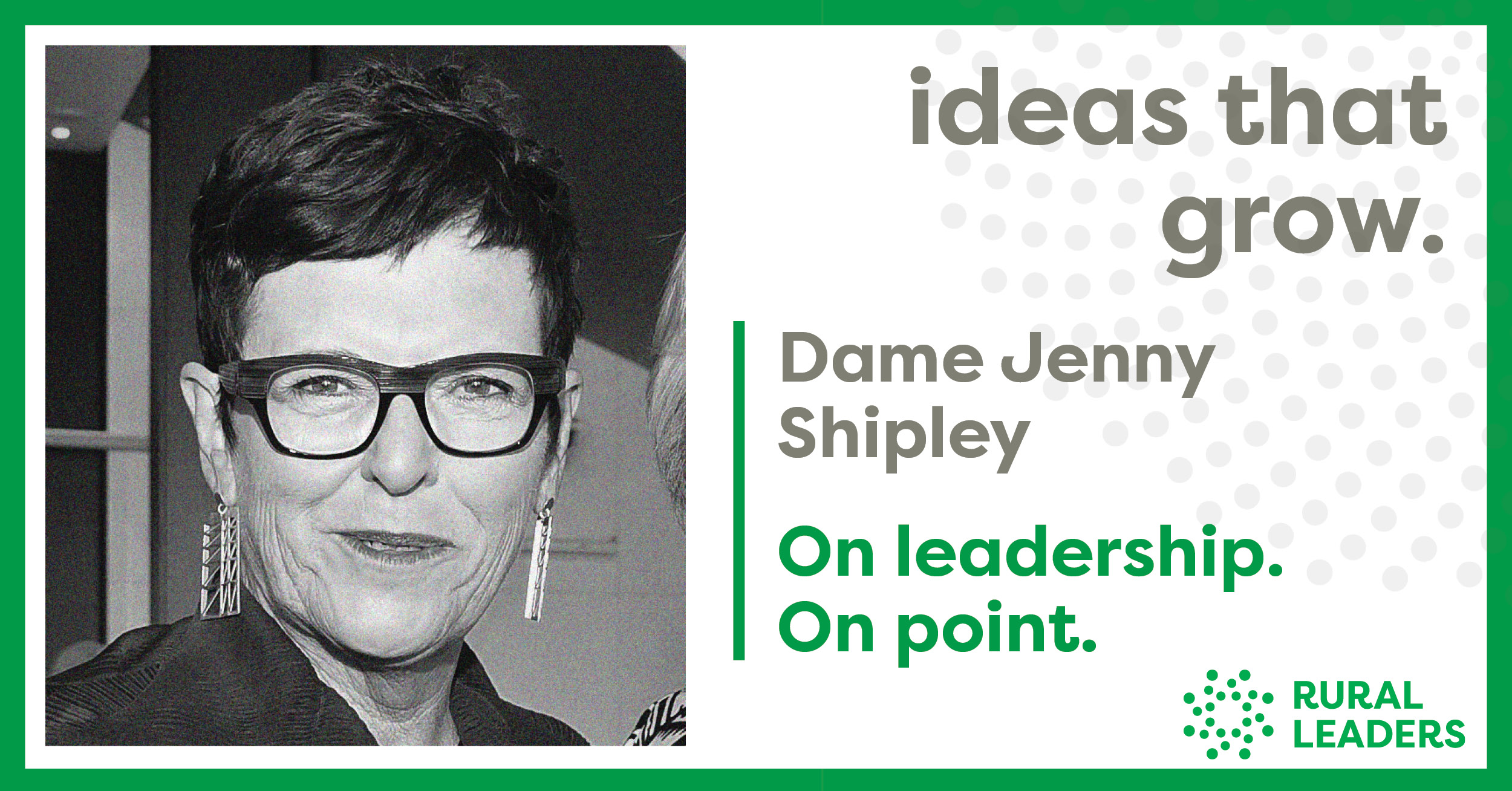
Dame Jenny Shipley: On Leadership. On Point.

On leadership. On point.

Lynsey Stratford has discovered farmers make a few assumptions that aren’t very helpful – like accepting the fact that work might be dangerous and there’s nothing anyone can do about it. As Lynsey explains, “There are changes we can make, but those assumptions and those mindsets have been deeply held for quite some time.” 

As a consultant, Lynsey helps the primary sector with people management and development services and training. And, when it comes to health and safety she says, “We shouldn’t expect people to just know this stuff, but rather teach them and support them as they develop skills.” 
 
Lynsey’s research report unpacks the paradox that while farmers care about their people, farms as workplaces are overrepresented in fatal accident and injury statistics. So, what can be done to improve this?

Bryan Gibson, editor of Farmers Weekly.

I’m Bryan Gibson, Farmers Weekly Editor. This week, I have a very special guest, Dame Jenny Shipley. How’s it going? 

Dame Jenny Shipley, 1984 Kellogg Scholar, Bay of Islands.
Very well, thank you.

Bryan: Good. And where are you calling in from today?

Dame Jenny: Well, I live in Russell in the Bay of Islands now. And while I still do a lot of traveling domestically and when I can internationally, this is where we call home.

Bryan: Oh, wonderful. The winterless north. 

Dame JennyThe winterless north, and it couldn’t be a greater contrast really, from my beautiful Canterbury electorate. But even learning to garden in the north is an entirely different process. But I’m enjoying it very much. 

Bryan: Now, you grew up down in the Deep South, is that right? And spent a lot of your political career at least, in MidCanterbury?

Strong South Island roots.

Dame Jenny: Yes, I was born in Gore and my father was a Presbyterian Minister in Pukerau at the time. So many of those early roots were in a truly rural area. And interestingly, I’m going back there this weekend to take part in a nice ceremony.  So I stay connected with a lot of those old roots, even though I’m now living somewhere else. 

I spent a lot of my time in the South Island, and the early part of my life, in Nelson and that also has transformed. I don’t think there was a grapevine in Blenheim, or in the Marlborough area when I was a child. It’s a magnificent example of intense of horticulture today.  

As a student I went to Canterbury and met Burton and the rest is history. We farmed and then I went into politics and had the great privilege of representing one of the most productive electorates in the country in that central and Mid-Canterbury area. 

Bryan: Such a powerhouse of a rural area isn’t it? 

Dame Jenny: Very much, yes. 

Kellogg and the desire to lead.

Bryan: You connected with Rural Leaders for the first time doing a Kellogg Scholarship back in the early eighties, is that correct? 

Dame Jenny: Yes. We were young and farming, and I was already involved in a lot of community leadership. At that time the challenges for agriculture in New Zealand were huge. The change was immense, the economic viability was demanding, interest rates were horrifying. Rural communities were very active, with a lot of emphasis on leadership.  

I got given the opportunity to apply for the Kellogg Rural Leadership Programme, which was an emerging force at that stage. I forget whether it was year three or four that I was a member of – but it was a fabulous experience and in many respects it clarified my desire to lead.  

The Programme taught me a lot about what else I needed to focus on in order to be effective. But it definitely gave me the strength and sense of impetus to get on – initially as a Counsellor in my local Malvern area and then into politics. 

Is sector history repeating?

Bryan: We talk about the early to mid-eighties in the farming world. It was obviously, as you say, such a disruptive time. Many people think that we’re going through a similar sort of thing now. Do you see those comparisons? 

Dame Jenny: Well, I think the commodity cycle is much stronger at the moment, although it’s clearly able to be volatile depending on what happens both at home and abroad.  

The other difference, I think, is that agriculture today in New Zealand is not dependent on government subsidies. At that stage you’ll recall, there were multiple transitions going on – the support for agriculture was being removed, the markets were extremely volatile and the farming community was really facing challenges on multiple fronts.  

Even in my early years as a Member of Parliament, the residual effects of that period flowed through – it was a very difficult period. Today I think that while there are huge challenges coming up economically, I personally think the agricultural sector is in a very resilient state.  

But what is different now, is that there are so many regulatory pressures coming on farming which I don’t think were present in our era. And so, yes, there are huge challenges, but I think the economic viability overall gives at least some ability for farmers to confront those. I think the leadership question is different too, though, and perhaps that’s something that needs to change. So it’s relevant for where we are now.  

Bryan: How is that, do you think? 

Dame Jenny: Well, when we were farming, all of us belonged to Federated Farmers. It was a widespread group. Husbands and wives turned up and it was an active process in most local communities. I’m not familiar with whether that’s the case now. But like many organisations, I think that they’ve become more professional.  

But whether the grassroots element of representation is as strong, I don’t have such a feel for that. But I think that what we’re coming into is that we have to have both the agricultural leaders reflecting the experience of farmers on the ground and making the case very clearly about what can and can’t be done, and indeed what has been done.  

We need to share our good news more often.

If I can just pause on this point for a moment. I’ve observed enormous change by farming in response to public pressures. I travel quite a lot around the country and have just have been down through the Waikato – right into the West Coast part of it.  

One of the things that struck me over the last five years is that what started off as tree planting on agricultural land for emissions purposes, now the work around wetlands and the fencing of streams and things. New Zealanders can be very confident that the farming community is not only responding but leading in some of these areas.  

To come back to the point, I think that for farming to advocate for itself, it’s not only advocating for what’s annoying and frustrating them, but there’s also a huge need for us as an agriculturally strong community to continue to share both the gains and the commitment of the agricultural community to farming well both for themselves, the community, and the future. I think that’s a big change.  

When we were farming, many were just farming to survive. Now, I see farmers all over the place investing not only in best practice for themselves, but I do see a lot of change. I think the voice of that needs to be shared across the community much more broadly so that the urban New Zealand population both values agriculture and understands that it’s moving in response to many of the concerns that urban communities have. 

Bryan: Farming, as you say, is always evolving for the most part in New Zealand because we are very good at it, and improving. That gets lost sometimes. 

Dame Jenny: Well a lot of it is a social response. I mean, farmers will tell you that they are fencing streams and planting for their own benefit and the benefit of their own environment. But there’s a huge public good element in it which unless people either have a chance to see, or you share how much is being done, or see the change that’s going on.

A sector supporting New Zealand through tough times.

I think that urban-rural split has always been a risk in New Zealand and it’s one we can’t afford to give airtime too. Because, frankly, if you just thought that even in the COVID period, if we had not had a strong agricultural sector during the last three years when the global economy had been disrupted, New Zealand’s position economically would be far more dire than it is at the moment.  

Tourism collapsed, a number of other productive areas were compromised and yet agriculture was able to carry a huge proportion of the earnings, as it’s always done. But thankfully, on a strong commodity cycle at this particular time, and again, I think we should name the value of agricultural exports. The effort agriculture puts into the New Zealand economy to support our way of life, in a broad, holistic sense – not a them and us sense. 

We’re in this together, being the best we can be at home and selling the best we can abroad in a best practice sense. I think if we keep sharing that over and over again, there’ll be a better understanding between rural and urban communities. 

Leadership needs to reflect the people on the ground.

Bryan: Just touching on what you mentioned earlier about how historically, people like Federated Farmers, organisations like that, had a very, kind of a, grassroots focus. It’s quite evident at the moment around the emissions pricing process that a large number of those grassroots farmers think that the farming leadership has, if not deserted them, then certainly not represented them well. What’s your take on how they go about that? And what are the challenges that those farming leaders have in engaging with the government on things like this? 

Dame Jenny: Well look, I’d be the last one to criticise them because I know how hard it is. I have admired the agricultural leadership, that they have taken a more inclusive, let’s find solutions together approach. I have been involved in a number of significant working parties not only on emissions, but in a number of areas that I can think of which I’ve simply been a distant observer. But I’ve noticed that level of engagement.  

The problem is, in any leadership model, if you aren’t both working with, and then reflecting the people on the ground who actually live agriculture every day and have to implement the stuff, not only physically but also economically, then you have to test whether your leadership is in isolation as opposed to being able to carry people forward.  

I do think we have to support the leadership group because unless they are able to foot it with the officials and the government ministers and be supported at that level, then they’re clearly not serving their constituency anyway. But every organisation, and I don’t want to make a judgment on Federated Farmers because I simply am not close enough to it, but there have to be systems where it’s not only consultation.  

Often we say, well, we consulted, or we sent out a document and gave them a chance to comment. I think that for people to genuinely become supporters of a regime, they have to have a deep sense of ownership. They need to be able to see themselves in whatever is proposed as opposed to seeing something being imposed on them, which they don’t or can’t relate to.  

So the test of high quality engagement and consultation has got to be that measure of – can the people we’re representing see themselves in the proposed solutions or are we just saying, well, regardless of what you think, you’ve got to be there in five or ten years’ time. That’s not easy to do. I think in New Zealand’s circumstances, whether it’s agriculture or Maori – Pakeha relations, or any of the other demanding spaces, we’ve just got to put the time and work into it. 

The power of industry at the highest level of decision-making.

Bryan: Now, just digging into that a little more. I mean, you were obviously in central government for a long time. What’s it like in those meetings with industry? How much power do the industry leaders from the agricultural community have when they sit down around the table with the likes of MPs, Prime Ministers, officials? 

Dame Jenny: The answer is, it depends. And I’m thinking back on two or three occasions where the agricultural sector and governments were working intensely. When a government decides, for example, to break up monopolies, I think the conversations are quite demanding. 

I recall at the time that we decided to break up a number of public organisations, the electricity sector and of course the dairy industry was in the line of sight. That was never an easy conversation and the agricultural leaders, and particularly the directors of the original company very much resisted that. In those moments, you’ve got to put the economic argument of why these particular sectors needed to be able to face competition, not only in their growers interest, but also in New Zealand’s market in the world. The resilience and flexibility to attract investment.  

We were trying to grow the New Zealand economy and grow the efficiency of the New Zealand economy in the world. So to some extent, in those big strategic moments, it’s tense, because sometimes you’ll have agricultural leaders with you as champions. Sometimes you’ll have small players wanting you to act and take on the big players. 

So there’s many dynamics going on.  

Usually before those moments, if it’s a strategic question, the ministers will have debated the relative merits of this before they go barging in and say, well, look, the government has decided to strategically move forward and create competition in the agricultural marketing sector, or whatever it is. And then you try and engage.  

It’s a wee bit like the emissions environment where you’re having to say, look, we have to work out a way in which to change. It is going to be different from what is the case now, so let’s try and work out where the mechanisms are and how we can move forward.  

Sometimes you’re responding to requests from the agricultural sector to solve problems and then it’s straightforward. Your meet as equals at the table. You put the facts on the table, you get the officials to work through and come up with a solution. Often in the majority of cases, things just get sorted out. But in the big, complex policy issues, where big change is required, there’s higher degrees of tension, but generally you get there in time. 

The Kellogg Programme and leadership pathways.

Bryan: Now, you mentioned to me before we came on that as well as the Kellogg Programme, you’ve been involved in a number of other leadership programmes. Do you think there are good pathways into leadership positions in New Zealand at the moment? 
 
Dame Jenny: The Kellogg Programme is fantastic. I’d encourage any community to keep identifying young leaders and to promote them into those Programmes. Often people think, these people are too young. I must have been, I don’t know, 32 or thereabouts when I went into Kellogg. Often at that stage, you haven’t identified your leadership purpose and your particular intentions as to how you will use your leadership skills. But others often see leadership potential in those young people.  
 
There’s no question that our political environment, our economic and social environment, need younger people coming through all the time in order for us to be able to shape the future successfully. I would encourage people to look for those chances and look for individuals who they can sponsor or promote and make sure they support them. Because often these are the young people, male and female, who have got kids and are trying to run a farm and all that. So the programmes themselves are a big commitment, but it’s worth it.  

Supporting leadership development.

The other programme, I was actually involved in establishing, was Rural Women Stepping Out, I think we called it at the beginning. It was run out of Lincoln and was only initially a two or three day – and sometimes only a one day programme. 

But it was at a time where there was huge economic stress on many farming communities. Lots of women came and had lots of examples of how women entrepreneurs were establishing small rural businesses to supplement the income of farms at that time.  

Much of it was in the cottage industries, or services – many aspects of agriculture. I think that sharing and bringing together helped a lot of those women sustain the pressure of that period. I guess my point here is, rural communities are very important to New Zealand and keeping both men and women well and supporting them to be as engaged as they can be, both in running the farms and running the rural communities of which they’re a part.  

Any support in leadership and leadership development is well worth the investment. So whether it’s the leaders at universities or the sponsors that are the companies who make these things happen, so that these families can make the choice, I think agriculture and New Zealand benefit from programmes like Rural Women, the Kellogg Programme and the Field Scholarships. All of those platforms are invaluable in terms of the legacy and the investment that they’ve made. 

Bryan:  Thanks for listening to Ideas That Grow. This podcast was presented by Farmers Weekly. For more information on Rural Leaders, the Nuffield New Zealand Farming Scholarships or the Kellogg Rural Leadership Programme, please visit ruralleaders.co.nz 
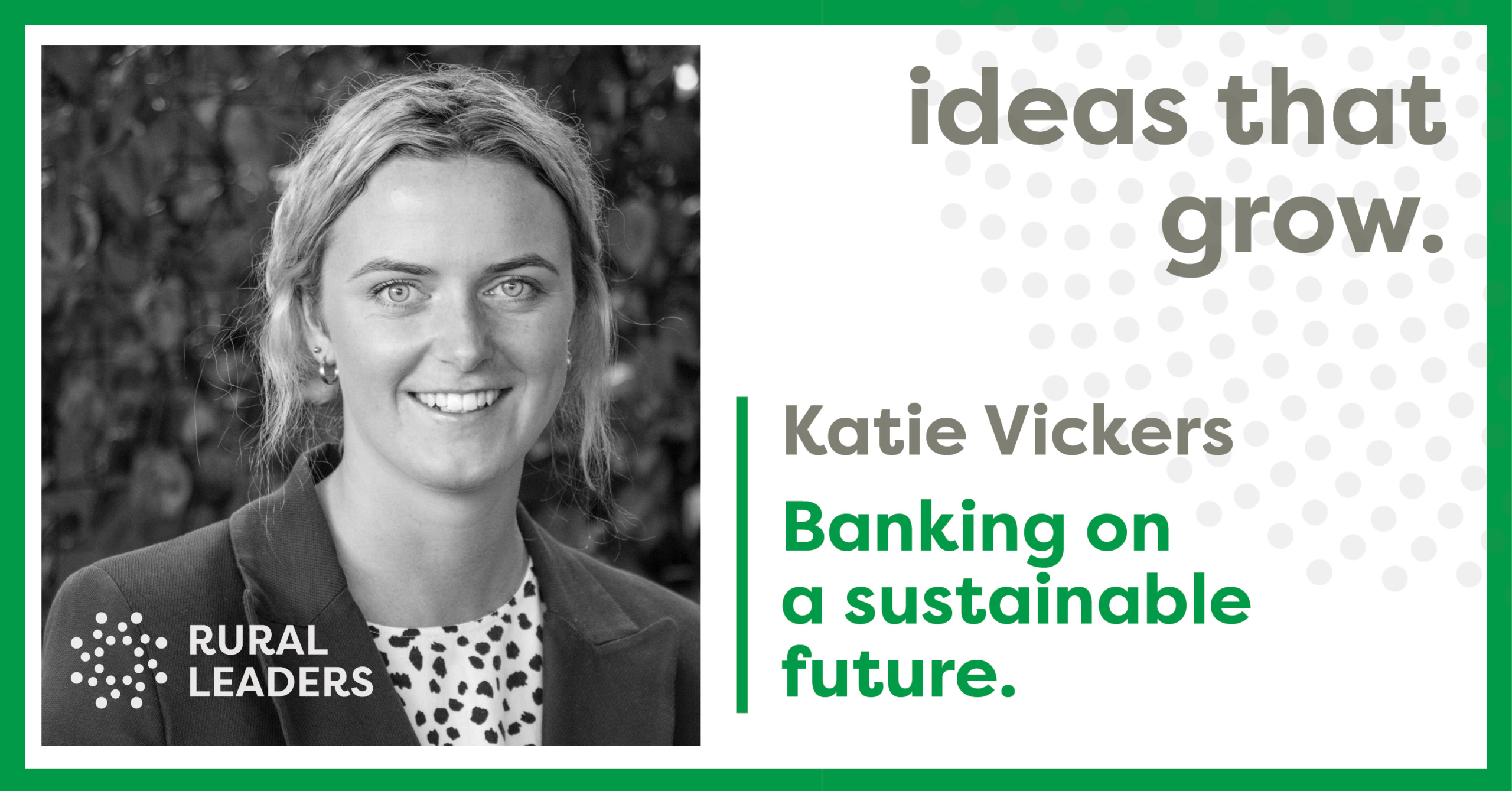
Katie Vickers: Banking on a sustainable future.

Ideas That Grow: Katie Vickers: Banking on a sustainable future.

Lynsey Stratford has discovered farmers make a few assumptions that aren’t very helpful – like accepting the fact that work might be dangerous and there’s nothing anyone can do about it. As Lynsey explains, “There are changes we can make, but those assumptions and those mindsets have been deeply held for quite some time.” 

As a consultant, Lynsey helps the primary sector with people management and development services and training. And, when it comes to health and safety she says, “We shouldn’t expect people to just know this stuff, but rather teach them and support them as they develop skills.” 
 
Lynsey’s research report unpacks the paradox that while farmers care about their people, farms as workplaces are overrepresented in fatal accident and injury statistics. So, what can be done to improve this?

Bryan Gibson – Editor of Farmer’s Weekly.

I’m Bryan Gibson, the Farmers weekly editor. This week, I’m with Katie Vickers. How’s it going? 

Katie Vickers – 2019 Kellogg Scholar.

Good, Bryan. 

Bryan: And where are you calling in from? 

Katie: I’m ringing in from Fairlie today.

Bryan: And that’s where you call home at the moment?

Katie: Yes. Recently moved down here from Christchurch. So getting back into the rural life. But loving it.

Bryan: And you are currently working for Rabobank as a Sustainability Manager, is that right?

Supporting producers through changing times.

Katie: Yes, I am. My role is around helping to support the banks sustainability ambitions and supporting our clients, in what is a reasonably challenging environment out there – just helping and supporting them, understanding what changes are coming and how that will impact their businesses and I guess wrapping our arms around them and helping them through that. 

Bryan: You’re right, there’s a lot of stuff going on in that space that farmers have to deal with. So it’s kind of cool that the banks are arm in arm with them facing up to that challenge, isn’t it?

Katie: Yes. And I guess the changes are pretty complex, but we probably need to start thinking slightly differently around how we tackle some of those challenges.  
 
One of the reasons I wanted to work for a bank was that you can see that they’ve got quite a strong lead in terms of how they can support clients. I guess at Rabobank we’re committed to the agri-sector and I love that kind of passion they’ve got for the sector. 
 
Our role is around how we support them, but also how we link them up with the right knowledge and networks. Because it’s such a complex topic and so different for every farming system. So it’s important for us to be able to understand their unique needs and make sure that we’ve got the right toolkit to support them in making good decisions for their business. 

Researching food nutrients on Kellogg Programme.

Bryan: Have you always worked in the agri-food sector or is it something you’ve evolved into over time? 

Katie: No, I’ve always been in the agri-sector. I grew up on a sheep and beef farm just north of Kaikoura, went to Lincoln University and then decided after Lincoln, that I definitely wanted to stay in the agri-sector.  
 
So I managed to land a job at Farmland’s Cooperative, and I worked there for eight years. About six of those years was actually in marketing, so I’ve come from a marketing and comms background and then spent my last two years there in a sustainability role. Then just recently moved to the bank, so it’s been an awesome journey. 

Bryan: Now, while that was going on, you applied yourself to the Kellogg Programme, and you took a look at nutrients in food. Is that correct? 

Producing food to positively impact human and the planet’s health.

Katie: Yes. So my topic was around putting the food back into food. The question I was looking to answer was what would it take for our primary industry to produce nutrient dense food? I think the reason why I wanted to explore that was I’ve always been brought up with a really holistic approach. I care deeply about the health of our planet and health of our people.  
 
I’ve got a twin sister who is a holistic health practitioner, so she works on the how do we help people’s health, because we’ve got a massive crisis in that space. 
 
So my passion has always been, what role does agriculture have to play in that? How do we work with our soils better to influence the food that we eat, which in turn influences the health of our people? It’s a massive topic. It was hard to even scratch the surface on a lot of that stuff.  
 
I did a lot of interviews and research with soil scientists, nutritionists and industry leaders, and I got some really cool insights out of that. No real answers, but lots of different things to consider. 

Bryan: People would think the food that New Zealand food producers make is nutrient dense and natural and grass fed and all that sort of thing already. So is there more that can be done at the farm level to enhance that? 

Kellogg research and the impact of soil on the food we produce.

Katie: I’m not an expert in this space and I will never claim to be, but my thinking was really expanded when I read Nicole Masters’ book – For the Love of Soil. She talks about the relationship that we have with the soil. In this day and age, there’s so much more we’re learning about the soil and the microbiology of the soil, and the knowledge we have of that is growing.  
 
As we understand more, we need to do more on-farm. So the role that my research played was understanding that today we use a lot of synthetic fertiliser, and we have quite a strong reliance on that, and that hasn’t been a terrible thing, but moving forward, how do we understand how to use our soils better so we don’t need to have such a reliance on some of those synthetic inputs coming into our farm systems. 
 
I you look at the kind of environment we’re in today with the rising input costs, it’s about how do we create more resilient farming systems, and having a different lens on what that might look like in the future. So the research I did was, okay, how do we understand our soil more to understand the impact it has on the food that we produce? 

Bryan: And what sort of insights did you get from some of the people you interviewed? 

The shift to quality over quantity and premium pricing.

Katie: One of the really interesting ones I did, I didn’t actually interview him, but I did a whole lot of research on the work that Dan Kittredge has done out of the States. He’s got a business called The BioNutrient Food Association.  
 
His role is looking at some tools consumers could use in the future to be able to scan Apple A and Apple B as an example and see the different nutrient composition of those apples and therefore make a decision as to why they might be paying $2 more for Apple A because it’s got a higher nutrient profile.  
 
Those tools aren’t in market and in bulk yet, but I have absolutely no doubt they will be in the future. So that’s the kind of thing could change the landscape of farming, when consumers have got the power in their wallet to be able to make those decisions, to say, well, you know, I want to know why I’m paying more for this apple, because I’m getting the nutrients that I need. With that, you’re hoping there’s been less environmental degradation to produce that product, whether that be apples or meat or whatever. 

Bryan: Yes, I guess that sort of thinking has become more prevalent with the pandemic, with people really thinking a lot about what they eat and keeping their base level health as high as it can be. So it’s really top of mind for a lot of people. 

A food system under stress.

Katie: For sure. I think it’s pretty obvious our food system is under stress. And whether it’s talking about a climate crisis, a human health crisis or health crisis, a biodiversity collapse, there’s all these different things that play in to each other. One of the key points I like to think about is that we don’t want to look at these things in isolation.  
 
If you look at the human health crisis we’ve got, and even the latest pandemic, these pieces have a real interconnectedness and it’s quite a different way to think about it.  
 
I think the more that we think about the connection between the crisis of our planet and the crisis of our human health at the moment, it might help us to think differently around how we handle these things in the future. 

Bryan: That sort of thinking ticks a few boxes at once, as you say. It can do more for people’s health – and a focus on soil can also do more in terms of freshwater quality and in terms of greenhouse gas emissions and biodiversity. All sorts of things do come together as one.  
 
A lot of people, when you talk about, say, regenerative agriculture or related fields, a farmer might say, well, I’ve yet to see the value-add for me. So if I’m going to reduce production to adopt these things, I need to make that up somewhere else. 
 
So how does a sustainability manager at Rabobank approach these things? 

Planting seeds – one conversation at time.

Katie: That’s a great question. I guess my personal mission is to just plant little seeds in people’s minds around how they think about these things. I guess I’ve always believed that you’ve just got to approach it conversation by conversation and people will take different things from the conversations that they have with you.  
 
My role at the bank, is to just support and understanding and what role Rabobank needs to play in this space and how we support our clients. That’s going to look different for every client we have.  
 
We have some clients that are in the regenerative space and really loving it and seeing benefits. We’ve got others that will want to be exploring it and others are saying, that’s not for me – there’s no right or wrong, it’s just how do we help create resilient farming systems in the future and make sure that people are profitable, sustainable and enjoying the life they lead. Because at the end of the day, if they’re not doing that, there’s not a huge amount of value in it.  
 
So I guess my role is just to have these conversations and I see business having a really important role in influencing the way we think. And as a young leader, I guess we can help create the future and it’s important that we are part of that. I want to be part of creating that future. 

Katie Vickers, Kellogger, Rabobank Sustainability Manager.

Bryan: I guess Rabobank being a global, agriculturally focused bank would have a sort of a long term view and a strategy around where things are going and what needs to be done to continue to do business in this space. So that would feed into a lot of the work that you’re doing? 
 
Katie: Yeah. We are lucky to have that global aspect. I guess it’s one of the pros of working for such an awesome business because we’ve got all these insights from across the globe to help our thinking. But I definitely reckon New Zealand is leading the way, particularly in the climate space and understanding at a farm systems level, what we’re dealing with.  
 
Bryan: Yeah, it is. And another thing I guess we need to remember is that it’s not just a value proposition, it’s increasingly become a cost of entry and market access, isn’t it? 
 
Katie: Yeah. I was late with that because I’m not a technical expert, but I come from a marketing background but when you have tricky conversations with people who might not agree with some of the changes that are happening, or are struggling to comprehend it, which I totally empathise with.  
 
One of the pieces I always lead with is the market. We export 90% of what we produce here in New Zealand. So whether we like it or not, what’s happening, what consumers are demanding and what the market is saying, is really important to how we respond. So we have to understand those market signals to make sure we’re producing what’s going to be valuable and what’s needed from our customers. 
 
Bryan: Yes, I used to work a little bit in PR as well, (we used) the old adage, if you’re explaining, you’re losing, quite often. It’s got to be obvious and it’s got to be transparent. You’ve got to front foot these things, otherwise someone will front foot it for you. 
 
Katie: Exactly. 
 
Bryan: So what made you apply to the Kellogg Programme in the first place? 

Kellogg, equipping today’s leaders for tomorrow’s challenges.

Katie: It was part of my development plan when I was at Farmlands, and I am eternally grateful for the opportunity to do the Programme. It was such an important time … the Programme really helped to widen my thinking around what influence business could have in helping to solve some of the challenges I could see coming in the agriculture sector. Having the opportunity to do that was just incredible.  

I know that I probably wouldn’t be where I am today if I hadn’t had the opportunity to do that Programme. I guess it was the people we were exposed to and the time that was carved out to really explore some of the ideas that came up – that was the really valuable stuff for me.  

Bryan: I’ve been to one or two of those Kellogg alumni conferences, and just the feeling in the room is quite different to a lot of places. You know what I mean? There’s such a good sort of camaraderie between the alumni of the Programme. 

Staying connected with the Kellogg network.

Katie: Yes. I think for me, I’m a people person, so the connections with people in the industry were just phenomenal. Even now, if I really want to talk to X, Y or Z to find some information and you said you did Kellogg, people are so willing to talk to you. I guess it just gives you the opportunity to speak to people who will challenge your thinking.  

As I’ve grown up and matured, I love having that. I love having people who will challenge my own thinking because it helps deepen my knowledge and my thoughts. Being able to have the opportunity or the exposure to speak to different people and have different perspectives is just so invaluable. 

Bryan: Thanks for listening to Ideas That Grow, a Rural Leaders Podcast in partnership with Massey and Lincoln University AgMardt and FoodHQ. 

Ben Todhunter: Farming, conservation and Nuffield.

Ideas That Grow: Ben Todhunter, 2006 Nuffield Scholar.

Lynsey Stratford has discovered farmers make a few assumptions that aren’t very helpful – like accepting the fact that work might be dangerous and there’s nothing anyone can do about it. As Lynsey explains, “There are changes we can make, but those assumptions and those mindsets have been deeply held for quite some time.” 

As a consultant, Lynsey helps the primary sector with people management and development services and training. And, when it comes to health and safety she says, “We shouldn’t expect people to just know this stuff, but rather teach them and support them as they develop skills.” 
 
Lynsey’s research report unpacks the paradox that while farmers care about their people, farms as workplaces are overrepresented in fatal accident and injury statistics. So, what can be done to improve this?

Bryan Gibson – Editor of Farmer’s Weekly.

I am Bryan Gibson, the Farmer’s Weekly Editor, and this week I’m joined by Ben  
Todhunter. How’s it going? 

Ben Todhunter – 2006 Nuffield Scholar, Rakaia, Canterbury.

Yeah, good thanks Bryan. Yep. 

Farming, Conservation and Nuffield.

Bryan: And where are you calling in from? 

Ben: I’m at home on the farm, Cleardale on the Rakaia Gorge, about an hour west of Christchurch. 

Bryan: Your family’s been there a while, I understand. 

Ben: We’ve been here for close to a hundred years. The boundaries have moved around a little bit in that time, but yeah. I’m the fourth generation farming this location.  

Bryan: Can you tell us a little bit about the place, what your farm looks like and what you farm? 

Ben: So we’re on the north slopes of Mt Hutt. The farm runs down to the Rakaia River. It’s got a big chunk of boundary with the Rakaia River. It’s got loessal soils, thousand mill rainfall, lies to the northeast – so it’s got a good aspect. It’s well located, running about five and a half thousand ewes and 300 breeding cows, finishing all replacements. We do a little bit of cropping, milling wheat and feed barley and a significant genetic business in sheep and cattle. 

Bryan: So a pretty big operation. 

Ben:  A lot of farms are getting bigger nowadays, but yeah, there’s a lot going on and it takes a bit of keeping the moving parts ticking away and working properly. 

Bryan: Have you been involved in the family farm right through, or have you been away and done other stuff? 

Ben: Been back on the farm since about 1992. I’ve been overseas, did a Master’s in Dublin and I’ve worked for an Irish dairy cooperative. Done a bit of farm work in other parts of the world and worked on other farms. My father’s hips were buggered and I gave him a hand, then and I did a little bit of lecturing at university while I was trying to farm, but I’ve been at home ever since. 

Nuffield Scholarship - integration of conservation into farming.

Bryan: We were talking before we came on about your Nuffield Scholarship report. You did it a little while ago now, when was that? 

Ben: 2006.

Bryan: You took a look at integrating conservation into farm systems. Can you tell me a little bit about why you chose that? 

Ben: Yeah, absolutely. At that stage I was representing high country farmers/pastoral lease farmers in their battles with the Crown really. Helen Clark was very keen on a network of high-country parks. The model that was being explored at that stage was to separate conservation and farming.

I thought the model was wrong. It didn’t fit high-country landscapes at all. So I wanted to look at that model and how it was carried out in other parts of the world to see if there was anything I could bring back that we might be able to learn from to help those farmers. 

Bryan: From my reading, you mentioned some work that was going on in the United States that seemed like it was achieving the right results. 

Ben:  The bits that were interesting to me were if you look at how the conservation-farmer battles go in our country, if a conservationist like Fish and Game or Forest and Bird wants to get an outcome, they almost have to paint the existing owners of the land or of a property in a bad light so that they get some legislation change.

So it becomes a contentious battle. And that’s a bit how the system is. So the insight that I got in the states was more around where there’s clear property rights and those actors or participants are forced to talk to each other and then they will negotiate, inform outcomes that benefit both people rather than becoming polarised positions. So I think that principle was quite a useful one to carry forward. If you understand what I mean when I say that. 

Bryan: Totally. In some ways, a lot of people want the same things, but it’s better to sit down with the other affected party and map a positive path forward rather than tell on them and try and get someone else to hit them with a stick, I guess. 

Learning from the United States.

Ben: Yeah, very much so. You do have to remember the history of the settlement for each place in that respect. So when the west was settled in the States, it was settled around the rivers and those sort of places and that was where a lot of the biodiversity was, so their ownership vested with the farmers.

Whereas in New Zealand, a lot of the biodiversity has been retained in the wild areas, so slightly different settlement, but I think the principles are still reasonably applicable going forward.

So some of the really good outcomes you got through there were spawning habitat for fish, ensuring there was sufficient water in the creek at those times. So paying the irrigators not irrigate at that time, but the owner needed to pay them in the dry years. So it created quite fixable solutions and reasonably efficient solutions to some problems without the contention and those things we seem to get in our discussions.

Bryan: And in the time since you wrote this, how do you think things have been? Is there any change for better or worse? 

Conservation and finding the value add.

Ben: I’m optimistic there’s been a slight maturing of approaches between NGOs. I’m not sure that the farmers themselves have matured in their approach on how to deal with some of these things. 

One of the solutions that I looked at was market-based solutions to some of these issues where you’d pay a higher price for products. And that’s a bit of what we’re working with through the New Zealand Merino Company, to try and link positive climate action on the ground through to customers. That’s something that I’ve always been interested in, but it does seem really hard to get and maintain a premium for that over time. 

Bryan: That is something that a lot in the farming world debate whether the value add is actually there for doing some of the sustainability and traceability and all that sort of thing. 

Ben: So with a lot of the wool that we’re getting from Merino, we are getting significant premiums for the ethical wool that’s treated with good animal welfare standards in the current market. So there are some premiums with specific customers at certain times. 

Bryan: That’s good to hear. So what made you want to do a Nuffield Scholarship? What drew you to it? 

Why Nuffield?

Ben: I’ve always been interested in what happens outside of New Zealand in a wider sphere of the world. I probably didn’t have the capacity to do it at the time, but you probably never do. I always enjoy being around people that like to make change, that actually make things happen and think about the world and have got some energy to do that. The Nuffield people are certainly people who will question things and can make change. 

Bryan: The actual travel and that sort of thing, the process of doing it, what was that like?

Ben: Vaughan Templeton was the other scholar in that year, we had a conference in the Netherlands in the Rabobank headquarters and met all the other Nuffield scholars from around the world. That was an amazing experience. Then we traveled for six weeks through Europe, the States and Canada with a bunch of Australians in a minivan – an amazing experience as well. 

You get into a whole lot of agricultural businesses, spend a week in Washington, D.C. learning how that country operates – or doesn’t operate. Going to some of the bigger flower markets in the Netherlands like the Ellesmere Flower Market. The Dutch people are really good at logistics. 

Looking at the scale of the agricultural production that happens in America and the scale of the systems and the specialisation that goes on in some of those businesses compared to our generalisation over here. Understanding from the other farmers that the issues are common around the world. Labour, environmental impacts, markets, profitability, succession, all those issues are common in some respects. So learning about that and stuff. It’s an amazing experience. 

Bryan: Thanks for listening to Ideas That Grow. This podcast was presented by Farmers Weekly. For more information on Rural Leaders, the Nuffield New Zealand Farming Scholarships, or the Kellogg Rural Leadership Programme, please visit ruralleaders.co.nz. 

Lynsey Stratford: Changing how we work for better outcomes.

Ideas That Grow: Lynsey Stratford, 2021 Nuffield Scholar.

Lynsey Stratford has discovered farmers make a few assumptions that aren’t very helpful – like accepting the fact that work might be dangerous and there’s nothing anyone can do about it. As Lynsey explains, “There are changes we can make, but those assumptions and those mindsets have been deeply held for quite some time.” 

As a consultant, Lynsey helps the primary sector with people management and development services and training. And, when it comes to health and safety she says, “We shouldn’t expect people to just know this stuff, but rather teach them and support them as they develop skills.” 
 
Lynsey’s research report unpacks the paradox that while farmers care about their people, farms as workplaces are overrepresented in fatal accident and injury statistics. So, what can be done to improve this?

Bryan Gibson – Editor of Farmer’s Weekly.

I’m Bryan Gibson, editor of Farmer’s Weekly. Today, I’m talking to former lawyer, consultant, and dairy farmer, Lynsey Stratford. How’s it going? 

Lynsey Stratford – 2021 Nuffield Scholar, Curio Bay, Southland.

Good thanks. Nice to talk to you.

Digging deeper with a Nuffield Scholarship.

BryanWhat have you been up to?

Lynsey: I’ve been up in Christchurch with Rural Leaders, to celebrate the end of the scholarship programme for the 2020s and the 2021s.

BryanFantastic. As you mentioned you are a recent scholar. What made you choose the Nuffield Scholarship?

Lynsey:  To be honest, I applied just after our first COVID lockdown. Like everybody, I’d been thinking about what I enjoy doing during that time – being stuck inside. I love to travel and learn new things. I’ve always looked at the Scholarship and thought that the stories from previous scholars sounded like a great experience and opportunity.  
 
I didn’t really think I’d get a scholarship, but I thought, what the heck, let’s give it a go, and if nothing else it’ll be an interesting experience. I was very surprised and honored to be selected as a scholar for 2021.

Bryan: And what sort of area did you want to study? 

 Lynsey: I love working with people in the primary sector. I went into the scholarship thinking I would look at health and safety and providing better workplaces for people that are more productive and engaging for better health and wellbeing outcomes. 

My project ended up being called ‘Super Humans, Not Superheroes’. It looked at how we do all this fabulous stuff in the sector, but we’re probably asking a bit too much of ourselves. We expect to be superhuman, and our teams too. 

With a slightly different approach to structuring work, we could support better outcomes that are more engaging, create better work, more productivity, and still improve the health and safety of our people.

Challenging and changing mindsets toward on-farm workplace safety.

Bryan:  Working in the farming world, it’s a relatively dangerous place and it can be somewhat isolating at times. What sort of strategies do people need to try to work into their businesses to make it better for people? 

Lynsey: I guess the good thing is most are low, or no-cost, so you can make quite big changes without spending a lot of money. The key to it all is mindset.  
 
What I found was that farmers have some assumptions that aren’t very helpful. We accept the fact that work might be dangerous. We assume there’s nothing we can do about it. And that’s not right. There are changes we can make, but those assumptions and those mindsets have been deeply held for quite some time. 

Farmers don’t think they’ll ever get hurt. They think other people might. Generally, we don’t think that we are prone to accidents. So, we don’t really take any steps to manage the risks that there are in our work. We tend to normalise the fact that it is a dangerous occupation and so we don’t try and challenge that by changing how we work.  

If you’ve got family or team members who think that way, that’s a good place to start. We need people to help us understand that there are things that we can do to organise work better. So, lots of the time, we’ll be told what to do, but not necessarily the why or the how. And that’s just good team communication.  

We shouldn’t expect people to just know this stuff, but rather teach them and support them as they develop skills. 

Bryan: I guess an engaged work team is probably going to not only be more productive, but also be happier and safer, would you expect? 

An engaged farm team means thriving workplaces and better outputs.

Lynsey: Absolutely. There’s some shocking statistics from Gallup, who looked at engagement across the world. For New Zealand, only 20% of our workforce, and this is across all sectors, is fully engaged. If you’ve got a team of five people, that’s only one giving everything they’ve got.  
 
So, yeah, if we can tap into engagement, it’s better for people. They feel like they’ve got some control and they’re growing – they like to be there. So, if you’re an employer, those people will go that extra mile for you because they want to be at work and they feel passionate about it. 

And engagement is, if they feel you care about them, that they’ve got some control over how they themselves can organise their work. That they’re growing and developing – those are all things that we can improve if we start to think differently about how we organise work. 

Bryan: I guess what you’ve just been talking about feeds into the ‘why’ you’re there. If there’s a bigger goal that everyone is working towards, then that can help, can’t it? 

Lynsey:  I guess that’s where we’ve gone a bit wrong. In the past we’ve focused on compliance, but we haven’t seen these wider benefits of good work. And there’s some interesting stuff that’s been done by the Business Leaders’ Health & Safety Forum by Hillary Bennett. It said that if you improve how you set up work, train people, you’ve got good processes, so they understand their role, and their responsibility, and how to change how work gets done – if you do all those things well, you improve mental health as well.  
 
So, that’s another component of this, that we’re looking at wellbeing as well as physical health and safety. 

Bryan: People who are engaged, feeling good about themselves are probably going to produce better work and be safer when they do it, aren’t they? 

Lynsey: Yeah. And be on the thriving end of the spectrum of mental health, instead of the just surviving space – or not surviving at all. So, that’s what we want. We want good work that sets us up for thriving people and great farming. 

Bryan: So, you’ve just finished then? 

A different kind of Nuffield Scholarship experience.

Lynsey: Yes. We had an experience that was interrupted somewhat by COVID. So, it’s been a very weird scholarship experience because it’s kind of backwards. Usually, you do your international travel, and then you produce your report. Ours will be the other way around. But I think our experience, although different, has been just as good.  

What we did was travel as a cohort. So, the 2021 scholars linking in with the 2020 scholars. We traveled through New Zealand, from Northland right down to where I farm in Curio Bay, Southland. We did the length and breadth of New Zealand together. 

Then we did our research independently, but with as much as we could face-to-face. A lot of it had to be remote via Zoom. So, now I get to go and do my international travel through August, September, and October. 

Bryan: You might want a rewrite afterwards! 

Lynsey: I think that’s the aim. We kind of validate what we’ve seen, and if there’s anything we need to change, we’ll revisit. 

 
Bryan: And that’s exciting. I mean, the travel component is a big part of the scholarship. Where are you off to? 

Lynsey: My group goes to Japan, Belgium, Ireland, and California. 

Bryan: Well, that’s an exciting thing to look forward to. 

Lynsey: Yeah, it is. It’ll be a Northern Hemisphere trip in the summer. So, that’s also quite exciting now, as we sit here in Invercargill. 

Bryan: When you’re not knocking out your report as part of your Nuffield Programme, what does life look like for you? 

Lynsey: I’ve been married to a Kiwi dairy farmer for nearly 20 years now. Being on farm with him was a big part of life until recently. We sold our farm effective 1st of June. Now, we’re kind of redefining where we go and what we do, but I’m also a mum, which is very important to me.  
 
I’ve got two children that I like to focus on. I like to try and support them with school things and support our local community too. And then I also have a small consulting business that helps primary sector businesses – but all sorts of businesses manage their people. 

From cows to consulting – a farmer advising farmers.

Bryan: What sort of consulting or advice do you offer businesses? 

Lynsey:  So it’s interesting because I started out as an employment lawyer in the UK. There I was focused on compliance and getting agreements, policies, procedures and following all the legal requirements.  
 
I still do all those things, but I’m much more focused on trying to improve work setup so that we’ve got engaged teams, great communication, good processes. We’re training people and developing them, making sure that the behavior we’ve in the workplace is setting up a great culture that engages people. So, I’ve moved away from just focusing on the compliance. 

Bryan: I think that’s a move the agricultural and horticultural industries in New Zealand need to complete still. A lot of the reaction I get at the newspaper to health and safety reform, or regulation is that it’s just a hassle, a box-ticking exercise, whereas if you do change that mindset into creating a space where everyone can thrive, then that’s when the goal is going to be reached. 

Lynsey:  That’s one of the things I concluded in my research. It has been sold to us as a compliance exercise – but it takes a lot of resource to change mindsets. It’s not that easy. And so, the easier thing to do is to set us up for compliance, make sure we’ve got the plans in place. But if we really want to make change, it’s that mindset that we need to focus on. We need resources to do that.  
 
We need great people connecting farmers with good information that helps them understand the opportunity and ‘the why’ for them, whatever it is. That then supports them to develop the skills they need. And it’s not something that we can nail in one workshop or one interaction. The resourcing really needs to be there, and it needs to be long term. We’re talking about generational change if we want to change mindsets. 

I guess I’ll just give a shout out to Ben McLachlan. He’s a 2020 scholar and his report is about mindsets that help us change. He’s looking at the growth mindset, which I found was critical to getting great workplaces.  
 
A workplace where we’ve got a growth mindset is one where we understand that people can develop new ways of thinking and new skills if we give them the opportunity and the right support. I was stoked when I saw his work, as it aligns nicely with mine as well. 

Bryan: That leads into my next question about the community that being part of the Rural Leaders team builds among those who are working through the same cohort? 

Lynsey:  We were lucky. Talking to previous scholars, they have often got their scholarship, briefly met the New Zealand cohort, then gone overseas and developed relationships internationally – but not quite as tight a relationship with the New Zealand scholars.  
 
I think we’ve been lucky that we got that chance to spend time together, because of COVID. It’s the silver lining. It’s been amazing to see the projects that the scholars came up with across those two cohorts. Some of the best opportunities were the discussions that we had in the van as we toured New Zealand visiting leading businesses. Thanks to all those scholars who talked to me and shared their views.  

Bryan:  Excellent. So, the programme is something that you’d recommend to other people? 
 
Lynsey: Absolutely. It’s not easy. To do anything like this where you are basically challenging things that you thought or your beliefs in how the world works, that has been a challenge. But it’s been a unique opportunity too. I just can’t think where you’d get the chances that we got to visit all these amazing businesses.  
 
We went to certain Rocket and Aerospace businesses. I didn’t even know we had these kinds of businesses in New Zealand. If you want to stretch your assumptions and learn some new things and meet some awesome people, I thoroughly recommend it. 

Bryan: Thanks for listening to Ideas That Grow, a Rural Leaders podcast. This podcast was presented by Farmers Weekly. For more information on Rural Leaders, the Nuffield New Zealand farming scholarships, or the Kellogg Rural Leadership Programme, please visit ruralleaders.co.nz. 

The future of food and fibre is in the hands of our bold and our grounded people – those who give back to their communities and industries.

Sound like you?

Julian Raine:
The apple of a horticulture robot’s eye.

Julian Raine podcast_apple orchard_featured image

Ideas That Grow: Julian Raine, 1997 Nuffield Scholar.

Julian Raine is a 1997 Nuffield Scholar who quietly gets on with things worth shouting about.  
 
Julian runs a mixed Dairy and Horticulture operation and no matter what he’s producing, the one constant is innovation. From robots to getting back to milk in glass, Julian has an entrepreneur’s motivation and an innovator’s foresight. 

In this podcast, Julian talks with Farmer’s Weekly Editor Bryan Gibson about his diverse operation, some of the challenges he faces and some of the innovations he’s making to meet them – including moving to robot-ready on horticultural sites.  
 
Julian also talks about his Nuffield travel, what he learned and how his research played a role in helping shape an industry.  

The interview took place in May 2022 and the version below was edited for clarity. Listen to the podcast above for the original conversation.

Bryan Gibson – Editor of Farmer’s Weekly.

I’m Bryan Gibson, editor of the Farmer’s Weekly. And today we are talking to Julian Raine. How’s it going? 

Julian Raine – 1997 Nuffield Scholar, Dairy and Horticulture farmer/grower, Nelson. 

Good. Thanks, Bryan. 

The apple of a robot’s eye.

BryanAnd where are you calling in from today?

Julian:  I’m in Nelson. We have a farming operation, which includes dairy and horticulture, just south of Nelson in the Tasman region.

BryanThat’s quite a diverse business you got going there? 

Julian:  Yes, it is. The agricultural bit has been in the family for 180 years, so we’ve been around a while. Whereas the horticultural bit, I started with my business partners about 40 something years ago.

Innovating in a diverse operation.

Bryan: What do you focus on in the horticulture side of things? 

Julian: We have about 200 hectares of apples. I’m just trying to do the quick numbers off the top of my head – about 40 hectares of berries, all boysenberries. About 45 hectares of kiwifruit, and about five hectares of a new crop for us, feijoas. 

Bryan: Fantastic. And how have things been going this year? 

Julian: It’s been a good year in terms of growing. Been a lot more difficult to get things harvested with the shortage of staff. We completed harvest nearly a couple of months ago for all crops, so that’s good to have that behind us, although we were still packing apples well into July.  

There’s plenty of challenges with shipping and trying to get containers. We were running about a month behind with our shipping program, so that’s been a bit of a worry. 

Bryan: You haven’t had any of the weather or climate related yield issues they’ve had up in the North Island? 

Julian: No. No, we’ve been a bit fortunate thankfully, there was enough to contend with from COVID. 

Bryan: And the agriculture side of things, can you just tell me a little bit about that? 

Julian: Yes. We operate a fresh milk business. We deliver to about 3,000 households in the top of the South Island, Marlborough-Nelson-Tasman. We operate two dairy farms, and we buy and milk from another two dairy farmers. 

Bryan: So, it’s direct to the consumer. 

Julian: Yes. The home delivery is to the letter box, or to the back door, or front door. To cafes, restaurants. And we have several vending machines dotted around Nelson as well. 

Bryan: That seems to be a growing industry, isn’t it? 

Julian: It’s kind of back to the future really. When I was a lad, all the milk was basically bought at the front gate. And occasionally when you ran out, you went down to the dairy. So, we’ve kind of gone back to that model. 

Bryan: My first job I did all through high school was pushing a milk cart round the streets. I was there for the change from glass to the tetrapaks. 

Julian: Right. We’ve gone back to glass as part of what we do. 

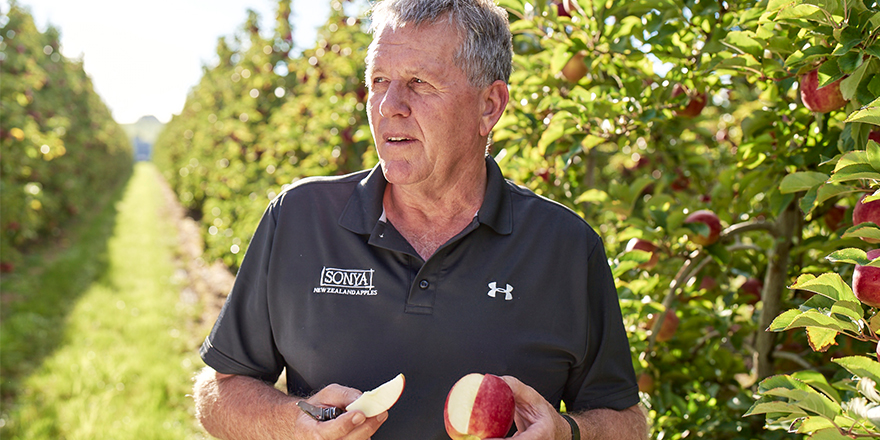
We visited Julian at his apple orchard in April, where he has trees producing mostly the variety ‘Pink Lady’.

Julian spoke briefly about a new 500 cow, all-weather shed he has built, giving his operation ‘the tick’ from the SPCA, one of the first dairy farms in New Zealand to receive this endorsement. This dairy operation supplies Appleby Farms (Ice cream), a business collaboration between himself and Murray Taggart, a fellow Nuffield Scholar.

A Nuffield report creating impact.

Bryan: Now, it’s been a little while since you did your Nuffield report, 1997 I think you did it. But integrated fruit production, still relevant, I think. What do you remember of writing that report? 

Julian: As you say, it was 25 years ago. So, a bit of a distant memory, but many of the issues are still relevant today. What came from that report was a system I wrote called Green Grow, which was to deliver three things: Fruit with no residues, have some environmental indicators, and have a food safety system under something relatively new then called HACCP.  

This was a hazard analysis control point, which was what NASA used to send their astronauts into space. Because if you’re sick up there because of food, you’ve got a major problem. So, they wrote a food safety programme, and I adopted the bones of that, or the principles of that. 

They wanted to know whether the product was safe. The only way that we could guarantee the product being safe was essentially to take residues away. So, in terms of how we produce it, it’s up to us to battle the elements, with insects and fungi. 

When the consumer comes to consume it, they want to know that there’s nothing on there that can harm them or their kids. And then as part of that, some environmental indicators that say we haven’t harmed the environment in producing that fruit. 

Bryan: Space age fruit production, that sounds awesome. 

Julian: Yes, years later, I chaired the Apple Futures Programme, that was a three-year programme to deliver wider systems to get to the same point for the average grower. That’s pretty much about 80 something percent of the New Zealand industry now, with a fair chunk of the balance being organic. I wasn’t pretending to be organic. And yeah, we converted a whole industry in less than a decade. 

Bryan: The industry as a whole – horticulture, pip fruit and candy fruit, and that sort of thing has come a long way in the last decade or two, hasn’t it? 

Julian: It has. That was late 2000s, and since then it’s advanced even further. 

Setting up for horticultural automation.

Bryan: Do you have any other observations on how things have changed, running a kiwi fruit growing business in that time? 

Julian: We’ve set up our orchard systems now for being robot ready. We can’t keep going how we are. And so, investing in an orchard production system is a long timeframe. We must think about what the future will look like when we spend hundreds of thousands of dollars a hectare setting up an orchard.  

We’ve set our orchards up in anticipation for robots to be able to harvest. We think about how they’ll optically see the fruit, how they’ll pick it, and then how they’ll get that fruit from the tree into a bin. That’s what we’ve been busy at in the last decade. About 30 something percent of our orchards, anything we’ve planted in the last 10 years, are robot ready. 

Bryan: That’s interesting. You often think about building robots to pick the fruit as it sits. But there are a lot of things, I guess, row spacing and the way you propagate the trees, that sort of thing. 

Julian: Yes, and how we set the structure up. So single plane trees. It’s like a single plane hedge row, so the robotics and the sensors sensing the fruit, can’t go through the tree. So, it’s got to be on a single plane essentially. 

Bryan: That’s amazing. How far off do you think you are from getting the robots? Are you involved in any of that? 

Julian: The Americans and the Europeans are leading that race. We don’t have the technology here that’s needed for it. Although, there’s a small group headed by Steve Saunders in the Bay of Plenty who are working on kiwifruit robotics. They’ve tended to go more into the pack house and look at optics and how you pack fruit. 

In ten-years-time, we’ll have lights out factories packing apples. Again, to try and get 24 hour a day, seven day a week packing businesses going, we need to do the same thing with our harvest processes. When the sun goes down, we don’t all go home – robots will carry on. 

Bryan: Sounds very high tech and quite cool.  

Julian: There’s a lot of work to get it to that point. A few of us, I suppose, think about these things in the middle of the night, when other people are sleeping.  

You’ve got to work out where your business is going. About how you make it more efficient and keep a lid on cost. Because everyone is really cost conscious now, the consumer wants to buy more for less. And we’ve got to get cost out of our business and keep a high standard, because that’s really what our New Zealand brand is built on. 

Nuffield and the international travel experience.

Bryan: Now, going back to 1997, you also did a bit of travel as part of your studies? 

Julian: Yes. Through Southeast Asia, Europe, and Eastern Europe. It wasn’t long after the wall came down, I was in Hungary looking at soft fruit production. I was also in South America looking at what they were doing in Chile and, North America, in Washington.  

Really interesting to get a handle on what the leading lights were doing at that point in terms of their growing systems. 

Bryan: And in the time since, how would you say being involved in the Nuffield Programme has informed what you’ve done in those years?

Julian: Well, for me it was about the personal experience and honing my leadership skills and trying to lead producers through changes. Also, trying to think about things holistically, looking at a problem, not from just a single plane, but being able to not only go around and see the other person’s view, but be able to walk right around that issue and look at several points of view.  

I’m probably not finished yet – I’m always willing to give back to the industry. 

Bryan: The Rural Leaders, Nuffield Programme would be something you’d recommend? 

 Julian: Without Nuffield I wouldn’t have got to where I am today. It gave me not only a critical thinking ability, but it’s also given me a lot of resilience as well.  

I am also able to call on the experiences I saw around the world – the interactions not only with other primary producers, but also government officials and how government thinks.  

And how the EU operates, rightly or wrongly. And then most importantly, how consumers think, and always interacting with your customer to keep yourself up to date with what the customer wants to pay for, and what they don’t want to pay for.

Thanks for listening to Ideas That Grow, a Rural Leaders podcast. This podcast was presented by Farmers Weekly.

For more information on Rural Leaders, the Nuffield New Zealand Farming Scholarships, or the Kellogg Rural Leaders Programme, please visit ruralleaders.co.nz 
The future of food and fibre is in the hands of our bold and our grounded people – those who give back to their communities and industries.

Sound like you?

Hamish Murray: Building stronger on-farm teams by getting out of the way.

Hamish Murray podcast - Building stronger on-farm teams

From Bluff Station to Cambridge University and back.​

This transcript of the podcast was edited for clarity.

Bryan Gibson – Editor of Farmer’s Weekly. 
I’m Bryan Gibson, editor of the Farmer’s Weekly. And this morning I’m talking to Hamish Murray. How’s it going? 

Hamish Murray – 2019 Nuffield Scholar, Bluff Station, Marlborough. 
Good. Thanks, Bryan. And you?

BG: You’re in Marlborough, is that right? 

HM: We are an hour south of Blenheim, 45 minutes north of Kaikoura on the east coast, inland at Kekerengu. 

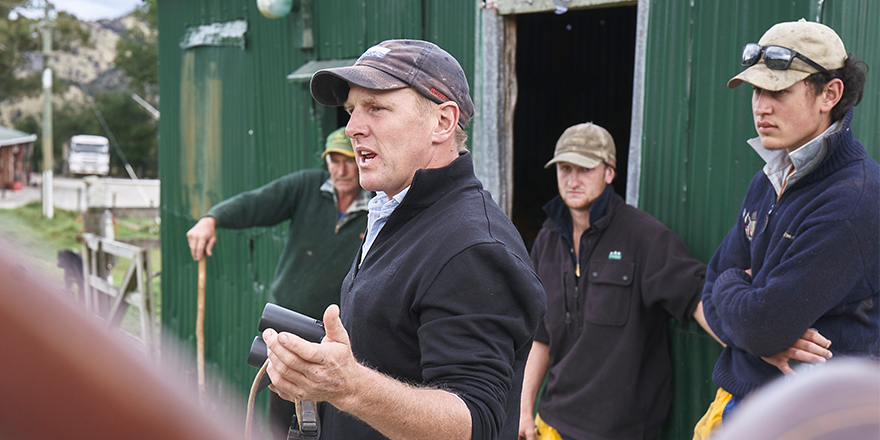
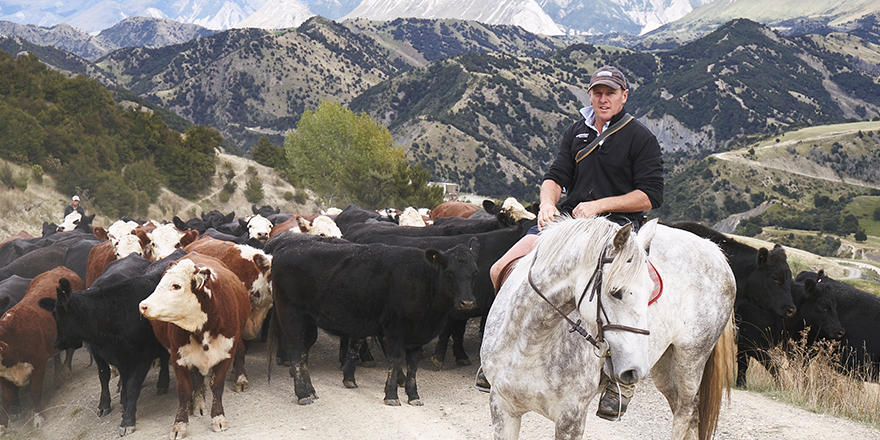
We’re a high-country sheep and beef farm that stretches into the Clarence Valley. The Homestead is about five minutes from the coast and goes all the way into the base of Tapuae-o-Uenuku. It’s about 35 km’s to the back boundary. We run Merino sheep, Hereford Angus cattle, and we have about 800 beehives. 

BG: How have things been going this year for you? 

HM: We’ve had a great season with 300mm of rain through late January, early February. It’s meant our autumn has been incredible, and stock are in good condition. We’re through the bulk of our work now. It’s starting to quiet down for the next five weeks before we look at shearing ewes at the start of August. 

BG: I noticed from your bio you went to Cambridge University? 

HM:  Yeah. I suppose like many farmers at one point, you were told to get out and go and do something other than agriculture. And so, I spent a lot of my former years trying to give myself an opportunity to do anything other than be a farmer.  

I was sitting on a train on the way to a job interview in London, after graduating from Cambridge. It was then that I realised I really wanted to be back in New Zealand chasing stock around and being part of the farming community. I wanted to give our children the opportunity to grow up with the same experiences as we had. 

BG: How was that time in the UK at university for you? Must have been quite eye opening. 

HM: I was fortunate to get the opportunity to study there. I played a good level of sport playing in the varsity match on a couple of occasions while studying economics.

It was an incredible experience. It pushed me mentally as far as I could have been pushed. The expectation to perform and to be part of that was a great challenge. I thoroughly enjoyed it and look back on it fondly. 

Hamish Murray at Bluff high country station

Pushing your limits and personal growth.

BG: And in 2019 you went through the Nuffield Scholarship Programme. 

HM: Again, fortunate to be given the opportunity to do some travel. I felt that when I was in the UK, I was on a student budget. So, I didn’t really get the opportunity to do the travel that I would’ve liked while I was there.

The Nuffield Farming Scholarship gave me the opportunity to look at agriculture in different parts of the world with a whole lot of like-minded people.  

My topic was to look at teams and what made certain businesses successful or workplaces more enjoyable and engaging for staff. 

I had a real challenge about five years after coming home from overseas. We had a significant drought here in Marlborough and North Canterbury, and it pushed me to an emotional breaking point. I’d played top level sport so I knew, physically, how far I could push myself.  

Studying at Cambridge I’d reached that mental breaking point also. My limits had been challenged there. But I’d never had an emotional breaking point like this drought caused. I’m not unique in that. Everybody has these challenges. At that time, I exhausted myself trying to keep our team, our staff, and our family going. 

That was a significant point for me. I became focused on how to better lead myself first. That grew over the next couple of years as we recovered and then grew into how to better lead our teams.   

Hamish Murray at Bluff station

Nuffield study and building better teams.

My focus at the time of the Nuffield was around productive, efficient, and effective teams. What makes some places more engaging and motivating for staff to work in.

Then with Nuffield I was lucky enough to look at businesses all around the world that were held up on those pillars. What made them different, what made them tick, and what might that mean for the future of work in New Zealand – in the ag space, especially. 
 
BG: So can you talk a little bit about who you looked at and what some of the keys to building a successful team might be? 
 
HM: With my Nuffield travel I got to see businesses in the Netherlands healthcare industry that had developed these self-managing teams called Buurtzorg. I spent time in Silicon Valley too, looking at a lot of tech companies.  

Everywhere I went, I was looking at teams and what made them successful. And then coming home, I spent time with the Crusaders looking at what made them different. How have they been able to win multiple championships, seemingly pulling from the same talent pool as the rest of New Zealand.  

BG: And were there some takeaways from that can be applied to the agriculture situation? What sort of changes did you end up making, say, in your own business to overcome the sort of challenges you had with the drought?  

Building self-awareness and self-aware teams.

HM: A lot of what I learned was building on those challenges we had been working through. Self-awareness was a huge one. Building self-awareness together as a team was significant for all these businesses. They found their own individual ways to work together on the soft skills that make teams work well together.  

People don’t leave a job necessarily because they don’t like it. They leave the job because they don’t like the boss or their workmates.  

 “So much of what we focus on is the technical stuff in doing the job, rather than working on working together.” 

How do we best understand the individual attributes that people bring to a team? Little things as simple as how do people like to learn? How do they like to communicate? For example, what do I look like on a good day? What do I look like on a bad day? And how to come up with strategies as a team to overcome those things. 
 
BG: You mentioned the Crusaders and Scott Robertson’s approach to coaching and team culture. He seems to find out, as you say, the best way to do knowledge transfer, depending on that person’s mental makeup. And that’s part of the success, isn’t it? 

HM:  Absolutely. One example for me was the way every business or every super rugby franchise has their values in big print somewhere in their changing room so that everyone sees them. It’s kind of the way that people do it.

The real gold comes from when you spend time to work out with people what those values look, sound, and feel like.  

Until you dig deeper with your individuals. As the people in your team change, how does that look, sound, and feel for those particular people at that time? That makes these things come alive and become more of an ingrained part of your culture. 

BG: It seems that the world we live in now seems to be more challenging for both individuals and workplaces. So, this kind of approach and strategy, if you are running a team, is only going to become more important.

The Nuffield Scholarship and creating the space to grow.

HM: Wellbeing is important but being able to bring your whole self to work is even more so. As you get away from the hierarchy of things, people want to be able to turn up. They don’t want to be a different person at work than at home.  

To truly understand people, we’ve got to listen and ask better questions, and get to the bottom of truly understanding them. Then we can build a safety network of people around them, allowing them to flourish in our workplaces. 

BG: So you obviously enjoyed the experience of going through the Nuffield Programme? 

HM: I couldn’t recommend it enough. One of the greatest challenges for me, and one of the biggest learnings, was being able to set our business up with our team to create the opportunity for staff to step into that space. Then I could be away for nearly five months.

They really grew into that opportunity, by me getting out of their way, yet still giving them enough support.  

I think that’s been one of the greatest growth opportunities for me – is create the space for our team to step into. They’ve thrived in that opportunity. 

We haven’t gone back to where we were before. That has been significant and enjoyable for me. And when I look back on the opportunity, the travel, the study, and the chance to look around and gain many ideas from many businesses around the world – it was fantastic.  

“When I think back on what the greatest significance has been, it would be the growth in our team and in our business, simply because of being able to get my own ego out of the way.” 

BG:  Among all of what we’ve been speaking about, there was the earthquake down your way, too. That must have been a massive challenge. 

HM: It was, yes. We had four of six houses rebuilt. I was away, so my wife and three kids were living in a cottage while our house was being rebuilt. Jess managed the rebuild, looked after three kids who were just five, three, and one – while I was traveling around the world with Nuffield.

Yes, there were lots of challenges in that – but lots of growth for all of us too. 

BG: Teamwork with a capital ‘T’ there. Good grief. 

HM: Yeah. Very lucky, very grateful. And it’s nice to be able to repay some of the faith that people have put in me. 

BG: Thanks for listening to Ideas That Grow, a Rural Leaders podcast. This podcast was presented by Farmers Weekly.

For more information on Rural Leaders, the Nuffield New Zealand Farming Scholarships, please visit ruralleaders.co.nz/nuffield.

Connect with Hamish on LinkedIn.

Kate Scott: Front footing the fast-moving regulatory environment.

Kate Scott podcast

Ideas That Grow: Kate Scott, 2018 Nuffield Scholar.

The interview with Kate Scott took place in May 2022 and the version below was edited for clarity. Listen to the podcast above for the original conversation.

Bryan Gibson – Editor of Farmer’s Weekly.

I’m Bryan Gibson, editor of the Farmer’s Weekly. And today we are talking to Kate Scott who is calling from central Otago. Is that right Kate?

Kate Scott – 2018 Nuffield Scholar and Landpro Executive Director.
Yes, it is. I’m based in, what is typically, sunny Central Otago. So, a little place called Bannockburn is where I call home, which is just out of Cromwell for those listeners who aren’t familiar with the area.

Bryan: Good stuff. And what took you to Bannockburn?

From dairy farming in Taranaki to environmental consulting in Otago.

KateA little bit of a strange story. So, some people will know that I hail from Taranaki originally. I grew up on a dairy farm in Taranaki and some 16 years ago, my husband and I packed up our life to go and milk cows in central Otago. So probably not the most usual journey to dairy farming – was shifting from dairy farming central to Central Otago. But that’s how we ended up in the South Island.

Bryan: And enjoying the journey down there?

Kate:  Yeah, look, it’s been an amazing journey for us. So, my husband, who coincidentally, his first name is Scott – it confuses a lot of people when I refer to him. But Scott and I shifted down and we were on farm, milking cows for about seven or eight years all up. Then we took the opportunity to pursue some other avenues at that point, after a year of working together on farm. We moved off-farm and started Landpro, which is a consultancy business that’s been growing since 2007, now to a team of about
80 people.

We’re an environmental consultancy business and probably 60 to 70% of our work would be in the primary sector, working with farmers and growers to help them to navigate what are not insignificant hurdles and challenges in the environmental space. And now we also happen to call a small vineyard home too. I can’t say I know a heck of a lot about vineyards, but it’s been a pretty quick learning curve and something that we are really enjoying. Being able to have a little bit of space in such a beautiful part of the country.

Bryan Wow. So, you are making wine now!

KateYeah. To be fair. I don’t really make it, the only thing I’m probably good at is the drinking bit, but we do have some wonderful winemakers that work with us to make the wine from the grapes we are growing on our land.

Bryan: Well, that is um, a terribly important skill to have.

Kate: It is.

The Nuffield Scholarship and gaining new perspectives.

Bryan: And amongst all that, I think it was 2018 when you did your Nuffield Scholarship, is that correct?

Kate: That’s right. So, I was a 2018 Nuffield Scholar. That was an amazing journey, you know, having that opportunity to travel the world and to not only undertake, a research project, which I’ll tell you about in a little bit, but also that opportunity for personal growth and reflection and understanding. And I think as much as anything, to understand how the world works.

For me, probably one of the standouts was learning about the role of geopolitics within food and within agriculture. And I call on the things that I observed and learnt during that process often – now in my day job. But yeah, it’s certainly been one heck of a journey since that time. That’s for sure.

Bryan: Now your topic seems to me to be a little bit related to your consultancy, is that right? Um, taking a look at how New Zealand farmers can embrace, and improve sustainability, that sort of thing.

Kate: Yeah, that’s correct. What I did my research on was enabling better environmental outcomes in agriculture. Back in 2018, I was starting to see a bunch of the challenges that certainly a number of my clients were facing. How could they ensure they continued to have profitable businesses, but deliver better outcomes for the environment too? So those challenges that we’re all probably feeling more acutely now.

I took that opportunity to go and have a look to understand what things we were doing well. I asked, what are the areas where we can do things better? Some of the findings I identified in my research were things like, you know, I felt that we had to have an overarching strategy for sustainable agriculture within New Zealand, because if we’re not all on the same page, in terms of where we are wanting to go, how are we going to get there? How do we create that coherence?

I also identified during that study, that there’s a bunch of barriers in the way. And look, it’s perhaps a little odd for the consultant to say, but in my view, sometimes I think, if we could change our approach and view the world with a ground-up perspective and have less regulation, not more, we might actually end up with much better outcomes for our communities, for our environment and for our businesses. And so all these things that are just as relevant then as they are now.

I think the importance of supporting and enabling farmers to continue to do really great work is hugely important to me. That’s what drives me to get out of bed in the morning. It’s knowing that by working with those clients, we’re actually helping them to showcase and demonstrate the good things they are doing and identify the areas where they can continue to work on to do more.

And I think it’s been a real shift in the view of farmers in that space, since 2018. You know, the amount of knowledge and understanding that farmers have gained in that time has also been quite significant.

The Nuffield Research and a global context.

Bryan: Now, obviously you did a bit of travel. What did you see out there in the big, bad world, that either worked or didn’t as far as this goes?

Kate: One of the things I found really fascinating at the time, that was probably quite reassuring, was that New Zealand farmers for a while there were certainly getting a really bad rap about all the terrible things they did. But when I went out and had a look at the way that agriculture was being undertaken and other parts of the world, it pretty much highlighted for me that there was a lot of things we were doing very well.

In terms of managing the effects of our activities on the environment. I think one of the other things that stood out for me is that we actually have quite different challenges in terms of our environmental impacts from farming here in New Zealand compared to elsewhere.

An example of that would be that we run a predominantly pastoral agricultural system and therefore our impacts on fresh water, they will be some of the core concerns we see, and still see, here in New Zealand. Whereas if you go to other parts of the world there’s a whole lot more of their agriculture undertaken in indoor systems.

The impacts and the challenges that were top of mind for those farmers at that point in time were more along the greenhouse gas and emissions space. Identifying that we all have the same top 10 issues and challenges we are trying to overcome. They just came in a different order, depending which parts of the, the world we were undertaking our activities. I found that quite fascinating.

The other thing that I found interesting was the differences in scale. Some of the solutions I might have seen that were being deployed around some of the climate-smart agriculture in places like Denmark, for example, where, you know, you’re talking about very small-scale farms, perhaps those solutions aren’t likely to gain much in the way of traction in New Zealand. So, look, I think that was a really fascinating observation – that there isn’t a one size fits all in terms of an approach. I don’t think there’s any one silver bullet out there.

Bryan: You mentioned earlier about the pros and cons of having quite a strict regulatory framework. Did you see anything abroad that was better or worse than what we have?

Kate: It’s fair to say the deep-dive that I did into the regulatory space, around controls relating to agriculture in the environment – it’s probably fair to say that as a general rule New Zealand has some of the more stringent requirements. Obviously, some regions are different to others, but if we go into some of the more stringent regional requirements around land use controls on farming, it often wasn’t the case that those same level of controls were necessarily required through parts of Europe, where I spent a lot of my time. They had other controls and measures in place.

So, for example, it might have been the P caps that might’ve been in place. Yes, they had some controls, but they probably weren’t quite as stringent as some of the challenges we were facing here.

But they’re also quite difficult to compare because there were different layers of government, and different issues and challenges that were trying to be overcome. That was probably one of the challenges when I was trying to do a more in-depth analysis. It became quite difficult cause you weren’t always comparing apples with apples.

Tackling agriculture’s regulatory challenges.

Bryan: Seems to me, sticking with that regulatory sort of avenue, that the market itself seems to be starting to move farmers and food producers in that direction. And you know, maybe you can get more buy in that way. Is that something you’re seeing?

Kate: Yeah, look, I’ve seen a really big shift. I spend a lot of time talking to a broad range of farmers from a range of different sectors and catchment groups. And one of the things I often talk about is the fact that we need to make sure that from a mindset point of view, if we stop thinking about all of this change being regulatory driven.

It’s not just central government or local government making the rules to say that we have to change. If we actually think about it in the context of the consumer and those people that want to buy our meat or our milk, or our wood, those people are wanting to see, and be confident, that the products that they’re buying are doing the right thing. Whether that’s by the environment, or by people, or by animal welfare.

I very much believe that there’s a real market-driven change occurring there. But again, if we come back to our mindset, if we view the change in the construct of a market-driven change, then instead of doing it because someone’s telling us to do it, which we inherently don’t like to do, then our reason for doing it is a little bit different.

So, it becomes a lot easier to think, well actually, the reason I want to show why I’m doing a good job is because I want such and such, you know, and, you know, let the market actually value what I’m doing, and what I’m delivering, and how I’m doing a good job. The perspective shift actually helps to drive people along towards the change piece.

Bryan: I guess, chasing premium is a lot better than avoiding fines.

Kate: Exactly. It’s a pretty strong incentive there.

Sustainability and the speed of change.

Bryan: Yeah. Obviously, it’s been three or four years since you carried out your studies, and as we’ve been talking, the journey along this sustainability path is continuing – how do you feel about where we are at the moment?

Kate: I think one of the biggest challenges we’ve got at the moment is the speed at which things are changing. It doesn’t matter whether you’re in the rural sector or you’re in any other sector – the speed and pace of change is getting quicker. One of the challenges I have in my job is things are changing so quickly, that sometimes it feels like you are trying to drink from a firehose. I think that’s the overwhelming bit that everyone’s probably feeling and the pressure that everyone’s feeling.

I think that there’s an amazing amount of good work being done by farmers, and by catchment groups and communities coming together to actually understand how they can do a better job. That’s not always recognised for what it is either.

My advice to farmers is keep doing a good job, keep striving for change and improvement. If you take little steps, you’ll actually get there. That’s something we’ll start to see bed in a little more.

One of the challenges everyone is facing is this lack of certainty, particularly when we look in the regulatory space, how do we plan for what’s coming? Or how do we plan to implement change when we don’t know if it’s stopped, or is it still coming? I think that’s the part that people are finding hard to overcome in terms of taking that next step in the progress space.

Bryan: As you say, the pace of change seems to be quickening and people in my line of work are probably somewhat responsible for some of that. But one thing you can’t make go faster is the physical and biological processes of the environment, so you know, it takes a while for changes to filter through, doesn’t it?

Kate: Yeah, it sure does. And you know, we also need to make sure that if we want change to be a long and enduring change, I strongly believe that that change needs to be led from the ground up, rather than the top down.

A really big part of my Nuffield research was about taking that, that ground up approach and leading everyone along with you rather than telling them what to do. I think, where we are starting to see some of that meaningful change is from those communities and those areas where they’ve actually seen the value in coming together as groups to support the change.

That comes back to the fact you need to have a profitable business to be able to implement change. There’s still a lot of work going to have to continue to happen around how we adjust our farm systems to meet the challenges from both a climate change, and from a biodiversity point of view. But it’s a matter of how we find ways to work together and support that together, rather than the loneliness of trying to do it on your own the whole time?

The Nuffield Scholarship – positive, life-changing, challenging, and giving back.

Bryan: So now it’s quite obvious that in your Nuffield studies you’ve learned a lot, but how was the experience for you?

Kate: Hmm, you’ve spoken to a number of scholars through the podcast series you’ve been doing, but they all, well the ones I’ve listened to, talk about the fact that it was this life changing moment. That’s completely true. But I often try, when people ask me about it, to describe it as being this event that is kind of a positively disruptive thing in your life, that at the time.

Sometimes when you’re living it, you are, not sure what it means. It tips your world upside down and you feel very uncomfortable about your place in the world. But as you work your way through that, and you get the opportunity to reflect on it, then you see it as this hugely positive experience.

For me, that positivity comes from the people you meet, the family of other scholars that wrap around you. That you have this network of people, of Nuffield scholars open to you picking up the phone or flicking them an email. And they’re immediately interested in connecting with you on any range of issues or challenges.

And that’s about that whole challenging of your perspective and your knowledge and your understanding – building yourself.

The people have been the amazing part of the opportunity and that personal growth, that business growth too, certainly that also comes from that experience. It’s been one of the most amazing things that has happened.

I think sometimes we can get or fall into the trap where we think we do our Nuffield Scholarship, and then that’s that – the end. But actually, I would probably view Nuffield, and once you complete your travels and your report, that’s kind of the start of the journey. It’s asking what next? and how we apply what we’ve learned, and how we give that back to our sector – to the primary sector, that’s the really exciting piece.

The future of food and fibre is in the hands of our bold and our grounded people – those who give back to their communities and industries.

Sound like you?