2026 Nuffield NZ Farming Scholarship. Apply by 17 August 2025. Read More...

Apply for 2026 Nuffield NZ Farming Scholarship by 17 August 2025. More details...

2019 Nuffield Scholars announced

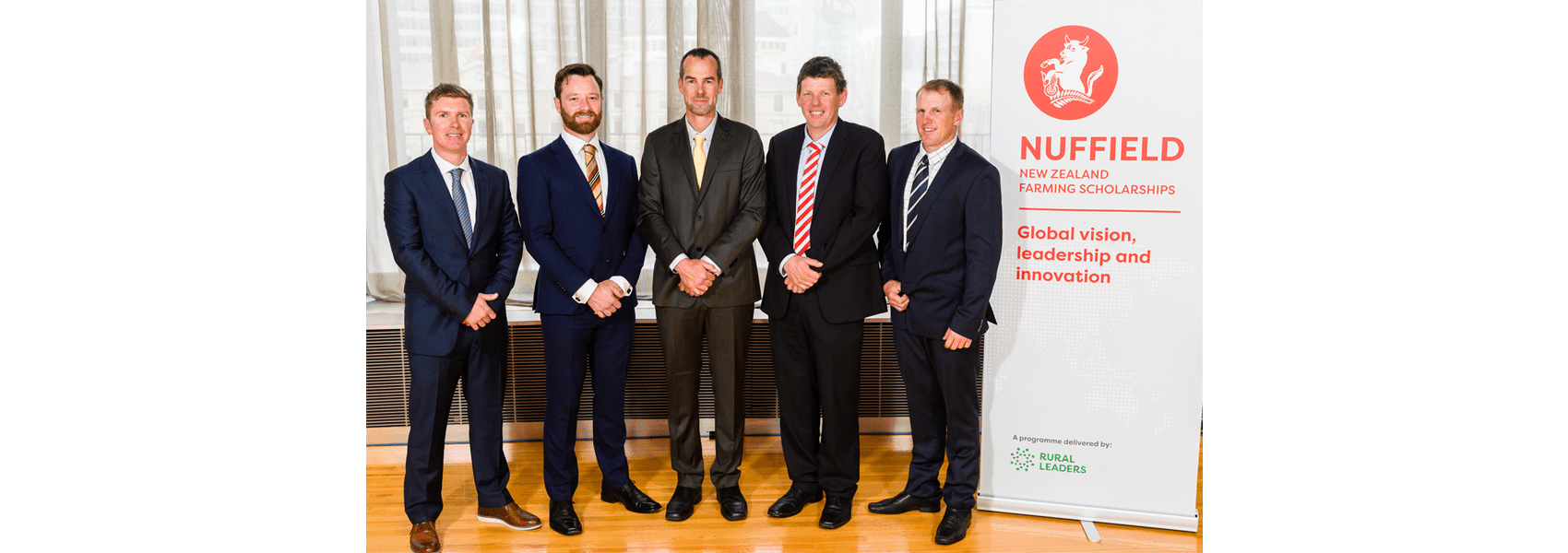
The 2019 Nuffield scholars were announced on Tuesday 6th November at parliament by Hon Damien O’Connor Minister of Agriculture and Minister for Biosecurity, Food Safety, and Rural Communities. They are:
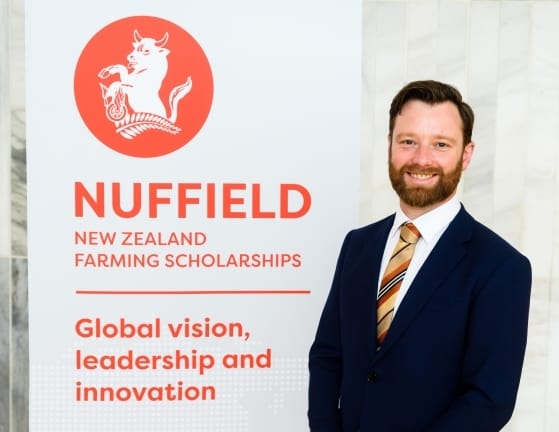
Ben Hancock

Ben was raised on his family’s Wairarapa hill country sheep and beef cattle farm. He is now based in Wellington working for Beef + Lamb New Zealand as a senior analyst, still near the farm and often back home to work.

After working in research and conservation roles in New Zealand, USA and Panama, Ben completed his PhD investigating eco-system services. Ben worked for the Ministry for Primary Industries in biosecurity policy before joining Beef + Lamb New Zealand.

With New Zealand’s agriculture export-focused, improving the diversity of markets can help to minimise volatility and maximise highest value outcomes. There are markets that have traditionally used sheep products that maybe under-utilised by New Zealand. Ben is interested in researching this during his scholarship.
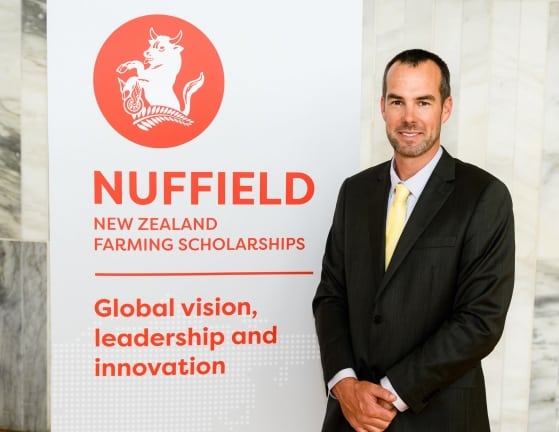
 

Cam Henderson 

Cam owns and operates a 750 cow dairy farm near Oxford, North Canterbury. With degrees in engineering and finance, he has worked in a range of dairy industry roles including time with Fonterra and DairyNZ.

Alongside overseeing farming operations, Cameron currently commits much of his time to the Waimakariri Zone Committee in setting local environmental limits and to representing farmers as North Canterbury Federated Farmers Provincial President.

“All farmers will benefit from adopting the latest innovative practices on the farm and encouraging others to do the same. The faster we can encourage farming to evolve, the less regulatory and public pressure we will have to endure”. Finding the factors that increase the speed of innovation adoption among farmers is a key interest for Cameron.

A trainee in music, golf, snowboarding, flying and Te Reo, Cameron enjoys learning and giving anything a go.
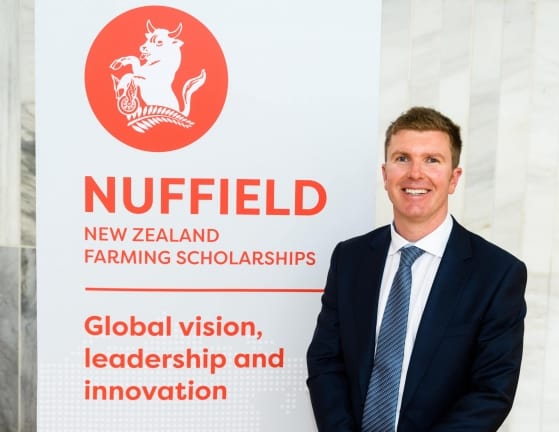
 

Corrigan Sowman 

Corrigan lives in the small rural community of Golden Bay with his wife Ruth Guthrie and their two sons Wylie (7) and Tim (5). He is a partner and manager of the family’s dairy farming business alongside his parents and brother Sam. Corrigan is a graduate of Massey University with a Bachelor of Applied Science, was a former Consulting Officer with DairyNZ and Farm Consultant with FarmRight in Canterbury.

Alongside managing their 400ha dairy farming business, Corrigan has several off-farm roles. He is Chair and Independent Director of the South Island Dairy Development Centre (SIDDC) which operates the Lincoln University Dairy Farm. He is also Deputy Chair of the DairyNZ Dairy Environmental Leaders Forum, an initiative to foster and strengthen environmental stewardship and community leadership amongst New Zealand Dairy Farmers.

Farming practices that strengthen the integrity of the food produced is something Corrigan wants to better understand. “How can we give our farmers better market signals about the value they are creating in their production systems, especially inside a large cooperative?”
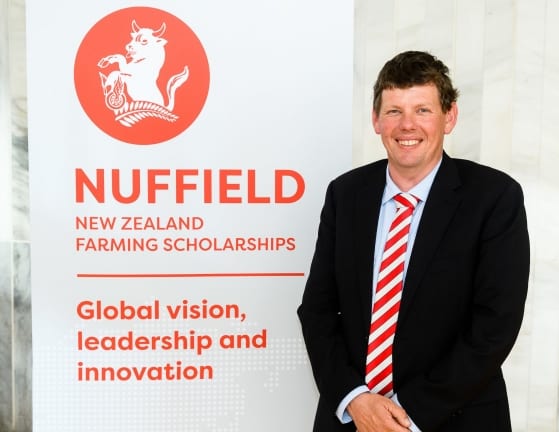
 

Hamish Marr 

Hamish is a 41-year-old, 5th generation, an intensive arable farmer from Methven in the South Island. Hamish is married to Melanie and they have three daughters aged 8,5 and 3. Prior to a farming career, Hamish graduated Lincoln University with B COM Ag in 2000 and then spent 4 years with Ravensdown Fertiliser as a field officer based in Ashburton. With his brother and parents, they farm 500ha of arable crops specialising in small seeds.

Outside of farming and family, Hamish is involved in several industry organisations. He is also active within Federated farmers and represents the Herbage seed growers section in Mid Canterbury and within that on the management committee for the Seed Quality Merchants Association, a board that oversees the seed certification scheme on behalf of MPI. Hamish is also involved with the Foundation for Arable Research on the Mid Canterbury Arable Research Group and the Research and Development Advisory Committee. Outside of work he has become a council member on the Ashburton Scottish society representing the Ashburton Pipe Band.

Farmers over the years have become dependent on a vast array of synthetic agrichemicals as a means of controlling weeds, pests and diseases and as a result, increasing yields across the board but this is being challenged and Hamish hopes to study the regulation that is being introduced in Europe and the implications for NZ.
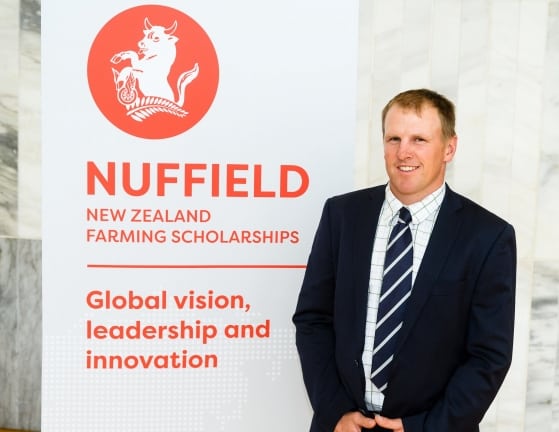
 

Hamish Murray 

Hamish, wife Jessica, three children, Lucy (5) Margot (3) and Jonty (1) farm Bluff Station a 13000 ha High Country property in Marlborough. South Island NZ. He completed an agricultural degree at Lincoln University NZ, economics at Cambridge University (UK), and worked with the New Zealand Merino Company, before returning home to farm in 2008.

Hamish has been managing the farming operation including sheep, cattle and a recent diversification into beekeeping and honey production. He is also on the governance board for the Post Quake farming group helping with recovery from the November 16 Kaikoura Earthquake and a production science group for the New Zealand Merino Company.

Hamish has a real focus on people and relationships and is planning to investigate how the differences in environment, education and culture have shaped the values of our consumers and employees. Recognizing and understanding how these values have been formed and vary between culture and generations is key the success of our marketing efforts being a small export-led country. He aims to search out those organisations in our key export markets for wool, meat and honey which are engaging consumers and understand what is making them successful.

GM Update: 2018 in review

We are reaching the end of a busy year for Rural Leaders and our two programmes – the Nuffield Scholarships & the Kellogg Rural Leadership Programme.  While we have tried to make this a year a time of some consolidation after the launch of the new organisation and branding and the increased responsibilities, the projects and opportunities keep arising and enthusiasm from a busy management and governance team keeps emerging!

For this last E Nuff of 2018, I would like to give an overview of the highlights and achievements of the organisation and the programmes for the year which has involved the contribution of a larger team as highlighted below. 

2018 Highlights/Achievements  

Marketing  

  • Launched new branding (logo & applications) for Rural Leaders and Kellogg programmes & Refreshed the Nuffield brand to modernise and be consistent with the branding of Rural Leaders as the organisation
  • Launched a new website hosting both programmes and Rural Leaders with multiple entry points 
  • Appointed a part-time marketer – Clara Sweetman to drive our marketing activities
  • Increased significantly the media coverage and exposure of Kellogg & Nuffield projects supported by our media partnerships 
  • Had at least 5 alumni featured in On Farm Story with David Kidd starring on a Country Calendar episode. 

Financial & Sponsorship  

  • Re-signed four of our programme partners for a further period – thank you for your support Farmlands, Zespri, Hort NZ, FAR 
  • Bought onboard new Service & Media partners with KPMG, NZ Farming Life (Dairy Exporter & Country Wide) and Global HQ (Farmers Weekly & Dairy Farmer) 
  • Introduced new accounting and reporting systems as required under the Charities Act, with the support of our KPMG partner. 

Governance  

  • Farewelled and thanked Chair Juliet Maclean for her exceptional leadership and contribution to the big changes introduced, particularly the new branding. 
  • Welcomed James Parsons on to the board as Nuffield appointed Trustee 
  • Recruited, after a robust selection process, a new independent Board member, Louise Webster who will start the role in January (click here for more info on Louise) 

Programmes  

Nuffield 

  • Hosted a Nuffield International GFP New Zealand leg in Hawkes Bay and Bay of Plenty in April 
  • Delivered a fantastic, well supported Nuffield NZ Biennial Conference in Tauranga in May, thanks to Dave Hurst and his team  
  • Discussed and debated high quality presentations from the 2016 & 2017 Scholars.  
  • Selected five high quality 2019 scholars (see their profiles in this E Nuff)  
  • 2018 Scholars presented insights and debated implications for NZ to an audience of our investing partners 
  • Hosted the 2019 Nuffield Awards with over 75 industry guests & alumni attending  
  • Launched Nuffield 2020 Triennial event globally with a great video resource 
  • Appointed a project manager for the Triennial – Deb Gee from Higher Perspectives Consulting  

Kellogg 

  • Ran two 6 x month Kellogg programmes coordinating the involvement of over 40 industry leaders 
  • Graduated 48 new leaders within a broad diversity of sectors, geographical location, gender, age, ethnicity.
  • Published 48 new pieces of rural research for industry & public use. 

Our vision of “Growing NZ Through Thriving Rural Communities” and the achievement of the steps toward this could not be achieved without the ongoing contribution and time of the following; 

Rural Leaders Team:  Programme Coordinator Lisa Rogers, Marketing & Comms Clara Sweetman, our Kellogg programme leader Scott Champion and Project Support Patrick Aldwell & Nuffield Advisor, Hamish Gow. 

The Trustees:  Andrew Watters (Chair), Hamish Fraser, Michael Tayler, James Parsons, Craige Mackenzie, Associate Matt Hocken and Juliet Maclean (chair prior to June) 

Strategic partner representatives (National Advisory Group) 

  • Dairy NZ – Jenny Jago (prior to May – Mark Paine) 
  • Agmardt – Malcolm Nitsche 
  • Beef + Lamb NZ – Doug Macredie and Richard Wakelin 
  • FMG – Andrea Brunner 
  • Mackenzie Charitable Foundation  –  Mary Ross 

Programme Partners: Farmlands, FAR, Horticulture NZ, Zespri, MPI, TIAA  

From us all, at Rural Leaders, we wish all a great Xmas and New Year.


Nuffield International Triennial and NZ Nuffield Conference

20 March – 01 April 2020

Christchurch, New Zealand


Join us at Nuffield2020, the key forum for Nuffield alumni globally to get together for networking, ongoing learning and development. We have a programme that will focus on successful innovation and business models as we innovate for the future. Nuffield2020 coincides with our bi-annual Nuffield New Zealand conference and an important milestone of 70 years of the Nuffield New Zealand organisation and scholarships.


See the program of events and more information on our website www.nuffield2020.com


Contact:

Deb Gee  |  Conference Secretariat

secretariat@nuffield2020.com or +64 27 606 1810

Chair Update: Andrew Watters

Andrew Watters, Nuffield New Zealand Chair

This time of the year is a busy period for trustees, selecting and presenting our 2019 Nuffield scholars.  The process is robust and involves shortlisting, referee checks and of course the interview process.  It all culminates with the announcement in the Banquet Hall of Parliament in early November. 

You will see from the profiles that we have very good hands-on farmers in this year’s selection with representation in dairy, sheep & beef, fibre, arable sectors.  It is also notable that the topics initially selected (which can change) are very outward/ market/ customer focused in recognition that the challenges and opportunities facing many sectors are more about the how and why of what we are doing on-farm than the what. 

We obtained excellent feedback from this year’s scholar announcement event.  Prior to the Awards, we had a highly valuable two-hour session engaging returning scholars and programme partners on topics and perspectives facing NZ and global agriculture.  And at the formal announcement at Parliament more than 75 people enjoyed hearing perspectives on the 2018 Scholar’s preliminary insights on their research topic which included challenges of setting environmental policy, the physical limitations of moving to low carbon energy systems, the need to optimise farm systems within environmental limits, the need for NZ agriculture to up its game on biosecurity and the opportunities for high value nutritional ingredients. 

One notable fact that we will be addressing in future selections is the lack of diversity amongst our scholar group.  We are under-represented this year in horticulture, in Maori agribusiness and in women scholars.  This isn’t an issue of selection, it is an issue of ensuring that we get a sufficiently diverse group of applicants.  We will be developing some plans to address this for the new year.  The answer is probably a mix of better engagement with our business partners and sponsors around candidate nomination and some more activity in the regions. 

Since our last Enuff, I am pleased to confirm the appointment of Louise Webster as an independent trustee.  As noted on our website, Louise brings a different skill set based around technology, innovation and leadership development.  Louise will join the Trust Board in January following a six-month sabbatical in Europe looking at the agri-food and other sectors.  We look forward to her contribution helping us ensure we remain relevant in a fast-changing world. 

I can also report on progress on the Thought Leadership or Rural Communities project.  Utilising the ‘Good to Great’ hedgehog as an organising concept, we have confirmed as a Trust that we are passionate about “Growing New Zealand through thriving rural communities”.  We are working on the other two components of the hedgehog but believe we can be world’s best at “Developing rural leaders that can solve (or untangle) wicked problems”.  And finally, we think that our real economic engine (how we secure ongoing funding) is “delivering leaders, and cost-effective solutions, that can address wicked problems” for our programme partners and sponsors. 

A wicked problem is defined as a problem that is difficult or impossible to solve because of incomplete, contradictory and changing requirements that may be difficult to recognise.  An effort to solve one aspect of a wicked problem may create other problems.
 

The trend towards commoditisation, the need to meet environmental standards, climate change, the role of genetic engineering, attracting young kiwis to work on farms are all examples of wicked problems.  Often these problems are across industry rather than within industry silos. 

As an organisation, we have limited resources so we need to crawl before we walk.  What we can do in the near term is ensure that our new scholars (Nuffield and Kelloggs) understand the wicked problem concept and can develop their topic area into an aspect that we need to solve for the future of NZ agriculture.  We then need to better leverage the post scholarship period to ensure scholars can engage with our partners and the alumni to transfer their knowledge into positive action. 

Finally, as we near the Christmas period it is important to acknowledge the work of Anne Hindson and her very small team.  They are currently fully engaged in running the Nuffield (working with 2018 and 2019 scholar groups) and Kellogg programs (class 38 just completed last week) & planning for the 2019 courses starting in mid-January and supporting the Nuffield Triennial work being done by Michael Taylor and his group.  As we move forward it will be important that we match our desire for impact with resourcing and this in-between time can be difficult to traverse. 

Obituary for John Clarke

John Clarke was awarded a Nuffield Scholarship in 1963.

One of New Zealand’s great leaders in the N. Z. agricultural business, in particular the New Zealand wool industry, John Clarke passed away on 12 May 2018 in Dunedin.

John was involved in the sheep, beef, dairy, cropping and pig farming industries.  He was a member of the Producer Board’s Electoral Committee;  became Chairman of the New Zealand Wool Board between 1072-1980;   served as a Director of the Otago Dairy Co-Operative;   the Kiwi Dairy Co-Operative;   a Director of The National Bank;  and served as a Governor on the Board of Columba College, Dunedin.

His involvement in his local community as a leader both nationally and internationally within the wool industry John was formally recognised for these services.  In 1981, he was honoured with the CMG (Companion of the Order of St Michael and St George) and  received the NZ 1990 Medal for services to his community.

Anyone wishing to make contact with John’s wife, Margaret, and his family can do so by sending a message to 113 Quatermain Rd, Clinton South Otago 9584.

Peter Jensen Raises a Challenge to Alumni

Peter Jensen encouraged alumni to pay it back at the 2019 Nuffield NZ AGM announcing that he and his wife Anne were donating $40k, the equivalent of one scholarship, to the Nuffield Capital Fund.  

He challenged every scholar for whom the scholarship had been a life changing event, either in their business or personal life, or both to donate over their lifetime the equivalent of a current scholarship ($40k) in recognition of the opportunities that it provided each person in their business and personal life.  

I am showing that I believe that in donating back the equivalent of a scholarship I can ensure this amazing opportunity continues well into the future and Nuffield NZ is in a strong position to continue to spearhead rural leadership development into the future” says Peter. 

He follows another generous contribution of $10k by Derek Daniels earlier and contributions some years ago by other alumni and events. 

The fund is currently sitting at just over $810k so our target is not unrealistic! 

To download a donation form click here or if you need to discuss options please contact GM Anne Hindson on 027 431 7575 or annehindson@ruralleaders.co.nz 

Background  

The Nuffield Capital Fund was set up a number of years ago to build a fund of $1million to ensure that the Nuffield legacy would continue in times of ‘shocks and challenges’ such as the loss of a major sponsor or a rural/country recession. The interest from this fund would support at least two scholarships each year and enable ongoing leadership development opportunities for alumni i.e. attendance at courses, development opportunities. 

The fund will ensure Nuffield continues to be the pinnacle of rural and agri food leadership development in New Zealand into the future.  

Obituary for Hugh Roberts

Hugh was a highly active member of the Nuffield Alumni and at the 2015 Nuffield Australia National Conference in Albury, was acknowledged for a 40-year reign as a Nuffield Scholar. 

Hugh was a well-known grains industry advocate, former agri-politician who had a long association with the NSW Farmers Association and other industry bodies. He was also a strong advocate for genetically modified (GM) crops.  

Until recently, Hugh and his wife Jenny lived at “Birralee”, a 485 hectare property which became widely known as the base of a successful registered seed business, specialising in triticale and legume varieties.
 

Hugh was awarded a Nuffield Scholarship in 1977 to study British agriculture, and the British seed industry in particular. You can read Hugh’s final report here.

He has represented the agricultural industry in many roles, including with NSW Farmers Association, Grains Council of Australia and Bio Technology Australia Advisory Council, Australian Seeds Authority and the Australian Crop Accreditation System.

GM Update: Our new branding

Anne Hindson, General Manager, August 2018

Andrew in his Chair update, focuses on Nuffield strategic initiatives and NZRLT board activities, while this update covers management activities of the NZRLT Trust (incorporating both Nuffield and Kellogg programmes) as well as Nuffield programme activities and reflections.

The launch of our new brandingin late June, has occupied a large amount of my time. Juliet Maclean led the project which began in January, through the brand development including the research, strategy, creative, story, and identity to get it to the brand kit and roll out stage.  Juliet’s commitment to making sure the Nuffield and Kellogg programmes are relevant for our future markets is invaluable in setting us up for the future.  

We started with the development of a new brand for our new organisation – the New Zealand Rural Leadership Trust (referred to as Rural Leaders) accompanied by a new fresh logo for the Kellogg programme and a refreshed modernised logo for the Nuffield Scholarships. If you missed our email with the story behind the branding, click here for a detailed explanation and video.

We created a single website which now hosts Rural Leaders and the two programmes, but have ensured that all Nuffield (and upcoming Kellogg) marketing drives people directly to the Nuffield page on the new site.  Over time, we hope to position Rural Leaders as the recognised organisation delivering both programmes with marketing going to just that site. 

The single website also provides one platform for our joint alumni to interact with both programmes and alumni activities. It is the first step in bringing our alumni groups together also under one umbrella organisation for thought leadership activities. The final step in this project is the transfer across of several hundred reports from both sites which will take some time. 

The new branding is now fully adopted in all communications; the response has been very positive from internal and external audiences.  

The appointment of Clara Sweetman as a part time marketing contractor in late June has already bought results with a raised social media profile and some fresh ideas. This is a resource which has been needed for a while but was delayed until the rebranding process had occurred. Clara joins us after contracting for Farmlands, before having her first child.  

Our 2019 Nuffield Scholarships close on 19 August and at the time of writing this newsletter we are waiting anxiously to see the calibre of applicants who apply. It is getting harder to market the Scholarships with the clutter of advertising and messaging, so the marketing strategies are continually being reviewed.  5 years ago, most of our marketing was focused on the rural print publications and alumni networks while now our vehicles are social media, testimonials and alumni shoulder tapping.  We are also trying to work more closely with each industry sector to get them identifying their emerging leaders and encouraging this as part of their pathway. 

While I appreciate that it has always been a big commitment and investment to undertake a scholarship, we are seeing and hearing some of the following challenges /barriers for the next generation of potential scholars;  

  • Young family commitments – many in the 30 – 40 age group are just starting families or have very young children 
  • Working partners – ability to cover family/business is reduced 
  • Diversity of investment often across several farm types or production systems so no natural breaks in workload  
  • More sole operators with no backup from family or others and no fulltime managers to take workload 
  • Greater opportunities to travel overseas, attend international forums  
  • Competing programmes and options to develop leadership skills  

While there is greater flexibility for doing the individual research travel there is still a requirement to be overseas at least 4 months in a 10-month period and complete the full scholarship in a year, which is tighter than other Nuffield countries with timelines of 18 – 24 months.  Of course, we do note to scholars that learning how to reorganise ‘life’ to take on new challenges is part of the benefits of undertaking a scholarship. 

As alumni numbers grow we also need to connect our recent scholars into the support network where alumni provide the opportunities and support their development post the scholarship. The Biennial Conference provided a great launchpad with this year’s 2016 and 2017 presenting scholars and it is pleasing that their topics are attracting industry interest with all of them having presented at conferences and industry forums before and after the Conference. 

Their 15min video presentations on the website and You Tube is proving to be a popular vehicle for those wanting to get an overview of their reports. If you haven’t checked them out, click here https://ruralleaders.co.nz/nuffield-presentations/ 

Planning for the 2020 Nuffield Triennial Conference is well under way with an organising committee meeting this week to sign off some key dates, branding, components. This will allow us to release the first marketing for the event to Nuffield alumni globally through country conferences, direct mail and using alumni contacts 

This is a very big commitment for the organisation in terms of resource, time and financial resources, and the full support of all alumni, which I am sure will be forthcoming.  

Upcoming Events 

  • Kellogg Course 38 delivery: June – November 
  • Kellogg Course 39 2019 Applications close:19 October  
  • Nuffield Selections: September/Oct 
  • 2019 Nuffield Awards: 6 November 

Chair Update: What Lays Ahead

Andrew Watters, Chair, Board of Trustees
August 2018

I hope you agree with me that the Tauranga Biennial Nuffield conference was a great event.  It had a nice mix of local content, thought leadership and catching up with old friends

I thought our new scholars did a very good job of presenting their project findings and their views on the issues and opportunities facing New Zealand and global agriculture.  And for them, it is a perfect introduction to the Nuffield fold.  The mix of youthful enthusiasm and wise perspectives from our range of generations is a strength of our Nuffield body. 

Thank you’s have been extended to the local organising committee led by Dave Hurst; the conference was well organised and operated with a $15,000 surplus assisted by securing valuable local sponsorship – this surplus has been transferred into the Nuffield Capital Fund. 

At the AGM, James Parsons was elected to fill the vacancy left by Juliet Maclean and I was re-elected.  Following the meeting the board elected me as your new Chair.  Thanks to Lucy Griffiths and Steve Wilkins for also being prepared to put their names forward for election.   

I would like to acknowledge the service of Juliet Maclean with her contribution of six years as a trustee including the past two as chair.  Juliet was instrumental in setting up the original consortium between Lincoln University and Nuffield New Zealand which provided both a potential leadership pathway for people in agriculture but also enabled the organisation to take on professional management.  Her work culminated in forming the New Zealand Rural Leadership Trust (NZRLT) with full operational control of the Kellogg scholarship programme. 

The outcome is to be appreciated but the behind-the-scenes work from Juliet along with our GM, Anne, was critical to the outcome.  Juliet also led our 2017 strategy review process which resulted in the rebranding of our programmes and the branding of the Trust, and the consideration of the Rural Thought Leadership and Advocacy Project.  Juliet has left Rural Leaders and the Nuffield program in exceptionally good heart and she has set a high mark for us all to perform to. 

The constitution of NZRLT requires four scholars elected by the Nuffield Alumni and two independents who are approved by our strategic partners.  Hamish Fraser has and continues to fill one of these roles, and we have had a vacancy that we are close to filling.  We have run a very successful recruitment process with 26 high quality applicants, quite astounding given this is a voluntary role.  At the time of writing we are completing referee checks on our preferred candidate.  A key element for us is seeking diversity in skills, experience and thought.  We look forward to announcing the appointment in coming days. 

Two related matters raised at the AGM was the fact that we have been holding AGMs only at our biennial conference (the constitution requires an AGM to be held annually), and that the Nuffield NZ financial reports are less meaningful now given all operations are under the Rural Leadership Trust.  The board have considered both these matters, we intend to hold an AGM via webinar in off-conference years and we will report the financial results of the NZRLT to the Nuffield alumni, noting that this is a separately constituted Trust and reporting structure. 

One general comment from past scholars and our strategic partners is the need to ensure that we get sufficient representation from grass-root scholars in our Nuffield programme.  This will be a continued work-on for the board including our processes for attracting applicants and how we assess applicants.  Although our agricultural economy is seeing the traditional within and outside farmgate boundaries blurring, we do need to get the balance right between selecting scholars who can shape the future of NZ agriculture and equipping our grass roots to work in a more complex world, including as farmer elected members on co-operative and industry boards. 

The thought leadership programme is progressing, albeit with small steps.  Work with other rural leaders and in particular our strategic partners suggests strong support for mobilising our Nuffield and Kellogg alumni to ensure that we win the debates on matters important to the future of rural communities.  We have decided to trial our first initiatives on a couple of regions to ensure that we learn ‘how’ we can be effective.  We expect to be in touch with scholars in those regions this spring. 

Michael Tayler and his team continue to work on the 2020 triennial conference which of course is a combination of our NZ biennial and the international triennial.  There is some consideration at Nuffield International that this may be the last triennial (perhaps replaced by annual travel opportunities flowing from the annual CSC conferences) although we need to see more debate on the proposed changes. It is important that our NZ alumni support this event in all ways and we will come back to you soon to help market the event with your cohorts. 

Finally, it is pleasing to report the on-going growth of the NZ Nuffield Farming Scholarship Trust’s fund performance.  As at the end of June the fund’s balance was $811,000 with an 11.74% return in the last 12 months and a time weighted return of 12.83% since inception (May 2010).  The fund has been supported by donations from scholars and business partners, but the growth strategy implemented ably by Craigs Investment Partners has been a significant help.  You will read separately about Peter Jensen’s generous ‘giving back’ which has been an important contribution to the fund.   

I wish you the best for the spring ahead; we have rarely seen agricultural prices so firm (other than wool) right across our industry and although there may be trade headwinds ahead there is at least some NZD relief being bought to bear.   

Social licence to operate or licence to produce – Kate Scott 2018

I was interested by the fact that many felt that New Zealand was perhaps the country feeling some of the most significant scrutiny, with a few people commenting on the fact that New Zealand’s farmers are now considered to be on the table of social standing at about the same level as the politicians.

By Kate Scott, 2018 Nuffield New Zealand Scholar

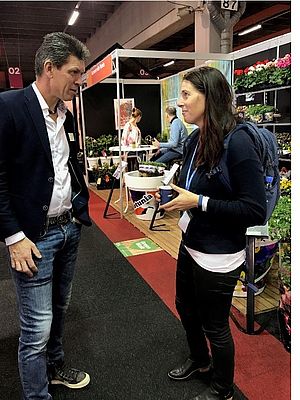
It’s not every day you walk into a room of 80 odd people and the entire room is abuzz with chatter, where people come together with a common and passionate link – agriculture and food. It’s also not every day that you get to attend the Contemporary Scholars Conference (CSC) as a Nuffield Scholar.

This year we were able to travel to the proverbial home of agriculture, the Netherlands for a week of immersion in all things Nuffield, including the opportunity to hear from some great speakers, to enter into some challenging debates, see some of the amazing opportunities that the Netherlands have to grow food, as well as to hear about the challenges that the Netherlands is facing in the agriculture space. It was however surprising that despite the Netherlands producing approximately 12 billion litres of milk per year that it was not overly easy to find fresh milk for your cuppa tea!

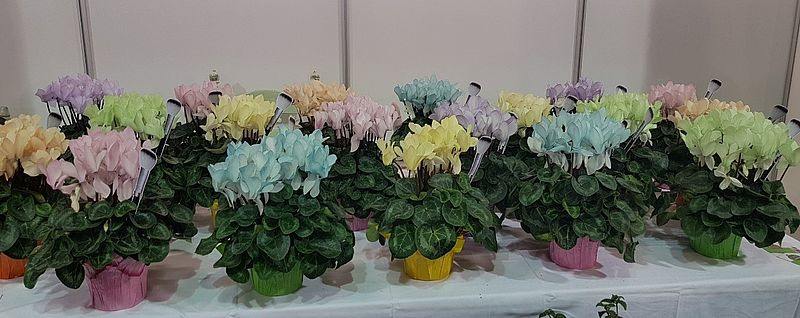
A couple of highlights included the opportunity to cycle to the farm of 2015 Scholar Gerjan Snippe where we were able to see the inner workings of Biobrass their organic cooperative farming business, and for me a highlight was also being able to attend the Royal Holland Flower Market, a modest 270ha area of land dedicated entirely to the selling and distribution of flowers and plants! (the inside tip for those of you interested in flowers, is that ‘pastel’ colours are on trend for the coming seasons).
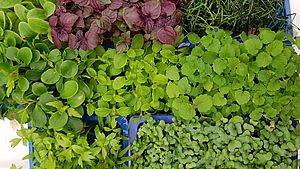
It was also a great opportunity to visit the recently opened World Horticulture Centre, which was a great example of collaborative use of space between industry, education and research to advance development in the Horticulture sector.  The Netherlands is truly world leading when it comes to horticulture and their ability to grow an abundance of food and produce, especially from a relatively small footprint.

I was also given the opportunity to participate in a panel discussion on the ‘future of agriculture 2030’ from a New Zealand perspective. This enabled me to reflect on where we are at the moment, and what the opportunities might be for New Zealand in the future. One of the key things that came to mind for me was that there is a clear need for us to have an agriculture strategy, and that we need to focus on having the hard conversations so that there is a path forward for NZ to be the most environmentally friendly farming nation in the world. The opportunity is there for us as the leaders in the agriculture sector to seize, but we need to be brave enough to start the conversation.

Despite a jammed packed schedule at the CSC, there was also opportunity to observe some commonality amongst the various countries represented including the increasing disconnect between rural and urban communities, leading to a number of discussions around ‘social licence to operate’ or ‘licence to produce’. I was interested by the fact that many felt that NZ was perhaps the country feeling some of the most significant scrutiny, with a few people commenting on the fact that New Zealand’s farmers are now considered to be on the table of social standing at about the same level as the politicians.

There was also a lot of talk about the vegan movement, which I observed as creating a lot of angst for some amongst the room. However, where some see this as a threat to the agriculture sector, I see it as an opportunity. I don’t believe we are going to change the views of those who are so strongly engrained in their vegan view of the world, but I also don’t see that there will be a move to the majority of people choosing to be vegans (certainly not in the short to medium term).

The opportunity to focus on providing good quality, nutritious food which is known to be safe, exceeds animal welfare requirements and growing in an environmentally sustainable way is where we need to be spending our time. Those nations who can move quickly towards providing this certainty, traceability and confidence in their food, stand to prosper from the increasing knowledge that food consumers have. I believe New Zealand has the ability to lead this space.

After having spent the week in the Netherlands I am still firmly of the view that New Zealand is still at the leading edge in many aspects, and that if we can foster a collaborative approach to managing the effects of agriculture, that our future will continue to prosper as an agricultural leading nation.