2026 Nuffield NZ Farming Scholarship. Apply by 17 August 2025. Read More...

Apply for 2026 Nuffield NZ Farming Scholarship by 17 August 2025. More details...

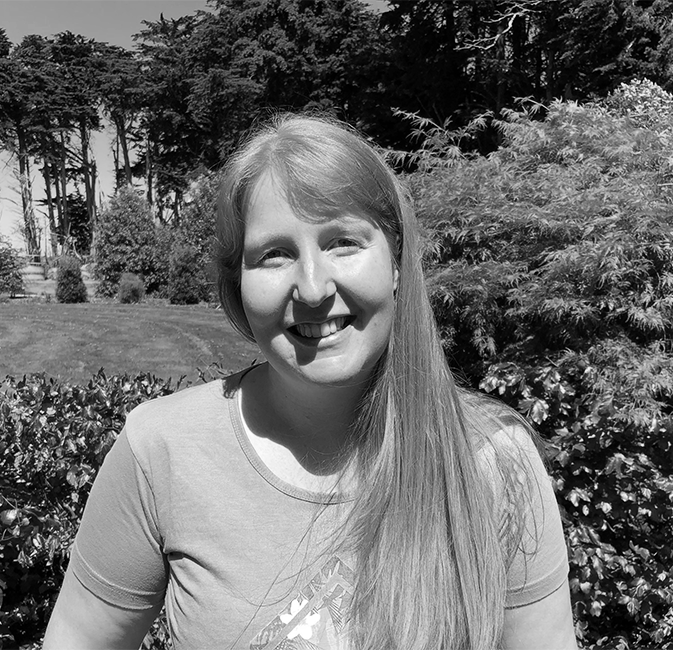
Kate Scott: Meeting food and fibre’s challenges, together.

Kate Scott is a 2018 Nuffield Scholar and Chair of the Board of the New Zealand Rural Leadership Trust and is part of the team behind Forefront: 2023 Rural Leaders Agribusiness Summit and its line up of speakers and panelists.

Pulling together a speaker ensemble of this calibre has been no easy task, but as Kate explains the chance to bring industry together for one day – makes the effort well worthwhile. 

Forefront, the Summit theme, will focus on those businesses making change now – those providing solutions to the sector’s and the world’s biggest agribusiness challenges and opportunities.

Forefront - Rural Leaders Agribusiness Summit

Bryan Gibson – Managing Editor of Farmer’s Weekly.

I’m Bryan Gibson, Managing Editor of Farmers Weekly. And with me I have my first repeat visitor to the podcast, Kate Scott. How’s it going?

Kate Scott – 2018 Nuffield Scholar and Chair of the Board of Rural Leaders.

I’m good. Thank you, Bryan. And yourself?

The 2023 Rural Leaders Agribusiness Summit - Together for a day.

Bryan: Yeah, really good. So, today we’re here to talk about the upcoming Rural Leaders Agribusiness Summit, which is at the Christchurch Town Hall on the 27 March. Kate, you’ve been involved in putting this together.

Kate: Yes, I have. There’s a great team of people have been working hard to bring not only the one-day, Rural Leaders Agribusiness Summit together, but also the Nuffield Triennial Conference together too.

We started planning this event back in 2020, but we were a casualty of Covid like many events. And so, we’re now looking forward to March when we can host our Summit. It’s going to be amazing to not only welcome some of our international guests who will be attending the as part of their involvement with the Nuffield Triennial, but also really looking forward to getting a broad and diverse range of New Zealand farmers, agribusiness and rural professionals along to hear our great line up speak at the Agribusiness Summit.

Bryan: Now, when we talked a while back, your [Nuffield] research was on the evolution of New Zealand farming into a more sustainable place and I guess that’s something that’s going to be a focus of the [Summit] day, isn’t it?

Challenges and opportunities in a fast-changing world.

Kate:  Yeah, it is. And it will probably be of interest to some of the listeners that we’ve chosen to theme our conference for the day ‘Forefront’.

The reason behind choosing Forefront was about not only getting in front of all the challenges that the primary sector are facing, but also looking at it through a lens of opportunity.

How can we be at the front of this change and find ways to innovate and take advantage of a changing world? I guess that’s then gone on to help us to create the speaker themes for the conference.

Summit day themes and speakers – Our World.

Kate:  We’ve split the day into three broad topic areas. The first is taking a more global picture. It’s called Our World. Here we’re talking about some of those big challenges in our natural environment.

We’ve got some speakers touching on climate change. Doctor Harry Clark will share his incredible breadth of knowledge [on climate change] with us.

We’ve got a speaker talking to us about the role of solar, particularly from a farming perspective – a woman by the name of Karin Stark. Karin and her husband farm in Australia. She’s done a lot of work using solar energy and developing solar panels within their farming business and how they integrate that more generally. So that’s going to be an interesting part of that first Our World theme.

Then we also have a speaker talking about the opportunity the sea brings and how we utilise our oceans as a resource and as an opportunity to grow our primary sector.

Summit day themes and speakers – Our People.

Kate:  Then we move into our second, which is Our People. That will look at consumer trends and trade. I guess we’ve seen a massive shift in international trends and how that’s changed over the last few years, particularly on the back of COVID and what other trends might emerge around the agrifood and the consumer side of things.

So, to help us to understand both the challenges and the opportunities there, we have Vengalis Vitalis who many of you will know as our Deputy Secretary of Trade here in New Zealand. He’ll be talking about a global view of trade from a New Zealand perspective.

We have Lain Jager joining us to talk about what the role of future food and genetic modification might mean for food production in New Zealand. Then we’ve also got Emma Parsons from Fonterra who’s going to be talking to us about what Fonterra see from that consumer trends and trade perspective. Already a great line-up of speakers.

Summit day themes and speakers – Our Future.

Kate:  Our last session for the day is called Our Future. We’re wanting to try to change that up a little bit. So, we’ve got four or five speakers who are going to talk for a shorter period of time – a little bit snappier – talking about all those opportunities around entrepreneurship, leadership, the future, social, economic and environmental wellbeing.

We have Traci Houpapa talking to us about future leadership and a Te Ao Maori perspective – and possible new business models. We have Angus Brown from Arepa, Mark McLeod Smith from Halter, and we also have Dr Ellen Nelson, who will be talking to us about the future of work.

I’ve just given you a big download of the programme! But it’s exciting to have a broad range of topics and people to be able to come together to look at our sector in a positive light. To take some motivation and opportunity to challenge what we’re doing, look for what’s new and the what next? for our sector.

Bryan:  It’s great that with the world opened up again, getting some of these global perspectives on the shared challenges that agriculture faces. Some of those people will be in the room. Sometimes these changing consumer perceptions, along with the ins-and-outs of trade deals and that sort of thing, sometimes is second hand knowledge to a lot of the agricultural community here – so it’s good to get a view from the ground, but a different ground.

Devry Boughner Vorwerk - Rural Leaders Agribusiness Summit Keynote Speaker.

Kate:  Exactly. I think it’s an integral part of what we do, but unless we’re actively doing it, it’s almost one of those back-end functions. We don’t always think about these things if we’re down on the farm driving our tractor or milking our cows.

To that point, our keynote speaker is a woman by the name of Devry Boughner Vorwerk. Devry is coming out to see us from the States and she has amazing background in terms of having been Chief Communications Officer and Global Head of Corporate Affairs at Cargill.

She has her own sustainability entrepreneurship business and is going to be talking big picture setting for us around international business and development. She’s going to be able to do an amazing job of setting the scene initially and then helping us to draw in all the pieces of the puzzle as we hear from our other speakers throughout the course of the day.

Bryan:  I did some reading on her earlier in the week and sounds like she’s going to bring some real amazing insight. I mean, Cargill is one of the biggest meat producers in the United States – and then she moved to, I think, Grubhub for a while, didn’t she?

Kate:  That’s my understanding as well. And then having done both that policy side of things and the international business, I’m really looking forward to hearing Devry speak. The fact that she’ll be able to join us in person is really a good outcome given only a few years ago we were having to cancel the Summit.

Bryan:  In that last session too, when we talk about challenges, quite rightly, I guess people often see that as cost and loss of opportunity. But in fact, there are people out there capitalising on meeting those challenges and there’s going to be some real-world examples of how you can do that.

Kate:  Listeners may have heard of Ellen Nelson through her role in helping to secure places for the Afghani refugees last year. Ellen has done a world of research into the way in which we work. She challenges us to think about can we look at the world with ‘can we work school hours’?

Ellen has some interesting insights on how we leverage a lot of our mums and dads who might want to actually be able to work different hours, and how do we do that within our farming business? So, a slightly different perspective, but one that is as applicable to agriculture as any other sector.

Open to farmers, growers, agribusiness professionals and anyone who cares about the future of food and fibre.

Bryan:   So, what sort of people are you hoping to attract?

Kate:  We’re open to all comers, but we’re keen to make sure that our on-the-ground farmers have the opportunity to attend. I guess one of the reasons we decided to make the Summit a one-day event was that we know how difficult it is for people to get off their farm for too long. We’re wanting our farmers to come. We’ve had a great number of registrations already, as you’d expect.

We’ve got a bunch of our agribusiness representatives from our food companies, from other consultancies, we’ve got bankers, we’ve got some of our more senior leaders from government organisations. A real cross section of our sector. I think that’s where we’re trying to go – that the more views and perspectives we can get in the room, the greater the conversation and the questions.

One of the key things that we wanted to be able to do through the Summit was to provide the platform for a safe and robust conversation, where when you break out from morning tea, you can pick up one of these interesting topics that we would have heard about, talk to some people about their views and get the conversation going.

So, trying to kickstart the conversations on some of these big topics.

Bryan:  And of course, everything will be kept on time, on track and on message from some pretty cool people running the show.

Bringing the Summit to life and the sector together.

Kate:  Yes, we have got Corin Dann, an experienced journalist most will probably have heard of through the National Program – on breakfast in the mornings. Corin has very kindly agreed to come and facilitate our sessions for the day. A big part of the sessions will be the panel discussions and the conversations.

At the end of the day, we’re going to have a wrap up session where we get Devry back on stage with our other guests and Corin, to have an in-depth conversation around what’s happening, what the future looks like and the opportunities.

[From] the back end, the chair of the Summit, Murray King, and a small committee of volunteers will all be working hard in the to make sure people are well fed and well-watered, and that everything is kept to time.

For those who haven’t been to an event at the Town Hall in Christchurch before, one of the highlights is always the food. They do a great job there of showcasing local produce – they try to support their local Canterbury growers. The food is also something that’s always good to look forward to in those events.

Bryan:  The building itself is something quite special. It’s such a wonderful piece of architecture.

Kate:  It is iconic, so it’s great.

Bryan:  And there’s a dinner.

The Rural Leaders Agribusiness Summit Dinner.

Kate:  Yes, we have a dinner that will be hosted after the Summit. So, there are still some tickets available for that, although they are selling out very fast. The dinner will allow people to come together and to take the conversation to that next step. We will also be joined at the dinner by Minister O’Connor, who is going to be speaking. And we have some evening entertainment from Te Radar.

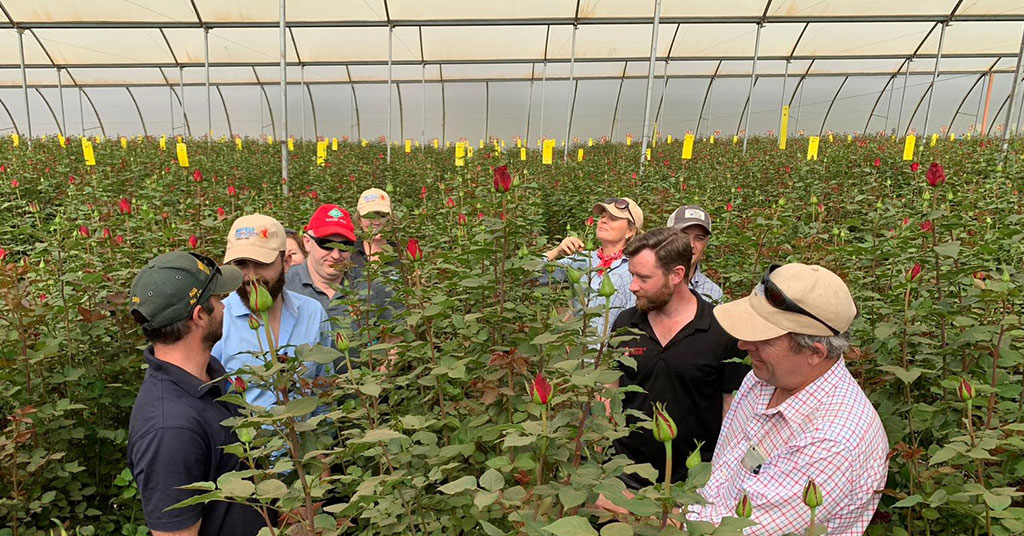
Another exciting part of the Summit is that it will include our international Nuffield guests who are actually going to be here in New Zealand as part of a ten day conference – where we kick off on the Saturday or the Friday night actually, prior to the Summit. It’s a bit of a traveling trip from Canterbury all the way [down the South Island] and finishing in Queenstown the following weekend. So, it’ll be a great opportunity to connect with a wide audience from around the globe.

Bryan:  Excellent. Well, that sounds [like] something for everyone to think about attending. How do people go about getting tickets if they’re interested?

Kate:  Yeah, go and have a look on the Rural Leaders website. There’s a big headline that flashes up that says Forefront. Click on that to head to the registration page to attend the Summit and/or the Dinner.

Rebecca Hyde – Collaboration, cooperation and finding the common ground. 

Rebecca Hyde - Ideas that grow podcast interview

Ideas That Grow: Rebecca Hyde, 2017 Nuffield Scholar and 2021 Kellogg Scholar

Lynsey Stratford has discovered farmers make a few assumptions that aren’t very helpful – like accepting the fact that work might be dangerous and there’s nothing anyone can do about it. As Lynsey explains, “There are changes we can make, but those assumptions and those mindsets have been deeply held for quite some time.” 

As a consultant, Lynsey helps the primary sector with people management and development services and training. And, when it comes to health and safety she says, “We shouldn’t expect people to just know this stuff, but rather teach them and support them as they develop skills.” 
 
Lynsey’s research report unpacks the paradox that while farmers care about their people, farms as workplaces are overrepresented in fatal accident and injury statistics. So, what can be done to improve this?

Bryan Gibson – Editor of Farmer’s Weekly.

I’m Bryan Gibson, Farmers Weekly Editor. And with me today I have Rebecca Hyde. 

Rebecca Hyde – 2017 Nuffield Scholar and 2021 Kellogg Scholar, Oxford, North Canterbury.

Thanks, Bryan.

Bryan:  So, where are you calling in from? 
 
Rebecca: I’m based at Oxford in North Canterbury. 

Bryan:  And what keeps you busy down there? 

Working with Catchment Groups. 

Rebecca: I’m a Farm Environment Consultant, so I spend a lot of my time dealing with farmers and actually at the moment I’m working predominantly with a catchment group. It’s great to be dealing with farmers in the same area and focusing on the catchment within that region. 
 
Bryan: And with catchment groups, it’s a system that really seems to be working quite well in a lot of places. 
 
Rebecca: Yes, it is. What I’m enjoying about it is you’re getting a good idea of what farmers are really facing, the challenges within the catchment or sub-catchments, and then you’re able to be quite tailored and specific to those areas. So, you see a lot of common themes coming through when you’re talking to farmers in the same area, which then allows you to be quite specific and help the catchment group or farmers in the best way possible, all working together. 
 
Bryan:  Yes, and all for positive outcomes, really, isn’t it? 
 
Rebecca:  Yes, absolutely. 

Nuffield research into collaboration. 

Bryan:  Now that kind of works in quite nicely with your Nuffield Scholarship, doesn’t it? Because you looked at collaboration for environmental gains. 
 
Rebecca:  Correct, yes. So actually, the catchment group I’m now working on, we’ve had an MPI funded project for the last two-and-a-half years, but that was established back in 2016. It came off the back of a plan change for the Hurunui District Landcare Group. It was a plan change for the Hurunui regional area. It was through that the collaboration or collaborative process was being worked through.  
 
At that time, I was working across other areas in Canterbury, but they had the zone groups set up and the word collaboration kept coming up a lot. It was often used in the frames of how do we collaborate better, or why aren’t we able to collaborate on this? So, this word continued to come up and at the time I was involved in a few other things with Beef+LambNZ as well, and I thought, well, what’s happening globally and how can we better understand this? So that was really a key trigger for me to look at Nuffield. 

Same, same but different. 

Bryan:  So what did you find when you went around the globe looking at this issue? 
 
Rebecca:  I looked at a lot of places within land use, but also outside of it. I met with some people in Silicon Valley, for example, because collaboration isn’t something that’s unique to agricultural land-based activities, it is something that is right across the board. What I found was there was often a common good or a common purpose, that people were trying to achieve.  
 
The other thing that was common was that often there was sort of a burning platform, so some decisions were needing to be made and that was where collaboration was being used. But the other thing that stood out quite a lot was the word collaboration gets used regularly or often, but it might be partnership or cooperation that might be needed.  
 
It’s understanding how you’re needing to work together and then working in the most appropriate way. There are some key differences between, say, a partnership, collaboration, and cooperation. So even though they’re just words, there is quite a difference there. 
 
Bryan:  Yeah, I guess in some ways people might need to work together to reach a singular goal and in other cases there are people doing the same thing who could get efficiencies if they work together. 
 
Rebecca:  Exactly. So, for example, cooperation might be working together for those efficiencies, but you’re working in isolation still. Whereas collaboration really is about coming together for a common good. So, let’s say you’re a catchment group with some dairy farmers and sheep and beef farmers and maybe some Iwi there as well – you might be all representing your certain areas, but once you start collaborating, it’s about that mutually beneficial area.  
 
Let’s say a water body, that becomes the key purpose as opposed to what you might have been representing. That’s often where we get it a bit wrong because we’re still strongly aligned to what we were representing. It’s a change of focus. 
 
Bryan:  I guess if you bring other stakeholders into a situation, then what success looks like changes, doesn’t it? Because you’re sort of ticking boxes that you wouldn’t have ticked on your own. 

The foundations of successful collaboration.

Rebecca:  The other thing too is that is quite time consuming – collaboration. One thing I noticed was where there were some good examples of it abroad, a lot of time put into building the relationships, the understanding, getting on that common ground.  
 
Often in New Zealand we were just rushing through that foundation piece and then with human nature, we’re very good at focusing on what you don’t agree on rather than what you do agree on. 
 
We tend to get into the stuff we don’t agree on a bit too soon because that sort of foundational trust and understanding is not there yet. That was one of the key things we saw when it was successfully happening – there was a good base understanding of what was all agreed on and then sort of reflecting back on it as well. Like, are we still on the same track? Are we still trying to achieve the same goal? Has the goal changed? Because things can change when you start a project. It’s that conscious effort of reflecting and reviewing on the process. 
 
Bryan:  Is it just a matter of taking the time and getting an understanding of all the players involved? Or are there frameworks or structures you can put in place to help you along the way? Or both? 

The importance of neutral facilitation. 

Rebecca:  Yeah, both. The other thing too was having someone that can facilitate it. A couple of examples that I saw where the facilitator worked effectively – they had government backgrounds, so they had been quite familiar about how the structure works within government. These were in areas like environmental regulation so that facilitator knew what needed to be bundled up to get it back to government.  
 
They were very neutral with the parties that they were all dealing with. Having that person as neutral as possible in that Facilitation process – that was something that I observed coming back home. I’m just talking about the Environment Canterbury (ECAN) examples that I was dealing with at the time. But the Facilitators were often ECAN staff members, so they weren’t neutral in the process. There again, that trust piece wasn’t quite there with the stakeholders. The person that’s trying to pull together everyone’s thoughts and help with the direction of the group is pretty key as well. 
 
Bryan:  Catchment groups seem to work because you have the common goal. You have support from people who are like you, and they face the same challenges. You also have that kind of almost friendly competition thing going on. You don’t want to be the one who’s not doing the work, I guess. Is that fair? 
 
Rebecca:  Are you meaning like peer pressure? 
 
Bryan:  Sort of, yeah. 

The strengths of Catchment Groups. 

Rebecca:  Yes but hopefully in a positive way. We’ve noticed that in the project that I’m working on now in the Hurunui, we’re doing a one-on-one approach. We’ve found that once we got to that critical mass, there were farmers that were just wanting to be involved because everyone else was and they didn’t want to be the odd ones out.  
 
There’s absolutely that effect that catchment groups can have. I suppose it’s a bit of FOMO – people do want to be involved and it’s a good thing to be involved with as well, because to me, it’s sort of about putting all the pieces to the puzzle together. It’s a real strength of catchment groups as well, because you are across a common area, say a sub catchment – you can then work with everyone within that and that’s a real strength. 
 
Bryan:  Yeah, I guess it’s also a way of switching things from having to live up to regulations or expectations and turning it into, here are some goals we want to reach, and it will help us in these ways and so it’s more of a positive mindset, I guess. 
 
Rebecca:  It is. I think the beauty of a catchment group and working with the community is that you’re working with the people that live there and they want the best for the environment that they’re living in. Often there’s generational farmers there as well, or people living within those catchments, they’re not necessarily doing things intentionally wrong, but there’s some tweaks or improvements that can be made to get a better outcome.  
 
That’s the beauty of a catchment group as well, because farmers are very good at dealing with what’s in their farm gate, but sometimes struggle beyond the farm gate. Where a catchment group also has a real strength, is around pulling together all those pieces of that puzzle to get an overview, to then help those farmers understand what occurs beyond the farm gate and how they can help to minimise those risks or improve the environment around them. 

On Nuffield and Kellogg. 

Bryan:  Now, I think you are one of the first two-time scholars we’ve had on the podcast because you did the big one first at Nuffield, then you went on and did a Kellogg sometime later. Can you tell me about why you wanted to do that? 
 
Rebecca:  Sure. When I did my Nuffield, I was at a bit of a crossroads. Do I want to look more high level on New Zealand and its place in the world? I certainly felt at the time a Nuffield was more appropriate for what I was wanting to do than a Kellogg and so I was fortunate to get my Nuffield. That was 2017.  
 
Fast forward about three years and I’d started my own business and we went into COVID, and I’d been an Associate Trustee on the New Zealand Rural Leadership Trust as well.  So, I got a bit more exposure to the Kellogg Programme and I was particularly interested in the second module, which is Wellington based, looking at how Wellington operates.  
 
I thought it was a great opportunity to have a go at a Kellogg because I had started my own business – I knew the value of a network. And the cohort you have on Kellogg is a very broad network within Food and Fibre in New Zealand. That was appealing to me. Understanding Wellington or getting a bit of a front row seat into Wellington for a week in a sort of post COVID environment. 

Professional and personal development.  

Things have changed quite a lot and I’ve always been quite big on personal development, so I saw Kellogg as a great opportunity for me to do that within my own business. That was one of the key reasons I looked at a Kellogg and I did have people go,” …is this not (a step) backwards?” A few people made comments like that – and it’s like, no, they’re just very different programmes. They absolutely complement each other – they are standalone programmes.  
 
I thoroughly enjoyed my Kellogg, and (as part of my research) I was able to collaborate between Iwi and Farmers in the Hurunui District where I’ve been working. So that was just an opportunity as well. I do quite like the research aspect as well in these programmes. I suppose, looking at a specific topic that I could do a bit of a deep dive into.  
 
Bryan:  As I was going to say, you came back for a second crack. So, you must really value the Rural Leaders ethos and programmes? 
 
Rebecca:  I absolutely do. I’m a big believer that if you ever put yourself into something, you will only get as much out of it as what you put into it. I think certainly the Kellogg is such a well put together programme, and that it was really appealing for me at the time. And having, as I said, started my own business and wanting to expand some networks into other areas as well – it was great. 

Is the food and fibre sector collaborating well? 

Bryan:  So do you think in the last five or six years, that word collaborate, is it being used as intended now? Are we doing a better job at it in the Food and Fibre Sector? 
 
Rebecca:  I think we are. I must admit, every time I hear a news story or something like that and the word collaboration comes up, my ears certainly prick up. I think we are getting a lot better regarding how it’s being used, when it should be used, and what we need to do to make it effective. I do see improvements. I think we’ve still got a wee way to go, though, in ag. I think the last 18 months, probably twelve months, we’ve got a bit fragmented again. 
 
That was another comment that came from people I was meeting abroad (on Nuffield). They’re like, “God, New Zealand is so small, how can you all not be on the same page together?” And you would think that, but we do seem to be quite good at that fragmentation within the sector. Hopefully 2023 might see us a little less fragmented. I think what’s good for the Food and Fibre Sector is good for New Zealand. We need to remember that. 
 
Bryan:  Thanks for listening to Ideas that Grow, a Rural Leaders podcast in partnership with Massey and Lincoln Universities, AGMARDT and Food HQ. 
 
This podcast was presented by Farmers Weekly.  

Meet the 2023 Nuffield New Zealand Farming Scholars.

Kerry Worsnop

Kerry Worsnop describes herself as a rural advocate, born and raised on a South Waikato dairy farm, she later ventured into the hills of the East Coast north of Gisborne.

The business was originally shaped by both her partner’s and her own desire to own a farm and their early years were devoted to this pursuit, operating a contracting business and leasing land before purchasing Taheke, 36 km west of Gisborne in 2013.

Inspired by extramural study, the next few years incorporated various roles in the community and employment, building a toolkit based on resource management skills and a passion for interface between policy and the ‘real world’.

This interest led to a three-year term as a Gisborne District Councillor, a role where the issues facing that interface became impossible to ignore. “I want to help solve some of these problems” Kerry says, “A lot of our policy outcomes aren’t great – we must be able to do this better!”

Matt Iremonger, alongside his wife Katy and daughters Alice and Abby, operate diverse pastoral farms on Banks Peninsula and in the Ellesmere district in Canterbury.

These properties include hill country sheep and beef breeding, intensive irrigated finishing and dairy support, along with dairy farms and native and exotic forestry.

Matt studied at Lincoln University graduating with a BCom (Hons) and completed the Rabobank Executive Development Program in 2017.

“I am planning to undertake research into the integration of beef production from the dairy industry to create a high value premium product”, Said Matt.

Matt Iremonger

James Allen

James Allen is CEO of AgFirst, New Zealand’s largest provider of primary sector consultancy services. A key focus of his consultancy work is business planning, farm systems design, environmental management, and agribusiness project work, both nationally and internationally.

James is also the president of the New Zealand Fieldays Society, a Fellow of the New Zealand Institute of Primary Industry Management, and a previous national president of New Zealand Young Farmers. He was a grand finalist in the Young Farmer of the Year Contest in 1999 and again in 2002.

Originally from a sheep and beef farm near Raetihi, James and his wife Kerry now live at Matangi, along with their three sons. Alongside the consultancy business James and Kerry are partners in a variety of farming and non-farming businesses. In his free time James enjoys diving, tramping, skiing and cycling.

“Participating in the Nuffield Programme has been a long-term goal and I’m looking forward to the challenge. My research topic will be focused on re-defining what excellence looks like for the agricultural consultancy sector in the midst of change,  to help keep New Zealand farmers at the leading edge of profitability and sustainability,” Said James.

Kylie Leonard was elected to the Fonterra Cooperative Council in 2020 and serves on the Cooperative culture committee.  She is also on the Taupo District Council, representing the East Rural Ward, a Director of Vetora and is a Trustee of Hillary Outdoors.

Kylie is Chair of the Lake Taupo Protection Joint Committee and the Taupo East Rural Community group. She is also on the Board of Trustees at the school her daughter attends. Kylie is proudly married to Rick and has 3 daughters, Kate, Isla and Eloise.

Previously Kylie received a local hero medal, awarded Dairy Woman Community Leader of the Year and finalist in Dairy Woman of the Year, finalist in the Woman of Influence awards and Emerging Governance leader.

Kylie developed an investment property portfolio which lead to an equity partnership in a mixed farming operation involving both Dairy and beef in the Central Plateau.

“I am passionate about quality food production, our farm, my community and especially my family. I am curious to look behind the farm gate into environmental health, social equity and economic performance to meet the challenges of the future. I don’t know what I don’t know and am very excited about this opportunity,” Said Kylie.

Kylie Leonard

2023 Nuffield New Zealand Scholars Announced

2023 Nuffield New Zealand Scholars Awarded.

Wellington, 8 November 2022

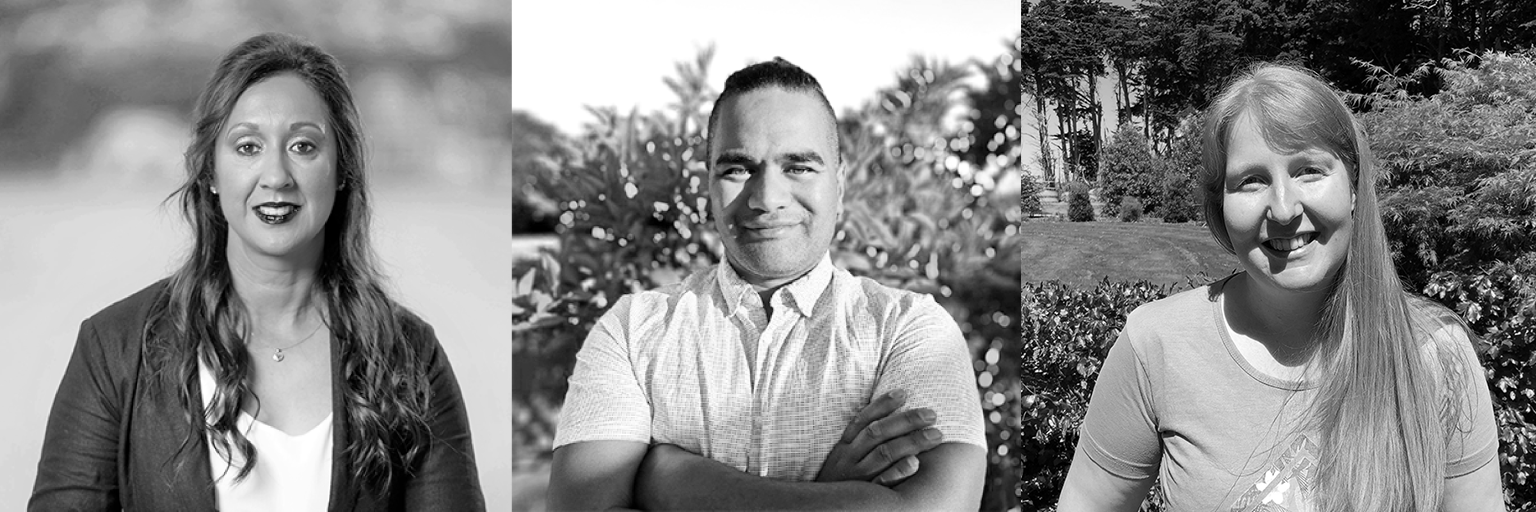
Congratulations to our 2023 Nuffield New Zealand Scholars!

Kerry Worsnop, a Gisborne based Sheep and Beef Farmer, Company Trustee, and Environmental Consultant.

Matt Iremonger, a Sheep and Beef and Dairy Farmer from Banks Peninsula, in Canterbury.

Kylie Leonard, a Taupo based Dairy Farmer, Governance Specialist, and dual Board Chair.

James Allen, a Waikato based Agribusiness Consultant and Managing Director.

Find out more about the 2023 recipients >>

Four emerging Food and Fibre Sector leaders have been awarded 2023 Nuffield New Zealand Farming Scholarships. Each has received their awards from Hon. Minister Damien O’Connor. The Awards Ceremony was held in the Grand Hall at Parliament in Wellington last night. The New Zealand Rural Leadership Trust (Rural Leaders), who administer the Nuffield New Zealand Farming Scholarship, hosted the event.

Strong interest in the Nuffield Farming Scholarship.

This year saw the most applicants for the prestigious Nuffield Farming Scholarship since 2018. To ensure that the new 2023 Scholars can travel and gain international insights to the same level as their predecessors, The Nuffield Trustees increased the value of the Scholarship, in recognition of the increased cost of travel.

Correspondingly this has meant that only four Scholars were selected, making the competition to gain a coveted Scholarship even tougher this year. Each Scholar brings talent, passion, perspective, and a track record of performance. Their job now is to find insights and build foresight to benefit our sector.

“We wish to acknowledge all those who applied. The field of applicants was particularly strong and representative of the regions and industries within our Sector. It is safe to say, there is some real talent in our regions,” Said Chris Parsons, CEO, Rural Leaders.

The collective impact of Nuffield Scholars.

Nuffield Alumni’s collective impact on the Food and Fibre Sector has recently been highlighted by the Mackenzie Study, a Rural Leaders’ collaboration with The Otago University School of Business. The study maps the in-person and sector gains from participation in the Nuffield Programme. Some of the study’s findings include:

  • Nuffield Scholars hold 14 senior leadership roles over their career.
  • Each Scholar has created an average of 3.3 businesses.
  • And each creates an average of 48 FTE roles.

“The contribution and impact New Zealand Nuffield Scholars have made on New Zealand Agriculture, regionally, nationally and globally is significant, and it is a real pleasure to be able to see the opportunity that lies ahead of the 2023 scholars to continue to create impact for the future benefit of New Zealand Agriculture”, Said Kate Scott, Rural Leaders Board Chair.

In addressing the Rural Leaders’ Strategic Partners: AGMARDT, DairyNZ, Beef+LambNZ, Mackenzie Charitable Trust, and FMG, Kate Scott said, “The positive impact on New Zealand Agriculture that is created by New Zealand Nuffield Scholars would not be possible without the generous and ongoing support of our partner organisations, who are an integral part of our mission to create world class leaders for New Zealand.”

Within this context of achievement by Nuffield Alumni, the new 2023 Nuffield Scholars were announced by Minister O’Connor as:

Kerry Worsnop, a Gisborne based Sheep and Beef Farmer, Company Trustee, and Environmental Consultant.

Matt Iremonger, a Sheep and Beef and Dairy Farmer from Banks Peninsula, in Canterbury.

Kylie Leonard, a Taupo based Dairy Farmer, Governance Specialist, and dual Board Chair.

James Allen,
a Waikato based Agribusiness Consultant and Managing Director.

The 2023 Nuffield Scholars’ research topics will cover a range of our biggest food and fibre challenges including: environmental health, social equity and economic performance, integration of beef production from the dairy industry, and fit for purpose rural professionals.

The Nuffield Scholars will bring a valuable global perspective to their research through an intensive travel itinerary of visits, meetings and experiences, designed to lead to a period of transformative personal insight and growth.

The four new Scholars will join the over 180 Nuffield Alumni, awarded scholarships over the last 71 years.

Find out more about the 2023 recipients >>

Ben Todhunter: Farming, conservation and Nuffield.

Ideas That Grow: Ben Todhunter, 2006 Nuffield Scholar.

Lynsey Stratford has discovered farmers make a few assumptions that aren’t very helpful – like accepting the fact that work might be dangerous and there’s nothing anyone can do about it. As Lynsey explains, “There are changes we can make, but those assumptions and those mindsets have been deeply held for quite some time.” 

As a consultant, Lynsey helps the primary sector with people management and development services and training. And, when it comes to health and safety she says, “We shouldn’t expect people to just know this stuff, but rather teach them and support them as they develop skills.” 
 
Lynsey’s research report unpacks the paradox that while farmers care about their people, farms as workplaces are overrepresented in fatal accident and injury statistics. So, what can be done to improve this?

Bryan Gibson – Editor of Farmer’s Weekly.

I am Bryan Gibson, the Farmer’s Weekly Editor, and this week I’m joined by Ben  
Todhunter. How’s it going? 

Ben Todhunter – 2006 Nuffield Scholar, Rakaia, Canterbury.

Yeah, good thanks Bryan. Yep. 

Farming, Conservation and Nuffield.

Bryan: And where are you calling in from? 

Ben: I’m at home on the farm, Cleardale on the Rakaia Gorge, about an hour west of Christchurch. 

Bryan: Your family’s been there a while, I understand. 

Ben: We’ve been here for close to a hundred years. The boundaries have moved around a little bit in that time, but yeah. I’m the fourth generation farming this location.  

Bryan: Can you tell us a little bit about the place, what your farm looks like and what you farm? 

Ben: So we’re on the north slopes of Mt Hutt. The farm runs down to the Rakaia River. It’s got a big chunk of boundary with the Rakaia River. It’s got loessal soils, thousand mill rainfall, lies to the northeast – so it’s got a good aspect. It’s well located, running about five and a half thousand ewes and 300 breeding cows, finishing all replacements. We do a little bit of cropping, milling wheat and feed barley and a significant genetic business in sheep and cattle. 

Bryan: So a pretty big operation. 

Ben:  A lot of farms are getting bigger nowadays, but yeah, there’s a lot going on and it takes a bit of keeping the moving parts ticking away and working properly. 

Bryan: Have you been involved in the family farm right through, or have you been away and done other stuff? 

Ben: Been back on the farm since about 1992. I’ve been overseas, did a Master’s in Dublin and I’ve worked for an Irish dairy cooperative. Done a bit of farm work in other parts of the world and worked on other farms. My father’s hips were buggered and I gave him a hand, then and I did a little bit of lecturing at university while I was trying to farm, but I’ve been at home ever since. 

Nuffield Scholarship - integration of conservation into farming.

Bryan: We were talking before we came on about your Nuffield Scholarship report. You did it a little while ago now, when was that? 

Ben: 2006.

Bryan: You took a look at integrating conservation into farm systems. Can you tell me a little bit about why you chose that? 

Ben: Yeah, absolutely. At that stage I was representing high country farmers/pastoral lease farmers in their battles with the Crown really. Helen Clark was very keen on a network of high-country parks. The model that was being explored at that stage was to separate conservation and farming.

I thought the model was wrong. It didn’t fit high-country landscapes at all. So I wanted to look at that model and how it was carried out in other parts of the world to see if there was anything I could bring back that we might be able to learn from to help those farmers. 

Bryan: From my reading, you mentioned some work that was going on in the United States that seemed like it was achieving the right results. 

Ben:  The bits that were interesting to me were if you look at how the conservation-farmer battles go in our country, if a conservationist like Fish and Game or Forest and Bird wants to get an outcome, they almost have to paint the existing owners of the land or of a property in a bad light so that they get some legislation change.

So it becomes a contentious battle. And that’s a bit how the system is. So the insight that I got in the states was more around where there’s clear property rights and those actors or participants are forced to talk to each other and then they will negotiate, inform outcomes that benefit both people rather than becoming polarised positions. So I think that principle was quite a useful one to carry forward. If you understand what I mean when I say that. 

Bryan: Totally. In some ways, a lot of people want the same things, but it’s better to sit down with the other affected party and map a positive path forward rather than tell on them and try and get someone else to hit them with a stick, I guess. 

Learning from the United States.

Ben: Yeah, very much so. You do have to remember the history of the settlement for each place in that respect. So when the west was settled in the States, it was settled around the rivers and those sort of places and that was where a lot of the biodiversity was, so their ownership vested with the farmers.

Whereas in New Zealand, a lot of the biodiversity has been retained in the wild areas, so slightly different settlement, but I think the principles are still reasonably applicable going forward.

So some of the really good outcomes you got through there were spawning habitat for fish, ensuring there was sufficient water in the creek at those times. So paying the irrigators not irrigate at that time, but the owner needed to pay them in the dry years. So it created quite fixable solutions and reasonably efficient solutions to some problems without the contention and those things we seem to get in our discussions.

Bryan: And in the time since you wrote this, how do you think things have been? Is there any change for better or worse? 

Conservation and finding the value add.

Ben: I’m optimistic there’s been a slight maturing of approaches between NGOs. I’m not sure that the farmers themselves have matured in their approach on how to deal with some of these things. 

One of the solutions that I looked at was market-based solutions to some of these issues where you’d pay a higher price for products. And that’s a bit of what we’re working with through the New Zealand Merino Company, to try and link positive climate action on the ground through to customers. That’s something that I’ve always been interested in, but it does seem really hard to get and maintain a premium for that over time. 

Bryan: That is something that a lot in the farming world debate whether the value add is actually there for doing some of the sustainability and traceability and all that sort of thing. 

Ben: So with a lot of the wool that we’re getting from Merino, we are getting significant premiums for the ethical wool that’s treated with good animal welfare standards in the current market. So there are some premiums with specific customers at certain times. 

Bryan: That’s good to hear. So what made you want to do a Nuffield Scholarship? What drew you to it? 

Why Nuffield?

Ben: I’ve always been interested in what happens outside of New Zealand in a wider sphere of the world. I probably didn’t have the capacity to do it at the time, but you probably never do. I always enjoy being around people that like to make change, that actually make things happen and think about the world and have got some energy to do that. The Nuffield people are certainly people who will question things and can make change. 

Bryan: The actual travel and that sort of thing, the process of doing it, what was that like?

Ben: Vaughan Templeton was the other scholar in that year, we had a conference in the Netherlands in the Rabobank headquarters and met all the other Nuffield scholars from around the world. That was an amazing experience. Then we traveled for six weeks through Europe, the States and Canada with a bunch of Australians in a minivan – an amazing experience as well. 

You get into a whole lot of agricultural businesses, spend a week in Washington, D.C. learning how that country operates – or doesn’t operate. Going to some of the bigger flower markets in the Netherlands like the Ellesmere Flower Market. The Dutch people are really good at logistics. 

Looking at the scale of the agricultural production that happens in America and the scale of the systems and the specialisation that goes on in some of those businesses compared to our generalisation over here. Understanding from the other farmers that the issues are common around the world. Labour, environmental impacts, markets, profitability, succession, all those issues are common in some respects. So learning about that and stuff. It’s an amazing experience. 

Bryan: Thanks for listening to Ideas That Grow. This podcast was presented by Farmers Weekly. For more information on Rural Leaders, the Nuffield New Zealand Farming Scholarships, or the Kellogg Rural Leadership Programme, please visit ruralleaders.co.nz. 

2022 Nuffield New Zealand Farming Scholarship Awards. 

2022 Nuffield Scholars and Rural Leaders Board of Trustees

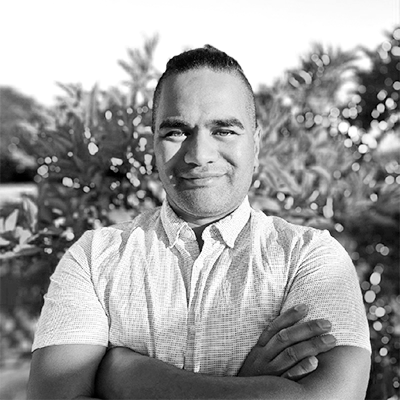
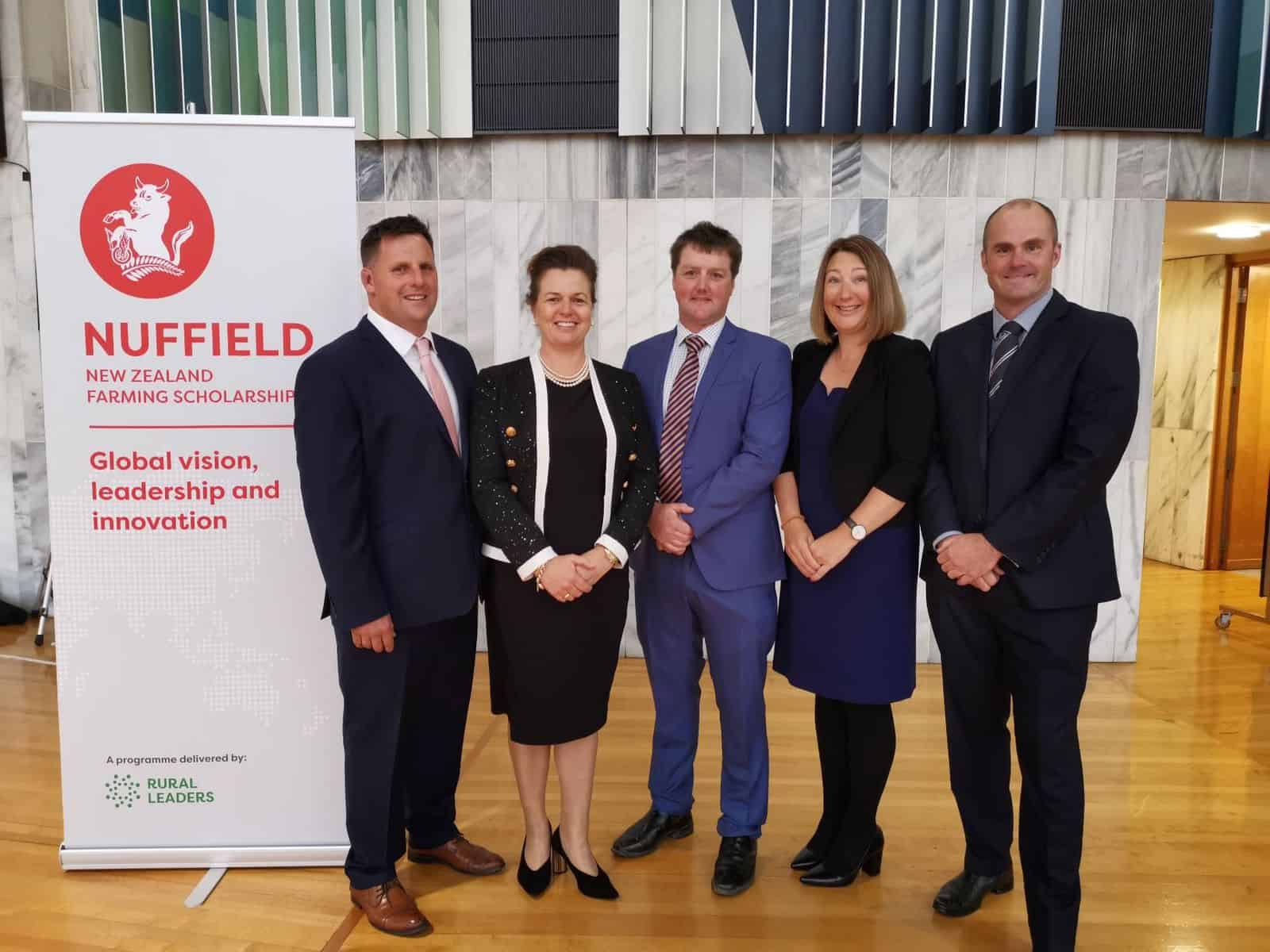
On Wednesday evening Rural Leaders hosted the 2022 Nuffield New Zealand Farming Scholarship Awards in Wellington. This was an opportunity to formally award scholarships to Parmindar Singh, Lucie Douma and Anthony Taueki – a year later than planned. 

While it was a smaller occasion than it might have been, it was no less important. Hon. Minister Damien O’Connor, was again generous with his time. A special thank you to our Strategic Partners, Agmardt, DairyNZ, Beef+LambNZ, Mackenzie Charitable Trust, and FMG too, for their ongoing support and their help in making the evening a success.

The conversation with Partners, Hon. Damien O’Connor, Rural Leaders’ Board members (some pictured with the Scholars above), and the 2022 Nuffield Scholars themselves, was immensely enriching and overwhelmingly positive.  

The evening also provided an opportunity to thank the NZ Rural Leadership Trust Board’s Ariana Estoras – Independent Trustee and Natalie Bowie – Associate Trustee, for their commitment, expertise, and service as they step down.

The positive impact of Nuffield on the Food and Fibre Sector.

Kate Scott, NZ Rural Leaders’ Trust Board Chair, spoke of Nuffield’s impact, with statistics from the Mackenzie Study, a Rural Leaders’ collaboration with The Otago University School of Business. Some key statistics mentioned include: 

  • Nuffield Scholars hold and average of 14 senior leadership roles over their career. 
  • Over 40% have served in government leadership roles. 
  • During their careers, on average, each Scholar will hold 4 or more board positions. 
  • Each Scholar has created an average of 3.3 businesses.
  • And each creates an average of 48 FTE roles. 

In addressing Rural Leaders’ Partners Kate said, “That is the measurable impact of your support for us and of the support we are trying to give back to our sector.” 

Acknowledging the disruptive times we are in, Kate Scott said that the need for exceptional leadership remains more critical than ever. Adding that New Zealand agriculture both here and globally, is again more important than it has ever been, “Especially as we look to embark on our journey of Taiao ora, Tangata ora – if the natural world is healthy, so too are the people”, added Kate Scott. 

Kate also spoke to the need for stronger collaboration, before introducing the Hon. Minister Damien O’Connor. The Minister acknowledged both Chris Parsons, Rural Leaders’ CEO and Kate Scott, for their hard work and energy before giving an informative talk about the value of Nuffield and the New Zealand Primary Sector’s place in the world.  

Nuffield Scholar’s research topics - fit for a fast-changing food system.

Each of the 2022 Scholars gave updates on the progress and direction of their research. It was a first chance for many to hear from the Scholars themselves. 

Anthony Taueki, 2022 Nuffield Scholar with Minister Damien O'Connor

Anthony Taueki, 2022 Nuffield Scholar.

Of his research Anthony Taueki, explained that his topic ‘Pathways for the Primary Industries from the grassroots up’, had gone through many different moulds. Anthony is focussing on the vocational transition from high school to career, with particular attention to those facing challenges within the current system. 

He explained that what was currently defining his research on career pathways, were the questions, “Can you provide me with positive pathways? Can you provide me with positive culture? Can you provide me with pastoral care? And perhaps most powerfully, “Can you see me?”  

Anthony discussed the need for decision makers to collaborate, to break down the silos that exist in order to create one consistent message, to create positive sector career opportunities for all New Zealanders, “We shouldn’t be above our people, we should be beside them”, Said Anthony. 

Lucie Douma, 2022 Nuffield Scholar with Hon. Damien O'Connor

Lucie Douma, 2022 Nuffield Scholar.

Lucie spoke about how her research topic ‘Data Interoperability’ will look closely at what data farmers need to be making the decisions they need to make to meet our regulatory and environmental requirements.  

However, as Lucie explained, after beginning her already extensive travel both with the Contemporary Scholars Conference and independently too, the focus of her research was evolving. Lucie explained that the UK and Europe, as a consequence of the pandemic and lockdown, have moved significantly, with rises in food activism and groups facing food challenges.  

Lucie elucidated, that a contributing factor here is that consumers are even more disconnected from their food system. Lucie believes data may provide some solutions here. 

Parmindar Singh, 2022 Nuffield Scholar with Hon. Damien O'Connor

Parmindar Singh, 2022 Nuffield Scholar.

Finally, Parmindar Singh spoke of her pride at being a fourth generation dairy farmer and of the responsibility she has to her family before her. Parmindar’s research will look at export markets for our dairy products. It will aim to unpack what our future export markets might look like, especially given our current reliance on just a few.  

“I’ll focus on three potential markets. The first is Japan. The second is Singapore. The third is the United Arab Emirates. All very different, though all gateway markets”, explained Parmindar.  

Parmindar went on to add that her research will focus on how people consume dairy in these countries, look into their culture, their economics and how the political context impacts social stability in these countries. 

The 2023 Nuffield Scholars announced in two months.

As the 2022 Scholars now progress with their travel and research, a new group of Food and Fibre Sector leaders have started their journey to selection to the 2023 cohort.

We’ll announce the selected 2023 Scholars in November, when the next Nuffield Awards are to be held.

Lynsey Stratford: Changing how we work for better outcomes.

Ideas That Grow: Lynsey Stratford, 2021 Nuffield Scholar.

Lynsey Stratford has discovered farmers make a few assumptions that aren’t very helpful – like accepting the fact that work might be dangerous and there’s nothing anyone can do about it. As Lynsey explains, “There are changes we can make, but those assumptions and those mindsets have been deeply held for quite some time.” 

As a consultant, Lynsey helps the primary sector with people management and development services and training. And, when it comes to health and safety she says, “We shouldn’t expect people to just know this stuff, but rather teach them and support them as they develop skills.” 
 
Lynsey’s research report unpacks the paradox that while farmers care about their people, farms as workplaces are overrepresented in fatal accident and injury statistics. So, what can be done to improve this?

Bryan Gibson – Editor of Farmer’s Weekly.

I’m Bryan Gibson, editor of Farmer’s Weekly. Today, I’m talking to former lawyer, consultant, and dairy farmer, Lynsey Stratford. How’s it going? 

Lynsey Stratford – 2021 Nuffield Scholar, Curio Bay, Southland.

Good thanks. Nice to talk to you.

Digging deeper with a Nuffield Scholarship.

BryanWhat have you been up to?

Lynsey: I’ve been up in Christchurch with Rural Leaders, to celebrate the end of the scholarship programme for the 2020s and the 2021s.

BryanFantastic. As you mentioned you are a recent scholar. What made you choose the Nuffield Scholarship?

Lynsey:  To be honest, I applied just after our first COVID lockdown. Like everybody, I’d been thinking about what I enjoy doing during that time – being stuck inside. I love to travel and learn new things. I’ve always looked at the Scholarship and thought that the stories from previous scholars sounded like a great experience and opportunity.  
 
I didn’t really think I’d get a scholarship, but I thought, what the heck, let’s give it a go, and if nothing else it’ll be an interesting experience. I was very surprised and honored to be selected as a scholar for 2021.

Bryan: And what sort of area did you want to study? 

 Lynsey: I love working with people in the primary sector. I went into the scholarship thinking I would look at health and safety and providing better workplaces for people that are more productive and engaging for better health and wellbeing outcomes. 

My project ended up being called ‘Super Humans, Not Superheroes’. It looked at how we do all this fabulous stuff in the sector, but we’re probably asking a bit too much of ourselves. We expect to be superhuman, and our teams too. 

With a slightly different approach to structuring work, we could support better outcomes that are more engaging, create better work, more productivity, and still improve the health and safety of our people.

Challenging and changing mindsets toward on-farm workplace safety.

Bryan:  Working in the farming world, it’s a relatively dangerous place and it can be somewhat isolating at times. What sort of strategies do people need to try to work into their businesses to make it better for people? 

Lynsey: I guess the good thing is most are low, or no-cost, so you can make quite big changes without spending a lot of money. The key to it all is mindset.  
 
What I found was that farmers have some assumptions that aren’t very helpful. We accept the fact that work might be dangerous. We assume there’s nothing we can do about it. And that’s not right. There are changes we can make, but those assumptions and those mindsets have been deeply held for quite some time. 

Farmers don’t think they’ll ever get hurt. They think other people might. Generally, we don’t think that we are prone to accidents. So, we don’t really take any steps to manage the risks that there are in our work. We tend to normalise the fact that it is a dangerous occupation and so we don’t try and challenge that by changing how we work.  

If you’ve got family or team members who think that way, that’s a good place to start. We need people to help us understand that there are things that we can do to organise work better. So, lots of the time, we’ll be told what to do, but not necessarily the why or the how. And that’s just good team communication.  

We shouldn’t expect people to just know this stuff, but rather teach them and support them as they develop skills. 

Bryan: I guess an engaged work team is probably going to not only be more productive, but also be happier and safer, would you expect? 

An engaged farm team means thriving workplaces and better outputs.

Lynsey: Absolutely. There’s some shocking statistics from Gallup, who looked at engagement across the world. For New Zealand, only 20% of our workforce, and this is across all sectors, is fully engaged. If you’ve got a team of five people, that’s only one giving everything they’ve got.  
 
So, yeah, if we can tap into engagement, it’s better for people. They feel like they’ve got some control and they’re growing – they like to be there. So, if you’re an employer, those people will go that extra mile for you because they want to be at work and they feel passionate about it. 

And engagement is, if they feel you care about them, that they’ve got some control over how they themselves can organise their work. That they’re growing and developing – those are all things that we can improve if we start to think differently about how we organise work. 

Bryan: I guess what you’ve just been talking about feeds into the ‘why’ you’re there. If there’s a bigger goal that everyone is working towards, then that can help, can’t it? 

Lynsey:  I guess that’s where we’ve gone a bit wrong. In the past we’ve focused on compliance, but we haven’t seen these wider benefits of good work. And there’s some interesting stuff that’s been done by the Business Leaders’ Health & Safety Forum by Hillary Bennett. It said that if you improve how you set up work, train people, you’ve got good processes, so they understand their role, and their responsibility, and how to change how work gets done – if you do all those things well, you improve mental health as well.  
 
So, that’s another component of this, that we’re looking at wellbeing as well as physical health and safety. 

Bryan: People who are engaged, feeling good about themselves are probably going to produce better work and be safer when they do it, aren’t they? 

Lynsey: Yeah. And be on the thriving end of the spectrum of mental health, instead of the just surviving space – or not surviving at all. So, that’s what we want. We want good work that sets us up for thriving people and great farming. 

Bryan: So, you’ve just finished then? 

A different kind of Nuffield Scholarship experience.

Lynsey: Yes. We had an experience that was interrupted somewhat by COVID. So, it’s been a very weird scholarship experience because it’s kind of backwards. Usually, you do your international travel, and then you produce your report. Ours will be the other way around. But I think our experience, although different, has been just as good.  

What we did was travel as a cohort. So, the 2021 scholars linking in with the 2020 scholars. We traveled through New Zealand, from Northland right down to where I farm in Curio Bay, Southland. We did the length and breadth of New Zealand together. 

Then we did our research independently, but with as much as we could face-to-face. A lot of it had to be remote via Zoom. So, now I get to go and do my international travel through August, September, and October. 

Bryan: You might want a rewrite afterwards! 

Lynsey: I think that’s the aim. We kind of validate what we’ve seen, and if there’s anything we need to change, we’ll revisit. 

 
Bryan: And that’s exciting. I mean, the travel component is a big part of the scholarship. Where are you off to? 

Lynsey: My group goes to Japan, Belgium, Ireland, and California. 

Bryan: Well, that’s an exciting thing to look forward to. 

Lynsey: Yeah, it is. It’ll be a Northern Hemisphere trip in the summer. So, that’s also quite exciting now, as we sit here in Invercargill. 

Bryan: When you’re not knocking out your report as part of your Nuffield Programme, what does life look like for you? 

Lynsey: I’ve been married to a Kiwi dairy farmer for nearly 20 years now. Being on farm with him was a big part of life until recently. We sold our farm effective 1st of June. Now, we’re kind of redefining where we go and what we do, but I’m also a mum, which is very important to me.  
 
I’ve got two children that I like to focus on. I like to try and support them with school things and support our local community too. And then I also have a small consulting business that helps primary sector businesses – but all sorts of businesses manage their people. 

From cows to consulting – a farmer advising farmers.

Bryan: What sort of consulting or advice do you offer businesses? 

Lynsey:  So it’s interesting because I started out as an employment lawyer in the UK. There I was focused on compliance and getting agreements, policies, procedures and following all the legal requirements.  
 
I still do all those things, but I’m much more focused on trying to improve work setup so that we’ve got engaged teams, great communication, good processes. We’re training people and developing them, making sure that the behavior we’ve in the workplace is setting up a great culture that engages people. So, I’ve moved away from just focusing on the compliance. 

Bryan: I think that’s a move the agricultural and horticultural industries in New Zealand need to complete still. A lot of the reaction I get at the newspaper to health and safety reform, or regulation is that it’s just a hassle, a box-ticking exercise, whereas if you do change that mindset into creating a space where everyone can thrive, then that’s when the goal is going to be reached. 

Lynsey:  That’s one of the things I concluded in my research. It has been sold to us as a compliance exercise – but it takes a lot of resource to change mindsets. It’s not that easy. And so, the easier thing to do is to set us up for compliance, make sure we’ve got the plans in place. But if we really want to make change, it’s that mindset that we need to focus on. We need resources to do that.  
 
We need great people connecting farmers with good information that helps them understand the opportunity and ‘the why’ for them, whatever it is. That then supports them to develop the skills they need. And it’s not something that we can nail in one workshop or one interaction. The resourcing really needs to be there, and it needs to be long term. We’re talking about generational change if we want to change mindsets. 

I guess I’ll just give a shout out to Ben McLachlan. He’s a 2020 scholar and his report is about mindsets that help us change. He’s looking at the growth mindset, which I found was critical to getting great workplaces.  
 
A workplace where we’ve got a growth mindset is one where we understand that people can develop new ways of thinking and new skills if we give them the opportunity and the right support. I was stoked when I saw his work, as it aligns nicely with mine as well. 

Bryan: That leads into my next question about the community that being part of the Rural Leaders team builds among those who are working through the same cohort? 

Lynsey:  We were lucky. Talking to previous scholars, they have often got their scholarship, briefly met the New Zealand cohort, then gone overseas and developed relationships internationally – but not quite as tight a relationship with the New Zealand scholars.  
 
I think we’ve been lucky that we got that chance to spend time together, because of COVID. It’s the silver lining. It’s been amazing to see the projects that the scholars came up with across those two cohorts. Some of the best opportunities were the discussions that we had in the van as we toured New Zealand visiting leading businesses. Thanks to all those scholars who talked to me and shared their views.  

Bryan:  Excellent. So, the programme is something that you’d recommend to other people? 
 
Lynsey: Absolutely. It’s not easy. To do anything like this where you are basically challenging things that you thought or your beliefs in how the world works, that has been a challenge. But it’s been a unique opportunity too. I just can’t think where you’d get the chances that we got to visit all these amazing businesses.  
 
We went to certain Rocket and Aerospace businesses. I didn’t even know we had these kinds of businesses in New Zealand. If you want to stretch your assumptions and learn some new things and meet some awesome people, I thoroughly recommend it. 

Bryan: Thanks for listening to Ideas That Grow, a Rural Leaders podcast. This podcast was presented by Farmers Weekly. For more information on Rural Leaders, the Nuffield New Zealand farming scholarships, or the Kellogg Rural Leadership Programme, please visit ruralleaders.co.nz. 

The future of food and fibre is in the hands of our bold and our grounded people – those who give back to their communities and industries.

Sound like you?
Nine tips to nailing your Nuffield application. 

1. Identify Nuffield’s goals.

As simple as it sounds, applicants often don’t fully understand what the broader goals and objectives of Nuffield are.  

If your application is written with consideration to ‘giving back’ for example, this will go some way to increasing your chances of gaining an interview. 

2. Get your Nuffield referees sorted soon.

There’s still time to get your three referees locked in. This is something that often needs a little time, so if you don’t have three lined up yet, make it a priority. 

3. Include what you’ve done for your rural community or assisting others.

Tell us about it. We’re often surprised to learn of the above and beyond participation some applicants have done without mention in their application.  

Have you served on any boards, committees, in any community organisations? Any rural groups, or in any voluntary capacity? Have you written any articles?
Dig, think, tell us. 

4. Keep an eye on the close date – 17 August.

For some reason time seems to be getting away on us all at the moment. This next few weeks will be no different. Take five minutes to plan your approach to applying.  

Start planning what needs to be done and by when. Aim to finish on Friday 15 August – or sooner. 

5. Get in touch with our Programmes Manager.

Our Programmes Manager can help you through any queries you may have. she’s within earshot of CEO Lisa Rogers, so you get Lisa’s 8+ years’ experience as well.

We just asked Lisa for a gem, and she said, 

“Be very explicit about what being awarded a Nuffield Scholarship will allow you to do for the sector, not necessarily what it will do for you.” 

Who knows, five minutes on the phone with the Rural Leaders Team, or a quick email, might be the difference.

6. Focus on your strengths.

Find ways to both answer the questions accurately and get your ace cards down. 

An average application isn’t necessarily a badly written one, however, it is definitely one that doesn’t get across how suited you are to being a Nuffield Scholar. That said, you might want to pay attention to this next tip for a well written application.

7. Check your application.

Spell check. Grammar check. Read check – how does your answer sound when read aloud?

Check the questions. Check your answers. You get the idea.  

8. Read a few back issues of the Rural Leader.

Not as strange as it sounds. The Rural Leader has much information entwined throughout  that may spark topical responses to application, and potentially, interview questions.  

Of note are the Ideas That Grow podcasts and Alumni in the Spotlight articles. School up – read the Rural Leader. 

9. If you know a Nuffielder, get in touch with them.

As Kate Scott, 2018 Nuffield Scholar, said of the Nuffield Alumni, (they are) ‘A network open to you picking up the phone or flicking them and email’.  

Kate may have been talking about being part of the Alumni, but if you know, or know of, a Nuffielder, reach out and ask their advice.  

Good luck with your application. 

Julian Raine:
The apple of a horticulture robot’s eye.

Julian Raine podcast_apple orchard_featured image

Ideas That Grow: Julian Raine, 1997 Nuffield Scholar.

Julian Raine is a 1997 Nuffield Scholar who quietly gets on with things worth shouting about.  
 
Julian runs a mixed Dairy and Horticulture operation and no matter what he’s producing, the one constant is innovation. From robots to getting back to milk in glass, Julian has an entrepreneur’s motivation and an innovator’s foresight. 

In this podcast, Julian talks with Farmer’s Weekly Editor Bryan Gibson about his diverse operation, some of the challenges he faces and some of the innovations he’s making to meet them – including moving to robot-ready on horticultural sites.  
 
Julian also talks about his Nuffield travel, what he learned and how his research played a role in helping shape an industry.  

The interview took place in May 2022 and the version below was edited for clarity. Listen to the podcast above for the original conversation.

Bryan Gibson – Editor of Farmer’s Weekly.

I’m Bryan Gibson, editor of the Farmer’s Weekly. And today we are talking to Julian Raine. How’s it going? 

Julian Raine – 1997 Nuffield Scholar, Dairy and Horticulture farmer/grower, Nelson. 

Good. Thanks, Bryan. 

The apple of a robot’s eye.

BryanAnd where are you calling in from today?

Julian:  I’m in Nelson. We have a farming operation, which includes dairy and horticulture, just south of Nelson in the Tasman region.

BryanThat’s quite a diverse business you got going there? 

Julian:  Yes, it is. The agricultural bit has been in the family for 180 years, so we’ve been around a while. Whereas the horticultural bit, I started with my business partners about 40 something years ago.

Innovating in a diverse operation.

Bryan: What do you focus on in the horticulture side of things? 

Julian: We have about 200 hectares of apples. I’m just trying to do the quick numbers off the top of my head – about 40 hectares of berries, all boysenberries. About 45 hectares of kiwifruit, and about five hectares of a new crop for us, feijoas. 

Bryan: Fantastic. And how have things been going this year? 

Julian: It’s been a good year in terms of growing. Been a lot more difficult to get things harvested with the shortage of staff. We completed harvest nearly a couple of months ago for all crops, so that’s good to have that behind us, although we were still packing apples well into July.  

There’s plenty of challenges with shipping and trying to get containers. We were running about a month behind with our shipping program, so that’s been a bit of a worry. 

Bryan: You haven’t had any of the weather or climate related yield issues they’ve had up in the North Island? 

Julian: No. No, we’ve been a bit fortunate thankfully, there was enough to contend with from COVID. 

Bryan: And the agriculture side of things, can you just tell me a little bit about that? 

Julian: Yes. We operate a fresh milk business. We deliver to about 3,000 households in the top of the South Island, Marlborough-Nelson-Tasman. We operate two dairy farms, and we buy and milk from another two dairy farmers. 

Bryan: So, it’s direct to the consumer. 

Julian: Yes. The home delivery is to the letter box, or to the back door, or front door. To cafes, restaurants. And we have several vending machines dotted around Nelson as well. 

Bryan: That seems to be a growing industry, isn’t it? 

Julian: It’s kind of back to the future really. When I was a lad, all the milk was basically bought at the front gate. And occasionally when you ran out, you went down to the dairy. So, we’ve kind of gone back to that model. 

Bryan: My first job I did all through high school was pushing a milk cart round the streets. I was there for the change from glass to the tetrapaks. 

Julian: Right. We’ve gone back to glass as part of what we do. 

We visited Julian at his apple orchard in April, where he has trees producing mostly the variety ‘Pink Lady’.

Julian spoke briefly about a new 500 cow, all-weather shed he has built, giving his operation ‘the tick’ from the SPCA, one of the first dairy farms in New Zealand to receive this endorsement. This dairy operation supplies Appleby Farms (Ice cream), a business collaboration between himself and Murray Taggart, a fellow Nuffield Scholar.

A Nuffield report creating impact.

Bryan: Now, it’s been a little while since you did your Nuffield report, 1997 I think you did it. But integrated fruit production, still relevant, I think. What do you remember of writing that report? 

Julian: As you say, it was 25 years ago. So, a bit of a distant memory, but many of the issues are still relevant today. What came from that report was a system I wrote called Green Grow, which was to deliver three things: Fruit with no residues, have some environmental indicators, and have a food safety system under something relatively new then called HACCP.  

This was a hazard analysis control point, which was what NASA used to send their astronauts into space. Because if you’re sick up there because of food, you’ve got a major problem. So, they wrote a food safety programme, and I adopted the bones of that, or the principles of that. 

They wanted to know whether the product was safe. The only way that we could guarantee the product being safe was essentially to take residues away. So, in terms of how we produce it, it’s up to us to battle the elements, with insects and fungi. 

When the consumer comes to consume it, they want to know that there’s nothing on there that can harm them or their kids. And then as part of that, some environmental indicators that say we haven’t harmed the environment in producing that fruit. 

Bryan: Space age fruit production, that sounds awesome. 

Julian: Yes, years later, I chaired the Apple Futures Programme, that was a three-year programme to deliver wider systems to get to the same point for the average grower. That’s pretty much about 80 something percent of the New Zealand industry now, with a fair chunk of the balance being organic. I wasn’t pretending to be organic. And yeah, we converted a whole industry in less than a decade. 

Bryan: The industry as a whole – horticulture, pip fruit and candy fruit, and that sort of thing has come a long way in the last decade or two, hasn’t it? 

Julian: It has. That was late 2000s, and since then it’s advanced even further. 

Setting up for horticultural automation.

Bryan: Do you have any other observations on how things have changed, running a kiwi fruit growing business in that time? 

Julian: We’ve set up our orchard systems now for being robot ready. We can’t keep going how we are. And so, investing in an orchard production system is a long timeframe. We must think about what the future will look like when we spend hundreds of thousands of dollars a hectare setting up an orchard.  

We’ve set our orchards up in anticipation for robots to be able to harvest. We think about how they’ll optically see the fruit, how they’ll pick it, and then how they’ll get that fruit from the tree into a bin. That’s what we’ve been busy at in the last decade. About 30 something percent of our orchards, anything we’ve planted in the last 10 years, are robot ready. 

Bryan: That’s interesting. You often think about building robots to pick the fruit as it sits. But there are a lot of things, I guess, row spacing and the way you propagate the trees, that sort of thing. 

Julian: Yes, and how we set the structure up. So single plane trees. It’s like a single plane hedge row, so the robotics and the sensors sensing the fruit, can’t go through the tree. So, it’s got to be on a single plane essentially. 

Bryan: That’s amazing. How far off do you think you are from getting the robots? Are you involved in any of that? 

Julian: The Americans and the Europeans are leading that race. We don’t have the technology here that’s needed for it. Although, there’s a small group headed by Steve Saunders in the Bay of Plenty who are working on kiwifruit robotics. They’ve tended to go more into the pack house and look at optics and how you pack fruit. 

In ten-years-time, we’ll have lights out factories packing apples. Again, to try and get 24 hour a day, seven day a week packing businesses going, we need to do the same thing with our harvest processes. When the sun goes down, we don’t all go home – robots will carry on. 

Bryan: Sounds very high tech and quite cool.  

Julian: There’s a lot of work to get it to that point. A few of us, I suppose, think about these things in the middle of the night, when other people are sleeping.  

You’ve got to work out where your business is going. About how you make it more efficient and keep a lid on cost. Because everyone is really cost conscious now, the consumer wants to buy more for less. And we’ve got to get cost out of our business and keep a high standard, because that’s really what our New Zealand brand is built on. 

Nuffield and the international travel experience.

Bryan: Now, going back to 1997, you also did a bit of travel as part of your studies? 

Julian: Yes. Through Southeast Asia, Europe, and Eastern Europe. It wasn’t long after the wall came down, I was in Hungary looking at soft fruit production. I was also in South America looking at what they were doing in Chile and, North America, in Washington.  

Really interesting to get a handle on what the leading lights were doing at that point in terms of their growing systems. 

Bryan: And in the time since, how would you say being involved in the Nuffield Programme has informed what you’ve done in those years?

Julian: Well, for me it was about the personal experience and honing my leadership skills and trying to lead producers through changes. Also, trying to think about things holistically, looking at a problem, not from just a single plane, but being able to not only go around and see the other person’s view, but be able to walk right around that issue and look at several points of view.  

I’m probably not finished yet – I’m always willing to give back to the industry. 

Bryan: The Rural Leaders, Nuffield Programme would be something you’d recommend? 

 Julian: Without Nuffield I wouldn’t have got to where I am today. It gave me not only a critical thinking ability, but it’s also given me a lot of resilience as well.  

I am also able to call on the experiences I saw around the world – the interactions not only with other primary producers, but also government officials and how government thinks.  

And how the EU operates, rightly or wrongly. And then most importantly, how consumers think, and always interacting with your customer to keep yourself up to date with what the customer wants to pay for, and what they don’t want to pay for.

Thanks for listening to Ideas That Grow, a Rural Leaders podcast. This podcast was presented by Farmers Weekly.

For more information on Rural Leaders, the Nuffield New Zealand Farming Scholarships, or the Kellogg Rural Leaders Programme, please visit ruralleaders.co.nz 

The future of food and fibre is in the hands of our bold and our grounded people – those who give back to their communities and industries.

Sound like you?