2026 Nuffield NZ Farming Scholarship. Apply by 17 August 2025. Read More...

Apply for 2026 Nuffield NZ Farming Scholarship by 17 August 2025. More details...

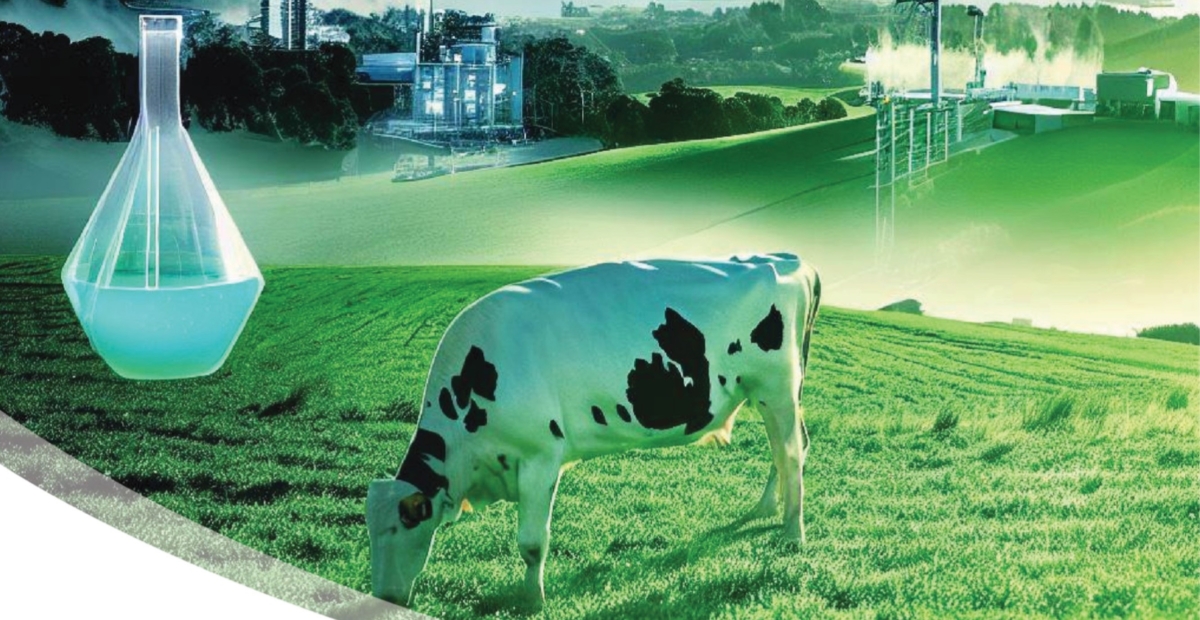
Genetic Technologies and the Effect on New Zealand’s Dairy Farmers

Executive summary

New Zealand’s dairy industry is strategically important to New Zealand. Dairy generates $25.7b in exports, or 1 in every 4 dollars which has grown by $7.9b since 2019. It is a cornerstone employer in many regions, with 55,000 employees’ nationally, considerable wage growth, and is a top 10 purchaser across dozens of industries. (Stats NZ – Sense Partners 2023).

Despite dairy farming’s economic importance, New Zealand has strict controls regarding the use and development of genetic technologies that are readily available around the globe, which could further advance the industry.

The aims of this report are to:

  • Outline the potential opportunities for genetic technologies for New Zealand’s Dairy Farmers.
  • Understand the potential risks or threats of genetic technology use in New Zealand.
  • Help to inform dairy farmers on genetic technologies.

The methodology for this report was the joint analysis method. This included conducting a literature review and semi structured interviews to build knowledge on genetic technologies and what implications those could have on the end user – the farmer.

Genetic technology is a broad topic, covering transgenesis or genetic modification, as well as new breeding technologies which is targeted gene editing using site directed nucleases resulting in gene deletion, modification, or gene insertion. Application of these technologies are broad; however, this report serves to focus on plants for animal feed such as grasses, legumes, and brassicas.

The findings from the literature review and semi structured interviews identified the following recommendations that could help farmers improve across the board, including increased output and productivity, improved environmental outcomes, animal wellbeing and financial benefits.

  • New Zealand needs a science based, consistent approach to regulating genetic technologies. This will need to evolve as the science develops and evolves.
  • Risks need to be balanced against benefits and ensure adequate testing is undertaken before commercial use. This should include flow on effects and animal health monitoring for plant breeding.
  • The right plant breeding programs need to be prioritised first.
  • Incremental gains are powerful in the long run, but New Zealand needs to adopt genetic technologies now.

Due to the economic value of the dairy industry, if farmers prosper there can be an expectation that regional economies will be positively affected, median wages for dairy workers will rise, and local input purchasing will rise with this.

Scott Armer
Commercialisation learnings for Agritech

Executive summary

There is a growing global demand for agritech to solve major global issues, such as climate change, water use and quality, and increased yields from food and fibre to feed the world’s population.

Whilst New Zealand has a proud history of primary sector innovation, there are only a handful of agritech companies of international significance. The 2020 Aotearoa Agritech Unleashed Report opined; “Compared to our international peers we are punching below our weight in our relative economic value and export earnings from agritech”.

What can New Zealand agritech companies do better to commercialise their innovations to grow the sector, but ultimately to help solve these global challenges and in the process advance New Zealand’s international competitiveness in primary production and grow our export earnings.

This report has undertaken to seek learnings and insights of what successful commercialisation of innovation looks like and apply this to a New Zealand agritech context to present key denominators for successful commercialisation of agritech.

The study completed literature reviews of academic, industry and business publications across innovation and agritech, together with semi-structured interviews with New Zealand agritech practitioners.

Thematic Analysis was applied to the body of research and interviews to capture the Key Findings and related Recommendations as follows:

1. Engage in Critical Self-Assessment:

Critically evaluating whether the agritech founder has a minimum viable product with initial customers to get to the start line. To be commercially successful at scale requires ongoing discipline for critical self-assessment of:

  • Total addressable market; develop a clear understanding at the outset of the addressable market, validating the innovation to that addressable market, what investment is required and the profit model.
  • Founders’ skills, traits and shortcomings; actively build a team with complementary skills and capabilities requiring the right industry and functional expertise (technical, operational, commercial and financial) with an ability to execute.

2. Value Proposition:

Develop and define a clear and (relatively) material value proposition for the adopters of the innovative solution. The Founders need to be focused on delivering a client solution (not an innovation).

3. Business Model:

Bring together the component parts to execute the commercialisation growth, including:

  • Product and market lifecycle; recognise and plan for the innovation to evolve from the initial core product and early adopter market to an augmented solution delivered and serviced for a mainstream market which requires active planning for channel to market, wrap-around solution, communication strategies and services model.
  • Resources; The resources required to execute, not just the team and governance, but broader relationships, suppliers, channel partners, components, facilities etc.
  • Profit Model & Capital structure; continually evaluate the commercial model and align with a fit for purpose capital structure. If external capital is required to support the company to break-even, then ensure that “smart” capital is pursued with the right industry experience and networks for execution.

The approach and recommendations have been brought together into a Framework of Key Denominators to Enhance Successful Commercialisation of Agritech (show in Figure 11 of the report).

The key themes, or denominators are all inter-related, they cannot be approached or applied in isolation. The framework is not a one-size-fits-all but a valuable roadmap to be evaluated and adapted for each unique agritech innovation and market opportunity.

Murray Dyer

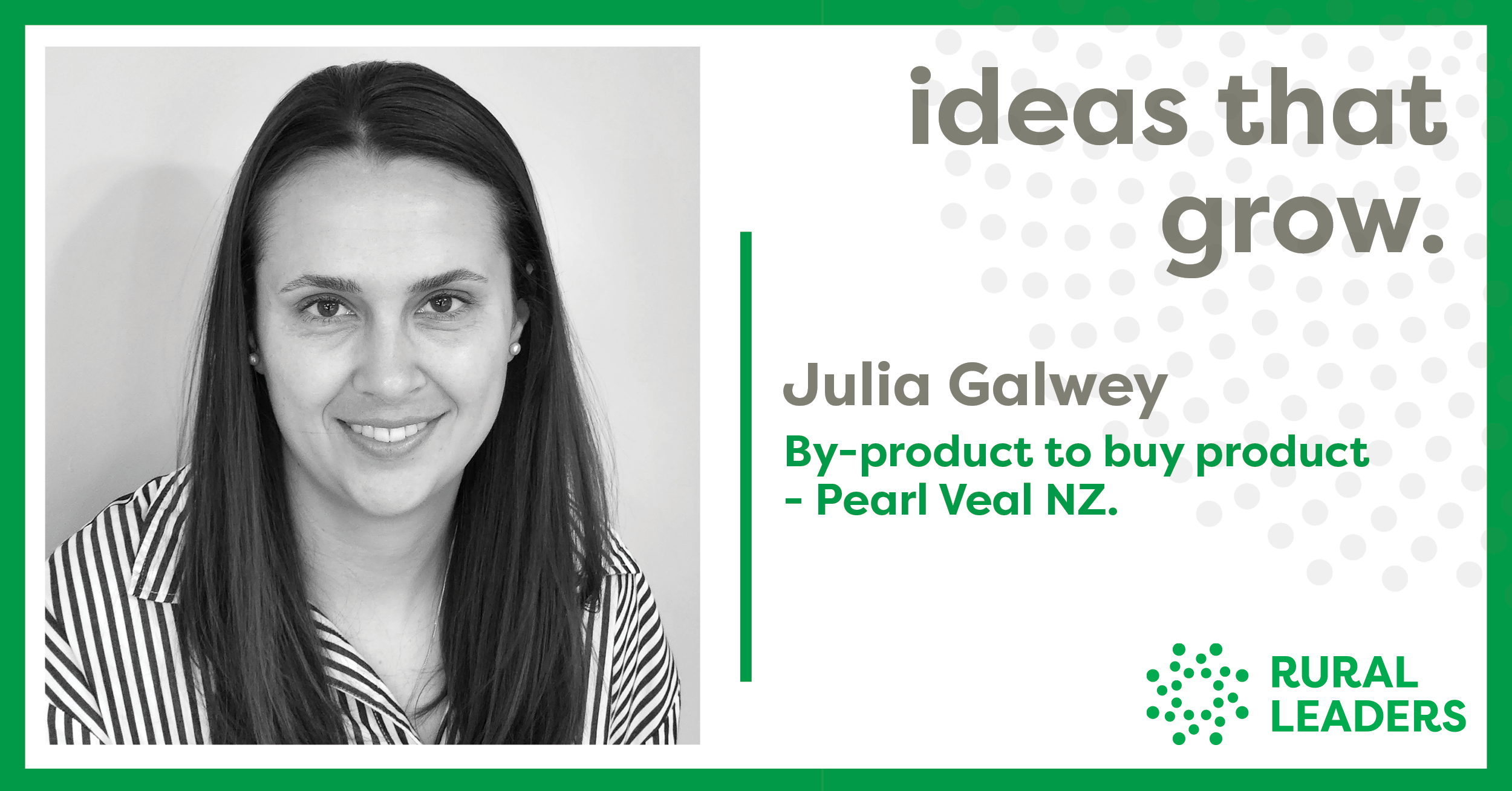
Julia Galwey. By-product to buy product – Pearl Veal NZ.

An innovation story that covers the journey from an idea to the challenges of development, and to implementation. Julia Galwey, 2020 Kellogg Scholar, talks about Pearl Veal NZ, a new sustainable utilisation of the bobby calf resource.

Pearl Veal NZ was the winner of the Silver Fern Farms Market Leader Award at the 2023 Beef+LambNZ Awards in mid October.

Listen to Julia’s podcast here or read the transcript below.

Bryan GibsonManaging Editor of Farmer’s Weekly.

Kia Ora, you’ve joined the Ideas That Grow podcast, brought to you by Rural Leaders. In this series, we’ll be drawing on insights from innovative rural leaders to help plant ideas that grow so our regions can flourish. Ideas that Grow is presented in association with Farmers Weekly.

My name is Bryan Gibson, Managing Editor of Farmers Weekly and this week I am talking to the recent winner of the Market Leader Award at the Beef and Lamb New Zealand Awards, Julia Galwey.

Bryan Gibson:
G’day Julia, how’s it going?

Julia Galwey, 2020 Kellogg Scholar and Co-Founder Pearl Veal:
Good, thank you Bryan. How are you?

BG: Pretty good, where are you calling from today?

JG: I am calling from my home office in Christchurch.

BG: Nice. Have you been getting all the wind we’ve been getting up here?

JG: Yeah, it’s been pretty mixed bag at the moment. Very much spring weather.

Winning at the Beef+LambNZ Awards.

BG: Yeah. Now, it was a pretty big time for you, the Beef and LambNZ Awards.

JG: Yeah, it was pretty neat for Pearl Veal to be recognised at such a wonderful event. Just have an evening of celebrating lots of positive things happening in the industry with the various finalists and category winners. A big thank you to Beef and LambNZ for hosting the event, and also to Silver Fern Farms for sponsoring the market leader category.

BG: Yeah. Now, can you just tell us a bit about your background in the food and fibre sector?

Background - Julia Galwey, 2020 Kellogg Scholar.

JG: Sure. I grew up on a sheep and beef and deer farm near Fairlie in South Canterbury. Then I headed off to Lincoln to do an Ag Science degree. Following that, I had six years in the agribusiness team for ANZCO Foods based in Ashburton, which was a neat team to be involved in, and a really varied role, that got me going in the meat industry.

Then in 2018, Alan McDermott and myself, we set up Agri-Food Strategy, which is our own agribusiness consultancy company. It focuses on working with farmers and agribusinesses to address strategic challenges and opportunities. I guess, again, it’s been pretty varied in terms of the work I’ve been involved with in that space.

BG: Now, you took on a Kellogg Scholarship in 2020, which, of course, was the year of the lockdown, if I remember correctly. You chose to do it on a value chain for veal. What made you think of that subject?

Kellogg research into the potential of the bobby calf resource.

JG: Good question. Yeah, I guess the idea to look at this for my report was just being around the meat industry and the bobby calf topic continues to come up in conversations. There just wasn’t really a lot of information that I could see here in New Zealand in terms of looking at older veal animals as an option for this resource, a by-product of the dairy industry. I didn’t really want to focus on the discussion or debate around the bobby calves themselves. I did for some context in my report, but I just wanted to focus on looking at one potential solution or opportunity for utilising some of that resource.

BG: Then, of course, it’s one thing to write a report about this stuff, but you carried that on and started a business. How did that get off the ground?

JG: I guess while I was doing my research report, there’s a few things that came up in terms of some learnings and drivers or motivators. One of them was probably around learning how much of a bigger risk the bobby calf thing was here in New Zealand. Especially compared to other countries in terms of the scale, with our couple of million versus Australia would be the next biggest, at around 400,000.

The report highlighted we were out there on our own in terms of how big of an issue it might be going forward. Some of that, was a bit of a driver. I learned a bit around the varying types of veal markets that there were internationally and saw some opportunity, but I really struggled to find any information on pasture-fed veal systems.

So, it became obvious that maybe there was an opportunity for New Zealand to diversify in terms of our offering in the veal space with what we’ve got here. Also, in terms of some of those credence attributes – pasture-fed, free-range, rather than copying some of the international veal systems.

From research to innovation.

As I was doing the report, Alan McDermott, who’s my business partner, was keen to have a go. We could test out what opportunity there really might be. I mean, it’s all very well, like you say, writing a report, but you just must have a go to see whether something might work or not. Halfway through my project, that’s what we started doing.

We had a quick brainstorm for a name so we could get a company set up. There are quite a few negative connotations around the name ‘veal’, which I learned a bit about while I was doing my report, in terms of some of the historic practices that used to happen in terms of how veal was raised internationally.

There was, I guess, some questions around whether we should even call it veal or not. But we talked to a few chefs, and they pointed out that we need to call it what it is. That’s what they know it is. A lot of them have trained internationally and used it before, so just stick with what it is, but make sure you build a story you can underpin your brand with. We sourced some under 12 months of age, a whole 12 of them, and found a processor that was happy to process them for us.

We set up cut specs and went along to the plant to see how it would go and then started sending some products to chefs to see what they thought. We had a development chef that we were introduced to through a contact, and he kindly took us around Wellington for a couple of days. He introduced us to a few chefs and helped us learn how that world works in terms of getting into restaurants and talking to chefs – and how to get on their menus.

Building scale.

The feedback on the product was great. We started working with the team at Synlait, including one of my fellow Kellogg cohort members, which was quite cool. They’ve been supportive in what we were trying to do and helped us connect with some of their dairy farm suppliers who were keen to give it a go and rear some calves. It’s been a nice fit for us to work with the Synlait team and some of their suppliers.

BG: How difficult is that process? You’ve got a prototype product and you’ve started with a small number of animals to begin with, then you’ve got to scale that up to something that’s a viable business. What’s the process there?

JG: It’s one of the trickier things to balance. It’s a bit of a chicken and egg in terms of you’re not quite sure in terms of what market you’ve got, but you need to get enough product that you’ve got enough to supply to a restaurant to put it on their menu. Yeah, it is a difficult balance, and some of that is just to take a risk. I guess for us, one of the things that we were quite focused on was building around the story and attributes we wanted to go around our brand. With some of that starting with animal welfare for us in producing the best calf possible.

The rearing regime and how it works.

There’s quite a lot of challenge in terms of veal as anything must be produced before the calf is 12-months old, so a lot of the challenge is around getting it to grow as fast as possible and to reach a heavy weight in that time. It needs a good start in life as a calf, to be able to do that. Some of our system was built around a particular rearing regime in terms of good colostrum.

Then we only use whole fresh milk rather than milk powder, which has had a lot of the good bits taken out of it. Milk is what’s designed for the calf, so let’s just give it that and obviously some pasture as well. But because of that rearing regime, we can’t just go out and get any calf on the market.

It starts right from the start in terms of what we’ve built to underpin our brand. That also is a little bit harder in terms of, like you say, we’re planning what we need over a year in advance, and you don’t necessarily know what your market is then. A bit of risk, I guess, and just a balance of starting smallish so that you learn the risks, learn the things you need to iron out as you go.

BG: Getting back to your rearing regime, that must mean you need to work pretty closely with the farmers who are actually doing this stuff?

Collaborating for success.

JG: Definitely. I think the other thing in that space is the Synlait farms that we’re working with are all certified ‘Lead with Pride’, which again, helps underpin animal welfare and the colostrum management. Obviously, our contracts have got the rearing regime outlined in them, and we talk them through what that looks like and why. We also don’t have meal as part of our rearing regime. Part of that is around wanting to remain grain-free, so 100% pasture-fed and antibiotic-free, so that we can look at going into the US market in time.

Again, it’s the whole fresh milk, no meal. It is a bit of a change to how calves are traditionally reared here. We’ve got to work closely with the farmers on what that looks like. We’re thankful for those first few farms that were willing to take a bit of a risk and rear and finish calves for us.

We were a couple of random people saying, here, we want to contract you to rear these calves in a particular way and finish them through to an age and weight that’s not traditional here. They had to trust a bit that we would take them when we said we would and have a processor to process them and pay them.

I guess that’s probably also part of what’s been quite helpful working within the Synlait team. That helped farmers have a go. There’s just some great farmers out there that are keen to try something different and learn with us, which has been nice.

BG: Yeah. Now, who are you selling to now? What are your export markets, or locally?

JG: Currently, we are pretty much mostly domestic market into high-end restaurants. We’ve just started doing a little bit into some smaller retailers here, and we’ve just started a little bit of export.

BG: Now, obviously, the bobby calf issue is one that New Zealand’s farming industry is grappling with. Do you see this type of initiative as part of a solution?

A new veal value chain.

JG: Yeah, I mean, the bobby calf issue is obviously a big social license to operate topic in the dairy industry, and it’s a pretty tricky thing to navigate with the views of community here and also our customers and consumers globally.

I guess we just have to keep asking ourselves if we’ve got practices that we’re comfortable and being transparent about, and if not, then what are our opportunities and solutions to do something differently? I guess that’s really what we’re trying to do with Pearl Veal is.

I don’t like to focus too much on the bobby calf aspect of it. But more the opportunity that exists to take some of that resource and add value to produce a really quality veal-based product with a story and a brand that’s underpinned by animal welfare standards and a pasture-based system that we believe in. We’re proud to share with chefs and customers and consumers here.

BG: Of course, back to where this all started, the Kellogg Programme –  how did you find it? Is it something you’d recommend to others who were thinking about doing it?

The Kellogg Rural Leadership Programme - where it started.

JG: Yeah, absolutely. It was such a good course and I guess a real opportunity to network too. We had such a great cohort of people. It was a good cross-sector group of people. You get to meet people that you wouldn’t normally be working with and the people and the speakers that come in are incredible. It really broadens your thinking and opens your networks and I would highly recommend it to anyone considering it.

That’s why I did it. It’s something that once people have done it, they’re always recommending to anyone that hasn’t. If you get that opportunity, jump at it. I think it’s one of those things that probably never feels like the right time when you’re in your working career because you’re always busy or home life as well. You just have to jump in and do it.

BG: Thanks for listening to Ideas that Grow, a Rural Leaders podcast in partnership with Massey and Lincoln Universities, AGMARDT and FoodHQ. This podcast was presented by Farmers Weekly.

For more information on Rural Leaders, the Nuffield New Zealand Farming Scholarships, the Kellogg Rural Leadership Programme, or the Value Chain Innovation Programme, please visit ruralleaders.co.nz

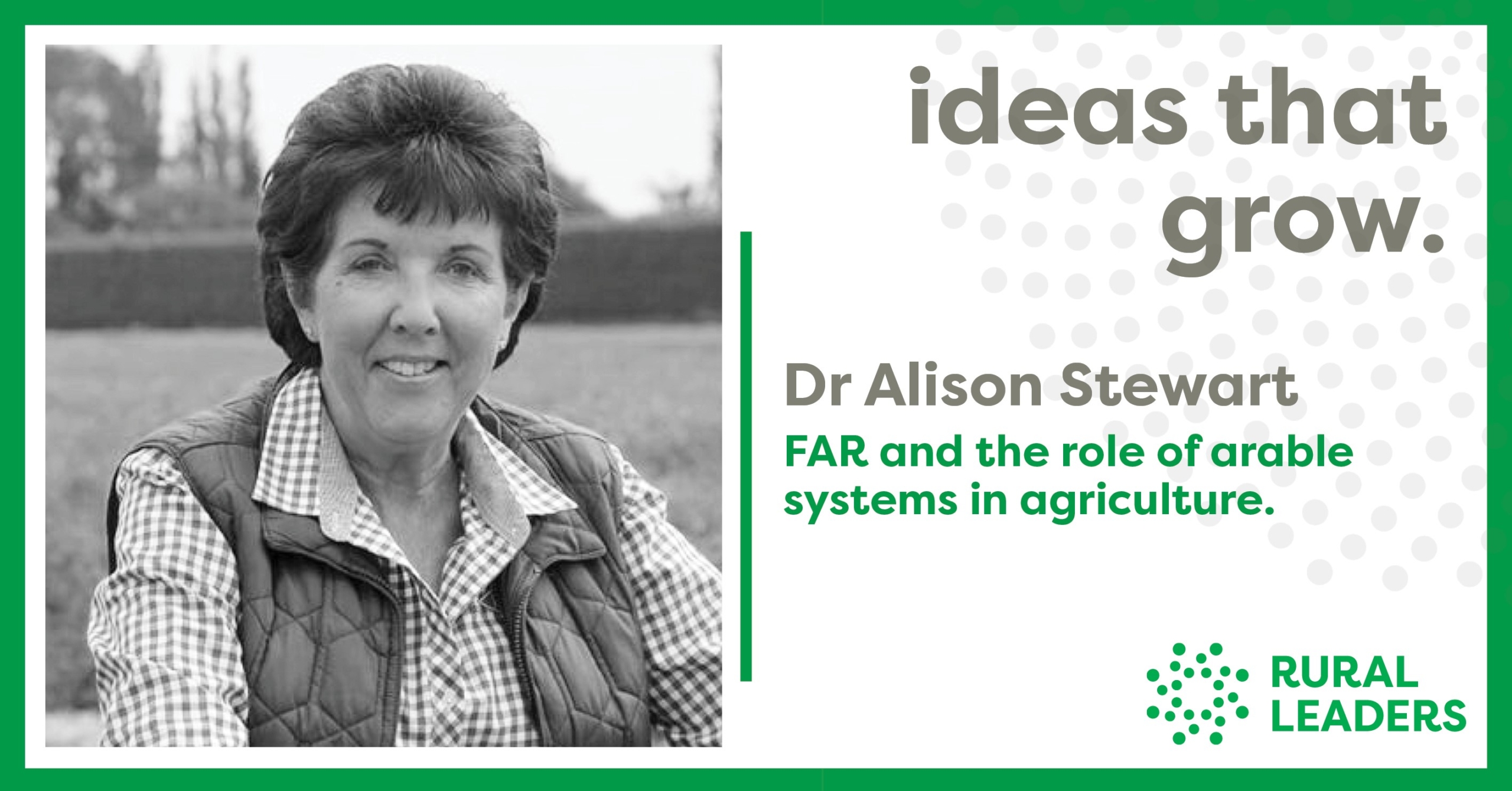
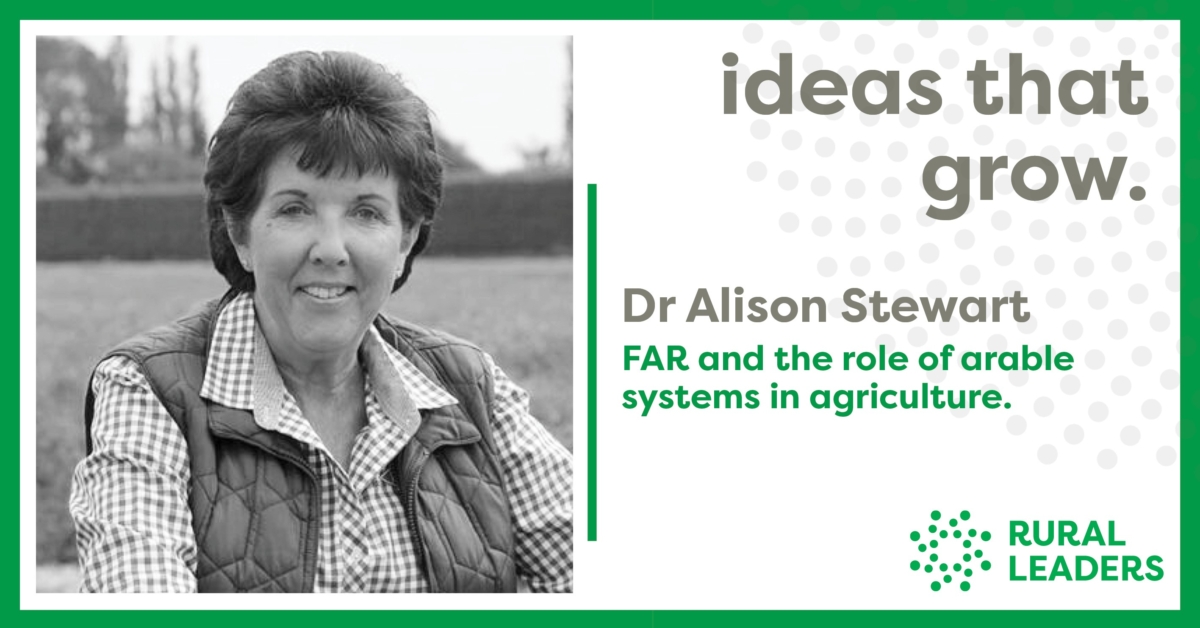
Dr Alison Stewart – FAR and the role of arable systems in agriculture.

In this podcast, Dr Alison Stewart, CEO at the Foundation for Arable Research, talks with Farmers Weekly’s Managing Editor, Bryan Gibson, about the role of arable in agriculture, her role at FAR and the delivery of research that benefits growers.

Dr Stewart also discusses her involvement with the Kellogg Rural Leadership Programme and the importance of exposure to diversity of thought for leaders in Food and Fibre.

Listen to Alison’s podcast or read the transcript below.

Bryan GibsonManaging Editor of Farmer’s Weekly.

Kia Ora, you’ve joined the Ideas That Grow podcast, brought to you by Rural Leaders. In this series, we’ll be drawing on insights from innovative rural leaders to help plant ideas that grow so our regions can flourish. Ideas that Grow is presented in association with Farmers Weekly.

My name is Bryan Gibson, Managing Editor of Farmers Weekly and this week I am talking to Dr Alison Stewart, CEO at FAR, the Foundation for Arable Research, and a regular speaker on the Kellogg Rural Leadership Programme.

Bryan Gibson:
G’day Alison. How’s it going?

Dr Alison Stewart – Chief Executive Officer at the Foundation for Arable Research (FAR).
Yeah, great. Thanks for having me.

BG: Great to have you here. Now, you’re the Chief Executive of Far. What’s been happening in your world lately?

The current arable context.

AS: Well, we’ve just had a referendum. So, every six years, our levy peers vote to decide whether FAR is doing a good job and they want to continue paying their levy. So that happened just last month. I guess for the last year, we have been focused a little bit on the referendum and making sure that the growers know what we’re doing and what value it delivers. And fortunately, yes, we got good support.

Although I have to say getting growers to vote was the biggest challenge. They’ve just got so much happening in their lives at the moment and so much information being thrown at them that they’re almost in a situation where finding the time to vote in a referendum was not a high priority. That actually was the biggest challenge, convincing them to get onto their computer and vote.

BG: And running the organisation, what does your job entail? What do you do in a week?

AS: My job is to make sure that everybody else in the company is doing their job really well. I’m joining all the dots. We’ve got some amazing research staff who are out there doing applied research, trying to find new management systems, new tools, new technologies that will assist our farmers.

We also have a lot of extension people focused on trying to support them with all of the compliance regulations that are coming down the track. And then we also have to deal with the biosecurity incursions. We’re dealing with two at the moment.

Amongst all of that, we’re just trying to promote to the general public, to the other sectors, to the government, the value of arable systems and the value that they bring to New Zealand agriculture. I jump around a lot, getting involved in lots of things, across lots of areas, at different levels of responsibility. It’s never a dull day.

BG: Yeah. Our Food and Fibre Sector is dominated by the big two animal proteins. I guess, as you say, the animal sector is as big and successful of its own accord, but in some ways plays second or third fiddle sometimes?

AS: Oh, very much so. That frustrates me in the sense that we actually underpin the livestock sector because we produce all of the seed and the grass seed that they need to grow their pastures to feed their cows. If we go under, then the livestock sector is going to be substantially worse off.

We also produce a large amount of the animal feed the dairy sector and the beef sector and the poultry sector need. So, I’m not sure that we ever get full recognition for the important role we play, not only in our own right through producing milling wheat and quality seed crops, but also underpinning the livestock sector. I try to remind my colleagues in the dairy and beef and sheep sector that they need us as much as we need them.

World-leading seed production.

BG:  I guess a lot of people do just think of fields of maize or barley or wheat, but that seed production part of things is really important, but also quite an opportunity and a success for New Zealand, isn’t it? We’re quite good at it.

AS: Absolutely. It does help that the big global seed companies can see that they can get out of Northern Hemisphere seasons and they can get seed crops being produced in New Zealand. We have really good environmental conditions.

We have good quality certification, verification and accountability systems. We’re seen to be a very important seed producer. That’s really good from the perspective of an arable farmer because it provides a really nice rotation.

We’ve got our foundational cereal crops, but then we’ve got the seed crops in the foundation of the rotation and that gives a nice diversity, but it also introduces the opportunity to capture another revenue source.

Dr Alison Stewart - A CEO’s career path.

BG: Now, how did you get to the position you’re in now? What’s your career been like? What did you do when you left school?

AS: Well, I mean, gosh, I’ve been around the block. I’ve always been interested in plants. Even as a child, I was always out in the garden with my mum planting and looking after plants. I did botany at university, and then I did a PhD in plant pathology, and then I came to New Zealand.

Obviously, I’m Scottish, and I came to New Zealand, got a lecturing job at Auckland University, and it was the old Botany department. That was how I started off my career being an academic, and I had 10 years at Auckland. Then I moved down to Lincoln University because I wanted to be doing more applied research and more closer to the actual farming sector. I was 18 years at Lincoln University as an academic, running a big research centre, looking at sustainable production systems.

Then I decided to challenge myself a little bit more and I went off to California and ran a biotech company. Then I came back to New Zealand and headed up forestry science in Rotorua with Scion. Then I moved from there and came to be the CEO of FAR.

I’m probably relatively unusual in the sense that I’ve been in academia, I’ve been in the CRI system, I’ve been in a commercial company and I’m now working in an industry body. I’ve worked across horticulture, vegetable cropping, herbal cropping, and forestry. So it gives me a nice broad perspective on what’s happening, particularly in the plant-based sectors in New Zealand.

FAR - delivering the arable research that benefits growers.

BG: Well, that’s quite a CV. I’m interested in your interest in applied science and knowledge transfer. That’s something that’s been talked about in our sector as something that works pretty well, but does need work, if you know what I mean. Is that something that you think is moving the dial over the years?

AS: Oh, most certainly. I mean, there isn’t much point in doing research if you’re not going to get the results of the research out, being taken up and used by farmers and growers. FAR in particular, over the last 25 years, has been an exemplar of an organisation that has effectively delivered its research to benefit the growers.

It’s becoming more difficult because the environment is so much more challenging for growers. I won’t say the good old days, because I never think that the old days are actually that good. But in the past, FAR would do research and it would be identifying a new plant growth regulator or a new fungicide or a better fertiliser programme. And you’d go out and you’d say, if you do X, Y and Z, that will deliver a one-ton increase in yield.

That’s a really easy story to tell. The growers will go, that’s a good idea. I’ll do that. The growers get a one-ton increase and they think, Oh, my levy is good value for money for us doing a good job. But we’ve driven yield optimisation pretty close to the optimum.

A challenging arable environment.

Now the challenge is, how do we maintain those optimum yields given all of the constraints that growers now have around input costs and compliance around fresh water and climate change. That’s a much, much harder knowledge exchange programme because you’re potentially, and quite often, telling the growers something that they don’t want to hear. So you’re always trying to find a way in which you can present that information in as positive a way as possible.

At this moment in time in New Zealand, farmers feel as if they’re really under the pump with people throwing compliance regulations at them, their cost of production is going up. So often their headspace is not necessarily that favourably inclined towards hearing some quite difficult messaging. It’s challenging. It’s a really challenging space for the growers, and it’s a really challenging space for the labour organisations.

FAR and the Kellogg Rural Leadership Programme.

BG: Very much so. Now, turning to Rural Leaders, you have a bit to do with the Kellogg Programme, is that correct?

AS: Yeah. I mean, they roll me out twice a year where I come and I talk to the new cohort of rural leaders. I’m one of these people that, and it causes me a lot of angst over the years, I tend to just say exactly what I think. That can get me into a lot of trouble!

I really enjoy challenging young people around what they’re thinking, why they’re thinking it, and what they want to achieve in their careers. I love having discussions around what leadership actually means, because leadership means quite different things to different people.

In New Zealand agriculture at this moment in time, with all of the challenges that are coming up, it’s really hard to be a leader because levy organisations, for example, are reliant on doing what their levy peers want them to do, and that sometimes prevents you from being able to take a true leadership position.

I really like talking about some of those challenges, and it’s a good environment because it’s not out in the public arena. You’re not going to get hung out to dry on social media, but you’re able to have some really honest and sometimes quite painful discussions about how New Zealand agriculture needs to move into the future and the changes that need to be made. And that young cohort of Kellogg leaders are up for those kinds of discussions, and I just love it.

BG: I mean, it’s an interesting group because most of them already have a career and then they have a day job, and then Kellogg is back to school. So I guess it’s different from your previous work in academia, where it was 9:00 to 5:00 learning. And that has some upside, I think, of the Kellogg Programme, do you think?

Kellogg exposes leaders to diversity of thought and opinion.

AS: I think it’s a fantastic programme because it provides an opportunity to bring multiple thought processes to the table. Scott Champion, who’s one of the key Facilitators on the Programme; he’s very well connected and he can bring quite disparate views to the discussion.

That’s really important because if you stay in your own industry, in your own space, in your silo, then all that happens is that everybody validates preconceived ideas and it’s really good to be challenged.

I think that’s what the Kellogg Leadership Programme does. It makes you realise that what you thought you knew and what you thought was a valid belief, there may actually be alternative viewpoints. You have to open your mind to different ways of thinking and different people’s perceptions of agriculture and different conclusions that you can draw from the vast amount of research that’s out there.

It’s a fantastic learning opportunity for young people to avoid getting into a siloed mantra of just believing the here and now and what people they tend to engage with think. It’s a bit like when you google something, the algorithm sitting in behind Google can work out what your preconceived ideas are, and therefore they tend to give you links to things that validate those preconceived ideas.

I think we’ve always got to try and make sure that we don’t get into that mentality of thinking that because we believe something now, that means it must be true.

BG: Cross-discipline research or work in real time, isn’t it?

AS: Absolutely, yeah.

BG: So, you’d recommend the Programme to anyone thinking about the big issues facing the sector, and thinking about leadership?

AS: I think you have to be prepared to put time and effort into it. It’s like anything in life that if you don’t commit and put your passion and energy into it, you’re not going to get the same amount of benefit out of it. I think you have to be prepared to come to the table and listen to those diverse views and be prepared to change your opinion about things.

If you come to the Kellogg Programme with a preconceived idea that you’re right and everyone else is wrong, you’re not going to get the benefit out of the Programme.

BG: Thanks for listening to Ideas that Grow, a Rural Leaders podcast in partnership with Massey and Lincoln Universities, AGMARDT and Food HQ. This podcast was presented by Farmers Weekly.

For more information on Rural Leaders, the Nuffield New Zealand Farming Scholarships, the Kellogg Rural Leadership Programme, or the Value Chain Innovation Programme, please visit ruralleaders.co.nz

How do early-stage AgriTech founders use professional assistance?

Executive summary

This project has looked at how smaller AgriTech start-ups have used professional assistance, with the objective of better understanding of why or why not assistance is obtained and the timing around these decisions.

A combination of a literature review followed by interviews with six founders of smaller AgriTech start-ups and four professional advisors were undertaken to identify topical findings.

There was limited New Zealand specific literature, therefore relevant literature from a broad range of overseas countries has been reviewed.

Interviews were undertaken to obtain qualitative data from founders of smaller AgriTech start-up companies and professional advisors aligned with the AgriTech industry.

A consistent theme observed in the findings from both the literature review and interviews was that better outcomes can be achieved by founders of smaller AgriTech start-up companies who make use of appropriate professional assistance earlier on in their journey.

The main recommendations are:

  • Founders of smaller AgriTech start-up companies should seek professional assistance early in the journey.
  • Founders of smaller AgriTech start-up companies should actively seek out their regional start-up hub for educational events and networking.
  • Professional Advisors should be sufficiently self-aware to understand that they may not have the appropriate skill set for working with smaller AgriTech start-up companies.
  • Professional Advisors should provide Founders with a road-map outlining the stages at which specific advice would best be most useful.
  • Founders and professional advisors should ensure that their relationship is built on mutual trust. There needs to be an inherent level of trust between the founders of smaller AgriTech start-up companies and the professional advisors that they engage with.

    As noted in the limitations to this project, further research could be undertaken with a larger sample pool to ensure robustness of the conclusions.

Steve Hydes

Know Your Why – Motivations for a Sustainable Future.

Executive summary

With growing demands for sustainability in the food and fibre industries, there is mounting pressure from consumers to produce environmentally responsible products. This report addresses the necessity for the New Zealand dairy industry to prioritise climate change concerns and associated greenhouse gas emissions to secure a sustainable future.

The report aims to understand the motivations behind the adoption of new innovations by dairy farmers and learn how to accelerate the uptake of practices that reduce greenhouse gas emissions, thereby ensuring the long-term sustainability of farming in New Zealand. Additionally, the report aims to create a resource to inform government, industry bodies, and non-governmental organisations (NGOs) about alternative approaches to motivate farmers in reducing greenhouse gas emissions positively.

The research question guiding this study is: How can we motivate New Zealand dairy farmers to embrace practices that effectively reduce greenhouse gas emissions?

A literature review was conducted to gain insights into the significance of greenhouse gases in the New Zealand dairy industry. The review examined the impact and relevance of greenhouse gases within the New Zealand dairy industry. 23 semi-structured interviews were used to uncover the motivations that would drive New Zealand dairy farmers to adopt practices aimed at reducing greenhouse gas emissions on their farm. Responses were categorised into the following high-level themes:

WHY (belief): Explored the aspects of purpose, motivation, social structure, and trust.
HOW (actions): Focused on leadership, communication, and pathway implementation.
WHAT (result): Addressed knowledge acquisition, problem definition, and barriers encountered.

Information gathered from the literature review and semi-structured interviews, highlighted the importance of understanding the “WHY” behind motivations and the utilisation of effective communication strategies (“HOW”) to drive the adoption of sustainable practices within the New Zealand dairy industry.

Recommendations:

  • Leverage the intrinsic values and purpose that farmers already possess. When developing GHG related communications to dairy farmers, industry partners should inspire farmers towards transformative change by building on farmers’ existing intrinsic values and encouraging mastery to drive toward continuous improvement.

  • Emphasise the importance of the economic benefits and social licence to operate. Milk processors need to communicate to farmers and rural professionals the potential advantages of being market leaders in greenhouse gas emissions reduction and the consequences of falling behind.

  • Create a single location for information regarding greenhouse gas related resources. Ministry for the Environment should provide and manage a resource location (i.e. website) for reputable GHG related literature, policies, regulations and general resources related to climate change specifically for the dairy sector.

  • Provide greenhouse gas emissions resources for veterinarians. New Zealand Veterinarian Association (NZVA) should curate a list of reputable sources of information regarding greenhouse gas emissions regulations, mitigation strategies, and the economic advantages of adopting practices that reduce GHG emissions. As a trusted source of information, veterinarians can disseminate this information to dairy farmers.

Tracey Reynolds

Lean on Me: The Effectiveness of Psychosocial Services Available to Farmers Following Adverse Events.

Executive summary

Climate change is increasing the frequency of climatic extremes. Accordingly rural psychosocial services must be prepared to support farmers in the face of increased adverse events. For those farmers most severely affected, the rural clinical mental health services which treat farmers are often underfunded, under resourced and difficult to access due to structural inequities.

New Zealand’s economy and wellbeing of its people are intricately linked to the success of the primary sector. Therefore, farmers’ psychosocial recovery after an adverse event is vital, not only for moral reasons, but sound economic reasons.

This project examines who the stakeholders are in the rural psychosocial ecosystem, how farmers interact with these stakeholders, and how these stakeholders in turn interact together. It aims to understand the challenges and constraints to delivery of effective psychosocial services, and solutions to overcome these challenges and constraints.

The key learnings of this project are:

  • Distant stakeholders who set policy and control funding are removed from rural communities’ needs and consequently, prioritisation and understanding of rural mental health suffer.
  • There is a lack of strategic direction and metrics in rural mental health, and specifically psychosocial recovery following adverse events. There is a dearth of data, duplication and confusion of roles, unsustainable funding models for psychosocial services and a stretched clinical mental health workforce. All of which contribute to a less effective service for farmers.
  • Psychosocial services need more support to develop and deliver their services.
  • There is currently no plan to address rural mental health clinical workforce issues.
  • In the absence of sector leadership, the government is currently leading the psychosocial response after adverse events which is leading to ineffective outcomes for farmers.

The recommendations from this project are:

  • Develop a long-term national strategy for rural mental health including psychosocial recovery following adverse events, led by the sector and its industry co-funded mental health champion/ chief executive (CE).
  • Establish a role within MPI’s Rural Communities’ office to advocate rural mental health and improve prioritisation of rural mental health.
  • Develop a rural pathway for clinical psychologists and psychiatrists with their respective registration bodies to bolster the rural mental health workforce, overseen by Ministry of Health and the sector’s mental health champion/ CE.
  • Fund and resource existing psychosocial services, such as Rural Support Trust, to attract and develop some in-house clinical expertise to lessen the burden on the rural clinical workforce.
  • Prioritise rural connectivity to enable technological solutions, with subsidisation for satellite connectivity.

Vanessa Thomson

Women in beekeeping: how to champion ladies in the apiculture industry.

Executive summary

The Apiculture industry plays a key role in the economy not only for their production itself but also for all the benefits that bees provide to the ecosystem and economy. It is also important to consider that diversity and inclusion are not a trend or an item on the governmental agencies agenda, but it is one of the goals of the United Nations to achieve sustainable development by 2030. This report will focus on female beekeepers and will delve into their experiences in the New Zealand’s Apiculture Industry.

Key findings.

The nine interviews provided valuable insights and the semi-structured questions were thoughtfully organised into thematic groups that facilitated the subsequent thematic analysis of qualitative data. To maintain focus and coherence, the identified themes will be kept for in-depth exploration and analysis.

Representation: female beekeepers see the industry as a place where they are underrepresented.
Support: Mentoring was key, and life-changing support was received. The support they did not receive but was needed, is diverse; varies from one beekeeper to another greatly.
Barriers, Uncovering Biases and Advancing Gender Awareness: the most mentioned were gender-based bias and queen bee syndrome.
Women+: Work flexibility is especially important for employed beekeepers as well as for self-employed, this perk is fundamental in attracting more women into the industry and increasing retention.

Recommendations.

Increase women’s representation:
● Annual women’s meeting at the beekeeping conference.
● More female speakers at conferences.
● Showcase the ladies that represent the industry.

Biases, gender awareness and harassment: things to keep in mind on the way to gender bias-free interactions are: Question your bias, address inappropriate behaviour and act against “bad” behaviour.

Improve Gender Equality in job promotions: Ask Why? Why are women not applying for a position?

Sol Tejada

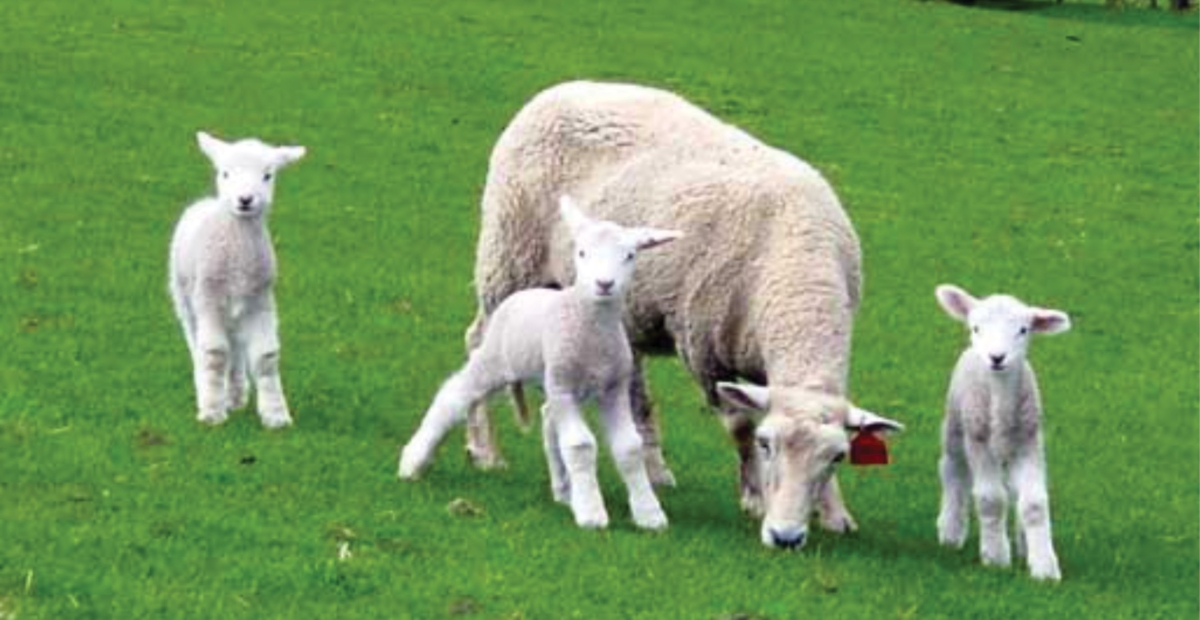
Addressing Mortality in New Zealand Lambing Systems.

Executive summary

The New Zealand sheep industry has become increasingly productive in recent decades. This has been achieved primarily through the fecundity and improved feeding of modern sheep breeds. While impressive, this world-leading production has created unintended consequences in the form of excess mortality rates. This is most notable in triplet-bearing ewes, mated hoggets, their offspring, and all lambs in adverse weather conditions.

New Zealand farm systems have a reputation for being free-range and pasture-based. Currently, consumers are unaware of, or accept a certain level of death as a natural outcome of this free-range system. However, the industry must consider whether the increasingly conscientious customers and consumers will accept high mortality levels in sheep flocks, particularly if they understand the inflated death rates following storm events and the regular wastage in higher-risk animals.

This project explores how New Zealand sheep farmers can improve livestock survival during the lambing season. Information was gathered through literature reviews, 10 expert interviews, 10 farmer surveys and three case studies. Key findings were:

  • Death rates in triplet-bearing ewes and their lambs are significantly higher than in other stock classes and the majority of these deaths occur during the lambing period
  • Industry experts and farmers unanimously agreed that lamb mortality is a problem and needs to be addressed, but few have management solutions for triplets, and a portion of farmers actively ignore the issue
  • There is a minority of top-performing farmers with management plans in place who achieve far below industry-average death rates
  • For improved welfare, mated hoggets require intensive management through the lambing period
  • There is a lack of collaboration between government and industry in funding applied science and performance-based studies to innovate further solutions
  • Farmers believe Beef + Lamb NZ should increase investment in research and development and extension work
  • While there are no market signals that current wastage is an issue, there was unanimous agreement that it could be a trade barrier. Comparisons should be made to bobby calves and future legislation being superseded by industry requirements
  • To drive behaviour change and improved outcomes, a culture shift amongst farmers is required where animal welfare is viewed as paramount through the lambing season and high wastage rates are frowned upon and considered unacceptable by peers.

These key findings were evaluated and recommendations were made to the industry. These are summarised below:

1. Conduct market research to assess perceptions of wastage in NZ lambing systems and the risk this could pose in accessing premium markets.

2. Investigate and understand the extent of wastage in New Zealand lambing systems and subsequently innovate solutions to reduce mortality. The sector should increase investment in research and development and explore opportunities for collaboration between MPI and the science community.

3. Identify innovators who are achieving industry-leading survival rates, and analyse their systems to gauge financial implications and the potential for broader uptake.

4. Improve extension services with an increased focus on wastage. Teach best practice management and distribute new innovations. The rapid development of extension modules and ready-to-present workshops specifically focusing on improving survival are required.

5. Empower industry experts and incentivise further interaction with farmers to promote discussion and make this issue front of mind for farmers.

12.0 Recommendations for Industry, Pg 48 explores these recommendations in more detail.

Richard Dawkins

How Can Technology Help Achieve Sustainable Agriculture in New Zealand?

Executive summary

This report examines the potential of disruptive innovation and emerging technologies to enhance the sustainability and resilience of New Zealand’s sheep, beef, and dairy farming systems. It also explores the drivers, barriers, and impacts of technology adoption on farms. The report draws from peer-reviewed literature and semi-structured interviews with, industry representatives and scientists.

The main findings of the report are:

  • New Zealand’s agricultural sector faces significant challenges in reducing its environmental impact, especially in terms of greenhouse gas emissions and nitrate leaching, while maintaining its economic viability and social acceptability.
  • Disruptive innovation and emerging technologies can offer solutions to these challenges by improving farm productivity, efficiency, profitability, and environmental performance.
  • The adoption of these technologies is influenced by various factors, such as cost, risk, regulation, consumer preferences, social norms, knowledge, skills, and infrastructure. These factors can act as drivers or barriers depending on the context and the stakeholder perspective.
  • The impacts of technology adoption on farms can be positive or negative depending on the type, scale, and distribution of the technology.

To facilitate the transition to more sustainable and resilient farming systems through disruptive innovation and emerging technologies, the report recommends the following actions:

  • The industry should foster a culture of innovation and collaboration among farmers, researchers, policymakers, businesses, and consumers to identify and address the needs and opportunities of the sector.
  • The industry should invest in research and development to generate evidence-based knowledge and solutions that are relevant, accessible, and applicable to New Zealand’s farming context.
  • The industry should provide farmers with education and extension services to increase their awareness, understanding, and skills in using new technologies and practices.
  • The industry should engage with stakeholders and the public to communicate the benefits and challenges of technology adoption and to build trust and acceptance of new products and processes.
  • The industry should advocate for supportive policies and regulations that enable innovation and technology adoption while ensuring environmental protection, animal welfare, food safety, and social justice.

This report aims to stimulate discussion among the policy, farming, academic, and wider communities to help shape a future that will safeguard New Zealand’s social, economic, and environmental well-being.

Kathryn Broomfield