2026 Nuffield NZ Farming Scholarship. Apply by 17 August 2025. Read More...

Apply for 2026 Nuffield NZ Farming Scholarship by 17 August 2025. More details...

Are farmers and growers being recognised for making change?

Executive Summary

In the Farmer/Grower Survey (2021) a grower argued that the reason for any change is to make sure their business can remain sustainable. Change needs to be motivated by a sustainable business model, which means resilience and being able to adapt to a changing environment (Viticulture A, F/G Survey, January 29, 2021). This changing environment is occurring fast, how we respond to topical issues will be the driver of change in the discerning consumer market. The “Fit for a Better World” document describes the way we respond to climate, freshwater and biodiversity will define us as a sector and as a generation. Consumers and customers will judge us by it, and so too will our grandchildren (Primary Sector Council, 2020).

There is a rising consumer awareness on how and where their food is produced. What effect has this food had on the environment? What conditions are those producing the food and fibre working in? These questions continue to evolve, meaning we as food and fibre producers need to be able to adapt and prove our credentials. This raised awareness affects market access requirements, documentation and the changes we need to implement if we wish to be a
premium product producer.

This movement from volume to value is an acceptable concept and one New Zealand is in a prime position to take advantage of. The triple bottom line presents the idea for sustainability to be achieved by a combination of three groups: people, planet, and profit. Are New Zealand‘s primary industries asking our farmers and growers for too much focus on the pillars of people and planet? The risk to having a lopsided focus on people and planet issues is that those actions may outweigh the third pillar of profit, thus sustainability being compromised. The importance of a sustainable and resilient business model is key to our success in capturing the value opportunity.

 
This report aims to raise awareness of the importance of having a balanced and supportive approach to change. Making change can be separated into three buckets: imposed, collaborative, and change by choice. The clear difference in the change buckets comes through the perception of having control. Being in complete control is found in the change by choice bucket. Collaborative change retains a semblance of control (even if it’s not the farmer/grower’s choice), making it easier to navigate. The toughest version of change is imposed change, where the farmer/grower has little control nor collaboration. The perception of increased imposed change for NZ farmers/growers is something the primary industries need to be wary of, given the effect this change type has on mindset and profitability.

Sustainability is across all things whether it relates to people, the environment or economics. I wanted to understand the points of view of our farmers and growers to see why/how they are currently making changes in their business and if they are ready for the continuation of change.

To be truly sustainable, primary businesses need to create a model that provides a level of profit that can be reinvested back into their business.
This is an important study for the primary sector to understand how it can be best promote change within industries. If the change comes at a cost to work such as infrastructure upgrades, yield loss through the change of inputs or staff wage increases, when is it the right time to implement change? Have different regional variances, farm types, planning, and work that has already been started but may not be written down, been  considered? We need our changes captured so we can realise the value opportunity.
 
This report included both a literature review and a qualitative approach through a series of semistructured interviews. I have analysed the themes, common messages from both the interviews and the literature to provoke further insight and discussion.

The incentives for farmers and growers are recognised as three different buckets, which can be generalised as a commodity producer, a niche/premium market, and someone seeking a premium through trading on their ethically produced products. The New Zealand primary industries have producers in each of these buckets. Considered change is needed for each incentive bucket, so the farmer and grower are being recognised for the change required.

An area I have seen as being overlooked is that change is a human problem! From one farmer to another, the way they would cope with change is different. KublerRoss change curve model (Elizabeth KublerRoss Foundation, n.d.) is very useful to identify and understand how people deal with change. The emotions linked to the seven stages can be a useful tool to identify where an individual may be with the state of change and how to transition through to the integration of change intended.

Change that is sought by the consumer, the market, government, or the individual farmer and grower, means an understanding of the producer’s readiness and support for change. In this study, I explored examples from the survey participants of actions that were imposed change,
change by choice, and change by collaboration.
 
What was evident was that the farmers and growers are already engaged with change and they believe in constant improvement with their operations. I found that farmers/growers feel they are mostly ready for making change and more ready than their neighbours’, and those sectors they are participating in, also more ready than the New Zealand primary industries as a whole. The areas of opportunity and challenge discussed by the survey group also had an alignment to that of the priority actions captured in the KPMG Agribusiness Agenda. As I discovered during this study, the shift to a general understanding from New Zealand farmers/growers is that they need to better represent themselves to the concerning consumer. The challenge is not the why? But to articulate and prove our credentials to those consumers.

With a common pro
blem across all primary industries, the need for strong and clear leadership is evident. A shift in power from being government lead to a more collaborative approach is needed to achieve better outcomes for the primary sector. Sharing a joint vision of Te Taiao (English translation: the natural world, environment) means we can have more responsibility being held in the hands of those best positioned to engage, enable, develop and implement the change needed.
 

My recommendations are:

  • To achieve the vision and strategy of “Fit for a Better World”, we need leadership to not only verbally accept the document. Leadership needs to be visible by having a Primary Sector Council structure and governance that has both the sector and government working together.
  • Our farmers and growers will need further support with Farm Environment Plans so that the entire primary sector can benefit from raising the standard of reporting. The government needs to see this as a necessary investment in making the shift towards achieving price premiums. Engaged farmers and growers should be backed by a trusted Farm Assurance Programme to brand New Zealand premium products to the export markets.
  • Change is a human problem, so messaging and support is critically important to those both implementing and being affected by change. Seeing farmers/growers are already contributing so much towards change. I believe those that have an increased capacity to better support are both media and the government. The role they have to play in changing the narrative and funding the support services to the rural sector.

What is the true cost of transience to the New Zealand dairy industry?

Executive Summary

This report investigates whether the dairy industry has an issue with labour transience and what it truly cost a business to lose and retrain a new employee. I needed to firstly find out If, when, where and how transience has become a problem in the dairy industry. Then what it truly cost a dairy farm to lose and replace an employee. Finally, I investigated the reasons people were leaving a job and was it preventable.

There were two parts to this research project 1) a literature review and 2) a survey of 23 dairy farmers to see what they thought about the cost of transience in the dairy industry.

The key findings of the literature review were:

  • New Zealand dairy farms have changed drastically throughout the last 29 years in size. They have increased in average area from 220ha to 372ha,herd size has over doubled from 170 cows to 440 cows, and production has increased from 250kgms/cow to 385kgms/cow. Resulting in more labour being required on farm.
  • The dairy industry has similar transience to all other industries in New Zealand. This means that transience is a big issue for the whole of New Zealand not just the dairy industry.
  • 21% of a dairy farms budget is from labour costs.
  • The average dairy business has quintupled its farm debt in the last 28 years.
  • Dairy farmers are working 11 hours/week longer on average than the country’s 2.7 million people work force.
  • It takes a lot of time and effort to replace an employee.
  • Inducting an employee is costly and time consuming. It takes up to 2 years to fully induct an employee to the same as where the previous person employed was, depending on the level of experience of the position. Costs involved are not only the cost of off farm training such as ITO, but also the cost of time taken from other employees/manager/owner’s day, to train/oversee the inductee until they are competent at the tasks at hand.
  • It varies on how much it costs to lose an employee depending on experience lost. 30% – 200%. There is big difference in losing an assistant position to losing a second in charge or manager. A more senior role can more easily fill in for an assistant role as they already know the job. But an assistant cannot help with 2ic role, because they have not learnt the knowledge of things like farm walks, feed budgeting etc.
  • Working on a baseline of the cost of transience. You are looking at least 30% of the persons annual salary cost to your business for one person’s turnover.
  • Not all the cost of transience is monetary. Working longer hours, the stress of filling the skill gap lost, loss of sleep worrying how to get through until a new team member can be found and trained. These do not cost the business directly monetarily, but they are very costly to the rest of a team, family and individual.
  • 7 out of 10 reasons people leaving a job could have been prevented. They are:
    • Career development – this has been the number one category for 10 straight years. Employees who are satisfied with their development are likely to stay.
    • Work-life balance – this was up 23% since 2013. Flexibility of the job, long shifts, and suitability of hours
    • Manager behaviour – General behaviour and communication have each increased (gotten worse) in the last year.
    • Job characteristics – this was the number one rising category of turnover, up 117% since 2013.
    • Well-being – to promote work-life balance consider flexitime and telecommuting, assistance with childcare/eldercare, financial counselling, and flexible leave options.
    • Compensation and benefits – many think compensation is the reason for turnover. Sometimes it is and sometimes it is not. Find out the real reasons for turnover in your organisation. 
    • Work environment – applicant selection assessments and interviewing must include person-environment and person-culture fit as company culture becomes increasingly important.
  • Preventable reasons for turnover equate to 78% of our transience if we could solve this it would change our turnover rates from 24.5% down to 5.5%. This would be an astonishing change to our businesses.

 The key findings from the survey were:

  • 96% of dairy farmers surveyed agree transience is a cost and there is a problem.
  • 70% surveyed believe it costs their business up to $20,000 to replace a staff member. Reasons stated were from loss of productivity, induction, and training costs to get the new employee up to the same level, advertising costs and the loss of time, selection and interviewing of potential candidates.
  • It takes a lot of time and effort to replace an employee.
  • That the respondents thought most of the costs for employing a new employee was in induction and training costs.
  • 5% of the respondents thought it takes at least a couple of months to induct a new employee.
  • There was no clear trend for transience from respondents.
  • 95% of the respondents indicated that they worked over 40 hours per week.
  • The reasons for people leaving a job were Lack of support, long hours, pay not good enough and management not treating them well.
  • There were three main themes for why people stayed on farm they were good culture, Good employer, progression, fair remuneration package.
  • The results from the survey did not vary to much from the position held. Be it owner, manager, share-milker, or employee.

The main conclusions of this research project were:

  • Transience has become worse because the dynamics of dairy farms have changed drastically throughout the years, with increased farm size, resulting in the need for more labour on the farm.
  • Dairy farm turnover rates on average are relativity the same as the national average.
  • That transience is costing a considerable amount both in the way of money and stress, fatigue and over work to a dairy farm business.
  • Three quarters of transience can be prevented. Which would result in considerable savings to a business turning over employees.

Recommendations:

Turning over employees is costing dairy farming business and most of the reasons they are leaving are preventable. To capture the benefits of retention each farm needs to understand why people are leaving their farming business. Each farm needs to analyse the environment they provide for their people. Is the farm inclusive, asking their people what they want in the workplace and driving it from their needs and wants? 

Next steps for the dairy farm employer:

  • Become clear why your people are leaving – remember that on an exit interview they may not give you a clear explanation.
  • Become clear on why your people are staying – what are some strengths?
  • Identify what you are doing to prevent people from leaving your business – ask yourself would you like the same working environment?
  • Look at the history of employment on farm, is there a pattern? Could some turnovers have been prevented? Was this in your control to prevent?

Next steps for industry:

  • Identify good employers in industry who have a high retention rate and showcase these.
  • What are they actively doing to prevent turnover? Can strategies be created and adopted?
  • Focus on the intangible as well as tangible drivers – people are human beings not doings.
  • Commitment five is far reaching and will need engagement at all levels to become real. It will only be driven by those employers who see the benefit in looking deeper into their own behaviour and environment they provide on farm.


Industry perceptions of the role of soil carbon in farm greenhouse gas emissions

Executive Summary

Internationally increasing soil carbon in agricultural soils has the potential to offset greenhouse gas emissions. This project evaluates the role of soil carbon in relation to farm greenhouse gas emissions in New Zealand. Agricultural soils in NZ have naturally higher levels of carbon than those overseas because they are typically younger and our practices include more restorative pasture and animal phases. Therefore we may not be able to increase soil carbon in the same way as international studies suggest.

The aim of this project was to examine the role of soil carbon in NZ and in relation to farm greenhouse gas emissions and policy. Key groups industry stakeholders were identified and interviewed. From the results themes were identified and analysed to answer the study questions.

The key learnings of this project were:

  • It is unlikely that soil carbon will play a role in the offsetting of greenhouse gas emissions in New Zealand agriculture because levels on farms are already high.
  • The complexity of including soil carbon in an emission scheme could be inaccurate and lead to unwarranted costs for farmers.
  • It is more important that farmers focus on retaining and avoiding losses of soil carbon.
  • Soil carbon contributes to soil health by improving soil physical properties such as water and nutrient holding capacities.
  • More research is needed on soil carbon in NZ, where it is practical to increase it and how.
  • Farms are businesses and need emissions reduction solutions that are going to be both practical and ensure that their businesses remain financially viable.

The recommendations from this project are that:

  • More research be done on management practices that could increase soil carbon.
  • Information be presented to farmers on the benefits of soil carbon.
  • Tools be made available so that farmers can compare the effect of different practices on soil carbon.
  • Farmers need help to better understand their greenhouse gas emissions and a range of solutions on how to reduce them.
  • The industry and the broader society need to support farmers as they adapt their businesses to account for and reduce emissions.

How well farmers understand their finances?

Executive Summary

Agriculture is a turbulent industry with many variables and challenges affecting different businesses throughout New Zealand. This is not new but more pressure is building to challenge one’s social license to farm, being added compliance through environmental management and climate change policies. A resilient business will overcome these challenges and be well positioned to drive direction and the strategy going forward. With current high commodity prices and low interest rates, many farmers will still struggle to be profitable, limiting their ability to access capital and restricting any opportunities for growth and the next generation. Financial literacy has a significant impact on one’s business and its profitability.

The purpose of this report is to understand the current level of financial literacy within farming agricultural sector, be it, horticulture, arable, dairy, sheep and beef sectors. It is important to measure the current level of financial acumen to understand what the barriers are impacting one’s ability to upskill, and what the implications are to farmers and their wider support networks. From understanding the barriers and implications we can then conclude with recommendations to where and how farmers, rural professionals, industry-good organisations, software providers and government bodies can help improve and upskill one’s financial literacy to create resilient businesses and a stronger economy.

In order to measure the current level of financial literacy there were two elements to the research, a survey questionnaire was undertaken interviewing farmers within four agricultural sectors along with rural professionals over similar industries. A review of historical research included industry reports and articles of relevance. The findings were compared and contrasted against the surveyed findings. Once the surveyed data was collected, a thematic analysis method was used to analyse the qualitative data. Themes that emerged became the barriers and implications within this report.

Financial literacy has shown to have only improved by 15% over the past 12 years in the sheep and beef sector. This against all measured sectors demonstrates that sheep and beef farmers continue to have the weakest financial acumen. Over all sectors, 40% of businesses are what I would call “flying blind”, with no insights regarding their current financial state or year-end 2021 performance. A further half of all businesses have no formal plan or strategy in place to direct/govern their business appropriately.

It was obvious very early within the survey that a lack of financial planning and forecasting was prevalent, the larger the variables, the weaker one’s financial literacy. For example, only 50% of sheep and beef farmers complete planning and forecasting, with many variables impacting their production and performance.

Discussion groups were however considered to add significant value to the business. Five barriers were identified to be restricting an improvement in financial literacy, these are: time, technology, education, training and rural professional support. Education is deemed the only uncontrollable factor and this has been identified by some survey respondents as being their “biggest concern”. Part of their concern is having no compulsory personal and financial management courses in the school curriculum, and their staff having weak financial acumen, such as “spending their pay cheque before they have earn ’t it’. A further concern identified is weak rural professional support with lack of honest feedback, a rural professional quoted “you can kill people with kindness”.

While these barriers restrict financial literacy and awareness, they not only impact the farmers but their supporting networks as well. Many implications were identified with profitability being the biggest impact to farmers, rural professionals, rural communities and New Zealand’s economy. Further implications include financial wellbeing; impacting health and the number of young farmers coming through into the industry. Constant rural professional changes and lack of capacity, impacts on the level of trust within the rural professional network and an organisation.

The key to creating high levels of financial literacy within a person and business is having trust; trust in themselves and trust in their network team. To gain trust people must be willing to learn and play the infinite game. “The infinite game, a game where players come and they go, there are no winners or losers, only being ahead and behind with no defined endpoint” (Simon Sinek 2019).

New Zealand farmers are known by their “do it yourself” mentality but now more than ever, farmers need to utilise or build their trusted team to create resilient businesses in times of increasing regulations and compliance. To enable this farmers must be willing to move out of their comfort zone and value their time using the $25-$100-$1,000 concept. This concept helps identify that being on farm completing day to day jobs is replaceable by staff at $25/hr. Management decisions are valued at $100/hr, whereas being prepared to strategize and plan the business direction is worth $1,000/hr. At $1,000/hr, million dollar decisions can and will be made.

Working on their business rather than in it, and seeking a second opinion will result in further insights, which ultimately impact decisions and outcomes. Farmers must also look after themselves and their financial wellbeing along with supporting the next generation with their financial skills and involve them in strategic decisions. “Empowering individuals with the knowledge of financial literacy will have a dramatic impact on societies and entire nations.

The impact of financial literacy can no longer be ignored. It is up to policy makers, educators and people with sufficient private equity, to make financial literacy a priority in our society. As awareness spreads and people make their voices heard, the impact of this skill set will no longer be overlooked. Education in financial literacy will become ubiquitous and these critical life skills will become the norm. The positive impact of financial literacy is undeniable and the sooner this movement spreads, the better off everyone will be” (financial educators council).

A business case for integrating a hazelnut orchard into an existing arable farm

Executive Summary

The New Zealand arable farming industry faces a number of issues as it attempts to remain profitable in a world of increasing public scrutiny and environmental regulation.

This report investigates whether the integration of a hazelnut orchard into an existing Canterbury arable farm could provide:

  • A profitable alternative to other common arable crops;
  • A lower nitrate-N leaching profile than other common arable crops thereby bringing down the overall
    leaching profile of a farm; and,
  • An opportunity to sequester carbon on-farm in order to offset the charges associated with agricultural
    greenhouse gas emissions that will be in place from 2025 onward.


The New Zealand hazelnut industry is small but has an enthusiastic grower base. Approximately 400ha of hazelnuts are planted across New Zealand. Production and profitability from these orchards has been low when compared to international production and when compared to New Zealand trial data. Low production and profitability are likely due to the choice of the high quality but low yielding cultivar ‘Whiteheart’ in the majority of New Zealand hazelnut orchards.

Internationally, gross margin returns from well-managed hazelnut orchards can be in excess of $5,000/ha.

New cultivars that have been bred internationally such as ‘Jefferson’ show significant promise in terms of high yield and nut quality. If international production can be replicated in New Zealand then hazelnuts offer a significantly higher gross margin than most common arable crops. Modelling has shown that income from a hazelnut orchard is highly sensitive to both price and yields, however a gross margin of $4,375/ha can be achieved after 12 years. The NPV and IRR of a hazelnut orchard are calculated to be $10,987/ha and 10% respectively.

There is a widely held view by the public and Central Government that excessive nitrate-N leaching and the subsequent pollution of freshwater are no longer acceptable. Hazelnuts use low quantities of nitrogen fertiliser when compared to most common arable crops. The average Canterbury arable farm leaches approximately 50kgN/ha/yr.

Modelling in Overseer shows a hazelnut orchard may leach approximately 7kgN/ha/yr. This makes hazelnuts an appealing option especially in catchments where nitrate-N leaching is capped or where reductions have been mandated by regional councils.

The He Waka Eke Noa climate agreement which was established in 2019 will introduce a pricing mechanism for agricultural greenhouse gas emissions by 2025. This mechanism will likely allow for emissions to be offset by on-farm carbon sequestration and planting of orchards may be an allowable component of this agreement.

Using ETS pricing as a proxy tool, this report calculated the approximate income (in the form of a cost offset) that a hazelnut orchard could provide to an arable farmer. The result being that the carbon income from a hazelnut orchard would be negligible ($5-$50/ha/yr) and therefore the offsetting of greenhouse gas emissions would not be a reason for planting a hazelnut orchard.


Planting an orchard is a significant commitment, particularly in terms of opportunity cost, as the success of the orchard will not be able to be determined until at least 10 years after establishment. For this reason, farmers need robust data to ensure they are making a well-informed decision.

Therefore, it is recommended that further research is conducted in the following areas:

  • Optimum fertiliser quantities and timings;
  • Actual yields that are currently being achieved in New Zealand; and,
  • How higher yielding international varieties perform at scale in New Zealand soils and in the New
    Zealand climate.

Untapped potential: Opportunities and challenges for water storage in New Zealand.

Executive Summary

New Zealand’s current protein production is dominated by meat and dairy. There are ongoing and increasingly growing challenges for sustainability, environmental limits, and pressure for greater efficiencies. Emergent and developing trends in plant-based proteins are creating movements and shifts in consumer demand and food production. Health and nutrition are influencing consumer demand more than ever, therefore the value proprositions in the food market have to meet this demand. The current alternative protein industry is still in its infancy in New Zealand with some sectors such as Hemp and Quinoa rapidly growing. However, in general, New Zealand is behind the main growth countries producing plant based protein like Canada and the Netherlands. This presents an opportunity to take learnings and develop potential collaborations, to advance New Zealand’s progression.

Throughout this study, a greater understanding was sought in the global positioning of alternative proteins and within the New Zealand context. This was then used to identify the considerations required to evaluate the importance of alternative proteins to the Agri-industry in New Zealand.
Key findings and discussion points raised are:

  • Food production needs to increase by 70% to feed the world population of 9.7 billion in 2050.
  • New Zealand has a natural bioeconomy as there is low fossil fuel use and more energy produced by renewable sources (80%) such as wind, geothermal, hydroand biomass, but New Zealand needs to move into a new bioeconomy charactarised by biotechnology and greater cross -sector thinking and actions.
  • The Fourth revolution is here and characterised by building on the Third, the digital revolution, that has been occurring since the middle of the last century. The fourth is combining human and machine where technology is embedded in our societies enabling artificial intelligence, renewable energy, 3D printing and autonomous vehicles.
  • Sustainability is key in all aspects of food production. Using the fourth revolution and utilising plant-based opportunities to create products that fill market gaps or outperforms the rest of the world will enable New Zealand to be a global leader in food production.
  • The steps that enable New Zelaand to be a global leader should concide with achieving goals in climate change (the Paris Agreement) and mitigating the affects of green house gases and the other pollution occurring like high nutrient loading in water bodies.
  • “Farmers are motivated by a diverse range of drivers  and constrained (and enabled) by a range of social, cultural, economic, and physical factors. Farmers will therefore react in different ways to external drivers of change and will respond differently to encouragement, incentives, and legislation aimed at influencing their farming practice.”

From the above findings and conclusions , the following recommendations have been suggested:

  • Keep monitoring consumer trends & food markets to increase awareness of markets and consumer change
  • Maintain and grow our reputation/ story of being food producers of high value and highly nutritious ingredients or wholefoods.
  • Leverage our competencies of current successful sectors especially as meat and dairy innovators
  • Seek expertise where knowledge or skills are low and empower people to become experts in new alternative proteins.
  • Encourage and develop coalitions with the government departments such as Ministry for Primary Industries, the Ministry for the Environment and farmers to provide incentives and/or support in areas where New Zealand can deliver the world’s best produce.
  • Reward and support leaders paving the way for the nation and their peers in agricultural and especially in new products or production that adds value to the New Zealand Agricultural Industry.
  • Develop a New Zealand plant-based food strategy for New Zealand agriculture
  • Create and develop a greater understanding and technical expertise in plant-based opportunities to enable greater diffusion of adoption to farmers.

Understanding strategic alliances and their role in New Zealand agriculture

Executive Summary

New Zealand companies that export goods face the challenges of seeking cost effective ways to overcome the disadvantages of a small domestic market, the high cost of domestic production, stringent regulations and compliance, and the geographical distance to major markets. One approach to respond to this challenging environment is business collaboration, using strategic alliances. Strategic alliances need to comply with the commerce act however and avoid anticompetitive behaviour. The purpose of this report is to investigate three key areas regarding strategic alliances:

  1. Explore the benefits and risks associated with alliance relationships
  2. Understand how to implement and maintain a strategic alliance
  3. Investigate the current use of strategic alliances in the agriculture industry and the appetite for more collaboration

The methodology used for this report includes a literature review and a qualitative approach was conducted using interviews with industry leaders. The responses from the interviews were categorised and key trends identified. This allowed me to draw recommendations and identify key actions.

International research has shown the use of strategic alliances are increasing rapidly. The intention of a strategic alliance has typically centred around growth, sharing resources, extending reach, access to information / knowledge, and to enhance a product. However, strategic alliances need to be approached with caution as numerous studies indicate that 50% of all strategic alliances will underperform, and 30% will fail outright. Poor execution is responsible for 86% of all failed alliances.

The findings in this report indicate there are enormous opportunities for improving outcomes. This report identifies the crucial steps and actions required during the implementation and on-going management of a strategic alliance. Recognising and adapting to the unique characteristics of each alliance can dramatically increase the likelihood of success for everyone involved.

It is my recommendation that a strategic alliance should be considered within any company growth strategy. I recommend having a check list and work through a process, with three key focus areas being:

  1. Have a sound business plan
  2. Have real clarity on the purpose
  3. Getting the right partner

Supporting my view, 90% of industry leaders interviewed are considering a new alliance going forward. Furthermore 100% of industry leaders believe there is an opportunity for more collaboration in the industry, and agree strategic alliances are a good tool to achieve this.

Time to celebrate the role our primary industries play

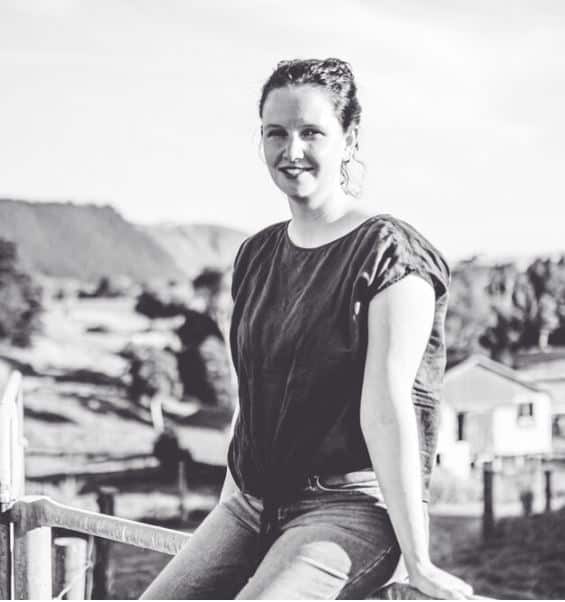
Nuffield Scholar Rebecca Hyde

Article is sourced from NZ Farmlife’s ‘CountryWide’ February 2021 magazine

Written by: Annabelle Latz
Photo by: Andrew Kyburz

Time to celebrate the role our primary industries play, New Zealand

Let’s sing the praises of the skills and value of our primary industries, as we do for our New Zealand sports teams.

This is the vision of farm environment consultant Rebecca Hyde, who operates under her own brand TFD Consulting Ltd, which is short for ‘The Farmer’s Daughter.’

Based in Oxford, North Canterbury, she launched her business in 2020. Much of her work week involves talking with farmers about the ever-evolving raft of regulations, a somewhat new and often complex business tier within our traditional ‘Number 8 Wire’ agricultural sector.

Over the past few years health and safety, employment and water regulations, to name a few, have become permanent features on a farmer’s business plan, directed from central government.

“A lot of farmers don’t understand all of it. It’s all come at once,” says Rebecca, the former nutrient management advisor at Ballance Agri-Nutrients and Ravensdown.

Rebecca is not shy to remind farmers that these changes are here to stay.

“The regulations will never stop, and collaboration to grapple these changes, while remembering the ‘people’ element of farming, is a must.”

Rebecca says while there is regulation involved with her business, there is also a large element of best practice.

While some farmers need more critical conversations than others, Rebecca says some don’t get why things have changed, or don’t want things to change.

“My advice is, either make the changes and I can help you, or the next person might not be so nice.”

Born and raised on a sheep and beef farm in Scargill, North Canterbury, farming has always run strong through Rebecca’s veins, and she has never imagined working in any other sector.

“One thing I will always be is a farmer’s daughter. And I really feel privileged to sit down at a farmer’s table and help them now.”

Within her advisory roles, Rebecca has appreciated how in tune she has always been with farmers.

“You just get that mum and dad are trying to get the shearing done, need to get to kids’ sport, will be drafting sheep in the dust, picking up calves in the rain… You just get stuff, and farmers appreciate this.”

What appealed to Rebecca about starting her own business was embracing the challenges, and having that natural instinct of what is happening on the land.

In 2017 Rebecca was awarded a Nuffield Scholarship, which she utilised to investigate globally how collaboration works well between groups in the agricultural sector, and how well New Zealand was doing comparatively.

Her travels took her to 13 different countries including Brazil, India, America, Canada, Denmark and China.

“One of the things that came across really clearly was that most groups saw the bigger picture of working together.”

Rebecca believes New Zealand at the time was not as strong on collaboration, as there was still plenty of segregation between farming industries: dairy, arable, non-irrigation, irrigation, sheep and beef, etc.

But this has changed, and collaborative groups such as the Primary Sector Council and the development of the Red Meat Sector story with Taste Pure Nature are great initiatives that encourage conversation, ideas, and solutions for the primary sector as a whole.

Rebecca cannot emphasise enough the importance of continued collaboration and communication, and the complexity of farming that must be acknowledged.

She talks about the three layers of farming: The ground layer is the physical farm, the middle layer is the farm management system, and the third layer is the people layer.

“And that is what makes a farm unique, the combination of all of them. And farmers must work out where that sweet spot is.”

Time and time again, Rebecca has sat in front of industry ‘experts’ with her fellow farming community.

“Farmers are expected to show up and contribute, but they’re not considered experts. I think that is something that’s really been missed – that people element.

‘One thing I will always be is a farmer’s daughter. And I really feel privileged to sit down at a farmer’s table and help them now.”

Farmers have the data and the systems – they are the people living that land and system. Farmers know their capabilities, their limitations.”

Rebecca admits there is no argument that the pressures on the environment are increasing, which is human-driven. Modern day regulations have put restrictions on farmers being able to make changes on their own farm, at their own discretion. Nowadays a farm environment plan, a nutrient budget, and in some instances, a land use consent, are required.

Rebecca certainly isn’t anti regulations, which she sees as tools for raising the floor, but agrees with farmers they can be confusing.

“Farmers know the practical, and they might not need the practical changes (such as fencing off waterways), but they might just need to know the new regulations.”

Should collaboration and the ‘people’ side of farming continue to flourish, the future of the New Zealand agricultural sector is a bright one.

“Agriculture is a big business in New Zealand, and it creates business minds.”

Rebecca believes good farmers are open to different types of experts; for example dry land farmers farming for moisture and using soil moisture monitors.

She says Covid-19 has really changed how people are looking at their own health, and sees farmers as being a big part of this as food producers.

“I would like to see a future where New Zealanders are proud of what farmers do. Where someone in central Auckland is singing the praises of their New Zealand- grown food, because they are proud of what we can produce, like we are proud of our sports people.”

Grazing Partnership a win: win – Phil Weir, 2020 Nuffield Scholar

Phil and Megan Weir have designed a system to increase dairy grazing income by adding value

Article is sourced from NZ Farmlife’s ‘CountryWide’ January 2021 magazine

Written by: Sandra Taylor
Photo by: Emma McCarthy

By adding value to the dairy support package they offer, Waikato farmers Phil and Megan Weir are generating returns on a par with a bull beef system.

For the past three years, the couple has been farming 250 hectares (the cattle platform is 180ha) in Te Pahu on the slopes of Mt Pirongia, in the heart of Waikato dairy country. They run breeding ewes, trading cattle and dairy heifers and have developed a grazing package that generates a premium and delivers a product that benefits the client’s dairy operation by ensuring they have well grown heifers entering the herd.

Phil, who is a  2020 Nuffield Scholar and sits on Beef + Lamb New Zealand’s Farmer Council, says they have been grazing heifers for dairy farmers Craig and Kylee Mora for three years. Their relationship has grown to one based on trust rather than formal contracts and an understanding that the couple will guarantee the heifers hit their pre-mating and calving target weights, irrespective of seasonal fluctuations in growth rates.

Read the full article  here: http://readnow.isentia.com/ReadNow.aspx?EcA1sSy2e6ut


Open Farms is back and looking for hosts

Strong connections between farmers and urban Kiwis are essential for a thriving agri-sector. The work of farmers should be valued and our customers need to understand what it takes to grow food.

We know that most people are disconnected from their food – so let’s do something about it.

That’s why Rural Leaders is a channel partner of Open Farms – a platform to reconnect urban Kiwis with our food, land and farmers via a nationwide open farm day on Sunday February 21, 2021.

Click through to their Visit a farm page.

We’re supporting Open Farms to find open day hosts, by connecting them with farming leaders like yourself. If you are farming close to urban areas around Auckland, Wellington, Christchurch, Tauranga and Dunedin and your keen to be an Open Farms host – You can register to host or request a call back on the Open Farms website.

Open Farms is a nationwide initiative to reconnect urban Kiwis with our food, land and farmers.

Few reasons why you should host an Open Farms Day


  • In March 2020, 3,500 Kiwis visited 45 farms across New Zealand for the inaugural Open Farms.

  • Your Open Farms event can be as small or as large as you like – farmer hosts choose the size, format and focus of their event.

  • The Open Farms Host Handbook answers all of your questions, including health & safety, activity ideas and tips for using your event to promote a product or diversification. Leave all the marketing and registrations to Open Farms – you just focus on running an event and sharing your farming story.

  • Post event research shows that just getting urban folks on farm, changes the way they think and feel about agriculture, and their own actions in the food system.