2026 Nuffield NZ Farming Scholarship. Apply by 17 August 2025. Read More...

Apply for 2026 Nuffield NZ Farming Scholarship by 17 August 2025. More details...

The future of technical knowledge transfer at farmlands co-operative society

Executive Summary

Disruptive technology is all around us and changing how we work. Jobs are being replaced by robots and artificial intelligence, which is changing the set of skills we require in the work place, and new skills are being demanded of us before we can even train in them. This idea is explored further in this report, looking at how the world of work is changing, some of the key drivers behind this and new learning technologies that may help to decrease this widening divide between formal education and labour market needs. Technologies investigated include Massive Open Online Courses (MOOCs), microcredentials, blended learning, virtual reality, artificial intelligence and the ‘learning in the flow of work’ concept. It was concluded that all technologies researched will have a place in the future of learning in some shape or form and are all very complimentary of one another.

These new technologies were then considered in the context of Farmlands Co-operative Society, which is an organisation in New Zealand that supplies agricultural products and technical advice to farmers. A survey of Farmlands employees was completed with the aim of gaining insight into their perceptions of learning and development and how it could be changed to benefit the success and enjoyment of their role and future roles at Farmlands. The findings of this survey, in combination with learnings from Ravensdown, who were used as a case study, were used to formulate recommendations for Farmlands Co-operative Society to consider in the future when designing learning framework and delivering technical training across the business to ensure that employees feel well supported in their roles and to ensure they are prepared for the what the future of work has instore.

A key finding of this research was that retail store staff are most in need of more technical training as a priority group and that, more generally, all employees require access to more training and development opportunities after their first year in their role to ensure engagement and continued role satisfaction. It was also concluded that technical training opportunities need to be more visible to employees so they can take control of their own learning and so everyone feels they have the same opportunities to upskill, which would be further supported by continuing to encourage a learning culture within the organisation. Another key recommendation was to incorporate blended learning into technical training programs and to use forum functionalities in the learning management system to encourage collaboration amongst trainees. It was also recommended to utilise MOOCs where relevant and investigate further how virtual reality and artificial intelligence could be used in the future for technical training as both technologies have potential to take learning to a new level.

The importance of developing positive stress management and mindset skills in young dairy workers

Executive Summary

Stress management is a learned skill. No one is born with it. We develop stress management skills either good or bad reactively out of our upbringings or life events. Positive stress management is seen as an important skill but there is still much room to proactively develop this in younger dairy staff. The way we handle stress can lead to growth or improved performance or, rarely but tragically at the other end of the range people in extreme distress can take their own lives.

There are now more farm suicides than there are accidental farm deaths. Between 2013 and 2018 104 people were killed in accidental farm deaths, compared to 122 by suicide. Rural males under the age of thirty are over-represented in the statistics. Maori and Cantabrians are also over-represented in the statistics as a whole.

There were three parts to this research project 1) a survey of dairy farmers 2) a literature review and 3) interviews with industry leaders, psychologists and counsellors.

The aim of this report is to provide the industry with a discussion document on the importance of developing positive stress management in young dairy workers.

The key findings of the survey for this report were:

  • Medium correlation between female workers and loneliness
  • Large correlation between loneliness and resilience
  • No relationship between loneliness and living situation or relationship status
  • Large significant relationship between loneliness and help-seeking
  • Large significant relationship between loneliness, meaning and purpose
  • Medium significant correlation between loneliness and increased alcohol use
  • Over 40% of respondents use alcohol as a coping strategy
  • Approximately 50% of respondents said they were sometimes or often
  • Indication that 75% of people are relatively well educated about
  • 45% of respondents stated they were extremely unlikely or unlikely to seek help from someone else if they were facing a personal or emotional
  • 76% of respondents stated they were extremely unlikely or unlikely to tell their employer if they were facing personal or emotional

The key findings of the literature review and interviews with health professionals were:

  • Rural areas need to be acknowledged by government as needing a specific focus
  • Employers need to protect employee’s mental health. They may be liable under the Health and Safety at Work Act if they do
  • Relationship problems account for 20% of stressors to suicide, compared to financial issues being 5%
  • Adolescents undergo significant brain development, which can make them more emotional and prone to risk taking
  • Current suicide demographic statistics follow a similar “pattern of inequalities in the broader determinants of health, such as socioeconomic status, ethnicity, gender, age and geographical (Minister of Health 2000)”1
  • Dairy industry culture could do more to encourage positive stress management in younger staff
  • There is an opportunity for rural leaders and employers to grow in emotional intelligence skills

The most important recommendation of this report is for individuals and managers to develop positive stress management skills in their own lives, and then role model this to young dairy workers.

Three other key recommendations were made by Dr Annette Beautrais (psychologist and researcher into rural suicide)

  • Central farm armoury

Firearms are used as a method of suicide in 40% of rural suicides compared to 8%  in the general population. Individual farm health and safety policy should store firearms in a central secure location (e.g. at a manager’s house). Holders of firearms licenses can then access firearms for a defined period only after an interview and approval by an appropriately trained manager, that knows the individual.

  • Gatekeeper / First responder training

Young people under extreme distress will often not seek help themselves. Gatekeeper training should be seen as a necessary measure by employers. These programmes are available now and being used by other industries.

  • Develop a self-care plan with staff

Gatekeeper trained staff can facilitate specific individual “self-care” plans with staff.

Other recommendations include 1) developing a rural mentoring scheme, and 2) emotional intelligence training for managers.

Dairy farming, climate change and farm diversification

Executive summary

All across the world, in every kind of environment and region known to man, increasingly dangerous weather patterns and devastating storms are abruptly putting an end to the long-running debate over whether or not climate change is real. Not only is it real, it’s here, and its effects are giving rise to a frighteningly new global phenomenon: the man- made natural disaster. (Barack Obama, speech, Apr. 3, 2006)

In the race against climate change, this report explores the possibilities of the diversification of a dairy platform into horticulture. This report was not put together to come up with an answer or find a solution, the purpose of this report is to start a topic of conversation, provoke thoughts and ideas and hopefully create some positive changes for the greater good for the future of our environment.

Throughout there report, there is a lot of work referenced by many individuals and companies that are doing some world-changing research in the space of land use change.

In this report, it is essential to note that Horticulture refers to Fruits, berries, vegetables, vineyards.

Agriculture produces nearly half of New Zealand’s total greenhouse gas emissions with one-quarter of our total greenhouse gases coming from biological dairy emissions (Methane and Nitrous Oxide). 85% of the dairy sectors emissions are also made up on the farm, with the other 15% coming from agriculture transport and processing. When breaking emissions down within the agriculture sectors in 2017, around 78% of emissions come from Livestock, 21% from soils (fertiliser applications etc.) and the remaining 1% from urea and liming. (Emissions Tracker, 2019). New Zealand also has a unique greenhouse gas profile and is unusual for a developed country, we have one of the highest rates of emissions per person, and agricultural emissions dominate our emissions profile compared to the rest of the world where energy and fossil fuels dominate them. With the difference between New Zealand and the rest of the developed world, we could assume that no other country will look to combat methane or nitrous oxide, giving New Zealand a chance to show our ingenuity and become world-leading at reducing these gases.

There has been vast research on the likely impacts of climate change in the future. All of these changes will impact our environment, our lifestyle, businesses and the economy. These impacts and changes in climate impact not only the Dairy Industry but all sectors and put pressure on the food production industry as a whole.

From several studies, results have shown that land use change into horticulture will reduce emissions and ensure maintaining lower emissions is sustainable in the future. One study prepared for Motu found that to reach our emissions targets for 2050 seems possible with no additional on-farm mitigation through new technology however if achieved without a shift towards horticulture, mitigation technology or permanent forestry then reductions would be difficult to sustain as forestry expansion is limited. With development into horticulture by one million hectares, results show the emission reductions are almost identical to those emission reductions from new technologies. By achieving a reduction through a combination of horticulture increase and new technologies, emissions will be more manageable in the future. (Dorner, Djanibekov, Soliman, Stroombergen, Kerr, Fleming, Cortes-Acosta, Greenhalgh. 2018).

A study around permanent horticulture was researched as an option for low emitting land use. Modelling work was done on a pip-tree crop, where an area of a farm was taken out to grow chestnuts. With changing the land use on a dairy farm to permanent horticulture, there is a decrease in greenhouse gas emissions as well as a positive impact on the farm businesses EBIT. While a change in land use to horticulture could be an option soil types, crops and regional climates need to be taken into consideration. (AgFirst, 2019).

Horticulture is currently planted on 190,000 hectares in New Zealand, and according to statistics established, horticulture operations have higher profitability per hectare than dairy operations ranging from $5,000 to $20,000 and above. (Resigner, Clark, Journeaux, Clark, Lambert, July 2017). Dairy operations have profitability of around $2,500 per hectare. Currently, dairy is farmed on 2.6 million hectares (ha), fruits and berries 120,000ha, vegetables 70,000ha and grains 449,000ha (Stats NZ, April 2018). According to the reports referenced in this paper, the available land to go into horticulture is anywhere between 1.5million and 3.2million hectares, taken from both dairy and sheep and beef. For dairy farmers to be able to diversify their current farming platform into horticulture, information is needed to understand what could grow best on their platform. During the time this paper was put together, from what I could find, and very much out of the scope of this report, there is no mapping around best soil types, climate and growing ability to help dairy farmers understand their potential. However, if this could be achieved, combined with the work done on how climate change will affect our landscape, these tools would open up opportunities to help dairy farmers convert land use.

From a value-add point of view to the end product of what we are producing, Customers and consumers are more interested in climate change and sustainability than ever. Terms such as Sustainable, Organic, Environmentally Friendly, all gain consumer confidence and support. There is a lot of awareness of the impact on the climate and a focus for consumers on where their food comes from, how it’s produced, and consuming food that is healthy for them and healthy for the world (Philips, L. 2019).

Although the option to diversify a farm business into other primary sectors is very dependent on soil type, farm business and location. The idea of bringing sectors together onto the same sustainable platform which tells a story of bettering the environment fits into what consumers are looking for and wanting out of their produce. For example, looking into the future where we can work out what emissions come from a dairy farm, have a full understanding of what emissions come from a crop or orchard and also what sequestration is achieved from this, what are the possibilities?

Take a farm that has reduced its stocking rate, worked on pasture management and in turn reduced overall emissions from the dairy platform. With the farms reduced stocking rate, they have been able to plant an avocado orchard on the land that has been freed up and dramatically reduce further or even offset the emissions from farm activities completely. “Carbon Neutral New Zealand Produce or Carbon Positive New Zealand Produce”. How great would that look branded on the side of a bottle of milk or a bag of avocados?

In conclusion, climate change is a complex and continuously changing subject. The science and information around where climate change is today and how we are going to tackle this as a species is forever evolving as new information comes to light. There is a lot of evidence to suggest diversification into horticulture is not only beneficial to emissions but also potentially profitable. Although the research suggests these positive outcomes, it also notes that there is no one size fits all solution.

Every farm is different; every farmer is different. We range in farm size, herd size, systems, soil type, climate, profitability, infrastructure, and management.

If we can have a better understanding of what horticultural crop can be grown where, what will the emissions be from the growth of horticulture and what positive effects will come from diversifying into horticulture, the opportunity to future proof not only farm businesses in New Zealand from climate change but also the ability to market our collaboration and success of total carbon reduction could increase the value of our products further to the world.

At the moment we do know, New Zealand dairy farmers are already doing more than their bit in the reduction of greenhouse gases and will still do more to protect the environment and our planet from further damage.

There is an opportunity to come together as sectors, from the grassroots level to industry heads, to achieve this common goal and work together and support each other in how we are going tackle this “Titanic” problem.

We are the first generation to be able to end poverty and the last generation that can take steps to avoid the worst impacts of climate change. Future generations will judge us harshly if we fail to uphold our moral and historical responsibilities. (Ban, K. 2016)


KPMG – Research and Development National Seminars

The government has introduced a Research and Development (“R&D”) Tax Incentive, to support and further promote R&D in NZ businesses.

The R&D Bill has passed its first reading in Parliament and we expect legislation to be enacted in May/June this year, allowing businesses to access, and make the most of the incentive from the start of the current tax year (typically 1 April 2019).

The incentive is a great opportunity for businesses to access support for R&D – It’s expected that over 2000 New Zealand businesses will be eligible to claim the incentive.

KPMG invite you to join one of their sessions where R&D experts will present – alongside officials from Inland Revenue, and Callaghan Innovation – on the R&D Tax Incentive, providing insight into how the incentive will provide broader access to R&D funding for New Zealand businesses.

The seminar will also cover what is, and what isn’t R&D, and how to start planning early to be ready to make a claim for this year’s R&D activities.

As well as KPMG, officials from Inland Revenue and Callaghan Innovation will be on hand to answer any of your questions on the new incentive in the Q&A section of the seminar.

https://communication.kpmg.co.nz/23/539/landing-pages/rsvp-blank-eda-blinc-hosted.asp

Obituary for John Wilson

It is with great sadness that I share the news that 2000 Nuffield Scholar and former Chairman of Fonterra, John Wilson passed away aged only 54yrs. He is survived by his wife Belinda and four daughters, Sophie, Victoria and twins Tessa and Libby.

In July last year, John made the difficult decision to step down from the role of Fonterra Chairman to focus on his health. He then retired from the Board at the Fonterra Annual Meeting last November.

John was a man whose dedication and commitment to our Co-op ran deep. Outside of his family life, he dedicated most of his time to farmers, Fonterra and farming.

We owe John and his family a debt of gratitude for all the time, energy and sheer hard graft he gave us as a farmer-owner, inaugural Chairman of the Fonterra Shareholder’s Council on merger, as a Farmer Elected Director from 2003, and as Chairman from 2012.

John always brought dedication, commitment and deep dairy knowledge to each of the representation and governance roles in which he served. On behalf of his fellow farmers he was the ultimate advocate for what we stand for. He’d never back down from going at something head on if he believed it was important.

John was one of us – a dairy farmer through and through.  He always looked ahead and focused on finding a way through the tough times that would protect Fonterra’s farmers, sharemilkers and their families. Bringing farmers solutions, not problems was always his mindset.

We have lost a friend, colleague, leader and champion for our industry much too soon. Nuffield NZ has lost an amazing leader who has demonstrated the commitment of Nuffield. John has always made every attempt to attend the Nuffield NZ Conference
and has been a contributor as a presenter to both the Nuffield and Kellogg programmes

Our thoughts and deep gratitude for all that he contributed go to his family and friends.

Andrew Watters – Chairman Nuffield New Zealand

Moving farmers and the community off the poverty line in Mwika, Tanzania

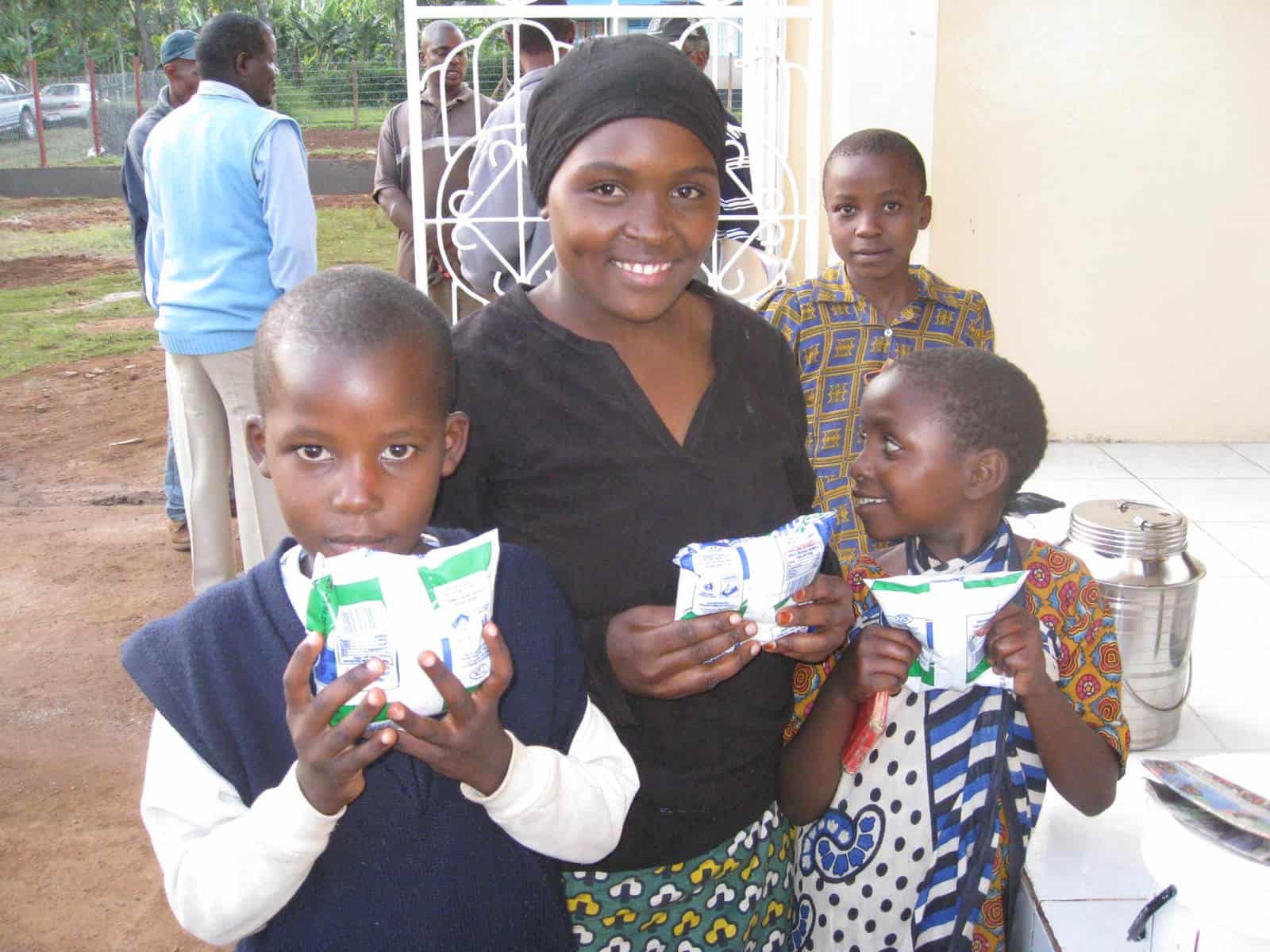
Geoff Mathis a Nuffield Scholar has focused his energies into an amazing project in Tanzania – East Africa. With the support of many individuals (including Nuffielders) MFAT, Rotary NZ World Community Service, The Rotary Foundation and numerous other people, this NZD1.1m project is changing lives.

The goal: Moving farmers and the community off the poverty line in Mwika, Tanzania.

In 2008, I started helping the village of Mwika on the foothills of Mt Kilimanjaro with sufficient funding for 36 biogas digesters (converting cow manure to methane gas)?.

We have funded over 90 on-farm biogas digesters, 200 stainless milk cans, 1,000 good farming booklets – very basic, a 600 ltr per hour processing milk plant replacing the old copper boiler, 150 rising 2yr old milking cows and a lot of other equipment to support the community. Most were made available on a shared basis – the locals had to take ownership of the assistance – in most cases (but not all) the farmer made a 25% contribution to each part of the project – ownership!

It has grown considerably from that point to where we are at now – the final stage of that project.The Kondiki Dairy Co-op is very similar to where the first NZ Co-op was born in Otago in the 1880’s, a fledgling company growing with plenty of constraints …It is in desperate need for a second reliable small truck (ute) to assist in collection and distribution of dairy product. I have undertaken to do our best to fund the NZD$30,000 required.

I have setup a Charitable Trust with Rotary New Zealand (all donations receipted) – my hope is that this will be shared with your family, friends and colleagues.If you are willing to forward this domain page onto 20 persons I am sure we will achieve our goal.

Visit www.farmersinneedtanzania.org to view the story and donate if you so wish.

Cam Henderson 2019 Nuffield Scholar: CSC Report

We heard repeatedly about the growing world population and the related demand for food driving the need for bigger, better yields of commodity products (sound familiar?!).

America has always been known of the land where bigger is better. We saw that on show in Ames, Iowa for the 2019 Nuffield Contemporary Scholars Conference. The week served as a celebration of US agriculture and the role corn and soybean production has in feeding the world. We heard repeatedly about the growing world population and the related demand for food driving the need for bigger, better yields of commodity products (sound familiar?!). This is a message from policy makers, researchers and farmers alike. Throw in a question about the current trade disagreements and their effect on ag exports and the response is surprisingly positive. Trade needs to be fair so, despite the current blip, it will be better in the long run – rural support for the current administration is strong.

Research and Technology

Iowa State University hosted the conference. It has one of the best agri-colleges in the country with some impressive projects such as individual plant level crop management, animal vaccination by drone and genetic products. They collaborate with industry to bring products to market quickly and have a well organised extension service that ensures research reaches farmers at pace.

Iowa is also the home of John Deere who showed us a vision of the farming future with automated cropping, sensing and decision making.

Innovative Farmers

Joe Sweeny of Eagle’s Catch, a 27 year old entrepreneur, has built a $16 million glass house to farm Tilapia, a tropical fish often served whole in Hispanic cuisine. A brave move considering his glass houses are often under two feet of snow in a tornado prone area. But with a well constructed business plan and local backing, it demonstrates the willingness to ‘just do it’ here.

Ben Riensche of Blue Diamond Farming saw the inefficiency in his fleet of cropping machinery sitting in the shed for most of the year so bought a farm in a state further south growing different crops and ships his gear backwards and forwards.

Environmental Standards

The few farms we visited were very proud of their environmental work. There is a growing recognition of farming’s impact on the environment however the policy and mitigations still lag that in New Zealand. Climate change is often seen as an opportunity to grow higher yields but a threat long term.

Learning from Other Scholars

The other scholars added the most value during the week, sharing their stories, insights and many laughs. We are all struggling with similar issues of labour, public perception, succession and the environment – an insight that is both a relief and a worry. Our new global network of friends will help as we continue on the Nuffield journey. Next stop – Washington DC.

Finally – a big thankyou to all the organisers and sponsors in NZ for your support and Kia Kaha Christchurch.

Hamish Murray 2019 Nuffield Scholar: CSC Report

A look into the Land Grant University system and their education, research and extension work reminded me of the importance of strong institutions in our agriculture sector.

Travelling to the American mid-west in the middle of winter was a shock to the system. Stepping out after 6 weeks of 25-30 degrees into -5 was only the first, there were many more surprises instore as we explored the States of Illinoi and Iowa, the corn and soybean capital of the world for a week before joining the Nuffield 2019 Contemporary Scholars Conference in Ames.

A week together allowed the five kiwis to quickly acclimatise and the chance to use some of the work done in preparation for the year ahead. A meeting with the Chicago IDEO office in the first days of our visit, quickly challenged our thinking as it provided new insights in to the processes and insights from a professional Design Thinking Team. The idea of a broader design brief, multi-functional teams and the testing a small protypes with ever present feedback loops quickly became a theme for the week.

We went to the Fonterra head office in Chicago for a quick overview of their US operations, before heading to an Agritech Summit at the University of Illinoi. A look into the Land Grant University system and their education, research and extension work reminded me of the importance of strong institutions in our agriculture sector. The Summit illustrated both their role in innovation of ideas and the verification of data providing confidence in research. The public private partnerships were providing benefits to the all involved.

  • Students gaining real world experience, and reward for work rather than ever increasing student loans
  • Tech talent paired with innovated companies at a lower cost than Silicon Valley competition
  • A beach head for tech, engineering and biotech students into Ag which would previously not have been considered
  • Real world experience and innovation without the downside risk, providing a pipeline of ideas
  • Sharing data and ideas in collaborative ways between seemingly competing companies
  • Real importance of discovery teams for addressing the real need (ICOR teams)

De Moine, the global head office of John Deere and combine factory was a highlight, not only because like little boys in a toyshop we were excited to see the big gear, but for me it illustrated how the culture of a company flows right through from top to bottom. The guy on the factory floor had as much pride in his work as the tour guide showed and allowed us access to sit at the table in the board room. Examples of how they have instilled that culture and have been able to maintain it over 180 years were evident throughout and a good reason why they are one of only and handful of companies to sit within the Fortune 500 for over 50 years.

The five kiwi scholars hit the ground running as we joined 70 other International Scholars in Ames, however at this point it stepped up a gear again and we got a further shock to our already overloaded systems. We had built a tight group and some confidence amongst each other, but even as I sit and write this report on the plane home it is hard to explain what just happened.  The intensity of the CSC, meeting so many other scholars, a packed programme of speakers and panels, field trips and social events kept pushing me to the edge all week. On reflection it is an incredible exercise in human capacity building, and I am excited for the next step in this year as I travel for GFP in June.

Three further brief points of interest – gleaned from the CSC and travels

  • America an example of big Ag – bigger, faster, stronger however this is slowing and beginning to shift more to thinking about smarter more efficient and lower impact.
  • Heard a lot about feeding the world – but it is no longer about growing more when 40% of the food grown is wasted. Consideration is shifting to the importance of providing the right nutrition to underfed and those overfed as everything in this later area is reducing our ability to tackle the 1st problem
  • Food trends breaking into three sectors – convenience now, convenience delivery and bulk buying of quality, natural and almost unlabelled product.

Ben Hancock 2019 Nuffield Scholar: CSC Report

I would like to acknowledge the investment that the New Zealand Scholars received prior to leaving for the Contemporary Scholars Conference (CSC). While the preparation covered a range of skills, personality assesments, and sessions with industry leaders and government officials, I would like to highlight two skills that have helped us hit the ground running at the CSC.

In particular, the reflective techniques got us off to a strong start. During our second meeting in Wellington, Hamish Gow went over some reflective strategies and gave us some material. With a little practice before we left New Zealand and our pre-CSC, we were well prepped before by the time we arrived in Ames, Iowa – though it will continue to be developed.

A noticeable example of this was during the CSC was after a fieldtrip where many scholars were focused on some of the negative aspects of the operation that wouldn’t apply in their own country. However, the conversation amongst the kiwi scholars had different tone that centred around the context and why he was farming in this manner, and why the CSC went there. My observations and reflection from this conversation helped me develop the background and why my research project area is directly relevant to primary producers.

My Global Focus Programme (GFP) group met during the CSC to plan our team rules and roles. The techniques that the New Zealanders were developing were noticed by other scholars and I’ve taken an lead in the initial reflective sessions and the format of these.

The second skill was the open questioning that Corene Walker and Hamish Gow coached us on. On our pre-CSC trip we practiced this technique often, whether expanding on the observations made in our reflection sessions, discussing how ideas could apply to our own systems, or developing our own research projects.

The coaching and practice prior to the CSC helped to internalise this skill, helping myself to think through presentations and visits, which feeds back into more concise reflective skills. I have been able to use open questioning in my own personal life outside of the Nuffield Scholarship and believe it will be helpful in farm succession discussions when I return to the Wairarapa.

Towards the end of the CSC, we had a session when we were paired up to practice open questioning. My partner had not used this structured technique before, so I was to help coach him because of our earlier introduction and previous practice. In helping my partner, it made helped myself to view the process from another aspect and be more conscious of straying from the process.

An instance where these two techniques combined was a chance meeting with the owner of restaurant that employs recovering opioid addicts. While this business was not directly involved with primary production, the discussion provided aspects of this operation I was able to consider for my own research. For instance, a field of research used to engage individuals removed marginalised from society by addiction back into the community, which reduces relapses, that could possibly be applied to engage those removed from how their food is produced.

The investment in the scholars prior to leaving New Zealand enhanced my ability to get more out of the CSC and the week prior. Furthermore, these are skills that can be applied in my personal life and will be valuable going forward.