2026 Nuffield NZ Farming Scholarship. Apply by 17 August 2025. Read More...

Apply for 2026 Nuffield NZ Farming Scholarship by 17 August 2025. More details...

Farming Energy

Farming Energy: Opportunities to help New Zealand reach net zero carbon 2050
By Cameron Henderson
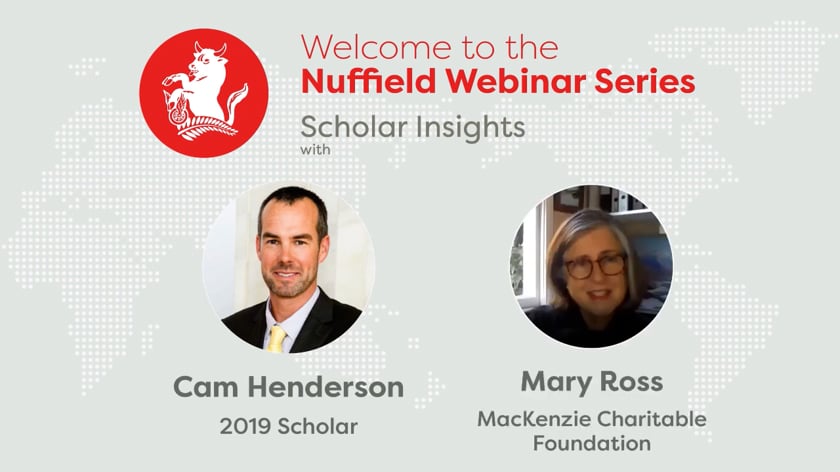

Cameron Henderson – Scholar presentation (May 2020)

Executive Summary

The New Zealand Net Zero Carbon Act’s main objective is that New Zealand contributes no further to global warming by 2050, a target commonly known as ‘Net Zero Carbon 2050’. To reach this vision, targets have been set for all greenhouse gas (GHG) emissions in New Zealand. Agriculture, as New Zealand’s largest GHG emitting sector, will face pressure on productivity and profitability as it works towards Net Zero carbon. Other sectors will also face pressure, particularly the energy sector which is New Zealand’s second largest GHG emitting sector. Forecasts show that not only will the energy sector need to transition to low emission alternatives, but the mix of energy types (electricity, gas, oil etc.) will need to shift to meet new technological innovations and increasing energy demand.

Given this challenge, I believe there are opportunities for the sectors to work together for mutual benefit. My travels and report seek to answer the question:

What energy farming opportunities could New Zealand farmers pursue to help our country reach Net Zero Carbon 2050?

Energy farming is where farms generate a form of energy (electricity, gas, fuel or heat) on farm that can be exported for use elsewhere in the economy. To be successful in helping achieve Net Zero Carbon 2050, the farmed energy must have lower GHG emissions that the fossil fuel alternative it is often replacing, and be technically and economically viable for the farmer.

Energy farming may become vital to future energy generation as forecasts show New Zealand’s current energy path, particularly our perceived reliance on hydroelectric power and electric vehicles, will not move the industry far towards Net Zero Carbon 2050.

I set out on my travels to visit a range of energy farming operations in Ireland and California. Both Ireland and California, like New Zealand, have a large and successful agricultural sector and face similar pressure to reduce GHG emissions from all sectors.

Technologically, the range of energy farming options is diverse. Some are already common in New Zealand, like solar and wind power. Others are rare, but innovating rapidly using such technology as Agrovoltaics and anaerobic digestor biogas with refining. Each operation aims to take advantage of local weather conditions or available feedstocks to create a usable energy product. Every energy farming operation in this report could technically work here in New Zealand.

Environmentally, the GHG emissions from each operation was more favourable that the fossil fuel alternative with some even sequestering more carbon than they emit. Consequently, each option would help lower energy GHG emissions in New Zealand.

Economically however, each energy farming operation I examined was influenced heavily by local policy and incentives to make them competitive with cheaper fossil fuel alternatives. The policy and incentives in both California and Ireland were imbedded in their respective government’s energy strategies.

To make these technically and environmentally feasible energy farming opportunities profitable to New Zealand farmers, New Zealand needs an energy strategy that is similarly supportive of energy farming. It turns out, we are in the early stages of developing such a strategy in New Zealand, but the agricultural voice is absent.

To resolve this economic roadblock, I recommend three actions:

  1. Create a Farming Energy Working Group (FEWG), by pulling in expert knowledge from across the agricultural sector in advocacy, science and development. In addition to agricultural experts, include some external energy advice to create a group uniquely skilled in leading energy farming to New Zealand.
  2. The FEWG should enter the New Zealand energy strategy conversation and work alongside the energy sector and government to advocate for, and implement, policy to economically support energy farming. Such polices could include low interest funding of energy farming investments, standards to replace liquid fossil fuel with biofuel alternatives and long term price guarantees for farmed energy.
  3. The FEWG should collate local and international knowledge on energy farming to create case studies and systems that can be demonstrated on farm, both to policy makers and farmers, to build confidence in the future of energy farming.

By implementing these recommendations, every energy farming option outlined in the report, could successfully be pursued by farmers in New Zealand to help the country achieve Net Zero Carbon 2050.

Read the full report here:
 Farming Energy: Opportunities to help New Zealand reach net zero carbon 2050.
-Cameron Henderson, 2019

Keywords for Search: Cameron Henderson, Hendersen

Future Farm Workplaces

Future Farm Workplaces
By Hamish Murray

Hamish Murray – Scholar presentation (May 2020)

Executive Summary

Agriculture is awakening to the challenges of an ageing population and those entering the workforce with a new or differing attitude to work and life. That automation and technology is removing much of the mundane and labour-intensive work, outdated work structures and traditional ways of doing things are not providing the fulfilling work experience that is required to attract, train and retain the people required to power our industry. We are faced with the challenge of adapting our practice to meet the needs of those we employ or risk becoming irrelevant as employers and as an industry.  I set out looking into what makes workplaces motivating and engaging so that they are providing the best work environments for those involved.

My intention with this report and research is to spark small and subtle shifts in the way a leader or participants in a team operate, that lead to a more fulfilling and enjoyable working experience. Then to direct people to some of the resources that have helped shape my learning. My travel and experience have been an opportunity to look at businesses outside of agriculture, both large and small. I have been able to discover examples of reorganising and operation in industries from computer game development to healthcare and professional sport that address changing values and expectations of today’s workforce allowing greater engagement and motivation from those employees.

I have been looking for and have come across great teams who are meeting all the needs of their members and producing great results. I discovered that the most important factor in determining effectiveness is how teams work together. Team members awareness of each other and of the team roles that they fulfill, combined with the group held belief that the environment is safe for interpersonal risk ultimately leads to great trust and dependability illustrated as a mutual accountability.

Reflecting on interviews and notes, four other key elements emerge strongly as significant factors in those successful businesses and teams. Alignment of members on the culture, values and purpose of a business creating shared belief, expectations and responsibility, with the greatest results when real clarity from team members on what that looks, sounds and feels like as actions.

Exposure to the processes, tools and methods used in Design Thinking, Lean and Agile ways of working combine diverse individual thoughts, promotes collaboration and inclusiveness, and operates using a rapid experiment and feedback loops promote fast progress rather than being stifled by the need for consensus and perfection.

Time spent with computer game developers made me aware of the importance of feedback in our lives and especially for providing engaging workplaces where employees have a desire to grow. It highlighted our ability as employers to give feedback is limiting our ability to provide the crucial feedback required to fuel the desire for learning and growth in our employees.

Tied into all the above elements is the requirement for strong leadership from our farm owners and managers. Rather than in the traditional sense of leading from the front, I witnessed the importance of a shared and supportive style where all members of a team exhibit greater awareness and are able to help each other solve their own problems, handle conflict and monitor performance.

I believe that recognizing the importance of the soft skills in our farm businesses and that learning, teaching and practicing them is crucial in creating those workplaces that are engaging and motivating. This is essential if we as agricultural businesses wish to be able to attract, retain and train people. I believe that small and subtle shifts in each of the areas and strengthening of the connections add like drops to a bucket, to create environments that provide fulfilling work experience for those involved and ultimately happy, healthy and strong communities. This stuff is hard, takes courage to do differently, lead differently and have those courageous conversations.

Read the full report here:
Future farm workplaces. -Hamish Murray, 2019

Keywords for Search: Hamish Murray, Murry, Murrey

Can we farm without glyphosate?

Can we farm without glyphosate?
By Hamish Marr

Hamish Marr – Scholar Presentation (May 2020)

Executive Summary

In 1974 a product was developed that would revolutionise agriculture. It would go on to be the most used chemical spray in global agriculture largely due to its low toxicity, negligible soil residue and zero plant back period. That product was glyphosate and was sold under the trade name Roundup. It was the product of intensification, of specialisation and globalisation.

There has been much dialogue in the last few years regarding glyphosate and claimed negative impacts on the environment and human health. This dialogue is in part due to its association with genetically modified plants and also as it is the world’s most widely used agrichemical. The classification of glyphosate as a probable human carcinogen by the International Agency for Research on Cancer has led to calls for a reduction in use and led to a ban in some European Countries.

The aim of this study was to establish, from a farmer’s point of view, what the issues are around glyphosate use, how it is regulated in New Zealand and what farmers in New Zealand could learn from others if a ban or de-registration were to become a reality.
Science is conflicted over glyphosate and its use. However there appears to be no definitive answer or evidence that glyphosate is detrimental to human health or the environment. In contrast there is much correlation between these two factors and a robust conclusion is difficult to draw.

Farmers overseas are successful in reducing their reliance and applications on glyphosate by adopting a more holistic approach to their agronomic management. In cases such as the seed industry in Denmark, the loss of glyphosate would see a shift in farming policy and a move of the industry off shore.

I found no real need for alarm in New Zealand as our current inputs of glyphosate are relatively low and are confined to 6% of our land area. It is important that we retain the option of this product and we as farmers need to be mindful of its use and avoid applications such as pre-harvest weed control.

In isolation farmers can certainly do without glyphosate but at an industry level and global level the loss of this tool would mean a loss of yield, an increase in alternative chemistry, an increase in carbon emissions, higher costs to the farmer and an increase in the price of food.

Central to this issue is a social problem that stems from fear of the unknown, due to a lack of understanding on the part of the consumer but also the farmer. The linear nature of the current value chain means feedback to either end is virtually impossible. This is the biggest challenge of all.

As a result of my observations and reflections I can recommend the following actions for industry:

1.   Avoid pre-harvest weed control on cereal crops and pasture.
2.   Discuss openly the future of agriculture including GMO
3.   Establish a communication loop in the value chain between the consumer and the
farmer
4.   Model Glyphosate’s contribution to the economy in New Zealand.

Read the full report here:
Can we farm without glyphosate? – Hamish Marr, 2019.

Keywords for Search: Hamish Marr, Mar

Alice Rule: Sustainability at heart

Alice Rule, Kellogger and emerging young leader in sustainability, is researching the circular economy of glass in the New Zealand wine industry as part of her Kellogg research project. Through her work, she hopes to drive awareness about using glass made in New Zealand in the wine industry. Click here to find out more about Rule’s research project.

Learn more about the Kellogg Rural Leadership programme

Nuffield Scholarship awarded to Dairy Environment Leader

Nuffield Scholars 2020

Media Release, Tuesday, 5th November 2019

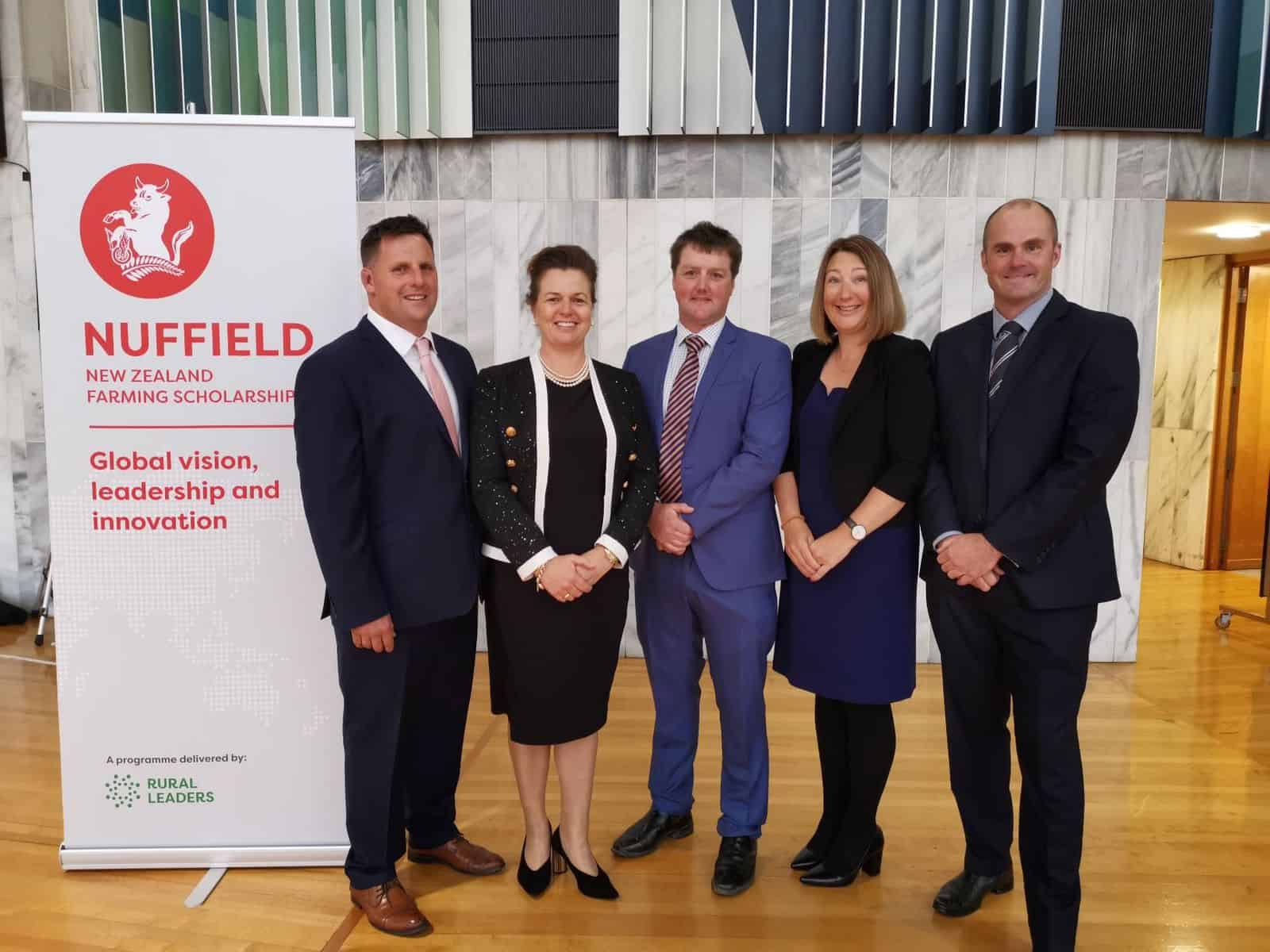
Waikato based, Dairy Environment Leader, Dairy Farmer and recently appointed Dairy NZ board member, Tracy Brown is one of five scholars from across industry sectors awarded a Nuffield NZ Scholarship.  The scholarships were announced on Tuesday, 5th November at parliament by Hon Stuart Nash, Minister of Police, Fisheries, Revenue, and Small Business.

Alongside Tracy Brown,
the recipients of Nuffield NZ Farming Scholarships for 2020 are Shannon
Harnett, Whakatane based Agriculture and Horticulture Director; Waikato based
Phil Weir, Dry Stock Farmer and Agri business Consultant; Southland based
Edward Pinckney, director/owner of a dairy farm and sheep, beef and grazing
farm, Marlborough based Ben McLauchlan, owner of a 102 H vineyard and 30 H beef
finishing unit in Rapaura. 

The Nuffield Scholarships
with the three core components provide new Scholars with an opportunity to
travel abroad in groups and individually and study the latest developments in a
number of leading agricultural countries. 

“The reputation and
prestige of a Nuffield Scholarship opens the doors for new Scholars to access international businesses like Amazon, John Deere and Blue
Apron – businesses that are behind and beyond the farm gate.  No other programme can offer this type of
access to these globally recognised companies” says Nuffield NZ Chairman Andrew
Watters.

Ms Brown who is a champion for
sustainability, and has been leading environmental change in the dairy industry for
nearly a decade sees the Scholarship as an opportunity to gain insight into the
policies and processes other countries are using to create positive
environmental change.

 “While I have been active in the NZ
environmental space, this experience will enable me to gain the international
networks and experience that will add to my effectiveness in the roles I have
or will have in the future” says Ms Brown.

The
five new scholars will join more than 160 Nuffield alumni who have been awarded
Nuffield Scholarships over the past 70 years. The 2020 research topics are
likely to cover issues such as – Understanding the international policies and
processes that have created positive environmental change; How Plant Variety Rights provide growers the opportunity to successfully
develop new business internationally; Exploration of the NZ primary sector
to determine if there are fundamental barriers restricting collaboration;
developing and growing our young people entering the agricultural sector; Enhancing
the sustainability of Viticulture by lessening its reliance on scarce
resources.

NUFFIELD AGRIBUSINESS SUMMIT – MARCH 23, 2020

Nuffield International Agribusiness Summit

After our fantastically successful one day Summit alumni event in 2017 we promised you another one in three years (based on your preferred frequency). We are pleased to announce that our next Kellogg alumni event has been confirmed for 23 March 2020.

What is even more exciting is that we are combining this event with the Nuffield2020 International Event, as part of a one day International Summit being held in Christchurch and hosted by Nuffield NZ.  With a theme of Fast Forward – this is a day focused on future solutions showcasing new business models. There will be lots of discussion and debate with International and New Zealand speakers who are leaders in change and business solutions, that will inspire, provoke and challenge your thinking.

We know as Kelloggers you also love to reKonnect – so we are organising some alumni networking events around the Summit with the help of Canterbury Kellogg alumni including a cocktail function on Sunday evening. The details of other events will be announced shortly.

All we need you to do now is:

  • Diary this date – 23 March 2020
  • View the Summit Programme 
  • Get your Kellogg cohort together for a reunion
  • Register now for the Summit and get in fast to secure your accommodation
  • Follow the Social Shares below and keep up to date with what’s happening at the Summit

If you have questions about the Summit and associated Kellogg events feel free to contact us at programmes@ruralleaders.co.nz.
 
EXPERIENCE AN EVENT TO GROW | CONNECT | INSPIRE

Anne Hindson: Update from the Management

Anne Hindson, General Manager Rural Leaders

Anne
Hindson, General Manager

This will hopefully be the last E-Nuff in the current format, as we develop a new look e-newsletter which covers the activities of ‘Rural Leaders’ and includes updates on both programmes.

Much of what
we want to say is relevant to both groups of alumni (some of who overlap) so the
new E newsletter will have organisation updates with the option to click
through to the latest Nuffield or Kellogg news including scholar reports,
insights and updates specific to each programme or group of alumni.

Our ‘E-Nuff’ & ‘Kellogg Konnect’ will be retained for use when conversing with each group on a programme only basis.

We Need a Name – Win the prize!

We are looking for a name for our new Rural Leaders E Newsletter. Get your creative juices going and send in some ideas and win a prize and the honour of renaming our newsletter.

Send ideas to annehindson@ruralleaders.co.nz

Key Activities since last E-Nuff

A new initiative for 2019, 6 regions were chosen to host a Regional
Alumni networking event
, bringing together different cohorts and both
Kellogg and Nuffield alumni.  With Napier/Hastings,
Tauranga, Whangarei, Blenheim, Gore & Hamilton locations there was a mix of
our smaller and larger regions.

The purpose of the initiative was to provide a vehicle for:

  • alumni to meet each other – across programmes
    & cohorts
  • reconnect with Rural Leaders & its developments
    as a new Trust
  • introduce potential new applicants to both
    programmes
  • hear the reports and experience of a recent
    Nuffielder and Kellogger from the region
  • investing partners regional reps to connect with
    alumni for B2B and network development

One of the highlights demonstrating the power and history of
the programmes was in Waikato where we had an original Kellogger from Course 1
1979 and a current Kellogger from Course 40. Similar span of alumni years were
also seen in other regions.

After fantastic feedback, despite the late timing of the
events, the plan is to roll out the concept in 6 more regions next year.  Meanwhile we will work with each of the recent
region hosts to determine a sustainable networking format for the future.

Feedback has been really positive about the benefits of
networking and potentially providing some upskilling opportunities and/or
providing a voice on some regional issues although in some regions we battle the
problem of distance with some having to drive over 2 hours each way to attend a
central location.

The recruitment of a full time marketing person will
provide a much needed resource and ability to be much more effective with our
external and internal communications and relationships and keeping the brand
presence throughout the year. We hope to report our new appointment in the next
newsletter in early December.

A board sub committee has been working with Scott Champion
on refining our strategy and business plan over the next few years as we
respond to market changes but more importantly work on developing and growing
our alumni programme and influence.

Our 2020 Nuffield Scholarships have recently closed
and the selection process is underway. This year we have a good number of
female candidates with six being shortlisted so we hope that we can achieve a
better gender balance this year.  The
Awards will be held at Parliament, hosted by Hon Damien O’Connor, on 5 November
(a relevant place to be on Guy Fowkes). Watch for the pre announcement email to
alumni announcing the 2020 scholars.

The Awards will be preceded by a forum with the 2019
Scholars sharing their global insights and discussing implications for the
industry with our investing partners & Trustees, hosted by KPMG.

The Nuffield2020 Triennial is gaining momentum with
an updated programme released and registrations opening on 1 September. Check
out the website here https://www.nuffield2020.com/programme.

We are really pleased to welcome some new partners who have come
on board to support this international event alongside our existing Rural
Leader investing partners. Check out the next Triennial EDM for the latest details
& updates. The one day Summit is shaping up to be a great event and watch
out for speaker announcements shortly.

The support of our New Zealand alumni to attend and host our international guests is critical to the success as we want to showcase some of our leading business models, on farm and environmental practices and agri tech to our international colleagues & guests.

Chair, Michael Tayler and the team are hoping all alumni
will use the event to encourage reunions of your Nuffield cohort and
international networks.

Upcoming Events

Kellogg Course 1 2020 Applications close:             14 October

2020 Nuffield Scholar Awards:                                  5
November 

2019 Scholar Insights Forum:                                     5 November

Kellogg Course 40 phase 3 presentations:             25-28 November

Nuffield2020 Early bird registrations close:           30 November

Anne Hindson

September 2019

Click here to go back to the newsletter.

Andrew Watters: Reflections from the Chair

Andrew Watters, Nuffield New Zealand Chair

We have a dichotomy in New Zealand agriculture at present. On the one hand we have favourable economic conditions with good prices for most of our products, a very favourable exchange rate and record low interest rates. And yet despite this, farmer confidence is flat, reflecting increasing government regulation, uncertainty in general business confidence and uncertainties in the dairy sector.

We are clearly undergoing a paradigm shift that is affecting agricultural production systems. We are being forced to face some of the externalities of farming; the need to address nutrient loss and greenhouse gas emissions. And at the same time, agricultural markets are changing with new groups of consumers willing to focus their purchase decisions on environmental and animal welfare attributes which determine food as ‘good food’ and ‘bad food’.

A step change in approach to water quality was delivered by Minister David Parker and supporting ministers as your trustees met in Wellington to complete our shortlist for 2019 scholar selection. And class 40 from the Kellogg program were also right in the thick of it with their stage two module involving meetings with NGOs on both sides of the debate and the Minister of Agriculture.

I think at heart, most farmers and growers are individuals who highly value discretion and
relatively unfettered decision making, and this is being challenged.  For some of us, our economic future is also being challenged. 

The conclusion of at least the Kellogg attendees was that farmers are not going to be able to change the tide; the change is now inevitable. 

As farming leaders with broad and long-term perspectives, Nuffield members have a unique opportunity to help our Agri-food industries to form a positive vision and
action plan for the future.  This will involve land use change, ever a feature of the New Zealand landscape.  It will involve planning, monitoring and new management practices and systems.  It will require our co-ops and other exporters to develop and foster new value chains.

Perhaps the opportunity is for us to ensure the requirement for regulation and change is
leveraged to support our position as food producers with products which have
unique attributes and a unique story.  We know that such an approach requires assurance and that our ‘good food’ needs to be traceable.

We know intrinsically that we produce food as sustainably and naturally as anyone, yet
we can’t take our position for granted.  Grain-fed beef produced in feedlots is being dubbed ‘bad’ by millennial consumers yet the impossible burger with circa 20 ingredients including GMO is ‘good’.  Let’s ensure that our position stands scrutiny and we can achieve win-win outcomes.

There is a section in this ENUFF about the Nuffield 2020 triennial – an important event in your 2020 calendar.  Thanks are extended to Michael Taylor and his committee for their excellent work.

Your trustees were pleased to consider 20 applicants for the 2020 Nuffield Scholarships which we have shortlisted to 10 interviewees.  We have six women, four men, a dominance of farmer/grower applicants and good coverage across dairy, sheep and beef, viticulture and horticulture. 

The next time we write will be to inform you of the successful applicants.

Click here to go back to the newsletter.