2026 Nuffield NZ Farming Scholarship. Apply by 17 August 2025. Read More...

Apply for 2026 Nuffield NZ Farming Scholarship by 17 August 2025. More details...

Redefining excellence in agribusiness advisory. The role of the rural advisor in the modern world.

The farming world is striving to feed an ever-increasing population from a declining land area whilst at the same time reducing its environmental footprint. As farmers evolve their practices to meet these challenges, the rural advisor working alongside the farmer must also evolve to meet the needs of the industry and the wider community – or run the risk of becoming obsolete.

This Nuffield report explores the trends and issues facing the rural advisor and provides guidance for the future roles and necessary skillsets of the advisor so they can continue to add value to the primary sector.

The objectives of this Nuffield research report were:

1. To understand the trends in the use of technology in the agricultural sector, and how these trends will affect the role of the agricultural advisor.

2. To provide recommendations on the future role of the agricultural advisor, and to investigate optimal business models for the agricultural advisory sector.

The desired outcomes from this research are to redefine what excellence looks like in agribusiness consultancy, and as a result increasing productivity in the agricultural sector, whilst at the same time reducing the environmental footprint of the primary sector.

A rural advisor, also known as a farm advisor, farm consultant or rural professional, works within the agricultural sector to support farmers in the theory and practice of farming. The intention is to add value to the farming business, recognising that the definition of value will vary between clients.

To anticipate the future role of the rural advisor it was necessary to understand some of the key trends facing farmers:

i) Scale and complexity: Farms continue to increase in size, and as a result complexity. The amount of information available to each farming business is increasing each year at a rapid rate, and this makes it more challenging to analyse and interpret the data.

ii) The commodity cost-price squeeze. Farmers who are producing a commodity face the continual challenge of increasing input costs and a decreasing margin, whilst at the same time being scrutinised more closely.

iii) A declining (farm) labour force is forcing farmers to adopt new technology that will reduce labour requirements, as well as altering the skill set requirements of farmers.

iv) Social licence to farm: Farmers around the world are facing an increased level of scrutiny by the public and the consumer. This scrutiny includes the areas of animal welfare, environmental impacts and labour treatment.

v) Increasing use of technology on farm. As farmers adopt new technologies, so too must the rural advisor become proficient with the technology in order to stay relevant.

vi) Land ownership versus management. There is a worldwide trend towards a separation between the ownership of land and the management of land.

Developments in Agri-tech are impacting on both how farmers manage their farms, how rural advisors are interacting with their clients, and how they are managing their own businesses. However, for Agri-tech to have maximum impact, there are two fundamental issues that continually frustrate those working in the New Zealand primary sector:

a) Lack of internet connectivity.
b) Lack of data sharing and interoperability.

These issues are not new, but until they are resolved the ability for Agri-tech to influence farming in New Zealand will be constrained.

From an agri-tech perspective, the increasing of artificial intelligence (AI) in agriculture has the potential to have a significant impact on the role of an advisor. Around the world there are already many instances where AI is replacing the traditional knowledge transfer role of the advisor. For example, Climate FieldView is auto-scripting corn sowing rates and fertiliser recommendations for US crop farmers. Farmer. Chat is an AI system providing agronomy advice for small scale cropping farmers in Ethiopia, Kenya and India. Closer to home, wearable technologies for cattle such as Halter are providing detailed farm management insights directly to the farmer.

The role of a farm advisor or rural professional varies widely throughout the world, between sectors and between organisations. For those advisors whose role is purely focused on providing only technical advice, the impact of technology may be rapid and profound, to the point that their role may not exist in the future.
Keywords for Search: James Allen

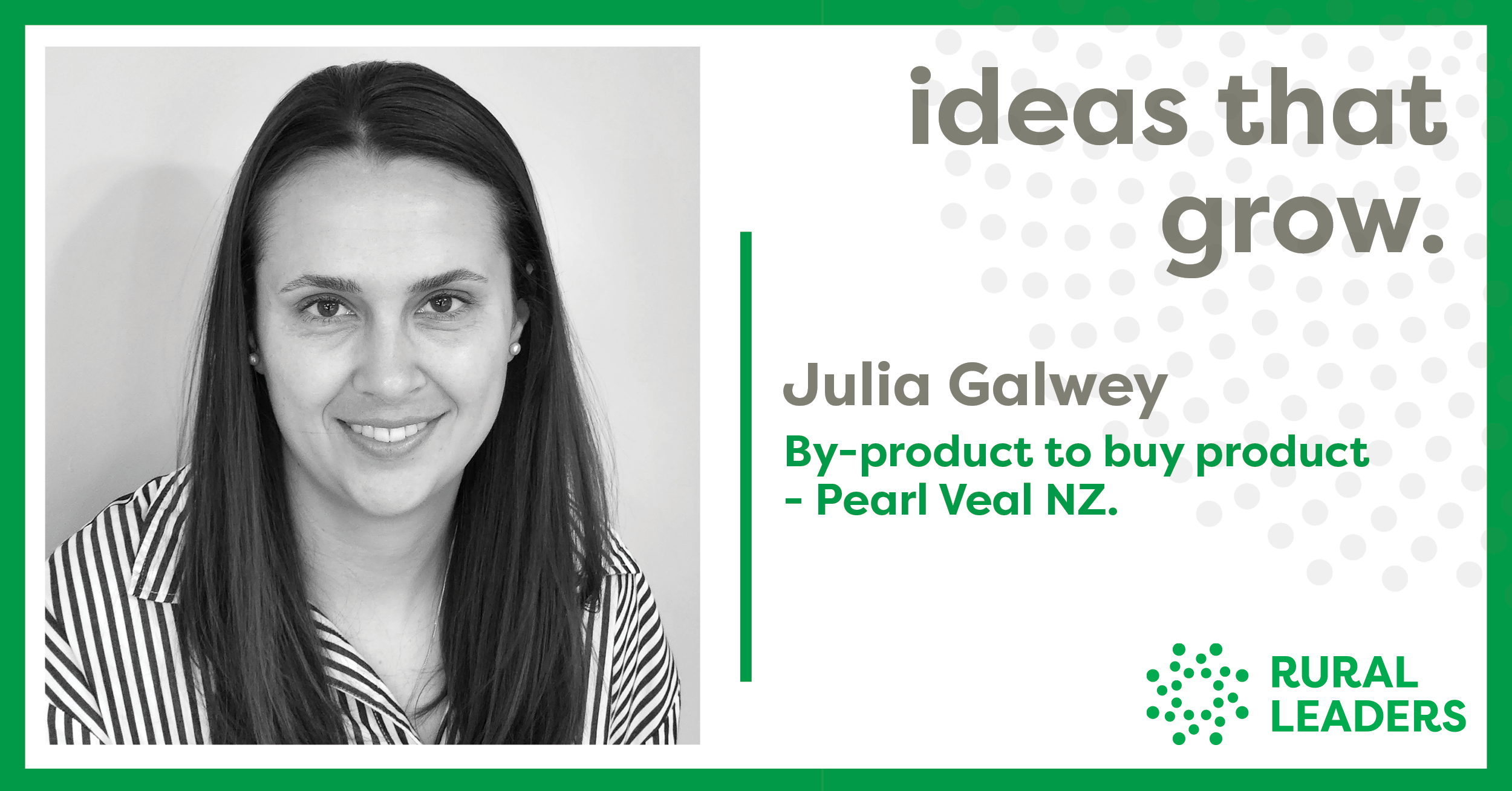
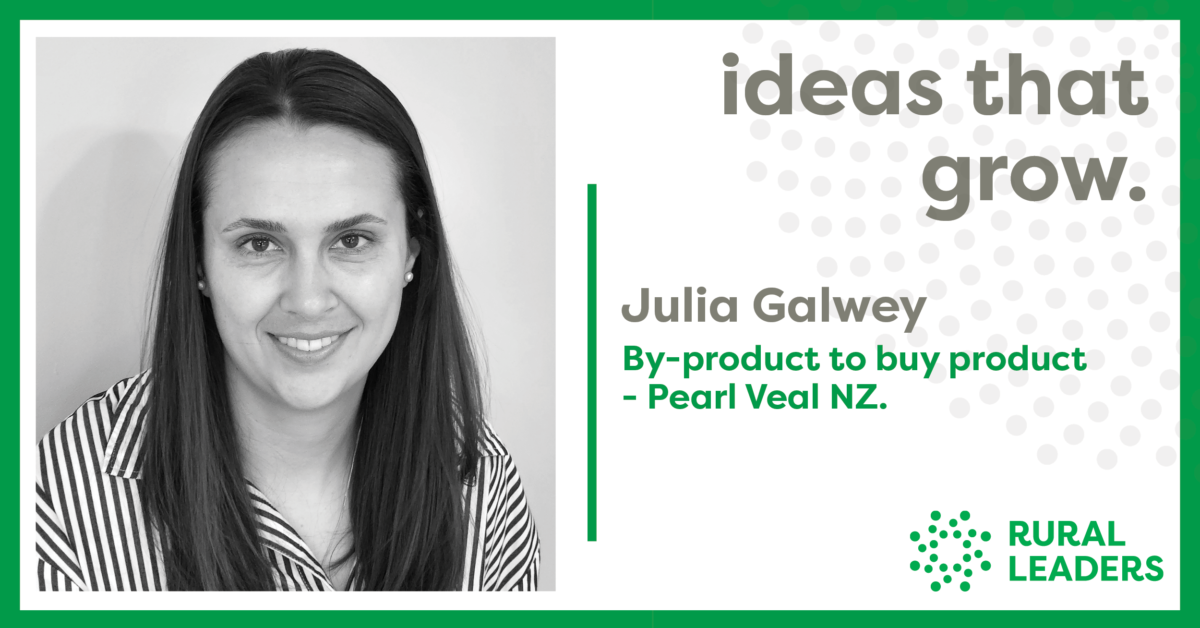
Julia Galwey. By-product to buy product – Pearl Veal NZ.

An innovation story that covers the journey from an idea to the challenges of development, and to implementation. Julia Galwey, 2020 Kellogg Scholar, talks about Pearl Veal NZ, a new sustainable utilisation of the bobby calf resource.

Pearl Veal NZ was the winner of the Silver Fern Farms Market Leader Award at the 2023 Beef+LambNZ Awards in mid October.

Listen to Julia’s podcast here or read the transcript below.

Bryan GibsonManaging Editor of Farmer’s Weekly.

Kia Ora, you’ve joined the Ideas That Grow podcast, brought to you by Rural Leaders. In this series, we’ll be drawing on insights from innovative rural leaders to help plant ideas that grow so our regions can flourish. Ideas that Grow is presented in association with Farmers Weekly.

My name is Bryan Gibson, Managing Editor of Farmers Weekly and this week I am talking to the recent winner of the Market Leader Award at the Beef and Lamb New Zealand Awards, Julia Galwey.

Bryan Gibson:
G’day Julia, how’s it going?

Julia Galwey, 2020 Kellogg Scholar and Co-Founder Pearl Veal:
Good, thank you Bryan. How are you?

BG: Pretty good, where are you calling from today?

JG: I am calling from my home office in Christchurch.

BG: Nice. Have you been getting all the wind we’ve been getting up here?

JG: Yeah, it’s been pretty mixed bag at the moment. Very much spring weather.

Winning at the Beef+LambNZ Awards.

BG: Yeah. Now, it was a pretty big time for you, the Beef and LambNZ Awards.

JG: Yeah, it was pretty neat for Pearl Veal to be recognised at such a wonderful event. Just have an evening of celebrating lots of positive things happening in the industry with the various finalists and category winners. A big thank you to Beef and LambNZ for hosting the event, and also to Silver Fern Farms for sponsoring the market leader category.

BG: Yeah. Now, can you just tell us a bit about your background in the food and fibre sector?

Background - Julia Galwey, 2020 Kellogg Scholar.

JG: Sure. I grew up on a sheep and beef and deer farm near Fairlie in South Canterbury. Then I headed off to Lincoln to do an Ag Science degree. Following that, I had six years in the agribusiness team for ANZCO Foods based in Ashburton, which was a neat team to be involved in, and a really varied role, that got me going in the meat industry.

Then in 2018, Alan McDermott and myself, we set up Agri-Food Strategy, which is our own agribusiness consultancy company. It focuses on working with farmers and agribusinesses to address strategic challenges and opportunities. I guess, again, it’s been pretty varied in terms of the work I’ve been involved with in that space.

BG: Now, you took on a Kellogg Scholarship in 2020, which, of course, was the year of the lockdown, if I remember correctly. You chose to do it on a value chain for veal. What made you think of that subject?

Kellogg research into the potential of the bobby calf resource.

JG: Good question. Yeah, I guess the idea to look at this for my report was just being around the meat industry and the bobby calf topic continues to come up in conversations. There just wasn’t really a lot of information that I could see here in New Zealand in terms of looking at older veal animals as an option for this resource, a by-product of the dairy industry. I didn’t really want to focus on the discussion or debate around the bobby calves themselves. I did for some context in my report, but I just wanted to focus on looking at one potential solution or opportunity for utilising some of that resource.

BG: Then, of course, it’s one thing to write a report about this stuff, but you carried that on and started a business. How did that get off the ground?

JG: I guess while I was doing my research report, there’s a few things that came up in terms of some learnings and drivers or motivators. One of them was probably around learning how much of a bigger risk the bobby calf thing was here in New Zealand. Especially compared to other countries in terms of the scale, with our couple of million versus Australia would be the next biggest, at around 400,000.

The report highlighted we were out there on our own in terms of how big of an issue it might be going forward. Some of that, was a bit of a driver. I learned a bit around the varying types of veal markets that there were internationally and saw some opportunity, but I really struggled to find any information on pasture-fed veal systems.

So, it became obvious that maybe there was an opportunity for New Zealand to diversify in terms of our offering in the veal space with what we’ve got here. Also, in terms of some of those credence attributes – pasture-fed, free-range, rather than copying some of the international veal systems.

From research to innovation.

As I was doing the report, Alan McDermott, who’s my business partner, was keen to have a go. We could test out what opportunity there really might be. I mean, it’s all very well, like you say, writing a report, but you just must have a go to see whether something might work or not. Halfway through my project, that’s what we started doing.

We had a quick brainstorm for a name so we could get a company set up. There are quite a few negative connotations around the name ‘veal’, which I learned a bit about while I was doing my report, in terms of some of the historic practices that used to happen in terms of how veal was raised internationally.

There was, I guess, some questions around whether we should even call it veal or not. But we talked to a few chefs, and they pointed out that we need to call it what it is. That’s what they know it is. A lot of them have trained internationally and used it before, so just stick with what it is, but make sure you build a story you can underpin your brand with. We sourced some under 12 months of age, a whole 12 of them, and found a processor that was happy to process them for us.

We set up cut specs and went along to the plant to see how it would go and then started sending some products to chefs to see what they thought. We had a development chef that we were introduced to through a contact, and he kindly took us around Wellington for a couple of days. He introduced us to a few chefs and helped us learn how that world works in terms of getting into restaurants and talking to chefs – and how to get on their menus.

Building scale.

The feedback on the product was great. We started working with the team at Synlait, including one of my fellow Kellogg cohort members, which was quite cool. They’ve been supportive in what we were trying to do and helped us connect with some of their dairy farm suppliers who were keen to give it a go and rear some calves. It’s been a nice fit for us to work with the Synlait team and some of their suppliers.

BG: How difficult is that process? You’ve got a prototype product and you’ve started with a small number of animals to begin with, then you’ve got to scale that up to something that’s a viable business. What’s the process there?

JG: It’s one of the trickier things to balance. It’s a bit of a chicken and egg in terms of you’re not quite sure in terms of what market you’ve got, but you need to get enough product that you’ve got enough to supply to a restaurant to put it on their menu. Yeah, it is a difficult balance, and some of that is just to take a risk. I guess for us, one of the things that we were quite focused on was building around the story and attributes we wanted to go around our brand. With some of that starting with animal welfare for us in producing the best calf possible.

The rearing regime and how it works.

There’s quite a lot of challenge in terms of veal as anything must be produced before the calf is 12-months old, so a lot of the challenge is around getting it to grow as fast as possible and to reach a heavy weight in that time. It needs a good start in life as a calf, to be able to do that. Some of our system was built around a particular rearing regime in terms of good colostrum.

Then we only use whole fresh milk rather than milk powder, which has had a lot of the good bits taken out of it. Milk is what’s designed for the calf, so let’s just give it that and obviously some pasture as well. But because of that rearing regime, we can’t just go out and get any calf on the market.

It starts right from the start in terms of what we’ve built to underpin our brand. That also is a little bit harder in terms of, like you say, we’re planning what we need over a year in advance, and you don’t necessarily know what your market is then. A bit of risk, I guess, and just a balance of starting smallish so that you learn the risks, learn the things you need to iron out as you go.

BG: Getting back to your rearing regime, that must mean you need to work pretty closely with the farmers who are actually doing this stuff?

Collaborating for success.

JG: Definitely. I think the other thing in that space is the Synlait farms that we’re working with are all certified ‘Lead with Pride’, which again, helps underpin animal welfare and the colostrum management. Obviously, our contracts have got the rearing regime outlined in them, and we talk them through what that looks like and why. We also don’t have meal as part of our rearing regime. Part of that is around wanting to remain grain-free, so 100% pasture-fed and antibiotic-free, so that we can look at going into the US market in time.

Again, it’s the whole fresh milk, no meal. It is a bit of a change to how calves are traditionally reared here. We’ve got to work closely with the farmers on what that looks like. We’re thankful for those first few farms that were willing to take a bit of a risk and rear and finish calves for us.

We were a couple of random people saying, here, we want to contract you to rear these calves in a particular way and finish them through to an age and weight that’s not traditional here. They had to trust a bit that we would take them when we said we would and have a processor to process them and pay them.

I guess that’s probably also part of what’s been quite helpful working within the Synlait team. That helped farmers have a go. There’s just some great farmers out there that are keen to try something different and learn with us, which has been nice.

BG: Yeah. Now, who are you selling to now? What are your export markets, or locally?

JG: Currently, we are pretty much mostly domestic market into high-end restaurants. We’ve just started doing a little bit into some smaller retailers here, and we’ve just started a little bit of export.

BG: Now, obviously, the bobby calf issue is one that New Zealand’s farming industry is grappling with. Do you see this type of initiative as part of a solution?

A new veal value chain.

JG: Yeah, I mean, the bobby calf issue is obviously a big social license to operate topic in the dairy industry, and it’s a pretty tricky thing to navigate with the views of community here and also our customers and consumers globally.

I guess we just have to keep asking ourselves if we’ve got practices that we’re comfortable and being transparent about, and if not, then what are our opportunities and solutions to do something differently? I guess that’s really what we’re trying to do with Pearl Veal is.

I don’t like to focus too much on the bobby calf aspect of it. But more the opportunity that exists to take some of that resource and add value to produce a really quality veal-based product with a story and a brand that’s underpinned by animal welfare standards and a pasture-based system that we believe in. We’re proud to share with chefs and customers and consumers here.

BG: Of course, back to where this all started, the Kellogg Programme –  how did you find it? Is it something you’d recommend to others who were thinking about doing it?

The Kellogg Rural Leadership Programme - where it started.

JG: Yeah, absolutely. It was such a good course and I guess a real opportunity to network too. We had such a great cohort of people. It was a good cross-sector group of people. You get to meet people that you wouldn’t normally be working with and the people and the speakers that come in are incredible. It really broadens your thinking and opens your networks and I would highly recommend it to anyone considering it.

That’s why I did it. It’s something that once people have done it, they’re always recommending to anyone that hasn’t. If you get that opportunity, jump at it. I think it’s one of those things that probably never feels like the right time when you’re in your working career because you’re always busy or home life as well. You just have to jump in and do it.

BG: Thanks for listening to Ideas that Grow, a Rural Leaders podcast in partnership with Massey and Lincoln Universities, AGMARDT and FoodHQ. This podcast was presented by Farmers Weekly.

For more information on Rural Leaders, the Nuffield New Zealand Farming Scholarships, the Kellogg Rural Leadership Programme, or the Value Chain Innovation Programme, please visit ruralleaders.co.nz

Know Your Why – Motivations for a Sustainable Future.

Executive summary

With growing demands for sustainability in the food and fibre industries, there is mounting pressure from consumers to produce environmentally responsible products. This report addresses the necessity for the New Zealand dairy industry to prioritise climate change concerns and associated greenhouse gas emissions to secure a sustainable future.

The report aims to understand the motivations behind the adoption of new innovations by dairy farmers and learn how to accelerate the uptake of practices that reduce greenhouse gas emissions, thereby ensuring the long-term sustainability of farming in New Zealand. Additionally, the report aims to create a resource to inform government, industry bodies, and non-governmental organisations (NGOs) about alternative approaches to motivate farmers in reducing greenhouse gas emissions positively.

The research question guiding this study is: How can we motivate New Zealand dairy farmers to embrace practices that effectively reduce greenhouse gas emissions?

A literature review was conducted to gain insights into the significance of greenhouse gases in the New Zealand dairy industry. The review examined the impact and relevance of greenhouse gases within the New Zealand dairy industry. 23 semi-structured interviews were used to uncover the motivations that would drive New Zealand dairy farmers to adopt practices aimed at reducing greenhouse gas emissions on their farm. Responses were categorised into the following high-level themes:

WHY (belief): Explored the aspects of purpose, motivation, social structure, and trust.
HOW (actions): Focused on leadership, communication, and pathway implementation.
WHAT (result): Addressed knowledge acquisition, problem definition, and barriers encountered.

Information gathered from the literature review and semi-structured interviews, highlighted the importance of understanding the “WHY” behind motivations and the utilisation of effective communication strategies (“HOW”) to drive the adoption of sustainable practices within the New Zealand dairy industry.

Recommendations:

  • Leverage the intrinsic values and purpose that farmers already possess. When developing GHG related communications to dairy farmers, industry partners should inspire farmers towards transformative change by building on farmers’ existing intrinsic values and encouraging mastery to drive toward continuous improvement.

  • Emphasise the importance of the economic benefits and social licence to operate. Milk processors need to communicate to farmers and rural professionals the potential advantages of being market leaders in greenhouse gas emissions reduction and the consequences of falling behind.

  • Create a single location for information regarding greenhouse gas related resources. Ministry for the Environment should provide and manage a resource location (i.e. website) for reputable GHG related literature, policies, regulations and general resources related to climate change specifically for the dairy sector.

  • Provide greenhouse gas emissions resources for veterinarians. New Zealand Veterinarian Association (NZVA) should curate a list of reputable sources of information regarding greenhouse gas emissions regulations, mitigation strategies, and the economic advantages of adopting practices that reduce GHG emissions. As a trusted source of information, veterinarians can disseminate this information to dairy farmers.

Tracey Reynolds

New Zealand Dairy trade and market expansion opportunities

New Zealand exports in excess of 90% of its dairy products and is the world’s leading supplier of whole milk powder to China. New Zealand must expand current dairy trade markets and identify emerging market opportunities to remain competitive in the global dairy trade. New Zealand is an export dependent country, that efficiently produces milk and dairy products in excess of domestic market requirements. Returns from dairy trade contribute over 40% of food and fibre revenue which is more than 80% of the total export revenue to the New Zealand economy. China is New Zealand’s largest dairy product export market, importing an estimated NZD$8.3 billion of whole milk powder during the 2022 year. Pre-COVID and the Russia – Ukraine conflict, the demand for New Zealand dairy products was increasing in the Asia and Middle East regions; particularly in countries such as Japan, the UAE and Singapore. Food security has become a priority for countries such as the UAE and Singapore, who are dependent on food imports to feed their populations.

Dubai, Tokyo and Singapore are studied in this research, exploring trade expansion opportunities throughout the Asia and Middle East regions, through applying a gateway city model. The literature describes gateway cities as business hubs, linking international financial and consumer markets and connecting nearby regions where trade has been restricted due to political instability, social unrest, or bureaucratic red tape. The importance of political stability in the gateway city and country is an important element for gateway cities. Both Dubai and Singapore are well respected in their regions for the secure flow of finance and reliable financial systems. Geopolitical uncertainties can be high in Asia and the Middle East regions and Dubai and Singapore are recognised as a safe place to engage in business and investment.

Gateway cities perform an important role of connecting their hinterlands and peripheries to the global trade network. Gateway cities further perform a brokerage role; mediating the flow of goods, capital and labour; creating a connection between regions through a central role in logistics, transportation and wholesaling. Gateway cities gain wealth from their regions and create regional economic wealth. They are cities that are seen as attractive places to live and work for foreign talent, tourists and investors. Further, gateway cities like Singapore and Dubai have Governments who have invested in creating trade relationships that support the ease of trade and access to markets. Tokyo is a unique gateway city, connecting Tokyo to Japan’s domestic market and the wider Asia region. Japan has gained power and influence through regional and global economies; connecting to its hinterland and other world
cities.

The Asia and Middle East regions are the largest volume importers of whole milk powder (WMP), followed by skim milk powder (SMP), cheese and butter. The UAE is the second largest volume importer of WMP, behind China during the 2017-2021 years. The ten largest volume importers of SMP are from the Asia region and the Middle East countries do not feature on the top ten list. Japan is the largest volume importer of cheese and the UAE is the sixth largest volume importer of cheese. Five Middle East countries feature as the top ten cheese importers across the Asia and Middle East regions. Butter is the least imported dairy product across the regions, however Singapore, the UAE and Japan all feature on the top ten largest volume importer list for the 2017-2021 years for butter. New Zealand will remain a strong exporter of WMP and butter and the cheese market is one that can be further expanded. New Zealand is a larger volume exporter of dairy products across the Asia region, and the Middle East market creates an opportunity for market expansion. The UAE, Japan and Singapore are three countries which feature on the top ten importing countries across the Middle East and Asia for all four dairy product imports.

Domestic dairy production in Japan is highly regulated to create a stable supply of fresh milk for the domestic market. The cost of producing milk in Japan is high, with a dependency on feed imports, driving the cost of production. Despite strong Government support and subsidies, Japanese Dairy Farmers are experiencing the challenge of increasing business debt and an ageing workforce. Japanese consumers enjoy engaging with the origin of their dairy products and agri-tourism is popular. Health benefits drive Japanese consumer behaviour towards dairy product choice and dairy products such as: international cheeses, yoghurts, drinking yoghurts and protein drinks are becoming increasingly popular. Singapore and Dubai have limited domestic production of milk and are reliant on imported dairy products.

Singapore has a diverse population. The expatriate population contributes to 30% of the total population and has influenced Singaporean diets, resulting in an increase of dairy product consumption. Singaporean consumers are health conscious and consider dairy based protein for health and nutrition benefits. Singapore and Dubai import more than 90% of their food for their domestic population. Up to 90% of Dubai’s population are expatriates from over 200 nationalities. Dubai supermarkets are specifically targeted at consumer groups and cater for a super diverse population meeting the needs by extensive food imports. The UAE is experiencing a shift towards more value-add, convenient and healthier food alternatives, developing a taste for westernised diets; influenced by a growing expatriate population. Food security strategies have created heightened awareness for food import dependent countries; Singapore and the UAE. The Singaporean Government has invested in science, innovation and research to look at alternative forms of growing food and protein. Singapore is well known for its science and research centres along with its urban strategy.

Further research to understand the influence of country-based culture on consumer food choices across Asia and the Middle East is required. Current research does not adequately understand the cultural influences on dairy product choice and consumption. Understanding country-based culture provides an insight into the daily eating habits, rituals, traditions and consumption patterns. Asia has been a traditional consumer of plant-based protein and understanding the social shift that is occurring particularly in ageing populations is important.

Consumption of food has been linked to economic and social factors, including disposable income, age, education, family member and family size. Consumer buyer behaviour is different for domestic populations compared to expatriate populations, particularly in Singapore and Dubai, where the expatriate population is significantly higher than Japan. Increasing urbanisation also impacts consumer food choices along with population growth leading towards higher value foods and an increase in dairy product consumption.

Keywords for Search: Parmindar Singh

Data sharing to achieve data interoperability

New Zealand is a country of entrepreneurs and leaders in the creation of new systems and apps that can capture on farm data. A significant opportunity to automate data collection to match the systems together and see the data holistically still remains. Each company is creative and innovative in their own right, but farmers and growers want to see the data consolidated. This is how they can make robust, science-based decisions on farm.

This is becoming increasingly important as we move into a digital world where information is accessible at consumers’ fingertips – we need farm data to be in this same realm. With the new generation coming through, it is no longer enough to have values and show what farmers stand for, we also need to prove it.

During my Nuffield year I spent four months overseas visiting different agriculture companies, farmers, and governments. I came back with a strong understanding of the risks of not integrating our data. Covid-19 has changed our world faster than ever before. There are new standards and requirements to be met that are being imposed by consumers. No longer can we afford to look at siloed data systems.

We should not be afraid of transparency because the world is demanding it. Our consumers are demanding it. If we do not do it the effect will be that we will be told how to farm because we haven’t proved we are better than 10 years ago. I believe we do farm better. But belief does not cut it anymore. For the next generation coming through we need the data and the evidence of our farms to back up our claims.

No country or system I came across has a fully integrated farm data system. In New Zealand we are well placed to try something new around data interoperability because many of our companies are co­operatives and farmer owned. We are in the premium space and need to hold our premium position. We also need to have all the information available to make the best decisions on farm and enable scenario planning and modelling. We should be able to answer questions such as:

• What happens if I put 40 kilograms less fertiliser on per hectare? What does that do to my beef production and revenue line?
• What happens if I invest in cow monitoring technology and then catch mastitis and disease earlier? What does this do to production and revenue?

Consider the emerging discipline of a farm data manager. The farm data manager will work directly with farmers and growers to determine their drivers for farming and to create a data strategy. Every farmer and grower has different needs, drivers, and reasons for being. Different data points interest different farmers. Each farm and farmer or grower require a solution that matches their driver and strategy.

Farmers and growers need a bespoke solution for them – a data manager can assist with this. It is not practicable for every farm to employ a data manager. Instead, a data manager will have a portfolio of farmers and growers they work with to give them a solution that best works for them. We need to try something different to move forward on on-farm data interoperability.

This report proposes establishing a new discipline of the farm data manager. Farmers and growers are not expected to be finance experts instead they outsource this to an accountant to support them. So why are we asking them to be data experts? Instead, a farm data manager can support them.

Keywords for Search: Lucie Douma, Lucy Duma

Keeping our farmers passionate in challenging times.

Hamish Murray Kellogg report image

Executive summary

A significant component of New Zealand’s sheep, beef and dairy farms involves the
production of winter forage crops. This ensures high yielding crops are available throughout the winter months when there is very little grass growth for continued rotational grazing.

Pasture swards are left to rejuvenate through the winter months ready for spring. New Zealand farmers pride themselves on being custodians of the land and recognise the importance of continually enhancing our environment with sustainable practices. Within the multiple agricultural sectors, New Zealand produces some of the highest quality food and fibre for the global market whilst satisfying regulatory requirements set by our government.

Farmers over the last five years have adopted new practices to better mitigate the on farm environmental impacts regarding intensive winter grazing (IWG).

The target for this report is to answer the research question; how do we keep farmers passionate about farming when they are up against immense amounts of  environmental policy change from our current government but more specifically, intensive winter grazing.

The report identifies key areas to help farmers with their frustrations on the ever-changing IWG policies. These key findings will provide an insight to answering my report question.

Methodology

A Literature review was undertaken to further understand the research topic. Semi structured interviews were conducted with a generational perspective to better understand the outlook amongst the generations.

Key Findings

The research undertaken included a comprehensive overview of the mixed perspectives and mindsets throughout four generation cohorts focused on IWG questions. It is important to highlight the use of generational perspectives when evaluating the current research topic. Although there are many trends from the interview answers, the majority of the IWG policy and regulation will affect the younger generations the most.

Government and industry bodies need to have collaborative approach between industry bodies and farmers to get the best outcome when writing policy. This needs to be with a generational perspective but more specifically, the younger generation in the primary sector. They need to be encouraged to step forward and take leadership roles so that their voice can be heard to help shape the future of our IWG policy and regulations.

From the survey answers, themes were generated using a thematic analysis. These themes are broken down into several subthemes that reflect the underlying topic.

  • Collaboration
  • Education
  • Simplicity
  • People

Recommendations

The following suggestions have been made as a result of the conclusions drawn from this report.

Develop closer collaboration

Farmers understand there needs to be sensible regulation in place around IWG to secure a world class environment for future generations to enjoy. There needs to be further collaboration within sectors and from the government to work with more with our industry bodies.

Plan Long Term

The use of strategic long-term planning towards writing IWG policies can only be seen as beneficial for the agricultural industry. By allowing it to be proactive in its development towards attainable regulation.

Provide Education

Provide beneficial and cost-effective support for farmers around new policy.

Maintain pragmatic approach

Farmers from all sectors need to be more involved and utilised for their extensive knowledge around a pragmatic approach to writing policy. I believe working with the farmers from the ground up when writing policy would deliver a better outcome.

Incentivise Farmers

Due to consumer demand for more robust guarantees of food safety and quality in developed nations, market forces have propelled the development of numerous policies and good management practises (GMPs). Putting incentives in place for farmers to adopt GMPs is relevant to keep farmers passionate and engaged in relation towards regulation.

Voice of the younger generation

Our industry bodies and policy makers need the leaders of tomorrow to be around that table when forming policy ideas. Creating a ‘youth voice’ for the agricultural industry is something that shouldn’t be underestimated.

Early Implementation and the Future of Individual Cow Monitoring Technology in the New Zealand Dairy Industry.

Cameron Burton Kellogg report

Executive summary

The New Zealand dairy industry has a labour shortage from managers to farm assistants. This has pushed producers to look for automation options to reduce dependency on labour.

Recent and ongoing improvements have produced large-scale, commercially viable individual cow monitoring technologies that can significantly reduce the workload on farms as well as increase animal performance and health measures. Suppliers of these technologies report a positive return on investment and a reduction in labour
requirements.

The industry has seen significant growth in the uptake and implementation
of these technologies over the last 2-3 years. Implementation of emerging technologies is not always successful; challenges and limitations will exist in a commercial context that are not foreseen during the development or in early trials.
This report will explore the intended application for these technologies and how this
compares with current uptake and implementation at scale on commercial dairy farms.

It will explore areas of successful implementation and areas where obstacles have
reduced performance or prevented the technology to be utilised as expected. Current
and prospective users of the technology need to understand how different technologies in the market are likely to be implemented on their farms. This will help to make informed decisions around which technologies will achieve a more desirable outcome over the long term.

This report will help the suppliers and developers of individual cow monitoring technologies identify areas where their products are not being successfully implemented, and areas for further development to ensure the success of their technology in the New Zealand dairy industry.


A review of national and international literature was undertaken to confirm the accuracy and reliability of the technologies available to ensure they would improve or exceed the status quo of our performance in the New Zealand dairy industry. The review examined the commercial viability of these products and looked to the future of the development and application of individual cow monitoring technologies.

Qualitative, semi-structured interviews then took place with suppliers of the technologies, users, and non-users. Uptake, success and failure, and future development of the technology were examined.

Key Findings

  • The technology is highly accurate and viable for a profitable outcome in a
    commercial large-scale context.
  • All users agreed that the initial application has been successful and the return on investment has been neutral or positive.
  • There is potential for greater return on investment from ongoing training and
    implementation of the full complement of features the technology has to offer.
  • Challenges exist with the usability of the software and the sensitivity of health alerts specific to New Zealand’s outdoor grazing systems.

Recommendations

Producers

  • Develop a user-friendly interface as fast as possible, and regularly connect with users for improvements and future development.
  • Reduce the sensitivity of health alerts and integrate on-farm weather conditions with health alerts to limit false positives from weather events.
  • Ensure recruitment and the training of support staff can meet customer requirements as uptake increases. New support staff could double as sales staff to allow for early recruitment.
  • Outsource and fund third parties for technical support. Farm consultants, vets, farm advisors, and other rural professionals could be used to help educate and review the data.
  • Produce actionable reports/groups of cows from the data to minimise the interpretation and increase action taken on the farm. 

Current and future consumers

  • Prior to implementing any brand of individual cow monitoring technology, research the current and future access to after-sales support and technical specialists to ensure you will have ongoing support. Pay particular attention to your exposure to individual staff moving out of the role and limiting the technical support available.
  • Be prepared to put the time and effort into learning and understanding the software as there is an interpretation of raw data required.
  • Ensure the technology you implement is largely mainstream to ensure support from other users and increase the chances of new employees being familiar with the software.
  • Work with vets and advisors to create protocols and policies to shift from clinical diagnosis to subclinical investigation and diagnosis before clinical illness impacts production and profitability.

Capturing value on-farm.

Megan Fitzgerald Kellogg Research Report

Executive summary

More consumers are seeking food products that have credence attributes, such as improved animal welfare outcomes, lower environmental impact, and positive social impacts. Credence attributes cannot be seen or tasted, consumers only know they are being met by information being passed from producer, through the supply chain to them.

Commodity supply chains struggle to pass on accurate, complex information, leaving consumers who are seeking these attributes looking to buy their food through other outlets. Savarese et al., (2020) identified a real opportunity for New Zealand farmers if they are able to connect to these market segments. This research identifies the key requirements a family farm must have to successfully establish and maintain a short value chain.

Coinciding with the growing consumer market, is a risker macro-economic environment where farmers are subjected to tighter margins on commodity markets. Short value chains present opportunities to diversify risk through accessing alternative markets, equity growth without a dependence on acquiring more land, and a way to include more family members in the family farming business.


This research uses semi structured interviews to collect information from family farm businesses who are selling food products directly to consumers. A thematic analysis is carried out to identify the key requirements to consider when establishing a short value chain.

Establishing and sustaining a short value chain is a cyclic process that needs constant realignment between the resources the farm business has and the demands of the customer segment. Farm businesses must have the desire to connect to consumers and the ability to identify opportunities that allow them to connect with consumers in a cost-efficient way.

Success relies on mobilising the businesses resources and establishing a production system that creates a constant supply of quality product. Finally, the business must continually seek opportunities to realign with changing consumer demands and maintain their competitive advantage – which comes back to identifying opportunities.

The defining characteristics of family farm businesses who participate in short value chains is their ability to create and sustain consumer trust. This trust results in consumers who are willing to pay more for their product.

From the analysis of successful short value chains in New Zealand there are a number of recommendations for family farm business wishing to establish and participate in a short value chain.

The key recommendations are to 

  1. establish your family values and align these to customer segments to decrease costs associated with mobilising resources,

  2. spend time creating a production system that produces consistent, quality products that your consumer wants,

  3. connect with your consumers, provide transparency on product details through face-to-face and more permanent marketing such as websites, social media, etc., and

  4. constantly seek feedback and opportunities to better meet your consumer’s needs.

Barriers to Genetic Potential Through Sire Selection in New Zealand Sheep Farms

Executive summary

Agriculture contributes to 50% of New Zealand’s gross greenhouse gas emissions, an industry that is largely dominated by ruminants producing methane (Ministry for the Environment, 2022).

The Climate Change Response Act 2002 has set a target to reduce biogenic methane emissions to 24–47 per cent below 2017 levels by 2050. Therefore, the reduction of methane emissions from livestock is of significant environmental and economic importance.

It has been demonstrated that there is repeatable, individual variation in the methane emissions of sheep and that part of that variation is genetically heritable. There is now a breeding value that allows commercial farmers to rank, select and purchase lower methane emitting sires. This is currently the only tangible and proven mitigation farmers can start implementing on their farms right now.

In a time where our consumers are more discerning than ever before about how their food is produced, it is vital that commercial farmers utilise resources and technologies wherever possible to further our competitive advantage through sustainable practices.

However – regardless of personal views on climate change or political policies – do commercial farmers have the capacity and capability to understand the opportunity that these low methane-emitting genetics bring?

This research focuses on understanding the barriers to genetic potential through sire selection on New Zealand sheep farms.

To gather information on the barriers for farmers in relation to breeding decisions a literature review was undertaken to understand the gap in knowledge of farmers with regards to genetics, along with establishing factors in commercial farmer behavioural change and understanding of complex decision-making in relation to animal breeding decisions.
This was followed by an unstructured interview process with four farmers from three different farming enterprises, to establish a journey map to understand each farmer’s experiences, by creating a map of their interactions with sire selection. Farmers were selected to represent different types of farming enterprises and perspectives within the sector.

This process also helped to establish a picture of their current level of understanding, perceptions and preferences in genetic decision-making and identification of barriers to genetic potential through sire selection within the farm systems.

Key Findings

Given the significant advances in genetic and recording technologies over the past 20-30 years, it could be assumed that sire selection decisions should have become simpler. However, though these technological advances may provide more information, the complexity and scope of the information may also overwhelm farmers.

Martin-Collado, et al. (2018) describes that when people are faced with complex decisions and/or are exposed to information overload, this leads to either impulsive often suboptimal decision-making or they use simplification strategies (i.e. heuristics).
In terms of effecting meaningful change through genetic decision-making, the ability to effectively compare a farmer’s system with that of others appears to be an instigator to change.

There is a significant educational role to fill with regard to sire selection and genetic decision-making. Whilst we have sheep which are genetically lower methane emitting or significantly more tolerant to facial eczema available for purchase now, there is much to be done to assist the commercial farmer to realise the opportunities available to them when it comes to genetics.

Recommendations

Beef + Lamb NZ should aim to develop a number of tools and resources aimed towards genetics education and extension for both commercial farmers and breeders.

The development of these tools and resources should:

  • consider the individualism of farmers and their systems, the behaviour of change and complex decision heuristics,

  • be developed in collaboration with subject matter experts and farmers to be relatable for the intended audience,

  • share the success stories of farmers who have successfully harnessed the opportunity of genetics,

  • be created for a range of delivery mechanisms to cover a range of learning styles.

    • These should be developed in collaboration with industry partners to facilitate the uptake of these resources by these parties to assist in the dissemination and delivery of the resources.

Organic, Regenerative and Sustainable.

Executive summary

To answer the question, this report considers if these methods can be defined, it explores the main principles and drivers based on a comprehensive literature review; the baseline is conventional farming, and the research shows sustainable farming is usually regenerative and organic and often conventional.

Organic, regenerative, and sustainable are all buzz words; they are methods of farming, growing, and processing; also used in marketing for recognition and financial advantage. This report found that a farmer may align their identity with their chosen method and a consumer’s decision to purchase may be based on their understanding of these terms and an alignment of their values, particularly where there is a premium paid. This report found consumers use the terms loosely and the complexities of farming methods are not understood by non-farmers.

There are no definitive definitions of organic, regenerative agriculture (RA), sustainable or conventional farming in New Zealand (NZ). Each method is guided by principles, and the report finds there are few differences between these, and this means that farmers can use principles from any method. Sustainable practices guide each of the methods and much conventional farming.

NZ farming already has a clean green advantage, and many farmers are leaders in best practice which can be explored further. This report considers the new term, regenerative organic and found its meaning and the relationship with organic farming is not yet established in NZ.

The quick and simple answer is yes, a farmer may be across all these methods, but if claiming to be organic, must be certified.

Organics has had enormous success in becoming well established with stable export markets; legislation is imminent providing credibility and consumer protection; it is odd that organics received little mention in the RA research projects or in strategic planning for the food and fibre sector. It is unclear where it fits into the bigger picture for food and fibre.

Progress on RA is at an impasse waiting for industry and or government leadership; however, the journey has started, and recent announcements of research projects will provide much needed evidence and guidance on the extent that existing farm methods are already aligned with RA.

Some leading NZ scientists claim this task has already been done and there is nothing more to be gained. If RA is to gain traction, time is of the essence. NZ needs a strategy, purpose, and an agreed direction. There is an opportunity for NZ to lead the direction of RA.

The report briefly considers if there is a premium to be gained from these farming methods and how this is reflected in the export markets. This matters for NZ because, “our economic security depends on the primary sector, which this year earned us a record $53.3bn in exports” announced Minister Damien O’Connor1. In July 2022, red meat sales reached $1.1 billion according to the Meat Industry Association (Red meat exports reach $1.1b., 2022), NZ needs to continue to add value to its exports, rather than rely on volume of production by identifying its advantage, guaranteeing the quality of its farming systems, and marketing its story.


The food and fibre sector must act quickly, otherwise another nation will lead in regenerative and sustainable farming and the potential market advantage to NZ is lost.

Recommendations

The project provided clarity that there needs to be a collaborative way forward, the following actions are recommended to achieve a unified direction:

Strategy to establish the role and future of New Zealand farming methods

  • The Government to facilitate a collaborative effort from industry organisations, the Ministry for Primary Industries (MPI) and research organisations to establish a representative leadership group (the Group).

  • The Group to deliver a Strategy for organic, regenerative, and sustainable farming for the short and long term; this should align with, other sector specific strategies and address sustainable practices across New Zealand farming.

Research

  • The Group should develop a methodology across all farming systems linking production, product quality, livestock, health, and well-being, adopt a holistic view, including evaluation of environmental, social and health impacts. This work must align with existing research programmes.

  • The Group will distinguish between organic and regenerative farming, address the meaning of organic regenerative and sustainable, and include the outcomes in the overarching strategy.

Trade and Export

  • The Group will develop the New Zealand story for consumers, investigate new markets, grow existing ones, and optimise what New Zealand does well.