


Anne Hindson, General Manager
This will hopefully be the last E-Nuff in the current format, as we develop a new look e-newsletter which covers the activities of ‘Rural Leaders’ and includes updates on both programmes.
Much of what we want to say is relevant to both groups of alumni (some of who overlap) so the new E newsletter will have organisation updates with the option to click through to the latest Nuffield or Kellogg news including scholar reports, insights and updates specific to each programme or group of alumni.
Our ‘E-Nuff’ & ‘Kellogg Konnect’ will be retained for use when conversing with each group on a programme only basis.
We Need a Name – Win the prize!
We are looking for a name for our new Rural Leaders E Newsletter. Get your creative juices going and send in some ideas and win a prize and the honour of renaming our newsletter.
Send ideas to annehindson@ruralleaders.co.nz
A new initiative for 2019, 6 regions were chosen to host a Regional Alumni networking event, bringing together different cohorts and both Kellogg and Nuffield alumni. With Napier/Hastings, Tauranga, Whangarei, Blenheim, Gore & Hamilton locations there was a mix of our smaller and larger regions.
The purpose of the initiative was to provide a vehicle for:
One of the highlights demonstrating the power and history of the programmes was in Waikato where we had an original Kellogger from Course 1 1979 and a current Kellogger from Course 40. Similar span of alumni years were also seen in other regions.
After fantastic feedback, despite the late timing of the events, the plan is to roll out the concept in 6 more regions next year. Meanwhile we will work with each of the recent region hosts to determine a sustainable networking format for the future.
Feedback has been really positive about the benefits of networking and potentially providing some upskilling opportunities and/or providing a voice on some regional issues although in some regions we battle the problem of distance with some having to drive over 2 hours each way to attend a central location.
The recruitment of a full time marketing person will provide a much needed resource and ability to be much more effective with our external and internal communications and relationships and keeping the brand presence throughout the year. We hope to report our new appointment in the next newsletter in early December.
A board sub committee has been working with Scott Champion on refining our strategy and business plan over the next few years as we respond to market changes but more importantly work on developing and growing our alumni programme and influence.
Our 2020 Nuffield Scholarships have recently closed and the selection process is underway. This year we have a good number of female candidates with six being shortlisted so we hope that we can achieve a better gender balance this year. The Awards will be held at Parliament, hosted by Hon Damien O’Connor, on 5 November (a relevant place to be on Guy Fowkes). Watch for the pre announcement email to alumni announcing the 2020 scholars.
The Awards will be preceded by a forum with the 2019 Scholars sharing their global insights and discussing implications for the industry with our investing partners & Trustees, hosted by KPMG.
The Nuffield2020 Triennial is gaining momentum with an updated programme released and registrations opening on 1 September. Check out the website here https://www.nuffield2020.com/programme.
We are really pleased to welcome some new partners who have come on board to support this international event alongside our existing Rural Leader investing partners. Check out the next Triennial EDM for the latest details & updates. The one day Summit is shaping up to be a great event and watch out for speaker announcements shortly.
The support of our New Zealand alumni to attend and host our international guests is critical to the success as we want to showcase some of our leading business models, on farm and environmental practices and agri tech to our international colleagues & guests.
Chair, Michael Tayler and the team are hoping all alumni will use the event to encourage reunions of your Nuffield cohort and international networks.
Kellogg Course 1 2020 Applications close: 14 October
2020 Nuffield Scholar Awards: 5 November
2019 Scholar Insights Forum: 5 November
Kellogg Course 40 phase 3 presentations: 25-28 November
Nuffield2020 Early bird registrations close: 30 November
September 2019

In May and June of this year, Nuffield International organized a tour through East Africa for past scholars and invited participants.
A tour overland through Kenya, Tanzania, Zambia, and Zimbabwe for 24 days was always going to be an ambitious and challenging undertaking. But what an opportunity! Having family history in Tanzania had always put East Africa on the travel list, and when the chance came up to visit on a Nuffield tour, I was in. The attraction of travelling with other like-minded people from around the world while learning about Africa and interacting with locals seemed like an opportunity too good to be true – especially if someone else organized it.
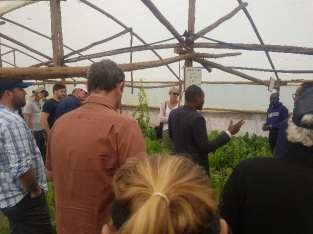
On 20th May 10 Kiwis, 1 Aussie, 2 Canadians and our guide Wayne Dredge met in Nairobi, with local contact Dr. Sarah Flowers. The team represented a wide range of expertise and interests including fishing, genetics, feedlot beef production, large scale dairy, forestry, hill country sheep and beef, fine wool, broad acre cropping, guided hunting, tropical dairy, transport and the oil industry.
Twenty-four days later we all departed Victoria Falls as firm friends having shared an amazing experience with some stories to tell, and retell.
Jim Geltch and Jean Lonie asked me to provide a bit of a summary of the trip in a couple of pages and I must say because of the sheer scale of what we observed and the country we covered I have been procrastinating at the daunting prospect of condensing all that down to a few pages of pithy points. It’s sort of like writing a Nuffield Scholar report in executive summary form. My apologies in advance because I think I might fail on the two-page limit.
But first the funeral. Wayne’s partner, Caroline, who was to travel with us had her father pass away as the trip started. We extended our sympathies as best as you can in the circumstances and missed her presence for the tour.
Wayne provided some very useful basic facts prior to our trip and I will do the same here as context:
| Kenya | Tanzania | Zambia | Zimbabwe | |
| Population (million) | 49.3 | 58 | 16.5 | 16.5 |
| Population (density: people/sqKM) | 78 | 47.5 | 17.2 | 33 |
| Population growth | 1.50% | 3% | 2.9% | 2% |
| 2050 population projection (million) | 97 | 137 | 42 | 29 |
| Average age | 18 | 17.7 | 16.8 | 19 |
| Agriculture (as % GDP) | 34.5 | 24.50% | 8.6% | 12% |
| GDP growth over last 4 years | 5.70% | 6.25% | 3.7% | 1.50% |
| 2018 GDP per capita (USD PPP) | 3461 | 3227 | 4216 | 3024 |
Sources: Wikipedia & World Bank
These countries have all got young populations and are going through the phase of population growth driven in part by improved longevity and reduced infant mortality. As female education and opportunity improves it is expected the rate of population growth will slow. However, with the demographic make- up of the population there is a long lag time before population growth slows.
This large pool of cheaper labour is starting to attract some interest for business as some Asian countries age and become more expensive. Mobile phone coverage is good, so Africa is potentially leapfrogging through some technology changes such as missing the fixed line era and developing mobile banking apps that work in their markets.
Kenya and Tanzania have been growing consistently and strongly, Zambia less so and Zimbabwe has had some growth but contracted last year and looks set to do the same again this year.
Our first place to stay was the Karen Blixen Coffee house in Nairobi. Blixen wrote “Out of Africa” and her story mirrors some of the stories of success and progress and decline that are intertwined with some African narratives. At one stage she wrote:
“Here at long last one is in a position not to give a damn for all conventions, here was a new kind of freedom which until then one had only found in dreams”
The freedom to do as one pleased and be free of regulation and bureaucracy, especially in the labour and land management areas, was cited by many people we visited as one of the advantages of living in Africa. Sadly for Blixen her first husband had a bit too much freedom and she reportedly contacted syphilis from him which she claimed affected her health for the rest of her life.
Our accommodation was generally in gated lodges and to a high standard. It did remove us from some of the hurly burly of African life but it was maybe designed to restrict some of our aforementioned freedoms and to keep us safe.
Farming is not viewed as a great career in Kenya but land ownership is a sign of success. An aspiration to build a house on one’s own plot was regularly mentioned. Simplistically land is owned by larger farmers and corporates and by small holders. The small holders may be subsistence farmers but also may have other jobs and use the land to provide food for the family and additional income. Some of the small holders in higher rainfall areas run incredibly productive diverse systems, with pigs, chickens, vanilla, bananas, avocados and timber trees.
One of the opportunities to improve the lot for communities in East Africa is to improve the lot of the smallholder. Many NGO’s focus on this group but where we saw real opportunity and progress was with commercial enterprises providing and scaling commercial solutions for these smaller farmers.
A useful example of this is Margaret Munene, the owner of Palmhouse Dairies. She described her journey building a dairy business which was working with 500 mainly women suppliers with 3-4 cows to provide a healthy product to consumers and provide profit to suppliers. Some of her key challenges (which are not just limited to Kenya) are:
These economies are often cash based and Palmhouse endeavoured to pay into bank accounts which reduced the opportunity for corruption but also had the advantage of giving the women more control over their finances. Margaret was then able to set up the Palmhouse Foundation that has helped to educate over 1000 children from poorer areas.
Natural Extracts Industries in Moshi, Tanzania was another business solving the problems of traceability and QA with small holders by using mobile solutions. Now with 4500 farmers supplying vanilla one interesting strategy had been to train “champion” farmers to help with distribution, scaling, R & D, and tech transfer.
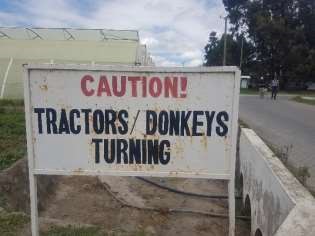
One of the major challenges of dealing with smallholders is ‘side selling’. For many storable products there are a range of traders with dubious reputations offering cash at farm gate. This is not just an African issue.
Where support for small holders did not appear to be commercially driven it looked to me to be a recipe for locking these people into subsistence farming.
We had a look at Dudutech, a smart Integrated Pest Management company, delivering biological pest control solutions into the East African market, demonstrating what can be achieved with good execution. The visit also highlighted some of the local talent available for these businesses and some of the cultural biases evident. Where we had a local and foreign executive presenting to us the foreign one often dominated the conversation but did not necessarily dominate in the knowledge or skills area.
Dudutech was one of the few companies where environmental concerns were explicitly mentioned. Environmental issues will affect Africa but the trip highlighted that provision for the environment generally comes after economic growth and food provision.
Another encounter with game in Zimbabwe led to ‘NDE No1’. There may be different interpretations of the events that lead up to this Near-Death Experience, but in the nature of history writing, he who holds the pen has the say. Rhinos are so valuable for poaching that they are generally under 24- hour armed guard. Visiting a game preserve with four Rhinos, we were allowed to go to the fence of the enclosure they were gathered in at night. Standing at the fence was an incredible experience as Rhinos came up to check out the visitors and some of us could scratch their horns with only a fence that looked like matchsticks to a rhino between us.
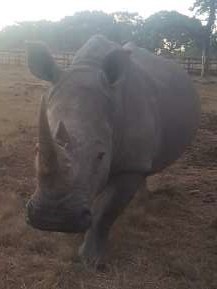
One of our team, who shall remain nameless, chose to get a different look out to the side at the open entrance to the enclosure. This appeared to attract the male rhino who came and walked out of the gate past said member. Having a wild Rhino go past within a meter of you is an unforgettable moment. What also is unforgettable is watching the rest of the team scatter as the Rhino proceeded to do two charges. Luckily for us, and for Derek, air – and not much at that – separated the Rhino from contact. Pulling his hamstring as he outran one of nature’s fastest and more dangerous animals will be a story to tell and retell.
As we drove the roads of Kenya and Tanzania, we saw herders grazing their flocks of sheep or goats or herds of cows. Many of the animals looked in poor condition and the land appeared overgrazed. A historical herding culture and their displacement from traditional lands is leading to poor land management and a complex issue that will be difficult to solve. Good grazing management has the potential to regenerate soils throughout Africa but dealing with the cultural and property right issues to enable this will not be easy. Looking at some of the cropping soils also outlined some of the challenges. Continued mechanical cultivation led to reduced organic matter and poorer structured soils. Using No Till and cover crops improved this but finding a way to incorporate animals into the rotations seemed an opportunity to further improve these soils.
Driving the Tanzanian roads it’s impossible to avoid the traffic police. Virtually every town had traffic officers on the outskirts which did not appear to be serving any safety purpose. Foreign vans seemed to be fair game and may have provided more opportunity for revenue.
We got a bit bored with this game and started getting our bigger members to ‘listen in’ on the judicial discussions. Our attempts at intimidation probably made no difference but made us feel a bit better and more in control.
One of the issues in Tanzania appeared to be the acceptance that the government could have a large say in your lives such as the overzealous policing. This carried over into the potential to interfere in markets for agricultural products and was one of the bigger risks for investment in this country.
Driving the roads, we are also confronted with the sheer logistics challenges present. To export avocados from Mkushi in Zambia requires 4-day trips to Mombasa in Kenya or Cape Town in South Africa. A 12-hour trip crossing the Tanzanian border into Zambia along parts of the northern Zambian arterial road in a confined van with a driver not used to our personal hygiene practices was a challenge for much of the group. The road a main linkage to the mines in the Congo and Western Zambia was a mess and was chocka with fuel tankers servicing these mines.
The Mombasa Nairobi Highway is a vital arterial link from the coast for Kenya, and for the land- locked countries of Burundi, Eastern DR Congo, Uganda, South Sudan and Rwanda and carries more than 50% of goods traded in the East African Community. Given the scale of trucking and traffic the road is grossly inadequate and dangerous. On our way to Tanzania we were halted for a five- truck pile up. A toll expressway is due for construction to start to replace the road cutting travel times by more than half.
China has invested in infrastructure throughout Africa including the Nairobi-Mombasa Railway. There are criticisms of this investment and in some places, it is highly visible and may not be delivering the purported benefits. Improving infrastructure and access to global markets is important for African development. To my mind if you wanted to invest in Africa, you would want to do it very carefully, you would want to deeply understand the local laws and cultures, and you would want strong relationships with the people you were dealing with on the ground. The risks for that investment are high. I don’t see that Chinese investment in Africa is any different and it looks to me that some of this investment will benefit African countries more than Chinese companies.
The World Agroforestry center in Nairobi had some gems of research for industry such as speeding up and reducing the cost of soil testing with hyperspectral imaging, new crops for semi-arid lands and crop selection decision support tools. It however did have the appearance of an institution a bit removed from industry.
African farmers do not appear to be immune from the economics of agricultural product cycles. We saw much investment in Avocado and macadamia production, which would be a cautionary tale for those investing in these products elsewhere – unless you have a supply window advantage. Macadamias present a challenge as a storable product that makes theft a viable proposition. Security costs and slippage were cited as reasons not to plant maca’s
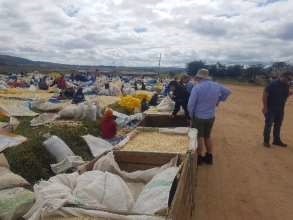
Labour costs are another notable difference to our production systems. We have invested heavily to systematize and reduce labour costs. It was foreign then to see areas where labour is still used in processes that could be mechanized. Given the costs of labour at $1USD to $3USD/day this is entirely rational. Large areas, of mainly women, de-husking and sorting maize seed by hand was a common sight on Maize seed farms. I felt uncomfortable when taking photos of these women and they often asked for money.
The African women are to be admired. Not just for their carriage and physical appearance, but mainly for their persistence and diligence at work. It is not uncommon to see one walking with a child carried front and back and a load on head and in hand. Pulling up at a Zambian petrol station and having drunk men on one side and women trading products on the other was an extreme example of the working roles of the different sexes.
Social License is increasingly used as a term in New Zealand in relation to farmers ability to carry out their work with the support of the whole community. In some ways this appeared to be magnified in Africa. Those farmers who were embedded as part of the community, tended to have less problems whether that be with theft or getting things done quicker and generally had less trouble. Being part of the community sometimes included providing healthcare and education.
One of the benefits of travelling on a tour like this is the strength of the Nuffield brand and network. The access to top farms and the willingness for capable people to give up their time to show us their enterprises and to come and talk to us provided so much depth to our experience. As an example, in Dodoma we dined with the ex-president of Tanzania. Having local people travel with us providing commentary and insight throughout the journey helped with our understanding of the history, geography and cultures of the countries we visited. Enjoying many sundowners with groups of locals after a day travelling and visiting provided rich memories for the participants. Special thanks to Ellie Stanley, Sarah Flowers, and Rob Fisher who travelled with us for parts of the trip and were very generous with their time and knowledge.
Kafue fisheries near Lusaka, Zambia was a fascinating visit. Run by the character Speedy Holden the integrated pig and fish farm is circular in nature.
Pigs are farmed on pond banks, effluent from the pigs is washed into fishponds of Tilapia fish. The effluent promotes algae growth which the fish feed on and then the water is drained out through reed wetlands to reenter the river in as good a state as it leaves it. The feed conversion efficiency for the fish didn’t fully support some of the claims but it was an impressive operation. Speedy provided an interesting example of an unintended consequence. He gives thanks to Bill Gates, on a daily basis, claiming the Gates foundation provision of insecticide treated mosquito nets provides a cheap fishing net resource which pollutes waterways and reduces insect populations in rivers and hence wild fish stocks, thus reducing Speedy’s competition.
Land ownership throughout Southern Africa is a highly charged topic, and Speedy made the comment that “there will be no major portions of white land ownership in Africa in 20 years.” Given population pressures and political realities it appears the ability to hold onto larger, single family land holdings in the future will be difficult. Better to invest in highly productive smaller areas or further down the value chain.
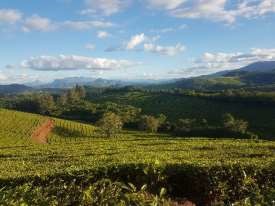
“Near Death Experience 2.” Travelling out to view wildlife from Victoria Falls one morning a few of our team got closer than they wanted too. A large Elephant came out of the bush and their driver swerved to avoid it. They just missed the ellie, but went off the road and rolled the vehicle. Fortunately, again they were all well and unharmed, but unfortunately for them by the time they got another vehicle and had a look for wildlife the viewing wasn’t the best.
Zimbabwe appeared to be a basket case but also presented the most opportunities. There are fuel and power shortages as the country lacks foreign currency to pay for them. There was an upwelling of hope after Mugabe’s ousting as President. His successor Mnangagwa was Mugabe’s enforcer and has not delivered the hoped for, improvements. What is impressive is the way people are innovating and trading and finding ways to operate when an economy is not functioning effectively. For many, finding ways to generate USD or trade using USD has been the way to operate. Sadly, Zimbabwe has now banned these practices, which looks to me like they will need to have a crisis of some sort before the country can start moving forward. The opportunities are enormous in this country and we saw pockets of investment. It looks too hard just now but could be worth watching.
Farming has been tough in Zimbabwe, and farmers have the choices to get out, to get on with it, or to get bitter. The resilience of those who have moved and those who have stayed is impressive. Many Zimbabwean farmers are now driving farming productivity in other parts of Africa. The Zim roads are still in ok order and there are many farming assets sitting idle. There is a cluster of Zim farmers in Mkushi, Zambia starting to rebuild their lives after losing land in Zimbabwe.
Religion has been a strong part of these farmers lives and belief systems and continues to be so. Access to capital is difficult and the ability to borrow against a land asset is not the same as in NZ. Cashflow then becomes critical.
Zambia as a landlocked, resource rich country with bad neighbours, has a few of the classic development traps. It is the least populated of the countries we visited and has large areas of undeveloped country.
Chinese presence in Lusaka was visible and 25% of Zambia exports mainly copper go to China. The Zambian farmers were investing in their businesses but appeared to have less confidence now than a few years ago.
As I travelled, I looked to see opportunities for investment. I expected to see more. I did see some, but I was much more cautious of the opportunity after the trip than before. To take up the opportunities you would almost have to be on site for a couple of years prior to investing. Deeply understanding the local cultures would take even longer and you would have to build relationships with people you can trust on the ground. There appeared to be a bit of discipline needed on the drafting gate to find these people.
This was a tour that had been at least two years in the making. Wayne put an inordinate amount of work into providing an interesting program, organizing transport and accommodation and making sure all the other logistics worked. It was an incredibly stimulating experience. The interactions with the group throughout the tour enriched the experiences and we had a wide range of visits and insights. This report only touches on the depth of those. It is always possible to tweak or improve something in hindsight but as a travelling and learning experience I would have no hesitation to recommending this tour or similar, to Nuffields, or like-minded people. Thanks to Wayne for all the work he did.
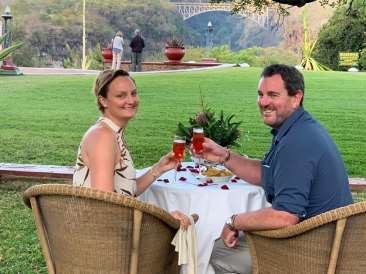
And to the wedding. Wayne had appeared a bit stressed throughout the tour. We had assumed it was related to trying to keep us all safe, occupied and out of trouble. Caroline rejoined us at Victoria falls and this stress did not seem to disappear completely. After we had departed, he proposed to Caroline and the next photo we see is a stress-free beaming Wayne. Our best wishes go with Wayne and Caroline and we await invitations to the wedding to be held we suggest at the completion of Wayne’s next tour!

Download printable version here
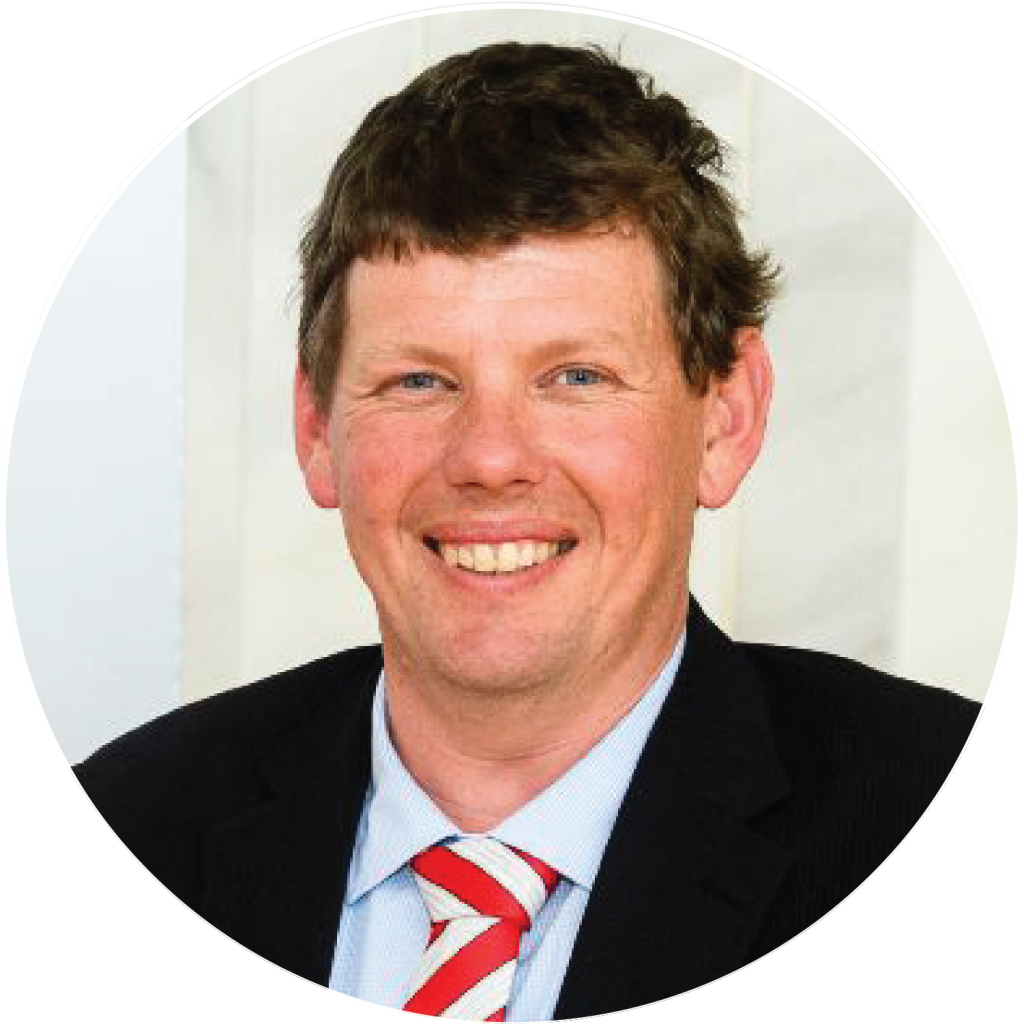
Hello Nuffield family,
Having just finished six weeks of GFP travel through Singapore, Japan, Indonesia, France, Canada and the United States there is so much to think about and say, so many emotions, so many memories and so much information.
To echo those that have gone before, it is exciting, busy, hard work, the time of my life and a real honour to travel the world as a Nuffield Scholar, the places visited and the opportunities afforded are exactly what we were told but did not necessarily believe. Prior to the GFP I had spent a month in the United States on my own and I was in a great head space for travelling and excited about everything that lay ahead. The time spent prior taught me some valuable lessons about engaging with unknown people and how to get the most out of every opportunity along the way. One key thought for me throughout has always been that the only stupid question is the one you didn’t ask.
Our GFP started with two groups of ten scholars in Singapore for three days. Having met each other at the CSC in Ames, Iowa in March, I think we were all eager to catch up with each other and it was great way for our tour to start. Two days of formal meetings gave us much insight not only into Singapore itself but also a good overview of how the economy and trade works in Southern Asia. It is no accident that Singapore is the powerhouse it is, successive governments have recognised that the relatively small size of the country make it incredibly reliant on others for survival and they have used this to their advantage by staying a neutral player in the politics of the region and attracted other countries to use them as a brokering base. It seems that most multinational companies and countries have an office in Singapore.
From Singapore we flew to Japan for ten days where we spent time in the North Island of Hokkaido, around Tokyo and in the southern Island around the city of Miyazaki. The Japanese are very particular about the food they eat and it can be seen everywhere in the quality of the food. As a country they depend on imports for 60% of their food and the first assumption is that local agriculture would be in a strong position.
However we were interested to find out that the truth was very different. Ageing farmers and no replacements is agriculture’s biggest problem. The average age is 68 and they work farms with an average size of 1.2ha. Current estimates have abandoned farm land at around one million ha.
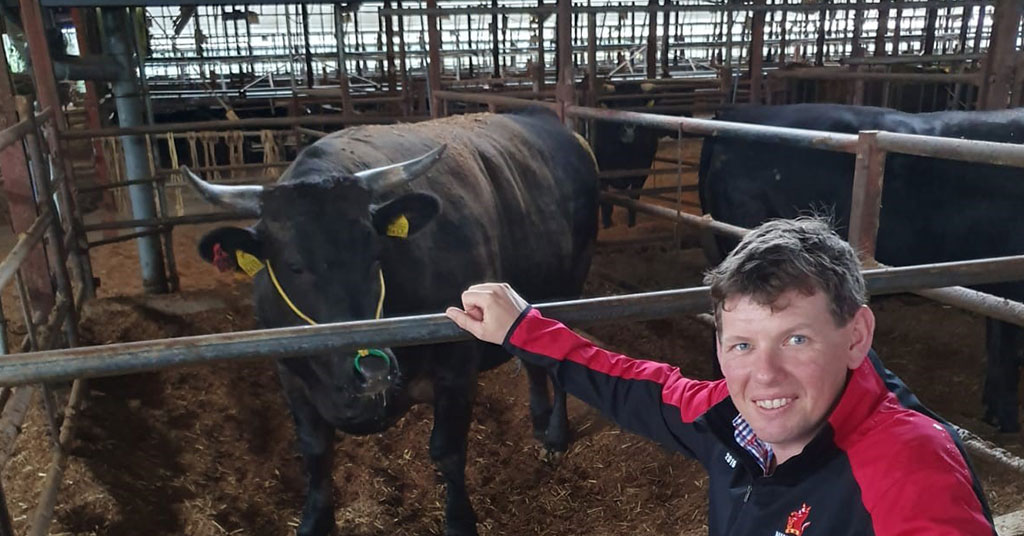
Japan agriculture is controlled by a farmer co-operative and it is the biggest lobby group in the country and the biggest influencer in government. They have control of the entire value chain including finance and have even a funeral division. What was interesting was to see first hand what was set up to help farmers is now crippling them by stifling innovation and guaranteeing those that don’t break even. There are of course exceptions and exact numbers were hard to get but Waggu beef for example can gross as farmer between $12-$15,000.
Japan was the first chance for our group to establish itself as a team of people rather than a group of individuals. Ten days in a country where English is not spoken at all certainly ensured we learned how to get along quickly with each other as even the simple things in a foreign country require trust and teamwork. Culture and traditions are very important to the Japanese people. It is remarkable for a country with the population it has to be so ordered and clean. It is very noticeable in public how quiet the people are and it is a real contrast to other parts of the world. The country does appear to be in decline, an ageing population and a declining population can be seen everywhere and there is a feeling of tired infrastructure
From Japan we flew to Indonesia and had two nights in Jakarta. Where Japan was civilised, quiet and clean, Indonesia was everything but. Comparing the two countries almost everything is the opposite, where in Japan trains travel at 300km/hour, in Indonesia it took five hours to travel 135kms by bus. This is classic example of how difficult the logistics of business can be especially in such a populace place. Geography is a major hurdle to growth, the country has over 17,000 islands, 8000 of which are inhabited.
Chaos reigns in Indonesia, there are 77 million motorbikes registered and at times its as if they all on the road at once. Indonesia is very much a developing country and is recovering from years of political corruption and one quote we were given is that loyalty is only as good as hunger and it is clear to see the years of neglect. In many respects the country is third world with many people living a subsistence life and the farmland is dominated by very small holdings of land worked by people with no mechanisation other than a motorbike.
Rice is a very big crop and a staple diet. The intricate network of small fields and the water channelling systems maintained over generations was great to see and one of the highlights of Indonesia. It was fascinating to see amongst the chaos and subsistence farming operations big feed lots, a new 5000 cow dairy farm with plans for a second and a shrimp and rice factory producing over fifty lines of food items and exporting them around the world. As an interesting contrast, the population generally are very poor but they all have smartphones including the children. An amazing example of scale and how it can effect supply price.
Indonesia is a very complex and a very religious country, the call to prayer can plainly be heard at times through out the day and the girls in our group were warned several times about covering their legs. The scenery is quite something, every square meter of available land is used for farming including near vertical hill sides.
Our next stop was a week in France including a day off in Paris which we all put to good use by seeing the sights and a week later we flew out of Toulouse in the south. For me France is all about tradition that has been in place for generations. Tradition that sees their farming and their food system relatively unchanged because the demands of the consumer haven’t changed. Fresh bread every day, cheese, coffee, wine and meat and two hour lunches dictate the terms in France.
It was interesting to be there pre Brexit. The French people are of the opinion that the EU imposes too many rules but the common trade and open border policy has many benefits that outweigh leaving. There is much to be admired by the attitude of the French and their work life balance seems to be ingrained in their psyche.
From France we went to Nova Scotia and of all the places we visited it was not what I expected at all. When you think of Canada you think big scale, Nova Scotia was quite the opposite. The province is almost an island and as such has a very maritime climate but it is far enough north that it has very cold winters. It is a land of many lakes and is over 70% tree covered. We encountered very small scale farming, dairy, beef, horticulture and fishing. In the case of dairy farming it was a real step back in time, we saw cows with collars and chains around their necks that are milked side by side in free stalls at ground level. We also had a visit with Dairy Farmers of Nova Scotia, the governing body in the province and among other things had an explanation of supply management and quotas.
From the outset Canada does not wish to export any dairy product due to trade obligations of other commodities and it produces only enough for itself and here the supply management system is born. To discourage over production the farmer price is set at breakeven point for the 50th percentile of farmers. We were told that this system is the envy of the world however our very quick conclusion was that from the outset the system that the farmers support sets 50% of them up to fail and ultimately stifles progress and innovation.
Horticulture is a big industry in Nova Scotia and we spent a lot of time looking into it and it is a success story due to some very clever marketing by the farmers. Some years ago, two Nuffield scholars and many others organised themselves to each specialise in a particular crop and pool the produce as a way to minimise internal competition from the supermarkets. The biggest surprise from Nova Scotia was wild blueberries. This native plant grows wild anywhere the forest has been cleared and they are grown on a huge scale, the industry is 80,000 hectares plus in the province alone and worth around $80 million annually.
We were billeted out with Nuffield Scholars for four nights in Nova Scotia, I stayed with Richard Melvin, a scholar in the 70’s and his wife Jaqueline. They arranged meetings of various groups and organised a farmers dinner for our group at a state park in which I gave an address on the history of the Nuffield Scholarship and what we were seeing around the world as a way to inspire some young farmers to think about applying.
From Canada we went to Washington DC for three days including one day off. If ever there was a city worth visiting, Washington DC has it all and it explains some of my thoughts about the patriotism of the American people. The district of Columbia that houses all the government is full of amazing buildings, monuments and gardens and is very grand. The national museums are all incredible dedications to history of this very proud nation.
A highlight of our time in Washington DC was meeting the other GFP group and seeing that they had also developed into a very tightknit unit and clearly all enjoyed each others company. We spent two days in meetings with the USDA, Bayer, Syngenta, the Australian embassy and Senator Chuck Grassley from Iowa who gave us forty minutes of his time.
The American political system is very complicated and is near impossible to understand but the country is such a powerhouse that its political system should probably reflect that. Every country we visited was worried about the trade war with China and the US and where it would end.
Our last week together was spent in West Virginia which upon reflection is not a wonderful state to be farming in. The landscape is dominated by 75% Oak and Maple Forest and the terrain is very mountainous. As a result the state is not known for its agricultural output but we did look at a large amount of operations and industry thanks to West Virginia University Extension Service and the USDA Natural Resources Conservation Service. The NRCS will subsidise a lot of on farm improvements if they are deemed to benefit the environment, fencing, water systems, wintering sheds for cattle, handling facilities etc and we looked at some of these projects. One shock was most farmers in West Virginia work off farm, and growth is not on the radar at all. The shale gas industry is a very big player and has artificially inflated prices of land.
In every country we visited the lack of young people entering agriculture was a big concern. In Japan, West Virginia and to a lesser extent Nova Scotia, there is a lack of farmers in general, land sitting idol and wasted potential. Young people everywhere look at farming as a life of committed hard work and a salaried job in the city is a more enjoyable existence. The three mentioned places appear to be grappling with tradition and struggle with the concept of simply trying something else.
In Japan the successful farmers have broken away from the overarching co-op and selling direct to market. We saw very small dairy farms in Canada (less than 60 cows) that were very defensive of the same quota system that is holding them up from expansion. In West Virginia I gave a talk to a group farmers and politicians on our final night there about what we had seen and how to make farmers profitable and attract young people. My answer was polite but blunt, to be successful you must be clear on your business intent, intent breeds good decisions and good decisions result in good outcomes, try new things, ask for help, focus on the basics.
For young people to get involved it needs to be attractive to them. It was tricky to be tactful but it seemed to our group that the USDA in its kindness is subsidising the status quo and similar to the quota system stifling farmers own ability to innovate. Everywhere we have been the very successful people are the ones that have the courage to look critically at what they are doing and make changes as required.
There is no hiding from the word environment, with the exception of France and West Virginia we encountered very little action or even discussion on anything to do with soils, water or the climate. West Virginia was the only place where conservation was considered as important. It is easy to be defensive of what we do in New Zealand but I think we do very well in this space and we will continue to improve. In terms of climate change France was the only country visited that is doing anything about it and that was via EU regulation, as far as we could tell it is not on the radar of many people although extreme weather is a frequent talking point.
The six weeks of GFP was so much more than I hoped it could be for so many reasons and I have so many memories of places and people. Our group went from 10 individuals to a very tight group of organised and cohesive people. I think we all come away from the shared experience with a huge amount of knowledge not just about agriculture but about ourselves and the need for empathy for those around us.
We also need to constantly clarify what we are doing and the directions we are going in.
To move forward in business and in life the big take home from me from the GFP is understanding your why, why are we farming? Why are we growing, what we are growing? Why are we living where we live? The successful farmers and business people we visited around the world clearly new the answers to these questions and were driven as a result of that simple question, why?
As an ambassador for New Zealand over the past six weeks it is incredibly humbling to be told a lot about how great our country is, even by people who have never been but want to. It is hard to fathom how we manage to pull our weight on the international stage as much as we do considering the distance to markets and the machine that is international agriculture and trade. The entire food system is very complex and is so different between and even within countries.
For New Zealand to continue to prosper we need to be ever mindful of our image to our customers overseas. We can be leaders environmentally without effecting production or farmers livelihoods as long as we strive to be better tomorrow than what we are today and not being afraid of making mistakes while making progress.
I have been extremely proud to travel as a New Zealander in a group of nine others and we have been to some amazing places and seen some amazing things together. I couldn’t have asked for a better group of people to be travelling with and I have made nine lifelong friends I am sure.
At the very forefront of all of our learnings and what my Nuffield experience has taught me is the importance of three things in our industry. Agriculture, Food and People: For agriculture to prosper we must embrace the needs of the people we are producing the food for and they should be in the forefront of everything we do. I come home from my time away very grateful to have been given the experience, keen for more and very proud to call myself a Nuffield Scholar.

Follow Hamish Marr on Twitter @MarrHamish
Read the rest of the Global Focus Programme reports:
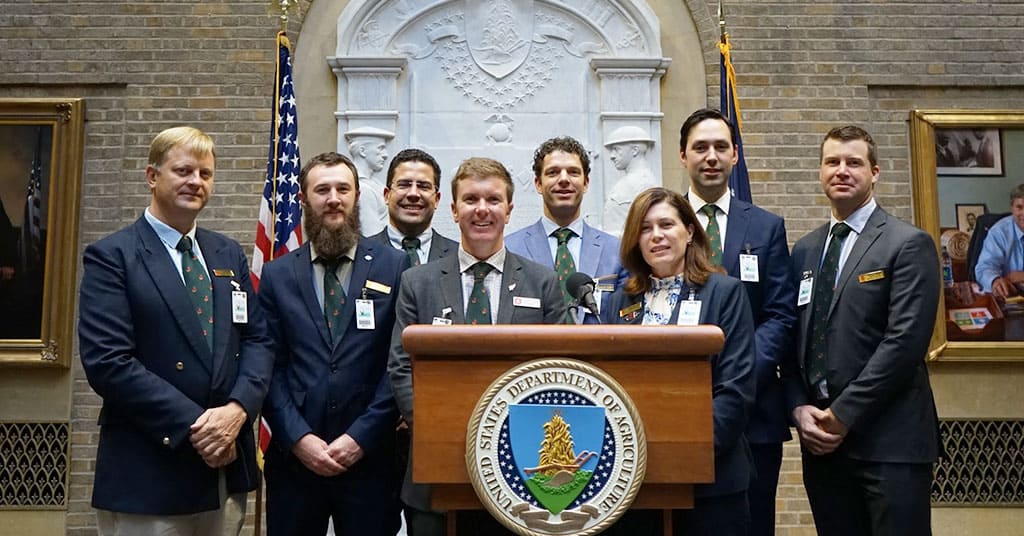

Hello Nuffield family,
great to be sharing some insights with you all again.
When I last spoke to you at the conclusion of the CSC in Iowa, my reflections centred around New Zealand’s place as a nimble food producer. I felt that our story around our culture, our taonga tuku iho (heritage), our environment, the safety of our food, our nutrition and our manufacturing skill to differentiate were a key strength.
Over the following 40 days, I joined 7 other fantastic scholars from Australia, Zimbabwe, Brazil, UK and The Netherlands to travel through 5 countries. We started in the San Joaquin Valley (The Valley!) of California, then to Buenos Aires and drove through the grain growing heartland to Rosario along the Parana River. We jumped the Andes to Santiago, Chile, starting in the drier north we travelled through horticulture central finishing in the forestry and cropping region around Temuco.
A change in hemisphere and continent bought us to Italy, where we begin our food journey in Turin before driving south via Milan to the mountainous Abruzzo region and then on to the historic city of Rome. Finally, we flew to the UK and started our week on the Fens in Lincolnshire, travelled south to Somerset, around Wessex finishing back in London for a first-hand look at Extinction Rebellions protests at Westminster, London.
The first common trend across almost every farm or business visit we had is that the climate has changed and growers are struggling to adapt. Primarily the change is expressed as more variable rainfall with much more intensity when it does occur. Only in a few cases were there plans in place to adapt, most are on the back foot with varying degrees of acceptance as to how permanent the change is. Infrastructure to compensate for the changes doesn’t exist in many cases. My conclusion – expect supply volatility everywhere.
Secondly there seems to be two very strong positions around GM, one is accepting and has embraced it fully for production gain. The other is firmly of the opinion that the market doesn’t reward GM, it simply adds yield but no additional profit to the grower and locks the production system into the control of multinationals licensing the tech. My conclusion – GM has not substantially rewarded the grower in most cases I saw.
There are however exciting prospects around the understanding of soil biology and integrated pest management with biologicals. We saw strong recognition that we are just beginning to explore what opportunities exist to improve the biological performance of our soils and reduce our reliance on synthetic chemistries. This is a trend that I don’t think will go away.
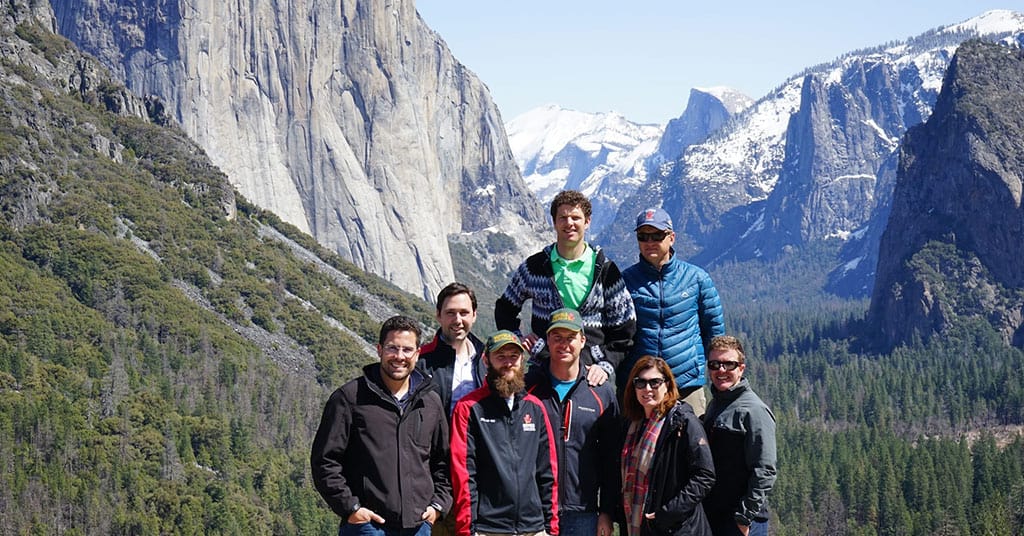
The US and South America are firmly focused on feeding the world. Nutrition is becoming a more common word but not ahead of yield yet. Mostly it’s commodity, commodity, commodity. If we produce more, we will win is the mentality. My conclusion – NZ has significant relevance in nutrition, it has limited relevance in competition on supply. It is also clear that manufacturing IP brings nutrition opportunities to the fore. Giving up ownership of manufacturing is at our peril. I saw very limited examples of value chains with grower ownership and control like I see in New Zealand.
There is strong social pressure for sustainable farming practices felt by all growers. This is irrespective of the economy being stable or unstable politically or economically. That surprised me. In most cases from what I have seen the NZ grower seems to be light years ahead in this space with demonstrable data. My conclusion – we can prove our story; many others can only pay lip service. The greatest place the NZ grower can add product value inside the farm gate is through verifiable attributes that sit behind how the product is produced.
Lastly, we were abroad during the 15th March Christchurch terror event. This afforded us the opportunity to see the response through the eyes of the international community. What shone through during this difficult period was our value in humanity, the moral code that most New Zealanders live by. What I can now reflect on is the way many from around the world view New Zealand. We are deeply respected and admired for doing the right thing because it is simply the right thing to do. Our food is New Zealand food, not New Zealand milk or meat or apples, its New Zealand food. Anytime that any of us interacts with our global customers, we represent all of us.
For many of you this probably hasn’t been anything overly new, but it really cements for me where we should play and where we shouldn’t as a country and with my own vested interest in the dairy industry. The most successful multi-generational businesses I visited are very clear on their values, absolutely focused on quality, constantly relating what they do to their heritage and are telling the consumer about it. They all have a culture that constitutes excellence, their strategy is an outcome of this culture, they are clear on vision.
It is extraordinarily hard to articulate after one week back in New Zealand what I witnessed in my 8 weeks abroad. But one thing is clear to me. A united New Zealand food story, premised by action not words, vested in a short value chain owned from grower to customer and differentiated through food science based on nutrition, provides us a bright future. Let’s be clear on our why and very smart in our ability to pivot around that.
Kind regards
Corrigan Sowman
Follow Corrigan Sowman on Twitter @gbdairylad
Follow the links below to read the rest of the Global Focus Programme Reports from 2019:

Enthusiasm for a digital future key asset for Dairy Women’s trustee role
1 July 2019
Enthusiasm for a digital future is a key asset Auckland based tech enthusiast Sophie Stanley feels she can bring to the Dairy Women’s Network as the newest member of its trust board.
“I’ve worked with the Dairy Women’s Network in the past and have always admired what they are doing in the community to support women in the dairy industry,” she said. “I thought it was an organisation I could add a lot of value too and opportunities like this don’t come along that often.”
Stanley, 32, felt her youth and enthusiasm for a digital future was the key asset that she would will bring to the role.
“Having lead an agtech company in the US for the last two years I bring experience from the technology sector with agile and design thinking, and also have international experience working with farmers in the Midwest, USA.”
She said her experience travelling as a scholarship recipient of the prestigious rural leadership programme Nuffield New Zealand where she researched social media in the agricultural sector highlighted the importance of community and good use of technology, but stresses the importance of face to face connections.
“Used well, technology should be leveraged to enhance knowledge, community and connection, but real human interaction remains very important.”
Chair of the Dairy Women’s Network Board of Trustees Cathy Brown said Stanley had a strong understanding of strategy development and execution.
“Her digital knowledge will be an asset as the Dairy Women’s Network tells the story of the amazing women who work in the industry. We look forward to having Sophie on the team,” she said.
Stanley spent a year as an Associate Director on the Rural Leadership Consortium board (Nuffield NZ) following travelling overseas and has worked extensively in the banking and technology sectors.
“I feel excited to join a team who are committed to enabling transformational change in agribusiness, particularly with women,” she said.
“The agricultural sector has long been a passion of mine, and I believe that grassroots organisations such as Dairy Women’s Network provide so much value to its members by providing a community and access to tools and knowledge that can help them thrive.”
With strong rural roots resulting from growing up on a sheep and beef farm in Rangitaiki, in the Bay of Plenty, Stanley has always had a strong passion for agriculture and food production. She graduated from Massey University with a Bachelor of Science (Agricultural Science) and Bachelor of Business Studies (Economics) and went on to spend five years working as an Agri Manager for ANZ Bank with dairy farmers in Morrinsville.
In 2013 when she won the Nuffield Scholarship to research the impact of social media in agriculture she was one of the youngest scholars to ever be awarded it.
She joined cloud software company Figured in 2014 to build the vision for a cloud based agri accounting software, spending four years helping grow the company that included moving to Omaha, Nebraska to launch the business in the United States.
The call of New Zealand’s beaches and mountains saw her return home earlier this year to take up a role working on building app partner programmes for the global ecosystem at Xero.
An avid reader, podcast listener and traveller who says she loves learning about food systems, politics, economics and climate change, she has found time to run her first 50 kilometre ultramarathon in February and is training for her next ultramarathon in Taupo in October.
Stanley’s first Dairy Women’s Network Trust Board meeting will be in September.
http://www.scoop.co.nz/stories/BU1907/S00023/enthusiasm-for-a-digital-future.htm

The government has introduced a Research and Development (“R&D”) Tax Incentive, to support and further promote R&D in NZ businesses.
The R&D Bill has passed its first reading in Parliament and we expect legislation to be enacted in May/June this year, allowing businesses to access, and make the most of the incentive from the start of the current tax year (typically 1 April 2019).
The incentive is a great opportunity for businesses to access support for R&D – It’s expected that over 2000 New Zealand businesses will be eligible to claim the incentive.
KPMG invite you to join one of their sessions where R&D experts will present – alongside officials from Inland Revenue, and Callaghan Innovation – on the R&D Tax Incentive, providing insight into how the incentive will provide broader access to R&D funding for New Zealand businesses.
The seminar will also cover what is, and what isn’t R&D, and how to start planning early to be ready to make a claim for this year’s R&D activities.
As well as KPMG, officials from Inland Revenue and Callaghan Innovation will be on hand to answer any of your questions on the new incentive in the Q&A section of the seminar.
https://communication.kpmg.co.nz/23/539/landing-pages/rsvp-blank-eda-blinc-hosted.asp
This update for December through to April summarises the activities of NZRLT which is the operational arm of both Nuffield and Kellogg programmes.
With the recruitment period for 2020 Nuffield scholars and the 2020 Kellogg programmes about to kick off, word of mouth and encouragement from those who have completed the programmes are still the prime drivers of quality and diverse applicants so we hope you will all take time to approach some emerging leaders and encourage them to apply for these life changing experiences.
The 2019 scholars announced in the November E Nuff are well into their programme having undertaken a two day NZ briefing in early December which enabled the group to bond, be briefed by industry and government on global activities and priorities and put into practice some of the research and reflection tools provided by Hamish Gow at their November orientation.
In January the group opted to do a 1.5-day leadership workshop with the Course 39 ‘Kelloggers’ providing further tools and new understanding of their own and others leadership styles and how to operate as a team. The combined tools were well utilised at the Contemporary Scholars Conference where the NZ scholars were sharing and coaching other international scholars on these tools.
This April E Nuff provides the five scholar reflections on their CSC experience and the 5-day tour & business visits the group undertook between Chicago and Des Moines in Iowa which was the location for the 2019 CSC.
Meanwhile the 2018 scholars reports are just released after scholars spent the summer working on their draft and incorporating the feedback received. There is a lot of industry interest in the reports with requests for copies and speakers at industry events. As mentioned by Andrew, we are looking at how we leverage these leading insights and learnings together with our alumni to start making a difference.
Nuffield2020 is a huge undertaking for the organisation and the hardworking committee with four events over 11 days. It will be vital that NZ alumni support this event as country hosts but also in generating interest by encouraging year cohorts and GFP groups to combine the event with a group reunion but the invites and suggestions need to get out now!.
Having just attended the two day Grow 2019 Boma conference in Christchurch, with a few of our organising committee we have reflected on the content and focus of the one day Summit as a key component of Nuffield2020, and particularly ways to to differentiate it from other industry conferences. With the event open to Kellogg alumni and industry it is an opportunity to gain greater exposure for NuffieldNZ.
The website has just been updated with more details on the different events under Nuffield2020 so check out on https://www.nuffield2020.com/
Noting other NZRLT activities, The Kellogg Rural Leadership Programme continues to attract high quality applicants and deliver great networks, friendships and leadership skills on farm and in industry forums and businesses. It is great to see the Kellogg alumni now in government (5 in total) and their willingness along with Minister O’Connor to share experiences with the group.
In June, the 40th course of Kelloggers will be welcomed onto the programme and this is a major milestone for the programme. The cohort will receive different content to those who undertook the first programme in 1979, reflecting the new leadership environment and skills needed but the fundamental principles of the programme remain the same.
On the management front, in May we regretfully farewell Clara Sweetman who has been our Marketing and Comms Contractor for the last 12 months as her family move to Auckland. We are actively recruiting a replacement for the role along with a newly created Event/Project Coordinator role to help with regional seminars etc.
With the NZRLT financial year running between 1 April & 31 March we are just wrapping up the 2018-19 year financials and the Board & I have been reviewing our strategy and new alumni initiatives as we plan for the next twelve months.