2026 Nuffield NZ Farming Scholarship. Apply by 17 August 2025. Read More...

Apply for 2026 Nuffield NZ Farming Scholarship by 17 August 2025. More details...

Esther Donkersloot on leading research into cooler cows.

In this podcast, Esther Donkersloot, 2024 Kellogg Scholar, talks to Bryan Gibson, Managing Editor at Farmers Weekly, about her research with LIC on breeding heat tolerant cows.

Esther came to New Zealand to do her Masters’ thesis and never left. Good thing too. Having studied at the prestigious Wageningen University, she has steadily built a career looking into better genetic outcomes for our dairy herd – especially as the planet gets warmer.

Along with her research at LIC, Esther discusses her Kellogg report insights on genetics’ social licence to operate.

Listen to the podcast here.

Bryan GibsonManaging Editor of Farmer’s Weekly.
You’ve joined Rural Leaders’ Ideas That Grow podcast. In this series, we’ll be drawing on insights from innovative rural leaders to help plant ideas that grow so our regions can flourish. Ideas that Grow is presented in association with Farmers Weekly.

Bryan Gibson, Managing Editor of Farmers Weekly.
You’re with Ideas That Grow, the Rural Leaders podcast. I am Farmers Weekly Managing Editor, Bryan Gibson. This week, our special guest is Esther Donkersloot, who is a recent Kellogg Scholar and works with LIC. G’day Esther, how’s it going?

Esther Donkersloot, 2024 Kellogg Scholar, Scientist LIC.
ED: Yeah, really good thank you.

BG: I usually start these conversations by just getting a bit of life history, I guess. Now, you’ve come a long way to your life in New Zealand and your role at LIC.

The Netherlands’ loss, New Zealand’s gain.

ED: Yeah, this was an overseas experience for six months that turned out to be a bit of a life move to the other side of the world. So, my background is Dutch. I grew up in rural Netherlands, and I was always very interested in doing my master’s thesis somewhere else. Just by chance, I ended up in New Zealand with LIC, and have been here for 10 years now. So yeah, it’s been great.

BG: I understand you went to Wageningen, if I say that correctly.

ED: Yeah, it’s a tricky one. Wageningen University research centre. It was very close to home for me, probably about 20ks away from where I grew up. I I studied animal sciences there. Wageningen University is our main agricultural university in the Netherlands. It’s a highly regarded university, and it’s all around food, sustainability, and environment studies.

BG: Yeah, I used to work at Massey University, and they had a lot of partnerships with that university, and I always wanted to go and visit because it just sounded like an amazing place, that food valley environment.

ED: It’s an interesting place because it’s actually a very small town that the University is based in. So the town is the University, and it’s the combined effort of the University side as well as a big arm for research, which is a great environment to learn in. Definitely look back at it very fondly.

BG: So you came over here to do your master’s?

ED: To do my master’s thesis yeah. In our master’s, we had the opportunity to either do two thesis or to do a thesis inside an internship. I did two thesis. So, it took away the opportunity to learn outside of the University. I was still keen to get my main thesis done in a company somewhere else. By chance, my professor did his PhD with our head of research at LIC, Richard Spellman.

So, I ended up with the chance to do my (main) thesis over here in New Zealand with LIC, on gestation length. And then from there, I just enjoyed it so much that I rolled into a temporary contract, then a fixed-term contract. Now I’m well and truly settled in.

LIC research into heat stress in cattle.

BG: I understand your role here now is related to heat stress in cattle.

ED: Yes. I started my career with LIC in animal evaluation, and then had a little time in our international team. I got the opportunity to travel around a bit and learn a lot more about dairy around the world. I then came back to the research and development team to lead the Slick Heat Tolerant Breeding Programme, which I’ve been doing for the last six and a half years, alongside my colleagues. Nothing in research is ever an individual piece. It’s always a team effort.

BG: Could you just tell us a little bit about the work you do and why it’s important? I mean, we know things are warming up, so I guess it’s finding ways to get genetic markers for animals that are more tolerant of the warming world.

ED: Exactly. We found the slick gene. The slick is a dominant gene that we found in the Senepol breed in 2014. It is originally a beef breed from the Caribbean. Then we started the breeding programme to incorporate that into our New Zealand dairy animals.

Back then in 2014, the focus was very much around the potential of this gene for international, knowing that a lot of our dairy still comes out of tropical environments, and this is a huge opportunity for growth.

Then when we started to focus a lot more on environment and climate change, we changed the breeding objective to focus on what this gene could do for New Zealand. Because especially here in New Zealand, where animals are outside 24/7, we don’t have the opportunity to shelter them so much from heat stress as they would be in barn-based systems. So the opportunity of having a genetic solution was just amazing.

So, we started incorporating it by just traditional breeding into our crossbred animals in LIC with the hope of launching this as a commercial product in 2029.

BG: Obviously, a lot of this stuff goes above my head, but I do know that when you’re looking at these genes for certain traits, the first thing you’ve got to look at is, does it cancel out other traits you’re after as well? Like, I guess, milk production and mastitis tolerance, that sort of thing.

ED: Yes, absolutely. I’ve been leading the breeding side, where we’ve been trying to dilute this beef breed that we got the gene originally from, into our dairy animals. We’re trying to get the genetic merit and the genetic gain up to be producing milk and getting all those traits that we require for our New Zealand dairy systems.

Then alongside, my colleague has been looking at the effects of this specific gene, not just on heat tolerance, because we know that it does create a benefit for heat tolerance, but also what could this mean to the cold sensitivity of these animals?

We’ve been doing some research ourselves as well as a project in collaboration with Lincoln University, to understand, especially in calves, when they’re born in winter here in New Zealand or very early spring, what this gene would mean to them. Because we know it did create a shorter hair coat.

We found there’s been no negative consequences to this gene, and we’re hoping to publish some of this data very early in 2025. It’s very important for us that we make sure that before we commercialise, especially knowing that we’re on a seasonal system here, once it’s out there, you can’t control what animals are being born. So, we need to totally understand everything we need to know about this gene and making sure there’s no negative consequences.

BG: Well, we look forward to reading some of your research findings and then seeing some of this technology hit the market.

ED: Yeah, it’s a super exciting project. Having being part of it now for this last six and a half years, we just see these animals produce more and more. It’s so exciting to follow them from the sideline and being able to do research on them in different locations in New Zealand.

Kellogg research into genetics’ social licence to operate.

BG: If that didn’t sound like a lot of work, you were part of the first cohort of Kellogg Scholars this year.

ED: Yeah. I was part of Cohort 51, and lucky enough to be there on an LIC Scholarship.

BG: Oh, nice. Tell us a little bit about what you focused your scholarship studies on.

ED: Yeah, that’s an interesting one. Being a scientist, doing social science in leadership is quite different to my normal day-to-day activities. But what I was interested in is this aspect of this term ‘social licence to operate’ and how that applied to my area of expertise, which is genetics.

I was keen to understand how people were, first of all, to learn from other technologies. Other examples of things out there that we can learn from how people discovered and built this social licence to operate. Then understanding how people felt about genetics and what that social licence looked like. That was the main focus of my Kellogg Individual Research Project.

BG: I’m a journalist, and that seems very newsworthy because in New Zealand we’re right in the middle of having a rethink of our gene editing laws. One of the big issues that we’re all grappling with is, even though you can do it, should you? That comes down to social licence. It comes down to the marketing of your food story and all that thing, doesn’t it?

ED: Yeah. Part of why I was really interested doing this is that I felt quite often that social licence or that public perspective always came in during the commercialisation stage, and not that much during the research stage. But especially when you’re in a cooperative like LIC, everything we do is returning value to our farmers. If it doesn’t tick that social licence box, we need to pivot.

For me, it was how do we bring that conversation all the way through our research phases, from brainstorming to commercialisation? And then how do we also keep a finger on the pulse? How do we understand that the market is reacting to when we have a product in market? Because as you know, things change.

We’re living in a world where everything is changing faster than ever. So we can’t just put a product out there and just assume everything is all right. So, how do we do that? And who do we involve? Who are our stakeholders? And how do we carry that as an industry? Big questions.

BG: Oh, big questions. Did you manage to come up with some insight about how the licence was going for genetic technology?

The Kellogg research insights.

ED: It was a big question. I only scraped the surface. But one of the things that, first of all, really captured me, all the stakeholders I talked to were very passionate about genetics. Everybody understands the value of it, and it’s something that’s a cumulative that we can create and maintain. But not everybody felt like they were part of the conversation. So there’s definitely work to do there.

Then it brought up a lot of conversations around New Zealand Inc. How can we collectively take responsibility of all the aspects of our dairy towards not just our direct community here in New Zealand, but also our consumers overseas? That was really fascinating. Also, one of the other things that came up was the term ‘trust’. How do we build trust? But also what level of transparency do we get down to?

As I said, I’m Dutch. I like to think I’m a very open and almost, oversharing person. For me, a big learning curve was that sometimes by creating almost too much transparency, you actually raise more questions, or you highlight probably the negatives a bit too much. How do you balance that?

By building that trust, having transparency, but not oversharing where you just create confusion. There was some really interesting learnings in there.

BG: I was going to ask that because you’re uniquely placed to give insight into things. The Netherlands is one of the big food tech, animal production powerhouses of the world. I guess the general population on the street probably has a pretty fair idea about what’s going on over there. I wondered how it differed from New Zealand.

ED: Probably not at all. I would think that there’s a closer connection here to our farming communities just because a lot more people live rural. There’s a real urban-rural divide in the Netherlands, where a lot of people probably wouldn’t really understand where their food is coming from.

Then for me as well, I was very interested in that stakeholder piece around consumer versus customer, versus your direct community. But because we’re an export country here in New Zealand, what does that look like and how do we do that? In the Netherlands, it’s similar. Here, people feel very connected to farmers. They see it on their way to school, they see it on their way to work. Probably not so much in the Netherlands.

Food security and farming systems – Netherlands vs New Zealand.

BG: That’s interesting. I guess another thing to think about is that because we export so much of our food, we kind of don’t have the same food security concerns that places like the Netherlands do, and who have relatively recent major issues in terms of keeping everyone fed.

ED: Absolutely. Animal health as well, and diseases, things like that. This is a very different ball game. That’s what makes it so fascinating to be here in New Zealand. Also just the seasonal pasture system, I think it’s absolutely fantastic what we’re doing here and how we convert our basics into profit.

But at the same time, it brings its own challenges. As I mentioned before, when we have a product like genetics going out and it’s being used in spring, next year, we get millions of calves, and it could be thousands of the same sire line, for example.

That brings very different complex systems with it than we have in Netherlands where you have barn-based systems and you get a calf every second or third day. It’s just absolutely fascinating to compare the systems and understand the strengths and weaknesses.

Connecting with the Kellogg network.

BG: How did you find the Kellogg programme on the whole? It’s quite a big deal. There’s a bit of work involved. Of course, you’ve got cohort of people doing it with you.

ED: You walk in that room the first day and you get really bad imposter syndrome. Being a scientist, I’m like, wow, there’s all these leaders here in the room, what am I doing here? But I think the beauty of Kellogg is not just the content and the amazing speakers you get, but it is that cohort.

Just being able to banter with others, understand what they do, what drives them, understand their farming systems or their organisations. Especially for somebody like me that didn’t grow up in this industry. It was really important to set those networks and understand a bit more about the drivers of other people on the course.

BG: You’re here in Aotearoa to stay, you reckon?

ED: Yeah, I am a permanent resident. I’m living just outside of Te Awamutu rurally, so absolutely here to stay.

BG: It’s been great chatting to you, Esther. All the best for the rest of your work there at LIC.

Thanks for listening to Ideas That Grow, a Rural Leaders podcast presented in association with Farmers Weekly.

For more information on Rural Leaders, the Nuffield New Zealand Farming Scholarships, the Kellogg Rural Leadership Programme, the Engage Programme, or the Value Chain Innovation Programme, please visit ruralleaders.co.nz
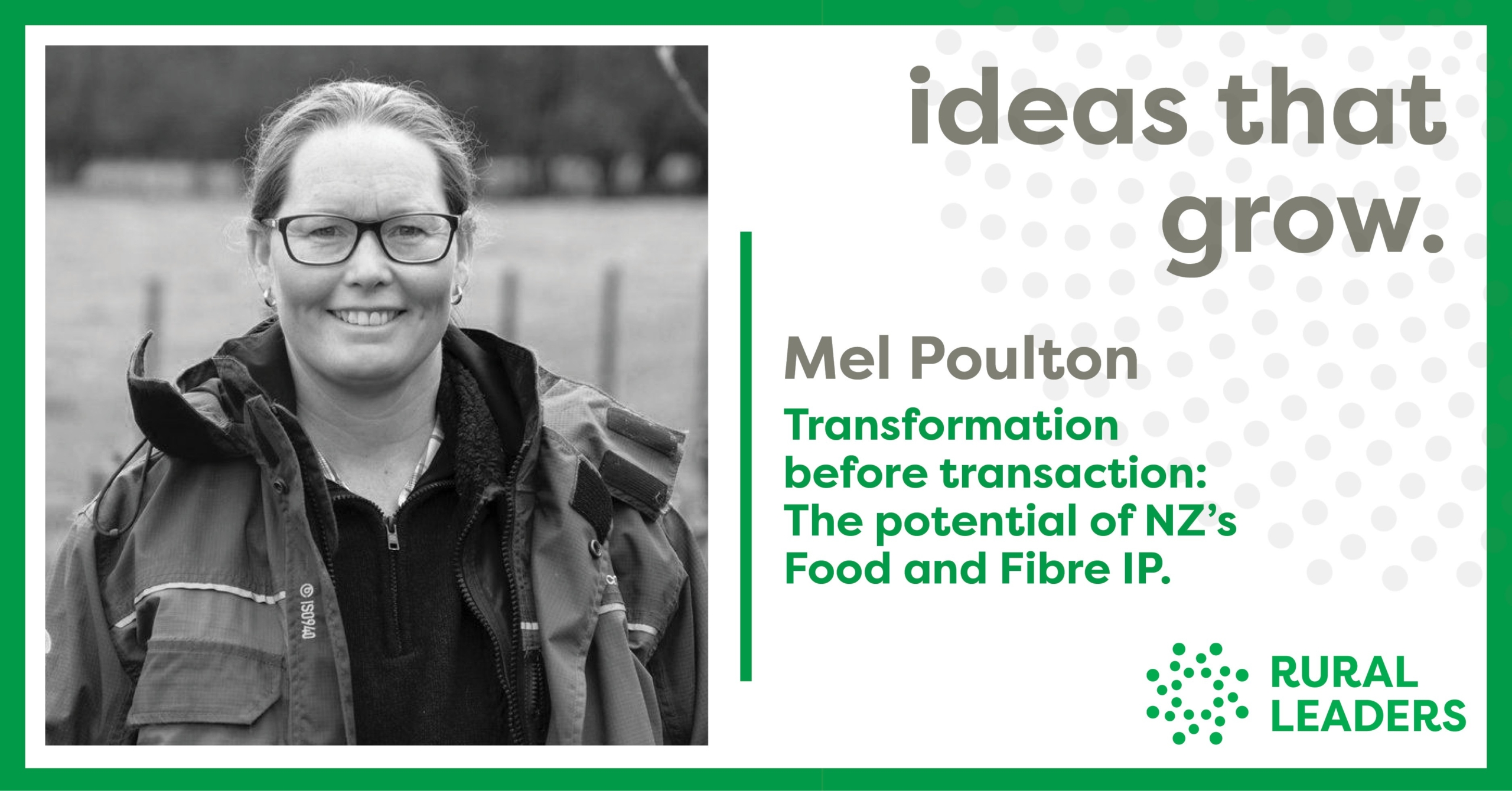
Jack Cocks – How resilient farmers thrive in the face of adversity.

In this podcast Jack Cocks, 2021 Kellogg Scholar talks to Bryan Gibson Managing Editor Farmers Weekly, about his research into resilience in the face of adversity.

Jack faced his own adversity in the form of a brain aneurysm that sparked a recovery journey spanning 15 surgeries over six years. 

Jack works on Mt. Nicholas Station with his family. He shares the three things all resilient and thriving farmers have in common here.

Bryan GibsonManaging Editor of Farmer’s Weekly.
You’ve joined Rural Leaders’ Ideas That Grow podcast. In this series, we’ll be drawing on insights from innovative rural leaders to help plant ideas that grow so our regions can flourish. Ideas that Grow is presented in association with Farmers Weekly.

Bryan Gibson, Managing Editor of Farmers Weekly.
You’re with Ideas That Grow, the Rural Leaders podcast. I am Farmers Weekly Managing Editor, Bryan Gibson. This week our special guest is Jack Cocks from Mount Nicholas Station. G’day Jack. How’s it going?

Jack Cocks, Mt. Nicholas Station.
G’day Bryan. I’m good, thanks. How are you?

BG: Yeah, good. Now, you were part of the Kellogg Programme two or three years ago, and you focused on farmer resilience, which is obviously a very important issue, but you’ve got a special reason for doing that, don’t you?

Well qualified to share insights on resilience.

JC: Yeah, I stumbled into it. It wasn’t something I really intended to be studying or to get involved in. Probably something I probably couldn’t define 20 years ago, what resilience was. But my wife and I have been farming here for about 16 years. About 11 years ago, I had a brain aneurysm caused by a rare form of inflammation between some blood vessels in my brain. Almost died, expected to die, had a number of complications, got a lot of time in surgery, in hospital, and a lot of surgeries over the next six years.

Then out of that experience, I got told I was a resilient character for bouncing back from adversity, and I didn’t really think I was that particularly resilient, and I didn’t think I knew what I was talking about – talking about resilience to a group. I felt everybody faces adversity.

Kate, my wife, and I were talking about this one morning over breakfast, and she said, why don’t you do the Kellogg Programme and study resilience? So, that’s how I got involved in Kellogg and how I ended up studying resilience.

BG: Tell us a little bit about what you found through your studies and how it made you understand your journey better or relate to it, or see any difference there, I guess.

Thriving in the face of adversity.

JC: I wanted to figure out how resilient farmers thrive in the face of adversity, which I use as a definition of resilience, that is, their ability to thrive in the face of adversity. So, to answer that question, I found five farmers throughout the South Island who had all faced major adversity, and they’d thrived in the face of that.

I sat down with each of for two or three hours, and we talked about their life pre-adversity, what it was they’d gone through, and then how they felt they’d been resilient. Out of that, there were some very strong similarities across those five farmers that all unknowingly, and independent of each other, had done the same things to be resilient and get through adversity. It all came together quite nicely in a simple little model.

Purpose, why, and connection.

BG: Because I guess often, we think about resilience as a moral quality, if you know what I mean, like courage or something like that. But it seems what you’re saying is resilience is something that anyone can do if they have the tools or know the process.

JC: Yeah, very much so. It’s something you can learn. Some people will be naturally more resilient than others and able to handle adversity. But it is something you can learn. I guess the model that came out of my Kellogg project was trying to develop some tools that people could utilise in their own lives to be more resilient.

So, when they faced the next challenge, and we all face challenges. They’re able to better handle that and get through that adversity.

BG: What is the model?

JC: So, there was three things that these five farmers all did. They all had very strong purpose, so they understood why they were doing what they were doing, and they were all very good at keeping connected. So, they surrounded themselves with people who could help them through adversity, and they all understood their wellbeing, or what they needed in their lives to be well and to be happy.

It came together visually in the form of a triangle with purpose at the top. That’s the ‘why’, connection being the glue in the middle of the triangle. That’s the ‘who’. And then wellbeing as the ‘what’ at the base of the triangle. That’s what came out of my Kellogg project. I’ve since done a couple of papers with a friend of mine, Joanne (Jo) Stevenson, a farmer in North Canterbury, and Hamish Gow at Lincoln University, which we’ve talked about and published in different journals.

Telling the resilience story.

BG: Tell me a little bit about that process. Are you from an academic background

JC: No, not at all. I’m probably quite academic for a farmer. I’ve got a postgraduate degree, but the first one was for the Institute of Primary Industry Management that Jo and I did. And then the second paper was for the International Farm Management Congress, which Jo, Hamish and I put together, and I presented that in Canada.

I guess where that came from, and this was Jo’s idea, Bryan, but one of the things that really came through when I’ve done probably 30 talks over the last five or six years about my health story, and resilience and the outcomes of my Kellogg research.

One of the things that came through to me was that people really resonate with the stories, the individual stories, my story of what I’d gone through from a health perspective and these five farmers I studied in the Kellogg Project.

So, Jo saw this, she’s got a background in resilience and found that there’s actually a lot of literature that suggests we can build our own resilience through understanding stories, through the stories we build ourselves on how we’ve navigated adversity, and hearing stories about how other people have navigated adversity.

So, if I hear a story about how you’ve gotten through a financial challenge or a family challenge, or whatever, and been really resilient, that might in-turn develop my own resilience and say, Oh, actually, I know Bryan got through that challenge by doing this. He’s come through the other side really well, so that suggests I can do the same. That most recent paper that I presented in Canada was based around that.

Resilience in a time of rapid change.

BG: Having presented internationally on this, are places like Canada, other places doing this work as well? Do they have the same take on it?

JC: I think it resonated certainly with the audience in Canada. It really did. I think resilience is something that increasingly is needed by everybody in the world. I think something that resonates with people, is that we all face adversity and we all need to be resilient. It’s not just me, in my family that’s had a health challenge. Everybody goes through challenges.

BG: Sometimes you hear people say a focus on resilience means you’re adapting people to deal with broken systems, and perhaps we should deal with the broken systems. But that’s simplistic as well, I guess. There’s always going to be obstacles, challenges in front of everyone, and it’s having the tools in the toolbox to be able to deal with them. Is that something you’d agree with?

JC: Yeah, I think so. There’s a lot of interpretations of resilience. Sometimes it’s being tough. Traditionally, it’s been bouncing back from adversity. But people that work in the resilience field now think because adversity is so common and constant, we’ve had COVID, climate change, a cost-of-living crisis. We actually need to be able to thrive in the face of adversity rather than just bounce back. So, that’s the current thinking from people that are working in the field of resilience.

Resilience is our ability to thrive in the face of adversity. But it’s a word that gets used a fair bit these days, and that’s possibly misinterpreted and mis-defined.

BG: I guess that’s something important as well. You mentioned we have seen resilience as returning to whatever we thought normal was or what was beforehand as quickly as possible. But to have an enduring effect, it’s actually about doing the right things and coming out stronger and more able to cope. And that might take longer and might look different for different people, I guess.

JC: Yes. I guess these three strategies that I came out of this Kellogg research, the idea was that they’re applicable to anyone, be it a farmer, be it a health challenge, or be it a financial challenge, you can apply these. It’s important to be resilient, to have a strong sense of purpose, a strong reason why your dairy farming in the Manawatu makes it easy for you to recover from a flood, or sheep farming in the Wairarapa makes it easier for you to get through a dry spell if you’ve got that strong reason why you’re farming where you are. And then connection and wellbeing are really important as well. But those three strategies, I think, are applicable to all farmers and everybody.

A sense of purpose.

BG: Now you’ve done all this work, the Kellogg Scholar Report, other papers written, obviously presented around the place. How do you feel now when looking back before you did all this through your health issues? Did you do what you now put on the tin, so to speak?

JC: Did I achieve what I wanted to by doing Kellogg?

BG: No, it was more talking about how you got through your challenge. Did you do it in a way that you would now prescribe as the way to do it?

JC: Oh, yes. Yeah, I see what you mean. I guess I’d been okay or all right. I’d been connected with other people. I had a huge network of support, my family and friends that helped me through that health challenge. I was probably reasonably good at understanding my wellbeing and figured out what I needed to do to keep happy and well.

People have asked, were you depressed or did you suffer from depression? And I got pretty annoyed at times with being in hospital, but I don’t think I did suffer depression. Those two things I was probably not too bad at, Bryan. The purpose was something that came out of the Kellogg research. These five farmers all had that strong sense of purpose, and that’s something I’ve tried to put in place in my life since. And that’s been a really valuable thing.

Kellogg and life on Mt. Nicholas Station.

BG: Those five farmers, what were their challenges? Just to put some context around how this resilience method can be applied. What had they gone through?

JC: So, one was a health challenge, one was climatic, one was financial, one was family, and then one was grief, personal loss. So, the five typical most common forms of adversity that farmers face, not all forms of adversity, but five of the more common forms. These farmers were from Southland to Marlborough and scattered in between. So, a pretty good spread across different farming systems.

BG: Different types of people, too, different age ranges and that sort of thing?

JC: Yeah, probably 30 years difference in age from the youngest to the oldest.

BG: I guess it just goes to show that if you have the building blocks there about how to navigate these things, it doesn’t matter who you are, where you’re from, you can apply them to your own situation.

JC: Yes, absolutely.

BG: The Kellogg Programme itself, it seems like a lot has come out of it for you. What was that like for you, doing the work?

JC: It was a fantastic programme. It’s very well structured, it’s well organised and facilitated. Great speakers, great content, a peer group that you go through with. So, for me, it was probably… It sounds a bit flippant Bryan, but it was probably a life-changing experience for me because I’d been pretty well in my mid-30s, and then almost died.

I’d been on a walking frame and had to regain my speech and learned to walk again multiple times to get to the level where I was able to contribute and take part in that programme. But it’s a great programme. I can’t really say enough good things about it.

BG: How are things for you now, Mount Nicholas? Obviously, a lot of work involved there. Things going okay?

JC: Yeah, and I think it’s pretty good. It’s been a pretty good climatic season for us over the last 12 months. It’s quite challenging financially as it is for all farmers in the country or all businesses, all people in New Zealand at the moment. But yeah, climatically, it’s been a good season for us.

BG: And if prices go down a bit further or the snow comes in or whatever the challenges are, you’ve got the magic triangle to fall back on, I guess.

JC: Yeah, that does help. It certainly does help. I wouldn’t advise this at all, Brian, to anyone, but you’re having a life, a near-death experience certainly puts things in perspective. When things are a bit turning a bit pear-shaped, you’ve still got your life and your health and your family. At the end of the day, you’re going to have challenges. That’s what I’ve really learned over the last 10 or 11 years.

Thanks for listening to Ideas That Grow, a Rural Leaders podcast presented in association with Farmers Weekly.

For more information on Rural Leaders, the Nuffield New Zealand Farming Scholarships, the Kellogg Rural Leadership Programme, the Engage Programme, or the Value Chain Innovation Programme, please visit ruralleaders.co.nz
Rural Leaders deliver food security programme for US Gilman Scholarship alumni.

Key food security programme delivered in US-NZ partnership.

‘Mission New Zealand – Navigating Geopolitical Tensions and Climate Change as an Agri-based Economy’, was a week-long programme delivered by Rural Leaders in Christchurch.

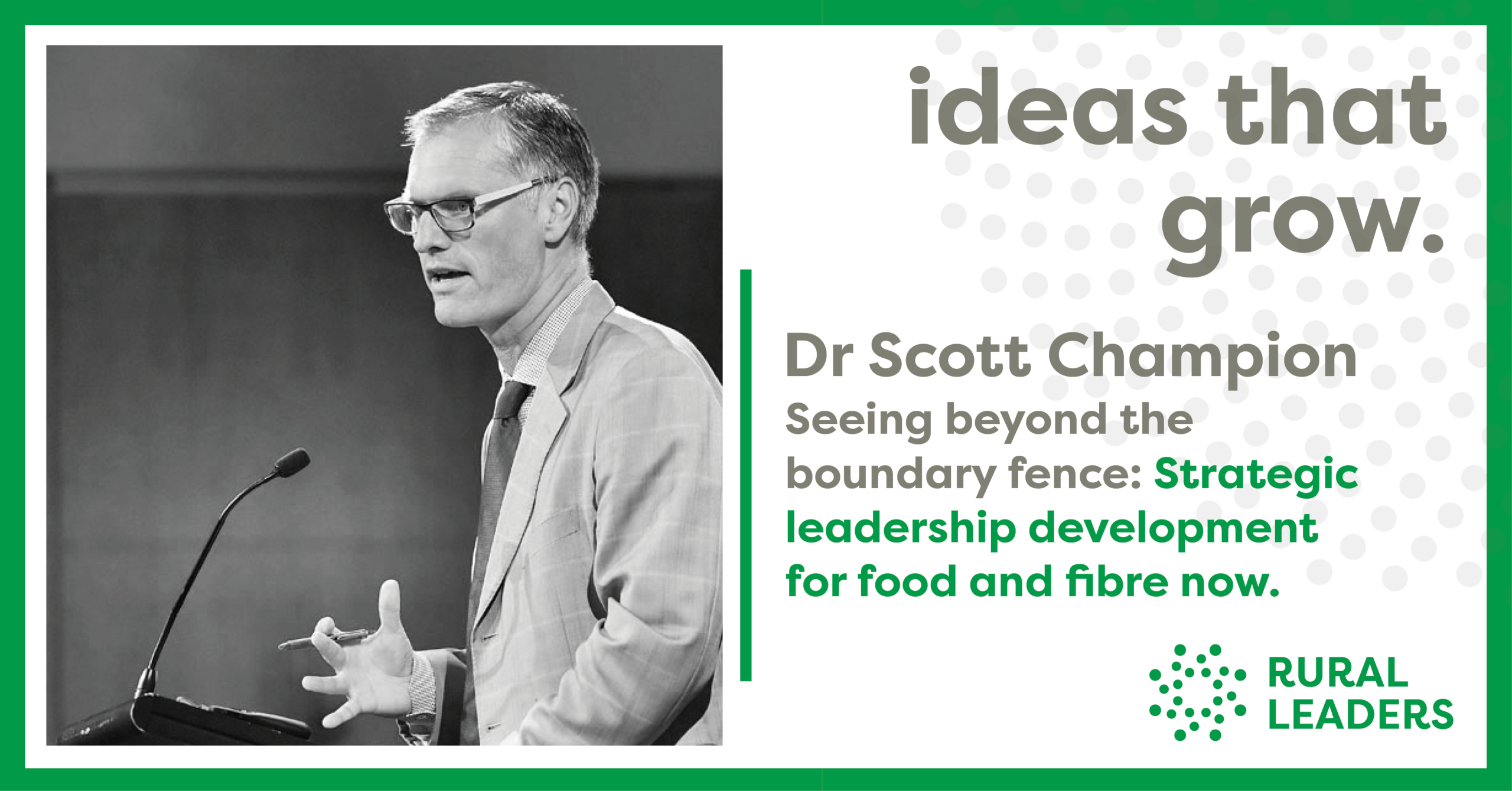
Facilitated by Dr Scott Champion, the programme was designed to give a group of 25 visiting Gilman Scholarship alumni a deep dive into global food security.

Participants gained insights into the policies, technologies, and adaptation measures that aim to secure the New Zealand agricultural sector and reduce environmental impacts.

The programme was an opportunity to explore New Zealand’s innovation and initiatives towards food security. It included modules on global food security, trade, food and fibre value chains, a NZ Government perspective on food security, a Te Ao Māori perspective, food safety, precision agriculture, as well as presentations from supply chain, biosecurity, regulatory, and sustainability leaders.

For Rural Leaders the programme represented the strengthening of an important relationship between both enterprises, and more broadly, between the US and NZ.

Lisa Rogers, Rural Leaders’ CEO said, “We were pleased to be asked to host and deliver this Global Food Security focussed programme for the Benjamin A Gillman Scholarship from the US.

The week provided the opportunity to showcase NZ Food and Fibre’s innovative and entrepreneurial approach to food production.

With presenters to the group including politicians, officials and innovative producers, the group of scholars had an immersive week within our Food and Fibre sector.

The opportunity to hear external view points about our sector and its food production systems was as invaluable as it was refreshing.”

For the Benjamin A. Gilman International Scholarship Program and the US Department of State, ‘Mission New Zealand’ has been a valuable cross-pollination of ideas and knowledge sharing, for food security and for the platform it has provided for discussing some of the challenges both countries face.

Gilman Scholarship Alum Darrin Vander Plas – REX podcast.

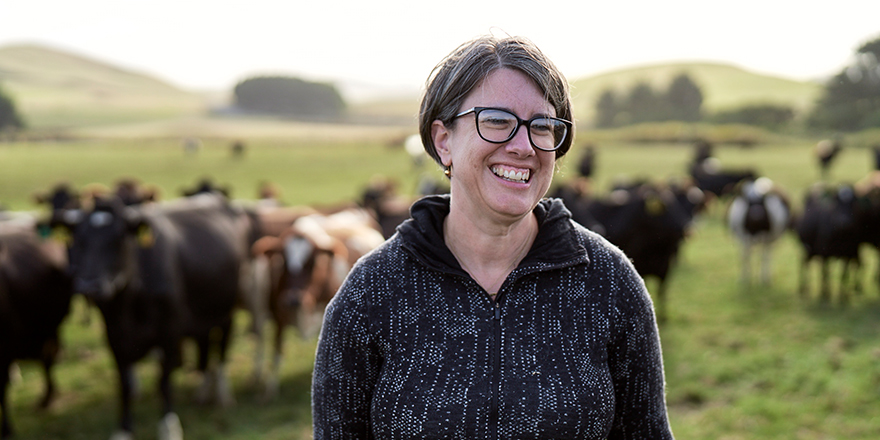
One attending Gilman Scholarship alum, Darrin Vander Plas (pictured above), took time to chat to Dominic George and REX online about what he and his colleagues learned on their trip to NZ, his role with the US Department of Agriculture Farm Loan Program in Maui and his time helping farmers in The Gambia and Uganda.

Darrin Vander Plas, from the US Department of Agriculture, is one of these people who has ventured over and he explains further what the goal of the trip is as well as some of the highlights so far.

Vander Plas, who manages the USDA Farm Loan Program in Maui County, Hawaii, highlights the resilience of Kiwi farmers despite the absence of government subsidies. 

Additionally, he discusses his experiences in The Gambia and Uganda, where he supported local farmers through various agricultural initiatives and his experiences during last year’s wildfires in Hawaii.

Lisa Rogers – Leadership Programmes and Pathways.

If we believe the Food and Fibre sector has a Leadership challenge versus a Productivity challenge, then developing our sector’s leadership capability needs to be a priority.

In this podcast, Lisa Rogers, CEO, Rural Leaders talks to Bryan Gibson, Managing Editor, Farmers Weekly about the recently released report ‘A Path to Realising Leadership Potential in Aotearoa NZ’s Food and Fibre Sector’, along with its leadership development framework, and the leadership programmes serving as key tools for building more and ever greater leaders for our country.

Listen to Lisa’s podcast here or read the transcript below.

Bryan GibsonManaging Editor of Farmer’s Weekly.
You’ve joined Rural Leaders’ Ideas That Grow podcast. In this series, we’ll be drawing on insights from innovative rural leaders to help plant ideas that grow so our regions can flourish. Ideas that Grow is presented in association with Farmers Weekly.

Bryan Gibson, Managing Editor of Farmers Weekly.
You’re with Ideas That Grow, the Rural Leaders podcast. I am Farmers Weekly Managing Editor, Bryan Gibson, and with me today is Lisa Rogers, Chief Executive of Rural Leaders. G’day Lisa, how’s it going?

Lisa Rogers, CEO, Rural Leaders
Great. Thanks, Bryan. It’s good to be here.

BG: Now, as we know, Rural Leaders is in the business of creating people who are primed to go into leadership roles. But recently, you’ve been involved in a big report on the state of leadership pathways in New Zealand is and how they might be improved. Can you tell me a little bit about that?

A new report that aims to help solve an old challenge.

LR: Yeah, sure. We’ve recently released a significant report in developing leaders in the Sector. It’s called a Path to Realising Leadership Potential in Aotearoa, New Zealand’s Food and Fibre Sector. We’re very proud of this piece of work that the authorship team has taken almost two years to bring together.

It was originally commissioned and supported by Food and Fibre CoVE – the Centre of Vocational Excellence. They commissioned Rural Leaders to conduct research into the state of leadership development in the sector and to also create a principles-based model towards leadership development. This report is now out. The report covers three main areas: Why we lead, how we lead, and how we are going to continue to grow leadership.

The idea is for this work to become a user guide, for want of a better word. And there is a framework that sits around it as well for people to be able to identify where they are on their leadership journey and to then look at what programmes and what a pathway might look like for their development, depending on where they are in their journey and their age and stage.

So, yeah, it’s a great piece of work.

BG: Obviously, when we think about leadership in the Food and Fibre sector, there are the likes of the Kellogg and Nuffield Programmes. There are other programmes out there, AgriWomen’s Development Trust, and there are various associate board member roles that various processes play. Do we have the infrastructure in place to succeed in building new leaders?

Leadership development programmes and pathways.

LR: I think there’s a great range of exemplars and programmes that are out there. The structure is the thing that’s been missing up until now. A lot of organisations and people have considered this over the years, and this is a foundational piece of work to be able to start creating an ecosystem system that we’re going to have.

It’s not going to necessarily be all about New Zealand Rural Leadership Trust. We want to be part of this, along with everyone else. So, what we’re wanting to do is get a great range of programmes that are there from early days or vocational type programmes. So, from first steps on their leadership development right through operations teams and into that strategic level of leadership as well, which traditionally, Kellogg and the Nuffield Scholarship have been in that later stage.

But we’re also developing and delivering new programmes as well. We’re very proud to be also involved in the Horticulture New Zealand Leadership Programme, which is in that operational space, and looking now at team leadership programme as well. Rural Leaders has got a lot of great programmes to be as exemplars of this leadership journey, but we also want to bring other organisations in to have their programmes there for delivery as well. They’ll obviously still belong to those organisations, but we want everyone to play in this space.

Horticulture New Zealand Leadership Programme, the Value Chain Programme and Engage.

BG: You mentioned the Horticulture New Zealand Leadership Programme, and of course, we know about Kellogg and Nuffield. What are some of the other programmes that Rural Leaders specifically has?

LR: Traditionally, we’re about leadership, and we still absolutely are. That’s our core purpose. But we are also increasingly moving into the capability space now and development of those leaders in the sector. We have the Value Chain Innovation Programme, which runs every year. It’s seven days going through to our iconic four big value chains.

It’s an amazing opportunity to do deep dives into the sheep and beef, the dairy, horticulture, and kiwi fruit industries, and understanding why they are such an important part of our sector, along with all the moving parts that go with that. There are always new changes, and that’s an incredible week with Professor Hamish Gow and Phil Morrison from down in Southland.

We also run a new programme called Engage, which is really starting to pick up a head of steam now. It started off as a joint venture with Lincoln University and Ministry for the Environment. It’s for people coming into this sector who have got great transferable skills but weren’t necessarily brought up in a farming or food and fibre environment. So, they have a three-day immersive programme with us, and we’re finding that that is becoming quite a go-to programme for us as well.

Rural Leaders is starting to build a real stable of programmes and become known as a leader development organisation more than anything else, which is so exciting.

BG: Obviously, the programmes that are out there and the support for people is a key aspect. But leadership is built in the workplace, isn’t it? In the relationships you have and the opportunities you’re given, maybe even when you’re just starting out in your career. We’ve mentioned the report. Are there other tools in the toolbox that can help workplace places develop their staff?

Rural Leaders provides tools for leadership development.

LR: Absolutely. So, the report is all about identifying that pathway. There’s a capability framework there. So, we want people to come in and have a look at this in a way that is accessible. So very shortly, we’re building a microsite, for want of a better word, so it’ll be mobile friendly. 

It’s a way of having a look at where they are now on their journey. So, we assess, am I at the beginning of my leadership development? Have I been doing this for a while? Am I looking for a change? If I’ve been doing something for a while? And then actually ask a few more questions around that. And then this framework will give them some suggestions on programmes that they can be involved in now, some stuff they might like to look at in another year or two’s time, and then further out from there as well. 

Again, it’s an independent assessment, so we’re not necessarily pushing them into all our programmes, although there’s some great opportunities there. But it might be that other organisations have got some great programmes around for them as well. And we certainly include the like of Muka Tangata as well and some of the WDC programmes that are out there – the Workforce Development Councils.

So, we’re also looking at how these can be micro-credentialed, so they give true value for the people who are undertaking them as well. We’re also looking at developing a high-performing teams programme. We see that as a real gap in the availability about being able to create an environment for thriving and high-performing teams.

BG: Identifying the people who have leadership potential and working with them is one thing. I guess Food and Fibre has often struggled to attract some of the talent to the sector from schools and that sort of thing; traditionally pushing people towards medicine, and law. How do we shift the dial there? Because the Food and Fibre sector is so important to New Zealand. It’s so big, in a sense. It really needs to have the best and brightest there, doesn’t it?

With good leadership, people stay.

LR: It sure does. When you think that there’s almost 360,000 people working in this sector now, and it’s worth over $55 billion a year in export income, it’s an incredibly important part of New Zealand’s economy. And up until now, one of the statistics that’s come out of this research is that the churn rate through the sector is something like 71% after three years. Now, that’s extraordinary. Even if you take into consideration seasonal workers, RSC workers coming into the country to work, particularly in horticulture, that’s just mind boggling to think that 71% of people are gone after three years.

The cost to the economy of that, for each time somebody turns over out of a job is just extraordinary. What we need to do is make sure that we can address this and have people who come into the sector and want to stay. To feel like they’ve got some path to grow and develop in there, and that there is a long-term view for them.

Now, it can be in all sorts of aspects of the sector. It doesn’t have to be necessarily a path towards farm ownership, because we want this report, and the framework, to apply to people working in the Food and Fibre service industries as well as on farm or on an orchard.

It’s as applicable to anybody who is an owner or an employer as it is to someone who’s a worker. We want everyone to be able to see themselves in here and look at this framework that we’re putting forward and say, this is where I see myself now, these are the things I’d like to think about developing myself, in particular, my leadership. Once we’ve got people who are feeling as though they have got a purpose and a pathway in front of them, we’re more likely to see a more settled and productive workforce sitting there. We see that this has got huge economic as well as social benefits for the sector.

For more information on Rural Leaders, the Nuffield New Zealand Farming Scholarships, the Kellogg Rural Leadership Programme, the Engage Programme, or the Value Chain Innovation Programme, please visit ruralleaders.co.nz
Rachel Baker – Insights (from an insider) on the Nuffield Global Focus Programme.

In this podcast, Rachel Baker, 2024 Nuffield Scholar talks to Bryan Gibson, Managing Editor, Farmers Weekly, and gives a unique perspective from inside Nuffield.

Rachel speaks about about some of the similarities and differences between the farming systems in the countries she has visited with New Zealand’s.

Rachel discusses insights from Indonesia’s primary industries, France’s love of food, Denmark entering an emissions scheme, California’s water challenges and Chile’s low rates of Research and Development.

This is a must listen for anyone considering a Nuffield Scholarship in 2025 or beyond.

Listen to Rachel’s podcast here or read the transcript below.

Bryan GibsonManaging Editor of Farmer’s Weekly.
You’ve joined Rural Leaders’ Ideas That Grow podcast. In this series, we’ll be drawing on insights from innovative rural leaders to help plant ideas that grow so our regions can flourish. Ideas that Grow is presented in association with Farmers Weekly.

Bryan Gibson, Managing Editor of Farmers Weekly.
Welcome to Ideas That Grow, a podcast from Rural Leaders. I’m your host, Bryan Gibson, the Managing Editor of Farmers Weekly. We’ve got a very special guest today, a current Nuffield Scholar, Rachel Baker. G’day, Rachel, how are you?

Rachel Baker, 2024 Nuffield Scholar
Yeah, good. Thanks, Bryan. Thanks for having me.

BG:
Now, where are you calling in from? Where’s home for you?

A Nuffield Scholar with a background in many industries.

RB: Home for me is Central Hawkes Bay, tucked up near the Ruahine Ranges. My husband and I graze just under 500 dairy heifers. I guess in my day job, I’m portfolio manager for pit fruit for my farm investments. And also with a dairy background, I do some consulting with dairy farmers.

BG: Quite a range of farming industries involved there.

RB: Yeah, life isn’t a straight line. It’s a wiggly line. There are a few stories behind those changes. But I’ve been fortunate. I’ve got a foot in agriculture, and I guess a foot in horticulture as well. So, it keeps me busy and keeps life interesting.

BG: Was that always going to be the path for you? Did you grow up on a farm or was it something you found?

RB: I grew up on a small farm, but my mother was from a large sheep and farming family here in Hawkes Bay. So, I’ve always been involved in farming, but I actually did a veterinary degree. So, I worked as a veterinarian for a short period of time and then morphed into dairy consulting. Then my husband and I took an opportunity to go share milking. So that’s how we entered the dairy sector and had some really good experiences there and actually sold our cows and bought a dry stock farm. That’s how we ended up grazing dairy heifers.

The transition to horticulture really came about through dairy connections within my farm investments. Because I live in Hawkes Bay, I said yes to an opportunity to oversee some of those early apple developments. That was seven years ago and still involved, yeah, still learning and enjoying it along the way with the dairy.

BG: Attracting more investment into food production sectors is pretty vital. So, you’ve got a big job.

RB: It is a good story because it’s bringing capital into the agriculture and horticultural sector, largely from New Zealanders, which is a really positive story. So, yeah, I’m really pleased to be involved in managing their investments.

Halfway through a Nuffield Scholarship.

BG: Now, you’re smack bang in the middle, I guess, of your Nuffield Scholarship Programme. How’s it going for a start, and what subject area are you looking at?

RB: Yes, I am part way through my scholarship at the moment. I’m interested in looking at New Zealand’s global proposition in terms of being a food exporter. In terms of Nuffield itself, the programme really is comprised of three parts. The third part is that research project and doing individual research, which I’m yet to do.

The Nuffield Contemporary Scholars Conference (CSC).

The first part is a conference where all the scholars from that year from around the globe meet together in a country, which changes every year. It’s a conference looking at global issues as well as the host country itself. We were fortunate that Brazil was the host country for 2024.

We went to Brazil in March and had our global scholars conference there. The second part to Nuffield is a global focus programme, and I’ve just come back in early July from that, which is a small group travelling together through five countries in five and a half weeks looking at food production.

The Nuffield Global Focus Programme (GFC).

BG: Can you tell us more about the Global Focus Programme?

RB: There are a number of different Global Focus Programmes based on different times of the year to try and give an opportunity to fit within your own farming and work calendar, and also different countries as well. The countries our group visited were: Indonesia, France, Denmark.

We also went to California and to Chile. The group was made up of 12. They were a good representation of countries as well. We had six Australians, two from Ireland, a Brazilian, a Chilean, and a Zimbabwean. We all travelled together through that time, and obviously got to know each other really well, as well as looking at the challenges and opportunities in all of those countries.

BG: First up, I mean, having that range of people from diverse farming-related backgrounds must be really cool to just talk while you’re travelling and understand how other people think about things.

RB: It was a really diverse group not only in terms of the countries but also what sectors people were involved in. We had tulip grower from Tasmania through to a pig farmer from Zimbabwe. Also, people involved in international fertiliser and the food trade. We had a really nice cross-section, good conversations, and learning together as a group.

That farmer, peer-to-peer learning, you just can’t beat it. When you’re on the road together for that time, you get to know each other well. You learn a lot from each other as well as, obviously, who you’re meeting day to day.

GFC - first stop Indonesia.

BG: Tell us a little about Indonesia. We forget that it’s one of the most populous countries on Earth. It’s not that far away, but when you think of it, you think of some beaches and things like that. But what food production facilities or operations did you take a look at?

RB: Indonesia was our first country, and it was fascinating. A huge population, well over 200 million. So compared to New Zealand, you couldn’t get a better contrast to start. We were hosted by an Australian who had set up cattle feed lots there over 30 years ago.

We’re really fortunate that we got good insights into a lot of different food sectors as well. We did see cattle feed lots, imported cattle from Australia being finished there in Indonesia, through to spice and pepper processing.

We went out on fishing boats with some local fishermen, right through to seeing pineapple plantations being harvested by hand in 40 plus degree heat and 90 % humidity. So, we got a really good range of scale, but also some real subsistence farming as well – from a single man climbing up trees and harvesting palm sugar and making a living out of that.

BG: And where did you head next? Scandinavia?

Nuffield GFC – France.

RB: So, from Indonesia, we headed to France. We spent our time in Normandy, in the north. And again, we got some good insight into French farming. France is just a wonderful food culture. They really celebrate food and they’re really proud of what they produce. A lot of it is artisan. It’s got provenance associated with it. And so, we got a real feel for that.

French farming is in a challenging place at the moment. They feel they’re under threat from imported food products coming in at a cheaper cost to what they can produce. That’s a challenging time for them. But by the same token, there are a lot of strong cooperatives in France. We got a good insight into some cooperative models, which, of course, having a number of strong cooperatives in New Zealand was really interesting.

BG: Yeah, what you were saying about the narrative that goes along with French food, it is so strong. A lot of people think this is something we could try to emulate here. I guess, put some real culture around our food production. I mean, is that something you see as worthwhile?

RB: As a New Zealand food producer, I think we produce high-quality food. It’s safe food from a food security viewpoint. So, any opportunity I had, I was looking for New Zealand produce in the countries we were visiting. There’s quite a buzz when you actually find New Zealand produce in a store or a supermarket when you’re travelling. So, I think from that regard, the food that I saw, the quality that was in front of the consumer was largely very good.

As food producers, we need to be high quality. There’s a lot of challenge coming to us or at us from countries with lower costs of production. I think quality is paramount and I think we should be proud of that. The provenance of New Zealand, it came up-time and time again. New Zealand was mentioned a lot – that it’s a beautiful country and we produce lovely food. So, we should leverage off that.

BG: Yeah. Now, where did it head next?

Nuffield GFC – Denmark.

RB: Next, we went to Denmark. So, it was an interesting time actually being there because not long after we left Denmark, they announced that agriculture would have an emissions tax from 2030. It was great timing for us. I think while I was away, New Zealand pushed pause on agriculture entering emissions trading scheme. So, the timing to be there in Denmark when they were deciding, they’d made the commitment they were going to go. It was just the uncertainty for farmers around what it actually looked like.

I found Denmark very similar to New Zealand in many ways. So, that was quite a good insight. They have a very high wages, and a high tax rate in Denmark, but obviously they have a very strong education, health, welfare system as well. In terms of trying to make a profit, it was a challenge for Danish farmers at this time.

BG: I’ve read a little about the plan that Denmark has to introduce that emissions levy. I know the agreement was nutted out by the government with stakeholders, and that includes some industry groups from the farming sector, so they did get to help mould it. On the ground there, were there farmers you spoke to? How were they feeling about it? Uncertain, I guess?

RB: I think they just wanted to have some certainty. There’s a great quote that uncertainty is the cancer of business. I think they just wanted to be certain about what the plan and the future looked like for them.

I think from a Danish farmer perspective, they do get good support, and they’ve got some excellent programmes in place around, say, a green accelerator programme. This is where they can get up to 70% rebate on any investment in technology that’s going to advance them towards sustainability and a green future.

It was clear that even though they were going to be entering an emissions tax, there was no doubt they wanted to maintain their food production and their productivity. In terms of entering the scheme was – it was not to reduce the amount of food that they were going to produce. It was just that they were going to produce it in a more environmentally sustainable way. From that perspective, I think that they felt there was support available to them to make the transition, and that’s quite refreshing.

BG: That’s really interesting. When I think about incentives for more sustainable production, you often think of planting and retiring land and that sort of thing. But having subsidies for technology, which is a completely different proposition, seems a bit more enticing to both sides of the equation.

RB: I think they’re looking at multiple solutions. They’re going to pump billions into retiring some peat lands in Denmark to help with their emissions transition. I also think biodiversity came up a lot in most of the countries we visited. And again, that’s a real opportunity for New Zealand, because if you look at the land area that we have in native forest and also in farmed land, what area has actually been retired or riparian planted?

We really need to map that and leverage off that because I believe it’s going to be a global food currency – biodiversity in the future. So, we have it and we’re making really good progress. I think we need to leverage that to our advantage.

Nuffield GFC – California.

BG: Now, California, a big state, a food basket in many ways for the United States. That must have been fun.

RB: Yeah, it was really interesting. It’s the fifth largest economy in the world, if it was to be treated as though it was a country. So, we spent time in California, in Fresno, up through to Sacramento.

It was very hot. We had a heatwave while we were there, which was uncomfortable for most of us. But the big story there is water and really getting a good insight into the water challenges they’ve got in California. With less ice melt out of the Sierra Nevada Mountains, more rain, more precipitation, more growing cities, all demanding more water.

California - the water scarcity challenge.

Their sources of water are surface with allocation rights for deep-water, groundwater takes. They’ve got real challenges around a six-inch rainfall in Fresno County. Maybe they get 50% of their allocated volume from surface water. They’re needing to take groundwater as well. So, there are big recharging programmes in place. One farm we went to had spent $15 million USD on a recharge system, which may only be used every three or four years.

Then further up, closer to the Delta, the Government’s proposing putting in a $25 billion USD pipeline in to pump water through to Los Angeles and San Francisco. So, you’ve got real contention around water rights and water use and what priorities should be in place.

So, it was really good for us to see that. But also, you do wonder what areas may not be in horticulture in California in the future. So, there’s some real challenges there for them around not only the infrastructure, but just the allocation of water as well.

BG: Yeah, the last few years, they’ve been focusing on some pretty thirsty crops there, haven’t they?

RB: They have. I guess also the challenge is they’ve had real success growing almonds and selling almonds. But again, they’re almost running the risk of commoditising their own value product by planting more and more hectares. So, it’ll be interesting to see how that plays out.

Nuffield GFC – Chile.

BG: And further down the Coast of Americas, Chile, it always amazes me that place. I’ve not been there, but it’s so long and thin.

RB: It is the longest and thinnest country in the world. Narrow, I think, in diameter than New Zealand, from border to border. So, that was our last country. We left 40 plus degree heat in California and went into the single-digit temperatures in Chile, which was a bit of a shock for us all. But hey, what a great country.

We had some really good insight into Chile and, I guess, in policy to start with. Also, looking at Chile as a country that is open to foreign investment. We saw examples of that in Chile. But again, similar challenges, less ice melt, more precipitation, lack of infrastructure, investment, a slow consenting process.

On-farm storage of water was not really progressing very quickly at all. It’s a low-wage economy. We went to an avocado plantation on very steep country that in New Zealand would be sheep and beef or planted in forestry. Their staff were harvesting with football boots, with sprigs, because it’s so steep. So, they were harvesting avocados by hand. Just to see that on that steep country was quite mind-blowing. They’re a real powerhouse of cherry production and apple production too.

I’m involved in the apple industry with the work that I do so, it was really interesting. Just the scale of some of their operations was really significant. One thing I found interesting was that levy-funded R&D didn’t appear to exist in Chile. That’s a real challenge for them in terms of keeping pace with, say, countries like New Zealand. We could fund more, of course, but we have a real focus on research and development and advancement of varieties, et cetera. So, I felt we certainly had a competitive advantage there.

What’s next on the Nuffield Scholarship Programme?

BG: So, you’re back in Aotearoa, and you’ve got a lot to digest from all that, I guess. Next up for you in the Nuffield Programme is putting pen to paper?

RB: Yeah, that third part of the Nuffield Scholarship is individual travel. So, I’m starting to develop my travel and research plans. I plan to spend some more time away looking, as I said before, that value proposition for New Zealand into the future. So, visiting countries that maybe operate in the same markets as us or maybe they’re customers of ours, and really drilling deeper into that.

BG: Sounds really exciting. Thanks for that, Rachel. All the best for the rest of your Nuffield journey.

The 2025 Nuffield New Zealand Farming Scholarship applications close 18 August.

RB: Thank you. And for those that are thinking about applying for Nuffield, I’d really encourage them to really think strongly about applying because from my perspective, this is filling that global piece I really wanted to develop, being involved in food production.

This really is unparalleled. It’s an amazing opportunity. For those people that are thinking about applying for a Nuffield Scholarship, put that imposter-syndrome to the side and put your best foot forward because it really is an amazing opportunity.

BG: Thanks for listening to Ideas That Grow, a Rural Leaders podcast presented in Association with Farmers Weekly. For more information on Rural Leaders, the Nuffield New Zealand Farming Scholarship, the Kellogg Rural Leadership Programme, and the Value Chain Innovation Programme, please visit ruralleaders.co.nz
For more information on Rural Leaders, the Nuffield New Zealand Farming Scholarships, the Kellogg Rural Leadership Programme, the Engage Programme, or the Value Chain Innovation Programme, please visit ruralleaders.co.nz
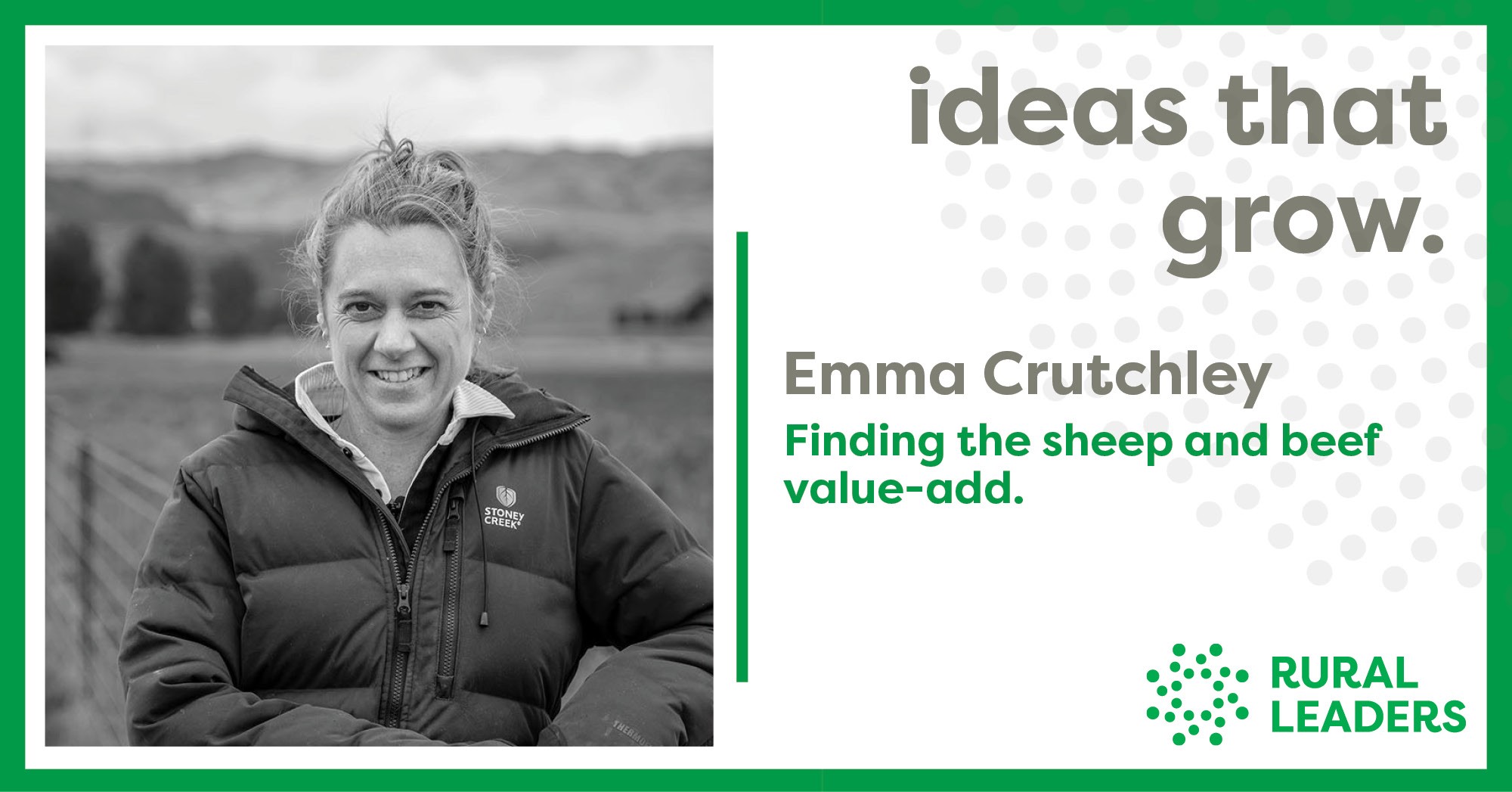
Campbell Parker – Leading with authenticity in a fast-changing sector.

Farmers Weekly Managing Editor Bryan Gibson speaks to Campbell Parker, Chief Executive Officer at DairyNZ.

Campbell discusses his involvement with the Kellogg Rural Leadership Programme and how leading with authenticity can go a long way to helping us achieve big things in a time of rapid change.

Listen to Campbell’s podcast here or read the transcript below.

Bryan GibsonManaging Editor of Farmer’s Weekly.

Kia Ora, you’ve joined the Ideas That Grow podcast, brought to you by Rural Leaders. In this series, we’ll be drawing on insights from innovative rural leaders to help plant ideas that grow so our regions can flourish. Ideas that Grow is presented in association with Farmers Weekly.

Bryan Gibson, Managing Editor of Farmers Weekly.
You’re with Ideas That Grow, the Rural Leaders podcast. I am Farmers Weekly Managing Editor, Bryan Gibson, and with me today is Campbell Parker, Chief Executive of DairyNZ. G’day Campbell, how’s it going?

Campbell Parker, CEO DairyNZ
How are you, Bryan? Yeah, I’m pretty good, thanks.

BG: Now, you’re not an alumnus of the Kellogg or the Nuffield Programmes, but you have been called upon to work with some of the Kellogg cohorts, to talk to them about leadership. What does that involve?

Sharing leadership experiences with Kellogg scholars.

Image: Campbell Parker with 2024 Programme One Kellogg Scholars (K51).

CP: I had the opportunity in the end of January to go down and talk to the most current cohort. They were looking for a view around the dairy industry. Obviously, I’m CEO of DairyNZ, but that was where it started.

Ultimately, what you find in those conversations is that you start talking about the Sector, but then you start talking about leadership. The conversation with them ended up in a very interesting space around what are some of the challenges the sector has and where does leadership fit in.

What I also find interesting with a group like that is they’re interested in your own personal leadership journey and where they are in their own journey. How do we learn together and what is the role of leadership? You always find those sessions really stimulating; when you get to talk about what that is and what are we all trying to achieve from a leadership perspective.

BG: Leadership is an interesting thing. For myself, I hold a leadership position in our business. But to tell you the truth, a while back, I wouldn’t have thought leadership was for me. I’m a quiet person. I’m a listener, like journalists often are.

You quite often don’t marry that to what you stereotypically look for in a leader. What do you think about how leadership has evolved over time and what qualities are important?

Leading well starts with understanding yourself.

CP: I think leadership is an evolving subject, and it continues to evolve. But one of the things I’ve seen, I think people have a frame around what they think leadership is. I personally believe everyone can be a leader. First of all, you’ve got to lead yourself. That’s where it starts.

Some of the best leaders I’ve worked with aren’t necessarily the gregarious and outgoing people. But to sum it up, I think one of the most important traits around leadership is authenticity and being really clear about who you are as a person, what your impact on others is, and how you try and lead people.

It does start with having a good understanding of yourself, what motivates you, what drives you, how you react to certain circumstances, and then ultimately, how do you lead people to be the best that they can be. To me, that authenticity is not necessarily about corporate messages, because the people that have the ability to take people with them are the people that are trusted and are authentic. They have very honest conversations around where things need to be.

If I had to put it down to one thing and one word, I would say authenticity is one of the most important things.

BG: Yeah, I guess people are more likely to believe in and get in behind someone who they feel personally, or in a business sense, has their back, that you’ll be listened to, and that you have the chance to thrive on your own as well as within a collective. That’s really important, isn’t it?

Authenticity is key in a sector with little appetite for BS.

CP: It is. I think I was asked a question by the board when I was going through the interview process for this role. They asked me a question around what are the things you’re most proud of in your career. I said to them, and I was very genuine around this, it’s not an event or something, there’s been lots of those. But what I’m most proud of is the people I’ve had the opportunity to work with and the things that we’ve been able to achieve together. To me, that’s the important part of leadership, because when you work with teams and people, and you achieve something you didn’t think was possible, that’s inspirational.

I remember one person that I worked with externally who used to often say, the biggest limitations are those that we put on ourselves. I think we’re all a lot more capable of things from a leadership perspective than what we think we are. It’s through time and experience that you gage those things and you learn from them. If you’re a continuous learner, you want to continue to grow as a human being – I think if you can do that and do that well, then leadership can be really enjoyed and enjoyable

BG: You don’t know what you’re capable of until you give it a go, I guess. That lifelong learning thing.

CP: And sometimes you’re put into situations that are really challenging. Ultimately, you have to be prepared to make a decision and then live with those decisions, but you also need to be, I think, open enough to reflect on and admit when you didn’t get things right or be vulnerable enough to then change. Because, again, back to that point around authenticity and trust, that gives people the ability to trust you and then come with you.

The one thing I would say in our sector, in agriculture, and particularly with farmers, they’re pretty good at reading the ‘BS’ barometer, and that level of authenticity is incredibly important.

Remaining positive about the Sector’s future.

BG: Now, you mentioned you talked to the Kellogg cohort earlier in the year about some of the issues in our food production sector at the moment. Obviously, it’s been a time of rapid change. We’ve had global events, pandemics, that sort of thing, and also lots of regulation come down from government in the previous term. What do you think is the path going forward? How do we align ourselves to make sure we’re doing the best we can do for our sector?

CP: I think one of the things that we really need to make sure that we continue to do is respect all the really good work that have been done by farmers. This is something that’s really important. It’s not just dairy farmers, that’s all farmers. When I look across the Sector and I look at the progress that farmers have made over the last 10 years, we’re in a very different place today than what we were 10 years ago, particularly when you go to things like on-farm practices, and in the environmental space. You get into animal welfare, all those really important, which are quite big global topics and are not going to go away.

It’s really important that as a sector, we continue to have progress around that because it’s expected, whether it be from global players who buy our products or consumers, ultimately. But equally, when you talk to farmers, farmers care deeply about animals on the land, and they ultimately want to leave it better than what they found it. I think hope around that is really important. This sector contributes so strongly to New Zealand from a GDP, but it’s not just that. It’s not just the financial, it’s the communities.

When farming is doing well, communities thrive, and when communities thrive, towns do well. The whole impact on our nation is incredibly important. Yes, we’ve had some tough times. We’ll go through cycles, and we always have in terms of economic cycles and political cycles. But I think we’ve got to have the courage to continue to be passionate and positive about what our future is, because the world needs high-quality food produced in a way that’s sustainable for the environment.

Our farmers ultimately also need economic returns for that to remain viable themselves. It’s an industry that I certainly find not hard to get out of bed every day and get excited about because it’s got a really, really important role to play.

BG: Just a year or two back, it seemed we had a bit of a flash point, I guess, in terms of rural leadership. It was over the emissions pricing process. A lot of farmers and people in rural communities got the feeling that they hadn’t been communicated to well enough by the people who were advocating for them inside the beltway. That led to changes in leadership in various places. That communication and gaining and representing a mandate, that seems to be really important as you go and represent your community outside of it, if you know what I mean.

Learning from the past.

CP: I agree, and I think it is. I think the reality is if you’re talking around things like He Waka Eke Noa processes and things like that. Look, a lot of people put a lot of effort into those processes and tried to communicate things. Unfortunately, there was a bit of a void, and I think it’s important we learn from that because out of that comes this distrust and this concern around what are we advocating for.

It’s interesting because since being in the role, I’ve talked to a lot of dairy farmers, and a lot of farmers have raised that issue with me. When you reflect back on it and say, well, the alternative was we went straight into the ETS, we ended up with pricing, and we didn’t end up with a split gas approach, do you think we should have played that role? They unequivocally say, Absolutely, you should have. Somehow it got lost in translation. I think we do have to learn and reflect on that. I think we do have a role, particularly as industry good organisations to stand up and be clear about what we do stand for and be prepared to take a leadership position.

I know that from my predecessors and people in the business, that absolutely was the case. Somehow that got lost.

Getting the mojo back.

BG: You mentioned farming being not just a driver of economic wealth, but of social well-being. Often when you hear about farming, though, outside of the likes of the Farmer’s Weekly or that sort of thing, it seems to be always on the defensive, if you know what I mean? Farmers have been accused of this and here’s such-and-such from Federated Farmers to defend themselves. It seems we need to maybe front foot things a bit more and believe in what we are and what we bring and that sort of thing and change the conversation a little bit?

CP: I think as farmers and the industry, should be incredibly proud of what we do as a sector. Also, and look, times are tough. When you look directionally through and not just at the financial, the impact that the sector has on communities, people growing, schools, all those things should not be lost sight of.

If I cast my mind forward, I’m 54, if I go back to when I left school in 1987, post the share market crash, everyone said the agricultural sector was a sunset industry. It has certainly not played out that way, and it’s been really, really important for New Zealand. If I cast my mind then forward, I go, absolutely, will it be important in 15- or 20-years’ time? Absolutely. Can we balance both environmental and profitable outcomes? Absolutely. Lots of farmers are doing that. But somehow, we have to try and have a positive voice and get our mojo back.

BG: It does relate to a top-down approach with the likes of Government regulation, that leaves farmers in a place where they don’t feel in control of their own destiny. They’re being given rules with no contextual meaning. Whereas if, say, the likes of the current process of driven plans around scope-three emissions, they lead to premiums. There’s information from customers around the ‘why’. That seems to be a better way to do things in some ways.

CP: I think you’ve always got to understand the context of what you’re trying to drive in. Self-regulation is always better than regulation. I think as an industry, we’ve got to take responsibility for our role to play in those pieces. We’re signed up to things like the Paris Accord. That’s all okay. We’ve just got to make sure that we are contributing and take ownership for our issues.

I think one of the observations I would make, Bryan, in talking with politicians, whether it be regionally or centrally now, is they don’t only want to know what the problems are, they want to know what the solutions are.

We see ourselves as being part of those solutions. But to your point, when people are uncertain, and that’s why we need enduring policy, that’s fear and pragmatic and can be implemented. We did get too much complexity into some of that space. Some of that’s got to be undone. But we need enduring policy that also gives farmers confidence to invest in the things that they need and to continue the direction of travel. If we don’t have that, then it becomes very hard. Confidence is a really important part of anyone’s psyche.

When you feel good about what you’re doing and you’re upbeat about where things are going, you’re more likely to have a positive mindset.

Kellogg - for leaders who want to make a difference.

BG: Just going back to your work with the Kellogg Programme, that must have been… I’ve been to a couple of their alumni events, and they’re amazing events because they’re just full of a wide range of people from all different backgrounds, all different professions. But they’re all just incredibly excited about the Programme, about being with each other and what they’re doing. How did you find it?

CP: They’re always energising. You get in a room with this year’s intake. In January, there was probably 20 people in the room. They’re all passionate about what they do. They ask good questions, which is good and challenging. But they’re there for a reason because they want to make a difference, ultimately.

They also want to challenge themselves to grow as leaders. I think any of those programmes that galvanise people towards that, but more importantly, that self-reflection around where you are and how do you grow and how do you learn from others, is a really good thing to be part of. 

The alumni piece around how they continue to connect themselves up; I talked with one of our directors, Tracy Brown, and she remembers doing Kellogg 20 years ago, when she was in her early 20s, and the people she went through at that point. She’s gone on to do a Nuffield and sits on our board, and sits on a number of boards. Some of that started with Kellogg. I think that’s where sometimes the passion gets ignited, but they get drawn to do the Programme, generally, because they’re drawn towards doing it for a deeper personal reason.

BG: Thanks for listening to Ideas that Grow, a Rural Leaders podcast in partnership with Massey and Lincoln Universities, AGMARDT, and FoodHQ. This podcast was presented by Farmers Weekly. 

For more information on Rural Leaders, the Nuffield New Zealand Farming Scholarships, the Kellogg Rural Leadership Programme, the Engage Programme, or the Value Chain Innovation Programme, please visit ruralleaders.co.nz
John Daniell Memorial Trust – supporting Kellogg.

The John Daniell Memorial Trust has kindly agreed to support two Kellogg Rural Leadership course participants annually.

This support comes in the form of two scholarships per year of $5,000.

Successful applicants will be expected to present to the trust either in person or online within three months of the conclusion of their Kellogg research project.

Learn more about the Trust and applicant eligibility below.

Aims of the trust.
To perpetuate John Daniell’s enthusiasm, love and philosophy in all aspects of pastoral farming.

To further promote and assist in achieving his long-held objective of increasing research effort into hill country and pastoral farming.

To recognise John Daniell’s significant contribution to the NZ farming industry.

Objectives of the trust.
To encourage or promote any idea, activity or project that is seen as capable of furthering understanding, knowledge or appreciation of any aspect of farming practice.

To encourage places of learning, person, organisations or government departments to participate in research and demonstration associated with specific farming projects.

To provide and/or assist in the provision of scholarships, bursaries, lectures, seminars, trophies and other benefits of incentives.

To promote research and demonstration of means of achieving the maximum volume and value of products consistent with the maintenance of a high standard of animal and pasture management.

To promote research and the demonstration of management systems to enable pastoral farmers to achieve optimum production and profitability on an ongoing basis.

The advancement of education in the farming of pastoral property.

To invest in any farming resource which will enable the research and demonstration of modern farming practices.

Eligibility.
1). Scholarships will be awarded to those who are focused on practical pastoral livestock farming or leadership in the pastoral livestock farming

2). Preference is be given to participants from the Wairarapa region in the first instance

3). Applicants must be NZ citizens

4). Applications to be lodged with the intended start date of the Kellogg Rural Leadership Programme

5). The scholarship will be paid by the trust direct into the applicants nominated bank account at the commencement of the course.

Applications.
Applications for a John Daniell Memorial Trust Scholarship to attend Kellogg Programme One 2026, will need to be submitted to Delwyn Pringle at the email below by Sunday 5 October 2025.

NB. You will need to submit your Kellogg application by this date as well. Please indicate on your application that you are applying for this scholarship.

To start the process please email Trust Secretary Delwyn Pringle for an application form at delwyn@bakerag.co.nz

New Energy – The 2024 Nuffield Biennial Conference.

New Energy, the 2024 Nuffield Biennial Conference.

There’s just a little over a month to go until the Nuffield Biennial begins.

Open to Nuffield alumni and their partners, this key event runs 23-26 May.

The Nuffield Biennial features a stellar line up of new technology and innovation, networking opportunities and the best produce from the Taranaki region. Take a look at the planned schedule below.

Contact Annie Chant at Anniechant@ruralleaders.co.nz for any queries.

Or book here now.

The Conference schedule at a glance.

Arrival Day (Thursday 23 May)
2022 Scholar presentations and panel.
Drinks and networking dinner.

Day Two (Friday 24 May)
2020, 2021 Scholar presentations and panel.

Field Trips
Option One, Energy supply chain

Ross Dingle (CEO) Port of Taranaki site visit, Q&A energy sector leaders.

Option Two, Branching out
Michelle Bauer, Venture Taranaki.
Medicinal and Botanic growth followed by a visit to the Marae for a presentation with Meat to You and Michelle Bauer on Taranaki’s regional diversity.

Option Three
Taranaki Gardens visit with Ainsley Luscombe.

Later – Gin tasting with Juno Gin and buffet dinner.

Day Three (Saturday 25 May)
2023 Scholar presentations and panel.

Field Trips
Option One, Emissions and Efficiency

Rotary Cow Shed – Shane Arden.
Solar on Farm – Philip Luscombe, Matt and Roger.
Nestle Net Zero pilot dairy farm – Dairy Trust Taranaki.

Option Two, Got Milk
PKW Sheep Milk –Spring Sheep Milk.
Tawhiti Museum.

Later – Egmont Honey talk, seated dinner and band ‘Avalanche’.

Nuffield Biennial details at a glance.

Where: The Devon Hotel, New Plymouth (we have held some rooms here, though these are booking out).

When: Starts 3pm, Thursday, 23 May. 

Register below by Wednesday, 1 May. 

Fee: Registration is $475 + GST. Registration fee includes most catering, field trips and the Conference.

Jen Corkran – Trust, truth and how we learn.

Farmers Weekly Managing Editor Bryan Gibson speaks to Jen Corkran, Senior Animal Protein Analyst at Rabobank and a 2023 Kellogg Scholar.

Jen discusses her day job to provide red meat insights to clients and farmers. Jen also reveals what her Kellogg research tells us about trust, truth and the way farmers take on information.

Listen to Jen’s podcast here or read the transcript below.

Bryan GibsonManaging Editor of Farmer’s Weekly.

Kia Ora, you’ve joined the Ideas That Grow podcast, brought to you by Rural Leaders. In this series, we’ll be drawing on insights from innovative rural leaders to help plant ideas that grow so our regions can flourish. Ideas that Grow is presented in association with Farmers Weekly.

Bryan Gibson, Managing Editor of Farmers Weekly.
You’re with Ideas That Grow, the Rural Leaders podcast. I’m Farmers Weekly Editor, Bryan Gibson, and with me today is Jen Corkran, a Kellogg Scholar. G’day Jen, how’s it going?

Jen Corkran, 2023 Kellogg Scholar, Senior Animal Protein Analyst at Rabobank.
Hi, Bryan. It’s good here. How are you?

BG: Yeah, pretty good, thanks. To get started, tell us a little bit about your background. Where are you from?

Foundations in rural Hawkes Bay.

JC: I grew up in rural Central Hawkes Bay, in a little town called Waipukarau. My mum was a teacher at a primary school there, Flemington School, so right in the heart of sheep and beef country in Hawkes Bay.

I grew up and went to primary school there and I think from that grew this really in-depth passion for the agriculture industry in New Zealand. Ever since I can remember, I wanted to be a farmer. So, I think that background set me up well for that.

BG: Did that follow through to higher education or your first jobs, that sort of thing?

JC: Yeah, it did. After high school, I went to Massey in Palmerston North and studied agricultural science down there for three years, which was good fun. From there, I went farming in mid-Canterbury for a couple of years on a big beef farm. This is early, mid-2000’s, before the dairy boom. There was still a lot of sheep and beef country down that way. Before this farm did end up converting to dairy, it was all flood-irrigated beef, and spent two years down there as stock manager, which was great fun, especially coming straight out of university and not actually growing up on a big farm.

We did have a lifestyle block there in the Hawkes Bay with 70 odd sheep and a few cattle. But this gave me that real, in-depth understanding of farming, and through the seasons, and the longer term understanding of what it takes.

From that, I got inspired to go back to uni to do some post-grad. I did an honors year in Pastoral Science and Sheep and Beef Farm Systems. After that, it was great coming back into that, having spent some time farming as well. Then after few years in the UK I moved back to New Zealand.

Senior Animal Protein Analyst, Rabobank Research Team.

BG: Yeah. And you’re with Rabobank right now. What do you do there?

JC: Yes. I’m the Senior Animal Protein Analyst in the Rabo Research Team. So our job in Rabo Research is pretty much to provide insights and understanding around what’s happening in the markets in that global picture. My area in animal protein is red meat, for New Zealand, so sheep and beef. We cover all the commodities. In the team I sit in, we’ve got dairy in New Zealand, and sheep, beef, and then we’ve got a whole bunch of other Rabo Research analysts who sit out of Sydney and Australia and cover off a whole bunch of other stuff.

So great to be part of a global team as well. There are analysts all around the world for Rabobank. We’ve got real global reach to find out what’s going on in other markets, what’s driving some of the things that we’re seeing down here in New Zealand. We provide that insight to clients and farmers in New Zealand, arming people with good information so they can make the best decisions for their farming businesses.

BG: We enjoy getting your guys insights across our desks here at the Farmers Weekly. They usually turn into good stories. Now, talking today about your Kellogg Scholarship Programme. Tell us a little bit about what you decided to study?

Kellogg Programme research on pastoral farmer learning preferences.

Image: Jen Corkran speaking in Rabobank site at the Wanaka A&P, March 2024. (Rabobank’s Scott Levings in blue looking on).

JC: My research for Kellogg was on farmer learning preferences, pastoral farmers, to be specific. I was with Barenbrug New Zealand for over 10 years before starting with Rabobank. So, when I did Kellogg last year, I was still with Barenbrug. As a Pastoral Seed Company, they really wanted to understand how farmers are learning and getting information; pastoral is our bread and butter here in New Zealand. We turn grass into saleable protein.

How our farmers learning anything to do with harvesting homegrown feed? So, we know that the most profitable farm systems in New Zealand harvest the highest amounts of homegrown feed because it’s the cheapest form of feed, and they turn that into milk or meat. So, I guess Barenberg is a business, and I really was quite passionate about this topic, too, because at the time, I was in a pasture specialist role around helping farmers get the best from their grass and crops. How do they learn? How do they prefer to get information? And from that, what do they do with it, basically?

It was essentially more of a social science topic in terms of adult learning preferences. And some interesting results came out of that. It was a challenging project, but certainly understanding people and what makes them work is part of what we all do every day, too. So, yeah, it was great.

BG: That issue of tech and knowledge transfer through to the boots on the ground in the farming sector is one that has had lots of people scratching their heads over time. What were the key findings? How do farmers like to learn things.

What the Kellogg research revealed.

JC: So, there’s a lot to it. I had to go right back to the start to understand some of what’s already been done in that space. So, a big literature review in terms of what do we already know about how our farmers learn? You can look overseas, but really we’re quite a unique here in New Zealand, and we want to know how we, as more outdoor feed systems, are doing things.

So, yes, a big literature review in terms of what’s already been done. There’s a lot of work that’s been done, but it’s quite complex. But the real interesting findings came with actual farmer interviews. Just talking to farmers all around New Zealand, both in the dry stock, red meat sector, and also dairy, cropping, arable, whatever it might be, to find out how they learn. What we found was these two broad pillars, when it comes to learning, there’s a purely learning aspect, and then there’s a social aspect. They’re both equally as important as each other. And when it comes to learning, there’s information. People need to know what it is that they’re after. They also have to make a decision.

But before all of that, they need to be aware of what the thing might be. So for example, a new type of crop that might suit a certain area of New Zealand, say a summer crop where it’s summer dry, and this thing’s going to provide protein over that time. Before a farmer is even going to think about putting this new crop in, they’re going to be aware that it even exists and then understand how it works. What overlies that is understanding it through information, so whether it’s data or science or trials or your neighbour tried it, to make a decision to whether it will work for them. So that’s understanding their own farm business and seeing if it’s relevant.

Relevance is hugely important. But what overlays basically everything is this social aspect around trust and trusting the information that they’re getting is both true and relevant to them. Also, I guess, having a yarn about it with other people, as farmers in New Zealand, like to do. So this whole networks, trusted networks, trust is really key to farmer learning.

The other big one, I guess, that overlays the learning aspect is relevance to farm system. So, a dairy farmer is not going to necessarily be selling the same pasture and using it in the same way as a sheep farmer who struggles with more dry or harder conditions or in different soil types. They were the key pillars, I suppose. Obviously, in interviews with farmers, it was just so interesting to see all the themes lining up – networks and trust, those two words came up-time and time again.

Building trust takes time.

BG: Obviously, trust is the key. It doesn’t really matter where that trust lies. It could be different for different farmers, say, friends or colleagues or catchment group members, or it could be the seed rep or someone else. As long as there’s that relationship there, is that the thing that drives any evolution?

JC: Yeah, 100 %. What I basically did with the interviews is get a transcript and look for themes – a thematic analysis of themes. Some of the keywords that kept coming up were ‘trust takes time’, and trust doesn’t have to be for a person necessarily. It could be for a brand or a company or a business or a thing. But building trust takes time and has to be something that’s proven. I think a lot of farmers, and it’s something we hear as people in the industry all the time, you can’t just assume that you meet someone and then they’re going to trust what you’ve got to say. You have to earn it. And ‘earning trust’, I think, was one of the key things that kept coming up again and again. A business can become a trusted business within the inc of New Zealand also, and so can individual people.

Often, farmers said, they might have an agronomist who works for X company, and it’s the agronomist that they trust, and they’re going to follow that agronomist wherever they go through their career or their seed rep, or whoever it might be. Or it might be that they trust this particular brand, and they’re going to follow that. It could be whatever, but it has to be earned. I guess, backed up by some positive that they’re seeing. A lot of us work in the same way. We want to trust what we’re doing, and it becomes easier to make a decision if you trust that it is a safe one, I suppose.

BG: Farm owners hold a lot of the purse strings in terms of the wider industry, so they’ve got a lot of people coming down the driveway trying to sell them the newest and best thing. They do have that detector to go, ‘well, is this going to work for me. Or is this just someone trying to sell me something new and unproven or a one-size-fits-all approach?’ They really need to have that filter on, don’t they?

Trust in rural New Zealand.

JC: It was really interesting, because with the Kellogg Programme itself, we do the research project as one part of it. And then the other part of it that’s within the actual course itself in the in-person phases, is learning for all of us on the course. A lot of this was around critical thinking. How do you get to a place of trust, asking the right questions, critically thinking about things so that you are asking the right curious questions to find out if something is true or not.

We live in an age where there’s so much information out there. You type something into a little square on your computer screen, and you can come up with scrolls of information. But what’s actually true and what’s not, and how do we trust it? So, it was really interesting. Some of the stuff we learned about misinformation and disinformation and critical thinking on Kellogg really paralleled a lot with what the farmers were naturally saying and doing.

Some of the most experienced business people are farmers, right? They have to be across so many different things. And so for me, doing a leadership course and seeing it tie in naturally with these amazing farmers around New Zealand was really cool.

They naturally have this ‘right, can I trust you or can I not?’ And a lot of them said, it sounds negative, but they didn’t mean it in a negative way. I’ll always start from a place of distrust trust and then move to trust. It’s not necessarily that you’re going to have trust straight away. So good thing to think about, I guess, for anyone dealing in rural industries in New Zealand.

The Kellogg experience.

BG: Yeah, for sure. How was your experience going through the Kellogg Programme?

JC: It was great, Bryan. You have six months, basically, where you have this tight knit group of anywhere between 18 and 24 people. There was 23 people on our course, cohort 50, we were last year. You get really close to these people. You spend the first 10 days down at Lincoln together all day, every day, learning about leadership and learning about yourself.

You’re on this journey together and so those networks that you make with the people in your cohort, you can’t really put any value on it because it’s golden. Because you’re doing the journey together, you’re in this challenging but stimulating environment. It was really, really great. And that network is for life now with those people.

Outside of the people that you’re doing your Kellogg with, I think for me, it was the leaders that were put in front of us. Seeing the characteristics that they had was really inspiring. They’re optimistic, a lot of them, there’s a lot of humility there. They’re curious, they ask questions, they’re open-minded. These are the ones that stood out to me as the most natural leaders.

They’ve obviously got all of these learnings along the way that have helped them get to this point that seems magical. You can see things in yourself that you maybe already have or that you need to work on because you’re just getting this exposure to these things that you wouldn’t necessarily get in that six month period.

Critical thinking, being curious, asking questions, keeping an open mind. There’s these themes that keep coming up over and over again. You see places for your own growth too. You see places where you’ve had challenging situations and you realise why, perhaps. So, In terms of leadership, there’s a heap of learning. In terms of that bigger picture thinking, where this tiny little export nation sitting in the South Pacific Sea, selling produce to the world, but we are affected globally by a lot of what goes on.

For me, very much in that pastoral science space at the time, it opened my mind up to this bigger picture way of thinking, which was my big learning. I did my Kellogg last year in my mid-30s. A great time to do it because I’d had a bit of life experience, a bit of career experience, but still you realise how much you’ve got to go and do. So, it was really good. Yeah, loved it.

BG: Awesome. And what’s the plan for you? Just still sinking your teeth into global protein markets, that thing?

JC: Yeah, that’s correct. Kellogg did open my mind to other opportunities and started with Rabo at the end of last year. So very much in that getting into the role space, what’s driving global protein consumption. We’re going through a challenging time right now in the red meat sector with meat prices, especially. There’s a number of reasons for that. What is the light at the end of the tunnel? When might we see it? So no, it’s really good, and I certainly, leapt right into that big picture thinking, which is great.

BG: Thanks for listening to Ideas that Grow, a Rural Leaders podcast in partnership with Massey and Lincoln Universities, AGMARDT, and FoodHQ. This podcast was presented by Farmers Weekly. For more information on Rural Leaders, the Nuffield New Zealand Farming Scholarships, or the Kellogg Rural Leadership Programme, please visit, ruralleaders.co.nz

For more information on Rural Leaders, the Nuffield New Zealand Farming Scholarships, the Kellogg Rural Leadership Programme, the Engage Programme, or the Value Chain Innovation Programme, please visit ruralleaders.co.nz
Dr Matt Sowcik. Humility and finding a common purpose.

Dr Matt Sowcik is currently on sabbatical from his role as Associate Professor in the Department of Agricultural Education and leadership at University of Florida.

As part of his time here in NZ, he joined the Kellogg Rural Leadership Programme in Lincoln. He spoke to Scholars (and Bryan Gibson) about the power of humility in leadership and its role in working together toward a common cause.

Listen to Matt’s podcast here or read the transcript below.

Bryan GibsonManaging Editor of Farmer’s Weekly.

Kia Ora, you’ve joined the Ideas That Grow podcast, brought to you by Rural Leaders. In this series, we’ll be drawing on insights from innovative rural leaders to help plant ideas that grow so our regions can flourish. Ideas that Grow is presented in association with Farmers Weekly.

You’re with ideas that grow the Rural Leaders podcast. I’m Farmers Weekly Editor Bryan Gibson. This week we’ve got a guest from a bit further afield than usual. We’ve got Dr. Matt Sowcik, who is Associate Professor in the Department of Agricultural Education and Communication at the University of Florida. 

G’day, Matt. How’s it goin?

Matt Sowcik, Associate Professor, University of Florida.
It’s going great. Thank you so much for having me on the podcast. Blessed to be here in New Zealand and certainly excited to talk to all the good folks out there.

BG: Now, your area of academic expertise is leadership in the agricultural space.

An American agri-leadership academic in Aotearoa.

MS: Yeah, actually it’s first in leadership. I am interested in the psychology around leadership. I got an undergraduate in psychology and then went off and got a master’s in organisational leadership, and then a PhD in leadership studies.

I had applied it to businesses for a really long time, but found that the space of ag, natural resources and fibre really needed leaders. So was excited to join a number of colleagues down at the University of Florida, to really put all my time into this context. I think it’s so important as we more forward.

BG: You’re on a sabbatical at the moment, taking in a few leadership programmes around the world. And are we the first stop?

MS: Yeah, this is the first stop. And I’m really interested in this idea of humility and how humility impacts leadership. Certainly it’s something in the States that we need a little bit more. And as I was looking across the world, New Zealand was a wonderful place to study how leadership and humility were impacting this particular context. So came to Christchurch, worked in Lincoln, certainly understanding your rural leaders a lot better from the Kellogg Programme.

Humility in leadership.

BG: I’m interested in the concept of humility in leadership. Can you just sort of unpack that a little bit for me?

MS: Yeah. One of the things we struggle with is humility. It is so important and there’s so many reasons for it, but we’ve been under this impression that humility is thinking less of ourselves or not thinking about ourselves. The truth is, it’s just not true. I think New Zealanders really do that well. Farmers really do that well. This idea of humility, having confidence in ourselves, but not overconfidence.

When you get into overconfidence, you miss a lot of opportunities to develop and grow and adapt and innovate, and certainly to be a good leader. So, my interest was in better understanding this idea of how we could have the proper perspective of ourselves, others, this larger world, and use that in a leadership capacity.

BG: The amount of academic research that has gone into how to manage teams and be a leader is massive, isn’t it? It does seem to be we embrace more of a ground-up approach to leadership these days than, what did they used to call it, arrow management, or it’s my way or the highway, type thing.

MS: That’s absolutely right. Yeah, I think that’s true. I think we started to distinguish a little bit better this idea of managing or keeping things the same and running to an idea of leadership where we need really great ideas. Those ideas don’t often just come with one leader at the top who rides in on the horse and saves the day. It’s really this idea around how do we collectively get a group of people, all of their wisdom and intelligence, and certainly skills, and utilise that to adapt and grow and change the world for the better?

BG: It’s softened to if you’re the smartest person in the room, you’re in the wrong room, and that sort of thing.

MS: That’s exactly right. Yeah. No, you find that no one person is going to be smarter than the entire room, and if you are, you’re in the wrong room.

Sitting in on the Kellogg Rural Leadership Programme.

Image: Matt Sowcik speaking on Kellogg Programme One in late January.

BG: So, you’re sitting in on the Kellogg Programme at the moment.

MS: Yeah, it just wrapped-up yesterday, so I had an opportunity to sit through the nine days and to really engage myself. We’re so busy at times, we’re running with administrative stuff and doing our own programmes, that we don’t take the opportunity to learn.

I think what the University of Florida has blessed me with is this opportunity to come out, take a break from everything and just sit down and learn again and engage with this process.

So the Kellogg Programme, as humble as it is, allowed me to come in, have conversations, engage, explore the Programme, and really get to hear from some amazing academics, researchers in the private sector, certainly those who are doing the good work in farming, food and fibre. It was just a holistic experience to understand how leadership works so well here and certainly what we can bring back to the States to be better leaders there.

BG: It’s interesting you say leadership works well here. I don’t know how much you know about the recent history of New Zealand farming, but we’ve had kind of, some would say a leadership schism or something like that. Our farming leaders have really been under the pump and some of them haven’t survived the process. So we’re kind of soul searching in a way.

Working together with humility to solve the big challenges.

MS: I think it’s all about perspective. It’s this idea of the current problems, and certainly I can speak to those. The US is going through some current leadership crisis and of understanding how to engage with people.

What I saw on the Kellogg Programme made me feel positive and optimistic about the next five to ten years, especially around natural resources and farming; this idea that people are coming together. We need to move towards, in kind of a humble fashion, working together and engaging together. Those old philosophies of, ‘I have been doing this for ten years and I must have all the answers’, I didn’t see that on the Programme. What I saw was a collective effort of all of these sectors coming together.

I think that’s the positivity I talk about. I know there’s some current issues, some bumps in the road that are happening right now, but when I look at ten years out, about the leadership that’s happening here, I really feel optimistic that those engagements, those connections are being made and that folks are starting to realise, humbly, that we’re going to need to work together to be able to move forward in a positive direction.

BG: Yeah, I think some of those issues we’ve had last year or two really come down to communication. A failure of communication by government to sell its story, failure of communication by farming, leadership to report back to its stakeholders what’s happening through various processes. And if you’re not communicating well, then people will fill that gap with their own stories, if you know what I mean.

MS: I do know what you mean. I think there’s something so humbling about that, isn’t there? There’s this idea that we need people and people need us and we have to have that line of communication.

They often talk about communication as being the most important tool of leadership. If you don’t do that, if that breaks down, all of the other pieces, the innovation, the adaptation, the opportunity to move forward collectively, all really suffer from that.

The first step is to have some self-awareness, to be able to say, we have failed over the last couple of years to do this. So, how do we make sure we don’t fail in the future? How do we collectively come together even if we don’t agree? How do we have that civil discourse so we can understand eachother better?

The truth is, you’re all in the same boat here. I mean, it doesn’t matter who you are: Government, farmer, business owner, everybody’s on the same island moving in the same direction. And there’s some really important pieces of that, whether it’s exports, whether it’s understanding the changes in climate and some of the issues you’ve been dealing with around that. It’s a collective effort to be able to move that forward.

The challenge of individualism in the US and NZ.

BG: Yeah, we’ve had quite a number of discussions here about ‘carrot or stick’ in terms of getting progress going in environmental changes, sustainability, that sort of thing. I think farmers being sort of individualistic type people in a certain way, tend to want to be in control of their own destiny more and have (to be given a strong) reason why they should do something. Market driven approaches often work best, rather than government-led regulatory approaches. Is that similar in the States?

MS: Yeah, I actually think it’s probably more so. It’s not just farmers that we see that from, we’ve built our country on that idea of individualism and the ‘American dream’. Go get it! Pull your boots up! You can make it happen! What we’re finding is that sort of approach really lacks some humility.

My interest in researching that is, can we address some of these issues now? What we’re trying to understand in the States is, there are some problems where you can do that. If you think about it, there’s some issues that happen on a farm tractor breaks, you know that broken piece, you can fix that broken piece. You’re having some issue with a particular crop, you know that well enough. But, the problem with things like climate change and policy, they’re not simple fixes.

There’s this wonderful quote that I really love that talks about ‘all systems are not broken. There’s no system that’s broken. Every system is perfectly aligned to get what it gets.’ And what that means is no matter which way a system works out, it’s going to get the results you see at the end.

So the truth is you have to almost break it yourself if you want to change it, if you want to fix it. Those issues aren’t ones that are easily fixed by one person. They’re not like just changing out a gear. You have to bring people together, if we’re going to talk about things like policy and climate change. Those issues are ones that we need to have more than one person and they’re going to be issues that we’re going to have some trial and error, and mistakes on. Then as we move that forward, just continue to make it better and better along the way.

BG: One concept that has had some real wins over the years in New Zealand are catchment groups. That’s a collection of farmers and other stakeholders in say, a valley, where all the water runs into the same place. They all work together to protect the environment more, clean up the waterways, that sort of thing. What they found is that that sort of groupthink way of doing things with aligned goals, and to be honest neighbour peer pressure, really helps to get things moving in the right direction.

MS: Yeah, it just makes sense. It’s stepping back from ‘me’ being the only thing that’s important to collectively saying ‘we’re all important’ and that actually there’s this bigger purpose we’re all working towards.

Common purpose.

A lot of the research around humility has suggested that this idea of people coming together with a common purpose, which really is leadership common purpose, you start to understand not only will you achieve that purpose, but a lot of other things come along with it.

One of those is performance or outcomes. You’re more likely to achieve an outcome if everyone’s buying into it. If there is some of that social pressure, ultimately everybody kind of shares information, communicates and engages in that process.

I’m not surprised to hear that, and I think we need to do that a lot more. It’s ‘how are my problems also similar to others’ problems?’ What are they doing? How are they engaging? Instead of keeping that in and pretending that’s some market advantage.

The real market advantage here is being able to share information, because if I figure something out or you figure something out, that changing, sharing, engaging, really is a process to not only move in that direction, but then to be able to move further in a direction, because things will continue to change.

BG: Can you tell me a little bit about this leadership programme you teach at the University of Florida?

Leadership education at University of Florida.

MS: I’m very fortunate. I have a kind of three-pronged responsibility at the University of Florida. Certainly, teaching is one of them. We teach the undergraduate level for the entire university. We offer a certificate and minor in leadership studies to undergraduates to get them started or interested in leadership.

We teach a masters and PhD in leadership in ag and natural resources. So that’s an opportunity to bring those folks in who are interested in doing some consulting in the area or going off and teaching leadership for land grant universities. That’s just one part of what I do.

I also do research. We’re a research one institution. So, looking at how we build organisational leadership programmes within different ag industries. I’m real interested in this idea of how do we build great capacity in those who are going to take over farms, who are going to work in those communities and engage in that process? How do we start to develop that young talent? But my favourite part of my job is what we call extension, and this is going out and practicing it. So, here I run two leadership programmes myself.

One is for our county commissioners. We have 67 different counties in Florida, usually a board of five. Folks kind of oversee that when they get elected, they come to our programme and they start to learn a little bit about leadership. They start to learn a little bit about the practice of leadership in that government setting and we help them better understand how ag and natural resources are impacting their job in a way that they can lead better from that government seat and work together as a board.

Then I also will go out to different ag and natural resource industries and provide training and engagement. Really those three approaches are my job and it leads to what I think is a healthier Florida and certainly a Florida that really appreciates ag and natural resources as we move forward.

Experiential leadership education with Rural Leaders’ Kellogg Programme.

Certainly speaking of the Kellogg Programme I think the things that I learned there is this is an extraordinary programme where individuals from different industries have an opportunity to come and communicate, engage with each other. What I really loved about the Programme is that they consistently, and in a very humble way, said, you’re going to get ‘a little bit’ out of what we talk about.

But the power is collectively coming together. And when we talk about communication, when we talk about humility, it is the folks in the room having access to each other, to share, to engage, and that’s really the power of the Kellogg Programme. Besides all the wonderful speakers and opportunities, it’s that ability for individuals in the Sector to be able to come together and communicate.

For more information on Rural Leaders, the Nuffield New Zealand Farming Scholarships, the Kellogg Rural Leadership Programme, or the Value Chain Innovation Programme, please visit ruralleaders.co.nz