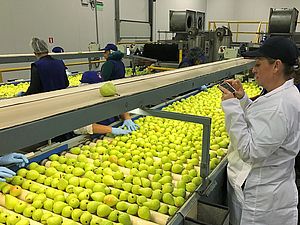
As the world population continues to increase, there is a corresponding need to further develop innovation within the food production model in order to sustain this increase.
However, we need to be very aware of what our place in the model is, and the number of people that we can feed.
There is huge potential for increased production from the likes of South America, who with a tweak in the way in which they farm and the inevitable gains from the use of technology could increase their output significantly.
I expect to see a drive from food as sustenance toward food as a source of enjoyment in many countries, leading to a desire for higher quality produce that may or may not be grown locally. If our product is positioned correctly, there is an opportunity for increasing its demand and value.
New Zealand has built a strong reputation as a supplier of safe, quality product that will meet the specifications desired by the buyer. Over time, the processors of New Zealand meat have diversified the way in which the product is sold to ensure that maximum value is gained in the current state. One of the challenges here is ensuring that the provenance of the product provided is communicated to the consumer.
Is there an opportunity to differentiate ourselves now on the quality and provenance of the product to safeguard our position into the future.
As “local” food becomes a more topical issue, we need to decide whether to invest the significant sums required to design and promote consumer brands in the marketplace, or to invest in creating long-term supply relationships within the service industry. With the mix of product that we currently provide, this may allow for more New Zealand provenance in the finished article, whilst not changing the product that New Zealand currently supplies.
We also need to decide which countries we wish to focus upon. Discussions I had indicated that New Zealand has at times sought short term gains in price at the expense of longer term growth plans. This can lead to markets being unable to consistently rely on New Zealand product, thereby attributing a lower price to it than if we have built the supply relationship.
Many countries continue to focus on food security from their farming systems. As global trade attempts to break down some of these barriers, a shift in the types of farming systems to better accommodate the climatic conditions in each country will likely occur. This may provide additional opportunities as countries realise that they are not cost competitive when producing certain products. There is also the role of technology in food production, with examples such as vertical farming, plant based protein and synthetic protein all changing the face of food as we know it.
We need to adapt to changing production systems faster than ever, especially those that can produce consistent quality and experience every time.
The challenge for NZ is to decide how we fit into the world supply chain. For a long period we have focused on producing the products we know we can grow, and expecting others to find a market for us. High production and low cost have been the mantra that we have lived by.
Is there an opportunity to differentiate ourselves now on the quality and the provenance of the product to safeguard our position into the future?
Travelling around the world as part of my Nuffield experience it was clear that the other dairy producing countries hold New Zealand as world leaders in pasture fed milk production which is something we pride ourselves on. However, we can’t become complacent and as I have identified there are areas that we need to improve. One of these areas for is our on-farm leadership, particularly when it concerns our interactions with employees and how we motivate and keep them engaged.
A large number of New Zealand on-farm leaders have got to their position of leadership through long hours working on farms or up through the sharemilking system then, purchasing a farm or taking over the family farm. Often they have had no formal training around leadership styles that get the best results out of their staff or any experience managing a team prior to this.
There is also an expectation that staff will work as many hours as they did, despite not having a financial interest in the business or the same goal of one day owning a farm. Many of the next generation have a lot more opportunities as careers available to them and don’t see the current structure as a worthy career.
Research has shown that many New Zealand farm workers average between 60-80 hours a week and the most common roster is having 12 days’ work before two days off. It is no wonder that nearly 1 in 3 employees is leaving their jobs each year in the sector compared to 1 in 7 employees across most other industries (source: Statistics NZ).
Many of the farms I visited overseas had more employees per number of cows, each working on average 40-45 hours per week. Some of this was driven by legislation. This had not always led to increased wage cost as staff were paid for the time they were working and the overall number of hours worked by the entire team in a week was similar to a NZ system during the calving period.
“I found also that staff were more productive as they were rested, more engaged in their job, and had a work-life balance. With larger teams also came a fantastic culture within the business, morale seemed high and they had very low to average staff turnover. “
There were also businesses that were using their employment record and practices as branding on their products with slogans like ‘employer of choice’ and ‘great employer certified’ attracting a premium locally.
Dairy NZ’s recently launched strategy includes building a great workplace for our talented workforce. The goals relate to attracting talent and getting employment best practice standards across the industry. This is a great start and having goals in place will make this measurable.
However, we need to take this further and really focus on providing leadership training on farm for managers and owners. This training shouldn’t be aimed at meeting legislation minimum standards but more at the individuals own leadership styles, so they can make changes to their own behaviour. Research shows that higher engaged work forces are more productive and create more value making fewer mistakes, which at the end of the day is most producers’ goal.
Much emphasis gets put onto the environmental issues or animal welfare concerns when it comes to the dairy industry as it directly relates to our social licence to farm in New Zealand and the perceived value in our products globally.
However, many global brands have their reputation as a good employer ranked just as high a priority, as getting this wrong often does more brand damage as consumers can relate more directly to the human element. Recent examples of this are big brands like Adidas and their customer fight back around illegal and underage labour.
We don’t want to just be an industry that is proud to be meeting employment legislation standards with good on farm conditions. Let’s be leading employment standards globally and be the recognised employer of choice for someone looking for a new career.
Somewhat unsurprisingly, common themes have definitely emerged during the past year of travelling the globe and discussing agriculture with our fellow Scholars.
The pastoral New Zealand agriculture sector has long been criticized for operating at the bulk commodity end of the market, be it frozen carcasses or brown bags of milk powder. The solution it is said, is a business-direct to-consumer-sales model- value add, fast moving goods with a high volume, high value and greater export returns and more on-shore jobs.
The reality of this is strategy is somewhat different. In the consumer goods dairy category for example, a company operating in this space will release on average 8 products, with just one surviving more than three weeks on a supermarket shelf. The other seven are a sunk cost in terms of research, innovation, manufacture, packaging and promotion. The one champion product may provide a great return, but is needs to in order to offset the sunk cost of the other seven. In the fullness of time, the champion product then becomes crowded by ‘me too’ products seeking to emulate the lucrative position in the particular category.
This strategy, while successfully executed by the Nestles of the world, requires massive scale of investment and significant brand equity, neither of which is strong in New Zealand, downstream of the farmgate.
The other challenge is year round supply of the raw product. Our pastoral industries have been developed to follow the growth curve for good reason but it does present some challenges for year round supply of consistent fresh product.
It is for these reasons the pastoral industries in the New Zealand agriculture sector have tended to evolve selling business-to-business: commodities, ingredients, food service. Given the challenges mentioned above and the fact New Zealand pastoral farmers have enjoyed the comparative advantage of lowest cost producer, this has worked reasonably well…we are quite good at it.
We cannot however not sit in this space forever as consumer demands change, competition is arriving and our low production cost base is being challenged by others. It is not a case a major shift away from business-to-business, it’s just doing it better, higher value opportunities within the segment and competing on quality, leveraging the different functionality of grass fed and telling the story behind the product.
Livestock in New Zealand, in a pastoral system, lead a charmed life relative to most other places in the world so this is one example where we can leverage a comparative advantage with our customers.
Some of our challenges as an industry therefore going forward would be:
Coming up with a unique brand proposition around grass fed/free range/happy lifestyle livestock
Look to initiate a standard for grass or pasture fed similar to that of organic standards. Can we defend it and set it aside from other label claims around the world?
Can we ensure our environmental footprint from farming livestock outdoors is sustainable and aligned with consumer expectations?
The Nuffield journey so far has highlighted that we do have a unique point of difference in our livestock industries that is sought by today’s consumers. Our challenge is to deliver that story and create the premium.
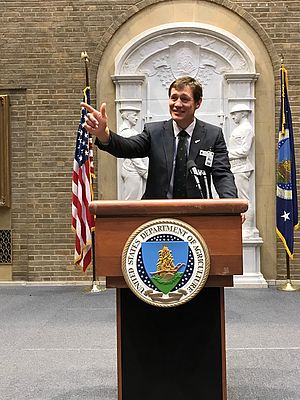
The latest crop of primary sector emerging leaders have been revealed with six 2017 Nuffield Scholars announced by Primary Industries Minister Nathan Guy at Parliament.
They are Mid-Canterbury rural journalist and artisan food producer Nadine Porter, Manawatu dairy farmer and farming advocate Mat Hocken and Oxford-based Rebecca Hyde, who works for Ballance Agri-Nutrients and has strong skills in environmental management and sustainable farming.
Joining them are Taranaki’s Jason Rolfe, who is an area manager for FMG, farmer and former winner of the Young Farmer of the Year contest David Kidd and South Canterbury dairy farmer Ryan O’Sullivan.
The six new scholars join more than 140 of New Zealand’s emerging agricultural leaders to have been awarded Nuffield Scholarships over more than 60 years.
The scholarships are one of the most respected and prestigious awards available in the primary sector and offer a life-changing opportunity for overseas travel, study of the latest developments in a number of leading agricultural countries and an introduction to leaders and decision-makers not accessible to ordinary travellers.
Nuffield Scholars travel internationally for at least four months in their scholarship year (not necessarily consecutively) and participate in a Contemporary Scholars Conference with 60 Nuffield Scholars from around the world.
They will also attend a six-week Global Focus Programme with an organised itinerary through several countries with other scholars.
Finally, they will have their own individual study programme with a research report due at the end of their travels.
Topics this year are likely to include how we innovate in this country and how we can improve our innovation in the agriculture sector, how improved collaboration between industry and sectors can help achieve better environmental outcomes, improving/stabilising onfarm returns to attract more talent and reduce turnover in the primary industries, exploring how other countries are turning the protection of the environment into a value-added revenue stream and how irrigation schemes can deliver water, not just for agriculture or economic benefit, but for achieving environmental and social outcomes as well.
Nadine Porter
New Nuffield scholar Nadine Porter is a committed primary industry advocate and believes the agriculture sector is at an exciting crossroads. With a long career in agricultural journalism and artisan food ventures, Nadine is now working as communications manager for NZ Young Farmers.
Mathew Hocken
New Nuffield scholar Mathew Hocken is carrying on the family legacy, farming the Manawatu property that has been in his family for over 125 years and acting as an advocate for farmers through his roles with Federated Farmers. He returned to the family property, Grassmere, in 2013 after a successful career studying law and politics and working overseas in consultancy roles covering areas like climate change and energy.
Rebecca Hyde
New Nuffield scholar Rebecca Hyde believes improved collaboration between sectors and industry can help achieve better environmental outcomes and she plans to research this topic further as part of her scholarship. Oxford-based Rebecca’s passion for the environment extends to her work with Ballance Agri-Nutrients, where she is South Island team leader of farm sustainability services.
Jason Rolfe
Improving employment conditions and promoting the primary industries as an attractive career option are key to securing talented young people in the industry, new Nuffield scholar Jason Rolfe believes. Living in New Plymouth with his new wife Christina, Jason is the Taranaki area manager for FMG Insurance, a role he has held for the last year.
David Kidd
Third-generation farmer David Kidd, who won the Young Farmer of the Year contest in 2014 and has a strong background in the finance industry, is one of six new Nuffield scholars for 2017. David manages a 550ha beef finishing property at Shelly Beach, South Kaipara Head Peninsula. He and his wife Janine have spent the past four and a half years developing the property, gradually improving its carrying capacity and productivity. Before becoming a farmer, David spent six years working in the finance industry in New Zealand and Australia.
Ryan O’Sullivan
South Canterbury dairy farmer Ryan O’Sullivan has been named as a Nuffield scholar for 2017. Ryan is married to Tina and the couple have three children, aged from five to nine. The O’Sullivans are equity managers of a large-scale farming operation near Fairlie, South Canterbury, comprising a 1200-cow, irrigated dairy unit run in conjunction with 550ha of dairy support. Previously, Ryan attended Lincoln University then began a 10-year career in rural banking.
***
For further information and photographs please contact: Anne Hindson on 027 431 7575
Detailed news releases on each scholar are available on request.
This is an opportunity for potential applicants to learn more about the Nuffield scholarship experience and have an informal face-to-face discussion with some of those who have already undertaken the programme. We are keen to broaden the pipeline of Nuffield scholarship applicants (particularly farmers/growers/producers) and to have a strong pool of candidates from the region. We hope that through this meeting we will provide new applicants with more information about the nature of the programme and the commitment, so they are well prepared to put a strong application in front of our panel. Please RSVP at your earliest convenience, by emailing us at nuffield@nuffield.org.nzalong with your contact information and the names of the people attending. 2018 Scholarship applications close on Sunday, 13 August.
The Global Focus Programme is transformational – not only in personal development but also in the way you come to view New Zealand’s agri-food sector.
USA
For me my Africa GFP began in the United States in Delaware where we were shown what a cataclysmic mistake it has been to devalue food in the way American society has. With only 8 per cent of household income spent on food, and the average citizen eating 50 per cent of their meals in restaurants and takeaway outlets, it has been a frantic scrabbling to the bottom by meat producers.
One large egg farmer we visited had increasingly expanded his operation and was automating as fast as capital access would allow. Why? Because Americans want cheap food. It could almost be part of their constitution. Their pride in ‘producing the cheapest food in the world’ as one farmer put it is evident, not only in the continuing cheapening of products but also in the waistlines and wastage of citizens.
That devaluation of food is spreading through-out the developed world – but may be arrested with the younger consumers coming through – especially with the rapidly developing social conscience among them. But, in the meantime it will lead to a quicker expansion into automation, and increased unemployment – something one Senator shared, he was at a loss to know how to handle the fallout from.
All farmers we spoke to, voted for Trump purely because they were tired of what they termed ‘over regulation’ from Obama’s regime. And there were some ugly conversations had, where many prejudices were displayed by farmers, who seemingly feel his victory gives them license to express them freely – even to our fascinated Nuffield group!
Perhaps most disappointing to me about some of the farmers we visited, was the level of apathy in their businesses. One dairy farm had 100 million consumers living within a 100-mile radius. His operation was not economical or efficient, but because of his customer base, he had willing consumers on his front doorstep. His answer was to make ice cream and within a year had a $1 million US turnover from his diversification. It wasn’t particularly good ice cream and the shop on the farm was not overly enticing. And therein lies the issue…where a density of population can lead to laziness in business strategy. I found myself wishing more than once that New Zealand had access to that kind of consumer base on their doorstep!
The United States also began a consistent theme I was to see repeated over the next eight weeks. The ascent of Australia over and above us is real and is frustrating. In the United States Australia has 44 per cent of sheep meat market while New Zealand has just 15 percent. Their products were clever, well considered and marketed sophisticatedly. Vegetarian fed was one such example of clever messaging!
New Zealand as a brand was not significant, and with Australia also working in that space of branding their country of origin as a safe, clean, environmentally sustainable product, my fears increased for the positioning of NZ Inc in the global market.
Eastern Europe
Eastern Europe gave me an insight to regionalism – and how this is going to be an incredibly serious mega-trend that has vast implications to our food sectors. Even in developing countries like the Ukraine we witnessed the consumers desire to shop locally. We learnt not to assume in an under developed country that the consumer isn’t educated on sustainability. In Kenya, even the poorest villagers had a phone. Those devices give every consumer a ticket to the world of food production. And we can never take that for-granted.
So what then is our plan B with 95 per cent of our produce exported? What happens if tomorrow’s consumer outright rejects New Zealand products based on sustainability? How then do we fight that? And are we prepared for it? And during our Czech Republic visit we were told that German supermarket giant, Lidyl, intends to implement regional policies by buying within a local radius only.
Kenya
In Kenya, I was to understand subsistence farming and how those farmers far surpass in terms of numbers the large corporate farms we were to see in the likes of Eastern Europe. This really put the constant message we are hearing globally about the need to feed the world in context.
Simple technical farming advice could significantly increase production and quality of lives for subsistence farmers worldwide. Take that increase in production and the disappointing amount of food wastage in the world and you have an answer to those that cry wolf on needing to increase food production.
I struggled to be comfortable in Kenya with businesses, such as a large Dutch flower operation we visited, that were overseas owned, and making money because they had the advantage of cheap labour and less Government regulation.
Yes, these businesses were clever, but I struggled because the feeling that was imparted to me, particularly after talking to a supermarket buyer in South Africa, was that ethics in business will increasingly be looked at and scrutinized by the new generation of consumers.
South Africa
South Africa gives me great hope for the future of Africa. At present it is corrupt, and difficult to do business in. But the new generation coming through are entrepreneurial, educated and determined to oust their parents’ regimes. It is an innovative disrupters dream and will be a powerhouse in the future.
So, I’ve come back experiencing conflicting emotions about New Zealand’s place in agri-business globally. Our domestic issues seem less relevant than they did to me and I often see them now as being somewhat of a sideshow that distracts us from what must always be our number one focus – our overseas consumer.
As you read this I will be travelling in the United Kingdom, Ireland, Holland and Belgium on the first leg of my personal studies where I’m investigating consumer mega trends, the science of perception and learning about successful long-term messaging.
Before the end of the year I will be heading back to the United States and travelling a little in Canada as well as Mexico before touching base in Asia early next year.
I cannot thank Nuffield International and our wonderful team in Nuffield New Zealand enough for this incredible opportunity. That hunger to learn is a powerful driver and I look forward to meeting up with you in November.
In the meantime, if you are interested in further expanding upon some of the issues I’ve written about please see my blog at farmjourno.wordpress.com.
I was fortunate to be part of a relatively small group of 8 Nuffield scholars, of diverse farming backgrounds and visit 6 countries on the ‘Brazil GFP’. Countries visited were well developed or mostly developed in terms of their economies and agricultural industries and included Brazil, Mexico, US, Ireland, France and NZ. One of the key benefits I believe the GFP offers is the context it gives of the global agri-food business and therefore the perspective around NZ as a producer and marketer. As one large scale US, dairy farmer producer put it ‘NZ is small and cute’ which is pretty hard to argue with.
As many scholars have noted before me, the GFP is also provides a personal challenge in terms of mental stamina, getting some sleep and relationship management among your fellow scholars. This in itself is a valuable exercise personal development and self-awareness, as is driving a rental van in a mega-city full of motorists in a hurry. I am sure the post GPS guidance era of scholars have it so much easier than the ones who went before trying to read road maps.
Common Themes
As one travels through multiple countries and talks to farmers, there are many common issues and themes that begin to emerge. It is a universal thing, whether it is a group of farmers, bakers or candlestick makers, when they get together, the conversation eventually reverts to what are the challenges and issues, and despite different geographies, cultures and enterprises the themes were remarkably similar. Some of them I will pick up on here. Not many primary producers are getting well paid for what they do or earn a respectable return on capital. There are of course exceptions that have a different strategy and they are were the ones well worth listening to. Some examples, but not an exhaustive list of the businesses achieving higher returns included: Farm to consumer businesses, or cutting out the middle men/vertical integration. Requires large local consumer base and appears difficult to scale up. Organic premiums on enterprises where yield drag was not too high, e.g. Soy bean production at 3 times the conventional price with only 25% yield drag compared to conventional. Scale, high volume outputs with good economies of scale achieved on inputs and infrastructure, e.g. Large-scale US containment dairy or arable. Niche production of a product where there are barriers to entry or a unique comparative advantage due to location, climate etc.
Urbanisation
Urbanisation continues to be a growing trend in all countries visited and results in more disconnect with farming and further diminishes attraction of farming to young people due to shrinkage of rural communities. This disconnect also places more obligation on farmers to produce sustainably and improve environmental and animal welfare performance as the more urbanised a country becomes, the higher the expectation around these issues seems to be.
Succession Issues
Lack of effective farm succession is widespread and this results in older farmers operating businesses that keep getting smaller relative to the ever- increasing size of an economic unit. Lack of scale and fresh energy in the business then leads to underperformance in output, returns and investment.
Labour
Labour and staff was predictably a regular issue that came up for discussion. In many countries, available immigrant labour was more willing, but this is not a popular political solution. Automation solutions are going to help, but not going to change the game in farming in my view.
Having a large domestic consumer population does not translate into higher returns and arguably at present, exporting countries like us are enjoying as high returns as anywhere. The closer farmers get to the supermarkets, (with their inherent business model of lowering prices on the shelf), the tougher it gets. As one producer said, the supermarkets make sure they keep us alive, but only just.
Changing traits
Consumer trends and the way food is retailed is very fluid and changing at an astonishing rate. Producers and retailers of agri-food are presented with multiple consumer desires including conventionally produced/low cost, non-GMO, antibiotic free natural free-range grass fed, certified organic, locally produced and more recently plant based/synthetic. It is difficult to pick an individual trend from the above list that is certain to deliver volume the best and value in the long term. This list of traits was shorter 5 years ago and one wonders what other food traits will emerge in coming years? In addition to this, there is the question of how most food going to be retailed through large stores, small ones, purchased via e-commerce delivered by a drone or eaten out of home. The spend on out of home eating is either now ahead of almost catching up with in-home spend on food depending on country so as farmers we need to think about this.
The rhetoric around the challenge of feeding 9 billion people within the next 2 decades has been a bit overdone as the world has the physical farming resources to feed many more than that right now. It just requires a viable farmgate return for farmers to engage the land into production that is currently sitting idle or undeveloped. While this observation might be defendable now, there are some very large water scarcity, land degradation and climate change issues on the horizon which will have an impact. Focus is also moving to nutrition rather than food. The obesity trend and an aging population, signal massive future healthcare costs to government, so quality nutrition will be the focus either through education or if that doesn’t work, regulation.
Political Climates
Politically, Trump and Brexit have raised genuine concerns from a lot of farmers we met. US farmers are worried about budget cuts to Ag support and immigration clampdowns. Academics are concerned about reduced R&D budgets and the post Brexit landscape is of concern to anyone producing in or exporting to Europe, including NZ and Ireland.
In closing, a highlight of the GFP for me personally was hosting the group through the South Island of NZ. Despite my own familiarity with what we saw, it was great to receive the views and perspectives of the Aussies, Canadian, American and Dutchman in the group. Hearing the group constantly ask where all the well-publicised environmental degradation was, how impressed they were with the knowledge, efficiency and capability of the hosts and the overall experience of friendly people, great food and stunning landscapes. It was a good way to finish an amazing experience and a reminder how blessed we are to live and do what we do in NZ.
Dear Nuffield Scholars,At the recent Nuffield Triennial Conference held in the UK, delegates were given the option of participating in a tour of East Africa in June 2018. We would like to give all Nuffield Scholars the opportunity to register their interest and provide 1-2 brief paragraphs on why they wish to participate and what value they believe they can add to the tour. Details on this tour can be accessed via the link below. Please submit your Expression Of Interest by 5pm GMT on Monday 31st July. Regards Jim Geltch CEO Nuffield International PO Box 586 Moama NSW 2731 Direct Ph: (03) 54800755 Fax: (03) 54800233 Mobile: 0412696076 Email: jimgeltch@nuffield.com.au Skype: geltch1315 Internet: nuffieldinternational.org Document Link: http://www.nuffieldinternational.org/db/attachments/596819970fa60_2018EastAfricanNuffieldTour.pdf
Reg was awarded a Nuffield Farming Scholarship in 1963. He travelled on his Scholarship during 1964, spending 6 months in the United Kingdom then the United States of America, looking at wheat and meat production. He took the opportunity to go to France looking at fodder radish, and sugar beet production.After his Scholarship, he returned to the farm at Browns, Southland, where he stayed for the next five years.
In 1968, he was appointed as the New Zealand Department of Foreign Affairs Farm Management Expert to the Thailand Land Development Department for a two year term. This was extended in 1970 with working stints following in Sabah, Sarawak, Singapore and West Malaysia.
He and wife Doris set up their own business based in Singapore, as Dalzell & Associates, agriculture consultants. A few of the projects over the next 14 years included; time on an oil palm estate in Kluang, Malaysia, using the waste products of oil palm manufacture to make feed for swamp buffalo; revegetating a bauxite mine in Sungai Rengit on the south tip of Malaysia; and also established a flock of sheep – Coopworths crossed with local sheep.
Reg’s contribution to the Southland community was through Rotary, being a member and official with Cromwell & Invercargill clubs as well as various community associations.
In true Nuffield fashion he & Doris hosted and retained strong links with many internationals, particularly from his Nuffield studies.
Doris died 10 days after Reg a few days short of her 95th birthday.
While the Lions tour has arrived in NZ, I am about to leave again. It is halftime on my Nuffield study tour. For me it has been a pulsating first half full of excitement, education and by the end, exhaustion. It’s time to catch my breath, suck on an orange or two, hear a word from the coaches and reflect on an action-packed first half.
The team and tour
I’ve just completed the Global Focus Program (GFP). It is an intensive six-week tour through five countries with a group of nine other scholars. I was very fortunate to have an excellent group made up of five Australians, an Irishman, a Dutchman, a Welshman and a Brit who lived Belgium. Our GFP tour started in Chile.
We made our way up to Washington DC, across to Kentucky, then up to Prince Edward Island in Canada, before heading across to the Netherlands and finishing in Italy. We went to 110 meetings or presentations during an eight-week period, including our conference in Brazil prior to the tour.
I will look back on this time as one of the most interesting and extraordinary times of my life due to the people I travelled with and the excellent hosts we had in each country.
We met some great people who gave their time willingly and spoke openly about their farms and businesses. Many of them will provide me with inspiration well beyond my Nuffield tour.
The highlights package
The idea of the GFP is to give a board perspective of international agriculture. In this short report I’ll focus on some of the major themes, or ideas that struck a particular chord with me.
Feeding more with less
We frequently heard we must feed 9 or 10 billion people by 2050, with 60% growth in demand for food. It is clear we are heading toward a world of more people, less farmable land and pressure on resources such as water and the effects of climate change. There will be offsets: farm productivity will continue to increase and food wastage is ripe for tackling; people are growing food in cities, ‘vertical farms’ are springing up and synthetic food may well play a role in the future.
Consumers are changing
In the last 50 years consumers wanted food that tasted good and was low cost. Today consumers want food that tastes good, is nutritious, is produced locally, and in an environmentally and animal friendly way.
This is a strong trend that has been underway for a while. It will gather pace driven by higher incomes, ready access to information on the web, resource allocation pressure, and societal issues like obesity and associated diseases.
Environmental pressure
In many parts of the world there is strong pressure from environmental and animal rights groups. In some places, such as the Netherlands there are programs for farmers to alter production, change infrastructure or processes to achieve specific environmental outcomes.
Where the consumer will not pay more for a product produced in an environmental way, rather than load more cost on to the farmer, society as represented by government, is prepared to pay the costs.
Market volatility
Agricultural markets have been volatile since time immemorial. However, since the 1980s there has been deregulation in NZ and progressively in the 2010s in Europe and the US. There is significant subsidy and safety net programs remaining for farmers in the US and Europe, but our free(r) world market will make for better resource allocation but increased price volatility.
Reasons why these global themes don’t matter
You might ask why should we worry about these global themes? Do our consumers really care about what we do in New Zealand? Don’t consumers in the developing world just want access to cheap food?
The case can be made that we are going to have a big job feeding 10 billion people. Why would we hamstring ourselves worrying about environmental issues?
You could argue very convincingly that farmers don’t have the skills, time or knowledge to worry about the consumer. There’s an opportunity cost of farmer’s time and money. That’s why we have cooperatives and companies selling our products. It’s worked for over a hundred years. Why change?
It would seem to the reasonable person that pandering to the 10% of the population who are “greenies” will increase costs, destroy international competitiveness and drive farmers out of business. When a farmer makes a concession, the NGOs shift the goal posts and want more, and the ultimate end game for the animal rights lobby is for no animals to be farmed.
NZ would become a wildlife park and what would happen to our regional communities and national economic wealth?
Reasons why these global themes do matter
We should not make a moral issue of whether we believe these themes matter, or that the way we react determines whether we are good or bad people.
There is always a broad spectrum of morality and time helps people to understand where they sit on that spectrum. In any case, I believe there are a few points we should consider carefully.
Whether we aim to feed the richest 40 million, or some other market segment, societies and governments will be increasingly focused on how their food is produced and what resources are used.
Consumers may care, but may not pay for what they say they care about; however, society broadly, as distinct from consumers, will demand that resources used to produce food such as land, water and air are being used sustainably. In NZ we produce high quality products. And in my view, we farm, more so than any other place I have seen, in a way that works with our animals, land and people. We have important things we need to get right, however we are starting well ahead of most places.
We also have a tremendous amount of entrepreneurial and innovative capacity within our country. We have the ability and tools to develop a compelling story that resonates with consumers about how we produce our food. That does not mean we need to throw our current systems out, but the actions that we take today will set ourselves up to be successful tomorrow.
We should be aware that simply telling our story is not enough; we must educate ourselves and understand our consumers and how they relate to our products. There are good examples out there. We saw farmers in the US, The Netherlands and Italy telling their story, with transparency and confidence; opening their farms and explaining how they produce food. In NZ this is a matter of absolute urgency. If we don’t tell our story, somebody else will do it for us.
We have got to a bad place if a farmer does not feel proud to say he is a farmer at his local BBQ, or his kids are bullied at school because their Dad is a farmer.
In the age of ‘fake news’ and the inversion of trust, where people trust the Facebook group ahead of the scientist, we must be proactive and meet our detractor’s square on. NGOs are good marketers who use emotion to tell their stories; we must be better marketers. We must be confident in what we do, and be prepared to defend the way we do it.
I have no doubt farmers want to improve their environmental footprint, but there may be substantial cost in doing so. What are the costs of a ‘stick approach’ to regulation or industry agreements? Some would say delay, less than full implementation, and negative impact to our international reputation.
Well-constructed environmental incentives can give farmers the impetus to get the job done, and society the environmental outcomes it seeks.
Culture – quotes and learning
“Right now there are 7 guns around the table.” – Chatting with our hosts over dinner in the USA. In all other respects they were nice and quite normal.
“I calved my cow and the calf was almost dead. I tried to revive the calf and as I did this I explained to the class of children what I was doing and that sometimes calves die while the cow is in labour. The kids were fine as they could see I was doing everything I could and I had explained what was happening.” – Openness and transparency on a Dutch dairy farm.
“Anything you could say about good whisky had already been said about bad whisky…you can’t bore people into buying your product.” Maker’s Mark, Kentucky. – We must beware the trap of thinking we are unique and that we simply need to tell our story better to engage consumers.
“Americans are like teenagers. They think they can change the world. They know everything. They are loud. They are quick to pick a fight.” – perspective on the American psyche.
Chilean farmers we met were very focused, export oriented and internationally competitive. They also made a point of making time for family and friends.
The second half
And now it’s time for a deep breath before the second half kicks off. I will be focusing on deeper study on my research topic agri-innovation. I will visit the US and Ecuador. I will be back home for calving and later in the year I will visit



 The idea of the GFP is to give a board perspective of international agriculture. In this short report I’ll focus on some of the major themes, or ideas that struck a particular chord with me.