2026 Nuffield NZ Farming Scholarship. Apply by 17 August 2025. Read More...

Apply for 2026 Nuffield NZ Farming Scholarship by 17 August 2025. More details...

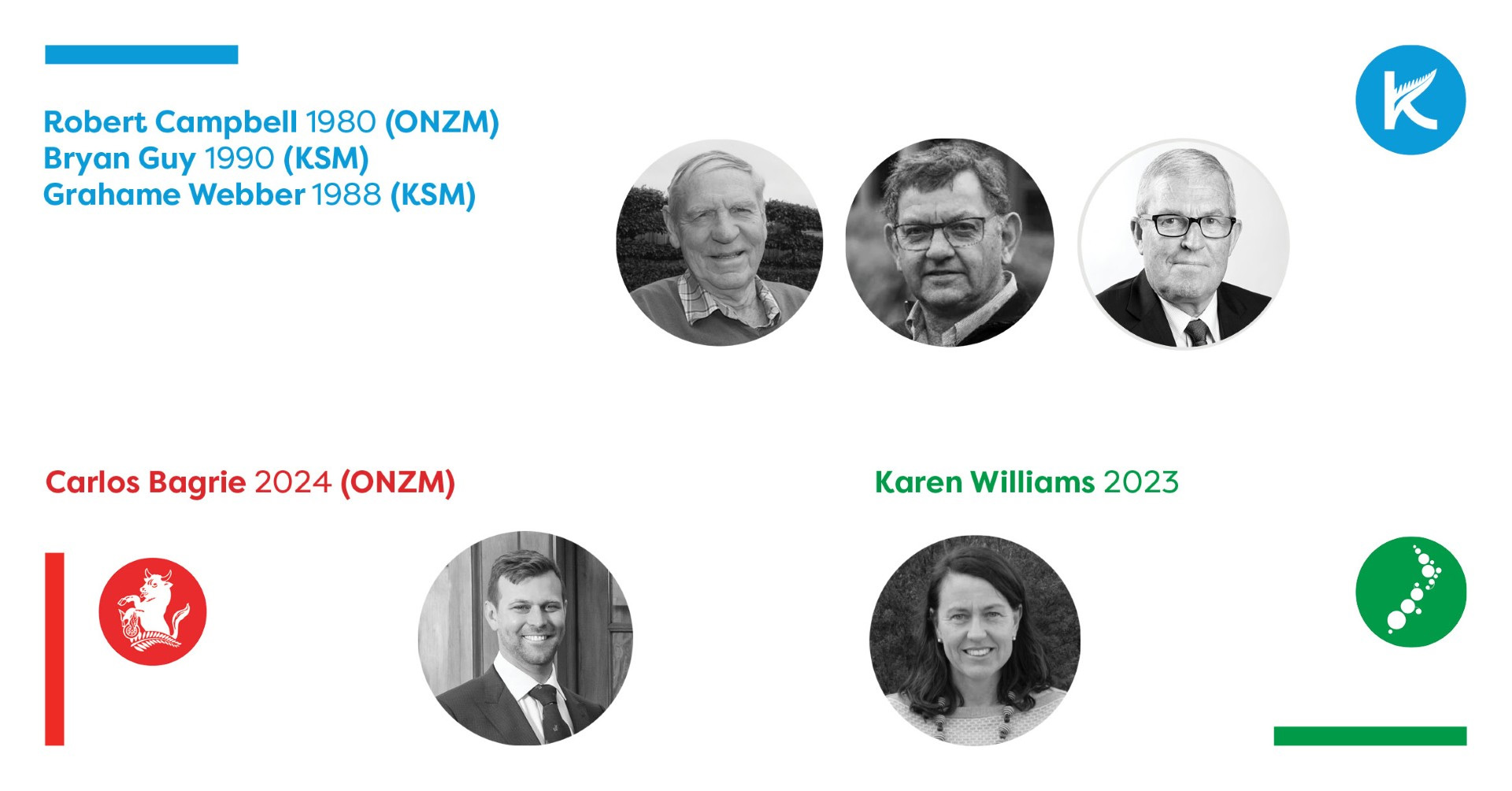
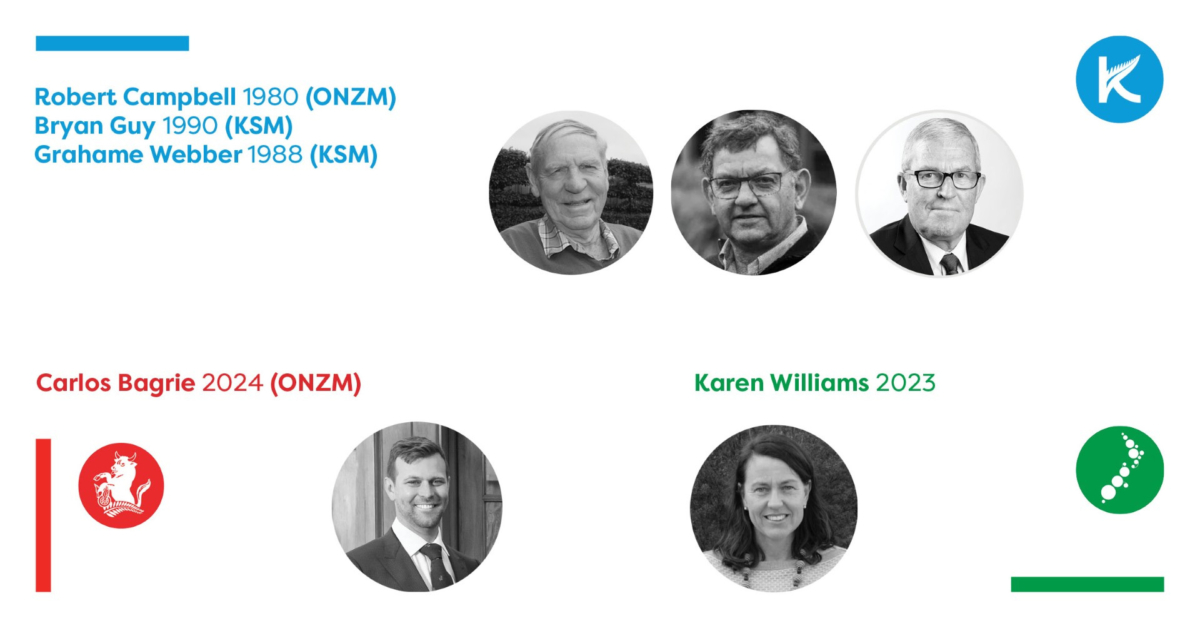
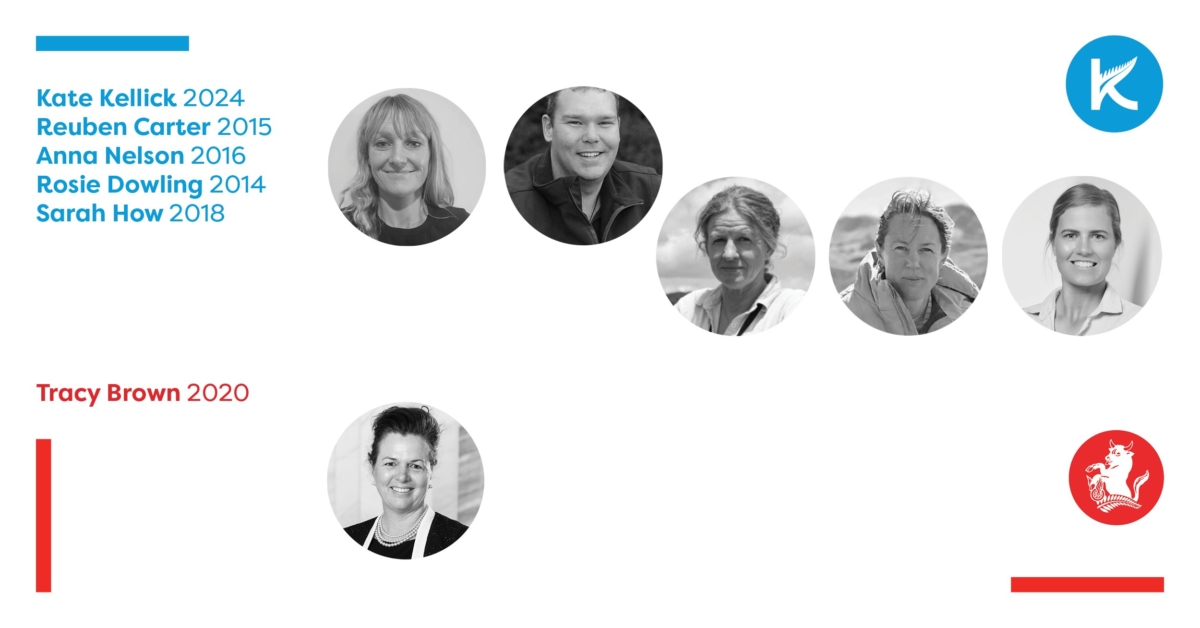
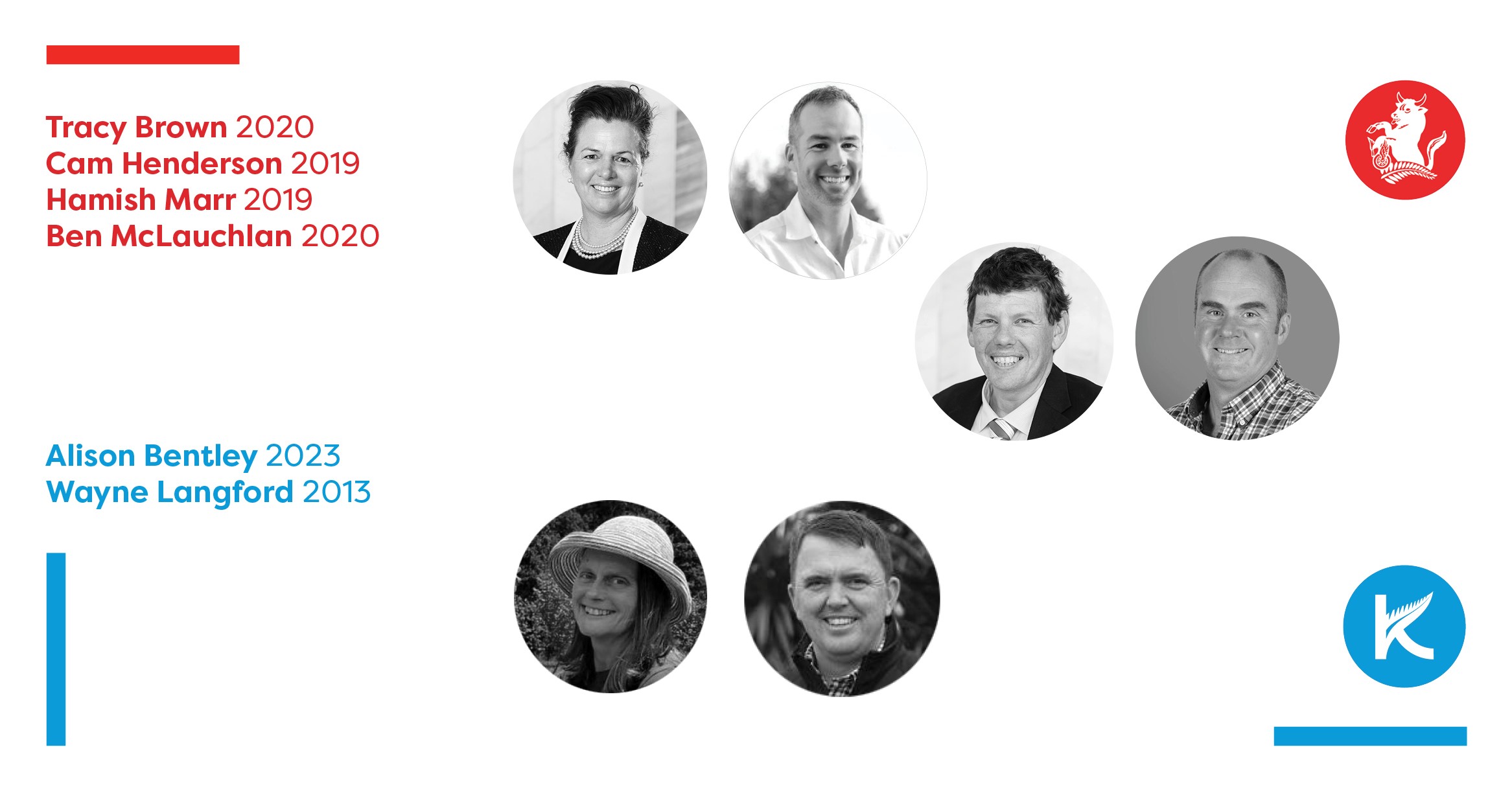
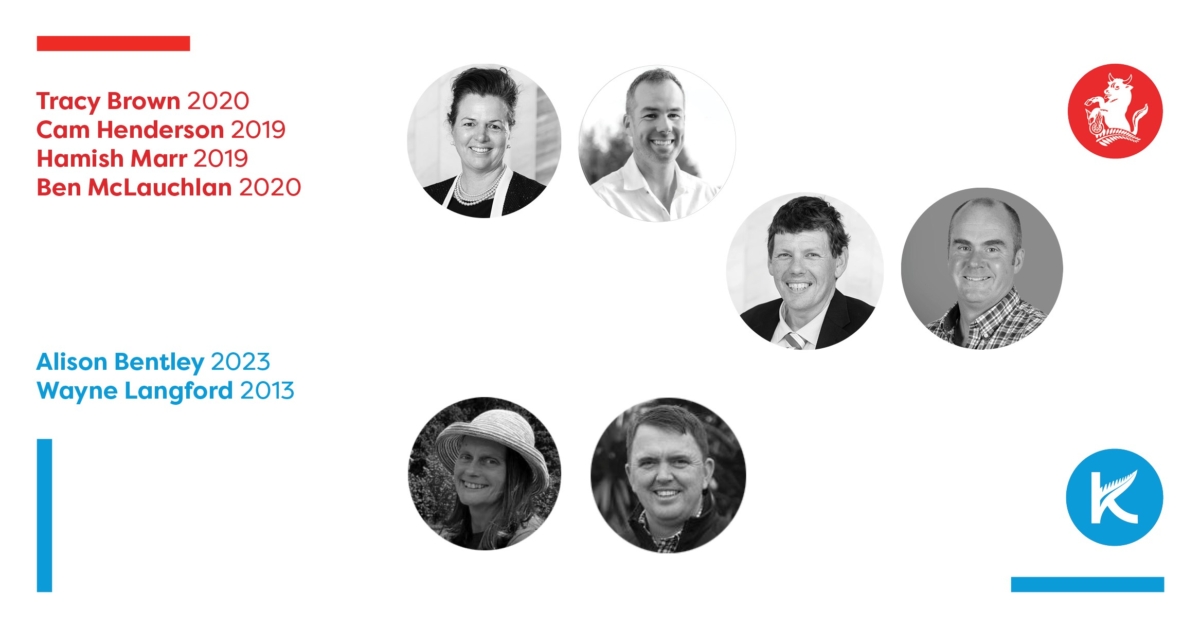
Alumni in the Spotlight – Alison Bentley, Hamish Marr, Wayne Langford, Tracy Brown, Cam Henderson and Ben McLauchlan.

Here are just a few of the media pieces covering the impact of Rural Leaders’ Programme Alumni in industries and communities across the sector. 

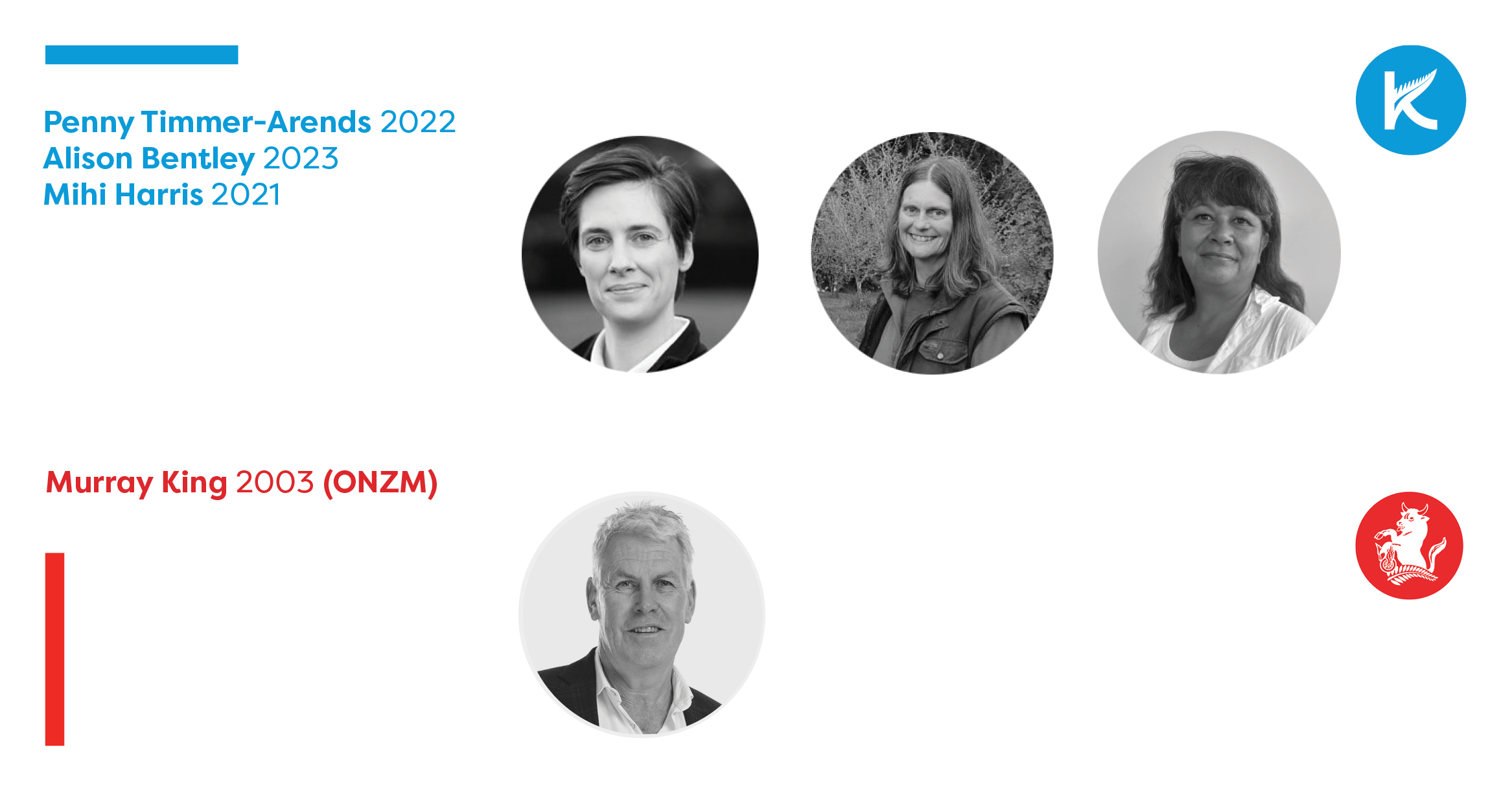
Alison Bentley, 2023 Kellogg Scholar.

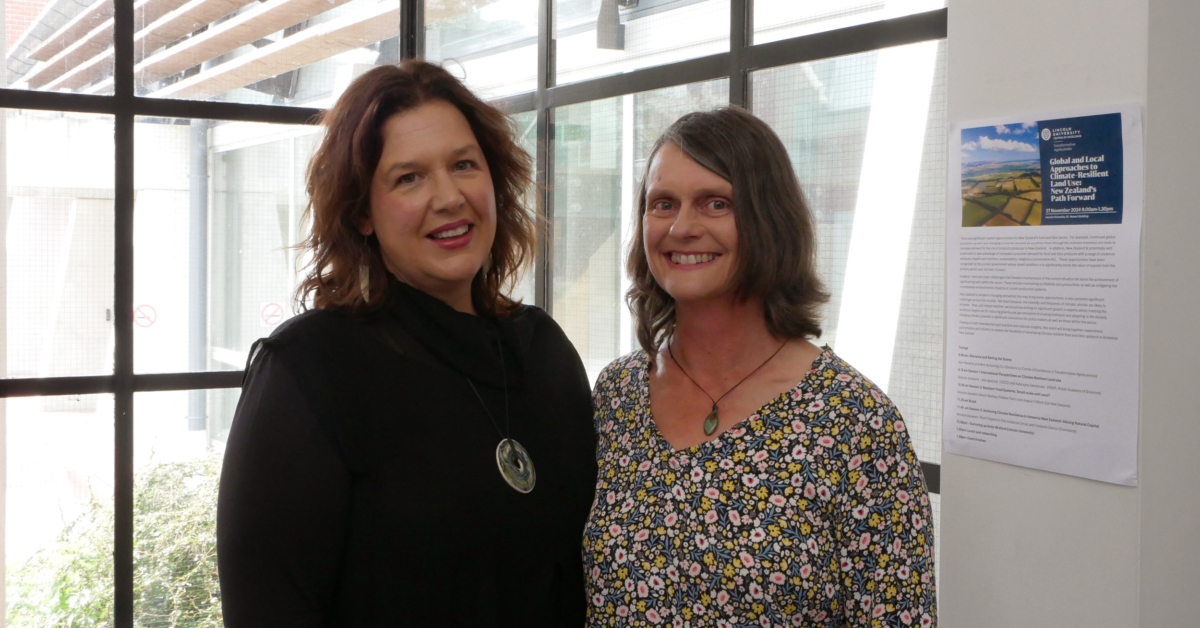
Alison Bentley (Tikitere Farm) spoke yesterday at the event ‘Global and Local Approaches to Climate-Resilient Land Use: NZ’s Path Forward.’

Alison joined Angela Clifford (Eat New Zealand), in Session 2: Resilient Food Systems: Small-scale and Local? 

Alison and Angela’s presentation was titled, ‘Resilient Food Systems: small-scale and local?’

Keynote speakers at the event were: Ada Ignaciuk (OECD) and Katarzyna Zawalinska (IRWiR, Polish Academy of Sciences).

Head here to read a short article on Alison’s (and Angela’s) presentation.

While this event has been and gone the registration page has plenty of information about its purpose and the speakers. Head here to learn more.

Ben McLauchlan, 2020 Nuffield Scholar.

Marlborough wine producer and grape grower, Balvonie New Zealand, has released Marlborough’s first Prosecco from Glera grapes planted in the Rapaura sub-region.

The 2023 Balvonie Prosecco has been a three-year project for owners Ben and Helen McLauchlan, who first fell in love with Prosecco while living in the UK. The well-loved wine is made from a little-known grape called Glera, widely planted in Italy, but largely unknown in New Zealand.

Take a read of Balvonie’s Press Release here.

And more about the Balvonie Prosecco here (includes the all important tasting notes).

Tracy Brown, 2020 Nuffield Scholar. Cam Henderson, 2019 Nuffield and 2017 Kellogg Scholar.

Tracy Brown and Cameron Henderson have been confirmed as Chair and Deputy Chair of the DairyNZ Board, respectively.

Tracy Brown had previously been announced as Chair-elect in June 2024 when former Chair Jim van der Poel signalled his retirement from the role.

Take a read of DairyNZ’s press release here.

Hamish Marr, 2019 Nuffield Scholar.

In a recent REX podcast, Dominic George spoke to Hamish Marr about his role in connecting New Zealand agriculture with global markets.

Hamish explains how he navigates international conversations on sustainability, trade demands, and consumer preferences while advocating for New Zealand’s unique farming standards.

He highlights the importance of collaboration and adapting to global demands, offering a rare perspective on New Zealand’s role within the larger agricultural landscape.

You can listen to Hamish here.

Wayne Langford, 2014 Kellogg Scholar.

Federated Farmers national president Wayne Langford features in a recent Farmers Weekly article stating that both the general public and farmers are still unsure about what GE or GM means, and whether it is or isn’t already allowed in this country. 

In the article Wayne Langford says comments from farmers are generally positive and tend to be around meeting climate targets.

You can read the full article here.


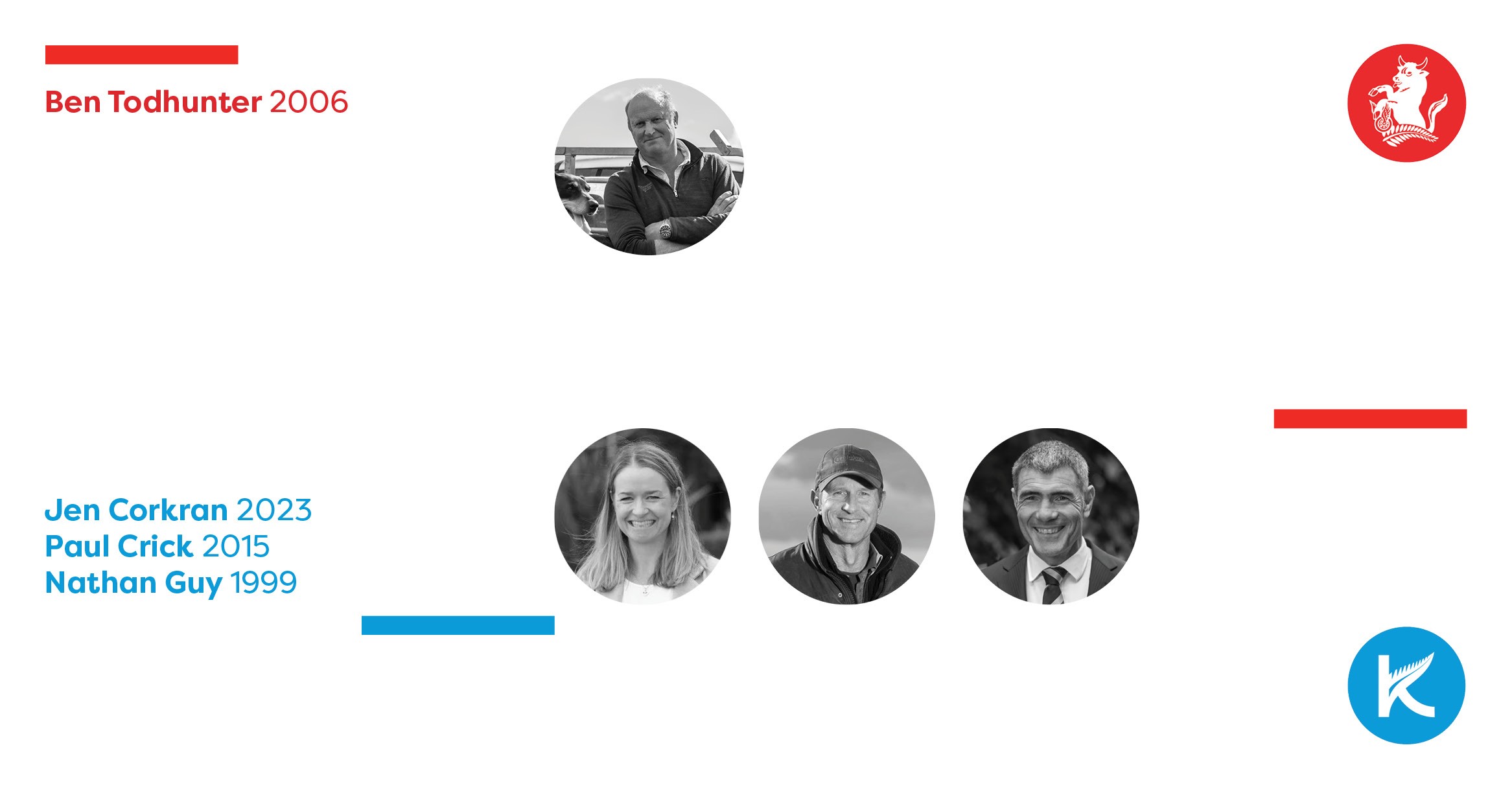
Alumni in the Spotlight – Ben Todhunter, Jen Corkran, Paul Crick, Nathan Guy.

Here are just a few of the media pieces covering the impact of Rural Leaders’ Programme Alumni in industries and communities across the sector. 

Ben Todhunter, 2006 Nuffield Scholar.

Ben Todhunter is an experienced Angus breeder, and operates a Merino stud on his farm Cleardale Station. He was recently appointed to the Board of Angus Australia.

In addition to the skillsets mentioned, Ben also breeds Cleardale SX Fine Wool sheep and is a successful competitor in Mustering Dog Trials. 

You can read more in this short article from Angus Australia on the appointment.

Jen Corkran, 2023 Kellogg Scholar.

Jen Corkran, is a Senior Analyst for meat protein with Rabobank. Jen features heavily across several pages in the Sheep Country issue. Jen says the long term view for sheep meat is positive.

She says farmers can be assured that global sheep meat prices are past the bottom of the cycle. “I’m reasonably confident we won’t see less than $6/KG for some time”, said Jen Corkran.

You can read the full article ‘Green shoots emerging after a tough season’ here. (Scroll to page 20).

Paul Crick, 2015 Kellogg Scholar.

As we mentioned, the “Sheep Country’ issue of CountryWide featured many Kellogg Alumni.

Paul Crick, Independent Director of the New Zealand Rural Leadership Trust, featured in an article ‘Testing genetics in commercial hill country conditions’. Paul farms ‘Glenside Station’ a 850ha, 7700 stock unit operation with his partner Dayanne Almeida.

The Wairarapa property was formerly the Taratahi Farm Training Institute’s. Paul and Dayanne took control of the property in 2019 and with it the Beef + Lamb New Zealand Hill Country Central Progeny Test Flock (CPT).

You can read more about the work Paul and Dayanne are doing here – work underpinned by the philosophy,  ‘if you look after the individual, the flock will take care of itself’.

(Scroll to page 62).

Nathan Guy, 1999 Kellogg Scholar.

Nathan is Chair of the New Zealand Meat Industry Association and says that in a time of challenging conditions it is critical that we do not scale back on marketing – specifically the telling of our farmers’ stories.

You can read more from Nathan Guy here.

(Scroll to page 19).

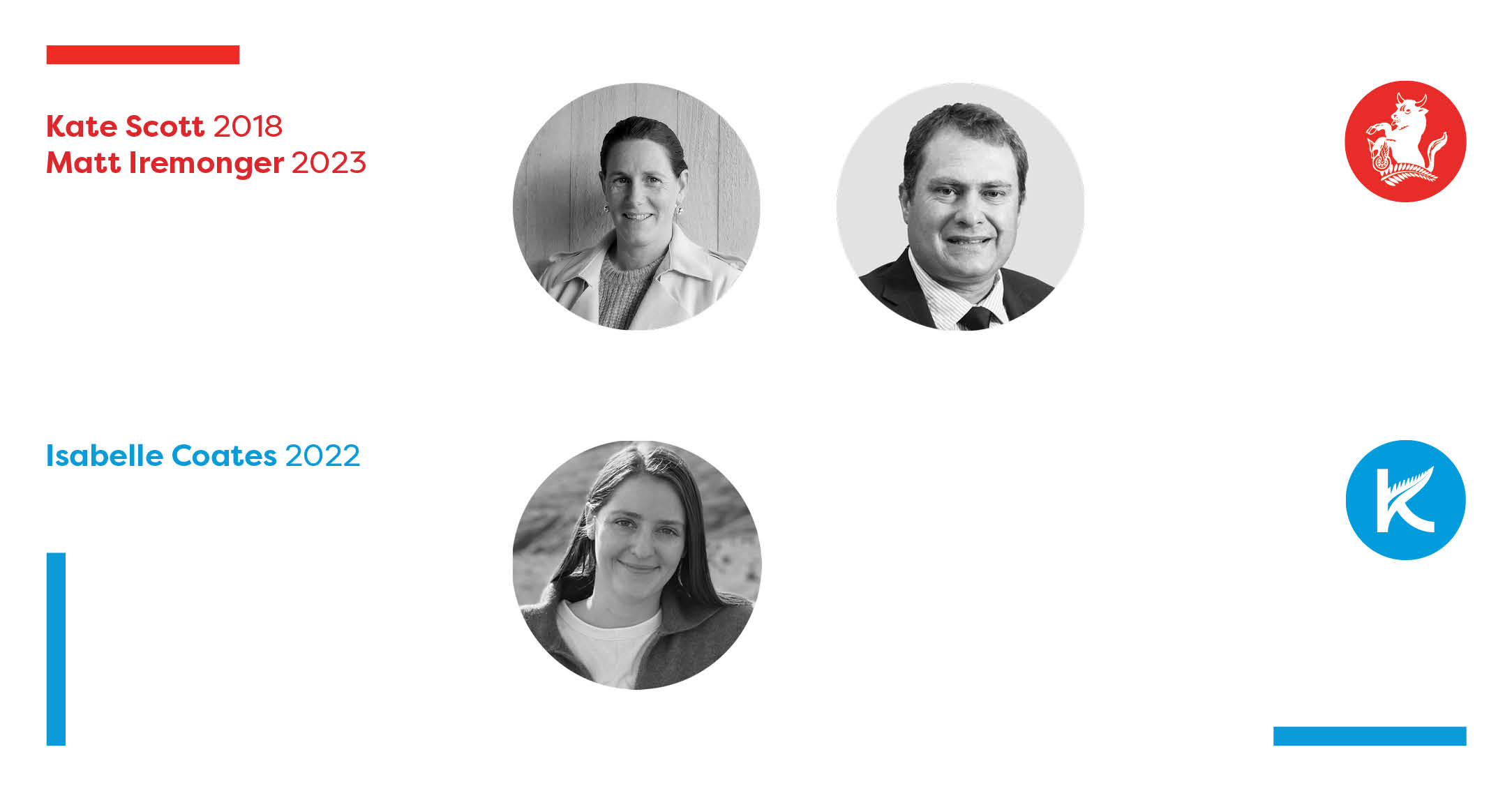
Alumni in the Spotlight – Kate Scott, Isabelle Coates, Matt Iremonger.

Here are just a few of the media pieces covering the impact of Rural Leaders’ Programme Alumni in industries and communities across the sector. 

Isabelle Coates, 2022 Kellogg Scholar.

In what is potentially a first (at least for a while), a Kellogg Scholar writes about a Kellogg Scholar.

Cheyenne Wilson 2024 Kellogg Scholar wrote an article for Farmers Weekly a few weeks back covering Isabelle Coates in the publication’s Rural Living series which highlights the people of Aotearoa’s rural communities.

Isabelle talks to Cheyenne about her work, mentorship and more. Isabelle is Muka Tangata engagement and partnerships manager.

Take a read of the Farmers Weekly article.

Kate Scott, 2018 Nuffield Scholar.

Rural Leaders’ Chair and Nuffield Scholar Kate Scott has been appointed chief executive officer of Horticulture New Zealand.

Kate Scott has been working in agribusiness for 20 years with strong experience in policy and planning and stakeholder engagement. Kate is also executive director of environmental consultancy Landpro, and is deputy chair of Thriving Southland.

“I am confident Kate will navigate the sector’s complexities and be able to unpick and understand the key issues while remaining focused on delivering results that will make a difference for growers and the wider horticulture industry,” Said Barry O’Neil, chair of HortNZ.

Kate has also written a piece for ‘Eating the Elephant’ in Farmers Weekly, September 16. 

Take a read of this article on Kate’s appointment.

Matt Iremonger, 2023 Nuffield Scholar.

“The New Zealand pastoral farming industries have a great opportunity to shift the dysfunctional bobby calf output to functional beef-on-dairy production”, 2023 Nuffield scholar Matt Iremonger believes.

“By shifting from a production-driven to a consumer-demanded beef-on-dairy value chain there is a prospect to enhance value and provide an opportunity for beef on dairy and the non-replacement dairy calf.”

Read the full Farmers Weekly article here.

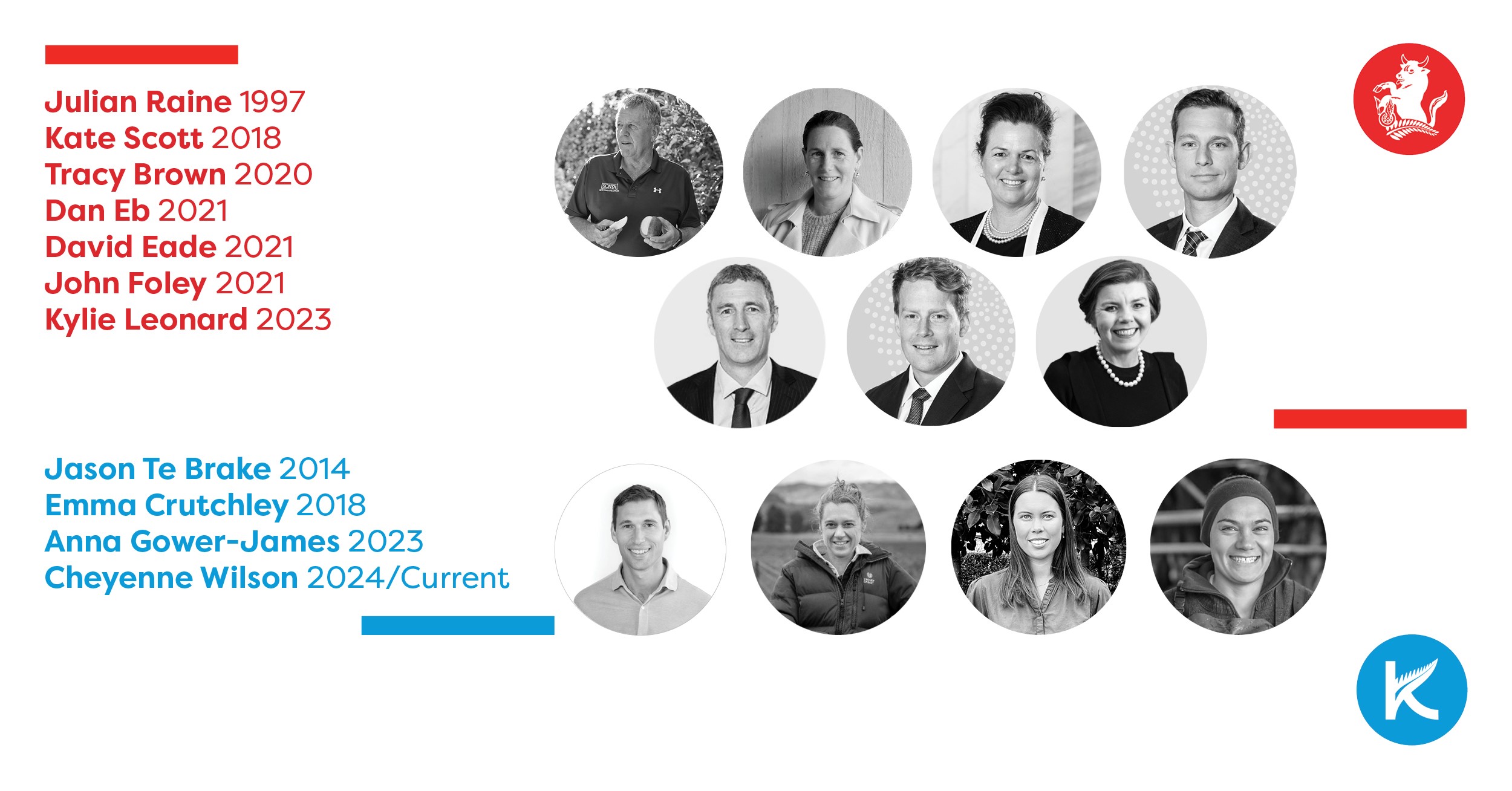
Alumni in the Spotlight – Julian Raine, Tracy Brown, Anna Gower-James and more.

It’s been another busy month or two for alumni in the news. Here are just a few of the media pieces covering the impact of Rural Leaders’ Programme Alumni in industries and communities across the sector. 

Julian Raine, 1997 Nuffield Scholar.

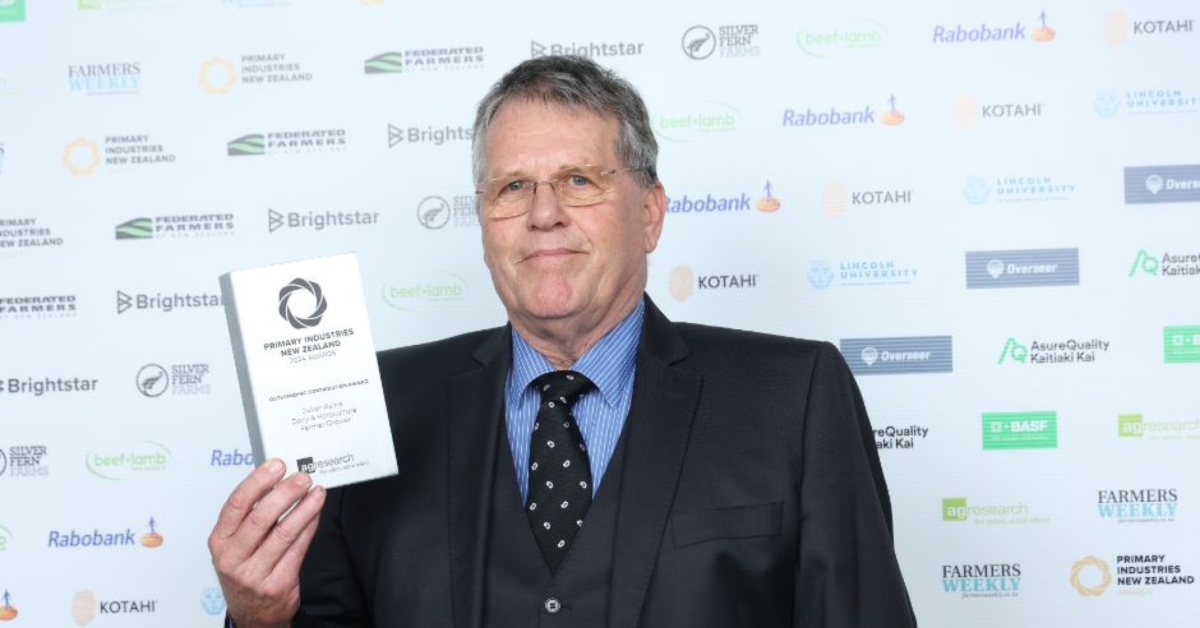
As you may well have heard, Julian Raine, 1997 Nuffield Scholar, won the Outstanding Contribution Award at the Federated Farmers’ Primary Industries Awards on July 2nd.

Julian is a former Chair of the NZ Rural Leadership Trust and has also chaired the Apple Futures Programme. He has been a trustee of the Massey Lincoln Agricultural Industry Trust, he has co-chaired the Nelson Tasman Climate Forum, and is a member of the Primary Sector Council.

Judges noted that he is, and continues to be, an innovator and leading entrepreneur in horticulture and dairy. His leadership and commitment to giving back, both nationally and in the Nelson community, including involvement in the Waimea Community Dam project, has spanned three decades.

This article gave a strong account of the win.

Take a read of the Farmers Weekly article.

Jason Te Brake, 2014 Kellogg Scholar.

Jason Te Brake’s appointment as Zespri’s new Chief Executive hit the headlines several weeks back. On his appointment Jason said, 

“My focus will be on leading the Zespri team to capture the significant demand opportunities in the market, on strengthening our supply chain and operational performance to maximise value in the market, and on ensuring we return as much of that value back to growers as possible.”

Take a read of this Waikato news article on Jason’s background and his plans for the Kiwifruit marketer.

Kate Scott, 2018 Nuffield Scholar.

In June’s ‘The Journal’ (From NZIPIM, Vol 28, No 2), Kate Scott, 2018 Nuffield Scholar shares her findings from her time in Brazil on the Nuffield Global Focus Programme (GFP).

Kate’s article explores the idea that Brazil might be a little more than its stereotype – 
a large-scale, beef-producing, Amazon deforesting nation in the South Americas.

The article goes into some ideas that potentially paint an alternative picture.

You can download and read the article here.

Image below: Julian Raine with his ‘Outstanding Contribution Award’ at July’s
Primary Industries Awards.

Tracy Brown, 2020 Nuffield Scholar.

In late June, it was announced Tracy Brown will take over as board chair of DairyNZ in October. Tracy replaces Jim van der Poel, 2002 Nuffield Scholar, who has been chair of DairyNZ since 2017.

DairyNZ has a governing board of eight members. Five directors are elected by farmers and three are independent and appointed by the board. Congratulations to Jim on his exceptional service and to Tracy on her election. This article from Rural News Group had it covered.

Anna Gower-James, 2023 Kellogg Scholar.

An article in the Spring edition of the New Zealand Dairy Exporter by Anna Gower-James explores the growth of Nigerian dairy consumption and looks at its potential from a New Zealand trade perspective.

The article is based on Anna’s Kellogg Rural Leadership Programme report and is available in the latest issue (Spring 2024) of New Zealand Dairy Exporter.

Anna’s full report is available here.

Dan Eb, David Eade, John Foley, 2021 Nuffield Scholars.

On a regular basis (generally once a week) one of four Nuffield Scholars, Dan Eb, David Eade, Phil Weir, or Ben Anderson, pen an article for Farmers Weekly’s ‘Eating the Elephant’.

Here is the now substantial archive which includes recent additions from Dan and David, as well as Phil Weir.

This month, guest writer John Foley added his learned touch to the group’s efforts. John’s article ‘The courage to be a pragmatist’, proposes that we just might have been better at getting things done in the past. John writes,

“Kennedy was a pragmatist. He fundamentally changed his politics to reflect the reality of American society and wasn’t afraid to lose political capital. For modern New Zealand, the pragmatism to build infrastructure and create enduring government policies is hard to find. As a result, things aren’t done.”

Take a read of John’s article here.

Another article from the archive well worth a read is Dan Eb’s June 19 piece on his Nuffield travel. The Global Focus Programme (GFP) is a key piece of the Nuffield Scholarship, placing small groups of about a dozen international scholars together on a tour of several continents and many countries.

“May-June 2023, my Nuffield Farming Scholarship sling-shotted me and 11 other scholars across Singapore, Japan, Israel, the Netherlands and the United States.”

For anyone considering a 2025 Nuffield Scholarship, this article gives you some real insight into what it means to develop a global view.

Applications for 2025 Nuffield Scholarships are open until 18 October. 

Cheyenne Wilson, 2024 Kellogg Scholar.

Cheyenne Wilson is currently on the Kellogg Rural Leadership Programme and will graduate in November.

Cheyenne’s Kellogg research focuses on identifying the tools and mechanisms needed for rangatahi to thrive in the Food and Fibre sector.

Take a read of this Farmer’s Weekly article ‘Bridging tradition and innovation in NZ farming’ covers the journey so far of this busy and community-minded Kellogger.

Kylie Leonard, 2023 Nuffield Scholar.

The 2023 Nuffield Scholars, Kylie Leonard, Kerry Worsnop, Matt Iremonger and James Allen were each interviewed on the CountryWide or Dairy Exporter podcasts.

The most recent of these was Kylie Leonard’s coverage of her Nuffield report ‘Boots on the ground are part of the solution. Transitioning agriculture towards sustainability together.’ 

Interviewed by Sarah Perriam-Lampp, the podcast determines that farmers to need to be at the table when it comes to fostering sustainable practices in the agriculture sector.

Kylie says that the best uptake is when farmers have had the choice to change, and lead by example within their community.

Take a listen to Kylie’s podcast here.

You can also find the remaining 2023 Nuffield Scholar podcasts below.

James Allen, Matt Iremonger and Kerry Worsnop.

A big thank you to Sarah and her team for these fantastic podcasts.

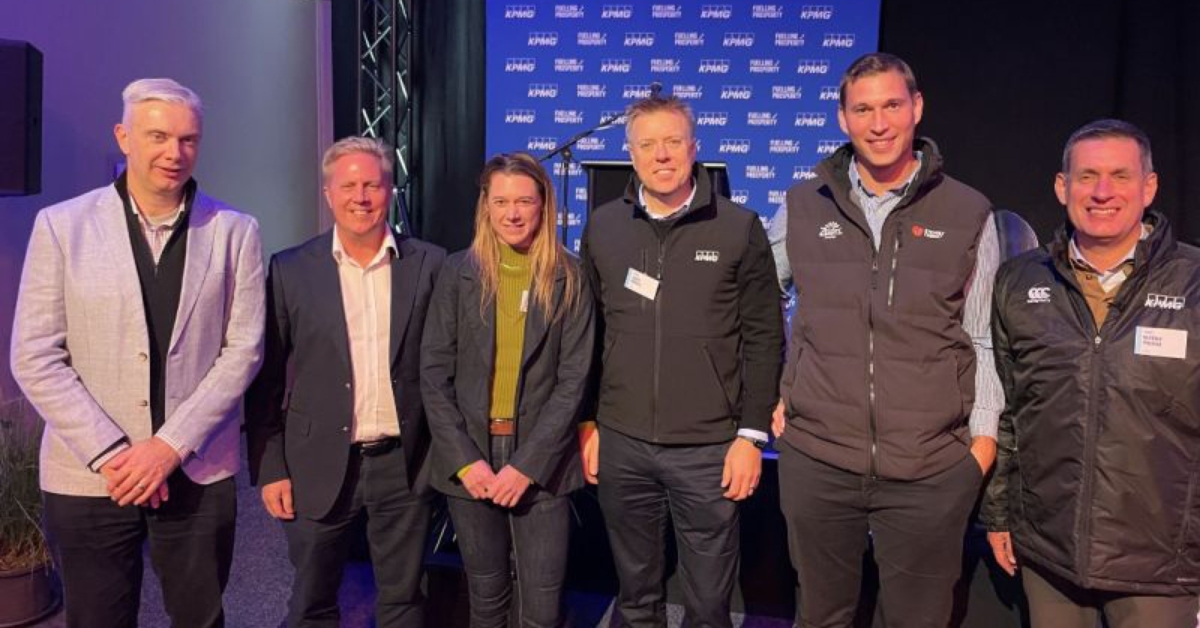
Image below: Emma Crutchley at the launch of the KPMG Agri-business agenda. Fieldays.

Emma Crutchley, 2018 Kellogg Scholar.

Emma was asked to contribute to the launch of the KPMG New Zealand Agribusiness Agenda at Mystery Creek Field days.

Take a read of Emma’s LinkedIn post covering her participation on the panel, together with Jason Te Brake, Jason Doherty, Ian Proudfoot and others.

Alumni in the Spotlight – Michael Tayler, Tessa Appleby and more.

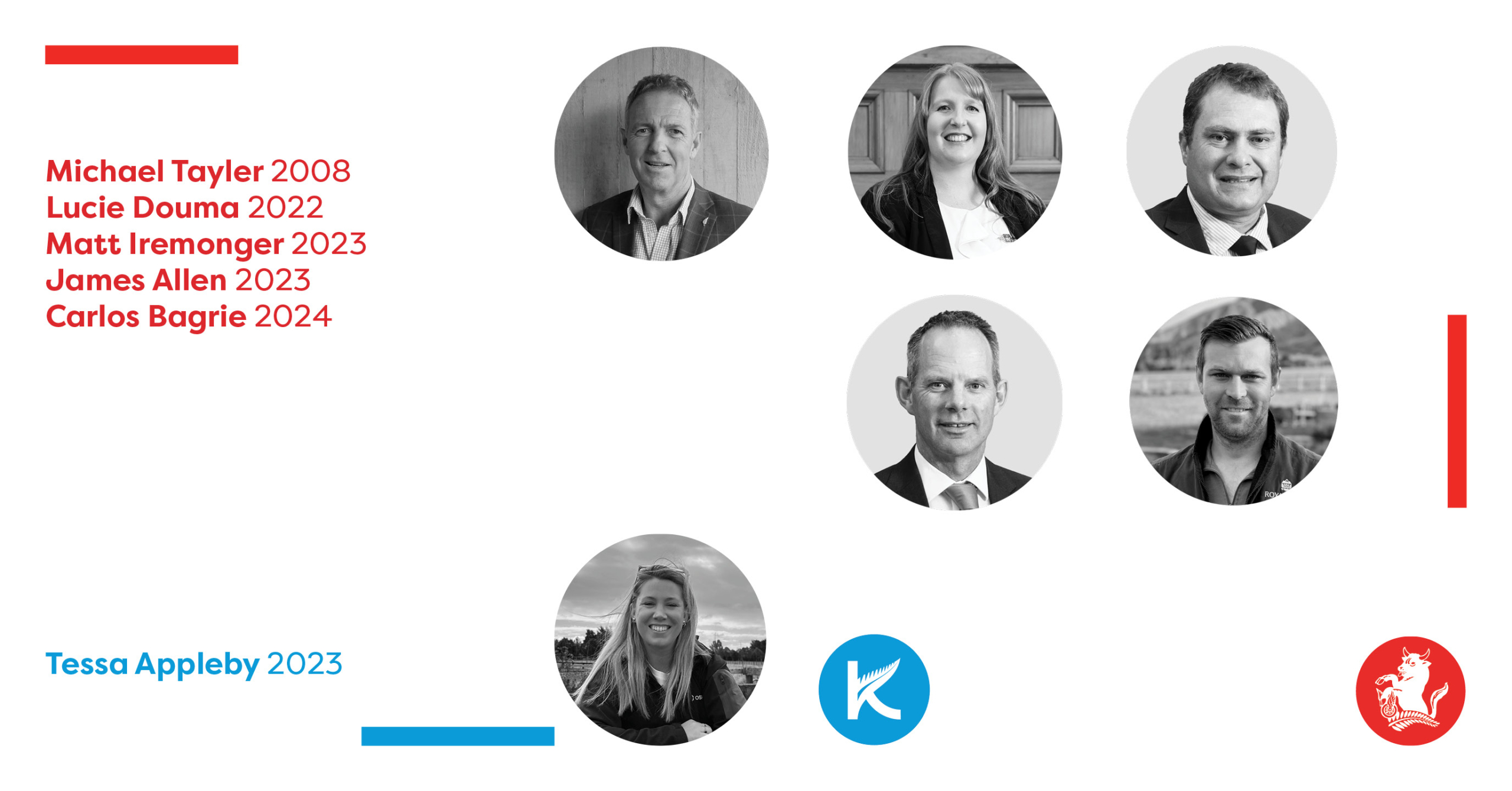
It has been a busy time for alumni. This selection of news items is a nowhere near  adequate summary – possibly a good problem to have. For now the Spotlight is on Michael Tayler, Tess Appleby, Lucie Douma, Matt Iremonger, James Allen, and Carlos Bagrie.

Michael Tayler, 2012 Nuffield Scholar.

Michael featured in Farmers Weekly recently in an article covering both he and his brother’s work in Japan. In the article Michael said there are a small number of Canterbury growers supplying carrots to Juice Products New Zealand for health-conscious consumers in Japan.

“It is an interesting story, and really satisfying to see New Zealand carrot juice on the supermarket shelves in Japan,” says Michael Tayler.

Take a read of the Farmers Weekly article.


Lucie Douma, 2022 Nuffield Scholar.

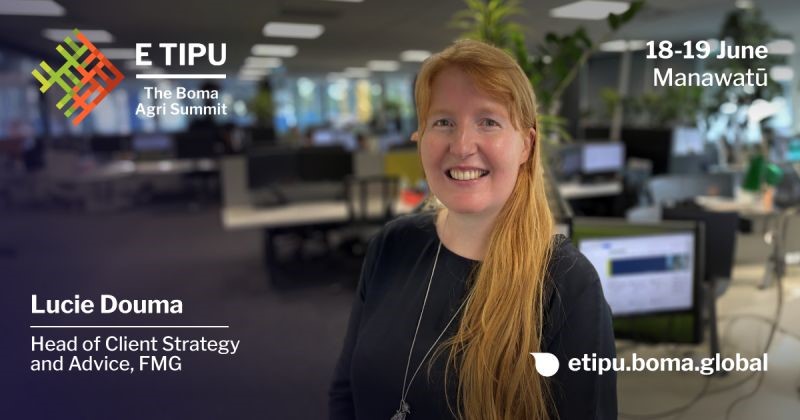
Lucie Douma will be speaking at E Tipu 2024. Another great reason to attend, either in-person or online. Lucie’s report ‘Data sharing to achieve data interoperability’ discusses the need to find a better way of collecting, managing, and using information on our farms as part of the decision-making process – and for this we need data interoperability and data sharing of systems.


Lucie is Head of Client Strategy and Advice at FMG Lucie has been instrumental in shaping strategies that resonate with the needs of the modern farmer, focusing on innovation and resilience in the face of changing agricultural landscapes.

See Lucie’s full bio for E Tipu here.

Get your tickets for E Tipu 2024 here.


Matt Iremonger, 2023 Nuffield Scholar.

Matt was interviewed a couple of weeks ago on the CountryWide Podcast. Where his Nuffield report ‘What’s the beef? Opportunities for beef on dairy in New Zealand’, was discussed, specifically the issue of non-replacements (1.8 million calves are slaughtered annually at 4-7 days).

Listen to the podcast here.

Matt’s Nuffield report looks at the opportunity for beef on dairy to shift the value chain from dysfunctional to functional.

In a supporting article by Sarah Perriam-Lampp, he also featured in CountryWide, Beef Country Autumn, pages 15-18. Check the article, ‘World’s best grass-fed steak’. To partially quote the article flavour text, ‘Handpicked genetics, farm systems and top-notch grading to be crowned the best…’

You can read the article here.

James Parsons also features in this issue on the use of Halter in hill country. Nick Jolly, 2023 Kellogg Scholar lends his expertise with an article on page 13. Upcoming 2024 Kellogg Programme Two Scholar and John Daniell Memorial Trust Scholarship winner, Rachel Joblin has written an article on integrated farm planning (pages 20 and 21).


James Allen, 2023 Nuffield Scholar.

James was also interviewed on the CountryWide Podcast where he discussed his report, ‘Redefining excellence in agribusiness advisory. The role of the rural advisor in the modern world’.

You can listen to this podcast here.

James’ report explores the challenges faced by the rural advisor in a farming world striving to feed an ever-increasing population whilst also reducing its environmental footprint. This report gives guidance as to how the rural advisor might continue to add value to farmers in this fast-changing context.


Tessa Appleby, 2023 Kellogg Scholar.

Tessa features in several recent articles, including Farmers Weekly. This piece covers the impact of Cyclone Gabrielle and the loss of her home.

The article also covers Tessa’s Kellogg research which aimed to review and analyse the current understanding and perception of Bovine TB among farmers and industry professionals.

The research report explored aspects of BovineTB management strategy and a human-centred approach to its eradication. 

One significant aspect of the findings was the importance of storytelling in creating empathy and understanding. 

“Sharing people-centered stories and case studies can complement technical information and foster a deeper understanding of disease management strategies,” Tessa said. 

You can read Tessa’s Kellogg report ‘Eradicating complacency’ here.


Carlos Bagrie, 2024 Nuffield Scholar.

Most readers will know about Royalburn’s new beer Swifty. Carlos Bagrie worked closely with Garage Project to produce a refreshing and highly accessible beer, made from the Station’s own barley. You can read the article here (scroll to page 34). 

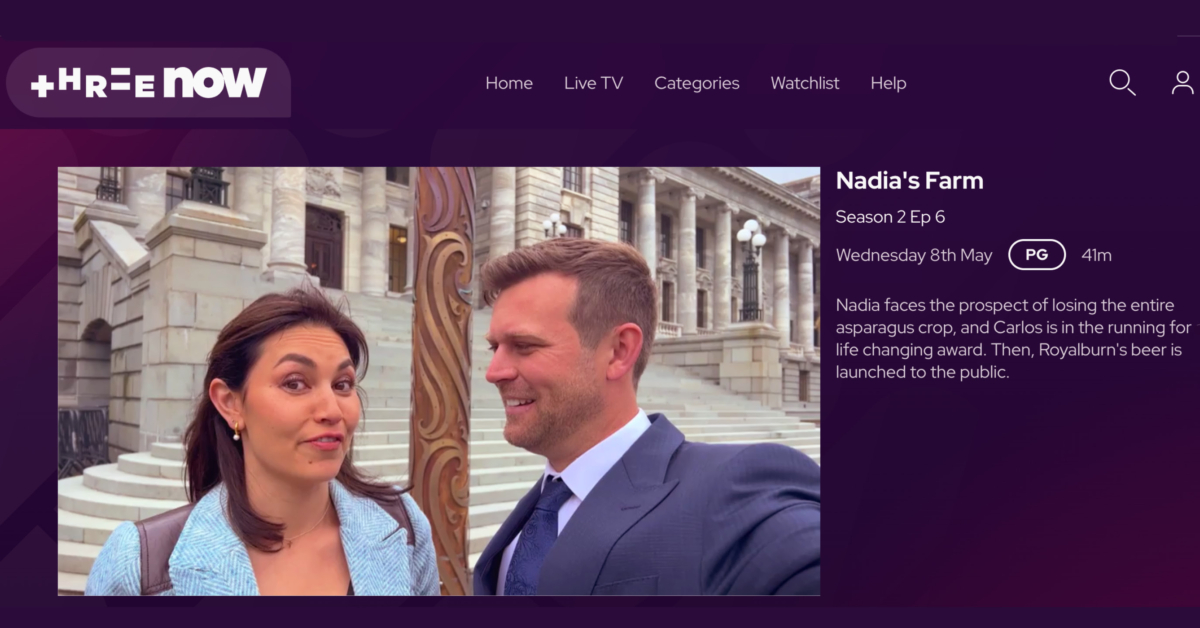
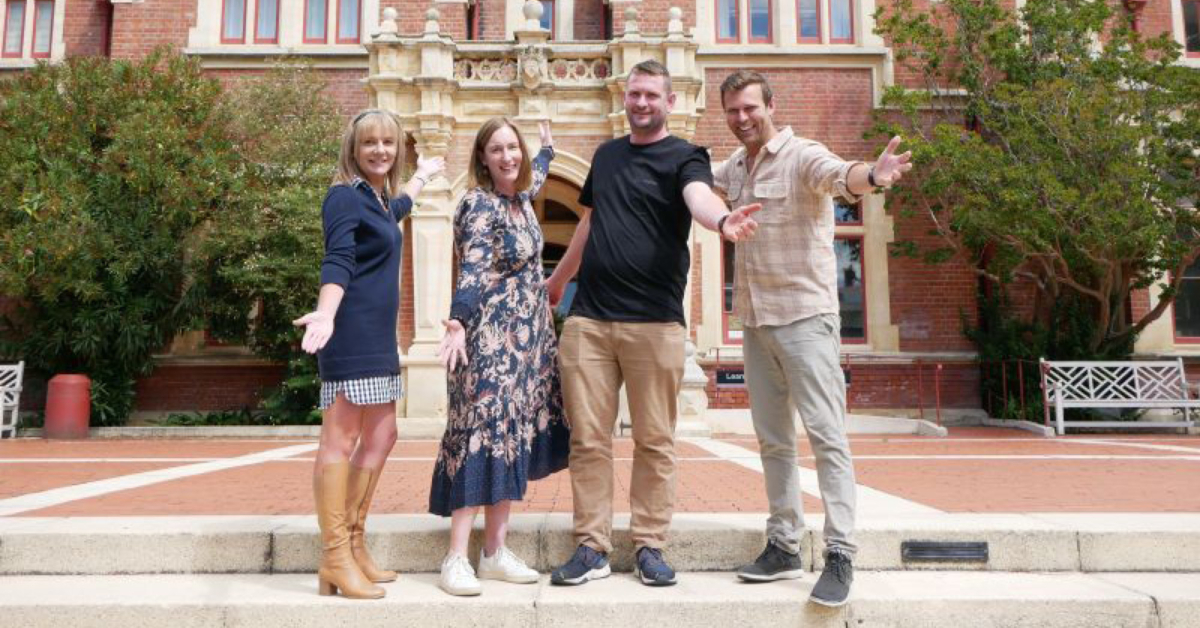
Nuffield featured on an episode of Nadia’s Farm recently Season 2, Episode 6. If you are all signed up for TV3 OnDemand, check it out. (Image is on the steps of the Beehive just prior to the Nuffield Awards, November 2023).

Alumni in the Spotlight – Jenna Smith and Rachel Baker in Brazil.

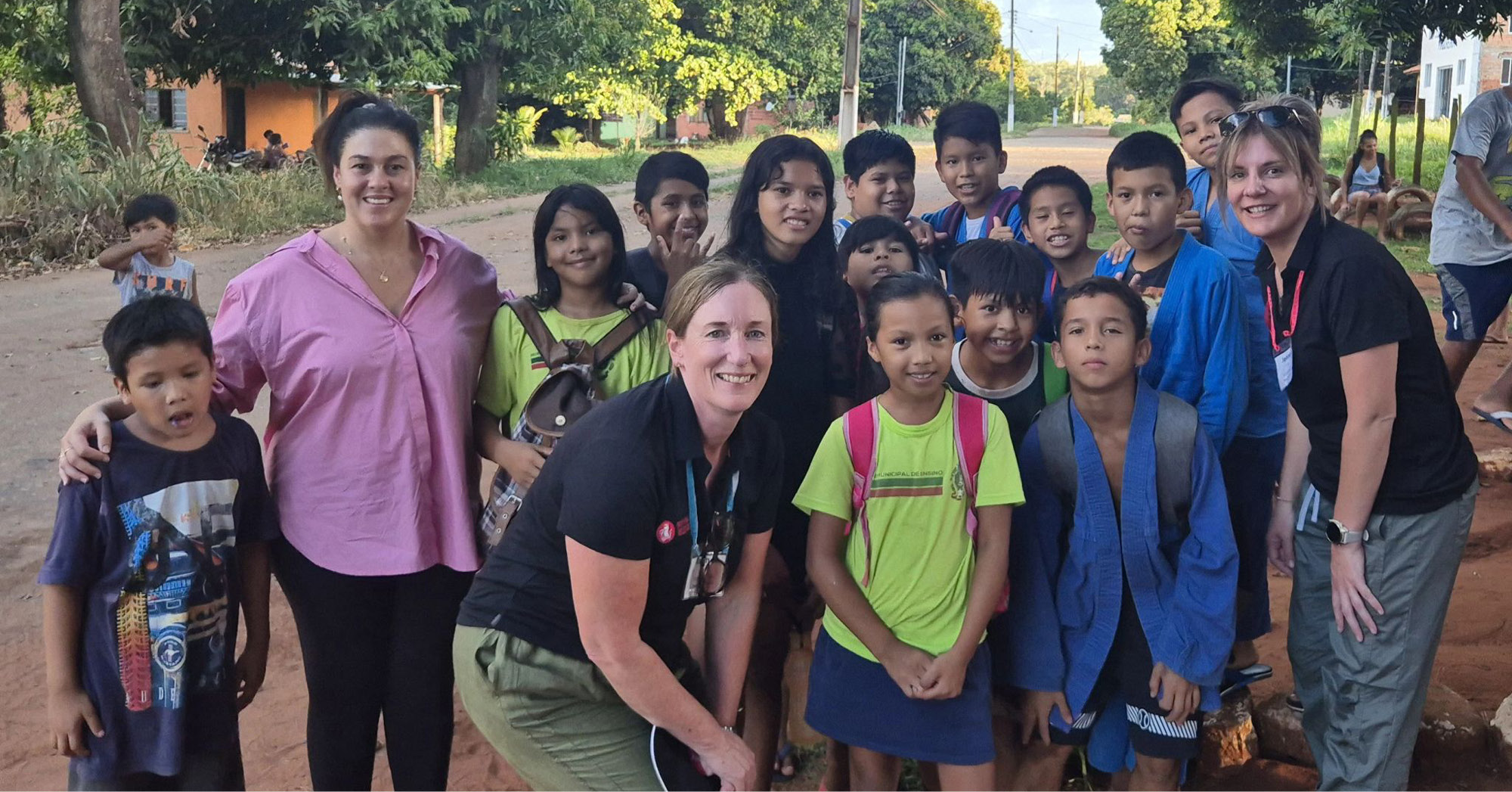
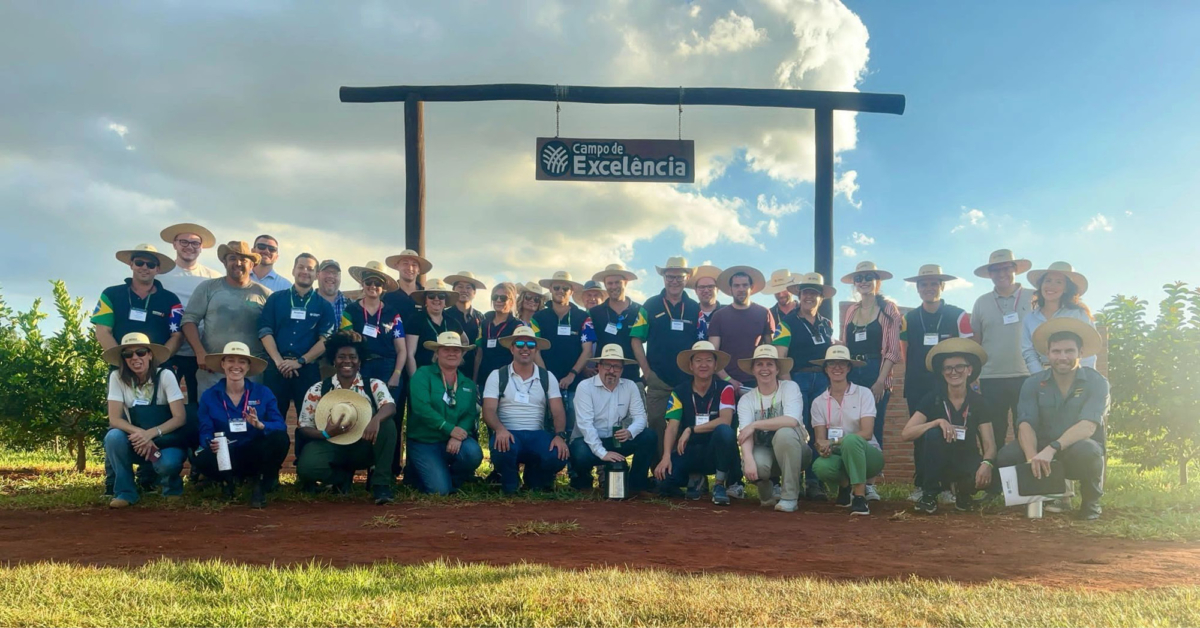
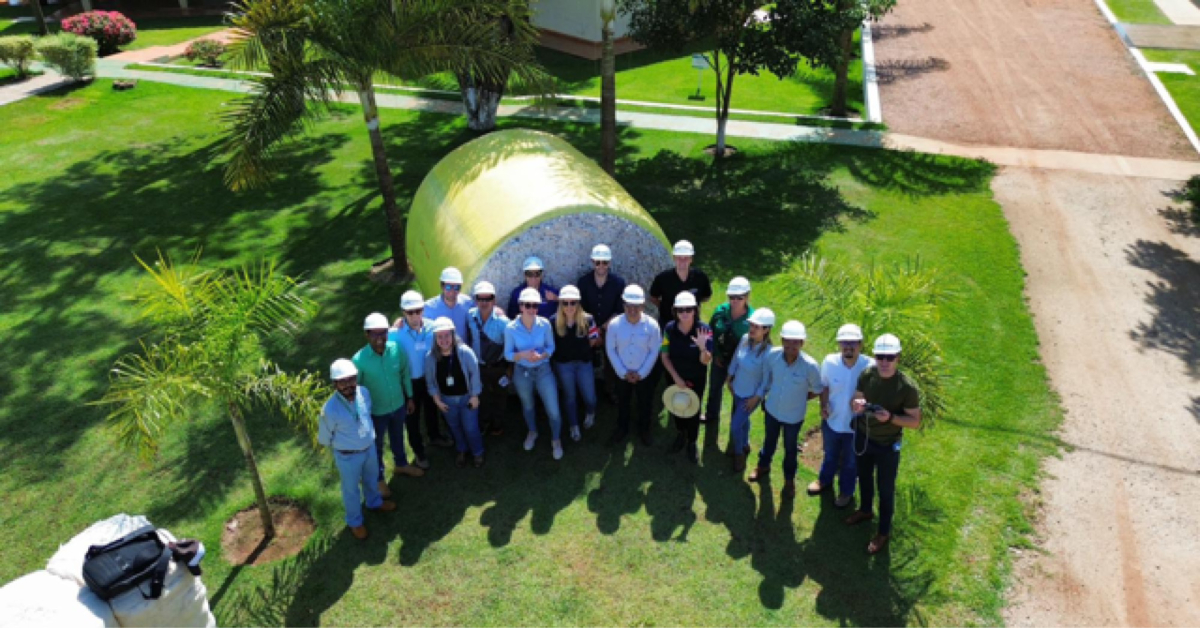
2024 Nuffield Scholars from across the globe headed to Campo Grande in Brazil for the Contemporary Scholars Conference (CSC). Our own Scholars: Rachel Baker, Jenna Smith, Carlos Bagrie and Peter Templeton joined Rural Leaders CEO, Lisa Rogers and Chair, Kate Scott at the Conference. For many, the Conference kicks off their research travels officially.

To give some idea of the sights seen and insights gained on the nearly month-long time abroad on the CSC and post conference tours, we share a few of Jenna and Rachel’s LinkedIn posts and images. (There’s a couple there from Lisa Rogers as well).

Rachel Baker,
Post 1

Ready…set…fly! I’m heading off with my fellow Nuffield NZ 2024 scholars for the CSC Scholars Conference in Campo Grande, Brazil. Looking forward to connections, learning and new experiences while flying the flag for the NZ food sector.

Jenna Smith,
Post 1

“Everyone wants to go to heaven – but nobody wants to die…”

And herein lies the complexity when having global discussions about decarbonisation – let alone our domestic perspective on our responsibilities.

I’ve had a fascinating start to the Nuffield Contemporary Scholars Conference here in Brazil. Really thought provoking initiatives and conversations about some wicked problems.

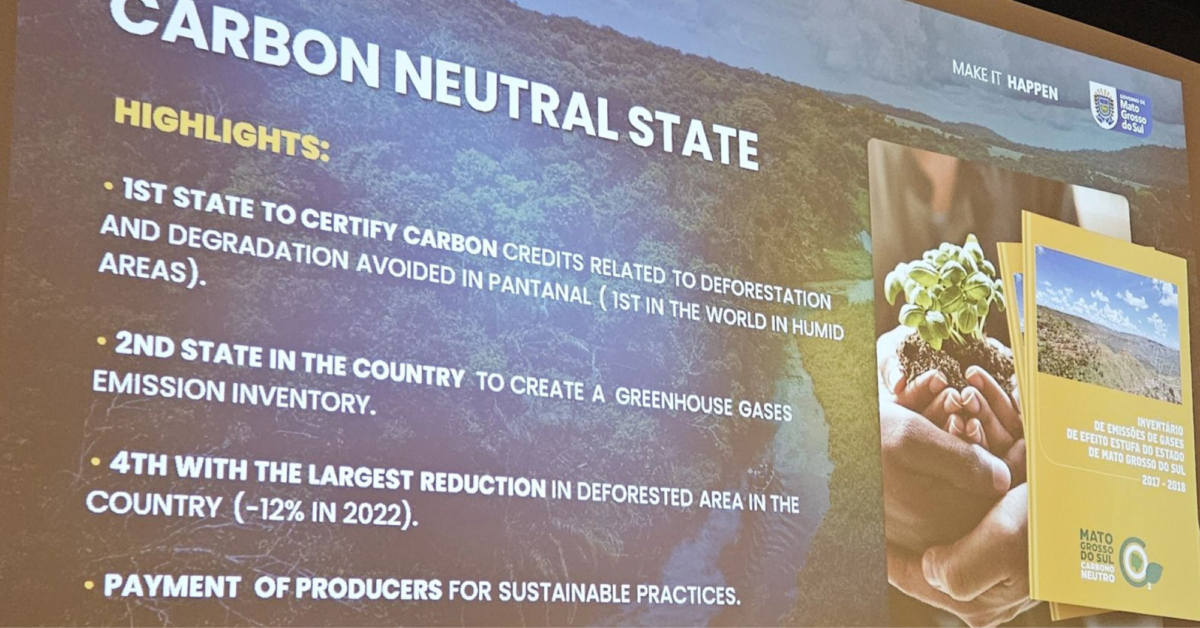
Although not perfect – and none of us are – I’ve really enjoyed hearing about Mato Grosso do Suls journey to sustainability, and their ambition to ‘Make it Happen’.

Rachel,
Post 2

My impression of my time in Brazil is of a vast country, of contrasts, and big aspirations for the world stage. A proud patriotic people, of mixed origin and traditions, welcoming and open with visitors.

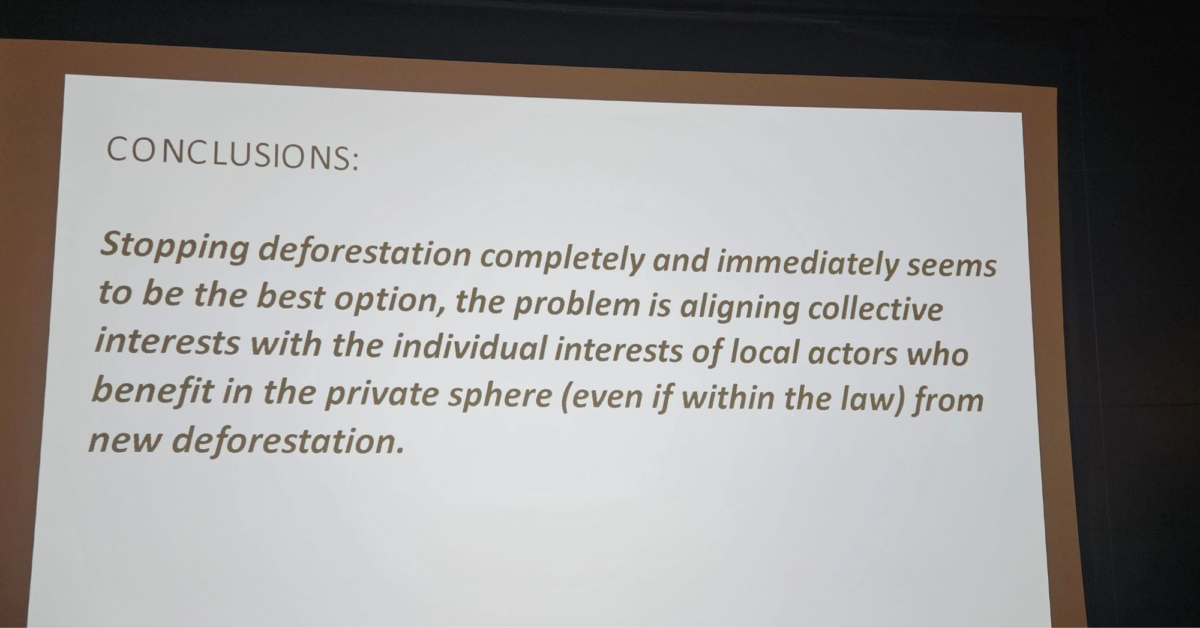
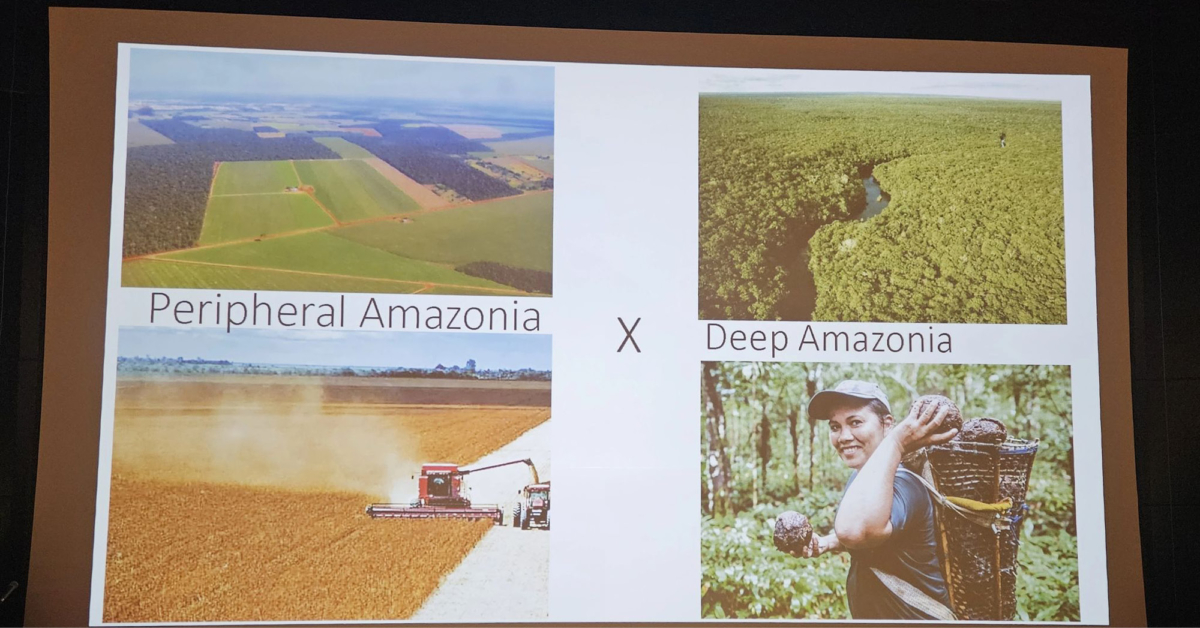
Policy makers want to bring biodiversity to the forefront of global climate change conversation, believing decarbonisation is a Northern Hemisphere agenda. By law, a % of farmed land has to be retired and planted, from 20% in Mato Grossa du Sol to 80% in the Amazon. Satellite imagery is used for compliance.

Food production is simply mind boggling in scale – they are the world’s 4th largest producer of food and the 3rd largest exporter of food (forecast to be 2nd by FAO). Orange juice, coffee, sugar cane, soya, beef…so much food. Private capital is funding investment which is accelerating growth and opportunity.

Brazil is a country on a growth trajectory well worth following – their scale will create both influence and impact.

Jenna,
Post 2

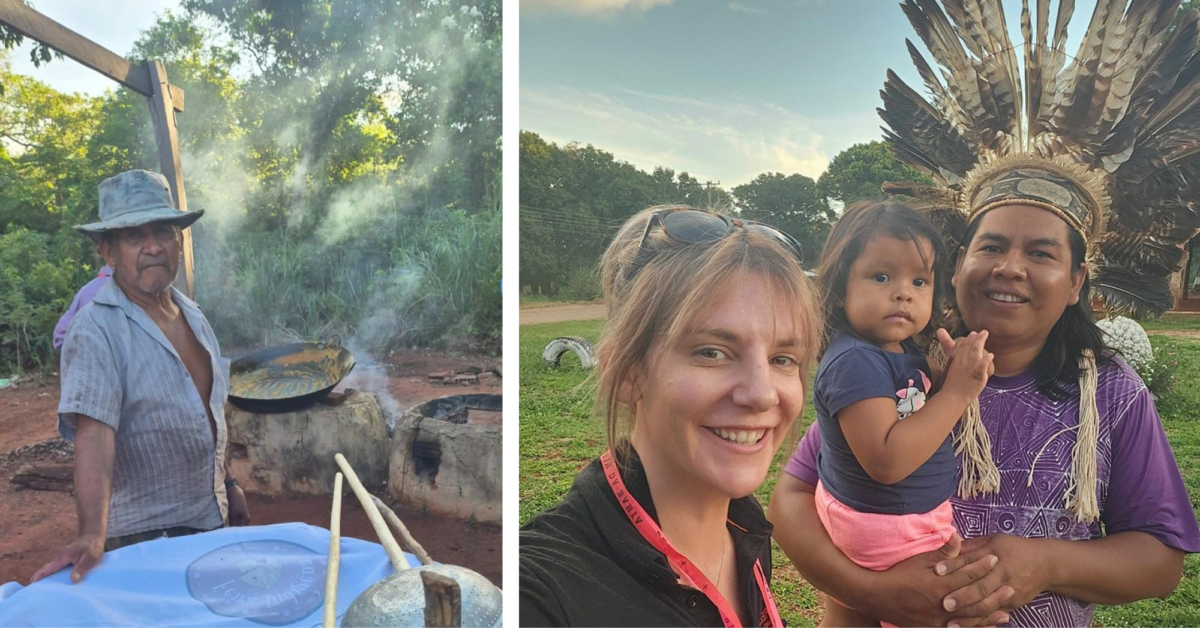
Visiting Aldeia Brejão and the Terēna people on the Nioaque Indigenous Land, in Mato Grosso do Sul was something I’ll play back over and over again. Their sheer determination to be a part of the solution, even with little influence, was awe-inspiring.

This Indigenous community spoke at length about their part and the importance in bringing together ecosystem diversity.

They also know all too well the impact climate change is having on their way of life. The volatile weather patterns have meant it is increasingly harder for them to live from the land according to traditional methods.

Added to this they are noticing the degradation of their natural resources coming through their settlement.

They’re having the conversations that many of us put in the too hard basket, because they don’t have the luxury of sitting by and waiting for solutions to come to them.

Rachel,
Post 3

An insight into coffee production from my Nuffield travels in Brazil.

🌳Brazil is one of the world’s largest arabica coffee producers, of which ~50% is exported. Check where your coffee beans are sourced, it’s very likely to be from Brazil!

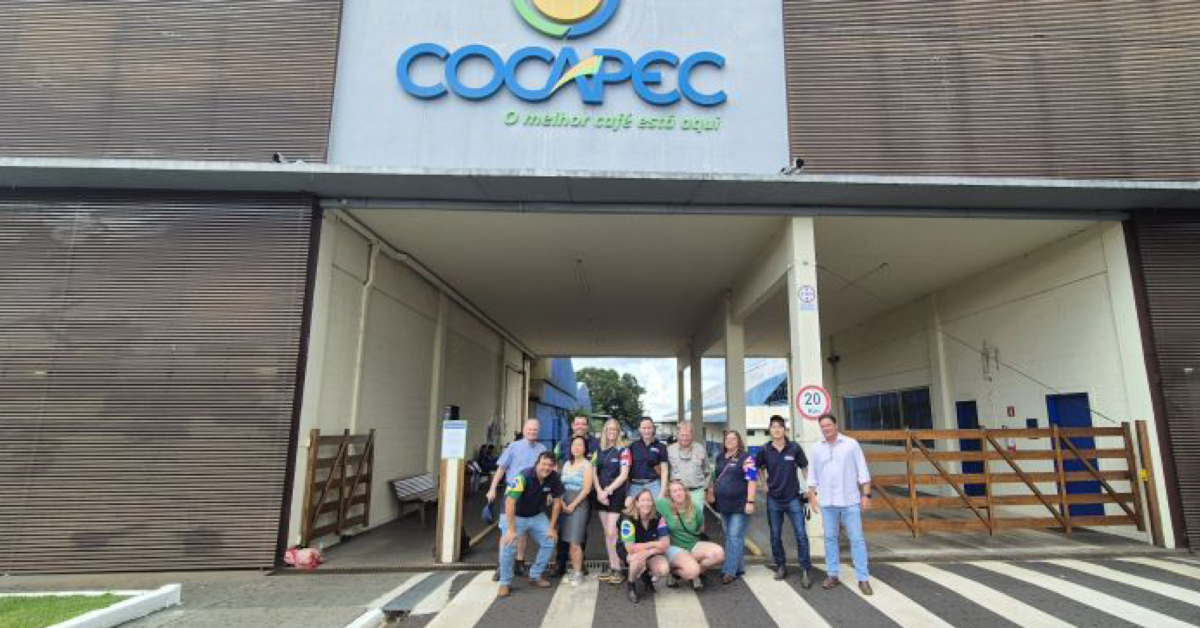
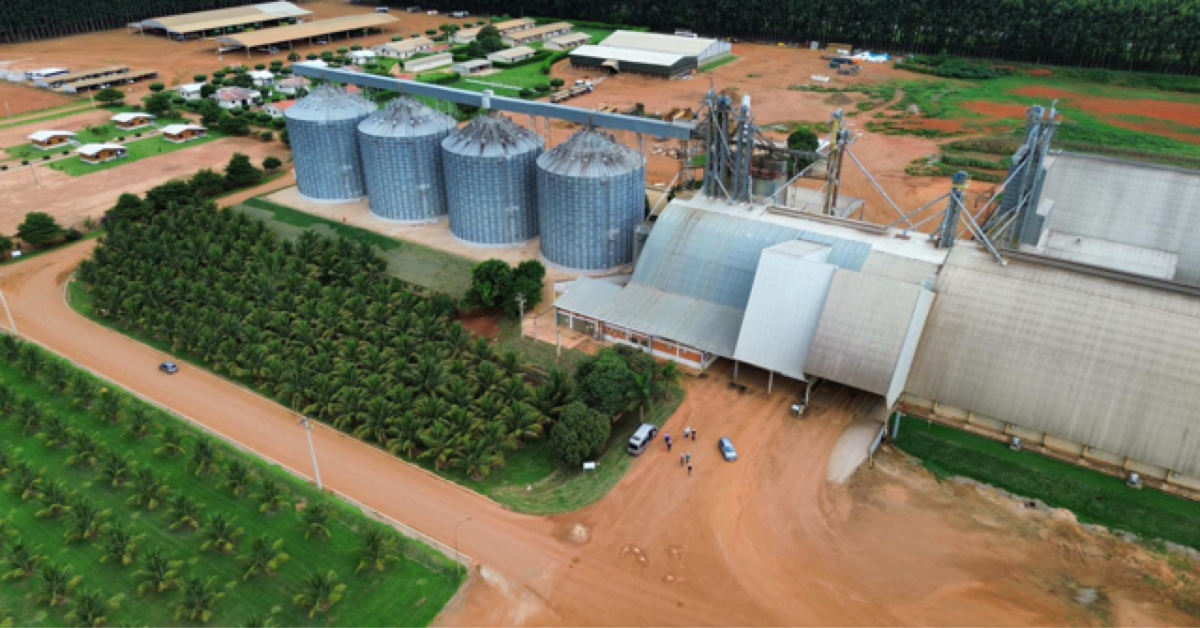
🤝We visited Cocapec, a coffee cooperative in Franca in Sao Paulo state, which receives and processes 1.5m tonnes of green coffee beans from 3,000 members for sale on a trading platform.

🌱Supply is from 100,000 ha of plantation, from 5-10 ha properties to thousands of hectares.

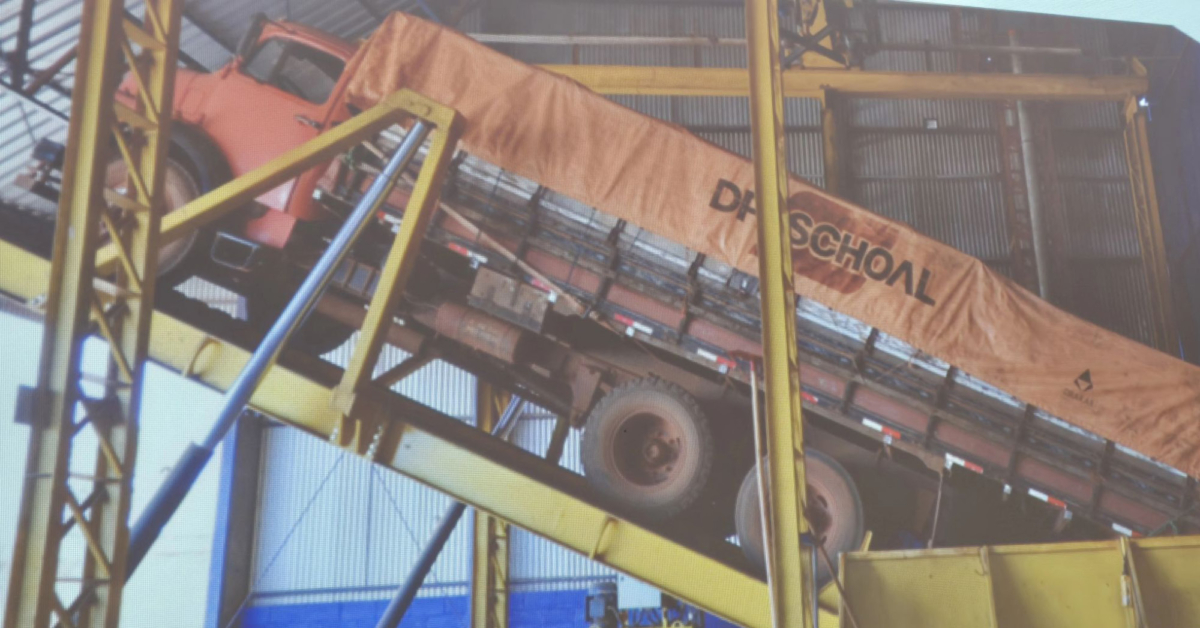
🚚Trucks are emptied by hydraulics, which lift the entire truck!

👩‍🌾The grower keeps ownership and control of their beans through to the point of sale, instructing the Cooperative what and when to sell and an expected price.

☕️Coffee beans are grower currency, they can pay for goods they purchase from Cocapec with coffee.

❄️The sector was impacted heavily by a huge unforeseen frost event in 2021, followed by a prolonged dry period, which killed or damaged trees and reduced yield by 50%. Yields are nearly back to 2020 levels.

🌱Harvest is now predominantly mechanized which reduces costs by 25-30%.

👨‍🌾Farmers are supported by Cocapec agronomists, scientists, laboratory testing, farm supplies as well as government scientists and training opportunities. The Co-op also provides favourable finance options to members for machinery purchases.

💰Coffee has a competitive grower cooperative environment and Cocapec is actively recruiting new members.

Rachel,
Post 4

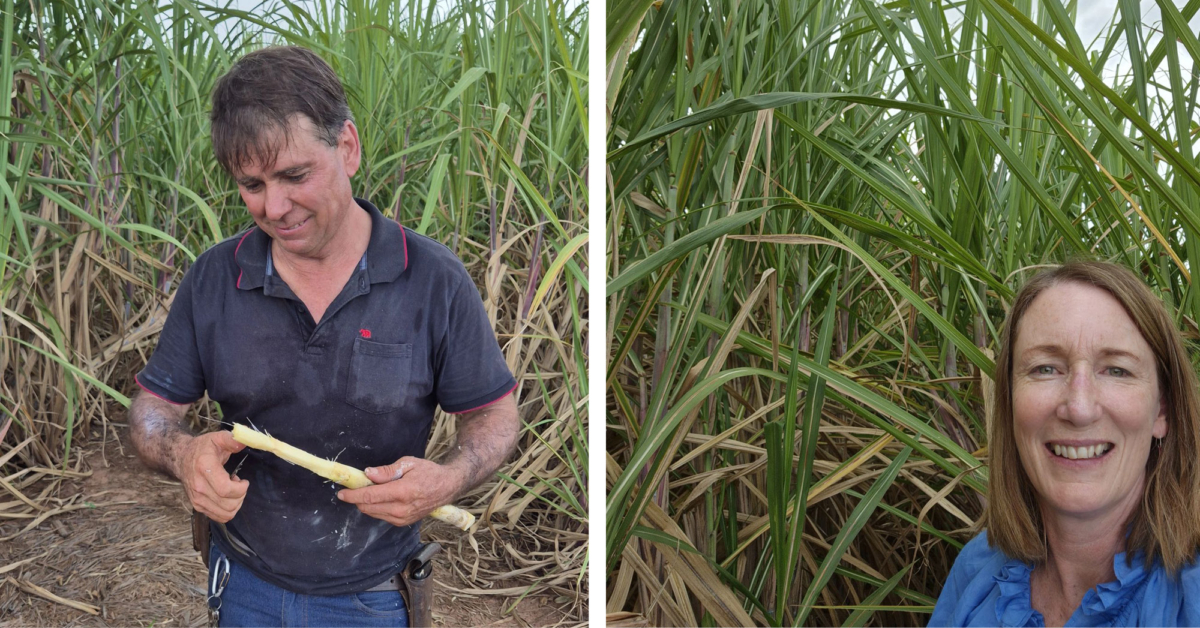
Sugarcane insights from my recent Nuffield travels in Brazil.

Brazil is the world’s largest producer of sugarcane and the highest ethanol producer from sugarcane (the US is the largest ethanol producer, mainly from corn).

🍬The largest global consumers of sugar are India and China.

⚡️Brazilian ethanol producers want to reshape the future of global energy, providing “profitable and sustainable decarbonisation energy solutions”

🌱 Sugarcane is grown on a 7-8 year cycle, yields ~100 tonnes/ha at maturity (5-6m tall), is deep-rooted so doesn’t usually require irrigation.

☀️ Sugarcane is ~12% sugar, 70% water and 18% bagasse (fibrous pulp), straw and minerals.

⚡️Products of sugarcane processing are sugar, ethanol and clean energy (bioelectricity). The process can operate as a circular economy with 99% of by-products reused e.g. 2nd generation ethanol, fertiliser, compost.

🌽Compared to corn, sugarcane produces twice the yield of ethanol for the same area.

🚜 Sugarcane planting and harvesting has progressed to ultra-precision planting with full automation no tillage (reduced GHG emissions by 43%), dual mechanised harvesting and integrated pest management (85% biological). Fuel for the 500-600hp machinery is still diesel but hydrogen and ethanol injection is being trialled.

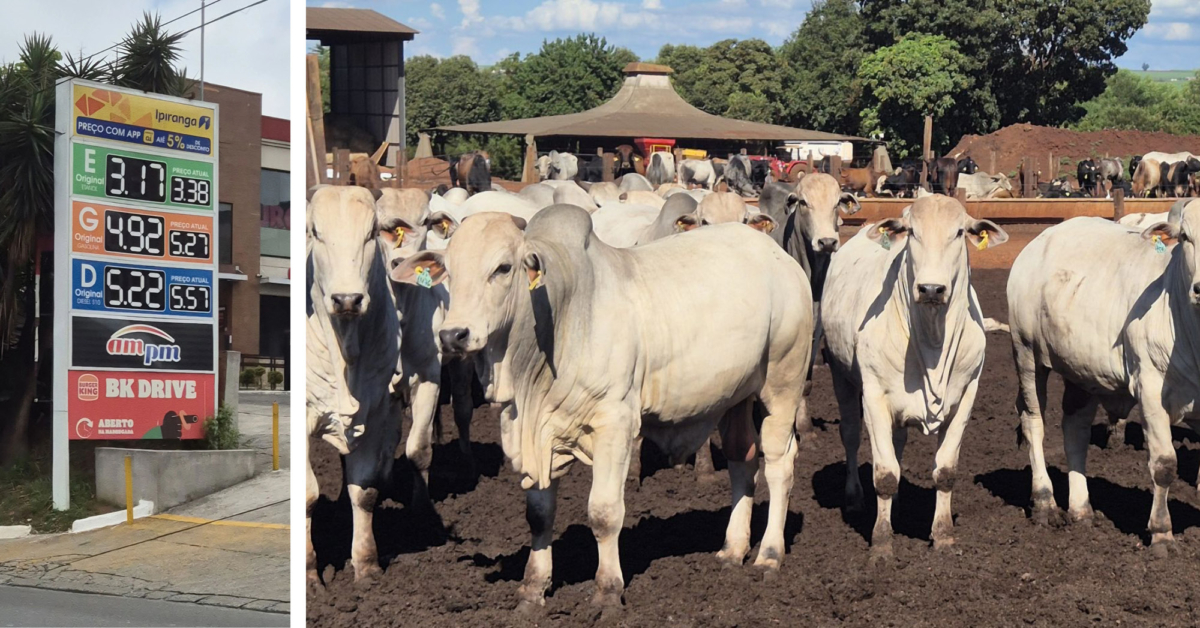
🚘 Cars and light vehicles in Brazil are fuel-flexible and can run on ethanol (NZ$1.05/L) or an ethanol/gasoline (NZ$1.64/L) blend. I didn’t see any electric or hybrid vehicles.

🏭 We visited one of Sao Martinho’s four sugarcane mills. SM is a large 49% publicly listed company. At this mill they process 10 million tonnes of sugarcane (from 130,000 ha) from April to November with a truck arriving every 1.8 minutes for 220 days! 50% of the bioelectricity produced is sold to the national grid and all fleet vehicles run on 100% ethanol.

❓️Could Australia be the ethanol energy supplier to the Pacific?

Kellogg Phase One, Lincoln.

Today, 2023’s Programme One will complete their nine-day (eight-night) residential Phase One module, at Lincoln University.  

Phase One is referred to as ‘Leadership tools and industry contexts’. For those planning to participate in Programme Two (June start), the following summary breaks down what to expect:

  1.  Leadership skills and tools including personal and team styles and outcomes, design thinking and approaches, critical analysis tools. 
  2. Leadership applications of skills and tools in various situational contexts. 
  3. Leadership strategic contexts with specific focus on New Zealand Food and Fibre Sector strategies and leadership challenges. 

Some of the topics covered are:

  • The development of presentation skills, leadership skills, critical and design thinking and research skills. 
  • Break out meetings to discuss your project topic with the Academic Director. 
  • A team building day. 
  • A sector overview and strategic insights on governance, Maori agriculture, and rural communities. 
  • Panel discussions with Kellogg Alumni and a networking function. 

Key dates for the next intake – Kellogg Programme Two, Lincoln (13 June – 30 November).

Programme Two (K50), will mark fifty Kellogg cohorts since 1979. 

Applications for Programme Two, 2023 are currently open and will close on Sunday, 16 April 2023.

You can register your interest and access the Kellogg brochure below or apply at https://ruralleaders.co.nz/application-kellogg/. We encourage you to get your application in early. 

Phase One (Lincoln):  Tuesday 13 June – Wednesday 21 June 2023. 
Phase Two (Wellington): Monday 11 September – Friday 15 September 2023.
Phase Three (Lincoln): Monday 27 November – Thursday 30 November 2023. 

Feeling inspired? Download the brochure with more information:

"*" indicates required fields

This field is for validation purposes and should be left unchanged.
Your name

Receive the Rural Leader in your inbox every month.

AGMARDT supports leadership development with new Kellogg Scholarships.

Lee-Ann Marsh and Nick Pyke, AGMARDT

AGMARDT Trustees have approved support for three new scholarships that seek to improve access to leadership development. The New Zealand Rural Leadership Trust (Rural Leaders) deliver the Kellogg Rural Leadership Programme, a critical point on the rural leadership pathway.  

AGMARDT’s support will manifest as three scholarships specifically for the Kellogg Programme. 

“We want to help improve access to leadership development by countering some of the challenges scholars can face. These may include the ability to meet the financial commitment required to undertake learning.  

It is vital industry does all it can to ensure leadership potential is given the space it needs to grow. To help achieve this, we’re thrilled to give our support to scholars looking to enter the Kellogg Programme,” said Lee-Ann Marsh, AGMARDT General Manager. 

How the AGMARDT Leaders Scholarship works.

The AGMARDT Leaders Scholarship allows three scholars to enter the Kellogg Programme per year. It covers the $6,500 fee for the Programme. A fee already generously subsidised by Rural Leaders’ Investing Partners, including AGMARDT.  

Applicants for the AGMARDT Leaders Scholarship are encouraged to contact the Programmes Manager at Rural Leaders to discuss the opportunity and how it might be best tailored to their own circumstances.  

“We are grateful to AGMARDT for their continued support of leadership development in the Food and Fibre Sector. Their support reflects AGMARDT Trustees’ desire to make leadership development as accessible as possible, especially those who might not have the balance sheet support of bigger organisations.  

This also recognises that in a fast-changing environment, we need grounded leaders who are strategically capable, now more than ever,” said Chris Parsons, Rural Leaders CEO. 

The new AGMARDT Leaders Scholarship will be available from Kellogg Programme One, January 2023, and joins three regionally available Scholarships that also support participation in the Kellogg Rural Leadership Programme.

These are:

AGAMRDT Leaders Scholarship 

Three scholarships to participate on the Kellogg Programme per year valued at up to $6,600 each. These scholarships seek to increase access to leadership development. 

Whanganui and Partners Regional Scholarship 

Two scholarships per year to promote leadership in the Whanganui Region. Valued at $2,500 each, the scholarships are available to those attending NZ Rural Leaders Programmes who are from the Whanganui region or contributing to the Whanganui region.  

Te Puni Kōkiri Scholarships 

Up to two scholarship places on the Kellogg Rural Leadership Programme may be awarded. Valued at $6500 each, the Te Puni Kōriri Scholarships support Māori in the Food and Fibre Sector to develop stronger strategic leadership skills. 

Whāngarei A&P Society Scholarship 

One scholarship per year to cover fees. The Whāngarei A&P Scholarship aims to grow future strategic leaders for Northland’s Food and Fibre Sector.  

Dame Jenny Shipley: On Leadership. On Point.

On leadership. On point.

Lynsey Stratford has discovered farmers make a few assumptions that aren’t very helpful – like accepting the fact that work might be dangerous and there’s nothing anyone can do about it. As Lynsey explains, “There are changes we can make, but those assumptions and those mindsets have been deeply held for quite some time.” 

As a consultant, Lynsey helps the primary sector with people management and development services and training. And, when it comes to health and safety she says, “We shouldn’t expect people to just know this stuff, but rather teach them and support them as they develop skills.” 
 
Lynsey’s research report unpacks the paradox that while farmers care about their people, farms as workplaces are overrepresented in fatal accident and injury statistics. So, what can be done to improve this?

Bryan Gibson, editor of Farmers Weekly.

I’m Bryan Gibson, Farmers Weekly Editor. This week, I have a very special guest, Dame Jenny Shipley. How’s it going? 

Dame Jenny Shipley, 1984 Kellogg Scholar, Bay of Islands.
Very well, thank you.

Bryan: Good. And where are you calling in from today?

Dame Jenny: Well, I live in Russell in the Bay of Islands now. And while I still do a lot of traveling domestically and when I can internationally, this is where we call home.

Bryan: Oh, wonderful. The winterless north. 

Dame JennyThe winterless north, and it couldn’t be a greater contrast really, from my beautiful Canterbury electorate. But even learning to garden in the north is an entirely different process. But I’m enjoying it very much. 

Bryan: Now, you grew up down in the Deep South, is that right? And spent a lot of your political career at least, in MidCanterbury?

Strong South Island roots.

Dame Jenny: Yes, I was born in Gore and my father was a Presbyterian Minister in Pukerau at the time. So many of those early roots were in a truly rural area. And interestingly, I’m going back there this weekend to take part in a nice ceremony.  So I stay connected with a lot of those old roots, even though I’m now living somewhere else. 

I spent a lot of my time in the South Island, and the early part of my life, in Nelson and that also has transformed. I don’t think there was a grapevine in Blenheim, or in the Marlborough area when I was a child. It’s a magnificent example of intense of horticulture today.  

As a student I went to Canterbury and met Burton and the rest is history. We farmed and then I went into politics and had the great privilege of representing one of the most productive electorates in the country in that central and Mid-Canterbury area. 

Bryan: Such a powerhouse of a rural area isn’t it? 

Dame Jenny: Very much, yes. 

Kellogg and the desire to lead.

Bryan: You connected with Rural Leaders for the first time doing a Kellogg Scholarship back in the early eighties, is that correct? 

Dame Jenny: Yes. We were young and farming, and I was already involved in a lot of community leadership. At that time the challenges for agriculture in New Zealand were huge. The change was immense, the economic viability was demanding, interest rates were horrifying. Rural communities were very active, with a lot of emphasis on leadership.  

I got given the opportunity to apply for the Kellogg Rural Leadership Programme, which was an emerging force at that stage. I forget whether it was year three or four that I was a member of – but it was a fabulous experience and in many respects it clarified my desire to lead.  

The Programme taught me a lot about what else I needed to focus on in order to be effective. But it definitely gave me the strength and sense of impetus to get on – initially as a Counsellor in my local Malvern area and then into politics. 

Is sector history repeating?

Bryan: We talk about the early to mid-eighties in the farming world. It was obviously, as you say, such a disruptive time. Many people think that we’re going through a similar sort of thing now. Do you see those comparisons? 

Dame Jenny: Well, I think the commodity cycle is much stronger at the moment, although it’s clearly able to be volatile depending on what happens both at home and abroad.  

The other difference, I think, is that agriculture today in New Zealand is not dependent on government subsidies. At that stage you’ll recall, there were multiple transitions going on – the support for agriculture was being removed, the markets were extremely volatile and the farming community was really facing challenges on multiple fronts.  

Even in my early years as a Member of Parliament, the residual effects of that period flowed through – it was a very difficult period. Today I think that while there are huge challenges coming up economically, I personally think the agricultural sector is in a very resilient state.  

But what is different now, is that there are so many regulatory pressures coming on farming which I don’t think were present in our era. And so, yes, there are huge challenges, but I think the economic viability overall gives at least some ability for farmers to confront those. I think the leadership question is different too, though, and perhaps that’s something that needs to change. So it’s relevant for where we are now.  

Bryan: How is that, do you think? 

Dame Jenny: Well, when we were farming, all of us belonged to Federated Farmers. It was a widespread group. Husbands and wives turned up and it was an active process in most local communities. I’m not familiar with whether that’s the case now. But like many organisations, I think that they’ve become more professional.  
But whether the grassroots element of representation is as strong, I don’t have such a feel for that. But I think that what we’re coming into is that we have to have both the agricultural leaders reflecting the experience of farmers on the ground and making the case very clearly about what can and can’t be done, and indeed what has been done.  

We need to share our good news more often.

If I can just pause on this point for a moment. I’ve observed enormous change by farming in response to public pressures. I travel quite a lot around the country and have just have been down through the Waikato – right into the West Coast part of it.  

One of the things that struck me over the last five years is that what started off as tree planting on agricultural land for emissions purposes, now the work around wetlands and the fencing of streams and things. New Zealanders can be very confident that the farming community is not only responding but leading in some of these areas.  

To come back to the point, I think that for farming to advocate for itself, it’s not only advocating for what’s annoying and frustrating them, but there’s also a huge need for us as an agriculturally strong community to continue to share both the gains and the commitment of the agricultural community to farming well both for themselves, the community, and the future. I think that’s a big change.  

When we were farming, many were just farming to survive. Now, I see farmers all over the place investing not only in best practice for themselves, but I do see a lot of change. I think the voice of that needs to be shared across the community much more broadly so that the urban New Zealand population both values agriculture and understands that it’s moving in response to many of the concerns that urban communities have. 

Bryan: Farming, as you say, is always evolving for the most part in New Zealand because we are very good at it, and improving. That gets lost sometimes. 

Dame Jenny: Well a lot of it is a social response. I mean, farmers will tell you that they are fencing streams and planting for their own benefit and the benefit of their own environment. But there’s a huge public good element in it which unless people either have a chance to see, or you share how much is being done, or see the change that’s going on.

A sector supporting New Zealand through tough times.

I think that urban-rural split has always been a risk in New Zealand and it’s one we can’t afford to give airtime too. Because, frankly, if you just thought that even in the COVID period, if we had not had a strong agricultural sector during the last three years when the global economy had been disrupted, New Zealand’s position economically would be far more dire than it is at the moment.  

Tourism collapsed, a number of other productive areas were compromised and yet agriculture was able to carry a huge proportion of the earnings, as it’s always done. But thankfully, on a strong commodity cycle at this particular time, and again, I think we should name the value of agricultural exports. The effort agriculture puts into the New Zealand economy to support our way of life, in a broad, holistic sense – not a them and us sense. 

We’re in this together, being the best we can be at home and selling the best we can abroad in a best practice sense. I think if we keep sharing that over and over again, there’ll be a better understanding between rural and urban communities. 

Leadership needs to reflect the people on the ground.

Bryan: Just touching on what you mentioned earlier about how historically, people like Federated Farmers, organisations like that, had a very, kind of a, grassroots focus. It’s quite evident at the moment around the emissions pricing process that a large number of those grassroots farmers think that the farming leadership has, if not deserted them, then certainly not represented them well. What’s your take on how they go about that? And what are the challenges that those farming leaders have in engaging with the government on things like this? 

Dame Jenny: Well look, I’d be the last one to criticise them because I know how hard it is. I have admired the agricultural leadership, that they have taken a more inclusive, let’s find solutions together approach. I have been involved in a number of significant working parties not only on emissions, but in a number of areas that I can think of which I’ve simply been a distant observer. But I’ve noticed that level of engagement.  

The problem is, in any leadership model, if you aren’t both working with, and then reflecting the people on the ground who actually live agriculture every day and have to implement the stuff, not only physically but also economically, then you have to test whether your leadership is in isolation as opposed to being able to carry people forward.  

I do think we have to support the leadership group because unless they are able to foot it with the officials and the government ministers and be supported at that level, then they’re clearly not serving their constituency anyway. But every organisation, and I don’t want to make a judgment on Federated Farmers because I simply am not close enough to it, but there have to be systems where it’s not only consultation.  

Often we say, well, we consulted, or we sent out a document and gave them a chance to comment. I think that for people to genuinely become supporters of a regime, they have to have a deep sense of ownership. They need to be able to see themselves in whatever is proposed as opposed to seeing something being imposed on them, which they don’t or can’t relate to.  

So the test of high quality engagement and consultation has got to be that measure of – can the people we’re representing see themselves in the proposed solutions or are we just saying, well, regardless of what you think, you’ve got to be there in five or ten years’ time. That’s not easy to do. I think in New Zealand’s circumstances, whether it’s agriculture or Maori – Pakeha relations, or any of the other demanding spaces, we’ve just got to put the time and work into it. 

The power of industry at the highest level of decision-making.

Bryan: Now, just digging into that a little more. I mean, you were obviously in central government for a long time. What’s it like in those meetings with industry? How much power do the industry leaders from the agricultural community have when they sit down around the table with the likes of MPs, Prime Ministers, officials? 

Dame Jenny: The answer is, it depends. And I’m thinking back on two or three occasions where the agricultural sector and governments were working intensely. When a government decides, for example, to break up monopolies, I think the conversations are quite demanding. 

I recall at the time that we decided to break up a number of public organisations, the electricity sector and of course the dairy industry was in the line of sight. That was never an easy conversation and the agricultural leaders, and particularly the directors of the original company very much resisted that. In those moments, you’ve got to put the economic argument of why these particular sectors needed to be able to face competition, not only in their growers interest, but also in New Zealand’s market in the world. The resilience and flexibility to attract investment.  

We were trying to grow the New Zealand economy and grow the efficiency of the New Zealand economy in the world. So to some extent, in those big strategic moments, it’s tense, because sometimes you’ll have agricultural leaders with you as champions. Sometimes you’ll have small players wanting you to act and take on the big players. 

So there’s many dynamics going on.  

Usually before those moments, if it’s a strategic question, the ministers will have debated the relative merits of this before they go barging in and say, well, look, the government has decided to strategically move forward and create competition in the agricultural marketing sector, or whatever it is. And then you try and engage.  

It’s a wee bit like the emissions environment where you’re having to say, look, we have to work out a way in which to change. It is going to be different from what is the case now, so let’s try and work out where the mechanisms are and how we can move forward.  

Sometimes you’re responding to requests from the agricultural sector to solve problems and then it’s straightforward. Your meet as equals at the table. You put the facts on the table, you get the officials to work through and come up with a solution. Often in the majority of cases, things just get sorted out. But in the big, complex policy issues, where big change is required, there’s higher degrees of tension, but generally you get there in time. 

The Kellogg Programme and leadership pathways.

Bryan: Now, you mentioned to me before we came on that as well as the Kellogg Programme, you’ve been involved in a number of other leadership programmes. Do you think there are good pathways into leadership positions in New Zealand at the moment? 
 
Dame Jenny: The Kellogg Programme is fantastic. I’d encourage any community to keep identifying young leaders and to promote them into those Programmes. Often people think, these people are too young. I must have been, I don’t know, 32 or thereabouts when I went into Kellogg. Often at that stage, you haven’t identified your leadership purpose and your particular intentions as to how you will use your leadership skills. But others often see leadership potential in those young people.  
 
There’s no question that our political environment, our economic and social environment, need younger people coming through all the time in order for us to be able to shape the future successfully. I would encourage people to look for those chances and look for individuals who they can sponsor or promote and make sure they support them. Because often these are the young people, male and female, who have got kids and are trying to run a farm and all that. So the programmes themselves are a big commitment, but it’s worth it.  

Supporting leadership development.

The other programme, I was actually involved in establishing, was Rural Women Stepping Out, I think we called it at the beginning. It was run out of Lincoln and was only initially a two or three day – and sometimes only a one day programme. 

But it was at a time where there was huge economic stress on many farming communities. Lots of women came and had lots of examples of how women entrepreneurs were establishing small rural businesses to supplement the income of farms at that time.  

Much of it was in the cottage industries, or services – many aspects of agriculture. I think that sharing and bringing together helped a lot of those women sustain the pressure of that period. I guess my point here is, rural communities are very important to New Zealand and keeping both men and women well and supporting them to be as engaged as they can be, both in running the farms and running the rural communities of which they’re a part.  

Any support in leadership and leadership development is well worth the investment. So whether it’s the leaders at universities or the sponsors that are the companies who make these things happen, so that these families can make the choice, I think agriculture and New Zealand benefit from programmes like Rural Women, the Kellogg Programme and the Field Scholarships. All of those platforms are invaluable in terms of the legacy and the investment that they’ve made. 

Bryan:  Thanks for listening to Ideas That Grow. This podcast was presented by Farmers Weekly. For more information on Rural Leaders, the Nuffield New Zealand Farming Scholarships or the Kellogg Rural Leadership Programme, please visit ruralleaders.co.nz 

Katie Vickers: Banking on a sustainable future.

Ideas That Grow: Katie Vickers: Banking on a sustainable future.

Lynsey Stratford has discovered farmers make a few assumptions that aren’t very helpful – like accepting the fact that work might be dangerous and there’s nothing anyone can do about it. As Lynsey explains, “There are changes we can make, but those assumptions and those mindsets have been deeply held for quite some time.” 

As a consultant, Lynsey helps the primary sector with people management and development services and training. And, when it comes to health and safety she says, “We shouldn’t expect people to just know this stuff, but rather teach them and support them as they develop skills.” 
 
Lynsey’s research report unpacks the paradox that while farmers care about their people, farms as workplaces are overrepresented in fatal accident and injury statistics. So, what can be done to improve this?

Bryan Gibson – Editor of Farmer’s Weekly.

I’m Bryan Gibson, the Farmers weekly editor. This week, I’m with Katie Vickers. How’s it going? 

Katie Vickers – 2019 Kellogg Scholar.

Good, Bryan. 

Bryan: And where are you calling in from? 

Katie: I’m ringing in from Fairlie today.

Bryan: And that’s where you call home at the moment?

Katie: Yes. Recently moved down here from Christchurch. So getting back into the rural life. But loving it.

Bryan: And you are currently working for Rabobank as a Sustainability Manager, is that right?

Supporting producers through changing times.

Katie: Yes, I am. My role is around helping to support the banks sustainability ambitions and supporting our clients, in what is a reasonably challenging environment out there – just helping and supporting them, understanding what changes are coming and how that will impact their businesses and I guess wrapping our arms around them and helping them through that. 

Bryan: You’re right, there’s a lot of stuff going on in that space that farmers have to deal with. So it’s kind of cool that the banks are arm in arm with them facing up to that challenge, isn’t it?

Katie: Yes. And I guess the changes are pretty complex, but we probably need to start thinking slightly differently around how we tackle some of those challenges.  
 
One of the reasons I wanted to work for a bank was that you can see that they’ve got quite a strong lead in terms of how they can support clients. I guess at Rabobank we’re committed to the agri-sector and I love that kind of passion they’ve got for the sector. 
 
Our role is around how we support them, but also how we link them up with the right knowledge and networks. Because it’s such a complex topic and so different for every farming system. So it’s important for us to be able to understand their unique needs and make sure that we’ve got the right toolkit to support them in making good decisions for their business. 

Researching food nutrients on Kellogg Programme.

Bryan: Have you always worked in the agri-food sector or is it something you’ve evolved into over time? 

Katie: No, I’ve always been in the agri-sector. I grew up on a sheep and beef farm just north of Kaikoura, went to Lincoln University and then decided after Lincoln, that I definitely wanted to stay in the agri-sector.  
 
So I managed to land a job at Farmland’s Cooperative, and I worked there for eight years. About six of those years was actually in marketing, so I’ve come from a marketing and comms background and then spent my last two years there in a sustainability role. Then just recently moved to the bank, so it’s been an awesome journey. 

Bryan: Now, while that was going on, you applied yourself to the Kellogg Programme, and you took a look at nutrients in food. Is that correct? 

Producing food to positively impact human and the planet’s health.

Katie: Yes. So my topic was around putting the food back into food. The question I was looking to answer was what would it take for our primary industry to produce nutrient dense food? I think the reason why I wanted to explore that was I’ve always been brought up with a really holistic approach. I care deeply about the health of our planet and health of our people.  
 
I’ve got a twin sister who is a holistic health practitioner, so she works on the how do we help people’s health, because we’ve got a massive crisis in that space. 
 
So my passion has always been, what role does agriculture have to play in that? How do we work with our soils better to influence the food that we eat, which in turn influences the health of our people? It’s a massive topic. It was hard to even scratch the surface on a lot of that stuff.  
 
I did a lot of interviews and research with soil scientists, nutritionists and industry leaders, and I got some really cool insights out of that. No real answers, but lots of different things to consider. 

Bryan: People would think the food that New Zealand food producers make is nutrient dense and natural and grass fed and all that sort of thing already. So is there more that can be done at the farm level to enhance that? 

Kellogg research and the impact of soil on the food we produce.

Katie: I’m not an expert in this space and I will never claim to be, but my thinking was really expanded when I read Nicole Masters’ book – For the Love of Soil. She talks about the relationship that we have with the soil. In this day and age, there’s so much more we’re learning about the soil and the microbiology of the soil, and the knowledge we have of that is growing.  
 
As we understand more, we need to do more on-farm. So the role that my research played was understanding that today we use a lot of synthetic fertiliser, and we have quite a strong reliance on that, and that hasn’t been a terrible thing, but moving forward, how do we understand how to use our soils better so we don’t need to have such a reliance on some of those synthetic inputs coming into our farm systems. 
 
I you look at the kind of environment we’re in today with the rising input costs, it’s about how do we create more resilient farming systems, and having a different lens on what that might look like in the future. So the research I did was, okay, how do we understand our soil more to understand the impact it has on the food that we produce? 

Bryan: And what sort of insights did you get from some of the people you interviewed? 

The shift to quality over quantity and premium pricing.

Katie: One of the really interesting ones I did, I didn’t actually interview him, but I did a whole lot of research on the work that Dan Kittredge has done out of the States. He’s got a business called The BioNutrient Food Association.  
 
His role is looking at some tools consumers could use in the future to be able to scan Apple A and Apple B as an example and see the different nutrient composition of those apples and therefore make a decision as to why they might be paying $2 more for Apple A because it’s got a higher nutrient profile.  
 
Those tools aren’t in market and in bulk yet, but I have absolutely no doubt they will be in the future. So that’s the kind of thing could change the landscape of farming, when consumers have got the power in their wallet to be able to make those decisions, to say, well, you know, I want to know why I’m paying more for this apple, because I’m getting the nutrients that I need. With that, you’re hoping there’s been less environmental degradation to produce that product, whether that be apples or meat or whatever. 

Bryan: Yes, I guess that sort of thinking has become more prevalent with the pandemic, with people really thinking a lot about what they eat and keeping their base level health as high as it can be. So it’s really top of mind for a lot of people. 

A food system under stress.

Katie: For sure. I think it’s pretty obvious our food system is under stress. And whether it’s talking about a climate crisis, a human health crisis or health crisis, a biodiversity collapse, there’s all these different things that play in to each other. One of the key points I like to think about is that we don’t want to look at these things in isolation.  
 
If you look at the human health crisis we’ve got, and even the latest pandemic, these pieces have a real interconnectedness and it’s quite a different way to think about it.  
 
I think the more that we think about the connection between the crisis of our planet and the crisis of our human health at the moment, it might help us to think differently around how we handle these things in the future. 

Bryan: That sort of thinking ticks a few boxes at once, as you say. It can do more for people’s health – and a focus on soil can also do more in terms of freshwater quality and in terms of greenhouse gas emissions and biodiversity. All sorts of things do come together as one.  
 
A lot of people, when you talk about, say, regenerative agriculture or related fields, a farmer might say, well, I’ve yet to see the value-add for me. So if I’m going to reduce production to adopt these things, I need to make that up somewhere else. 
 
So how does a sustainability manager at Rabobank approach these things? 

Planting seeds – one conversation at time.

Katie: That’s a great question. I guess my personal mission is to just plant little seeds in people’s minds around how they think about these things. I guess I’ve always believed that you’ve just got to approach it conversation by conversation and people will take different things from the conversations that they have with you.  
 
My role at the bank, is to just support and understanding and what role Rabobank needs to play in this space and how we support our clients. That’s going to look different for every client we have.  
 
We have some clients that are in the regenerative space and really loving it and seeing benefits. We’ve got others that will want to be exploring it and others are saying, that’s not for me – there’s no right or wrong, it’s just how do we help create resilient farming systems in the future and make sure that people are profitable, sustainable and enjoying the life they lead. Because at the end of the day, if they’re not doing that, there’s not a huge amount of value in it.  
 
So I guess my role is just to have these conversations and I see business having a really important role in influencing the way we think. And as a young leader, I guess we can help create the future and it’s important that we are part of that. I want to be part of creating that future. 

Katie Vickers, Kellogger, Rabobank Sustainability Manager.

Bryan: I guess Rabobank being a global, agriculturally focused bank would have a sort of a long term view and a strategy around where things are going and what needs to be done to continue to do business in this space. So that would feed into a lot of the work that you’re doing? 
 
Katie: Yeah. We are lucky to have that global aspect. I guess it’s one of the pros of working for such an awesome business because we’ve got all these insights from across the globe to help our thinking. But I definitely reckon New Zealand is leading the way, particularly in the climate space and understanding at a farm systems level, what we’re dealing with.  
 
Bryan: Yeah, it is. And another thing I guess we need to remember is that it’s not just a value proposition, it’s increasingly become a cost of entry and market access, isn’t it? 
 
Katie: Yeah. I was late with that because I’m not a technical expert, but I come from a marketing background but when you have tricky conversations with people who might not agree with some of the changes that are happening, or are struggling to comprehend it, which I totally empathise with.  
 
One of the pieces I always lead with is the market. We export 90% of what we produce here in New Zealand. So whether we like it or not, what’s happening, what consumers are demanding and what the market is saying, is really important to how we respond. So we have to understand those market signals to make sure we’re producing what’s going to be valuable and what’s needed from our customers. 
 
Bryan: Yes, I used to work a little bit in PR as well, (we used) the old adage, if you’re explaining, you’re losing, quite often. It’s got to be obvious and it’s got to be transparent. You’ve got to front foot these things, otherwise someone will front foot it for you. 
 
Katie: Exactly. 
 
Bryan: So what made you apply to the Kellogg Programme in the first place? 

Kellogg, equipping today’s leaders for tomorrow’s challenges.

Katie: It was part of my development plan when I was at Farmlands, and I am eternally grateful for the opportunity to do the Programme. It was such an important time … the Programme really helped to widen my thinking around what influence business could have in helping to solve some of the challenges I could see coming in the agriculture sector. Having the opportunity to do that was just incredible.  

I know that I probably wouldn’t be where I am today if I hadn’t had the opportunity to do that Programme. I guess it was the people we were exposed to and the time that was carved out to really explore some of the ideas that came up – that was the really valuable stuff for me.  

Bryan: I’ve been to one or two of those Kellogg alumni conferences, and just the feeling in the room is quite different to a lot of places. You know what I mean? There’s such a good sort of camaraderie between the alumni of the Programme. 

Staying connected with the Kellogg network.

Katie: Yes. I think for me, I’m a people person, so the connections with people in the industry were just phenomenal. Even now, if I really want to talk to X, Y or Z to find some information and you said you did Kellogg, people are so willing to talk to you. I guess it just gives you the opportunity to speak to people who will challenge your thinking.  

As I’ve grown up and matured, I love having that. I love having people who will challenge my own thinking because it helps deepen my knowledge and my thoughts. Being able to have the opportunity or the exposure to speak to different people and have different perspectives is just so invaluable. 

Bryan: Thanks for listening to Ideas That Grow, a Rural Leaders Podcast in partnership with Massey and Lincoln University AgMardt and FoodHQ.