2026 Nuffield NZ Farming Scholarship. Apply by 17 August 2025. Read More...

Apply for 2026 Nuffield NZ Farming Scholarship by 17 August 2025. More details...

Engage – a Rural Leaders and Lincoln University programme collaboration.

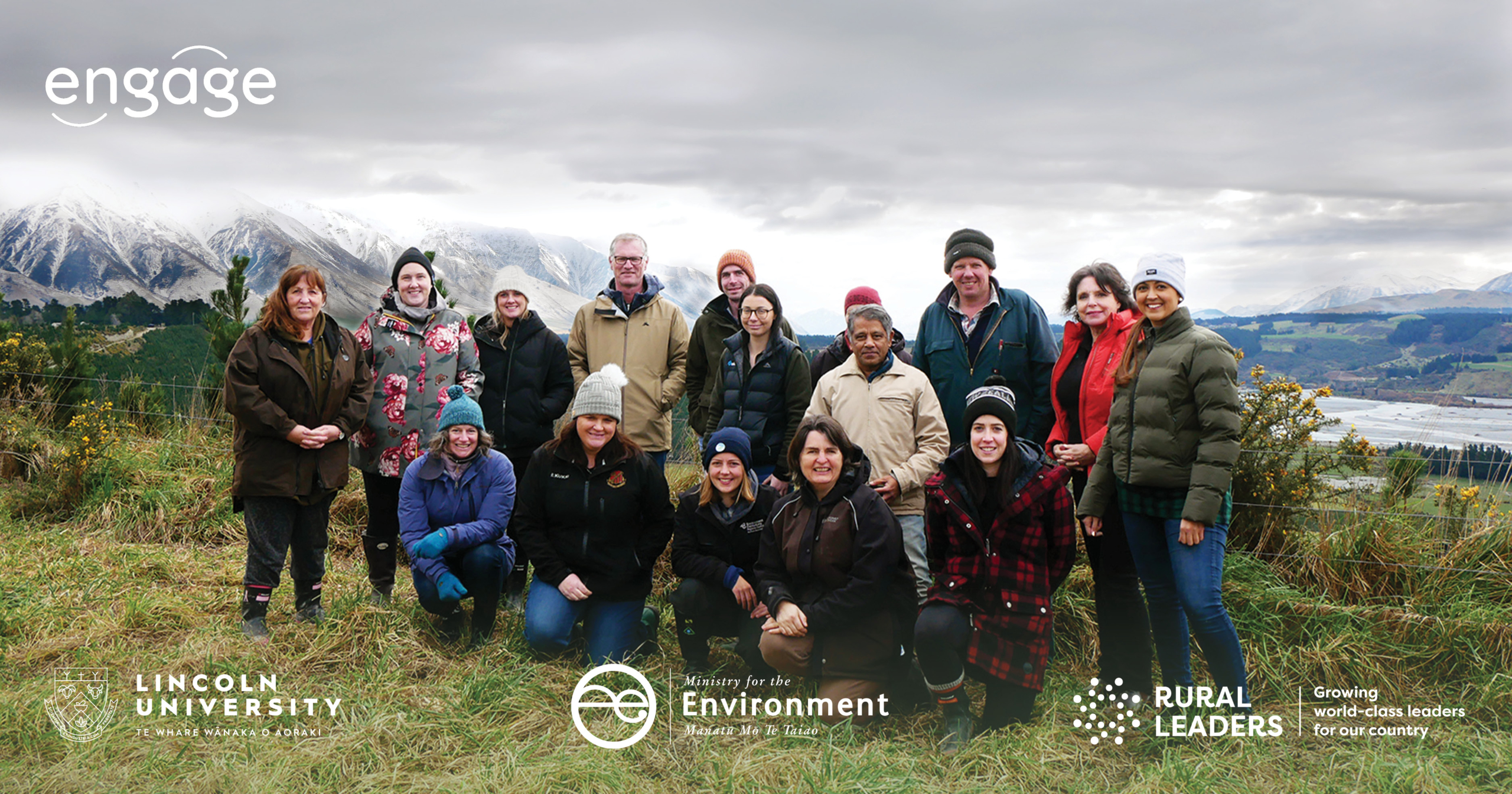
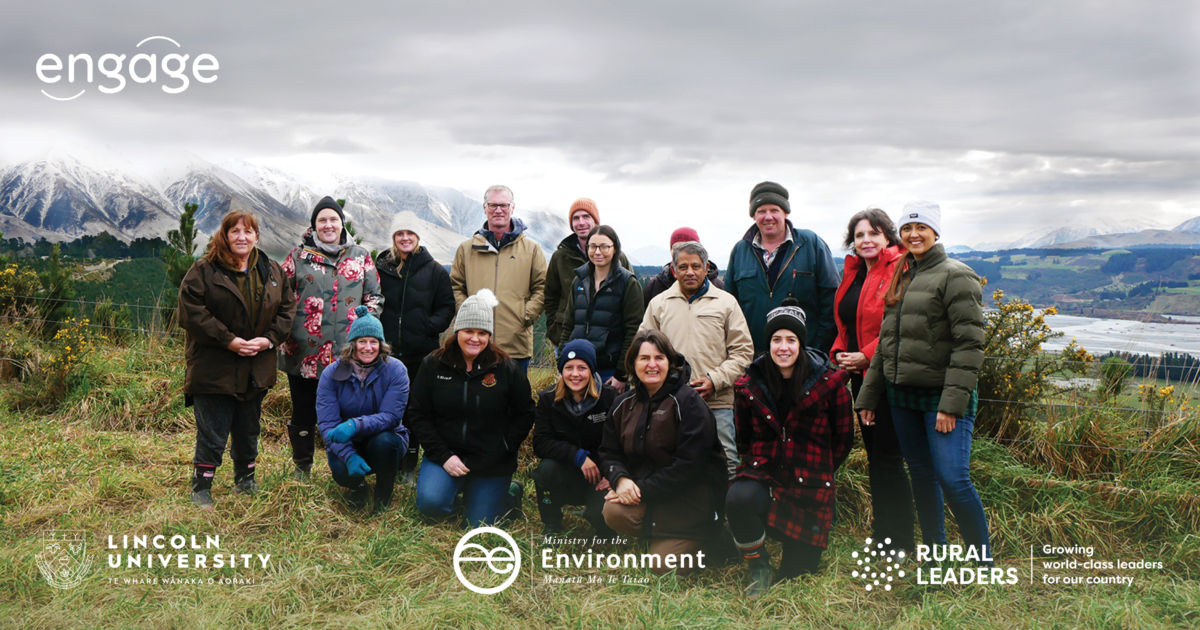
Engage is designed, developed, and delivered collaboratively by the NZ Rural Leadership Trust in conjunction with Lincoln University (Dr Victoria Westbrooke), and with funding from the Ministry for the Environment.
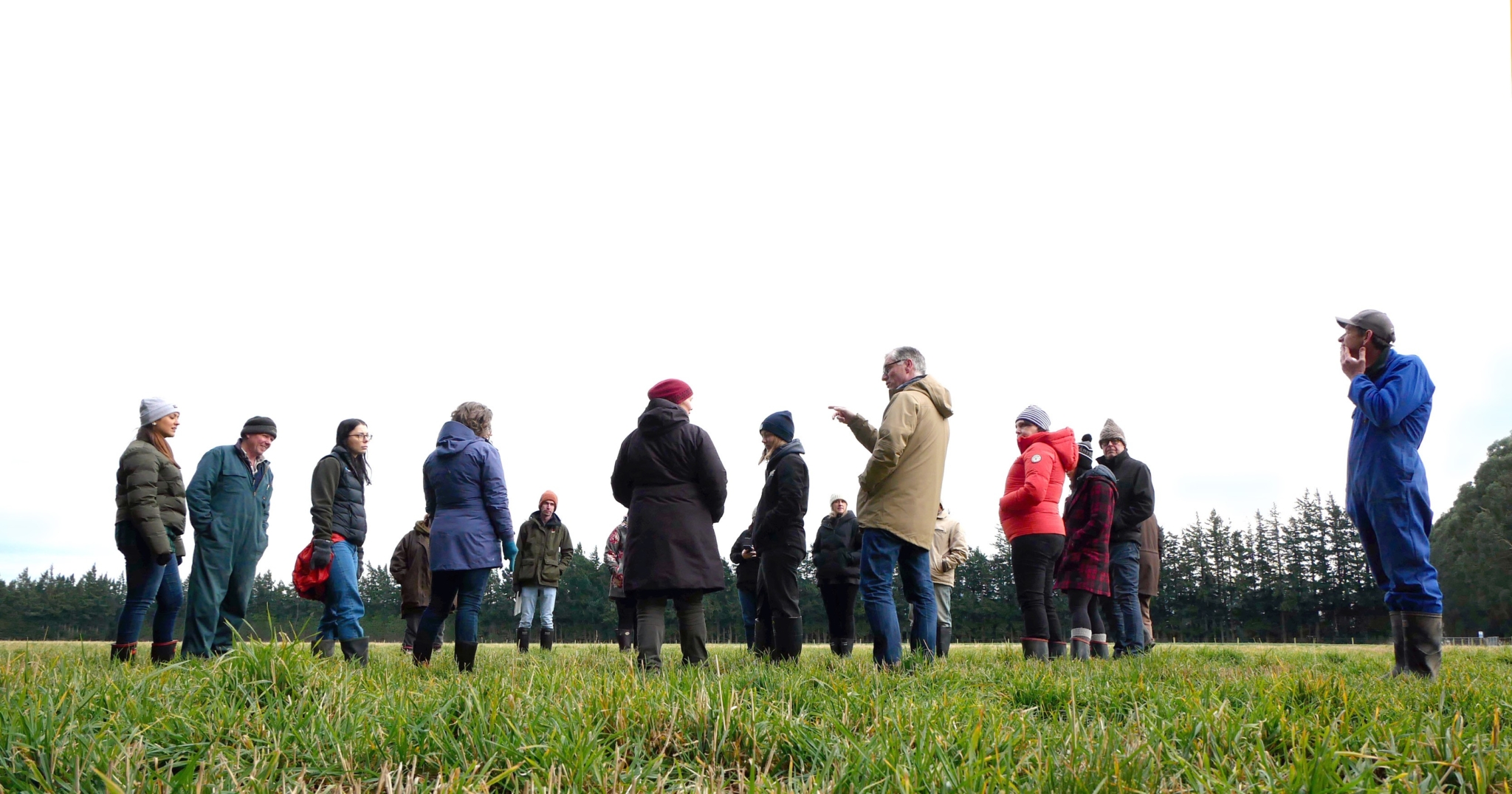
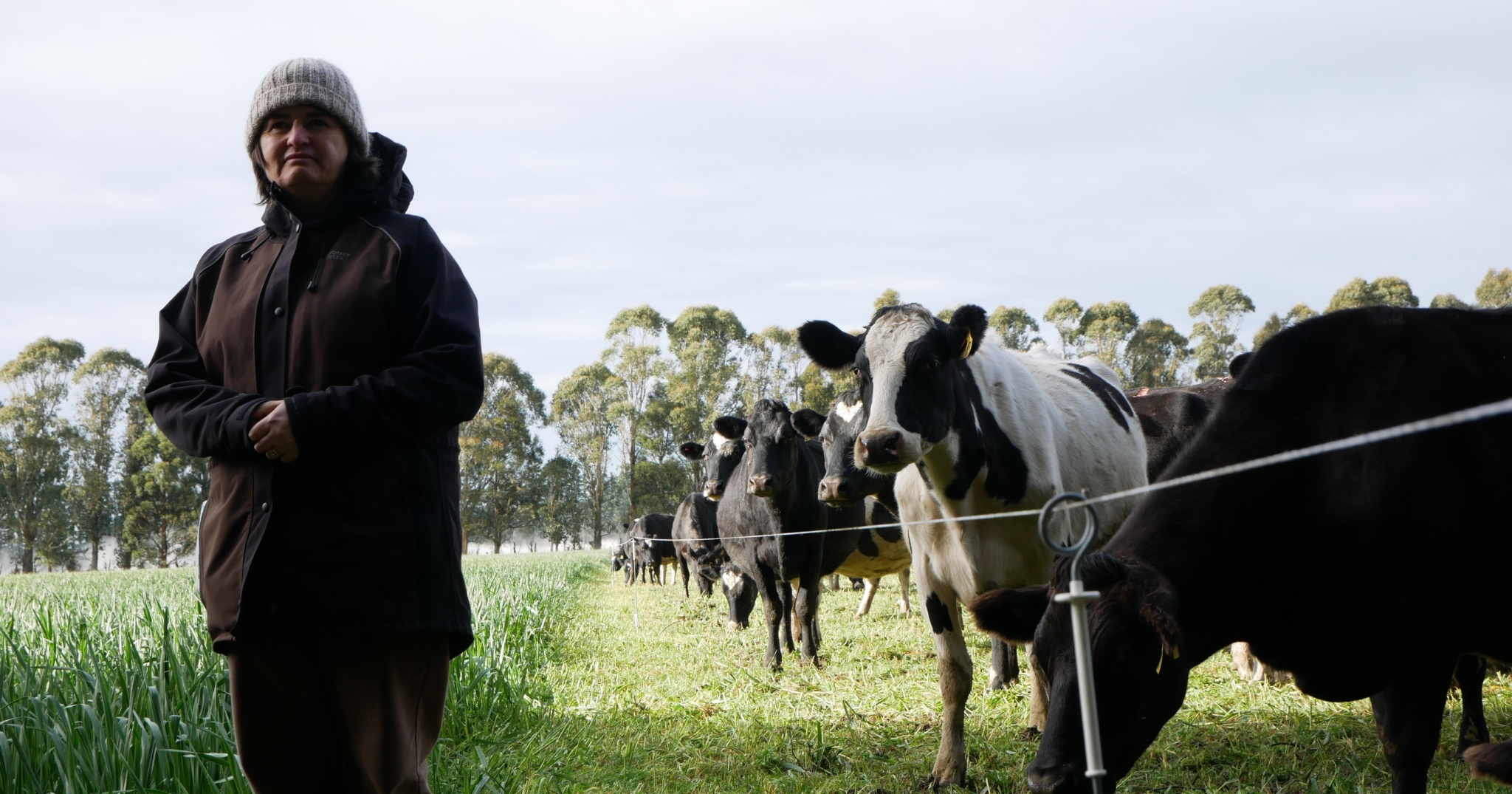
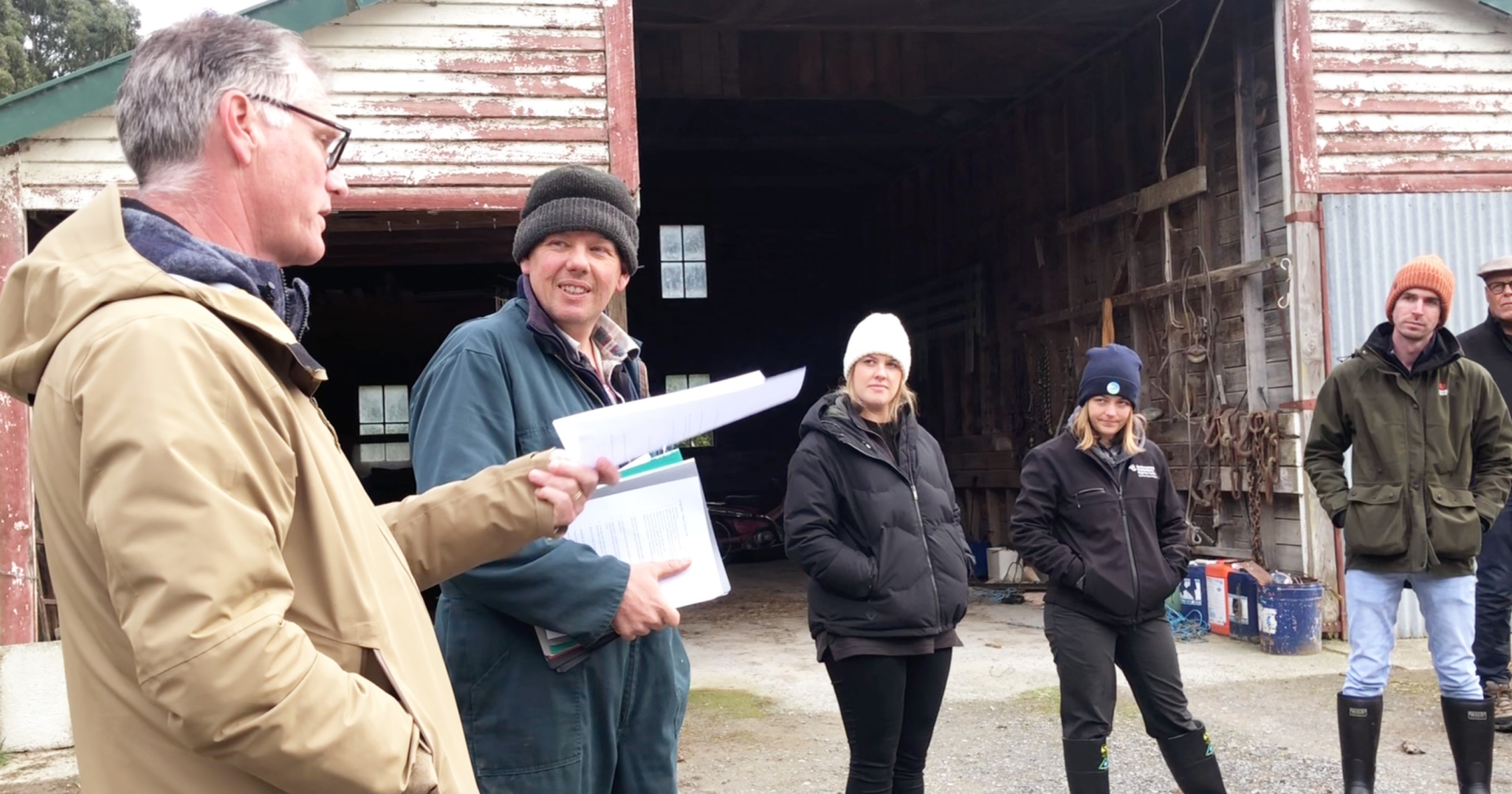
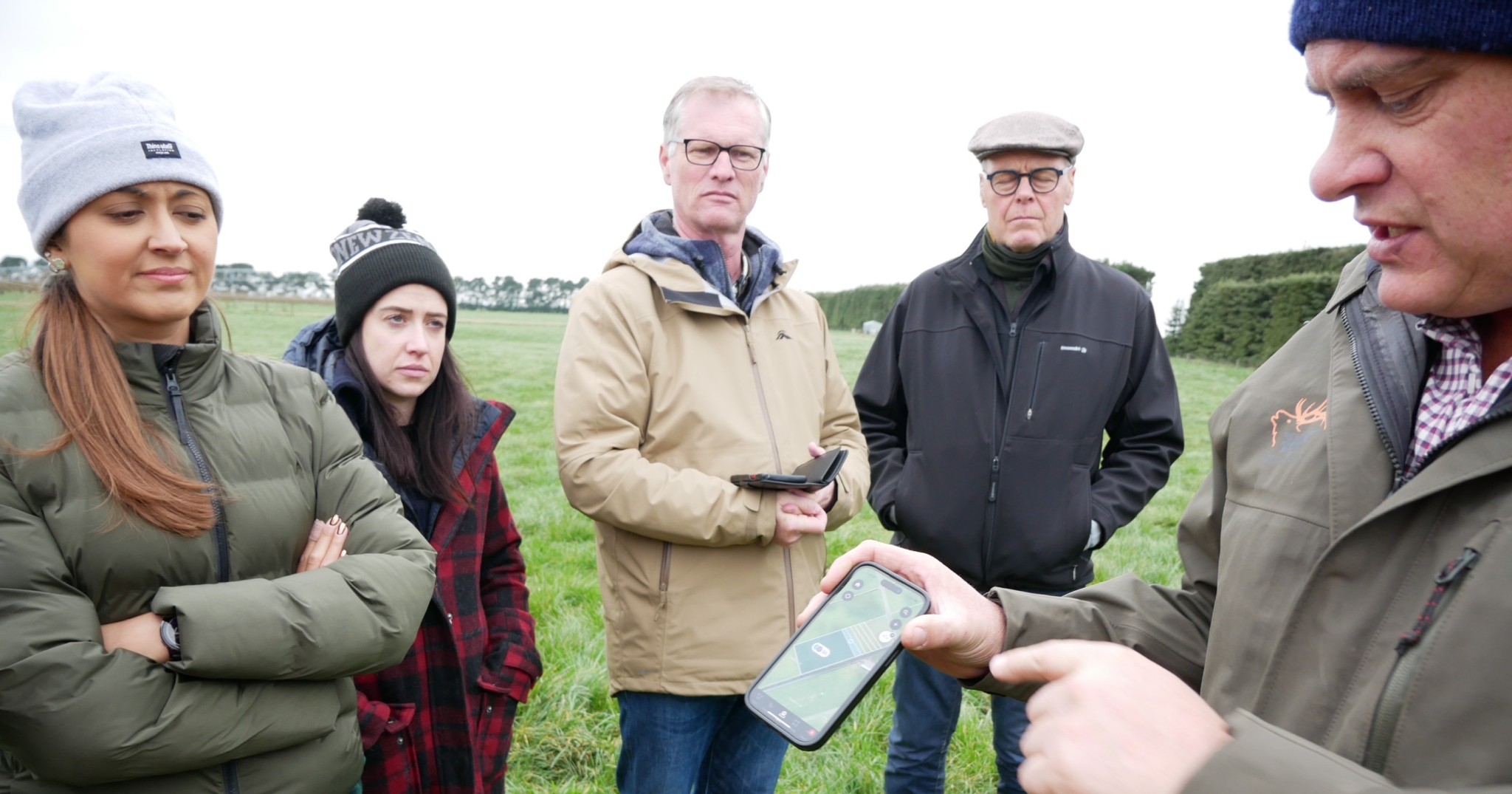
The first pilot for a new programme ‘Engage’ wrapped up after an inspiring and highly interactive three days, spread across workshops, field trips and hearing from industry leaders.

Facilitated by Dr Scott Champion, Engage bridges the knowledge gap for individuals aimed at those with moderate to low knowledge of the sector. Engage is ideal for those connecting to the Food and Fibre sector, particularly in farmer-focused roles such as policy, advisory, or regulatory.

Engage really is a case of seeing the need and addressing it. One of the challenges people entering the Food and Fibre sector can face is acquiring enough knowledge and skills to approach and speak to farmers collaboratively.

Engage is designed, developed, and delivered by the NZ Rural Leadership Trust in conjunction with Lincoln University (Dr Victoria Westbrooke), and with funding from the Ministry for the Environment.
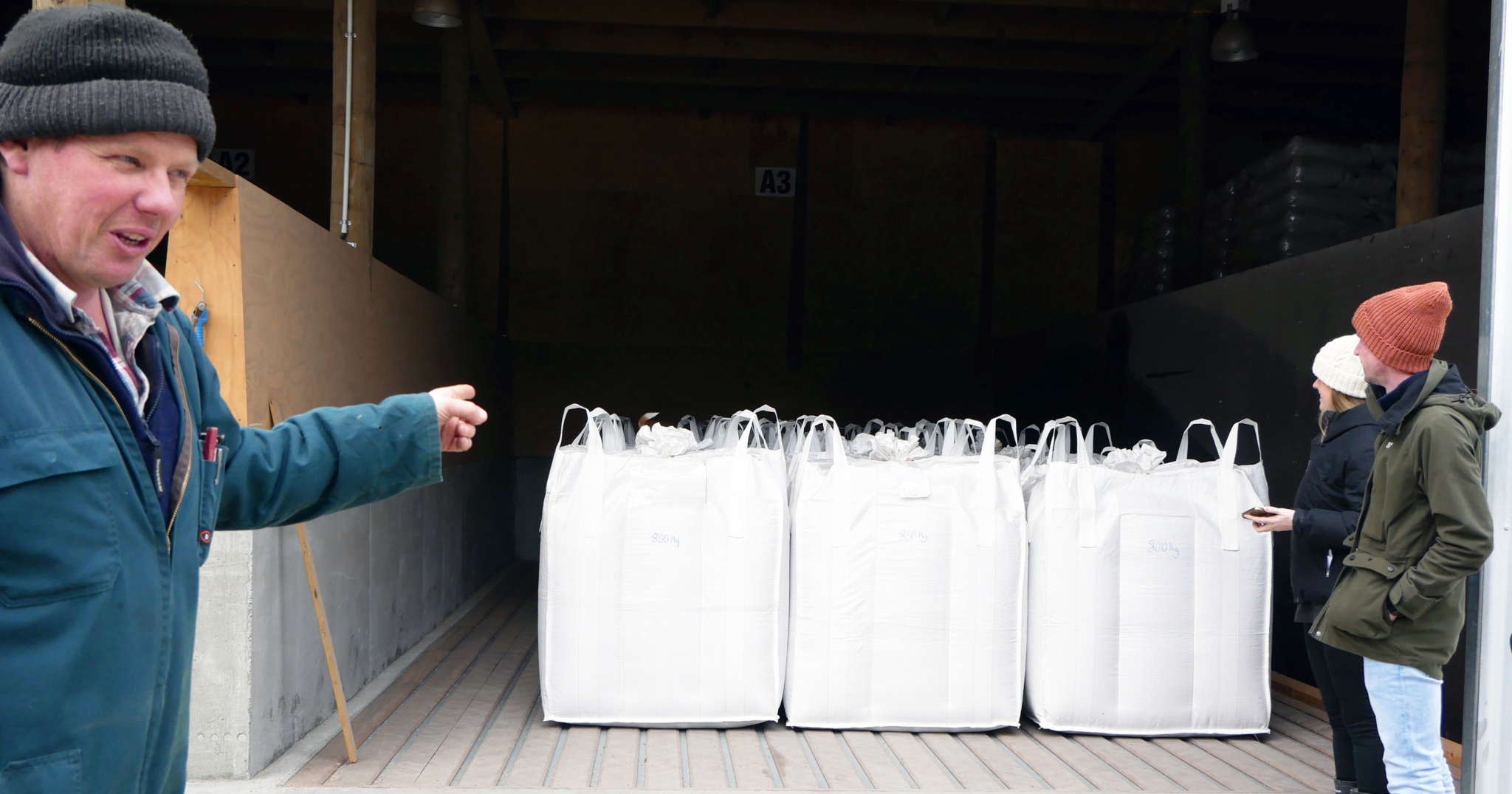
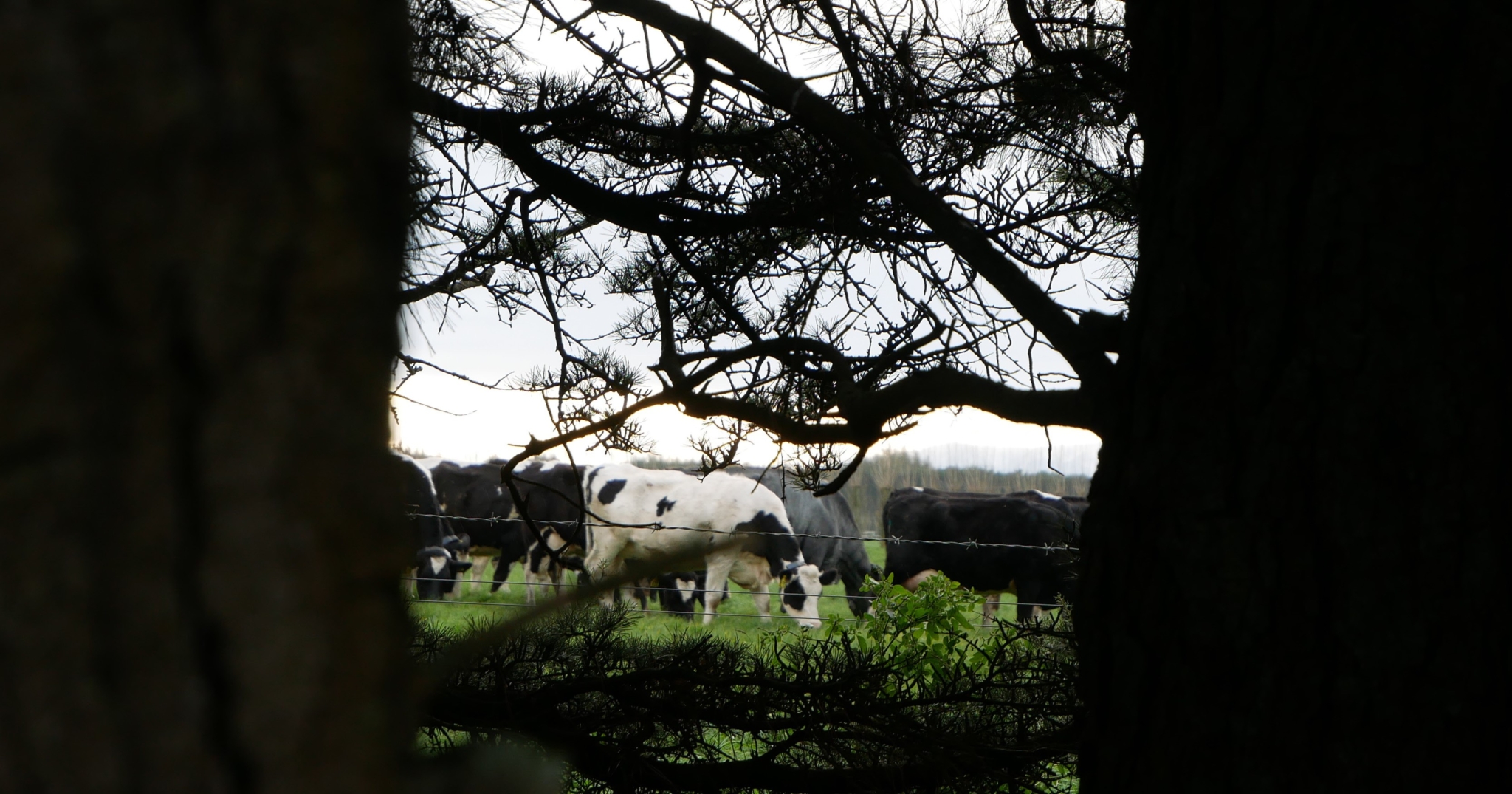
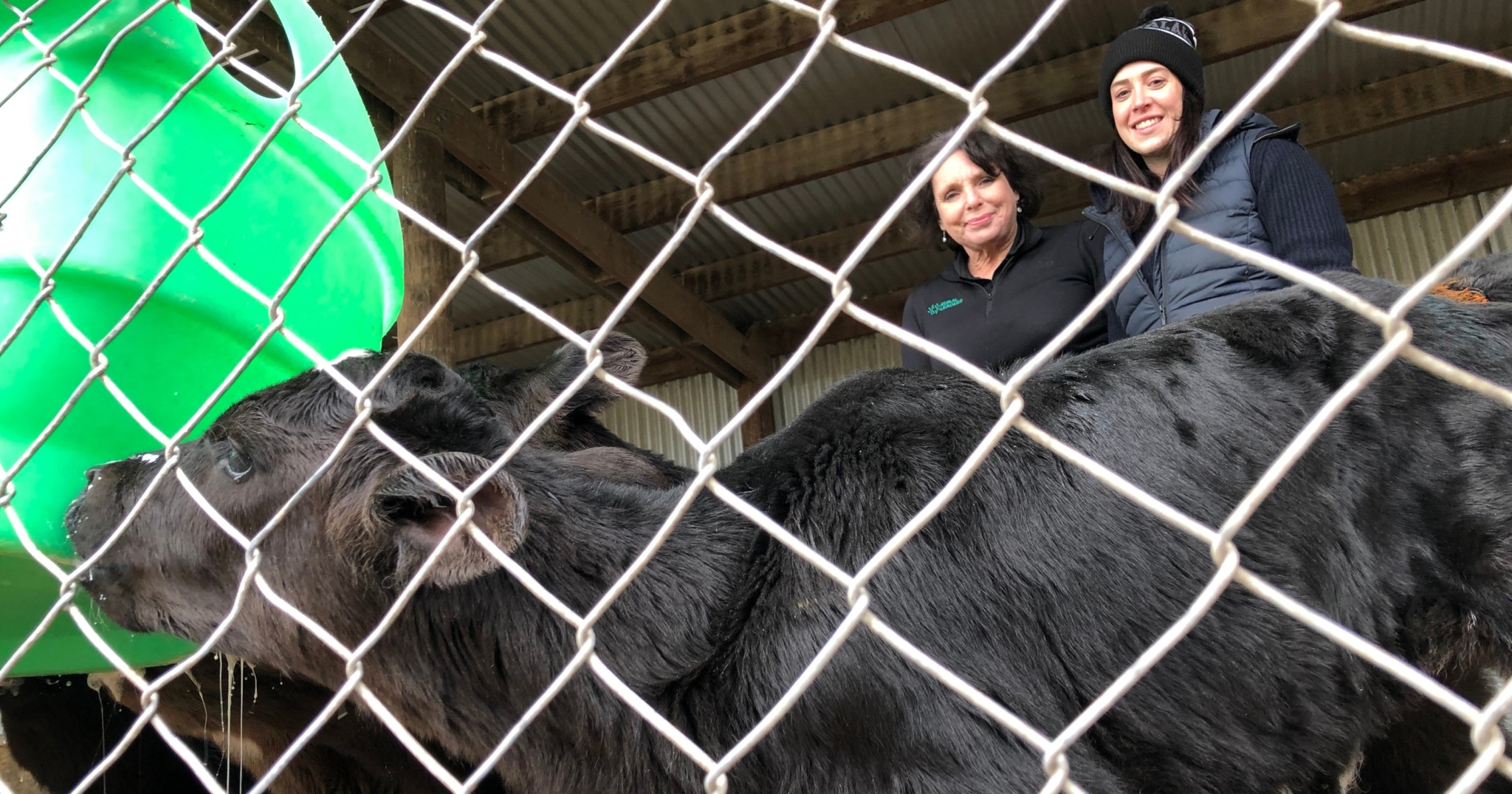
The three-day programme included speakers, workshops, and visits to two impressive farming operations: arable-mixed (Hamish Marr and Stuart Marr), and dairy (Matt Iremonger).

Our sincere thanks to both Hamish, Matt and to all of the industry leaders who shared their time, knowledge and insights with the group (Mel Poulton, Jess Smith, Mike Peterson, Ian Proudfoot, Sam Mander, and Denise Beswell from Scarlatti).

Engage is now into it’s second pilot as well as the third of five bespoke programmes for a large organisation. If you’d like to know more, or to book a team member or group on the May 1-3 programme, contact Dr Lyndsey Dance, Programmes Manager at Lyndseydance@ruralleaders.co.nz
Eights years, three chairs and almost two triennials.

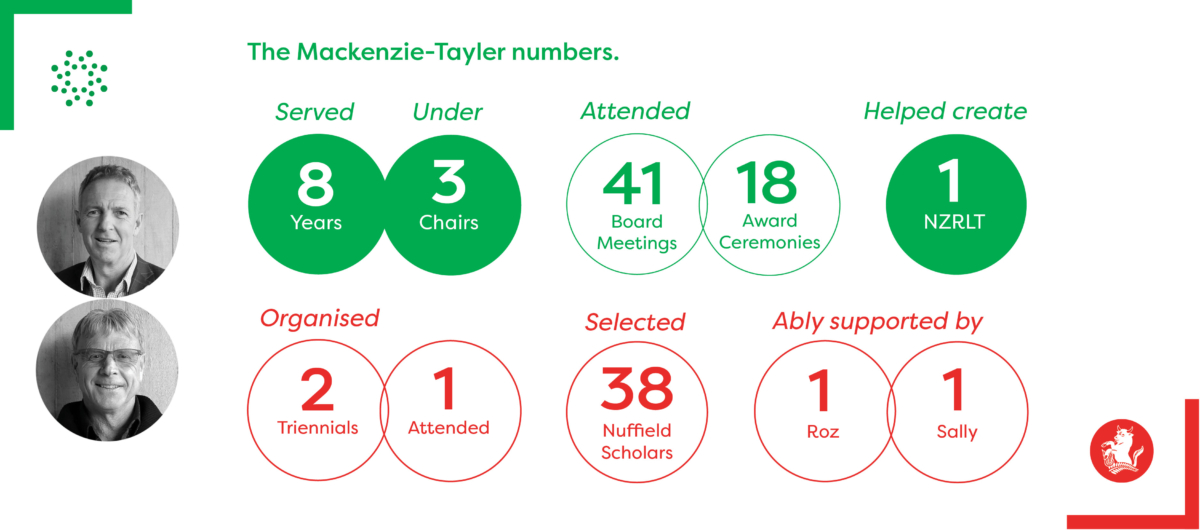
Nuffield and NZRLT Trustees Craige Mackenzie and Michael Tayler have stepped down after eight years of service. NZRLT Chair, Kate Scott provided the numbers on their tenure (above). We asked both about the highlights and challenges during their eight years.

What was the biggest challenge you encountered in your 8 years on the board?

Craige:
Being part of Nuffield International board but being able to turn it around to being in a positive growth organisation and in a sound financial position.

Michael:
Pulling together another Nuffield Triennial conference after our first one was cancelled at the eleventh hour. I was just one of a hardworking committee who rolled their sleeves up and just made it happen.

As a board and leadership organisation, one of our biggest challenges is to make sure we continue to stay relevant. To ensure the different programmes we offer are always “fit for purpose”.  

What was a highlight for you during your time on the board?

Michael:
The way everybody involved in the Triennial conference worked as a team towards a common goal. Everyone working long hours without complaint.

Meeting and getting to know the programme applicants was always a highlight. I was always impressed by the high calibre of the people involved in our Food and Fibre Sector. It gives me confidence that the future of NZ’s biggest export earner is in good hands.

Another highlight was getting to know and work alongside all the other trustees and NZRLT staff. Being a small part in a great team.

Craige:
The transition of a startup NZRLT to where we are today. The growth has been significant and to be part of this journey has been a real pleasure.

People, the role, and why you got involved?

Craige:
We have an awesome team which drives the organisation and each time we have new people come in they just add a new perspective and help with the growth.

I got involved because I wanted to give back to Nuffield and the NZRLT. I had the benefit of a Nuffield Scholarship which opened a lot of doors for me both nationally and internationally.

Michael:
I got involved as Trustee because I personally got so much out of my Nuffield Scholarship and felt it would be a small way to give something back.

What’s next for you?

Craige:
I have started a role with the UN so will see where that takes me but it is always nice to support agriculture and other production systems. I am interested in continuing to look for mitigation options to reduce our Climate Change footprint within farming systems and help shape sensible direction in policy.

Michael:
I would like to continue to be involved in different governance roles alongside our farming business. I have just started a new role as board chair of United Wheat Growers (NZ). UWG run a levy-based Crop Insurance scheme as well as an audited Quality Assurance Programme. 

We wish you well and thanks.

The Team at Rural Leaders.

Kellogg Programme One 2023 graduates.

A preview of next month's Kellogg Reports.

Kellogg Programme One 2023 graduated on July 7 after completing their Phase Three at Lincoln. Though in the aftermath of recent weather events, several North Island Scholars have chosen to defer their Phase Three until 2024.

Reports fell into three broad themes, with a total 16 reports. We’ll share those in the next Rural Leader. For now, you could make a note of any reports that may be of interest to you. 

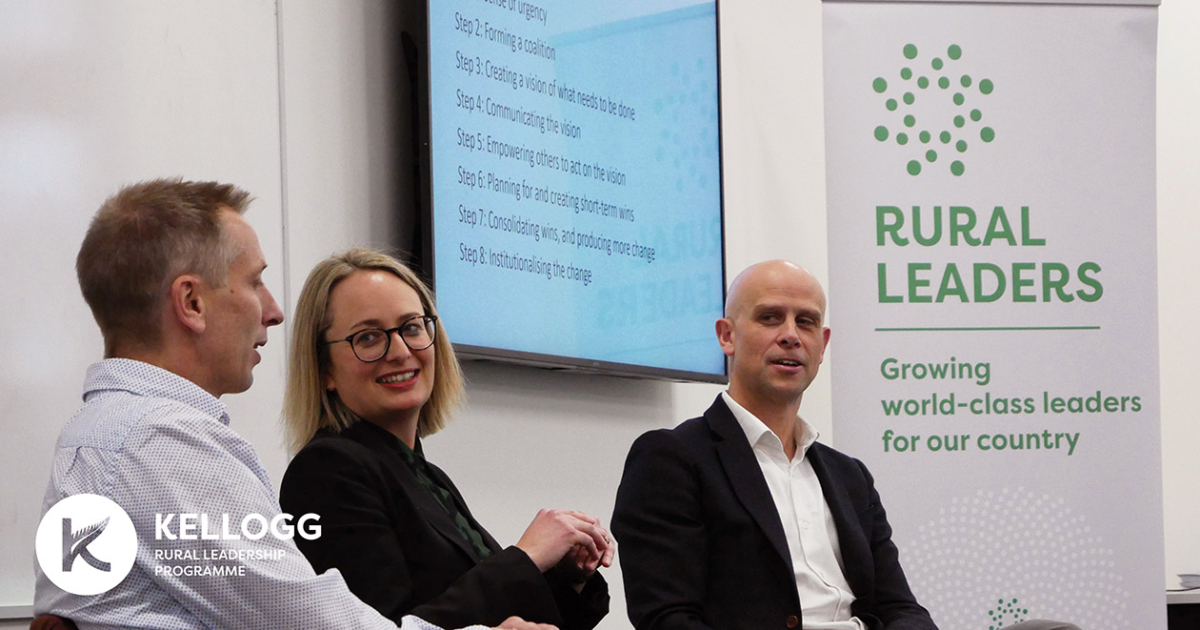
Pictured: First post-presentation panel discussion with Duane Redward, Vanessa Thomson, and Brian Henderson.

Theme 1 – People in Food and Fibre.

Duane Redward – The consequences of the competition for farmer sentiment.

Brian Henderson – What leadership is required to achieve change in New Zealand agriculture?

Vanessa Thomson – How effective are existing psychosocial services in supporting New Zealand Farmers after adverse events.

Steve Hydes – How do early stage Agritech founders use professional
assistance?

Sol Tejada – Women in beekeeping: how to champion the ladies in the
apiculture industry.

Laura Hancock – Bridging the gap: Exploring the impact of musculoskeletal health on performance and injury risk in the food and fibre sector.

Theme 2 – Future production and processing systems, and market opportunity.

Birch Jenkinson – Current lean production tool use in arable crop production.

Kate Gower-James – How can the opportunity in the expanding global pet food industry be achieved? Pet food growth and opportunities.

Grace McLeay – How might central North Island sheep and beef farmers future proof for the effects of climate change?

Richard Dawkins – Addressing mortality in New Zealand lambing systems.

Theme 3 – Farming, growing and the environment.

Anna Sing – How might freshwater regulations provide certainty for farmers,
while enhancing ecosystem health of Aotearoa’s waterways?

Emily Clark – Aquaculture shellfish processes and 3rd party certification.

Jemima Snook – ESG reporting: measuring and reporting on sustainability for mid to large size farms.

Kristopher Bailey – Regenerative agriculture: how might it fit into New Zealand
farming systems?

Kathryn Broomfield – Utilising technology to achieve sustainable agriculture in New Zealand.

Tracey Reynolds – How do we motivate New Zealand dairy farmers to uptake practises which reduce greenhouse gas emissions on farm?

Make a note of any titles for closer review in next month’s Rural Leader.

The Mackenzie Study – Nuffield and Kellogg latest results.

The Mackenzie Charitable Foundation have initiated research alongside the New Zealand Rural Leadership Trust, in collaboration with Otago Business School and the Department of Economics, to investigate the contribution of Kellogg and Nuffield Alumni to Food and Fibre.

Research covering 72 years of Nuffield and 43 years of Kellogg Rural Scholarship.

The objective of the research has been to collect data measuring within-person gains in entrepreneurial leadership and capability-building that occurs because of the Kellogg and Nuffield programmes.

The first survey was conducted with the New Zealand Nuffield Alums (178 at the time of the survey – with 68 survey participants). Through this process, the Team learned several ways to refine the survey and then ran a similar survey with Kellogg Alums (960 at the time of the survey – with 234 survey participants).

Entrepreneurship is frequently measured as the proportion of people in self-employment. By that broad measure, the Study has found that rural entrepreneurship is very much alive and well among alums.

This latest Mackenzie Study report builds on the progress report from February 2022 and as such, offers a recalibration of some earlier published headline results.

The methods used to measure entrepreneurial leadership skills (ELS) draw on international peer-reviewed academic literature in experimental economics, psychology, and management science.

The Study measured real-world entrepreneurial achievements by counting new business starts, FTE jobs created, export revenues, and leadership roles. This contributes to the participant’s ELS profile.

Characteristics of the Nuffield and the Kellogg Scholar.

Nuffield Scholars are, on average, in their 40s. They are rigorously selected and undertake a self-guided international exploration of Food and Fibre challenges and opportunities.

The Nuffield Scholarship is runs over 15 months and includes at least 16 weeks of international travel.

Nuffield aims to develop the insight and foresight to keep New Zealand at the global forefront of Food and Fibre-producing nations. Leadership development is an outcome of each Scholar’s experiential journey rather than an output of the Programme.

By contrast, Kellogg Scholars are, on average, in their 30s. The Kellogg

The Programme is facilitated and runs over six months. Each programme can take up to 24 Scholars, meaning more Kellogg Scholars graduate than Nuffield Scholars. Leadership capabilities are a defined learning output of the Programme.

This is likely a first-of-its-kind cross-sectional study, designed to compare each participant at multiple time points and will give New Zealand’s Food and Fibre sector a world-leading insight into the art and science of building entrepreneurial capability.

Here are the headline results from the Study.

Nuffield.

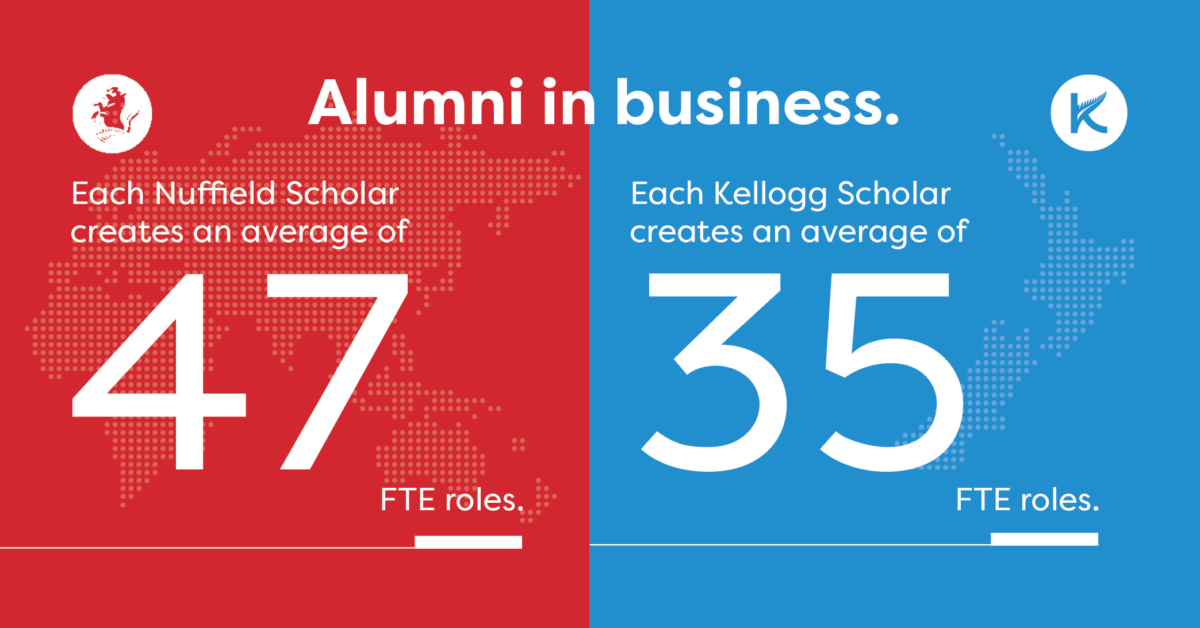
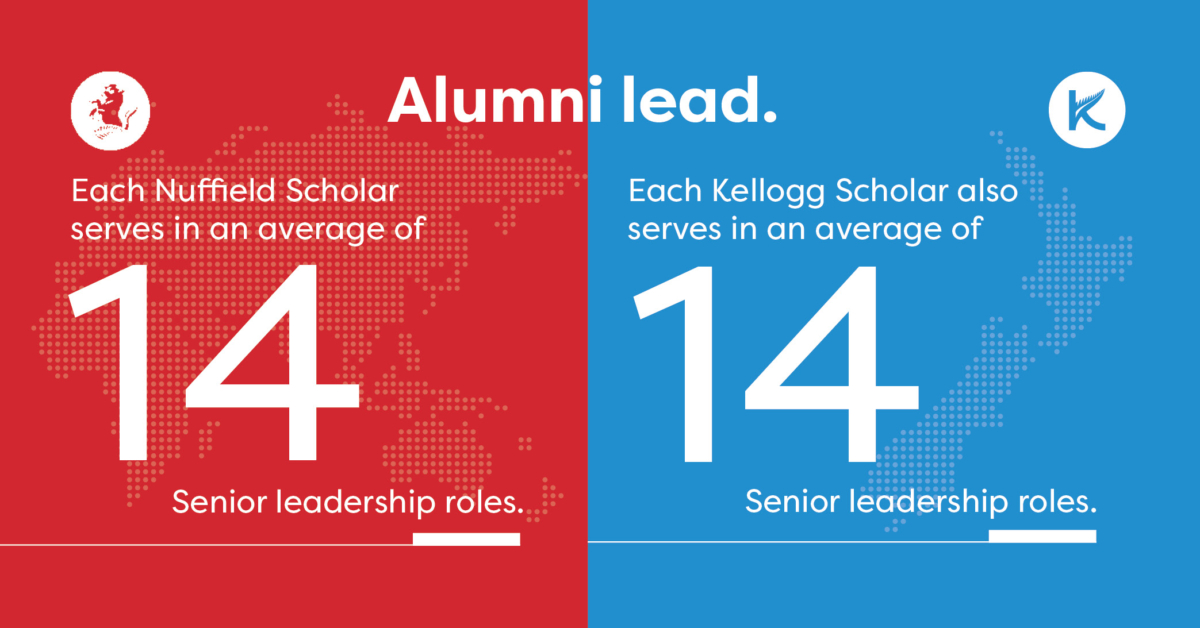
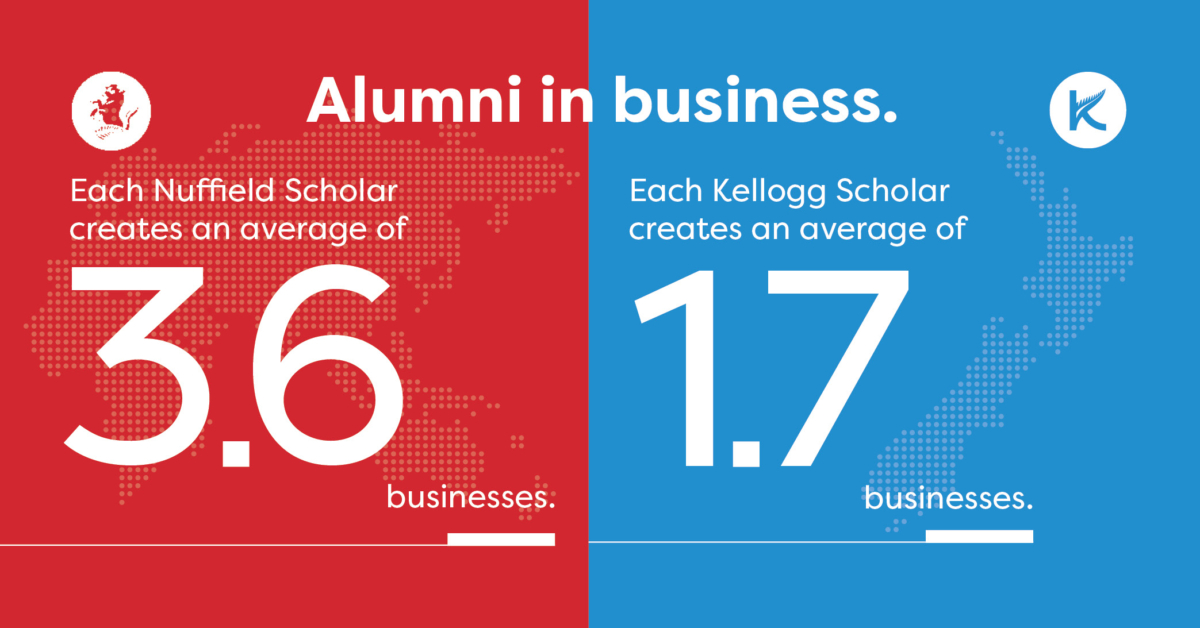
The average Nuffield alum has started 3.6 businesses, played a direct role in creating 47.0 FTE jobs, and served in 14.0 senior leadership roles.

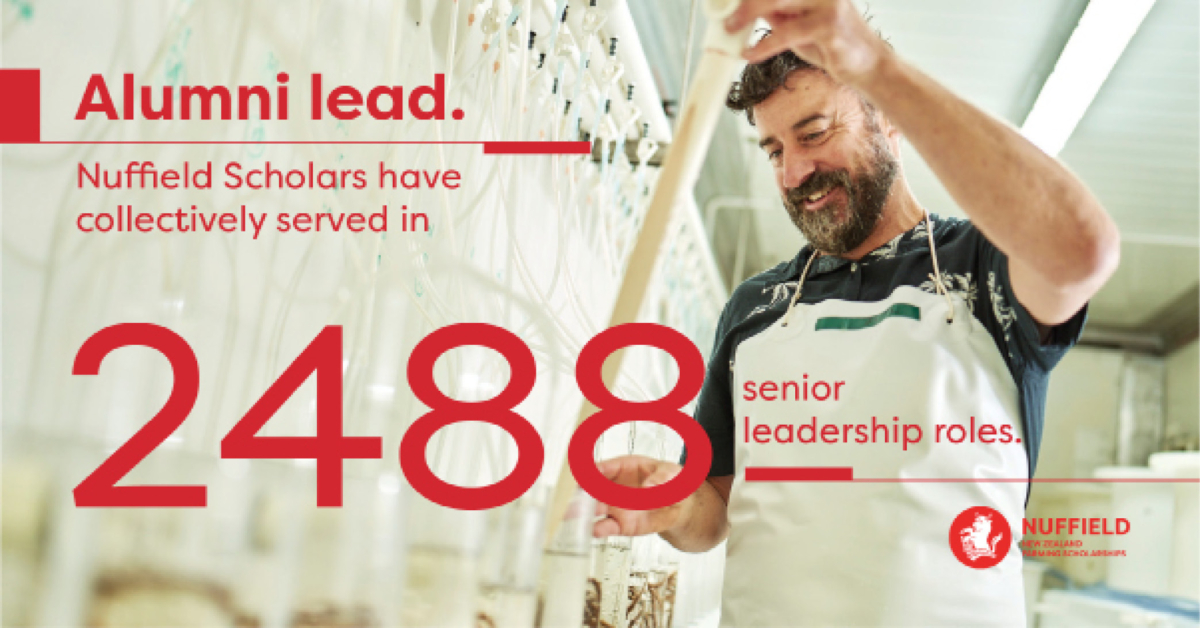
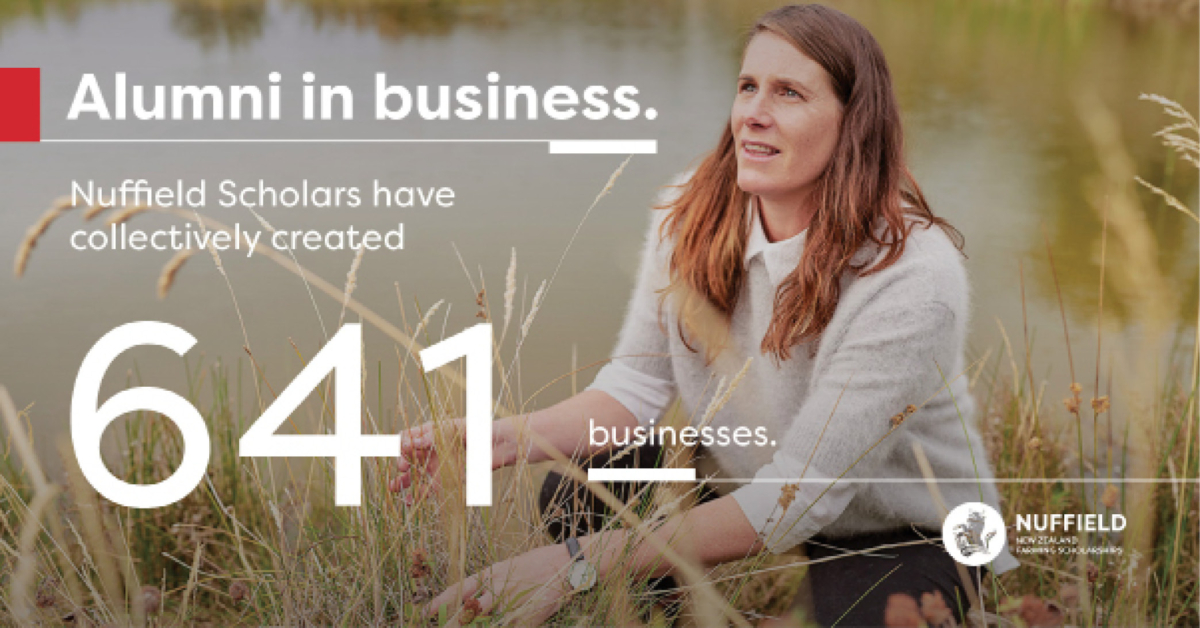
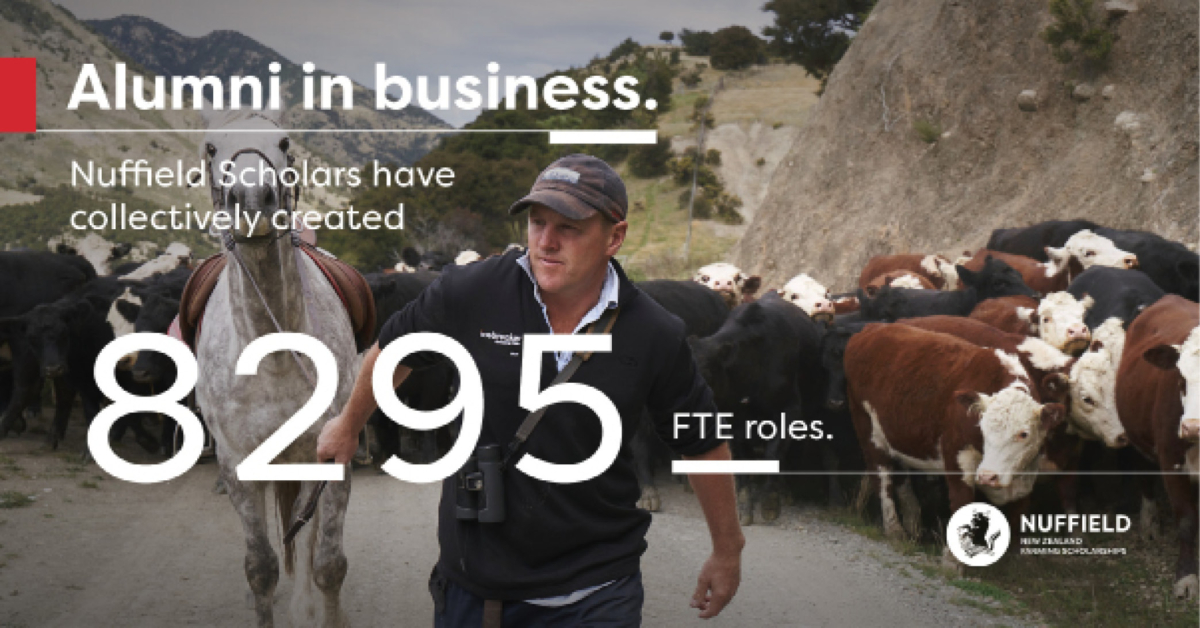
Over 40% of Nuffield alums have served in government-appointed or elected leadership roles. At the time of survey, 178 Nuffield alums had collectively served in an estimated 2,488 leadership roles (other than government roles), played a direct role in creating an estimated 641 businesses, and 8,295 FTE roles. 

Kellogg.

The average Kellogg alum has started 1.7 businesses, created 35.0 FTE jobs, and served in 14.0 senior leadership roles.

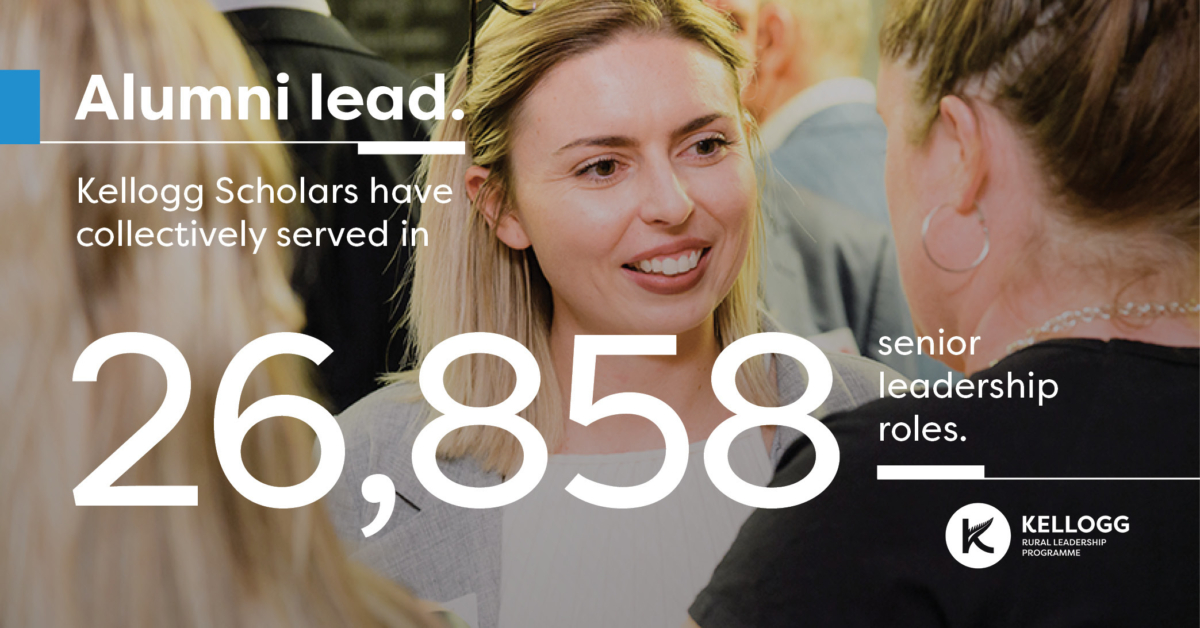
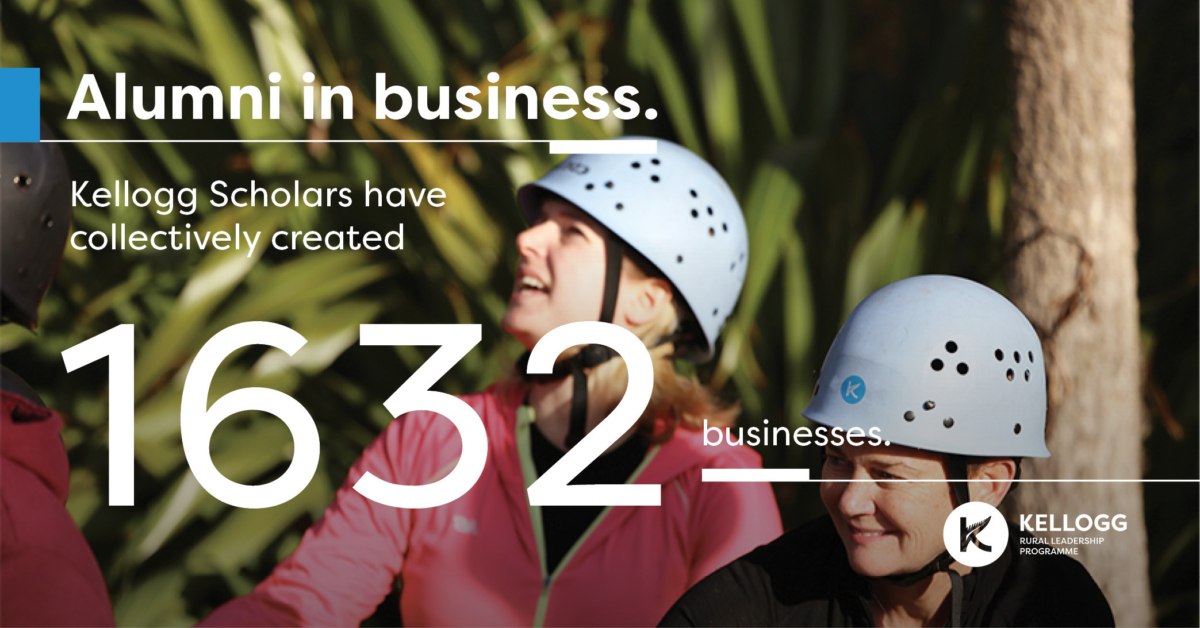
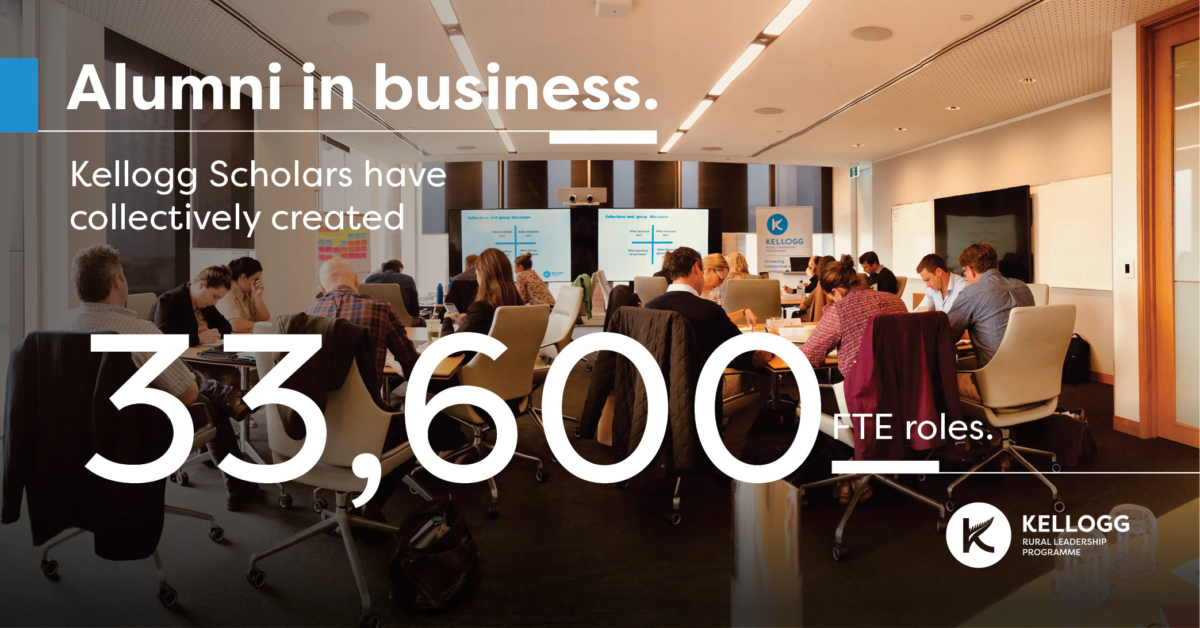
Approximately 26.9% of Kellogg alums have served in government-appointed or elected leadership roles. Since the inception of the New Zealand Kellogg Rural Leadership Programme, 960 Kellogg alums have collectively served in over 26,858 leadership roles (other than government roles), played a direct role in creating an estimated 1,632 businesses, and 33,600 FTE roles.

The collective Nuffield and Kellogg Alum’s results.

These collective results include the creation of an estimated 2,273 businesses, 41,895
jobs,
 and service in 29,347 leadership roles.

Just as importantly, both alum groups reported better personal outcomes after attending the programmes, including better well-being, expanded social networks, and higher earnings. This is an impressive contribution.

Both alum groups demonstrated economic, social, and environmental contributions to New Zealand’s Food and Fibre sector. One of the notable findings is the very high rate of self-employment compared to New Zealand as a whole (over 60% for Nuffield and Kellogg, compared to 7.5% nationally, 28% in the dairy industry, and 30% in the red meat and wool industry).

The Team have seen very few data sets in New Zealand with self-employed proportions this large.

Where to next for the Mackenzie Study?

The Mackenzie Study also includes foundational data for longitudinal research. The analysis of this is currently underway. The longitudinal study is focused on collection of before-after survey data for just the Kellogg Programme.

The intention is for this data collection to continue as future cohorts’ baseline and exit surveys are added. This, in order to achieve greater statistical precision and an ever-strengthening evidence base documenting gains in entrepreneurial leadership associated with participation in the Kellogg Programme.

Download the full Mackenzie Study Report here.