2026 Nuffield NZ Farming Scholarship. Apply by 17 August 2025. Read More...

Apply for 2026 Nuffield NZ Farming Scholarship by 17 August 2025. More details...

Dr Patrick Aldwell retires after 25 years of service to Kellogg.

Dr Patrick Aldwell has made a hugely positive impact on thousands of people from across the Food and Fibre sector. Passionate about life-long learning, he has also made the academic and strategic support of anyone who needed it, his life-long mission. On the Kellogg Programme alone, he did this for twenty five years. 

Now he has officially retired from Kellogg (well probably, mostly).

Since retiring from Lincoln University as Dean of the Faculty of Commerce in 2012, 
Dr Patrick Aldwell continued to focus on agribusiness programmes that build leadership capability in Food and Fibre.

These included the Kellogg Rural Leadership Programme, the Horticultural Leadership Programme, the Nuffield Scholarship and Future Food Network programmes.  

Prior to returning to Lincoln University in 1998, Patrick was a scientist for 20 years at the then Forest Research Institute in the Trade, Marketing and Economics group. During this time he worked on New Zealand land use issues and internationally for the UN and World Bank on capacity-building for science infrastructure projects. 

Patrick’s disciplines are in the fields of regional and industrial economics and strategic management. He has degrees from Massey University, Monash University, the University of Washington and a Dip. Agri from Lincoln University. 

Patrick never tires of sharing his knowledge with students and sector leaders. He is sought out for academic support and strategic guidance, particularly when it comes to tackling the big challenges facing the primary industries and its rural communities.
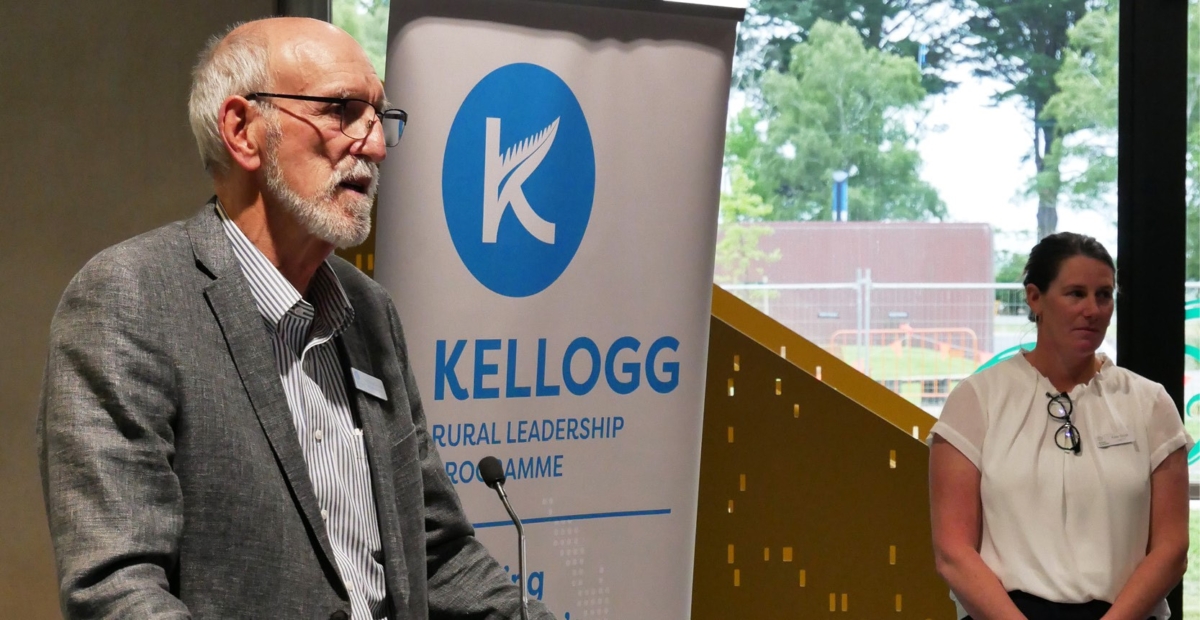
Today Patrick’s academic interests lie in fields of technological change, rural issues, the interface between agricultural intensification and other ecosystems, and on building our sector’s leadership capability. 

To this end, Patrick’s 25 years with the Kellogg Rural Leadership Programme, were marked by his support and encouragement of the rural leaders he taught.

One recent Māori Agri-business graduate of the Kellogg Programme said of Patrick, “He was instrumental in assisting me to basically learn how to write, how to write well, and to get my writing out there in the public space so that I could share what was on my heart and mind.” Comments such as this are typical and frequent.

He provided academic guidance and knowledge-rich support to rural leaders not just on the Kellogg Programme, but also the Horticulture Leadership Programme and many more. It is not just his dedicated academic support for students and scholars, but it is also to people in their ‘day jobs’ as well.

As Dean, Patrick’s long-time colleague, Associate Professor Charles Lamb, now Divisional Director at Lincoln University, said, “Dr Aldwell’s stand out quality was his genuine empathy for his staff”.

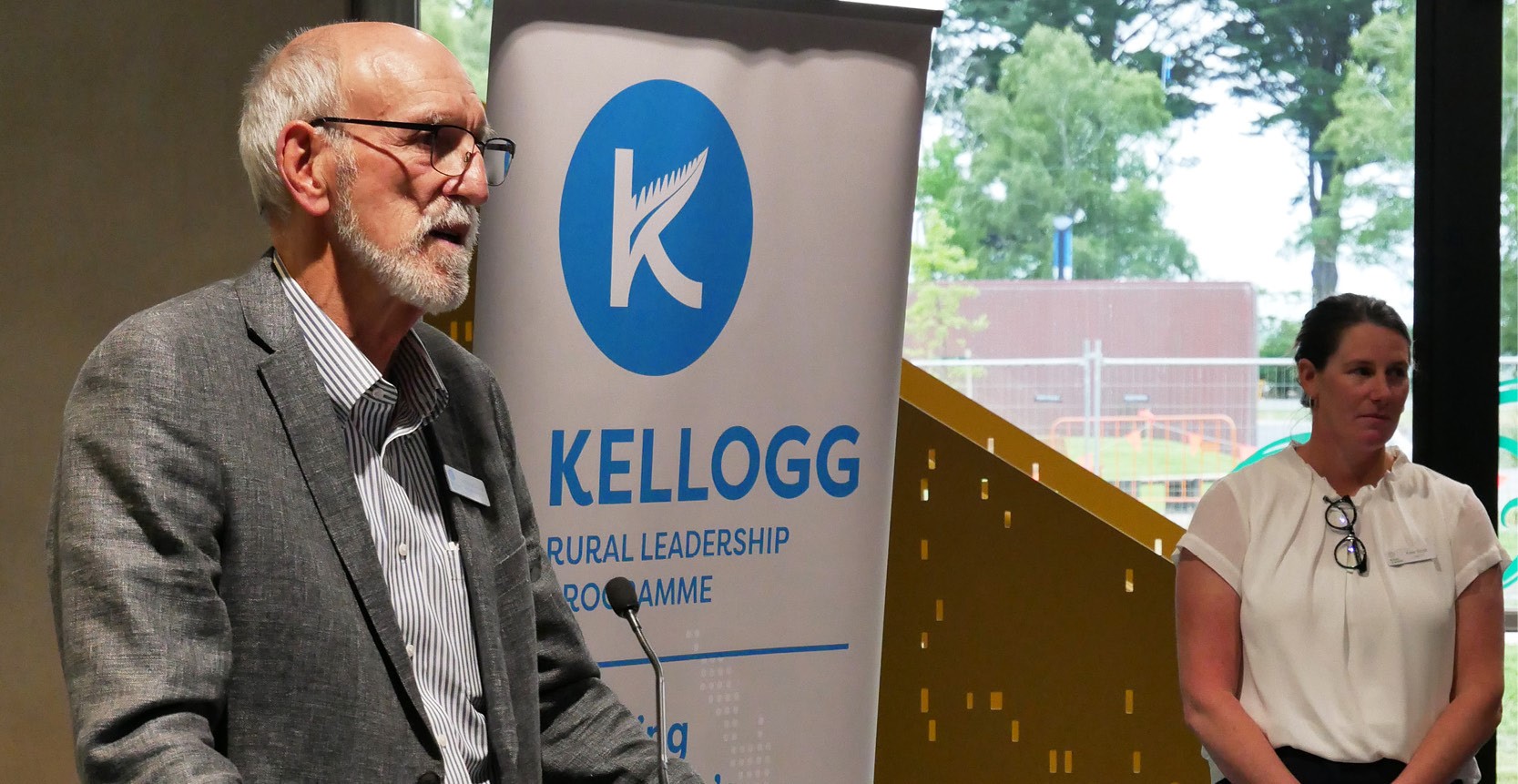
Images top and bottom – the graduation of the 50th Kellogg cohort. November 2023.
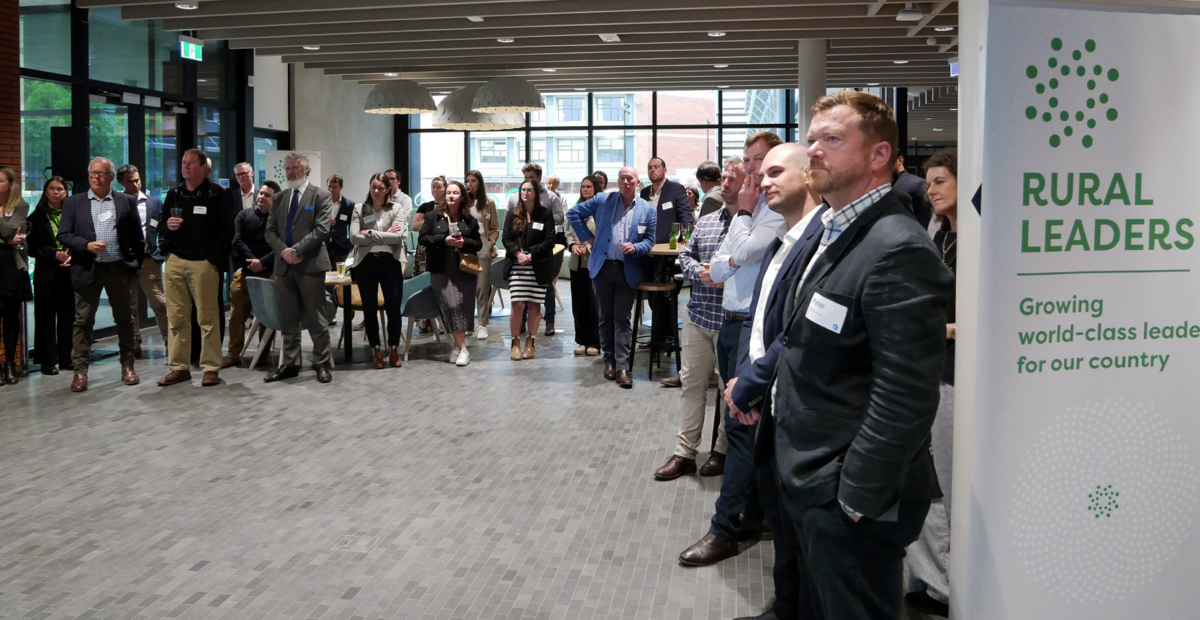
Shaping the critical and strategic thinking ability of hundreds on Kellogg.

Patrick’s involvement in the Sector runs so deep it can be hard to find a place he hasn’t had a significant positive impact on the primary industries’ people and their communities.

In late November last year, the Kellogg Rural Leadership Programme celebrated the graduation of its 50th cohort. Patrick was asked to speak to a large crowd of Scholars and industry leaders, not just as the Academic Director of the Programme, but as someone who had influenced the trajectory of over 800 of the Programme’s 1100+ alumni.  

Patrick has often said that one of the biggest thrills he gets is hearing of the successes of those in rural New Zealand he has taught, encouraged or perhaps provided quiet counsel to when times were tough on-farm. 

The length of time served, the passion, commitment, and the individuals influenced by Patrick’s involvement in key sector programmes, particularly around leader capability lift, means his impact on the primary industries has been exponential.

His fifty years of service to the Sector, positively influencing trade, science, academia and people, stands as tacit evidence of his dedication and passion for the primary industries.

In the last two decades Patrick has focused more specifically on addressing leader capability lift in the primary industries. Patrick understands the exponential impact stronger and ever-better leader ability can have in creating better outcomes for rural communities and their people.

As a simple and frequently occurring example, it is common to hear Patrick has spent hours working into the night, consulting with a farmer or grower who has been working all day on their operation. He takes a genuine interest in them as business owners, as team members, as students and as human beings. Whether on Zoom, over the phone, or in-person, Patrick never shies from helping the rural people and communities he is so passionate about.

From everyone at Rural Leaders, and the rural leaders you have supported and encouraged, enjoy your retirement Patrick.
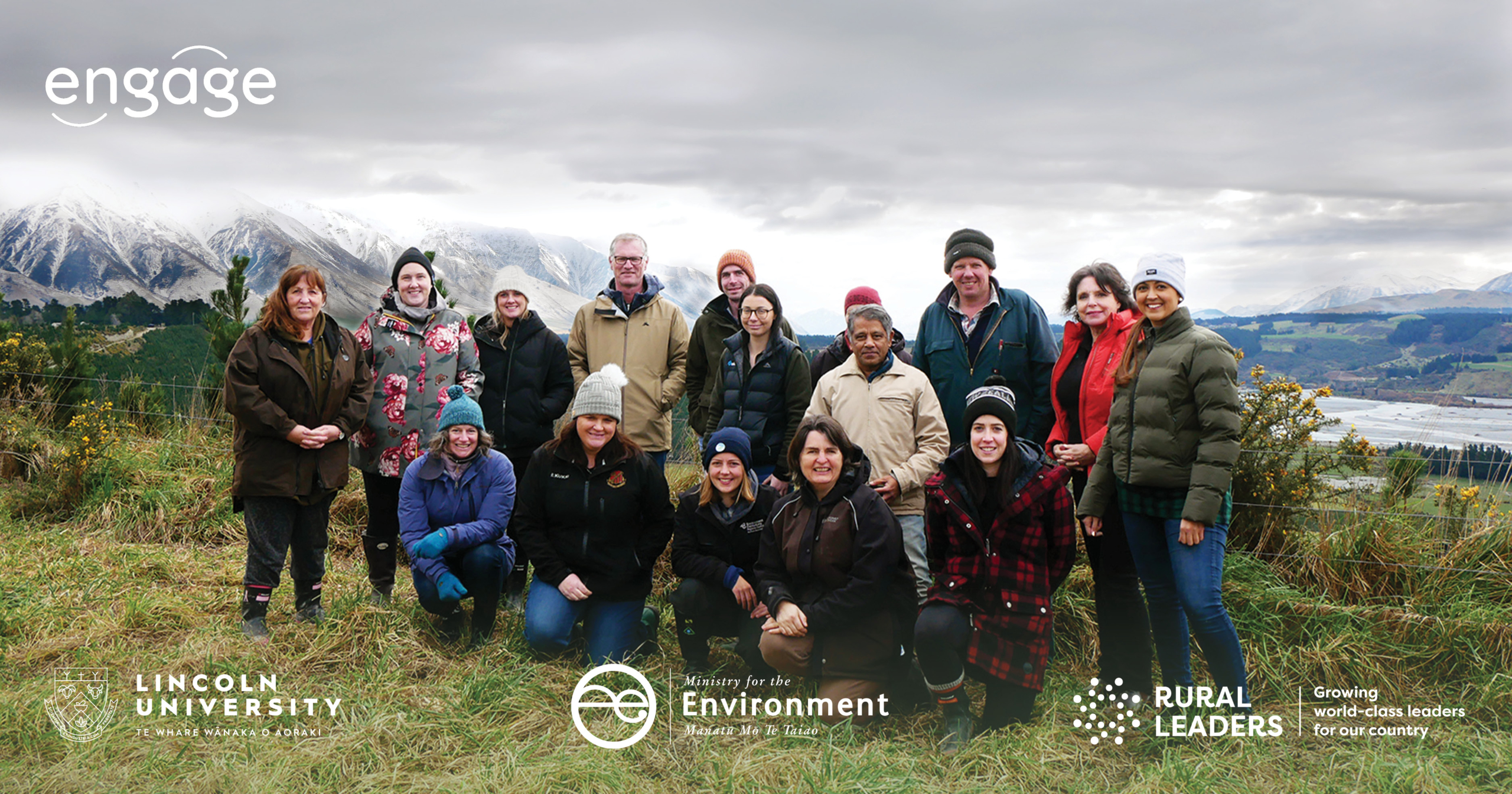
Engage – a Rural Leaders and Lincoln University programme collaboration.

Engage is designed, developed, and delivered collaboratively by the NZ Rural Leadership Trust in conjunction with Lincoln University (Dr Victoria Westbrooke), and with funding from the Ministry for the Environment.

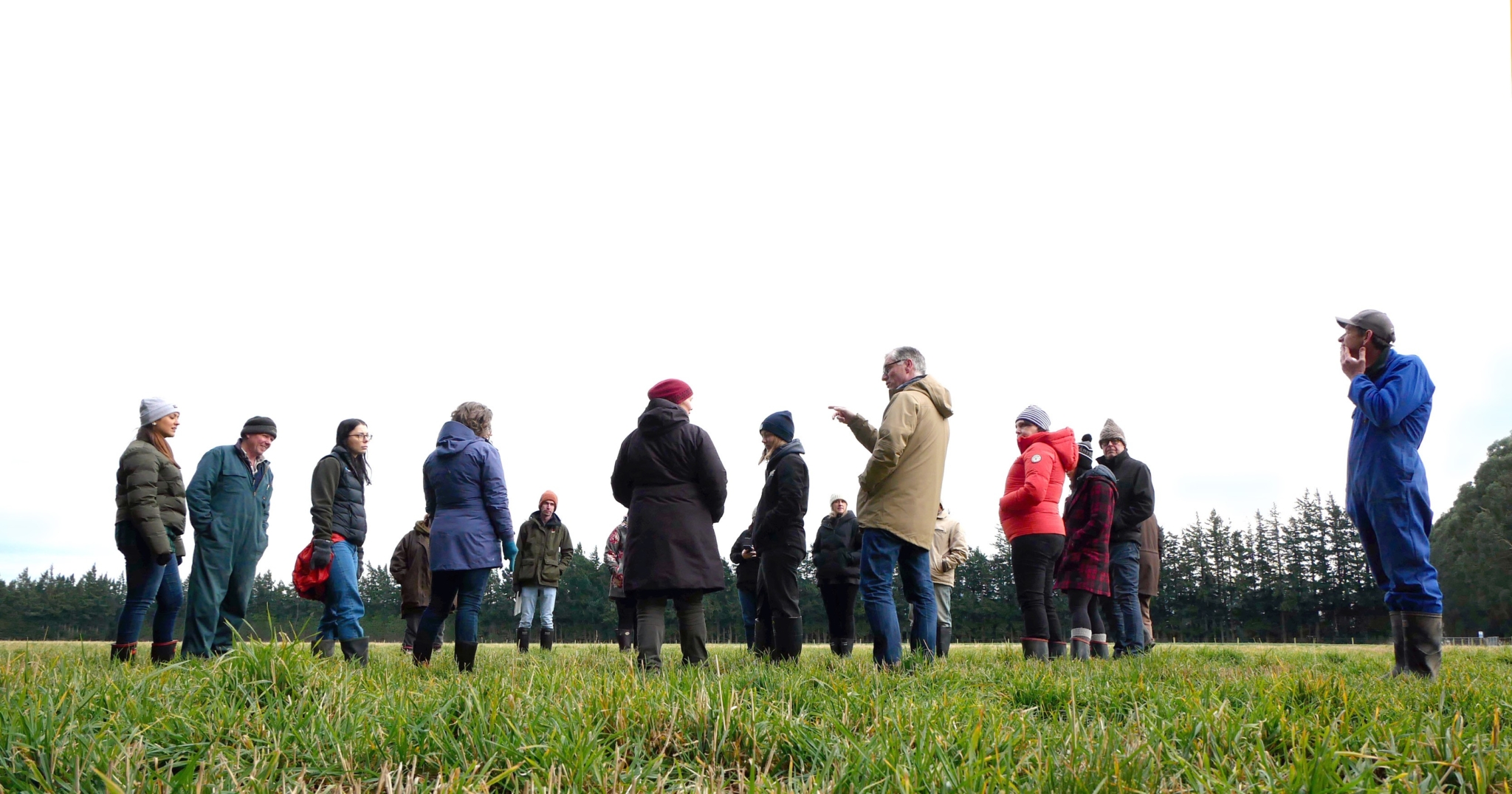
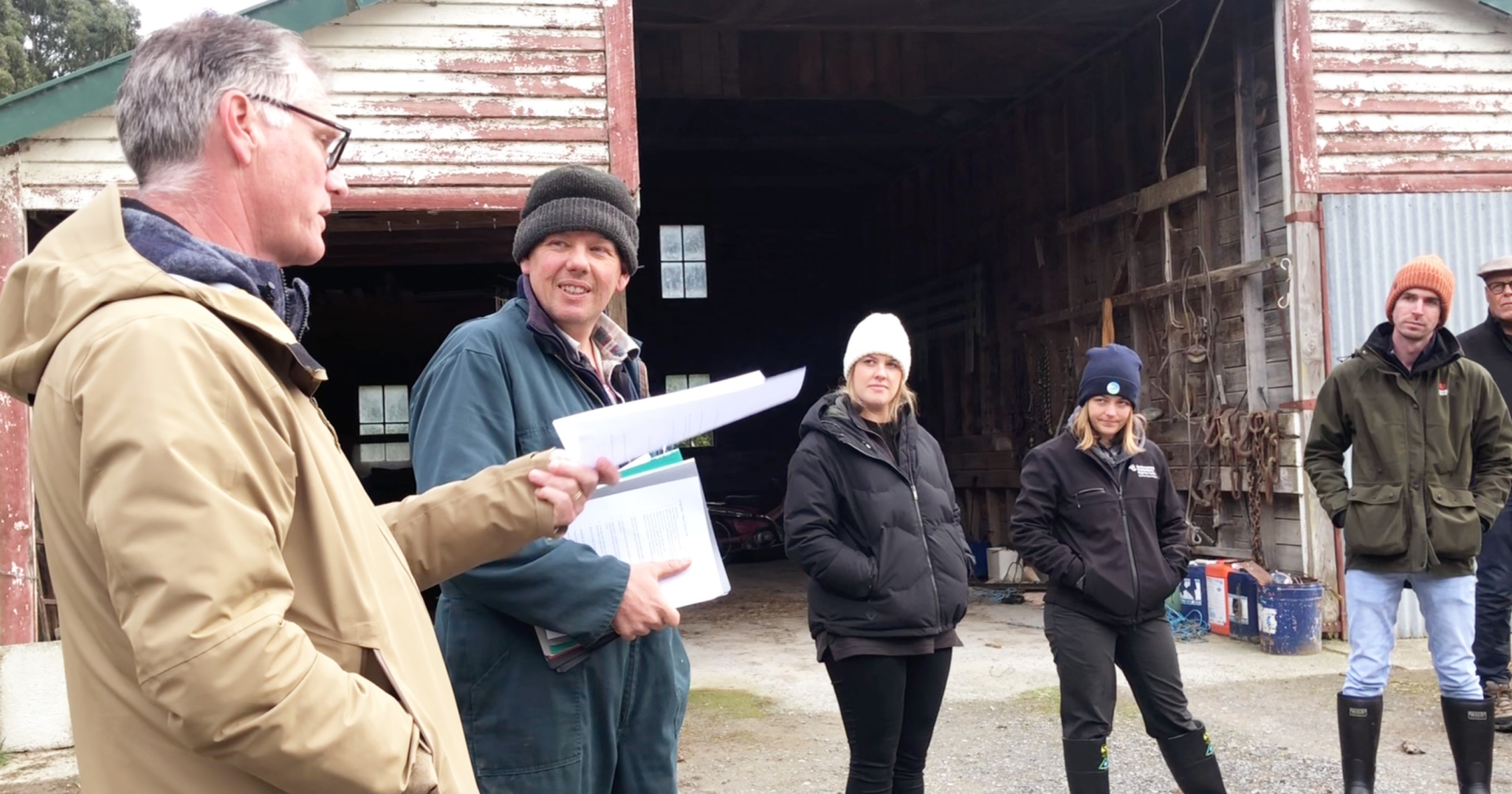
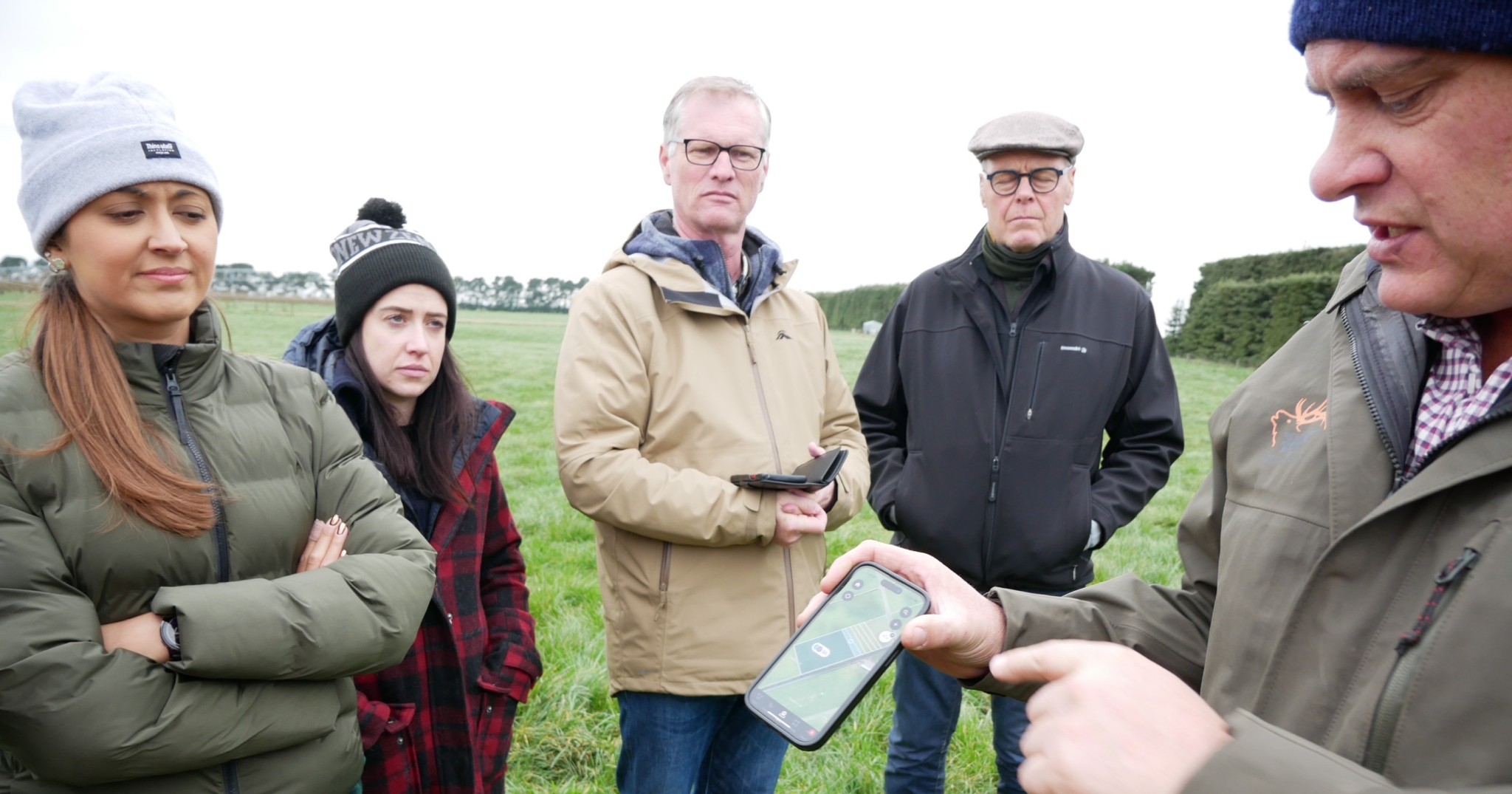
The first pilot for a new programme ‘Engage’ wrapped up after an inspiring and highly interactive three days, spread across workshops, field trips and hearing from industry leaders.

Facilitated by Dr Scott Champion, Engage bridges the knowledge gap for individuals aimed at those with moderate to low knowledge of the sector. Engage is ideal for those connecting to the Food and Fibre sector, particularly in farmer-focused roles such as policy, advisory, or regulatory.

Engage really is a case of seeing the need and addressing it. One of the challenges people entering the Food and Fibre sector can face is acquiring enough knowledge and skills to approach and speak to farmers collaboratively.

Engage is designed, developed, and delivered by the NZ Rural Leadership Trust in conjunction with Lincoln University (Dr Victoria Westbrooke), and with funding from the Ministry for the Environment.

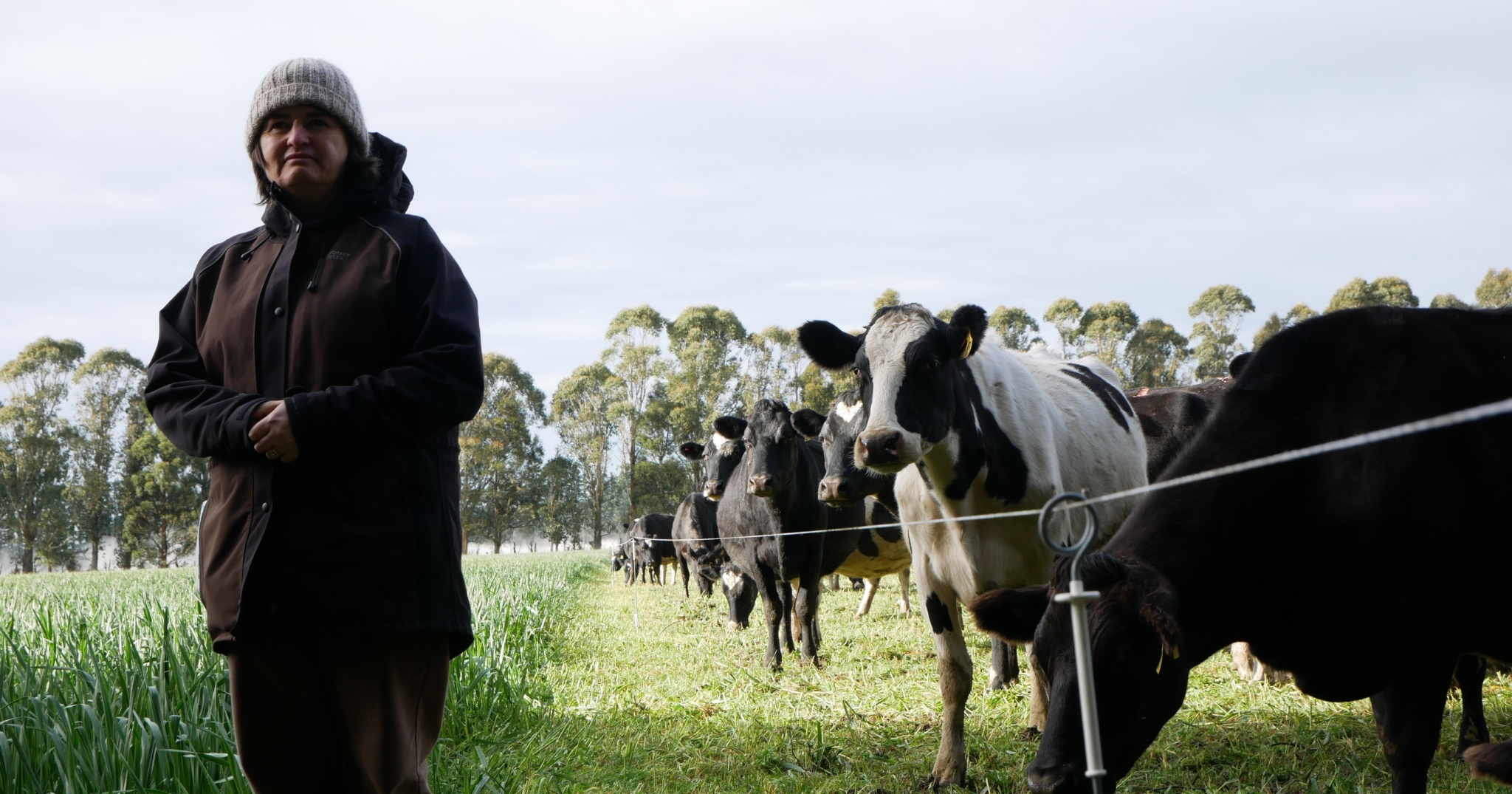
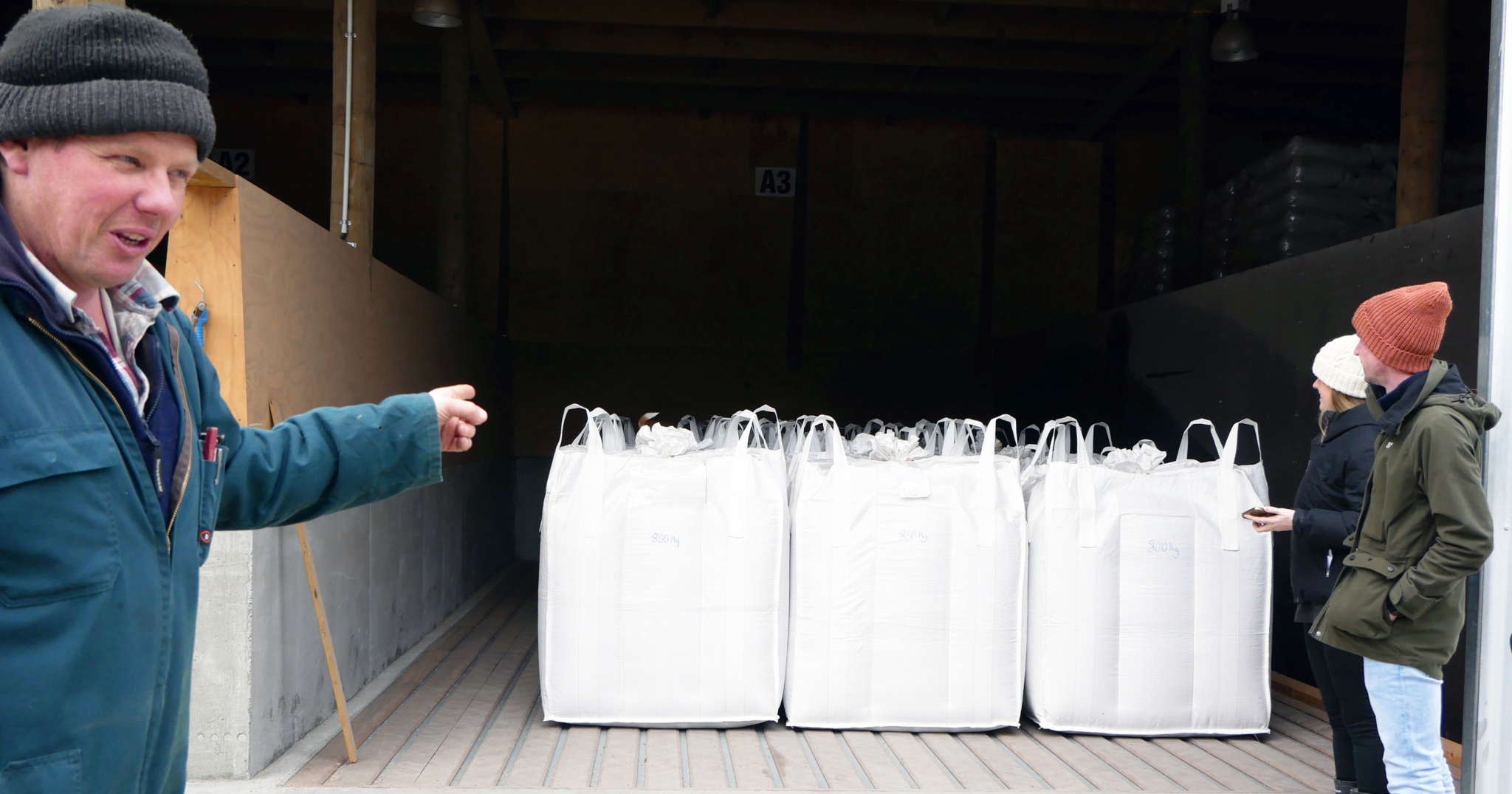
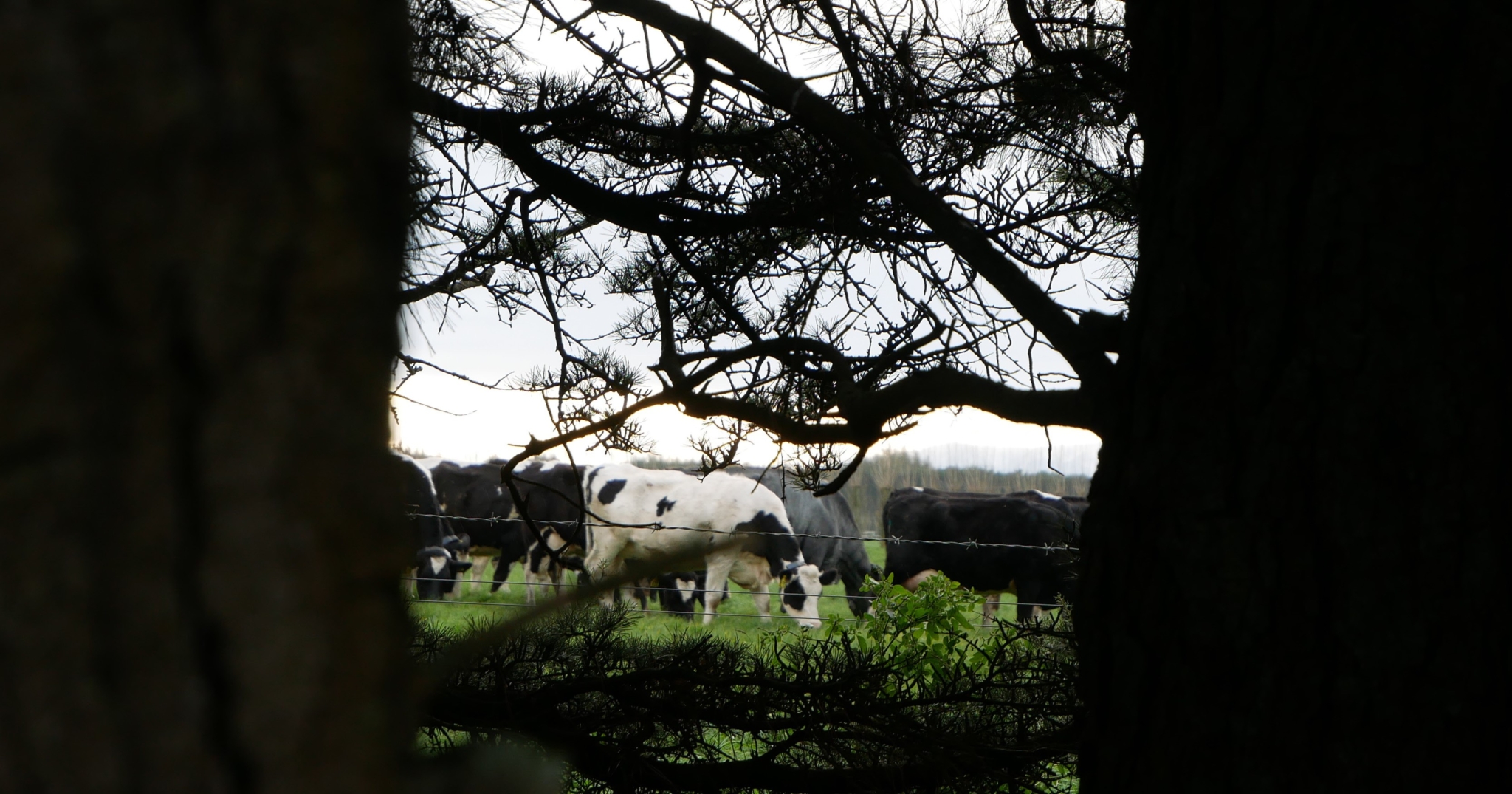
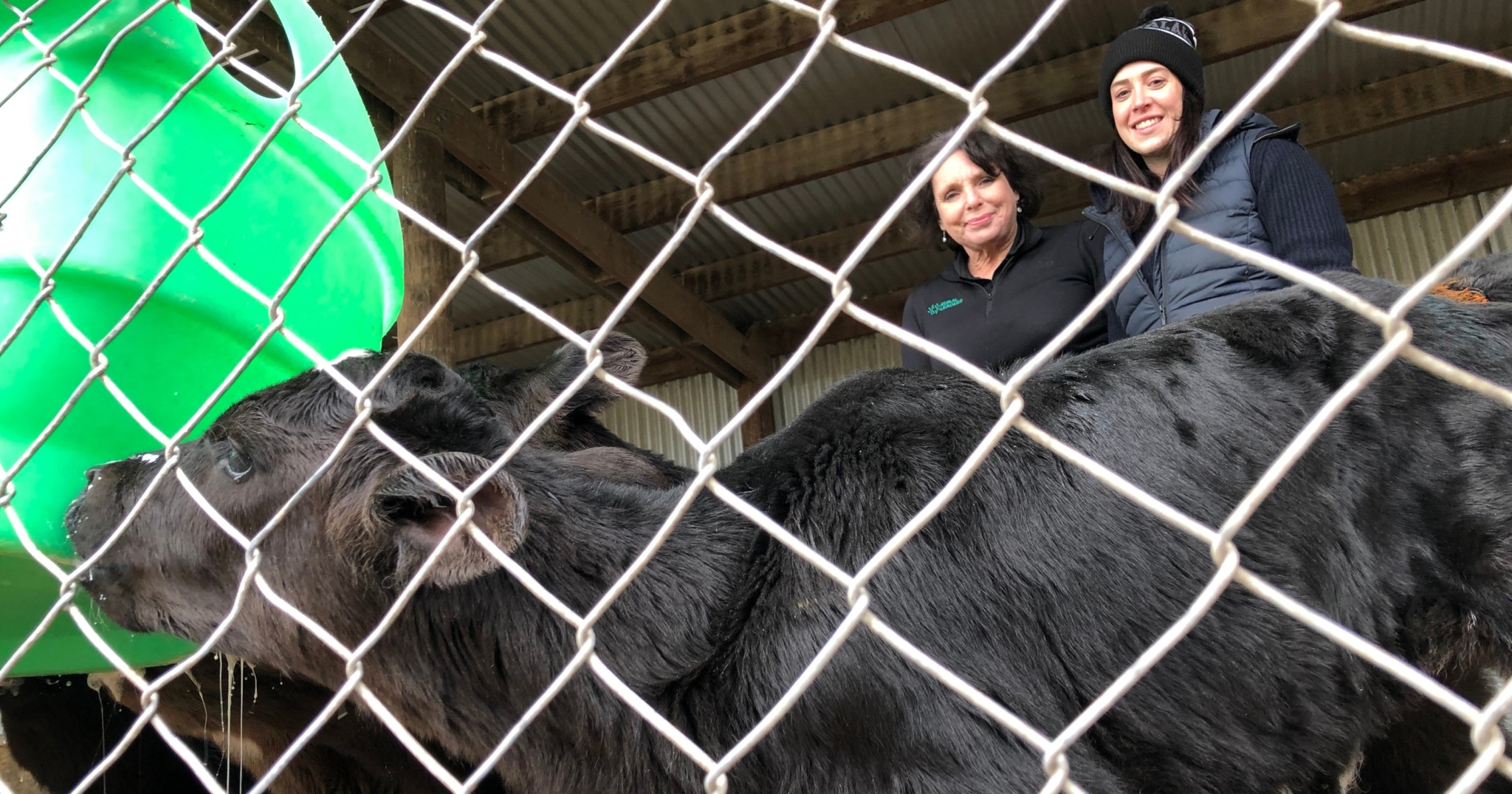
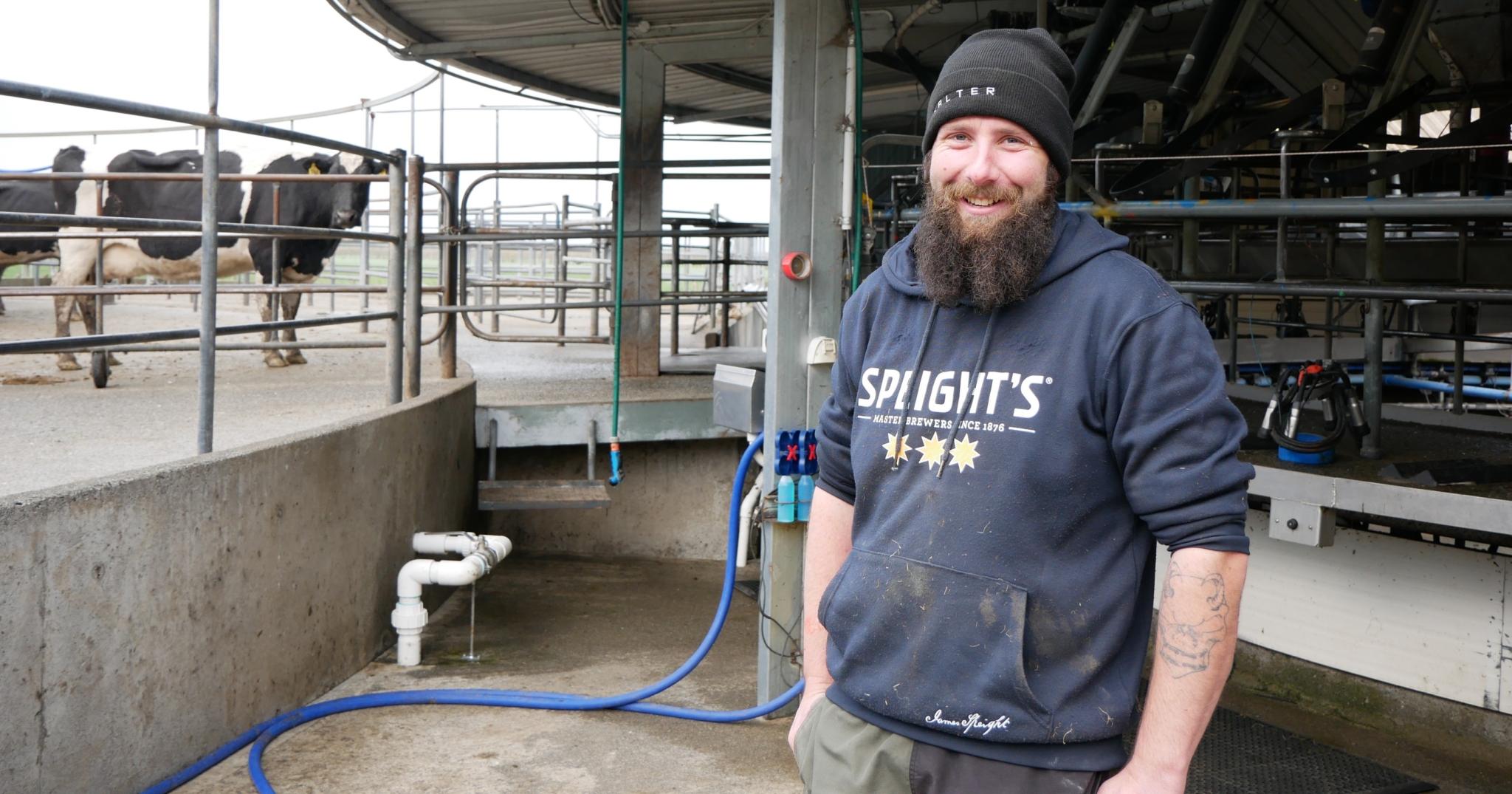
The three-day programme included speakers, workshops, and visits to two impressive farming operations: arable-mixed (Hamish Marr and Stuart Marr), and dairy (Matt Iremonger).

Our sincere thanks to both Hamish, Matt and to all of the industry leaders who shared their time, knowledge and insights with the group (Mel Poulton, Jess Smith, Mike Peterson, Ian Proudfoot, Sam Mander, and Denise Beswell from Scarlatti).

Engage is now into it’s second pilot as well as the third of five bespoke programmes for a large organisation. If you’d like to know more, or to book a team member or group on the May 1-3 programme, contact Dr Lyndsey Dance, Programmes Manager at Lyndseydance@ruralleaders.co.nz

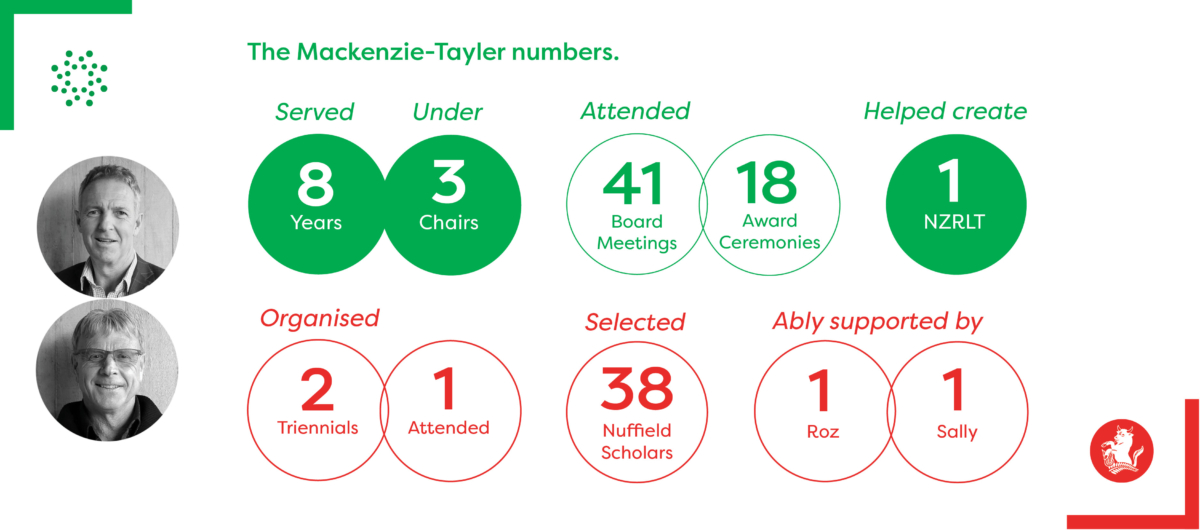
Eights years, three chairs and almost two triennials.

Nuffield and NZRLT Trustees Craige Mackenzie and Michael Tayler have stepped down after eight years of service. NZRLT Chair, Kate Scott provided the numbers on their tenure (above). We asked both about the highlights and challenges during their eight years.

What was the biggest challenge you encountered in your 8 years on the board?

Craige:
Being part of Nuffield International board but being able to turn it around to being in a positive growth organisation and in a sound financial position.

Michael:
Pulling together another Nuffield Triennial conference after our first one was cancelled at the eleventh hour. I was just one of a hardworking committee who rolled their sleeves up and just made it happen.

As a board and leadership organisation, one of our biggest challenges is to make sure we continue to stay relevant. To ensure the different programmes we offer are always “fit for purpose”.  

What was a highlight for you during your time on the board?

Michael:
The way everybody involved in the Triennial conference worked as a team towards a common goal. Everyone working long hours without complaint.

Meeting and getting to know the programme applicants was always a highlight. I was always impressed by the high calibre of the people involved in our Food and Fibre Sector. It gives me confidence that the future of NZ’s biggest export earner is in good hands.

Another highlight was getting to know and work alongside all the other trustees and NZRLT staff. Being a small part in a great team.

Craige:
The transition of a startup NZRLT to where we are today. The growth has been significant and to be part of this journey has been a real pleasure.

People, the role, and why you got involved?

Craige:
We have an awesome team which drives the organisation and each time we have new people come in they just add a new perspective and help with the growth.

I got involved because I wanted to give back to Nuffield and the NZRLT. I had the benefit of a Nuffield Scholarship which opened a lot of doors for me both nationally and internationally.

Michael:
I got involved as Trustee because I personally got so much out of my Nuffield Scholarship and felt it would be a small way to give something back.

What’s next for you?

Craige:
I have started a role with the UN so will see where that takes me but it is always nice to support agriculture and other production systems. I am interested in continuing to look for mitigation options to reduce our Climate Change footprint within farming systems and help shape sensible direction in policy.

Michael:
I would like to continue to be involved in different governance roles alongside our farming business. I have just started a new role as board chair of United Wheat Growers (NZ). UWG run a levy-based Crop Insurance scheme as well as an audited Quality Assurance Programme. 

We wish you well and thanks.

The Team at Rural Leaders.

Kellogg Programme One 2023 graduates.

A preview of next month's Kellogg Reports.

Kellogg Programme One 2023 graduated on July 7 after completing their Phase Three at Lincoln. Though in the aftermath of recent weather events, several North Island Scholars have chosen to defer their Phase Three until 2024.

Reports fell into three broad themes, with a total 16 reports. We’ll share those in the next Rural Leader. For now, you could make a note of any reports that may be of interest to you. 

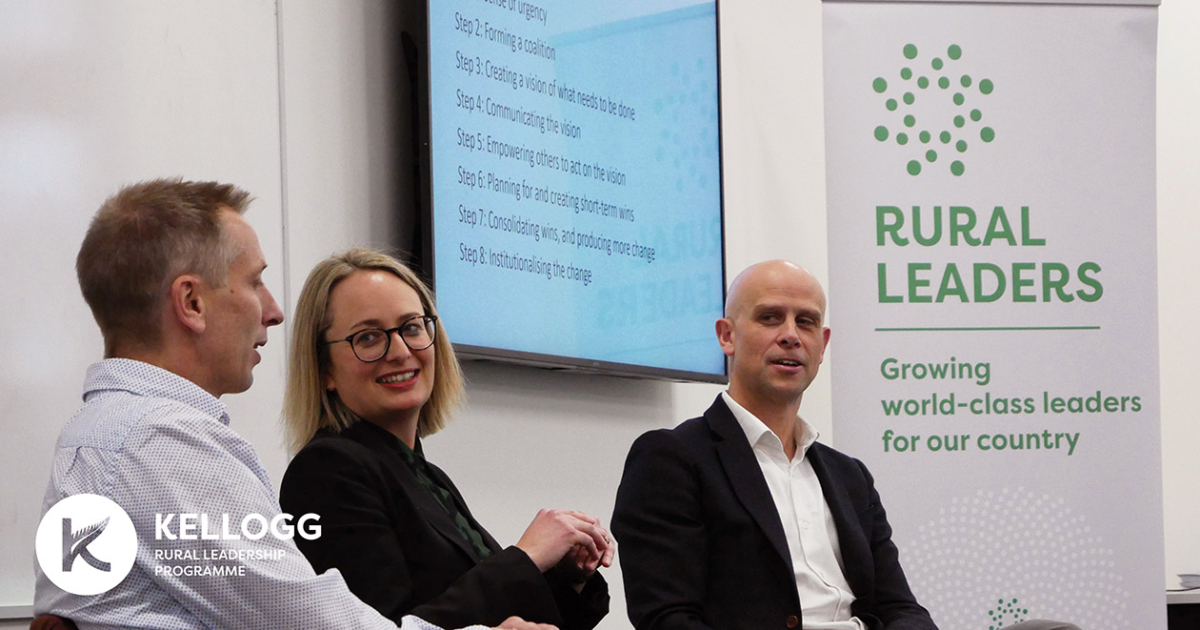
Pictured: First post-presentation panel discussion with Duane Redward, Vanessa Thomson, and Brian Henderson.

Theme 1 – People in Food and Fibre.

Duane Redward – The consequences of the competition for farmer sentiment.

Brian Henderson – What leadership is required to achieve change in New Zealand agriculture?

Vanessa Thomson – How effective are existing psychosocial services in supporting New Zealand Farmers after adverse events.

Steve Hydes – How do early stage Agritech founders use professional
assistance?

Sol Tejada – Women in beekeeping: how to champion the ladies in the
apiculture industry.

Laura Hancock – Bridging the gap: Exploring the impact of musculoskeletal health on performance and injury risk in the food and fibre sector.

Theme 2 – Future production and processing systems, and market opportunity.

Birch Jenkinson – Current lean production tool use in arable crop production.

Kate Gower-James – How can the opportunity in the expanding global pet food industry be achieved? Pet food growth and opportunities.

Grace McLeay – How might central North Island sheep and beef farmers future proof for the effects of climate change?

Richard Dawkins – Addressing mortality in New Zealand lambing systems.

Theme 3 – Farming, growing and the environment.

Anna Sing – How might freshwater regulations provide certainty for farmers,
while enhancing ecosystem health of Aotearoa’s waterways?

Emily Clark – Aquaculture shellfish processes and 3rd party certification.

Jemima Snook – ESG reporting: measuring and reporting on sustainability for mid to large size farms.

Kristopher Bailey – Regenerative agriculture: how might it fit into New Zealand
farming systems?

Kathryn Broomfield – Utilising technology to achieve sustainable agriculture in New Zealand.

Tracey Reynolds – How do we motivate New Zealand dairy farmers to uptake practises which reduce greenhouse gas emissions on farm?

Make a note of any titles for closer review in next month’s Rural Leader.