2026 Nuffield NZ Farming Scholarship. Apply by 17 August 2025. Read More...

Apply for 2026 Nuffield NZ Farming Scholarship by 17 August 2025. More details...

Burning Plastic.

Sam Reynolds - Burning Plastic Kellogg Report

Executive summary

Environmental awareness is at the forefront of most sheep and beef farmers’ minds. A perceived flood of regulation towards farmers has led to farmer protests and a dangerous perception that farmers pushing back against environmental regulation signifies farmers do not care about the environment.

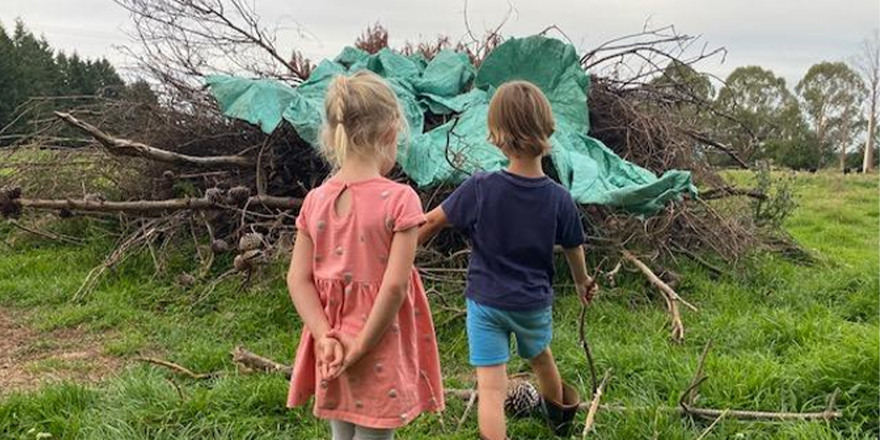
Burning or burying farm rubbish was formerly a habitual part of being a farmer, a lack of access to waste recycling or landfills meant there often was no alternative. There are now alternatives but, from my own experience working on sheep and beef farms in Hawke’s Bay, I still see a significant amount of waste going into on-farm landfills or up in smoke.

This project discovered why some farmers still burn their plastic and investigated current waste recycling options for sheep and beef farmers. I sought to gain a deeper understanding of the mentality of farmers who burn or bury rubbish to help understand how their opinions could be swayed. The perception of farmers as kaitiaki could easily be undone by smoking piles of plastic or holes on farms full of plastic containers.

The research completed for this project was in the form of interviews with five local sheep and beef farmers, two focus groups with local sheep and beef farmers, and conversations with key stakeholders involved in plastic recycling schemes. Thematic analysis of the data gathered from the interviews and focus groups helped to give insights into the current behaviours and thoughts related to farm waste streams.

The key learnings from the farmer interviews and focus groups were that:

  • Cost and convenience are current barriers to engagement
  • A perceived thought that they are not harming the environment with current practices of burning and burying.
  • Rumours and misinformation about current recycling programs

Key learnings from current farm recycling plastics programs

  • Farmers learn from Farmers.
  • Farmers need to see tangible products made from recycled plastic to believe it is worth recycling.
  • The cycle of misinformation and distrust of the current schemes must be broken.
  • A simple system where one company manages all of the farm waste streams, rather than the fragmented current system, would be easier for farmers to engage with.

After thematic analysis of my own research and completing a literature review heavily related to farmer behaviour I concluded that to improve the uptake of farm recycling schemes there must be a straightforward model where one company deals with all waste streams. If this company could produce a number of functional, tangible products (being made from recycled plastic) it would make it much easier for farmers to engage with the programs as they can see where the plastic is going.

And finally, engagement with farmer led catchment groups by this company to ensure that the correct segments of farmers are targeted for the uptake of these programs to be ensured.
Bouncing Forward with Catchment Groups.

Matthew Carroll Kelllogg report image

Executive summary

As the chairman of the newly formed Pohangina Catchment Care Group I wanted to investigate the roles that catchment groups can and do play in our rural communities. The basis of this report is:

How can catchment groups create positive change and build resilient rural communities.

I investigated why catchment groups are formed, how they are formed and what they are producing. By gaining an understanding of the literature around resilience, social sense making, the social licence to farm and the legislative requirements on farmers. I aimed to seek any correlation between the above topics and catchment groups.

There is currently considerable pressure on rural communities both from legislation to social pressures, and the considerable amount of change and disruption currently being presented to farmers. I wanted to see if catchment groups are an option for building a better future for farmers and help to alleviate the pressure and manage the changes.

I interviewed six people involved with catchment groups as well as read up on the topic. The basis of the interviews was to find a correlation with the literature and catchment groups. Using thematic analysis, I scrutinised my results to get an understanding of the key themes from my interviews. This made it possible to align those themes with the literature and seek out any correlations.

What I found through my research was that social sense making has a strong correlation with catchment groups that have a positive mindset and vision and the building of social capital. Catchment groups are also building self confidence in their group members as they have a constructive environment to learn in.

Something that came through strongly in the interviews was that catchment leaders play a key role as resilient individuals to create motion in these groups and help to get them up and running. It was noted that there is a strong reliance on catchment leaders and there is a risk that too much pressure on them could cause the system to fail. Any government intervention or assistance needs to support catchment leaders and not impede on their ability to lead constructive change.

My recommendations are that catchment leaders are supported through administrative support and high-level training in strategic vision and resilience thinking. That the principles of adaptive enquiry are taught to existing and future catchment groups. Also, that catchment groups don’t do this journey alone but that they include the wider public to get them onboard with the concept of catchment groups.

Resilient individuals build groups, groups build positive social capital, positive social capital builds resilient communities.

Bioavailability and micronutrient suitability of protein sources.

Executive summary

Consumers are becoming more aware of the impacts of their food choices on their health and on the environment. Many people believe that animal source foods are detrimental to both of these factors, whilst consuming only plant source foods will alleviate these problems. In the age of technology, misinformation and disinformation are easy to access and the health and nutrition sectors are not immune from this problem.

However, the notion that global health and environmental problems will be fixed by simply eliminating a particular food group is an overly simplistic view of a complex and dynamic situation. Dispelling misinformation and disinformation is imperative to making informed dietary choices, both on an individual basis but also from a policy making point of view.

The objectives of this report were to investigate the bioavailability of protein and micronutrients from different protein sources, and to evaluate the suitability of plants source foods to provide adequate levels of protein and micronutrients to support optimal human health. A review of literature was conducted in conjunction with an interview of a leading scientist in human protein nutrition to analyse the role of protein in dietary choices. This allowed me to draw key themes, apply critical thinking to research and themes, and identify areas of crucial importance.

The gastrointestinal tract and physiology of the human body differs from herbivorous mammals; humans are not able to synthesise the entire range of amino acids and micronutrients endogenously. These amino acids and micronutrients must then be sourced from the diet to ensure optimal health.

Protein quality is characterised by the amino acid profile of the protein, and the ability for this amino acid to satisfy the amino acid requirement of the person consuming the protein. Protein quantity in a diet is irrelevant if the protein in the diet is deficient in essential amino acids; amino acid deficiencies can still occur in someone consuming more protein than required if the protein being consumed doesn’t contain sufficient quantities of the most limiting amino acid in the diet.

The ability for nutritional and medical researchers to study human nutrition has limitations due to the constraints involved with this nature of research. Large scale research relies on evidence supplied by individuals which can be subjective. Small scale, more detailed research is extremely variable as each person will respond to the same treatment in a different manner, and this is influenced by many physiological factors.

Furthermore, the research is highly invasive, and endogenous biological processes mean that it is often not 100% accurate. Nutritional research using animals also has limitations due to interspecies physiological differences. As a result of these factors, there is strong discord amongst nutritional researchers as to dietary recommendations.

The bioavailability of proteins is defined by the digestibility of the protein, the chemical integrity of the protein and the interference in the metabolism of the protein from other compounds in the food matrix. Research has found animal source proteins to have higher bioavailability than plant source proteins.

Furthermore, animal source proteins are also rich sources of micronutrients, which also have high bioavailability for humans. In plant source foods, whilst they may contain micronutrients important for human health, these micronutrients may not be in a form which can be absorbed and utilised by humans, rendering the micronutrient no use.

Micronutrient deficiencies and amino acid deficiencies are widespread in populations who rely on staple based diets. These diets are confined to a small range of nutrients due to geographical and financial constraints. The incorporation of animal source proteins in these diets would aid in alleviating malnutrition amongst these populations by providing both high quality proteins and a wide range of bioavailable micronutrients.

Recommendations:

  • Advocate for scientific verification when policy is created with respect to restrictions on food groups.
  • Invest into food security and agricultural sustainability in third world countries to allow them to be self-sufficient and free from malnutrition.
  • Understand the research accurately to ensure confounding factors don’t influence interpretation of nutritional research.
  • Reduce restrictions on productivity to ensure malnourishment and food scarcity doesn’t worsen in vulnerable populations due to policy decisions in wealthy countries.
  • Identify limitations in a diet where food groups are eliminated.
  • Advocate for accuracy on food labelling to inform consumers of true nutritional value of foods.
  • Take ownership of the promotion the wholesome benefits of our products.
  • Ensure perceived environmental benefits of dietary choices are accurate.

What are the barriers to the adoption of new technologies and innovation by the New Zealand Farmer?

Fiona Foley - Kellogg report

Executive summary

Market signals and regulation necessitates sustainably produced products that meet the expectations of the conscious consumer and society. These will require improved ways of doing what has been done before and in some cases a transformative change. This report identifies barriers facing New Zealand farmers towards innovating and taking on new technologies.

Most of New Zealand farms are small to medium enterprises. How able they are to innovate and take on new technology will determine their ability to remain profitable and keep ahead of their competitors.

The research methodology comprised of a literature review and 21 semi-structured interviews to identify key themes from the literature and farmers, agribusiness, science and political views. This allowed the author to gain a better understanding of the context that is affecting farmers directly and indirectly.

New Zealand primary production is now driven by producing more, with less input and less impact. The paradigm shift from efficient production to sustainable production is being driven top down by free trade agreement requirements and legislative change in New Zealand. Innovation and new technologies will be part of the solution.

This report finds that the New Zealand farmer is looking to innovate on farm and take on new technologies if they can demonstrate an advantage, match personal values held, are easy to use, can be tested and show results. However, resistance may still be present due to fear and the rate of change being experienced by the farming community. A financial return is critical for the farming enterprise and the need for knowledge is increasing.

Recommendations for primary industry are that farmers must:

  1. Be viewed as individuals each with their own viewpoints, systems and requirements.
  2. Engage at the local and regional level to create ‘Innovation ecosystems’ as ideas come from multiple groups working together; farmers with farmers including rural professionals and scientists.
  3. Be prepared for disruption and be the support that is needed.
  4. Learn from failures; use them, share negativities as it will build better resilience.
  5. Have realistic expectations regarding change, innovation takes time.

Animal Welfare and Climate Change in Aotearoa.

Penny Timmer- Arends report image

Executive summary

Sustainability is the hot topic for Aotearoa New Zealand’s primary industries. There is increasing regulation for farm businesses to meet especially around improved environmental outcomes. The three pillars model of sustainability include environment, economic and social values. As landowners alter their farm systems to meet legislative requirements and adapt to the already changing climate, all facets of sustainability must be considered. Animal welfare does not have the same regulatory drivers as freshwater, or the global significance of climate change. There is a risk the welfare of pastoral livestock will not be sufficiently prioritised through this period of significant change.

Based on the five freedoms, the Aotearoa Animal Welfare Act 1999 requires owners and persons in charge of animals to provide for their animals’ ‘physical, health and behavioural needs’. Since the development of the five freedoms, advances in animal welfare over the past three decades have led to the suggestion that instead of focussing on poor welfare and suffering, ideals which would act to ensure good welfare and prevent suffering should also be given consideration. Worldwide, public awareness regarding the treatment and well-being of animals continues to increase. The promotion of good levels of animal welfare is not only a moral obligation towards animals but is also essential in the sustainability of practices and the success of production systems which rely on animals.

Global warming of 1.09°C has already caused widespread impacts globally. This is due to greenhouse gas emissions from human-activities, primarily from burning fossil fuels and clearance of forest for pastoral land but also methane from ruminants and manure in agriculture. Agriculture accounts for 91% of biogenic methane emissions in Aotearoa, and 19% of other ‘long-lived’ gases specifically nitrous oxide and carbon dioxide (Climate Change Commission, 2021). Finding ways to reduce emissions is crucial for the transition to a low-emissions Aotearoa, and to maintain our reputation as a producer of high-quality food and fibre products.

Weather extremes arising from increasing climate change will directly and adversely impact the primary sector, with two significant floods on the West Coast in July 2021 and February 2022. This is coupled with indirect effects such as changes to seasonal growing patterns and the distribution of pests and diseases. As the defining issue of this century, climate change mitigation and adaptation will influence farm system changes for decades. When considering the impact of greenhouse gas mitigation policies on farm animal welfare, the sector must look beyond achieving merely neutral welfare by meeting the basic needs of animals. A ‘good life’ for animals, where they have opportunities for positive experiences must be the goal.

The aim of this report is to explore whether there are opportunities to improve animal welfare through climate change action. Beginning with a literature review of animal welfare and climate change articles, thematic analysis was then used to code common themes and compare and contrast the information. Using heat stress as an example several areas where greenhouse gas mitigation could improve animal welfare outcomes have been identified. There are more areas where the complex interactions of biological systems could lead to an improvement for animals, but without careful evaluation of the risks and benefits may also negatively impact the welfare of livestock.

As farmers make short-term changes and consider their long-term options in response to climate change and the need to reduce emissions, animal welfare must be explicitly considered as part of the decision making. To help this occur several recommendations have been identified. These recommendations state that:

  • Increase the understanding of animal welfare based on the Five Domains Model.
  • Consider the impacts on animal welfare as part of climate change advice.
  • Farmers should actively seek information about animal welfare impacts.

Lincoln University, Kellogg, and Rural Leaders – a collaboration spanning decades

Based on campus since 1979, the Kellogg Rural Leadership Programme has a long connection with Lincoln University, having been developed by the Kellogg Company as a way of enhancing global leadership capability.

In 2013, the programme was transferred to the newly-formed New Zealand Rural Leadership Consortium, which merged it with the prestigious Nuffield New Zealand Farming Scholarship to create a single organisation. Four years later, the consortium became a registered charitable trust and changed its name to the New Zealand Rural Leadership Trust (Rural Leaders).

A partnership known as the Pāhautea Initiative was announced in late 2020 between Lincoln University, Massey University, the Agricultural and Marketing Research and Development Trust (AGMARDT) and Rural Leaders.

The initiative focuses on lifting education levels across the sector and building deeper leadership benches in the regions, with the aim of creating a sustainable future for food and fibre. Accreditation of core programmes is key to delivering on the partnership’s purpose.

Kellogg accreditation strengthens the bond with Lincoln University.

Rural Leaders, Lincoln University and Massey University have further strengthened ties by offering academic accreditation for those who undertake the Kellogg Rural Leadership Programme.

After completing the programme, Kellogg scholars can opt into a Postgraduate Certificate in Commerce.

Alternatively, they can allocate the 60 credits they can earn towards the 180 required credits for a Lincoln University taught master’s degree.

Scholars can also elect to use their 60 credits towards a master’s degree at Massey University.

Additionally, accreditation may soon be available for the Nuffield New Zealand Farming Scholarship, although this is a work in progress, says Rural Leaders’ Programme Manager Lisa Rogers.

“Theoretically, it would be a diploma, or 120 points towards a 180-point taught masters.”

A dedicated Kellogg programme team. 

The Kellogg Rural Leadership Programme team – including Rural Leaders facilitators Dr Scott Champion and Phil Morrison, Dr Patrick Aldwell and examiner Professor Hamish Gow – work hard to provide a varied and stimulating learning experience.

The programme includes two papers, the first of which requires the completion of specific assignments and is delivered by Scott Champion and Phil Morrison.

The second paper, delivered by Dr Patrick Aldwell, involves completing a research project and giving a presentation at the end of the programme.

Rural Leaders deliver three Kellogg Programmes a year, with two based at Lincoln University. The other, in alignment with the Pāhautea Initiative’s aim of growing flourishing regions, is regionally based. The next location, in May 2022, will be Whanganui.

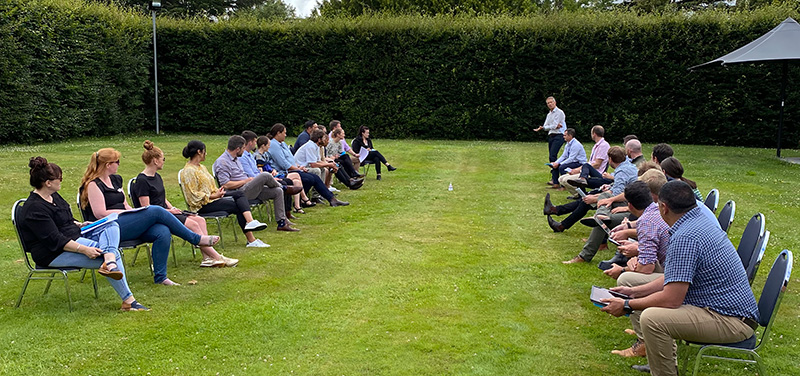
Each programme is delivered to 20 to 24 scholars. Numbers are kept low to ensure a transformative experience, as the Kellogg journey is as much about learning from fellow scholars and developing a pan-sector network of friends as being exposed to industry leaders and new ideas.

A shared history and a shared future.

Rural Leaders have a strong presence on campus and increasingly share alumni with the university now that Kellogg scholars can gain a Lincoln postgraduate certificate.

Lisa Rogers says she is keen to see the long association continue to grow.

“We often get graduates from the Lincoln Future Leaders Scholarship Programme coming through to do the Kellogg. While we may not see recent undergraduates apply, it’s something we see happening later in their careers.”

Fun fact: Up to 50% of participants in any one Kellogg Programme have previously graduated from Lincoln University.

Kellogg team building rope bridge