Rural Leaders is pleased to announce the renewal of its Strategic Partnership with DairyNZ, extending a relationship that has supported leadership development across New Zealand’s dairy sector since 2017.
The renewed partnership will continue to help develop capable and confident dairy leaders, contributing to a sector that is productive, future-focused and sustainable.
For Rural Leaders, the partnership is about more than supporting programmes. It is about connecting people, ideas and opportunities across the food and fibre sector, and helping leaders turn new knowledge and perspectives into meaningful impact.
There are strong connections between the two organisations. One example is Campbell Parker, DairyNZ CEO, is a regular contributor to the Kellogg Rural Leadership Programme, where scholars get the opportunity to learn from some of Campbell’s leadership experiences and insights.
The partnership will continue to create opportunities to share the ideas and insights generated by dairy leaders. It also helps dairy farmers build connections across the wider food and fibre sector, supporting a two-way flow of knowledge that strengthens the primary sector overall. Podcasts, articles, social content and Nuffield research can take those conversations beyond the programme room and make them accessible to a much wider audience.
Jane Muir, DairyNZ Senior People Specialist, has played an important role in building the relationship in recent years.
“DairyNZ is delighted to continue its partnership with Rural Leaders. Strong leadership is critical to the future of our sector, particularly as dairy farmers and the wider industry navigate a rapidly changing environment.
The leadership programmes that Rural Leaders deliver gives people the opportunity to step back from the day-to-day, challenge their thinking, build their networks and develop the confidence to lead change. That benefits not only the individuals involved, but the businesses, communities and wider sector they return to.”
James Ryan, Rural Leaders CEO, says the value of the partnership extends beyond the programmes themselves.
“The future of dairy will be shaped by the people who lead it. This partnership brings together our collective strengths to help build the leadership capability and confidence to meet what comes next.”
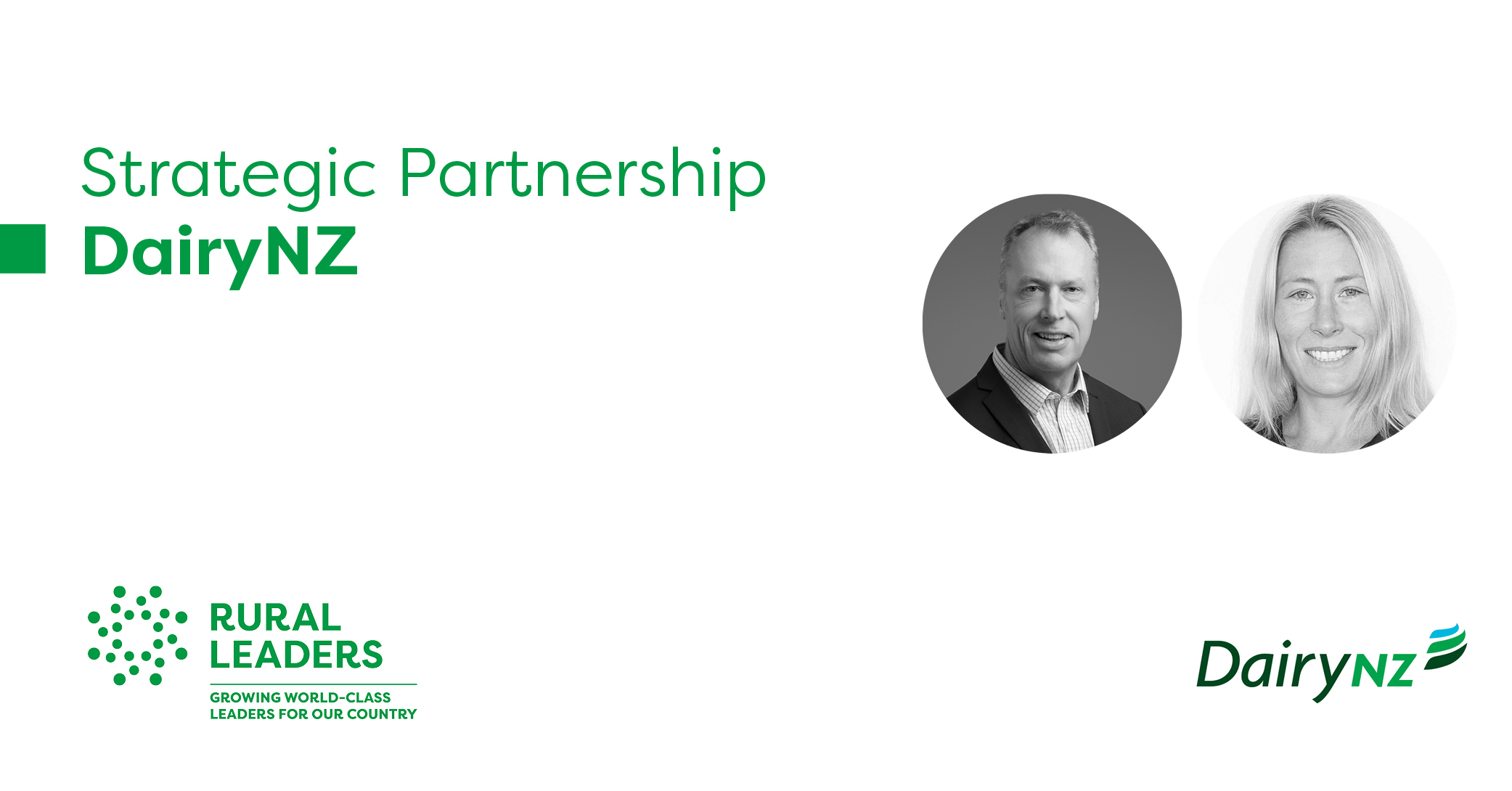
Image shows: Jane Muir, DairyNZ and James Ryan, Rural Leaders.